What Do Toxic Gamers and Fascists Have in Common?

“Fascism is not a specific ideological system with particular content. It’s just a strategy for taking power and maintaining power against the rule of law, and against the majority in a democracy.” –Jamie Raskin

Years ago, I wrote my thoughts on the use of slurs online by gamers to insult others (language warning). I expressed the idea that many of the people who use these words aren’t aiming to be racist or sexist, and that part of the problem is that we live in a society where describing someone as gay, black, or whatever else can be viewed as demeaning in the first place. But the above quote from United States Congressman Jamie Raskin stuck with me because of the way it describes fascism as a strategy rather than a belief system, and it had me reflecting on the strategic use of words to harm others.

What I’ve come to realize is that I had approached the topic of online toxicity from a limited angle. Freedom of expression and the full repertoire of a language are important things that I still support, but there’s another dimension to consider.

One problem with how easily slurs get thrown around online isn’t as simple as whether or not the words are deeply offensive to different peoples and cultures. It doesn’t matter how silly it is that some gamers will throw these words out even if they don’t actually apply to the person on the other side of the screen. The individuals who behave this way, whether they’re conscious of it or not, are basically trying to hurt the person they’re talking to by any means necessary. They’re using slurs as buckshot and hoping the spray will do damage. Similar to fascism, this is less an indicator of beliefs and more of a method to exert power over others—however limited in this specific context—even if they might also actually be racist or whatever. But what happens when the context gets larger?

It’s no secret that Gamergate was basically a precursor to the fecal stain that is Trumpism and the alt-right in the United States, which bring with them the very real threat of actual fascism. And while I truly do not believe that all gamers who ever used slurs to insult others are inherent fascists or will inevitably turn into them, that desire to use words not for the ideas they represent but as tools to probe cracks and fissures in order to do harm feels all too similar to what I see from the fascists who try to undermine American society day in and day out. Donald Trump, right-wing media, the Republican Party, and others in power lie endlessly because “meaning” is meaningless to them—they’re just trying to find the thing that sets people off and helps them maintain power.

Beyond the scope of words alone, this mindset bears scary resemblance to the kinds of strategies we’re finding out were deployed in an attempt to stop the transfer of power in the US on January 6, 2021. Whether through enraging a mob and turning them violent, or trying to exploit gaps in the Constitution and other legal documents, what we saw a year ago was an attempt to twist words and their meaning into crowbars to try to pry open and undo American democracy. Though cliche, I can’t help but think of a famous line from George Orwell’s Nineteen Eighty-Four: “The Party seeks power entirely for its own sake. We are not interested in the good of others; we are interested solely in power. Not wealth or luxury or long life or happiness: only power, pure power.”

Calling someone a slur whether in frustration or contempt is not an automatic pipeline to undermining the foundations of a government; I’d even hazard a guess that most people who engaged in the former never got anywhere close to the latter. But the ease by which words are weaponized in smaller contexts feel like they should be scrutinized more carefully. After all, the alt-right specifically targets gamers, seeing gaming as a resource for young and disaffected men. The racism and sexism expressed in them are a major part of the problem of how words are abused, yet they’re also reduced down to cudgels meant to inflame and diminish. While we should avoid censorship as a blunt form of enforcement, the less weight we feel the weight of the words we use, the more easily they become the tools of fascism.

What a Trip: Sonny Boy

To call Sonny Boy an unusual anime is to make one hell of an understatement. When you start off with a setting of high school kids stranded in some isolated world while possessing superpowers, it seems like it’s gonna be some variation on Lord of the Flies. But Sonny Boy goes beyond even the expectations it sets for itself narratively while aesthetically occupying a realm that feels both hyperreal and surreal.

It’s incredibly hard to describe Sonny Boy, as it’s rarely ever clear what’s an important plot detail, what’s more for flavor, and where the latter might transform into the former. The series seems to focus on the notion of “possibilities,” but even that term seems to brush up against the contradictions within itself. It’s a combination of vast and unpredictable dimensions, along with the expansive yet narrow minds of lost teenagers. It’s like Twin Peaks with a heavy focus on high school drama.

I hesitate to make any concrete statements about takeaways, but one thing I felt by the end is the contrast between infinite potential unrealized as a kind of metaphor for youth, and the need to go beyond that world to actually get something done. That potential is valuable, but fear of losing it hurts people more than one might expect.

Sonny Boy is probably worth a watch again. Maybe it’ll help me process the series better. It feels like there’s so much underneath that surface.

The Winter of Our (Dis)Content: Ogiue Maniax Status Update for January 2022

Happy New Year! As I say that, 2022 is off to an unusual start.

On the blog side, there’s been an issue with many of my older posts because the web hosting I used for many of the images has been down for the past month (and possibly more). I hope I can get it fixed sooner rather than later, but the hosting has been unresponsive. Fortunately, most of the content is primarily text, so even as many of the illustrative pictures are not displaying, there’s still plenty to read, if you want to check out the archives.

But of course, any and all web space woes pale in comparison to the unprecedented level of infection that the Omicron variant of COVID-19 has brought. Last month, I wondered if I might have to temper my expectations about seeing loved ones in this environment, and that has turned out to be a pretty big understatement. For those living in places with record spikes in infection, I hope you can stay safe and well. Please, please get vaccinated (and boosted if you can), wear a good mask (N95, KN95, KF94, FFP2), and exercise discretion (especially indoors). We can still live our lives, but we should cherish the health of the people around us. While Omicron seems to have a greater ability to infect vaccinated people, it can still be the difference between an unpleasant day and your final one.

I order my masks from Bonafide Masks, but you can get KN95s at a Staples or equivalent shop.

Thanks to my patrons here in 2022, especially the following.

General:

Ko Ransom

Diogo Prado

Alex

Dsy

Sue Hopkins fans:

Serxeid

Hato Kenjirou fans:

Elizabeth

Yajima Mirei fans:

Machi-Kurada

Blog highlights from December:

Going Beyond Limits, for Better or for Worse: Anime NYC 2021

My review of Anime NYC 2021 and all its ups and downs. Also check out my convention review of Pompo the Cinephile!

Daitetsujin 17 and the Wonderful Clunkiness of Tokusatsu Soul of Chogokin

A preview of the next Soul of Chogokin figure turns into an analysis of how the toy line handles live-action series.

Fan vs. Fandom

Thoughts on the difference between being a fan of something and participating in a fandom, inspired by someone close to me.

Hashikko Ensemble

Chapter 47 turns out to be the second-to-last! Can’t wait for next month.

Kio Shimoku’s Twitter in December saw him reminiscing about older times.

Closing

In much lighter news, the winter anime season is starting up! I’m still trying to finish stuff from the fall, but in the meantime, I’ve decided on my favorite characters of 2021. Who do you think reigned supreme?

Best Anime Characters of 2021

BEST MALE CHARACTER

Ikari Shinji (Evangelion 3.0+1.01: Thrice Upon a Time)

For as many strong and unique characters as there were this year, there’s really only one right choice for me.


Shinji was never my favorite Evangelion character. However, seeing his transformation from the original TV series all the way to the final Rebuild of Evangelion movie feels nothing short of profound. It’s almost unfair to compare him to other characters because of this long arc of this through multiple versions, but the way he finally comes into his own after 25 years of being the poster child for emotional and psychological turmoil in anime makes what was already a lasting impression into something even more enduring. The boy became mythology in the most unexpected way.

BEST FEMALE CHARACTER

Laura (Tropical-Rouge! Precure)

In the Precure franchise, there are rarely characters of Laura’s disposition. A mermaid with ambition to become the next queen of the seas, Laura is a haughty and proud sort whose closest equivalent is Milk from Yes! Pretty Cure 5. One part of what makes her work as a character is that she fluctuates between earned and unearned confidence, and her friends are there to teach her when the latter occurs. 

But what I think seals the deal for Laura is the fact that she overcomes one of the most common pitfalls of mid-season Cures, which is losing much of her original identity once she joins the team proper. While she gains legs and learns how to live in human culture, her mermaid origin still plays a significant role and gives an extra facet to her character. Laura has to navigate the worlds of both land and sea, and that process is both endearing and hilarious.

Final Thoughts

There was no shortage of strong characters this year, but in the end, I felt that both Shinji and Laura both showed an immensely satisfying amount of growth in their own ways. For Shinji, it’s arguably unfair to be tapping into something with as much history as the Evangelion franchise, but it really feels like Eva has the closure it needs, and it comes courtesy of the Third Child(ren) himself. Laura meanwhile all but perfects the “unusual sixth ranger” by making sure the show doesn’t forget what made her an interesting character in the first place. 

I won’t say who they are, but a few characters got real close to taking the top spots. Some of their stories are still ongoing, so we’ll see if they make it to the top of the list in 2022.

Kio Shimoku Twitter Highlights December 2021

Every month, I collect highlights from Genshiken author, Kio Shimoku’s, tweets. This month’s provide some interesting insight into Kio’s work history beyond the manga he’s known for!

Professional Work

Kio started filling this bookshelf back when Rakuen: Le Paradis (home of Spotted Flower) began, and now it’ll be full in two years.

Later, he remarks (while promoting a half-off sale) that he only does three chapters a year, but somehow it’s reached the point of having so many.

Kio doesn’t know how to use the Stream Lines tool [for making Speed Lines] in the art program Clip Studio Paint.

Color proofs of all the covers from the Genshiken Shinsouban Edition!

The announcement that next month’s Hashikko Ensemble is the final chapter. “I hope you’ll all stick around to the end.”

Other Work

Kio quotes a tweet about a special one-shot manga in Monthly Afternoon by Samura Hiroaki (Blade of the Immortal, Wave, Listen to Me!) about the life of the renowned second chief editor of Afternoon, Yuri Kouichi—a man who, prior to Afternoon, was responsible for bringing hits like Akira and Ghost in the Shell to publication. In the manga, Samura mentions his interactions with the famous manga artist Takano Fumiko, and Kio says in his quote tweet that he once worked as an assistant for Takano. He only did screentones for her, but she smiled and said to him, “I don’t care whether you’re a rookie who’s yet to debut—you did a good job.” The moment stuck with Kio.

3 out of 4 of the CDs for his 2010 doujinshi work seems to not be working. While he has the original 350-page paper manuscript somewhere (for a Star Wars parody called Sister Wars Episode I), he doesn’t know where it is. A fan mentions wanting to buy it, but Kio’s not sure what format he should sell it in. He also feels a desire to make Episode II. He’s had plenty of ideas for it, but he feels like he’s been forgetting them lately, so he probably needs to get it done sooner than later.

(Kio mentioned Sister Wars in his interview with the Vtuber Luis Cammy. You can read my summary of that interview here.) 

Interactions

Oguro Yuuichirou, the chief editor at Anime Style, gives high praise to Hashikko Ensemble and its characters, story, and visual presentation of music. Kio tweets being happy about it, to which Oguro re-expresses how genuinely good he thinks the manga is. Kio gives a thank you.

December featured an online extra for Spotted Flower that focuses on the editor character Endou. Kio responds to fan feedback, including from a fellow Ogiue lover and Twitter mutual of mine!

Kio is done with the last rough drawing, whose expression he changed around four times. A fan (who’s a huge Jin from Hashikko Ensemble fan) asks which character it is, to which Kio responds “the ostensible protagonist, Fujiyoshi,” and then reacts to the fan’s Jin profile picture.

Kio gets excited over fellow artist Ikuhana Niro making good on his word and getting a new car.

Other Media

Kio got his copy of Pompo the Cinephile (you can read my review of the movie).

Kio bought another Motorhead figure from Five Star Stories.

Ikuhana Niro mentions that a new doujinshi of theirs is out, and Kio comments that he remembers how “that doujinshi” is under a different pen name.

Miscellaneous

Kio makes a cryptic tweet about not being able to ride the turbulent waves, and says, “See you tomorrow.”

We’ll come to know what “fogged glasses” looks like in the winter. I think this refers to Spotted Flower, but I’m not certain.

He took some kind of online quiz, I think, and the result it gave him was that he lives life on “hard mode.” Kio responds with “What the?” The test also apparently says that someone like him wants a life where they love and are loved. He thinks this might be fitting for a manga artist.

Kio got a back-support corset for when he has to do heavy lifting, like taking out tons of garbage.

Kio retweets Kotobuki Tsukasa (character designer for Saber Marionette J, Gundam: The Origin) talking about turning 50, and realizes he himself turns 50 next year.

Next month is going to be the end of Hashikko Ensemble, so I suspect there is going to be lots of reminiscing on Kio’s timeline. Here’s hoping!

Prelude to the End: Hashikko Ensemble, Chapter 47

Jin has a breakthrough and Kozue reveals another side of herself in Hashikko Ensemble, Chapter 47. 

Summary

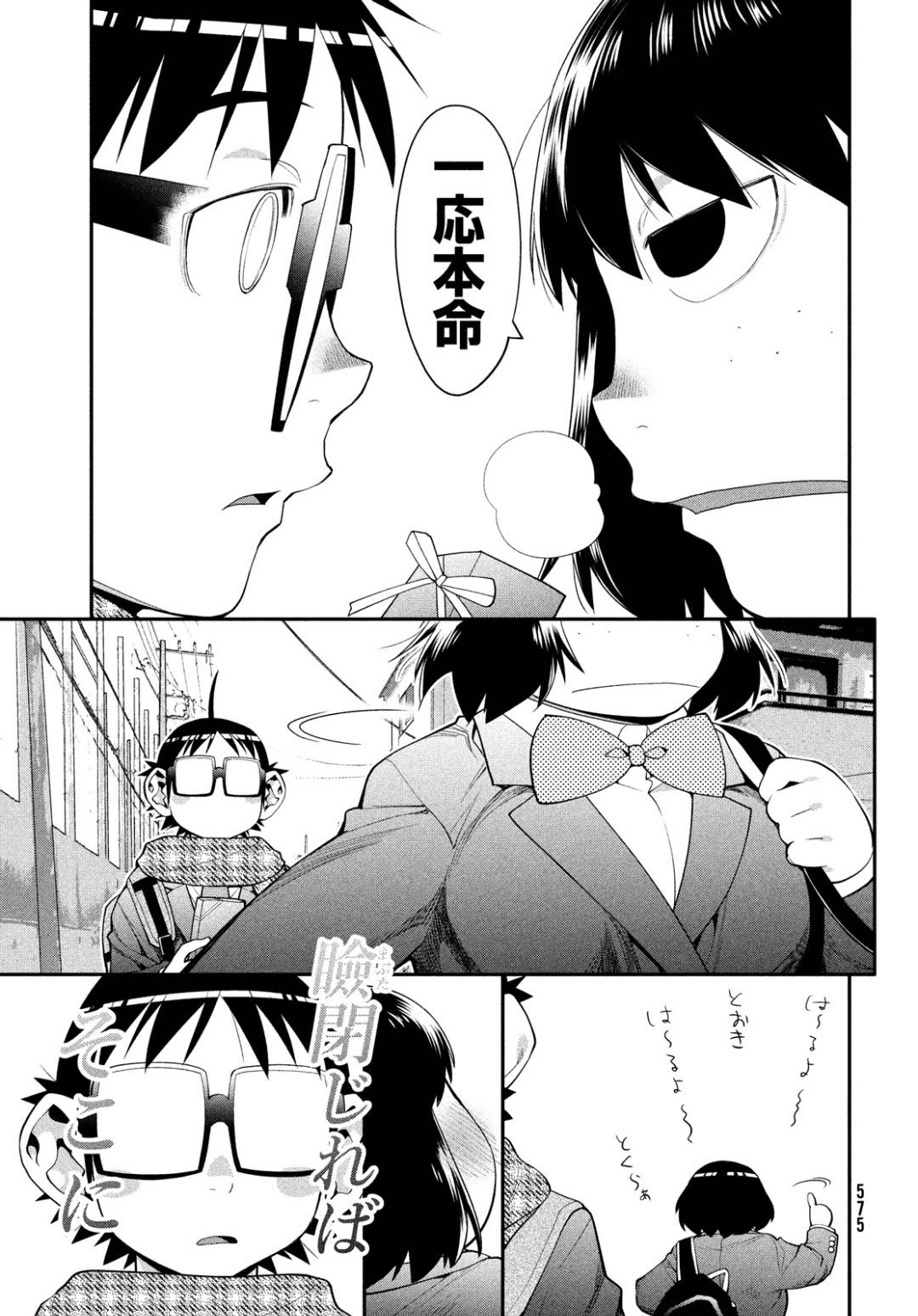
Kozue catches up to Jin, who has left the clubroom because he’s lost the music inside of him. As the two walk and talk, Kozue helps Jin put words to what’s been bothering him: He’s frustrated over what he hasn’t been able to do, and it’s eating him up inside. In particular, Jin is frustrated over Akira being putting on such powerful performances despite being so inexperienced, and over Akira being recognized by Jin’s mom before Jin himself. 

As Kozue leaves, however, she nonchalantly gives Jin a romantic (as opposed to platonic) Valentine’s chocolate before walking off with a flushed face and singing “Haru yo, Koi.” The lyrics seem to trigger something in Jin, but rather than it being a realization about his potential romantic feelings, it helps him clarify why exactly he’s so frustrated when it comes to Akira. He both wants to acknowledge and deny Akira’s accomplishments—a contradiction has stopped his heart from moving and by extension, stopped the music within Jin. 

Jin rushes past Kozue while loudly declaring that he needs to “tell everyone,” which Kozue assumes is about her confession. Beet-red, she chases after Jin to stop him, only for the thing he wants to tell everyone about is his desire to put on that Whie Day concert in response to the girls’ Valentine’s Day performance. In addition, Jin has a special request for Akira.

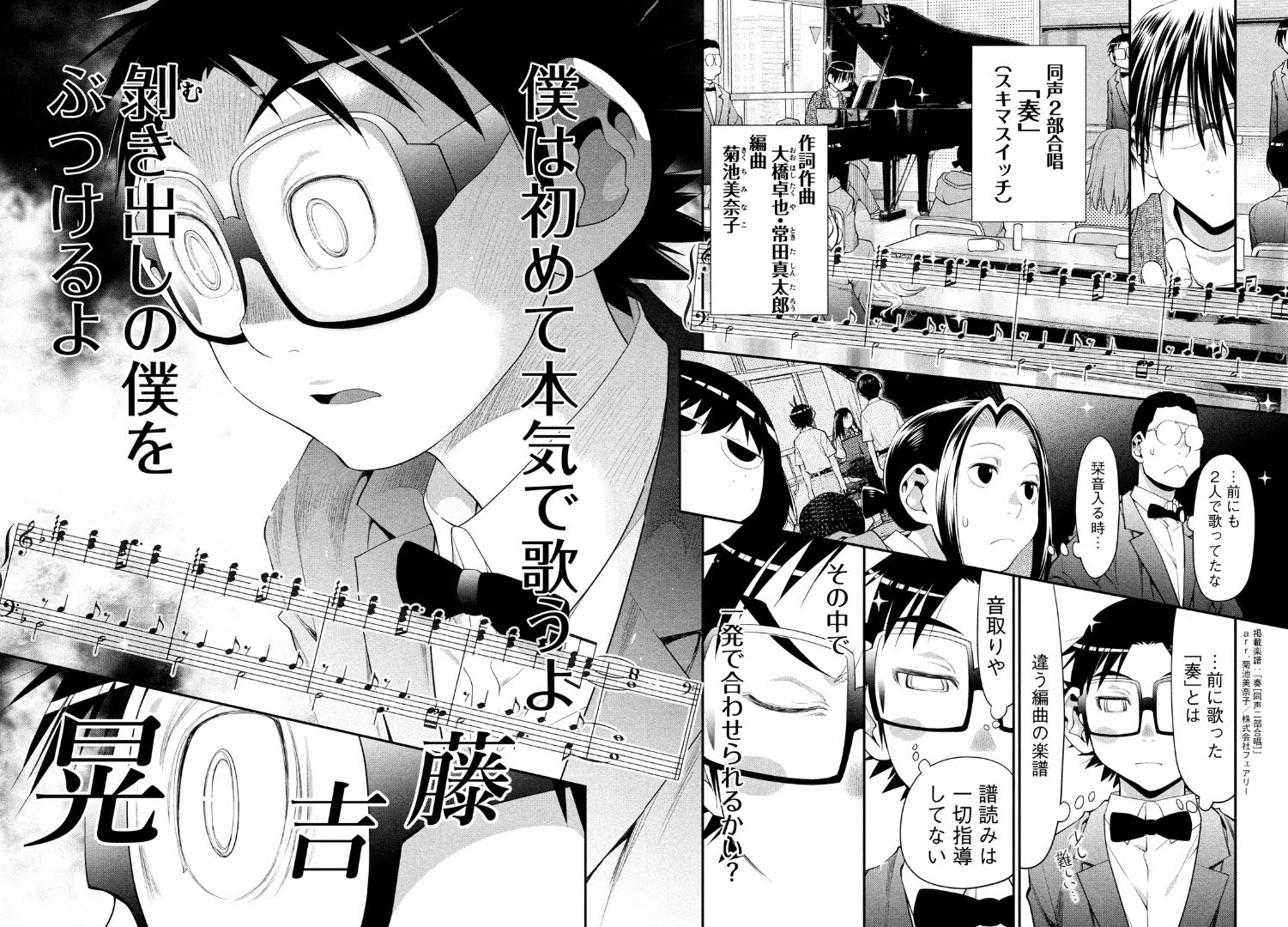
The story skips ahead to White Day, where all the guys put on a show while dressed in bright and shiny tuxedos. However, the real event is a special “exhibition match” between Akira and Jin—the request Jin wanted. As Jin prepares to unleash his full singing might for the first time, the chapter ends…and reveals that the next chapter will be the end of Hashikko Ensemble!

Wait. Really?

So here we are at what turns out to be the penultimate chapter. I knew that the story was getting to a major point, but I didn’t expect it to be leading to the finale! Thematically, the story has come full circle with Jin going from recruiting Akira to competing against him, but I thought they’d overcome this and then move on to the next challenge. If this is really it, though (and there’s no sequel being announced), I think the manga is ending with at least some closure.

Got a Feeling So Complicated

Jin’s mix of pride in Akira and jealousy towards him is profound. They’re both such powerful feelings, and the dimensions they add to Jin turn him from a fascinatingly eccentric character to a truly human one. This is all the more the case because it’s kind of unsurprising given where the story has been going over the past six months or so. Jin wants to both love and hate Akira, but he can’t bring himself to do either. 

It makes sense that Jin has never gone all-out when singing. He chafes at the idea of competition and comparison that his mother, Reika, values so much, and he has rebelled in his own way by eschewing such notions. But perhaps this is also why Jin has never been verbally acknowledged by her, even though we know she thinks he has talent. To be able to not just cooperate but also fight could be the difference. The capacity to do both (and to know which is the right choice) might be even more valuable.

I don’t think this friendship will end on bad terms, but I think there are a few more twists and turns left.

To All the Boys I’ve Loved Before

One thing I’ve enjoyed in this series is that characters are attracted to multiple people. It’s often the case in manga that only major characters (or harem leads) have feelings towards more than one character at a time. Here, though, you can see all these potential connections abound. Kozue previously showed at least a small interest in that judo club boy, but she also expresses a crush on Jin here. At the same time, Kozue is not the only one who likes Jin, seeing as Yumerun just confessed in the last chapter—and Kozue also feels at odds with herself knowing that. I just keep thinking about how affection can be a spectrum.

They’re the kind of romances that one is more likely to see in an actual high school (and probably beyond), and the fact that it’s a significant but not major part of the story also lends itself to this sense of authenticity. Multiply this across the whole cast, and you get Hashikko Ensemble. I love seeing the dramady of these singing fools, and even if none of these relationships actually resolve.

Just Gorgeous

Hashikko Ensemble always looks good, but there’s just something about this chapter’s artwork and paneling that’s downright amazing. Kio’s just an ace at portraying cascades of emotions, and the simultaneous sense of heaviness and humorous frivolity that comes from his artwork and composition really puts his talents on display. In the pages above, Kozue’s rollercoaster of emotions jumps right off the page, and the way Jin takes her for a ride with this earnest denseness makes me feel a kind yet pained smile form on my face. 

And when Jin shows that he’s going to get serious for his “exhibition match” with Akira, the way the panels build up to such sheer intensity actually startled me a bit. Kio has never really done a competitive manga—in fact, Hashikko Ensemble is the closest he’s ever gotten—but it makes me genuinely wonder what he could pull off if he decided to do a sports or fighting manga.

If this is what Kio has pulled off before the conclusion, I can’t wait to see what he’s got up his sleeve for the final chapter.

Songs

“Haru yo, Koi” (“Come, Spring”) by Matsutouya Yumi. This is one of the songs the girls sang in the last chapter.

“Yakusoku” (Promise) from The iDOLM@STER. This was one of the songs performed by the otaku group during the big competition.

“Kanade” by Sukima Switch. This song is what brought Akira and Jin together all the way back in Chapter 1!

Final Thoughts

I still feel that there’s so much more story that could be told. They haven’t even entered another M-Con yet! I don’t know if the story was made to end early or if Kio thinks this is the right time, but I could keep reading about these characters living their lives for a long time. To Kio’s credit, that’s part of his magic as a manga creator.

As for predictions, the safe bet is that they’ll finally become an official club. I’m also still rooting for an Akira x Mai ending. 

And who knows? Maybe we’ll see their doppelgangers show up in Spotted Flower

Fan vs. Fandom

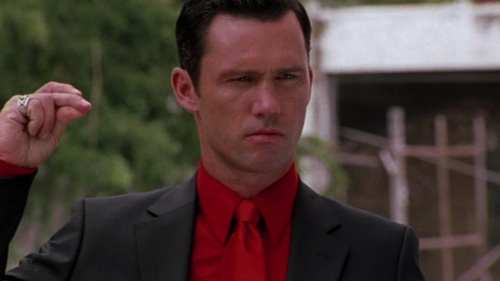
Recently, someone close to me revisited one of their favorite TV series of all time: Burn Notice. They can talk forever about how they love Michael, Fiona, and the rest of the cast, as well all the things that make the show stand out from its peers. However, something occurred to me in discussion, which is that as much as they’re fond of Burn Notice, they never felt the need to actively engage with other fans of the show. In other words, they’re a fan but not part of the fandom. Increasingly, I find myself in a similar boat about the things I love.

I still try to emotionally and critically engage with the media I enjoy (or don’t, as the case may be). I might even strike up a conversation with people through social media, including (but not limited to) those I would genuinely call friends. But if there’s one major difference between me today and the young me from decades past, it’s that I’ve since mostly stepped away from being a part of communities. I sometimes get a glimpse of a certain discussion or trend from within those communities, and if it’s interesting, I’ll check out what exactly is going on. Yet, I often don’t feel that strong pull to search for camaraderie through shared hobbies whereby I end up keyed into all the in-jokes and prominent discourses. 

What I’m doing isn’t inherently better. I cherish my past experiences with chat rooms, forums, and messageboards—I even still participate in a few. What pushes me to engage less with fandom is that whenever I get into a new show, comic, anime, etc., a part of me worries about my initial perception being overly shaped by the particular beliefs and biases of whatever the most vocal hardcore parts of fandoms obsess over. 

There are plenty of fandoms that grow “beyond” their targets of obsession, e.g. My Little Pony: Friendship Is Magic, Voltron: Legendary Defender, pro wrestling. While it’s a mistake to assume that these groups have been monolithic in their thinking, certain assumptions of what’s good or bad about a given aspect—characters, stories, staff—tend to ossify in at least parts of the community and end up getting taken as gospel. Often, I find that they overshadow other potentially interesting discussions or explorations, and I seek to avoid getting sucked in. 

Disengaging with fandoms at large comes with a potential drawback: ignorance. For example, I could watch something with certain assumptions and not realize I’m dead-wrong about a vital piece of info—perhaps a show’s audience is expected to know about it because it’s considered common knowledge in another culture—but I’d rather be mistaken at first and adjust my views afterwards than to just be given the “proper fan” way of seeing something right off the bat. I will not accept fan consensus as gospel, but it doesn’t necessarily mean I’ll ignore it entirely.

I sometimes see certain anti-fandom sentiments expressed: “the fandom makes me hate the show” or “I love the series but hate the fandom.” Often the counterargument is that these things shouldn’t impact your enjoyment of a work—what does it matter who else is a fan or what they do within the fandom? However, like so many instances of trying to go against the tide, it can be draining. You might want to engage with the things you love without having an interpretation already in the back of your mind, acting like experiential spoilers. You might want to talk about why you think a show or movie is your favorite without people automatically assuming you think or feel a certain way. And if part of the fun of being a fan is the communal aspect, what happens when you can’t find a community that suits you? 

It’s why I think the geek social fallacies still apply to this day: geeks understand what it’s like to feel like they don’t belong, and they overcompensate by trying to connect everyone through a fandom even if there are people within who are fundamentally incompatible. But because of that desire for community, it can also lead to attempts to control fandoms whereby it becomes a requirement to justify one’s fandom tastes or accept certain established fanon in order to remain a part. 

It’s okay to be a fan without a fandom. It’s okay to be a fan with many fandoms. It’s even okay to be a mix of both. What it comes down to isn’t simply about likes and dislikes. Rather, when you peel back all the layers, I think fan vs. fandom reflects how we choose (or not choose) to engage with communities, but are nevertheless still indicative of the same human social dynamics that dictate everything else, even if the exact contours and who’s in power are different. The important thing is to not forget yourself. 

Fukumoto Tries to Write a Girl Protagonist: Yamima no Mamiya

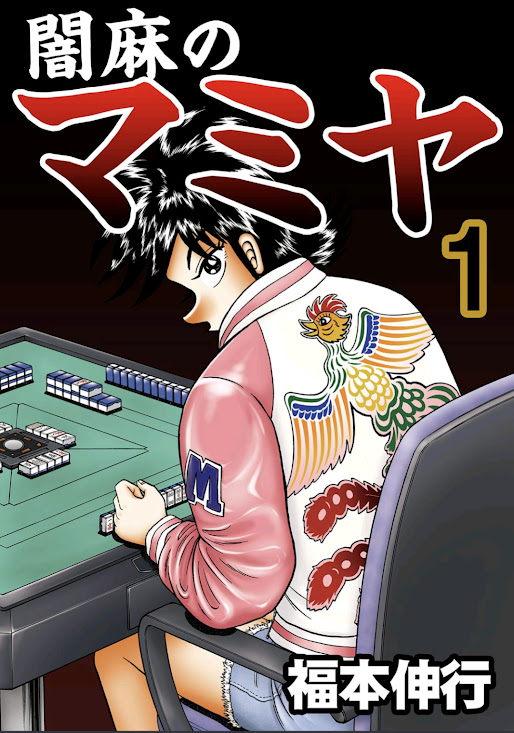
Two years ago, I found out about Akagi author Fukumoto Nobuyuki’s newest mahjong manga: Yamima no Mamiya, also known as Yami-Mahjong Fighter: Mamiya. Set 20 years after Akagi Shigeru’s death in the series Ten: Tenhoudoori no Kaidanji, the latest series aims to change things up in the well-worn mahjong manga genre by introducing in its title both a new way to play (“yamima” or “darkness mahjong”) and an uncommon protagonist for Fukumoto: a 17-year-old girl named Mamiya.

Due to the initial lack of digital releases of Yamima no Mamiya, I put off checking it out, but since early 2021, the series has started to appear in Japanese ebook shops. Now having read Volumes 1 and 2, my main takeaways from the manga are 1) It has that reliably strange Fukumoto style, and 2) Fukumoto doesn’t exactly know how to write female characters.

The Latest Gimmick: Darkness Mahjong

Yamima no Mamiya’s titular “darkness mahjong” is sort of the polar opposite of the Washizu mahjong first featured in the pages of Akagi. But whereas the latter involves playing with clear tiles that can reveal parts of your hand that would normally be concealed from view, darkness mahjong allows players to hide discarded tiles from view. However, should a player who hid tiles still manage to lose, they’ll lose much more than if they had played normally—and getting your “dark tile” claimed for a win results in an even steeper penalty. Mamiya is an expert in this style of play, and she shows sharp gambling instincts.

Mamiya and the Male Gaze

Character-wise, Mamiya’s androgynous appearance and youthful attitude give me the impression that she’s designed to come across as a product of a new era unlike what we’ve seen in the Akagi universe. However, she doesn’t feel like a character to whom the presumed Kindai Mahjong-reading audience of older men are meant to relate. Whereas Akagi Shigeru appeals by a badass power fantasy and Itou Kaiji has the charm of being a perpetual underdog, Mamiya is treated with a certain kind of distance that I presume is by virtue of her gender, like she’s a female side character in a salaryman manga who abruptly got the starring role.

Because of this, Mamiya’s presentation feels like a very conscious and intentional use of male gaze, though any sort of gratuitous sexual objectification is heavily limited by Fukumoto’s artwork. While Mamiya offers her body in a gamble with her first major opponent, a 70-year-old entertainment mogul named Onigashira Kanji, he bawks at the age gap—which then results in a running joke where Mamiya accuses Onigashira of being a perverted old man despite him trying his best not to make it happen. It’s humor by an old dude, for old dudes. 

Another Genius who Descended from the Darkness?

Given that Mamiya is presented in the manga as “Akagi’s legacy,” the big question that has yet to be revealed is if that’s simply due to her mahjong skills or if there’s some familial connection. Could she be his daughter? She does occasionally have a very Akagi-esque smirk. Perhaps she learned the game from her uncle Shigeru, and now she’s heir to his name. At the very least, she pals around with a now-gray-haired ramen shop-owning Osamu, who remains delightfully mediocre in every way possible—and like the past, he’s mainly there to be a Krillin to Mamiya’s Goku.

I’ll Keep Reading for Now

I don’t think it’s impossible for Mamiya to grow more interesting and robust over time, but Fukumoto’s heroes aren’t exactly about character development, so I’m not holding my breath. The series has also yet to finish its first big match, and without that final masterstroke moment where Mamiya’s presumed genius is on full display, it’s hard to make a solid judgment about the series. I’m going to keep following Yamima no Mamiya, hopeful that it’ll deliver.

P.A. Works and the Home-Renovation Spirit

Some time ago, I wrote a kind of light and frivolous observation: What if the home renovation shows were given a kind of isekai twist? Because both genres are built on reliable tropes and wish fulfillment, it could work. What I later came to realize is that there are already anime out there that capture some of that same spirit as a Fixer Upper or Home Town, and they’re “most P.A. Works shows.”

While P.A. Works anime like Sakura Quest and the recent The Aquatope on White Sand aren’t focused on sprucing up individual houses, they do often tackle or at least address an increasingly prevalent problem that home renovation shows are also built around: decreasing populations in small towns as people move to bigger cities to find opportunities and birth rates decline. This is a recurring issue in both Japan and the United States in particular, and has led to the decline of rural areas as they can’t hope to compete with more urban ones. Much like how Home Town remodels homes to try to breathe life into Laurel, Mississippi, so too does P.A. Works create events from scratch like Hanasaku Iroha’s once-fictional Bonbori Festival as a way to try to start traditions—because they have to begin somewhere, right? Sakura Quest meanwhile is explicitly about this topic, and the characters actively strategize on how to bring people back to a half-way abandoned town.

The cause is just, and it would be great if these approaches could make a difference, but there are underlying issues that TV shows, fictional or otherwise, can only do so much to fully fix. For the US, one major problem is the poor health infrastructure (and infrastructure in general) that forces even those who might not want to leave non-urban areas to try to chase employment down in the hopes of, if not getting health insurance through work, at least making enough money to afford it. In Japan, a lack of economic opportunities and a sexist society that still looks at career-oriented women with suspicion means that the rural regions of Japan are filled with empty and abandoned houses as a brain drain occurs. 

I wonder if the two sides could learn from each other. Perhaps P.A. Works can do an anime all about renovating homes in a town, while maybe HGTV or whatever can try to make a program that pulls the camera back a bit and looks at infrastructure issues beyond single homes per episode. If there’s some way to make both work, I’d love to see the result. 

The Drama of the Stage: Kageki Shojo!!

I love pretty much everything about Kageki Shojo!! It’s not the first anime about aspiring actors, and it’s certainly not the first to be inspired by the Takarazuka Revue, but it combines elements of both in a way that makes every episode an emotional journey.

Watanabe Sarasa is a teenage girl who has just been accepted into the Kouka School of Musical and Theatrical Arts, which trains students to become future members of the all-female troupe known as the Kouka Revue. It’s no easy feat getting in, let alone making it through the program, but Sarasa has a couple of unique traits that cause her to stand out: her towering height compared to the other students, and her background connected to the traditionally all-male kabuki theater, which brings a different flair to her performances.

Kageki Shojo!! Inevitably reminds me a lot of the classic Glass Mask, especially with how much Sarara’s ability to embrace her roles and mimic others is reminiscent of Kitajima Maya. However, while I hardly remember any of the characters in Glass Mask outside of the major ones, virtually every side character in Kageki Shojo!! makes a powerful impression. Each girl brings their own perspective and baggage to the Kouka School, such that even the notion of “pursuing success” can differ immensely in terms of how each character defines it, and what they perceive their own strengths to be.

The students’ backstories (and current stories for that matter) can also get quite dark at times, with topics like sexism, neglect, predation, and bulimia being explored. Impressively, the series balances both its heavier and lighter elements without trivializing the former or making the latter feel inappropriate.

The anime ends at 13 episodes, but there’s clearly more manga that can be adapted. I can’t wait for a second season, should it ever come o