The Identity Crisis of Twitter

To a great many, social media is just a part of life now. Whether it’s Instagram, Facebook, Snapchat, or Twitter, these websites and apps are practically glued to us due to the ever-increasing ubiquity of smartphones. But each form of social media in certain ways replicates the online communication tools of old, and I find that with Twitter in particular, its strengths and weaknesses come from being essentially a highly modular chatroom. The problem is that, while the scope of this “chatroom” can be large or small, individual users only have so much control once it gets beyond a certain size, which leads to Twitter and its users running into an identity crisis of sorts.

It’s true that if you want an absolutely private experience on Twitter, you can more or less make it happen. Set your account to private, only follow a handful of people, and maybe even communicate primarily through direct messages. You can actually just make it about you and your friends. However, there are a few aspects that limit the Twitter experience once you move past that point and want to utilize the site as most others do, which is to operate in this massive space where you can instantly search for what people are saying about any given topic.

Traditionally, chatrooms were less people-focused and more concept-focused. Even in the earliest days of AOL, you scrolled through a potential list of chats, picked one that matched your interests or desires, and then joined. Even if it was just to ask A/S/L to everyone, there was a sense that you were stepping into a shared, localized space. Web 1.0 had this feeling in general. With Twitter, you are essentially your own chatroom moderator, and it’s up to you to constantly manage who you want to listen to and who you want to interact with. This kind of customization certainly has its merits, as it lets you really control your experience on Twitter to a certain degree, but having to potentially police your own twitter feed constantly is practically a recipe for decision fatigue. A user doesn’t have to care that much, but that can lead to the next problem: if you choose to take a relatively hands-off approach, that means you can’t control the people who are peering inside.

A common story of many a Twitter faux pas is that a user (often a fairly prominent one) treats their very public and well-known account like it’s still a small, localized experience when things have in fact changed. This person might be using in-jokes that appear crass or downright offensive to outsiders, but is considered to be innocuous teasing by their more immediate circle. They might even get called out by their followers for those words and asked to apologize, and those followers might even have a point. Even so, it can feel like there’s a disconnect between what this particular user thinks is their Twitter experience (shooting the breeze with friends) and what the users at large think is the Twitter experience (a public forum where any and every statement hangs in the air for all to see).

Consider two scenarios of a person in real life who says something racist, not expecting it to be an issue, only to be reprimanded by someone listening. In scenario #1, it’s a private setting where a friend is warning this person that what they’re saying is messed up, and they need to watch how they think and use words. In scenario #2, it’s an open space where everybody’s listening and a stranger shouts down the speaker for being so damn racist. Both cases involve someone rightly pointing out racist speech and that it needs correcting, but there’s a fundamentally different experience between someone who says something around those with whom they’re familiar and while surrounded mostly by strangers. The issue with Twitter is that it can seem like the former on the surface, only for a user to discover that it’s been a public square all along. The perception of extremely public vs. relatively private space explodes and collapses in a way that doesn’t happen when you actively search for servers and chatrooms on IRC or the more modern Discord.

I believe that this folding of public and private on Twitter is also what makes harassment on the platform especially insidious. It’s no secret that certain groups (especially the alt-right) have learned to almost weaponize Twitter’s idiosyncratic behavior. They can make a statement, “innocently” @ another user, and sit back and let their followers dog-pile that user. They can search out people who are discussing a topic, and attack total strangers in their replies. Users might want to interact through Twitter as if they’re just talking to their friends and acquainances, but the search function makes it possible to seek out holders of different opinions and try to verbally abuse them. It’s all too easy to find someone you disagree with on Twitter, and to see them as the enemy.

Chatrooms aren’t and weren’t ever peaches and rainbows. They come with their own hosts of problems, from power-abusing moderators to the active nurturing of toxic spaces by users if they should so choose. I used to be part of a chatroom or two where there were some people with gigantic chips on their shoulders—folks who seemed a little too trigger-happy with their hostilities. I remember a time where I talked about my surprise that a couple of anime voice actors were married to each other, only to get shouted at about how I must be one of those shallow folks obsessed with following the frivolous minutiae of celebrities (but of course said in a much less polite way). I thought the guy was being an asshole, but I also went into that chat knowing that this was a possibility, and that I was ready to fight back and call him out on being unnecessarily angry. Not everyone is willing or should be willing to have to fend off trolls and angry mobs, but Twitter’s public/private collapse makes that fight all the more inevitable for anyone discussing a controversial topic.

I’ve been on Twitter for over ten years now, but I’ve come to realize that I’ve reduced my utilization of its chatroom-esque qualities a long time ago. I still do communicate with friends and mutuals to an extent, but a lot of it is me shouting into the wind and seeing what sticks. Much like this blog here, I use it as a place to experiment with an express thoughts and ideas. Analyzing this shift in Twitter behavior, I think it’s largely because a certain degree of distance is necessary. Those who jump onto Twitter with bleeding hearts inevitably attract sharks. But while there were always sharks, even among the islands of Web 1.0 and 2.0, the social media age means being surrounded by potential predators on all sides.
Ahh Real Babies: Hosoda Mamoru’s Mirai

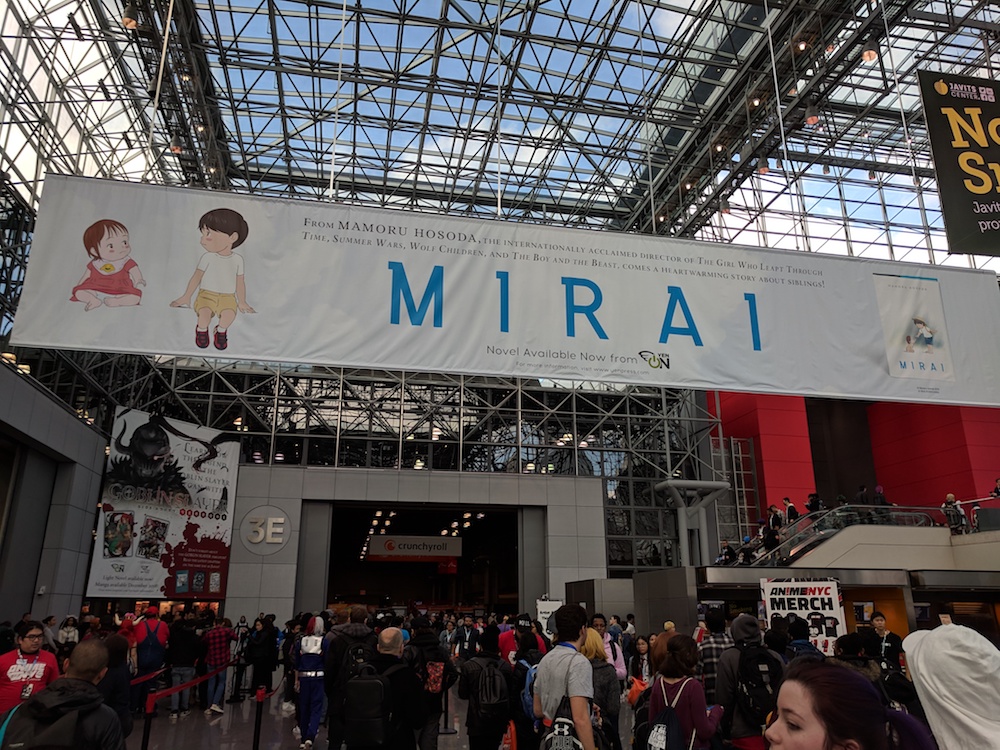
Director Hosoda Mamoru is nearly synonymous with family themes in anime films, but his newest work, Mirai (in Japanese: Mirai no Mirai) takes it to a whole new level. Whereas his past films such as Summer Wars, Wolf Children, and The Boy and the Beast explore the value and meaning of family, Mirai is more focused on the authentic feel of raising (and being) real flesh and blood children, and the challenges that come with having a family.

The story of Mirai centers around Kun, a bullet train-loving toddler who’s meeting his newborn little sister, Mirai, for the first time. As is typical of only children who suddenly have a sibling in their lives, he quickly grows jealous over all the attention given to the new baby. However, his tantrums lead him to discover that his backyard is the gateway to something magical, and that it lets Kun discover places and times he never could have otherwise. Through these voyages, which bring him to see his family members past and present in a new light, Kun is witness to the many small steps that lead him to being who he is.

At least, that’s the way the film presents Kun’s adventures. Mirai has almost a Calvin and Hobbes feel in that they never explain outright whether it’s all his imagination or if there really is time travel, and I think that ambiguity is a strength. While Mirai leans more toward the notion that Kun is actually accessing his family’s history given the amount of details he picks up, it doesn’t discount the possibility that Kun, like so many young children, is paying more attention than anyone realizes.

What makes the film truly memorable is the way it so realistically portrays the behavior and learning process of small children in Kun and Mirai. Speaking from my own experiences, I have plenty of friends and family at this point who have raised kids of their own, and many of the obstacles the parents face in dealing with Kun and Mirai actually perfectly mirror the experiences I’ve seen in those close to me. In particular, there’s a scene where Kun refuses to change out of his favorite pants—a stubbornness I’ve seen firsthand. It can feel almost too real, as if Mirai is trying to tell parents that it understands what they’re going through. Moreover, Kun’s mother and father also have to deal with delegating responsibility in their “working mother + work-from-home father” situation that’s quite unusual in Japanese society, which leads to even more examination of the “roles” of family in the modern age. To little surprise, in an interview shown at the screening, Director Hosoda discusses how having children of his own influenced the making of this film.

But it’s not just the parents that the film successfully empathizes with; the portrayal of the experience of being a young child is just as vivid and authentic. There’s one scene in particular toward the end of the film that successfully captures a child’s fear of being in a strange and unfamiliar place. While I’ve not been a baby in a long, long time, Kun’s reaction to his surroundings reminds me of the nightmares I had as a kid, as well as the times where I got lost in a mall or similarly large and eerie spaces.

Mirai feels more like a series of small episodes tied together into a single movie, but perhaps that’s the way childhood is. There’s no grand scheme or single obstacle to be overcome. It’s a learning process for the entire family.

SSSS.Gridman and the Question of Genre

At a Studio Trigger panel at Anime NYC 2018, an interesting exchange occurred. During the Q&A session, the topic of Trigger’s preferred genres came up, and producer Wakabayashi Hiromi asked the audience what genre they thought the studio’s latest anime, SSSS.Gridman was about. They received various answers, but a common one was “action,” to which they responded, “Action? Really?” What this says is that, on some level, many viewers see SSSS.Gridman very differently compared to its creators.

The point here isn’t to figure out what genre SSSS.Gridman (Twin Peaks-esque paranormal mystery?). Rather, it’s to dwell on that incongruity between so many of those con attendees and Trigger itself. There are certain caveats to account for—like how this was only a handful of fans in the grand scheme of things or the way the series holds its cards close to its chest—but something has to be creating that difference in judgement.

Perhaps those viewers simply have a broader, more lenient idea of what denotes an “action series,” especially compared to creators who inevitably go in with their own values beforehand. If you asked Tomino Yoshiyuki what genre Mobile Suit Gundam is, he might not necessarily say “mecha” or “science fiction” or, indeed, “action.” Moreover, while fans might take the tokusatsu feel of the show (which it captures down to the rubber suit-like movements of the monsters) as more evidence of its “action” qualities, Studio Trigger could be seeing it as an aesthetic quality in service to a greater structure.

Adding thrilling violence to a story could just inevitably change how fans perceive it. The spectacle, on some level, can be overpowering. While I can’t say with full confidence that SSSS.Gridman is a Twin Peaks, there is an anime that takes a lot of inspiration from David Lynch and Mark Frost’s influential TV series: JoJo’s Bizarre Adventure Part 4: Diamond is Unbreakable. While that series revolves around its small-town mysteries as well, the legacy of JoJo as a shounen fight series is still present in its DNA. For some fans, that battle tendency might dominate their view of Part 4.

Whatever the case may be, it’s clear that in the eyes of the creators, there’s more to SSSS.Gridman than just action. At this point, as the show moves towards its conclusion, that might very well be “obvious,” but I do wonder how many fans it pulled in under the vague pretense of strong fight scenes.

Smashing-Good Holidays: Ogiue Maniax Status Update for December 2018

Ogiue Maniax just celebrated its 11th anniversary, and it feels like quite the milestone. However, as much as that has been on my mind, my head space is currently occupied 80% by Smash Bros. Ultimate. 4 days to go!!!

I’m always grateful for my supporters on Patreon and ko-fi. Many thanks to the following!

General:

Johnny Trovato

Ko Ransom

Diogo Prado

Sue Hopkins fans:

Serxeid

Hato Kenjirou fans:

Elizabeth

Yajima Mirei fans:

Machi-Kurada

Here are also my favorite posts from November:

Geek Reference Culture vs. Rap Reference Culture: A Personal and Meandering Comparison

An exploration of how heavy reference usage differs between geek entertainment and rap.

How Hugtto! Precure Tackles Childbirth and C-Section Controversy in Japan

The current Precure series likes to go places.

“Hi-New York”: Anime NYC 2018

My overview of Anime NYC 2018.

Hashikko Ensemble

Chapter 10 feels like the end of one story and the beginning of another.

Patreon-Sponsored

An Amateur Look at the Atelier Games

How mellow can an RPG series get?

Closing

I promise that not every post I make for the next 6 months will just be about Smash Bros. That said, I get the feeling there will be plenty to go around.

The Pressure to Morally Justify One’s Fandom Tastes

When I first began to formulate this blog post in my head, the core of what I wanted to write about was something I observed in online fandom: the policing of preference and desire, and the seeming need to couch fandom debates in moral rhetoric. My desire was to focus on the absurd degree by which fans try to justify their tastes by presenting some greater benefit or boon to humankind.

However, I’m not the only one who’s been ruminating on the subject. A recent article about essentially weaponized anti-fandom had explored the subject in depth, the author tracing their observation of this disturbing trend through the pains of trying to transplant the islands of LiveJournal to the complex web of Tumblr. Anti-fandom goes from being passion with a negative bent to a cold and calculated scalpel designed to influence and threaten fans, critics, and creators alike. The article has forced me to approach this post a little differently than I had intended. To that end, I still want to think out loud about that concept of forced justification, but more as the other side of the coin compared to what is described by that author.

Critical analysis of preferences in storytelling and art, be they one’s own or the preferences of others, is an important part of the relationship between creative endeavors and their effects on people and society. It’s not wrong that a series like Tintin, which early on featured racist caricatures, would fall under rightful scrutiny, and that those decisions open up important conversations, or that superhero comics are having to confront the sexism and racism that has been entrenched in its veins on both content and creator levels. However, there has been a trend of fans who try very hard to prove that their particular fandoms are fundamentally superior (or indeed that others are inferior), as if fandom reflects wholly one’s dedication to the moral fiber of society. Perhaps it’s all an act, as the article implies, a feigning of outrage to achieve a selfish goal, but I believe there are also fans who feel that they cannot like something unless it gels 100% with how they view themselves on that moral level.

This is a potentially harmful philosophy to abide by, not just for those who are potentially attacked by this sort of fan, but directly dangerous to the fan themselves. When a  “problematic fave” enters the conversation, the situation descends to  whether or not liking something in fantasy reflects some moral or personal shortcoming. From there, it’s a short step to accusing each other of not believing in the greater good strongly enough.

When we still don’t have real answers as to how people’s relationship with fiction affects everyone (whether broadly or on an individual basis), it comes across as a desperate desire to not be on the wrong side of the barrel. Either that, or they risk ending up like the character Nishikinomiya Anna from the anime/light novel Shimoneta. Anna, who was raised from childhood to be the perfect representative of moral fastidiousness, turns out to be dangerous and depraved in certain ways. However, because she was brought up to believe that she is pure and just, she rationalizes her behavior as being inherently moral because she is inherently moral herself.

My concern is that in an environment where there is (rightful) social pressure to be more open and to not hold beliefs that demean other people, it can become all too easy to believe that every word you say carries deep significance to such an extent that people feel they cannot be frivolous. If one feels that their words must reflect their fundamental being, then it also becomes dangerous to think that every piece of entertainment you consume has to be morally justified, as if it fits into a greater picture of a consistent and righteous self. It makes me think that these fans feel disdain for the fact that humans are often contradictory, and rather than understand and accept that, they see admonishing their peers for their inconsistency as the better choice.

For Hymn: Hashikko Ensemble, Chapter 10

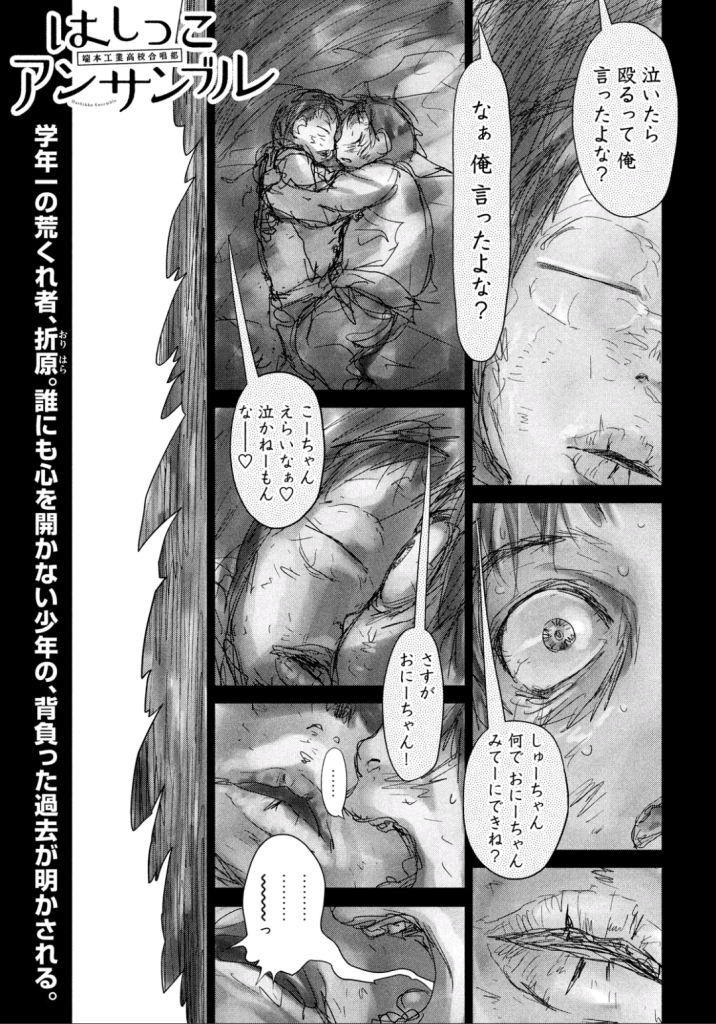
In this chapter, the secrets of Orihara—his hearing and his traumatic past—are revealed in full.

Summary

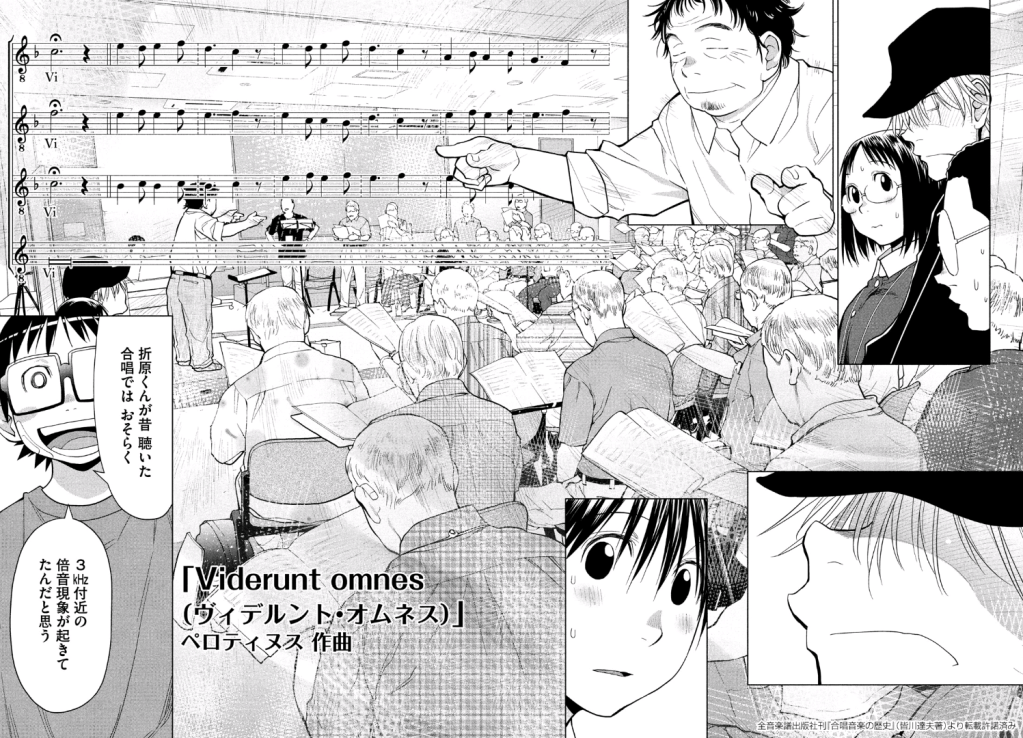
Waking up inside the nurse’s office, Orihara explains that he suffers from a chronic high-pitched ringing in his ears. Jin figures out that Orihara suffers from a slight degree of hearing loss due to overexposure, specifically in the 3khz range—the same frequency as a baby crying or a woman screaming. Jin, however, believes Orihara’s brain is likely still picking up sounds at 3khz even if his ears aren’t, which is why Orihara can somehow “hear” things that he “can’t hear.”

During this talk, Orihara reveals two things about his past to the others. First, his little brother died. Second, the one time he was able to get rid of the ringing in his ears was in third grade, at a recital by a choir of old men, and a specific religious foreign song—hence, why he keeps listening to similar music. For this reason, Jin uses his connections to bring Orihara back to that choir from his childhood and have him repeat the same song. Hearing it again, Orihara is moved, but while Jin’s scientific explanation seems right, Akira has a simpler one: Orihara was healed by this music. Envisioning (?) a young voice from heaven speaking directly to him, Orihara smiles.

Later, at school, Jin comes barging in to get Shinji and Orihara (given name Kousei) for chorus club practice. Orihara is now an official member of the Chorus Club. The days pass, and coming up now is the MHK Concours—aka M-Con—an amateur chorus competition!

Music: When Science and Magic Collide

Orihara’s story, in my eyes, adds an interesting wrinkle to the ongoing theme of music as something that straddles the line between the known and the mysterious. Jin’s explanations make sense, yet I can’t help but wonder if Orihara’s deceased little brother might actually be trying to communicate with him. The manga itself never really says one way or the other, but regardless of the actual (meta-) physics, it’s notable that Orihara feels the song in his head and in his heart. There’s an important lesson here about how even as we might “understand” music on a theoretical level, there’s still an almost magical or spiritual quality to song that captivates the soul. As dominant as Jin is in this manga, his perspective isn’t the only one.

That being said, I doubt the manga is trying to push any sort of religious angle. It seems more an acknowledgement of the significance of the church in Western music.

Bouncing Back from Tragedy

Orihara’s story is the heaviest I’ve seen a Kio manga get, and that’s including Ogiue trying to commit suicide as a kid. Child abuse, and the degree to which Orihara’s anger is a product of his trauma, are incredibly tragic. Although not said outright, it’s extremely likely that the guy suffers from PTSD. The story basically implies that Orihara can’t hear the 30khz frequency because he was constantly being subjected to the anguished screams of his mom and his brother. And somehow, the series manages to swing around into silliness not long after.

It’s really not easy for a narrative to get so serious and then switch back into lighthearted humor, but I think Hashikko Ensemble does it well by actually making the awkwardness in that transition more prominent. In particular, when Orihara mentions his deceased brother, Jin seems to obliviously bring the topic back to music and science. But is Jin as ditzy as he acts? His ambiguously strained relationship with his dad, or indeed something else, might hint at this being a willful act of feigned ignorance.

Songs

The featured song this chapter is “Viderunt Omnes,” a Gregorian chant composed in the 11th century by Protein. Gregorian chants were traditionally used in Roman-Catholic churches.

Final Thoughts

Next chapter promises to focus on Kurata, whose intensity and dislike of the frivolous has me intrigued about her. However, given how quickly the manga jumped from “Orihara’s on board” to “Competition!”, I’m worried that Hashikko Ensemble is suffering from a lack of popularity and his rushing things forward. I genuinely think this is a very strong manga from Kio Shimoku, so I hope it has a long life ahead of it.

Amateur Thoughts on the Atelier Games

I’m not terribly familiar with the Atelier RPG series. I’ve never played any of the games, and I didn’t even realize that Sue was cosplaying the main heroine from Atelier Meruru in a chapter of Genshiken (see above). But I was asked by one of my Patreon sponsors to write something about the games, so I decided to do some research. While I can’t even pretend to call myself an expert, what I’ve found out about the Atelier games has intrigued me, particularly the way they eschew Final Fantasy/Dragon Quest-style “save the world” scenarios.

Before I go further, I’d like to thank two YouTube channels: ValkyrieAurora, whose overview of the entire Atelier franchise allowed me to better understand the overarching themes of the games, and WeLoveGUST, whose Atelier Meruru play-through introduced me to the feel of an Atelier game. Watching them is no substitute for actually playing, of course, but they were quite helpful nevertheless.

Video games have classically had a violence issue. I don’t mean that violent video games are bad, or that they inherently corrupt people, but that fighting is a convention that’s so easily relied upon in games that it can be a kind of crutch. Fight to save your kingdom. Fight to get revenge. Fight to prove your worth. This doesn’t define all games, but those that step away from violence, also tend to go so far left-field from that world as to be considered a practically different universe. I’m talking about puzzle games like Tetris or gentler games like Harvest Moon/Story of Seasons or Animal Crossing. There’s a wide space in between those approaches (“violence solves everything” vs. “what’s violence?”), and the way the Atelier games strike a middle ground is rather fascinating.

Rather than having a looming evil that must be defeated, the narratives of Atelier games are more often based on personal growth. The key gameplay involves the player as the main character learning to make potions and other concoctions in a quest to master the discipline of alchemy. Experimentation is encouraged, and while the games can vary in terms of how demanding the clock is, they more often than not lean towards the leisurely. It’s still clearly a non-mundane environment, and there is combat involved when it comes to gathering ingredients, but violence clearly takes a backseat.

In this respect, I find myself drawn to Atelier Meruru‘s soundtrack, which is very heavy on recorder and flute usage. There’s a certain sense of innocent fun that permeates the game as a result, and it communicates a certain message, that there’s room to breathe, explore, and maybe even relax. It really sells the games well and really entices me to try out one of the games myself.

The franchise is hardly devoid of a more fantastical setting, as all of the Atelier games take place in classic fantasy settings full of magic and kings and queens, but the balance it strikes is very alluring. It’s not so far into “farm plants and drive trucks” territory as to feel like a simulation of the mundane—the games give the impression of adventure, just not in the “defeat evil” sense. At the same time, I do wonder if it can be hard to balance the niche appeal of that classic Atelier pacing with the desire to draw in a more mainstream audience. In her video, ValkyrieAurora talks about how some of the games put more emphasis on going out on a quest. It makes me wonder if GUST (the company behind Atelier) thought that they needed to draw in more general RPG players, perhaps at the expense of the more core fans.

Atelier is hardly the only RPG series to try and minimize the impact and importance of violence, but its approach is a refreshing one, at least to someone like myself who didn’t really know about these games. It’s a celebration of a certain mellow pace that the world could use more of.

This post was sponsored by Johnny Trovato. To find out how to request topics, visit the Ogiue Maniax Patreon.

One-One Chuushingura: Ogiue Maniax 11th Anniversary

11 years of Ogiue Maniax feels…strange. Because it comes right after the 10th anniversary milestone, it feels a bit like a new beginning. I’m honestly not entirely sure how to approach celebrating 11 years, so I’m going to be pretty off-the-cuff with this post.

Sometimes it hits me just how much time has passed. Titles that I remember being the hot new thing back in 2007 are now seen as retro classics by a huge portion of anime and manga fandom. What’s more, the way we approach fandom has changed entirely—case in point, YouTube has gone from being the strange new thing to being the place fans go to for anime reviews. As someone who stuck with writing for the most part, it’s been interesting to see the rise and fall of anime blogging. The fact that my blog views are roughly around where they were in 2008 feels like I’ve made a return back to the early days, but everything’s different. The world, the internet, even I’m not what I was 10 or 11 years ago. That’s not necessarily a bad thing, mind.

As much as I’d like to be able to reach more people, I’ve come to realize that trying to follow the trends of what you should talk about can be like a shackle on your creativity and autonomy as a creator of content. It’s not necessarily easy to talk only about the latest and hottest thing, but on a personal level, I would find it to be stifling. If I’m interested enough in a current show to say a couple of things, then that’s great. But I’d rather not feel forced or compelled to hit on a specific subject just because it would get more eyeballs on me in the short term. Besides, you never know when the thing you did in the past will come sliding back into the spotlight. Just this past month, I suddenly saw a huge uptick in visitors to Ogiue Maniax. The reason: LeSean Thomas linked to my interview with him from Otakon 2016.

This might all seem unusual to say when I’ve had my own Patreon for the past few years, but there’s a reason I’ve set up my highest-tier reward in a particular way. It’s $30 because I don’t want it to be absolutely impossible for the typical anime fan to afford, but I don’t want it to necessarily take over the blog either. I also give myself the freedom to approach any and all topic requests on my own terms, so I can take these requests as both a way to give back to any patrons who decide to take me up on that offer and as a personal learning experience. It’s very easy to get trapped in a particular mindset or view, and having someone literally say, “Well, why not check this out?” can be very helpful.

That all said, I have had to make adjustments to Ogiue Maniax, especially in being careful with my language and approach to writing. This blog, at its core, is a way for me to explore ideas, and it’s part of the process to throw out half-formed ideas to see whether or not they stick. However, as I get older, and as the world around me changes, I feel a greater responsibility in terms of how my words (or lack thereof) might encourage harmful behavior from others. I still feel it important to ask questions about how we as people interact with anime, manga, and all threads related to those topics, but there’s a certain benefit of the doubt I can no longer give to geek culture as a whole. I saw the early seeds planted in fandom that have driven campaigns of racism, misogyny, and downright misanthropy in this world, and I considered myself separate. I keep thinking about all the times I failed to speak up, or all the times I may have inadvertently defended dangerous mindsets, and I feel almost compelled to make up for my errors.

Man, that got heavy.

I guess I’ll end off by saying this: Ogiue Maniax has been an 11-year reflection of myself as a work in progress. It’s an experiment full of successes and failures (and increasingly fewer Fujoshi Files…) where a conclusion still cannot be seen. But I’m also encouraged by this, and I feel that it’s taught me some important life lessons. No matter where we are, we always have the chance to change and to better ourselves. Don’t base your own worth or the worth of your achievements on comparing yourself to others. See only who you were yesterday, and try to move forward from there.

“Hi-New York”: Anime NYC 2018

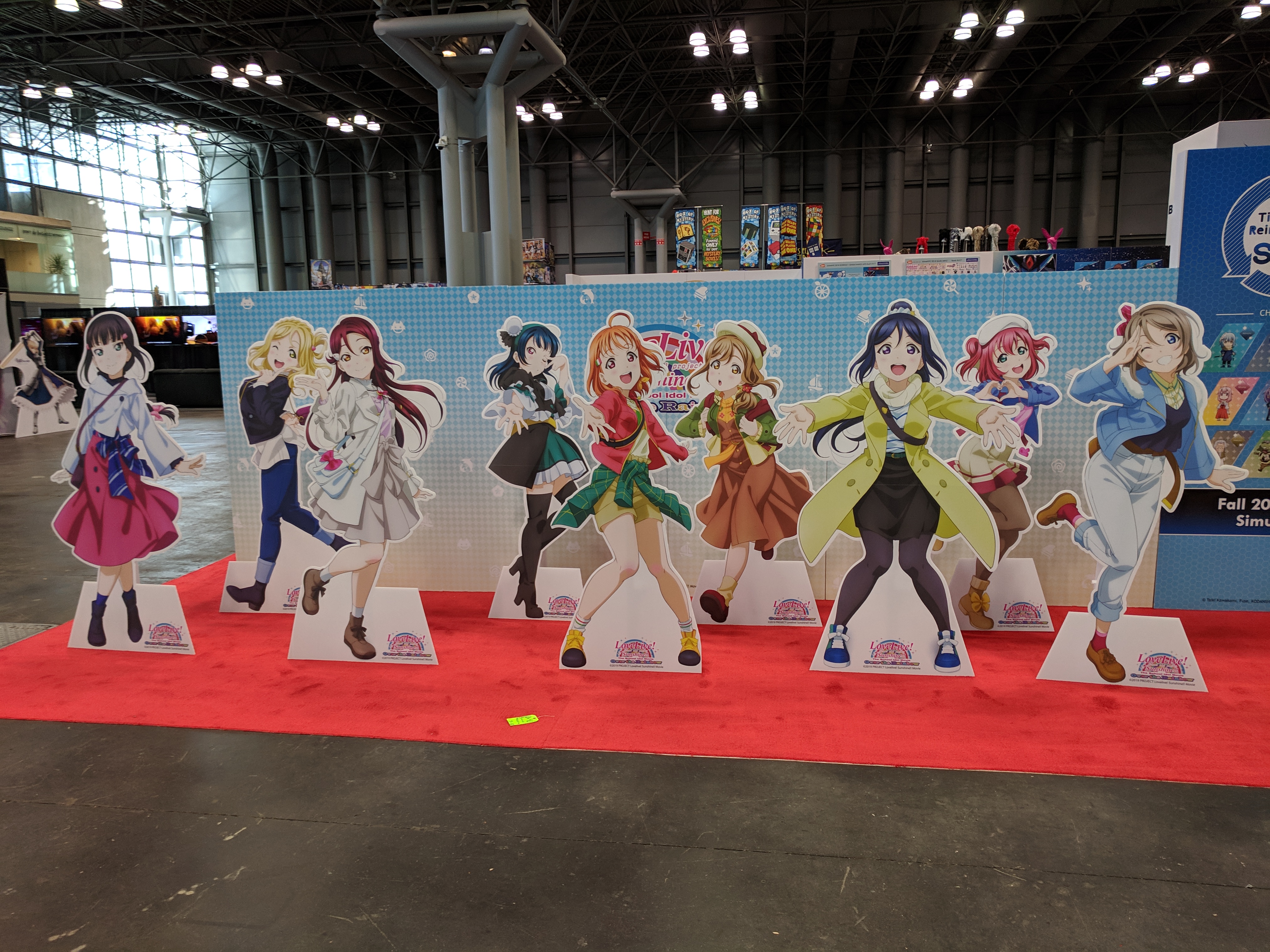
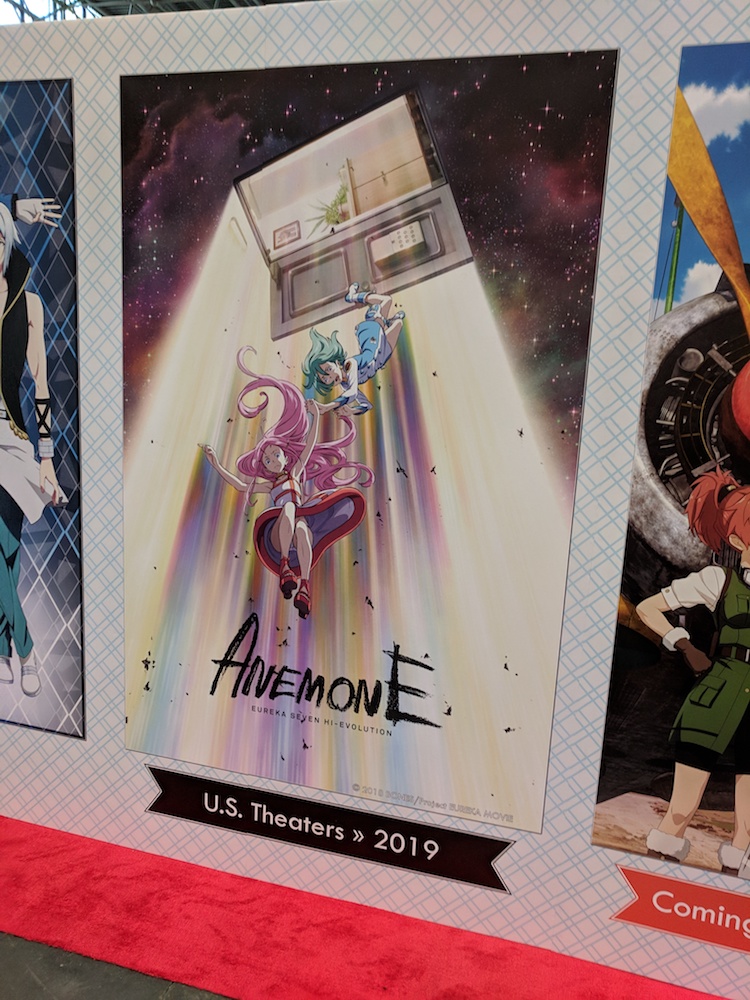
I had nothing but praise for last year’s inaugural Anime NYC, which I felt was the right size, scope, and level of focus for a New York City anime convention. But it can be difficult for a sequel to live up to a hit original, so I was curious to see how the second time around would fair.

Spoilers: It was pretty fantastic.

Exhibitor’s Hall, Artist Alley, and Moving Around

Once again, Anime NYC hit it out of the park in terms of having the right amount of space. It’s a tricky balance to maintain, as too little space means crowding and delays for all attendees but too much space can make a convention feel empty and isolating. Aside from absolute peak hours in the Exhibitor’s Hall and Artist Alley, I never had any trouble moving from place to place. There might come a point where Anime NYC starts to outgrow its space, but the con this year only took up a portion of the Javits—it actually shared convention space with a pet-oriented event called Petcon. In other words, there’s plenty of room to expand.

I also want to re-affirm something I mentioned last year, which is how much I like the Artist Alley space for Anime NYC. Located on the top floor of the Javits, the area is surrounded by glass, which allows plenty of light to come in. At the best times of the day, it makes you feel like you’re walking through a gallery boutique, albeit filled with fandom ships of Voltron: Legendary Defender. As an aside, I was happy to see so much Cardcaptor Sakura stuff this year; perhaps a sign that the recent Cardcaptor Sakura: Clear Card made an impression.

The Star of the Con: Furuya Toru

Without a doubt, the biggest guest for me was Furuya Toru, the veteran voice actor behind roles such as Amuro Ray (Mobile Suit Gundam‘s protagonist), Pegasus Seiya (Saint Seiya), Tuxedo Mask (Sailor Moon), and more. He is, without exaggeration, a legend of the industry, and this was my first opportunity ever to see him. I wanted his autograph and to get some insight from his decades of voice work in anime.

The autograph aspect hit a snag from the get-go, though not entirely through Anime NYC’s fault. For signings, the convention went with a mix of paid sessions and free ticketed ones, and Furuya’s was the latter. This required lining up outside the Jacob Javits convention center Friday morning, which also just happened to be the morning after one of the biggest snowstorms in New York City history. People were made to stand in the cold, despite the fact that there was plenty of room indoors. To Anime NYC’s credit, the con issued an apology the next day and allowed people to line up inside the convention center for Saturday and Sunday. That didn’t solve all the issues with autographs—I’ll get to that later—but it at least showed that they were willing to respond to complaints.

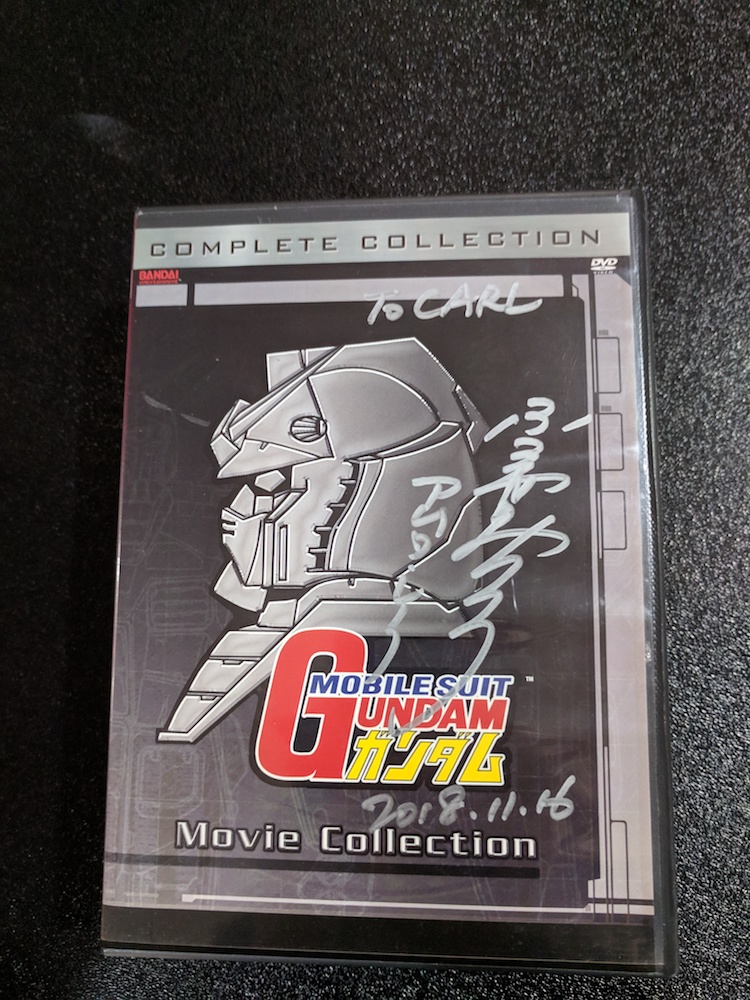
Fortunately, I was able to get an autograph ticket, and I was able to thank Furuya for putting so much passion into his many roles over the years as he signed my Gundam movie DVD box set. It’s a memory I’ll cherish for as long as I live.

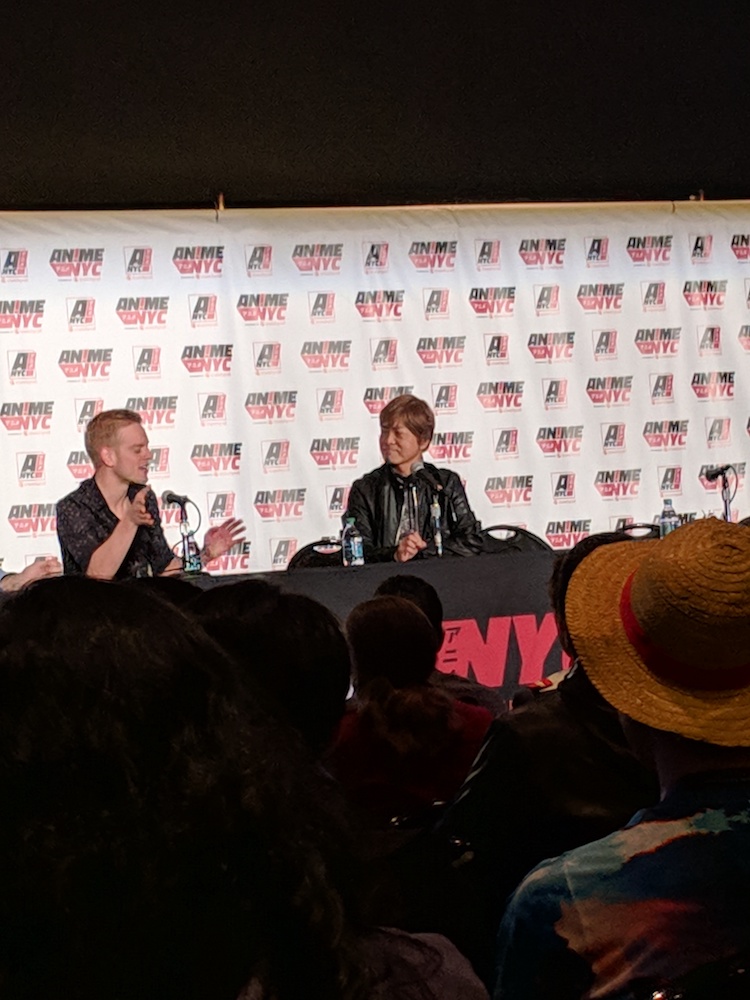
As for Furuya’s panel, it was a mix of both moderated discussion and audience Q&A. Sadly, I was unable to stay for the second part, but the first half provided plenty of highlights. One of my favorite exchanges was when the moderator, Kyle Cardine, asked Furuya about playing the character Ribbons in Gundam 00, who’s thematically an evil version of Amuro. Furuya responded that while he was the narrator in Gundam 00, it was “his kouhai” who played Ribbons. For those unaware of the joke, Ribbons is clearly Furuya (his voice is unique and unmistakable), but the role is credited to “Sougetsu Noboru”—a pseudonym that cheekily means “Moonrise,” a wink to the studio that makes Gundam, Sunrise.

I actually had the chance to provide Kyle a question to ask Furuya as well (thank you Kyle!). Specifically, it was asking about his experience working with director Nagahama Tadao on Furuya’s first big series, the seminal baseball anime Star of the Giants. Furuya gave a look of surprise, and then responded that he didn’t really interact with Nagahama, as the man didn’t attend the recording sessions much. However, he also mentioned that he was only fifteen years old when he played Hoshi Hyuuma, the protagonist of Star of the Giants, and that if the show hadn’t been so wildly successful, he probably wouldn’t have ever become a professional voice actor.

This answer is interesting to me, partly because I asked a similar question back in 2010 to another star actor from a later Nagahama anime: Mitsuya Yuji, the voice behind Aoi Hyouma from Combattler V. In contrast to Furuya’s response, Mitsuya actually said that Nagahama pushed him to improve his performance. This says to me that Nagahama must have changed in the years between Star of the Giants and Combattler V. Or maybe the director felt Furuya needed less guidance, even at a young age? It’s startling how talented Furuya can be, given how well he can modulate his voice between younger and older characters.

One minor mishap from this panel was that the moderator Kyle tried to ask him about Director Tomino Yoshiyuki, but something got lost in translation and Furuya didn’t give a real answer. Here’s hoping he comes to New York again, so we can get a second chance at this.

Shintani Mayumi and Studio Trigger

Another big Japanese guest at the convention was voice actor Shintani Mayumi (Haruka from FLCL, Nonon from Kill la Kill, Rikka’s mom from SSSS.Gridman). She was a speaker at the Studio Trigger Live Drawing/Q&A panel, and it gave me the opportunity to ask her about her experience on the 2000 anime Brigadoon: Marin & Melan. At first replying that the topic was unexpected  Shintani went into details about a memory from that time. Her character in Brigadoon, Lolo, resembles a cat, and so she played the role in a feline manner. However, it’s eventually revealed in the show that the cat-like appearance is a disguise to hide its true form, and seeing a closet full of “cat skins” was a shock to her. She then talked about how Brigadoon still has passionate fans.

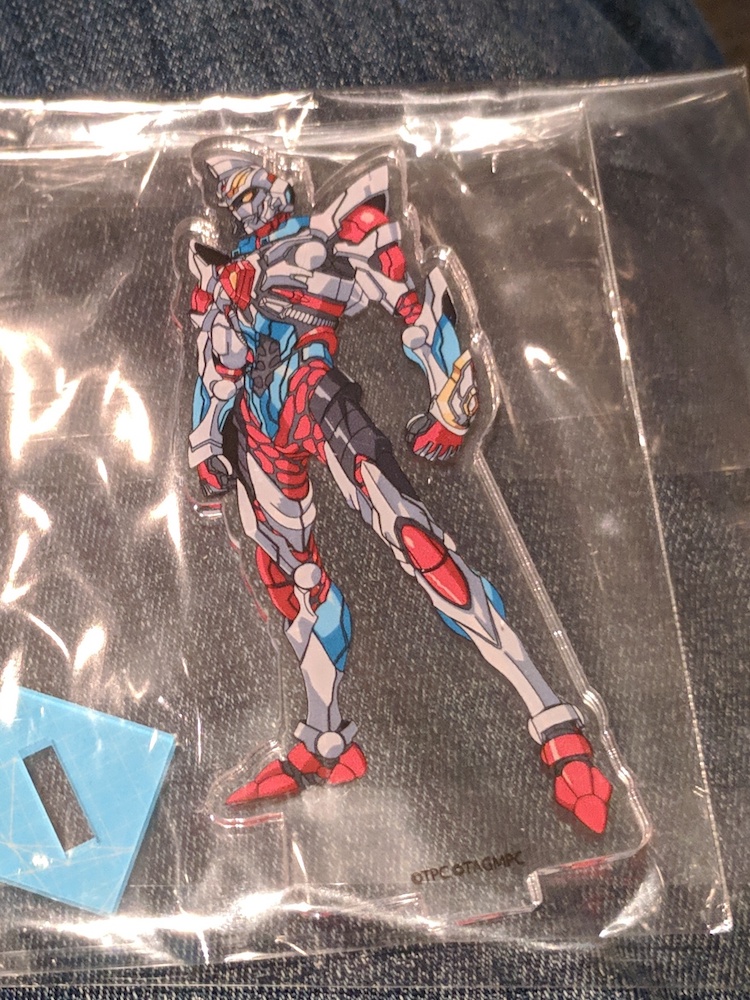
Afterward, I received a nifty Gridman standee as a prize.

I’m truly glad to have asked Shintani about Brigadoon, but I was also a bit torn at first as to who to direct my question at. I really wanted to pick Koyama Shigeto’s brain about his Darling in the Franxx mecha designs or ask producer Wakabayashi Hiromi about whether they watched Superhuman Samurai  Syber-Squad as research for SSSS.Gridman. However, I’ve had the fortune of interviewing Trigger in the past, so I decided to focus my attention on Shintani, who’s a rare guest at US anime cons.

Shintani also got asked about playing Miss Shamour in Go! Princess Precure, and she basically replied that Miss Shamour shouldn’t be a Precure because then she would be too powerful. What’s more, at the start of the panel, Shintani recited Nonon’s signature “Nani sore?!” to audience applause. Totally worth it.

Other highlights of the panel include Wakabayashi’s desire to put Inferno Cop into Smash Bros., the ridiculous video from Anime Expo they showed of them clowning around and expressing how behind they are on their new show Promare. They also had an extended discussion on who to blame for the cockpits in Darling in the Franxx. Koyama and Tattsun (the translator) claimed that it was because doggy-style is Wakabayashi’s favorite position, while Wakabayashi said it was the result of seriously considering what would make sense for the show. The producer also said that there were six members of the design staff, and any one of them could have spoke up.

DENPA and Asada Hiroyuki

Coincidentally, the Studio Trigger panel was followed immediately by a live drawing/Q&A panel for Asada Hiroyuki, author of Tegami Bachi (aka Letter Bee). He was there to promote the manga Pez, which is being translated and sold by the new manga publisher DENPA. The company’s focus seems to be on eclectic prestige titles, as they also brought artist Murata Range over, and are publishing the eerily beautiful An Invitation from a Crab by panpanya (which I highly recommend).

As for the panel itself, it actually had a soothing music track playing the entire time—what I was told was Asada’s drawing music. Unlike with Trigger, which was more of a Q&A with a live art session as a backdrop, this felt like the live drawing was the main star of the show.

Autographs: Ups and Downs

I understand that autographs are never an easy situation for any convention to handle. No matter how an event tries to plan for them, it’s damned if you, damned if you don’t. In that respect, I don’t especially mind the ticket system for signings, which involves lining up to get a voucher to attend an autograph session later, but there are a couple of criticisms I have for Anime NYC’s approach.

First, on Saturday and Sunday, it required lining up at 8am, and given that people will line up early for autographs, it usually means getting there by 7am or earlier. For anyone not staying close to the Javits, it means perhaps having to wake up as early as 5am. Another drawback is that everyone is in the same line for autographs, which is a problem I also have with Anime Expo in Los Angeles. The fact that all of the autographs are funneled into one line means that even if your desired guest isn’t one of the super-popular ones, you still have to deal with all the people who are waiting for the mega-stars.

I hope Anime NYC does some things differently. First, having lines at the start of the day is a good idea, but try to make them at least a little later. Second, ticket lines for autographs should be split in a way that makes it faster for everyone. If those changes can happen, I think it would benefit everyone.

Screenings

Sunrise showed the first twenty minutes of Gundam Narrative at their Gundam panel, and it enticed me enough to want to finish Gundam Unicorn and to see where the film will go from there. I don’t want to spoil too much, but the way it somewhat re-frames the way society looks at Newtypes has me intrigued.

I also caught the Kase-san and Morning Glories film. It’s a gorgeous animated movie about two girls in love, and the way it explores the depths of their feelings is thrilling on a mental and emotional level.

Concert

I attended the Saturday Anisong World Matsuri concert at Hammerstein Ballroom, which featured Kitadani Hiroshi and Kageyama Hironobu of JAM Project, Nakagawa “Shokotan” Shoko, and idol titans Morning Musume. Despite being standing only for non-VIP audience members, it was one of the best anime concerts I’d ever been to. The mix of idol fans and anisong fans actually made for non-stop excitement, as each performance highlighted the best of the old and the new in a roller coaster of bright spots. Shokotan and Kitadani sang “Pegasus Fantasy” from Saint Seiya, followed later by Kageyama and Shokotan doing “Soldier Dream”!). Kageyama and Morning Musume joining forces for both “Love Machine” (a Morning Musume classic, I’m told) and “Chala Head Chala” (the first Dragon Ball Z opening). By the end, everyone came out to perform “THE HERO !!” from One Punch Man together. Hearing members of Morning Musume shout, ‘NOBODY KNOWS WHO HE IS!” will go down as a once-in-a-lifetime moment.

However, my personal absolute highlight of the entire concert was Kageyama performing “Heats,” the opening to the 1999 OVA Shin Getter Robo: Armageddon. It’s one of the first songs that really made me pay attention to Kageyama and one of his greatest, but the age and obscurity factors made me think I’d never hear it performed live. I am incredibly glad to be wrong.

In Closing

From top to bottom, Anime NYC 2018 was a great event. There were some hiccups, especially when it came to managing autograph lines and the cold weather, but I eagerly await 2019. My only regret is that I didn’t get any interviews for Ogiue Maniax this year. If the convention gods find it in their favor, I hope I can ask next year’s guests some solid questions.

Dearth vs. Abundance of Information and Fan Engagement

When I was young, I often wondered about the worlds of the video games I played. Given only sparse information and basic “defeat the bad guy” plots, games were semi-open canvases for me to speculate. This desire is what led me to my earliest internet communities—video game fanfiction sites. Over the years, I began to notice a general distinction for anyone looking to explore beyond what’s available in their favorite works, between those where a bit of exploration reveals mountains of supplementary canon information, and those where the details remain sparse.

I once attributed the difference in fan involvement for filling in the blanks to just a natural consequence of the works themselves. Video game plots were simpler in an age before RPGs and cut-scenes were everywhere, right? More recently, however, I’ve been considering how the two avenues—abundance vs. dearth of information—appeal to different types of fans, and how more and more creative works purposely aim for one or the other (and sometimes even both, if they can manage it).

The “abundance” examples are many, as seen in lore-dense properties such as the Type Moon universe, Star Trek, Star Wars, and Tolkien fantasy. My personal favorite example from yesteryear is the Street Fighter Plot Guide on GameFAQS by Tiamat, because it’s for a universe that is otherwise pretty simple (as fighting game narrative tend to be), and it involves a healthy amount of fan extrapolation by Tiamat. On the “dearth side,” there’s Touhou and Overwatch, which invite fans in to elaborate on characters and character relationships. Broadly speaking, the former appeals to “sculptor”-type fans, while the latter appeals to “builder”-type fans. Sculptor I would define as those who like to reshape what’s already there, while builders prefer raw materials to weave their own elaborate ideas. Both types can make fan stories, but their differences lead to the two classic modes of Star Trek fanfic: the “hard SF” technical explorations, and the “softer” character-building and relationship works. Not that I think of those distinctions as rigid and wholly separate, of course.

An entire character profile and running joke was based on the Touhou character Cirno being labeled “baka” in an instruction manual.

While I am admittedly no expert on The iDOLM@STER, I’ve noticed that both researchers and builders exist within that fandom, possibly stemming from a generation divide of sorts. The original iDOLM@STER games were very involved experiences, where players interacted heavily with their idols. Roughly equivalent to a more animated visual novel format with some RPG elements, players could learn extensively about the characters’ histories, likes and dislikes, and generally explore the idols as fleshed-out individuals. At some point, however, The iDOLM@STER also became prominent as a series of mobile games where that active RPG aspect takes a backseat to more simplified story modes. Here, the visual impact of character designs can matter much more. For fans, especially those who have limited access to all The iDOLM@STER media, “headcanon” expression is a somewhat common Twitter activity.

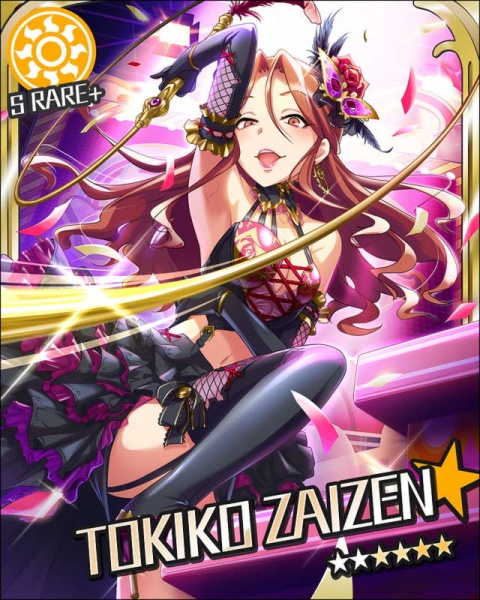
Take for example the character of Tokiko Zaizen. Based on her appearance alone, one gets the idea of Tokiko being a sadist/dominatrix type, but the fans take that a step further.

https://twitter.com/emeraldradiate/status/959646704642547712

https://twitter.com/CodedbyDays/status/943244935133827072

Not all fans fall into either the “dearth” or “abundance”-favoring categories. Some prefer to take the story as-is, and then aim for criticism over speculation. Others might dip their toes into both of those worlds. Whatever the fan approach, the ability for fans to thrive in whatever space is left for them speaks to a kind of flexibility in what it means to be enthusiastic about the creative media we consume.