Mono Monet, a VTuber from the agency V4Mirai, recently revealed herself to be a Genshiken fan.
What’s more, I was directly involved in this reveal! During a chat about a different topic, I was specifically called out by Mono for having “Ogiue” in my name. It spurred her on to start talking about the series, and the possibility of doing a Genshiken watchalong at some point.
This is the second time I’ve seen a VTuber explicitly express a fondness for Kio Shimoku’s title. (The first was when FUWAMOCO from hololive sang “Kujibiki Unbalance.”)
The above clip is over 20 minutes long because Mono talks about not just her love of Genshiken itself, but also Evangelion and what she looks for in fiction. It’s quite interesting overall, and Mono is just full of good takes, particularly when it comes to the appeal of flawed and messy characters.
Anime NYC 2025, held from August 21 to 24, was the second time since the New York–based convention moved its dates to take place in the summer. The decision allows it to use more of the Jacob Javits Center, but comes at the cost of being stuck in a crowded con season, as well as the risk of unpleasant heat and humidity. Luck was in Anime NYC’s favor this year, however, as the weather was pretty much ideal despite the weeks prior being pretty dire.
As always, the convention is very concentrated on its Exhibit Hall and its events. There are plenty of panels featuring industry insights and announcements of upcoming plans, but they tend to be geared more towards promotion, with a few less business-focused gems here and there. For me, because Anime NYC has become a big event for VTubers, I’ve found myself dedicating more attention in that direction.
The Takahashi Yoko Concert
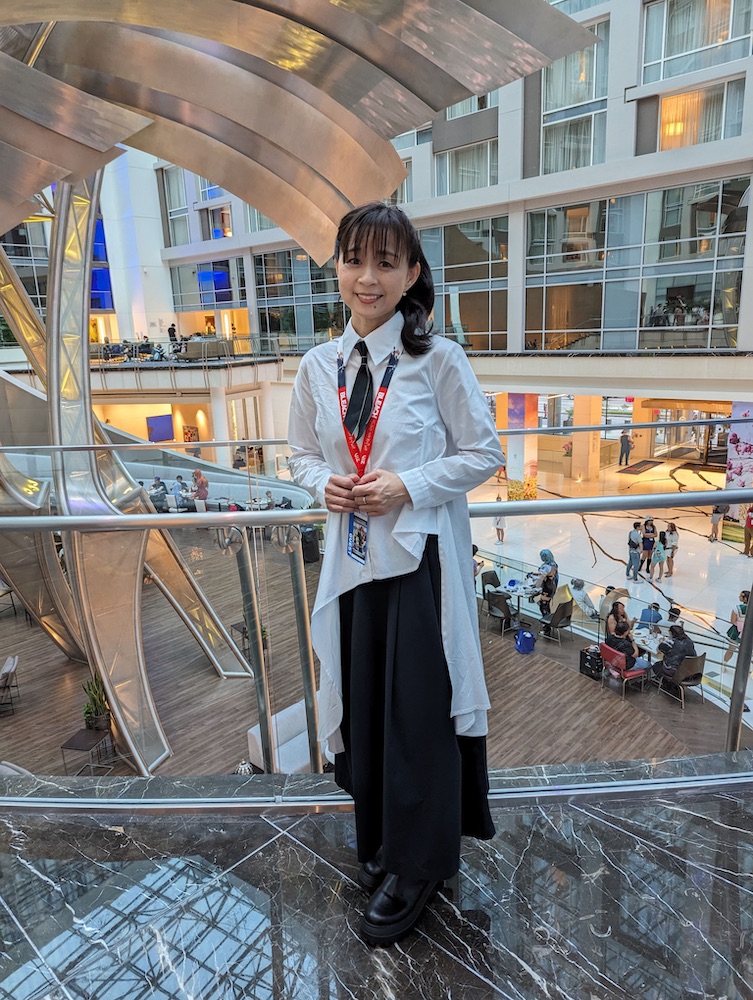
I don’t always attend the concerts at Anime NYC, which require an additional ticket purchase. But there was almost no price that would keep me from seeing Takahashi Yoko, the singer of the Neon Genesis Evangelion opening. The series has been such a part of my life over the course of decades that I jumped at the chance to hear her sing live.
Curiously, her tickets didn’t sell out that quickly, and there were plenty still available even after a small group purchase. I could see people not making the connection between Takahashi and the evergreen “Cruel Angel’s Thesis,” or that we’ve hit a point where Evangelion is considered more history than anything else among newer generations of anime fans. More for people like me, I guess.
Takahashi performed songs found in Eva such as “Fly Me to the Moon” and “Soul Refrain,” but her set was not just limited to music from the franchise. She was also accompanied by two young backup dancers, who were quite impressive. A part of me hoped that Hakos Baelz, the hololive VTuber who specializes in dance and was in NYC at this time, was in the audience and could see them. Naturally, Takahashi capped off the concert “Cruel Angel’s Thesis.”
There were some issues with the audio that took time to resolve. The acoustics of the main event space aren’t ideal for concerts in the first place, and there was something about the setup that drowned out her voice to a degree. I brought ear plugs, but had to take them out at first because I couldn’t hear her well enough with them in. There was also a tech flub on one song that forced them to restart it. In spite of all that, Takahashi’s voice was simply sublime; it sounded even better in person.
During the concert, Takahashi gave a speech in English, reading from some prepared notes. She talked about how she basically grew up with music and was going down the path of the classically trained, but various issues kept her working as a session musician. She was initially hired to sing one of the versions of “Fly Me to the Moon” for Evangelion, knowing nothing about it. At her first recording, she was accompanied by just one bespectacled man in a sweatshirt and sweatpants—Anno Hideaki. After this, she was asked to sing the opening as well.
Takahashi described her relationship with Evangelion as a complicated one, but also something she’s overall grateful for. It boxed her in, but without it, she would not have been able to achieve such success or have so many opportunities. She talked about how her favorite episode of Eva is actually 26 because of one scene in particular: In the “abstract sketch” space seen in the finale, Shinji is shown floating through an empty void with total freedom, but the lack of any boundaries makes it intimidating. He is then drawn a ground, limiting his freedom in one way. However, the boundary that exists now allows Shinji to do what he couldn’t before, which is walk and find a way. Takahashi basically feels the same way about Eva.
hololive
The VTubers of hololive have become a staple of this event. Returning to the Exhibit Hall was the large booth featuring convention-exclusive panel streams, as was the hololive World Tour (more on that later). Curiously, while past Anime NYCs have also included a big hololive panel as well, that wasn’t the case this time around.
The Booth
One big change from previous years was that the panels were spaced further apart on the schedule, which I found very welcome. It gave me an opportunity to check out other things, and helped mitigate the potential fire hazard that forms with the enthusiastic crowds. I didn’t attend every panel, but every one I did see was fun in its own way.
I’m a fan of all the holoX ladies, so I really wanted to see Takane Lui. She did not disappoint, especially when it came to karaoke, but the antics of her panel partner, Shirakami Fubuki, made it even better. The fox would bust out a 2D Yagoo mask and a pair of muscular arms on occasion, which culminated in their fitting presence during the song “Onegai Muscle” from the anime How Heavy Are the Dumbbells You Lift?
The Tombstone panel, so named because Calliope Mori is a grim reaper and Koseki Bijou is a living gemstone, had them answering “Would you rather” questions related to New York City. The NYer heavy crowd naturally had a lot of opinions, and it was entertaining to hear the VTubers try to twist logic to suit their choices.
I also went out of my way to see the hololive Indonesia karaoke relay, which had Kobo Kanaeru, Airani Iofifteen, and then Pavolia Reine. You could tell that people really love Kobo’s singing because the normally boisterous crowd was almost pin-drop silent as she covered “Mayonaka no Door,” “Cruel Angel’s Thesis,” and other tunes. Kobo was going to sing “Dragostea Din Tei” too, but a technical mishap prevented her from finishing it. Iofi amazed me by singing “Do You Remember Love?” and I even got noticed by the camera when she was looking around for holo merch.
If I had any big complaints, it would be that standing on concrete for extended periods is really tough on my feet, even though I have good shoes. It’s possible to have better flooring for a booth, and I think Cover Corp can afford it.
The World Tour
Anime NYC was selected as one of the stops on the world tour, which is officially titled ‘hololive STAGE ‘25 World Tour -Synchronize.” This is not to be confused with the hololive EN 3rd Concert, All for One, which took place the same weekend. You can read my review of that here.
The different lineup from last year brought a different energy that was less “pop diva.” With Calliope Mori, IRyS, Nerissa Ravencroft, Momosuzu Nene, and Kureiji Ollie on stage, you had a combination of dedicated singers and all-out entertainers. Personal highlights included the covers of “Shijoshugi Adtruck” and “Don’t Say Lazy,” as well as the world tour official song, “Live It Loud!” which I think does a good job highlighting the strengths of each performer.
I do have a few complaints. The first two are ones I’ve already mentioned, namely the whole “standing on concrete for hours” thing like at the booth, and the iffy acoustics of the Main Events hall. The third is what I’d consider a very mild gripe: a good amount of the songs performed were also at Breaking Dimensions last year. However, I know I pay a great deal of attention to the musical performance side of hololive, and this is less of an issue for those who watch events less often.
Each stop includes two additional guests, and New York City’s were Natsuiro Matsuri and Haachama, aka Akai Haato. Matsuri is a nice middle point between singer and entertainer, and I’m a big, big fan of Haachama in general. I was a little sad that I couldn’t see the entirety of Haachama’s panel last year at Anime NYC, and I consider myself very fortunate that I managed to purchase a ticket to Synchronize. I even brought my Haaton wearable head towel so I could represent, and spotted other Haatons (i.e. Haachama fans) while waiting in line. For the concert, she performed her first original, “RED HEART,” and its simplicity is something that goes back to the very core of VTubing in a way I enjoy immensely.
The Stamp Rally and Other Merch
There was a great deal of hololive-related goods available at the con. They had very visible representation in the Artist Alley, and the official booth gave away a con-exclusive trading card featuring the participants of the world tour, as well as a card for a stamp rally. The prize for completing the rally was a sticker set with all the ambassadors from hololive MEET ‘25, the general umbrella for conventions and other events around the world. However, it required participants to make purchases at specific booths, and if you got there on later days like I did, it meant making more expensive purchases. This is exactly why I ended up caving and getting the Hakos Baelz hoodie from Ohmonah. I had been eyeing it since July, and the quality and comfort (on top of the stamp for the rally) was too much for me. It’s so good, man.
Other VTubers
Likely because of hololive’s presence every year now, Anime NYC has also become a focal point for VTubing on the east coast. Merch-wise, big names like Sameko Saba, Nimi Nightmare, Dooby3D, Mint Fantôme, Dokibird, and Shylily were all over the Artist Alley. Ironmouse and CDawgVA also had a panel promoting a new game.
Additionally, the Exhibit Hall had a couple booths featuring Meet & Greets with smaller VTubers all weekend long. I used this opportunity to talk to Pillowdear, and complimented her for doing fun and creative ASMRs like her Easter stream. This was my second ever Meet & Greet, and I found it fascinating that you really get the gamut of participants. I saw someone who was clearly a dedicated fan of Pillow, but also people who literally had no idea about or even VTubing in general. I guess I fall somewhere in the middle.
There was also a Phase Connect karaoke event that I ended up not attending, but I did finally buy coffee from their booth. I got the Ember Amane beans, and while I also wanted Dizzy Dokuro’s, I foolishly forgot to take into account that her blatantly shilling-oriented original song made it a hot commodity. (Expect an Ember coffee review at a later time.)
Other Panels
Tsuda Kenjiro and Yu-Gi-Oh! 25th Anniversary
I attended the Yu-Gi-Oh! 25th anniversary panel, which featured the Japanese voice of Kaiba Seto, Tsuda Kenjiro. These days, Tsuda is everywhere, but this was basically his first really big role. For those who grew up on the English dub, I still think it’s worth listening to his portrayal of Kaiba, because it gives a similar yet different flavor to the character. For the panel, he did a live reading of a scene from the Yu-Gi-Oh! movie The Dark Side of Dimensions.
There were a few stories Tsuda told that I found particularly interesting:
Back when Yu-Gi-Oh! Duel Monsters was airing, the voice of Yugi (Kazama Shunsuke) was still in high school, and he would sometimes come to the recording studio in his school uniform.
When Tsuda recorded a voice-over for a Yu-Gi-Oh! video game, he saw a lot of comments online about how “Kaiba sounds so old now.” This made Tsuda want to show that he could still voice the character, and when he was asked to come back for Dark Side of Dimensions, he relished the chance.
Tsuda talked about how unlike most other shounen series, where the characters get amped up and then calm down, Yu-GI-Oh! characters are basically dialed up to max at all times. It makes recording for other series way easier by comparison.
One-Punch Man and JAM Project
I could not attend the entire One-Punch Man panel due to having to leave for All for One, but I do want to make sure story in particular is told for posterity. The guests for the panel were the members of JAM PROJECT, who do the One-Punch Man openings. In recounting the creation of the first opening (“THE HERO!!”), leader Kageyama Hironobu recalls going to his bandmates and vaguely humming the lines of the first verse without any lyrics, including the part that would eventually go Nandatten da? Frustration!/Ore wa tomaranai!—which Kageyama recreated as a series of ambiguous squeals and yells. Apparently, the other members looked at him funny and basically replied, “Are you serious?” I later found out that they played “SKILL” from Super Robot Wars in addition to One-Punch Man music. I wish I could have been there, but alas.
The Food Is Too Expensive
Like so many other convention centers, the Jacob Javits has never been cost friendly when it comes to food options. For anyone looking to save money, I never recommend anyone eat the con itself, and I do it because I see trying out different overpriced meals to be part of the experience—kind of like gambling in Las Vegas or Atlantic City. However, even I felt that the prices were getting beyond ridiculous this year. Things were close to if not exceeding $20 when they weren’t that way last year, and I will definitely bring food with me next year. Moreover, there were certain options available last year that weren’t present for 2025: Korilla and its Korean dishes were sorely missed, as was the Indian section in the food court area.
If I had to recommend one place, it would have been the BentOn stall in the Exhibit Hall. While the prices are still not great, the bento options (fish or fried chicken) are the best bet for getting a well-balanced meal at Anime NYC.
Cosplay
Final Thoughts
Anime NYC has long been trying to be the Anime Expo of the east coast, and it has succeeded in essence. It gets big guests from Japan and around the world, has a major industry presence, and it looks and feels big. If you want to attend events and see things you wouldn’t be able to otherwise, this con is generally a good place to be. However, that comes at a price, in that it can sometimes feel overwhelming the same way one might get bombarded by neon signage. The difference is that Anime NYC is like a less extreme AX, where there are fewer good things (AX being on the west coast gets it a lot more opportunities for interesting guests) but also fewer bad things (Anime NYC almost never has the really bad crowding issues of AX).
I think this is why I’ve come to enjoy the VTuber side of Anime NYC so much. While it’s definitely part of the “corporate” presence due to hololive (and other VTuber companies to a lesser extent), that side still feels very fan driven. I would like to see some of that spirit and energy on the anime and manga side as well.
I’ve come to realize that I like isekai spin-offs that are about giving lesser characters another chance. After all, they’ve got the skills, and are often just overshadowed by the heroes. It’s why the Fist of the North Star Amiba spin-off is so enjoyable—it takes a relatively minor and seemingly irredeemable villain and gives them a new world that they can help, but can also handle their shit.
That’s why, if ever they made an Evangelion isekai, I would want to see one made about Jet Alone.
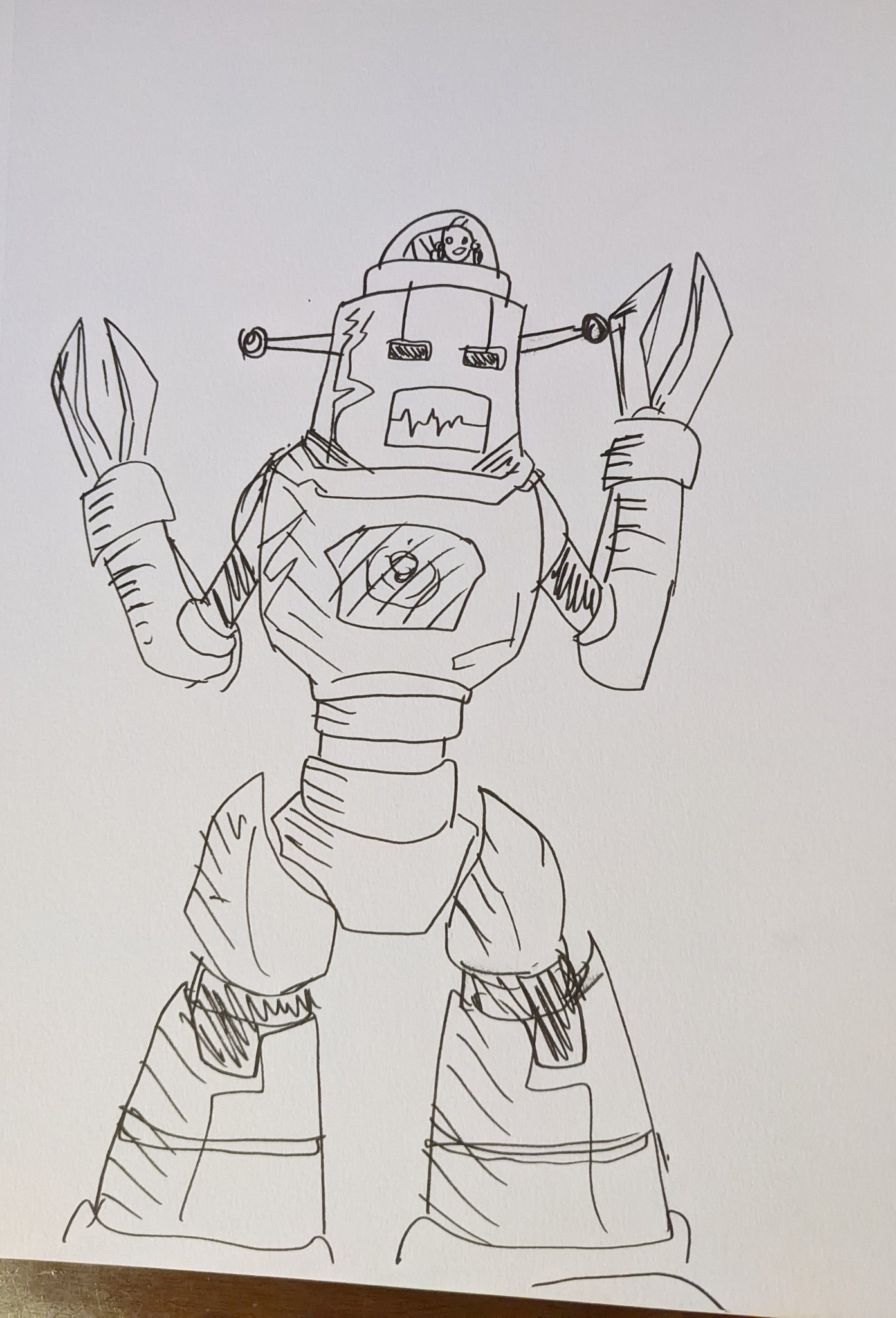
Technically, Jet Alone isn’t even a character. It’s a radio-controlled, nuclear-powered giant robot that is meant to supplant the Evangelions before it goes haywire and has to be stopped. Ultimately, this turns out to be a scheme by the EVAs’ own organization, NERV, to remove competition.
Jet Alone could’ve been helpful in protecting the planet, but just never got the chance. But what if the robot were transported to another world and got to be its defender? You could even have someone controlling it remotely like Shoutarou in Tetsujin 28, fighting giant monsters or solving crimes or whatever.
Any number of settings could work: a magical world that contrasts with the technological Jet Alone, an alien invasion of a different kind, maybe even some mega-sized martial arts tournament.
In another time, I might have been more compelled to turn this into a fanfic. Never say never, I guess.
PS: I happened to find this animation by KGBlagden featuring Jet Alone to the tune of Jet Jaguar’s theme in Godzilla. In a smilar vein, it gives some props to a mecha so unceremoniously squashed.
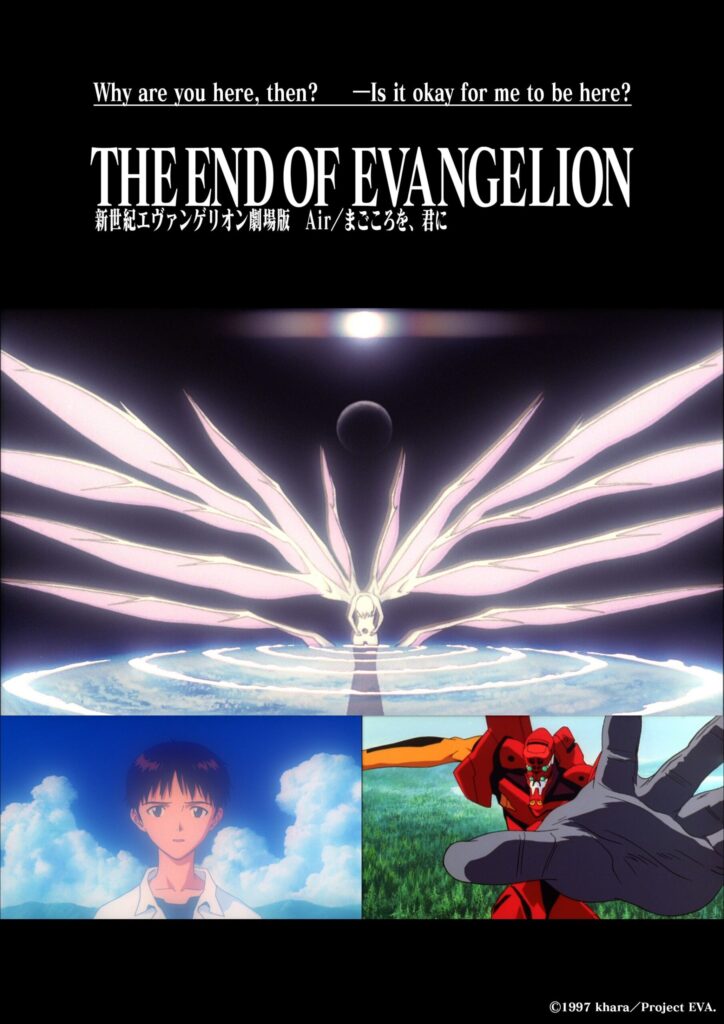
In March, I went to a screening of End of Evangelion. While it wasn’t my first time seeing the movie, it had also been many years, and this was actually the first time EoE had been released in theaters in North America, courtesy of GKids.
Evangelion as a whole is a major part of my history as an anime fan, culminating with the Shin Evangelionmovie. But two decades ago, End of Evangelion was one of those works that blew apart my preconceived notions about what animation could do. The emotional turmoil, the horrifying spectacle, and the beautiful animation all worked together to leave a lasting impact on my psyche.
It’s interesting to have again seen this film in full, now with the context of my own lived experience and where Evangelion has gone since then.
End of Evangelion is a sort of alternate version of the last two episodes of the TV series. Rather than taking place purely in an abstract world consisting of the collective minds and souls of its characters, things are based more in the physical world. After NERV defeats the last of the Angels, its secretive parent organization SEELE betrays NERV, and the ensuing carnage sends its already traumatized heroes spiraling down even further.
Ikari Shinji has long been the poster child for angsty teen protagonists, and it’s easy to see here why he could be both a very relatable character and an endless source of aggravation for viewers. As the people on his side and close to him are literally gunned down in cold blood, Shinji is unable to act. It makes me want to shout, “Get out of your own head, damn it!” And that admonishment more or less happens in the movie itself. But Shinji’s perspective is also one that hits close to home: He’s screwed up so many times that he thinks doing nothing is literally better than trying at all and inevitably making things worse. When you only see yourself as a source of failure and disappointment, it can be hard to take even a single step forward.
But when Rei initiates Third Impact, the apocalyptic event that’s meant to bring everyone’s souls together and reform humanity as the single entity it began as, Shinji does something surprising: He rejects this future that would ostensibly solve all his problems with human connection. It turns out that Shinji isn’t satisfied with a happiness that is handed to him, even if it would be a realm of sheer bliss. He wants to achieve self worth by going out there and finding it himself. The process itself, and the authenticity of the success, is paramount. It’s not so much that reality is about suffering, but more like telling someone who’s trying to plant a flower (and is incredibly bad at gardening) that you can just buy them an entire field of flowers that’ll be tended by the world’s best botanists.
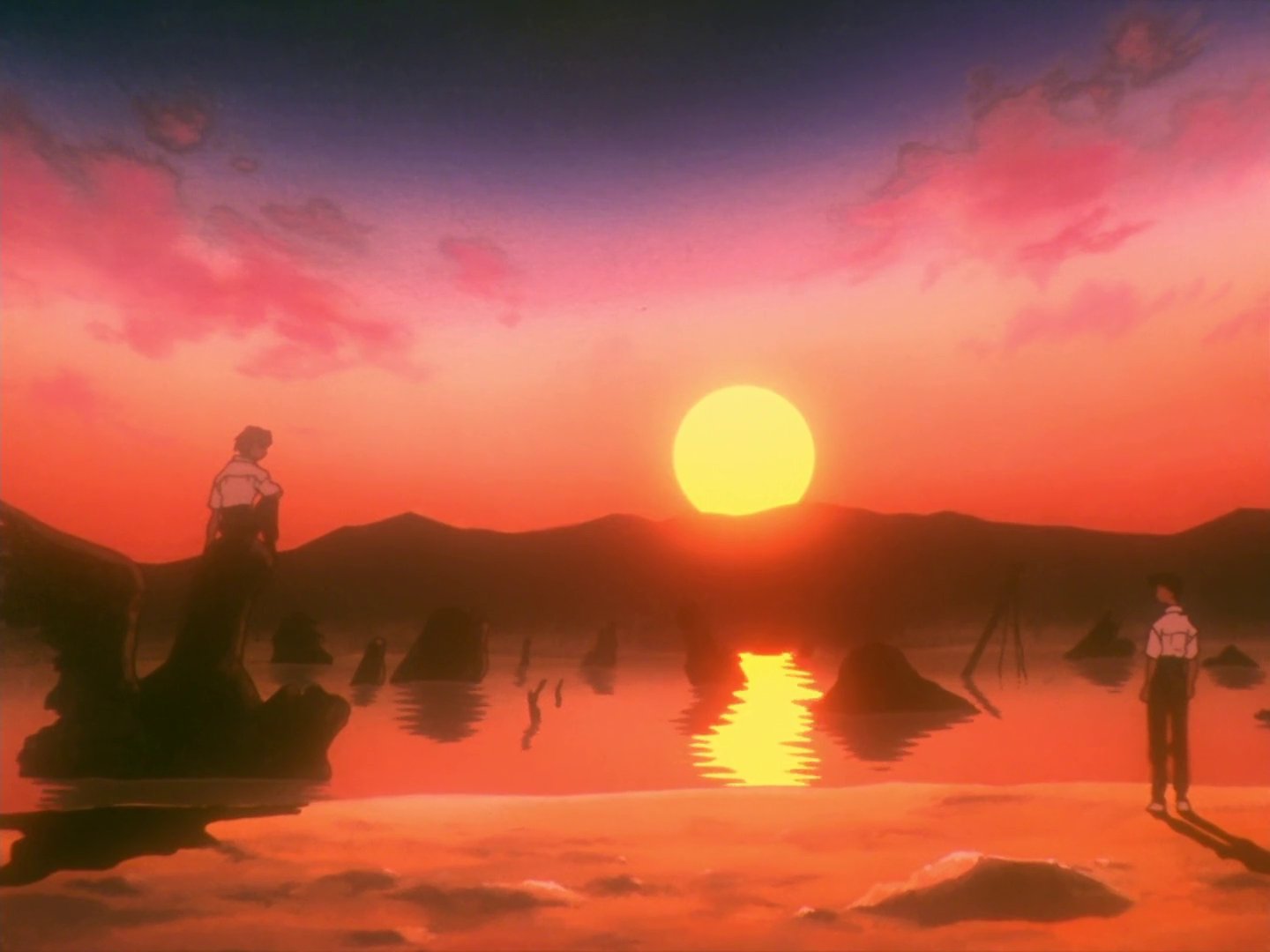
The ending scene is one of many scenes that have long generated discourse, and thinking about it from the perspective of dreams vs. reality has me reconsidering its outcome. In the aftermath of the Third Impact (or at least its attempt), Shinji finds himself alone with Asuka. Seeing her lying prone, Shinji starts to strangle her, repeating an earlier “action” he took while being confronted in his mind about the way he desperately tries to avoid loneliness. But to his surprise, Asuka’s hands gently brush against his face, and this causes Shinji to let go. Asuka then says, “Disgusting.”
I see Shinji’s actions as indicative of him doubting that he’s out of the dream-like Third Impact, only to be thrown off by Asuka being very different from what he saw in his own mind. The compassion and disdain are both there, beauty and ugliness all mixed together. Reality is where dreams end, but it’s also fueled by those same dreams. It’s a messy world where Shinji can once again try to make a genuine connection, even if they’re the last two people on Earth.
To me, the essential difference between End of Evangelion and Shin Evangelion has to do with their relationship with depression. EoE is what you get when you’re caught up in it and are trying to provide hope that there’s a way out. Shin Evangelion is the result of someone who managed to overcome that depression and can tell you the other side is real.
Frieren: Beyond Journey’s End is simply one of the finest fantasy series I’ve ever seen, on par with Witch Hat Atelier. From its premise, to its intriguing world-building, to its endearing cast of characters, Frieren is like an oasis in a desert of flimsily conceived genre works. Among its many strengths, one thing that I find most compelling is the way it portrays how different races perceive time differently. This is especially the case with the titular heroine, Frieren.
A long-lived elf mage, Frieren was originally a member of the small party that managed to defeat the demon lord after a decade of adventure. Shortly after their victory, she and her allies are invited to live in the royal capital, but she leaves for a “short” while to continue her pursuit of weird and obscure spells. By the time she returns (50 years later), their young and handsome leader, the vaunted hero Himmel, is old and gray. At his funeral, Frieren deeply regrets having been his companion for “only” 10 years—what others would consider a long and life-defining era instead barely existed for her.
Later episodes reinforce just how much of a drop in the bucket the 10-year quest was for Frieren. Against Aura the Guillotine, a mighty and feared demon, all other adventurers would do everything in their power to eliminate her for the danger she posed. Yet, Frieren held back so that she could deceive Aura for 80 years before dropping the hammer in the modern day. This truly gives a sense of how differently Frieren sees everything as an elf many centuries old, but also just how impactful Himmel was to her.
In thinking about Himmel’s influence, another anime character came to mind: Ikari Shinji from Evangelion. Specifically, his relationship with Nagisa Kaworu at the end of the TV series holds some parallels.
Kaworu shows up in Episode 24 of Neon Genesis Evangelion, and he makes an incredible impact on Shinji. Their immediate friendship is a salve for the emotionally wounded Shinji, who opens up to Kaworu. However, by the end of the episode, Kaworu is dead. This relationship lasted only half an hour of runtime, and less than a week in-story. Nevertheless, this brief love (be it platonic or romantic) is powerful indeed.
The way Frieren sees her time with Himmel is not unlike how Shinji views his few days with Kaworu. It was there, it was magical, and it was gone just like that. It’s beautiful yet heart-rending, and these couple of details really showcase how amazing Frieren the series is as a whole.
At Otakon 2023, Iwao Junko (Tomoyo in Cardcaptor Sakura) had a panel focused exclusively on her history and career. This is a summary of the panel, as well as notes from the Q&A that occurred. To read the interview I conducted with her and collaborator Kawamura Ryu, go here.
The Beginning
Iwao started off the panel by talking about her childhood, and how she loved listening to records found in storybooks, watching anime, listening to music. At that time, voice acting wasn’t seen as it is today, so when she asked others about a career in that realm, they told her she would have to be an actor or a singer/musician. Even so, she thought about getting into voice acting since she was 6 or 7 years old.
Around 13, she secretly auditioned to become an idol, and while she was ready to get rejected 100 or 200 times, she ended up getting accepted after just on try. Her parents (especially her dad) were very against it, but she promised them that she would quit in ten years if she didn’t make it.
So she went to Tokyo and did lessons, and she eventually debuted as an idol in a four-person group at the age of 16. She was actually replacing another idol in the group who had “graduated” (i.e. quit and moved on), but the group was already planning to split up after one year. Once that was done, she had to do part-time jobs and attend night school.
Iwao’s First Anime Role
From then on, until the age of 23, Iwao just worked and auditioned, ending up with various jobs. She was in musicals, and also played an assistant in a science show for kids. She even worked at a train station. One day, one of the members of the science show saw Iwao and asked if she had given up on show business. At that time, the ten-year deadline she had promised her parents was almost up. This person mentioned that a certain show was looking for someone who could act and sing, and so Iwao went for it because it could be her last chance. After auditioning, she was nervous waiting for results every day.
It was her first anime role, and it was Melissa Thorn, one of the main characters in an Japanese-French co-produced anime called Montana Jones, about explorers on a voyage. Got the part of one of the main characters of Montana Jones. When she told her parents about it, worried that time was technically already up, her parents instead congratulated her, and said they want Iwao to keep trying for another 10 or even 20 years.
From there, Iwao joined a voice acting school and practiced for her debut in Montana Jones. One thing that surprised her about working on the show was that there was no rehearsal time in anime. The first day of recording is when you meet the rest of the cast.
Another surprise was that they recorded based on roughly drawn non-color animatics. She expected to be acting in reference to finished animation, and while there was sometimes color, that was often not the case. Sometimes, ttwo characters would even be represented by just a red line and a blue line.
The other main characters were played by Otsuka Akio (Solid Snake, Black Jack) and Nakao Ryusei (Freeza). Their performances were so good that she worried there were actually prior practice sessions that she didn’t know about and missed. Iwao couldn’t keep up with them at all.
The way the recording studio was set up, 10-plus people had to work with four microphones. And in fact, one of those mics was the “main character mic,” exclusively used by Ohtsuka as Montana Jones. The result: you ad to quietly get up to the mics each time and constantly choosing which of the three you’d use every time. Not only that, but recording was analog back then, and the tape didn’t stop for you. Every take was 15-minute long (about half an episode), and whenever there was a mistake, everyone had to start all over again. Iwao remembers the other voice actors getting frustrated with her and asking, “What is this amateur doing here?” It was Otsuka and Nakao who helped her through the process, until they eventually finished the first episode.
After the debut episode, haired, the show actually got complaints from viewers who wanted her to be replaced with someone more experienced, and she even received a stack of physical hate mail complaining about her. The other actors supported her and let her know that everyone has to deal with this. Gradually, the staff also supported her, and she gained fans little by little. She still got negative feedback, but would also receive letters from fans. Because of that, she wanted to become someone who could someday help a newbie overcome these same troubles. Something curious she noticed was that once she started having a more positive outlook, she started landing a lot more roles.
Going Full-Time
At first, she didn’t have enough voice acting gigs to quit her day job, but eventually had enough roles that she could go full-time. Her first time as protagonist was in Key the Metal Idol, and from there, it was Cardcaptor Sakura and Evangelion and so on. She remembers her manager saying, “You’re gonna get it,” in regards to Eva. It was with Eva that she could make voice acting her sole career. One thing she learned, though, was that despite the job being “voice acting,” a lot of her work seemed to be event-related. Couldn’t get much sleep, which was rough.
Iwao recalled that the Eva audition was 15 minutes long for everyone. There was a long bench where everyone sat as they waited to try out, and she could see so many voice actors there who were interested. Iwao actually auditioned for two roles, and hinted that the second role has become known recently, but did not specify which one.
Q&A
At the 20th anniversary CCS exhibition, she got to go to dinner with all the other actors outside of work.
Shows she wishes people would know more: Harimogu Harley, Betterman, Key the Metal Idol.
Perfect Blue was a case where she actually received a real script and storyboards prior to recording. Iwao’s time as an idol only lasted one year, but she knew from others while working at that time that some of the things Mima goes through in the film actually dho happen. What she didn’t find out until later that director Kon Satoshi didn’t know anything about her idol history or age, and decided it based on one line that everyone was supposed to recite for their audition: “Who…are you?” Kon had decided on voice alone, so when he looked at her résumé, he reacted to Iwao’s extremely strong-sounding family name, which translates roughly to “Boulder Man.” Kon was excited to see what kind of Rock-like Man would show up, and was surprised Iwao was rather small. Because of this, he was watching her with a stern and scary face, but she didn’t know this was the reason, and Iwao was so scared that she couldn’t greet him. When playing Mima and the “other” Mima, she had to have separate recording days for the different personalities, and thought Matsumoto Rica (who played Rumi) gave a powerful performance.
When asked if she ever had the chance to be the mentor she wanted to become during Montana Jones, she mentioned that she thought upon entering her 50s that this would be her mentorship phase (Iwao is 53 this year). The series where she was able to to do this was an anime called Shining Post, where she thought, “Now is my time to shine.” Iwao ended up telling the new voice actors about what she herself had experienced.
I got to ask a question as well, one that I couldn’t fit into the interview! “Are there any roles you played later in your career that would have been difficult for you earlier in your career?” Iwao replied that it would have to be Hisae in Onihei, as it was a role where she felt she could bring the experience she had built up over time. When playing her, Iwao thought, “Finally, I can play adult roles.”
Everyone who worked on the Madoka Magica found out about the twists and turns week by week, so it was a surprised to everyone.
Iwao is from Kyushu, and a major Tomoyo/Iwao fan asked the final question, which was regarding recommendations for anyone traveling to her home prefecture. Iwao’s Her recommendations are Beppu in Oita Prefecture, which is famous for hot springs. She also suggested checking out Nagasaki.
Sometimes, you’ll see a wild claim about mecha anime, like “Gurren-Lagann was the first giant robot series to be about characters instead of the robots,” and it inevitably results in a backlash—in this case, the counterargument that all giant robot shows are about characters. Whether the initial statement is made in jest or as a genuinely ignorant take by someone with only surface-level knowledge of mecha, it reflects certain assumptions about what the genre is like.
I got to thinking about the notion that giant robot anime are about characters because it’s both true and an oversimplification. Moreover, the extent to which the giant robots truly “matter,” as in they’re inexorable from the world being portrayed and can’t be substituted with some other form of weaponry, varies tremendously. But regardless of the true “necessity” of either characters or robots, I feel there is more to it than just one side mattering more than the other. Then a thought occurred to me, and I have a kind of nascent “universal theory of giant robot anime”:
Giant robot anime are about characters, but more specifically, the main character reflects some vital or fundamental aspect of the world and story around them. The giant robot, in turn, is reflective of the connection between the hero and that aspect.
If it seems nebulous, that’s because it is. I’m thinking less about trying to justify every mecha anime and more about how the giant robots end up being the avatar through which so many of these protagonists interact with their environment and their histories, and thus reveal more about the anime themselves. There’s also no denying the close ties between giant robots and merchandising, but this also ebbs and flows over the decades.
So let’s start with some of the big ones.
Tetsujin 28is about Shoutarou trying to make a difference in a post-WWII environment by being a boy detective who fights crime. Tetsujin 28 the robot was created to fight the Allies, but is now being used for an alternate purpose: as a guardian of peace instead of a weapon of war.
Mazinger Zdraws a direct lineage to this sort of thinking. While the power fantasy and toyetic appeal of the robot itself is undeniable, Kouji is presented with a question about human potential from the very beginning: If you had great power, would you be a god or a devil? The robot Mazinger Z is Kouji’s way of making a difference, and he chooses to use it as a protective guardian.
Mobile Suit Gundam, the first “real robot” anime that emphasized the robots as weapons of war over superhero-like entities, is about its hero Amuro’s repeated exposure to the trauma of war. It’s through the Gundam that he experiences physical and emotional scars alike, and the very fact that his piloting experience molds him into a capable soldier also contributes to the overall “horror of war” message that girders Gundam and its many sequels.
Superdimensional Fortress Macrosshas three main components: romance, music, and robot battles. Here, the titular robot is literally a flying city traveling through space, and it functions as both an urban cosmopolitan center and a massive superweapon. In other words, it is the very space in which all three pieces of Macross take place.
Neon Genesis Evangelioncenters around Shinji and his fear of human connection, be it with his family, his peers, his friends, or anyone else. It is the anime of extreme introspection. Not only is the EVA-01 the means by which he tries (and fails) to find self-worth, but the EVA itself is revealed to house the soul of his dead mother. He is contained in a womb-like structure inside of his giant mom.
Tengen Toppa Gurren-Lagann is about Simon and the limitless potential of humanity to overcome all obstacles slowly but surely—and ultimately whether there should be limits on that power. Gurren-Lagann manifests this through numerous transformations fueled by human spirit that bring on exponential power growth.
The above examples are all heavy hitters, but what I also want to emphasize is that this applies to “lesser” titles as well.
Brave Police J-Deckeris maybe the most on-the-nose example of the relationship between a boy and his giant robot, as the story is about how Yuuta’s friendship with the giant police robot Deckard is what teaches the latter to develop true emotions and a proper sense of justice and humanity.
Shinkon Gattai Godannaris about the relationship between Gou and Anna as husband and wife and how their love affects both their personal and professional lives as co-pilots. Godannar Twin Drive is literally a combination of both robots.
Robotics;Notesfocuses on Kaito and his relationship with Akiho’s giant robot club, and the blurring of augmented reality with actual reality. The creation of the Guntsuku-1 is basically an untenable goal that, through the events of the series, becomes effectively “real” through how Kaito and Akiho view and utilize it.
Trider G7is about Watta, who’s both a little kid and the CEO of his own company, utilizing both the image of Japanese corporate culture of the early 1980s and the classic child desire of wanting to do what the adults do. The Trider G7 robot literally flies out of a playground, and has tons of cool and wacky weapons, but the fact that it’s Watta’s robot and the main way he gets his job done means it’s the conduit through which that “grown-up” fantasy takes place.
Shinkansen Henkei Robo Shinkalion the Animationis literally a commercial for bullet train toys that are, in turn, advertising for the Shinkansen trains in Japan. Its main character, Hayato, is basically a Shinkansen fanatic who sees them as not only the coolest things ever but as reflecting a philosophy of unwavering service to the people of Japan. The Shinkalion robots, by extension, portray a more action-packed version of this concept.
Giant robot anime embody many values, from crass commercialism to dreams of being brave and strong, from anti-war sentiments to deep looks inward at the psychological scars of society. The mecha themselves are often not “characters” in and of themselves (with a number of notable exceptions), but they are symbolic of how the protagonists of these stories relate to what they experience. The hurdle for those who think that these anime are “more about robots” is that this particular way of communicating the characters’ stories requires an acceptance of giant robots as a storytelling device.
I’m riding high off of three things: recent elections defied expectations, the VTubers of holoX have just been celebrating their one-year anniversaries, and it’s been 15 years of Ogiue Maniax! It’s hard to believe each one for somewhat different reasons, but I’m hoping I can carry this joyous monentum through this month and into the eventual new year.
Here are my Patreon subscribers for December 2022! Thank you to everyone.
I reviewed a lesser-known 1970s giant robot anime, now available via Discotek.
Kio Shimoku
If there’s anything to take away from this month’s tweets, it’s that Kio Shimoku loves Royal Space Force: The Wings of Honneamise.
Apartment 507
Looking at Akiba Maid War through the lens of 1999 Akihabara.
Closing
As with every year, I’m going to be rating the anime characters I think are the best of 2022. It is unbelievable how tough this year’s field is. I feel like the top candidates would have won in virtual every other year had they been eligible.
The new anime season is in full swing, but while I’m enjoying the hell out of so many things (like Gundam: The Witch from Mercury!), my mind is on the upcoming US midterm election. I plan on (sort of) following up with my thoughts on this subject in a few days but for now, I’m using this time to encourage citizens to vote however they can: in person on Election Day, by mail, by early voting, anything.
I’d also like to thank my Patreon subscribers for this month of November 2022.
A sparse month of comments, but his tortoise is feeling better!
Apartment 507
Thinking about VTuber Gawr Gura’s recent animated short relative to other bonus animations.
Closing
Congratulations to Brazil for making the right choice and not re-electing an authoritarian nationalist who cares more about his self-image than the wellbeing of the people (sounds familiar).
How about I make some Saint Seiya posts to celebrate?














 OGIUE MANIAX