The Roles of “Characters” in Mecha Anime

Sometimes, you’ll see a wild claim about mecha anime, like “Gurren-Lagann was the first giant robot series to be about characters instead of the robots,” and it inevitably results in a backlash—in this case, the counterargument that all giant robot shows are about characters. Whether the initial statement is made in jest or as a genuinely ignorant take by someone with only surface-level knowledge of mecha, it reflects certain assumptions about what the genre is like.

I got to thinking about the notion that giant robot anime are about characters because it’s both true and an oversimplification. Moreover, the extent to which the giant robots truly “matter,” as in they’re inexorable from the world being portrayed and can’t be substituted with some other form of weaponry, varies tremendously. But regardless of the true “necessity” of either characters or robots, I feel there is more to it than just one side mattering more than the other. Then a thought occurred to me, and I have a kind of nascent “universal theory of giant robot anime”:

Giant robot anime are about characters, but more specifically, the main character reflects some vital or fundamental aspect of the world and story around them. The giant robot, in turn, is reflective of the connection between the hero and that aspect.

If it seems nebulous, that’s because it is. I’m thinking less about trying to justify every mecha anime and more about how the giant robots end up being the avatar through which so many of these protagonists interact with their environment and their histories, and thus reveal more about the anime themselves. There’s also no denying the close ties between giant robots and merchandising, but this also ebbs and flows over the decades.

So let’s start with some of the big ones. 

Tetsujin 28 is about Shoutarou trying to make a difference in a post-WWII environment by being a boy detective who fights crime. Tetsujin 28 the robot was created to fight the Allies, but is now being used for an alternate purpose: as a guardian of peace instead of a weapon of war. 

Mazinger Z draws a direct lineage to this sort of thinking. While the power fantasy and toyetic appeal of the robot itself is undeniable, Kouji is presented with a question about human potential from the very beginning: If you had great power, would you be a god or a devil? The robot Mazinger Z is Kouji’s way of making a difference, and he chooses to use it as a protective guardian.

Mobile Suit Gundam, the first “real robot” anime that emphasized the robots as weapons of war over superhero-like entities, is about its hero Amuro’s repeated exposure to the trauma of war. It’s through the Gundam that he experiences physical and emotional scars alike, and the very fact that his piloting experience molds him into a capable soldier also contributes to the overall “horror of war” message that girders Gundam and its many sequels.

Superdimensional Fortress Macross has three main components: romance, music, and robot battles. Here, the titular robot is literally a flying city traveling through space, and it functions as both an urban cosmopolitan center and a massive superweapon. In other words, it is the very space in which all three pieces of Macross take place.

Neon Genesis Evangelion centers around Shinji and his fear of human connection, be it with his family, his peers, his friends, or anyone else. It is the anime of extreme introspection. Not only is the EVA-01 the means by which he tries (and fails) to find self-worth, but the EVA itself is revealed to house the soul of his dead mother. He is contained in a womb-like structure inside of his giant mom.

Tengen Toppa Gurren-Lagann is about Simon and the limitless potential of humanity to overcome all obstacles slowly but surely—and ultimately whether there should be limits on that power. Gurren-Lagann manifests this through numerous transformations fueled by human spirit that bring on exponential power growth.

The above examples are all heavy hitters, but what I also want to emphasize is that this applies to “lesser” titles as well.

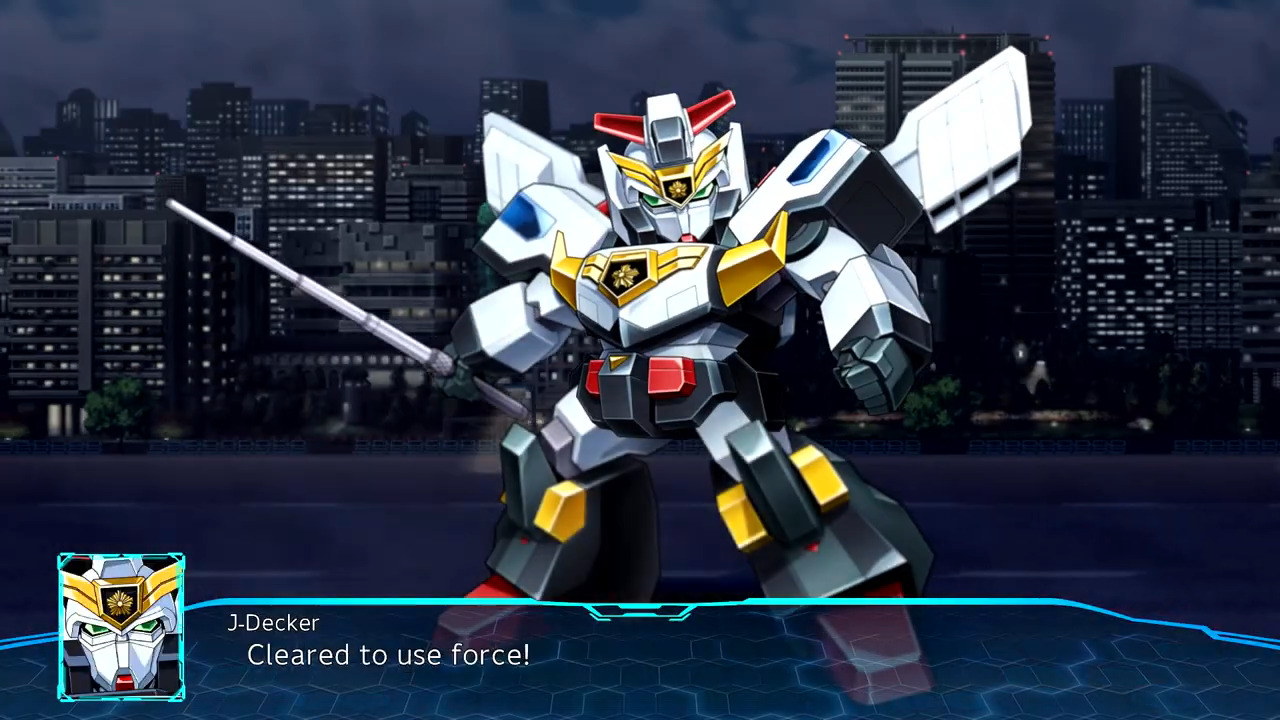
Brave Police J-Decker is maybe the most on-the-nose example of the relationship between a boy and his giant robot, as the story is about how Yuuta’s friendship with the giant police robot Deckard is what teaches the latter to develop true emotions and a proper sense of justice and humanity. 

Shinkon Gattai Godannar is about the relationship between Gou and Anna as husband and wife and how their love affects both their personal and professional lives as co-pilots. Godannar Twin Drive is literally a combination of both robots.

Robotics;Notes focuses on Kaito and his relationship with Akiho’s giant robot club, and the blurring of augmented reality with actual reality. The creation of the Guntsuku-1 is basically an untenable goal that, through the events of the series, becomes effectively “real” through how Kaito and Akiho view and utilize it.

Trider G7 is about Watta, who’s both a little kid and the CEO of his own company, utilizing both the image of Japanese corporate culture of the early 1980s and the classic child desire of wanting to do what the adults do. The Trider G7 robot literally flies out of a playground, and has tons of cool and wacky weapons, but the fact that it’s Watta’s robot and the main way he gets his job done means it’s the conduit through which that “grown-up” fantasy takes place. 

Shinkansen Henkei Robo Shinkalion the Animation is literally a commercial for bullet train toys that are, in turn, advertising for the Shinkansen trains in Japan. Its main character, Hayato, is basically a Shinkansen fanatic who sees them as not only the coolest things ever but as reflecting a philosophy of unwavering service to the people of Japan. The Shinkalion robots, by extension, portray a more action-packed version of this concept.

Giant robot anime embody many values, from crass commercialism to dreams of being brave and strong, from anti-war sentiments to deep looks inward at the psychological scars of society. The mecha themselves are often not “characters” in and of themselves (with a number of notable exceptions), but they are symbolic of how the protagonists of these stories relate to what they experience. The hurdle for those who think that these anime are “more about robots” is that this particular way of communicating the characters’ stories requires an acceptance of giant robots as a storytelling device.
Super Robot Wars 30, Gaogaigar, and J-Decker: The Compromises of a Composite Narrative

Brave Police J-Decker has made its debut appearance in Super Robot Wars, joining its fellow Brave franchise series King of Braves Gaogaigar. However, J-Decker effectively replaces in Super Robot Wars 30 a huge portion of the Gaogaigar cast of characters—specifically the Brave Robots introduced in the novel sequel King of Kings: Gaogaigar vs. Betterman—and in doing so merges their two plotlines together in a way that defies SRW precedent. It’s something I can appreciate, but I also feel that it comes at the expense of the “everything and the kitchen sink” approach the game franchise is famous for.

While J-Decker precedes Gaogaigar in terms of their air dates (1994 vs. 1997), Super Robot Wars 30 flips things around. The story specifically has the events of the latter take place first, and makes the Brave Police the first Brave Robots since the events of Gaogaigar Final. I find this to be a pretty clever way to tie the two plots together, especially in order to reconcile having an adult Mamoru (the kid character in Gaogaigar) with a young Yuuta from J-Decker

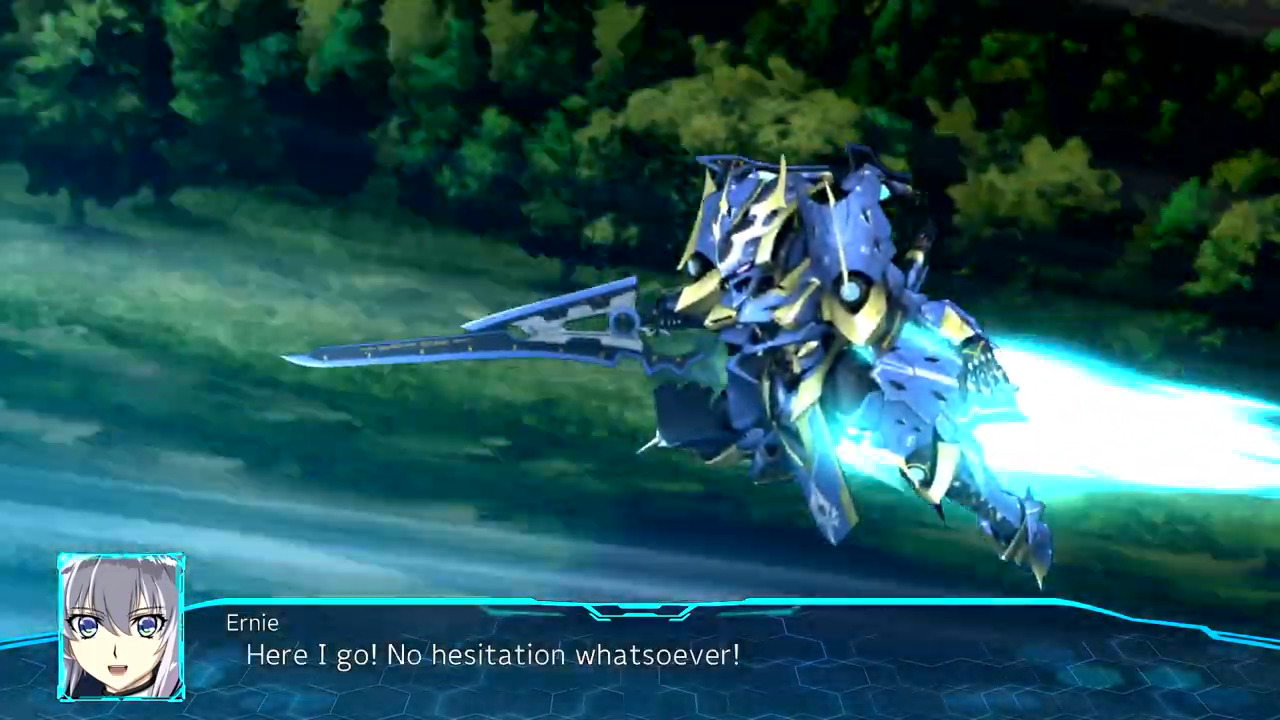
However, the idea that the Brave Police are the latest generation of units doesn’t square with what takes place in the Gaogaigar vs. Betterman novels where a new Brave Robot Corps is formed with the likes of NichiRyu, GetsuRyu, ShoRyu, and Porc-Auto. Those robots aren’t even included in Super Robot Wars 30, meaning that their role in the story has been supplanted by the robots of J-Decker. This is highly unusual, if only because SRW games are often about “more is better.” While the franchise over the past decade-and-change has been trying to streamline a lot of the bloat inherent to it (so no excessively redundant attacks, for example), it’s rare to have them omit entire groups of potentially playable units that are an important factor in the source material.

I suspect that there are a number of extenuating circumstances that resulted in this compromise. It wasn’t that long after the conclusion of Gaogaigar vs. Betterman that SRW30 was announced. There are elements of the story, regardless of the mecha, that are skipped over. In addition, most of the new robots introduced in the novels don’t already have voice actors, so it’s not like calling up Hiyama Nobuyuki and telling him to reprise his role as Guy. While there have been cases of SRW assigning voices where there weren’t any before (see the Virtual On units in Alpha 3), that was also over 15 years ago. 

Incidentally, that’s also a case where only a handful of reps are included (as opposed to every Virtuaroid).

So while having Gaogaigar vs. Betterman is one of my favorite parts of SRW30, the changes made mean we still don’t have the might of the full cast of characters from it. Maybe we’ll see it happen in the future. 

And maybe what could make it easier is having an actual anime version…

Who Dares Interrupt My Corona-tion?!: Ogiue Maniax Status Update for December 2021

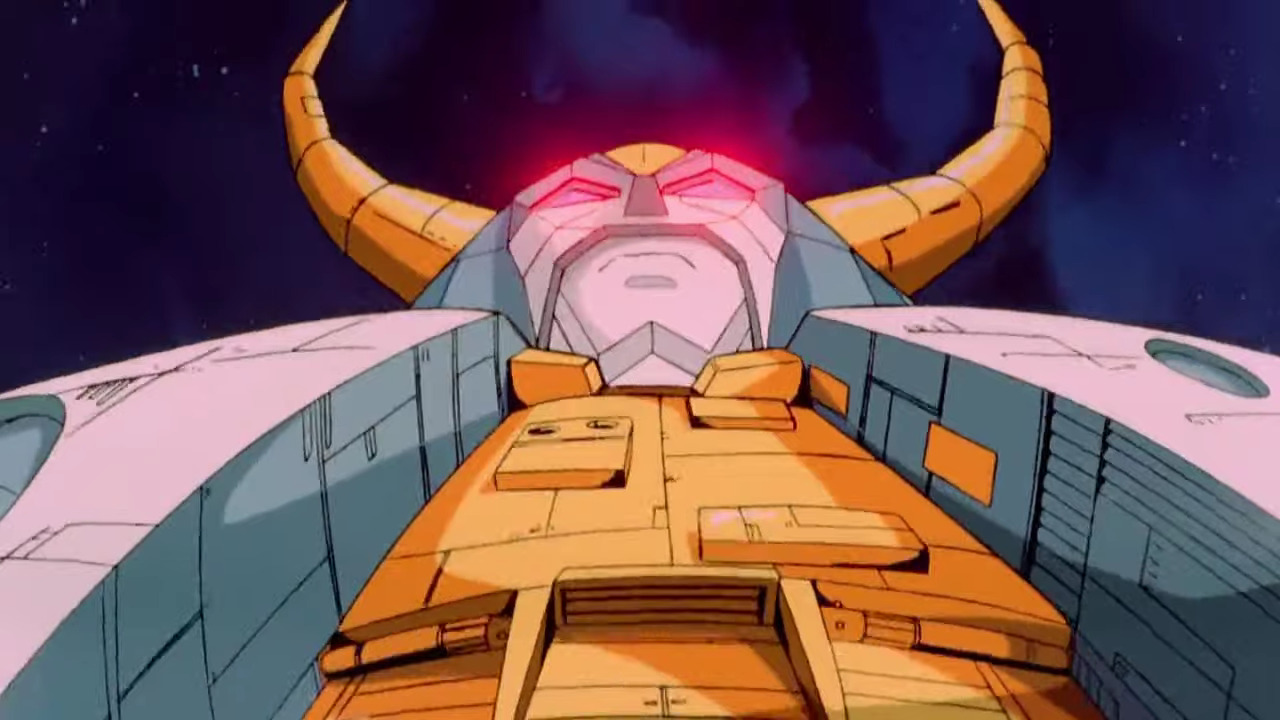
A low-angle view of the planet-sized Transformer, Unicron.

The end-of-the-year holidays are rolling around, and I feel like I’m in a strange place mentally and emotionally. I think it’s tied to the assumption that this year’s Christmas would be a far cry from the feelings of hesitation and dread that came with COVID-19 and hot off of the 2020 US elections, and how history might potentially be repeating itself. Virtually everyone I know is vaccinated, including many kids, but reports of the new Omicron variant make me wonder if I need to temper my expectations. And inevitably, it just makes me think of a certain planet-sized Transformer.

(Speaking of which, I got the new blu-ray recently. I don’t know for sure when I’ll re-watch the movie, but it never fails to disappoint.)

On a lighter note, I haven’t been looking at as much anime and manga lately, but there’s a very good reason for that: Super Robot Wars 30. It’s supposed to be over 100 hours, and I haven’t even scratched the surface. I am enjoying the hell out of getting to use Gaogaigo and the J-Decker squad, though.

I also attended Anime NYC 2021, but due to my blog schedule, my coverage of it will be in December. Look forward to a review of Pompo the Cinephile!

I wish for safe and soul-comforting holidays for everyone, and I’d like to thank my patrons for the month:

General:

Ko Ransom

Diogo Prado

Alex

Dsy

Sue Hopkins fans:

Serxeid

Hato Kenjirou fans:

Elizabeth

Yajima Mirei fans:

Machi-Kurada

Blog highlights from November:

Real Character: Love Live! Superstar!!

My review of what turned out to be the best Love Live! anime—emphasis on anime.

The Best Sports Manga You’re Not Reading: Shoujo Fight

My long overdue general review of thia fantastic volleyball manga.

Imagine Fourteen Balls on the Edge of a Cliff: Ogiue Maniax 14th Anniversary

An anniversary post turned into a reflection on the site Something Awful in light of its founder’s death.

Hashikko Ensemble

Chapter 46 is more serious than silly, and it provides a window into Jin’s inner turmoil.

Kio Shimoku’s Twitter involves sharing his thoughts on erotic manga artists.

Apartment 507

Six giant robot anime came out in Fall 2021. Here are my basic impressions of all of them.

Closing

The world is ever unpredictable, and I hope we do what we can as people to watch out and care for one another. Get vaccinated if you can, look out for your fellow humans, and understand that no one is free until we’re all free.

Super Robot Wars 30 Thoughts, or “I MUST GET THIS GAME”

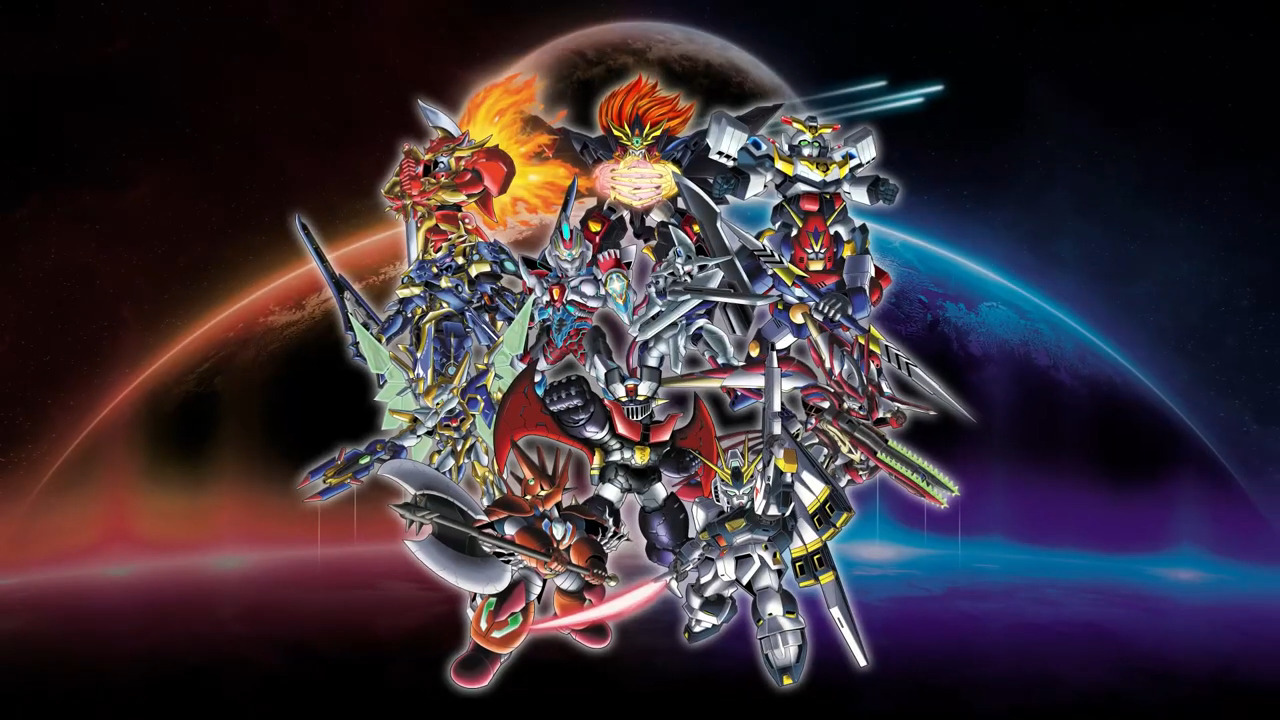
Super Robot Wars 30, the latest full game in the famed crossover video game franchise, has revealed its full lineup.

  • Super Electromagnetic Robot Combattler V
  • Mobile Suit Gundam (mecha only)
  • Mobile Suit Z Gundam
  • Z-MSV (mecha only)
  • Mobile Suit Gundam: Char’s Counterattack
  • M-MSV (mecha only)
  • Mobile Suit V Gundam
  • Mobile Suit Gundam NT
  • Heavy Metal L-Gaim
  • The Brave Police J-Decker (New)
  • The King of Braves Gaogaigar Final (mecha only)
  • The King of Kings: Gaogaigar vs. Betterman (New)
  • Code Geass: Lelouch of the Re;surrection
  • Code Geass: Lelouch of the Rebellion III – Glorification (New) (mecha only)
  • Shin Getter Robo Armageddon
  • Mazinger Z: Infinity
  • Mazinkaiser Infinitism (New) (mecha only)
  • Magic Knight Rayearth
  • Gun x Sword
  • Majestic Prince
  • Knight’s & Magic (New)
  • SSSS.GRIDMAN (New)

There are some welcome surprises among the returning veterans such as L-Gaim, but the real shockers are in the newest series.

Hell and Heaven!!!

The entry that sent a bolt of lightning through me is Hakai-oh: Gaogaigar vs. Betterman, which is the novel-only sequel to Gaogaigar Final that continues and concludes the story that began all the way back in 1997. I’ve been following the story, even having reviewed the first and second novels, but I wonder if fans might be better off not reading the spoilers in them so that they can experience this amazing sequel through the lens of SRW first. This’ll be the first time that Gaogaigo and its allies will be animated, and already it looks incredible. I await the SRW rendition of Gaogaigo’s Hell and Heaven with great anticipation, I hope we get to see and use a certain massive Betterman, and I’m guessing we’ll get the new opening and ending (that currently exist only in audio form) as BGM.

I also want to compliment the English localization team because I think “Hakai-oh” is such a difficult term to translate. Literally, it means “World-Conquering King,” and I think King of Kings captures that feeling nice and succinctly.

Burning Heart to Heart

Speaking of Braves, I honestly didn’t think J-Decker would ever make it in. Out of the entire franchise, I think J-Decker is one of the genuinely best shows, and I’m very happy to see Deckard, Shadowmaru, and the boys get their due. My dream is that there are some combination attacks involving Shadowmaru and Volfogg, but I’ll be content even without that. And If you want to know more of my thoughts on J-Decker as an anime, I appeared on an old podcast review.

Toku Time

Arguably the biggest appearance from out of left field is SSSS.Gridman. While it’ll fit nicely within SRW, the fact that it has its origins as an anime sequel to a tokusatsu series means there are just a lot of odd quirks to consider. In particular, Gridman is basically an Ultraman, and the closest we’ve had to mecha in SRW that move similar to Gridman are the EVAs from Evangelion—a show that is itself inspired by Ultraman. Given how this series ends, I also have to wonder how it’ll fit into the Super Robot Wars 30’s story, but what always comes first is making things look awesome.

X-TREME RADICAL Mazinkaiser 

As far as I can tell, Mazinkaiser Infinitism appears to have its origins as just an action figure of Mazinkaiser with a Mazinger Z: Infinity aesthetic. What’s funny about this version of Kaiser is that while the Mazinger Z in the Infinity film is a nice retro-modern update to a timeless design, even this Infinitism version of Mazinkaiser feels like it’s perpetually stuck in the 1990s—a Rob Liefeldian super robot that screams hypermasculinity. That was the case for its debut appearance (in a Super Robot Wars game!), the Mazinkaiser OVAs, Mazinkaiser SKL, and now this.

…And the Rest

I haven’t seen the recent Code Geass film, but I have fond memories of the near–train wreck that was Code Geass R2. I don’t know if there’s much for me to say here. As for Knight’s & Magic, I don’t know anything about it other than that it’s a mecha-themed isekai light novel. While it’s not the first SRW series with an isekai light novel origin (that honor goes to Aura Battler Dunbine), it’s still the first to be from a modern, post–Sword Art Online light novel. For that reason, I’m rather curious as to how it’ll be, and I might even be tempted to watch the anime.

See You in October

You damn well better believe I’m reviewing this game. 

Robot Cops Are Cool Dudes: Ogiue Maniax on the J-Decker Episode of Podlabor

I was recently on the Podlabor podcast, where host Patz, fellow guest Narutaki from the Reverse Thieves and the Speakeasy, and I discussed the 90s super robot anime, Brave Police J-Decker. For those unfamiliar with the series, it’s from the same franchise as the more well-known Gaogaigar, and features giant robots who are also detectives. If that didn’t scare you off, have a listen, and if it did, you might be surprised to find out how much heart J-Decker has.

We also discuss a bit about Otakon, which is this weekend.

Podlabor Episode 6: Brave Up J-Decker

The Past of Giant Robot Pilots, Today: Saejima of J-Decker

Brave Police J-Decker features Transformers-style giant robots acting as Japanese police officers, so they combine into more powerful forms but also each have their own gigantic office desks. It’s a fun series in the Brave franchise, of which Gaogaigar is probably the most well-known and popular. Created in the 1990s, the show can be surprisingly good at times, and has some entertaining characters. Arguably the most entertaining one is the commissioner (or according to Wikipedia, the “superintendent general”), Saejima Juuzou. If you recognize him at all, it’s likely because of the following screenshot:

Saejima is established pretty early on as being a fan of grand poses and cool-sounding (and looking) robots, and at first I thought he was just a cool, eccentric old dude, but my opinion of him changed for the (even) better halfway through the show. In a recap episode, Saejima talks about every robot member of the Brave Police and their various strengths, as well as lamenting the fact that he just can’t come up with an awesome enough name for the next combined robot form. At the end of the episode, he reminisces about his younger days as a police officer. We then get to see the photos on his wall, and one of them in particulr reveals a lot about the kind of person Saejima was in his youth.

That’s right, Saejima was actually once a robot pilot, hailing from the previous generation (or two), back when the mecha were more primitive and hair was more fabulous. Knowing this, it’s clear to me that Saejima’s passion about robots isn’t just because he’s an old guy with a sense for the dramatic, but that it’s actually based on his own experiences fighting crime in his trusty police robot. I wouldn’t be surprised if, rather than the pleasant and heartful melodies of what were at the time more current opening themes, Saejima’s police career sounded more like this.

Though they never touch on it past this episode, I think it does a lot for J-Decker because it connects it to previous decades of robot anime, and on top of that gives a sense that the world of J-Decker has always been amazing in different yet similar ways. Hell, if they decided to make a prequel all about Young Saejima fighting crime, I would be all over it.

Brave Proles and Brave Pols

PS: The Perfect Codec Pack for This Show