Hopefully Celebrating Independence: Ogiue Maniax Status Update for July 2018

The United States is another year older, and it’s starting to feel its age. I normally don’t try to talk politics too much in these monthly updates, but the times compel me to.

Before I jump into the nitty-gritty messiness, however, I want to thank my sponsors on Patreon and Ko-fi. You help make writing and blogging even more worthwhile than it already is.

Thank you to…

General:

Johnny Trovato

Ko Ransom

Alex

Diogo Prado

Sue Hopkins fans:

Serxeid

Hato Kenjirou fans:

Elizabeth

Yajima Mirei fans:

Machi-Kurada

When it comes to the state of the US in 2018, I feel a great deal of anxiety. Politics are tricky, but I constantly feel as if those in charge, especially on the right, are playing with napalm and are willfully ignoring the danger they pose to the people and the very foundations of American democracy. I’ve been watching Legend of the Galactic Heroes: Die Neue These, and every instance of the democratic Free Planets Alliance trying to use jingoistic loyalty or play with human lives to gain favor for an election season his way too close to home at the moment.

If I had to describe my political beliefs, I’d say I’m broadly left/liberal. It’s not as if I walk lock-step with everything the left says, but if I have to choose between a side that can get a little over-enthusiastic about their desire to create a world free of racism, sexism, and discrimination of all kinds, and one that holds onto power by any oppressive means necessary, then I’m willing to take some disagreements from the former. Seeing the endless mental hoops that defenders of our current political climate try to jump through, all in order to keep power in the hands of those who willingly exploit the marginalized, saddens me.

I know that some others on the left don’t share my interpretation of Darling in the Franxx. And in the past, I’ve actually argued that Anita Sarkeesian was unfair in her early analyses of women in video games. But it’s better for a Sarkeesian or anyone else to try and call out issues of representation where she sees them than to pretend they don’t exist at all—or worse yet, drum up controversy for the thinly veiled sake of minimizing input from other groups.

On a lighter note, here are my favorite posts from June.

How Super Smash Bros. Ultimate’s Gameplay Decisions Support Both Casual and Competitive Players

The new Smash Bros. was revealed, and I am beyond excited. One thing I did notice is that a lot of the new changes try to embrace both casual and competitive players, and I’m optimistic about it.

“Mogusa-san Fights Against Appetite” Concludes on a Body-Positive Note

The sequel to Mogusa-san, the story of a charmingly gluttonous girl, comes to an end.

Thoughts on Shinkalion, the Robot Anime Designed to Promote Bullet Trains

Subliminal, liminal, and superliminal approaches to selling the Shinkansen.

Return to Genshiken

It’s the final post on my series 1 re-read! See my closing thoughts on my favorite manga ever.

Hashikko Ensemble

Chapter 5 of Kio’s new manga is the best one yet.

Patreon-Sponsored

The Relevance of Older Anime to Newer Anime Fans

It’ll always benefit a newer fan to look back, at least a little.

Closing

Here’s to hoping for a better world.

The Relevance of Older anime to Newer Anime Fans

This month, I was asked to write about “the relevance of older anime to newer anime fans.” The short answer is that older anime is always relevant, even if newer fans don’t think it is. I’ll leave the criteria for “older” up for interpretation, but no matter whether it’s one year or 30 years, looking back on the anime that came before is a way to gain perspective on this form of art and entertainment that enthralls us so.

When a fan only watches what is newer, there’s a risk of developing a very skewed sense of what anime was, is, and can be. It’s easy to assume certain ideas are entirely new and have never been explored before, when in fact there’s a whole back catalog of shows that take on those topics. For example, the surface reputation of Gundam as vaguely “giant robots do fighty army things” can often color people’s views of what the franchise is actually like, and actually taking the time to look into those older series can broaden one’s perception.

In other cases, it’s easy to think that it’s “always been this way,” when certain stylistic or narrative tendencies are in fact the product of continued development reflecting the changing times. I recall being a young anime fan in the 90s, when most of what we got were short OVAs meant to be proof-of-concept adaptations for manga that doubled as advertisements. Often, they didn’t make any sort of effort to acclimate new viewers, so many fans were under the assumption that most anime were visually beautiful but unfollowable nonsense story-wise. We often failed to understand that it was simply what we received.

The above examples aren’t necessarily about looking backwards, but the point isn’t to position “older anime” as “better.” Not only is that highly subjective, but there are strengths and faults to anime made in any era, as well as cultural assumptions that might be controversial in hindsight. Rather, the important thing is to look beyond one’s current purview.

I understand that it’s easier said than done to get into older anime and not have it feel like a “chore.” It shouldn’t be “watch this show from 20 years ago because it’ll make you appreciate newer things—to hell with your own enjoyment!” Moreover, there are so many forces at work that directly and indirectly discourage newer anime fans from looking backwards. The newer shows take up all of the mental space through advertisements and social media discussion and who knows what else. If watching anime is a social experience for someone, it can become difficult to convince friends to abandon the opportunity to keep up with current trends. And while good aesthetics are in the eye of the beholder, older shows can at first look dated and thus lack relevance to a young, modern person. But for those who can overcome those hurdles, the reward is a more expansive library to potentially love and learn from.

This is actually why I’ve begun to think that remakes aren’t such a bad thing. Notably, Devilman Crybaby has re-introduced a classic manga to the wider world, and people have embraced it. The visuals might not be standard anime by any definition, but they’re fresher and more contemporary than what came beforehand, and they help fans to understand that the stories told in the past can still be relevant and powerful even if they look like they’re from a bygone era. If done well, it can encourage fans to break out of their shells and see.

See more, see wider, see further.

This post was sponsored by Ogiue Maniax patron Johnny Trovato. If you’d like to request topics for the blog, or support Ogiue Maniax in general, check out the Patreon.

Back from the Future: Ogiue Maniax Status Update for June 2018

I’m back after an exciting honeymoon in Tokyo. It was a grand ol’ time full of food and nerdery, and also spending way too much money on otaku goods. For example, I actually bought all of Heartcatch Precure! on DVD—albeit at a huge discount. (I promise I didn’t just do Precure-related things, honest.)

I’m happy to answer (most) questions about staying in Japan to the best of my ability, so send ’em in!

But before that, I’d like to thank my sponsors on Patreon and Ko-fi.

A big thank you too…

General:

Johnny Trovato

Ko Ransom

Alex

Diogo Prado

Sue Hopkins fans:

Serxeid

Hato Kenjirou fans:

Elizabeth

Yajima Mirei fans:

Machi-Kurada

I still had some posts go up even while I was away, so here are my favorite posts from May:

Darling in the Franxx and Choice in a Sexual Dystopia

Some people think the show is greatness itself, while others think it’s hyper trash. Here are some of my thoughts.

Project Z Revived! “Hakai-oh – Gaogaigar vs. Betterman Part 1” Novel Review

My review of the latest Gaogaigar light novel, which is actually the long-awaited sequel to Gaogaigar Final!

“Flukes”: Competitive Rigor vs. Sustainability in Esports

How important is grabbing an audience vs. absolute competitive integrity in esports?

Hashikko Ensemble

Chapter 4 continues the kooky sense of almost-camaraderie.

Patreon-Sponsored

Gamblers’ Paradise: “Uma Musume: Pretty Derby”

My feelings on the new horse girl-themed anime and the expected franchise surrounding it.

Closing

As you might expect, I plan to have a ton of blog posts concerning my trip to Japan. It won’t be a full on travelogue, but I plan to have reviews of doujin events, reviews of series I picked up, and more. Who knows? Maybe it’ll even bleed into July!

Gamblers’ Paradise: “Uma Musume: Pretty Derby”

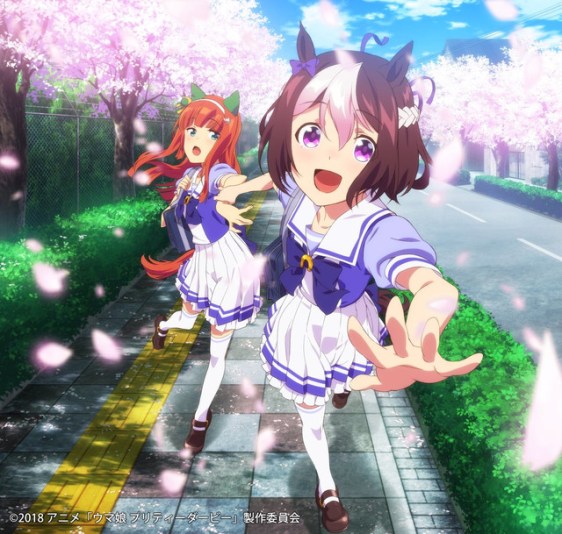
My Little Pony: Friendship is Magic may be the most prominent cartoon about horse girls, but Uma Musume: Pretty Derby is bringing a different angle. Instead of wide-eyed ponies, it’s human-horse hybrids in the vein of anime catgirls. Instead of a children’s show reminiscent of magical girl shows, it’s a strange hybrid sports/idol anime focused on racing and dancing. As a result, Uma Musume: Pretty Derby veers closer to Girls und Panzer than Twilight Sparkle and friends.

Having watched the first two episodes, Uma Musume: Pretty Derby succeeds in being a sports show. It’s got an underdog main heroine with untapped potential, plenty of characters (perhaps too many) with a variety of personalities and competitive styles, and a sense of forward progress while keeping intrigue strong. For example, just what is up with protagonist Special Week’s adopted mother? She gives me a “mom from Aikatsu!” vibe; maybe that’s not a coincidence given the idol aspect of Uma Musume.

Taken on its own, the anime seems like a reliably strong show. However, much like Girls und Panzer, the point of potential concern is what happens when one looks beyond the cartoon itself and into what it’s supposed to advertise and accomplish. For Girls und Panzer, it’s possible glorification of the military. For Uma Musume, it’s gambling.

Uma Musume is a moefied version of horseracing, a popular betting sport. But it’s also part of a multimedia franchise from mobile games juggernaut Cygames, makers of Granblue Fantasy. When it comes to lootbox/gacha systems that drive players to empty their pockets, Granblue Fantasy is one of the grandmasters, and the chase for those slim 1% chances for ultra-rares is especially enticing for those vulnerable to gambling addiction. And yes, there’s an Uma Musume: Pretty Derby mobile game on the way.

So essentially, there’s a dangerous final form of Uma Musume that could become a reality someday. This monstrous version would involve going to the racetrack to watch and bet on the ponies while also playing Uma Musume and trying to get the right gacha gifts for your favorite horse girls. To use an ancient internet joke, they put a slot machine into your betting, so you can gamble while you gamble. It’s not gotten to this stage as of yet, but I have my eye out to see where Uma Musume will go.

This post was sponsored by Johnny Trovato. If you’re interested in submitting topics for the blog, or just like my writing and want to support Ogiue Maniax, check out my Patreon.

19:00 News: Ogiue Maniax Status Update for May 2018

I’ll be heading to Tokyo this month to enjoy myself, nerd it out, and eat everything in sight. My last trip was in 2016, so let’s see how things have changed!

Thanks once again to my sponsors on Patreon and Ko-fi. Thanks to the following!

General:

Johnny Trovato

Ko Ransom

Alex

Diogo Prado

Sue Hopkins fans:

Serxeid

Hato Kenjirou fans:

Elizabeth

Yajima Mirei fans:

Machi-Kurada

Because I’ll be spending a couple weeks in Japan, my post schedule is going to be slightly sparser than usual. Ideally, I’ll be coming back with plenty of material to write about, so hopefully it’ll all even out.

Here are my favorite posts from April:

Approaching “Isle of Dogs” as an Asian-American Anime Fan

My thoughts surrounding the controversy over Wes Anderson’s film.

Love Live! and the Four Tendencies

A fun thought exercise as to how the “four tendencies” concept by Gretchen Rubin map onto the girls of μ’s.

Sakuga is to Anime as Workrate is to Pro Wrestling

A comparison between two hardcore topics fun two hardcore fanbases.

Return to Genshiken

Volume 8, the climax! Only one volume left…

Hashikko Ensemble

Chapter 3 isn’t super big on the music, but it’s fun.

Patreon-Sponsored

More Like “We-Katsu!”: Aikatsu Friends!

Initial thoughts on the newest Aikatsu! anime.

Closing

I’ll be visiting Tsukiji, the famous fish market in Tokyo, which happens to be shutting down this year in October for the 2020 Tokyo Olympics. I’m genuinely glad I get to see it once before it’s moved to a new location.

I plan to eat all the sea urchIn…

More Like “We-katsu!”: Aikatsu Friends!

Aikatsu Friends! is the second reboot in the popular Aikatsu! franchise, and based on early impressions, it’s trying to change the formula in a number of ways. While the basic premise is largely the same as in previous iterations—girl goes to a special idol school and aims to become a great idol through the power of friendship, effort, and merchandisable cards—I feel a strong desire from Aikatsu Friends! to differentiate itself from its predecessors.

Aikatsu Friends stars Yuuki Aine—though, perhaps more accurately, it could be said to star “Yuuki Aine’s friendship.” That’s because, as one might expect, the new series is all about bonds on a much greater level than Aikatsu! and Aikatsu Stars! Where those anime would display friendship, ultimately the idols have very strong auras of individuality even as they form idol units. With Aikatsu Friends!, the very premise of being an idol is tied to duos because the default groups are performer pairings called “Friends.” Moreover, even the Aikatsu! tradition of the main heroine standing in front of a show title card and introducing the series has changed slightly, as seen above. Now, both Aine and her idol partner Minato Mio are shown speaking together.

Aine herself reflects the “us” mentality of Aikatsu Friends! in interesting ways. What stands out to me most about her is that her goal isn’t directly idol-related. Every previous protagonist has had “being an idol” as their driving force, whether it’s just wanting to try it out or looking up to another and aspiring to be like them. Aine’s dream, however, is to make a million friends, and becoming an idol is presented as a means to that end. Provided we view fans in a non-cynical light, being an idol can be a rather efficient way to reach that high a number. And while there’s always a chance that Aine’s goal will shift as she learns to love being an idol more and more, the fact that she’s presented this way initially again puts emphasis on idols in pairs over idols as individuals.

Is it friendship, teamwork, or that much more? Ultimately, Aikatsu! is a children’s franchise, but I suspect this series is going to be very popular with yuri fans even compared to older Aikatsu! anime. It’s potentially a little too on the nose, but the explicit focus on pairings—especially girl-girl pairings—seems like it’d be catnip to that fanbase. When Kamishiro Karen and Mirai Asuka, the top “Friends” group known as “Love Me Tear,” are shown being 100% in sync with each other in terms of movement and even seemingly finishing each other’s sentences, I have to give a second look.

One last thing I noticed is that Aikatsu Friends! has done a really good job of showing the difference between a fledgling pair like Aine and Mio and Love Me Tear. From their idol fashion to just the behavior described in the previous paragraph, there’s just a stark contrast between beginners and veterans. It presents a clear point for Aine and Mio to aim for, and it has me interested in where they and their friendship will go.

This post was sponsored by Johnny Trovato. If you’re interested in submitting topics for the blog, or just like my writing and want to support Ogiue Maniax, check out my Patreon.

One Step Off: Ogiue Maniax Status Update for April 2018

It’s time once again to look back on a month of blogging, and to give my gratitude to my supporters on Patreon and from Ko-fi. Thanks to the following!

General:

Johnny Trovato

Ko Ransom

Alex

Diogo Prado

Sue Hopkins fans:

Serxeid

Hato Kenjirou fans:

Elizabeth

Yajima Mirei fans:

Machi-Kurada

I have to apologize this month, as I was supposed to have written and posted my re-read review of Genshiken volume 8 in March. Unfortunately, I came down with a bad cold towards the second half of the month, and rather than try to force it out I decided to delay it to this month. It’s actually mostly finished and requires largely final touches. Because of this, the final re-read for Volume 9 will be delayed to June.

You might have noticed that I avoided posting this past Sunday. As some might surmise, it was to avoid the chaos that is April Fool’s. I didn’t have any sort of chicanery at the ready, so I didn’t want anything I published to seem disingenuous. I do kind of miss making April Fool’s gags, though, so maybe next year.

On another related note, I’m currently trying to figure out if I should switch to a lighter posting schedule, given my real-life work schedule and my relative dissatisfaction with the quality of my writing as of late. I’ve always valued my consistency and my willingness to (more often than not) just let pieces go rather than sit on them forever. However, recently, I’ve felt that many of my blog posts don’t have the amount of spark, inspiration, and insight that I prefer. Fewer posts per week (i.e. one or two instead of two or three) makes sense on the surface, but I’m worried that having so much wiggle room could make me slack off.

The other concern is my Patreon. I want to make sure there’s enough content to keep justifying it, and I have to wonder if one to two weekly posts is actually enough. If you have any thoughts on either of these matters, feel free to leave a comment. I’d love to hear it.

It’s not really doom or gloom; it’s a desire to not stagnate. In any case, here are my favorite posts from March:


Kio Shimoku and Genshiken Trivia Courtesy of “Mou, Shimasen Kara”

Following Chapter 1 of Hashikko Ensemble was a special interview with the man Kio himself. There’s a lot to learn from it!

A Look at Precure Popularity

Thoughts and musings on the varying popularity of Precure and its characters throughout the years. Spoilers: Cure Marine is amazing, Heartcatch Precure! is the best. No, really.

Defying Assumptions. Fujoshi-style: Kiss Him, Not Me

My final review of a really good fujoshi-themed manga.

Hashikko Ensemble

Chapter 2 of Kio Shimoku’s new music manga. It’s filled with potential.

Patreon-Sponsored

Aikatsu! and Idol Franchise “Experiences”

Aikatsu! feels rather unique to me, and I try to explore why.

Also, while I didn’t quite consider them my favorite posts for the month, I did review quite a bit from the New York International Children’s Film Festival. Check the NYICFF tag out! I might get around to more of them this month!

Closing

Can Ogiue Maniax make the impact I desire? What shows of the Spring 2018 anime season will get reviewed on the blog? Find out…some time!

Aikatsu! and Idol Franchise “Experiences”

As Aikatsu Friends! inches ever closer, I find myself thinking about the longevity of Aikatsu! as a franchise. By this October, it’ll be a whopping six years old—a lifetime when it comes to children’s anime. Where other similar series have tried to compete, few have managed to hang on as Aikatsu! has. One of its closest competitors, Pretty Rhythm, eventually pivoted towards the male-idol-centric King of Prism series. Either by outlasting or outmaneuvering other idol series, Aikatsu! feels as if it’s conquered its own niche—though the exact nature of that niche is what I’m trying to figure out.

There are, of course, key differences between Aikatsu! and other idol character franchises. Series like King of Prism and Idolish 7 utilize male idols in a desire to capture a different market. Love Live! and The iDOLM@STER feel like they skew older. Macross Delta and Symphogear have idols as thematic flourishes as part of a greater science-fiction story. They cover various demographics, as well as various degrees of idol presence. Yet I feel there’s another element of difference that isn’t accounted for, as if Aikatsu! and Love Live! occupy different compartments of mental space, at least personally.

While this is only a tentative thought exercise for the sake of categorization, if I had to describe that difference it would be as the following: With Love Live! or The iDOLM@STER, I’m most interested in how the idols will react, but with Aikatsu! I’m most interested in the actions they’ll take. The way I phrased it makes it seem as if it’s a contrast between more passive characters and more active ones, but that’s not quite right. Instead, it’s more that the girls of Love Live! seem to draw their appeal from the way they behave and influence each other, while the girls in Aikatsu! feel as if they influence the environment around them.

Perhaps the reason I see Aikatsu! different is because of the fans and how they express their love for the series on social media compared to other idol anime lovers. Other series appear to celebrate cuteness and style. Fans of Aikatsu! revel in an aura of power and excitement. At the heart of this fan output remains the indelible images of Ichigo, that very first Aikatsu! heroine, as she climbs those cliffs and wields that axe. It’s as if Ichigo and her successors reshape and navigate the land while other idols move through it.

This post was sponsored by Johnny Trovato. If you’re interested in submitting topics for the blog, or just like my writing and want to support Ogiue Maniax, check out my Patreon.

Movie Madness: Ogiue Maniax Status Update for March 2018

Is it possible to see too many movies in a single month? It looks like I’ll be testing that out. Not only is it the start of the 2018 New York International Children’s Film Festival, but we’ve got the recently released Black Panther along with Pacific Rim: Uprising, Isle of Dogs, and A Wrinkle in Time. I’m a bit concerned about the sheer quantity overwhelming my ability to engage with each movie, but we’ll see how it pans out.

As a general rule, disengage before you start to feel yourself burning out. This applies to not just anime or entertainment, but even work. Managing your health mentally, emotionally, and physically to the best of your abilities!

In other news, I’ve started a Ko-fi page for Ogiue Maniax. It’s basically an online tip jar, ideal for those who want to support Ogiue Maniax now and then, but either won’t or can’t commit to a Patreon sponsorship.

So from now on, my monthly list of supporters will include both those from Patreon and from Ko-fi.

General:

Johnny Trovato

Ko Ransom

Alex

Diogo Prado

MagiGold

Sue Hopkins fans:

Serxeid

Hato Kenjirou fans:

Elizabeth

Yajima Mirei fans:

Machi-Kurada

My favorite posts from February:

“I Go High, You Go Low”: Hashikko Ensemble

Kio Shimoku’s new manga! Expect to see this every month for the foreseeable future.

Join the Bakery: Kira Kira Precure a la Mode

Another Precure series concludes. How does this one stack up to its predecessors?

The Legacy of a Knight. Mazinger Z: Infinity

The 2018 sequel/revival of history’s most important super robot. A must-see for giant robot fans.


Patreon-Sponsored

The Unreality of Virtual Youtubers

Thoughts on the success spawned by Kizuna A.I. and those who followed her.

Closing

Watch A Place Further than the Universe. It’s not just “girls doing something,” it’s “girls getting something done.”

The Unreality of Virtual Youtubers

If you haven’t heard of virtual youtubers, they’re a recent phenomenon that might be the ultimate intersection between anime fandom’s love of cute girls and the ever-rising prominence and allure of youtuber as identity/occupation in Japan. Virtual youtubers are quite similar to regular old youtubers in that they’re online video hosts who use charismatic and often energetic performances to entertain fans, but their difference is most easily understood by watching:

While a number of the virtual youtubers out there play up the idea that they’re robots, AI, or some kind of existence outside of normal reality, one thing I find noteworthy is that they don’t have quite the same sense of appeal through artificiality as a Vocaloid. Hatsune Miku and Megurine Luka don’t sound like anything like a normal human being, but that is precisely what makes them memorable.

With virtual youtubers, there’s still a very human component behind the voice and video filters that you can feel come through to varying degrees; at the very least, there’s a sense of human-esque imperfection conveyed, as opposed to the uncanny valley of Vocaloids. Kizuna AI has a very smug, almost Yazawa Nico-like attitude that can come back to bite her in the ass. Kaguya Luna sounds like she’s always on edge, and the fact that she sounds like she’s being recorded in a garage hints at the reality behind her. Ojisan’s youtuber persona is a cute, small fox girl, but he doesn’t even try to hide his identity as an older man.

The conveying of “humanity” even comes across in small, subtle elements. You’ll see Kizuna AI videos featuring lots of clear cuts—a common style for youtubers, especially for the more bombastic types. At the same time, she constantly has this windswept appearance that doesn’t make sense (see her ribbon fluttering constantly!), but it makes her appear more active and lively.

Perhaps the biggest thing about the virtual youtuber concept is that it’s simply not meant to cater to the same audience as idols, virtual or otherwise. They can be good singers, but they don’t have to be. They convey a sense of closeness, but they inevitably keep a greater distance because the performative aspect of the virtual youtuber is more obvious. Toeing the line between natural and unnatural is part of why anime characters in general capture so much attention, and virtual youtubers also take advantage of this.

This post was sponsored by Johnny Trovato. If you’re interested in submitting topics for the blog, or just like my writing and want to support Ogiue Maniax, check out my Patreon.