Mecha vs. Isekai and Self-Examination of Power Fantasies

A few years ago, I asked whether loving a genre was like supporting a local sports team. It was  a question that sprung out of the realization that while I’d been quite critical of isekai for just being so full of samey works that follow the formula or “defy” it in the shallowest ways possible, I reveled in the weird and obscure mediocrity of giant robot anime throughout its history. I wondered whether this was an arbitrary bias that came from me simply choosing “mecha” as my team.

More recently, however, I’ve come to think there is a difference. Namely, I find there to be a major shortcoming of modern isekai in that it very consistently fails to scrutinize and investigate its own power fantasy. That’s not to say good isekai stories aren’t told or that one has to be self-critical; I can name plenty I’ve enjoyed and even consider myself a fan of. However, the most you often get is “reincarnation into a supposedly weak being that is actually secretly strong” or “the reincarnated are extra amazing but it comes with drawbacks” or “This is an excuse for a cozier title,” or at most maybe “What if reincarnated heroes affect the other world negatively?” When you compare isekai fare to what we get from giant robots, there’s such a stark contrast. Even if you set aside titles that are famous for presenting wrinkles to its characters’ vast abilities, there are also so many smaller mecha titles that at least try to be a little bit introspective, or if not, the giant robot is a power that must be learned and mastered over time.

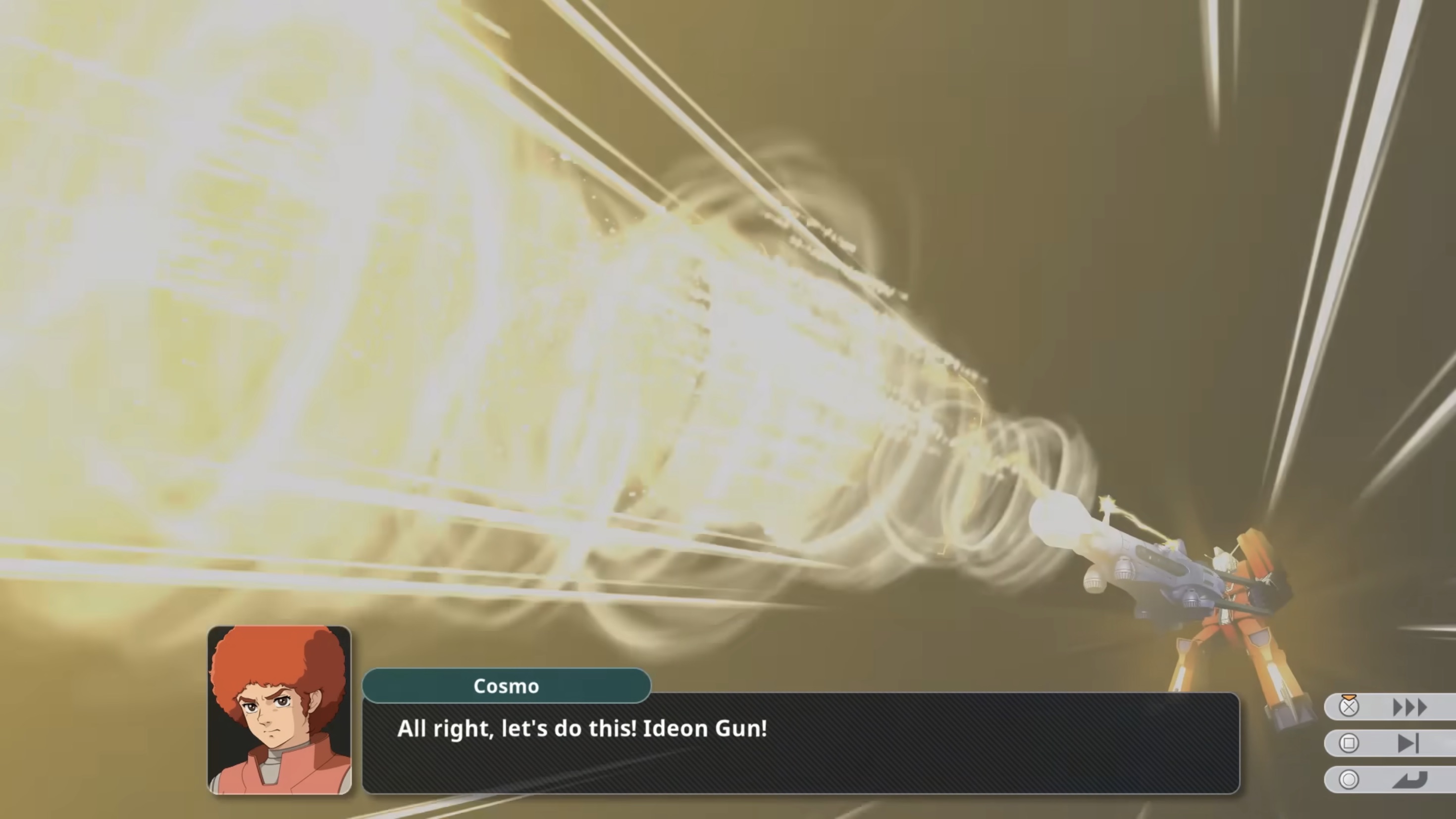
Granted, all this was historically done in mecha while trying to sell viewers merch, and many of the works that did challenge tropes did so as a way to not fully succumb to that capitalist engine. G Gundam had staff that purposely tried to make robot designs that would be hard to adapt into model kits. Tomino Yoshiyuki directed works like Zambot 3, Gundam, and Ideon to  “break patterns” set by previous series and to do more with the genre:

“In anime, you can only express drama through cinematic functions. But why do people think that when a robot shows up, it instantly becomes ‘robot anime’ and you’re not creating drama anymore? That’s my question. There are also people like that, who don’t get drama, among the sponsors. To them, robot anime is only about things like robots in action, docking, and new robots appearing. That’s why Gundam was canceled.”

The late Nagahama Tadao (Combattler V, Voltes V, Daimos) wasn’t quite so subversive, but he still wanted to make good stories for children. Tomino, speaking about what he learned from Nagahama in 2009, said:

“I worked with director Nagahama for several years before Gundam, and what I learned from him was the sense of right in stories aimed towards children. When creating works for children, it should not be biased in one way or another or leaning more in a political sense, but to provide a very pure and good story.”

Perhaps I’ve simply not been exposed enough to isekai creators and their thoughts, but I don’t feel this struggle against the profit engine or to break established patterns. In fact, in modern times, I get a greater sense that they want to just support the power fantasy thoroughly and play into the patterns completely, and much of what came before that is housed in titles that are shoujo or at least lean towards a female audience: Magic Knight Rayearth, Vision of Escaflowne, Twelve Kingdoms, etc.

To go back to the sports team analogy, it is notable that the New York Knicks won the 2026 NBA championships this year. I admittedly never followed basketball very closely, but I know how despite the 53-year drought that they managed to overcome, they also have gotten close to the top on a few occasions, providing glimmers of hope here and there before the big one. In the context of mecha, I feel like those bright spots—those works that take a deeper and more intelligent look at the inherent power fantasy of mecha—help to make the mediocre (and worse) titles more charming. I don’t expect a genre to be constantly undermining its own established rules, but I like to think of those rules as building blocks, and the less generic things get, the more potential there is for something to be done with—and to—these building blocks.

I hope that I can someday feel a similar way about isekai.

PS: Completely off-topic, but talking about the Knicks and giant robots, I feel obliged to post the classic Mango Sentinel:

Anime NYC 2019 Hype Post, aka The Craziest, Most Incredible Guests

Anime NYC 2019 is only two days away, and I want to use this opportunity to talk about how amazing the guests are this year. I promise that this is not a paid or sponsored endorsement in any way—these are my genuine feelings, and my feeling is that the guest list this year is just virtually perfect.

First and foremost, you have the legendary director of Mobile Suit Gundam, Ideon, and Zambot 3, Tomino Yoshiyuki. I saw him 10 years ago at New York Anime Festival 2009, and I am eager to see his return. He’ll be showing the first Gundam: Reconguista in G film, and as a staunch defender of that series, I’ve gotta go see it.

Then there’s Kimura Takahiro, animator and character designer on Gaogaigar, Godannar, Betterman, Brigadoon, and Code Geass. He is one of my favorite character designers ever, and I’m so, so stoked for him to be in New York.

Speaking of Code Geass, the voice actor Yukana will be making her New York City debut. In addition to playing C.C. in Code Geass (aka the best character in that series), she’s also Teletha Testarossa in Full Metal Panic!, Li Meiling in Cardcaptor Sakura, and Cure White in Futari wa Pretty Cure!

But Yukana is not the only Cure who will be there, as Ise Mariya (Cure Lemonade from Yes! Pretty Cure 5) is coming to promote The Promised Neverland, where she plays Ray. The director of The Promised Neverland, Kanbe Mamoru, will also be at Anime NYC 2019. He’s also the director for one of my favorite anime ever, Cosmic Baton Girl Comet-san.

Megalo Box is an amazing anime and reinterpretation of Ashita no Joe, Moriyama Yo, and both the director and producer, Fujiyoshi Minako, will be attending.

And the Lantis Matsuri concert Friday night will feature both JAM Project and Guilty Kiss from Love Live! Sunshine!! Having now attended concerts for both groups, I’m pumped to see them again (and again and again in the future, hopefully). Nothing is as fantastic as JAM Project performing “SKILL,” and a part of me is sincerely hoping all the groups involved will join in for a rousing “WHOHhhHHoooHHHooOoooH.”

So see you all at Anime NYC, and I hope these guests get the star treatment they deserve.


Otakon 2015 Interview: Takamatsu Shinji

This is an interview with director Takamatsu Shinji from Otakon 2015. Takamatsu as worked on many anime including Gundam X, the Brave (Yuusha) series

First question. Most Gundam series had romance but didn’t have it as a strong focus. Gundam X is a series that put the romance at the very forefront, and it was in some ways the main focus. Why was this decision made for this series?

It’ll be a long story!

I wanted to make something that was Gundam but not Gundam. One rule of Gundam X was to get out of Gundam and to be meta about Gundam, to do things that were not like “Gundam.

Before that, about a decade prior, you worked on Z Gundam and Gundam ZZ. What was your director Tomino Yoshiyuki, and how would compare his style to yours?

Well, I did grow up watching Gundam myself, and by the time I started to work at Sunrise Mr. Tomino was in the position of being a great director, so it was a scary prospect working with Tomino.

During Z Gundam I was production management, so I reported directly to him, and I was scolded by him every single day. There were days when I was scared about everything.

Romi Park is also at this event, and she gave a similar description of Tomino that is not inaccurate compared to yours.

However, Ms. Park worked with Mr. Tomino much later than I did, and if you look at Mr. Tomino at the time of Z Gundam, he really was off the wall.

You’re also very well known for your work on the Brave series, and you worked on many of them. What was the main reason you returned to the Brave series for so many years?

The first director of the Brave series, Yatabe [Katsuyoshi], brought me onto production for the show, and I worked on a little bit of Gundam in between. So, there was a hiatus for me, but otherwise I started from beginning to end for the entire series. And I got my debut as a director from the Brave series, so I am very much fond of the Brave series.

Might Gaine was my debut as a director, so I am particularly fond of it.

In that case, I have an interesting question to follow up with.

The Brave series is known for being very toy and merchandise-heavy but also having good storytelling, as well as in some cases the staff resisting the merchandising aspects of the Brave series. Two famous examples I know are a hidden cel in Goldran which sarcastically talks about it’s supposed to be a robot that’s easy to make into toys, and how Might Gaine’s ending is a criticism of the toy industry.

What were your and the staff’s feelings at the time, and how did the toy companies such as Takara react?

That’s a very deep and vexing question!

So when I was getting started with Might Gaine, I was told that there’s just supposed to be good and bad, and all I had to do was to have toys that featured good guys and bad guys who would just battle. The staff really felt we need to show some kind of resistance, and that that wouldn’t just be the end of the show. And by staff, I mean myself.

You did not work extensively on Gaogaigar, but I have to ask this question. Do you have any details you can share as to why Project Z never got off the ground?

That I don’t know about!

That’s okay! Moving on, another similar series you worked on was Chousoku Henkei Gyrozetter, which was based on an arcade game. How would you compare working on Gyrozetter vs. working on the Brave series?

Gyrozetter was based on a video game, so while the look and feel of the show may be similar to a giant robot show, production of the show was otherwise completely different.

Unlike previous shows, the robots came from video games, so it wasn’t really needed as a tangible object, and I thought we could have done more with that.

I did grow up watching toy merchandise-based shows and I did think about what if the robot were a toy, but that wasn’t reflected in the show. That would be my regret. I talked about the resistance to merchandising intent of the toy companies for your earlier question but I actually love toys.

Last question. In regards to Cute High Earth Defense Club Love!, people have talked a lot over the years about the idea of a magical boy series. Whenever anyone brings up magical girls, someone asks, what about magical girls? What was the motivation behind finally putting that into reality?

The producer pitched it to me, and I thought, wouldn’t it be fun to work on something no one’s ever done before? And it turned out to be fun. (laughs)

Thank you!

Thank you.