Stars: Hashikko Ensemble, Chapter 14

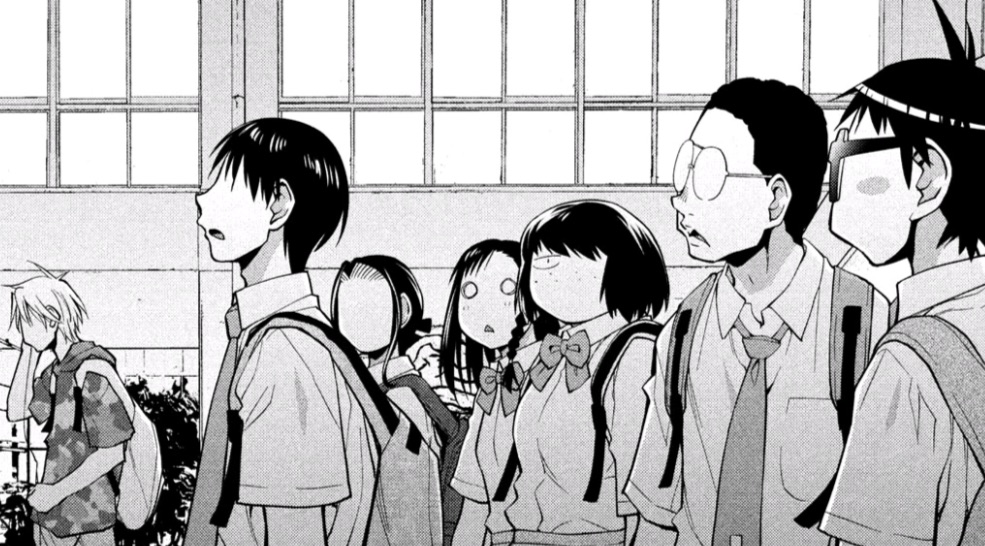
The Chorus Appreciation Society has its first big argument in Hashikko Ensemble, Chapter 14.

Summary

With only one day to submit an application to enter the MHK Concours, the Chorus Appreciation Society is struggling to decide on a song for both practical and personal reasons. Among the considerations: available members, song familiarity, and taste. After a great deal of arguing and even a near-fight between Orihara Kousei and Hachida Shinji (!), they finally land on a song they can all agree on: “Miagete Goran Yoru no Hoshi o” by Kyu Sakamoto.

Those Pesky Song Rights

One of the practical considerations that the group has to account for is that any rewriting or adapting of compositions, for the sake of better matching the performers, has to be approved by the original creator. With less than 24 hours to decide, that means this option is out of the question.

Kio didn’t have to place that limitation on his characters—he could’ve written the situation to have more leeway. It does add a bit of tension, however, and it gives ample opportunity for the manga to go into detail about the typical statement of a chorus or ensemble.

What is Normal? What is Otaku?

One of the barriers is Kousei, who refuses to do any songs he considers embarrassing, which rules out all J-pop. Others are ease of performance and familiarity. Akira suggests they do a Studio Ghibli song, seeing how popular, well known, and tasteful they are. Hasegawa Kozue’s eyes light up at the prospect, but she’s shocked and appalled to discover that some of the members have never seen a Ghibli film—namely Jin and Kousei, though Jin has performed some of the songs. Shion also reveals that she’s never watched one, though Kozue is much gentler and more forgiving with her.

This little interaction highlights a number of character aspects. First, the question of whether gruff judoka Kozue is actually an otaku is brought up by the other characters. There’s no clear answer, but at the very least, we know she’s not the kind of otaku to scoff at Miyazaki films. As for why those three in particular are Ghibli virgins, Jin and Shion can be attributed to strict households—Jin’s never even had TV. As for Kousei, it’s likely due to his traumatic, neglect-filled childhood.

Grump and Not-So-Grump

I find there are some similar trajectories for Kousei and Shion, in that both come across as hardasses at first but are softened up as they spend more time with the rest of the characters. The big difference is that while Shion just seems gruff but turns out to just be a goof, Kousei’s “lighter” side only comes out in tiny doses which are then exaggerated by everyone else. More broadly, there is a general theme of the Chorus Club/Appreciation Society helping people deal with or overcome their personal challenges.

The title of the chapter, “Ore ni Totte” [To Me], actually comes from a line uttered by Kousei: “To me, singing’s…” Here, he’s expressing what may be some poetic or powerful view of music, and the other members try to eagerly egg him on to express what he means.

It’s also telling that Kousei eventually says he wants to leave because it’s his tastes that are getting in the way, and that he’ll be fine with whatever—there’s a considerate person in there. However, Akira stops him because he wants a song everyone will be happy to work on. Both Kousei and Akira gain points in my eyes.

Songs

As mentioned above, the song they pick is “Miagete Goran Yoru no Hoshi o” (Behold the Nighttime Stars) by Kyu Sakamoto. The way the characters described it as basically something everyone knows prompted me to do some research because I was unfamiliar with both the singer and the song.

It turns out that Kyu Sakamoto is one of the most famous musicians ever, inside and outside of Japan. In 1963, he became the first Japanese performer to hit #1 on the US Billboard Top 100, and in 1985, he tragically died in the deadliest single plane crash in history.

Other songs mentioned in the chapter include “Kanade” by Sukima Switch (of course), and the Ghibli songs brought up by Jin: “My Neighbor Totoro” and “Stroll” from My Neighbor Totoro, “Carrying You” from Laputa: Castle in the Sky, and “Country Roads” from Whisper of the Heart.

Final Thoughts

Kio actually made a chart showing all the characters who’ve appeared thus far with names and classes. It’s a lot! It also makes me wonder who we’ll see more of in the future, especially now that we know what to call every one of them.

“Tales of Eternia: The Animation” and the Adapting of RPGs

I was asked via Patreon to look at the Tales RPG series, which I have very little experience with. Given time constraints, I decided to focus my energy on an anime version, knowing full well that such adaptations often do not fully capture what makes the source material appealing. With that in mind, I chose to go in blind on the earliest Tales anime: Tales of Eternia.

My immediate feeling from the first couple of episodes was that the core cast is a fun and likable bunch, and that they stood out above all else. My favorite is Farah Oersted, the martial arts tomboy with an oddly familiar an appropriate voice—turns out she shares a voice with Videl from the Dragon Ball franchise. The show at times felt beholden to its RPG origins, especially during fight scenes, which is not helped by the roughness of the early-2000s digital animation.

But as I kept watching, I wondered just how much ground they were covering from the original Tales of Eternia. Halfway in, it seemed more like they were on their very first missions, when you’re still kind of learning the ropes. By the time a major plot twist comes in, it feels strangely paced—like either the story was moving too slow for something like this, or it had been skipping over too much. At this point, I decided to look at just how this anime maps onto the game.

The answer is that it doesn’t—at least not exactly. The central characters are more or less the same, except drawn in an early-2000s anime style as opposed to the softer designs of the game (or its squat sprites), but the story of the Tales of Eternia anime does not take place anywhere in the actual RPG. Suddenly, it made sense, and the feeling I was getting from the anime version was all too familiar: the Tales of Eternia anime is basically a filler arc.

The challenge of adapting an RPG is tricky because there’s not necessarily enough time to cover everything, so I can see why they took this approach. Shoving the game’s story into 13 episodes probably wouldn’t have done it justice, so going for a wholly original story is an interesting solution. However, the reason it feels so much like filler is because it straddles the line a little too much. The anime tries not to touch the main story so there are no real stakes, but it also seems to assume that this somewhere into it, so the anime isn’t terribly free to take liberties. All that remains is the charm of the characters.

In Defense of Jiren

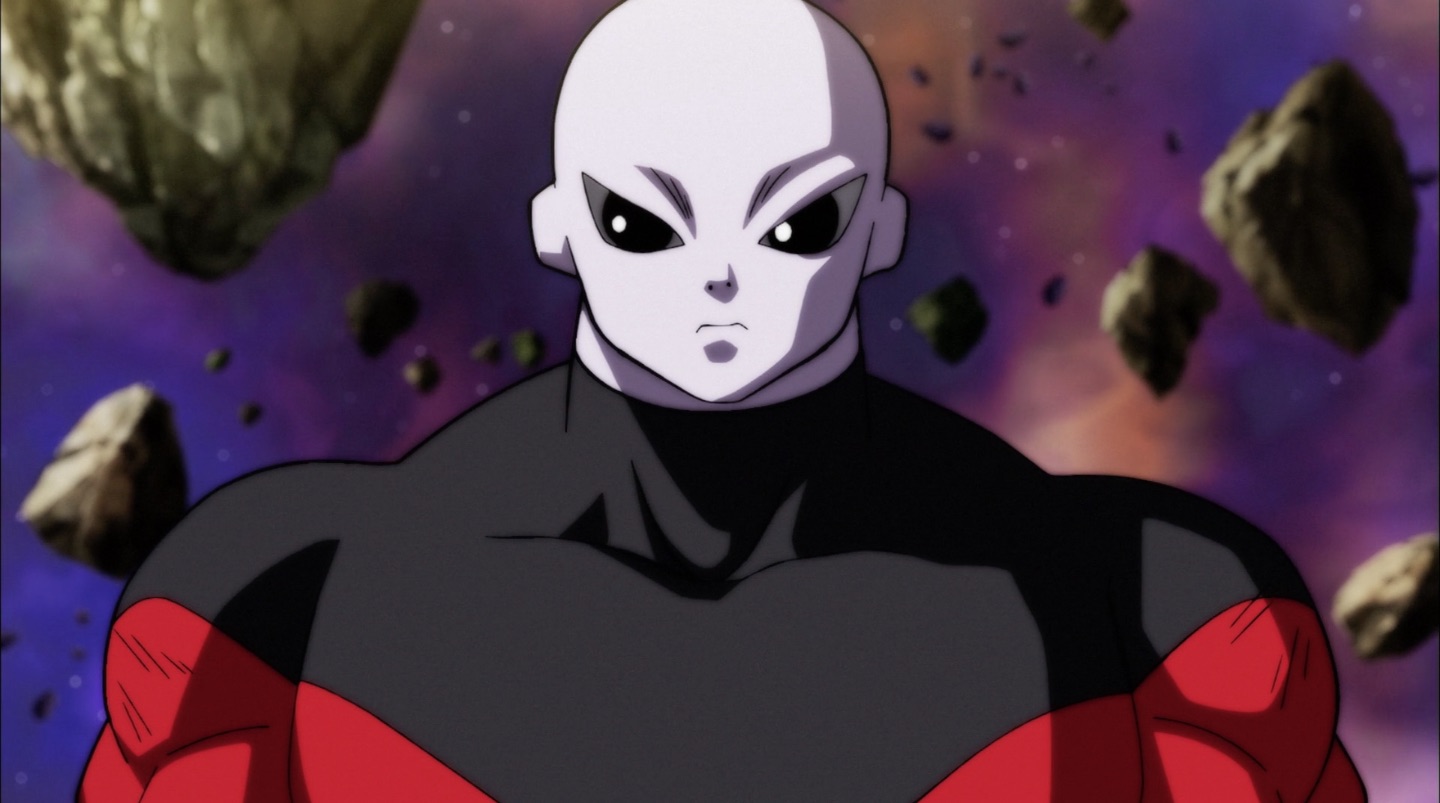
The Dragon Ball franchise is famous for many things, and one of them is its gallery of iconic antagonists. Piccolo, Vegeta, Freeza, and Cell are some of the big names Goku has faced over the years, and they each make a lasting impression. The recent Dragon Ball Super series introduced a major antagonist in its multiversal “Tournament of Power” arc, a mighty warrior from another universe named Jiren. But unlike the others, Jiren is considered by many fans to be a disappointingly generic villain. It’s an argument I can see, but in the end one I don’t quite agree with.

Indeed, if you take Jiren as a villain, he seems to just be generic in his obsession with power and sacrifice–just another big body for Goku to overcome. However, this approach to Jiren’s character isn’t quite accurate: Jiren may be opposing Goku, but he’s not a villain. He’s a hero of his own world, one he presumably has defended from threats comparable to the ones Goku has faced, and he gained his power through the circumstances and decisions that comprise Jiren’s experience.

The crucial difference between Goku and Jiren is that the latter’s life is full of pain and loss that made him choose a life of isolation and rejection. Where Goku would defeat and befriend those he faced, Jiren would destroy. Where Goku attains power for self-improvement and new experiences (i.e. fight stronger opponents), Jiren does it almost out of a sense of obligation or duty. Where Goku is goofy, Jiren is dead serious. What Goku has to overcome when fighting Jiren is not some evil machinations or even a chaotic force like Majin Buu, but a different in philosophy borne from a universe that did not have a Goku.

Put another way, Jiren could have been the protagonist of his own anime or manga, one where suffering and cynicism dominate. Perhaps you can think of a couple of titles that fit the bill. But just like how Goku embodies certain values as the core of Dragon Ball, Jiren would be the center of his own narrative and all that such a scenario entails.

So Jiren might come across as “uninteresting,” and he might not necessarily be as compelling a foe as the most well-known villains of Dragon Ball, but he acts as a different kind of foil. If ever he shows up again, there’s plenty of room to explore his character.

Yuuki Rinrin: Ogiue Maniax Status Update for March 2019

Ten years ago in late February, I went on my first date with the woman who would become my wife. For those who don’t know, we actually met in part thanks to Ogiue Maniax, so the blog is truly special to me in more ways than one.

In that respect, I’ve been thinking a lot lately about how this blog is a comfortable space for me where I can more or less write about whatever I wait. I’m feeling especially grateful to my Patreon sponsors. Not much is demanded of me from you guys, so you have my deepest thanks.

General:

Johnny Trovato

Ko Ransom

Diogo Prado

Sue Hopkins fans:

Serxeid

Hato Kenjirou fans:

Elizabeth

Yajima Mirei fans:

Machi-Kurada

At the same time, I do wonder if I’m not doing enough for my patrons, or if I’m getting complacent. Perhaps I should shake things up a bit, but I’m not exactly sure how. I’m entertaining the idea of restructuring my Patreon rewards, and I’m open to suggestions. I guess I want to do a little more giving.

My favorite posts from February:

Never Give Up: Hugtto! Precure

Precure + Sato Junichi? It’s as good as that sounds.

The Real Captain Planet: Brave Fighter of Legend Da Garn

A look at 1992’s entry in Sunrise and Takara’s Brave anime franchise.

What Lies Behind the Wobbling Debate in Smash Bros. Melee?

Delving into what makes the Ice Climbers’ infinite such a contested topic.

Hashikko Ensemble

Chapter 13 is the end of the beginning for the Chorus Club (or should I say “Chorus Appreciation Society?”).

Patreon-Sponsored

Winter 2019 Anime Impressions

These shows are Ogiue Maniax-approved! …For the time being, at least.

Closing

This is unrelated to the state of the blog, but some big robot news:

First, Super Robot Wars T comes out this month! You damn well better believe I’m gonna be rocking the Rayearth girls.

Second, did you know that they’re making a Soul of Chogokin for Vehicle Voltron??? I don’t know if I’ll get it, but I do know I’ll be watching every video review of it I can find.


Winter 2019 Anime Impressions

We’re a couple of months into the winter 2019 anime season, and I was asked by Johnny, one of my Patreon sponsors, for my thoughts thus far. Here are the current highlights, in my view.

The Promised Neverland

Based on a popular Shounen Jump thriller/psychological horror manga, it’s very notable that this adaptation is airing during the Noitamina timeslot–a space generally dedicated to appealing to older audiences. While I follow he original comic and thus know many of the spoilers, it’s still an incredible watch. If anything, The Promised Neverland is strong enough to carry the entire season by itself.

I was surprised to find out that the anime’s director is Kanbe Mamoru, who also directed one of my favorite anime ever, Cosmic Baton Girl Comet-san. Both shows have an amazing sense of almost palpable atmosphere, so maybe it’s not so unusual after all.

Boogiepop and Others

I recall the 2000 Boogiepop Phantom anime being amazing, but it’s been so long since I watched it that I barely remember what it was about. Thankfully, the current Boogiepop and Others (which is actually a prequel to Boogiepop Phantom) is plenty strong. It’s a bizarre occult mystery series where it feels like each discovery is just one small step in an infinite void of darkness. Even the characters themselves have this almost numbing quality that makes you want to sink further in. There are few characters I want to simultaneously know more and less about than Boogiepop.

Kaguya-sama: Love is War

Elite, super-rich schools are a fairly common trope in anime, from Boys Over Flowers to Ouran High School Host Club, and they can be pretty hit or miss. I was pleasantly surprised by Kaguya-sama: Love is War because while it’s pretty much a “will they or won’t they” romcom, the premise is almost backwards compared to expectations. Rather than it being about hopelessly oblivious teens not realizing their own feelings for each other, it’s about two characters who are clearly interested in each other but see romantic confession as a sign of weakness. Thus, they’re constantly playing a game of chicken to see if they can get the other to ask them out first.

I like to think of it as like a mirror version of Monthly Girls’ Nozaki-kun. The only thing is that while I’ve enjoyed the episodes I’ve watched, I wonder if the joke might wear itself thin eventually.

Rinshi!! Ekoda-chan

Adapted from a manga that ran in Monthly Afternoon, Rinshi!! Ekoda-chan is an eccentric series about a single woman living in Tokyo. The anime is made all the more absurd by a Pop Team Epic-esque approach, where each episode is animated and directed by a different staff. The after-episode interviews last a liiittle too long, but it’s almost supplemental so not a big deal.

Star Twinkle Precure

Does this count as a winter 2019 season anime? The year-long franchise always runs on Precure time (starts and ends in February), but I’m going to include it because the series is already awesome. It’s taking a different approach compared to its predecessor, Hugtto! Precure, but I appreciate that. The outer space/aliens theme is a welcome first that I hope they explore in greater detail. The main character, Hoshina Hikaru, fulfills the “energetic and enthusiastic lead” role like so many other central Cures before her while still managing to feel unique. The show is vibrant and fun, and I expect good things from it.

So what series have been catching your attention? Which have you stuck with? Let me know in the comments, if you’d like!

This post was made possible thanks to Johnny Trovato. If you have any topics you’d like to see on Ogiue Maniax, check out the Patreon.

The Real Captain Planet: Brave Fighter of Legend Da Garn

The 1990s Brave franchise—most famously known for its swan song, King of Braves Gaogaigar—is a series of children’s anime centered on boy heroes and their heavily merchandisable giant robots. While the overall quality varies, each show indicates a push and pull between being half-hour toy commercials, displaying impressive mecha animation, telling stories that kids enjoy, and imparting important lessons for young viewers. Over the years, I’ve been told multiple times that one of the turning points is 1992’s Brave Fighter of Legend Da Garn: the third entry and first to attempt a more mature and long-form story. Having finally watched it, I can see a more serious yet also a scattershot approach that belies the competing forces dictating the direction of Da Garn.

Takashiro Seiji is a normal ten year old boy whose mother is a news anchor and whose father is a member of Earth’s Global Defense Force. When a mysterious robot attacks the city, he comes across a power lying within the Earth itself that manifests itself as a giant robot guardian known as Da Garn. As the masked commander, Seiji leads Da Garn, and eventually other robot allies who emerge, against ever greater threats—especially the enemy’s ongoing attempt to rob the Earth of its “planet energy.” There’s an ongoing environmentalism and world peace theme underlying everything, exemplified by a line from the opening theme: “This planet is our cherished ship.”

Due to this show’s opening, I once had a very mistaken impression of Seiji. The way he’s drawn and animated in it, there are times when he looks like an adult. It’s almost as if they either hadn’t decided his age, or figured that making him look 6 feet tall and muscular would make for a more exciting intro regardless of how odd it looks. Whatever the case, my expectations had to be modified, though Seiji’s quality voice acting from Matsumoto Rica (best known as Satoshi from Pokemon) helps keep him an endearing if somewhat typical protagonist.

The robots, in typical Brave fashion, are all about combining. Da Garn combines with a plane and a train to become Da Garn X. Later robots combine together and then get additional partners to combine together. However, they’re also kind of a thematic hodgepodge. Da Garn himself is a police car. He gets plane allies and motor vehicle allies. Then they start introducing robots based on animals, even making it seem like one is going take over as the star of the show, as if someone said, “The surveys say kids like lions!!”

There are so many mecha, and they’re given so few opportunities to show their personalities, that only a handful ever get highlighted, leaving many to be less memorable. In contrast, it’s hard to forget any of the robots in Brave Police J-Decker or Gaogaigar. Even compared to a series like Girls und Panzer (which also groups a gigantic cast into “squads” with collective personalities), Da Garn can feel sparse in terms of characterization. The main exception to this glut is an antagonistic robot named Seven Changer, who (of course) has seven different forms, and whose cool arrogance is delivered effectively by Koyasu Takehito (Dio in JoJo’s Bizarre Adventure).

Speaking of villains, I’m not sure if I’d call them particularly strong, but they are definitely memorable, and they’re explored in great detail. Many of their identifies are initially a mystery, and they’re woven into the simultaneous small-town/global atmosphere in interesting ways. As the series progresses, their stories are increasingly a part of the narrative, and it allows Da Garn to touch upon ideas that would make less sense with Seiji or any of his friends. In fact, I’d argue that the anime doesn’t really find its footing until it starts to do more with its villains.

Brave Fighter of Legend Da Garn ends up being the kind of work that is best viewed as taking a step beyond its trappings and its immediate predecessors while still somewhat beholden to them. It’s polished in some areas like visual presentation and general momentum of its narrative, but it sometimes succumbs to the weight of all the different expectations placed upon it. But while it may be outdone by later Brave series, it’s still a joy to experience, quirks and all.

His Characterization is Maximum: “Dragon Ball Super: Broly”

There’s an old and famous picture from a newspaper’s children’s section, where they asked kids, “If you could be a superhero, who would you be?” In response to this question, a boy named Markus answered, “Broly from Dragon Ball Z. His power is maximum.” But while people online have gotten lots of laughs from this innocent answer over the years, Markus’s words almost perfectly encapsulate the character of Broly, the Legendary Super Saiyan.

As an antagonist, Broly was always a one-dimensional character whose primary trait is being ridiculously and impressively powerful. To be fair, the way it’s portrayed in his appearances leaves a lasting impression, and has a clear, primal appeal to Dragon Ball Z fans. However, he’s ultimately a simplistic villain to be overcome by blasting him harder.

The character is also non-canon, appearing only in Dragon Ball Z anime films, which is why it’s rather significant that the creator of Dragon Ball himself, Toriyama Akira wrote the script for Dragon Ball Super: Broly. It not only means introducing Broly into the Dragon Ball universe proper, but also an opportunity to transform this flimsy rage machine into a fully fleshed character.

On a skeletal level, Super Broly is basically the same character: an instrument of revenge for his father, Paragus, against Vegeta  (the son of the man he hates most, King Vegeta), who goes berserk and must be stopped by Son Goku and his allies. There are a couple of crucial changes, however.

First, in the original Broly film, Broly is shown as having an inadvertent deep-seated trauma caused by Goku when they were fellow infants, which causes him to wantonly attack Goku. This no longer is a thing, and when he and Goku fight as adults, they’re meeting for the first time. Second, in the new film, Broly is shown as being ridiculously strong and terrifying but ultimately innocent inside—as if his personality isn’t inherently that of a fighter.

Both are smart choices that lay the groundwork for making Broly a properly three-dimensional character. The Goku grudge used to come across as largely a flimsy device to get Broly in direct conflict with the hero of the story, and it kind of punks out Vegeta in the process. Without it, his background focuses more on him being unfairly raised by his own father to be a tool for revenge, and the different ways in which Goku, Vegeta, and Broly have been shaped by their upbringings and experiences. An extensive background story in the first half of the film highlights these differences.

That being said, I don’t want to make this film sound like a deep look into character psyches, as it’s mostly one gigantic fight scene full of the fast and frenetic combat Dragon Ball is known for. However, those crucial differences between Goku, Vegeta, and Broly come out even as they’re pummeling each other. Goku’s Earth-bases martial arts background, Vegeta’s elite Saiyan training, and Broly’s mostly unrefined berserker rage are all conveyed in the action, which does a lot of showing instead of telling somewhat reminiscent of Mad Max: Fury Road.

A few bits of welcome comedy alongside some new characters help keep Dragon Ball Super: Broly from feeling too heavy—a clear indication of Toriyama’s hand in the process. Overall, it ends up being a really solid film, and one that manages to give depth and meaning to a pure power fantasy character like Broly without taking away the strength that made him popular in the first place.


Never Give Up: Hugtto! Precure

In the opening to Hugtto! Precure, the very first thing spoken by the heroine of the story, Nono Hana, is a motivational mantra: “You can do anything! You can be anything! Embrace your shining future! Hooray, hooray, everyone! Hooray, hooray, me! Here we go!”

At first, it feels a little hokey platitude you say to kids: “You can become president one day!” But over the course of 49 episodes, the words grow and grow in weight and significance. Hugtto! Precure knows it’s not easy to do what’s right, that failure can feel devastating, and that life can turn from joy to sorrow in a moment’s notice. Still, it tells its viewers, both young and old, something ever-important but especially in today’s world: “You define your own success, and who you want to be.”

The premise is standard magical girl stuff: Nono Hana is a 13-year-old girl who won’t let the world get her down, when a mysterious baby named Hugtan nd her talking hamster companion fall from the sky. Gaining magical powers to fight off the nefarious forces after the baby, Hana becomes Cure Yell, and over the course of the series makes new friends and allies who join in her fight. Hugtto! also celebrates the 15th anniversary of the Precure franchise, and it pulls out all the stops as a result. The animation and vibrant, impactful action scenes are frequently among the best in franchise history, and the Hugtto! makes numerous subtle and not-so-subtle references to past series.

But even before the first episode, one bit of news about the show stood out to me more than anything else: the fact that the director of Hugtto! is the famous Sato Junichi—in fact, it’s his first Precure! One of the best ever at making magical girl anime that are both poignant and respectful of the young audience watching them, the same attitude seen in works like Sailor Moon, Ojamajo Doremi, Princess Tutu, and Fushigiboshi no Futagohime is on full display in here. When the primary themes are dreams and motherhood, it can be all too easy to create something contrived, but Hugtto! leaps over that hurdle with grace and enthusiasm.

Major and minor characters alike are robust and fully realized, with their own strengths and weaknesses and unique circumstances, as if they all have their own lives and stories to lead. My favorite character is Aisaki Emiru, a rich girl whose overactive imagination leads her into being overly cautious. However, I think the character who encapsulates what makes Hugtto! so powerful is Nono Hana herself.

Hana’s Precure name, Cure Yell, comes from how “yell” (eeru) is used to mean “cheer” in Japanese. This explains not only her cheerleader-inspired outfit but also her general life philosophy: Everyone needs a supportive voice to lift them up sometimes, whether they’re ultra-talented naturals living their dreams or struggling to achieve anything, and that includes Hana herself. As the series points out numerous times, being that source of encouragement might seem easier or less important than what the superstars around her accomplish—Homare as a figure skater, Saaya as an actress, and more—but it’s just as challenging and valuable to inspire others to not give up. It doesn’t come totally naturally to Hana either; she actively works on it, essentially exuding a motherly and nurturing quality not just towards Hugtan but everyone else too.

People can fail and dreams can change, but “You can do anything! You can be anything!” is not meant to be taken literally. Rather, it encourages a mindset that doesn’t let any obstacle, no matter how big or small, trap people into doing nothing.

In terms of messaging, Hugtto! Precure is one of the best in franchise history. It’s very easy for any show of Precure’s kind—a massive merchandising machine—to play it safe and push toy sales, but Hugtto! actively emphasizes a plethora of important lessons that allow it to overcome that pitfall. For example, while Hugtto! has that excellent fighting action Precure is known for, it still foregrounds the idea that violence is ultimately not the answer, that it is the Precure’ s compassion that wins the day in the end. A key instance of this is when Cure Yell gains an elegant and powerful-looking sword, but rejects its violent appearance, claiming that it isn’t what they need in that moment to not just defeat a villain but save him as well.

Other notable stories highlight a progressive bent in Hugtto! Wakamiya Henri, is introduced as a figure-skating rival for Homare but becomes a key figure for challenging gender and sexuality norms. A stand-alone episode about childbirth becomes a lesson to viewers about the wrongful demonizing of Caesarean sections in Japan. The villains, each named after a different era of recent Japanese history, are all portrayed as having succumbed to cynicism and in need of the Precures to show them that they can still believe and dream. As a side note, it’s highly amusing to me that the villain who represents baby boomers, Daigan, loves to talk big about how he’d fix everything with ease, but ultimately proves ineffectual.

So where does Hugtto! Precure rank among its fellow Precure series? A part of me is still more fond of Heartcatch Precure! (which I consider the pinnacle of the franchise), but Hugtto! carries much of the same spirit and DNA that made Heartcatch great. In other words, it’s a top-tier show that’s at once familiar and daring, and perhaps casts a long shadow on what’s to follow. Best of luck to Star Twinkle Precure—it’s going to need some.

Hands-On Experience: Hashikko Ensemble, Chapter 12

Kurata Shion’s history with piano and some lewd humor make up Chapter 12 of Hashikko Ensemble.

Summary

The chapter begins with Mimi-sensei recalling her past. Growing up shy due to her large chest, she was inspired by a high school teacher to go into teaching herself. Unfortunately, her students treat her more like a friend than an authority figure, leaving her unconfident.

Shion tells the classroom about her own history. Encouraged to learn the piano from a young age by her mom, she eventually developed a form of tendonitis. When she suggested to her mom that she wanted to quit, her mother’s response was that Shion has no ability otherwise—if she stops playing, she’ll have nothing left.

Jin figures out that Shion was taught poor form—a byproduct of being coached by her inexperienced mom. This lines up with everything else we know about Shion: she uses too much force for everything, whether it’s sawing or playing piano. The conversation gets heated, especially because Shion discusses quitting the school due to her seeming inability to learn how to let up on her grip.

Oumi-sensei steps in to try and convey to Shion that there’s more to Hashimoto Tech than just learning trade skills, that it’s about having new human experiences. Mimi-sensei feels the spirit of her old teacher inspiring her, so she offers herself as an open ear. Shion immediately squanders this good faith by asking for a smartphone, to which Mimi responds, “Why don’t you ask your mom?”

Shion leaves, childishly frustrated at Mimi’s response, but accidentally trips and lands with her hands on Mimi’s chest. However, squeezing them and alternating her grip strength helps her figure out what it means to have a gentle touch. Excitedly, she runs to the woodshop classroom to demonstrate her suddenly improved sawing technique. Jin then asks her to try and play piano, and using that chesty eureka moment, Shion applies her new lighter touch to the ivory as well. The Chorus Club has their pianist now.

Poor Mimi-chan

I feel for Mimi, especially how she doesn’t seem to be treated seriously as an adult. Even her heartfelt recollection of how she became a teacher was a setup for a boob joke.However, I like how this chapter revealed that she actually has a tiny bit of an edge when Shion asks her about getting a smartphone. The way the page is framed, with each of them equally prominent in separate panels, makes Mimi’s response feel immediate and somewhat terse while still conveying her generally gentle demeanor.

The Road to Hell

Shion’s past is yet another instance of conflict between parent and child, but unlike Orihara’s situation of neglect, it involves a mom with good intentions. Shion’s case is when a general approach to life (work harder!) fails to take into account the particular needs or feelings of an individual. The fact that her mom actually suggests that Shion has nothing without piano is an all-too-real sentiment from a loving but perhaps overbearing parent, and on some level I can empathize with Shion’s situation more than any other character so far. It also makes me wonder if Kio Shimoku is laying a general criticism towards parents in Japan and the different ways they can negatively impact their children’s lives. As a father himself, perhaps he’s also warning himself—like a reminder to never forget what it was like to be that age.

Because Hashimoto Tech is a vocational school, it brings to the foreground the notion that these are kids on the cusp of becoming adults. For Shion, there’s also the question of what happens when one’s passion or hobby is tied to one’s career. At one point, she reveals that she always assumed a dislike of piano meant a dislike of music in general, and it’s a window into how all the different elements involved with her starting and giving up playing are jumbled together. Decoupling them is one of the outcomes of this chapter.

Talent vs. Hard Work

The question of whether hard work can compete with talent comes up while the class is discussing Shion’s situation. We know Shion’s opinion on this—that hard work can’t compete. Jin disagrees, but what’s especially curious is that Jin doesn’t see himself as talented. The question is if his incredible vocal skills is indeed a product of constant striving, or if he’s comparing himself to some kind of titan. The fact that Jin expresses empathy with Shion growing up with an overbearing mom might say it all.

Songs

Once again, “Kanade” by Sukima Switch. It’s the song Shion plays.

Final Thoughts

When Shion accidentally trips and is about to fall, Hasegawa (the judo girl) rushes to save her but then accidentally bumps into Akira. If you look closely, Hasegawa was behind the teacher’s lectern a moment before. Either this was a mistake, or she actually slid over the lectern to get there in time.

Also, she likes puns.

Basically, Hasegawa’s awesome.

They’re all awesome.

The Best Nonsense: “Himote House: A share house of super psychic girls”

The “semi-improv” anime genre began in 2009 with gdgd Fairies, and since then it’s been a source of both laugher and confusion. 2018’s Himote House: A share house of super psychic girls is the latest take on this formula, and it feels in certain ways a culmination of all the previous works. If gdgd Fairies is the pioneer, Tesagure! Bukatsumono the most consistently funny, and Naria Girls the strangest failure, then Himote House is simultaneously the most indicative of experience and the most successfully experimental.

Ostensibly, the series is about a group of girls with super powers who all have trouble getting boyfriends, but the premise (as always) is mostly a pretense to set up joke after joke. Like most of its predecessors, the show is built around varying degrees of scripted comedy and impromptu improv moments. More than any other show of its kind, however, Himote House is willing to break with its own established patterns. Trying to find ways to be attractive to guys gets plenty of laughs, but only because they highlight the absurdity of the characters themselves. An episode at a bathhouse has to be seen to be believed—at once spoofing the exploitative power of fanservice and leaning hard into an awkwardness like no other.

These types of shows live and die by their actors, and Himote House fortunately brings back multiple veterans from past series such as Straight Title Robot Anime and Tesagure! Bukatsumono. Himote House will even occasionally call back to previous series as a nod to the returning fans. The biggest thing of all, however, is that the three of the gdgd Fairies are here too, and that includes seiyuu mega-star and Okada Kazuchika girlfriend Mimori Suzuko. I’m particularly impressed by Mizuhara Kaoru, who plays a very different but equally amusing character compared to her role as shrshr in gdgd Fairies.

As with its predecessors, Himote House hits home if you’re into a kind of disorganized humor that thrives just as much on when jokes fall flat as when they succeed—it’s all about the actors sticking the landing. Existing somewhere in the range between Aqua Teen Hunger Force and Inferno Cop, Himote House is, if anything, memorable.