Media vs. Mix: A Journey Through Love Live! Sunshine!!

aqours_dengeki_gs_magazine_june_2016_bonus_poster_main_slider

NOTE: Spoilers for Love Live!, Love Live! The School Idol Movie, and Love Live! Sunshine!!

When I first watched the original Love Live! anime, I approached it with a healthy dose of skepticism. I may have enjoyed certain idol anime, but I’m not terribly fond of the concept of idols itself, and so premise alone isn’t enough. In the end, though, Love Live! won me over with a surprisingly solid presentation that emphasized both characters and narrative, along with what I found to be rather clever humor. Many months later, I now walk around with a Love Live! phone case.

So when Love Live! Sunshine!! was announced, and with it a set of new primary characters in the form of school idol group “Aqours,” it presented me with something of a conundrum. I’m now a fan of Love Live!, but I didn’t want to give the sequel a free pass. On the other hand, I also didn’t want to judge the series too harshly, scrutinizing it unfairly for not living up to the lofty heights of its predecessor. I still don’t know if I hit the right balance, but it was a situation I was consciously aware of.

Because the main way I experienced the first Love Live! was through its anime, I decided that this would be my entry point into Love Live! Sunshine!! as well. However, the Love Live! Sunshine!! itself didn’t make it easy. Character profiles came out months prior, each with detailed information and self-introductions. A trip to Japan and its otaku goods stores made it even clearer: pick your favorite, and devote yourself to her greatness. But I couldn’t! Descriptions alone are not enough to endear me to any character. I need to experience them interacting with each other. Otherwise, they become flat entities floating in a space of simple desire. That’s all well and good, but not how I decide who to root for.

Nevertheless, from what little I gleaned (and with a nudge from fate thanks to a random shikishi signboard), I went into the show curious about two characters. The first was Kurosawa Dia, the student council president and someone who, according to her profile, revels in the idea of competition and achieving total domination in any endeavor. In a way, she has a very fighting game community-esque “play to win” mentality. The second was Ohara Mari, by virtue of being half-Italian American (thus making me imagine her talking like people I meet on the streets of New York City), and because she enjoys industrial metal.

Then the anime debuted. It was finally time to see how these characters behave when fleshed out and moving. But as the characters and their world opened up, and I got to see things like Watanabe You’s cute-but-odd obsession with uniforms and chuunibyou Tsushima (Yohane) Yoshiko’s antics, I noticed something. For both Dia and Mari, elements of their stated personalities existed, but the show only hinted at bits and pieces of it. Their “true selves” were, to a certain extent, hidden behind the plot. For example, while early on Dia shows that she secretly loves μ’s (the original girls of Love Live!) by basically acting as a fandom gatekeeper against main heroine Takami Chika, that love of victory doesn’t really shine through. There was no trace of Mari’s fondness for industrial metal, either.

lovelivesunshine-kananscrubs

What I found was a disconnect between the initial profiles provided and the characters as they were presented in the anime, partially because the anime focuses on how the group came together in the first place, instead of having them already assembled as the official character descriptions assume. Granted, it was possible to see how that gap might get bridged, and it also created the opportunity to find new favorites within the anime (like athletic third-year and diver Matsuura Kanan!), but I had to wonder if I had sabotaged myself by just getting too much information, instead of sitting back and waiting for the anime.

lovelivesunshine-musemerchandise

Another minor problem came with the fact that μ’s are essentially considered legends of the school idol world by the time of Love Live! Sunshine!! Their status is almost divine to many of the characters in the show, and while the story develops to show how the girls of Aqours embrace and then move forward from their love of μ’s, it also made me aware that, even as I am the biggest fan of Love Live! whole thing among my own circle of friends, my experience with Love Live! is not to the degree of its most ardent supporters. When I appeared on a podcast about Love Live! The School Idol Movie, my fellow guest Bamboo Dong talked about how she and others in the theater cried as the film reached its conclusion. People like them, the fans who are literally moved to tears, at seeing μ’s ride off into the sunset, are the ones who the girls of Love Live! Sunshine!! resemble. That isn’t me.

One of the results of these conflicts was that it became a bit more difficult to view the characters as being charmingly realistic, which is one of the qualities that drew me into Love Live! in the first place. At first, I thought their appeal lied in their being a little more extreme and bombastic. A lot of this feeling was extremely subjective, of course. You could ask anyone who’s watched both to say which characters they think feel more “real,” and you’d surely get disagreements even within a single franchise iteration. For me, it has to do with how characters resonate and reflect the life I see around me. Koizumi Hanayo is still the best, in part due to the fact that her enormous appetite and the way she can go from shy to intense when on the subject of her passions (rice and idols) is something I empathize with immensely. The divisive nature of Yazawa Nico comes from her being a little too real. I know someone who’s just like Sonoda Umi.

lovelivesunshine-you-jpg

In spite of that mildly rocky start, and the fact that it is lacking in Hanayo, Love Live! Sunshine!! can count me as a fan. As the show progresses, you get to see Chika face the hurdle that is the dedication of competing school idols. You learn about the past that ties the third-year characters of Dia, Mari, and Kanan together. Friendships are challenged and made stronger, fun is had all around, and they for the most part end up as well-conceived characters who are each sure to attract people who love them to death. A cynical side of me could point to this being the franchise itself playing people like a fiddle, but I think the series makes a convincing enough presentation that even a discerning eye can become a fan of, say, Hanamaru’s speech quirks and “man out of a cave” experience with technology.

What perhaps impresses me the most about Love Live! Sunshine!! is how it handles the inevitable comparisons to the first series. In this regard, the ending of the first season of Love Live! Sunshine!! says it best. Much of the show is about Aqours trying to find its identity, its reason for being. While μ’s was conceived from Day 1 as a way to save their own school, and this eventually becomes a plot point in Love Live! Sunshine!! too, Chika is at first just all about being a μ’s fan. It’s not until the last concert in the final episode that the primary distinguishing feature of Aqours becomes clear, and it’s best to describe it in comparison to both μ’s and the original “boss characters” of the first Love Live! anime, A-RISE.

A-RISE was the #1 school idol group, and by the second season the reigning champions. They were dedicated to being the best they could possibly be, striving for the top and whatever heights lie beyond that. Saint Snow, Aqours’ own rivals, are of a similar mindset. μ’s was all about capturing the spirit of the zeitgeist of their time in high school as school idols, and letting such passion remain fleeting and thus all the stronger. Aqours, in contrast, is about showing love for their community, school idols as a means to share how great it is to live in a city with a fairly small population that is nevertheless full of good people.

lovelivesunshine-episode13concert

Honoka and the other original Love Live! girls worked to save their school, but there was no need to show the appeal of the already-famous Akihabara. When Chika calls all of her classmates and everyone’s families to get near the stage and cheer for their climactic performance on-stage, it comes with the knowledge that doing so is against the rules. She literally sabotages her chances to progress in the Love Live! preliminaries because it is less important than getting the audience to see the great people who go to Uranohoshi High School and live in Numazu. Ironically, the actual “Love Live!” competition in Love Live! Sunshine!! takes a backseat.

My time with Love Live! Sunshine!! has been, while perhaps not an unusual one broadly speaking, somewhat strange compared to my other experiences with other anime and media franchises. Nevertheless, it’s definitely been worthwhile. Now that the pieces are in place and the girls of Love Live! Sunshine!! are all together, I’m looking forward to seeing Dia wreck some scrubs.

If you liked this post, consider becoming a sponsor of Ogiue Maniax through Patreon. You can get rewards for higher pledges, including a chance to request topics for the blog.

Yona of the Dawn: 20 Episodes to Become a Badass

yona-eyes

WARNING: SPOILERS FOR THE ANIME

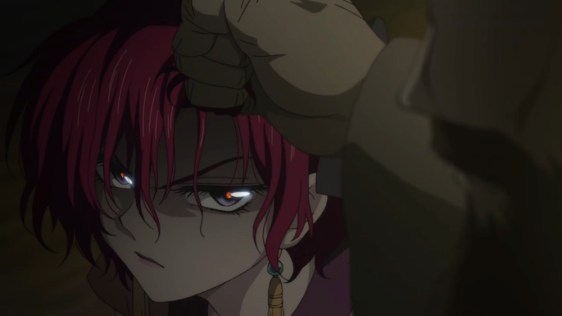
At the very beginning of the Yona of the Dawn anime, we’re shown an image of Yona, a confident female archer leading her band of warriors, before showing the same girl as a naive princess. The implication presented by this contrast is that this example of sheltered royalty will eventually become a great leader who does not shy away from conflict or hardship. Over the course of its early episodes, as Yona witnesses the death of her father and must escape her castle home with her bodyguard Dak, additional flash-forwards give brief glimpses as if to say, “Keep watching, she’s going to become a real badass! You’ll see!” The feeling early on is that it’ll take two, maybe three episodes to see how Yona transforms.

It actually takes 20 episodes.

Certainly Yona makes small steps towards growing stronger prior to that (such as tackling an attacker off a cliff), but much more attention is paid to a mysterious bond she has with the legendary dragons who will help her save the kingdom, all of whom are handsome men. The transformation only happens eventually in episode 20 when Yona decides to board a ship disguised as a girl trying to sell herself into sexual slavery in order to take down a corrupt government official. Here, she takes a major step towards showing sustained courage and conviction (rather than brief flashes of those qualities).

yona-arrow

In the following episodes, Yona does something that changes her character forever. Confronted with the official they were pursuing, she shoots an arrow straight into his chest, killing him. This is significant not only because it shows her conviction towards reclaiming what she lost and righting all of the wrongs that plague her kingdom, but because her father was a staunch pacifist who went to great lengths to keep Yona from following a path of violence, and Yona ironically has betrayed her father’s wishes in order to grow. It’s her defining character moment that, again, comes almost towards the end of the series.

The issue here is that, for those who were looking for Yona to become this amazingly spirited leader, 20 episodes might be too much. While I believe the pay-off is actually very satisfying, I do think the series runs the risk of turning people off because of just how long it takes to get to that point. It also depends on who you ask, but while a show that meanders in the middle but hits a good climax is generally better regarded than a series with a strong middle that sputters out at the end, having to maintain that audience is tough. I’m also not saying that it took Yona actually fighting with a weapon to make her an interesting character. Rather, the anime itself set her up to carry that expectation.

It makes me consider the following: if Yona of the Dawn gets a second season, would I recommend, depending on the person, to just skip the first season entirely (or at least watch a select number of episodes)? I’m not entirely sure myself.

One last question, just because it’s been in the back of my mind ever since I started watching this anime. Is the setting meant to be a mix/potpourri of various Asian (and perhaps non-Asian cultures)? Characters such as Yona, her dad King Il, and Dak all have Korean-sounding names, but they come from Hiryuu Castle, which is Japanese. They meet a dragon whose name is pronounced Shinya but is spelled Sinha, which reminds me of Portuguese. Given that the Portuguese were involved in Asia because of colonialism, maybe that’s the reason. Does anyone know anything about this?

If you liked this post, consider becoming a sponsor of Ogiue Maniax through Patreon. You can get rewards for higher pledges, including a chance to request topics for the blog.

Love Live!, A-RISE, and the Music of Antagonists

As much as I love μ’s, the main group from the original Love Live!, I dig their anime rivals A-RISE (especiallyt their leader Kira Tsubasa) just as much. The reigning champions of the Love Live! school idol tournament, they represent the top of the pyramid, and their music in contrast to μ’s is techno/dance-heavy, with a high-budget sense of professionalism.

In episode 6 and 7 of Love Live! Sunshine!!, we’re introduced to Saint Snow, a duo whose slick dance moves and techno-style music are the first sign that the girls of Aqours have a lot of catching up to do. Given their similarities to A-RISE, I’ve come to wonder if that style of music has come to represent the “adversary” in the franchise.

It’s clear why A-RISE was placed in that position. Initially, μ’s are the underdogs, and A-RISE with their super ritzy high school and position as top idols are there to contrast with the homegrown, down-to-earth feel of the heroines of the story. Saint Snow, though they also hit some stumbling blocks, carry a similar contrast to the rural Numazu area that Aqours comes from.

There’s also a contrast in motivation that seems to come with this style of music. In episode 12, when Saint Snow meets up with Aqours once more, it’s clear that Saint Snow see being school idols as a competition. They want to stand on top and see what the view is like from the summit. This is presented not as a wrong way to approach being school idols, but exists in contrast to Aqours who are in it more for the experience, even if ostensibly they’re doing it to save their school. Similarly, in The School Idol Movie, Tsubasa from A-RISE expresses her ambition to continue being an idol even after she graduates, whereas Honoka is implied to not quite follow that path.

Is there any possibility that the “rival” sound will become associated with the central characters of Love Live!? Or will it at best always be relegated to subgroups within the main cast, such as BiBi and songs such as Cutie Panther?

If you liked this post, consider becoming a sponsor of Ogiue Maniax through Patreon. You can get rewards for higher pledges, including a chance to request topics for the blog.

Kiznaiver vs. M3: The Dark Metal – Review and Comparison

kiznaiver-spread

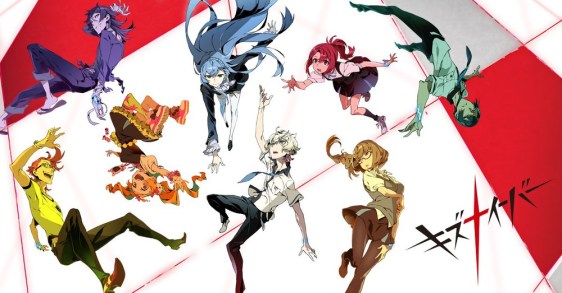
Human communication and the overt expression of emotion/trauma: when it comes to anime writer Okada Mari, many of her works explore these two thmes. Just this past spring, two of her shows—Kiznaiver and The Lost Village—did so in spades, but I found myself comparing the former to another, lesser-known title of Okada’s, titled M3: The Dark Metal.

m3mainvisual

In a previous discussion of M3: The Dark Metal as a guest on the Veef Show podcast, I mentioned that the show felt like two conflicting forces were at work, the more down-to-earth directorial style of Satou Jun’ichi clashing with the high melodrama of Okada. The ultimate message of M3: The Dark Metal is that being able to see straight into people’s minds won’t necessarily solve problems of communication (and might even create new ones), and that we as people should do our best to connect with each other using the tools and senses we have already. It thus provides a counterargument to a notion most famously found in Neon Genesis Evangelion.

Kiznaiver takes a similar angle, forcibly connecting its characters through a bond of pain; when one gets hurt, it gets evenly distributed to the rest of them. Ostensibly a way to help people learn to empathize, the story reveals that it ironically did the opposite in early cases. Like M3: The Dark Metal, the characters realize that they need to learn to communicate as they are, though in the case of Kiznaiver the bonding mechanism ultimately helps more than hurts. Another similarity exists between the characters Heita (M3) and Hisomu (Kiznaiver), the sadisme of the former contrastng with the masochism of the latter.

The big difference between the two series is visual flair. M3 is plainly animated, and takes place in a world of monsters and giant robots. Most of it is dark and brooding. Kiznaiver is bright and colorful, and filled to the brim with the dynamic facial expressions, sleek character designs, and overall frenetic aesthetic of Studio Trigger. In this respect, Kiznaiver does a much better job of meshing with Okada’s writing style, though I do hope to see her try and write another giant robot anime.

If you liked this post, consider becoming a sponsor of Ogiue Maniax through Patreon. You can get rewards for higher pledges, including a chance to request topics for the blog.

Looking Back on Ojamajo Doremi

doremi-flags

In 2010, I found what would become one of my favorite anime ever. Ojamajo Doremi, at one point brought to the US as Magical Doremi, is a magical girl series targeted at young children, but with such great character development and genuine respect for children’s intelligence that it is easily one of the strongest works of fiction I’ve ever seen, let alone anime or kids’ material.

While I never really reviewed the series beyond the first season, my verdict on the sequels more or less amount to “more or less just as good,” so I didn’t feel it necessary to say the same thing four times. Now that I’ve finished Ojamajo Doremi Dokkaan!, which concludes the original series (there’s an OVA that takes place in Seasons 3 and 4, as well as canon light novel sequels featuring the cast in high school), it gives me a chance to rwhat eflect on I think makes this series so special, but now within the context of having followed the cast over 200+ episodes.

Doremi follows a group of young girls who become witch apprentices, and with their newfound abilities they use their magic to help others out. What makes this series remarkable from the very beginning is that they often cast magic in order to solve people’s problems for them, but rather utilize it in a way that lets people help themselves. Unlike the current Toei magical girl franchise, Precure, each season of Doremi is a direct continuation of the previoust, so we follow the girls from third to sixth grade. Doremi and the others meet a ton of characters and encounter a vast number challenges, so it’s easy to assume that all of the events would kind of blend together in one’s memories. However, the biggest testament to how strong Doremi is in general that the series is filled with characters both major and minor that create lasting impacts.

In the second season, Ojamajo Doremi # (pronounced “Sharp”), where Doremi has to take care of a magical witch baby named Hana. As a 4th grader in elementary school, Doremi cannot handle actually taking care of a baby, and Hana makes her life a living hell. However, when Doremi runs to her mom for comfort because she can’t stand being reprimanded for messing up, her mom instead of offering her a hug actually slaps her. While this might seem harsh, Doremi’s mom is trying to get a message across: while Doremi’s feelings might be hurt for making a mistake, Hana is a baby and utterly helpless. If Doremi isn’t there for her, she could die. Right at this point, the series teaches a valuable lesson: being a mother is no small responsibility, and it’s not to be taken lightly.

doremi-kayokopast

In the third season, Motto! Ojamajo Doremi, Doremi meets a girl named Kayoko, who loves to read but has a deep fear of attending school. The show successfully portrays Kayoko’s fear as something convincingly terrifying to her, and perfectly understandable: at some point, the pressure she felt from both herself not being able to keep up and the perception of her classmates’ seeming disappointment in her became too much. What’s more, in the episode that introduces Kayoko, the show initially creates the expectation that Doremi has solved her problem already, only for her to turn away at the last second. It’s not until a number of episodes later that she’s able to overcome this psychological turmoil and go to school, and then another few before she can even attend class (as opposed to study in the nurse’s office). What’s more, it’s also with the help of another minor character (who also undergoes a good deal of growth) that Kayoko finally recovers.

Then in Dokkaan!, many of the episodes explore the life of a former Queen of the Witch World. Though at first they seem to show individual happy memories from her time in the Human World, gradually they build up to a significant plot point: if the girls truly want to become witches, they must be aware that it might forever divorce them from being unable to fully empathize with their families, friends, and other humans. Life spans, ways of thinking, everything changes.

doremi-kayoko

So when the final episode of Dokkaan! features many of the characters Doremi helped coming back to help her, I found it rather amazing that I could remember so many of them. It made me aware that, though they appeared countless in number, they each stood out in their own ways. Each of their stories were so special, so filled with emotions and the rewards of having been able to work through their problems with Doremi’s help, that they both individually and collectively speak to how tremendously strong Doremi is as a while.

Doremi creates an incredibly robust world from just the simple wish fulfillment concept of girls gaining magic powers, and does so without veering into either coddling over-optimism or grim pessimism. The franchise is mostly full of positive energy but will temper it with an awareness of the doubts and worries that children possess, and is not afraid to show them that life isn’t without is challenges. Whether people are young, old, famous, nobodies, from foreign countries, or right next door, everyone has a story and their own circumstances to work through, and Doremi encourages us to help however we can.

If you liked this post, consider becoming a sponsor of Ogiue Maniax through Patreon. You can get rewards for higher pledges, including a chance to request topics for the blog.

Master of Puppets: Thunderbolt Fantasy

The latest great anime isn’t even animated. Thunderbolt Fantasy is a Japanese-Taiwanese co-production that is best described as a puppet show that combines Wuxia martial arts, fantasy anime, and tokusatsu. As someone who doesn’t watch that many martial arts films, isn’t terribly into Super Sentai or Kamen Rider, and was never a big fan of old action-oriented puppet shows like Thunderbirds, it surprises me that this series has actually become my favorite of the season.

I’ve been thinking of Thunderbolt Fantasy as a kind of 2.5D show. It has a lot of the flash and flair of anime, and one might even say the detail-oriented anime-inspired games such as BlazBlue, but of course it’s all intricate puppetry, miniature set design, with a smattering of CG special effects. What strikes me about the series is that the standards by which one judges the quality of a show like this doesn’t quite fit into the criteria of anime or live-action series. It’s not like there’s “animation quality” to consider, or the idea that the series might be cheaping out during dialogue scenes. Because they’re puppets, it’s not like typical notions of “good acting” necessarily apply either. It ends up falling somewhere along the lines of a tokusatsu show, or perhaps even pro wrestling, where subtleties are conveyed through exaggerated gestures.

As a result, I find that while the fight scenes are intense and entertaining, even entire episodes of characters standing around and talking to each other have much to be impressed by. When the characters are speaking, their mannerisms come out in the puppets’ actions. When they’re fairly stationary, then that invites the opportunity to really admire how amazingly the puppets are designed. The show just has a lot to visually chew on, and that’s on top of charismatic characters, a story that moves at a brisk yet comfortable pace, and interesting lore.

Another aspect of the series I’ve been considering is the idea that Japanese animation has sort of come full circle with Thunderbolt Fantasy. Some of the earliest attempts at Japanese animation were more akin to puppet shows. The late director Ishiguro Noboru (Yamato, Macross) was influenced by Czech puppet shows, while the also-late director Nagahama Tadao had his start in puppet theater as well. However, I’m saying this not just because Thunderbolt Fantasy utilizes puppets, but also because so much of its aesthetics comes from contemporary hyper-stylized anime akin to Madoka Magica or Fate/Zero. This shouldn’t be too much of a surprise, as the co-production is by Nitro Plus, creators of those two series, as well as Good Smile Company, creators of Nendoroids and Figmas.

The last piece of the puzzle is PILI International Multimedia, the Taiwanese company that actually makes the show. I don’t know nearly enough about them yet, so I don’t want to just spout nonsense. That being said, the making-of episode on Crunchyroll is very insightful, and it makes me want to learn more.

If you liked this post, consider becoming a sponsor of Ogiue Maniax through Patreon. You can get rewards for higher pledges, including a chance to request topics for the blog.
Farewell Genshiken: Ogiue Maniax Status Update for September 2016

September is the start of a new, post-Genshiken world.

Though the loss is great, I know I have my patrons to back me up. Thanks to all of you who continue to support me on Patreon:

General:

Johnny Trovato

Ko Ransom

Alex

Diogo Prado

Sasahara Keiko fans:

Kristopher Hostead

Yoshitake Rika fans:

Elliot Page

Hato Kenjirou fans:

Elizabeth

Yajima Mirei fans:

Machi-Kurada

In terms of blog content from this past month, first and foremost is my final chapter review of Genshiken Nidaime. I hope it’s been a great ride for you.

According to last month’s poll, a lot of you would like me to go back and take a look at the original Genshiken as well. I’m eager to oblige, but I probably won’t start for a little while, at least a month or two. In the meantime, I guess I can get my Kio fix with some Spotted Flower.

Other post highlights include an Otakon 2016 convention report, as well as interviews with artist LeSean Thomas and anime studio P.A. Works. The LeSean Thomas interview has been doing extremely well for the blog, and it makes me very aware of how niche the anime audience in comparison to even other nerd subcultures in the US. The last time that happened was when I reported on the Nostalgia Critic and Angry Video Game Nerd appearing in an anime, which got me the most hits in a single day ever.

I also wrote about Yukitheater, sort of. Sadly I couldn’t get the program to work, but if you want a kind of trip back to early 2000s anime fandom but in a modern lens, this virtual theater program might be worth something to you.

The last post I want to mention is one that had been ruminating in my mind for a long time, which is about how characters are rendered attractive or charismatic. Basically, I think that, through visual design and personality and a bunch of other small factors, there are two primary ways by which people become drawn to characters: a magnetic “pull” and a forceful “push.” Am I on the right track? Tell me what you think.

Following up on another point from the previous status update, I’ve begun watching Super Dimensional Cavalry Southern Cross in order to finally update Gattai Girls. Are there any other series you’d like to see me tackle?

Until next time! The second Kizumonogatari movie is showing in October, which is also the month of New York Comic Con. Exciting times.

The Russian Roulette of Comedy: Mahou Shoujo? Naria Girls

nariagirls

I love the dumb, yet incredibly clever humor of gdgd Fairiesstyle humor. Typically combining incredibly cheap animation with a cleverly absurd dialogue, a splash of improv comedy, and willful ignorance over their own premises, these anime always bring a smile to my face. The team behind gdgd Fairies has since gone on to do a variety of shows in that vein, including one about robot girls trying to discover humor, a Transformers series, one about personified Sega consoles, and now we have come to their most daring (and perhaps low-budget) work: Mahou Shoujo? Naria Girls.

Though technically a background story exists, it really doesn’t matter. Three young girls get magic powers to rescue a far-off magic kingdom, but it just so happens that every monster of the week’s scheme “coincidentally” resembles an improv skit like what you’d find on Whose Line Is It Anyway? It’s the kind of show where the girls transform from their school uniforms… to their school uniforms, with no discernible difference.

Unlike the other series mentioned, which are very simply animated using programs such as Miku Miku Dance and Flash, Naria Girls actually uses motion-capture, directly translating its actresses’ motions onto 3D anime-style models. Motion capture can be a finicky thing, and it can take a lot of careful work to not make character movement appear unnatural or to avoid tiny mistakes that come from trying to automate such a process. Naria Girls does not care. Its use of mocap is very rudimentary and constantly exposes its flaws, but then I think that blatant disregard for what is supposed to be a “professional quality work” is what makes the show kind of charming in the first place.

The other appealing quality of the series, though I must warn that it is paradoxically what makes it difficult to watch as well, is that it takes the improv element of the gdgd Fairies-style show to the extreme. If Seha Girls is one end of the spectrum, where all the jokes are scripted and planned out, then Naria Girls is the opposite. From start to finish through each 8-minute episode, all of the jokes are clearly made up on the spot. If that wasn’t enough, the show was revealed in June for a July broadcast, and they were still auditioning for cast members.

The result is that the show can be funny, but often times isn’t, namely because the actresses themselves are not particularly good at improvising. Even eight minutes is hard to maintain if the comedians themselves aren’t experts at it. However, the Russian Roulette element of watching Naria Girls, where you truly cannot tell if the show will be amusing from one moment to the next, is why I enjoy it. When a joke works, it’s a cause for celebration. When a joke falls so utterly flat that it’s like humor itself has been sucked into a black hole, it somehow comes out the other side still being an interesting artifact.

Naria Girls isn’t as good as its predecessors, but it is its own exciting experiment and adventure. That’s why I’m on board.

If you liked this post, consider becoming a sponsor of Ogiue Maniax through Patreon. You can get rewards for higher pledges, including a chance to request topics for the blog.

The Key to Victory in Macross Delta

macrossdelta-deltawaves

In recent episodes of Macross Delta, it is revealed that the Song-based attack of planet Windermere affects “Delta Waves” found in living beings.

That means there is only one valiant figure who can save the galaxy, one who was transported into the future through what might appear to be a freak accident but we know is actually by design.

Fry_Looking_Squint

Philip J. Fry was born with a unique gift. As a result of being his own grandfather, Fry is the only living being that does not emit Delta Brainwaves. If Delta Brainwaves and Delta Waves are the same thing, that means that Fry would be as immune to the Song of the Wind as he is the attacks of the Brainspawn.

Save us, Fry. The galaxy needs you.

Baltimore’s Last Stand: Otakon 2016

Otakon, the east coast’s largest anime convention, has been a mainstay of Baltimore summers since 1999. With the 2017 move to Washington DC, however, 2016 may very well be the last Otakon Baltimore ever sees. The awareness of this turning point among attendees felt almost palpable, and not just because the blazing heat and heavy humidity made everything feel ten pounds heavier. Watching con-goers on Sunday discuss the end of Otakon in Baltimore with an air of finality made it feel like it really was the end, even if it’s more of a new beginning.

Music and the Matsuri

otakon2016-matsuri

Every year, I try to attend at least one Otakon concert, usually that of an artist I’m interested in from hearing their music in anime. This time, it was MICHI, who sang the opening to one of my favorite shows of the year, Dagashi Kashi. Unfortunately, both of the panels I was involved with ran during her concert time, so I unfortunately could not go. What’s more, her concert was the half-time show at the Masquerade, which is an event I generally avoid. The upside of all this is that I got to meet her in person at the autograph session.

I did check out the Otakon Matsuri, a first for me. Taking place every year on the Thursdays before Otakon weekend, in the past I simply had neither the time nor the energy to go. This time, however, they had as music guests Lotus Juice and Hirata Shihoko from the Persona game series. Because a friend of mine loves Persona and made it a mission to attend their performance, I tagged along and was treated to a lively concert. Despite a number of technical difficulties likely owing to the severe heat not playing nice with Lotus Juice’s Macbook, they really made it a memorable experience. Lotus Juice, who was born in Japan but actually grew up in New Jersey, actually performed not only Persona and anime-related music, but even threw in a Japanese version of a Tupac song. Unfortunately, I don’t know Tupac well enough to recognize it, so if anyone in the comments knows, feel free to chime in!

Guests and Industry Panels

This year’s guest list was sparser compared to previous Otakons, possibly because of next year’s move to DC. Notably, Otakon mainstay Maruyama Masao (founder of anime studios MADHouse and MAPPA) was not able to appear, and it felt like Otakon was missing his insight. The guests that did come, however, were able to provide a great deal of insight into the anime industry and their creative processes.

Akane Kazuki and Escaflowne

Akane Kazuki, director of Escaflowne, Heat Guy J, and Code Geass: Akito the Exiled, was in attendance because of the new Blu-ray release of Escaflowne and the English premiere of Akito the Exiled. Akane is a Studio Sunrise man, so just like Takamatsu Shinji and Park Romi last year, so at a press conference I had to ask him what this experience was like working with Gundam creator Tomino Yoshiyuki. Akane mentioned that he actually went to Sunrise straight out of college because it was where Tomino was working. However, the very first time he arrived at Sunrise for work, he found Tomino was scolding his staff. Akane also described Tomino as someone who thought about anime from morning to night, and that he gave the impression that such a devotion was necessary to succeed in the world of Japanese animation.

He also talked about his work on Escaflowne, how it was his first work where he had full directorial control, and about the changes he made to the heroine, Kanzaki Hitomi. When Akane first came onto the project, Hitomi was going to be a quiet, long-haired girl, but he and character designer Teru Nobuyuki pushed to have her become the strong-willed, short-haired girl we know her as now. Later on in the conference, he described that period as one where a lot of female characters were the same, and he worked on Hitomi with the idea of, is this the kind of character that actual girls themselves can get behind?

Industry Panels

The Japanese industry panels I attended included P.A. Works of Shirobako and Hanasaku Iroha fame’s, as well as Under the Dog producer Morimoto Koji’s. At the P.A. Works panel, they didn’t really take questions from the audience, but they went through why they decided to make their new series, a robot anime called Kuromukuro, because it was uncharted territory for their studio. They also asked the audience themselves about the idea that Americans prefer action-oriented anime with strong heroes, but I found that an audience predisposed to coming to a P.A. Works industry panel likely wouldn’t have the same tastes.

As for Morimoto, I asked him questions related to his involvement with giant robot anime. First, I asked him about whether or not he has any input on how series are represented story-wise in the Super Robot Wars video games, to which he responded that they mostly leave it up to the game studio Banpresto. Second, I asked him about what goes into adapting or reviving old mecha franchises. Here, the answer was that it really depends on the series, and how much they’re trying to draw in the old, nostalgic audience, or create a new one.

As for the American side of things, I attended the Discotek panel and the tail end of the Vertical Inc panel. The main takeaways (at least for me) is that the glorious anime Charge Man Ken is now licensed by Discotek, and that two of Vertical’s best-selling titles are two of my favorites, Nichijou and Mysterious Girlfriend X. As someone who kept putting Mysterious Girlfriend X on their surveys every year, this fills me with pride and joy.

For more guest coverage, check out my interviews with  LeSean Thomas and the staff at P.A. Works.

Fan Panels

One of Otakon’s claims to fame is its strong collection of fan panels. Presenting a diverse range of topics, it’s one of my personal highlights every year. This time around, however, I felt that a lot of the panels I attended weren’t quite as strong, though I don’t think this is really the fault of the con itself or even the presenters. There will be some panelists who are stronger than others, and I, as someone who did a couple of panels, have plenty of areas where I need to improve.

It’s also good that Otakon occasionally goes for untested presenters, because if they stick with only the ones they know, it gives less of a chance for newer panelists to show what they’re capable of. In many cases, there appeared to be a lack of preparation and oversight on actually planning and researching the presentations. That doesn’t mean that any presenter who didn’t bring their A-game doesn’t deserve to come back, but I hope that we all look to the next time with the hopes of being even better.

Anime of Green Gables

Featured Panelist Viga’s panel all about the popularity of Anne of Green Gables in Japan was quite informative. As someone who’s watched both the 1970s Anne of Green Gables anime and the 2000s Before Green Gables prequel, I learned a lot, especially in regards to how it got to Japan. I didn’t know, for example, that Japanese fans take pilgrimages to Prince Edward Island fairly regularly. I thought the panel had a generally good structure, but felt a bit disorganized in places. While I at first wondered who the panel was for, I think it turned out to be existing fans of Anne of Green Gables who might not be as familiar with the anime.

Gen Urobuchi: Magical Girls, Riders, and Puppets, Oh My!

Because the title of this panel mentioned puppets, I was hoping to see some Thunderbolt Fantasy action. Unfortunately, it got cut out of the presentation, which I find a bit strange because plenty of episodes had been out by then. On top of that, there was an entire special about the making of the show, which would have given them plenty of material to work with.

The Bravest Robots: Sunrise’s Brave Series

An overview of the Yuusha giant robot franchise of the 1990s, this panel was run by Patz Prime from Space Opera Satellite, with whom I’d previously done a podcast review of Brave Police J-Decker. As someone who’s more familiar with Brave Robots than most, even I learned quite a bit from it. I was particularly fascinated by the transition by the sponsoring company Takara from Transformers to Brave Exkaiser, the first series, and how the panel wove a narrative of the continuous fight between the animators, Sunrise, and Takara. Maybe next time the panel might have time to mention Baan Gaan.

1999: The Otaku Time Machine

George from Land of Obscusion ran this panel, which went over some of the major and minor anime and video games to come out in the year 1999. For me, it was in many ways a review of my adolescence, but I’m also well aware that many anime fans in attendance likely would have been born before 1999. It’s still kind of crazy for me to think about. All I’ll say to this is thumbs up for showing the Japanese Medabots opening, thumbs down for not showing the Japanese Digimon opening.

My Panels

This year, I presented at two panels: “Such Dog. Much Anime. Wow” with Kate from Reverse Thieves, and “Greater Uglier Manga.” The former was a panel about dogs across anime, including popular series such as Naruto, genre legends such as Ginga Nagareboshi Gin, and old historical works such as Norakuro. If you came to the panel, I’d like to thank you for being such a great audience, and I hope to get better at communicating for next year.

Greater Uglier Manga was the sequel to last year’s Great Ugly Manga, with the twist that it was now 18+. The point wasn’t to fill the panel with pornography, but to extend the range of images that could be shown. Unfortunately, the panel began with a serious hiccup due to technical difficulties, and we spent the first 15 minutes troubleshooting. Ultimately, thanks to Daryl Surat from Anime World Order, we figured out that it had to do with the switchers they were using for the panel room and were able to start. Unfortunately, I ended up speeding through the presentation and finishing early, which means I have to work on my pacing better. My co-panelist had a better handle on time, I think. Lesson learned!

By the way, I really do like Kurosaki Rendou‘s work, and I hope that, if you attended the panel, that you might find them fascinating too.

Shopping and Sites

Dealer’s Room

otakon2016-dealersroom

This will be the last time we see this incarnation of the Otakon Dealer’s Room for a long time. That being said, I do want to point out that they once again allowed attendees to travel between the buildings of the Baltimore Convention Center by cutting across Liberty Street. In recent years, this was restricted, and in my opinion it really hurt the accessibility of the Dealer’s Room and Artist’s Alley.

My two biggest purchases of the convention at the Dealer’s Room were finding all of Brigadoon: Marin & Melan (a great series that deserves more love) and getting the Nozomi from Rolling Girls Nendoroid. As shown in the photo below, I posed her the best way I know how: drinking [soda] and driving.

(Don’t try this at home, kids).

If you were wondering, the sidecar can hold another Nendoroid, and I have just the right riding partner in mind.

The real highlight of the Dealer’s Room for me this year, however, had to bee the Good Smile Booth. While I did not obtain the aforementioned Nendoroid there, I was pleasantly surprised to discover that they were selling blank Nendoroid faces for $1 each, along with tables where you could sit down to decorate them. Apparently those faces are a convention exclusive, so I bought a bunch and turned one into a potential Ogiue for the future.

Some day…some day….

Artist’s Alley

One of the strongest titles at Otakon 2016’s Artist’s Alley had to be Pokemon Go and Overwatch. While Pokemon in general tends to be pretty beloved among Otakon artists and attendees, the three factions of Pokemon Go, Team Valor, Team Mystic, and Team Instinct, made for easy ammo for creators. As for Overwatch, I believe its popularity among artists to be a testament to its highly appealing and charismatic character designs. However, overall the artwork was quite diverse, and hardly anything was truly dominant.

Relevant to me personally, I bought an amazing image of Rice Goddess Hanayo from Love Live! wearing glasses. The Demeter outfit or the specs alone would have been enough, but together the combination was unbeatable.

otakon2016-paworks-kissuisou

otakon2016-paworks-diesel

otakon2016-paworks-minko

otakon2016-paworks-kuromukuro

otakon2016-paworks2

The real highlight of the Artist’s Alley, however, had to be the P.A. Works 15th Anniversary exhibit. Showing detailed character design sheets, background art, and more from P.A. Works shows, it made me even more conscious of the two arms of P.A. Works: the attractive girls who engage in adolescent drama and discovery, and the exploration of beautiful scenery and environments.

Food & Drink

otakon2016-nandos

Seeing as this was likely our last time in Baltimore for years to come, my friends and I decided to hit up many of our favorite places and turn Otakon weekend into a feeding frenzy. We went back to Abbey Burger Bistro, where I tried their Australian Red Deer burger. We stopped by Piedigrotta Bakery, the original home of tiramisu. We had to sample the luscious crab cakes from Flash Crab Cake Co. For the return trip home, fried chicken from Royal Farms was a must.

Two places I had never tried were Portuguese chicken chain Nando’s and a local Afghan restaurant Maiwand Grill. Though not exclusive to Baltimore, Nando’s was truly a highlight. Having sample a whole variety of their dishes, including their default chicken, chicken liver, macho peas, Portuguese rice, and natas (egg custards that were the predecessor to Hong Kong’s famous dan tahts), everything was a home run. Maiwand Grill had great portions at really affordable prices, and both their yogurt drink and Afghan ice cream were amazing. The yogurt drink was no-nonsense pure yogurt flavor, and the ice cream had both dates and figs in it (two of my favorite fruits).

Overall

Otakon 2016 was fairly low-key by the standards set by previous conventions, and for that reason it really did feel like a transition into something new and exciting. A part of me wants to come back to Baltimore someday, but another part of me looks forward to seeing what Washington DC has to offer.

Also, I hope no one pulls an Eden of the East near the White House.

As with every year, I leave off with a selection of cosplay photos.

If you liked this post, consider becoming a sponsor of Ogiue Maniax through Patreon. You can get rewards for higher pledges, including a chance to request topics for the blog.