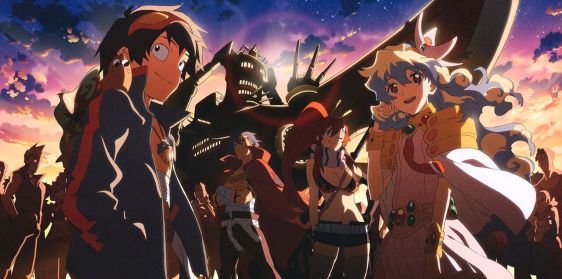
I was recently invited on The Cockpit, a mecha-themed podcast, to discuss one of my favorite anime ever: Muteki Choujin Zambot 3. We get into what makes the show interesting and pioneering, and why it still holds up today for the most part.
If you want to read my old review of Zambot 3, you can check it out here.
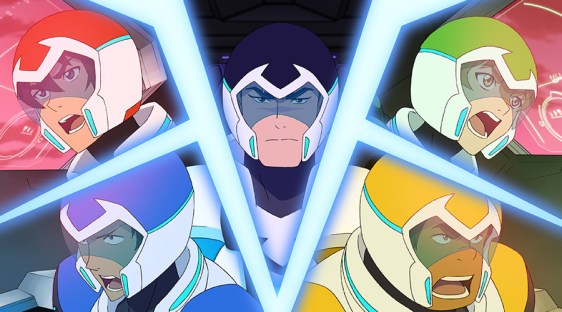
Voltron: Legendary Defender is huge in a way I think few would have predicted. Previous attempts at reviving Voltron have been iffy at best, and super robots just aren’t an attractive feature to many current anime fans. What gives the series so much presence in the general fandom space is that its characters are charismatic, but more importantly their interactions with each other fuel the burning desire in fans to see relationships form and grow.
The fandom situation with Voltron: Legendary Defender reminds me a lot of when Gurren-Lagann started to hit it big with anime fans of all stripes. In light of its popularity, you could sometimes find more dedicated giant robot enthusiasts wonder what the big deal was with Gurren-Lagann. After all, didn’t works like Shin Getter Robo: Armageddon,Gaogaigar, and Aim for the Top! all exhibit the escalating scale of power and war long before that? The difference, it turned out, was the characters and the way they bounced off of each other. Even those who cared little about fighting robots connected to the friendship and camaraderie shared by the members of the Dai Gurren-dan, and moments like Kamina’s famous speeches (“Believe in the me that believes in you!”) opened up the opportunity for viewers to become fans of these close, emotional bonds.
I hardly find fault in how non-mecha fans connect to mecha series, but I do get the impression that the majority of fans of Voltron: Legendary Defender don’t really care about the robots at all—a far cry from the impact made by the old 1980s series. In that case, if people remembered anything at all, it was Voltron itself. This approach isn’t wrong, but as someone who always holds a soft spot for giant robot appreciation, I sometimes feel as if there’s a crucial part of Voltron fandom missing. In a way, it reminds me of when I first stumbled upon Gundam Wing fanfiction as a kid, hoping that it would be stories of awesome unique Gundams. What I got instead was swathes of stories pairing all of the Wing boys together (as Relena got killed over and over to make room for them).
The fandom that Voltron: Legendary Defender has garnered sometimes feels reflected in the design of the new Voltron itself. This updated version is much rounder, giving it an appearance almost like a human athlete. It comes across as more “organic” in some sense. Yet this makes the robot Voltron itself more like an action hero and less like an imposing mechanical colossus, which is the impression I always get when looking at the classic Voltron/Golion.
Voltron: Legendary Defender might very well be what brings giant robots back into the forefront of fandoms, but it might be something less recognizable to those who have dwelled in the caverns of Planet Mecha. I have to wonder, then, if the robots themselves can ever hold great appeal to those viewers who prioritize the passionate interactions between characters. Perhaps the more the robot lions and Voltron itself are given hints of personalities, the more even non-mecha fans can come to appreciate them and their aesthetic.
It’s another go at Mobile Suit Gundam: Iron-Blooded Orphans on the Veef Show! Following our season 1 podcast, we discuss the finale to this newest series. I’m warmer on the series while Veef is colder, but it’s interesting discussion overall.
Gundam is a massive and unwieldy franchise. With a history spanning over four decades of anime, sequels, spin-offs, alternate universes, and more, after a while the distinctions between each Gundam series starts to blur. Each time there’s supposed to be a “unique” take on Gundam, they will often carry enough of the common tropes to be familiar, or will slowly jettison the new elements in favor of going with the tried and true. This is the perpetual challenge that Gundam faces, so it is to my surprise that not only did I enjoy the recent Mobile Suit Gundam: Iron-Blooded Orphans TV series (which is not the shocking part; I love Gundam in general), but that I felt it maintained its identity and its high quality despite it being just the kind of series set up to derail itself.
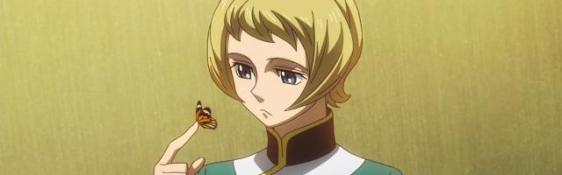
Iron-Blooded Orphan (IBO) takes place in a futuristic world where battles are waged using giant robots called mobile suits. The story centers around the characters Mikazuki Augus and Orga Itsuka, two boys who belong to the bottom-most rung of society, uncharitably called “human debris,” and who at the start of the series are essentially indentured child soldiers for a mercenary group. Early on, they and their fellow human debris rebel against their masters, create their own mercenary group called “Tekkadan,” and fight to try and find a place in a world that literally calls them garbage. Along the way, they meet a number of allies, notably Kudelia Aina Bernstein, a young aristocrat from Mars with lofty ideals of justice and equality, an encounter which changes their lives.
On the surface, Mikazuki as the pilot of the Gundam Barbatos appears to be cut from a certain cloth of Gundam protagonist. As a highly skilled pilot who has fought from a very young age and whose lack of expressiveness makes him appear emotionless, Mikazuki is descended from previous characters such as Heero Yuy from Gundam W and Setsuna F. Seiei from Gundam 00. Where Mikazuki differs from the other two is how IBO highlights his connections with Orga.
Mikazuki is cold and merciless to his enemies, but within his friendship with Orga (it’s perhaps better to call them “brothers”), there’s a very unique connection. Mikazuki is not an empty shell, but he sees in Orga a strong ambition, and he essentially acts as a right arm for the sake of his long-time companion. Similar relationships exist between Mikazuki and Kudelia, as well as between Mikazuki and a long-time female friend named Atra Mixta. Other notable characters are Naze Turbine, a man who literally has a harem of women as his ship’s crew but is actually more about empowering women by giving them skills and educations, and McGillis Fareed, a high-ranking officer who shows what happens when friendship and ambition collide. These characters and relationships are among the many that collectively create a narrative where camaraderie and family persist in the face of harsh odds. IBO never abandons that sense of family, and it is crucial to understanding the role of Tekkadan in all of the conflicts that occur as the series moves towards its conclusions.
One notable aspect of IBO relative to past Gundam series is that, in spite of the series being subjected to the dreaded “split-season” approach, it remains remarkably consistent. One of the major pitfalls of many mecha anime from Studio Sunrise over the past 10 years or so is a tendency to try and improve aspects of the series based on marketing and merchandising feedback. Often times, the series end up losing much of what made them special in the process, but this never really happens with IBO.
In terms of emphasizing toy sales over story, IBO actually shows a great deal of restraint. According to series lore, Gundam Barbatos is just one of 72 different Gundams used in a previous conflict known as the “Calamity War.” In another series, especially one more focused on profits from merchandise, it’s likely we would have seen all 72 show up onscreen. However, even at the conclusion of IBO, only a handful appear. The Barbatos itself is also supposed to have a feature that allows it to integrate the weapons and abilities of other mobile suits, but the anime never really puts this front and center. Changes that occur in the Barbatos more reflect the changes and traumas that Mikazuki goes through as the series progresses.
Because IBO keeps its feet firmly planted and doesn’t fly off-track in a desperate attempt to cater to market research, Tekkadan never stops feeling like Tekkadan. No matter how powerful Mikazuki becomes, and no matter how much Tekkadan’s forces are bolstered, they never stop feeling like an underdog. The steps they take to get further are microscopic compared to the vastness of what surrounds them, especially when it comes to the realm of human society. One of the recurring aspects of IBO highlights this well. While Tekkadan gains military power, their approach to life, which is to treat themselves as a family first and a mercenary group second, often leaves them lacking and inexperienced in terms of diplomacy. On multiple occasions, success on the battlefield is contrasted with failure politically.
The story told in Mobile Suit Gundam: Iron-Blooded Orphans feels like just a small slice of a vast world and history. Whether this is the end of the IBO universe or the start of something more, I come away immensely satisfied.
Here’s Part 2 of my list of cool super robots that I think should get that Chogokin Damashii treatment. Check it out, tell me which robos you’d love to see!
When news came out that a new Eureka Seven movie trilogy was coming out, I reacted with a mix of excitement and trepidation. After all, the TV series is one of my favorite anime ever, but things haven’t exactly been pretty for E7 fans the last few times around. The first film to come out, Eureka Seven: Good Night, Sleep TIght, Young Lovers, was more an interesting experiment in how different a story you could tell with existing footage than anything else. Eureka Seven AOsquandered so much of its potential and was so convoluted that it ended up a major disappointment. However, there’s a big X-Factor that gives me some initial confidence in these new Psalms of Planets Eureka Seven: Hi-Evolution Films—the return of writer Sato Dai to the team.
Sato was not on staff for Good Night, Sleep Tight, Young Lovers, and he left Eureka Seven AO early on, and it’s suspected to be for creative differences (AO was basically funded by a pachinko company). While an anime is more than just one person, the lack of Sato and what it meant for those productions stood out in those two works like a sore thumb. If you’ve seen what Sato is capable of in anime outside of Eureka Seven, such as the excellent Battle Spirits: Shounen Toppa Bashin, narrative cohesiveness resulting from excellent emotional character development is a hallmark of his writing style. Having Sato at the helm is the best sign that Hi-Evolution will live up to the Eureka Seven name.
The first new film, out in 2017, is going to be a prequel that covers the First Summer of Love, the pivotal event that defines the world of Eureka Seven. The other two films, in 2018 and 2019, promise to bring a new ending… perhaps even going beyond the events of the TV series? I can only hope.
One thing that piques my curiosity about this new project is the preview image showing Eureka, Anemone, and Renton. In it, Eureka and Renton have more concerned expressions, while Anemone’s is soft and loving. While Anemone ends up in a happy place by the end of the Eureka Seven TV series, I would have assumed that their faces would almost be the opposite. The fact that it’s showing Anemone with such a look implies to me that something will be different about her; not necessarily a different personality or anything, but maybe a new perspective on her life. I’ve known plenty of fans who considered Eureka Seven to be the “Anemone Show,” so maybe their day has come.
In any case, I’m willing to put my trust on the line for Eureka Seven: Hi-Evolution. I won’t let cynicism beat me just yet!
I love giant robots, and I love seeing them turned into Soul of Chogokin figures. Here’s the first five of 10 that I think should get that Chogokin Tamashii treatment!
Astute fans of giant robots might have noticed a reference to a certain lion-chested titan in the final episode of Keijo!!!!!!!! For those who didn’t know about the connection, I’ve written a post on Apartment 507.
How much does time pass when the mighty Star Platinum punches an enemy Stand in JoJo’s Bizarre Adventure? There are many factors to consider, such as how much time has passed in the show itself, as well as how time is being manipulated within the series’ universe itself. Another important element is the fact that the anime is an adaptation of a manga, where the flow of time is abstracted by manga’s existence as a 2-D paper medium.
As far back as Tetsuwan Atom, adaptations of manga have been a common mode of anime production. Manga act as a spring of new stories to present, and the jump from the comic book format to animation opens up many opportunities. An anime can try to forget its own path through interpretation or divergence from the manga (such as both the Ghost in the Shell films and Stand Alone Complex), or they can faithfully attempt to recreate what exists in the original. However, while the latter cases might often appear to be “direct transplants” of the manga to the screen, the act of having to take a physical and spatial image such as a panel and assign to it a finite amount of time can greatly change the impact of a given scene in spite of the desire for faithfulness to the source material.
In a general sense, having to time dramatic beats for an anime often requires playing around with the contents of the manga. For example, in an episode of Dragon Ball Z, filler sequences (such as the infamous minutes-long powering up spots) not only save budget, but can also be a way to make sure the episode ends on a cliffhanger. On a broader multi-episode scale, Initial D: Fourth Stage does something similar by reversing the order of the final two opponents. Originally, the manga has protagonist Takumi race against a man known as “God Hand,” while his teammate Keisuke races against “God Foot” afterward. In order to make sure the series ends with a climactic battle for its hero, the show has God Foot go first instead.
One consequence of this is that there can be moments when a series feels as if it’s dragging. Sometimes it’s successfully padded out or rearranged so that nothing feels particularly off, but in other instances it is possible to sense an uneven rhythm or pacing.
This notion also extends to the transform of panels into time. Consider that there is generally no specific amount of time that is said to pass in a given panel in manga, or indeed comics in general. What makes a panel feel “fast” or “slow” is partially about how long one’s eyes linger on a panel, and it’s dependent on the amount of content there and the flow of the page. But because time exists differently in manga, things that seemingly pass quickly on the page take much longer on the screen.
A common example of this would be the frantic explanations of special moves in an action or sports series. Because we tend to read more quickly than we speak, it is possible to believe that an elaborate speech or thought is being made within the span of a ball being passed from one player to the next. However, commit that to concrete time in an anime, and suddenly you begin to wonder why no one is doing anything as they talk for 30 seconds. To appreciate those moments, it requires a viewer to understand that time portrayed is not literal. This is the case even with series not adapted from anime. It does not “really” take Voltes V two or three minutes to combine together, or for Erika to become Cure Marine.
So when what is a single, snappy panel in manga gets stretched out into an extended scene in an anime, it can dramatically effect how a person can feel about a particular title. I find this to especially be the case with comedy series. Take Azumanga Daioh, a four-panel series. In the manga, there will be a comedic moment that lasts for only one or two panels, such as Sakaki rolling on the floor while holding a wild Iriomote cat. In the anime, this becomes a full-on extended display of non-stop rolling with musical accompaniment. A small moment becomes a big one thanks to time. A more recent title would be Nichijou, where the staccato presentation of the manga’s gags are the equivalent of sharp, quick jabs. In anime form, however, the characters’ movements are exquisitely animated and exaggerated, and the result is a series that is in a way much more physical and almost “luscious” in a sense. While the Nichijou anime pretty much takes things directly from the manga, the two turn out to be pretty different experiences.
My belief is that the unusual handling of the (broadly speaking) space-to-time transition of manga to anime is a likely culprit of why someone might love a manga but hate its anime (or vice versa!) even if the adaptation process is largely faithful. It’s kind of like when an actor is cast in a movie based on a book; what was once a nebulous image reliant upon visual/mental interpretation becomes a little more solid and finite.
I recently made another appearance on the Veef Show to talk about Macross Delta. There, we discuss the ups and downs of the show, and I learn about fan reception to the series, as well as the illicit dealings of the owners of Robotech. Join us!