Interview: Aramaki Shinji (Otakon 2023)

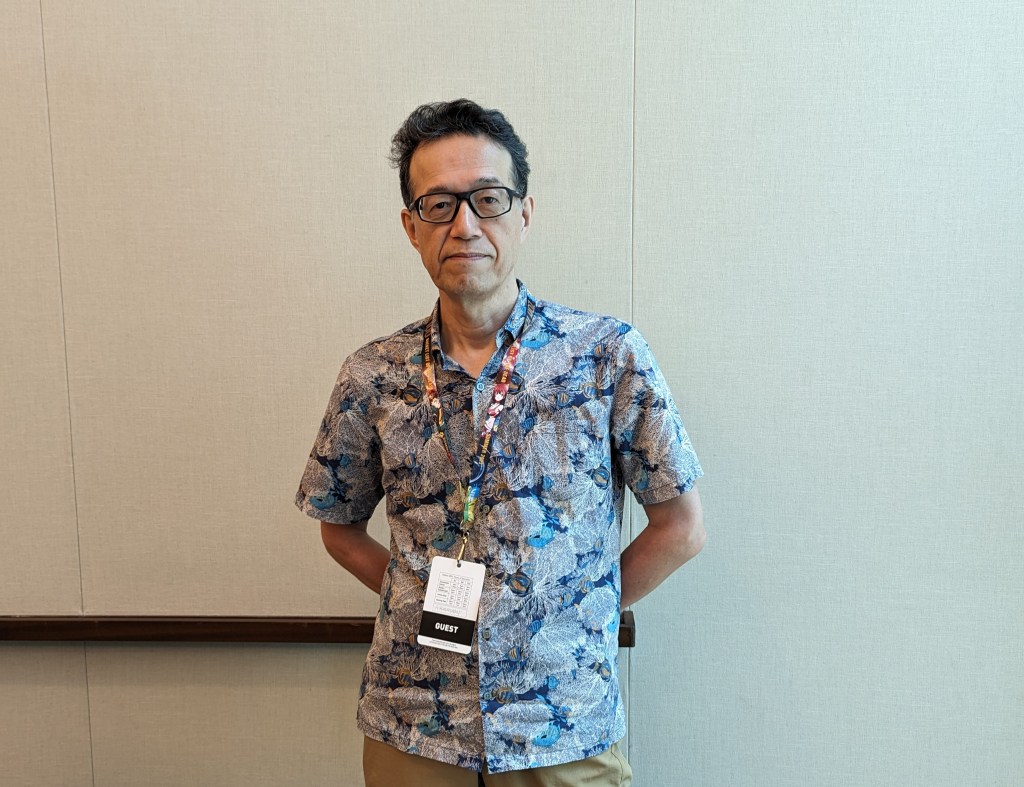
Aramaki Shinji is a creator known for his mecha design work on Bubblegum Crisis, Genesis Climber Mospeada, Megazone 23, and more. He also designed many of the toys that became Transformers, including Soundwave. Aramaki is also an anime director who has focused on pushing 3DCG animation since the early 2000s.

You have a lot of experience as a mechanical designer, and I understand that different mechanical designers have different processes for designing. For example, Kawamori Shoji has talked about how he uses Legos. What are the key aspects of your approach?

Well, it depends a lot because I get different requests for each project I work on. For example, you mentioned that Kawamori Shoji-san uses Legos, but I think that’s mainly for designing transforming mecha. Should I answer just based on transforming ones? It’ll make it easier if we narrow it down to a certain genre.

Sure, let’s go with transforming.

So we initially choose two or three shapes/forms, and we ask, what are we going to transform and how. But we start out with the two coolest forms.

Would you say you sort of work backwards from the final designs/silhouettes perhaps?

Initially, we don’t really get into the details. We just think, oh this is what a cool bike looks like, and this is what a cool robot looks like. So we just start off with what looks cool and don’t get into the particulars of how it transforms yet.

It gets difficult from there. In the past, I used to study how things might transform using papercraft. Nowadays, though, we can use 3D programs. We start off with simple blocks, but using them, we can join them and see how these volumes move around.

If we use 3DCG, we can study how these forms look from varying perspectives, so it makes the process much easier.

The next work is one that you might not be as known for. I looked up your credits, and it said that you’re responsible for conceptual design on the anime Star Driver. The style of the mecha there are quite different from what I typically think of when it comes to your work. How far removed are the final designs compared to your originals?

Actually, for Star Driver, I didn’t do much mechanical design, and I didn’t really touch any robots. But I actually designed the landscapes and backgrounds—the stage design—for Star Driver. The series is set on an island, and I designed what the island is like, and what the school is like. I did it based on discussions I had with the director, Igarashi, to set the mood for the anime.

You directed works such as Appleseed, which was, at this point, decades ago. I remember seeing them first start to show up, and that was a time when directing in full 3DCG wasn’t nearly as convenient as it is today. What are some of the challenges you faced in the early 2000s?

Back then, we actually had a lot of problems. There was no standardized software for design, so the character design software was different from the landscape design software. That made it really difficult to organize everything and keep it together as one team. 

For one scene, when we decided on the camera angle and looked at the scene, the table and the character were sort of shifted because they were designed using different softwares.

These seem to be simple problems, but back then, Japan wasn’t as advanced in the field of CG. So we faced challenges every single day.

My final question: I actually have fond memories of the cartoon M.A.S.K. and its toys, and I was excited to learn that you worked on it. What designs were you responsible for, and what did it feel like to work on a foreign production?

This series involved a lot of transforming vehicles such as trucks and boats, but the original designs came from the toy company, Kenner. Back then, I was working in LA, but I went to Chicago where their company was based, and took a lot of pictures of the prototypes. We did drawings to help with animations.

Most of the mechas were designs provided from the toys, but some were not from the toys, so I got to design them.

I don’t remember all that well where they appeared in the show, but they let me design two transforming vehicles back then, where I got to pick the car types and how they transform. They were called the Manta and the Shark.

Thank you for this interview. It was great to have you at Otakon!

Thank you.

Kio Shimoku Twitter Highlights July 2023

Kio watched a bunch of movies this month.

Kio attended a live screening of the newest How Do You Like Wednesday?, which included people from the cast. It was a fun and unusual experience. He did not attend in Ikebukuro.

The raunchy gag manga Enomoto had an anime announced last year, and Kio only found out about it this past month.

Kio made this Ohno samurai drawing as the basis for a paper relief sculpture. One fan of his showed off their version.

Kio made these Madarame drawings as part of a special collaboration with the series Love-yan, which features a protagonist who resembles Madarame. Kio also vaguely denies knowing about the Rocking Spark attack from Ultraman and how similar it looks to Madarame’s pose.

16 more finished pages of Sister Wars, Kio’s Star Wars parody.

Kio recalls how tough it was to live on the top floor (6th) of a building because of how hot it got in the summer. He tells fellow manga creator Kusada to take care of himself amid some very high temperatures.

Bikini drawings of Ohno and Saki for an old Afternoon calendar.

Kio remarks that the new Miyazaki film, The Boy and the Heron (aka How Do You Live?) Is a whopping 124 minutes long.

The first tweet states that really good artists can draw Image B, where the frame is mostly taken up by the left leg. Kio says that he tries to draw B but can only really do A.

Kio is going to see the Chinese animated film I Am What I Am, and then The Boy and the Heron. He’s also been exhausted by having so much.

Kio reacts to a Genshiken fan’s shrine, saying that the fan has posters even Kio doesn’t.

Kio missed his chance to see Akira in 4K.

Kio advertising a 50% off sale on his erotic doujinshi, It’s All Your Fault, Sensei.

Kio watched The Pope’s Exorcist and Indiana Jones and the Dial of Destiny on the same day, and being in the theater for so long chilled his body.

Kio has played Elden Ring for over 50 hours and is over Level 50, but only just reached Limgrave.

He can’t get the timing for rolling and such down, and while he played King’s Field, he hasn’t played later FromSoftware games aside from Shadow Tower and Dark Souls.

Kio put his unused winter futon back into vacuum-sealed storage.

Ogiue Maniax Panels at Otakon 2023

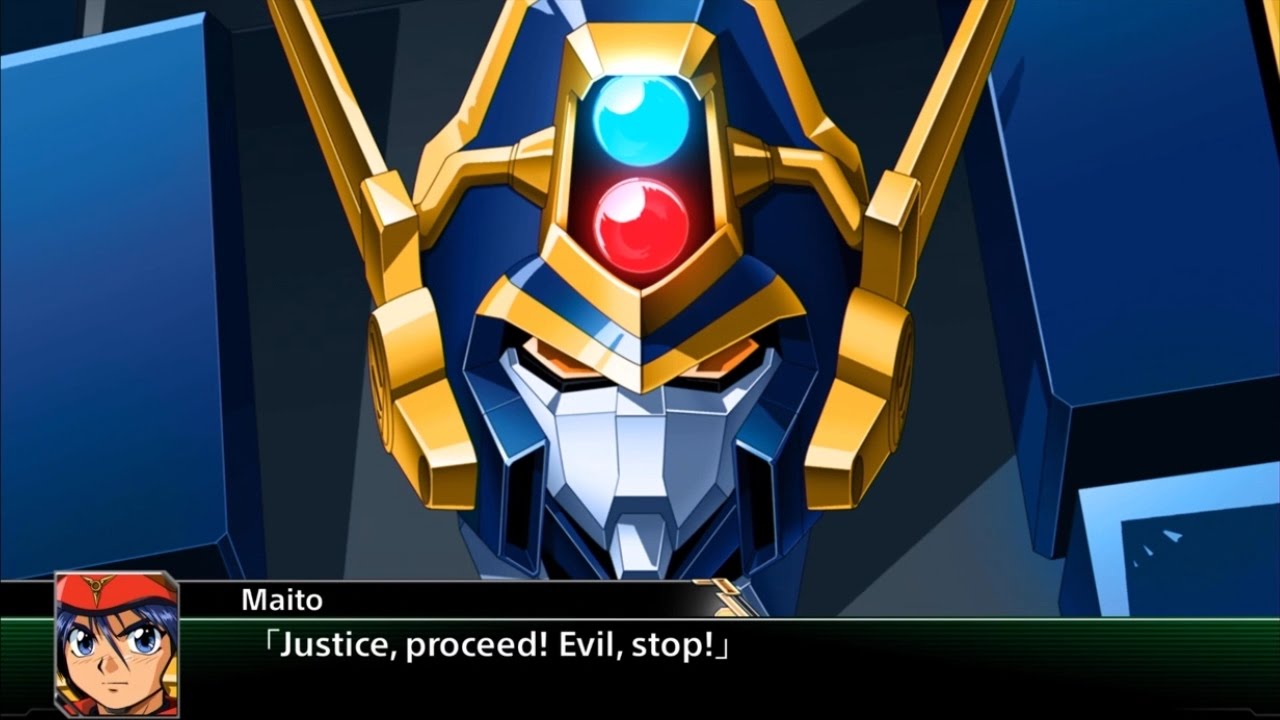
A screenshot from Super Robot Wars featuring the robot Might Gaine. Its pilot, Maito, says "Justice, proceed! Evil, stop!"

Otakon 2023 kicks off this Friday, and I have two panels over the weekend!

Giant Train Robots of Anime and More

Friday July 28, 2023 10:15 am to 11:15 am

Trains and mecha are two tastes that go great together. Discover “rail robots” from all across Japanese media and learn for yourself how awesome they are!

Densha Otoko: Train Man, Otaku Myth, Internet Legend

Saturday July 29, 2023 8:45 pm to 9:45 pm

Once upon a time, the story of a nerd helping a girl on a train changed the otaku world forever. Come and (re)discover the true (?) story of Densha Otoko, its many adaptations, and its legacy 20 years later.

Otakon always has a million things to do, but if you just so happen to stop by, I hope you enjoy yourself.

Gattai Girls 13: “Mobile Suit Gundam: The Witch from Mercury” and Suletta Mercury

Introduction: “Gattai Girls” is a series of posts dedicated to looking at giant robot anime featuring prominent female characters due to their relative rarity within that genre.

Here, “prominent” is primarily defined by two traits. First, the female character has to be either a main character (as opposed to a sidekick or support character), or she has to be in a role which distinguishes her. Second, the female character has to actually pilot a giant robot, preferrably the main giant robot of the series she’s in.

For example, Aim for the Top! would qualify because of Noriko (main character, pilots the most important mecha of her show), while Vision of Escaflowne would not, because Hitomi does not engage in any combat despite being a main character, nor would Full Metal Panic! because the most prominent robot pilot, Melissa Mao, is not prominent enough.

— 

I truly believe that Mobile Suit Gundam: The Witch from Mercury will go down as a pivotal work in anime history. There are the surface reasons, of course: It has the honor of being the first mainline Gundam anime to feature a female protagonist with a same-sex primary romantic interest. It’s also the first main Gundam to be only 24 episodes when even the next shortest series still got 39. But the core of why I think Witch from Mercury is a game changer is that it ncludes many elements unfamiliar or in defiance of Gundam that manage to tell a compelling and thought-provoking story that carries both idealism and realism in its narrative.

Witch from Mercury takes place in a world where Gundams are forbidden, even though they were originally based on research to help people with disabilities. Years after the banning of Gundams and the seeming purge of all involved, a shy and awkward girl named Suletta Mercury arrives at Asticassia Academy, a mobile suit school for the elite where student matters are officially resolved through giant-robot duels. Suletta wins a match in her Definitely-Not-a-Gundam, Aerial, ends up engaged to the daughter of the school’s owner, Miorine Rembran, and in doing so inadvertently steps into the complex corporate, social, and political forces at play.

The anime starts off reminiscent of both Revolutionary Girl Utena and G Gundam, but ends its first half throwing the relatively isolated nature of Asticassia into stark relief with the world at large, whether it’s the crushing disparity between Earthians and Spacians, the specter of war and how the parents of all the kids have a hand in perpetuating military conflict, or the realization that Suletta’s naivete isn’t merely an innocent quirk but points to an unusual and possibly even disturbing past.

The second half seems to calm down, only to ramp up even harder and throw the established order into further disarray. Things that other series might have left linger for 10 episodes are brought to bear in a fraction of the time. The anime can actually feel pretty rushed as a result, but in certain ways, I think this actually works out in its favor. Gundam series often meander and plod as they get into the latter 25-ish episodes as they try to incorporate extraneous characters and merch-friendly elements, whereas this one cuts out a lot of the fat, albeit with some of the flesh as well. The outcome of all this is a Gundam where I would get genuinely surprised and shocked, especially in terms of character deaths)—feelings that were often missing from my viewings of Gundam anime that have come out in the past 15 years.

The characters, especially the women, are memorable and one the best parts of Witch from Mercury. Suletta is a unique protagonist, both in comparison to her Gundam predecessors and in general due to the way she has to grapple with her own upbringing and the way she ends up establishing her own identity. She takes the viewers on a rollercoaster of a personal journey that makes her position as first heroine much more than a cynical decision for the sake of diversity. Similarly, Miorine’s aggressiveness makes for a great companion and foil, and the way she navigates her privilege and her desire to do more for humanity is wonderful. And Suletta’s mom Prospera is not only the best Char Aznable in ages, but shows the quiet fury of a woman who will do anything for her child.

As for minor characters, there are plenty of examples regardless of genders. Chuatury “Chuchu” Panlunch is refreshingly no-nonsense in a way rarely seen in anime. Guel Jeturk, a rival/potential love interest of Suletta, goes from annoying dude to endearing guy—something that actually happens more often than not with the cast. A number of characters are on the larger side but are not treated as jokes. And while Secelia Dote only has seven minutes of screen time across the entire series, her snarkiness manages to steal the show every time. I could keep going.

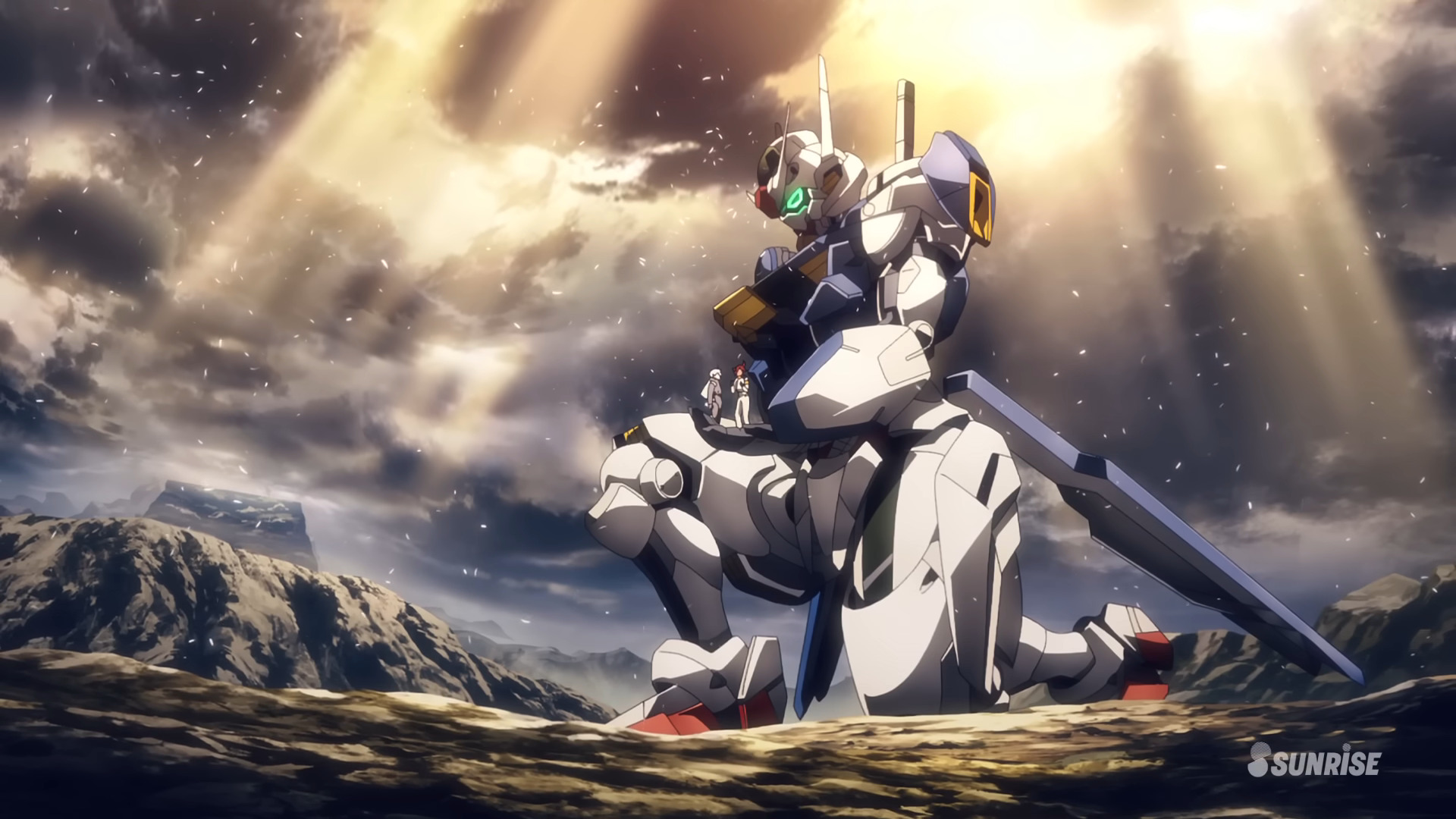
One of the more amazing things about Witch from Mercury is how well it strikes a balance between having ubiquitous mobile suits and incorporating them into the story and setting. They’re also very aesthetically pleasing, particularly the Aerial. It’s identifiably a Gundam, but its proportions and flourishes give a slight feminine feel without going straight into Nobel Gundam territory. I also enjoy the way it contrasts with other mecha, as it makes the Aerial come across more something that will disrupt the status quo. Moreover, Aerial is also a rare instance of a mobile suit basically being a character unto itself—something that has serious consequences as the series progresses.

A common criticism of Gundam as a whole is that while it generally contains anti-war messaging, the cool factor of the mobile suits can end up drowning it out. Although the designs in this particular series are indeed among the best ever, Witch from Mercury is also the first to establish that the technology did not begin as a military endeavor, and this helps throw the use of mobile suits as weapons into stark relief. It’s also part of a greater look at the inequalities and inequities suffered by those who lack the financial and familial might to make the world care—a world where even the children of those in power feel the burden of having to deal with their parents’ bullshit.

On that note, corporations play a major role in the series, and I’ve seen people get extremely confused with all the different alliances and factions. While I won’t say it’s simple to keep track of everything, one way to navigate that web is to understand that many adult decisions are the result of corporate greed, and trying to find positions to have the best profits with the least accountability. This is what makes Miorine’s ultimate decision all the more satisfying, as she throws that structure off kilter using the means available to her. Gundam series often feature politics because of how they take place on grander scales.

These two elements together help Witch from Mercury’s politics feel very contemporary and relevant to our times, instead of coming across as dated or tepid.

Witch from Mercury brings a new sense of what Gundam can be. It possesses many of the franchise’s well-worn tropes without being beholden to them. It breaks boundaries of all kinds, whether through its unique cast of characters, its central same-sex romance, or its perspectives on conflict and humanity. I truly feel that what we have is a turning point in Gundam and anime as a whole, and I’m hopeful it’ll be for the better. Suletta is the first main Gundam heroine, but she won’t be the last.

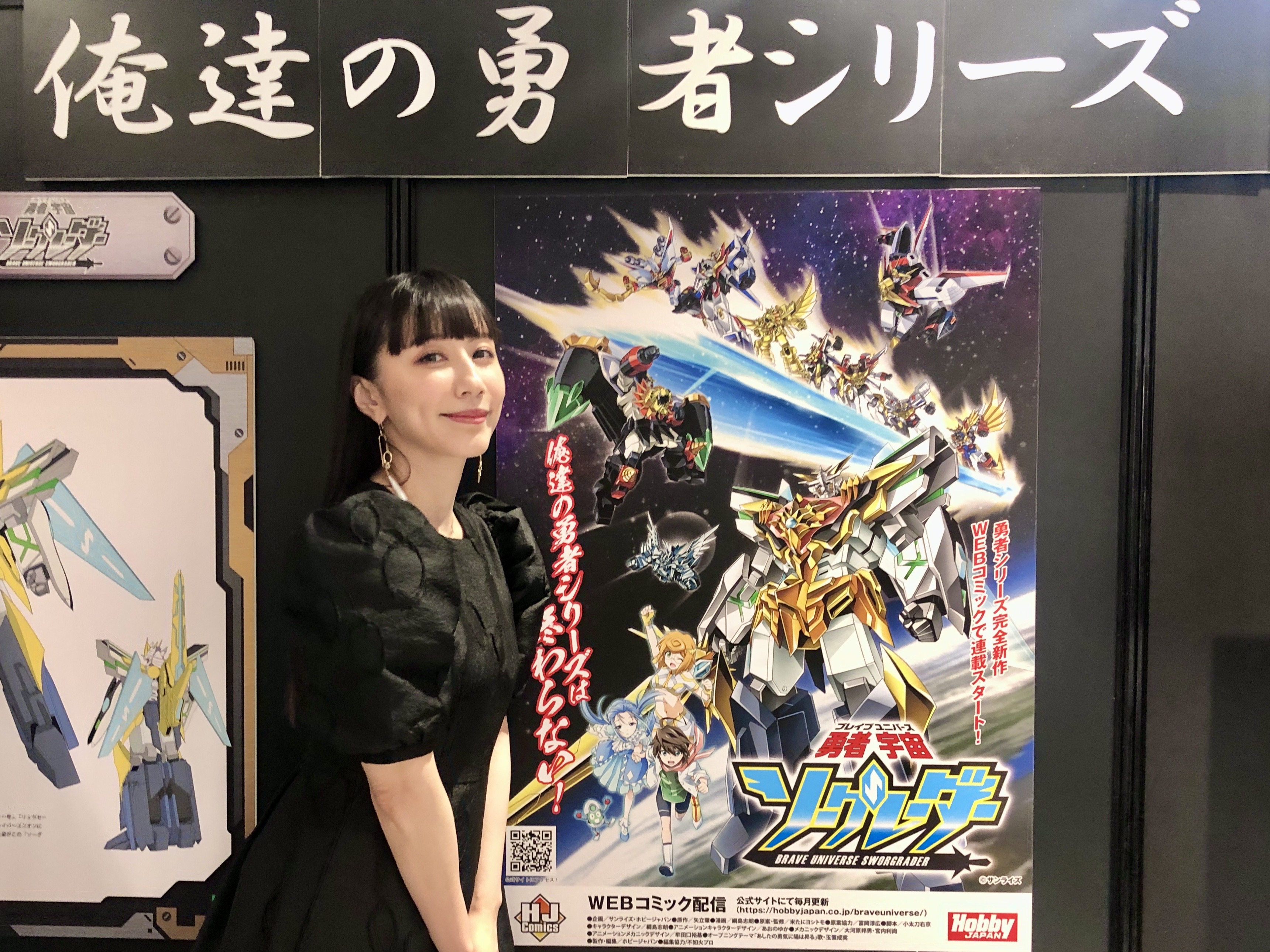
New Yuusha Robot Announced: Brave Universe Sworgrader

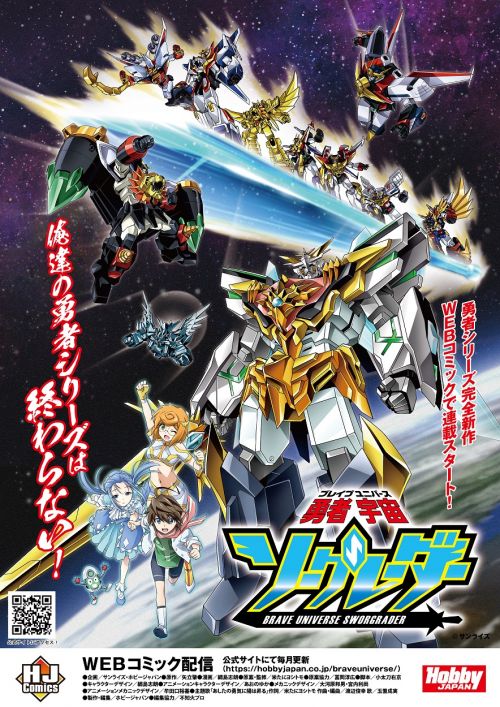
This past week, the Gaogaigar 25th Anniversary Exhibition in Japan featured a surprise announcement: A new entry in the Brave Series has been greenlit! Brave Universe Sworgrader is heading our way, albeit with a caveat. Unlike all its anime-based predecessors, it will debut as a web manga.

Sworgrader isn’t totally alone in regards to not coming out the gate as an anime. The sequel to Gaogaigar Final, King of Kings: Gaogaigar vs. Betterman, started off as a web novel series before being adapted into a manga. Other old anime have also received novel-only nostalgic sequels, such as Raijin-oh and even the magical girl title Ojamajo Doremi. One major difference is that Sworgrader is wholly original, though the teaser art and the whole “Brave Universe” thing seems to imply that the previous Brave Robots will somehow be involved—even the shelved sequel that only ever got a spotlight in video games, Baan Gaan.

I do feel a mix of joy and sorrow in all this: It’s great to see Brave franchise make something of a comeback, but also a shame to know how diminished it is compared to its heyday. I suspect that something like a 90s throwback robot toy franchise isn’t going to attract the massive kids market that was tuning into Exkaiser and such thirty years ago (otherwise this would at least be a mobile game). It’ll mostly be banking on the adults who had grown up with the old shows, and merch will probably be premium figures and model kits, as opposed to children’s toys. 

That all said, it’s worth pointing out that despite likely having more “Big Friend” appeal than anything else, the main characters are clearly cut from the traditional Brave cloth: They’re kid heroes through and through. So many retro-style series prefer to have characters who are at least in their late teens in order to be more relatable to that older audience, but I kind of admire the creators of Sworgrader for trying to be faithful to the Brave spirit. Gaogaigar really hit its stride once the shackles of toy advertisement were loosened, and Sworgrader is potentially going to be like that from Day One.

In addition to overseeing the entire project, Gaogaigar director Yonetani Yoshitomo is also the lyricist on the main theme for Sworgrader; something he’s had experience doing thanks to Gaogaigar and Betterman. In fact, similar to Sworgrader, Gaogaigar vs. Betterman has “opening” and “ending” themes despite there being no anime. The theme will be sung by Tamaki Nami, who got her debut in anime singing the fourth and final Gundam SEED opening, “Believe.” All this takes me back to my very first time in Japan in 2005: a year when Gaogaigar: Grand Glorious Gathering was on TV, and I could hear Tamaki’s SEED openings while in the supermarket.

And while I believe a Sworgrader anime will have some trouble coming to fruition, not all hope is lost: One of the credits on the project is Aono Yuka (Shinkalion Z, Brave Beats) as “Animation Character Designer” as distinct from “Character Designer” Tsunashima Shirou, the artist of the Jinki franchise (talk about another throwback). Similarly, there are separate credits for “Mechanical Design” (Ookawara Kunio, Miyauchi Toshinao) and “Animation Mechanical Design” (Mutaguchi Hiroki) Maybe we’ll see some cool shorts, at the very least?

Whatever form Sworgrader takes, I look forward to seeing its arrival. I will neither automatically love it or hate it, but I do hope it brings joy and excitement to all.

Kio Shimoku Twitter Highlights June 2023

This month, Kio talks a lot about Elden Ring and drawing smut.

Gundam manga artist Tokita Kouichi shares a photo of a first-era Gundam model kit. Kio reacts by saying that the instructions are from before they changed how joints work on Gunpla models.

Kio’s tortoise has been walking quickly around in their home, being hyper. Kio comments that outdoor spaces would be good for it, but the actual outdoor space available right now isn’t all that big, so this is the best he can do right now.

The reason it’s so hyper is because the warm summery weather is affected it as a cold-blooded creature.

Kio has started doing the rough manuscript for his next horny doujinshi.

Lazy tortoise.

Watching more How Do You Like Wednesday?

Kio visited actual sites from some How Do You Like Wednesday? Specials. The first tweet shows one of 12 bridges featured, and the second is Suigou Sawara Ayame Park.

Kio got to use a line from How Do You Like Wednesday? on someone who was unfamiliar with the show. 

Kio thanks a fan for sharing a Monthly Newtype video about manga in 2008, the height of one of the host’s teen years. Genshiken and Spotted Flower both get mentioned briefly. (See 23m45s in the video below.)

Kio later tweets about the video separately, commenting that he likes how writer and host Mafia Kajita says that Spotted Flower has had one hell of a development.

As Kio sees artists tweeting about whether they got into Comiket or not, he is working on his (unrelated) erotic doujinshi. He’s been drawing but also cutting content out, so even though he’s drawn 30 pages, it feels like only the beginning.

Art from the first anime’s DVD box set; this one is for Volume 2. Lots of comments about Kitagawa from fans.

Kio responds to a commenter pointing out Kitagawa approaching from the rear by saying that she would definitely not be walking lightly.

Kio also feels some sympathy for Kitagawa being called “Athlete’s Foot Senpai” by the fans.

“You! Genshiken!” is a common refrain in the Genshiken anime from Kitagawa.

Kio also comments to a person wishing for tons of Genshiken spin-offs that such a thing might’ve happened if Genshiken came out today.

A few comments about how good Ohno looks too.

Kio telling everyone who watched the Newtype special above that the newest Spotted Flower chapter is available in Rakuen magazine.

Kio says that the daughter in Spotted Flower being named Saki kind of solidifies it as being a different world from Genshiken.

Working on his new ero doujinshi seems to be an endless task. It includes things like fretting over which erotic sound effects to use, like “guchu” vs “gucho.”

The horny work has also gone from 50 pages to 100. (I sometimes think about how Ogiue’s workrate is probably a reference to Kio’s own.)

Kio also restored some pages that were previously cut, specifically about a mom getting embarrassed.

Kio’s tablet pen broke, and then when he got a new one, he realized it was the wrong kind.

While a new pen was in the mail, Kio broke out the PS5.

Kio has been playing Elden Ring and primarily sneaking around. He comments that despite appearances, he is in fact not playing the ninja game Tenchu.

Kio enjoyed Spider-Man: Across the Spider-Verse despite having not seen Into the Spider-Verse. He thanks a fan for sending a link to the prequel.

The new tablet pen arrived, but Kio is still playing Elden Ring.

Kio got picked for a live viewing of the newest How Do You Like Wednesday? DVD.

Tenchu is one of his favorite games from the PlayStation era, and the movement in Elden Ring reminds him a lot of it.

Kio, after getting his ass kicked by the boss Margit in Elden Ring, goes back to drawing ero manga. He likes how he can just skip bosses and explore elsewhere in an open world game.

Komaki from Kujibiki Unbalance on the back cover of Genshiken Volume 5.

Kio comments that his characters tend to have some plumpness to them.

Kio defeated Flying Dragon Agheel in Elden Ring with the help of a strategy site. He didn’t realize you had to fight it on horseback.

Kio got through 63 pages of his ero manga manuscript, but is setting it aside to get some of his professional work done. Apparently, the next part is the climax.

He also keeps adding hearts to the end of dialogue in his regular work out of habit due to spending all that time creating smut.

Kio Shimoku Twitter Highlights May 2023

Kio Shimoku goes back to fulfill one of his old unfinished projects in this month’s tweets.

Replying to manga creator Kusada (who just got done selling at the doujin event Comitia), Kio mentions that he’s also hesitant about posting URLs to his 18+ doujinshi on Twitter for fear of being shadowbanned.

Kio has decided to undertake a rather massive personal project. Back in 2010, Kio sold at Comiket a very rough manuscript of a genderswapped Episode I parody called Sister Wars. Now, he’s turning the entire thing into a fully illustrated doujinshi. (Note that I will be making a separate post about this at some point.)

One person shows a Sister Wars drawing Kio did, to which he replies, “Oh…? Did I draw that…?”

Another person talks about wanting to own Sister Wars, but Kio says that if it’s something where money needs to get involved, then it’ll cause issues, so his intent is to keep it free and online-only.

Kio says the whole thing is 350 pages, but it’s someone he always wanted to do, and he feels that it’ll be a waste if he doesn’t use the free time he has now to work on it. He put a lot of thought into it beyond the genderswap aspect too.

When asked if there will be a female Jar Jar, Kio replies that the Gungans have been cut entirely.

Another commenter recalls there being no Jar Jar, to which Kio responds that other characters from Episode II were also cut, as they seemed to mainly be there originally to just make things more confusing.

Kio realizes a line during the theme song for the variety show/special series How Do You Like Wednesday? comes from a spoof drama they did called Shikoku R-14. Kio originally thought it may have been unused footage.

Finishing the drawings of the Kujibiki Unbalance dating visual novel, here are Koyuki and Chihiro routes as reviewed by Kohsaka and Ohno, respectively.

Some old Genshiken-related drawings. Kio couldn’t remember when it was or what it was used for other than being part of some multi-creator piece, but a fan points out that it was part of an Afternoon 20th Anniversary illustration, as seen on the above library card.

And a Genshiken drawing used for a calendar.

High-quality version of the cover illustration for Genshiken Volume 5.

A fan comments that they remember not being able to read the doujinshi the Genshiken club made, to which Kio responds that most people couldn’t [because it was heavily mosaic’d as part of the joke].

One commenter says that Genshiken is the reason they decided to first attend Comiket, with Kio going “Hoho!”

A Genshiken drawing used for the cover of a 2004 issue of Monthly Afternoon with Saki helping to zip up Ohno’s Kuradoberi Jam cosplay, and Ogiue staring awkwardly in the background. Kio also responds positively to people talking about how great Ogiue is in this image, even saying that Ogiue looks like she’s seeing cosplay for the first time. He recalls wanting to draw a scene that doesn’t happen in the actual manga.

I actually found my old instructions for the Kotobukiya Ogiue figure, as well as the glasses for her, all of which I had thought I lost! Kio retweeted it.

“For those feeling that Sunday afternoon ennui.”

Kio saw the 2022 movie Bullet Train. Even though the depiction of Japan is not at all genuine, he was entertained nevertheless. In fact, he even liked the scene in the quiet car. He really wishes he saw the movie in the theater like he had originally planned.

Shocked to discover there’s gonna be a Bullet Train 2.

Kio bought Go Go! Ghostbusters Club by Kusada, and mentions wanting to see more of the assistant and wanting to find out why the club president would start a Ghostbusters Club when they’re afraid of ghosts. Kusada thanks Kio as well. (Note that Kio often retweets Kusada, which is not fully reflected in these tweet summary collections.)

“The train has air conditioning.”

Kio saw The Super Mario Bros. Movie, and thought it was great.

He also saw the movie Psycho-Pass: Providence. Though he didn’t remember a lot of what had happened prior, he felt this was a must-watch.

Kio watches and reacts to the DVD for the How Do You Like Wednesday? special, How Do You Like Japanese History If We Only Travel by Late-Night Bus for Three Nights Straight

(Without context, I can’t really properly summarize the reactions so I will leave it like this.)

Kio read Love Comedy Experiments Manga by Shima Toki and really liked the part where they have to stop right before climax (sundome). Shima thanks Kio as well. (Shima is another author who often gets retweeted by Kio; both them and Kusada all do manga for Rakuen, the magazine that runs Spotted Flower.)

Star Wars model kits.

Showing the Padawan hair braid.

While trying to figure out how to fix the warping in this kit part, Kio receives various pieces of advice ranging from pliers to dryers.

Kio answering a fan’s questions in English. No need for me to summarize!

I think this is Kio struggling with a model kit?

The art for a Genshiken DVD box set.

Kio building a 1/144 Gundam Aerial model kit. He added a bit of weathering effects to the paint job. It also felt like a long while since Kio worked on a Gundam kit.

Starting up on two more The Five Star Stories kits.

The Roles of “Characters” in Mecha Anime

Sometimes, you’ll see a wild claim about mecha anime, like “Gurren-Lagann was the first giant robot series to be about characters instead of the robots,” and it inevitably results in a backlash—in this case, the counterargument that all giant robot shows are about characters. Whether the initial statement is made in jest or as a genuinely ignorant take by someone with only surface-level knowledge of mecha, it reflects certain assumptions about what the genre is like.

I got to thinking about the notion that giant robot anime are about characters because it’s both true and an oversimplification. Moreover, the extent to which the giant robots truly “matter,” as in they’re inexorable from the world being portrayed and can’t be substituted with some other form of weaponry, varies tremendously. But regardless of the true “necessity” of either characters or robots, I feel there is more to it than just one side mattering more than the other. Then a thought occurred to me, and I have a kind of nascent “universal theory of giant robot anime”:

Giant robot anime are about characters, but more specifically, the main character reflects some vital or fundamental aspect of the world and story around them. The giant robot, in turn, is reflective of the connection between the hero and that aspect.

If it seems nebulous, that’s because it is. I’m thinking less about trying to justify every mecha anime and more about how the giant robots end up being the avatar through which so many of these protagonists interact with their environment and their histories, and thus reveal more about the anime themselves. There’s also no denying the close ties between giant robots and merchandising, but this also ebbs and flows over the decades.

So let’s start with some of the big ones. 

Tetsujin 28 is about Shoutarou trying to make a difference in a post-WWII environment by being a boy detective who fights crime. Tetsujin 28 the robot was created to fight the Allies, but is now being used for an alternate purpose: as a guardian of peace instead of a weapon of war. 

Mazinger Z draws a direct lineage to this sort of thinking. While the power fantasy and toyetic appeal of the robot itself is undeniable, Kouji is presented with a question about human potential from the very beginning: If you had great power, would you be a god or a devil? The robot Mazinger Z is Kouji’s way of making a difference, and he chooses to use it as a protective guardian.

Mobile Suit Gundam, the first “real robot” anime that emphasized the robots as weapons of war over superhero-like entities, is about its hero Amuro’s repeated exposure to the trauma of war. It’s through the Gundam that he experiences physical and emotional scars alike, and the very fact that his piloting experience molds him into a capable soldier also contributes to the overall “horror of war” message that girders Gundam and its many sequels.

Superdimensional Fortress Macross has three main components: romance, music, and robot battles. Here, the titular robot is literally a flying city traveling through space, and it functions as both an urban cosmopolitan center and a massive superweapon. In other words, it is the very space in which all three pieces of Macross take place.

Neon Genesis Evangelion centers around Shinji and his fear of human connection, be it with his family, his peers, his friends, or anyone else. It is the anime of extreme introspection. Not only is the EVA-01 the means by which he tries (and fails) to find self-worth, but the EVA itself is revealed to house the soul of his dead mother. He is contained in a womb-like structure inside of his giant mom.

Tengen Toppa Gurren-Lagann is about Simon and the limitless potential of humanity to overcome all obstacles slowly but surely—and ultimately whether there should be limits on that power. Gurren-Lagann manifests this through numerous transformations fueled by human spirit that bring on exponential power growth.

The above examples are all heavy hitters, but what I also want to emphasize is that this applies to “lesser” titles as well.

Brave Police J-Decker is maybe the most on-the-nose example of the relationship between a boy and his giant robot, as the story is about how Yuuta’s friendship with the giant police robot Deckard is what teaches the latter to develop true emotions and a proper sense of justice and humanity. 

Shinkon Gattai Godannar is about the relationship between Gou and Anna as husband and wife and how their love affects both their personal and professional lives as co-pilots. Godannar Twin Drive is literally a combination of both robots.

Robotics;Notes focuses on Kaito and his relationship with Akiho’s giant robot club, and the blurring of augmented reality with actual reality. The creation of the Guntsuku-1 is basically an untenable goal that, through the events of the series, becomes effectively “real” through how Kaito and Akiho view and utilize it.

Trider G7 is about Watta, who’s both a little kid and the CEO of his own company, utilizing both the image of Japanese corporate culture of the early 1980s and the classic child desire of wanting to do what the adults do. The Trider G7 robot literally flies out of a playground, and has tons of cool and wacky weapons, but the fact that it’s Watta’s robot and the main way he gets his job done means it’s the conduit through which that “grown-up” fantasy takes place. 

Shinkansen Henkei Robo Shinkalion the Animation is literally a commercial for bullet train toys that are, in turn, advertising for the Shinkansen trains in Japan. Its main character, Hayato, is basically a Shinkansen fanatic who sees them as not only the coolest things ever but as reflecting a philosophy of unwavering service to the people of Japan. The Shinkalion robots, by extension, portray a more action-packed version of this concept.

Giant robot anime embody many values, from crass commercialism to dreams of being brave and strong, from anti-war sentiments to deep looks inward at the psychological scars of society. The mecha themselves are often not “characters” in and of themselves (with a number of notable exceptions), but they are symbolic of how the protagonists of these stories relate to what they experience. The hurdle for those who think that these anime are “more about robots” is that this particular way of communicating the characters’ stories requires an acceptance of giant robots as a storytelling device.

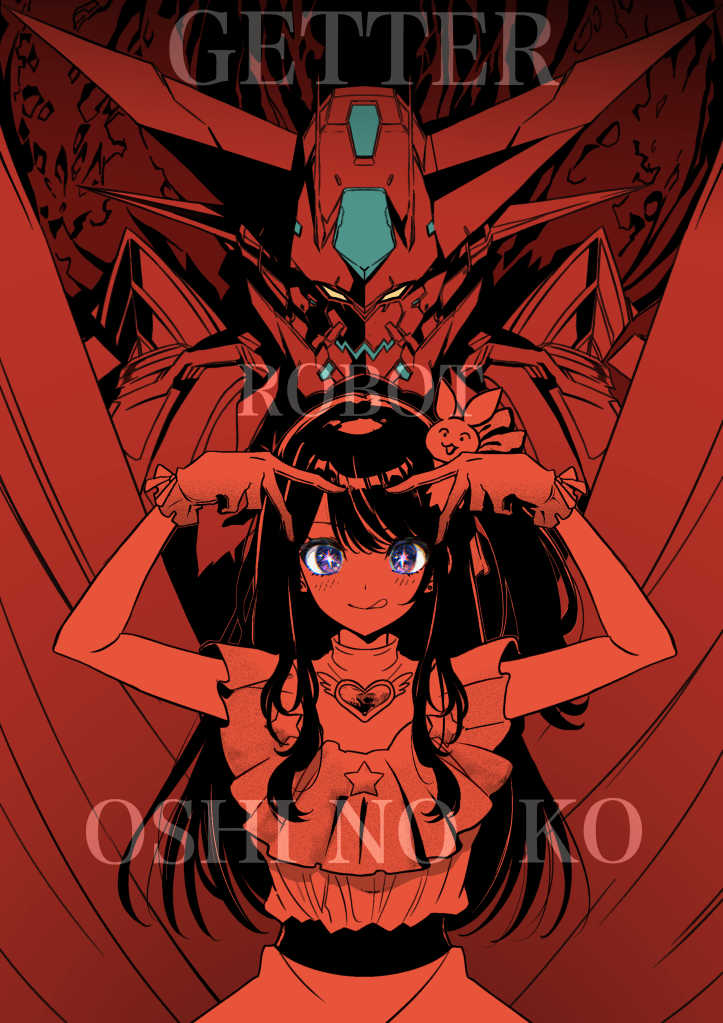
Oshi no Ko vs. Getter Robo: A Hot-Blooded Killer Combo

Sometimes it takes a meme to put a giant robot anime in the minds of the people. Hot on the heels of “Is this a pigeon?” comes the Perfect and Ultimate Getter mashup. 

For those who don’t quite get the joke, this is a mashup of the anime opening themes for 2023’s [Oshi no Ko] and 2000’s Shin Getter Robo vs. Neo Getter Robo. The two songs, “IDOL” and “STORM,” share a similar build-up during their respective choruses that makes one transition into the other almost seamlessly, with only a tweek to the tempo being necessary.

As a fan of both (the latter of which I watched during my formative years as an otaku), it makes me happy to see these two shows and their respective theme songs getting love. More than that, it made me think about a few things. 

First, I’m actually kind of surprised that so many people have a fondness for Shin vs. Neo. I know Getter Robo is just part of the bedrock of anime and the mecha genre, but I had always assumed Shin vs. Neo was just known in the little corner of the fandom I had occupied. Glad to see people have a sense of nostalgia for it, though that does make me feel old.

Second, if this is how newer anime fans discover Shin vs. Neo, then so be it. I hope they enjoy seeing a shirtless man beat a dinosaur soldier into submission, in addition to all the robot action. At the very least, the fact that this joke incorporates more footage of the anime means it’s able to show itself off better than Fighbird and the aforementioned pigeon meme.

Third, it’s a bittersweet reminder that one of the singers of “STORM,” Mizuki Ichiro, passed away earlier this year. IAs one of the elder statesmen of anime music, he might have very well leaned into this, and we might have legitimately gotten a cover of this. At the very least, Kageyama Hironobu and the rest of JAM Project are all around, and they are definitely game to perform memes (see their cover of “Okkusenman.”)

I think what I ultimately really like about Getter no Ko is that it showcases both series well. Their original content doesn’t get lost in layers of obfuscation, and I hope anime fans are able to experience and appreciate both.

Kio Shimoku Twitter Highlights April 2023

Kio Shimoku announces the release of his first original 18+ doujinshi in his tweets this month.

Kio made these cool photo/drawing composites featuring his characters sitting on the manga they’re from.

Kio drew his first original 18+ doujinshi, called It’s All Your Fault, Sensei, which is now available on FANZA and DLSite under the circle name ぼたん堂. Content note: It is futanari on cis girl, and in terms of depictions of sex goes well beyond anything shown in Spotted Flower.

Those who have been following Kio’s Twitter account might recognize one of the girls, as he drew an earlier version of her around the New Years in a bunny outfit.

New side chapters of Spotted Flower on the Rakuen website.

Kio mentions that had he wanted to draw what happens between Sasahara and Ogiue on the couch, it would have been “something similar,” though the original tweet has been deleted, so it’s not clear if he’s referring to his doujinshi or the fact that Not-Sasahara and Not-Ogiue are in bed together in the side chapters. 

Video of Kio’s tortoise eating!

Kio learned the trick of modifying model kit boxes to make them smaller in order to store completed kits.

A doujinshi cover of Ritsuko from Genshiken Volume 1.

From Genshiken Volume 4, reviews of different routes in the Kujibiki Unbalance visual novel. Madarame reviewed Renko’s, Sasahara Ritsuko’s, Tanaka Izumi’s, Kugayama Kasumi’s. Kio agrees with a commenter that Ootani Ikue (voice of Pikachu) fit the character perfectly.

Good weather for the tortoise.

Kio sometimes finds model kits he forgot he bought, and then gets in the mood to want to build them.

According to Kio, drawing ero manga is sort of the opposite of regular manga, and that’s what made it tough for him when planning it. In regular stuff, his thought process is paneling -> text -> art, but for pornographic stuff it’s art -> text -> paneling.

Kio is shocked by the developments in Princess Principal: Crown Handler Part 3.

The tortoise stepped outside to rest, despite it not being all that sunny.

A rough manuscript of Kio’s 18+ doujinshi. It was originally 20 pages but became 50 in the final product. 

Kio recalls a special on Do You Like Wednesdays? called “Butt Rhambutan.” A commenter finds a screenshot of the title screen.

Kio shares a drawing he made of the school doctor from his doujinshi.

Kio tells everyone to visit his Pixiv via the link on his Twitter profile.

The doujinshi manuscript is also on Pixiv.

Kio brought his tortoise outside and checked to see how it was doing, only to find it flipped over. He went out himself and flipped the tortoise back.

Art of Tokino from Kujibiki Unbalance from Genshiken Volume 1. Kio mentions that he actually forgot to post this in previous months.