I’m riding high off of three things: recent elections defied expectations, the VTubers of holoX have just been celebrating their one-year anniversaries, and it’s been 15 years of Ogiue Maniax! It’s hard to believe each one for somewhat different reasons, but I’m hoping I can carry this joyous monentum through this month and into the eventual new year.
Here are my Patreon subscribers for December 2022! Thank you to everyone.
I reviewed a lesser-known 1970s giant robot anime, now available via Discotek.
Kio Shimoku
If there’s anything to take away from this month’s tweets, it’s that Kio Shimoku loves Royal Space Force: The Wings of Honneamise.
Apartment 507
Looking at Akiba Maid War through the lens of 1999 Akihabara.
Closing
As with every year, I’m going to be rating the anime characters I think are the best of 2022. It is unbelievable how tough this year’s field is. I feel like the top candidates would have won in virtual every other year had they been eligible.
I first encountered Astroganger while watching a collection of robot anime throughout the decades. There it was, right after the black-and-white 1960s Tetsujin 28 and right before Mazinger Z. But there’s a reason Japan puts those other two on massive pedestals and considers Astroganger a weird relic that’s more meme fodder than anything else: the show comes across as dated even within the context of its time period, especially because it debuted just two months before Mazinger Z. Even watching the openings (both of which are sung by the legendary Mizuki Ichiro), you can see how much more impactful and eye-catching one is over the other.
Is Astroganger really that bad, though? The answer I’ve come to is “no.” While it’s not stellar, the show holds up fairly okay watching it in 2022.
The story of Astroganger is that the Earth is being invaded by aliens called Blasters, who want to take all the oxygen for themselves. The only force powerful enough to stop them turns out to be Ganger, a sentient robot made of “living metal,” who can become even stronger when merged with a young boy named Hoshi Kantaro. Both Ganger and Kantaro have ties back to the far-off planet of Kantaros, which was devastated by the Blasters, and together, the combination fights robot monsters using kicks, punches, slams, and other physical moves.
Astroganger pushes few envelopes and its writing often glosses over things in ways that assume kids won’t notice or care, but it also does present its story with tension and drama in ways that I can imagine young viewers at the time would love. The series has that basic superhero appeal of a secret identity, but on a child rather than an adult. The show is extremely episodic overall, but it generally feels like a gradual escalation of challenges for Kantaro and Gangar, so that threats in later episodes are presented as bigger deals than in earlier ones. That said, the final episode’s adversary feels weirdly anticlimactic, which is then made all the stranger by the fact that the conclusion is extremely climactic.
The fights are where the series feels like it came so close to being something more, but ultimately falls into an “Eh, decent” range. Many of the battles revolve around either Ganger overcoming the opponent through sheer strength and willpower or figuring out some weakness. However, many times, the “trick” is essentially told to Kantaro by his scientist dad, or it seems to come out of nowhere. For example, while fighting a robot in one episode, Ganger goes, “I’ve figured it out. Your weakness is your hands!” He then proceeds to rip them off, and the robot explodes—except nothing about the information presented either by words or action indicates that the hands were the Achilles’s heel. Both the willpower fights and the “strategic” fights remind me of mediocre pro wrestling matches: they can be fun, but they’re also lacking in some ways, and you’re not supposed to think too hard about it.
Knack, the studio behind Astroganger, is also infamous for Chargeman Ken: an anime with five-minute-long episodes that are so bad and bizarre that they’ve become the butt of many jokes online. Astroganger often looks cheap at times, but it’s nowhere near as dire as Chargeman Ken, which it actually predates. In fact, some stories in Chargeman Ken now come across to me as taking episode plots from Astroganger and shoving their contents into a questionably digestible bite-size experience in a manner reminiscent of Homer Simpson.
This includes the notorious episode “Dynamite in the Brain.” The Astroganger version is less pathologically amoral, but it’s still kind of weird, which tracks.
Another aspect Astroganger shares with Chargeman Ken is its decidedly unimpressive antagonists. The Blasters are pretty generic alien beings who are all interchangeable, and the only way you can tell who’s in charge is because their leaders are named and visibly numbered “Blaster 1” and “Blaster 2,” like it’s Bananas in Pajamas. Dr. Hell and Baron Ashura they are decidedly not.
I give all these criticisms, but I do want to note that in terms of excitement and entertainment, Astroganger would probably give most American cartoons throughout the 70s and 80s a run for their money. The fact that it has a fairly decisive finale (albeit odd in many ways) is something I can appreciate. In many respects, the show holds up okay. Not great, but okay.
PS: I’ve recently learned that Astroganger was quite popular in the Middle East, to the extent that an interview with a famous Arabic voice actor lists Astroganger as the main title he’s known for. It’s also a beloved work in Syria, and the final episodes actually moved people to tears. The official upload has all sorts of comments by people from that region talking about how much they loved the show. If we ever get an international Super Robot Wars, I would like to see Astroganger alongside Grendizer, so that such a game could show its appreciation to the Middle Eastern fans who love these anime.
Many viewers have remarked on the similarities between The Witch from Mercury and another anime, Revolutionary Girl Utena. Both feature heroines having to protect a prized bride in ritualized duels that involve cutting off a symbol to win (an antenna and a rose, respectively). It’s hard not to make the comparison. But I think the fact that we are seeing “Utena Gundam” so readily embraced is a sign that the Gundam fandom has progressed in ways I couldn’t have seen years ago. This is especially the case when looking at a different spiritual predecessor to The Witch from Mercury, 1995’s Mobile Fighter G Gundam.
There was a time when G Gundam was the black sheep of the family. Eschewing the backdrop of war for a gigantic mechanized fighting tournament, many fans regarded it as antithetical to what Gundam was supposed to be. But as the decades have passed and new fans have come to the franchise and brought new perspectives, the notion of Gundams in formal duels isn’t viewed in such a negative light anymore. We even got a tournament anime about fighting with Gundam model kits! There might be an inherently ridiculous quality that seems to (double) harken back to 70s super robot shows like UFO Robo Grendizer, but that doesn’t mean such a series can’t be serious and insightful in its own way.
The larger setting of The Witch from Mercury, beyond the school, clearly sets up a world where the shady politics of militarism and capitalism shape events in ways worth analyzing that feels very current but connected to the past. When the duels are viewed in this context, they feel not so much separated from the outside as connected to the larger problems that exist. In this sense, it truly does feel like the child of G Gundam and Utena, but also the grandchild of Gundam itself.
The new anime season is in full swing, but while I’m enjoying the hell out of so many things (like Gundam: The Witch from Mercury!), my mind is on the upcoming US midterm election. I plan on (sort of) following up with my thoughts on this subject in a few days but for now, I’m using this time to encourage citizens to vote however they can: in person on Election Day, by mail, by early voting, anything.
I’d also like to thank my Patreon subscribers for this month of November 2022.
A sparse month of comments, but his tortoise is feeling better!
Apartment 507
Thinking about VTuber Gawr Gura’s recent animated short relative to other bonus animations.
Closing
Congratulations to Brazil for making the right choice and not re-electing an authoritarian nationalist who cares more about his self-image than the wellbeing of the people (sounds familiar).
How about I make some Saint Seiya posts to celebrate?
Introduction: “Gattai Girls” is a series of posts dedicated to looking at giant robot anime featuring prominent female characters due to their relative rarity within that genre.
Here, “prominent” is primarily defined by two traits. First, the female character has to be either a main character (as opposed to a sidekick or support character), or she has to be in a role which distinguishes her. Second, the female character has to actually pilot a giant robot, preferrably the main giant robot of the series she’s in.
For example, Aim for the Top! would qualify because of Noriko (main character, pilots the most important mecha of her show), while Vision of Escaflowne would not, because Hitomi does not engage in any combat despite being a main character, nor would Full Metal Panic! because the most prominent robot pilot, Melissa Mao, is not prominent enough.
—
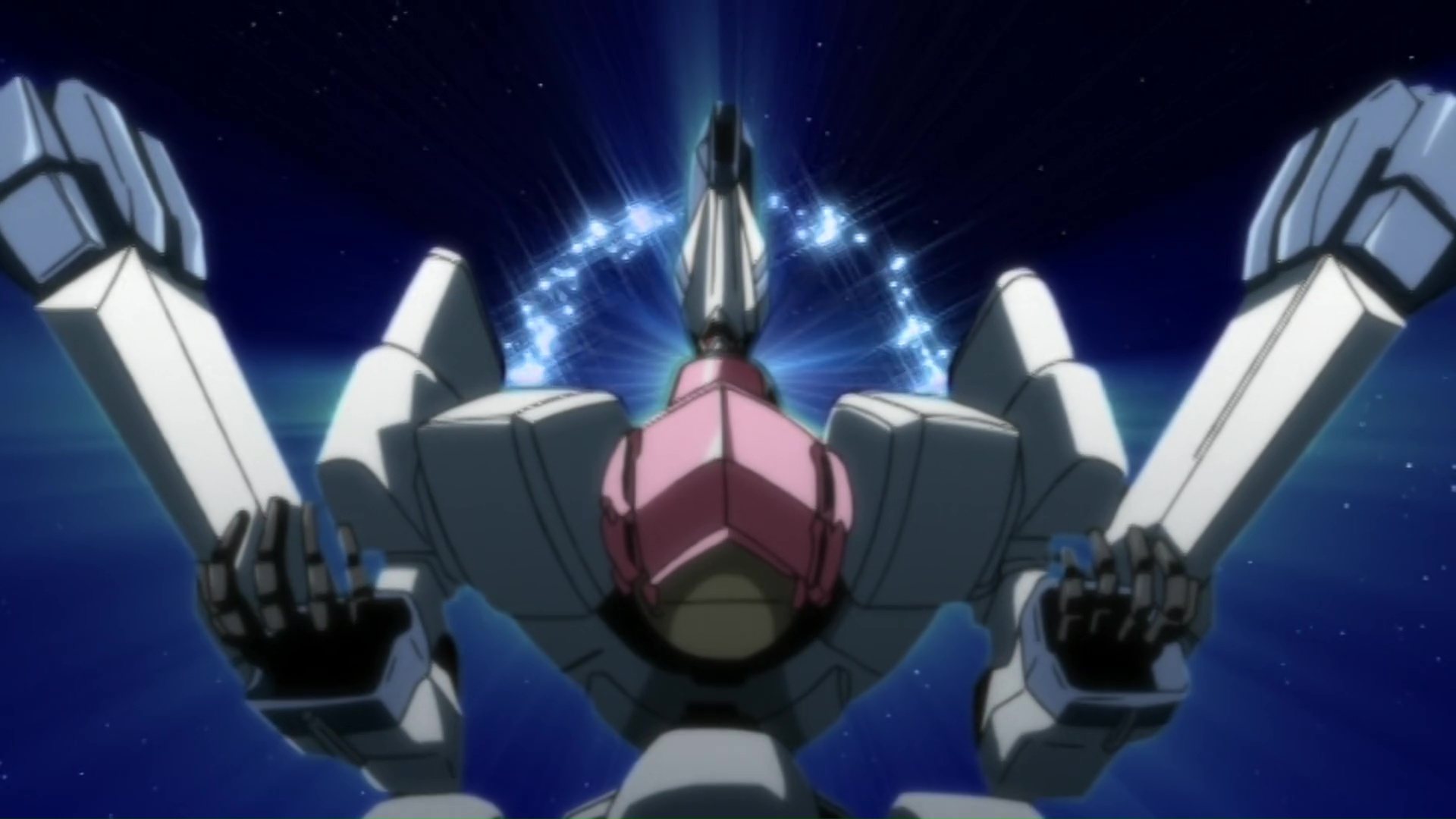
At face value, Idolmaster: Xenoglossia is a perplexing title. Why in the world would the very first anime for The iDOLM@STER, a video game about managing Japanese idols, be a mecha series where the girls strive to save the Earth rather than give successful stage performances? When you get under the surface, though, it results in an even greater cognitive dissonance between the franchise’s origins as an idol sim franchise and this science fiction story ostensibly built on its foundation.
The confusion begins from the very basis of Xenoglossia. The premise is that high schooler Amami Haruka is unexpectedly recruited to potentially become one of the “Idolmasters,” pilots of world-defending robots called iDOLS. Outside of Xenoglossia, the name of the franchise refers to the player as an idol producer. That’s a simple enough change to accept given the story’s setting, but where the show throws the hardest curveballs is the portrayal of its characters.
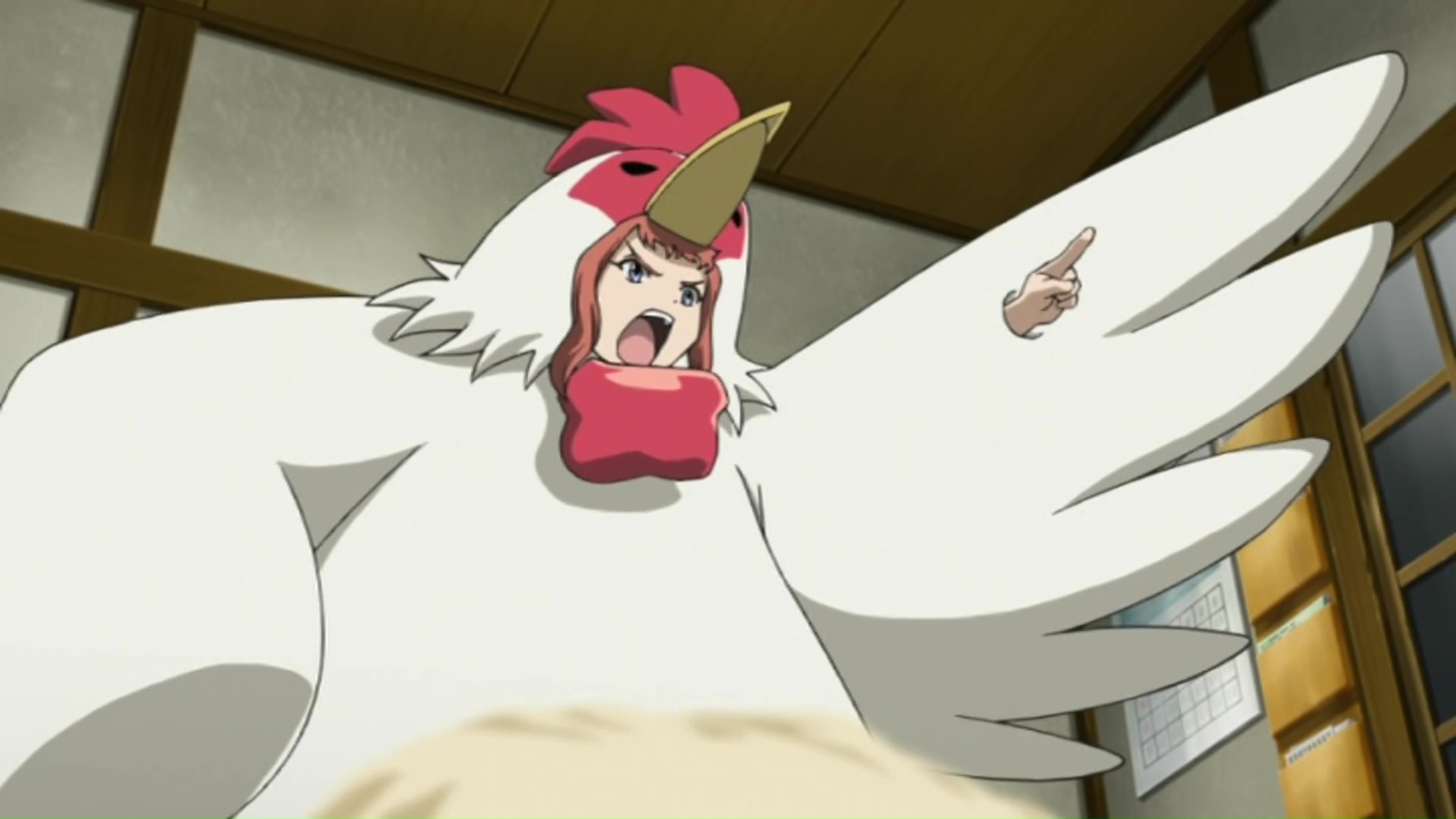
Despite this being a franchise where fans support the actors who play their favorite idols, the entire voice cast was changed for Xenoglossia. It’s an extremely odd decision in hindsight, but what makes it all the more strange is that the changes don’t stop there: age, size, personality, and more are drastically altered to the point that many characters become almost unrecognizable. The best example is the character of Takatsuki Yayoi. In The iDOLM@STER proper, she’s a small and energetic girl in her early teens known for her high-pitched voice and signature squeal of excitement. In Xenoglossia, she’s noticeably taller and bustier, is the only actual conventional idol in the show, loves to wear mascot outfits), and is much more antagonistic towards Minase Iori.
I’m not a huge The iDOLM@STER fan, but I’ve watched the anime and have a decent idea of the core cast and their personalities. On some level, it’s impossible for me to fully divorce my preconceived notions, but this level of change is beyond rare. The closest example I can think of is the first Comic Party anime, where a high schooler got aged up and a middle schooler got aged down for seemingly no reason. It’s as if the creators of Xenoglossia just looked at some preliminary character sketches and just went their own way without regard for the source material.
Funnily enough, the only character who’s mostly like her original self is the franchise’s flagship heroine and Xenoglossia protagonist, Amami Haruka. Her personality remains optimistic and hard-working, though tinged here with a bit of self-doubt as to what she’s capable of. But when she’s surrounded by an endless parade of bizarre doppelgangers, something always feels a little off. If one can ignore that to a degree, the show gets more enjoyable.
In terms of Haruka or any other character’s portrayal as giant robot pilots, they’re never upstaged by any male characters swooping in to save the day; in fact, there aren’t any male pilots at all. Different characters struggle with different aspects of being Idolmasters, and much of the plot is built around striving to overcome those challenges. There’s also a great deal more nudity and sexual behavior (including possibly incest?!) than would be expected of something based on The iDOLM@STER—which might be a dealbreaker for those who strongly believe in the whole “idol purity” concept, but still feels kind of odd for even those of us who don’t.
The relationship between the Idolmasters and their iDOLS also arguably runs counter to “idol purity” because the way they talk about the robots makes them seem on some level like giant mechanical boyfriends—especially the main iDOL, Imber. The robots are shown to be sentient on some level, and the way some characters work to become worthy of and accepted by the mecha while others treat them like companions comes across more like romantic fiction at times. The entire setup of Xenoglossia is conducive to this, showing itself to be the kind of anime where the requisite to becoming Idolmasters has angst-filled drama baked in.
Idolmaster Xenoglossia we got could never be made today. It came out at a time when The iDOLM@STER was a much smaller deal, as evidenced by the fact that the girls are all based on their designs from the first game rather than the revised versions from The iDOLM@STER 2 that have since been codified. This early on, Xenoglossia followed in the fine (?) tradition of titles like Lunar Legend Tsukihime, where it was assumed that a fledgling idol manager franchise needed a boost in star power and storytelling from the anime industry. Now, the shoe’s on the other foot, and if they were to attempt this again, it’d be all but inevitable that the characters would adhere much more closely to their original selves. It’s a historical curiosity, indeed.
Mobile Suit Gundam: Cucuruz Doan’s Island can be described as one of the most elaborate shitposts ever.
This doesn’t mean the film is bad—quite the opposite, in fact. But it’s precisely because Cucuruz Doan’s Island turns out to be a solid work that makes it even more of a shitpost.
Origins
Cucuruz Doan’s Island was originally Episode 15 of the 1979 Mobile Suit Gundam TV series, about an AWOL Zeon soldier who is now raising orphans on an island that the protagonist, Amuro Ray, crashes on. It’s infamous for a variety of reasons, not least of which are its abysmally off-model animation quality, and the fact that Director Tomino refuses to let it be included in releases outside of Japan. It’s an early instance of a yashigani crab episode, the kind of thing that seems to embarrass all involved. Well, what if 43 years later, they decided to turn it into a feature-length piece with the budget of a full-fledged animated film?
It’s about as cheeky a move you can make, especially because the idea of re-animating something from First Gundam like this isn’t really done. Sure, there’s Gundam: The Origin, but while the manga is a retelling of the entire story of the One Year War, the anime version mainly covers events before that conflict, making it a prequel of sorts.
Doing More with More
So how do you stretch a 20-something-minute episode into a full movie? Well, you give it More of Everything. There’s more fights: Doan is shown in his Zaku to be fending off unwelcome island visitors from the start, and even has a tussle with the Gundam early on. There’s more plot: The White Base crew’s visit to the island, as well as Doan’s former role in the Zeon forces are given greater context. There’s greater stakes: The threat of worldwide catastrophe looms in this film in a way it never did as a TV episode. There’s more characters: Doan goes from having four orphans to having about three times as many (including an older boy who’s jealous of Amuro), and a whole new platoon of Zeon soldiers is incorporated into the story. Also, Char Aznable shows up (of course), but only in a literal fever dream.
On top of all that, Doan’s Zaku for the film has been purposely designed to be thinner and with a different head construction compared to the standard. This is actually a reference to it being horribly off-model in the original TV series, which has now become the catalyst that has transformed artistic mistakes into the baseline for a unique mobile suit design. This is perhaps the biggest indicator of the somewhat trolling nature of Cucurzu Doan’s Island.
Hindsight and Evolution
Yasuhiko “Yaz” Yoshikazu, the original character designer from the TV series, is actually the director of this film, and it shows. In many ways, it feels more like an episode of Giant Gorgthan Gundam in the way characters interact with and explore their environment. The character designs in the film are very clearly based on Yaz’s more modern work a la Gundam: The Origin, but there’s also something about the way characters move that evokes their personalities more powerfully than even some of the best episodes of First Gundam. When Amuro walks around the island, he does so with an awkwardness that really hammers home the fact that he was originally an introverted tinkerer who got thrust into piloting the most powerful weapon of the time. The ways he walks, runs, and reacts come across as possibly even neurodivergent, and makes him feel that much more out of place in the world where he lives.
In this way, one of the remarkable things about Cucuruz Doan’s Island is the way it acts simultaneously as a nostalgia piece and a work that reflects on Gundam’s long history. In addition to being an opportunity to see the old White Base crew in action again, there are all sorts of details that convey a kind of homecoming. For example, when you see Zeon soldiers (Doan included) react to the presence of the Gundam with fear and awe, it both makes sense in the context of the story and as a nod to the fact that this is the RX-78-2, the Ur-Gundam. Pretty much all the old characters are there with their original voice actors (provided they’re alive). It’s very clear that Furuya Toru and Furukawa Toshio are four decades older and can’t quite play teen characters as naturally as they used to, but they also bring just as many years of experience and refinement to the roles.
There’s another aspect of Cucuruz Doan’s Island as a do-over that stands out to me, and perhaps to anyone who cares about Gundam lore: Despite being a remake of a TV episode, the movie places itself more in the original film trilogy’s version of events. In addition to the complete absence of the Core Fighter—the cockpit plane that was used as part of the “docking” sequences used in the TV series to give it more of a “super robot” aesthetic like Gundam’s predecessors—Cucuruz Doan’s Island also features the Core Booster vehicle that was created for the trilogy. And while I can’t remember offhand the exact sequence of events, the flow of the story seems to place it more in the trilogy’s timeline of events as well. This, too, feels like Yaz trying to correct past mistakes.
Beyond the Time
I’m not sure which would be funnier: this movie leading to an international release of First Gundam with the missing episode, or if we actually end up with the movie available to purchase but still no Episode 15. Either choice would add onto the legacy of Mobile Suit Gundam: Cucuruz Doan’s Island as arguably the ultimate shitpost, and I have to wonder if other properties might attempt something similar.
On occasion, I like to entertain the notion that the Voltron from the NetflixLegendary Defenderseries could someday become a Soul of Chogokin figure.
I know the audience isn’t quite there. The kinds of fans who flocked to Legendary Defender in the 2010s are not like the fans who were drawn in the 1980s to Voltron: Defender of the Universe or the original Beast King GoLion in Japan. And from what I understand of the Legendary Defender fandom, the show left a really bad taste in the mouths of some of its most ardent supporters that might make any sort of subsequent merchandising futile. I can dream a little, though.
It wouldn’t be the first American work to have the privilege of being rendered into premium collectible format through the Soul of Chogokin line—that honor goes to Gipsy Danger from Pacific Rim. But when I look at the 2016 release of the SoC old-school Lion Voltron and marvel at its presence (as well as the almost-as-cool 2019 Dairugger/Vehicle Voltron release) I think about how great it would be for the new-school Voltron to be standing in display cases and on shelves in people’s homes. While I’m not as big a fan of the more recent design compared to the original, I’d be confident that the Soul of Chogokin line would make it look like a million bucks.
The main barrier, as already mentioned, is that the majority of the Legendary Defender fandom couldn’t care less about how cool the giant robots are. What fueled its popularity was the characters and their relationships (both real and imagined), and there isn’t a strong enough connection between those characters and their mecha for there to be a strong emotional bond between viewers and robots—like with many Gundam series, for example. A 2018 post on the Voltron subreddit meant to drum up votes for an SoC Legendary Defender barely garnered any support. Maybe if the Soul of Chogokin release came with plenty of material based on the characters (perhaps much more detailed human figures than what you’d typically get from SoC releases), it could bridge the gap to an extent.
There are also plenty of past series that garnered unexpected fanbases who cared far less about the giant robots. God Marsbuilt up a significant female audience due to its handsome characters and drama, and it debuted the same year as GoLion in Japan. Granted, God Mars also had impressive toy sales that contributed to its success, and it came out in a different time, place, and culture, so the comparison between it and Legendary Defender is limited at best.
The audience for a Soul of Chogokin Legendary Defender Voltron needs to be there to be justified, and the best hope in that sense might be to play the long, long game. While the main fandom for Legendary Defender skews older, there are probably young kids who have watched it on Netflix and like the robot action. It would probably be decades before they reach adulthood and have the disposable income to afford figures costing hundreds of dollars, but perhaps their nostalgia (not unlike the nostalgia that fuels the SoC line in general) would still be running strong.
Out of all fan conventions, I consider Otakon the one can’t-miss event. There’s certainly a sentimental component, as I’ve been attending for about 15 years at this point, but I think their approach to the concept of the anime con is vitally important: a celebration of anime fandom that’s not for profit and also gives respect to both the creators of the works and the fans themselves. This year, Otakon 2022 shattered its attendance record with a whopping 40,000+ (roughly 6,000 more than the previous record), and I’m glad to see it thrive after a combination of a risky move to Washington DC saw an attendance drop and the arrival of a global pandemic threatened its very existence.
COVID-19 Measures
Anyone who follows Ogiue Maniax knows that I do not take COVID-19 lightly. I’m a firm believer in the science that says vaccinations provide significant protection against severe disease and death, and that good-quality masks are an important tool for mitigating spread. I’m also not so naive as to think COVID couldn’t possibly be at the convention. So why did I still decide to attend, especially with the Omicron variants being so infectious? There are multiple reasons.
First, above all else, is that Otakon’s COVID-19 policy reassured me that they take the pandemic seriously. Much of the US has been opening up in rather unsafe ways (if they had ever closed down at all), and some other notable conventions had tried to roll back their masking and vaccination policies despite the prevalence of the Omicron variants. However, Otakon maintained that attendees must either be vaccinated or present a negative PCR test result, and that masks are mandatory. A few more things could have been done, like requiring vaccinations and boosters, period, but it’s understandable that some people still can’t get vaccinated for reasons other than hesitancy. In my view, Otakon cared more about people than attendance numbers.
Second, the Walter E. Washington Convention Center is quite spacious and has tall ceilings that can help keep air circulating—it’s being in stagnant air in small, enclosed spaces that is especially high-risk, and I could do what I can to avoid those situations and/or make sure I didn’t take my mask off under any circumstances.
Third, I trusted my own risk management. In situations that are too crowded around me or where the mask usage rate is clearly lacking, I could make the decision to change plans or abandon ship and head back to my hotel. Although it might mean not getting to see something or someone I was looking forward to, it was something I was willing to accept. You can’t do everything at Otakon anyway. I did eat out with friends once, but it was on a Sunday when the majority of attendees had already left DC.
Of course, COVID safety only goes as far as whether people actually follow them. In that regard, I was pleasantly surprised to see that the majority of people wore masks of some kind and wore them over their noses like you’re supposed to. It wasn’t perfect, and there were plenty of ineffective cloth masks still being worn, but I think having the firm requirements come from the con itself might have encouraged attendees to follow their example. I also literally saw security go after someone with no vaccination/COVID-negative wristband in a reassuring sign of vigilance. Score one for mandates.
Issues
That’s not to say the con ran 100% smoothly, however.
I enjoy getting autographs from creators, and Otakon is often good at inviting a variety of interesting guests from Japan. However, ever since the move from Baltimore, the autograph area has been in the same space as the Dealer’s Room, resulting in a less-than-ideal situation. Attendees wanting to get their stuff signed have to deal with the massive crowd trying to get into the Dealer’s Room to shop, and I thought about giving up on more than one occasion because I was worried about being surrounded by people and increasing the chances of infection.
Exacerbating this was the fact that there was a major pedestrian traffic jam in the underground tunnel connecting the Marriott to the convention center on Saturday. Normally, this is the ideal way to get to the con if you’re staying at the hotel (as I was), but the huge delays meant I couldn’t return to my room and retrieve something I hoped to get autographed until it was too late. However, that was fairly small potatoes compared with the fact that those trying to make their way through the tunnel could be stuck in there an hour or even longer. There were also lines snaking out from the Marriot and at the convention center, and on a hot summer day too. It seems like the culprit is a confluence of factors, including the gigantic boost in attendance numbers, some confusion over COVID-19 protocols, and some mechanical failures that meant inaccessible escalators. Whatever the case may be, I hope Otakon is prepared to deal with this next year
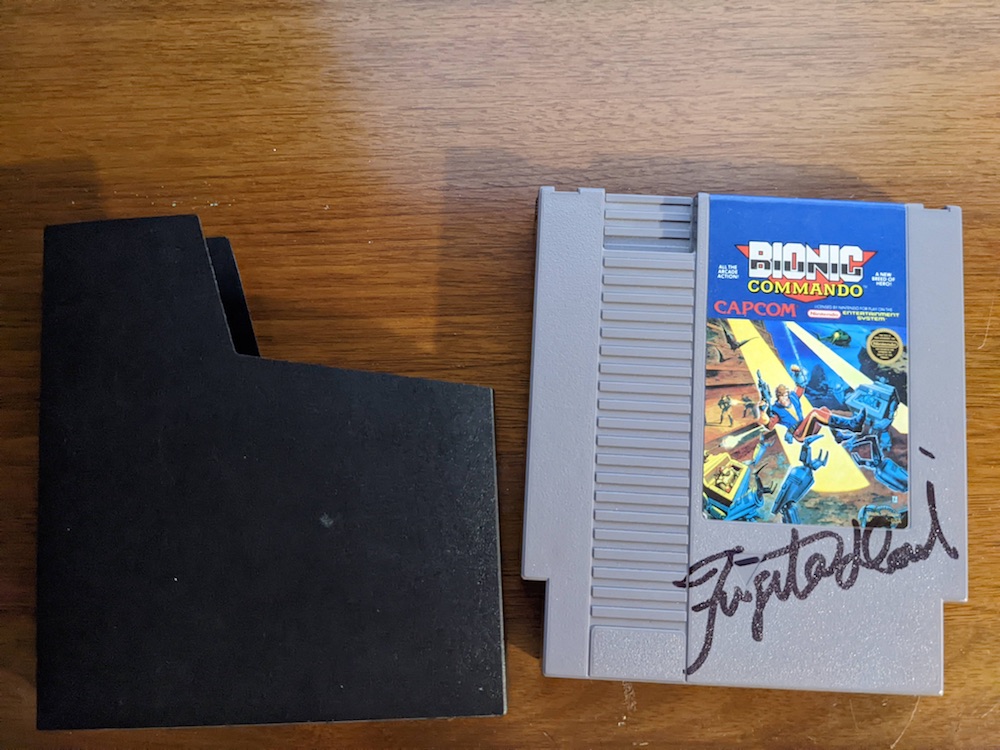
Fortunately, I actually did manage to get a couple of things signed in the end: an old family copy of NES Bionic Commando from back in the 1980s, as well as a special edition of a My Youth Romantic Comedy novel from the author and staff (not pictured).
Interviews
After my hiatus from interviewing last year, I managed to speak with some guests for 2022. Check out the following interviews:
If you ever want to hear from voice actors who love their craft and want to prepare the next generation, it has to be these two industry veterans. Furukawa is famously the voice of Piccolo, Moroboshi Ataru, and Portgas D. Ace. His wife is probably best known as Naru (Molly) from Sailor Moon. Together, this husband-wife voice team provided insight on how they train talents at their school, the ways they introduce emotion to their roles, and how to sound like you’re moving around without actually doing so (because the mic won’t pick everything up). One insightful thing I learned is that COVID-19 has upended the tradition of having everyone in the same room to record a scene (which made for better recordings, in my opinion), though important dialogues might still result in a two-person session.
I actually interviewed them back in 2017, but forgot to ask them about one of my favorite works: Zambot 3, where Furukawa played Shingo. This time, I got the chance to make up for that omission, and Furukawa answered that Tomino had very meticulous instructions and planning for voice actors, and he’d talk with each voice actor one by one. Furukawa said it was a very theatrical experience compared to other roles, though I don’t know if “theatrical” is a euphemism for something else.
Studio Trigger’s Cyberpunk: Edgerunners
While it wasn’t my first choice for aTrigger anime screening, I was still curious to see what they had in store for the first episode of Cyberpunk: Edgerunners. I’ve never played Cyberpunk in any form, but I was glad to see that the studio’s approach emphasized the dystopian qualities of its, well, cyberpunk setting over the “cool factor.” The stark class differences and crushing hand of capitalism make the hero’s anger all the more poignant.
After the screening, the staff showed some of their early character design sketches. The two things that stood out to me were the degree to which they had to revise to match the Cyberpunk video game creator’s vision, as well as the fact that they straight-up said the main girl character (who barely shows up in episode 1) was inspired by Motoko from Ghost in the Shell as they explained the big influence that cyberpunk as a genre had on them as artists.
At the end, they teased the SSSS.Gridman + SSSS.Dynazenon movie, which I’m eagerly awaiting.
Bigwest’s Macross Panel
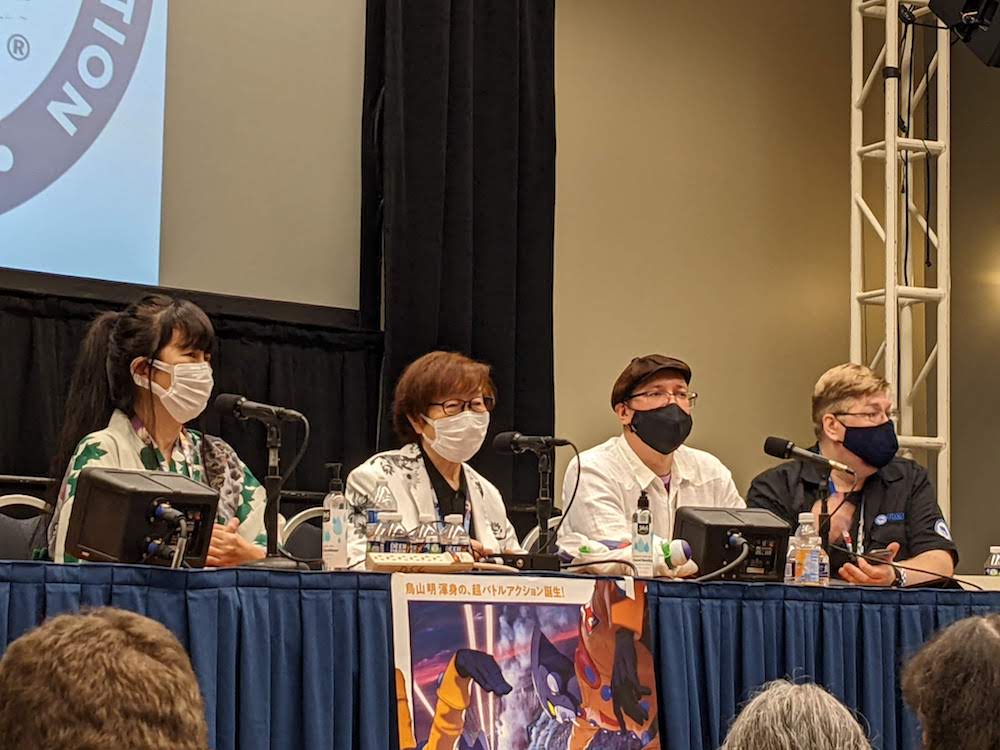
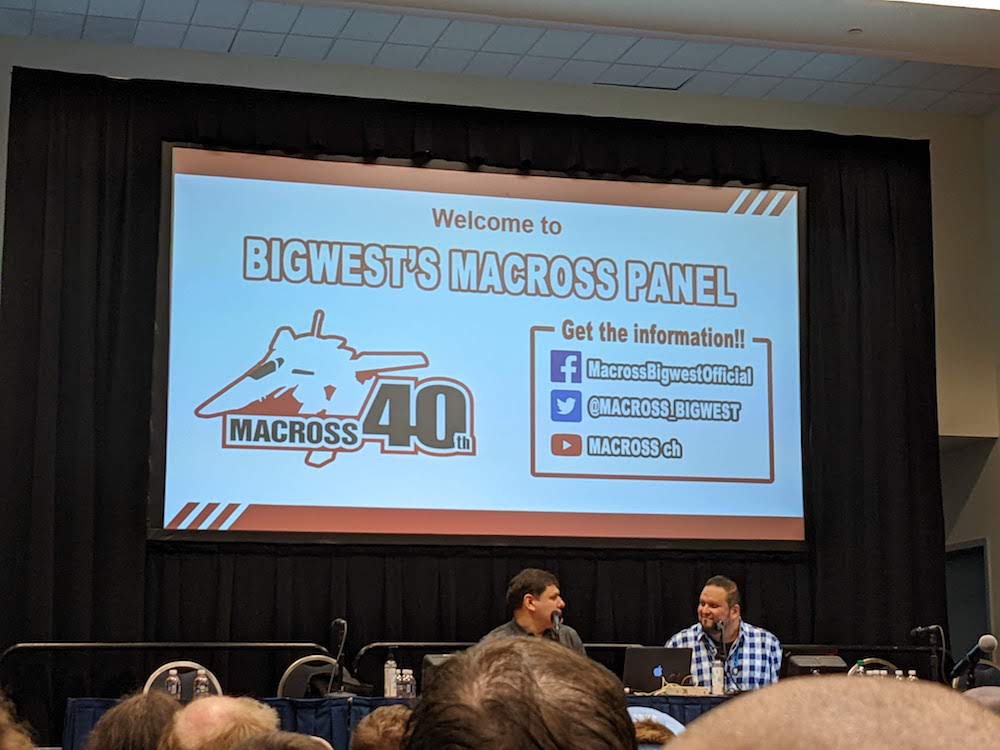
When I found out there was going to be an official Macross panel at Otakon, I felt it was my duty to attend. After all, official Macross panels have never really existed in the US prior to 2022, with the closest being whenever Kawamori Shoji is a guest. One of the biggest moments of the panel was when they showed a video of the various Macross anime (narrated by “Maximillian Jenius” Hayami Sho), and a loud cheer erupted around Macross 7. The panelists mentioned that the title would have induced silence not so long ago—a sign of the changing times. Personally, I think that similar to JoJo’s Bizarre Adventure,anime fandom had to catch up to Nekki Basara instead of the other way around.
This panel has since garnered a bit of controversy due to the fact that Otakon announced that there would be something special. To Macross fans, that can mean all sorts of things because of its unusual history when it comes to licensing and the legal issues with Harmony Gold/Robotech. Speculation ran rampant: Could it be Do You Remember Love? A new Macross? Something completely out of left field?
It turned out to be the very first US screening of Macross Frontier Short Film: The Labyrinth of Time, which was originally shown before the Macross Delta Zettai Live film. It was a treat to see and it was downright gorgeous, though not quite the first thing to come to mind as a special surprise.
Discotek Media
If ever there was a US anime company with a catalog made for me, it would be Discotek. Even when they’re not licensing titles off my wishlist, they’re giving others similar dreams. While Machine Robo: Battle Hackers is not everyone’s first choice for long-sought-after anime, their willingness to put out such obscure works is appreciated.
By far, the two big titles announced here are Space Sheriff Gavan and the complete Urusei Yatsura TV series. Neither hit me on that deep level, but the audience went bananas for both. I’m well aware of the significance both shows have to tokusatsu and anime fandom, and I’m looking forward to checking both out.
At a dinner with friends, I learned that Gavan is such a big deal in Malaysia that it’s become a part of the language itself. Using the word “Gaban” there means to describe something as epic or to evoke an image of bravery. I have to wonder how many works of television and film can make similar claims to fame.
My Panels
I’ve done plenty of panels at Otakons past, but this year is the first time I’ve had to do two back-to-back. I had considered asking for one of them to be moved, but the prospect of getting them both out of the way in one fell swoop was appealing as well. Thankfully, the vast majority of the panel rooms were in close proximity to one another this year, making the transition a relative breeze.
The first panel was “Hong Kong in Anime and Manga.” The idea was to explore different ways in which Hong Kong’s people, culture, and environment are portrayed in anime and manga. There was a technical hiccup at the beginning that delayed the start by five minutes, there were no real issues otherwise. I was surprised that there were very few Cantonese speakers in the audience, but that just meant I had underestimated the need to explain the language aspect of Hong Kong, and could adjust on the fly. I also noticed how big a reaction a clip of Cantonese-speaking VTuber Selen Tatsuki received, which gave me an idea of her extensive reach.
I hope people enjoyed the panel. I managed to briefly talk to a couple of folks who enjoyed the panel (including a longtime reader!) before I had to hoof it out of there. I was also informed that I might have made more than a few people interested in checking out G Gundam—mission accomplished.
The second panel was “Mahjong Club: RIICHI! Ten Years Later.” It was the revival of a panel I last presented in 2012 alongside Kawaiikochans creator Dave, adjusted to take into account the many opportunities English-speaking anime fans have to play Japanese mahjong compared to a decade ago. One big adjustment we made was to deemphasize some of the nitty-gritty of the rules and to better convey the excitement and tension of a game of mahjong. For the most part, the audience was new to the panel (but not necessarily new to mahjong), so I hope we were able to give something for everyone who watched us.
There was an issue with text on our slides getting cut off; it’s something we can fix when we do this again in another 10 years (?).
Fan Panels
A History of Isekai
Isekai is the elephant in the room when it comes to modern anime, and a panel about its history could easily strike a shallow cord. Luckily, this one focused primarily on the works leading up to Sword Art Online, mentioning the mecha isekai of the 1980s, the shoujo isekai of the 1990s, and the outsized influence of The Familiar of Zero. It’s debatable whether something like Urashima Tarou can count, though if it does, then it’d be amusing to show the anime Urashiman. Of course, not every title can be mentioned in an hour, even if it means missing out on the fantastic opening to Mashin Hero Wataru.
Digital Anime Fansubs: 2000 to Now
This panel was about the rise of digital subs around the turn of the millennium, and it focused mainly on the changing formats+file sizes, the brand-new frontier of getting anime straight from Japan within days (as opposed to months or even years), as well as the ways that fansubbers tried to establish their identities through practices like fancy karaoke effects. It was probably a fun introduction to this era for people unfamiliar with it, though I wonder if there would be a way to establish a more detailed history. It wouldn’t be easy by any means, due to the fact that this sort of subject isn’t really recorded, but maybe collecting anecdotes from fellow fans (or fansubbers themselves, if possible) could be cool.
A Sophisticatedly Unsophisticated Look at Fanservice
This was a panel by Gerald from the Anime World Order podcast, and I actually saw a fledgling incarnation of it ten years ago at Otakon. It was interesting to see him tackle the topic again, and there were definitely shows I remembered—namely the infamous Manyuu Hikenchou. This time, the panel had a more concrete idea of what it wanted to show, which is fanservice in terms of being things that are gratuitously superfluous. In that regard, the panel did take things to the next level, though I thought it still didn’t quite hit the mark on what would be considered traditionally “fanservice for girls,” which I think is more rooted in context and relationship dynamics than jiggling bits and crotch shots.
Showings
Otakon 1994 AMVs
One of the pleasant surprises this year was that the con decided to screen the original Anime Music Video Contest from the very first Otakon 28 years ago. It was a window into the past, particularly in terms of the shows that were being used (Riding Bean, Bubblegum Crisis, Detonator Orgun, and so on), and it’s even more impressive when you realize that digital video editing was still in its infancy back then.
There was a particular video that was considered “non-competing” that seemed to grossly revel in detailed depictions of violence against women. While I could see the argument against showing it at all, I do think having it available as a sign of what the fandom was like, warts and all, has at least historical merit. I would say I hope this isn’t a thing anymore, but I don’t typically watch AMVs anyway.
Wada Kaoru and Hayashi Yuki Sunday Concert
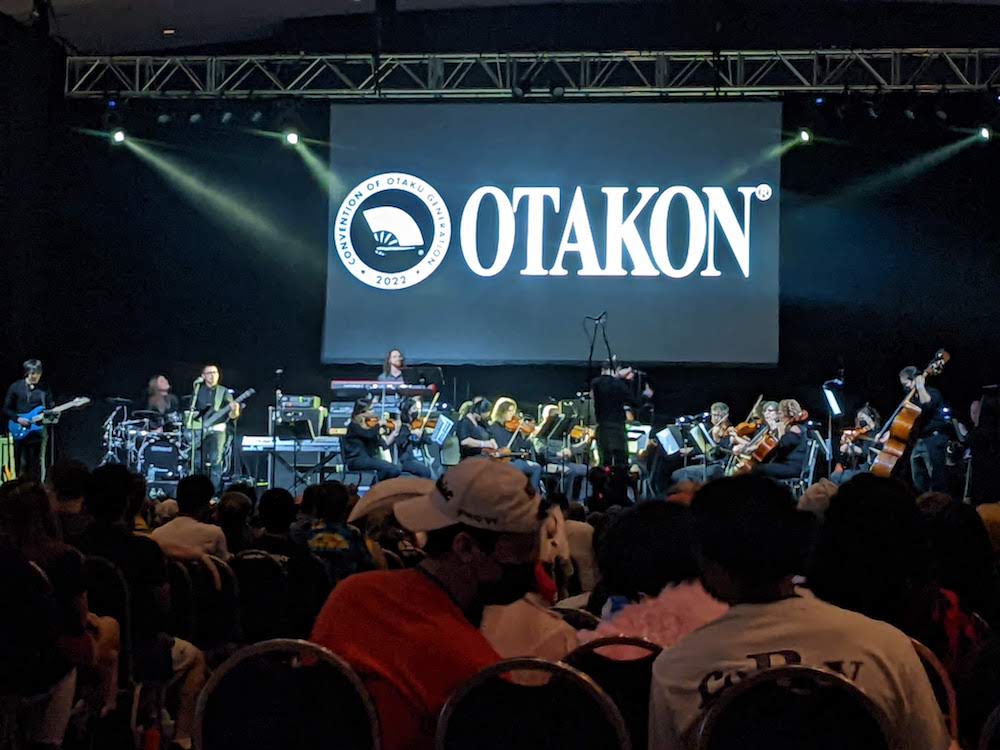
Despite the prominence of K-pop at Otakon this year (enough to have Hangul on the front cover of the physical guidebook for the first (?) time!), the only concert I attended was for the music of composers Wada Kaoru (Inuyasha, Yashahime) and Hayashi Yuki (Haikyu!, My Hero Academia). I wasn’t familiar with a good chunk of the songs, but the contrasting styles between the two made for an interesting experience you usually don’t get when the focus is on a single act. The real treat was during the encore, when they played along with the combination orchestra+rock band.
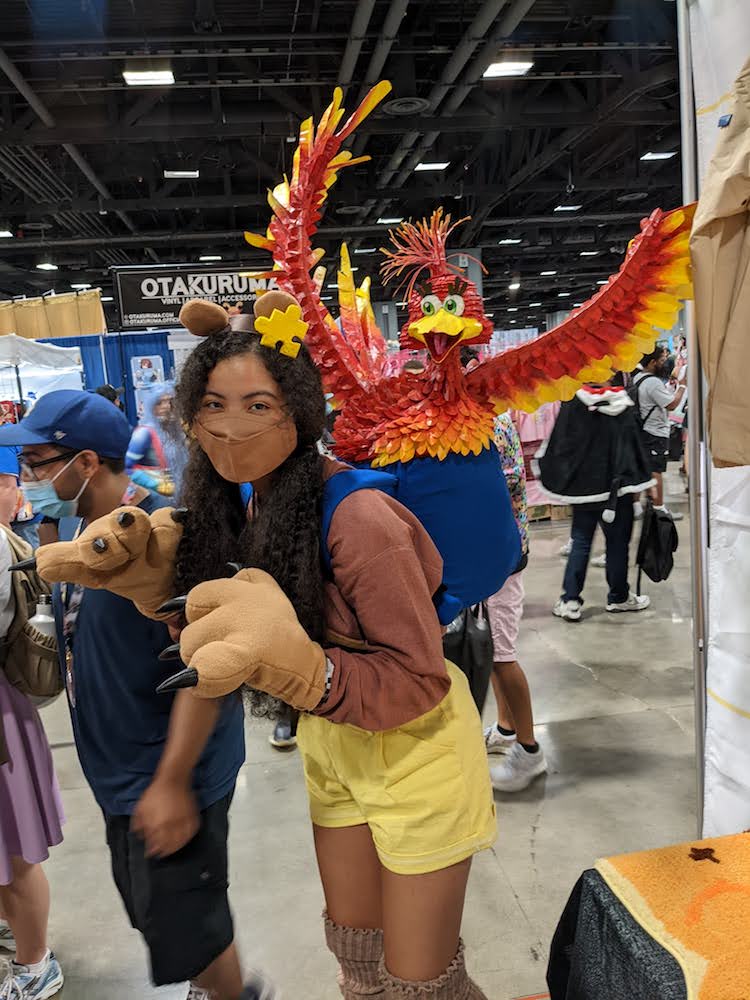
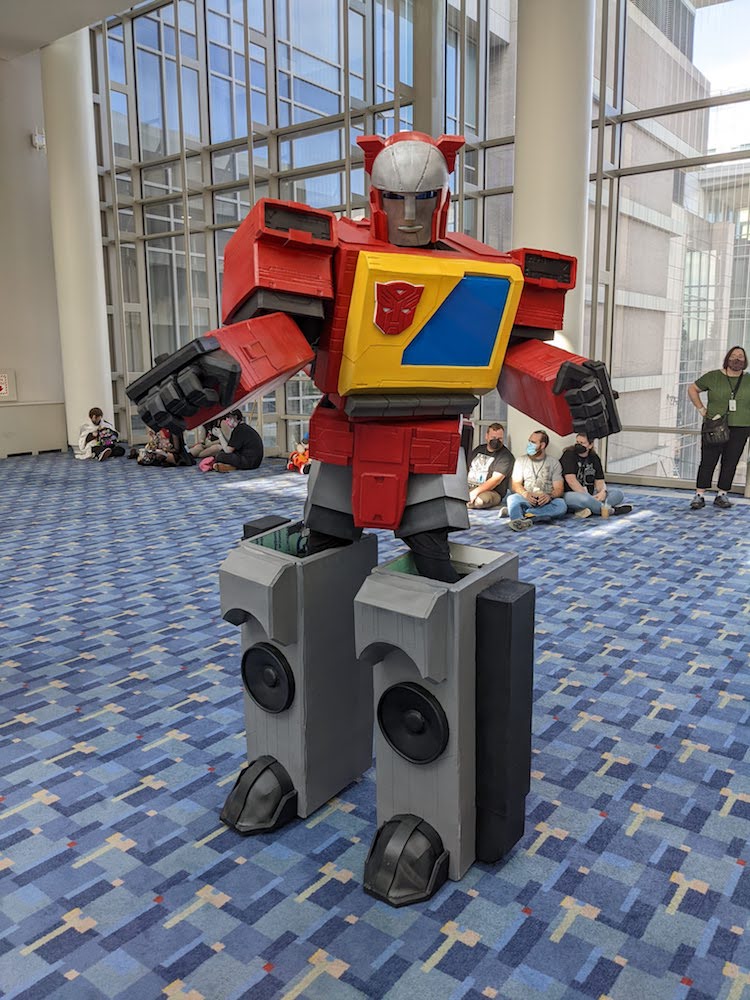
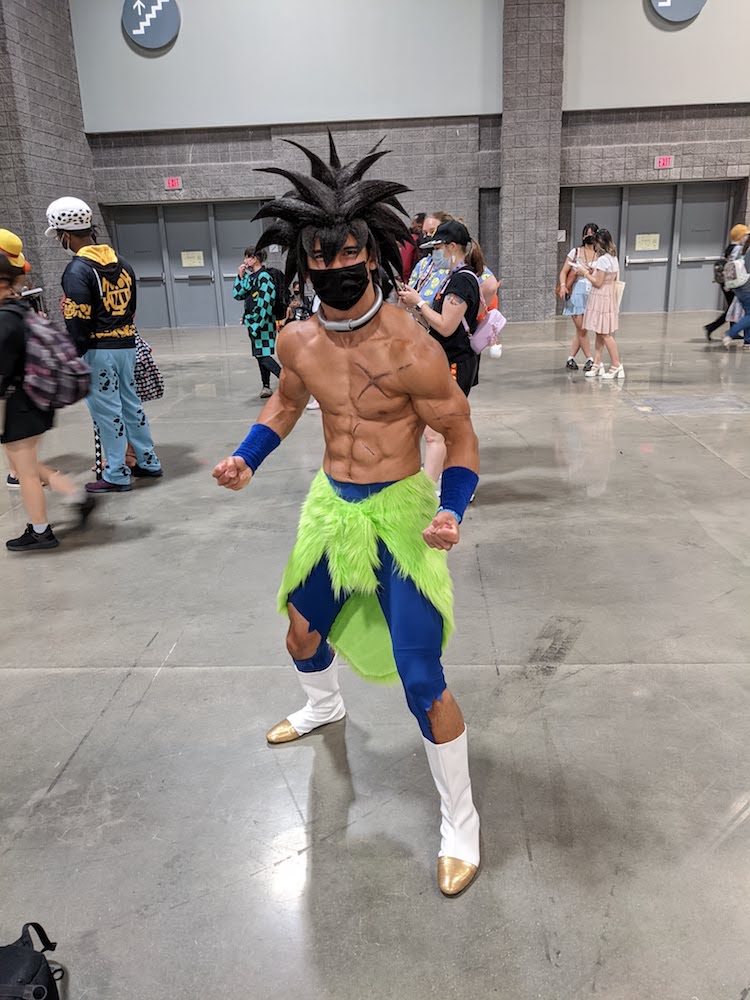
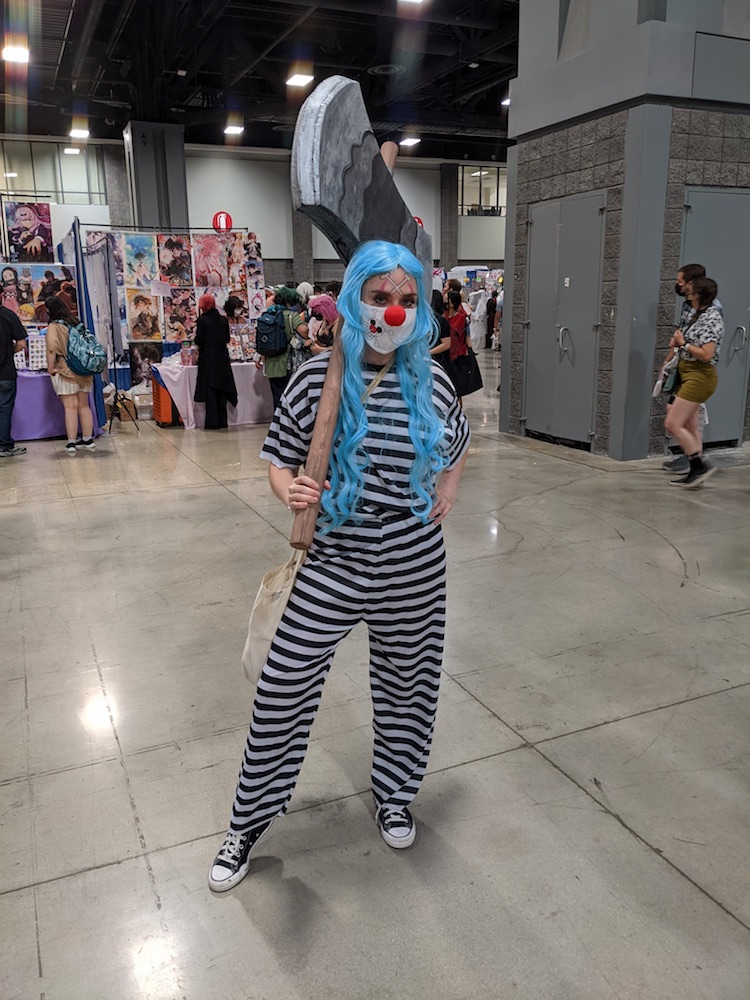
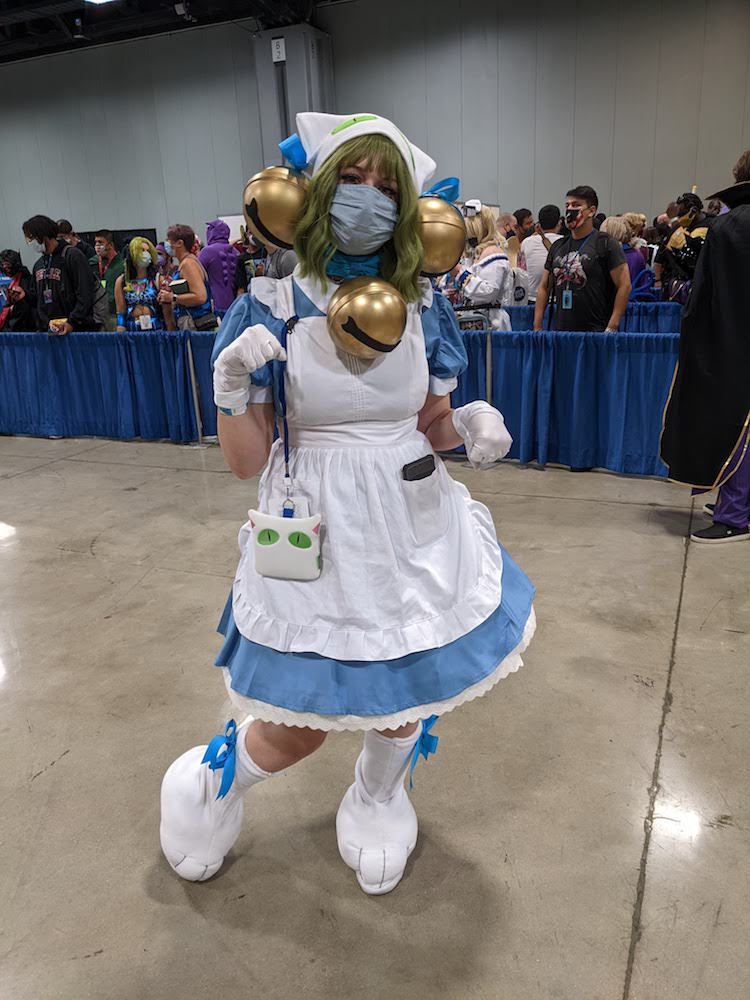
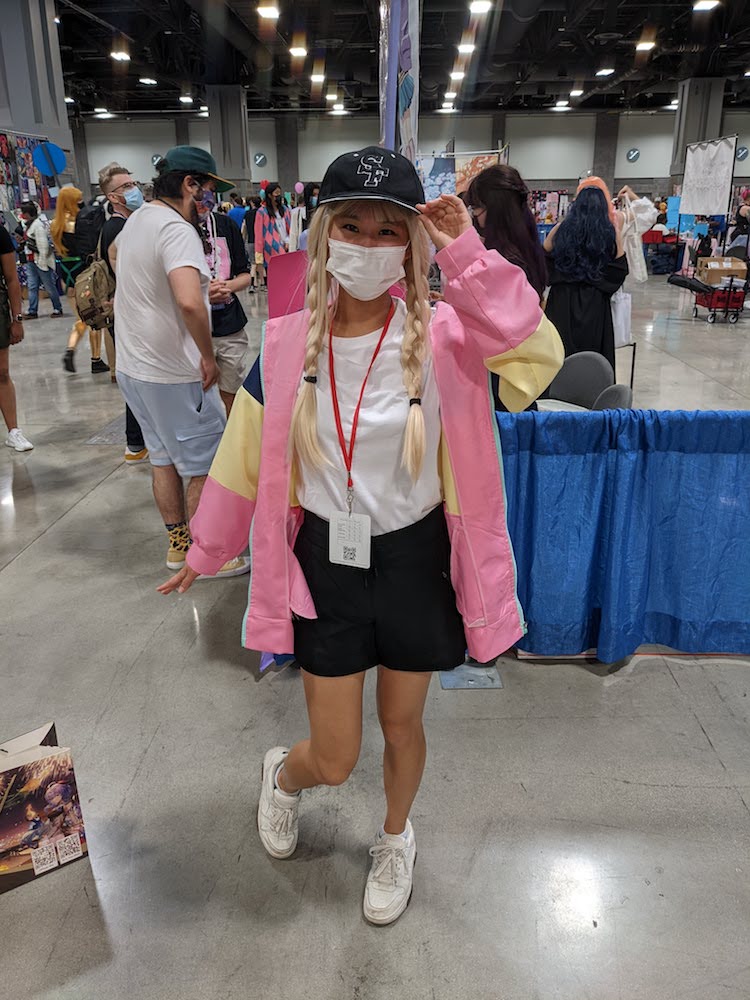
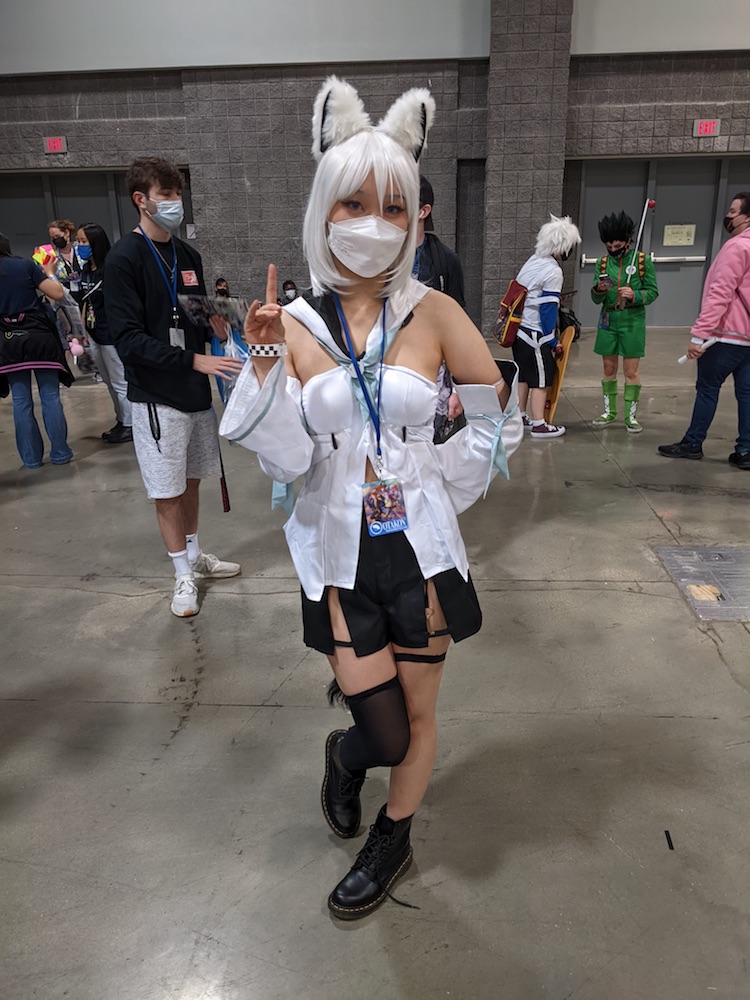
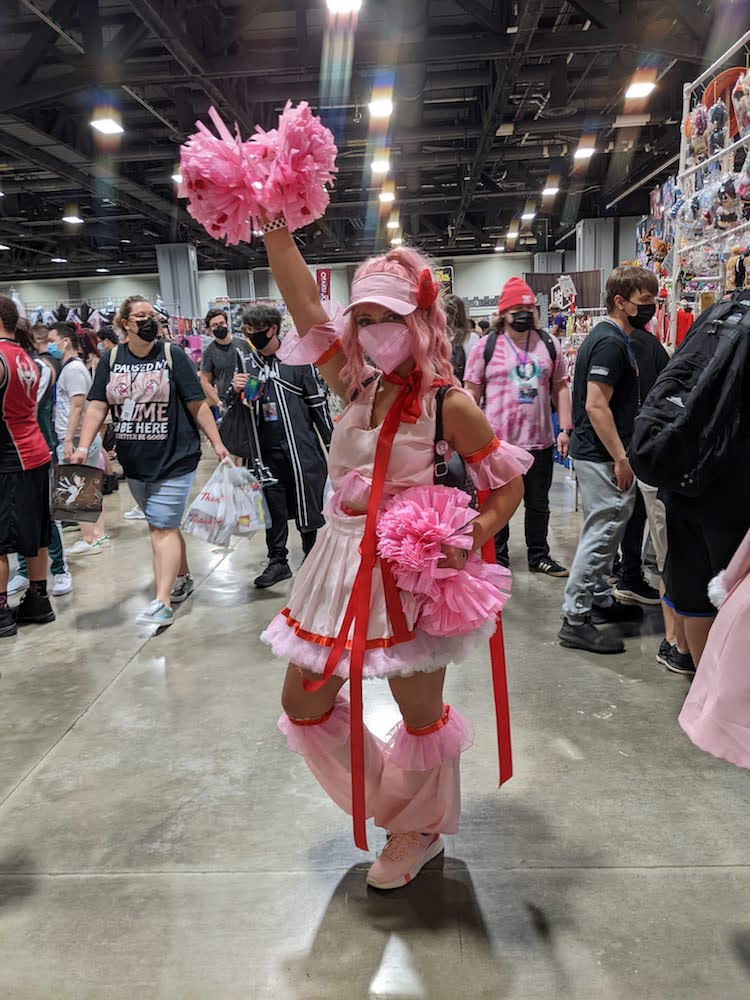
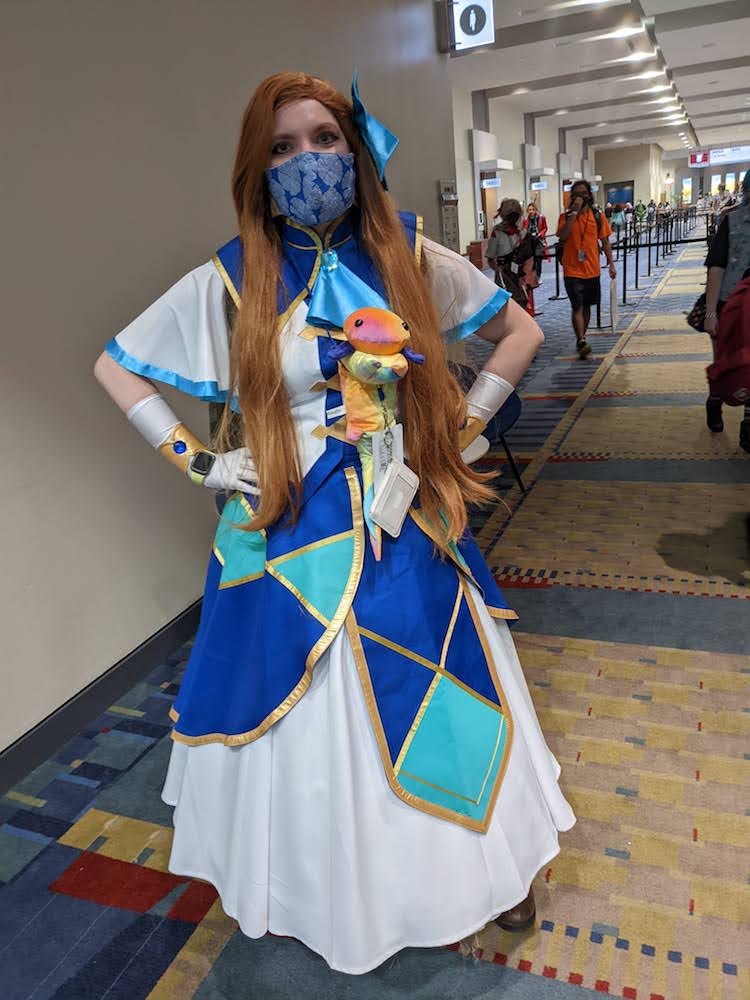
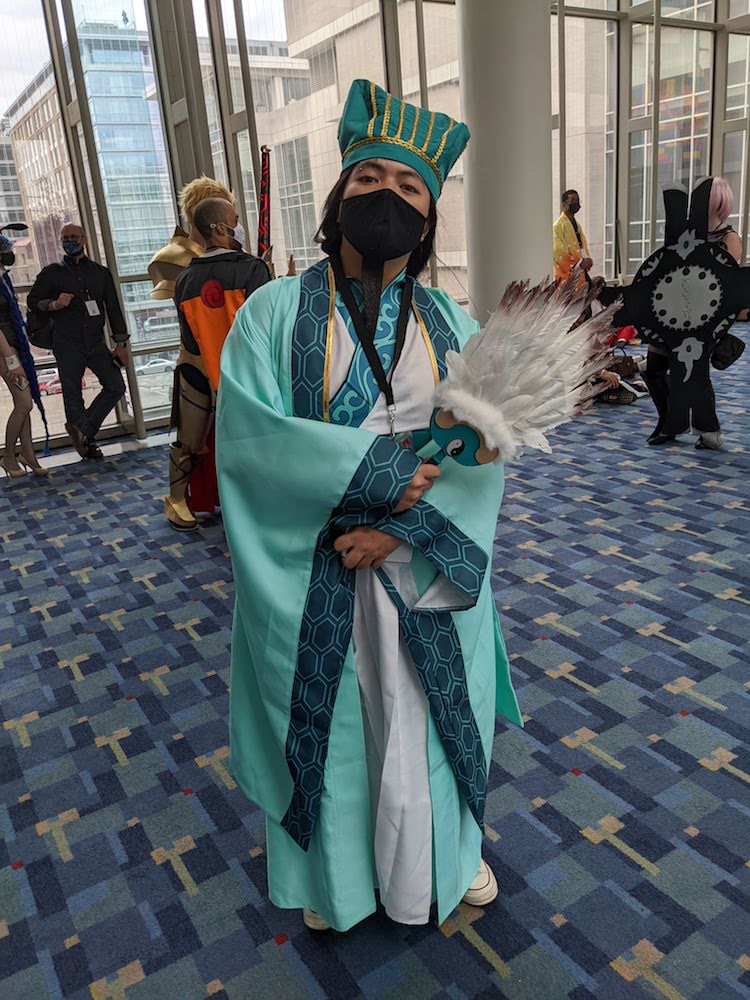
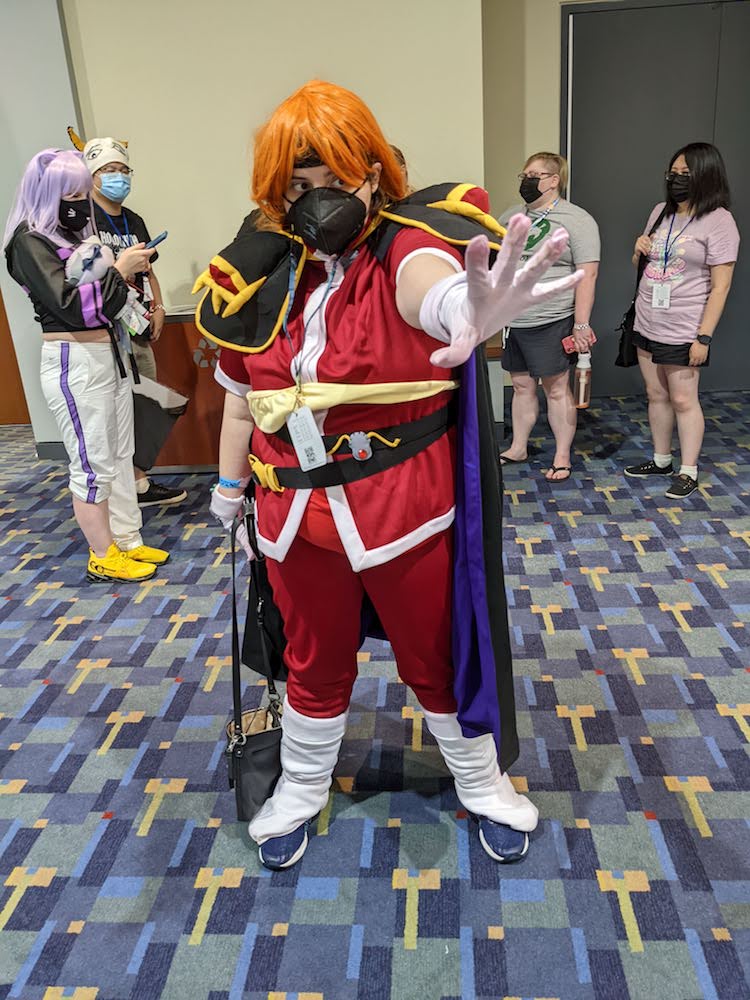
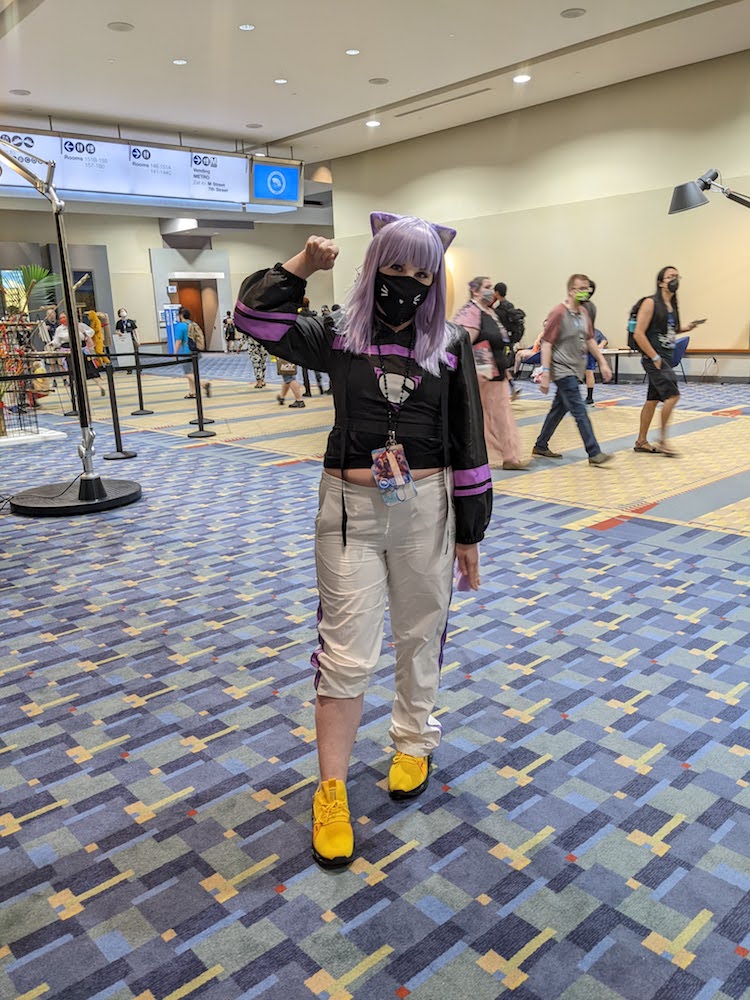
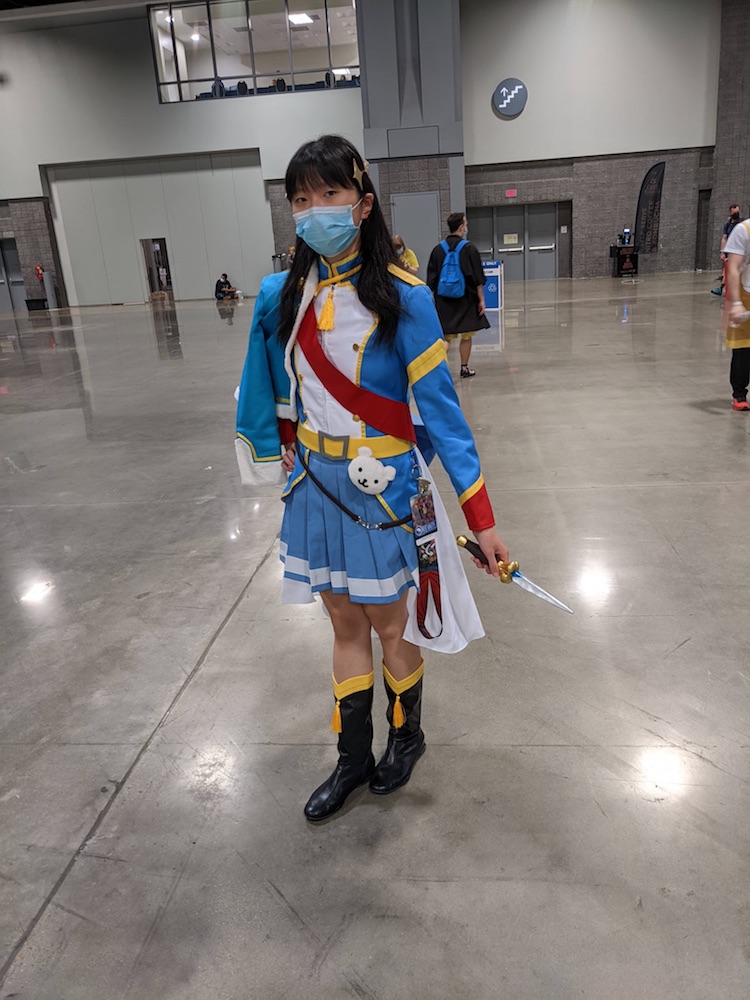
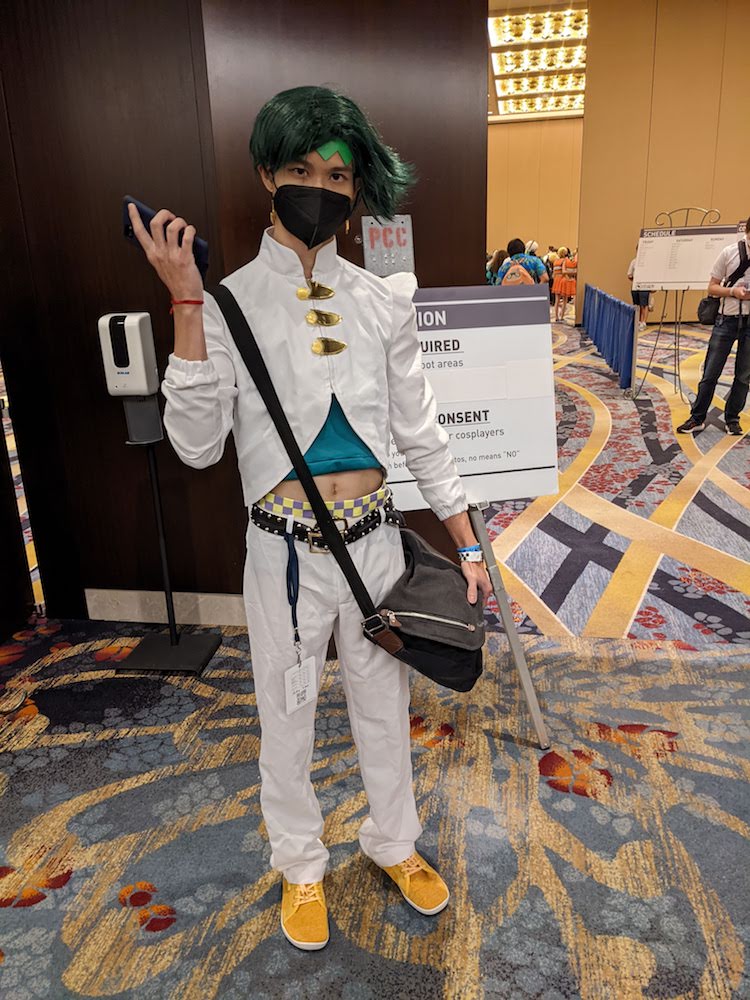
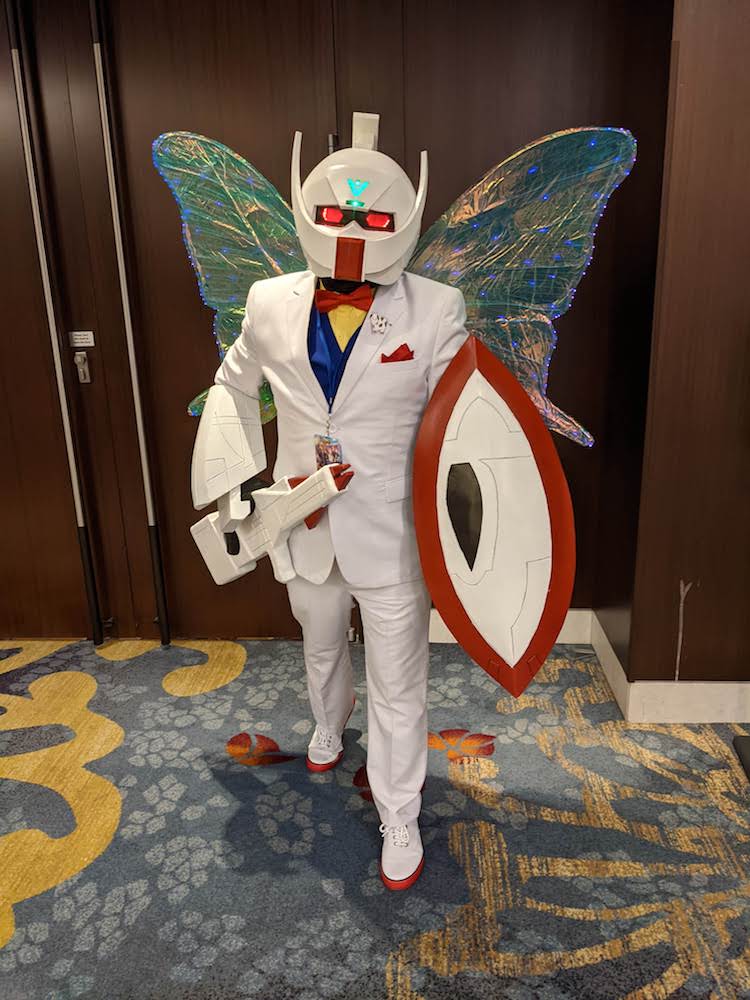
Cosplay
Conclusion
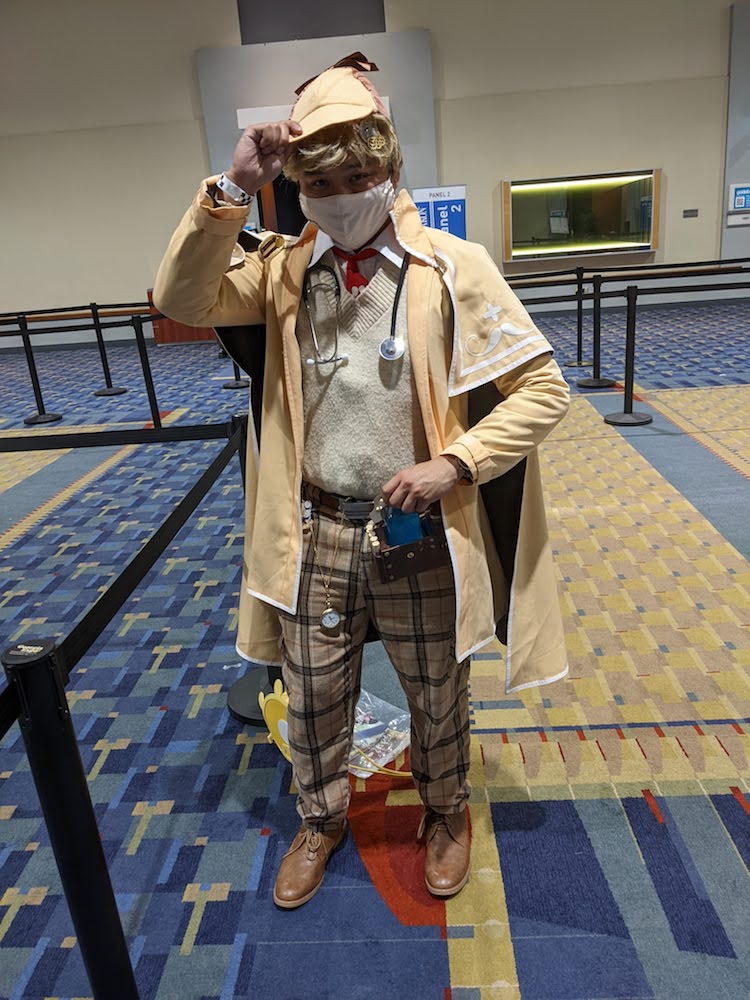
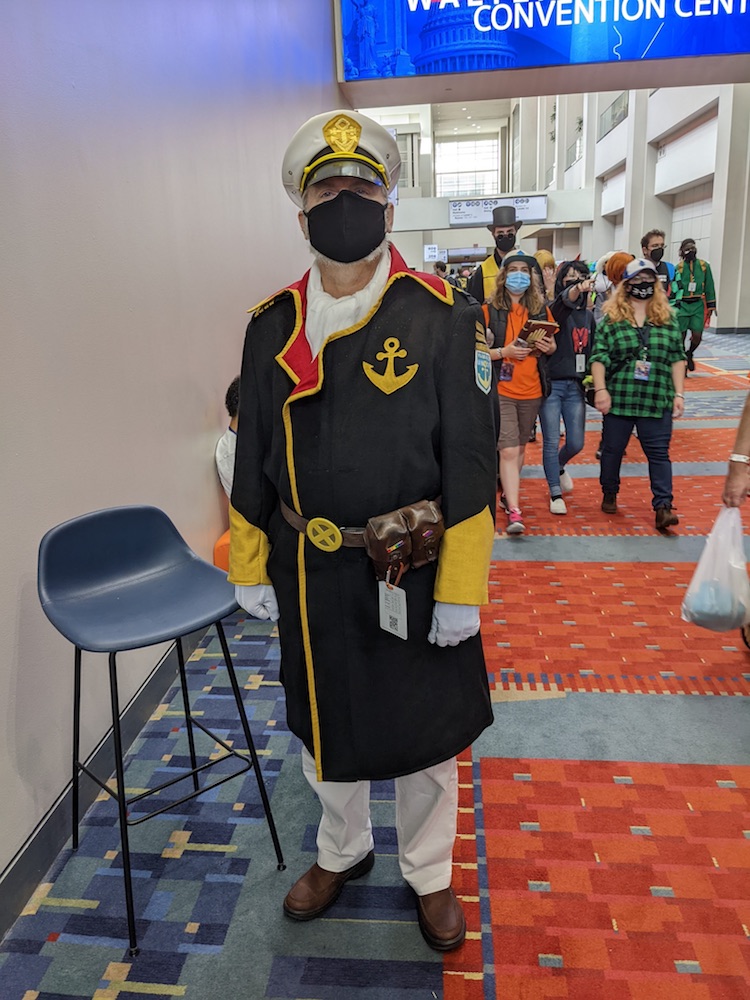
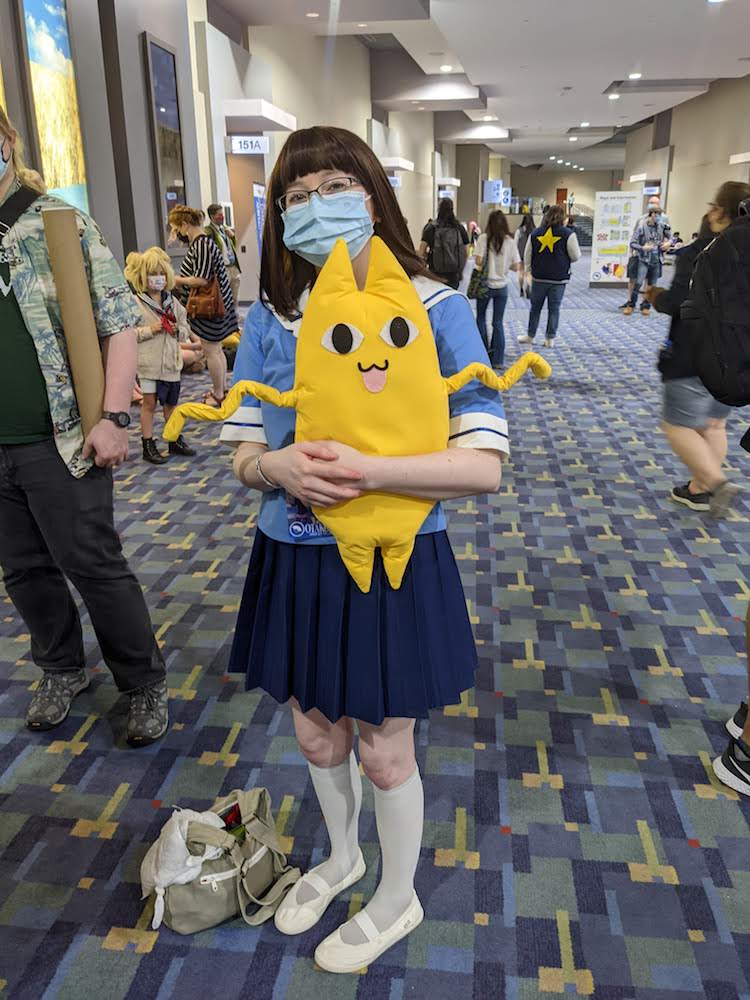
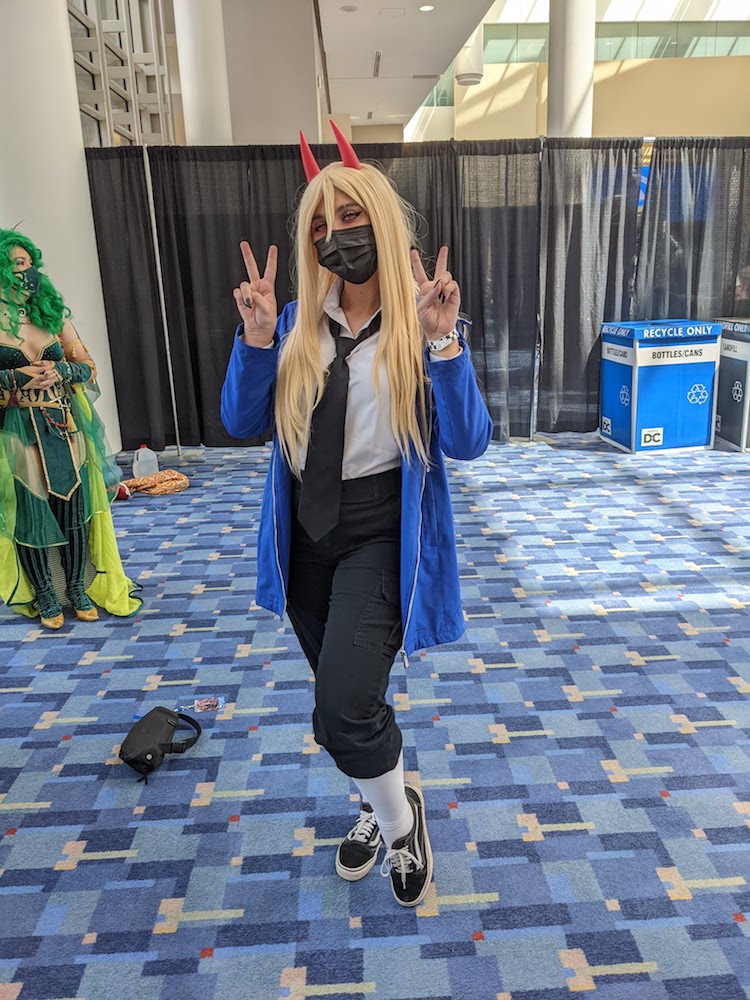
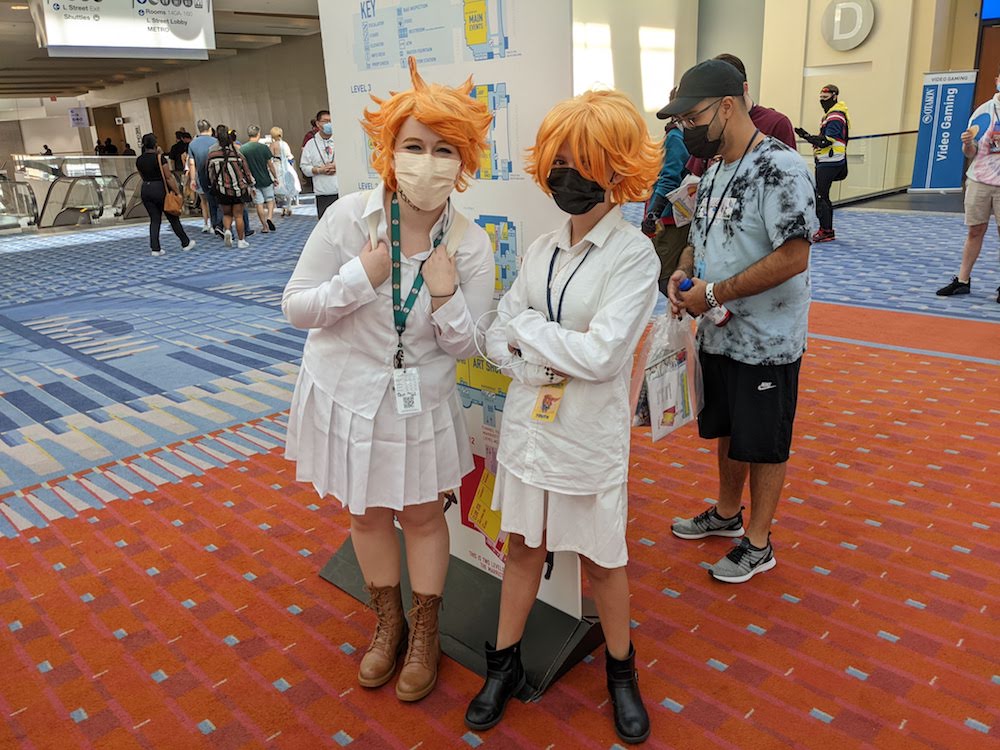
So that was Otakon 2022! It had some hiccups that made me remember that attending a convention is a conscious choice that requires risk assessment, but I definitely had a great time overall. I’ll leave off with a gallery of cosplay photos I took throughout the event. Cheers to another fine year, and I hope all my fellow attendees made it out healthy in the end.
I never got the chance to watch all of the first Shinkalion anime. I discovered it a little late, and the way episodes would be up on Youtube for only a week meant that a busy schedule could derail my hopes of keeping up with it. And let’s face it: The series is pretty generic in a lot of ways. Still, I wished I could have kept pace with it better.
In 2021, Shinkansen Henkei Robo Shinkalion Z debuted, and I saw this as my opportunity to do what I couldn’t before. I decided to keep up with the series week to week, not expecting my world to be rocked or anything.
The basic story is that years after the events of the original Shinkalion, a new boy named Arata Shin becomes the driver of the new Shinkalion Z E5 Hayabusa. Unlike the original main character, Hayasugi Hayato, Shin is not a train otaku but rather a cryptid enthusiast. Alongside him is a new friend, Usui Abuto (named after the Apt trains), who is the train fan but can’t drive Shinkalions for some reason. Together, along with other allies, they have to fight against the forces of the extraterrestrial Teoti.
Shinkalion Z doesn’t dazzle, but it’s fun and it has a few twists and turns that add some welcome tension and drama. Also, it has a grade schooler version of Maetel from Galaxy Express 999. In a way, part of watching Shinkalion is seeing their argument for being the most ambitious crossover, as the meme goes.
One of the issues with Shinkalion in general is that the characters and the mecha themselves both feel kind of bland. I know I’m not the target audience, and I’m not saying they need to look amazing, but there’s something decidedly milquetoast about the aesthetic. In particular, the fact that all the Shinkalions have basically the same design with minor differences and even transform virtually the same way makes it less exciting than it could be—imagine if they had unique transformation sequences a la Precure or Sailor Moon. I’m sure it makes for convenient toys, though.
Shinkalion Z makes some improvements in both regards, though nothing mind-blowing. Abuto has some depth to him, while a Shinkalion driver named Taiji is hard to forget because he’s this weirdly muscular little boy from a family of lumberjacks or something. The inclusion of a big-bodied lady as a side character that doesn’t fall into fatphobia is also worth noting. As for the robots, there’s one that can turn into a centaur, which is the most eye-catching thing to come out of this franchise so far.
The show winds up being 41 episodes long, a bit unusual of a number, and it makes me wonder if the show got cut short. Of course, that means it’s in the company of many classic robot anime—First Gundam, most famously. Between this and its toyetic, “for kids” feel, perhaps Shinkansen Henkei Robo Shinkalion is the purest mecha series of all.
When I first began playing Super Robot Wars 30, I wanted to write a review immediately, but I decided against it because I wanted to complete one run of the game to get a fuller impression. Now, nearly 200 hours of playtime later, I have the opposite problem. There’s so much in here that I feel like I have more I’ve forgotten than I’ve remembered. I’ve already given my thoughts on certain specific elements of the series, including DLC packs 1 and 2, the way the game handles the Gaogaigar storyline, and the attack aesthetics of the Ultimate Dancouga unit, but here, I just want to lay out my broader impressions.
Super Robot Wars 30 is named as such not because it’s the 30th game but because it’s to celebrate the 30th anniversary of the franchise. To that end, there are a number of callbacks to its roots, from the fact that you can use the original RX-78-2 Gundam to specific guest characters making appearances. The roster is no mere nostalgia dive, though, as it consists of plenty of series old and new—both in terms of the release date of the source material from which these mecha come from and when they first appeared in SRW in general. L-Gaim and Victory Gundam are two franchise veterans making long awaited reappearances, while J-Decker, SSSS.Gridman, and Knights & Magic make their mainline debuts here.
Having lots of series is always an overall good thing for SRW, but I got decision paralysis when thinking about which units to deploy on multiple occasions. I’d want to bring out anyone who might be plot-relevant for a stage or at least have interesting dialogue with boss characters, but that didn’t always narrow it down. I’d waffle between doing what’s beneficial strategically and what’s cool thematically, and this might have made an already long game take even longer. It’s to some degree a curse that I accept with the blessing of a robust roster.
There is so much content in SRW30 that it can be overwhelming. While many missions are optional and a lot can be played out of order, I was struck by a sense of FOMO many times. What funny stories are on this stage? How did these characters get together? As someone who wants to revel in that fanfiction-esque lore, skipping felt wrong.
One problem with that, however, is that every so often, I’d trigger a compulsory mission, whereby the intermission screen flashed red and locked me into a specific next plot-relevant stage. I don’t mind their presence so much as that the game itself never really explains what trips them off. I specifically remember playing some EXP-farming missions (called “Fronts” in the menu), not realizing that doing so meant I didn’t get to see how the sixth member of Team Rabbits from Majestic Prince joins.
The game feels like it was designed to be fairly lenient, as if it was assuming that SRW30 would be a lot of people’s first Super Robot Wars. This wouldn’t be surprising, given that it’s the first officially translated SRW game to show up internationally on Steam. Even at the hardest difficulty (at least originally), it was possible to upgrade and improve your units to brute force your way through. They would later add a “super expert” mode that put it closer in line to a classic SRW experience, but having a really tough game isn’t necessarily what I want or expect, and the initial absence of a hardcore mode isn’t really an issue to me.
Rather, if there’s any major criticism I have of the gameplay, it’s the lack of stage variety. There are a number of levels that have specific win conditions, but they felt too few and far between, and even they felt like they came from a general template. On top of that, for whatever reason, SRW30 refuses to take advantage of a classic system that is literally built into the game: terrain differences. In many SRW entries, there are stages with bases or areas where units can recover HP while on top of them (usually 30%). They usually exist in missions where you have to defend an area, or perhaps they’re being used by a stubborn boss that you have to dislodge. However, not a single stage I played had any such spots, even when it would make sense both gameplay- and story-wise.
A Final Dynamic Special—usually a combination attack with Mazinger and Getter robots, would have been nice too. Given the anniversary theme of the game, I’m surprised it didn’t include one.
I think this review may come across as more negative than I actually feel about the game. I think that’s simply because the game is so long that it took me months and months to complete, and my view is tinged by a patina of fatigue. SRW30 has a lot to offer, especially from a mecha fanservice perspective, and it feels satisfying to successfully utilize your units’ strengths and mitigate their weaknesses through smart play. I just wish there were more opportunities to do that.








 OGIUE MANIAX