What a Dream Boat: Hashikko Ensemble, Chapter 25

Another new character brings further insight into Jin’s history in Hashikko Ensemble Chapter 25.

Summary

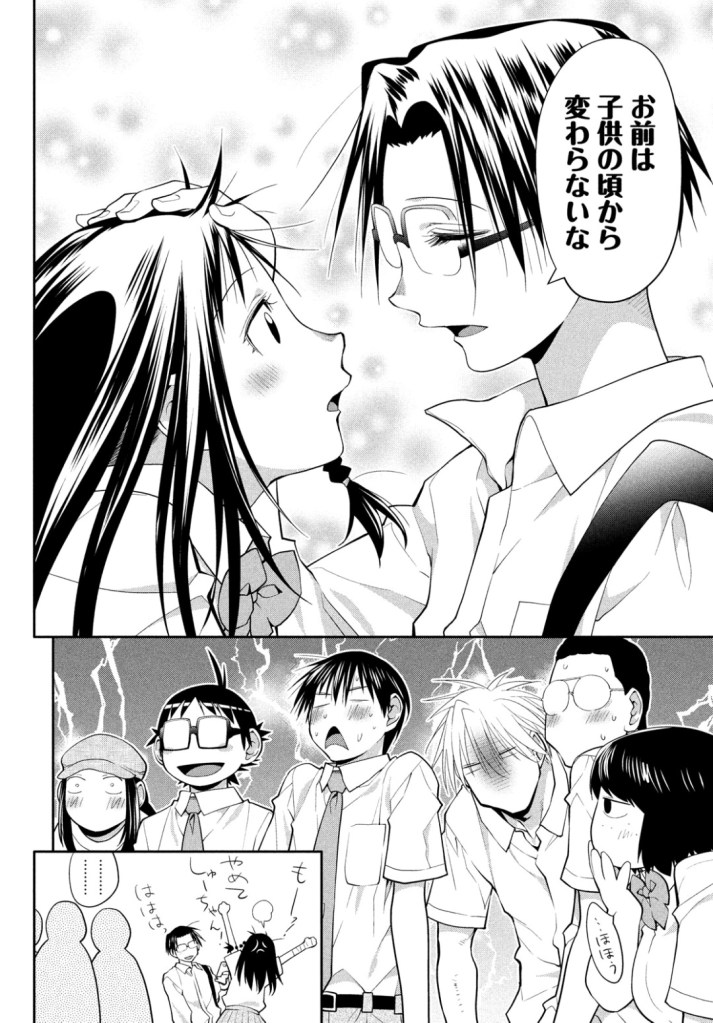
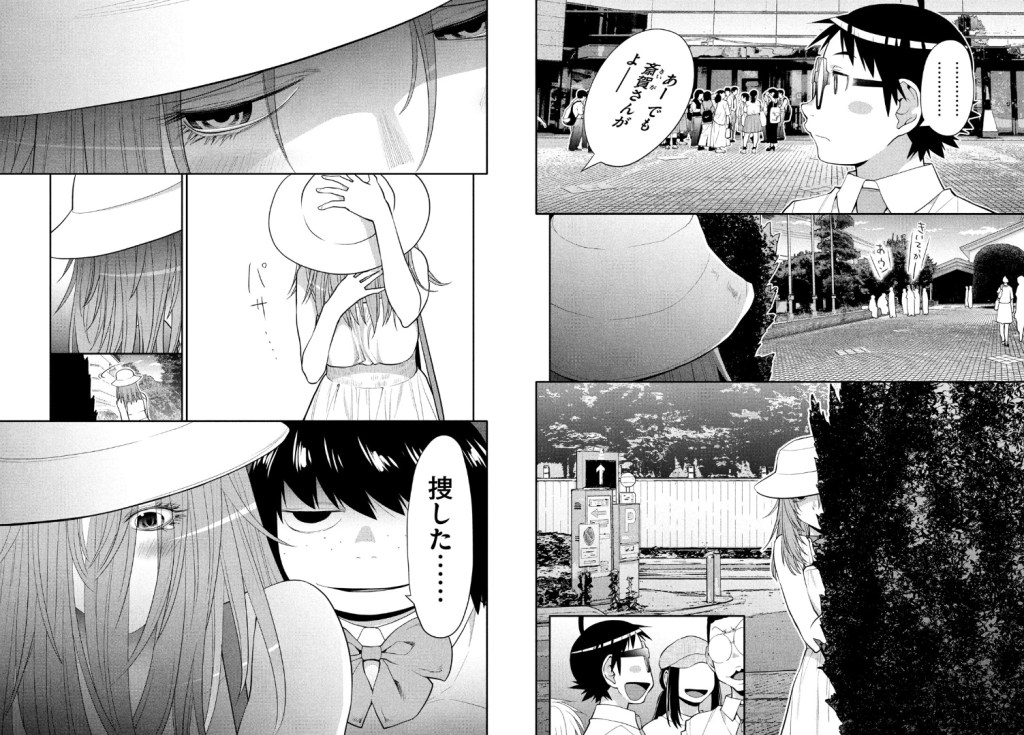
The Hashimoto Tech Chorus Appreciation Society has arrived at M-Con, nervous about competing. Day One is just for observation, though, and they see Nishigafuchi (the school they visited previously) succeed. They’re also worried about Shuusuke not showing up after he tore down Jin so thoroughly, but luckily, he arrives. However, another figure appears as well: a girl named Shouji Yumerun, a classmate of Jin’s when they were kids, and when she looked very different.

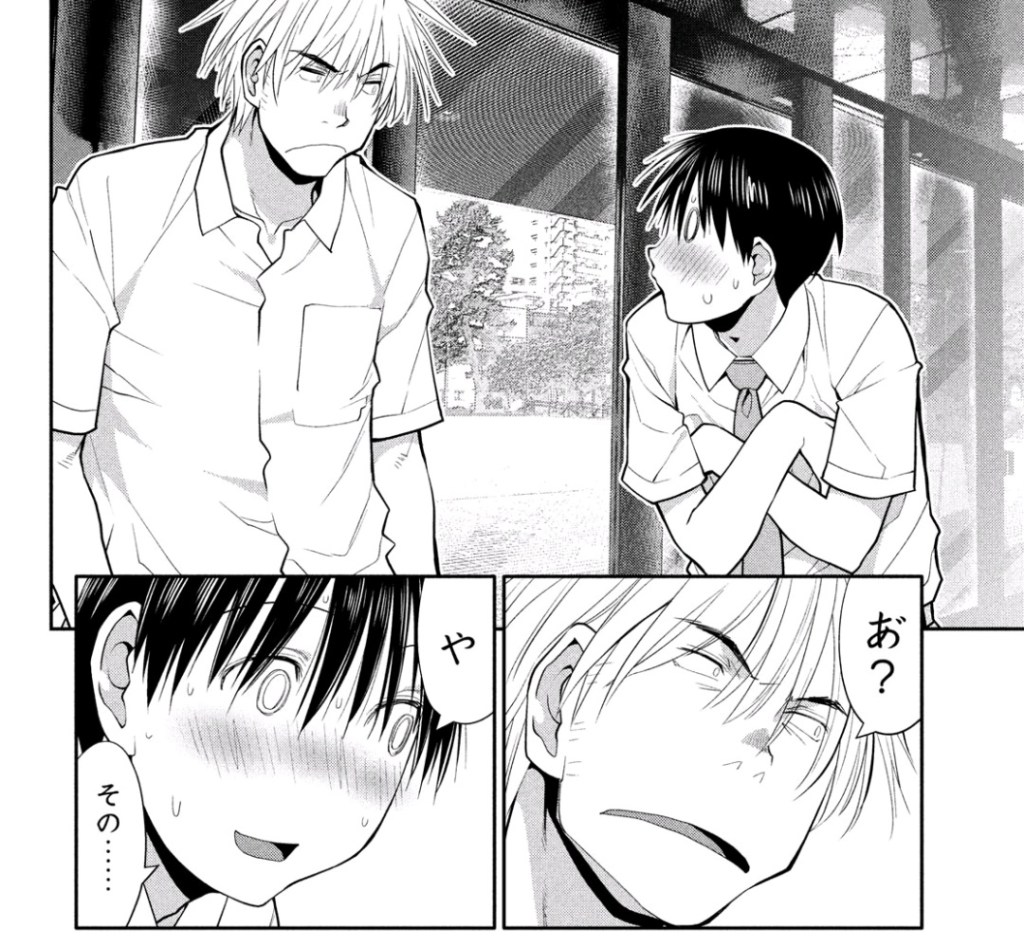
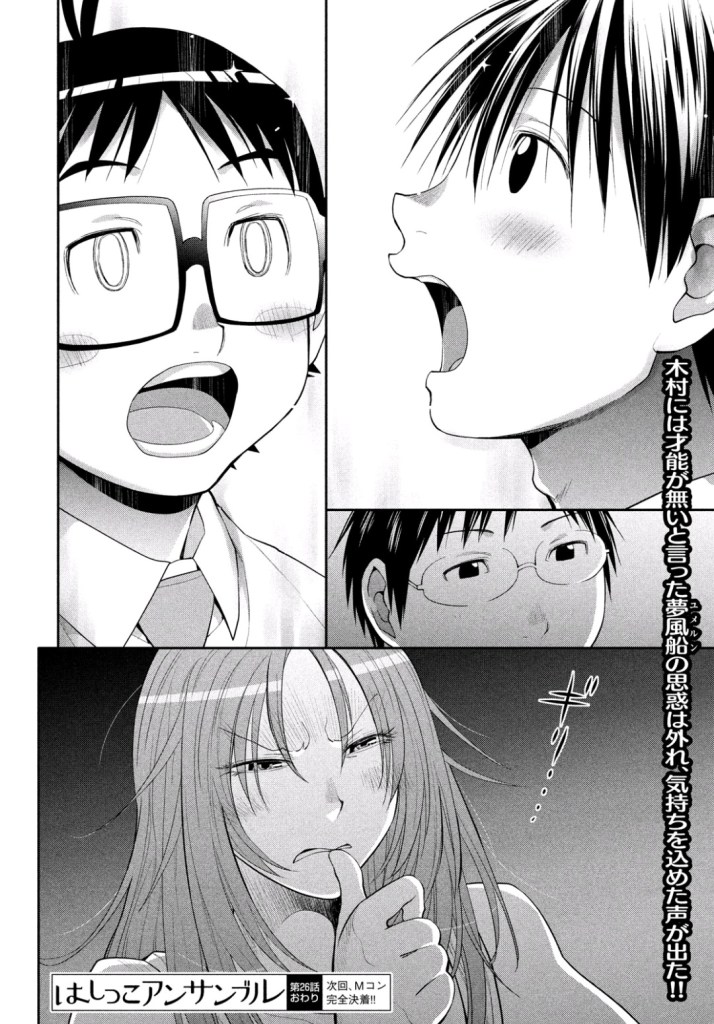
Yumerun mentions becoming a pupil of Jin’s mom, and that this means Jin doesn’t have to worry about being talentless anymore—words meant to comfort, it seems, but which have the opposite effect. Jin begins to think about why it is he’s so unable to be naturally expressive, and how he gathers people who make up for this weakness. The chapter ends with him getting ready to ask Akira a question.

Jin’s Intuition

I’m actually surprised to discover that Jin sees himself as talentless, and that all of his singing ability comes from hard work and study, if only because he has come across as such a natural in previous chapters. In Naruto terms, he’s the Rock Lee everyone thinks is a Sasuke, and it makes him more relatable in some ways.

Another character Jin reminds me of is Mike from Monsters, Inc. Like Mike, Jin has the theory down but can only take it so far due to a lack of natural ability. The fact that Jin has such an eye for talent further reinforces this image while also adding an extra wrinkle to his character. He finds people with the raw potential he himself lacks, almost to an intuitive degree.

Yumerun

We get another new character in Yumerun, who drops some hints about Jin’s past and his relationship with his mom. Apparently, Jin and Yumerun were classmates, and he helped bring her into music. Now, she’s studying under Jin’s mom, and she thinks this means Jin doesn’t have to worry about being talentless anymore—implying perhaps that Jin felt pressure to succeed his mom, and that maybe Yumerun has a thing for him?

I’m struck by Yumerun’s words, particularly when she says to Jin, “You won’t be told anymore to stop escaping into the chorus just because you lack talent.” What I interpret this to mean is that Jin likes singing in a group because it better hides his deficiencies. Rather than just being a passion, it’s also a defense mechanism.

In the Mind But Not in the Heart

Every chapter review, I record all the music terms that crop up, partially because they’re in Japanese and not necessarily common knowledge even for fluent speakers. But it’s also because I have little to no musical knowledge or ability, so I feel the need to try and understand. The fact that Jin has a somewhat similar struggle makes these sections take on a new meaning of sorts. As someone not musically inclined, it’s hard for me to tell if these flaws of his are really that basic or if it’s the difference between being decent and being elite, though the fact that no one at Nishigafuchi said anything makes me think the latter.

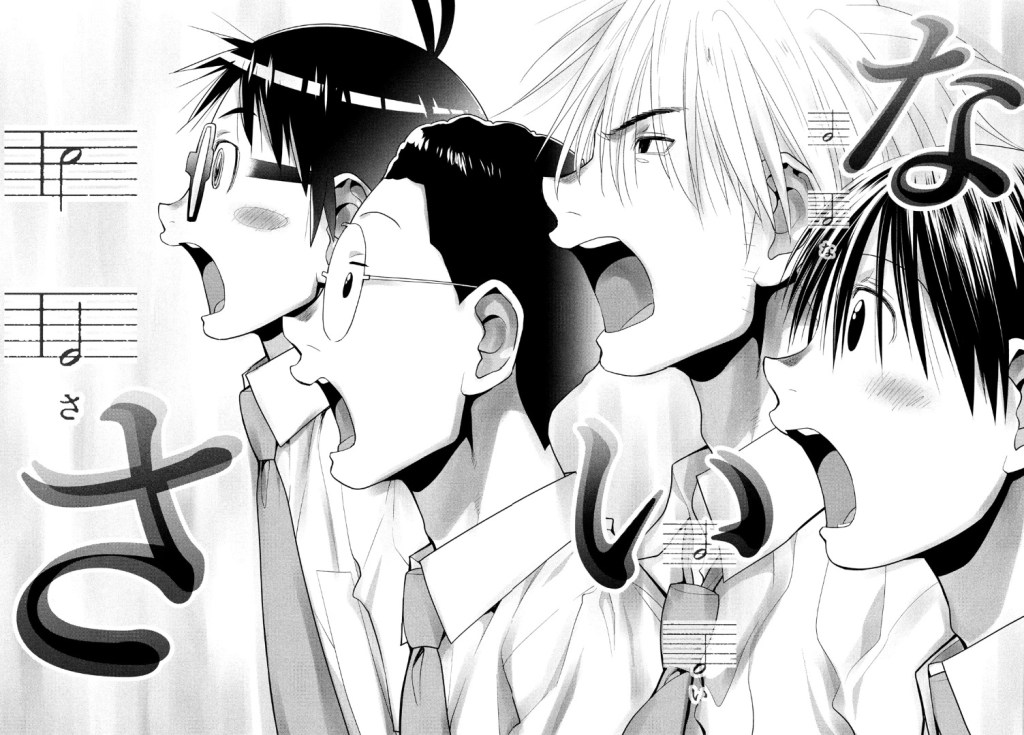
In this instance, Yumerun brings up all the things Jin has trouble with: enunciating s, k, and z sounds; the nuances of syncopation;  and techniques for emotional expression. Apparently, he can understand it on paper, but has trouble doing it himself. Syncopation is “a shifting of the normal accent, usually by stressing the normally unaccented beats.”

Songs

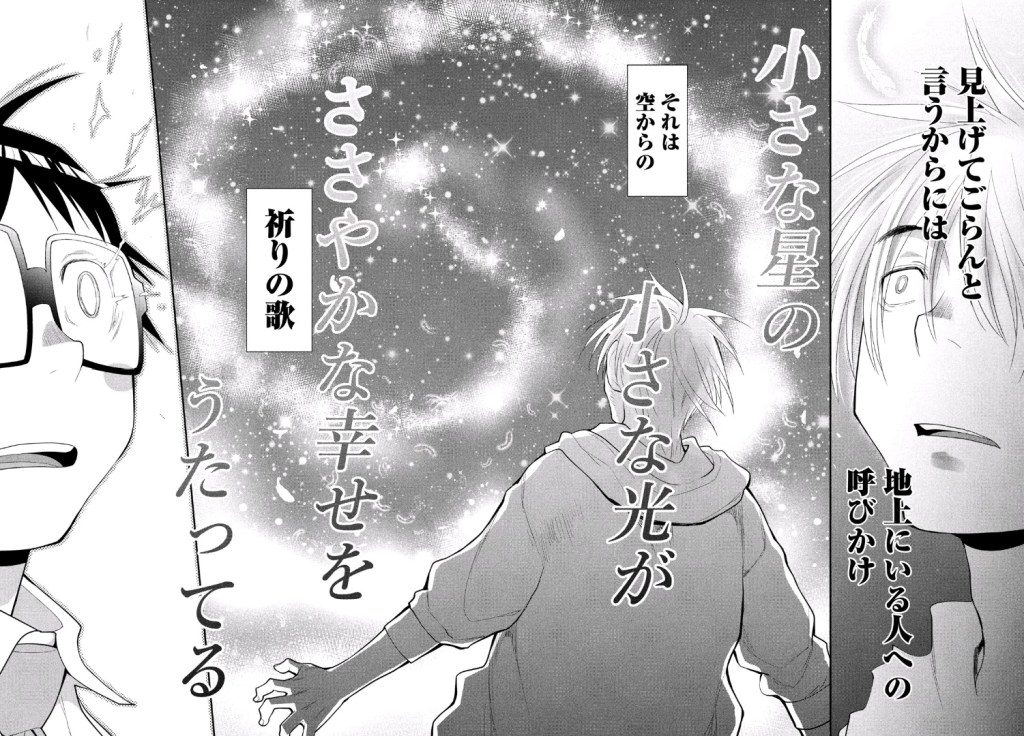
No songs this month, but the fact that the previous storyline is officially known as the “Spitz arc” amuses me.

Final Thoughts

The Chorus as a place where people who lack in certain areas can support one another feels like the story of a team sports manga, as opposed to ones about individual competitors. Hashikko Ensemble might not have the attractive characters or the pizzazz to attract regular sports manga readers, but I wonder if this possible theme of “the sum being greater than the parts” might resonate still.

Distillation of the Busty Failure: Ponkotsu Musume no Nichijou

A couple years ago, I noticed a trend in characters that I called “busty failures”—a translation of the Japanese terms ponkotsu plus kyonyuu. Their primary qualities are, as the term implies, big chests combined with a tendency to be unreliable wrecks. In hindsight, maybe “busty disasters” would’ve been a better choice.

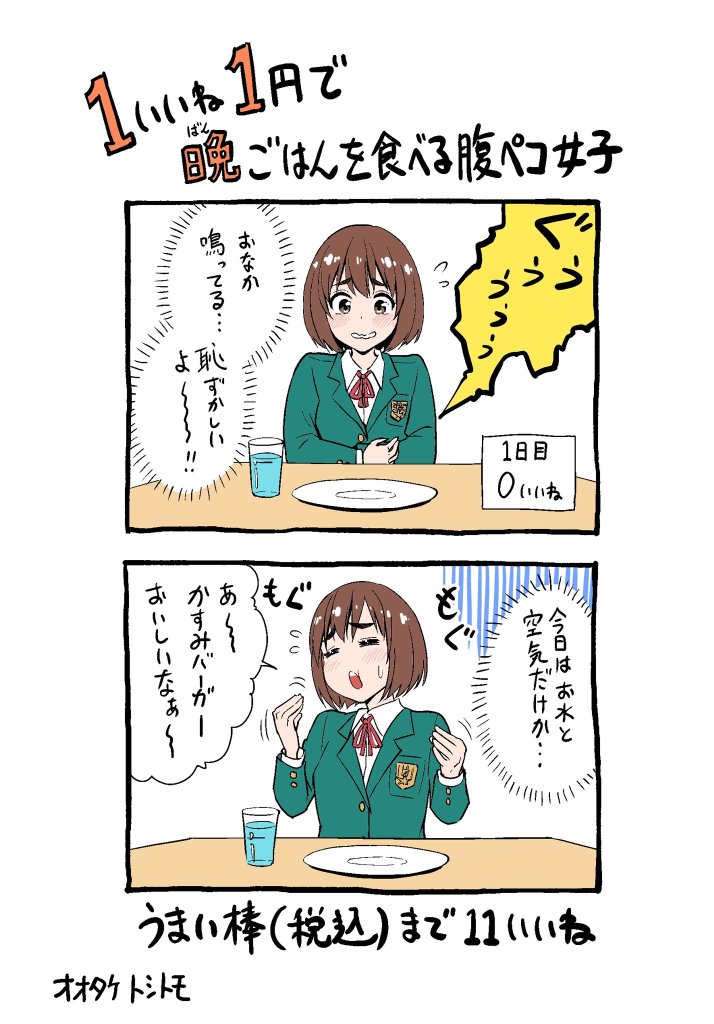
Often times, characters breed unspoken archetypes, which lead to categorization. At some point, these archetypes might become explicitly acknowledged by the very medium they’ve come from. I think the busty failure has reached that point with the recent four-panel gag manga Ponkotsu Musume no Nichijou (“Failure Girl’s Everyday Life”) by Kawakami Masaki.

The series is as expected: an attractive girl (name: Ponkotsu Ato) tries to get through life but mucks things up in the process. It’s fanservicey as all heck (as implied by the cover), and lacks any sort of topical veneer like Dagashi Kashi does with the “cheap snack foods” gimmick. It’s very much a what-you-see-is-what-you-get title.

In other words, Ponkotsu Musume no Nichijou is geared towards a very specific audience, i.e. the kind of person who revels in busty failures. Personally speaking, I think I’d prefer just a little more substance. A series so unabashedly horny isn’t inherently bad, and the character does feel more relatable than other instances of the archetype, but it could aspire to more. Who knows? Maybe it’ll go places over time.


Jyushin Thunder Liger: The Impossible Gimmick

January 6, 2020 marked the end of an era as beloved Japanese wrestler Jyushin Thunder Liger retired. His achievements are many, from innovating the Shooting Star Press (now seen in wrestling matches all over the world) to being perhaps the greatest junior heavyweight ever. One thing that stands out to me in his long career is how insane it is that he managed to embrace his ridiculous gimmick, his outward identity as a wrestler, and elevate it to the point of world-wide recognition.

Jyushin Thunder Liger’s name and look is taken from a manga and anime by Nagai Go, creator of Mazinger Z, Devilman, and Cutie Honey. This by itself isn’t unusual. After all, the wrestling manga character Tiger Mask became a real-life wrestler as well. But Jyushin Liger the fictional work isn’t about wrestling or even athletics—it’s about a boy who can summon and fuse with a “bio-armor” to fight evil. The anime isn’t even considered a memorable classic, and yet, Jyushin Thunder Liger somehow made it not just work, but took it over. Now, when you say the words “Jyushin Liger,” you’re probably more likely to get someone who knows the wrestler than the source material. His entrance theme is just the theme song to the Jyushin Liger anime (and makes zero sense in the context of pro wrestling), but rather than being considered hokey, it brings out raucous cheers.

Imagine if a 90s American wrestler was saddled with a Street Sharks gimmick—not even a big property like Teenage Mutant Ninja Turtles—and still wrestled as a Street Shark thirty years later until his retirement brought literal tears to people’s faces. Picture this guy coming out to “They fight, they bite, chewin’ up evil with all their might!” to a standing ovation. That’s basically what Jyushin Thunder Liger accomplished. The closest real equivalent I can think of is the Undertaker, who has played some form of undead wrestling zombe lord (and briefly a American motorcycle rider in the early 2000s) for the majority of his career. Or maybe if RoboCop’s cameo in WCW saw him transition into a regular wrestler who consistently put on great matches.

So here’s to Jyushin Thunder Liger and his global legend. Now let’s see if any new wrestlers come out as Bang Dream! characters.

Talkin’ About Shaft: Oogami-san, Dada More Desu

Hot on the heels of Teasobi and Change!, another one of my current manga of choice has ended. In this case, it’s the quirky romance manga Oogami-san, Dada More Desu, or in English, Oogami-san is Letting More and More Out.

The story of Oogami-san follows Oogami Meiko, a teenage girl with an overactive and dirty imagination. She writes erotic fiction, constantly fantasizes, and spends significant portions of her day thinking about guy parts, all while keeping this side of her secret. She becomes curious about one of her classmates, Shinichirou Yaginuma, a quiet and distant guy, but she soon discovers that he has a secret: anyone who touches him blurts out whatever they’re thinking deep down. For Oogami, her true feelings come out as “Show me your dick.” That’s the start of their relationship.

It’s a pretty gimmicky romance manga at the start, but the early chapters are really carried by how fun and expressive Oogami is as the main character. Her and Yaginuma both have things they don’t want to share with others, and they sort of become mutual confidants. But as the two grow closer and even make other friends, the series goes into not judging books by their covers, bullying, overprotective parents (who have a genuine reason to be that way), jealousy, and other topics that give Oogami-san more weight—all without abandoning the ridiculousness of its base premise. It’s a ribald comedy with a touch of seriousness, where characters love and learn and one of them likes to talk about penises. A lot.

Oogami-san, Dada More Desu concluded in December, and the 7th and final collected volume came out in Japan on January 23. It’s the kind of bizarre love story that is right up my alley, and I think it’s definitely worth a read.

You Are, All of a Sudden, a Mechanical Man: Hashikko Ensemble, Chapter 24

A new character flips everything upside down in Chapter 24 of Hashikko Ensemble.

Summary

Shion has sprained her wrist, and the Chorus Appreciation Society is forced to do something about it. Given a few options, they ultimately land on getting an alternate pianist to accompany them, though Akira expresses that he doesn’t think anyone could really replace her. Shion pulls a favor with her mom, and gets an old acquaintance/friend to take her place: Mashino Shuusuke, a guy who carries around a sun umbrella and who just has an aura that screams “elite.”

However, after just one song, Shuusuke finds the Hashikko boys to be fundamentally inadequate. He critiques each of their weaknesses one by one—and actually declares Jin to be the most hopeless of all! While the rest of the group is eager to prove Shuusuke wrong, Jin seems uncharacteristically glum.

Their Unique Problems

It’s interesting to see where each character’s singing flaws are, as pointed out by Shuusuke. It’s not easy to convey in comics, so the exposition is welcome. Also, it might be a hint at how the characters might develop over time.

Akira is trying too consciously to sing low, and his enunciation is suffering. He’s pushing his vowels out at the expense of his consonants.

Kousei doesn’t sing with purpose. According to Shuusuke, Kousei comes across as someone who thinks passion and feeling can make up for that, but it can’t.

Shinji is a total beginner, so there’s not much to be done there. Shuusuke says this as if there’s nothing specific he could say to help, which makes Shinji all the angrier

Jin knows how to “sing,” but what comes out of him isn’t “music.” In terms of criticisms, this one hits the hardest.

A Hurdle for Jin

I find the introduction of Shuusuke to be one of my favorite story developments so far because it’s the first time that Jin has been challenged as a character. Up to this point, Jin has always been the fount of knowledge who knows more about sound and music than anyone else. To have that called into question, to have someone say that Jin’s singing is merely technically proficient, is a major change-up. Adding to this is the fact that Shuusuke is clearly a legitimate talent at the piano.

The only times in the past that Jin has looked even remotely that taken aback is when he mentions his mom. We have the sense that there’s something messy underlying his interest in music, and I have to wonder if Shuusuke’s comments are related in any way.

Shuusuke and Shion (and Akira?)

As implied by the chapter’s title page, there’s a history between Shuusuke and Shion dating back to their piano concert days (Shion, as we see, has always been herself). There’s a clear frustration he has over her choosing to go to a technical high school–my best guess is that he saw her as a rival, or at the very least, someone who’s wasting her talents. There might not necessarily be any romantic sparks (or at least not reciprocal ones), but the “childhood friend” history is a reliable, if not as common a trope as it used to be. Given Akira’s bit of blushing early in the chapter when he comments on Shion being irreplaceable, there might be some tension there.

Songs

“Miagete Goran Yoru no Hoshi o” (Behold the Nighttime Stars) by Kyu Sakamoto make another appearance here.

Final Thoughts

In frustration, Shion says that it’s actually Shuusuke’s fault that things aren’t going well, and that they’re much better when she plays. It’s hard to tell if she’s just being stubborn or if there is some merit to her words, so I’m looking forward to seeing what the answer is in the end.


Our Rap Battle Goes On: “Change!” Final Review

I find that my favorite manga tend to finish in groups, and now following Teasobi is the news that the rap battle-themed series Change! is done. This was clearly not the intended way to go out, as it basically leaves off with an “our fight goes on!”-style non-ending. Despite that disappointment, I think it’s a really worthwhile manga that does its subject justice.

Change! revolves around Kozono Shiori, a meek girl at an elite high school who also has a love of the art of the Japanese language. She discovers that a classmate of hers, Miki, has been sneaking out to a club (how scandalous!), only to find that it’s a hip hop club where rap battles are the main event. While she initially writes it off, Shiori (now MC Shiorin) realizes that rap resonates with her deep fondness for Japanese poetry, and enters a new world.

One of the main themes of Change! is that while Japanese rap could be seen as just an importing of American culture, it is just as much a part of Japanese (and international) culture as classical poetry. There are elements of the Japanese language, such as the combination of onyomi and kunyomi ways of pronouncing kanji, that make rapping in Japanese a unique experience. Shiori also draws comparison between rap battles and an old Japanese type of poetry competition called uta-awase. While this can come across as an attempt to justify rap’s existence, Shiori’s role in the story emphasizes the idea that the lyricism of rap can be enjoyed by those with an open mind and an appreciation for good wordplay. In this respect, she’s somewhat similar to Tupac, who could be inspired by things like Shakespeare and the music of Kate Bush.

The manga puts more emphasis on the artistry of rap and hip hop than how it grew from specific cultural circumstances, and there’s relatively little notion of its origins in African-American neighborhoods or its ability to give a voice to those who might not have one otherwise. Despite that, there’s a clear and genuine love for rap that permeates the series, and I can understand why a series that’s probably introducing a lot of people to the world of hip hop in the first place might not delve into deeper topics—especially because it ended before its time.

Speaking of, another sign that the manga was in trouble was that the digital versions of Change! started to get a new title: Waka no Ojou-sama Rap Hajimemashita, or A Japanese Poetry Princess Gets into Rap. Titles usually only get this when it seems like not enough people are even giving it a chance. See Edge of Tomorrow (aka Live, Die, Repeat) and Gundam Sousei (aka The Men Who Created Gundam) for examples.

There’s an episode preview in the first Genshiken anime where one of the characters talks about how all the best series get canceled early. Sometimes, I really believe it—because while manga can be an avenue for very unique and off-kilter comics, many ambitious series never get the chance to keep flourishing. Chances are slim, but I hope Change! can come back in some form (it would make for a great anime!). I wish the best of luck to Soda Masahito, Tomiyama Hiromiya, and lyrics supervisor Shinpeita on their future projects, and thank them for a fine piece of art.

“Genshiken Nidaime” Ogiue Chika Voice, Yamamoto Nozomi, Gets Married

We don’t get much Genshiken news these days, but the Hashikko Ensemble official Twitter account recently tweeted about Yamamoto Nozomi, the voice actor for Ogiue Chika in Genshiken Nidaime, congratulating her on getting married. Accompanying the tweet is the drawing by Kio Shimoku of Ogiue in a wedding dress seen above.

Yamamoto is the second actor to play Ogiue, after Mizuhashi Kaori. Yamamoto’s other notable roles include Jogasaki Rika in The iDOLM@STER Cinderella Girls and Bouhatei Tetora in Joshiraku.

There’s also an interaction in the replies where Yamamoto thanks Kio, only for the account to mention that it’s not Kio but rather his manager (who she’s met before) handling social media. However, the Twitter account did have a message for Yamamoto from Kio:

“You did so, so much for the anime. When I found out you got married, I had to draw something. May you have many years of happiness!” (Kio)

Hammerman, Hammer: Hashikko Ensemble, Chapter 23

 Summary

The Chorus Appreciation Society has emerged triumphant over Tsuyama’s group, and now the M-Con competition is only one week away. But while that ought to be everyone’s highest priority, Shion is still trying to complete a hammer-and-chisel woodworking assignment she just can’t seem to figure out. Meanwhile, everyone else is wary that the group’s only pianist is potentially putting her own fingers in harm’s way.

Thanks to a handy demonstration by a surly Orihara and an idea from Jin and Akira to treat the process like playing piano, Shion manages to get it done. However, Shion accidentally bumps into a storage locker and sends a bunch of chisels crashing down towards her hands, only to be saved by Orihara, who accidentally grabs her chest. After a bit of awkwardness, things seem resolved…only for Shion to later fall while changing out of her workshop clothes and appear to sprain her wrist anyway.

Working to Music

Hashikko Ensemble is all about the contrast between the characters’’ vocational classes and the songs they’re singing, but most of the time, it’s the science and engineering side facilitating learning about music. This time, it’s more the other way around. The chisel work that Orihara demonstrates shows a kind of softer and more meticulous side to him as well, especially in how shaving off the wood in layers is this gradual process.

It’s also interesting to see where the different characters in this series can and can’t relate to one another. It’s Jin who suggests likening different degrees of taps of the chisel to piano terms–forte, mezzopiano, etc.–but it’s Akira who brings it all together by wondering if Shion could literally do it to a specific song. It’s like it took all three guys here to eventually connect to her way of thinking.

When Anime Haircuts Die

After Tsuyama’s group loses, they all shave their hair in preparation for finding internships, all while taunting Orihara that this is likely his head’s fate as well. Could that actually happen in this manga? Could the main characters end up losing all their nice-looking anime hair if Hashikko Ensemble goes on long enough? It would certainly be something different.

Shion Is Great

I don’t know if this is what Kio always intended, but Shion is really stealing the show at this point. From the beginning of the chapter and Shion’s Ito Junji-esque expression as she declares Akira to be a traitor to just the overall antics that follow, she’s becoming one of the most memorable parts of this series. There’s a point in the chapter

The wrist sprain is very akin to Madarame’s from Genshiken’s (he fell while at a doujin event), and it makes me wonder if Shion is actually supposed to be the Madarame of this series, only less self-aware. She has a sort of ponkotsu quality, but it’s not like she’s untalented or constantly failing. You could call her moe, but she’s less endearing and more exasperating. There’s a point in the chapter when Shion is describing how she doesn’t understand how anyone could do keep track of all the different subtleties in how hard to tap, nor how anyone could do two completely different things with their left and right hands, only for the rest of the characters to yell at her about how that’s a perfect description of playing piano.

It’s like Shion does what she wants and pushes the story along as a result, but perhaps hat describes most of the characters in Hashikko Ensemble.

Songs

The song Akira suggests Shion tap along to is the one they plan to perform for M-Con: “Miagete Goran Yoru no Hoshi o” (Behold the Nighttime Stars) by Kyu Sakamoto.

Final Thoughts

Orihara plays a major role in this chapter, and in it, he keeps expressing that he really hates girls. The way he says it, however, seems to speak to something deeper. Could it be that he’s expressing his anger towards the mother that let him and his deceased little brother be abused for so long? It can be hard to tell, given how Hashikko Ensemble can move between the serious and the comedic in such striking ways.


2010–2019 Part 3: Looking Forward

Having reviewed my predictions for the 2010s and looked back on the decade as a whole, it’s time to try and peer into the future of anime and manga in the 2020s!

Tokyo 2020 Olympics

Preparation for the 2020 Tokyo Olympics has already affected Japan in different ways, from the moving of the historic Tsukiji Market to the heavier policing of manga content. Like with any Olympics, there’s a desire to put forward the best possible appearance to the world. In the short term, there is most definitely going to be an effect on anime and manga production, as studios and artists are either hired to hype up the Olympics or do it of their own volition. It’s sad that Kyoto Animation, originally poised to contribute with a new Free! movie to highlight competitive swimming, won’t be making it short of a miracle. I predict there’s going to be some Olympics-mania fatigue, but not enough to make a big dent in the overall attitude at first.

I do have a long-shot prediction, though: Japan is going to do surprisingly well in some unexpected event, and it’s going to kick off a mini-boom in anime and manga. Whenever Japan achieves in a sport, there’s a strong chance that manga and anime are either pushing for the sport or are a response to succeed—volleyball in the 1964 Tokyo Olympics and Japan’s recent success in rugby are two examples. I’m not going to try to guess what event will trigger this trend, but I’m cheering for Greco-Roman wrestling.

Fighting Climate Change as a Core Theme

The Earth is not in a great place. Scientists are warning that if nothing is done in the next few years, climate change will send us toward long-term and lasting changes that will affect everything. While not perfect, Japan is very environmentally conscious in many respects, and is a major player in the Paris Climate Accord. There are even little things like “Cool Biz,” a public awareness campaign for companies to encourage better energy efficiency by reducing air conditioner usage and having its employees dress in more heat-friendly suits.

To that end, I think there are going to be more and more anime and manga centered around environmentalism. Also, they will primarily exist in two areas: super mainstream-popular anime films and kids’ shows. So someone like Shinkai Makoto is going to hit the subject of saving the environment full steam, and I feel pretty confident that there’s going to be an environmentalist Precure at some point in the next ten years. I don’t know what effect this will have, but if anime tourism can merge with saving our planet in some way, then maybe there’s hope.

Hardening of Shounen Protagonists

There’s a certain kind of shounen protagonist that’s been popular lately: the “good boy.” These heroes are gentle and kind-hearted, though never lacking in bravery or perseverance—think Sei from Gundam Build Fighters, Tanjiro from Demon Slayer, or Sakamichi from Yowamushi Pedal. But as positive an effect as I think this is having, I feel like there’s going to be a backlash at some point. At some point, hard and angry heroes will come into the limelight (albeit temporarily) as a kind of reaction to the softer heroes we’ve been seeing in the 2010s.

It’s not just that angry rival characters have their own dedicated fanbases (and thus would probably enjoy a story centered around them), or that Eren Yeager from Attack on Titan is a walking rage factory, but that their attitudes and focus on power have a primal appeal that’s hard to deny. While I don’t think we’ll ever quite get back to the ultimate convergence point between compassion and violence—Kenshiro from Fist of the North Star—I predict we’re going to see the soft hero and the hard hero archetypes flip back and forth from one series to the next. In other words, in the future, there will be a time when the “Bakugos” of the world take center stage and the “Dekus” will be the rivals.

More Diverse Body Expression

In the past ten years, I think we’ve seen a greater range of body types, especially with female characters. It’s true that a good deal of it veers hard into fetish territory, but even so, there have been many moves towards broadening notions of beauty. Attack on Titan both showed the world an anime heroine with a six pack in Mikasa Ackerman and pushed a gender nonbinary character in Hange Zoe. Pochamani centered on a bigger girl as a shoujo heroine. Even something as simple as big butts being attractive in Japan is a relatively recent phenomenon.

I think this diversity will only continue to increase because more and more, people will start to assert that their standards for attractiveness and self-identity don’t have to be beholden to what society traditionally says is okay. More and more artists and creators will be inspired to make works of their own, and enough of them will achieve success that it’ll encourage the producers and publishers themselves to go even further. The only caveat is that I think both the normalizing and the fetishizing will ramp up, and this may cause some conflict as a result.

The New Power Fantasy

Power fantasies are practically part and parcel with media as a whole, and anime and manga are most certainly included. However, I think we may be seeing a trend towards power fantasies that are less about escapism and more about fighting the feeling of powerlessness. The new power fantasy won’t just be about getting the girl and living in another world where your knack for video games gives you the edge, but rather about being able to exert lasting change on a world that seems immovable. To this end, I think we’re going to be seeing a heavier mingling of the power fantasy genres that permeate anime and manga today: harem, isekai, American-style superheroes, Japanese-style superheroes, and more. People will want to be inspired and not just placated—especially when it comes to the younger generations.

Greater Acknowledgement of Production Conditions and Gender Inequality

Through projects like the Animator Dormitories and news articles on animator wages, the 2010s end with at least some awareness that the people who make our beloved anime often don’t even have enough to put food on the table. It’s a decades-long problem—Miyazaki blames Tezuka for the current status quo—but I think the next decade might just be a turning point. I don’t know if it’ll ever reach mainstream awareness given that lots of people prefer not to know how their hot dogs are made, but I think that new sources of funding may create greater vocal desire to see wages change, especially if all that profit isn’t going to the workers themselves.

Similarly, we’ve seen more and more women this decade in prominent positions—writer Okada Mari and director Yamamoto Sayo are a couple of prominent examples. There’s still a ways to go before women directors and such will be commonplace, but I think that the women of today will be role models for the next generation. The Kyoto Animation tragedy is an unfortunate setback given their dedication to paying workers fairer wages, but I am somewhat optimistic that things will get better regardless overall.

Let’s See What the Future Holds

In some ways, I feel these predictions (and how they differ from the predictions of ten years ago) reflect not just where the anime and manga industries are in 2019 but also where I personally am at this point in life. If somehow Ogiue Maniax reaches 2029, I’ll be glad to reflect on where everything will be. Hopefully we’ll all be in a better place.

There’s actually one more 2010–2019 post left, so I hope you’re looking forward to Part 4!


2010–2019 Part 1: Prediction Results

Ten years ago, I made a blog post titled 2000-2009 Part 2: Looking Forward, where I tried to foresee where anime would go over the next ten-plus years. Now that we’re in 2019, it’s time to see how it turned out!

The First Digital Generation

In about 20 years or so we are going to see an entire generation of adults in Japan (and around the world) who have grown up primarily on digital animation…. Over time, I think that the peculiarities of digital animation, such as the computer-based shortcuts, will become part of the style itself, but less direct about it than, say, Studio SHAFT’s current output…. But if there are any, they will be making in-jokes and references about the early, nostalgic days of digital animation and not light boxes and such.

For better or worse, as a new range of ideas and techniques emerge, parts of animation technique and philosophy born out of cel-based anime will fade away, perhaps forever. After all, Miyazaki can’t live forever.

Digital animation has been embraced in full, with the last cel-based series, Sazae-san, switching over to digital in 2013. The style of early-2000s anime is understood, but the nostalgia for anime is still somewhere in the 1990s, so we haven’t reached the point where those early digital animation works and their aesthetic are a part of the cultural lexicon.

While digital animation is the industry default now, it’s not as if the more daring uses of digital animation have become standard. At the same time, I would argue that integrating 2D and 3D animation has been much more successful—something that is made easier by the transition to digital. Two works that stand out to me in this regard are Girls und Panzer and Kids on the Slope.

As for Miyazaki, he’s still around, and he’s coming out of retirement for what may be the 500th time. He also used this decade to make one of his most daring films ever, The Wind Rises.

Flash Animation

In light of the anime industry’s history of low budgets, I think that more companies, be they animation studios, broadcasters, or otherwise, will start to look at Flash as a viable method to keep things low-cost and at-home. Now I don’t think it will eliminate today’s more “traditional” animation, especially when it comes to bigger-name, bigger-budget works, but it will be an appealing tool for those middle-of-the-road shows, and shows for kids.

Nothing dates a prediction post quite like hyping up outdated technology and programs, huh! The world, including the anime industry, has moved away from Flash animation, but the simple, flat style can still be seen in the many short anime (as in 13 minutes or less) that have come out since, such as Inferno Cop and Ai-Mai-Mi.

Looking away from Flash specifically, many tools have emerged that facilitate creating anime with limited resources. Most notable among these is the 3D animation program Miku Miku Dance—itself an extension of Vocaloid as an artistic tool for creators both professional and amateur—and the bizarre yet endearing shows that have been made using MMD. Most of the time, that meant oddities like gdgd Fairies and Tesagure Bukatsumono, but also the surprise smash hit that was Kemono Friends.

Changing Views on Hikikomori and NEETs

The chronic shut-in known as the “hikikomori” is a topic that Japan for the past decade has been in debate over….

But the reality of the economy is such that not having a good job (or a job at all), living at home, and having your parents’ support will be an increasingly common sight. Some will become hikikomori and try to close themselves off from the world, but there may be a sizable group that is only partially hikikomori, who will not completely lose their ability to interact with others or to engage in meaningful activity, and they will have a cultural and social “pulling” effect on the full-blown hikikomori….

The result may be that Japan’s view on the hikikomori and the NEET, especially in the face of having these groups increase in size, will be a mixture of greater panic and greater relief as they will fret once again that this is potentially very dangerous for Japan, while the internet will provide this larger hikikomori population with the group setting in line with Japanese ideas of “group….”

In many ways, the image of hikikomori and NEETs hasn’t changed that much, with the same criticisms about them being a drain on society still persisting. I think one thing that is becoming clearer and clearer to the younger generations both in Japan and around the world is that the blame cannot be laid squarely at the feet of the shut-ins. The adults of the world have failed the youth on some level, and the kids are only starting to fight their parents in the street to find out who’s right and who’s wrong.

There’s also been a rise in a kind of “NEET pride” that permeates anime, most notably in the ascendancy of light novel isekai—series that often have hikikomori heroes who possess powers tied to their previously less than stellar lives. In a good work (e.g. My Youth Romantic Comedy Is Wrong, As I Expected), these characters, and their struggles and growth, tell stories about being human.

Perhaps no example is bigger than the transformation seen in No Matter How I Look At It, It’s You Guys’ Fault I’m Unpopular, aka Watamote, started off in the early 2010s as the story of an utterly hopeless otaku girl whose personal vices made her a relatable character to the self-proclaimed losers of 4chan. Despite Tomoko’s seeming fate as a perennial failure of a human being, even she has begun to change in the series.

Thematic Responses to the Economy

In about three to five years, I predict that we will begin to see both anime and manga which address the idea of global recession itself and incorporate it into the themes and settings in these works, to have it become a concept that is to be explored, whether directly or indirectly. Evangelion and other shows were responses to the recession that befell Japan starting in the early 90s, and I don’t think it would be unusual for an international economic downturn to have a similar effect.

With the global recession on everyone’s minds 10 years ago, it’s no wonder that I thought it would become a bigger subject. There have been anime that touch upon money and politics, but it’s not as if there was a huge influx. Back in 2009, Japan was already in the middle of a decades-long recession, so it didn’t affect them quite in the same way it did the United States. Instead, it would be tragedies like the Fukishima Triple Disaster that would highlight the real cost of greed and neglect.

While there were few anime made in response to the global recession, there were series that tried to highlight the challenges of political participation and governance ethics in the second decade of the 21st century, such as Psycho-Pass and Gatchaman Crowds.

The New Escapes

There are two basic forms to “escapism.” The first is a type of introverted escapism, that is, to become increasingly insular. The second is an extroverted escapism, where you want to project outwards, to go beyond yourself….

In that sense, I think that in the near future the escapism for anime and manga will be increasingly introverted, but will soon give way to a more extroverted form as a response to the desires of more and more fans who want to be released into other worlds…. I think we will see a lot of stories about worlds with wide scope focused through the lens of personal characterization, and in a way in which the former affects the latter significantly and vice versa.

One of the big genres of the 2010s has been isekai, i.e. being transported or reborn in a different world, and I think that it is a prime example of mixing both internal and external escapism. There is literally another world to explore, and the protagonist is often simultaneously special and unspecial, allowing readers to indulge in both dominant power fantasy and being the underdog. But there is often a lingering awareness of who the protagonist was in their previous life, and in a sense, their fears and doubts are still akin to the more introspective and flawed heroes of the past.

It’s also this decade that Madoka Magica took fandom by storm, and while that series isn’t exactly lighthearted, it too feels like a work responding to the desire for stories to be both more internal and more external. And when it comes to looking inward but going beyond, My Hero Academia is a series where that’s a central theme. You can even extend this to series such as A Place Further Than the Universe, where instead of going to another world, the characters find themselves through a journey to Antarctica.

Increased International Integration in Collaborative Efforts

…I predict that over the next decade and beyond, we will be seeing collaborations on animation and comics where the staff producing these works will be much more closely integrated. International collaboration isn’t new to manga and especially not to anime, but the work is usually cleanly divided between the countries involved. So it’ll be less Gurihiru drawing for Marvel’s Power Pack and more Oban Star Racers.

This decade saw more and more international artists working in anime and manga. Thomas Romain, who worked on Oban Star Racers, is a staple of Studio Satelight shows. Animators such as Bahi JD from France contribute the world over, whether that’s Toei Animation’s Philippines division, or freelance animators outside of Japan working on key frames/genga on a variety of shows.

But one other big development has been foreign funding for anime, especially through Netflix, which solidified itself as perhaps the go-to streaming services and has been expanding into anime ever since. In some cases, such as with Devilman Crybaby, the production team and creative is still mainly Japanese. In others, such as LeSean’s Cannon Busters, they’re developed cooperatively with artists and creators abroad.

Another important note is the success of Studio Trigger (Little Witch Academia, Kill la Kill, Promare) in their desire to appeal internationally. Many studios attempt this, but I think it’s Trigger that has best understood the international market, especially the Western market.

Age Demographics in Japan vs Age Demographics Abroad

…I believe that in time the manga audience in the US will slowly mature and eventually reach a point where they want something that is more in-line with how they feel about entertainment, their lives, and the world at large.

The key however will be whether or not Japan realizes that age demographics do not map one-to-one between Japan and the US … and they will have to somehow find a way to understand just what this slightly more matured manga-seeking audience is looking for, possibly through the greater international collaboration.

I think the overall maturing of the anime fandom abroad has happened in a big way, and it’s clear from the kinds of series that have found better success over the past ten years, and it’s not just because people got older. While shounen fighting and other popular genres stay evergreen, I believe that stranger-looking series such as Land of the Lustrous and JoJo’s Bizarre Adventure needed the non-Japanese fandom to develop to the point that they could be better appreciated. There’s also the increasing popularity of sports series, which were once a death sentence in the United States.

As for Japan understanding that age demographics don’t line up, I think it’s happening because they themselves are aware of it happening in Japan.

Multimedia Customization

I think that starting in the next few years this is all going to start changing until we reach a point of personal customization in our anime and manga: You will be able to make exactly the purchase you want with exactly the things that you want, on-demand.

This definitely did not happen. In fact, we’ve seen some companies release even more deluxe editions that only hardcore fans willing to shell out $400 or more can ever obtain. At the very least, many of these expensive series are available streaming, thus giving access to those who can’t afford to own them.

New Paths for New Talent to Appear

I think anime is heading in a direction where people won’t have to be skilled at every aspect of animation production to be considered a Big Deal. One possibility I’ve thought of is “anime festivals” for amateur creators, be they industry-sponsored or independent, with competitions and awards for categories such as storyboarding and writing in addition to full-on animations. More importantly however, these anime festivals could take place entirely online.

Manga too will start to have online festivals…. It’s not so much specialization as it is realizing again that not everyone talented is multi-talented.

While there’s nothing quite like an online-only Comic Market, there have been projects to encourage new artists.

On the anime side, three main examples have emerged as opportunities for young animators to show their skills. First is the Young Animators Training Project, which has less experienced Animators animators work with established studios to create anime shorts. Little Witch Academia is probably the most famous work to result from this. Second is the Japan Animator Expo started by Evangelion director Anno Hideaki, which encourages more experimental work. Third is the more practical Animator Dormitory Project, a crowd-funded way of giving young and old artists a place to blunt the cost of living in Tokyo on a meager animator’s salary.

On the manga side, I look less at the competitions which exist and more at the fact that sites like Pixiv have brought about a number of success stories. Among the series that began as amateur webcomics on Pixiv are Skull-face Bookseller Honda-san and Wotakoi. Seeing them go from creator pages to Pixiv Comics to physical releases to full-on anime adaptations has given me joy.

Overall

I’d say I was about 50/50 in terms of predictions. Nothing hit the target dead-on, but I think I was able to see at least in part the various trends and where they were headed. In some cases, I was maybe too ambitious or naive. Let’s see how I do in the next ten years, but before that, next time will be a more thorough look back at 2010–2019.