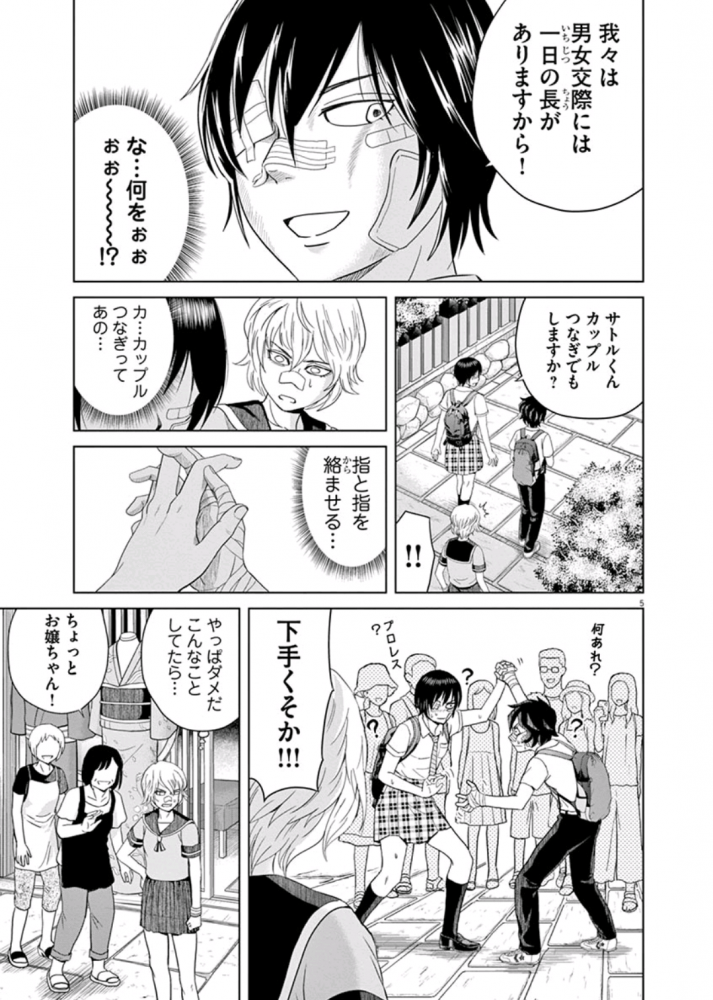
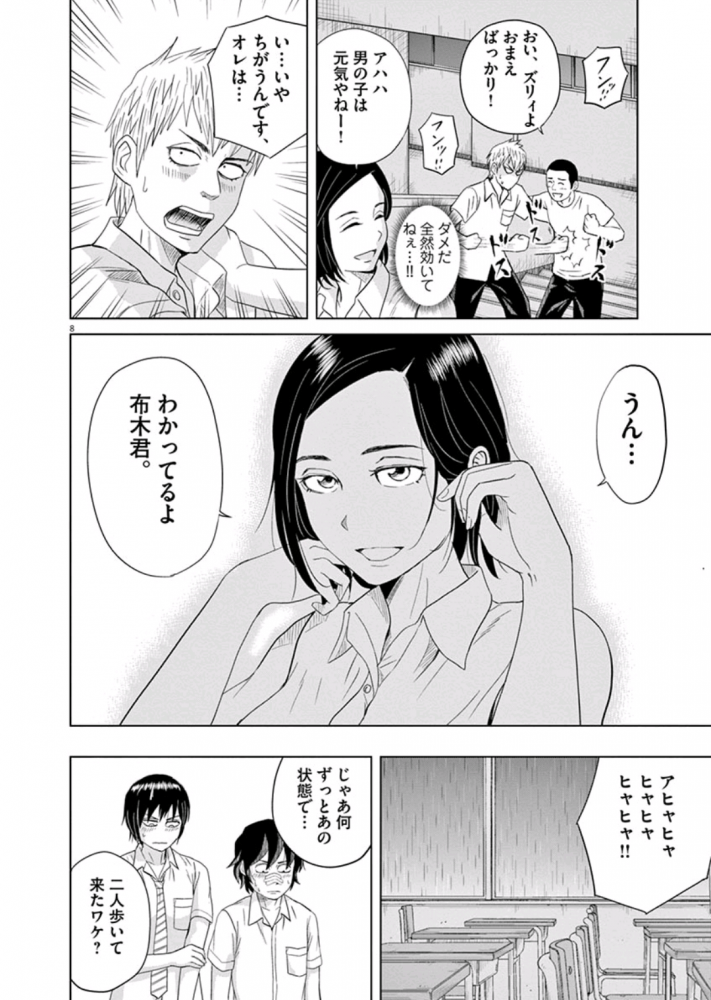
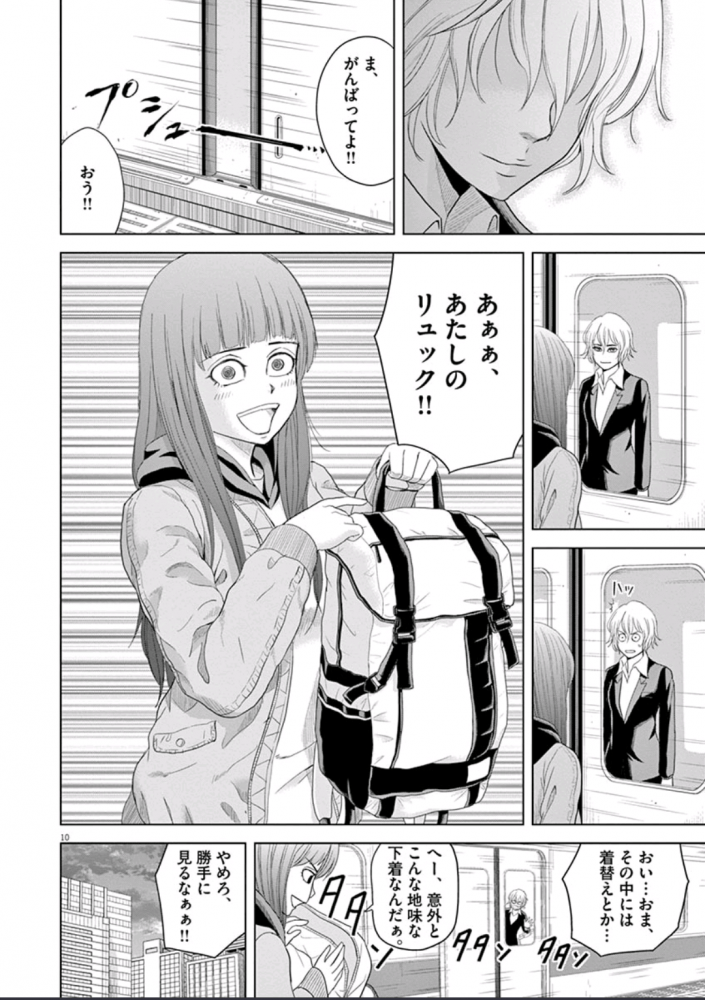
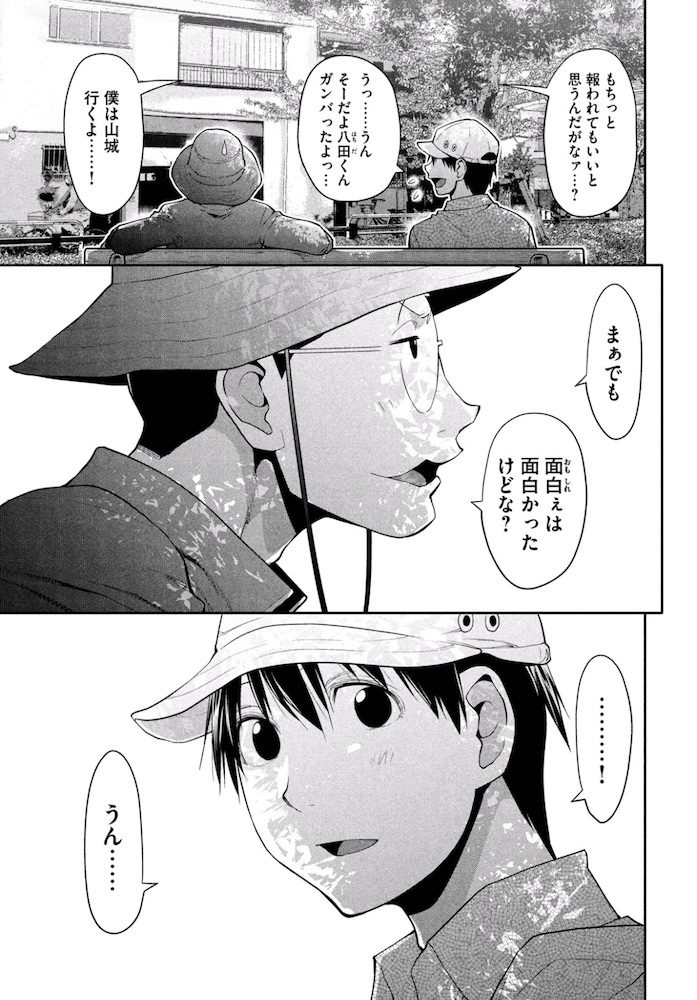
Artistry in Manga and Anime, and What’s Lost in “Translation”

Every so often, I come across someone on Twitter who talks about how they love anime but don’t really mess with manga. To them, manga is inherently inferior to anime, or at the very east, doesn’t give them the full multimedia package that anime offers—animation, music, voices, etc. Of course, people are free to enjoy what they want however they want it, but a part of me can’t help but feel a little frustrated that manga, as a mode of creative expression, is not reaching them. They can appreciate the artistry of anime but not the artistry of manga. 

“Artistry” is a very loose term and it can mean a million different things. Moreover, you’ll likely find people arguing that certain styles are better than others, and that certain creators are more imaginative and skilled than others. When I use the word “artistry” here, I’m thinking from a very broad sense, where it means how something is portrayed as opposed to what is being portrayed. Two titles could wind up portraying the same thing—a blond guy throwing a punch, for example—but the execution could create two very different experiences. 

Years ago, I wrote a couple of blog articles: one on decompression in comics, and another on its opposite, compression. One of the big takeaways is how the page as a whole is typically used in manga, where the panels and visual elements are geared towards a very smooth and continuous experience that allows the eyes to quickly move from one panel to the next. There are many different avenues of manga artistry, but this is the one that sticks out to me most because it’s a form of creative direction where time and space seem to transition seamlessly. But even given the history of comics in Japan, this is something that had to develop over time, and there’s no one right way to make the pages “flow.” It’s not as fundamentally intuitive as treating a comic like a picture book playing out one panel at a time, and I have to wonder if maybe that extra step needed to engage with manga is a step too far. Without it, perhaps manga really does seem like a lesser version of anime. That engagement has to be learned on some level.

In a sense, the difference between anime and manga is a less pronounced version of the separation between film and books. Anime and film engage more senses, and they progress without the viewer needing to actively move them along. Manga and books are focused mostly on the visual (on a basic level), and the story does not continue unless the reader actively chooses to move it forward. While anime and manga are closely tied in the sense that they often draw from the same stylistic trends and adaptations from one to the other are incredibly common, this difference in how one engages the medium seems to be too large a disparity for some. If I could help it, I would want to take someone who only reads manga and help them appreciate anime, as well as vice versa. If that were possible, then I would do what I could to help people appreciate the artistry of these creative endeavors.

This post is sponsored by Ogiue Maniax patron Johnny Trovato. You can request topics through the Patreon or by tipping $30 via ko-fi.

The Moral Trolling of Prison School

What if I told you that there’s a manga that points out the vanity of its male heroes, and ends by emphasizing the degree to which their shallow treatment of women is their undoing? Now, what if I told you that this series is actually, of all things, Prison School—a series generally known more for its gratuitous T&A and absurd toilet humor? By the time Prison School reached its conclusion, that’s exactly what we got. 

Prison School is about a group of teenage guys who are the only male students at Hachimitsu Academy. When they get caught peeping, they discover that the school actually has a complex prison system underneath run by the “Shadow Student Council,” three powerful girls who are all extremely attractive and who all hate men with a passion. Over the course of 277 chapters, the manga gets increasingly ridiculous in just about every way possible, from fanservice to schemes to the fact that the series will set up exceedingly complex plots just for the sake of delivering a stupid pun.

If you look at the fan reaction to the end of Prison School, a great deal of comments express utter disappointment. There were shipping wars over who the hero Kiyoshi would end up with. There’s frustration that the story went far off the rails from where it started. Somehow, people read this series as if it was some kind of romantic comedy, as opposed to an exercise in the absurd. What’s more, I truly believe this this bitter response towards Prison School by its former fans is actually what the author, Hiramoto Akira, was actually going for. Prison School was a long, elaborate troll to point out the inanity of anyone who cheered for the heroes.

The Case of Kiyoshi

Kiyoshi is the hero of Prison School, and throughout the series he’s motivated by a few key factors. Early on, he develops a crush on one of his classmates, Kurihara Chiyo. She’s the first girl to really talk to him in class, and one of the reasons he strives to escape the school’s prison is so they can go on a date together. However, while he’s unusually smart in certain respects, he’s also an incredible dumbass who’s 1) ruled by his hormones and 2) often jumps to the wrong conclusion about things.

Kiyoshi does good deeds, but he’s not necessarily a good person, and his antics lead him to having oddly close love-hate relationships with two of the Shadow Student Council members. Early on, he accidentally sees Midorikawa Hana (the Shadow Student Council secretary) peeing in the woods, which starts this bizarre bond based in trying to see the other pee and involves angry kisses, swapping underwear, and other “unorthodox” forms of affection/revenge. And while Shadow Student Council president Kurihara Mari starts off as Kiyoshi’s greatest nemesis, the two eventually end up as erstwhile allies who begrudgingly respect each other. Also, one time Kiyoshi had to suck snake venom out of her butt.

By the end of the series, Kiyoshi is ready to confess to Chiyo (to Hana’s frustration). He’s been thinking about Chiyo all this time and sees her as his ideal girl, despite the fact that many of his “firsts” are with Hana. Chiyo, for her part, sees Kiyoshi as a brave and noble soul. However, Kiyoshi has tried to get by entirely on his ability to bullshit others, and it all comes home to roost at the end. Chiyo is an avid fan of sumo, and Kiyoshi pretends to like the sport too to get closer to her. Kiyoshi and Hana at one point accidentally switch underwear, and both realize that they’re more comfortable wearing the other’s. When Chiyo asks what happened to Hana’s panties, Kiyoshi tries to tell a half-truth by saying that he keeps them in a drawer and is ashamed about it—except that’s a lie, and he’s wearing them during his confession. Early on, in regards to Kiyoshi, Chiyo prophetically says, “There’s no such thing as a bad person who likes sumo.”

When Hana suplexes Kiyoshi and flashes Chiyo with the truth, Kiyoshi accidentally pees on both of them. All of his graceful ploys and last-minute reversals of fortune are for naught because, in Kiyoshi’s own words, “I never learned anything.”

The Case of Gackt

Gackt is one of Kiyoshi’s fellow inmates, and is known for his absolute love of Romance of the Three Kingdoms. He even speaks Japanese in an old-timey way (never mind that it was originally Chinese) as if to emphasize his love of the literary classic. Part way through the series, he begins developing feelings for a girl named Yokoyama Mitsuko, a hyper-klutz who also happens to be obsessed with Romance of the Threee Kingdoms.

(Fun trivia: Mitsuko’s name is a reference to Yokoyama Mitsuteru, legendary creator of Tetsujin 28 and author of one of the most beloved Three Kingdoms manga adaptations ever!)

Despite all the trials and tribulations, Gackt and Mitsuko seem destined for each other. However, one major curve ball shows up in the form of a character nicknamed “Slut-senpai” (real name unknown). Slut-senpai starts to fall for Gackt, and it motivates her to start learning about Romance of the Three Kingdoms to the point that she develops a genuine interest as well.

Eventually, the girls confront Gackt and ask for him to decide. However, he ultimately is unable to make a choice, and the two basically leave him and become friends with each other instead. In other words, Gackt based his entire criteria for his ideal girl on a good but ultimately limited trait—sharing a common hobby—and he couldn’t handle the possibility that there might be more to consider. Even his supposed preference for a chaste and innocent girl fell by the wayside at the prospect of a girlfriend who was willing to get down and dirty.

The Case of Andre

Unlike the two examples above, this one results in a happy ending—arguably against all odds.

Another one of the boys allied with Kiyoshi, Andre is a gentle soul and also a raging masochist. When he finds himself in his school’s prison, nothing excites him more than being under the eye of Meiko, the Shadow Student Council Vice President and the very epitome of a dominatrix.

But one day, another girl named Risa enters the picture, and around the same time, Meiko has a traumatic experience that turns her mentally into a meek 10 year old. For Andre, this means losing the very person he worshipped, and he spends most of the series trying to bring her back. At the same time, however, Risa sees a kind of inner strength in Andre and has fallen in love with him. Yet, because she cannot match the lofty ideals of sadomasochism Andre possesses, he has trouble seeing her in the same light.

Eventually, Meiko does recover, and all seems right in the world for Andre. However, what he realizes in the end is that Meiko might be the pinnacle of his carnal desire, but his heart and his feelings belong to Risa. Andre may have one hell of a kink, but in the end, it’s not enough to be the basis for an entire loving relationship. Andre chooses a person over a fetish.

Lessons Learned

Prison School is a series where one character, despite having multiple potential love interests, ends up with nobody because he’s ultimately an immature idiot who can’t truly take others into consideration. A different character has two romantic prospects but ends up with neither because his entire criteria for “ideal girlfriend” is “likes the same book.” Not only that, one of the few guys who does end up in a relationship chooses the girl who truly cared for him (and he, in turn, her) over the girl he’s worshipped and fetishized for ages. “Did you really cheer for this jackass of a protagonist?” Prison School asks, as it ends, perhaps against all odds, on a moral note. Goodness and genuine human connection win out. Shallow reasoning and deception are the realm of losers.

I Found Out the Dagashi Kashi Author [Might Be] a Woman Thanks to My Favorite Virtual Youtuber

CORRECTIONS: Thanks to a comment, I learned that “mom” and “dad” is a term describing the character designer of a Virtual Youtuber, which made me realize that the designation in the description isn’t necessarily the other person who shows up in the video. A further look at the video descriptions shows that the woman teaching Sugomori to draw comes from the manga school Manga Kyoushitsu Minato Mirai. I’ve edited the post because the possibility is still there, but have removed the incorrect information.

I’m not terribly into the whole virtual youtuber thing, but I do have my favorites. Recently, my #1 is Sugomori, a manga reviewer who covers everything from popular titles to more obscure ones.

She’s not one of the major ones right now, but I appreciate her focus on manga over games. Some of her videos (like the one above) have been subtitled into English, so you can enjoy them even if you don’t know Japanese.

However, I’m not just here to recommend a Youtube channel. I also want to point out the connection between Sugomori and Kotoyama, author of Dagashi Kashi and Yofukashi no Uta.

Sugomori’s character design is actually by Kotoyama, as she explains in her introductory video. That’s a pretty huge get for a Virtual Youtuber, I’d think. But also, Sugomori calls Kotoyama “mom” (okaa-sama) in her descriptions.

I don’t know if Sugomori is actually Kotoyama’s daughter, or if it’s just a joke or something [Turns out it’s a joke]. Whatever the case, I was surprised at the possibility that Kotoyama might be a woman! It would be cool if that turns out to be the case.

In conclusion, watch Sugomori, read Kotoyama. Enrich yourself.

Futari no Social Distance: Ogiue Maniax Status Update for May 2020

Anime Expo: Canceled. Otakon: Canceled. EVO: Canceled. But it’s all for the best as we try to keep one another safe in these strange times. I’m thankful to all the organizers for making the right choice, and I hope to see you all at conventions eventually. In the meantime, I find myself trying to make the most of my time spent at home.

Thank you to all my supporters on Patreon again this month, especially these fine folks below.

General:

Johnny Trovato

Ko Ransom

Diogo Prado

Alex

Sue Hopkins fans:

Serxeid

Hato Kenjirou fans:

Elizabeth

Yajima Mirei fans:

Machi-Kurada

Blog highlights from April:

Their Problem is Our Problem: The Promised Neverland, “Coronavirus,” and the Systems that Force Inequality

The Promised Neverland brings the fury as it asks readers to think about the world around them.

When Comedy Goes Nuclear: Spy x Family

This popular new Jump+ manga is probably going to be the next big hit. I highly recommend it.

Eureka Seven, Holland, and Fujiwara Keiji

My tribute to the recently deceased voice actor who brought his A-game to every role. If you want to see my Top 10 favorite anime roles of his, I also wrote something up for Apartment 507.

Hashikko Ensemble

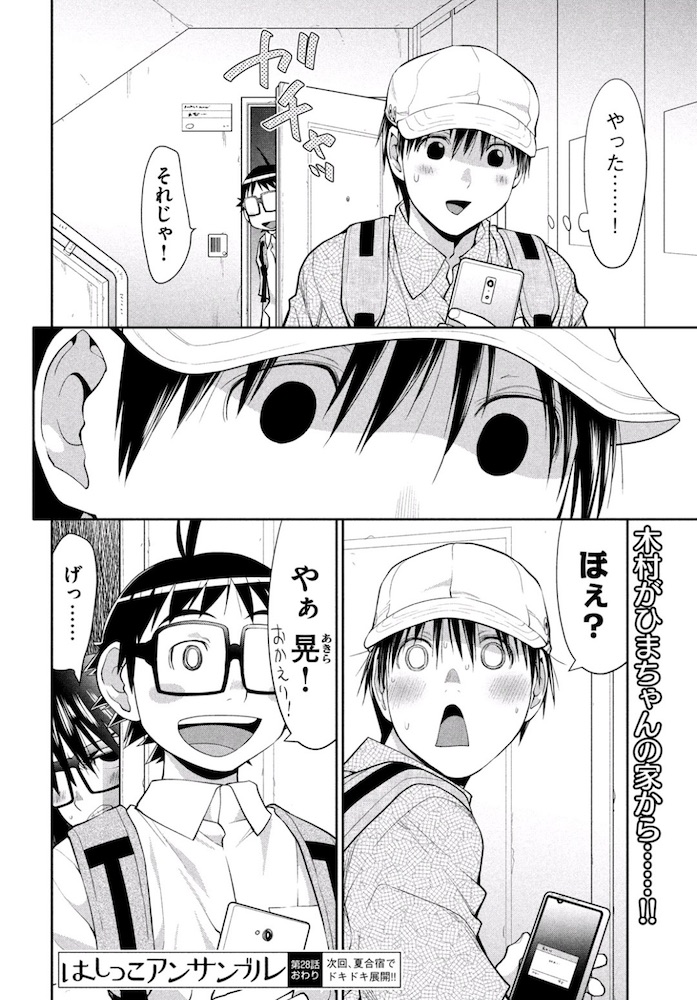
Chapter 27 is, at last, the big performance…with a dash of possible romance.

Patreon-Sponsored

My Favorite (?) Anime Computer Games

It is what it says, sort of?

Closing

I’m nobody special when it comes to giving advice, but I hope everyone can enrich themselves and stay sane in these crazy times. As for me, I’m finding great joy in AI-generated memes (like the one you saw at the top of this post), and incredibly dumb and hilarious #partyparrot memes. (The joke is dicks.)

Seduction of the Innocent: Spotted Flower Babies

Spotted Flower has long been a bizarre, twisted version of Genshiken, but a couple of side chapters posted (temporarily) for free on the Rakuen: Le Paradis website reveal an extra wrinkle to its story. Portraying two groups of parents, it shows their actions inadvertently corrupting their children.

In Chapter 33.5, the wife (not-Kasukabe) is trying in vain to get her infant daughter, Saki, to raise her head. When the husband (not-Madarame) drops his phone by accident and it shows an old picture of him getting his necktie pulled (much like that famous moment in Genshiken), Saki’s eyes go wide with excitement. When the husband picks his phone back up, Saki’s head follows, and voila, she’s able to lift her head up under her own power. In that one moment, a fujoshi is born.

Then, in Chapter 34.5, not-Ohno has put her two kids, Shin (three years old) and Yuu (one year old) to bed alongside her. On her other side, however, is her husband (not-Tanaka!!), and she’s in the mood for some intimacy.. Not-Tanaka notices that she’s actually wearing pantyhose from a Kakegurui cosplay, which clearly shows that she’s been wanting this, but when she also tries to put on a Yumeko wig, he nixes that idea. The mini-chapter ends with them having sex off-panel, with Yuu being woken up and then lulled back to sleep by the sound of his parents knocking boots next to him.

The idea of seeing these geek parents influencing, even if accidentally, the next generation of degenerate pervy otaku is an intriguing one. What makes it all the more…special…is specifically that it’s the Spotted Flower characters doing this instead of the Genshiken ones. What will the future hold for these kids…?

M-Pros: Hashikko Ensemble, Chapter 27

It’s the Hashikko boys’ first real test: performing at the M-Con!

Chapter Summary

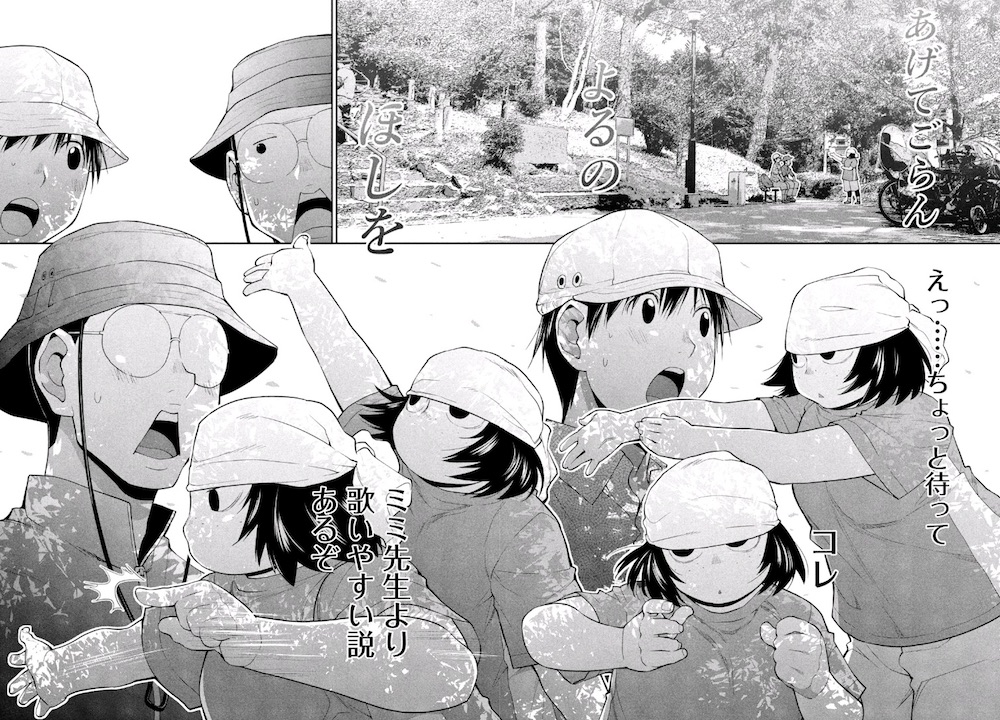
The Chorus Appreciation Society is up at the M-Con, and their performance impresses at least one of the judges. While they’re part of the “free” section—i.e., participation only—Akira and the rest take it very seriously. In a powerful moment, members of the audience could swear they heard an angel, thanks to the harmonizing by the four on stage. In the final moments, Jin’s thoughts are about proving how great choruses are.

Afterwards, many congratulations are had, including from Shion’s mom and the Nishigafuchi club members who attended. Nishigafuchi’s message is loud and clear: you’re good enough to compete. Elsewhere, Yumerun is observing from a distance, and seems upset about Jin to the point of tears. Hasegawa spots her and, mysteriously, offers to exchange Line account info with Yumerun.

Shuusuke, who was on piano due to Shion’s injury, offers to take a photo of the club (plus associated classmates). However, when Shion tries to assert that she’ll be the one playing for them next time, she trips and falls into Shuusuke’s arms in a repeat of a childhood moment between the two. The situation seems ripped straight out of a romance manga, which causes a great deal of shock and blushing, albeit for different reasons. While Akira very clearly has feelings for Shion, Kousei is just mad that Shion’s nickname for Shuusuke, Shuu-chan, is what he used to call his deceased little brother. In the end, they manage to take a rather awkward but hilarious group photo, while also giving (Mashino) Shuusuke a new nickname: Masshie.

The Judge’s Thoughts

I found the aforementioned judge to be an interesting part of the chapter because it showed how an expert would see a fairly amateurish club and still recognize in them some potential. In my view, the key is when he describes what proper harmonizing is: It’s not about thinking, “I will try to let my voice out in a way that matches up with the others,” but rather, “If I let my voice out, it will match up with the others.” 

He also expresses being impressed by the way they transform into tenuto in their performance, which is a musical direction meant to convey “holding a note for its full length.” (I’m not sure I’m using that term correctly, so feel free to correct me!) Jin actually reaches him for comments afterwards, and he encourages them to get more members so they can participate in different types of competitions.

I hope this isn’t the last we see of him.

Romance in the Air?

I’ve written a good deal about the potential for romance and love triangles in Hashikko Ensemble, but I’ve tried not to focus too much on it because I didn’t want these reviews to overly emphasize that side to the extent that people might assume this was a primary focus of the series. That being said, it’s now crystal clear that Akira has a thing for Shion, and that it wasn’t just him being somewhat naively overprotective. There also might be something going on with Yumerun too, but those tears are kind of ambiguous. 

I still wouldn’t quite classify Hashikko Ensemble as a romance manga, though. Rather, it’s a story about human connections through the world of music, of which love is one possibility. It’s exactly the kind of story Kio Shimoku excels at, and why I continue to be such a big fan of his.

Back to the subject of Yumerun, I would think that everything about this chapter—the encouragement Jin got to find more members, Yumerun’s reaction, Hasegawa’s gesture—would lead to her joining them. However, that would first require her to transfer to Hashimoto Technical High School, an environment likely unsuited for her implied musical talents overall. It would be a hell of a move, and if it happened, it would signal some very clear intent on Yumerun’s part.

I also got a kick on the little swerve we got in terms of Kousei. It seemed like he had some feelings for Shion, but it turned out to be something about his little brother instead. It’s a bit of dark humor that ironically lightens the moment.

Songs

Naturally, the only song this month is (once again) “Miagete Goran Yoru no Hoshi o” by Kyu Sakamoto. 

Final Thoughts

It’s clear from previous reviews that I didn’t quite understand what the “free” part of M-Con meant. I took it more as like, an “open competition,” as opposed to being the distinction between “For Fun” and “For Glory,” to use Smash Bros. terms. 

I think this is probably inevitable with my writing about Hashikko Ensemble because of how music is not my forte. It makes me want to see someone who does know a thing or two about music read and review this series!

When Comedy Goes Nuclear: Spy x Family

Comedies based on perpetual misunderstandings can be really hit or miss. Characters misunderstanding one another’s intent and motivations can work as an endless source of humor, or it can eventually lead to frustration over a lack of progress. The manga series Spy x Family by Endo Tatsuya falls square into this category of humor, but it’s able to achieve a nice place between its overarching plot and its chapter-to-chapter antics that keeps it fresh, enjoyable, and even a little heartwarming.

Spy x Family tells the story of Twilight, an unparalleled spy who is given an order to start a family in order to get close to this next target. In order to make the charade seem as real as possible, he takes on a new identity (Loid Forger), adopts a daughter named Anya, and finds a woman willing to pretend to be his wife (Yor Forger). However, while Loid is extremely good at his job, what he doesn’t realize is that his new family members have their own secrets. Anya is actually a telepath, and Yor is actually a top-class assassin known as “Thorn Princess.” They all have their own reasons for wanting to keep this act going, with only Anya knowing the full truth but loving every minute of these bizarre circumstances.

In both story and presentation, this manga is superb. The character designs are excellent and the artwork is consistently solid no matter the situation or setting. The characters themselves are endearing and memorable. Every time I finish a chapter, I find myself wanting more. Spy x Family juggles a lot of balls in the air, whether it’s shifting settings between its three core characters, switching between comedy and action (or a mix of both), or portraying the way they grow closer even as they continue to keep their respective cards close to their chests.

The closest manga I can think of in terms of being this good at the “comedy of misunderstandings” shtick is Monthly Girls’ Nozaki-kun, but that title is far more extreme when it comes to keeping its characters forever ignorant. Spy x Family, on the other hand, is more than willing to have both long- and short-term plot threads, and it does each kind so well, I would be easily satisfied if it stuck with one or the other. However, it manages to pull both off well, and we’re all the better for it. I think part of the reason Spy x Family succeeds despite not taking the Nozaki-kun route is that there’s actually a character who is privy to what’s really going on in Anya Forger. From her hilarious reactions to everyone’s true thoughts and feelings, to the contrast between her powers and her lack of smarts, to her strong desire to keep the charade going so that she can keep her happy little nuclear family going, Anya might just be the lynchpin of this series.

Spy x Family is available on VIZ’s Shonen Jump app, and chapters come out roughly once every other week. There’s a lot to love about this series, and I don’t see it wearing out its welcome anytime soon.

Mogusa-san Finds New Success on Twitter

Amid these uncertain times, a strange success story involving one of my current favorite manga artists has emerged over the past few weeks. 

Ootake Toshimoto, author of Mogusa-san and Teasobi, has been drawing a comic series titled 1 Iine 1 Yen de Bangohan o Taberu Harapeko Joshi, or in English, Hungry Girl Eats Dinner Where 1 Like Equals 1 Yen. The premise: Minori Mogusa, the perpetually hungry heroine of Mogusa-san, is in a situation where she gets 1 yen for every Twitter like. Then, she’s supposed to use the amount earned in each comic on her next dinner. In the first strip above, she has 0 yen, so she’s “air-eating.” 

But while the expectation was that she’d get maybe a few hundred likes, and could build a meal based off of that, reality panned out very differently.

The first comic received 70,155 likes. 1 yen is about 1 cent USD, so that’s about $700. Mogusa freaks out.

The second comic received 115,117 likes, or about $1,150. Below is Mogusa gorging herself on 200 pieces of expensive fatty tuna (as well as some salmon roe) in one sitting. 

By the next comic, a rule was implemented so that the ratio would be 10 likes = 1 yen in certain situations to keep things reasonable.

Not only have these manga strips been cute and hilarious, but it’s giving Ootake and the character of Minori Mogusa a lot more exposure. It’s even to the point that other artists have started their own version of the 1 Like = 1 Yen dinner format. It’s fantastic. I love the hell out of the Mogusa-san manga, and I’m genuinely happy to see Ootake getting the notoriety I know he deserves. I hope this gives Ootake a lot more opportunities, and that the world will come to appreciate Mogusa as just an amazing character.

You can find all the comics in the following Twitter thread: Hungry Girl Eats Dinner Where 1 Like = 1 Yen. Bon appétit!

Their Problem is Our Problem: The Promised Neverland, “Coronavirus,” and the Systems that Force Inequality

WARNING: THE PROMISED NEVERLAND MANGA SPOILERS

In Chapter 172 of The Promised Neverland, there’s a collage that’s rather conspicuous, given the actual pandemic hitting the world at this moment. As the heroine Emma is confronting an enemy leader about how differences in positions are the root of conflict, one of the images has a wall with the word “coronavirus” graffitied on it. 

Up to this point, it’s been established that the main characters live in an alternate dimension from the regular human world, but there haven’t been direct calls to the reality in which we, the readers, live. I think this “coronavirus” page is a direct message from the creators of The Promised Neverland, Shirai Kaiu and Demizu Ponsuka, and what that message says is: “The ideas conveyed in this manga are not meant to be taken as mere vague abstractions about generally making the world a better place, but as very real criticisms of society.”

When The Promised Neverland first began, it was an interesting manga about a cat-and-mouse game and a battle of wits in a dystopian setting. Originally, the focus was on escaping an orphanage designed to turn children into food. Then, it was about surviving against the demons on the outside. Over time, however, the series has revealed a greater world where the real evil of the series is not scary human-eating monsters but how the corrosive desire to hold onto power at the expense of the greater good. 

In order to survive, some children strive to become mothers—essentially overseers of the human farms, but also chattel themselves due to being the literal suppliers of the chain through giving birth. Mothers are told that the best among them can become a “grandmother,” supervising all the mothers, making them compete desperately too. It’s even revealed that the demons themselves have an oppressive class hierarchy. Eating human meat is what has allowed them to gain a high level of intelligence, but a steady diet is necessary because otherwise they’ll revert back to beasts. The rulers of their world get access to the best meat, and can thus maintain their already massive advantage. Moreover, there turns out to have been a way to permanently prevent the demons from losing their intellect, but the ruling class purposely and violently obscured that information to keep the masses dependent on those in charge. In other words, everything about society in The Promised Neverland is premised around pitting the lower classes against one another to distract from the intentional systemic issues imposed by those in power.

How does that apply to our own world? “The top 1% hold 99% of the wealth” is about how massive inequality concentrates all the power in a select few who inevitably enrich themselves at the expense of others. In regards to keeping the lower classes at one another’s throats, US president Lyndon B. Johnson famously said, “If you can convince the lowest white man he’s better than the best colored man, he won’t notice you’re picking his pocket. Hell, give him somebody to look down on, and he’ll empty his pockets for you.” Writer and lecturer Douglas Rushkoff even wrote an article in 2018 about how some of the ultra-rich are preparing for the apocalypse by figuring out how to save themselves while still wondering if it would be necessary to lock down their guards’ food supplies to force loyalty.  And now, with the COVID-19 pandemic, we’re seeing how the very same types are retreating further into their massive safety nets, leaving those with less to struggle. It’s crystal clear to me that there’s a similar sentiment at work fueling the overt criticism of the disparity in power and resources in The Promised Neverland

The fact that Weekly Shounen Jump comes out with brand new chapters of manga on a regular and consistent basis can be a blessing and a curse, but one advantage of the accelerated pace of a weekly manga magazine is how quickly it can potentially seize upon the relevant events of the day. What that “coronavirus” graffiti communicates is simple: the crises your heroes are facing in The Promised Neverland are not that far from the problems that plague the very reality in which you live. Emma, as the heart of this series, staunchly opposes false dichotomies that lead to zero-sum situations where one group can only “win” by sacrificing another. Perhaps The Promised Neverland wants us all to be allies in this struggle, and to be aware of the real problems that gave way to our current global crisis: racism, social inequality, intentionally massive disparities in wealth and resources, and an economic environment where those in power are encouraged to let the whole world burn if it means keeping their positions.

Voices of a Social Distant Star: Ogiue Maniax Status Update for April 2020

Well, what a month it’s been. Back in March, the threat of COVID-19 was real, but I did not expect things to escalate so quickly. The number of sick and dead ever increases. We’re seeing the Tokyo Olympics get postponed to 2021 and Comic Market 98 get canceled. New York City and the United States have become epicenters of the virus. I’m among the many currently sheltering in place and doing my social distance thing, and I’m fortunate to be in a position where my life isn’t thrown into total disarray as a result.

Part of that has to do with the ongoing support of my Patreon supporters, especially the following.

General:

Johnny Trovato

Ko Ransom

Diogo Prado

Alex

Sue Hopkins fans:

Serxeid

Hato Kenjirou fans:

Elizabeth

Yajima Mirei fans:

Machi-Kurada

Not only is it a bit of extra cash, but having this blog and the responsibility of making sure the Patreon is worthwhile helps me maintain a schedule and keeps my mind active. Sometimes I need to remind myself that there’s always something to talk about on an anime blog, even if we’re seemingly entering a new period in the story of humankind.

That being said, if anyone can’t afford to keep up their Patreon subscription for Ogiue Maniax, don’t feel bad about putting it on pause for however long it’s necessary.

What remains to be seen is how many COVID-19-related puns can I make for these monthly updated posts.

Blog highlights from March:

Friends with Consequences: Spotted Flower, Volume 4

It’s been a few years since the last volume of Spotted Flower, and it ramps up the insanity of this Genshiken what-if like nobody’s business.

Brief Thoughts on Anime, Manga, and COVID-19

It’s the talk of the town…! I’m curious as to how the current pandemic might shape the storytelling and themes we find in anime and manga going forward.

Space Cases: Star Twinkle Precure

The recently finished Precure series is not just yabai, it’s kirayabaa~.

Hashikko Ensemble

Chapter 26 has me legitimately wondering if Jin might be on the spectrum.

Patreon-Sponsored

Aikatsu as Absurd Idol Anime Turning Point?

Idol anime can get quite zany these days. Is Aikatsu! the reason?

Apartment 507

I wrote a review of the Nintendo Switch version of Touhou Gensou Mahjong.

Closing

Stay safe, and remember that we’re all in this together.

Oh, and uh, look behind you.

April Fool’s ha ha ha…