AnimeExpo is over, and the all-new Otakon in DC is on the horizon. Meanwhile, EVO 2017 is less than two weeks away. With a new season of anime upon us again, it’s time to get back into the swing of seeing how the new crop holds up.
I’m happy to see that my Patreon supporters are still with me. A special thank you to…
General:
Johnny Trovato
Ko Ransom
Alex
Diogo Prado
Viga
Yoshitake Rika fans:
Elliot Page
Hato Kenjirou fans:
Elizabeth
Yajima Mirei fans:
Machi-Kurada
Unfortunately, I wasn’t able to finish the latest Gattai Girls in June, but I’m getting close! I’m going to make myself get this danged thing out even if it drives me mad. It’s about time I got back around to talking more about giant robots anyway.
Even though a strong season just ended and there are plenty of shows in it that I enjoyed, I’m not sure how many of them I want to write full reviews for. So why not have a poll?
I might end up doing the other ones anyway, but I’d like to see what people would be most keen on.
I love this manga so much. It’s everything I’ve ever wanted. The human body is a wondrous thing.ß
Patreon-Sponsored
The Fun of Farming Games (Except Farmville)
I never really played farming simulators before. Then I tried Story of Seasons. See my thoughts on the genre and where I think the appeal and satisfaction lies.
Closing
I feel strangely inspired to write some new posts after being in a small rut. I hope that what I bring to the table continues to be enjoyable and thought-provoking!
With a series title like How to Raise a Boring Girlfriend, a certain image comes to mind. Given the existence of Japanese dating sims, the success of “raising sims” such as Gainax’s famous Princess Maker series, as well as the tendency towards popular otaku tropes such as nerd protagonists in harem situations, it’s easy to assume that the series is about creating a bland, milquetoast love interest. Is this an attempt to revive the old-style dating sim heroines such as Kamigishi Akari from To Heart, that childhood friend who once stood at the top of the harem totem pole? Is Katou Megumi, the titular “boring girlfriend”—more accurately “boring heroine” in Japanese—one man’s “ideal waifu” the way Asuna from Sword Art Online is, or something else entirely?
To my surprise, Megumi’s aggressive mediocrity actually turns out to be a subversion of her seeming purpose as a no-personality love interest or another character in the yamato nadeshiko mold. While the fact that the other characters keep talking about how aggressively mediocre she is might point in those directions, her role in Boring Girlfriend is closer to that of Kasukabe Saki from Genshiken—the “normal” one who contributes by being an outsider.
In works about groups of otaku there is often a non-otaku, though their purposes can differ. In Otaku no Video, the main character Ken is the “commoner” who gradually falls in love with the otaku lifestyle, while his girlfriend, Yoshiko, becomes increasing disgusted. The dating sim Comic Party (as well as its anime adaptations) follows a similar pattern, with protagonist Kazuki becoming more involved with doujinshi as his sporty childhood friend (and canon love interest) Mizuki just can’t seem to fathom what these nerds are jabbering about.
Owing to the fact that Genshiken gradually pushes its characters from the relative safety of a college environment into the real world, Saki as the non-otaku becomes a kind of guiding force. While she begins the series antagonizing the otaku and begrudging the fact that her boyfriend is an otaku, she eventually becomes a close friend whose understanding of human social interactions (notoriously lacking in otaku) provide answers that the others could not arrive at by themselves. While she isn’t as aggressive and outspoken as Saki, Megumi in Boring Girlfriend accomplishes the same things by being more observant than the perpetually self-centered and inward-looking otaku characters she has befriended.
Because Saki begins from a place similar to Yoshiko in Otaku no Video and Mizuki in Comic Party, Megumi doesn’t quite have the same development as her. Instead of that period of conflict with the otaku, the changing dynamic comes from the gradual reveal that Megumi indeed has a mind of her own, and that her seemingly mundane nature throws a wrench in the assumptions of the others. Moreover, her “boring” status provides a sharp contrast to the other girls in the series, who fall more in line with familiar tropes: a tsundere, an adorable underclassman, a cooldere, a tomboy cousin.
While those other characters have their origins in the same era that spawned Akari from To Heart and Mizuki from Comic Party, taste in otaku consumption has changed over time such that characters with more extreme and pronounced character traits tend to be more popular. The shape of “moe” has changed, and everyone but Megumi falls into that line. However, because Megumi is present, and because the series is named after her, it’s as if Boring Girlfriend is setting up and knocking down its own pieces to say, “Subtlety has its place.”
In this sense, How to Raise a Boring Girlfriend and Megumi remind me of two other series. The first is My Youth Romantic Comedy is Wrong, as I Expected aka My Teen Romantic Comedy SNAFU. It’s a series that also goes against what its title implies and plays around with its characters supposed archetypes to create a greater sense of depth. The other is The World God Only Knows, which features the character Kosaka Chihiro. Though she has a different personality compared to Megumi, and that series has only one real otaku character, Chihiro fulfills the role of being defiantly “normal.” Her behavior runs against everything that Katsuragi Keima believes in as someone who bases his life entirely on dating sims, and Megumi by virtue of her supposed blandness accomplishes much the same.
Some months ago, I wrote a quick review of an interesting new manga, Rokudou no Onna-tachi. Now, I’m back with a follow-up, looking at the direction this odd series (where all the girls are angry delinquents!) has gone, and my latest impressions. Check it out on Apartment 507!
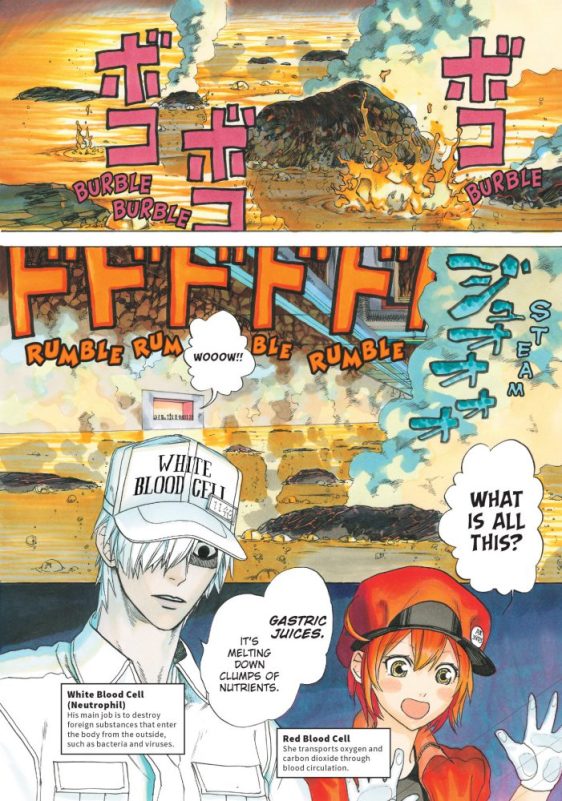
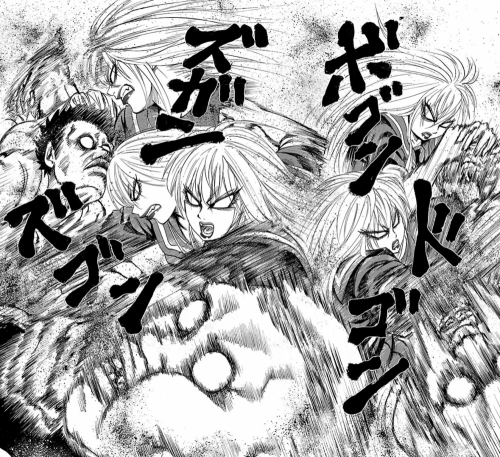
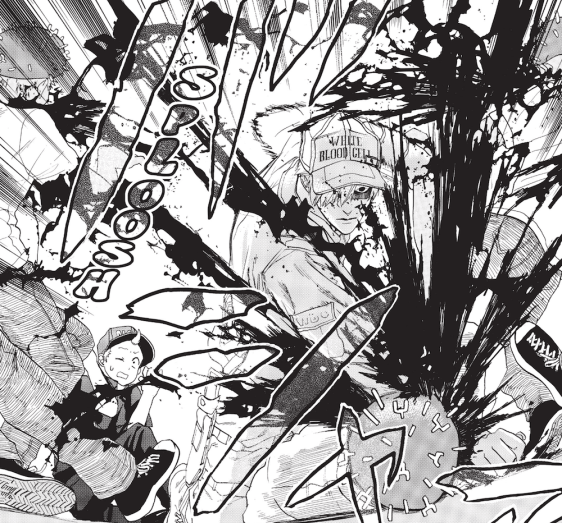
When I was a kid, I was fascinated by the human immune system. Just the idea of the body’s natural defense system warding off and destroying invaders was enough to fill pages of drawing books. I even imagined a video game where the player controlled cartoon white blood cells to fight disease! This is exactly why the manga Cells at Work feels like my childhood dream come true.
Cells at Work tells the story of the human body through its cells, personified into more typical-looking humanoid manga characters. From a hardworking red blood cell delivering nutrients to a stoic but diligent white blood cell fending off harmful bacteria, each representative cell is so entertaining to see that you almost don’t realize you’re learning.
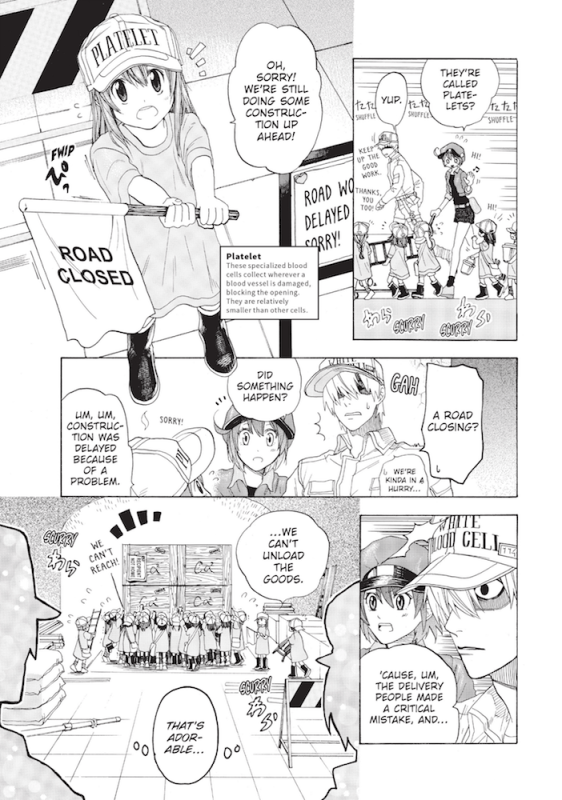
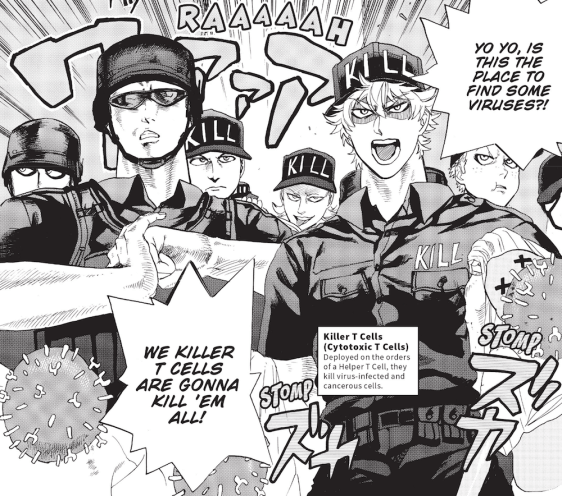
While some series based on anthropomorphic characters prefer to keep their reality-based facts as subtext for character interaction, and others are essentially illustrated textbooks, Cells at Work strikes a more even balance. Each chapter involves the body having to deal with some crisis, such as allergies, the flu, and even cancer cells. The manga goes through the varied ways by which the immune system handles these threats, giving the cells highly entertaining personalities that encapsulate well their roles in defense. Platelets are adorable little children who act as construction workers. Killer T Cell is a lymphocyte with an appetite for destruction, and many of his fights are incredibly bloody (pun intended).
As long as there’s no worry about depictions of violence, I think this would be the perfect reading for a classroom biology class. Along the way, narration boxes explain their actual function in the body, with the actions of the characters making the information easier to remember.
I love this comic. The fact that it combines two of my favorite things ever (the immune system and manga) would be enough, but it’s also just very well written and drawn. The series is currently out in English both in print and digitally from Kodansha Comics, and I highly recommend it.
This month is AnimeNext! I missed last year’s move to Atlantic City, but I’ll be attending this time around. I have at least one panel I’ll be on at the con, but the schedule’s not up yet so I can’t say when. I’ll be making a post to Ogiue Maniax once the schedule is out.
As for my Patreon sponsors for June 2017…
General:
Johnny Trovato
Ko Ransom
Alex
Diogo Prado
Viga
Yoshitake Rika fans:
Elliot Page
Hato Kenjirou fans:
Elizabeth
Yajima Mirei fans:
Machi-Kurada
One of the personal running jokes of this blog for me is the lack of a new entry for Gattai Girls. I have no real excuses, except that it’s been slow going watching the series I plan on writing about next. I really hope I can get it done in the next month, and might even devote most of my free time to it.
Speaking of shows about female robot pilots, I was recently reminded of Stellvia of the Universe after finding out that opening singer angela is going to be at Anime Expo. Most likely, that’ll be the next next entry whenever I get around to it.
I might sound like a broken record player, but I can’t believe the next anime season is creeping ever closer. It feels like only yesterday when I was watching out for the spring season.
Genshiken is an influential manga about otaku, as well as my favorite manga ever and the inspiration for this blog, but it’s been many years since I’ve read the series. I intend to re-read Genshiken with the benefit of hindsight and see how much, if at all, my thoughts on the manga have changed.
Note that, unlike my chapter reviews for the second series, Genshiken Nidaime, I’m going to be looking at this volume by volume. I’ll be using the English release of Genshiken as well, for my own convenience. Also, I will be spoiling the entirety of Genshiken, both the first series and the sequel, so be warned.
Volume 3 Summary
Love begins to claw its way into the awkward otaku world of Genshiken. Tanaka shows Ohno the wondrous world of Gundam models. Madarame finds himself alone with Kasukabe Saki in the clubroom, and the situation is too much for his poor nerd heart to handle. Keiko tries to put the moves on Kohsaka by trying to understand the otaku mind. Sasahara gets his first computer and his first private dating sim “experience”…
But trouble is on the horizon, as Saki accidentally sets a pile of old Genshiken garbage on fire. The volume ends with a lot of burnt paper and a frantic Saki.
Love, not Lust?
The “Madarame alone with Kasukabe” scene is, in my opinion, the most significant part of Volume 3. Madarame trying to use his dating sim knowledge IRL is of course quite humorous, but in hindsight, the repercussions of this moment are tremendous. It is essentially when Genshiken as a series began to transition its characters out of the cocoon of their otaku worlds. As we know from later volumes, they never stop being otaku, but this is where the chinks in Madarame’s armor begin to show.
When Madarame finally confesses to Saki in Nidaime, Madarame considers this the point when he first fell in love with her. Looking at the chapter, the symbolism is right there: he forgets his bag full of doujinshi, an item which he’d have treasured above all else. In that moment, 3D overwhelms 2D, and not even Madarame himself fully realizes it until much later in the series.
This first attraction on the part of Madarame is not based purely on the physical aspects of Saki. It wouldn’t make him nearly as nervous otherwise. In the same volume, when Ohno tries to get her to wear a cat ear-adorned frilly maid headband, the guys in the club are quick to fantasize about a cat-maid Saki slowly becoming more subservient. In the previous volume, more than one of the guys intends to use Saki as masturbation material. And when Ohno falls in the water at the beach and ends up showing her polka dot swimsuit, the guys are clearly aroused. With Madarame and Saki, it hits him deeper than where his desires typically lie.
The Impenetrable World of Otaku
Aside from the ratio of boys to girls, one of the major differences between the first Genshiken and Nidaime that really stands out to me is just how much the former tries to introduce the world of the otaku. There’s a chapter about building Gundam models, there’s another about buying a computer, and the use of “normal” folks like Keiko and Saki positions the manga as easing laymen in. At the same time, there’s something about the portrayal of otaku that renders their conversations as opaque, and it’s not just the knowledge itself that creates this sensation. As someone familiar with most of what the characters are talking about, the way they present information just sounds very exclusive, as if it were a kind of defense mechanism. When the girls of Nidaime chat about their favorite pairings, the space they create through conversation somehow feels more accessible.
Turning Points
While this volume features what is arguably the most important moment for Madarame in Genshiken (especially the first series), it’s also of great significance to Saki. Her panicking over accidentally starting that fire is the first time Saki comes across as vulnerable. While she’s usually able to handle everything, this makes it clearer that she’s invincible when it comes to social situations but not physical dangers. While her full transformation into a member of Genshiken (not just in letter but in spirit too) comes in Volume 4, this is the pivot, the point of evolution.
Keiko also begins the transition here, as she slowly begins to understand the otaku mind. This comes out full force in Nidaime when she tries to seduce Madarame, but by then it’s tempered by a slightly more forethought. This is only the beginning of the beginning, though. Her actual key moment, in my opinion, comes when she stops calling Sasahara “monkey.”
Ohno is still extremely shy at this point, and it reminds me that she almost becomes a completely different character as the series progreses. The change is to some extent gradual, but if I recally correctly, the actual moment that triggers her more drastic metamorphosis into open, motherly figure is when Ogiue is introduced as an antagonistic force of sorts. Naturally, I’m looking forward to that next volume!
Doujin Fighting Games
This volume’s Mebaetame (the Genshiken club doujinshi magazine) is a review of the various characters in a fictitious fighting game based on everyone’s favorite series, Kujibiki Unbalance. The portrayal of this game is a real throwback to the days when doujin fighters were all the rage. Nowadays, the qualities that defined doujin fighting games—long combos, air dashes, anime aesthetic, etc.—have all become features of official, professionally produced games. BlazBlue, Arcana Heart, Dengeki Bunko Fighting Climax,Aqua Pazza, and of course Melty Blood (which began as a doujin game before transitioning into something found in arcades and played in tournaments) are all of this lineage.
The Genshiken members talk about how the game is more faithful to the characters than trying to be a balanced (or good) fighting game. Personally speaking, it’s what one wants out of a doujin game: a love of the series takes priority over trying to be, to use a more recent term, “eSports now.” It reminds me of a doujin fighter I really enjoyed back in the day called Magical Chaser. It was themed around magical girls!
The English translations for these Mebaetame entries are rather awkward, and suggest someone who is unfamiliar with fighting games in general. I say this from the perspective of having many more online resources, as well as a long history interacting with fighting game enthusiasts, so I understand that it’s simply not easy trying to adapt that lingo. If you know fighting games at all, you’d probably have a fair idea as to what the characters are trying to say.
Final Random Thoughts
Two little details in this volume really date the series. The first is when the club is giving Sasahara advice on buying a new computer. The second is when Madarame talks about watching the episode of Kujibiki Unbalance he recorded.
As the other members guide Sasahaa, they talk about how 200gb is needlessly large for a hard drive—a sentiment that predictably would garner laughs today. Madarame also talks about how the US is obsessed with big hard drives, and to my American perspective I don’t quite understand what the big deal is. It’s not excessive if you use up all the space!
Later, when Madarame suggests they watch Kujibiki Unbalance again, he pulls out a VHS tape. I always wondered at what point I would see video cassettes as artifacts. I guess now’s the time…
Name: Toda (トダ) Alias: N/A Relationship Status: N/A Origin: Happy Fujoshi: Afro Sensei to Toda
Information: A student of Afro Sensei, Toda torments her teacher by both making fun of him and involving him in BL fanart on whiteboards and other classroom items. She also adapts all of her projects to be otaku-oriented, such as turning a still life into a painting of Char Aznable.
Fujoshi Level: Her fujoshi habits are pervasive, much to the chagrin of Afro Sensei.
The first Genshiken manga is getting a new edition in Japan. Called Genshiken “Shinsouban” (“New Edition”), this new version will be five omnibus-sized volumes in total (as opposed to nine volumes in the original release), and will be printed on larger, A5-size paper. The volumes will also feature brand new covers, as seen above.
The first volume goes on sale May 23rd. As to whether or not I’ll be getting it, the answer is “probably.” I am a sucker for new covers, and the only thing preventing me from owning the anime version five times over was cost. It’ll also hinge on whether or not there are any store-exclusives like with the Genshiken Nidaime releases. No word yet on what, if any, special image cards will be included.
May’s always been my favorite Guilty Gear character. 6p is Life.
While they might not be able to shoot people out of cannons, my Patreon supporters are just as powerful. Thanks to the following!
General:
Johnny Trovato
Ko Ransom
Alex
Diogo Prado
Viga
Yoshitake Rika fans:
Elliot Page
Hato Kenjirou fans:
Elizabeth
Yajima Mirei fans:
Machi-Kurada
I found April to be a fine time for Ogiue Maniax just because there were so many fine shows coming to an end. Personally, I’ve also been reading a lot of manga I had neglected for a while, and I’m hoping to write my thoughts on them either here or on Apartment 507. Do you have a favorite show thus far? I’d be interested to know.
Starting this month, I’ve decided to change up how I do these posts. Instead of listing almost every post I’ve written over the past month, I’m going to give my three favorites plus any sponsored posts from patrons.
Yamato vs. 999 and the Makeup of a Journey This time, I was requested to write about “anime that take you on a journey.” I used that opportunity to analyze what it means for a series to portray a “journey” in the first place.
As always, if you want to not only request a topic for Ogiue Maniax but make me write it as well, you can check out the highest tier on my Patreon.
The month of May will feature the next entry in my Genshiken re-read series, so look out for that! Also, watch out for giant whales.


 When I was a kid, I was fascinated by the human immune system. Just the idea of the body’s natural defense system warding off and destroying invaders was enough to fill pages of drawing books. I even imagined a video game where the player controlled cartoon white blood cells to fight disease! This is exactly why the manga Cells at Work feels like my childhood dream come true.