[NYICFF] Share, Care, Dare: My Life as a Zucchini

This film was screened as part of the 2017 New York International Children’s Film Festival

Children’s fiction is built on the stories of orphans, carrying inherent challenges that are easy to understand no matter one’s background or upbringing. The question that faces any narrative concerning orphans is how to portray both the hopes and sorrows of such an experience. The French/Swiss animated film My Life as a Zucchini, directed by Claude Barras, portrays and balances the lives and trials of orphan life brilliantly.

Based on a book by the same name, My Life as a Zucchini centers around a young boy named Icare, who is given the nickname Zucchini (Courgette in the original French). One day, after an accident occurs while Zucchini is playing with his mom’s empty beer cans, he ends up having to live at an orphanage. Faced with a new environment, Zucchini learns about the lives of his fellow orphans and all of their unique circumstances.

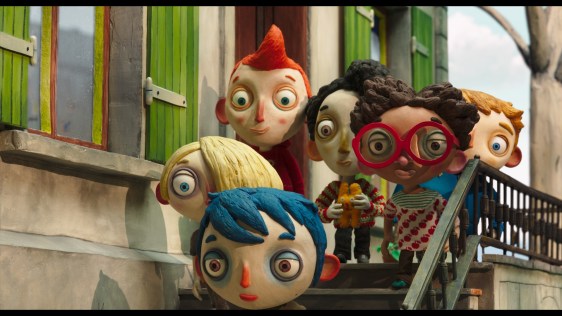
My Life as a Zucchini is animated in stop-motion, and the models used carry an eerie charm to them somewhat reminiscent of the characters in Edward Scissorhands. They can be called cute, but due to the characters’ appearances, particularly their eyes, there is a constant mix of pain and joy present in their expressions. This aesthetic matches well with the narrative content of the film, which pulls its punches only slightly in depicting the characters’ struggles. This is certainly not a film that patronizes its young target audience.

The element of the film that struck me hardest was the different varieties of sadness that existed in the children at the orphanage. Zucchini carries around a beer can; the only memento he has of his mother. One boy, Simon, is a bully of sorts, but it’s clear that he uses this bravado to mask the pain of not having his parents. One of the girls is implied to have been abused by her father, which has left her with some expressions of trauma, though it should be mentioned that the other children are shown to play with her and treat her like one of their own. Somehow, however, it is one of the cutest and seemingly innocuous moments that claws at my heart. Another girl’s mother was deported, and whenever she hears a car pull up to the orphanage she runs out and yells, “MOMMY?!” only to be disappointed over and over.

I want to emphasize that this is not a film about showing the crushing horrors of reality, and that the kids’ lives at the orphanage are portrayed with a great sense that life can get better, and that in many ways it’s not so bad for them now. After all, many are there to escape from worse circumstances, and there’s an unspoken bond of trust and understanding between Zucchini and the rest.

One surprising element of the film is that it actually talks about sex pretty candidly, especially for a kids’ movie. It takes the form of kids trying to figure out what happens when a man and a woman get together, but the statement “his willy explodes” should say it all. I have to wonder if it caught any of the parents off guard.

My Life as a Zucchini is a powerful work that resonates emotionally on many subtle levels. It’s definitely worth watching no matter your age. I see it as a way to open up to the conversation on a number of difficult topics with your loved ones, whether they’re your children, your parents, your relatives, or your friends.


They Grow Up So Breakfast: Mogusa-san Fights Against Appetite, Volumes 1 and 2

mogusashokuyoku-chicken

Mogusa Minori, the namesake character of the manga Mogusa-san, is my spirit animal. Her bottomless appetite, sheer love for food, and the ecstasy one her face when she does eat speaks to me on a level beyond personal. The series finished in 2016 at ten volumes, but while the conclusion of Mogusa-san would be a sad affair under normal circumstances, it was immediately announced that there would be a sequel of some kind. The result is a new series titled Mogusa-san Fights Against Appetite (Mogusa-san Shokuyoku to Tatakau), and though it is clearly of the Mogusa-san lineage, it’s also a remarkably different manga in many ways.

Mogusa-san Fights Against Appetite takes place two years after the events of Mogusa-san. Mogusa is now 18, has graduated high school, and is in a long distance relationship with Koguchi Torao, the boy who befriended her in the first series. Koguchi has moved to Kyoto to learn about becoming a professional chef, while Mogusa is headed to college in Tokyo. As a full-fledged adult, Mogusa has declared that she will no longer succumb to her cravings and will eat “only” three meals a day, partly to show that she’s matured and partly for the fact that food costs money. Unfortunately for Mogusa, Tokyo is a land of culinary temptation, and tasty devils beguile her at every turn.

The most significant change from the original Mogusa-san to the sequel is that the former is told from the perspective of Koguchi, while the newer series is from Mogusa’s. Rather than viewing Mogusa as this adorable yet eerily superhuman being, we’re seeing the world from Mogusa’s eyes, and understanding her hunger pangs in a more direct way. Because the series is about Mogusa-san trying her best to not use her many refined techniques for sneaking massive bites (instead of trying not to get caught), Mogusa-san Fights Against Appetite feels somewhat closer to a traditional food manga.

This subdued approach goes hand in hand with the fact that Mogusa is older. In a certain sense, it’s like the jump from shounen to seinen manga. As a 16-year-old, Mogusa is defined more by innocence and over-the-top antics, but as an 18-year-old she has a somewhat greater air of maturity. In other words, when teenage Mogusa ate, it was like watching a Dragon Ball Z fight. When adult Mogusa eats, it’s like watching Spike take on some thugs in Cowboy Bebop. In this respect, I do miss the style of the first series to some extent, but I can appreciate the new world of possibilities this direction opens up.

Another element I miss from the previous series is the cast of characters, many of whom were either instantly endearing or grew to become as such. However, this doesn’t mean that the side characters in Mogusa-san Fights Against Appetite are inferior, just that I long to see her old classmates. In Tokyo, Mogusa manages to meet a wide variety of interesting individuals, with a couple of characters in particular standing out:

mogusashokuyoku-mito

The first is a woman named Mito Shinobu, a beautiful fellow student at Mogusa’s college who’s actually a former delinquent trying to become more feminine. Mogusa and Mito bond over their mutual desire to become more mature, but Mito is unaware of the fact that Mogusa can eat her under the table five times over and instead views Mogusa as an example of girlishness to aspire to. She’s not a foil for Mogusa in the same manner as Tabe (the professional eater from the first series who sees Mogusa as her eternal rival) or Chigumi (the picky eater whose narrow range of taste lies opposite Mogusa’s ability to eat anything), but Mito’s interactions with her are consistently entertaining.

mogusashokuyoku-currycoke

The second notable character is a guy named Kamishita, the president of the Gourmet Club on campus. While I previously believed that Mogusa was the character that resembled me most in the world of anime and manga, Kamishita is even closer. Not only does he enjoy food, he’s constantly experimenting with unusual combinations, like nattou on dessert pizza (!). His willingness to try bizarre food mashups, but more importantly his appreciation for them, sends friends and lovers running for the hills—an experience I know all too well.

mogusashokuyoku-hamburg

One aspect of this sequel that is worth focusing on is the idea that Mogusa is eating less. After all, this is potentially disconcerting given the number of girls out there who starve themselves trying to get in shape or because they’re dissatisfied with their body images. Mogusa never really appears as if she gains or loses weight, so in that respect she’s a fairly unrealistic character given how much she typically ate in high school, but it’s worth pointing out that, even though she’s trying to control her diet, she’s not exactly munching on celery sticks. Mogusa is able to eat three to ten times as much as the average person, and even as she sticks to three meals instead of six or more, all of her portions are massive. She eats hamburg steaks so big that one could feed a family of four, and when she brings onigiri to school for lunch she takes five massive ones with her.

Mogusa-san Fights Against Appetite might very well be my favorite manga currently running. Like its predecessor, this manga speaks to the inner recesses of my soul in ways few others can. You might call it… today’s recommendation.

Save

Save

Absolute Destiny Cardpocalypse: Lostorage Incited Wixoss

lostoragewixoss-suzuko

Combining the trappings of Yu-Gi-Oh! with the zero-sum world of Madoka Magica, the Wixoss franchise is an oddity among card game anime. Although based on an actual existing TCG, its narratives tend to be less “buy our things” and more melodramatic human relationships with an occult twist. The latest series—the bizarrely named Lostorage Incited Wixoss—continues this trend, but trades in the “be careful what you wish for” theme of its predecessors for a new challenge.

Overview

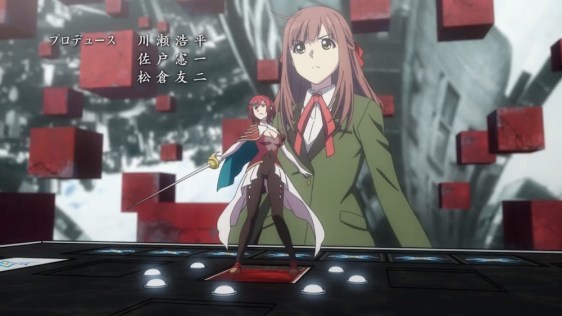
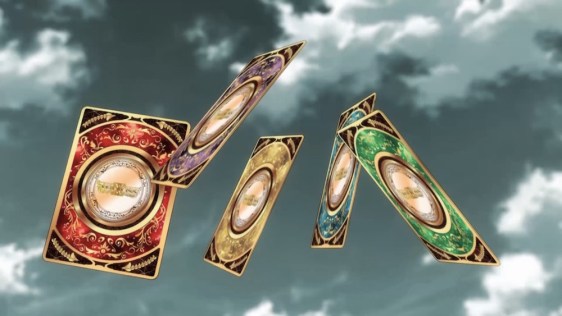
Clumsy Homura Suzuko and capable Morikawa Chinatsu are the best of friends, but when Chinatsu moves away the two lose contact with each other. Fast forward to when the two are teenagers, and both girls get involved with Wixoss, a collectible card game that appears innocent on the surface but has mystical origins. A handful of players are chosen as “Selectors,” pitting them against each other in a battle for their own memories. Players are given special cards with sentient girls called “Lrigs,” and whoever wins enough earn the chance to restore or change one of their memories. However, every loss destroys one of their memories. As a result of both becoming Selectors, Suzuko and Chinatsu end up on a course for a difficult and painful reunion.

Oh!! That’s a Card Game

lostoragewixoss-coincards

One of the key differences between Lostorage Incited Wixoss and the older Wixoss anime is that the latter were made before the shows’ creators had any idea as to how the actual game’s mechanics work. Much of it was therefore just used purely for dramatic effect. With this newer series, there appears to be much more of a coherent portrayal as to how the game is supposed to work. Where Selector Infected Wixoss and Selector Spread Wixoss used the TCG aesthetics as a vehicle for characterization and character development, Lostorage strikes more of a balance between the thrill of seeing two people face each other in a competitive environment, and highlighting the players’ stories. The key example of this is the “coin bet” system, where characters can wager special coins—essentially their “star chips” in the parlance of Yu-Gi-Oh!—to activate unique special abilities, with the caveat that this is literally putting their memories on the line.

Even as the show presents the game in a better light, however, one of the curious aspects of Lostorage Incited Wixoss that it shares with the other Wixoss anime is that they don’t exactly inspire a strong desire to play the TCG. It’s one thing when Yu-Gi-Oh! has its heroes fight against the forces of darkness, but when the game of Wixoss is portrayed as a source of endless anguish I’m not sure what feelings it’s supposed to conjure up in its potential player base.

Intimacy and Hatred

lostoragewixoss-photo

The highlight of Lostorage is the complex relationship between Suzuko and Chinatsu, a corrupted twist on the concept of childhood friendship (with mild yuri elements) that offers vague glimmers of hope throughout. As kids, Suzuko looked up to Chinatsu as everything Suzuko wished she could be. When she gets her Lrig, she bases the card’s appearance and personality on her image of Chinatsu as someone to aspire. To Chinatsu, however, Suzuko is a reminder of the false facade of strength that she’s had to keep up since childhood Thus, much of the series is about Chinatsu trying to erase her own memories of Suzuko in order to destroy their friendship, while Suzuko attempts to save it.

This conflict is very different from anything in the previous Wixoss anime, and the fate of their friendship does drive the story along effectively. And yet a part of me also misses how unique Ruuko from Selector Infected Wixoss was as a protagonist. The strange joy she feels from matching wits against other opponents despite knowing about the horrors of the game was an interesting source of conflict, but I also understand that doing this again would’ve just been treading old ground.

Given this strange love-hate relationship between Suzuko and Chinatsu, Lostorage Incited Wixoss resembles elements of Madoka Magica even more than Selector Infected/Selector Spread Wixoss, with the two of them possessing a kind of Madoka-Homura dynamic. When I think about it further, though, it’s actually closer to an Utena-Anthy relationship from Revolutionary Girl Utena: a girl who wants to be the light of hope for another girl who falls further and further into corruption.

Overall

Much like the previous two Wixoss series, Lostorage Incited Wixoss provides a mostly dark, cynical twist on the typical “TCG anime” formula. What sets Lostorage apart is that the stories of the characters comes across as much more personal and interconnected due to the use of “memory gain/loss” as an overarching premise. It lacks some of the surprising punches of the old Wixoss, but is a much more stable and coherent narrative overall.

Save

Save

Coast to Coast: Saga of Tanya the Evil

tanyatheevil

It’s very tempting to categorize Saga of Tanya the Evil according to its appearances. What else would you do about a series where a Japanese man is reincarnated as a blonde magical little girl in an alternate universe version of Nazi Germany? Is it fetishizing the Third Reich? Is it making an argument for authoritarianism and militarism through the lens of contemporary anime tropes? Questions abound, and yet I find that this anime is very difficult to gauge its moral direction, if there is any at all.

Tanya is a little girl who in another life was a ruthless salaryman dedicated to staying the reliable course that is assumed of his profession. So devoted a company man is he that he fires one of his employees for a minor infraction. Believing in the superiority of a detached, logical mindset, he fails to anticipate that his ex-employee would be so despondent as to push the salaryman in front of a moving train. At that moment, the man receives a message from God but refuses to believe in the existence of a higher power, which prompts God to reincarnate him as Tanya.

As Tanya, she has kept her memories of her previous incarnation, and at only 10 years old joins the imperial military due to her extremely high magical aptitude. Similar to her previous life, she sees the military as the steady course to a comfortable life, but a variety of contrivances both divine and coincidental cause her to consistently put her life (and her beliefs) in peril.

Given this back story, it’s possible to argue conflicting points. For example, the refusal by Tanya to let God control her could be seen as a defiance of fate and religion, but the fact that Tanya is constantly denying the existence of a supreme being despite everything that happens might render it a point in favor of religion. For me, I find that the main point of conflict and confusion when trying to analyze this series is actually the question of whether it’s supporting Tanya’s mindset or criticizing it (or maybe both!).

Tanya’s desire for the most stable track in life, and the calculated way she goes about it, has the appeal of an older science fiction protagonist. Often, she’ll say one thing and think the other, and it’s usually in service of appearing like an upstanding member of society in order to further her own desires. However, the subsequent derails that keep Tanya from that comfortable life might be a criticism of the Bubble Economy mindset that has been the cause of much anguish ever since the Japanese recession began. Where once the path to success was all but assured for many Japanese salarymen, that foundation crumbled underneath them, leading to (among other things) a crisis of masculinity.

Perhaps this is the reason why Tanya is a girl in the first place. While it’s normally assumed that older male anime fans gravitate towards young female characters due to a desire to be with them, there’s also to some extent a desire to be them. The assumed idyllic life of cute girls, and the innocent mindset that is supposed to come with that, holds what I believe to be a particularly strong appeal to those whose lives are slowly ground down by the engine of corporate society. That being said, the fact that Tanya maintains her previous life’s Japanese salaryman/mildly sociopathic mindset seems more confrontational than those kinds of series usually are.

In this respect, the series that I think holds the greatest connection to Saga of Tanya the Evil, it’s actually Strike Witches. In terms of setting, the two are quite similar: alternate versions of World War II Earth where magic and technology come together to give young girls flight and military might. Strike Witches is much more in the vein of the types of series I described in the previous paragraph, because while the story is about war, it’s as if the world is an extension of the characters’ identities as cute girls. With Saga of Tanya the Evil, this concept is taken to its extreme. Tanya is akin to a Strike Witch if that world actually had the image of military machinery beyond lighter aesthetic elements.

This post was sponsored by Johnny Trovato. If you’re interested in submitting topics for the blog, or just like my writing and want to support Ogiue Maniax, check out my Patreon.

Save

Pimple Popping Manga: Chiyo’s Lips

chiyoslips-cover-small

Though certainly not to everyone’s liking, hands-on acne removal is a very popular subject on YouTube (click if you dare, but it’s potentially NSFW). Often referred to in comments as one example of the “the weird part of YouTube,” it’s somewhat curious that it hasn’t emerged as some kind of sub-genre of manga or anime. In fact, the only title I can think of where pimple popping is a primary focus or narrative device is the manga I’m going to be reviewing today: Chiyo no Kuchibiru (or Chiyo’s Lips) by Iwami Kiyoko.

As this subject can be disgusting to a lot of people, I’m going to put this behind a cut-off just for the sake of your lunches. For those who don’t mind (or even enjoy this sort of thing), read on:

Continue reading

Opposites Connect: 3D Kanojo – “Real Girl”

3dkanojo-couple-small In 2013, I came across a shoujo manga called 3D Kanojo by Nanami Mao. Although I had some initial misgivings based on the title alone (it means “3D girlfriend”), the series ended up becoming one of my favorite manga. It recently finished just last year, so I’d like to give my overall thoughts about this excellent work.

The idea of a socially awkward young man winning the affections of the beautiful girl has long been a popular trope. America has seen Revenge of the Nerds, Beauty and the Geek, and the hyper-popular The Big Bang Theory. Japan has been home to Densha Otoko, and numerous manga and anime premised around this idea such as The World God Only Knows and Love Hina. Within these works are three recurring ideas: the nerd as underdog, the nerd as the nice guy vs. the jerks, and the notion that nerds carry hidden charms buried deep inside shells of social awkwardness.

One difference between the stereotypical image of the American “geek” and the Japanese “otaku” is that while the geek guy worships at the altar of characters who are live actors (e.g. Princess Leia), otaku go for the “2D girls” of anime, manga, and games. Reality, where actual “3D girls” reside, is thought to be a frightening realm that can eat otaku alive. So, with a title like 3D Kanojo, I had wondered if this might be one of those wish fulfillment fantasies where an otaku boy gets the girl just by being nice without any real substance, while the girl ends up as some kind of virginal ideal, a typical “2D girl come to life” scenario. Fortunately, within one chapter 3D Kanojo defies those assumptions, and shows itself to be a robust, considerate, and even progressive approach to this idea.

When the series begins, Hikaru Tsutsui is an otaku who is unable to handle social interaction outside of talking to his only friend, a fellow hardcore fan. His ideal girl is a magical girl from an anime. One day at school, he sees one of his classmates, the beautiful Igarashi Iroha, being accosted by a guy angry at Igarashi for cheating on him. When the guy tries to hit her, Tsutsui jumps in to defend Igarashi…only to get his ass kicked because he’s a wimp with no physical ability.

At first glance, this is ground already traveled by stories like Densha Otoko and Back to the Future—a chivalrous act by a geek shows the strength of his heart, and makes the girl fall in love with him. However, with 3D Kanojo, the relationship even at the early stages possesses a lot more depth. Many times, the girls in these stories only appear to be very sexually active but are actually secretly virgins, giving them a sense of idealized purity. Not so with Iroha, who freely admits that she was two-timing the guys she was with. Rather than shunning her for being a “slut,” Tsutsui accepts her for who she is, especially once the two of them spend more time together and are able to open up to each other more readily. What’s important isn’t that she’s had others in the past, but how they feel about each other now. And as the series continues, it becomes clear that their love for each other burns red-hot.

It isn’t all roses, of course. Romantic rivals show up for both character, such as an otaku girl and a handsome guy (it’s a shoujo manga, after all). Igarashi’s sexual experience isn’t a deal breaker, but it’s intimidating for a guy who, up to that point, didn’t even talk to girls other than his own mother. Tsutsui’s constantly questioning whether or not he’s good enough for her, but it’s important to note that she’s doing the same just as often. In spite of how different they are on the surface and even in many elements of their personalities, there’s a mutual longing for understanding.

While I thought highly of the series very early on, there is a particular chapter that solidified my opinion that 3D Kanojo is a great series. Most of the time, the story is told from Tsutsui’s perspective, but in one chapter it’s Igarashi’s head we’re in. Through her, we see her relationship history. As an extremely attractive girl, she’s had numerous suitors, but the apparent issue is that all of them only paid attention to her appearance. In this way, her looks became a curse. At one point, she had even tried to open up to a boyfriend, only for the guy to treat it as basically, “There, there. Okay, now that I’ve comforted you, are you gonna put out?”

3dkanojo-exbf-small

Here, it becomes plainly obvious what Igarashi saw in Tsutui. He isn’t just generally “nice” and “considerate,” he connects and empathizes with her on the level both of them desire. While occupy different strata of the high school hierarchy, both of them are familiar with being unfairly judged by their looks, and their ability to see what is truly inside each other is what draws them closer and closer.

Ultimately, even as the series goes through some fairly well-worn shoujo manga plot developments, the sheer robustness of this core relationship, as well as a solid cast of supporting characters, keeps the series from feeling old-hat. I felt a genuine desire to cheer on Tsutsui and Igarashi, not because they were “supposed” to be together as the main couple, but that everything they had been through together showed why they should be as one.

The last thing I’d like to mention is that 3D Kanojo technically isn’t the real title. That’s how it’s written out, but due to quirks in how the Japanese written language is used, it’s actually supposed to be pronounced “Real Girl.” In retrospect, the two titles fit this series perfectly. While Igarashi comes across at first as the mysterious girlfriend of the “3D realm,” her “realness,” both in the sense of her lived human experience and her candor, are what foster her romance with Tsutsui.

Save

Save

How Dragon Ball Super Made Dragon Ball Better

trunkscrying

Surprising even to me, it turns out Dragon Ball Super is actually really good. I’ve written a small post detailing how Dragon Ball Super has improved upon its predecessors. Take a look!

I Have a Choco: Ogiue Maniax Status Update for February 2017

February might be Valentine’s Day Month, but how much I’ll actually discuss romance on the blog remains a mystery even to me!

Whatever the situation, I know that if I were in Japan, I’d be giving giri choco to my Patreon sponsors.

General:

Johnny Trovato

Ko Ransom

Alex

Diogo Prado

Viga

Yoshitake Rika fans:

Elliot Page

Hato Kenjirou fans:

Elizabeth

Yajima Mirei fans:

Machi-Kurada

Given that this will be the tenth year of Ogiue Maniax, I decided last November to do a Genshiken series 1 re-read. I’ve started with Volume 1, and you should expect to see them come out every other month. (I would have said bi-monthly but that phrase can also mean “twice a month,” so…) I’ve already felt like I’m stepping back into a different world, so I’m looking forward to the next article too.

Speaking of Genshiken, I also wrote a little post comparing Kasukabe Saki to Love Live‘s Nishikino Maki. The latter’s cooldere attitude reminded me of Madarame’s fantasy version of the former.

Perhaps the most important post I’ve written this month is on the subject of butts in anime. In it, I detail increasing presence of large rears in Japanese animation, and put forth my own hypothesis on why this has occurred. The seeds of this post have been germinating in my head for a very long time, even before Ogiue Maniax ever began. If you want to see more content like this, let me know. I just hope it doesn’t take me another 10 years to write one!\

I was also sad to see the end of Soredemo Machi ga Mawatteiru aka And Yet the Town Moves. It’s a very unique series in a lot of ways, and I look forward to seeing what the artist does next.

On the video game side, I’ve written a couple of posts thinking about what how players view competitive games, and what they can potentially do to both bring in a bigger audience and keep them from running away in fear.

As for this month’s Patreon-sponsored post, I looked at the subject of babies in anime and manga. My rating of babies is based on how much they make their parents suffer, I guess. If you have a subject you really, really want me to write about, it’s just a one-time $30 pledge.

If you’re wondering why I have it at that price, it’s just because I don’t necessarily want the blog to consist primarily of requests as opposed to my own ideas. That being said, I am considering maybe offering a poll with three or four topics that can be voted on with Patreon pledges. Is this an idea readers would be on board for?

Overall, I think this was a pretty solid month. I don’t have a wholly solid idea of what’s going to come next, but it might be a bit less review-heavy compared to this one.


Return to Genshiken: Volume 1 – The Old Guard

genshiken1-sasaharacomifes

Welcome to the very first “Return to Genshiken,” a new series of posts where I revisit the very first Genshiken manga series. For those unfamiliar with Genshiken, it’s a series about a college otaku club and their daily lives. Originally concluding in 2006 before restarting in 2010 and finishing once again in 2016. A lot has changed about the world of the otaku, so I figured it’d be worth seeing how the series looks with a decade’s worth of hindsight.

Note that, unlike my chapter reviews for the second series, Genshiken Nidaime, I’m going to be looking at this volume by volume. I’ll be using the English release of Genshiken as well, for my own convenience. Also, I will be spoiling the entirety of Genshiken, both the old and the recent manga, so be warned.

Volume 1 Summary

genshiken1-doujinshop

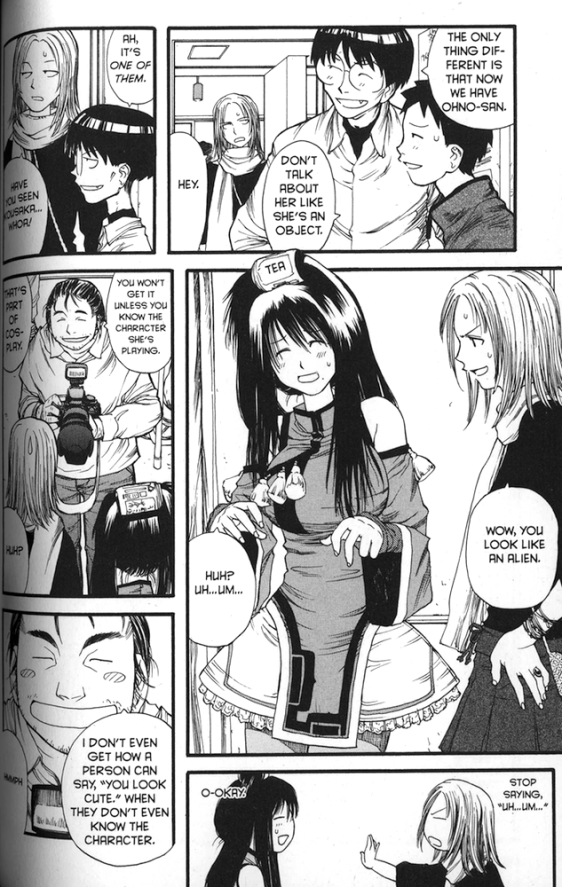
Sasahara Kanji is starting as a freshman at Shiiou University, a college in the Tokyo area. He wants to join an otaku club, and after some false starts winds up in a club called the Society for the Study of Modern Visual Culture, or “Genshiken.” While he believes himself to be nowhere near as hardcore as the other club members, he discovers that he fits in well with the laid back atmosphere.  As he learns the ropes about the otaku life, he’s also joined by other new members, including cosplayer Ohno Kanako, the usually handsome supernerd Kousaka Makoto, and Kousaka’s non-otaku girlfriend, Kasukabe Saki.

Back in Time

genshiken1-otakuclubs

I must say, reading the first volume of Genshiken really is like going through a time warp. Not only is the visual style of the manga starkly different compared to how it ends up by Volume 21, but the aesthetic of the characters the Genshiken members themselves are obsessed with is a trip down memory lane. During this period, Genshiken makes references to series like To Heart and The King of Fighters, and the world of the otaku just seems…smaller somehow.

In one chapter, Tanaka is examining a garage kit of a cute girl model, and he remarks that female characters’ faces are getting rounder and cuter as of late. Keep in mind that this was back in 2002, before the K-On!‘s and the Bakemonogatari‘s of the world came along, the time of series like Star Ocean EX. Character designs like Lina Inverse from Slayers and Deedlit from Record of Lodoss War were still holding strong.

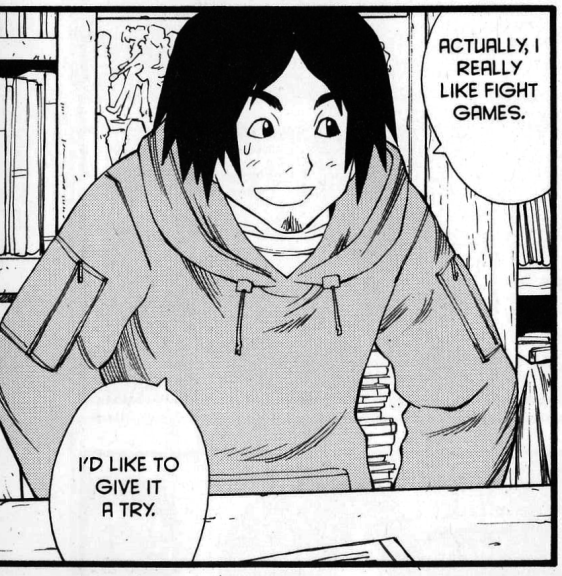
It’s also notable that the character profiles included between chapters bother to list each person’s “favorite fighting game character.” Fighting games still exist today, but it should be noted that they began to die out around 2003 before being revived in 2009 with the launch of Street Fighter IV. I think we’re catching the tail end of the fighting game craze.

Perhaps the most major difference between Genshiken and Nidaime is that the latter mainly focused on fairly contemporary references in order to emphasize that its values were more current. In contrast, the original Genshiken, by starting at a point where years and years of otaku history preceded it, draws from the previous decades in order to establish its characters and their preferences.

Memories Refreshed

There are a lot of things that happen in Volume 1 that I pretty much forgot, and a lot of things that, having recently finished Nidaime, stand out as likely reference points for the second series.

I did not remember that Sasahara joins Genshiken because Kohsaka scares him from the Manga Society. Given how close they become later on, it’s almost surprising to go back and see just how intimidating Kohsaka appears to Sasahara. It makes sense: Sasahara is a meek fellow, and he’s suddenly confronted with this idea that guys like him might populate the Manga Society. And just in general, most of the main cast of awkward nerds—Sasahara, Tanaka, Madarame, Kugayama—get really uncomfortable when it comes to regular-looking guys.

Going forward to Nidaime, it frames how Yajima feels upon entering the club all those years later. While Sasahara felt threatened by Kohsaka alone as a kind of living contradiction, Yajima sees herself as being practically surrounded by Kohsakas. Ohno is attractive. Ogiue is very attractive. Yoshitake’s surprisingly fashionable. Hato is Hato.

While I thought Madarame’s lamentations over all the sex talk in Chapter 125 was more of a general callback to how the club used to be, I find that it’s actually specifically in reference to the guys overhearing conversations from others about how much sex they have that can be found in Volume 1. If you just read Volumes 1 and 21 back-to-back, it is a stark contrast that the characters would go from freezing up and sweating nervously when some fellow talks about doing three girls in one day, to Sasahara and Tanaka both mentioning how they wish they had more sex with their girlfriends. Similarly, the way Madarame freezes when he sees Kohsaka and Saki kiss for the first time is possibly the long setup to the fact that he’s too passive to even get something started with Sue even after they start going out.

Another moment i had forgotten the exact details for was the very first Kujibiki Unbalance discussion we ever see. First, I had no idea that Kujibiki Unbalance is supposed to be a shounen manga, given its makeup. Second, the characters talk about the fact that the school in Kujibiki Unbalance is supposed to be a mix of various real schools—a self-aware nod to how Shiiou University is itself an amalgam of real schools.

Saki the “Time Bomb”

genshiken1-sakiohno

In this volume, the manga refers to Saki as a “time bomb” whose effects influence Genshiken in unforeseen ways. Looking back, this statement is more profound than I think even the author Kio could’ve imagined. She fundamentally changes a great deal about the club over time. It’s because of her that the members of Genshiken grow and evolve themselves as people, beyond the otaku stereotypes to varying degrees.

Outside of the possible exception of Sasahara, whose sister Keiko is very much the “gyaru” type, Saki is Genshiken’s biggest exposure to the “normal” world before the members start graduating. Because of her, Ohno goes from shy wallflower to mother figure for younger otaku. Madarame changes himself as he discovers his feelings for her. Ogiue learns to open up as well. She is a force for change in the club, and one might even argue that she’s the real protagonist of Genshiken, at least initially.

I also noticed that the presence of the real world outside of Saki is much more prevalent in Volume 1. The aforementioned bro talk situations happen. Saki herself gets hit on by guys looking for a quick fling. As the series continues, that realm fades from view until Saki is the primary example of it. And even then, Saki herself changes as she gets acclimated to being friends with otaku.

Comic Festival

I recall that, prior to my discovering Genshiken, my main exposure to the idea of “Comic Market” came from two anime: Comic Party and Nurse-Witch Komugi-chan. Suffice it to say, that’s kind of a strange combination. While Comic Party had a couple of Kuchiki-esque creepers, it was mostly portrayed as a fairly tame event. With Genshiken, however, seeing the final barrier of Sasahara’s shame come undone gives the full doujinshi-purchasing experience. In a way, doujin events are where you confront your true self, and see what values lie within. What are your real priorities? What fundamentally tickles your fancy? It’s a time for reflection.

genshiken1-comifesharaguchi

Before Kuchiki, There Was Haraguchi

I think there’s a common feeling throughout Genshiken fandom that Kuchiki is an unnecessary element. Who wants to read about a guy with the absolute worst social skills, whose behavior is grating and downright pathetic? However, in Volume 1 Kuchiki has yet to appear. Instead, within early Genshiken exists the character of Haraguchi, and in many ways he provides an interesting contrast with Kuchiki.

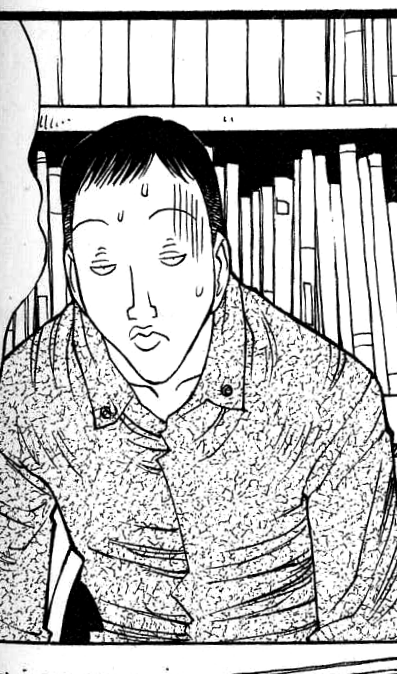
Haraguchi is portrayed as an opportunist who likes to lord it over others. A member of all three otaku circles (Anime Society, Manga Society, Genshiken), it’s implied that each group barely tolerates him. Haraguchi works by making connections and ingratiating himself to those who “matter,” and he’s viewed as a leech who mooches off the success and passion of others. Haraguchi is that guy who gives orders without ever actually contributing, and the result is that no one in the universe likes him.

A similar dislike of Kuchiki is certainly prevalent, but for as much as can be said about Kuchiki’s flaws, being a manipulative person isn’t one of them. He’s obnoxious, lacks self control, has a tendency to give TMI, and perpetually irritating, but he’s also absolutely honest and upfront about who he is and what he enjoys. I think it’s ultimately why he’s allowed to stay with the club. Kuchiki is a man of innumerable faults, but he’s not a scumlord like Haraguchi.

Art in Progress

genshiken1-paneling

As I looked for the best image to include in this post, something hit me: the panel layout in Volume 1 is much less refined and elegant than what it would become. While there’s a nice sense of variation in terms of panel size, the composition isn’t as strong, the borders are rather rigid, and the pages don’t flow nearly as well. I’ve looked ahead a couple of volumes and it mostly seems the same, so I wonder if there’s a point at which it truly changes.

Actually, when looking just at the differences between chapters in Volume 1, the art style already begins moving towards the more familiar Genshiken style. As the series begins, the character designs are more similar to Kio’s previous works, and by the end of the volume they’re definitely getting softer. The difference between Chapter 1 and Chapter 2 is significant enough that I suspect they were drawn months apart. That’s what happened with Nidaime, where the pilot chapter still had the feel of Jigopuri.

Final Aside

I thought the portrayal of underage drinking was a Nidaime thing. Apparently not! It happens wit Kasukabe and Kohsaka right from the start.

Save

Save

Save

Save

Save

And Yet the Town Concludes: Soredemo Machi wa Mawatteiru Final Chapter (and Other) Thoughts

soremachi-finalchapter

Soredemo Machi wa Mawatteiru (“And Yet the Town Moves”) recently concluded its 11-year manga run in Japan. Even to the very end Soremachi captures the souls of the town members who populate its setting, telling their stories with a kind of quirky levity.

soremachi-notrealmaids

The premise of Soremachi is as follows: Arashiyama Hotori is a high school student, a clutz, an aspiring detective, and (ostensibly) a maid at a cafe. However, this is less a “maid cafe” and more a “cafe that happens to have waitresses dressed as maids.” With only the most nebulous notion of the maid cafe as the focal point of many of its stories, Soremachi proceeds to explore the lives of its characters. From occult mysteries to unrequited teenage love triangles to old men arguing about the past, the manga basically plays fast and loose with its narrative, but the consistent charms and personality traits of its eclectic cast always keep it a joy to read.

soremachi-wickerman

So how does an open-ended manga such as Soremachi close the book on its story? The answer is that it finishes much as it began: frivolous and free-wheeling in its continuous portrayal of an occasionally bizarre “everyday,”

Warning: Ending Spoilers

In the penultimate chapter of Soremachi,  Hotori appears to be visited by a higher-dimensional being. This is not the first time that Hotori has seemingly encountered otherworldly entities. From angels to time travelers to aliens, somehow Hotori’s life has continued to remain fairly mundane. However, this time the visitor gives Kotori a challenge. The following day, there is going to be a typhoon, and Hotori has to choose between saving everyone in town but vanishing from history in the process, or stay alive but sacrifice 3,000 lives in her place.

In the final chapter, Hotori’s classmates are all discussing that there appears to be something wrong with their memories. For some reason, they all seem to remember a classmate, possibly a girl, who was cheerful and energetic. Suddenly, Sanada and Tatsuno, Hotori’s two closest friends, spot a girl on the other side of the building. They follow her, and…

It’s revealed that they were rehearsing a play. Hotori did not sacrifice the memory of her existence, and everything about the mysterious girl lingering in their minds was from the script, which Hotori wrote. They’re chasing her down because she hasn’t written the ending yet, to which Hotori replies that, essentially, if the climax was made dramatic enough, then an ending would naturally follow. The chapter, and the series, ends with Hotori as author-surrogate proclaiming:

soremachi-endingpage

While the conclusion of Soremachi might feel at first to be a cop-out, given that there were plot threads that could have seen resolution, I think it’s all too appropriate for the series. Much like the lackadaisical attitude the manga and its characters took towards its own premise of a “maid cafe,” having a last chapter pretty much negate the gravitas of the previous one, and then turn into a “non-ending” is very indicative of a series about a town that keeps moving. Also, because many of the smaller subplots were able to resolve in the chapters leading up to the end, the series unwinds in a satisfying way.

soremachi-konfutaba

My only complaint in the end is not enough of my favorite Soremachi character, Kon Futaba. This is no fault of the manga itself, because she’s actually in it very often, even a couple of chapters from the finish. She’s just amazing, is all.

Further Reading:

And Yet the Digital Manga Moves: Soremachi is Back

Soremachi Creator Ishiguro and His Two Biggest Influences


Save