Love, Comedy, and True Beauty: Kimi xxxru Koto Nakare, Chapter 1

Of all the fujoshi-themed manga I’ve encountered (and I’ve read a lot), Okachimachi Hato’s Fujoshissu! is one of my absolute favorites. So, having recently found out that Okachimachi is starting up a new manga, I was immediately thrilled. While my search for fujoshi protagonists is why I first discovered her work, it’s Okachimachi’s expressive art style and subtle, considerate explorations of her characters that turned me into a fan.

Her new work, Kimi xxxru Koto Nakare (“You Shall Not xxx”) shows signs of being just as strong from the very first chapter, which is why I’ve decided to start writing monthly chapter reviews for it. This is only the third time I’ve ever done the “episodic review” thing (both previous instances were Genshiken anime and manga), so I hope you enjoy it.

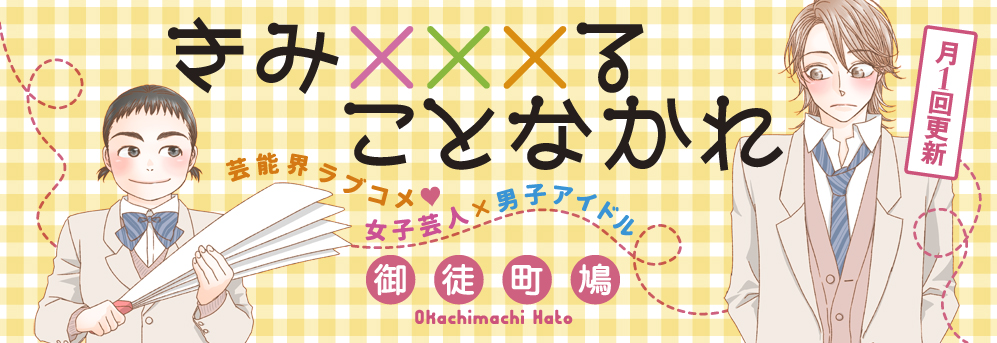
Kimi xxxru Koto Nakare is the story of a budding teenage romance between Hayato, a male idol, and Nobuko, a female celebrity comedian. When the manga begins, we see that Hayato first discovers Nobuko at a very young age while watching television. Nobuko is the daughter of a famous comedian as well, and to Hayato, it’s love at first sight. He thinks she’s the cutest girl ever, and it inspires him to get into the entertainment industry as a child model.

Years later, the two are now classmates, and while Hayato is adored by legions of female fans for his handsome appearance and cool demeanor, his real aspiration is comedy. Hayato asks Nobuko for help, and after some important lessons (namely that Hayato can’t be serious about comedy if he’s afraid of being laughed at), Hayato finally succeeds in getting some laughs. Grateful to Nobuko, Hayato finally confesses his feelings to her and even gives her a kiss, but while Nobuko is shown to secretly feel the same way as Hayato, she backs away and tells him that he can’t do that.

There is so much to talk about in this first chapter, but I think what stands out most is Nobuko’s appearance. While Tonari no Young Jump, the website on which Kimi Nakare is published, can ostensibly be called “shounen” or “seinen,” it’s clear that Okachimachi comes from a very different background in terms of art style and approach to manga. Kimi Nakare is very much in a shoujo vein, but very rarely do shoujo manga feature a main female character as plain-looking as Nobuko. Generally speaking, they tend to be not the most beautiful but still thin and pretty in a conventional sense. In contrast, Nobuko is larger, has a rather masculine face with big bushy eyebrows, and is just noticeably less attractive than Hayato.

Even the story draws attention to the fact that Nobuko is not supposed to be good-looking. When a young Hayato is telling his parents that Nobuko is the cutest girl he’s ever seen, they react with puzzlement. “Cute? I would call her interesting…but cute?” Hayato “shouldn’t” be attracted to her to such an extent, but he is.

What’s amazing about this contrast is that it doesn’t feel simply like wish fulfillment that a handsome idol like Hayato would fall in love with Nobuko. Putting aside his love of comedy and the fact that she’s mentioned as being incredibly talented at getting laughs, Nobuko is strong, supportive, cheerful, and isn’t afraid to take someone down a peg. As the chapter progresses, it becomes evident that these qualities are what continuously draws Hayato to her. Okachimachi never draws Nobuko in a way implied to be Hayato’s “perspective” with the requisite that she then appears to be more beautiful than she is, but by just seeing them together, I could understand just how attractive Nobuko’s personality could be.

Suffice it to say, I already love this manga. I believe that Nobuko’s negative reaction to Hayato’s kiss and confession comes from the fact that he’s an idol and therefore isn’t allowed to date. Whether that means they have a clandestine romance or they have to constantly resist their own feelings, I can’t wait to see what happens next.

If you liked this post, consider becoming a sponsor of Ogiue Maniax through Patreon. You can get rewards for higher pledges, including a chance to request topics for the blog.

Time for a Change!: Ogiue Maniax Status Update for April 2016

Between showers, fools, and lambs, April is a month of change and transition. It’s only appropriate then that I try to evolve as well! As always, it’s with the help of my friends and Patreon supporters that I continue to try and improve Ogiue Maniax:

General:

Johnny Trovato

Ko Ransom

Alex

Diogo Prado

Sasahara Keiko fans:

Kristopher Hostead

Yoshitake Rika fans:

Elliot Page

Hato Kenjirou fans:

Elizabeth

Yajima Mirei fans:

Machi-Kurada

So, the first change I’m making is a small adjustment to my schedule. Since 2010 I’ve generally structured my weekly posting schedule to be posts on Tuesday and Friday with at least the occasional lighter post on Sunday, most typically a Fujoshi File entry. However, I’ve noticed that most of my readers come in on Sunday, and to give my lowest-impact content at that point feels like a shame, because if you’re coming to Ogiue Maniax I believe it’s to read something interesting. Because of this, I’ve decided to switch Sunday to being a main posting day, with either Tuesday or Friday being less heavy. I’m still on the fence on which one to use, but most likely it’ll be Friday. I hope you enjoy the change, and of course, if you miss the post it’s always there in the archives.

kiminakare_mainvisual

A second possible change is adding another series other than Genshiken for me to review regularly. The title is Kimi xxxru Koto Nakare (“You Can’t Do That”), the new monthly manga by Okachimachi Hato (creator of one of my favorite manga, Fujoshissu!) about a high school romance between a male idol and a female celebrity comedian. The question is, how should I cover it? To help me with this, I’m using a handy dandy poll:

Keep in mind that this is just for feedback and the winning answer won’t necessarily determine what happens. Also, I mistakenly thought it was a weekly manga, so a previous Patreon post of mine mistakenly had weekly options.

As for what’s happened on the blog over the past month, the biggest event for Ogiue Manaix and all current Genshiken readers definitely has to be the latest manga chapter, which concludes the Madarame harem story. I won’t say much more, so go check it out if you’re curious as to what goes down and my thoughts on it. Also, I need to point out that a funky translation of Chapter 122’s contents has been going around, and it provides an inaccurate image of the characters. In response to this, I’ve also translated a couple of small but vital excerpts from the chapter in the hopes of clearing up the confusion.

As mentioned last month, I went to see a whole bunch of animated films. These include The Boy and the Beast, The Case of Hana & Alice, Beyond Beyond, Kizumonogatari Part 1: Tekketsu, Psycho-Pass: The Movie, and Long Way North. This means it was a pretty danged review-heavy month, especially because I also covered Please Tell Me! Galko-chan, the mahjong manga Saki, and the ever-successful Aikatsu! I’m typically more of an analysis and deep thinking kind of writer, but it’s not bad to have months like this either, and most of the time I my reviews are more half-review/half-analysis anyway.

Speaking of reviews, I also finally updated the Reviews section of the blog. I neglected it for about…a year and a half? orz

I also talked last month about my concern over stagnating as a writer. My smart and ever-perceptive friend David Brothers gave me some advice in response to one of my Apartment 507 articles on Yandere characters, which is that I should think about putting more of myself into my writing. I think that ever since I’d gone in a more academic direction it’s improved Ogiue Maniax in a number of ways. At the same time, that sort of more casual and personal feel, while still present I believe, might not be as apparent. Sometimes I have to be more friend than teacher.

Three final comments:

  1. Shout outs to Abadango for winning Pound 2016 using 99% Mewtwo (with a dash of Meta Knight). It’s the first major tournament in Super Smash Bros. for Wii U that has been won by a Mewtwo.
  2. Some cool and mysterious fellow recently published an academic article about the science fiction manga 7 Billion Needles in the journal Japan Forum. If you’ve got access and that’s your sort of thing, maybe check it out?
  3. This past weekend was the final Love Live! concert for the original μ’s girls. Love Live! forever! Hanayo banzai! Also, sorry about the April Fool’s joke (not sorry).

Dumb Girls, Dumb Boys: Please Tell Me! Galko-chan Review

galko-bustyboobyBased on the design of its central character, Please Tell Me! Galko-chan likely draws initial attention for two reasons. While I’m not denying the popularity of Galko herself, I do think the anime has an appeal that goes beyond eye candy or the potential thrill of hearing girls talk candidly about personal topics.
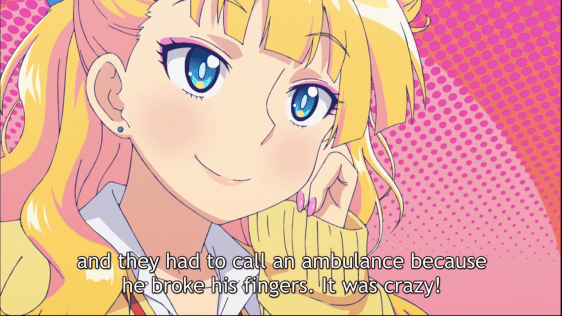
Please Tell Me! Galko-chan typically revolves around the conversations between three characters: Galko (a trendy “gyaru” whose appearance can be deceiving), Otako (an otaku girl who prefers to avoid social interaction but is still Galko’s best friend), and Ojou (a rich girl whose experiences differ greatly from the rest). Each short 7-minute episode, they talk about things like how eating spicy foods makes your butthole hurt or the difficulties of buying bras when your breasts are too large, usually instigated by Otako who loves to tease the easily embarrassed Galko. Even if she doesn’t get embarrassed about something, a whole group of boys fawning over her will easily let their imaginations go wild.

Screen Shot 2016-01-08 at 2.47.28 PM

Screen Shot 2016-01-08 at 2.47.50 PM

It is most definitely a fanservice anime, but I feel that the show is carried as much by its characters’ personalities as it is by their appearances (and even then it’s really only Galko-chan). When people mistakenly suspect a tired Galko of being out with men (she actually just stayed up all night watching anime), or when it turns out she’s into literature, the appeal isn’t simply that there’s a “mismatch” between her inside and outside. Rather, her character feels quite full-formed despite each episode being so short. The same goes for the other characters as well, such as how the overweight Nikuko is shown to not only be extremely athletic, but also brimming with confidence. In this respect, Otako is actually my favorite because of how her desire to tease Galko is shown to bring Otako out from her own shell, creating a beautiful (if weird) friendship. Also, Otako kind of has an Ogiue vibe.

Screen Shot 2016-01-08 at 2.53.31 PM

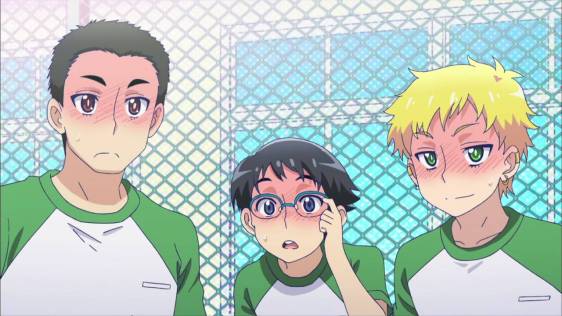
galko-guys

I think what maybe says it all is that, as I watched the show, I looked forward to seeing how the guys react to Galko’s conversations just as much as I enjoy Galko’s hijinks. They’re at that age where even one hint at something sexual will cause their hearts to race, and their confusing of Galko’s general warmth and friendliness with the idea that she definitely likes each of them feels just as much a part of youth as all of the stuff on the girls’ side. While I don’t know anyone who’s ever kneaded dough to try and replicate the feel of a boob (this really happens in the show), I don’t think it’s that farfetched given how cultures, inside or outside of Japan, mysticize the idea of being with someone to the point that even approximations gain a kind of value all their own.

If you liked this post, consider becoming a sponsor of Ogiue Maniax through Patreon. You can get rewards for higher pledges, including a chance to request topics for the blog.

What Dreams Are Made of: Long Way North

This film is part of the 2016 New York International Children’s Film Festival

One person’s dreamer is another’s fool. The quest to achieve the seemingly impossible frequently rubs up against the harsh reality and possibility of failure, and what results can end up inspiring some and serving as a grave warning to others. Long Way North, a French-Danish animated film directed by Rémi Chayé, follows a young Russian girl named Sasha who holds onto her missing (and presumed dead) grandfather’s dream to reach the North Pole, in spite of her parents’ desire for her to act like a proper young girl of nobility.

The term “family film” can be a kind of backhanded compliment, implying that it’s something almost innocuous in its presentation. However, Long Way North deserves the term in the best sense possible because of how well it speaks to the aspirations and concerns of both parents and children. Sasha is a heroine who won’t let go of the spirit of adventure instilled in her by her grandfather who also puts in the hard work to fulfill those desires. In doing so, and it continuously realizing her limitations while working to overcome them, Sasha’s journey feels empowering and encouraging. Her parents, who are more concerned with whether Sasha will throw away her “childish” views, can come across as overbearing or failing to understand what gives Sasha life. However, the film also presents her parents as wanting only the best for their children and families, which is a message that resonates with older audiences, and provides an opportunity for parents and children alike to discuss the conflict of dreams and reality.

Nothing works out easily in Long Way North, from treacherous voyages through arctic waters to stubborn personalities to people going nearly insane from the prospect of starvation, but Sasha and by extension the film never give up hope.

There’s no limit to how much can be said about the visual presentation of this film. With appealing character designs built off of flat swathes of color mixed with an intentionally rough, textural line work, it reminds me somewhat of a George Seurat painting. The art style works especially well when depicting the arctic north because of the large, imposing glaciers on all sides.

The animation, even when it takes shortcuts, never feels cheap, and always conveys scale, depth, and the powerful emotions of its characters. From the imposing yet warm figure of Sasha’s grandfather to the stern, yet honorable ship captain to Sasha’s expressive eyes, Long Way North makes its characters feel all too human all to relatable no matter who they are.

Long Way North is an inspiring tale for children and adults alike. It might also be the best film I saw at the New York International Children’s Film Festival. Long Way North is getting a wider release soon, and I recommend that you check it out and see if it doesn’t help you consider how you view your own dreams.

If you liked this post, consider becoming a sponsor of Ogiue Maniax through Patreon. You can get rewards for higher pledges, including a chance to request topics for the blog.


Murder and Hijinks: The Case of Hana & Alice

hanaalice

This film is part of the 2016 New York International Children’s Film Festival

The Case of Hana & Alice (Hana to Arisu no Satsujin Jiken, or “The Murder Case of Hana & Alice” in Japanese) is an animated film that portrays the developing friendship between two girls in middle school who share a mutual desire to get to the bottom of a rumor about a murder. Arisugawa “Alice” Tetsuko is a tomboy and transfer student who seems to be in the middle of a bizarre and confusing case of bullying. Arai Hana is a hikikomori who hasn’t attended school in over a year and loves to put together elaborate plans. Together, their contrasting personalities are a recipe for disaster but in the most delightful ways possible.

Directed by Iwai Shunji, The Case of Hana & Alice is not a mystery in the traditional sense, and spends most of its time building up its characters and the path they take to solidifying their friendship. In a way, Hana and Alice have a vibe akin to the characterization aspects of th BBC Sherlock series, though in a much more lighthearted environment, and with certain qualities mixed between this film’s “Sherlock” and “Watson.” Whether it’s portraying Alice’s personality as a girl who doesn’t take nonsense from anyone, Hana’s agony as her best-laid strategies dissolve into nothing due to Alice’s act-before-you-think attitude, or even the random people they meet due to misunderstandings, the characters become increasingly endearing to the point that it almost doesn’t even matter how it all ends because there’s the sense and expectation that their combined forces have to lead to something amazing. The film’s pace is like a slowly paced progression of events that can actually feel intense and frenetic through the actions of its characters, which in turn creates a strange yet pleasant feeling of suspense that is both connected to and separate from the mystery at hand.

One of the more prominent and noticeable aspects of The Case of Hana and Alice is its style of animation, which mixes heavy rotoscoping and CG and thus gives the film an aesthetic uncommon to most Japanese animation. However, the consistency between the two elements is surprisingly good, without the jarring sense one gets when switching between animation styles. Although there are clear moments where one is being used over the other, the two sides blend together well. Thus, while something like the Flowers of Evil has a controversial reputation due to its rotoscoping (people either love it or hate it), I wouldn’t say the same qualities are as present in The Case of Hana and Alice even though similar techniques are utilized.

Prior to the start of the movie, the audience was told that the film is actually a prequel to a live action move titled simply Hana & Alice (which was itself based on Kit Kat commercials???), with the note that it uses the same actresses, Suzuki Anne and Aoi Yuu. While watching, I suspected that one of the reasons they decided to go with animation was because The Case of Hana and Alice is a prequel that takes place in middle school as opposed to the live action film’s high school setting, so a live action performance would somehow have to make them younger to fit in. What I wasn’t aware of at the time was that the first Hana and Alice was from 2004, which would make the act of portraying them convincingly as 14-year-olds even more difficult.

Because of this, I actually believe that rotoscoping was the right choice as a way to maintain the specific relationship between its titular characters that (I assume) is present in the 2004 film. While one might argue that just using traditional animation or 3DCG would have sufficed, I believe they really wanted not only Hana and Alice’s voices from Anne and Yuu, but also their mannerisms and overall physical presence.

Because the New York International Children’s Film Festival is dedicated to, well, children’s film, I always enjoy looking at what’s featured and then considering what it means to make a “movie for children.” The obvious answer is that it’s what you get when you create a film with children as the target audience, but that leads to other questions. What are the sorts of elements that resonate with children? What does it mean for a story to be “too adult?” To what extent should a children’s work take into account the adult audience who might likely be watching with their kids? I find that The Case of Hana and balances all of these questions, presenting an atmosphere and narrative that seems to embody both a sense of nostalgia and a sense of discovery, as if viewing the characters’ lives from both the past and the future.

If you liked this post, consider becoming a sponsor of Ogiue Maniax through Patreon. You can get rewards for higher pledges, including a chance to request topics for the blog.

The Open-Ended Nature of Aikatsu’s “Idol Activities”

This post was sponsored by Johnny Trovato. If you’re interested in submitting topics for the blog, or just like my writing and want to sponsor Ogiue Maniax, check out my Patreon.

aikatsu-group

There have been many attempts over the years to dethrone the Japanese children’s entertainment juggernaut that is Precure, but while Precure is squarely in the realm of the “fighting magical girl,” most of its challengers are themed around mahou shoujo’s sister genre: pop idols. This includes Pretty Rhythm, PriPara, Lil Pri, and the subject of today’s post, Aikatsu!

Aikatsu! began in 2012 as a multimedia franchise consisting of games, manga, and anime. The animated television series, created by Sunrise (of Gundam fame), follows Hoshimiya Ichigo, a girl who enters the idol training school Starlight Academy after being inspired by its top star, Kanzaki Mizuki. Together with her best friend and idol fan, Kiriya Aoi, and others she meets along the way, they engage in idol katsudou, or “idol activities.”

aikatsu-obaripose

Sunrise at this point is well known for another popular idol anime, Love Live!, and despite the fact that they don’t share that much staff, the two shows are similar in feel. Both have an overall lighthearted sense of fun and engaging character interactions combined with learning and personal development. Both feature bizarrely comedic moments (the episode where Ichigo gets into an “Obari Pose” and chops down a christmas tree is famous). Both series are also so entertaining in these respects that the actual “idol performance” moments are comparatively less interesting.

aikatsu-helpmeobiwan

However, one curious aspect of Aikatsu! that differentiates it from Love Live! (and many other anime) in terms of narrative is that Ichigo and the other idols don’t seem to have a concrete goal to aim for. The girls in Love Live! want to save their school and then win the Love Live. Naruto wants to become Hokage. Ichigo’s motivation is this vague sense of “becoming an idol,” but by the first few episodes she already is one more or less, and there just seems to be this general sense of forward progress. This is also what differentiates it from other more episodic works, or series such as Hidamari Sketch.

Aikatsu! has just enough on-going threads in the background and pays attention to its characters’ growth that the series carries a nice sense of continuity. Aoi becomes the mascot for a crepe company in an early episode, and after that you can always see a copy of the advertisement poster featuring her in Aoi and Ichigo’s room. The show also drops hints that Ichigo’s mom is a former idol, and as I continue to watch the series I’m just anticipating that moment where Ichigo discovers the truth. Every time her mom appears on screen, I think, “Will this be it?!” That desire to see Ichigo’s realization is actually one of my main motivations for continuing to watch.

dokidokiprecure-phones

There’s one last element of Aikatsu! I want to discuss. More specifically, it’s a theory pertaining to Aikatsu!‘s relationship with Precure. When watching Aikatsu!‘s core cast, I could not help but be reminded of the cast of Doki Doki Precure!, which came out in 2013. While the characters are different enough to not feel like copies of each other, Mana’s blonde hair and pink color scheme in her transformed state resembles Ichigo’s, Rikka (blue) plays the role of the more level-headed and smarter best friend just like Aoi, Alice resembles Arisugawa Otome (orange) not only in name but also in appearance, and Makoto’s occupation as an idol (as well as her serious personality) feels akin to Mizuki. I suspect that Doki Doki Precure! may have taken some inspiration from Aikatsu! but I can’t be certain of this. That said, I recently checked out some of the character design notes for Doki Doki Precure! and noticed that Cure Sword (Makoto)’s design originally had longer hair, which would make her more stylistically similar to Mizuki from Aikatsu!

Aikatsu! has been a series on my radar for a while, that I had only briefly engaged with, but given just how entertained I’ve been by it I definitely want to watch more and talk more about it. Expect future posts, maybe?

SEAUn and the Sheep – Psycho-Pass: The Movie

psychopassthemovie

Combining an Orwellian future with elements of a police procedural, the anime Psycho-Pass is a mix of action, philosophy, and science fiction. With two television series acting as background context, Psycho-Pass: The Movie (written by Urobuchi Gen of Madoka Magica fame) brings the story of police officers in a dystopian society beyond the borders of Japan, asking questions about government, governance, and how much civilized society takes its safety for granted.

In the world of Psycho-Pass, the people of Japan find their emotions monitored and their lives regulated by a complex network named the Sibyl System. The series protagonist is Tsunemori Akane, who begins the story in season 1 as a rookie officer and over the course of Psycho-Pass, Akane learns the terrifying secret of the Sibyl System. Having entered into a deal with the Sibyl System or the purposes of trying to change things from within, four years later Akane is now a veteran of the field. Her mission takes her to the SEAUn (Southeast Asian Union), a nation ravaged by civil wars that is running an exported version of the Sibyl System on a trial basis, in the process reuniting with her old partner and now fugitive from the law, Kougami Shinya.

I watched the film dubbed into English, which threw me off as I had not heard the cast before. Some issues were perhaps just unfamiliarity, such as how Kate Oxley, who plays Akane in English sounds and plays the role extremely different to her Japanese counterpart, Hanazawa Kana. Other issues were just typical English anime dubbing problems, such as stiff delivery of lines and a tendency to pronounce Japanese names just wrong enough to be jarring. Otherwise, the dub did not distract too tremendously from the content of the film.

Given its subject matter, and the fact that many of its characters love to recite philosophy, the similarities between Psycho-Pass and Ghost in the Shell are difficult to ignore. This is only compounded by this film. Just as the television series of Psycho-Pass are closer in feel to Ghost in the Shell: Stand Alone Complex TV, so too does this movie sequel veer closer to the first Ghost in the Shell film. The atmospheres, depictions of teems of people, and the interaction between man and machine all evoke much of what make Ghost in the Shell stand out. That being said, the film is not simply a copy of GitS.

One of the on-going questions about Psycho-Pass is how the people of Japan even allowed the Sibyl System to be implemented in the first place. It may come across as unrealistic that people would so willingly give up their sense of freedom to a system that is shown to be inherently flawed from the first time we see it, but the movie actually hints at an explanation. Describing the world outside of Japan as one of constant war and strife, it becomes easier to see why Japan would accept even an imperfect or potentially dangerous system when every other place is falling apart. The fact that the SEAUn is in an even more precarious position works with the notion that sometimes the Sibyl System is what the people need.

However, the Sibyl System is shown to have its own troubles within the SEAUn, and it becomes difficult to determine to what extent the flaws come from the Sibyl System itself versus the context of the SEAUn and any elements of corruption or abuse that arise from its state of civil war and everyday violence. For example, in the SEAUn “latent criminals” (those shown with a high potential for committing crime) are controlled through the use of collars that can administer anesthetic or even poison. While in Japan such people are kept in facilities in order to have their feelings kept at a safe level, the collars not only provide a perpetual state of slight fear for those latent criminals, but the symbolism that comes from the collars becomes a marker to essentially class people as lesser being.

It’s not quite to the extent of, say, a Star of David in Nazi Germany, but seeing one latent criminal get abused and the attacker (who is considered normal) get away with it hints at the ease by which a visual determinant of one’s status in society can affect people on a deep and mental level. When people are forced into dangerous situations where their lives are on the line, their “latent criminality” will inevitably rise as well, and this can act as justification for continued atrocities.

By the end of the film, Akane learns the truth about the SEAUn, which re-opens one of the questions the anime ask: what happens when the Sibyl System is turned on itself? One solution was provided in the second series, while the movie takes a different angle that acts as a reminder that what works in one society might not work in another because the very conditions for a system or way of governance to take a foothold can be so dramatically different. Another point emphasized by Psycho Pass: The Movie is that the Sibyl System is not evil. It aims for what it believes is best, and in fact it’s an on-going process that is designed to evolve. However, the lack of humanity, as well as the fear of “what might be” hinders it tremendously. At the same time, the Sibyl System, as it is meant to be, is a system of control, but not a system of power. While it is powerful, its end goal is more to remove the threat of power from human beings, protect them from themselves.

Psycho-Pass: The Movie feels noticeably more robust than the television series, but keeps its more action-packed and violent elements of its world and presentation at the forefront. The sophistication demonstrated by the film comes from acknowledging both its loftier ideas and its visceral excitement.

If you liked this post, consider becoming a sponsor of Ogiue Maniax through Patreon. You can get rewards for higher pledges, including a chance to request topics for the blog.

Pervert Rising – Kizumonogatari Part I: Tekketsu

kizumonogatariposter

The transformation of the Japanese animation studio SHAFT from b-player to cult sensation is, at this point, old history for anime fans. Ever since director Shinbou Akiyuki became the face of the now 40-year-old studio back in the mid-2000s, it’s come to garner a loyal following and a reputation for highly eccentric aesthetics that revel in both character design and visual design.

Among the shows that carry the SHAFT name, the Monogatari series might be considered its flagship title: based on the light novels by author Nisio Isin, his signature twisting of expectations, eclectic cast of characters including a variety of attractive (fantasy) girls and love for verbose dialogue combined with elaborate wordplay seems almost a perfect fit for Shinbou and SHAFT. And so, the Monogatari anime have continued to come out, most recently with the release of the film Kizumonogatari Part I: Tekketsu.

Kizumonogatari is based on the light novel by the same name. The third work in the series, its story is a prequel that explores how main character Araragi Koyomi became a vampire, and how he first meets both the vampire who the audience would eventually know as Shinobu, as well as his mentor, Oshino Meme. This first film presents Araragi as someone unaccustomed to the occult, and in a way also unaccustomed to the pervert he would become. While he would eventually become a righteous horndog, here he’s only begun to awaken to his true self.

After so many iterations, many of the Monogarari anime’s visual flourishes are familiar territory, such as the use of live footage for backgrounds or sudden changes in visual style. That being said, there is one aspect of Kizumonogatari Part I that I found surprising, which is the relative lack of dialogue in the film. The Monogatari anime is known for mostly being back-and-forth conversations between characters, or inner monologues that get into every little detail possible in Araragi’s head, but here it’s mostly presented in a “show, don’t tell” way that defies the series’ typical behavior. Even when characters speak, the conversations aren’t as laden with Japanese puns or small twists in pronunciation that change the meanings of sentences entirely.

Perhaps the most notable example is an early scene where the character Hanekawa Tsubasa accidentally flashes her underwear at Araragi. In the TV series, there would have been a detailed inner monologue about the exact specs of her panties. In the light novel, the description goes on for three pages. In the film, however, hardly a word is given in reference to that moment, and the degree to which Araragi is so completely turned on by his memory of their encounter is expressed in his sweaty, panicked expressions, heavy breath, and his eventual trip to the convenience store to buy a dirty magazine that happens to feature a girl who resembles Tsubasa. Which is to say, if not for the loving detail they put into this theatrical release, it could be seen as kind of tame for Monogatari.

The film isn’t only about Araragi being horny, of course, but it pretty much sets the stage for what’s to come. I also want to point out that the impressive visuals aren’t limited to just showing off girls. The first few minutes of the film feature a man on fire, and the way he writhes about and the way the flames themselves are animated as they engulf his body is nothing short of impressive.

As of Kizumonogatari Part I, I think the film is capable of standing on its own without prior knowledge, as what we would later learn about the characters has yet to be relevant. Meme is just a mysterious stranger. “Kiss-Shot” the vampire has no other name. Tsubasa is a potential love interest. I doubt that those who never enjoyed Monogatari would change their minds here, but it is worth mentioning that the film is both the least verbose yet most vampire-tastic of all the different Monogatari works.

Two final notes:

First, it’s a shame this film was released after the end of Owarimonogatari, because many of the small details here clearly set up moments in that series.

Second, there’s a Tetsujin 28 reference in Kizumonogtari Part I. Just watch the opening, and keep it in mind when you see the movie:

If you liked this post, consider becoming a sponsor of Ogiue Maniax through Patreon. You can get rewards for higher pledges, including a chance to request topics for the blog.

Learning About Death I Guess? Beyond Beyond Review

beyondbeyond

This film is part of the 2016 New York International Children’s Film Festival

Death can be a difficult concept for children to grasp. Somewhere after the idea of object permanence is learned, the next step is realizing that people can actually cease to exist. The 2014 Danish film Beyond Beyond, directed by Esben Toft Jacobson, acts as an extended metaphor for a small boy learning about and coming to accept the death of his mother. Following a young rabbit as he tries to rescue his mother from the Kingdom of the “Feather King,” the odd thing about this film is that, the more one remembers that the movie is a death metaphor, the stranger it becomes.

Thematically, Beyond Beyond succeeds in making a kids’ movie tackle a fairly mature and important subject, but there are also a number of elements that often appear out of place or maybe even unnecessary. I understand this film is aimed at a rather young audience, and that one should not demand the height of cinematic sophistication from it, but there were just times when entire scenes didn’t seem to contribute much.

I felt that Beyond Beyond‘s message gets muddled in its presentation. I just pictured a small child going, “What does Bill (a character in the film with a lackadaisical attitude whose actions are of great significance to the story) have to do with mom dying?” I also suspected, but could never quite tell, if there was any sort of religious underpinning to its image of death and the beyond. The film is not tightly structured in any way, but I also think it’s possible to look past that and see the desire to help kids through its ideas.

My favorite part of Beyond Beyond had to be the Feather King. His initial appearance only in the shadows renders him an ominous grim reaper, but he turns out to be much more interesting, especially in the way he breathes life into his children/minions.  The Feather King is voiced in the English dub by Patrick Warburton (Brock Sampson from Venture Bros.), which arguably is not the best casting possible, but I was amused by his performance nevertheless.

As an adult, it’s very likely that I just wasn’t going to connect to Beyond Beyond properly. That being said, as the credits rolled I overheard a couple of girls, who couldn’t be older than 9, discussing the film. One of them said to the other, “You have to remember, this is a film for children.”

If you liked this post, consider becoming a sponsor of Ogiue Maniax through Patreon. You can get rewards for higher pledges, including a chance to request topics for the blog.

Don’t Fight Alone: The Boy and the Beast Review

the-boy-and-the-beast

Over his past two films, “family” has been a hallmark theme of director Hosoda Mamoru. Whether it’s Summer Wars uniting generations together or a single mother raising two very unusual kids in Wolf Children, Hosoda explores the strength of familial bonds. This trend continues with The Boy and the Beast, but it’s certainly no rehash. Rather, this newest film addresses “family” by delving into the complex dynamics between the individual and the group, and does so in a way that somehow feels both immensely satisfying and a bit under-explored.

Ren is a young boy whose mother has passed away, and whose father is living elsewhere after a divorce. Understanding that his mother’s family sees him less as the child of his parents and more as their heir, he runs away from home only to encounter a large and gruff beastman. This half-human, half-bear fighter, Kumatetsu, is one of two candidates vying to become the next lord of his otherworldly home of Jotengai, and he’s desperate for a pupil because all others couldn’t handle his terrible temperament. He then decides to make Ren his disciple and gives him the name “Kyuta” (because Ren is 9 years old). Kumatetsu’s impatience and Ren’s anger means both have a lot to learn, but they gradually form a father-son relationship that thrives off of their mutually hostile yet well-meaning personalities.

What does it mean to be a family, or father and son? What do we do for those who feel like they don’t belong? What influences do we take from those around us, and in turn how do we influence others? These are all questions that The Boy and the Beast touches upon to varying degrees. Ren feels no connection to his mother’s family, and there is a clear conflict in values when they tell Ren that he will never want for anything, as if what’s most important to him on a fundamental level is material safety rather than the warmth of family. Kumatetsu is revealed to have grown up alone, learning how to fight and be strong all by himself, and this is what makes him such a terrible teacher. Throughout the film, Ren meets other characters whose specific circumstances are different but still feel lonely even when surrounded by others, or are confused about their identity relative to their family. In a way, there might be too many facets that The Boy and the Beast tries to explore, but I’m still on the fence about that.

The growing bond between “Kyuta” and Kumatetsu is one of my favorite parts of the film, because it becomes a showcase for how much the two characters truly need each other. At one point, Ren begins to copy Kumatetsu’s movements, to learn from him without Kumatetsu having to try and teach. Eventually, after the two come to an understanding, Ren even begins to unconsciously pick up Kumatetsu’s mannerisms: he growls when angry, talks in an extremely unrefined way, and seems more and more like the “child of a beast,” which incidentally is the Japanese name of the film.

If there’s one thing that I believe might throw viewers off about The Boy and the Beast, it’s that the film has a closer connection to reality than one might initially expect given its look and feel. I don’t want to go into too many details for the sake of those who have yet to see the movie, but I think this aspect of The Boy and the Beast contributes to that individual/group/family cluster of themes that the film explores, and grounds it the question of how people themselves, especially Japanese people, view their families and those close to them within the context of their society.

The Boy and the Beast does not have the flash and splendor of Summer Wars or the deep, moody atmosphere of Wolf Children, but it strikes a nice balance of light darkness and populates its world with colorful characters. Jotengai in particular is a vibrant, rural throwback to an earlier era of Japan (roughly Edo period?), and the beastmen who call it home are varied and full of personality. The lord of Jotengai, an adorable elderly rabbit man, is a highlight of the film, and I would honestly consider owning a figure of him. The animation often has a kind of pleasantly minimalist feel to it, even though there’s so much to look at, and the CG, while still noticeable in how it differs from the 2D work, is a step up from Wolf Children.

Out of all of Hosoda’s films, I think The Boy and the Beast might be my least favorite, but that is certainly no knock against it. I still think very highly of the movie, and I am impressed by the way it tries to tackle so many elements of the theme of “family.” Perhaps it’s stretched a little too thin, but I believe it was worth trying, and it’s gotten me thinking about the idea of the “sword within your heart”—a simple part of the movie that carries a lot of potential meanings. As for breaking down those meanings, I will save that for a future post.

If you liked this post, consider becoming a sponsor of Ogiue Maniax through Patreon. You can get rewards for higher pledges, including a chance to request topics for the blog.