Getting Along: Ogiue Maniax Status Update for February 2016

With Go Princess! Precure finally over, I feel like this is when the winter anime season truly begins. I hope that you’ll enjoy coming along the ride with me.

I’d like to thank the following Patreon supporters this month.

General:

Johnny Trovato

Ko Ransom

Alex

Diogo Prado

Yoshitake Rika fans:

Elliot Page

Hato Kenjirou fans:

Elizabeth

Yajima Mirei fans:

Machi-Kurada

In particular, I’d like to welcome back Johnny Trovato. He was the source for many past topics through Patreon, including posts on the Tokyo Olympics and CensorshipTouhou vs. Kantai Collection, and the rise and fall of Saimoe. If you’d like me to write about a specific topic on Ogiue Maniax, it’s a perk you can get for the highest reward tier on Patreon.

This past month has brought a lot of interesting changes for me. Outside of Ogiue Maniax, I recently started contributing articles to a site called Apartment 507. They were looking for someone who communicate with the hardcore Japanese pop culture fans that comprise their audience, and I’ve been happy to oblige. The main reason I got this gig was because of my efforts on Ogiue Maniax, so I am grateful to my readers here for reminding me of the value of writing and that, simply put, anime and manga are awesome.

I decided not to include those posts on the Patreon page itself because they’re not technically being supported by my patrons, but I have been linking to them on the blog itself. Just look for the [Apartment 507] tag in the title if you’re wonder which posts are which.

As for the blog proper, I think I’ve written some of my best work this past month. I wrote a response to another blogger where I talk about some of the problems that come with evangelizing sakuga, a review of the powerful new film The Anthem of the Heart, and of course the latest Genshiken chapter review. If you haven’t been keeping up with Genshiken, or even if you have, this chapter is a big deal, so I recommend you check it out! By the way, I’ve noticed that my Genshiken reviews are some of my most popular posts. I guess that shouldn’t come as a surprise but I’m actually really happy that I’ve established myself as a source for interesting insight into Genshiken.

January also marked the return of the Fujoshi Files with a historic Fujoshi #150. I have to confess that these might get more sporadic as I don’t have as much time to research fujoshi-themed anime and manga as much as I used to, but I do strongly believe that we’ll hit #200.

In addition, I decided to do something a little different and interview a Super Smash Bros. for Wii U competitive player. Earth, the world’s best Pit, is actually also a mahjong and The iDOLM@STER fan, so I had to ask him a few questions.

The last thing I want to say is that I’ll be traveling to Japan in May! I’ll be releasing posts the whole way through, and when I get back I’ll have plenty more to talk about. And yes, I will be getting all of the dagashi (have you been watching Dagashi Kashi? I highly recommend it).

FInal Fantasy: Genshiken II, Chapter 120

This month’s chapter of Genshiken Nidaime is about anal sex. No, I’m not kidding. Yes, my title for this post is awful.

Last chapter, after an emotional discussion between Hato and Madarame, Hato runs away. At the advice of Ogiue (who knows a thing or two about a situation like this), Madarame goes after him. As the two talk once more, Madarame explains that he does feel something for Hato (especially after that incident at the hotel), but as he goes into detail about the idea of being with a fudanshi, Hato brings up an important question. Is Madarame truly ready for what “Hato x Mada” really means? After discovering that the rest of the club was eavesdropping (a Genshiken tradition!), Madarame decides that he’ll have to “think about it,” and their date continues.

You can see my immediate reaction to this chapter in the tweet above. While Genshiken has gone many places, I never quite expected it to arrive at this point. Suffice it to say, I’m both surprised and impressed in a multitude of ways. I have to compliment Kio for being willing to take the story this far, and to do so in a way that makes sense for the characters of Genshiken. What also stands out to me about Chapter 120 is the way in which clarifies the conversation between Madarame and Hato in Chapter 119, whereby Madarame finally and much more clearly understands Hato’s concerns. In Hato’s own words, being with Hato consists of having to encounter a series of “landmines.”

Last chapter, Hato expressed the idea that Madarame doesn’t seem to understand what it means to be in a homosexual relationship. This chapter, Hato lays it out. First, Madarame mentions how he’d have to get used to the idea of being seen as a “sou-uke,” a total bottom, as is the trend among Genshiken’s BL fans. Second, Hato reminds Madarame that Hato is not like Ogiue: he’s not a fujoshi but a fudanshi, a guy. Third, he brings up the idea of Mada x Hato, and how he’s prepared for the possibility, which fazes Madarame a bit. Then, finally, he brings up “Hato x Mada.” As realization slowly dawns upon Madarame, the impact of that epiphany on Madarame is, in my opinion, a prime example of what I love about Kio’s storytelling through manga.

Madarame confesses that he hadn’t even thought about “Hato x Mada.” Right there, it becomes clear that Madarame hasn’t actually contemplated the prospect of being with Hato all the way through. Not only that, but it makes perfect sense given just how Madarame has approached the idea. In Chapter 72, Madarame mentions having played games with “girl-boy” characters, and that, because of the censorship and the effeminate appearances of the characters in those games, it’s not that different from heterosexual fare. In other words, Madarame has always seen himself in the “man’s role” so to speak, and the sticky, naked realities of having a mutually satisfying relationship with Hato was just completely outside his realm of imagination until now.

I don’t read very much BL or gay manga, but I get the feeling that these sorts of nitty-gritty details aren’t so common in stories unless they’re particularly explicit or raunchy. Not only that, but given the purpose of those stories, I believe the end result is usually what is expected. In contrast, it’s not clear where Madarame will end up. Of course, correct me if I’m wrong.

The fact that Madarame doesn’t just completely shut down and break away from Hato might say just as much in favor of Hato’s chances, as does Madarame asking the question of whether Hato x Mada would involve Hato in women’s clothes. However, I suspect that the story might actually be heading in a direction where, although the two have a kind of emotional or spiritual connection, Madarame might ultimately not want a physical one. Keiko even brings this up at the end, saying that the body itself will ultimately be the deciding factor (which she believes is in her favor, even with Angela around). In a way, this might be even more ideal for the fujoshi of Genshiken, just because it could be interpreted as a love beyond the trappings of flesh.

I have two more things to say about this chapter. First, we finally learned just what happened when Hato’s other selves, the BL fangirl floating in the sky as well as the Kaminaga version, “merged” with Hato. Obviously he didn’t really have magic ghosts with him. Rather, it was symbolic of him accepting all of his passions, that he can be into both “Mada x Hato” and “Hato x Mada.”

Second, at the beginning of the chapter when Ogiue is talking to Madarame, she mentions how Sasahara accepted everything about her. Just that one gag panel where she ends her sentence in a heart as she blushes profusely is actually one of Ogiue’s most adorable moments ever. As an Ogiue fan, it is quite satisfying.

If you liked this post, consider becoming a sponsor of Ogiue Maniax through Patreon. You can get rewards for higher pledges, including a chance to request topics for the blog.

The Joy and Pain of Communication: The Anthem of the Heart Anime Review

anthemoftheheartbanner

The Anthem of the Heart: Beautiful Word Beautiful World is a story about communication. Directed by Nagai Tatsuyuki (Toradora!, Gundam: Iron-Blooded Orphans) and  known in Japanese as Kokoro ga Sakebitagatterunda (“The Heart Wants to Cry Out”), The Anthem of the Heart is a powerful movie that strikes a delicate balance between powerful emotional drama and subtlety. It tugs at the heart strings without yanking them to the floor, and is a stronger film for it.

Naruse Jun is a child with a powerful imagination who loves to talk. However, a pivotal event in her life ends up transforming her from a cheerful young “chatterbox” to a quiet high schooler who finds it excruciatingly painful to utter even a few words. Unable to make friends and at odds with her mother, Jun gets assigned to a community outreach committee at her school despite her protests. However, the unlikely act of putting on a musical seems to be the key to helping not only Jun but her other classmates as well.

The Anthem of the Heart is filled with interesting characters whose small yet significant journeys reflect the complexities of communication. A seemingly boring “normal guy” named Sakagami Takumi, a responsible model student named Nitou Natsuki, and a fierce but injured star baseball player named Tazaki Daiki round out the core cast of characters. The unique challenges each of them face when it comes to speaking their minds fills the film with a pleasant and varied emotionally resonance, a kind of tapestry of different minds, feelings, and words. Though the story takes place in high school, I had no trouble connecting to the characters and their respective plights. I find that the challenges the characters face apply to audiences young and old.

The writer of The Anthem of the Heart, Okada Mari, has a reputation for creating very melodramatic stories that are seen variously as wildly unrealistic and hokey and as powerful expressions of emotional weight and power. The Anthem of the Heart is in many ways no exception. However, when it comes to achieving both a sense of subtlety in its characters’ stories and the near-cathartic nature of Okada’s emotionally-charged scenes, I believe that The Anthem of the Heart hits a near-perfect balance.

In particular, as the characters get to know each other over the course of the story, their growing bonds are shown to develop through their personal unique characteristics interacting with each other. The ways in which the characters speak to each other convey their individual strengths and flaws, and the gradual overcoming of these issues comes across not as contrived but as natural (though not necessarily predictable) developments. Jun’s inability to speak might come across as a vague “anime disease,” but it’s clearly implied to be psychosomatic, and given the circumstances behind why it happens, it’s not unreasonable even if it’s all in Jun’s head.

When the story finally reaches its climax and we get the signature Okada Mari “characters open up and express everything that’s on their minds” scenes, they build off of and encapsulate the themes of The Anthem of the Heart. Rather than coming “out of nowhere,” the seemingly melodramatic exposition of the characters’ feelings makes perfect sense within the context of its story. There’s a particular moment at the end of the film with Jun’s mother that had me on the verge of tears, but it was not about me feeling for the characters. Rather, what hit me so hard was seeing and empathizing with her realization in that instant.

Anthem of the Heart actually has me wondering if the importance of communication is one of the recurring ideas of Okada’s writing. When I think about it, this message can be seen in works including Ano Hana, Aquarion EVOL, Wixoss, and even M3: The Dark Metal. Those scenes when characters just talk about their feelings that are criticized for being unrealistic might just be purposefully so, not because Okada only knows how to bludgeon the viewers with her ideas but because the unabashed expression of how one truly feels might just be what her vision of a better world looks like. Gradually peel away the fears and the awkwardness, and learn to connect without ambiguity or ego. Would it be going too far to say that there’s an interesting idealism to be found here?

If you have the opportunity to watch The Anthem of the Heart, I recommend going out of your way to check it out. That said, don’t be crazy like me: my friends and I braved the worst blizzard in the past 10 years just to get our anime movie. I’m glad the movie turned out to be good because we would have been quite angry otherwise!

If you liked this post, consider becoming a sponsor of Ogiue Maniax through Patreon. You can get rewards for higher pledges, including a chance to request topics for the blog.


Eat! Eat!: Sweetness and Lightning

sweetnessandlightning

Over the years, I’ve talked about some interesting manga about food and drink, but a good number of them haven’t been available in English. Fortunately, if you have a hankering for seeing the joy of cooking (and eating!), then Sweetness and Lightning is there for you.

Sweetness and Lightning follows a high school teacher and single dad, Inuzuka Kouhei, who is too busy to cook meals for his daughter Tsumugi. This has transformed into a daily habit of buying bento for her as an easy way to provide delicious meals, but when Tsumugi starts to miss eating as a family, Kouhei looks for a way to make up for his lack of culinary skills. With the help of one of his students, Iida Kotori he begins to learn about preparing homemade meals and experience the wonder of watching his little girl’s eyes light up after tasting a delicious dish.

Thus far, the series follows the same formula, but a lot of care is put into the characters’ facial expressions as they both work through the trouble of cooking and the satisfaction of enjoying the fruits of their efforts. The series isn’t as over-the-top as Yakitate!! Japan in that Sweetness and Lightning lacks those extreme reaction shot moments, but the two food manga share a similar sense of all-encompassing excitement. It also comes with a recipe at the end of each chapter.

CSUtMRIUYAQ6MDJ.jpg_large

My favorite character is probably Kotori. I think it mostly has to do with her intense eyes and her constant desire to eat, two of my favorite traits.

Sweetness and Lighting is available on Crunchyroll Manga with a premium subscription.

If you liked this post, consider becoming a sponsor of Ogiue Maniax through Patreon. You can get rewards for higher pledges, including a chance to request topics for the blog.

Aquarion Logos, or “Words Can Hurt”: Ogiue Maniax on the Veef Show Podcast

aquarionlogos-nishikinomaki

Years ago, I appeared on the Veef Show to talk about the anime Aquarion Evol, so it’s only natural that I would make a return for its sequel, Aquarion Logos. We go over just how strange the show is, even compared to its predecessors, as well as the merits of its unorthodox nature.

Though I think we forget to mention it, I think it’s important to note that the show stands on its own: no need to watch the prequels! In fact, they’re pretty much unrelated (aside from that first episode, which is more of a 0 episode).

Gundam: Reconguista in G – Ambition, Eccentricity, and Perspective

g-reco-op

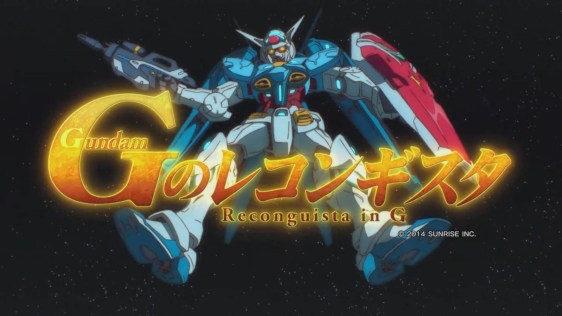
Mobile Suit Gundam: Iron-Blooded Orphans and Gundam Thunderbolt seem to be the Gundam anime a lot of people are looking for. Whether it’s the story of child soldiers of the former or the hard SF feel of the latter, they both capture in different ways the idea of Gundam as that realistic war story with a science fiction twist. While I’ve been enjoying both of these quite a bit, I wanted to step back and look at the previous Gundam anime, 2014’s Gundam: Reconguista in G, because I think it was a legitimately strong series whose merits went underplayed and under-appreciated.

Gundam: Reconguista in G has a reputation for being confusing, convoluted, and nonsensical. Even the writer and director himself, the original Gundam creator Tomino Yoshiyuki, considered G-Reco a disappointment. I disagree. While the series is rife with Tomino-isms that make the narrative and its characters’ decisions hard to follow, one thing rings out loud and clear: G-Reco is the story of people who, for better or worse, have no true connection to war.

G-Reco takes place many years after the end of the original Gundam timeline. In this new era, the Regild Century, voyage into space is restricted, and energy resources are rationed out to prevent the world from falling into the same catastrophes which scarred previous generations. Over the course of the story, characters frivolously and repeatedly switch sides, the ones most eager to fight have the least conception of war’s effects on humanity, and ultimately even as soldiers die left and right, the consequences of their warfare, if you can call them as such, are vague and ambiguous. On the surface, it doesn’t appear to be a story worth following, but I believe that it all emphasizes a central point, which is that the more humankind is distanced from war, the less they understand its repercussions.

Tomino was born during World War II, so it should come as no surprise that the original Mobile Suit Gundam had a strong anti-war message. While the children of that generation weren’t born in an era of conflict, the adults knew full well what post-war reconstruction was like, and many anime and manga creators have strongly believed in the dedication to pacifism stated in Japan’s constitution. However, G-Reco debuted in a different era, in this current time when forces in the Japanese government have clamored and have now even successfully reduced the influence of the Japan’s official stance on pacifism. Similar to Gatchaman Crowds Insight, G-Reco argues that, while there are merits to a world where large-scale global conflict is a distant memory, namely because it means people don’t have to suffer to the same degree, it ironically pushes war and violence even further into the realm of appealing fantasy. It becomes about heroes and villains, about glory and pride, rather than death and destruction.

At the same time, the characters in G-Reco are largely positive and optimistic, and while its ending is rushed and its final scene is undoubtedly the most confusing part of the anime, it also speaks towards a great deal of faith in the youth of today. They make plenty of mistakes, and they’re in some ways just as guilty of treating war as play, but they’re also not beholden to the manipulations of adults and the older generation. In this respect I get a vibe from G-Reco not unlike that of Evangelion 3.33, though the unique tendencies of their respective directors make for different overall presentations.

I think it’s fitting that the last battle in G-Reco concludes with no clear winners and no real fallout, but also has some notably unceremonious deaths. It pushes the idea that war is both meaningless yet full of things that cannot be undone, and it is up to the current generation of humanity to take advantage of our distance from war by keeping it there, while remembering that such distance comes with its own perils.

If you liked this post, consider becoming a sponsor of Ogiue Maniax through Patreon. You can get rewards for higher pledges, including a chance to request topics for the blog.

New Year, New Anime: Ogiue Maniax Status Update for January 2016

Whether you visited family or went to Comic Market or something else entirely, I hope everyone had a delightful end of the year. January means a new season of anime, reflection the last year’s, and a time to see where this crazy train takes us.

As always, I’m here to thank my Patreon supporters. They’re a strong reminder that my way of writing resonates with people, and for that I’m ever grateful.

General:

Ko Ransom

Alex

Diogo Prado

Anonymous

Yoshitake Rika fans:

Elliot Page

Hato Kenjirou fans:

Elizabeth

Yajima Mirei fans:

Machi-Kurada


I’m happy to see that patrons are taking advantage of the Ogiue Maniax sidebar. Don’t forget, if you’re already pledging $2 or more, you can put your website on Ogiue Maniax without any added cost!

Also, due to work I may have to slow down the pace of Ogiue Maniax a bit. As stated in last month’s Patreon status update, I’ve been trying to bump the rate to three posts a week, but I might have to bring it back down to two on average. I hope this doesn’t cause any problems!

Highlights from the past month include my annual picks for best characters of the year, and of course the monthly Genshiken review. In fact, there was (sort of) another Genshiken post this month too, as I compared Oshino Ougi from Owarimonogatari to Ogiue herself. Are they twins separated at birth?

Thanks to the Reverse Thieves, I got plenty of other opportunities as well. I appeared on their S.W.A.T. Review podcast to discuss the interesting and somewhat controversial Smile Precure! dub known as Glitter Force, and even wrote a follow-up post about some of the censorship that has gone on in the series. I also participated in their Anime Secret Santa project (an annual tradition), where I finally tackled the yuri science fiction anime Simoun. You can even check out my thoughts on other bests of 2015 on their blog.

The last post I’d like to draw attention to concerns my thoughts on the idea of the “Mary Sue.” It’s become an increasingly prominent term when discussing media, so I think it’s worth remembering where it all comes from.

While the requirement for me to write about something at your behest is a pledge for the “Decide My Fate” Tier on Patreon, I am curious as to what my readers would like to see more of from Ogiue Maniax. For example, I’ve been doing more video game-related posts, though they’re not super common. Obviously I’d never abandon the anime and manga aspect or reduce its importance on the blog, but would people for example like more general fandom posts like the Mary Sue one?

Glitter Force: Afraid of Sadness?

smileprecure-yayoidadWhat is appropriate for an audience of American children? This is a concern that comes up all the time with cartoons, whether it’s My Little Pony: Friendship is Magic‘s first season explicitly giving moral lessons to live up to its E/I (Educational/Informative) Rating, or the decision to change Japanese names to English ones when adapting anime. Though it feels out of place in this current era, the recent Glitter Force goes to great lengths to hide its Japanese origins as Smile Precure!, one of many series in the long-running Precure franchise. While the edits are not surprising, and obviously I’m not in the target demographic of little girls, I do worry about the point at which these edits hinder animation for children in terms of addressing difficult but important subjects.

When Glitter Force was first announced, it was described as having 40 episodes, down from the 48 in Smile Precure! Fans and curious onlookers speculated as to which episodes would be cut. With the first half of Glitter Force available on Netflix, we now know the first three.

curegorilla

Two of the episodes are clearly gone for being “too Japanese.” While we could have a debate as to what that even means, in this case it was because they were just too difficult to edit around. One is an episode about okonomiyaki, and while you can call it Japanese pizza all you want, kids know what pizza looks like. Saban wants their young audience to feel like the show is taking place in a city or town much like their own. Another episode guest stars actual Japanese manzai comedians. Not only are there potential likeness rights issues, but manzai comedy is notoriously difficult to translate. Again, makes sense.

The third episode cut is where my main concerns come up. Titled “Thank You, Papa! Yayoi’s Treasure,” the story involves Yayoi trying to recall memories of her late father. In an otherwise silly series, it naturally stands out as a serious and heartfelt story.

It’s not surprising why they would remove it. They want Glitter Force to be even more of what Smile Precure! is: a cartoon that generally emphasizes fun characters, positive female role models, and vibrant animation, which can then be used to sell toys. Even in Japan, series like Ashita no Nadja failed to be commercial successes possibly because of its moments of gravitas. However, decisions such as removing the story of Yayoi’s dad feel as if they contribute to the long-standing belief that cartoons for children can’t be serious, that they’re incapable of respecting children’s intelligence. Why can’t a fun kids’ show take some time to say something more, and maybe let parent and child feel sad together?

The tide of current children’s animation is actually going against this entrenched view. Shows like Adventure Time, Steven Universe, Avatar: The Last Airbender, and even to an extent shows like Kim Possible and American Dragon: Jake Long have brought weight and substance to kids’ entertainment. Glitter Force could have also contributed to this, and it might very well still be able to, depending on how they handle the second half, but things are looking grim. With five episodes on the chopping block, my worry is that they’ll cut the most character development-heavy episodes.

(Or even worse, the Happy Robo episode.)

I actually don’t think Glitter Force is that bad of a dub. The acting’s decent, the characters still look hilarious, and the edits they’ve made to bits of the story and such are odd but not deal breakers. I also understand where Saban is coming from, and given that they have all this successful Power Rangers money and all, they probably know more about marketing to American kids than I do with my obtuse-for-a-casual-audience anime blog. I can even see how Smile Precure! was probably the best fit for an American audience. That said, I’m not a fan of how they had to go to great lengths to write around the fact that Reika/Chloe is extremely Japanese, to the extent that they ended up removing her stern dedication to 道, “the path,” the seeking of truth and oneself. In Glitter Force, they replace it with “GF.”

sp705

I also feel as if I really cannot trust them with any other Precure series, especially not the stronger ones like Go! Princess Precure or Heartcatch Precure! If they can’t let a deceased father by, how are they going to handle Cure Moonlight’s path to redemption, Cure Flora’s introspective confrontation at the middle point, or any of the other equally powerful or memorable stories?

If you liked this post, consider becoming a sponsor of Ogiue Maniax through Patreon. You can get rewards for higher pledges, including a chance to request topics for the blog.

Future Boy: Genshiken II, Chapter 119

At long last, it’s the final date! Hato gets his turn with Madarame, but while their time together starts off with some comedy, it quickly turns into a very serious conversation that brings Genshiken back to a core theme: 2D characters vs. 3D relationships.

Actually, to be more accurate, the clash between “fantasy” and “reality” emerges from the very beginning. Just calling it a “date event” betrays the entire club’s otaku orientation; among regular people it would just be a “date.” From there, Hato starts to clearly delineate the differences between a biological woman and he himself who only dresses as a woman, namely that a crossdresser tends not to want people to get too close, otherwise they might recognize the truth. Though it ends with a funny moment where Madarame and Hato try out holding hands (did you know that Madarame has cold hands?), only to pull them apart after being spotted by the rest of the group, the tension is already set.

Though the dirty looks from Sue and Keiko (and Kuchiki) are magnificent.

Throughout the chapter you see Madarame use certain words that associate Hato with the the characters in the boy-girl (otoko no ko) games Madarame plays. He uses terms like “spice,” or “forbidden,” which eventually causes Hato to directly confront Madarame about what it would take to be in a homosexual relationship. Hato outright says to Madarame, “I’m a guy!” (pairing an effeminate “watashi” with a masculine “otoko”) and essentially asks if Madarame has really thought about what that means. If he actually starts something with Hato, then in the long term it won’t be a crazy alternative, or a thrilling experiment. Dating a man, even one that dresses convincingly like a woman, won’t be like seeing it in an anime or a visual novel, where no real consequences can occur. If he chooses Angela, Sue, or Keiko, then he won’t have to deal with these hardships.

I don’t know if I’m reading too much into this, but I think that implicit in Hato’s words is the awareness that gays are stereotyped and discriminated against in Japanese society. Picking Hato comes with it a future of tribulations, and the question is if Madarame is really prepared to take this seriously, or if it’s just a fetish at the end of the day that can’t move beyond fantasy.

Madarame’s response in turn, “Sorry,” then signals two things. Hato’s devastated reaction indicates that he’s not so much taken aback by Madarame’s apology, but the very nature of it. That’s because the “sorry” comes across as noncommittal, another case of Madarame vacillating because he still desires for the pieces to fall into place without him having to make any hard choices. Madarame has the potential to start a real relationship with Hato or any of the others, but he’s still afraid to make a decision. It calls back to the Madarame who originally decided to let his crush on Kasukabe slide by unrequited, and was willing to let it eat away at him for the rest of his life.

What I also find fascinating about this entire situation is that it not only subverts that harem aspect of the series, but that it’s a strong reminder that the qualities that have made Madarame somehow charming to these prospective partners are also the very things that can aggravate them. He’s both his own best friend and his own worst enemy, and I believe it keeps the series from truly entering actual “harem” territory.

The question of how Madarame will engage with the reality of having a flesh and blood partner is what I think makes Ogiue’s appearance at the end so interesting. As stated in the chapter itself by Ogiue, Hato’s running away from Madarame mirrors Ogiue trying to reject Sasahara out of fear of both hurting others and being hurt. However, I also feel it’s not really the same situation.

Sasahara hesitated because he was a naive dork who couldn’t read between the lines. Even though he recognized his own feelings for her at that point, when Ogiue told him that she couldn’t date guys, Sasahara took it at face value and almost gave up as a result. Madarame, on the other hand, has to decide whether his feelings are for Hato the person or Hato the image, and whether he’s willing to take a much more difficult road in the process when he clearly has three less troubling options moving forward that he also seems to have feelings for.

Writing all of this out, it makes me realize that Madarame’s hesitation can also be interpreted as wanting to make certain that he makes the right decision. He’s been raised to believe that romance is a special thing, a world of childhood friends and deep bonds that are anything but frivolous (though at the same time sex is raunchy and powerful). It might be another angle worth exploring.

Angela believes that Madarame clearly has eyes for Hato. We’ll see if she’s right.

If you liked this post, consider becoming a sponsor of Ogiue Maniax through Patreon. You can get rewards for higher pledges, including a chance to request topics for the blog.