Recent Thoughts on Love Live's Nijigasaki High School Idol Club

In the past, the third Love Live! multimedia project, “Nijigasaki High School Idol Club” (previously known as “Perfect DREAM Project”), had somewhat eluded me in terms of its appeal. Certainly, when it comes to Love Live! In general, I’m usually something of a late adopter—it’s usually the anime adaptations that bring me in, as opposed to the games, magazines, or even the songs. I’m also not so big a fan that I’ll follow every crumb of information, or try to pick favorites before I’ve had a chance to learn about the characters.

Two things have changed since then: the Love Live! School Idol Festival All Stars mobile game (hereafter LLSIFAS) came out, and I attended a delayed viewing of the “Love Live! Fest” concert featuring the girls from all three generations. Together, they’ve given me a better insight into how this third Love Live! Is supposed to work, and its concept of “more individualized school idols” has me curious.

As soon as the nine Nijigasaki girls came out on stage at “Love Live! Fest,” it was clear that the thinking behind them diverged from what went into their predecessors. Rather than appearing as a nine-member unit with matching outfits, each of the singers/voice actors dressed like their characters, who themselves all have very different concert wardrobes. So instead of, say, having all of μ’s in white for “Snow Halation,” it was a hodgepodge ranging from a Swedish dress to a fancy nightgown to a kind of Vocaloid-esque ensemble. Their styles were incongruous, and intentionally so. As explained by one of the members, the theme of the Nijigasaki High School Idol Club is to emphasize each girl’s uniqueness above all else. It’s quite a departure from previous Love Live! projects, which were all about nine girls working as one. 

Each of the Nijigasaki girls also has their own solo number (in addition to a couple of group songs), which is something that the members of μ’s and Aqours didn’t get until later. I think it actually helps convey what each of their personalities is like, as opposed to trying to figure out which girl is which when they’re all singing at the same time. Asaka Karin is supposed to have a more mature sex appeal, and it comes across in spades when she’s the only vocalist. Speaking of Karin, learning about her character was an experience. First, she came out and called herself the “sexy” one. Then, she called her fans “slaves.” Last, it showed her signature symbol: a high heel (hmm). It dawned on me that Karin (as well as the other eight girls) are likely all going for very different audiences from one another.

LLSIFAS somewhat departs from its mobile game predecessor by having more of an ongoing narrative in the story mode. In Chapter 1, you learn that the Nijigasaki High School Idol Club is in a sorry state and on the verge of being shut down. Your goal is to bring back the old members and recruit some new ones, and you basically learn about each of the characters along the way. I think this has been effective in helping me get a better sense of what each of them is all about, with the heavy amount of interaction and the clearer direction doing a good job of showing how the characters are when there’s an obstacle to overcome. Still, I wonder why the forces that control Love Live! as a whole decided to move in this direction for their third endeavor.

I’m not ready to fully embrace Nijigasaki because I find that a bit of resistance is for the best when approaching idol franchises, even the continuation of one I’m already a fan of. The original Love Live! won me over even as I was very skeptical of it, and it took some time for me to enjoy Love Live! Sunshine!!, but it happened eventually. I don’t need to pick a favorite Nijigasaki girl, I don’t need to enjoy every song, and I don’t need to go all-in from the start. That said, I’m looking forward to how the more focused format of an anime will tell their story, and how this idea of individuality will play out. And with a fourth Love Live! project on the way, the Nijigasaki idols will become “senpai” themselves.


Welco Metot Henex Tlevel: “Sonic the Hedgehog” Movie Review

I originally was on the fence about seeing the Sonic the Hedgehog movie. But the praise it received from those I trust to have loving but honest opinions about Sega convinced me. So in preparation, I basically went all-in on Sonic. I finally played (and beat) Sonic Mania, which I had put off for a long time. I filled my playlists with songs from Sonic and Sonic-adjacent sources. In a way, it was a homecoming for me, because my very first online community was actually a Sonic and NiGHTS fanfiction site. A part of me will always love the blue hedgehog.

One thing that struck me about the film is how, despite Sonic having a continued presence throughout the decades, Sonic the Hedgehog the movie is essentially a nostalgia film that nevertheless has appeal to kids today. It’s not set in the past (smartphones exist), and the way they portray Sonic as kind of naive and lonely fits better in today’s environment, but the overall buddy flick sensibility feels like it comes straight out of the 1990s, when Sonic was at his peak in terms of recognizability. Even though Jim Carrey isn’t portrayed with the classic girth of Robotnik, he comes across as how the character (described as having an immense IQ but the maturity of a child) could have been translated well to film even in the 90s. In fact, Jim Carrey probably could have played Robotnik back then as well.

Sonic the Hedgehog the movie is a surprisingly solid movie that feels faithful to the core spirit of Sonic as a “cool dude with attitude.” So much could have gone wrong, and the fact that it was inches away from being a total disaster makes it all the more miraculous. Most notably, the original design for Sonic in the movie was met with such widespread panning that they had to redo all the CG. And it matters a lot! That re-design basically was the difference between Sonic being an endearing character and one who induces nightmares.

The artists responsible for fixing Sonic’s look also got their studio shuttered before Christmas in the worst thank-you ever. If all the success this film has achieved doesn’t somehow go back into paying all of these employees who helped save this movie, then my opinion of it will sour immensely. But for now, I think Sonic the Hedgehog is worthy of praise.

It’s fitting that both Sonic the Hedgehog the movie and Sonic Mania are processed blasts of the 90s. Perhaps it took those three decades or so for the nostalgia to come around and make the Sonics everyone wanted into a reality once more.


Nijisanji, Hololive, and the Virtual Youtuber Kayfabe

Since I last wrote about Virtual Youtubers close to two years ago, the scene has grown far beyond any one individual’s ability to keep track. One consequence of this, as I’ve come to learn, is that individual acts have started to form collectives that increase visibility for all. Two of the big ones are Nijisanji and Hololive, both of which utilize a less expensive approach called Live2D that is clearly less robust than whatever it is Kizuna A.I. has. I find the presence of groups like Nijisanji and Hololive to be curious intersections of how people interact with the internet in current times. 

Virtual Youtubers (VTubers) are essentially one part Hatsune Miku, one part livestreamer, and one part idol–the result is a kind of weird unspoken contract between viewers and creators where the notion of “authenticity” is relative rather than being some kind of absolute. One of the complaints that streamers often receive, especially if they’re extremely over the top, is that it’s all an act, and that they’re just playing to the audience in order to get more eyeballs on them. People like streamers with whom they can feel some kind of genuine connection, and a layer of “fakeness” can be a turn-off in that respect. But with characters like Tsukino Mito (Nijisanji) or Haato Akai (Hololive), there’s an obvious understanding that what you’re seeing and getting just isn’t a “real person.” At the same time, there’s still a desire that these characters aren’t fully constructed, and that some of the actual individual behind the anime mask will peek through just a bit sometimes. Fujima Sakura (who isn’t in Nijisanji or Hololive) is a prime example of this, though in that case, the person behind the character (Sally Amaki) is already well known, as is the fact that Sakura as a VTuber is part of a greater project: 22/7.

I mentioned Hatsune Miku here (and in the previous post about VTubers) not just because she’s a cute anime girl mascot who people collectively imbue with a personality and history, but because part of her charm is that her voice doesn’t sound entirely realistic. There’s an artificial quality to her that adds to her appeal, and to some extent, I can see this being the case with Nijisanji and Hololive’s VTubers because Live2D isn’t super-smooth. There’s a kind of choppiness that can drag you out of the illusion pretty easily, so you have to kind of let it work its magic on you. Perhaps it’s closer to pro wrestling in that respect. In a way, the flaws even lend themselves to a greater sense of authenticity, in that these VTubers are not presenting a supremely polished (and arguably overproduced) product. 

However, just the fact that Nijisanji and Hololive are these collectives adds another wrinkle. There’s this kind of understanding that cooperation is of mutual benefit to all those involved, but the fact that prospective VTubers basically earn the opportunity to enter these groups calls to mind the very nature of Youtube as a platform dependent on click-throughs and crossovers as a means to garner more attention. It’s not that different from something like Game Grumps, but the veneer of anime avatars makes VTubers a little more mysterious but also makes me wonder just where they’re all coming from. To what extent are they professionally honed products and to what extent are they amateur endeavors–and for that matter, does Youtube explode that difference?

It might not be such a bad thing that people can so easily become Virtual Youtubers these days. I myself have considered doing more Youtube in the past, but I’m just not a fan of putting my face out there for all to see. The way the members of Nijisanji and Hololive do it, on the other hand, provides an alternative for those who want to be out there without exposing too much of their identities. In a time when the difference between the online self and the offline self is all but disintegrated, doing this Virtual Youtuber thing can be an oasis of anonymity, albeit within a profit and attention-seeking environment.

This post was written based on a request by Patreon sponsor Johnny Trovato. If you’d like to request a topic, check out the Ogiue Maniax Patreon.

Byleth and the “Fire Emblem” Tactical Spirit in “Super Smash Bros. Ultimate”

The new Super Smash Bros. Ultimate character announcement did not exactly hit with a great bang. Byleth, the player avatar from Fire Emblem: Three Houses, is arguably even the most predictable choice possible. However, in spite of hype-addicted fans not getting their fix and my own neutral feelings towards Byleth, I find their gameplay reveal to be an interesting look into the developers’ latest attempt at capturing Fire Emblem‘s tactical gameplay in Smash.

Fire Emblem is a turn-based, fantasy-themed strategy RPG series where you control different characters with unique strengths and weaknesses. It’s a game that discourages charging in headfirst and instead emphasizes positional advantages and careful advancements. Because the games are not as action-packed as Smash, it has required a greater degree of interpretation to translate the Fire Emblem representatives. Marth (and by extension Lucina) has the highest walking speed in the series, allowing him to swiftly move in and out of enemy range. Robin is one of the slowest characters in the game, but has a mix of long-range magic and close-range sword attacks to try and trap the opponent in a bad spot. As mentioned by Sakurai in the Byleth gameplay video above, most of the Fire Emblem characters in Smash have Counter attacks in order to replicate the retaliations that happen in the original game’s combat sequences.

Byleth comes equipped with a multitude of different weapons, each of which are tied to a particular general direction. Upward attacks are done with a chain-like sword, side attacks utilize a spear with long reach, downward attacks are performed with a slow but powerful axe, and neutral attacks use a bow and arrows for fighting from far away. This plays into the multitude of weapons in Fire Emblem: Three Houses and their properties, such as accuracy, effective range, etc.

In turn, what I think Super Smash Bros. Ultimate is trying to capture by linking specific weapons to specific directions is the spirit of the positional and preparatory thinking that goes into playing Fire Emblem. Byleth is likely encouraged to fight at different distances depending on what the opponent’s priorities are. This applies to some extent with every Smash character, but with Byleth especially, it looks like there is no cure-all attack that can be used by default to cover multiple situations, such as Link’s neutral air or Mr. Game & Watch’s Fire trampoline.

Sakurai points out some of the examples of the weapons’ limitations. The spear has tremendous reach but is weak up close and has problems with vertical movement. The axe is cumbersome, but has many ways to foil evasive measures and low attacks. The bow has a point at which it must fire, forcing The long-range weapon into being a commitment if you want some serious power. He doesn’t say much about what the sword can’t do, but I imagine it will primarily function as an anti-air.

There are plenty of characters who have multiple weapons that are meant to attack at different angles, but in many of those cases, those moves are usually exclusively special moves. Because the directional theme is tied to Bayleth’s normals and specials, it highlights a different kind of tactical thinking. If you want your sword attacks to be effective, you have to be at a distance where the lance is a poor choice, for example. And you can’t make up for it like Mario could with a quick jab vs. a slower fireball because all of Bayleth’s forward-reaching attacks are lance-based. In other words, Bayleth’s vertical spacing is substantially different from their horizontal spacing, and the player has to adjust accordingly.

The more I delve into how Bayleth is designed, the more impressed I am with the thought and concept behind the character. The game could’ve given them a weapon-switching mechanic, for example, but associating a weapon with a direction means that understanding the right spacing for Bayleth also means understanding the right stage positioning as well. It hints at the same feeling as putting the right unit in the right spot in Fire Emblem and allowing the enemy to fall on your blade.


Creme de la Creme: Why Alcremie Should Be a Smash Bros. Character

With more Super Smash Bros. Ultimate DLC characters on the way (including but not limited to the last Fighters Pass entrant), I’m throwing my hat in the ring as to who I think would be the right Generation 8 Pokemon representative. While it’s a longshot for sure, I’m throwing my hat in the ring in favor of the Cream Pokemon, Alcremie.

There are three reasons I think Alcremie would be the ideal Pokemon Sword and Pokemon Shield character. First is Alcremie’s Gigantamax form. Second is that she already comes with a huge variety of colors to base costumes on. Third is the unique gameplay she would provide.

Gigantamax

The signature feature of the Galar region in Pokemon Sword and Shield is Dynamaxing, where Pokemon grow to massive size and gain all sorts of new abilities. A select few Pokemon have the ability to do a more advanced form of Dynamaxing called Gigantamaxing, and Alcremie is among those capable of the feat. Moreover, her Gigantamax form is visually striking, as she turns into a giant multi-tiered cake. It’s perfect for a Final Smash, especially with Gigantamax Alcremie’s signature move, G-Max Finale. It attacks and heals at the same time, and would likely be somewhat similar to Princess Peach’s Final Smash.

Color Palettes Galore

As of Super Smash Bros. Ultimate, each Smash character has eight costumes. For other Pokemon, there haven’t been many canon options for colors, resulting in things like purple Charizard and yellow Mewtwo. For Alcremie, however, this is anything but a problem. In Sword and Shield, Alcremie actually has dozens of possible physical variations based on the specific way it evolves from its previous form, Milcery. Rather than the developers having to work towards picking colors and trying to get approval, they can just say “let’s pick Matcha Cream and Rainbow Swirl” and call it a day, confident that the Pokemon Company won’t take issue.

Gameplay

For the most part, the Pokemon that appear in Smash Bros. are kind of similar. They have very animal-like appearances and their animations translate that aesthetic to their moves. But Alcremie is living whip cream who’s slow but with high special stats, and who specializes in support moves and fairy-type attacks. The closest we get to that is Jigglypuff, who only became a Fairy type in Pokemon X and Y. Alcremie could be a low mobility but high range character, hitting opponents with Dazzling Gleam while also using Decorate to provide support. If they wanted to take this further, developers could even make it a team specialist.

An Alternative 

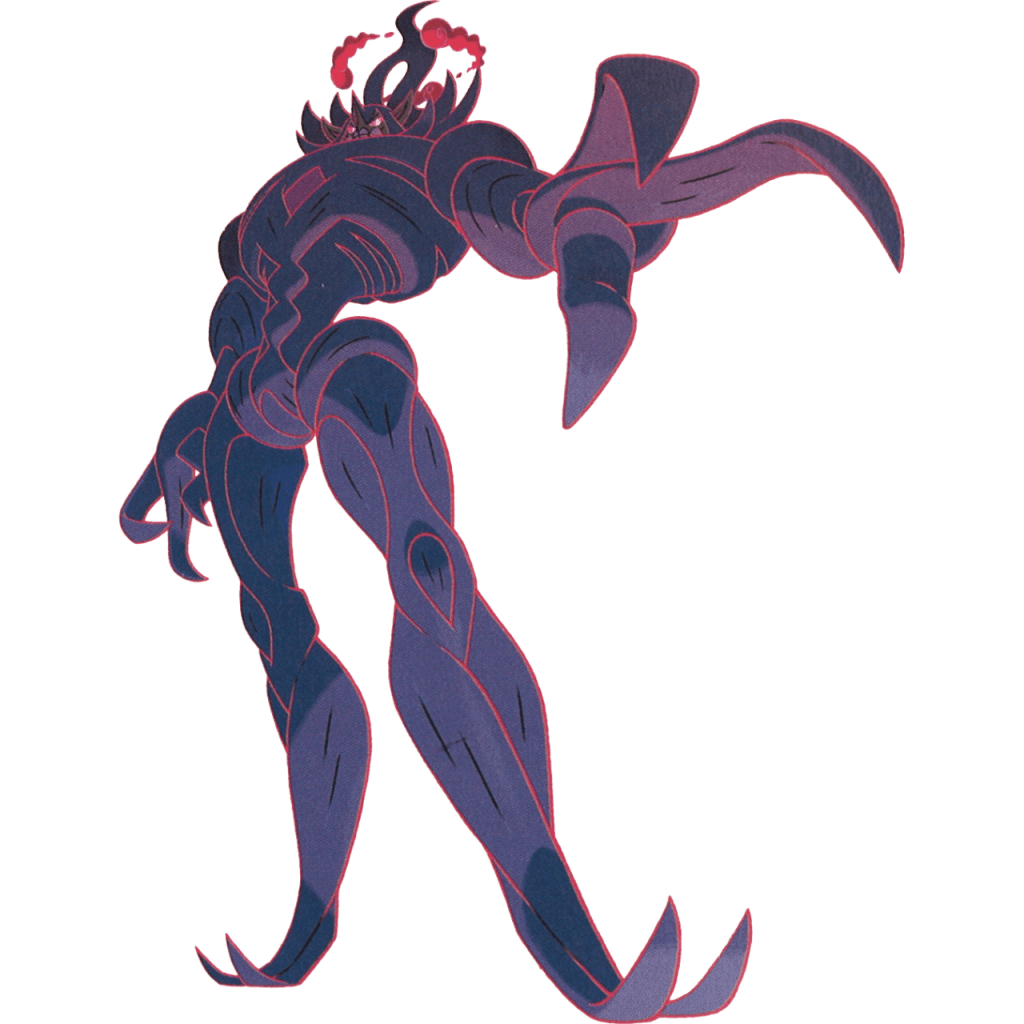
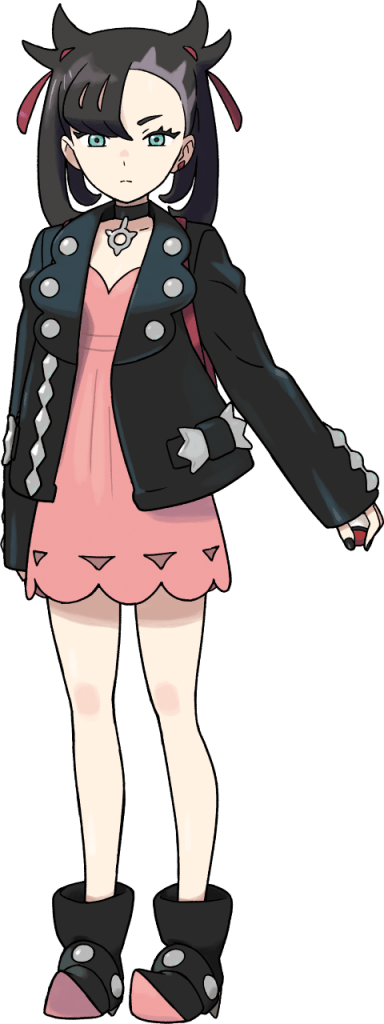
In all likelihood, Alcremie could be too left-field even for Smash Bros. In that case, I think an almost equally good choice would be Grimmsnarl, who also has a cool Gigantamax form but unlike Alcremie has a more conventional body type. On top of that, Grimmsnarl is used by the ever-popular Sword/Shield character Marnie, giving it potentially a built-in fanbase.

The Cream of the Crop Always Rises to the Top

The DLC character of Super Smash Bros. Ultimate have mostly been third-party guests, but Pokemon Sword and Pokemon Shield are absolutely big deals in the video game landscape. Alcremie would be a quirky but appropriate mascot for the Galar region, and I think it would have both general appeal and the opportunity for some creative game design.

Now, if only they’d go back and give Generation 3 a proper representative as well…


The Charisma of Terry Bogard in Smash Bros.

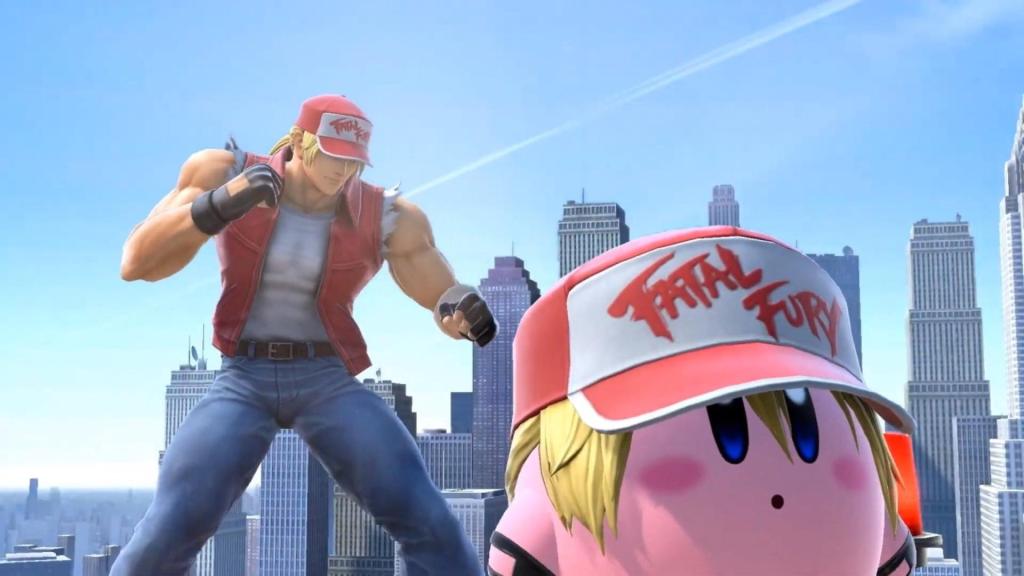
Terry Bogard has arrived in Super Smash Bros. Ultimate on the heels of a 45-minute love letter from Masahiro Sakurai to SNK. I feel that it gave Terry the appropriate level of hype, but it’s his charismatic presence, both in personality and playstyle, that can turn even the sourest doubters into fans.

Without even getting into little story details, Terry’s general presentation just screams “cool guy with a fun attitude who knows how to get serious.” His look might be straight from the 1990s, but he somehow doesn’t feel dated. All of his little Engrishy quips, his cool-looking moves, and even his general standing pose all work together to make him the center of attention. As expected of an SNK character—even after the Neo Geo started being inferior hardware, the developers of The King of Fighters would put in some of their best sprite animation work. Ultimate captures that sentiment.

As for gameplay, Terry feels more fitting for Smash than Ryu and Ken. His burst-mobility specials all work in a platform fighter format, and you can practically picture Terry coolly accepting that he’s in this crazy crossover situation. In a way, he feels like a mix between Ryu and Captain Falcon: a traditional fighter who can suddenly close large distances and make opponents regret frivolous decisions, but who’s balanced out by a less than stellar air game. His ability to access Power Geyser and Buster Wolf after 100% is sure to be controversial, but Terry overall doesn’t feel overpowered.

Welcome to Smash, Terry Bogard. I hope to see you make one hell of a splash.


Banjo & Kazooie: The Ultimate Beginner Character

Banjo & Kazooie have been out for about a month as a playable character for Super Smash Bros. Ultimate. In looking at how they play and thinking about the purpose of their moves, I’ve come to the conclusion that Banjo & Kazooie are perhaps the best beginner’s character that Smash has ever seen.

Super Smash Bros. is a franchise that emphasizes an “easy to learn, hard to master” approach to fighting games. To this end, the games often have more beginner-friendly characters who are more forgiving to the unaccustomed—Kirby with his multiple jumps to help new players survive offstage is a key example. But it can be hard to balance a beginner character such that their easy-to-use tools are effective at more advanced levels of play without making them too powerful in the hands of an expert. Cloud in Super Smash Bros. for Wii U is an arguable instance of being too strong in this respect. He was designed with large, generous hitboxes and a Limit Break system to power him up, all to help fans more familiar with role-playing games than fighting games, but those things ended up being absurd in mid to top competitive play.

Banjo & Kazooie have a lot of things that make them fairly simple to understand for new players. They have three jumps, which makes getting to the stage easier. They’re fairly heavy and fast, making for a durable and mobile character. But the key to their ability to help players of all levels is their special move Wonderwing.

Wonderwing is a versatile forward charge that works as a panic button, a recovery, and a kill move. Newbies don’t need to understand about hitboxes; Wonderwing beats or ties with everything in a direct confrontation. If Banjo & Kazooie are offstage, it lets them recover horizontally and defeat virtually any challenge. It also does over 27% damage, and can close out stocks reliably. While the move is extremely good, however, it comes with a couple of weaknesses that keep Wonderwing in check while giving room for players to learn, optimize their play, and for more experienced players to really use their brains.

The first flaw is that Wonderwing leaves Banjo & Kazooie vulnerable if the attack is blocked. It’s not a huge window, but it’s enough that an opponent who can predict Wonderwing’s usage from being rewarded well benefit from doing so. The move is still a Swiss army knife, and can do a lot for new players, but this flaw should theoretically teach caution.

The second and more significant flaw is that Wonderwing only has five uses per stock, and can only be recharged by losing a stock. This is extremely smart from the developers for a number of reasons. First, it prevents players from spamming the move to no end. They can do it for a short while, but then they have to deal with the consequences. Second, rather than a comeback mechanic, which can teach new players the wrong lessons, it’s a resource that comes at a cost. Every time they use the move, regardless of effectiveness or efficiency, it means they’ll have less of a chance to rely on Wonderwing when they need it most. In other words, it becomes a built-in lesson on resource management and looking at the long-term.

At higher levels of play, Banjo & Kazooie players basically have to know when to utilize Wonderwing and when to keep it in their back pocket. It’s a ridiculously good move that would be the envy of any character, but the fact that its depletion affects so much (disadvantage, neutral, recovery, kill power) means there’s an interesting back and forth that can occur between two players where good usage is immensely rewarding and good counterplay against Wonderwing similarly so.

Through Wonderwing, Banjo & Kazooie give inexperienced players a tool that can help them out in nearly any situation in a fun and rewarding manner. But at the same time, the caveats on the attack, namely the limited uses, encourages players to be smart about its use, thus fostering improvement. More than any other character, I expect Banjo & Kazooie players to grow.

Splatoon Live Concerts and the Expression of Character in Performance

Nintendo Live 2019 in Kyoto featured two nights of Splatoon concerts with holograms of the Squid Sisters and Off the Hook performing onstage. It’s not the first time both pairs have been together, but watching this event made me really appreciate the care put into expressing the individual differences between the characters in accordance with their musical styles.

Off the Hook and Squid Sisters (or Tentacles and Sea o’ Colors in Japanese) are very different groups. Pearl as MC and Marina as DJ have very distinct roles in Off the Hook such that their movements are heavily contrasted with each other. Pearl is fiery and aggressive while Marina is laid-back and soulful, and everything about them screams hip hop, which traditionally has liked to draw a sharp distinction between its musicians. There’s really no confusing the Pearl and Marina, and their performances put a bright spotlight on their individuality.

Squid Sisters, however, are more akin to a Japanese idol group, and so their performances are more synchronized and feel more choreographed. At the same time, every so often, you’d see a small difference in movement—an extra bit of flourish from Callie or a more composed and precise gesture from Marie. It’s especially noticeable at times when both are cheering the audience on, and Callie is bouncing up and down as Marie’s feet stay firmly planted, such as in the video above. The differences between the two are relatively subtle as a result, and idol fans eat this sort of thing up.

Adding these small quirks to Callie and Marie is all the more impressive because a lot of fictional idol media don’t really bother to do the same. When watching an episode of Love Live! or Aikatsu!, there’s often pretty much no difference in performance if two or more characters are doing the same routine in the same song. We’re sometimes told that there’s a difference, but it’s not really shown.

From idols to hip hop and beyond, the musical acts of Splatoon are given presence and personality. This is taken into consideration even in the live concerts. It makes me wonder where a Splatoon 3 will go genre-wise, and I anticipate what Nintendo has in store.

Day 2 Full Concert

River City Girls and the San Fransokyo Aesthetic

River City Girls is a new game in the aged genre of the side-scrolling beat-em-up, and a role reversal of the classic damsel-in-distress story. As friends Kyoko and Misako, the player sets out to rescue their boyfriends by clobbering everyone in their way. As suggested by its title, it’s a sequel of sorts to the classic NES game River City Ransom, which is itself a heavily localized version of the Japanese Downtown Nekketsu Monogatari from the Kunio-kun franchise. Because River City Girls aims to be a successor to both River City Ransom and Downtown Nekketsu Monogatari, it takes cues from both the former’s American-esque “dudes with attitudes” style and the latter’s Japanese “yankee delinquents” presentation, resulting in a fascinating mashup of both aesthetics.

Rather than lean in one direction or the other, River City Girls mixes things up. The game takes place in “Cross Town” (from River City Ransom) but the boyfriends’ names are “Riki” and “Kunio” instead of “Ryan” and “Alex.” Japanese street gang figures (banchou) roam the street at the same time as cheerleaders. Kyoko wears a letterman jacket on top of a school uniform while Misako’s takes cues from Japanese fashion, and they both kind of resemble Powerpuff Girls in a way that calls to mind the anime adaptation Powerpuff Girls Z. A story cinematic shows the girls in an American-style school cafeteria.

Some Double Dragon characters even make cameos (Double Dragon was originally developed from the original Kunio-kun engine but with more international appeal). While those games always took place in the US, River City girls specifically uses the Double Dragon Neon versions of the characters, a game that was much more American-facing than Japanese.

The result is that Cross Town comes across in the same vein as Big Hero 6’s “San Fransokyo” and Hurricane Polymar’s “Washinkyo”—a place that’s both Japanese and American at the same time. I can only guess at the reason behind this decision, but I imagine it has to do with the fact that both River City Ransom and Kunio-kun are beloved in their respective regions. There’s a certain generation of Nintendo fan that holds the game River City Ransom in high regard. One part beat-em-up, one part adventure RPG, there really wasn’t much like it back in 1990. Kunio-kun, in turn, has starred in many, many games over the years, and he was a company mascot for Technos Japan. River City Girls aims to please both audiences, and maybe even poke fun at those bygone days of extreme localization.

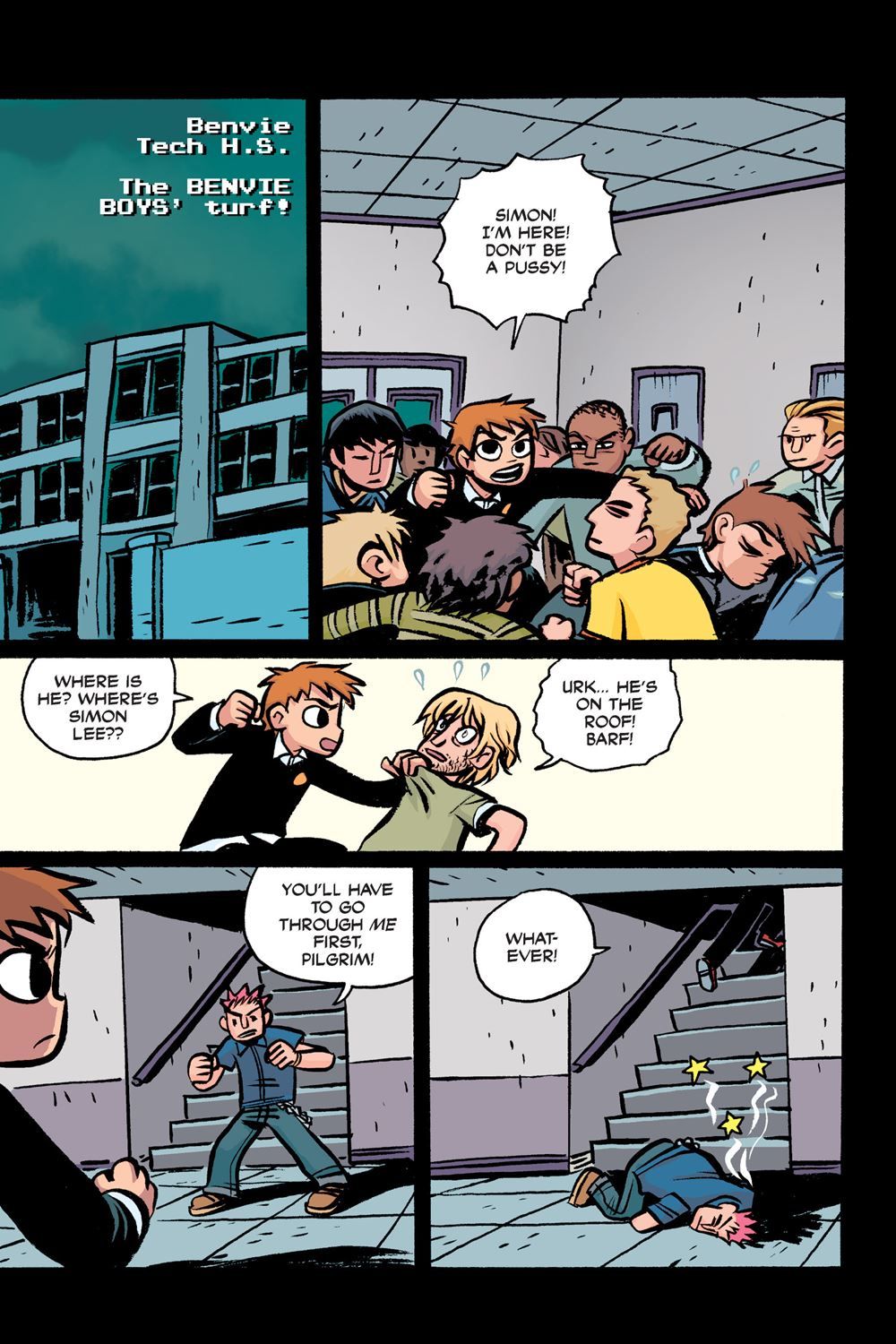
Because River City Girls is this deliberate combination of Japanese and American, it also begs comparison with another piece of media heavily inspired by manga and retro gaming: Scott Pilgrim by Bryan Lee O’Malley. In fact, Scott Pilgrim is itself heavily influenced by River City Ransom, as indicated by one of the comics’ characters crying “BARF!” as they’re hit, and the Scott Pilgrim video game being a beat-em-up. The senses of humor found in River City Girls and Scott Pilgrim, while not wholly identical, are similar in their irreverence and fourth-wall breaking one-liners. There’s even a boss fight in River City Girls against a musician just as there’s one in Scott Pilgrim. At the same time, enough time has passed that Scott Pilgrim (itself a love letter of sorts to the NES era of gaming) is old enough to be a nostalgia trip for fans of comics, video games, and other media. That, in turn, makes River City Ransom an even more distant memory in the collective video game and pop culture fandom.

River City Girls is an entry into a genre whose heyday has long since passed that uses 2D sprite graphics and playful animations. In taking from the late 1980s of both Japan and America, and filtering them through a contemporary lens in an age where “anime-influenced” works are more common than ever before, RIver City Girls ends up feeling somehow both extremely current and incredibly nostalgic, instantly dated yet also timeless. It’s an aesthetic I can get behind.

Player Avatars No More: Pokémon Masters and the Granting of Personalities to Heroes Past

It’s a testament to the longevity and popularity of Pokémon and its characters that a game could come out where you collect not so much the Pokémon themselves, but their trainers. Whether it’s Sinnoh champion Cynthia or Pewter City Gym Leader Brock, the humans of the Pokemon world have garnered their own fanbases, and the mobile game Pokémon Masters takes advantage of this by bringing them all into one convenient place.

While I find the game itself fun, though not without its problems and quirks, I want to focus one one particular aspect of Pokémon Masters I find interesting. Specifically, it’s the ability to summon player characters from multiple generations of Pokémon as non-player characters that catches my attention because it means Pokémon Masters has to create personalities for them when they were previously empty shells.

Within the main games, only Red (the hero of the first generation) has made multiple appearances as a computer-controlled character, and his personality can be charitably described as “strong and silent.” The only thing he ever says in any game is “…” as a reference to that being the only thing you could say in link battles on the original Game Boy. After that, while certain characters may have had personalities established in adapted material like anime or manga, many liberties end up being taken that causes those narratives to differ significantly from the games. For example, in the anime, May (a character based on the female player character in the third generation games) is the daughter of the Gym Leader Norman. But in Pokémon Masters, it’s Brendan (the male player character) who is Norman’s child. While there’s nothing necessarily “canon” about Pokémon Masters, it still means the developers had to decide how these player avatars behave without a player.

As a result, fans of Pokémon may potentially view these old characters in a new light. Rosa, the heroine from the Gen-5 Pokémon Black 2/White 2, is expressive and quirky, garnering many fans in the process. Brendan appears eager and energetic. Kris, from Gen 2’s Pokémon Crystal, is kind yet feels she needs to improve. Without any real meat to go on, I have to wonder how the developers decided to give which traits to these old player characters. Will these become their established personalities moving forward in the games, or is it a one-off thing only for Pokémon Masters? Personally, my hope is that they end up sticking. The only question left is what’ll happen to the actual player characters of Pokémon Masters in the future—what qualities will the two of them have if/when they show up elsewhere?