There must have been something fermenting in the collective imagination of 2022. Last year gave us not one, not two, but three different forms of media featuring cute dogs combined with bread. And as many minds landed on this same idea of oven-baked canines, they all appeared to be guided by more than merchandising power alone.
Sanallites
The first bread dog of note is an embodiment of the Sanallites, the fanbase for the retired VTuber Tsukumo Sana from Hololive. The reason her fans are portrayed as bread is that Sana herself would express how much she loves bread, even going as far as doing a bread horoscope in an early stream. And because Sana herself is an experienced artist, she used her illustration chops to solidify the design as a whole loaf with an adorable flat face.
Sana’s bread dog comes from a warm and comforting relationship with her fandom—the kind of personal-feeling connection that you could only get from a streamer.
Pam-Pam
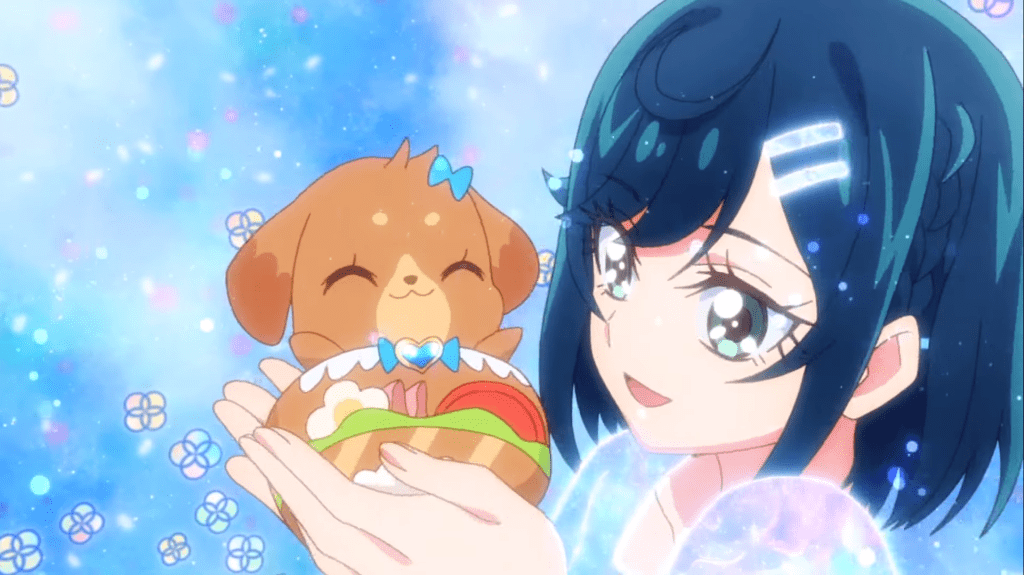
The second bread dog is Pam-Pam, a sandwich-themed dog fairy from the magical girl anime Delicious Party Precure. Here, Pam-Pam is the mascot sidekick of the bread-themed Cure Spicy, and contrasted with a rice mascot and a noodle mascot for a trio of staple carbs. This all plays into one of the themes of Delicious Party Precure, which is teaching kids to eat balanced meals and learn to appreciate all types of food. Pam-Pam transforms into a little sandwich with her dog head sticking out, meaning her bread elements come out primarily in battle.
Delicious Party Precure’s bread dog is a way to convey a theme of good nutrition. The decision to design Pam-Pam in this way is the result of trying to prepare children for the future.
Fidough and Dachsbun
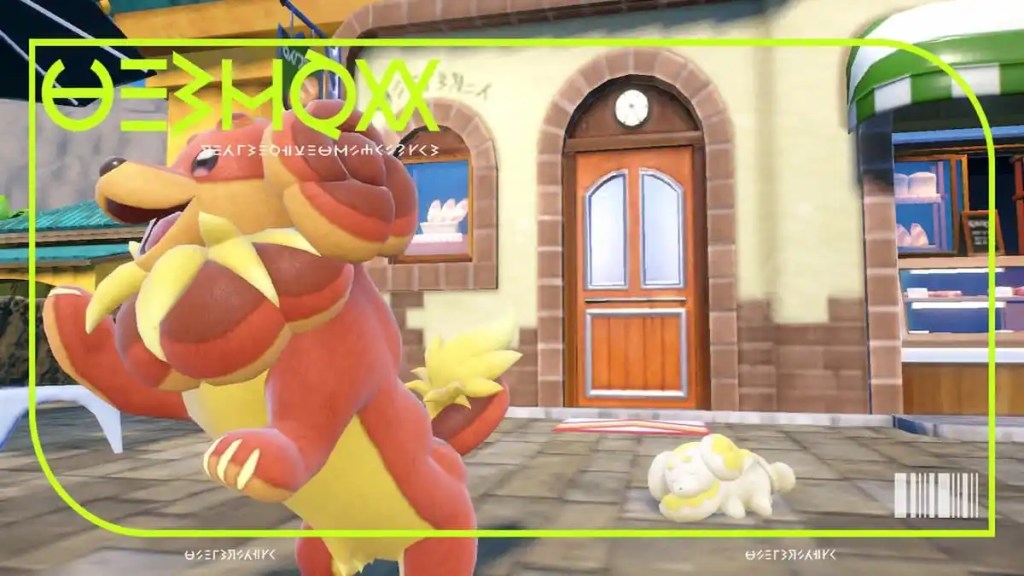
The last bread dogs are the new evolutionary line from Pokémon Scarlet and Violet. Fidough, which resembles unbaked bread, evolves into Dachsbun, whose Baked Body ability makes it actually immune to fire attacks. They have more of an active bread motif than Pamu Pamu but retain more dog features than the Sanallites.
These two are actually just a couple of the many new Paldean Pokémon with a food motif—others include hot pepper plants, olives, and more. The Paldea region is based on Spain, which has a rich and diverse food culture, and both bread dogs reflect that aspect.
The Yeast They Can Do
Combining fluffy bread with furry dogs seems like an obvious winner, and these examples are certainly not the first. But to see three big franchises implement the same idea within the same year feels like a tiny miracle. There’s a surprising amount of versatility to be found in the bread dog concept, and should there ever be a true bread-dog boom, I doubt anyone would mind.
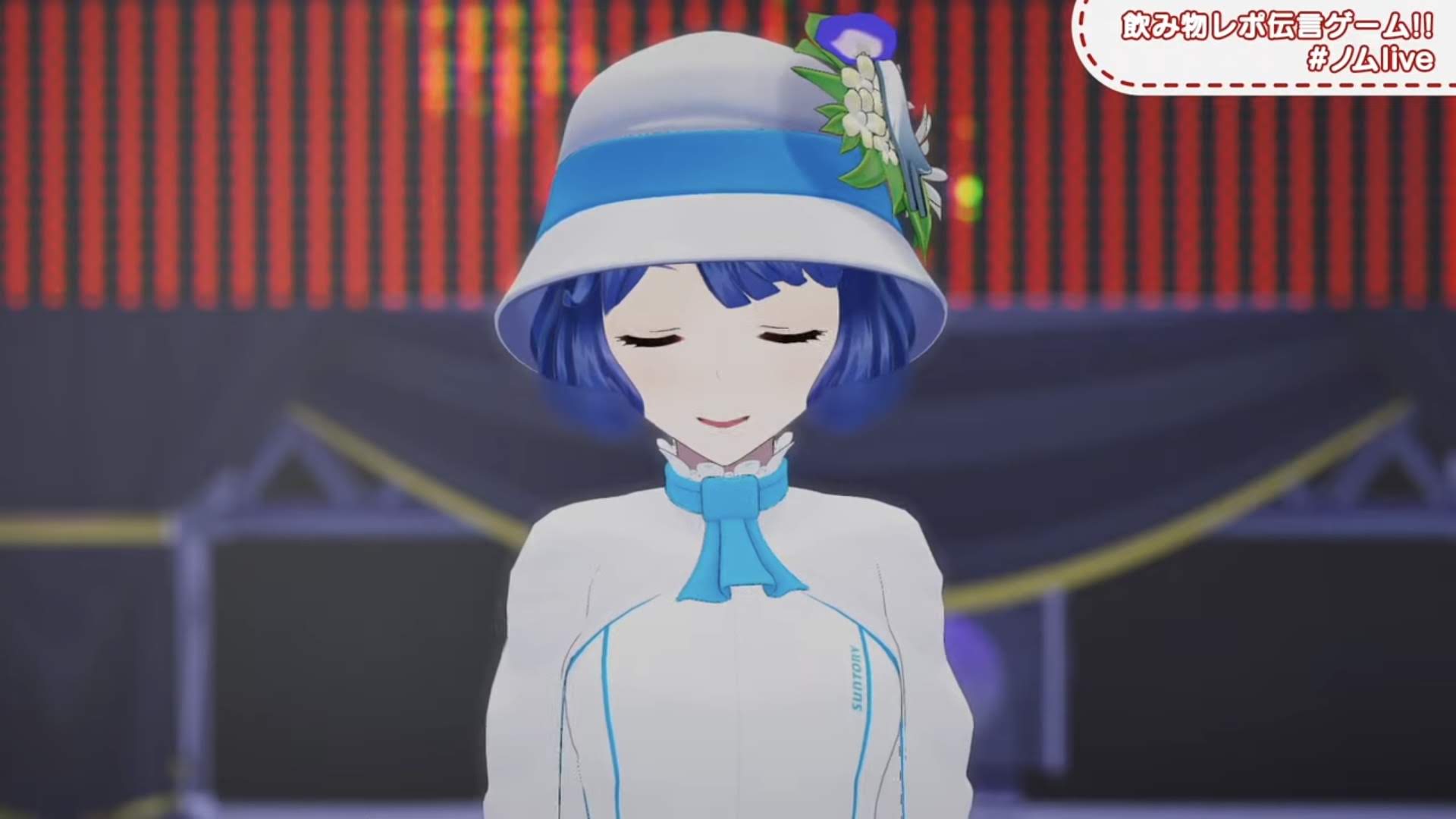
There’s a 50/50 chance that saying “the Japanese beverage company Suntory has their own official Virtual Youtuber” would come as a surprise. But the blue-haired “Suntory Nomu” is real (in a sense), and I actually like her design quite a bit. What really stands out about Nomu’s appearance, relative to other VTubers, is how simple and subdued it is. A white dress with blue highlights stands in sharp contrast to the vast majority of Hololive and Nijisanji, who seem to be created with a maximalist philosophy. This latter approach brings to mind broader discussions about character design in media.
(Side note: I’m not sure I need to mention this, but in case it matters, I am not endorsing Suntory products in any way. I generally like their drinks well enough, but that’s about it.)
When looking at Nomu relative to the Hololive members she’s streamed with, the difference is clear. While both have attractive designs, Takane Lui and Aki Rosenthal have all these details, adornments, and colors, resulting in rather complex/complicated appearances. There are practical reasons to make them this way, of course: They need to be immediately distinct and visually appealing to prospective viewers. Rigging/modeling them for animation is a one-time thing, as opposed to needing to draw them anew every time in the vein of anime or manga. And the expectation is that people will stare at them for extended periods. VTubers need to communicate a good portion of who they are immediately, as viewers can’t be expected to dive into an extensive backstory—and often VTuber backstories are helpful suggestions, at best.
The decision to go maximalist reminds me of fan discussion surrounding fighting game characters. Fighting games, especially ones not based on an existing property, share a number of similarities with VTubing. There’s no prior context for people to get attached to (as they might with an animation or comic), so having characters catch the eye right away while also communicating how they play is important. There’s still quite a bit of range—Compare Ryu or Chun-li from Street Fighter to Sol Badguy or Dizzy from Guilty Gear (especially pre-STRIVE)—but criticizing a fighting game character for being “boring” is typically more about looks and presentation of attacks. That’s actually a big difference with Virtual Youtubers: It does ultimately come down to personality.
But it makes me wonder if significantly simplified designs like Suntory Nomu couldn’t thrive despite the general trends against them. Maybe it’s because so many designs take an “everything but the kitchen sink” approach that Nomu’s aesthetics stand out more. Could there be a trend back down to relatively more minimalist designs in VTubing, fighting games, and other similar areas? It’s something I’d like to see, if only because I’m curious how it would all play out among the fans themselves.
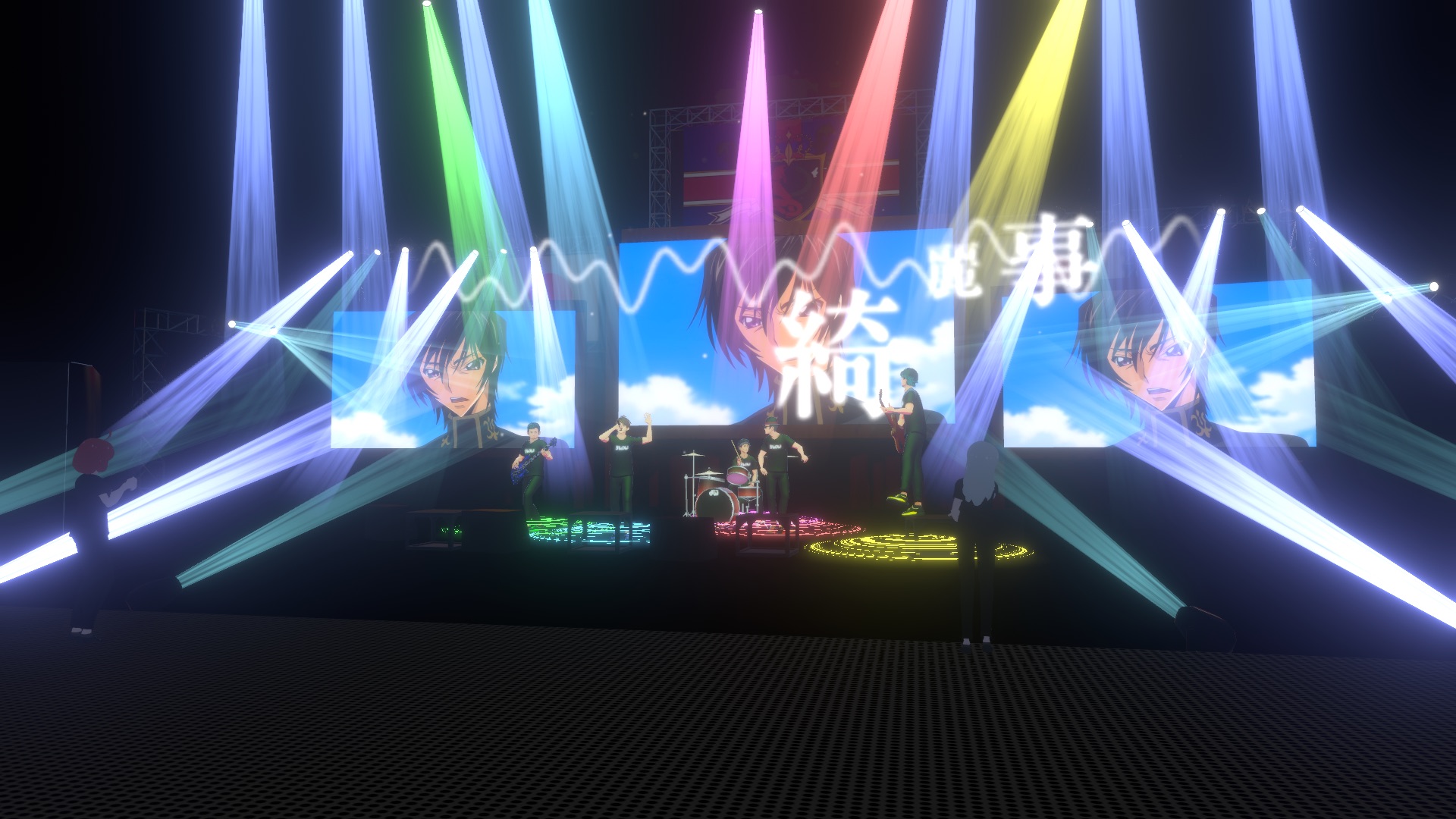
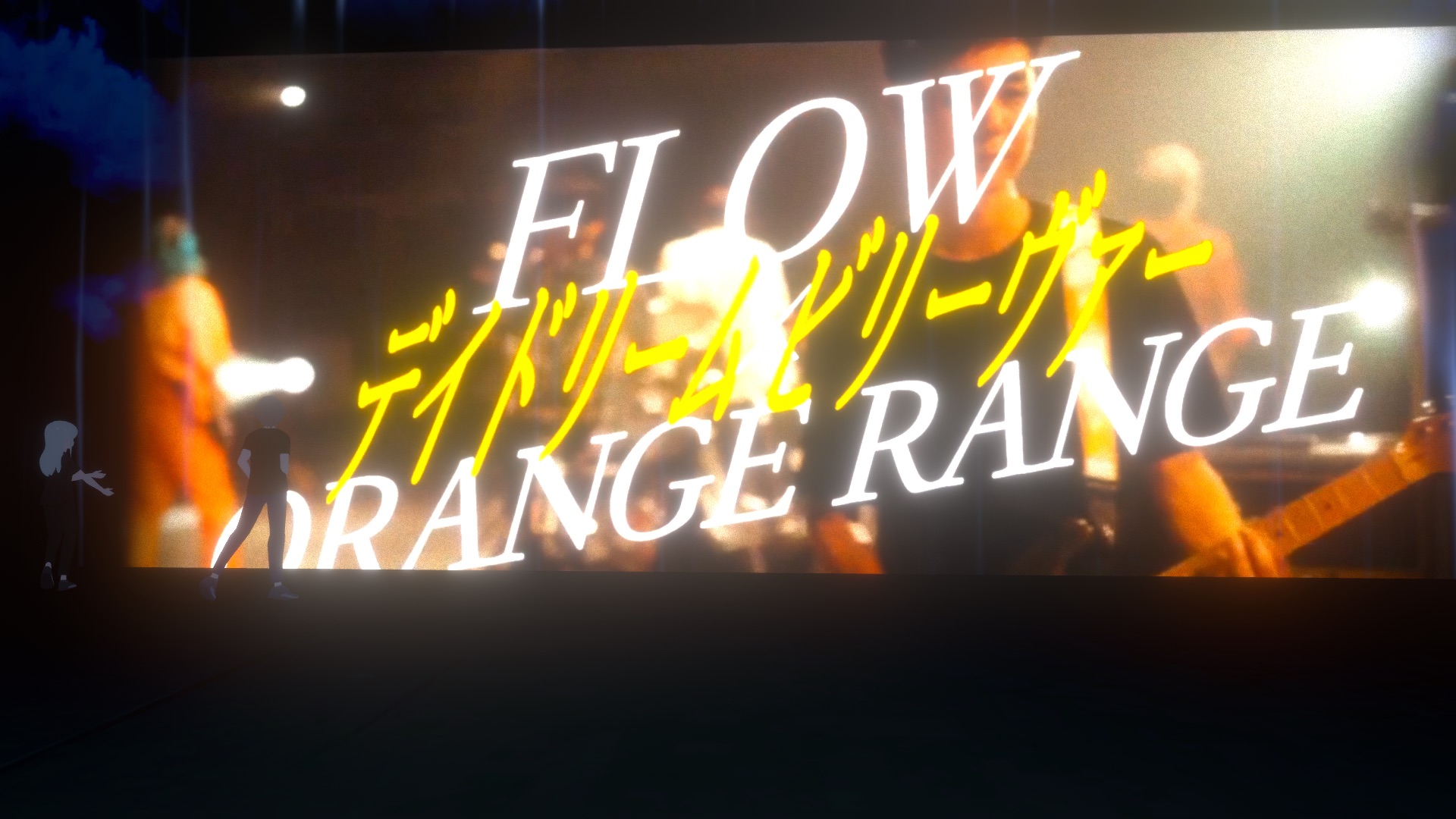
I’m not big into VR. In fact, I can count on one hand the number of times I’ve done anything virtual reality–related. But this past summer, I interviewed the heads of Gugenka, a company dedicated to various forms of entertainment that blur the line between analog and digital. Thanks to that interaction, I recently received an invitation to participate in a Code Geass x FLOW virtual concert. It’s not a bad combo: I have generally fond memories of the Code Geass anime, and FLOW has done some of my favorite anime songs ever. So, even if my VR experience is limited to a demo booth in the 1990s and a Hololive Myth anniversary event, I decided to give it a shot.
Not only was it my first virtual concert, it was also my first time using VRChat—a program I only knew of through watching Virtual Youtubers. Getting things to work took a lot of coordinating, requiring me to link a variety of apps and accounts across various sites together. It might get easier with experience, but I was definitely confused, and I still doubt I fully grasped it all.
Because I don’t own a VR headset, I used VRChat on my desktop PC, and the experience was more like a first-person shooter (or like Incidentally, that’s also a form of entertainment that’s not really my cup of tea, but once I got the hang of it, I started to see the appeal of being able to navigate virtual spaces in a more naturalistic way. (It also let me understand how Gawr Gura navigated the aforementioned HoloMyth event.)
The actual concert consisted of five parts, each time starting with a speech from Lelouch (voiced by Fukuyama Jun), which was then followed by a song performance from FLOW. There were actually two ways to view the concert: VRChat and a Japanese streaming service called Showroom. Because of my own confusion, I actually watched the first song in Showroom, which acts more like Youtube or Twitch, but is aesthetically set up to resemble a simplistic movie theater. At first, I figured this was just the way the concert was, until I saw a bunch of 3D models run right in front of FLOW, clearly showing that Showroom wasn’t the only way to experience the event. That’s when I decided to switch and try VRChat after all, despite some earlier troubles.
One thing that complicated this process was that joining each part of the concert meant having to leave VRChat and click a link that would then send a message to VRChat with a special invite to the next “world.” The need to jump back and forth was a bit unintuitive, and I actually missed the 2nd part of the concert as a result before I figured out how the whole thing works. Once I got back on track, things finally fell into place.
This is when I finally understood exactly what Gugenka meant by having “instances” that allow their virtual events to have some flexibility for viewers. In the case of this Code Geass x FLOW concert, one could join in real time to mimic being part of a public concert, or one could join at a specific moment so that you can either coordinate with a smaller group or to make sure you didn’t miss anything. This isn’t permanent, however, as there were still specific overall time frames where the concert parts were available, and then they would go away. The difference is that if you missed something by, say, 10 minutes, you still had 45 minutes to watch from the beginning.
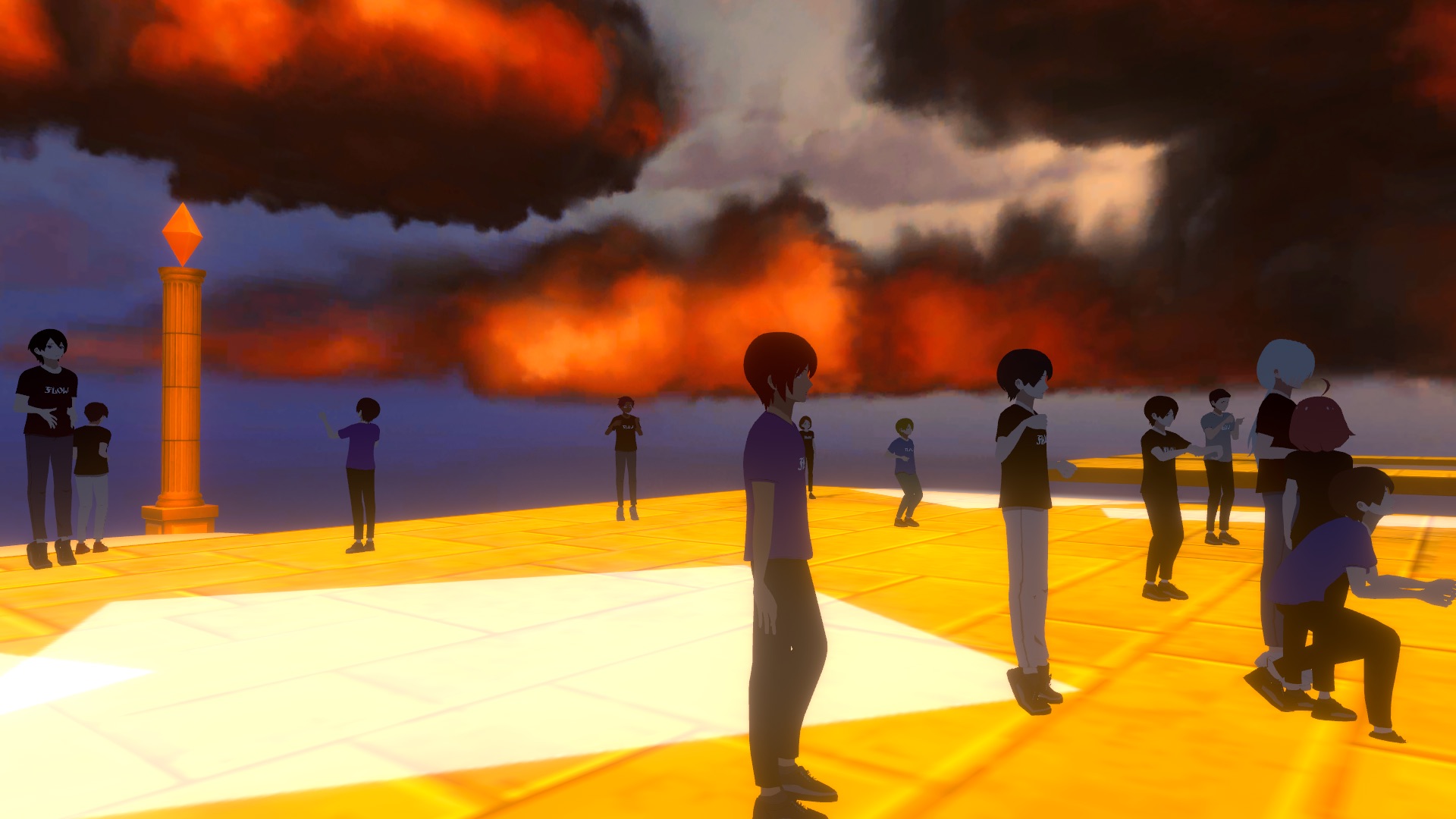
I don’t know if it’s because I started with Showroom and ended with VRChat, but in Part 1 of the concert, FLOW was being shown as video footage of the actual members, whereas after that, they were 3D models. In the VRChat experience, it was amusing to see people running up to the stage to get as close as they can to FLOW, while others would use the squat command to make viewing easier. The music was great (of course), but in some ways, the people-watching was better. I remember seeing one attendee in particular swaying and moving with a clear joy over getting to be there.
Tickets were 6,600 yen minimum, with a deluxe package that costs a great deal more. I don’t regularly attend concerts, virtual or otherwise, so I thought it was kind of steep. That said, understanding the kind of experience it’s supposed to be, and knowing that other virtual events cost similarly, I think I would pay for the right event. It also costs a lot less than actually flying to Japan to see a band in the flesh.
While the virtual experience can’t be a full replacement for a live performance, there’s a bit of joy in knowing you’re experiencing the same thing as people living in Japan. It also creates a great opportunity for those who don’t have the means to travel for concerts to do something more interactive. Especially in a time when COVID-19 is still affecting people around the world, it’s also a solid choice for those who are too afraid to travel to another country.
I want to end by talking about a funny incident that occurred. For one song, I hopped into the VRChat world, only to find myself somehow transported a great distance away from the waiting room. Confused, I tried getting closer and closer to the space, only to start hearing chatter from Japanese attendees who were discussing someone who looked to be stuck. Soon, I realized that the person they were talking about was me, and they were trying to help me get out of whatever weird glitch I was in. After resolving the issue, they asked if I was okay—to which I jumped up and down to show everything was fine. The way these random people looked out for me put a smile on my face, and it actually made the concert more enjoyable overall.
I’m not going to say that this is a universal experience for virtual spaces, but it reinforced the interpersonal connections these sorts of events can provide.
Cover Corporation and Nijisanji, the two heavyweight companies of the Virtual Youtuber world, both recently launched a new generation of English VTubers. TEMPUS and ILUNA respectively are new steps forward for their respective organizations, with HoloTempus being the first English-language Holostars (the “dudes” counterpart to the all-girl Hololive) and ILUNA being the first mixed-gender debut group for Nijisanji English. The initial announcements were made close to each other, inevitably leading to comparisons. Among the topics of debate were who has the better character designs, with people taking sides and criticizing the other for being uglier.
Normally, I really don’t care about this sort of petty, contentious arguing. And in terms of determining who’s “better” or “worse,” I still don’t give a damn. However, what interests me is that I find TEMPUS and ILUNA to have taken different approaches to portraying attractive men. The distinction can be roughly categorized as “hardcore bishounen” (TEMPUS) vs. “mainstream bishounen” (ILUNA).
It’s not a perfect analogy, especially because each individual VTuber has a unique artist behind them. But when you look at each group’s aesthetics, as well as the actual visual styles, the comparison only grows stronger. The TEMPUS designers include Kurahana Chinatsu (Uta no Prince-sama) and Komiya Kuniharu, and the VTubers have such sharp chins and body proportions that one expects more to find in BL or even CLAMP manga—the kind of look parodied by Gakuen Handsome. In contrast, ILUNA’s designers feature among them Arisaka Aco (Bestia) and Amaichi Esora, and their VTubers have a softer appearance that reminds me of something like Genshin Impact. Given that, it’s almost no wonder that fans have found this to be a topic of contention.
But Ultimately, while visuals do play a role in Virtual Youtuber popularity, personality is also vitally important. Picking favorites comes down to how each individual balances what they care about, though I think it would be best to not bash someone for liking one over the other, as long as the core reason isn’t some bizarre tribalism. As for me, I haven’t watched enough of them overall to pick a top guy, though finding out Vesper Noir has a thing for Carmen Sandiego makes me like him.
This interview was conducted at Otakon 2022 in Washington DC. Gugenka, Inc. is a company that describes itself as “Sales of digital goods and technical research on Japanese animation using advanced contents such as VR/AR/MR.” Mikami Masafumi is the CEO, and Kiral Poon is the CTO.
How did you get into the business of 3D, VR, AR—these sorts of subjects?
Poon: Do you mean academic side, or…?
Anything, really. If there’s an academic element, then definitely talk about it. If it’s sort of an amateur hobby, or…just what inspired you to take this up…
Mikami: We were originally making AR stuff for movie promotions, and we slowly moved that content into VR. That became for VR anime promotion, where we promote anime with our VR abilities.
Poon: One of the examples would be the Sailor Moon VR that we built. That is also, like, a movie for Sailor Moon Crystal promotion, and then we did the VR game for the event. And in the end now it’s on VIVEPORT for free, but it was originally promotional content.
I first became familiar with Gugenka through the HoloModels app.
Poon: Really?!
Yeah. I found out about it from a reader, actually.
Poon: When did you hear about it?
A couple of years ago, I think?
So what was the origin of the decision to make virtual AR models? Was the plan from the start to work with established properties?
Mikami: The way it started off was, you know how we have anime figures in real life, right? What if we could make digital versions of anime figures?
In physical figures, it’s probably not a real surprise to see on your figure rack a Dragon Ball character and a Re:ZERO characters side by side. But then in VR contents, it was an uphill battle to get the understanding to have two characters of different IPs sitting on the same app.
Poon: I’d like to actually convey my two cents on that. Japanese companies are really, really, really restrictive on the IP stuff. The more I work with them, the more I think that’s so crazy about it. Masafumi back in the day, he tried very hard. One problem is, how can you line up two different IPs together without any problem with the IP company. Cause they usually want to have their own world, right? When it’s in the real world, it’s just figures, so they don’t care about it. But in digital, they usually have control with their applications. So Masafumi was actually the producer. He is the one who actually produced it and persuaded those companies to do it together. The reason he can do that is because this company has a long history with these companies and these movies. He already knew these people, and that’s why he did it. It is not easy at all, in my opinion.
I’ve heard similar things about the game Super Smash Bros. When it comes to the director, Sakurai, it’s only because he has such a strong reputation in his industry that he’s able to convince all these different…
Poon: Yeah, exactly. In Japan, when you work, it’s not only about ability, but also about how people trust you. So that’s the case.
I also want to point out why this app exists, which is that there’s limited space around the world. We usually line up a lot of figures—I buy my own figures too—they take up a lot of space. In AR applications, you stick them into the space, and you can display them anytime. It’s just like an RPG item box, where you just bring it up anytime—exactly like that. That’s really convenient, and you can do more than with actual figures. You can move the pose and change the face. With real figures, you have to change the parts, and there’ll be lines on the face you don’t want. But with digital figures, you don’t have that problem. So that’s one of the main reason I can tell you why we created them.
You actually anticipated my next question!
[laughter]
So moving on, Gugenka has collaborated with virtual stars of all kinds. You have Vocaloids like Hatsune Miku. You have Virtual Youtubers like Kizuna A.I., Tokino Sora—and I remember that when I got the Gugenka HoloModels app, there was Shinonome Megu.
Poon: You did a good job. People don’t even know that one.
So what do you think about the fact that people are embracing virtual characters, and have you noticed any changes in the degree to which people are embracing them?
Mikami: Right now, everyone has their own different characteristics, and everyone would probably be able to express themselves differently in different bodies. I believe that our app would enable everyone to express themselves in their own body of their choice.
Around the world, the COVID-19 pandemic has brought the concept of virtual spaces to the forefront, as friends, families, and businesses try to gather online through various chat programs but also in creating virtual space. How has the pandemic affected your approach to virtual spaces? Has it cast a new light on them?
Poon: So with virtual space, during the pandemic, we have actually been trying to increase our opportunities with all these restrictive companies. In my point of view, usually Japanese companies tend not to do remote work and exhibitions lots online. But because of the pandemic, they start thinking about it, and they approach us. Of course, sometimes we approach those companies—“Hey, do you want to do it?” Usually, it’s the case that they will ask us about doing online exhibitions. Before, there were, like, no exhibitions, but because of the pandemic, we have those events hosted by Gugenka.
For example, the closest one would be the MF Bunko J one that we just did with Kadokawa—the light novel one. It’s a really popular real-world event in Japan. And there’s live concerts, like the Sanrio Virtual Fes. We tried to make it realistic, and we have a very good reputation on that event with VRChat. And of course, we also connect with all these partners from Japan—VRCast and other platforms. And I connect with all others across the world and have partnerships with them, like VRChat. After that, people started realizing what we’re trying to do to make people closer in distance, and display things in HoloModels, and also create your character through MakeAvatar.
You’ve worked on many events, and I know it’s hard to pick a favorite, I guess, but I’ll ask anyway: Do have any events you’re surprised that you managed to work on?
Poon: I guess I’ll let Masafumi answer first, and then I’ll answer.
Makami: I would say Kitty-chan’s Sanrio Virtual Fes is probably my favorite. I can take pride that I participated in it. The reason is that the people who are enjoying the real stuff Sanrio produces, as well as the artists and VTubers—they all come together in one event, so I thought it was a good event.
Poon: I’ll add two cents about the Sanrio virtual event because there’s not many people who know about the event in the US. After I did the panel, people were all surprised. This is a real diverse event that includes actual artists like AKB48—famous, real artists like HoneyWorks. There were also virtual artists like Kizuna A.I. and other VTuber characters. And then there’s also the system that we created so that we can bring this all in, and with synchronization with the timing we can make it feel like a live event.
What that means is, what if you join late but your friends have been in for five minutes? In a usual game, well, you start from zero, and you play it, right? But in real life, you’ll be seeing things five minutes late. What you’re seeing with friends is the same thing, and when you wave, and when you sing, you’re doing the same thing. This is what makes a huge difference with the Sanrio Virtual Fes event. We created a synchronization system to make sure everyone had the same experience, same timing to all these artists. And it’s a huge event because there’s more than a hundred songs. I didn’t sleep for two to three days just to check the songs, and it was crazy. I wish one day we could join us for the second one. So that’s the Sanrio Virtual Fes.
That actually makes me think: Sometimes, due to the pandemic and the increasing use of online spaces, people want to get together for a karaoke session, right? But due to the differences in synchronization, it can cause problems for people who want to sing together. Is there a possibility of creating a space like that for regular users?
Poon: So there’s a lot of problems in terms of people’s preferences. During the event, there’s a separate instance we created to adapt for each person. For example, if your computer is weak, but you still want to enjoy the event, there’s something called shitei [appointed] instance, which means you are pointed to that instance, and we make sure you can have the best experience in that instance. But because it’s a social VR, if you want to see the group, there’s something called jiyuu [free] instance. But if it crashes, or you just want to enjoy the experience with your weak computer, you can still go to the appointed instance.
But also, furthermore, for the paid content, there’s outfits using the MakeAvatar app. It’s like when you dress up as Mickey—or Marvel characters because Disney owns Marvel—and you go to Disneyland. So it’s the same thing as when you go to Sanrio Puroland; you dress as Mochipoly, as they call it. It’s really cute, and you can buy the hat from Kitty, or Keroppi.
There are two reasons for that. First, is because of the story. It’s best delivered that way. It feels like part of them, and it’s real good. When you look at pictures, it’s really nice. Second, is the performance. We want weak computers to also get in easily. So we think about all that and plan the event that way.
I know a lot of people around my age became anime fans in part or in whole due to Slayers.
Poon: Ooh!
So I was pleasantly surprised to see both a HoloModel of Lina Inverse—I saw the author, Kanzaki, constantly promoting it—
Poon: Man, I’m surprised you know Slayers, and that we did that?
And you created the Slayers 3D Live event. Were there any fun, creative challenges involved with working with this property?
Poon: Actually, Masafumi was talking about Sanrio, but my favorite event was Slayers. The reason for that is the equal system that I was trying to build. I’m actually the director of the concert for the live event in Tokorozawa Sakura Town.
So we actually have the live event, and then the sequences. We have HoloModels of Slayers, and usually it would be a waste that you can’t use them on other games. It’s really expensive to build a really high-quality CG model. We have the models, we have the live event in Sakura Town in real life, so it feels like Lina Inverse is there, and she does the song. Then, we host this event online in NeoChat so everyone can join. And then in the end, it’s sold on blu-ray. So this whole flow is the equal system that we try to tell those IP companies that we can balance promotion and also maybe earning a little money for the company. That’s why it was my favorite event, because all the systems of the Sanrio event are based on the Slayers event.
I’m surprised. Even though I didn’t do a lot of promotion for it, I’m surprised that you and—actually, one more person at the panel, he said he knew it, and he actually joined the event. I’m actually touched because I want North America—like myself from Canada, and there’s also the US—I want them to join us. But there’s limited resources, and there’s a problem that we didn’t have enough English translation at the time. So in the future, I’m trying to push everyone to do more English support. Good question. I want to talk more about Slayers!
Kiral, one of your interests, as written in the Otakon guidebook, is creating technology to help make life easier for animators. There’s an ongoing issue about animators being overworked and underpaid? Do you think your work can help deal with this issue?
Poon: Do you know Dragon Ball Super: Super Hero? That is one of the good examples of using good 3DCG in movies that doesn’t feel weird. Because sometimes it feels weird in 3DCG. There’s one good example, that you can have an efficient way of moving, and then you can have more stories to deliver to people.
So that is great, and it’s efficient, but to your question, can it solve the overtime and overwork problem? In some ways, but it comes down to the culture in Japan. Let’s say you need less people for the same project, right? Well, you just hire less people for the same work—there’s a chance like that. But it depends on the company. They could be, like, “Oh, there’s less work now, so now everyone doesn’t have to be doing overtime, and they can go home, right? So there’s two approaches, and it comes down to culture, I think, partially. But the reason I want to focus on technology and I keep improving that, like with Slayers, is to try io make it more toon-like with cel shaders—to make it more efficient. But can that solve the core problem is the question.
Are there any Gugenka products or services that get less attention that you think people should know more about?
Mikami: In regards to what I want people to know more about, it’s basically everything: HoloModels, MakeAvatar, virtual events. But I kind of believe there are two major points that I think we need to focus on to have a wider number of people know about us and these events.
One is that there is a time difference between Japan and the US. While we were able to get past the problem of distance because we could bring people together from vastly different parts of the world, we can’t really get past the problem of time at the moment. So, I believe what we want to do in the future is maybe have different events for different time zones to address the time issue.
The other thing I want to focus on is basically localization of the English versions for these apps that we have. We need to be able to disseminate this information about the apps and events, and it’s not as easy as Google or word-for-word translation because sometimes they miss the mark or have different words we would like to use. Also, the thing about media is basically that over here in the US, it’s not like we have a strong understanding of where the media pipelines are. So I believe what would be best is if we could get to know the media people here, and how to best communicate with our fans so that we could disseminate the information to everyone interested in an effective manner.
Poon: I actually have the same feeling. When we do the panels, people actually come to me and say, “I didn’t know Gugenka before—MakeAvatar, HoloModels—but now I’m going be a core fan and support it.” So I’m touched, and also really happy that people enjoy our service.
Like, with MakeAvatar—I don’t think you even know this much yet—but this allows us to use different parameters. The tech part is really hard—I tried so hard on this tech from January—and finally, you can use different kinds of morphs to different kinds of faces. The idea is, usually anime characters are a little bit more the shounen youngtype, but I want elderly people to also be cool. Even if you’re old, you should be really handsome because you do your own thing. You could be chubby, you could be muscular—allowing the diversity is human, and it should be possible in your own character. That’s why we have all these features.
Of course, we have the SD character, that is, the small one. The main reason we built this one is because we support Quest, cell phone, and browser, so we want the workload to be lower. But we have new, high-quality MakeAvatar that allows you to change clothing and stuff. And the business model would be to buy the cosplay—the costume—and the IP company gets paid, and the user is happy. So you can export to VRChat, VirtualCast, to see online on Vroid Hub, or browser games.
We think in the future maybe we can do more promotion in the US and more people could take advantage of this. You could become a VTuber easily. I could host a panel and just teach you to use the app, and you could be a VTuber for free. And we have the face-tracking support in this, which means it can detect your muscles and move. In normal characters, it only supports simple expressions like A-I-U-E-O and smlle, angry, crying—that’s it. But we support really detailed motions on this.
Since her debut, Hololive’s La+ (pronounced Laplus) Darknesss has become one of my favorite Virtual Youtubers. Her premise states that she’s both a mighty alien (?) demon (?) whose power has been sealed off—as well as the founder of Secret Society HoloX, an organization with designs for world domination. In practice, however, La+ comes across as a cheeky and overconfident brat. It’s within this context that the biggest surprise about her characters was revealed: the fact that she’s actually a fantastic dancer. I find myself re-watching her dancing clips, even though I normally don’t do that—not with VTubers, not with flesh-and-blood performers, and not even with the many anime dances over the years.
To those who are unfamiliar with Hololive and specifically the process by which its Vtubers go from “2D” to “3D,” most start off as flatly animated characters. In this “2DLive” format (named after the program used to rig their animations), La+ and others like her are able to move and tilt their bodies and heads to some degree, but it’s generally not meant to track the entirety of the performer’s physical movements. Over time, a Hololive member receives a 3D polygonal model, and can use more robust motion capturing to match the movement of their entire bodies. In other words, you generally can’t tell how comfortable a VTuber is with physical activity like dancing before they make their so-called 3D debut.
La+ was the last of HoloX to become 3D. Prior to that, she was primarily defined by two things. First, despite being the leader of her clandestine group, she’s actually the smallest; her oversized horns further emphasizing La+ as a relative pipsqueak. Second, she has an extreme amount of ego that swings wildly between being justified and unjustified. So when she started busting a move, I felt a degree of cognitive dissonance. “Wasn’t she supposed to be bad at this sort of thing?” In a later collaborative stream with the rest of HoloX, the sheer contrast in dancing ability between La+ and her subordinates (who are usually her betters in a variety of ways) hammered home that she’s a cut above the rest.
I think the reason this aspect of La+ works so well is that it ends up making her feel even more like a being of contrasts. She has that aforementioned “shortest but most important” quality, but in terms of competence, it’s like you never know if she’ll be a Hellmaster Fibrizo (Slayers) or a Katyusha (Girls und Panzer). If this really were an anime or something, La+’s dance reveal would be that moment where Yoda or Shifu from Kung Fu Panda gets serious. It’s a winning trope, generally speaking.
La+ Darknesss is neither fully an anime character or a fully flesh-and-blood performer, which is why the combination of her character background plus her strength as a dancer shine through. Like other VTubers, she lives in that transitional space between the real and fictional worlds. The fact that she’s so physically talented is inevitably to the credit of the performer, but it’s the surrounding setting that gives La+ the stark contrast to render her moves to be even more unforgettable.
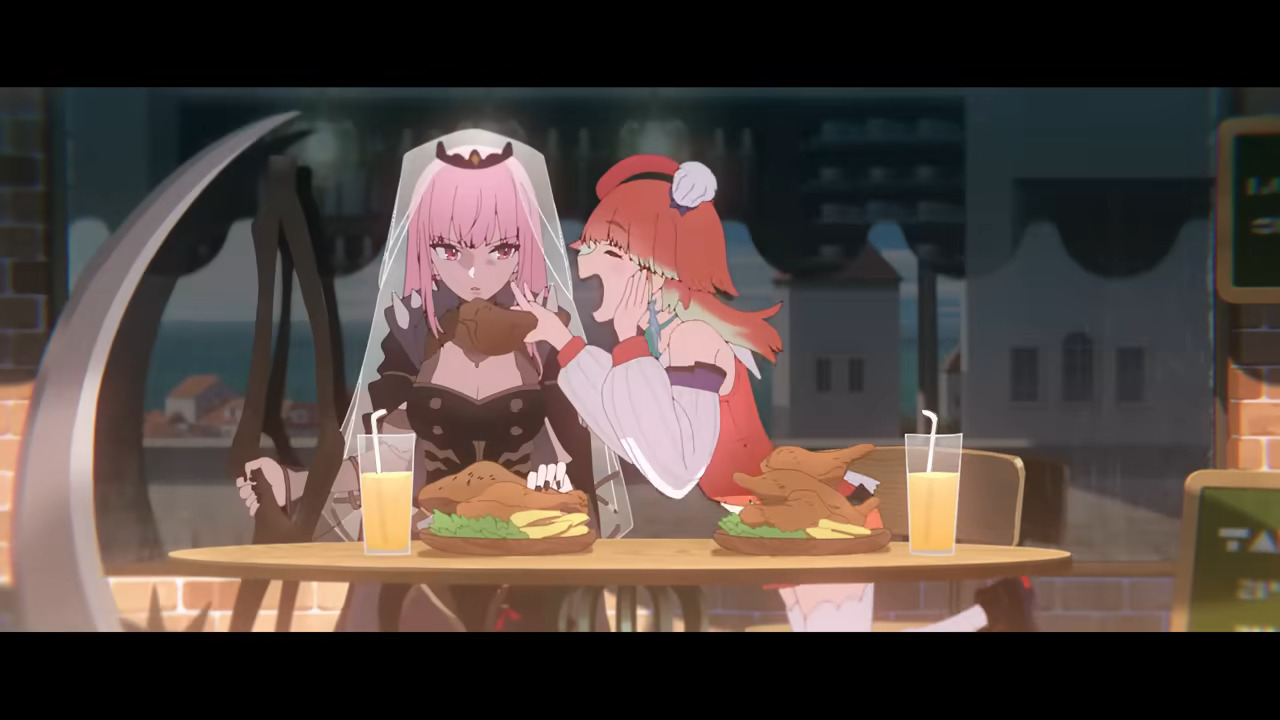
Hololive Alternative is a 2d animation project depicting the Virtual Youtubers of Hololive as active characters within a world. Two “teasers” are out currently, and they’re a treat for fans and newcomers alike. But while watching the second, the depicted interaction between Takanashi Kiara and Mori Calliope made me hyper-aware of how internet culture and its memes evolve at lightning speeds.
Kiara the Phoenix and Calliope the grim reaper are both part of HoloMyth, the Hololive brand’s first foray into the English-speaking market. Early on in their careers, they were known for having a rather flirtatious and tsundere-esque relationship, which in turn spawned the ship known as TakaMori. It was a prominent part of both character identities—even making it into Can You Do the Hololive?, a song based on all the members’ signature greetings. In it, Kiara states, “Of course the two of us come together,” and Calli responds, “Shut your mouth, Kusotori [Stupid Chicken].”
Similarly, the second Hololive Alternative teaser shows the two eating together. Kiara eagerly takes photos of everything (Calli included), and the reaper responds by grabbing her scythe and taking swipes at Kiara. The whole interaction describes the original basis for TakaMori to a tee.
The only problem: the nature of the pairing has changed over time. It still has fans, of course, and the two even recently had an in-person stream together that was made all the more impressive by the fact that one had to travel from Japan to Austria. However, both Kiara and Calli have talked about the fact that they decided to emphasize their solo identities more. The fans in the Youtube comments for that collaboration have remarked even on how the duo’s dynamic has changed (and arguably for the better).
Granted, this isn’t quite the same as a meme naturally morphing into something unrecognizable. The fact is, one can point to a conscious decision as the reason TakaMori isn’t quite the same as it used to be: a purposeful shift in direction. Nevertheless, it feel indicative of the rapid pace at which VTuber in-jokes are formed feels indicative of the general speed of the current internet. In contrast, elaborate animations—even short ones like the teasers for Hololive Alternative—take time to be made. In that gap, the ground shifted underneath TakaMori, and its depiction in animated form can feel like a relic of the past. In reality, it’s only been a little over a year, but the fact that a year sounds like forever in VTuber time makes that difference all the more stark. Online empires rise and fall in less time, and I have to wonder what else might end up coming across as a “yesteryear meme” by the time the next teaser is done.
One of the biggest transformations that occurred from the internet of my younger days to that we have now is the integration of the web into our flesh-and-blood lives. Whereas once you could reasonably maintain some kind of distinction between “online” and “IRL,” the latter term isn’t even really used anymore because it’s kind of pointless. Every major platform wants you to integrate because it helps them make money.
I’m under no false assumptions that Virtual Youtubers are some defiant rebellion against the greed that makes companies share information, but what they do represent is a purposeful separation of selves between who you are among close friends and who you are to an audience—while also making it obvious that there is a distinction in the first place. Of course, there are plenty of famous cases of performers being very different in public and private (see Freddie Mercury for one famous example), but the use of stylized moving avatars reduces the chances of the two sides being conflated.
The way VTubers have reintroduced and even kind of re-normalized an element of pseudonymous presentation makes me wish that they arrived sooner. Perhaps the internet would look different if VTubers were more quickly embraced before Facebook, et al could make everyone think that putting photos of yourself everywhere for all to see should be the default.
Very broadly speaking, that’s what online icons and avatars were for. And when it comes to hiding your face but wanting to communicate, things like chat rooms and voice chat have and still fulfill that function. But where VTubing is able to go a step further is in its ability to convey facial expressions that add an additional layer of interpersonal connection while also keeping that active and outright facade in place. How much more comfortable might people be talking “face to face” if the faces are virtual?
In the video above, Apex Legends player discusses his favorite Virtual Youtubers, but also brings up all the points I’ve made above. Namely, he likes the fact that it gives viewers something to look at while still maintaining some semblance of privacy for the streamer, even if it’s for someone who shows their face normally.
I understand the programs used by VTubers can be expensive and time-intensive, especially if you want something professional-looking like your favorites. Still, I imagine a world where this sort of thing becomes accessible to a great many more people, and they can maybe engage with their online communities more comfortably.
A confluence of events has me thinking a lot about how people connect to Virtual Youtubers. Just recently, we’ve had both the final concert from pioneer Kizuna AI—who coined the actual term “Virtual Youtuber”—and the termination of Hololive’s Uruha Rushia not long after a different incident involving controversy over a rumored real-world relationship. When I think about just those two examples, I realize that their respective stories have a lot to say about the very way people engage online through these highly detailed virtual avatars.
VTubers generally exist as a form of kayfabe. They want viewers to embrace the idea that these artificial selves are real, and even when all parties understand it’s an act, the willful suspension of disbelief is important. But there are a few key differences between AI’s approach back in the burgeoning days of VTubing and the style that Rushia, as a member of Hololive, engaged in. First, AI’s content for most of her career involved uploading clips to YouTube with streaming being secondary content, whereas Rushia is the opposite in that live streaming was the foundation. Second, one of the big AI controversies was when fans thought they were trying to make her into more of a brand than an individual performer, while Rushia ran into trouble because of the perceived blurring of lines between her virtual and real selves.
The fact that streaming is live (as opposed to pre-recorded) inherently changes how viewers interact with someone. It means being there in real time, more or less. Certainly, there are things like superchat readings, where messages sent with monetary donations aren’t responded to until a later stream, but you know that when the figure on screen reacts to something, you’re seeing it right then and there (or at least with a slight delay). It’s somewhat like the difference between video chatting with a friend versus receiving a video message from them, and I don’t think it’s surprising that many would find the former more engaging.
Having things live also means that things can go in unpredictable directions. That’s often seen as a plus, but that uncut nature is exactly what brought Rushia trouble. After all, the initial ruckus happened because she seemingly received a Discord message from a guy—a male YouTuber with his own massive and intensely devoted following—which for her more obsessed fans broke the immersion they had with her character personality as a yandere wife. The situation, in turn, is made all the more complicated by the fact that devotion to VTubers is often expressed through money via things like the aforementioned superchats. This exact series of events couldn’t happen to a VTuber who only uploaded clips, or at least not nearly as easily.
In contrast, one of the biggest controversies of Kizuna AI came not from the perception of peeling the curtain back too far, but from practically the opposite. Up until a couple years ago, it was not officially known who was the voice behind Kizuna AI, but fans knew there was a singular person bringing the character to life. When Activ8, the company behind AI, started the “Multiple AI Project” that would result in her being split into multiple versions, the fan backlash was the result of fear that they were going to replace the original, ater revealed to be voice actor Kasuga Nozomi. In other words, the concern was that making AI a vessel or suit that anyone could jump into and “become” her would be essentially stripping the character of her unique identity (brought forth by Kasuga) and providing cheap imitations. If we go by wrestling terms again (a natural extension of describing all this as kayfabe), then this was a Fake Diesel and Razor Ramon moment:
I’m also reminded of the Vtuber kson, who is a rarity in that she is willing to stream both as her flesh-and-blood self and as a Virtual Youtuber. In an interview on the Trash Taste Podcast, she mentioned that her fans in Japan enjoy her IRL stuff less. While kson says she’s not sure why that’s the case, she thinks it’s because they relate to her anime form more. Here again, immersion seems to be a big factor. This is not to single out Japanese fans or anything, but it speaks to the different wants and desires from VTuber fans, as well as the power of “chara moe.” Only, now these characters can be directly interacted with on a level not seen before.
I’m not someone who thinks that having strong feelings for online performers, virtual or otherwise, is inherently a doomed path. In my eyes, it’s not all that far removed from other forms of escapism and fandom, which I think are beneficial overall. However, what’s clear to me is that the varying degrees to which people want to engage with both the virtual and the real means that every strategy comes with inherent advantages and disadvantages—especially when you factor in the desire for success as a Vtuber, however one wants to define it. Perhaps what all this comes down to is a genuine human desire for safe emotional connection and authenticity, and Virtual Youtubers allow for a taste of that in times when we feel alone. It’s just not without risks to both performers and viewers alike, and I hope everyone can maintain their sanity because doing this can make anyone extremely vulnerable.

















 OGIUE MANIAX