Game Design: Patches, Iterative Design, and Basketball

When it comes to competitive gaming and eSports, one debate that’s often at the center of developer-player relationships is the decision to either leave a game alone—thus letting the players do what they want with the hope that they will advance the game on their own—or to patch it, essentially modifying the rules for the sake of making it a more enjoyable experience.

I occasionally see discussions about this go to real sports, but in actuality real sports also have examples of both “iterative designs” and “patches.” In particular, basketball provides a couple of interesting examples.

James Naismith square

The classic example of letting players influence the parameters of a game is dribbling in basketball. When basketball inventor James Naismith first developed the game, players were primarily supposed to pass the ball to move it forward. His students were the ones who started dribbling as a kind of loophole around the rules (they were “passing it to themselves”), and Naismith allowed it. Rather than seeing dribbling as a distortion of how the game should be, it was welcomed and ultimately proved to be a skill that enhances the sport of basketball.

120314_wilt-chamberlain_600

However, decades later a new problem arose. Wilt Chamberlain, One of the greatest athletes ever, Wilt was known for having a critical weakness: he was terrible at free throws. At the time, there was no off-the-ball foul rule, so even if Wilt wasn’t holding the ball at the time, opposing players would chase him down just so that they could foul him. The aforementioned rule was implemented to keep the game from becoming ridiculous. It was decided that watching a bunch of guys run around not actually playing basketball was detrimental to the sport, and while some residual problems still exist, it was also good for the game that just needed another “patch.”

Two different cases of “messing with the rules,” two different solutions. In the case of dribbling, it was welcomed with open arms, but when the optimal strategy was to turn basketball into an absurd game of tag, the rules governing the game were changed to prevent this from developing further.

So, when people talk about how the solution is to leave a game alone and let the players handle it, or that continuous patches and modifications to the game are the key to longevity, remember that neither is inherently right or wrong. It depends on the given situation, the community surrounding the game, and the direction that it would be taken should things either be changed too drastically or ignored entirely. In other words, it’s not wise to let yourself take a polarized philosophy in terms of what makes games, competitive or otherwise, “work.”

If you liked this post, consider becoming a sponsor of Ogiue Maniax through Patreon. You can get rewards for higher pledges, including a chance to request topics for the blog.

The Russian Roulette of Comedy: Mahou Shoujo? Naria Girls

nariagirls

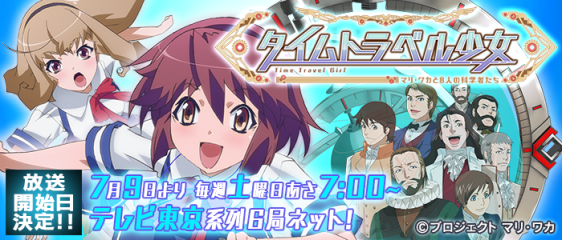
I love the dumb, yet incredibly clever humor of gdgd Fairiesstyle humor. Typically combining incredibly cheap animation with a cleverly absurd dialogue, a splash of improv comedy, and willful ignorance over their own premises, these anime always bring a smile to my face. The team behind gdgd Fairies has since gone on to do a variety of shows in that vein, including one about robot girls trying to discover humor, a Transformers series, one about personified Sega consoles, and now we have come to their most daring (and perhaps low-budget) work: Mahou Shoujo? Naria Girls.

Though technically a background story exists, it really doesn’t matter. Three young girls get magic powers to rescue a far-off magic kingdom, but it just so happens that every monster of the week’s scheme “coincidentally” resembles an improv skit like what you’d find on Whose Line Is It Anyway? It’s the kind of show where the girls transform from their school uniforms… to their school uniforms, with no discernible difference.

Unlike the other series mentioned, which are very simply animated using programs such as Miku Miku Dance and Flash, Naria Girls actually uses motion-capture, directly translating its actresses’ motions onto 3D anime-style models. Motion capture can be a finicky thing, and it can take a lot of careful work to not make character movement appear unnatural or to avoid tiny mistakes that come from trying to automate such a process. Naria Girls does not care. Its use of mocap is very rudimentary and constantly exposes its flaws, but then I think that blatant disregard for what is supposed to be a “professional quality work” is what makes the show kind of charming in the first place.

The other appealing quality of the series, though I must warn that it is paradoxically what makes it difficult to watch as well, is that it takes the improv element of the gdgd Fairies-style show to the extreme. If Seha Girls is one end of the spectrum, where all the jokes are scripted and planned out, then Naria Girls is the opposite. From start to finish through each 8-minute episode, all of the jokes are clearly made up on the spot. If that wasn’t enough, the show was revealed in June for a July broadcast, and they were still auditioning for cast members.

The result is that the show can be funny, but often times isn’t, namely because the actresses themselves are not particularly good at improvising. Even eight minutes is hard to maintain if the comedians themselves aren’t experts at it. However, the Russian Roulette element of watching Naria Girls, where you truly cannot tell if the show will be amusing from one moment to the next, is why I enjoy it. When a joke works, it’s a cause for celebration. When a joke falls so utterly flat that it’s like humor itself has been sucked into a black hole, it somehow comes out the other side still being an interesting artifact.

Naria Girls isn’t as good as its predecessors, but it is its own exciting experiment and adventure. That’s why I’m on board.

If you liked this post, consider becoming a sponsor of Ogiue Maniax through Patreon. You can get rewards for higher pledges, including a chance to request topics for the blog.
The Key to Victory in Macross Delta

macrossdelta-deltawaves

In recent episodes of Macross Delta, it is revealed that the Song-based attack of planet Windermere affects “Delta Waves” found in living beings.

That means there is only one valiant figure who can save the galaxy, one who was transported into the future through what might appear to be a freak accident but we know is actually by design.

Fry_Looking_Squint

Philip J. Fry was born with a unique gift. As a result of being his own grandfather, Fry is the only living being that does not emit Delta Brainwaves. If Delta Brainwaves and Delta Waves are the same thing, that means that Fry would be as immune to the Song of the Wind as he is the attacks of the Brainspawn.

Save us, Fry. The galaxy needs you.

Baltimore’s Last Stand: Otakon 2016

Otakon, the east coast’s largest anime convention, has been a mainstay of Baltimore summers since 1999. With the 2017 move to Washington DC, however, 2016 may very well be the last Otakon Baltimore ever sees. The awareness of this turning point among attendees felt almost palpable, and not just because the blazing heat and heavy humidity made everything feel ten pounds heavier. Watching con-goers on Sunday discuss the end of Otakon in Baltimore with an air of finality made it feel like it really was the end, even if it’s more of a new beginning.

Music and the Matsuri

otakon2016-matsuri

Every year, I try to attend at least one Otakon concert, usually that of an artist I’m interested in from hearing their music in anime. This time, it was MICHI, who sang the opening to one of my favorite shows of the year, Dagashi Kashi. Unfortunately, both of the panels I was involved with ran during her concert time, so I unfortunately could not go. What’s more, her concert was the half-time show at the Masquerade, which is an event I generally avoid. The upside of all this is that I got to meet her in person at the autograph session.

I did check out the Otakon Matsuri, a first for me. Taking place every year on the Thursdays before Otakon weekend, in the past I simply had neither the time nor the energy to go. This time, however, they had as music guests Lotus Juice and Hirata Shihoko from the Persona game series. Because a friend of mine loves Persona and made it a mission to attend their performance, I tagged along and was treated to a lively concert. Despite a number of technical difficulties likely owing to the severe heat not playing nice with Lotus Juice’s Macbook, they really made it a memorable experience. Lotus Juice, who was born in Japan but actually grew up in New Jersey, actually performed not only Persona and anime-related music, but even threw in a Japanese version of a Tupac song. Unfortunately, I don’t know Tupac well enough to recognize it, so if anyone in the comments knows, feel free to chime in!

Guests and Industry Panels

This year’s guest list was sparser compared to previous Otakons, possibly because of next year’s move to DC. Notably, Otakon mainstay Maruyama Masao (founder of anime studios MADHouse and MAPPA) was not able to appear, and it felt like Otakon was missing his insight. The guests that did come, however, were able to provide a great deal of insight into the anime industry and their creative processes.

Akane Kazuki and Escaflowne

Akane Kazuki, director of Escaflowne, Heat Guy J, and Code Geass: Akito the Exiled, was in attendance because of the new Blu-ray release of Escaflowne and the English premiere of Akito the Exiled. Akane is a Studio Sunrise man, so just like Takamatsu Shinji and Park Romi last year, so at a press conference I had to ask him what this experience was like working with Gundam creator Tomino Yoshiyuki. Akane mentioned that he actually went to Sunrise straight out of college because it was where Tomino was working. However, the very first time he arrived at Sunrise for work, he found Tomino was scolding his staff. Akane also described Tomino as someone who thought about anime from morning to night, and that he gave the impression that such a devotion was necessary to succeed in the world of Japanese animation.

He also talked about his work on Escaflowne, how it was his first work where he had full directorial control, and about the changes he made to the heroine, Kanzaki Hitomi. When Akane first came onto the project, Hitomi was going to be a quiet, long-haired girl, but he and character designer Teru Nobuyuki pushed to have her become the strong-willed, short-haired girl we know her as now. Later on in the conference, he described that period as one where a lot of female characters were the same, and he worked on Hitomi with the idea of, is this the kind of character that actual girls themselves can get behind?

Industry Panels

The Japanese industry panels I attended included P.A. Works of Shirobako and Hanasaku Iroha fame’s, as well as Under the Dog producer Morimoto Koji’s. At the P.A. Works panel, they didn’t really take questions from the audience, but they went through why they decided to make their new series, a robot anime called Kuromukuro, because it was uncharted territory for their studio. They also asked the audience themselves about the idea that Americans prefer action-oriented anime with strong heroes, but I found that an audience predisposed to coming to a P.A. Works industry panel likely wouldn’t have the same tastes.

As for Morimoto, I asked him questions related to his involvement with giant robot anime. First, I asked him about whether or not he has any input on how series are represented story-wise in the Super Robot Wars video games, to which he responded that they mostly leave it up to the game studio Banpresto. Second, I asked him about what goes into adapting or reviving old mecha franchises. Here, the answer was that it really depends on the series, and how much they’re trying to draw in the old, nostalgic audience, or create a new one.

As for the American side of things, I attended the Discotek panel and the tail end of the Vertical Inc panel. The main takeaways (at least for me) is that the glorious anime Charge Man Ken is now licensed by Discotek, and that two of Vertical’s best-selling titles are two of my favorites, Nichijou and Mysterious Girlfriend X. As someone who kept putting Mysterious Girlfriend X on their surveys every year, this fills me with pride and joy.

For more guest coverage, check out my interviews with  LeSean Thomas and the staff at P.A. Works.

Fan Panels

One of Otakon’s claims to fame is its strong collection of fan panels. Presenting a diverse range of topics, it’s one of my personal highlights every year. This time around, however, I felt that a lot of the panels I attended weren’t quite as strong, though I don’t think this is really the fault of the con itself or even the presenters. There will be some panelists who are stronger than others, and I, as someone who did a couple of panels, have plenty of areas where I need to improve.

It’s also good that Otakon occasionally goes for untested presenters, because if they stick with only the ones they know, it gives less of a chance for newer panelists to show what they’re capable of. In many cases, there appeared to be a lack of preparation and oversight on actually planning and researching the presentations. That doesn’t mean that any presenter who didn’t bring their A-game doesn’t deserve to come back, but I hope that we all look to the next time with the hopes of being even better.

Anime of Green Gables

Featured Panelist Viga’s panel all about the popularity of Anne of Green Gables in Japan was quite informative. As someone who’s watched both the 1970s Anne of Green Gables anime and the 2000s Before Green Gables prequel, I learned a lot, especially in regards to how it got to Japan. I didn’t know, for example, that Japanese fans take pilgrimages to Prince Edward Island fairly regularly. I thought the panel had a generally good structure, but felt a bit disorganized in places. While I at first wondered who the panel was for, I think it turned out to be existing fans of Anne of Green Gables who might not be as familiar with the anime.

Gen Urobuchi: Magical Girls, Riders, and Puppets, Oh My!

Because the title of this panel mentioned puppets, I was hoping to see some Thunderbolt Fantasy action. Unfortunately, it got cut out of the presentation, which I find a bit strange because plenty of episodes had been out by then. On top of that, there was an entire special about the making of the show, which would have given them plenty of material to work with.

The Bravest Robots: Sunrise’s Brave Series

An overview of the Yuusha giant robot franchise of the 1990s, this panel was run by Patz Prime from Space Opera Satellite, with whom I’d previously done a podcast review of Brave Police J-Decker. As someone who’s more familiar with Brave Robots than most, even I learned quite a bit from it. I was particularly fascinated by the transition by the sponsoring company Takara from Transformers to Brave Exkaiser, the first series, and how the panel wove a narrative of the continuous fight between the animators, Sunrise, and Takara. Maybe next time the panel might have time to mention Baan Gaan.

1999: The Otaku Time Machine

George from Land of Obscusion ran this panel, which went over some of the major and minor anime and video games to come out in the year 1999. For me, it was in many ways a review of my adolescence, but I’m also well aware that many anime fans in attendance likely would have been born before 1999. It’s still kind of crazy for me to think about. All I’ll say to this is thumbs up for showing the Japanese Medabots opening, thumbs down for not showing the Japanese Digimon opening.

My Panels

This year, I presented at two panels: “Such Dog. Much Anime. Wow” with Kate from Reverse Thieves, and “Greater Uglier Manga.” The former was a panel about dogs across anime, including popular series such as Naruto, genre legends such as Ginga Nagareboshi Gin, and old historical works such as Norakuro. If you came to the panel, I’d like to thank you for being such a great audience, and I hope to get better at communicating for next year.

Greater Uglier Manga was the sequel to last year’s Great Ugly Manga, with the twist that it was now 18+. The point wasn’t to fill the panel with pornography, but to extend the range of images that could be shown. Unfortunately, the panel began with a serious hiccup due to technical difficulties, and we spent the first 15 minutes troubleshooting. Ultimately, thanks to Daryl Surat from Anime World Order, we figured out that it had to do with the switchers they were using for the panel room and were able to start. Unfortunately, I ended up speeding through the presentation and finishing early, which means I have to work on my pacing better. My co-panelist had a better handle on time, I think. Lesson learned!

By the way, I really do like Kurosaki Rendou‘s work, and I hope that, if you attended the panel, that you might find them fascinating too.

Shopping and Sites

Dealer’s Room

otakon2016-dealersroom

This will be the last time we see this incarnation of the Otakon Dealer’s Room for a long time. That being said, I do want to point out that they once again allowed attendees to travel between the buildings of the Baltimore Convention Center by cutting across Liberty Street. In recent years, this was restricted, and in my opinion it really hurt the accessibility of the Dealer’s Room and Artist’s Alley.

My two biggest purchases of the convention at the Dealer’s Room were finding all of Brigadoon: Marin & Melan (a great series that deserves more love) and getting the Nozomi from Rolling Girls Nendoroid. As shown in the photo below, I posed her the best way I know how: drinking [soda] and driving.

(Don’t try this at home, kids).

If you were wondering, the sidecar can hold another Nendoroid, and I have just the right riding partner in mind.

The real highlight of the Dealer’s Room for me this year, however, had to bee the Good Smile Booth. While I did not obtain the aforementioned Nendoroid there, I was pleasantly surprised to discover that they were selling blank Nendoroid faces for $1 each, along with tables where you could sit down to decorate them. Apparently those faces are a convention exclusive, so I bought a bunch and turned one into a potential Ogiue for the future.

Some day…some day….

Artist’s Alley

One of the strongest titles at Otakon 2016’s Artist’s Alley had to be Pokemon Go and Overwatch. While Pokemon in general tends to be pretty beloved among Otakon artists and attendees, the three factions of Pokemon Go, Team Valor, Team Mystic, and Team Instinct, made for easy ammo for creators. As for Overwatch, I believe its popularity among artists to be a testament to its highly appealing and charismatic character designs. However, overall the artwork was quite diverse, and hardly anything was truly dominant.

Relevant to me personally, I bought an amazing image of Rice Goddess Hanayo from Love Live! wearing glasses. The Demeter outfit or the specs alone would have been enough, but together the combination was unbeatable.

otakon2016-paworks-kissuisou

otakon2016-paworks-diesel

otakon2016-paworks-minko

otakon2016-paworks-kuromukuro

otakon2016-paworks2

The real highlight of the Artist’s Alley, however, had to be the P.A. Works 15th Anniversary exhibit. Showing detailed character design sheets, background art, and more from P.A. Works shows, it made me even more conscious of the two arms of P.A. Works: the attractive girls who engage in adolescent drama and discovery, and the exploration of beautiful scenery and environments.

Food & Drink

otakon2016-nandos

Seeing as this was likely our last time in Baltimore for years to come, my friends and I decided to hit up many of our favorite places and turn Otakon weekend into a feeding frenzy. We went back to Abbey Burger Bistro, where I tried their Australian Red Deer burger. We stopped by Piedigrotta Bakery, the original home of tiramisu. We had to sample the luscious crab cakes from Flash Crab Cake Co. For the return trip home, fried chicken from Royal Farms was a must.

Two places I had never tried were Portuguese chicken chain Nando’s and a local Afghan restaurant Maiwand Grill. Though not exclusive to Baltimore, Nando’s was truly a highlight. Having sample a whole variety of their dishes, including their default chicken, chicken liver, macho peas, Portuguese rice, and natas (egg custards that were the predecessor to Hong Kong’s famous dan tahts), everything was a home run. Maiwand Grill had great portions at really affordable prices, and both their yogurt drink and Afghan ice cream were amazing. The yogurt drink was no-nonsense pure yogurt flavor, and the ice cream had both dates and figs in it (two of my favorite fruits).

Overall

Otakon 2016 was fairly low-key by the standards set by previous conventions, and for that reason it really did feel like a transition into something new and exciting. A part of me wants to come back to Baltimore someday, but another part of me looks forward to seeing what Washington DC has to offer.

Also, I hope no one pulls an Eden of the East near the White House.

As with every year, I leave off with a selection of cosplay photos.

If you liked this post, consider becoming a sponsor of Ogiue Maniax through Patreon. You can get rewards for higher pledges, including a chance to request topics for the blog.

Big Ogiue, Final Stage: Genshiken II, Chapter 127

Commencing the 14,567th “This Month’s Genshiken Was Great” Discussion.

Chapter Summary

It’s time for Kuchiki’s graduation, and the members of Genshiken have gathered to celebrate . They haven’t really put much effort into wishing Kuchiki well, but their half-hearted gifts (flowers and a signboard with messages from everyone) move him to tears. Kuchiki, meanwhile, reminisces about his time in Genshiken, and how one of his greatest memories is seeing the Madarame Harem crumble in person, only to find out the news that Madarame and Sue are dating, which ruins his schadenfreude.

With graduation comes time for a new president, and Ogiue chooses Yajima. In spite of her misgivings, Yajima is eventually convinced to do it, especially thanks to support from Hato. The chapter transitions to a new spring, and Hato visits the club room, eager to spend time with his friends.

And So It Goes…

If anything stands out in this chapter, it’s the artwork. While I’ve felt the quality of Kio’s drawings have been fantastic these past few chapters, I can really feel that this finale wasn’t rushed at least in terms of the TLC put into it. Ogiue is beautiful. Hato is beautiful. Everyone is beautiful

The conclusion to Nidaime pretty much came about Chapter 126, so this one feels much more like an epilogue. In many ways, it mirrors the original ending of Genshiken: a graduation, a transition in power in the club, some delightful nerd moments, and then a positive look into the future for the club. In fact, both series all but conclude after the establishment of a romantic relationship, with a lot of “falling action” following.

The big difference in feeling is that one involves the graduation of Sasahara and Kasukabe, two very vital characters central to the Genshiken narrative, while the other involves… Kuchiki. While he’s been with the club for a very long time, even the characters themselves treat him as an afterthought. They’ll treat him with just as much respect as they think he deserves. As Kuchiki points out, they didn’t even bother dressing up for his graduation (and if you recall, their graduation trip was more of a “Kuchiki is going away” celebration excursion).

Kuchiki is Human Too

The big exception here is Hato, who in general tries to look good when he crossdresses, but I wonder if he has a soft spot for Kuchiki. It wouldn’t be anything remotely resembling romance, and might lean more towards pity than anything else, but he seems to treat Kuchiki with noticeably more restraint and tact than the others. This might just be in virtue of the fact that he’s also a guy, so even if Kuchiki pictures Hato as part of his potential “harem,” it doesn’t faze him as much. Kuchiki also inadvertently instigated a number of Madarame/Hato moments.

It might also be that Hato can kick his ass.

In a way, it feels weird that the series would end on Kuchiki’s big day. I think that many readers of the series wouldn’t even mind if he fell off a cliff. At the same time, he hardly ever got any real attention, and had nary a sense of character growth. Now, at the finish line, we see a rare moment of Kuchiki being genuinely happy. I’d like to think that, somewhere deep down, he realizes what a terrible person he can be, and the fact that the other members put up with him is something he can appreciate. Granted, that’s only one heartfelt moment in an otherwise incredibly awkward display of how not to behave as a human being. It doesn’t help him that he loudly declares in the middle of campus that he spent the prior day masturbating furiously to his favorite doujinshi.

I do find it kind of interesting that, when Kuchiki mentions that his desire is to create his own harem, he doesn’t exactly include Yajima and Yoshitake in it. It makes me wonder if there’s something to the two of them that puts him off.

Passing of the Torch

With graduation comes a new president, and this transition always provides plenty of delightful reflection and insight in terms of the characters. Seeing prior presidents fidget and their newly chosen successors doubt themselves is the kind of tradition I can support. After all, it once provided one of the best moments in Genshiken: Sasahara and Ogiue’s racy near-kiss. No such thing happens this time, but there’s still plenty to chew on.

In the past, new presidents were chosen because they either seemed likely to carry on the spirit of the club or because the alternative (Kuchiki) would have been far worse. Ogiue picking Yajima makes sense in this regard, because she always appears to be the most stable and grounded member out of all the new generation. What’s more, Yajima’s careful personality and the way she doubts herself often is indeed quite Genshiken-like, and the way that she feels caught in the transition between generations of otaku makes her able to understand a range of potential newbies. I also do love the fact that Yoshitake agrees that she would probably abuse any power given to her, and the role of advisor/confidant is about as perfect as it gets for a lover of history.

I also only just realized after reading this final chapter that Ogiue likely abolished the doujinshi honeypot trap tradition, where current members spy on new recruits from outside and then bust in on them while they’re in the middle of revealing their tastes. Being a victim of it herself and also not being a fan of embarrassment, I could see why the secrets behind this would not be passed on to the next generation, especially one with Yoshitake in it.

Speaking of movements between generations, it’s notable that Madarame does not show up in spite of his prominence in Nidaime. Granted, none of the former members show up at all, so I imagine that the goal was to focus on the current iteration of Genshiken for the final chapter.

Thanks from other Manga Artists

Accompanying this final chapter in Monthly Afternoon are a series of congratulatory images from 30 other Afternoon manga artists, including Yoshikazu Yasuhiko (Gundam: The Origin), Samura Hiroaki (Blade of the Immortal), and Suenobu Keiko (Limit). Fun for all, and I really hope it’s included with the packaged volume release. Samura clearly drew Madarame with the wife from Spotted Flower, so I think we know where his ship sails.

Final Thoughts (This is actually as long as a regular Chapter Review!)

I discovered Genshiken many years ago, back in my college days. I can’t quite remember if I discovered the manga or the anime first anymore, but I remembered how real it all felt: these characters reflected to a scary degree the thoughts, behaviors, and mannerisms of me and my fellow nerds. It was an enjoyable series to be sure, but then a study abroad semester to Japan would elevate the series to the apex of my love for anime and manga, for it was there that I discovered Ogiue. With her came a number of realizations, such as my extreme(ly strange) fondness for “dead eyes” characters, but also an overwhelmingly powerful emotional connection with her fear that her passion would hurt others. By the time I came back to the United States, Genshiken was actually gearing up for its first ending, but it and Ogiue would remain with me.

Ogiue Maniax originally began well after the Genshiken manga had ended. At the time, I felt I had so much more to say about Genshiken and Ogiue, so I kept writing about it. I followed the second TV series. I gave testimony as to how I became such a fan of the series. I started the Fujoshi Files. Gradually, this site became much more than a Genshiken blog, though it wasn’t quite ever entirely one in the first place. I was content with the overall direction of Ogiue Maniax, and my own fandom.

Then Chapter 56 happened.

One of my long held desires was to see how Genshiken would be like under the leadership of President Ogiue, and this one-shot (at the time, no one knew it would become the precursor to a new series) provided just that. Two things stick out in my memory about Chapter 56. First would be the art style. Back then, Kio had been coming off of doing Jigopuri: The Princess of the Hell, and it showed in how much softer and cuter the character designs were. Second would be the mostly female cast. If you look at the original end of the first Genshiken, it clearly shows a very different kind of club with male members, a natural extension of what Genshiken was like back then. This was a retcon of sorts, but it set the stage for a more thorough exploration of the changing landscape of otakudom. Where once the female fan was seen as this rare gem in terms of characters, Chapter 56 went above and beyond to show that things were different, and the presence of female characters as otaku and fujoshi would not only be normalized but dominant.

When the announcement that Genshiken would be getting a full-on sequel hit, I was ecstatic. It provided me with a feeling of renewal, but also an opportunity. Chapter reviewing Genshiken on Ogiue Maniax hadn’t been possible, and I thought it wouldn’t ever be. But now, if ever there was a series for me to analyze every month, it had to be this one.

At the time, I could look back and go, “Wow, it’s been seven years since I discovered Genshiken, isn’t that wild?” Seven has now become 12. I began as a college student who saw himself in Genshiken, and now I’m in a dramatically different place, with a well-respected (if obscure) anime blog, a degree from studying manga that required me to move to another continent, and many good friends whom I met not only through my love of anime and manga, but also because the fact that Ogiue confronted and conquered her own fears encouraged me to do the same. Both I and the world around me have changed, and the fact that Genshiken has also shifted to reflect this made it a constant source of fascination for me.

It was truly unusual for this series to spend so much time exploring the Madarame harem, but I think that it became the focus inadvertently because it overlapped so much with Hato’s own development. You had these two tracks of characterization, one from the old guard and one from the new, and the result was that it pushed the classic otaku question of 2-D vs. 3-D into new and unfamiliar territory. In the end, any of the pairings would have worked for me, and while relationship drama was probably the last thing people expected out Genshiken, the series defied even those newly created expectations at every turn.

While it would have been all right for Genshiken Nidaime to have been more of the same as its predecessor, I’m happy to see how different it became. It confronted a new world of and around otaku, it tied up one of the vital loose ends with Madarame’s unrequited love, and explored topics concerning gender, sexuality, and self-image that went even beyond Ogiue’s plight in the first series.

What’s Next?

Now that Genshiken is over, that means the end of Ogiue Maniax’s monthly chapter reviews. That doesn’t mean it’s quite the end, though, as the supplements included in the collected volumes usually provide more insight and a true epilogue. And who knows? Maybe there’ll be more someday. I wonder where I’ll be in life at that point.

I’ve also been considering going back and reviewing the first series.

And please create that series I want where Angela is the main character.

So with that, I bid you adieu. OG(iue) 4 life.

Kio saying thanks and lamenting that he never got to do another beach chapter.

The Fujoshi Files 160: Yokoyama Mitsuko

Name: Yokoyama, Mitsuko (横山みつ子)
Alias: Pythagoras Dojikko (ピタゴラドジっ娘)
Relationship Status: Complicated
Origin: Prison School

Information:
Yokoyama Mitsuko is the secretary of the Student Council at Hachimitsu Academy, a high school that until recently was an all-girls’ school, and which treats male students like dirt. Her nickname, Pythagoras Dojikko, comes from her immense intelligence combined with her clumsiness. As part of the Student Council, she works under Student Council president Takenomiya Kate and opposes the Underground Student Council headed by Kurihara Mari. Her sister Anzu is part of the Underground Student Council.

A big fan of Romance of the Three Kingdoms (her name is a reference to Yokoyama Mitsuteru, famed manga creator who drew a manga version of the classic Chinese tale), Yokoyama befriends another history lover in Morokuzu Takehito (aka Gakuto), one of the few boys in the school. However, Yokoyama is also a fujoshi, and her love of Three Kingdoms also extends to her pairing its legendary historical figures. When Gakuto creates a misunderstanding with his friend Joe, Mitsuko begins pairing them as well.

Fujoshi Level:
Yokoyama is particularly fond of the pairing of Romance of the Three Kingdoms characters/historical figures Guan Yu and Zhuge Liang.

Otakon 2016 Interview: P.A. Works

paworks

This interview is part of Ogiue Maniax’s coverage of Otakon 2016. While the interview was with multiple staff members at P.A. Works, only the producer, Horikawa Kenji, gave responses. I’ve reflected this in the answers.

It’s a pleasure to have this interview with you. My first question has to do with True Tears. It was your first work as a studio, and from what I’ve heard the anime is quite different from the visual novel. What led to you choosing to adapt this series for your first project, and what led to it changing from the source material?

Horikawa: So the producer at that time, Mr. Nagatani, had said, “Let’s work on a few projects together!” And out of those choices was True Tears. We thought that it was perfect for what we could do at that time. We also thought it granted us lots of freedom, too, because as long as the theme was “tears,” we could do what we wanted.

Hanasaku Iroha is a series that shows the charm of the countryside and Japanese tradition. It seems that more and more anime are focused on the promotion of tourism to regions of Japan. You created the Bonbori Festival in Hanasaku Iroha, but was the promotion of a region of Japan a part of production from the very beginning?

Horikawa: When we made Hanasaku Iroha at first, we didn’t intend for it to empower tourism, quite the opposite, actually. Recently, there are many cases where anime fans go to the locations where their favorite anime take place. Some people call it going to “holy sites” or “investigating the show.” But while it can be a good thing, the act of fans going to these sites might not always be positive. When the fans gather, they might take pictures of, say, average houses and it might be very troublesome and disruptive. When I make select a location for a work, I think about how to have it so that even if fans visit it’ll be okay.

So when we were making Hanasaku Iroha, it was part of our thoughts that we would base it in a hot spring city that would be okay with having some volumes of fans coming. We also took care that the residents of that city would be notified when a large number of fans would come.

In regards to the Bonbori Festival, it originally wasn’t there, but it came up during the making of Hanasaku Iroha. We thought that, if it was a festival that the people could continue—not in the anime sense but that of a legitimate festival—that would have a much bigger, long-lasting, and positive impact. While an anime might be forgotten in a few years, a festival is part of Japanese culture and won’t be forgotten.

In Hanasaku Iroha, the grandmother is a very important character. In Shirobako, most of the characters are career women or out of high school. Tari Tari has one of my favorite characters, which is Takakura Naoko. Do you feel that there is a better market for series starring older characters, perhaps similar to the series you make now, but with people in their 20s and 30s?

Horikawa: As much as I would like to make something centered around older characters, there is such a thing as monetary value associated with characters. In Hanasaku Iroha, the characters were supposed to be out of school already and working, but due to those complications they became high school girls.

Since Shirobako, however, we took that step towards making the characters people who are actually out of school and working. That was a great adventure for us. Since we found out that Shirobako was indeed a success, we have shown that the girls don’t have to be in high school for fans to be interested. So, it was great to find out that fans like mature women as much as high school.

There are a number of characters in Shirobako based on real creators, for example Maruayma Masao and Anno Hideaki. Did you consult them in your portrayals, and did they have anything to say afterwards?

In terms of the people connected with those characters, we did ask them for their acknowledgement. The director knew Maruyama-san, so he probably asked Maruyama-san, while I asked people I know. But some seem to say that they never received the requests for acknowledgement.

Thank you.

Horikawa: Thank you very much.

If you liked this post, consider becoming a sponsor of Ogiue Maniax through Patreon. You can get rewards for higher pledges, including a chance to request topics for the blog.

Ogiue Maniax on Ani-Gamers Post-Otakon 2016 Podcast

paworks-stands1

Right after Otakon, I joined in on an impromptu post-mortem podcast on Ani-Gamers along with the Reverse Thieves and Anime World Order. See what we had to say!

Actual con report coming soon.


My Indirect Experience with Yukitheater

yukitheater

This was originally supposed to be a post about my time with Yukitheater, a program that allows people to watch anime together in a virtual movie theater using their own in-game avatars. Unfortunately, Yukitheater doesn’t work terribly well with Macs, so I often found myself staring at blank screens. The result is that, as I write about Yukitheater, I can only largely talk about it in a conceptual sense, so take my thoughts with a grain of salt.

One of the classic dilemmas of the internet (or communication in general, one might say), is that the more convenient it becomes, the easier it also becomes to avoid actually interacting with others. Where once anime clubs and gatherings at friends’ houses became the default way to watch something, streams and downloads are right at our fingertips. Of course, I’m hardly the first person to write about this, nor do I think this is the fall of civilization. If that were the case, we’ve been falling since the dawn.

Fans of anime and other media do not necessarily just take this lying down, and so the idea of the “simulwatch” was born, where people will each individually load up a movie or an episode, synchronize their watches Parker Lewis style (am I dating myself?), and then use voice chat, Twitter, or some other social platform to talk. Twitch thrives on this model as a streaming service, and Nico Nico Douga with its scrolling comments is exactly in this spirit as well, except that it plays with the idea of “real-time.” Yukitheater, as well as its predecessor, Garry’s Mod’s “Cinema” mod, are examples of trying to transform the simulwatch into a more immersive experience by creating a visual setting (the theater), and allowing for virtual avatars to run about and hurl popcorn (or whatever) at each other.

As someone who was an avid internet user in the late 1990s and early 2000s, the days of web rings and fifty billion search engines, Yukitheater seems like something of that era. More specifically, it feels like the kind of program people would have dreamed of back then amidst aspirations of “virtual reality” and the simple wonder that was talking to people on the other side of the world. If this were 14-year-old me, I would have been downright addicted to something like this, and indeed I spent many hours talking with people I never knew in real life about video games, anime, or whatever topic interested me.

While this might seem like an argument against Yukitheater as a kind of resuscitated relic, the relative anonymity it provides is something that I believe is sorely missing from today’s internet. When I grew up with the web, I saw it as a place where I didn’t necessarily pretend I was someone else, but I could step away from my life in school and with family. I could explore, and I could get away. Currently, however, the internet is more often than not an extension of one’s own existing reality. Facebook just gets you talking to people you already know. Rather than escape bullying by going online, the bullies can now follow you there. Although I have not used Yukitheater extensively, it appears to me to be an environment from an older time when one could indeed use the internet as an escape.

Yukitheater isn’t exactly a new idea. In many ways, it feels very much like Second Life or other similar online environments. I’m also likely projecting a lot of my own values onto Yukitheater, and so I’m aware that much of what I say is both subjective and subject to personal experience. A lot of things can go wrong with something like it, and I’m not even talking about the semi-frequent crashes (perhaps a symptom of Mac incompatibility). Still, I do find it fascinating that, in an age where the anime club no longer provides a “necessary” service (showing anime that is hard to find) with the communal aspect attached to it, now fans are actively seeking ways to connect with each other. Maybe this, more than anything else, is what defines one of the great generation gaps in anime fandom.

This post was sponsored by Johnny Trovato. If you’re interested in submitting topics for the blog, or just like my writing and want to support Ogiue Maniax, check out my Patreon.

[Apartment 507] Rokudou no Onna-tachi Harem Manga Review: Every Girl is a Delinquent

IMG_2010

Weekly Shounen Champion has a new series, a harem where all the girls are delinquents. I wrote a review about it, so check it out.