For better or worse, I’ve decided to attend Otakon 2021 this year. And barring an even more devastating report about COVID-19 and the delta variant than what’s already out, it looks like I’ll be on track. I’ll be vaccinated and masked, and while it’s basically impossible to ask anyone to be the former just one week out from Otakon, there’s also a mask mandate for the event itself. Stay safe, everyone!
I have a single Otakon panel this year, and it’s actually one I’d been trying to get into the con for a while now. Come see:
Saturday Morning MILFs (18+)
Friday, 10:45pm–11:45pm
Panel 1
Did you know that kids’ anime has a long history of spotlighting hot moms?! They’re here to teach kids important lessons…and keep the parents from changing the channel! Explore the legacy of attractive mothers in Japanese animation and their continuing influence on the fandom.
Yes, I made an educational panel about anime MILFs. I looked at the schedule, and I’m the only 18+ panel on Friday, so it feels rather…daunting.
Anyway, I’d like to thank the following Patreon sponsors for supporting the blog and allowing me to indirectly research topics like attractive anime moms:
If I see you at Otakon, I’ll be glad to give a solid thumbs-up from a safe distance. And remember: Wash your hands, don’t touch your face, wear a mask. Let’s make this a memorable convention where no one catches COVID-19.
And one last thing: I’m really, really looking forward to seeing Gaogaigo in Super Robot Wars 30. I hope I can finish the last novel before the game comes out.
This is a small honor for me: Kio Shimoku quoted one of my tweets!
VIZ is releasing a Japanese Star Wars tribute artbook, and Kio’s work is in it. Kio mentions that his vision for his drawing was “What Kio Shimoku would like to draw.” The result is a bunch of Episode I characters.
Quoting this anatomy drawing, Kio recalls working on Kagerowic Diary. At the time, a friend asked him why he drew the girls with such muscular backs, and Kio’s response was that he just thought it’d be a good idea.
To fight off exhaustion, Kio went to the convenience store to buy a Red Bull only to discover that they have extra-long Red Bull cans now. Not only that, the long cans were actually sold out.
Kio was invited to be a critic for Day 1 (August 14) of an otaku-themed music event called the Secondary Culture Choir Festival. He’s honored and flustered.
This is a tweet thread about Shin Evangelion. Because I haven’t seen this movie, I’m hesitating to translate it without proper context, but one thing Kio mentions is that he was really into the theory that Asuka and all the other characters from Evangelion Q were the characters from the old Death, Rebirth, and End of Evangelion films. I will probably revisit this once I’ve seen the film next month.
In light of the death of Nasu Masumoto, the author of the Zukokke series of children’s books, Kio reminisces about his own experience reading them. He talks about how as a kid, they were the greatest: a mix of the real and the absurd that went between horror, fantasy, science fiction, and the everyday. He and his classmates would get caught up in imagining their own adventures.
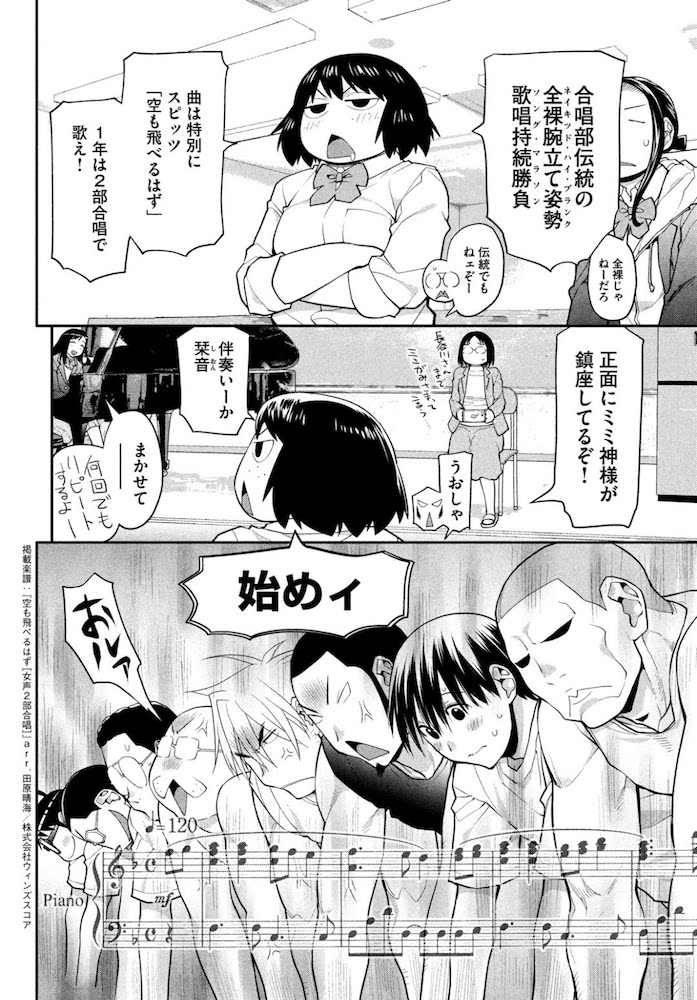
Kozue commences a competition among the boys to do push-ups while singing
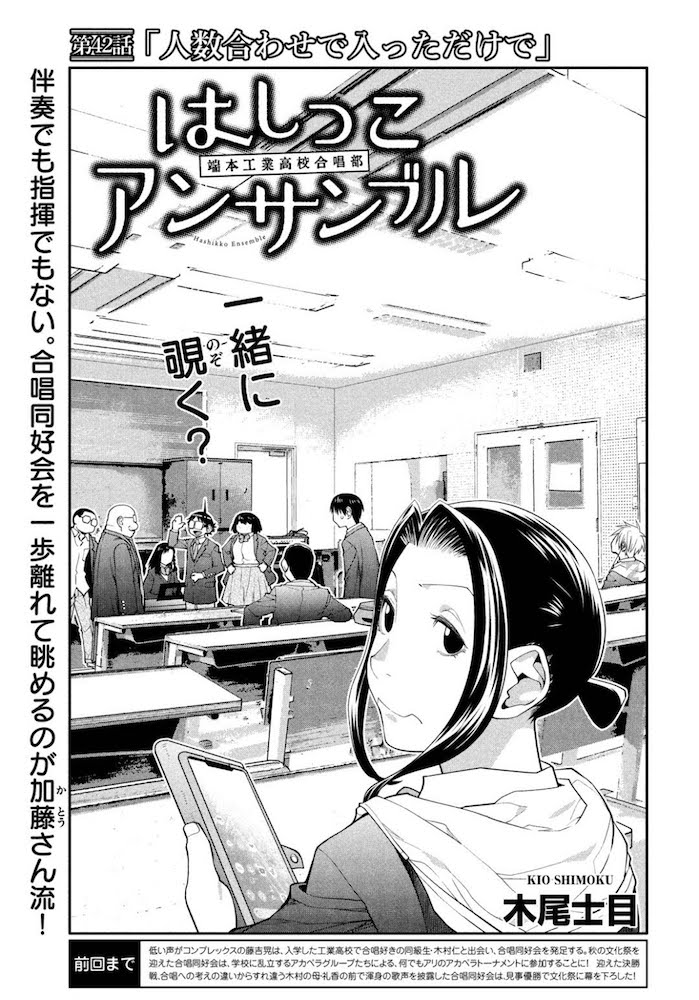
The Chorus Appreciation Society bolsters its ranks, but not all is smooth sailing.
Summary
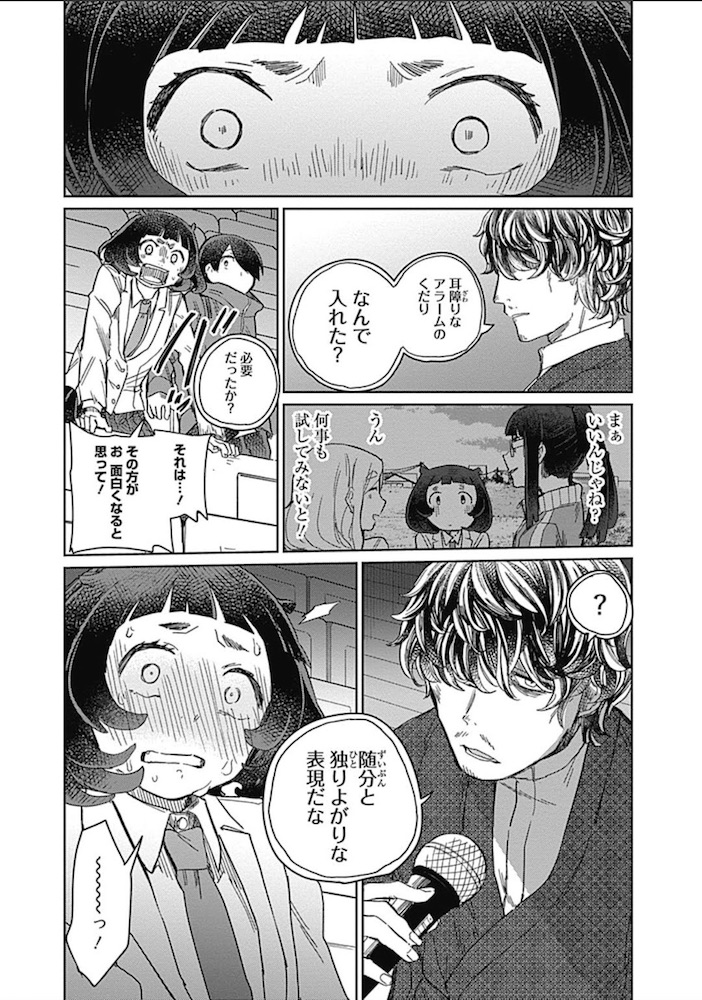
In a small change of pace, this chapter is largely from the point of view of Kanon. Despite the big win and Kozue’s fiery speech, the only students who have decided to join the Chorus Appreciation Society are Tsuyama’s crew (aka the Tsuyamars) because Mimi-sensei is their advisor. And right as Kanon is resigned to not participating more actively because this Appreciation Society is guy-focused, Kurotaki Mai shows up both asking to join and clearly having her eyes on Akira.
After some exercise (during which Kozue explains that theirs is basically an athletics club in terms of physical conditioning), things escalate into a competition between the current guys and the Tsuyamars to see who will be part leaders. In particular, Tsuyama and Kousei have a particularly fiery rivalry, on account of their both being baritones and delinquents quick to violence. Thanks to the conditioning of the veteran members, they all retain their spots, but within the little conversations happening, Kanon senses an increased awkwardness from Jin to Akira.
Kanonical Perspective
Kanon looks back toward the reader while sitting in the back of the clubroom
I’m appreciative of the fact that Kio was willing to switch things up and give Kanon a spotlight of sorts. So far, she’s largely been the relatively normal friend of Shion and Kozue, and one might uncharitably call her “boring.” But in addition to the manga emphasizing that she’s feeling a greater desire to participate more actively in some way, Kanon is also shown to have the keenest eye when it comes to social dynamics. She immediately recognizes Mai as the girl with a huge crush on Akira. She notices a greater closeness between Shion and Kousei, as well as Jin and Kozue. And, as mentioned, she can tell that Jin’s viewing Akira differently—though it’s not certain if she’s making the connection to Jin’s mom publicly recognizing Akira’s talent in front of her son.
I’ve compared Kozue a bit to Kasukabe Saki from Genshiken because of their no-nonsense attitudes, but because of Kanon’s ability to recognize shifting relationships, I think she might fit that role better in certain respects. The fact that Kozue is kind of an oddball in her own right also means that she can’t play the straight man the way Saki would. Perhaps Kanon is more like a less abrasive Sasahara Keiko? In any case, I’d like to see at least a few more Kanon-centric chapters in the future—perhaps even one where she’s the actual center instead of just the POV character.
Mai Joins the Party!
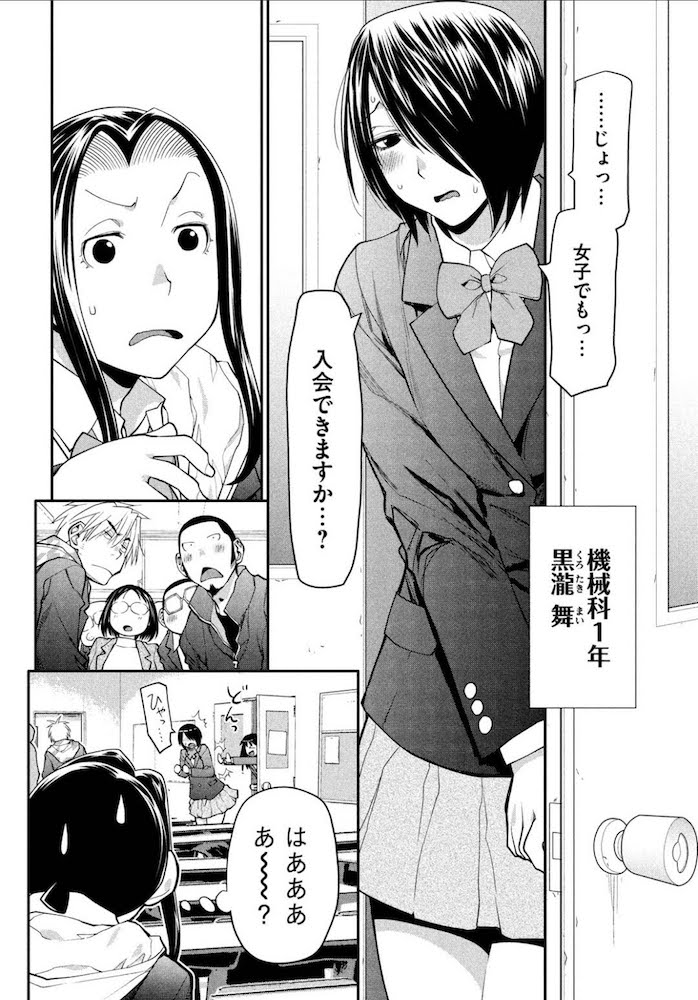
Kurotaki Mai asks if they’re accepting female members
Ever since her introduction, I have been hoping and predicting that Kurotaki Mai would eventually join the club, and now it’s finally happened. But while she’s been a potential love interest for Akira from the get-go, I really did not expect her to be waging an active campaign for his affections! As Kanon notices, not only does Mai enter the clubroom with a clear intent and purpose (even making a beeline straight for Akira), but she went as far as shortening her skirt. I think a part of me might be a little too used to a certain greater level of old-fashioned indirectness in these story situations, but I welcome whatever this is.
Kanon is surprised to see Akira react so casually and obliviously to Mai turning up the charm, to which she begins to wonder if Akira is into “bratty” girls like Shion and Himari. Kanon is portrayed as being especially observant, but I’m not certain she has an accurate peg on him, and I still believe Mai has a chance. Also, I like how right towards the end of the chapter, we get a little glimpse into more of Mai’s personality when she urges Akira and Ogawa to keep competing. While Ogawa is willing to forfeit because he has no particular desire to be the part leader for the bass section, Mai responds with, “Huh…? But there’s no point if this isn’t a serious competition?” It’s as if she wants Akira to live up to her lofty and romantic expectations of him. In other words, we’ve got another weirdo in the group, and that means my fondness for Mai only grows stronger.
Songs
This month’s sole song is “Sora mo Toberu hazu” by Spitz. It’s only natural, because of Mimi-sensei’s love of the band and, in turn, the Tsuyamars’ worship of Mimi-sensei.
Final Thoughts
First, I think this manga is going to get even better now that we’ll be seeing more Mai. I might be biased, though.
Second, while it barely got mentioned in this chapter, I’m really expecting a greater exploration of Jin’s new tension when it comes to Akira. The idea of intra-club volatility is new to Hashikko Ensemble—not only with Jin and Akira or Tsuyama and Kousei, but also Mai and Shion—and I’m looking forward to seeing what kinds of drama and silliness arise.
The anime ODDTAXI begins with a subdued and moody opening that feels mysterious and haunting upon first viewing. As the story progresses, it becomes increasingly clear that it’s the perfect encapsulation of the series: a mystery and drama whose complexity and maturity belies its furry aesthetic. But unlike other popular anthropomorphic titles in recent years (Beastars, Zootopia), ODDTAXI is less an allegory or thought exercise into a society of civilized animals, and more a noir tale that peers into the people’s relationships with modern-day vices.
When a girl is reported missing, a middle-aged walrus taxi driver named Odokawa Hiroshi is one of the last people seen with her. Brusk, awkward, and largely unremarkable, Odokawa has an unusually keen eye for human observation and his own sense of right and wrong—which reluctantly draws him into the seedy underbelly of Tokyo.
While figuring out the truth behind the missing girl (as well as myriad other enigmas) is one of the main driving forces of the series, ODDTAXI is also a collection of character studies that spotlight the particular kinds of darkness that regular people face in the 21st century. While the cultural image of the noir genre is often rooted in an older era (think Sam Spade and The Maltese Falcon), here we have characters who are obsessed with the idol industry, exploitative collectible mobile games, social media clout, and more. The characters who fall victim to these addictions feel current, yet rhyming with a history of similar dangers in past eras.
What’s more, these vices all tie directly into the main plot, meaning that the keen observations seen in these situations also provide a narrative function.
Odokawa also makes for an interesting protagonist precisely because he often seems so ill-suited for the role. Noir protagonists tend to be flawed characters, but Odokawa’s deficiencies aren’t those of a grittier and more masculine type that one might expect from the genre, making him potentially more relatable to contemporary viewers. The fact that he’s fairly eccentric himself means there are plenty of questions surrounding Odokawa, and having the protagonist himself be surrounded with unknowns provides an additional layer of fascination. Fortunately, ODDTAXI delivers here as well.
ODDTAXI is not a straightforward story, with many different threads running and getting intertwined into a web of relationships and motives. However, rather than feeling wholly disconnected, the anime turns out to be an excellent mystery with many seemingly disparate moving parts slowly fitting into a larger puzzle. The outcome is a series that treads ground in a way that feels familiar yet unique, and makes for both a really solid mystery and an interesting psychological look at how we try to mentally survive in society.
“What do the virtual youtuber Akai Haato and the late pro wrestler Brian Pillman have in common?”
As I’ve continued to fall down the VTuber rabbit hole, I constantly find similarities to pro wrestling. When VTubers stream, they get immediate feedback from their live chats. They’re not static performers, having to respond to and reciprocate with a chat that’s eager to make their opinions known. “That applies to all livestreamers!” you might be thinking, but the added virtual layer changes the streamer’s relationship with their audience.
While stream viewers might seek authenticity, the VTubers themselves are not expected to be “real,” and there are no illusions about it. In my eyes, there’s a real resemblance to the concept of wrestler gimmicks—especially in how varied they can be, and how they can be embraced to such different degrees. Some VTubers are like the Undertaker, leaning fully into their outlandish characters. Others are like Kobashi Kenta, a more down-to-Earth approach meant to convey a more personal connection to the audience.
And over time, these gimmicks can undergo changes both great and small as the performers, both VTuber and wrestler, adjust to the audience reactions and refine their craft. One common theme in stories about wrestlers, especially in the old territory days, is the need to figure out what keeps the audience coming back to pay good money while avoiding overstaying your welcome. Similarly, it is fascinating to look back at how VTubers behaved in their introductory videos compared to how they present themselves in more recent material. Rarely is there a VTuber who manages to stay perfectly within the original boundaries set for themselves.
That brings me back to the question I asked at the beginning, and the answer is this: Both Akai Haato and Brian Pillman began as more conventional performers who found themselves in difficult times, and ended up reinventing their personas into larger-than-life yet authentic-feeling identities that pushed the envelope of what is possible and accepted in their respective fields.
Brian Pillman was once most famously known as Flyin’ Brian Pillman—an astoundingly athletic wrestler who could dazzle audiences with his acrobatic moves. However, after a car crash, Pillman had to drastically alter his style. Instead of emphasizing his now-compromised high-flying moves, he decided to blur the boundaries between the real and the fictional as a “Loose Cannon,” culminating in an infamous moment where he seemingly tries to shoot “Stone Cold” Steven Austin.
Hololive’s Akai Haato, in turn, first introduced herself to the world as a traditional tsundere character, and was even used as a model of how a conventional idol-esque virtual youtuber should behave. But then the COVID-19 pandemic hit, and the person behind Haato was stuck in Australia for months. Unable to stream the way she normally would have, her conventional tsundere self gave way to the more chaotic and creative “Haachama” persona. From talking about smelling her own feet to cooking a tarantula to split personalities and time-distortion, Haachama has developed an even wider fanbase. She’s currently on hiatus, but fans await her return.
Given the commonalities between pro wrestling and virtual youtubers, an important question comes to mind: what if there was a virtual youtuber tournament of some kind? Plenty of them will compete with each other in video games, but what if there were promos and smacktalk and the like? What if the PekoMiko War was more than a song and a Minecraft video, and lines were drawn in the sand, with tickets sold for the event?
In conclusion, VTuber pay-per-views are the future.
The first thing to know about SSSS.Dynazenon is that you don’t need to have watched any of the prequels to get into SSSS.Dynazenon. Sure, its name implies a connection to 2018’s SSSS.Gridman, which is itself a sequel of sorts to the 1993 live-action Gridman the Hyper Agent. Even so, SSSS.Dynazenon is an insightful anime that stands on its own merits.
The story of SSSS.Dynazenon follows a teenage boy named Asanaka Yomogi. After encountering an eccentric guy named Gauma claiming to be a kaiju user, his city is attacked by actual kaiju. Gauma is able to call upon a giant robot named Dynazenon, and Yomogi (as well as a few others) end up becoming Gauma’s copilots. With a different part of Dynazenon in each of their hands in the form of toys, they battle a group known as the Kaiju Eugenicists, who have the ability to control kaiju by bending them to their will.
One question to ask when looking at many tokusatsu and mecha series is how much the characters’ primary motivations tie into the larger overarching plot and setting. In Gundam, for example, the connection is usually extremely strong—protagonists like Amuro Ray are thrust into the middle of long and painful wars whose physical and mental scars are the primary driving force of these narratives. Evangelion takes a different approach, forefronting the existing psychologies of its characters and using its science fictional setting as a means to explore their traumas. With respect to that dynamic, SSSS.Dynazenon falls a little more towards the Eva side, but goes its own direction.
SSSS.Dynazenon has a grounded feel that highlights both its characters’ personal histories and how their current circumstances as impromptu heroes impacts their views. As Yomogi and the others battle, they’re forced to confront their own unique fears and values. Yomogi is trying to cope with his parents’ divorce and his mom’s new boyfriend. Minami Yume, one of Yomogi’s classmates, is emotionally distant ever since the mysterious death of her sister. Yamanaka Koyomi is a NEET in his 30s who constantly regrets not making certain decisions in his life (particularly a romantic one) that could have brought him down a different path. Koyomi’s younger cousin, Asukagawa Chise, refuses to attend school. Gauma searches for his past, explaining to the others that he’s actually thousands of years old.
While it can seem as if the fantastical elements are just a flimsy backdrop to the human drama at play, that’s not the case. Rather, one of the key strengths of SSSS.Dynazenon is the way that feeling both the added responsibility and thrill of fighting kaiju reshapes or reinforces their priorities and core beliefs. The fact that they carry around their respective vehicles like toys before growing them to giant size also makes me feel that there’s a link between the childish notion of “playing with toys” as a way to engage with the world and connect with others. In that respect, the antagonists of SSSS.Dynazenon, the Kaiju Eugenicists, seem to also have their own hang-ups but engage with them in less healthy ways.
SSSS.Dynazenon is also different enough from its predecessors that those who didn’t enjoy Gridman the Hyper Agent or SSSS.Gridman might resonate with this series. In particular, its characters are portrayed in a more subdued manner than SSSS.Gridman, where the central female characters, Rikka and Akane, cast a long shadow and often stole the spotlight through their sensual portrayals and powerful yuri energy.
Though I say that knowing the prequels is unnecessary to gain something from SSSS.Dynazenon, that doesn’t mean it’s pointless to have been a fan. Using my personal experience as an example, I came to the series cognizant of the fact that “Dyna” and “Zenon” are references to support robots from the original Gridman due to having watched Superhuman Samurai Syber-Squad (the Power Rangers-esque adaptation of Gridman the Hyper Agent), and later found myself excited over some mid-series character arrivals that call back to SSSS.Gridman. The key is that while the series does reward those with prior knowledge, it doesn’t punish those who are new and unfamiliar.
SSSS.Dynazenon hints at ties to the prior series in everything from the title of the show to the character Gauma himself. However, unlike with SSSS.Gridman, the mystery of what exactly is going on is less of a core element and more an added bonus for existing fans of either one or both previous series. The core story—one of friendship and growth—remains.
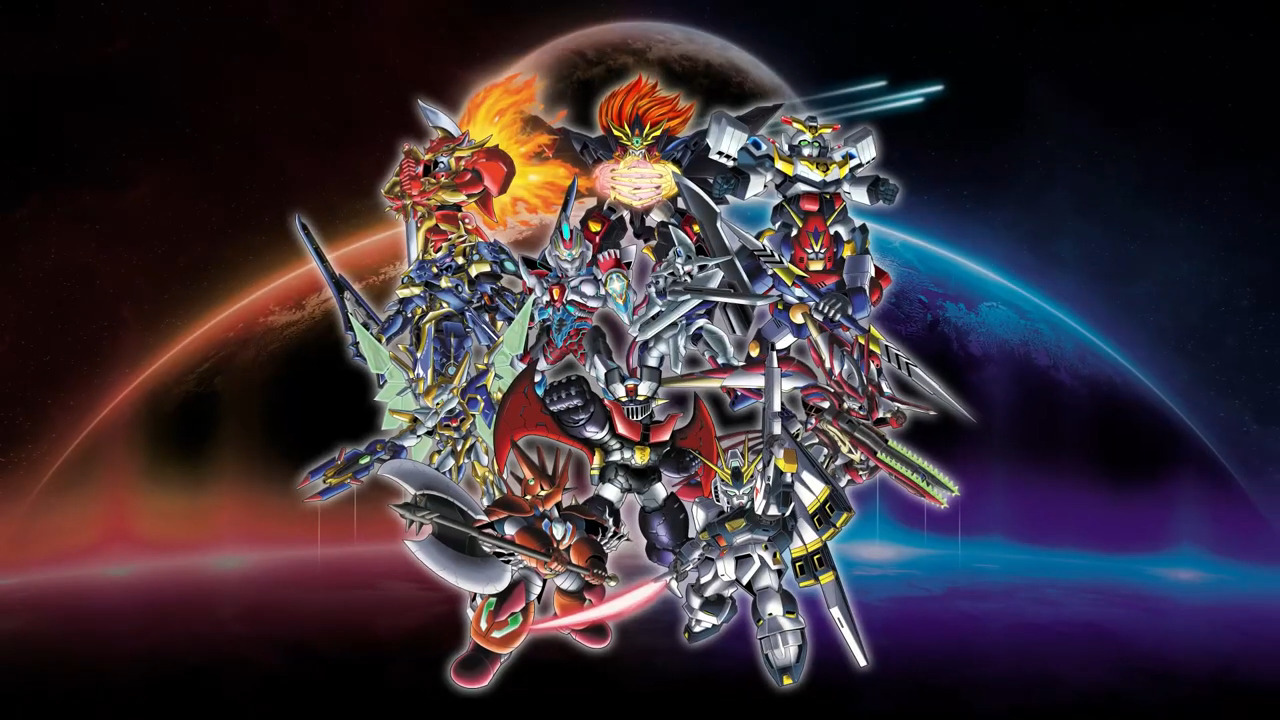
Super Robot Wars 30, the latest full game in the famed crossover video game franchise, has revealed its full lineup.
Super Electromagnetic Robot Combattler V
Mobile Suit Gundam (mecha only)
Mobile Suit Z Gundam
Z-MSV (mecha only)
Mobile Suit Gundam: Char’s Counterattack
M-MSV (mecha only)
Mobile Suit V Gundam
Mobile Suit Gundam NT
Heavy Metal L-Gaim
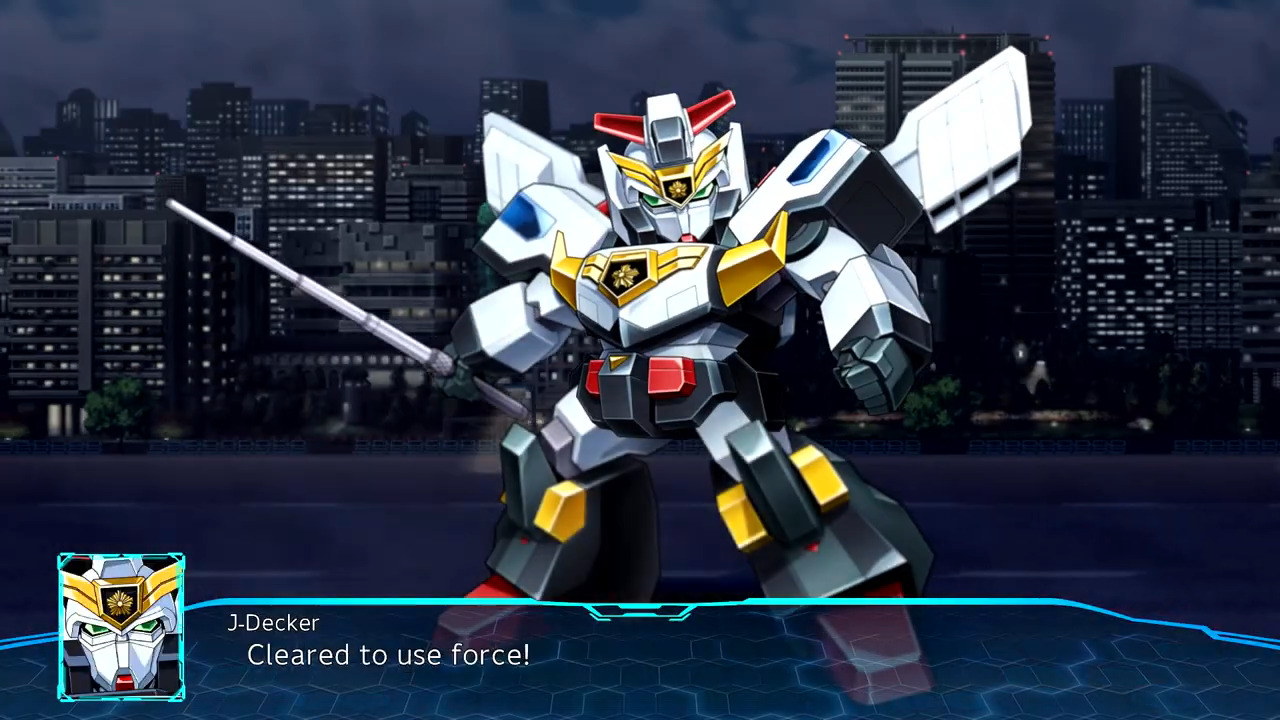
The Brave Police J-Decker(New)
The King of Braves Gaogaigar Final (mecha only)
The King of Kings: Gaogaigar vs. Betterman(New)
Code Geass: Lelouch of the Re;surrection
Code Geass: Lelouch of the Rebellion III – Glorification(New) (mecha only)
Shin Getter Robo Armageddon
Mazinger Z: Infinity
Mazinkaiser Infinitism(New) (mecha only)
Magic Knight Rayearth
Gun x Sword
Majestic Prince
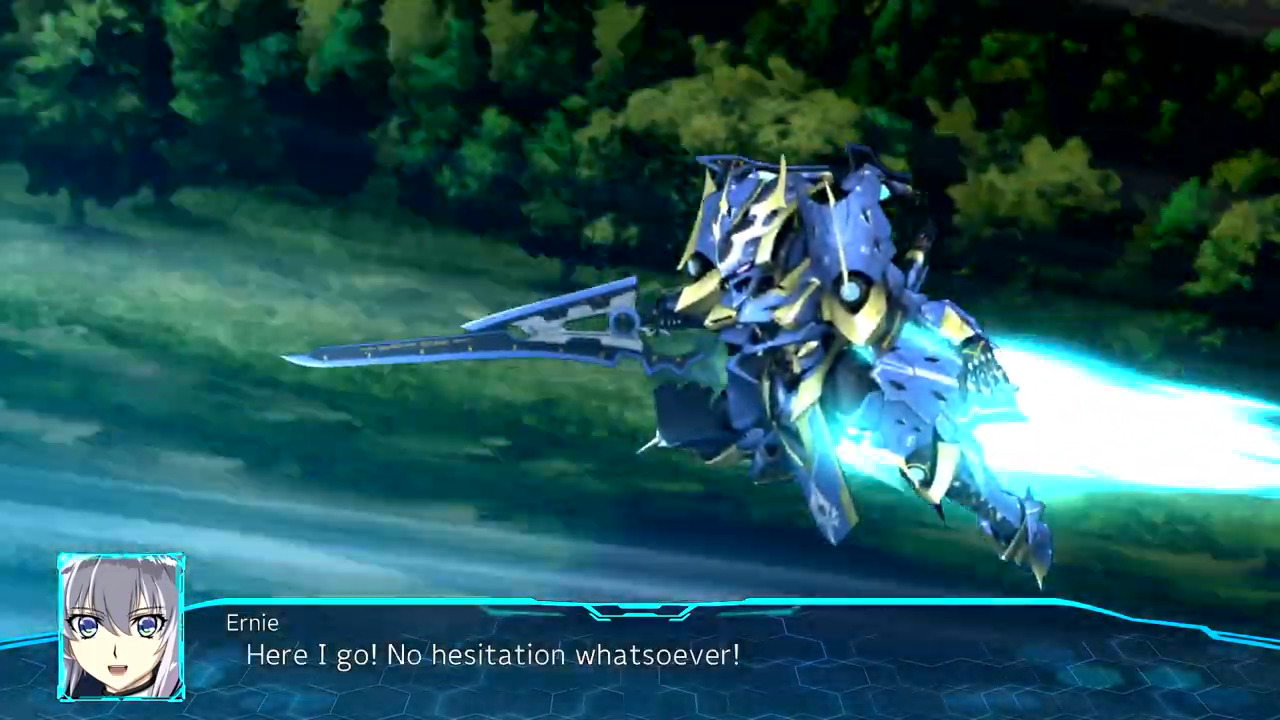
Knight’s & Magic(New)
SSSS.GRIDMAN(New)
There are some welcome surprises among the returning veterans such as L-Gaim, but the real shockers are in the newest series.
Hell and Heaven!!!
The entry that sent a bolt of lightning through me is Hakai-oh: Gaogaigar vs. Betterman, which is the novel-only sequel to Gaogaigar Final that continues and concludes the story that began all the way back in 1997. I’ve been following the story, even having reviewed the first and second novels, but I wonder if fans might be better off not reading the spoilers in them so that they can experience this amazing sequel through the lens of SRW first. This’ll be the first time that Gaogaigo and its allies will be animated, and already it looks incredible. I await the SRW rendition of Gaogaigo’s Hell and Heaven with great anticipation, I hope we get to see and use a certain massive Betterman, and I’m guessing we’ll get the new opening and ending (that currently exist only in audio form) as BGM.
I also want to compliment the English localization team because I think “Hakai-oh” is such a difficult term to translate. Literally, it means “World-Conquering King,” and I think King of Kings captures that feeling nice and succinctly.
Burning Heart to Heart
Speaking of Braves, I honestly didn’t think J-Decker would ever make it in. Out of the entire franchise, I think J-Decker is one of the genuinely best shows, and I’m very happy to see Deckard, Shadowmaru, and the boys get their due. My dream is that there are some combination attacks involving Shadowmaru and Volfogg, but I’ll be content even without that. And If you want to know more of my thoughts on J-Decker as an anime, I appeared on an old podcast review.
Toku Time
Arguably the biggest appearance from out of left field is SSSS.Gridman. While it’ll fit nicely within SRW, the fact that it has its origins as an anime sequel to a tokusatsu series means there are just a lot of odd quirks to consider. In particular, Gridman is basically an Ultraman, and the closest we’ve had to mecha in SRW that move similar to Gridman are the EVAs from Evangelion—a show that is itself inspired by Ultraman. Given how this series ends, I also have to wonder how it’ll fit into the Super Robot Wars 30’s story, but what always comes first is making things look awesome.
X-TREME RADICAL Mazinkaiser
As far as I can tell, Mazinkaiser Infinitism appears to have its origins as just an action figure of Mazinkaiser with a Mazinger Z: Infinity aesthetic. What’s funny about this version of Kaiser is that while the Mazinger Z in the Infinity film is a nice retro-modern update to a timeless design, even this Infinitism version of Mazinkaiser feels like it’s perpetually stuck in the 1990s—a Rob Liefeldian super robot that screams hypermasculinity. That was the case for its debut appearance (in a Super Robot Wars game!), the Mazinkaiser OVAs, Mazinkaiser SKL, and now this.
…And the Rest
I haven’t seen the recent Code Geass film, but I have fond memories of the near–train wreck that was Code Geass R2. I don’t know if there’s much for me to say here. As for Knight’s & Magic, I don’t know anything about it other than that it’s a mecha-themed isekai light novel. While it’s not the first SRW series with an isekai light novel origin (that honor goes to Aura Battler Dunbine), it’s still the first to be from a modern, post–Sword Art Online light novel. For that reason, I’m rather curious as to how it’ll be, and I might even be tempted to watch the anime.
See You in October
You damn well better believe I’m reviewing this game.
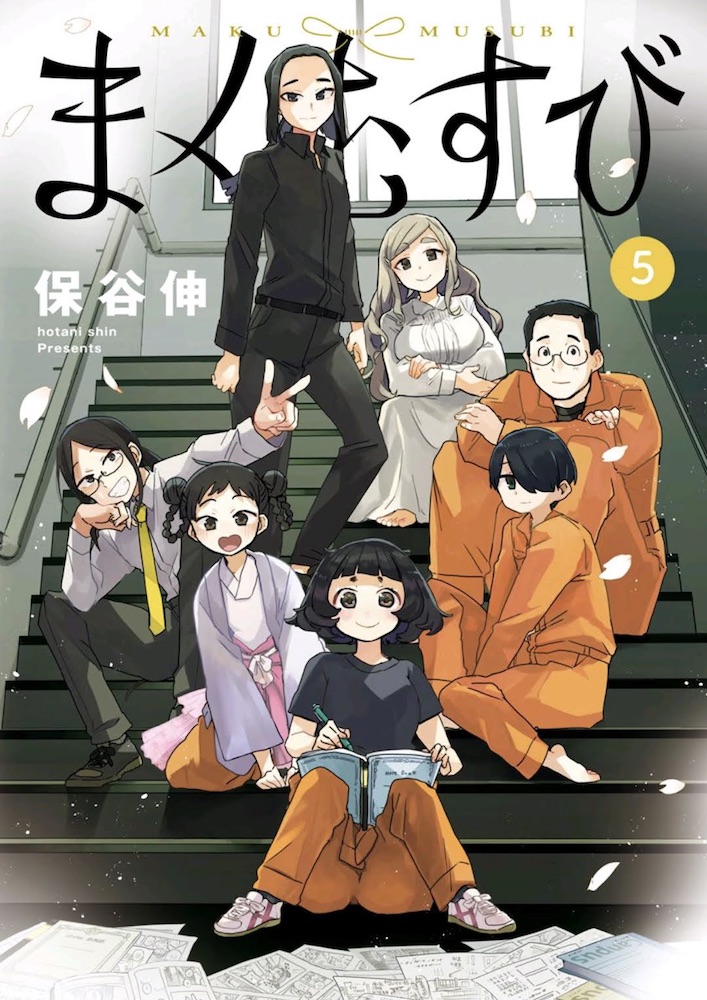
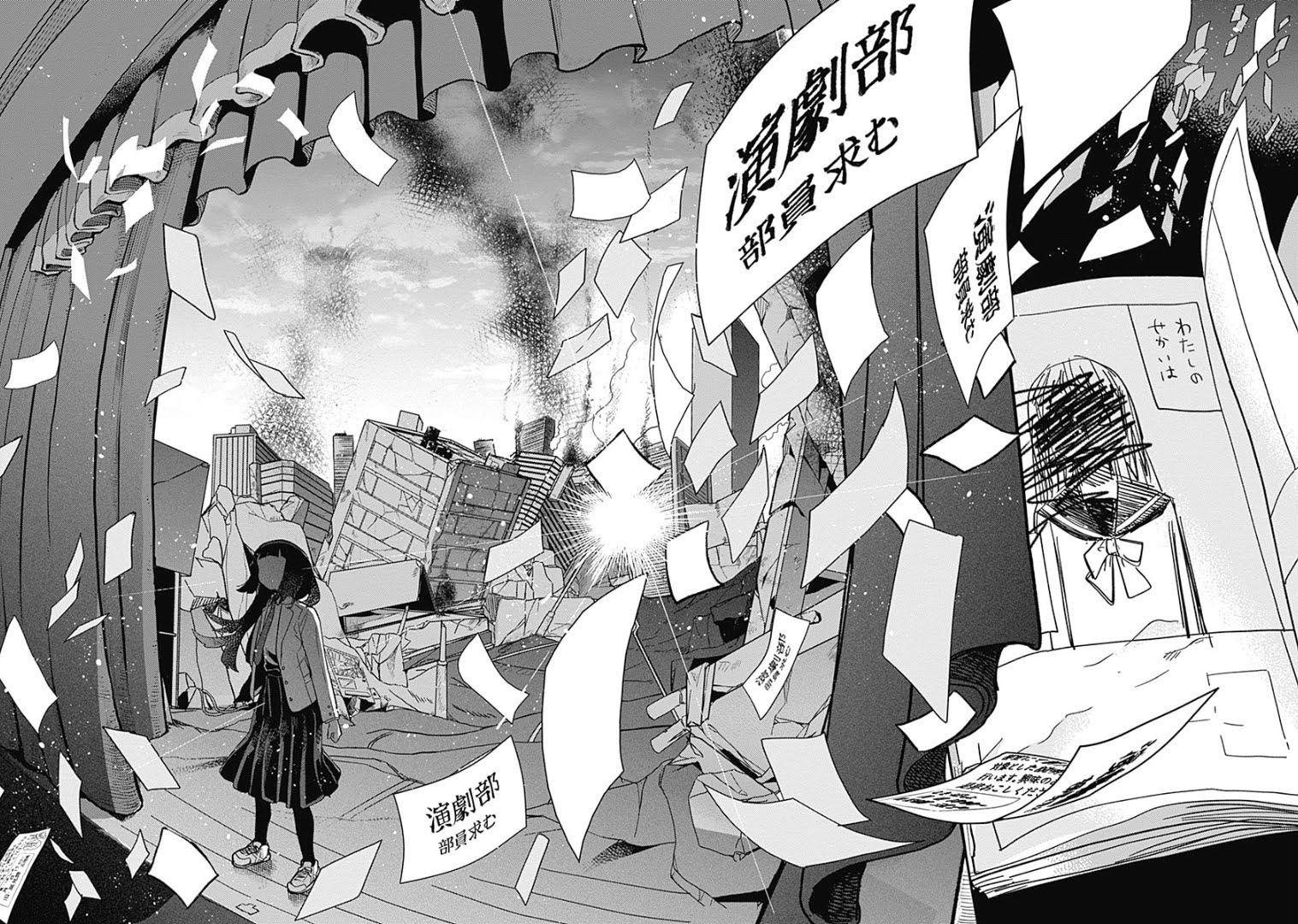
Maku Musubi by Hotani Shin is a manga that hooked me instantly. Its story—that of a high school girl who abandoned her dreams of becoming a comic artist but finds new life creating scenarios for theater—resonated with me because of its exploration of its protagonist’s creative process, and it made me want to read more.
The series ended up being five volumes total, and my takeaway is that the series is great fun from start to finish, but feels like it was cut short and prevented from reaching its true potential.
In Maku Musubi, heroine Tsuchikure “Musubi” Sakura and her clubmates are working towards competing in competitions against other schools. They even attend a joint-school event where different drama clubs gather for what is essentially a practice run with professional critique. This little arc is great: it emphasizes the eccentric yet compelling nature of Sakura’s scripts, and also introduces an extremely harsh judge whose cold-blooded reviews of every performance provide a “villain” of sorts that challenges everyone to rise to the occasion. The judge clearly recognizes Sakura’s potential, her inability to meet his high standards makes her screenplay a “disappointment” in his eyes. But then they never truly get to any competitions, and so we never see them get to the first true step of their main goal.
The manga has plenty going for it despite this lack of resolution, and its main focus in the final chapters on the club president’s unpleasant past with the former members who left prior to the first chapter brings out all of the things that make Maku Musubi interesting to read: character introspection, depictions of club-life camaraderie, and a flair for the dramatic (literally). Still, it feels like Musubi’s story could have gone so much further. Her creative struggle could have grown into something even more impactful if given the chance.
Manga isn’t an easy area to succeed in. I’m reminded of another title I reviewed years ago called Haru Polish which, like Maku Musubi, clearly stops earlier than was intended. But when you look at manga about acting, it’s hard to end things at the right time. Glass Mask is notoriously long—around five decades old with no finish in sight. Now Playing finishes at four volumes when it felt like it had more left in the tank. Act-Age was doing great until the author’s sex crimes forced that series to be canceled. I don’t know if the theatre genre in manga is cursed or what.
I hope Hotani Shin ends up doing another manga, and that they’re able to make as big and beautiful a series as they hope. In the meantime, Maku Musubi was a great ride.
In today’s media landscape, it can feel like everything is about having an obsessive audience. Mobile games incentivize you to try to get every ultra rare and keep following a neverending story. Superhero movies, like their comic counterparts, want you to watch every single sequel and spin-off leading to the next mega film. Manga and anime want you to look into every character’s backstory and all the convoluted history that connects them together. These aren’t necessarily bad things, but they can be exhausting.
Under these circumstances, the anime Back Arrow is like a breath of fresh air because it doesn’t expect your total time and attention. Every episode, I would be entertained and intrigued; I might even have speculated what would happen next. But in a time when my mental space is being bombarded by world-changing events on the regular on top of all the aforementioned fan-forward storytelling, I like having an anime that’s just trying to be a sandwich instead of a 10-course meal.
The premise: Lingalind is a world of constant strife, with countries big and small vying for supremacy. Surrounded by a divine Wall that cannot be crossed, mysterious drop pods called rakuho fall from the sky and provide mysterious armbands known as Bind Warpers. These devices allow people to manifest their convictions and form giant robots called Briheights, and are the primary weapon of war. One day, a group from the tiny village of Edger finds a rather unusual rakuho containing a man with no memory—other than the seemingly insane notion that he comes from beyond the Wall. This man, who comes to take the name Back Arrow, is not only able to manifest a Briheight without having any conviction of his own, but is also able to defeat other Briheights without killing them, which was thought to be impossible.
Back Arrow is like a cross between Gun x Sword, Star Driver, and Code Geass (even sharing the same director in this last case), only a whole lot less subtle. And given what those three series are like, this means watching Back Arrow is like getting hit over the head by two ham fists. The two major world powers are the Republic of Rekka, a hyper-exaggerated Dynastic China with Three Kingdoms elements, and the Supremacy of Lutoh, essentially pre-Revolution France with a seedy underbelly. Back Arrow and the residents of Edger Village all look like poorly dressed cowboys. But somehow, the anime ends up being really entertaining with endearing characters, lots of twists and turns, and some pretty solid action scenes—all without being bogged down or burdened with an excess of unrealistic ambition.
That’s not to say Back Arrow phones it in. The series’ narrative developments aren’t that surprising, but it’s never boring. In many ways, Back Arrow reminds me of really good pro wrestling. It’s ridiculous if you step back, but it’s easy to suspend disbelief thanks to the charisma of its presentation. Moreover, predictability isn’t a four-letter word, and in fact can be the foundation of some of the best stories because they have satisfying payoffs.
It’s the 4th of July, so here I am to discuss my ever-changing relationship with American superhero comics fandom.
I’ve been an avid comics reader since childhood, and having interacted with many fellow fans over the years, there’s one truth I’m often reminded of: there’s no one type of fan. It’s not just that Fan A might like Spider-Man and Fan B might be into Jimmy Corrigan, either. How people approach the very act of experiencing comics can be so fundamentally different that calling them both “comics fans” ends up being a gross simplification, and failing to understand that can stifle one’s own understanding of the power of comics.
I recall a conversation with someone who’s a big fan of the Batman franchise. The topic of spoilers came up, and they basically replied, “Oh, I don’t care about that”—not so much because knowing in advance what happens didn’t bother them, but because the actual story isn’t the biggest priority for them and their fandom experience. Rather, it’s the characters themselves (Bruce Wayne, Dick Grayson, Tim Drake, etc.) and the values and traits they embody in and of themselves. It’s what allows these characters to be placed into alternate-universe fanfics. It’s also what allows them to be protected, in the eyes of such fans, from bad writers and plotlines. If Batman is written to be a racist, they can remember the perfect version of him instead. Japanese manga scholar Ito Go calls this kyara: the capacity for a character to be removed from their context and still exude a sense of identity, and superheroes certainly are iconic.
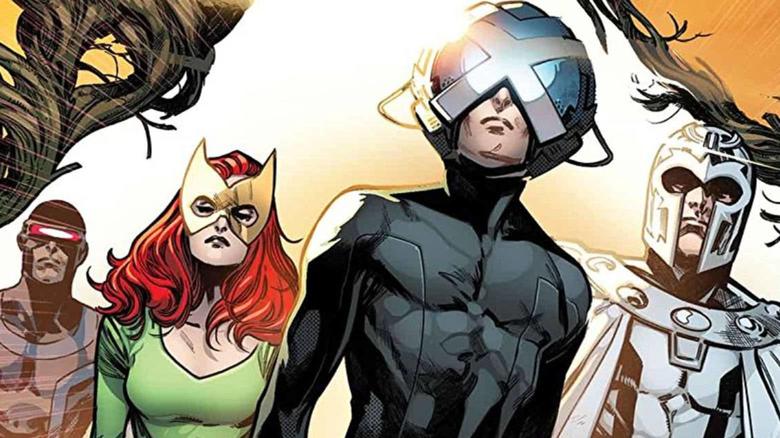
I’ve noticed more and more fans like this, and I believe their passion is real and wonderful. At the same time, this is not the type of fan I grew up with, and their interactions with both one another and with their comics are not the kind I cut my teeth on. Instead, I’ve generally been more accustomed to textual analyses, plot speculation, and the classic “who would win in a fight?” I caught up with an old friend at New York Comic Con 2019 two years ago, and their explanation of the ambitious nature of Marvel’s House of X and Powers of X stood in stark relief from the Batman fan’s way.
In his book Comics and Narration, French comics scholar Thierry Groensteen writes about a generation gap he feels with younger comics fans:
“For readers of my age…comics has always meant being exposed to a certain type of fiction, divided into genres and series, and being hooked on adventure stories. It went without saying for us that comics…was a “narrative type within the narrative genre.” Of course, we have to acknowledge that comics…arouses among certain groups of younger readers different expectations…. [O]ne needs only to consider the phenomenon of “cosplay”…to realize that these young people who dress up as their favorite hero have little interest in the story—what they are seeking…is the hero or heroine with whom they identify. The emphasis is on the characters themselves, their costumes, their attributes, possibly the values that they incarnate, but not at all the context in which they appear or the adventures that they have had. The phenomenon of identification is difficult for readers of my generation to understand…[W]hat mattered to us was how they gained hero status through their actions and how they swept us up in the excitement of their adventures.”
Unlike Groensteen, I feel I can relate to both his perspective and the “cosplayers” he finds inherently difficult to connect with. Still, I myself have noticed that when I talk with people from different groups about comics, the gears in my head turn in ways to accommodate the type of fan I’m talking to. Understanding their priorities also means understanding the kinds of questions that will bear fruitful responses. I don’t mean that I am constantly making intensely conscious decisions as to what to say or ask, but that talking with the Batman fan and the HoXPoX fan almost requires a different frame of mind.
While we all have our own ways and preferences, I think failing (or refusing) to acknowledge these differences creates tension among comics fans. People can even like the same comic but have very different ways of deriving their enjoyment. Trying to reconcile them (in the sense of trying to judge then with the same parameters) may be a fool’s errand. Recognizing that perspectives can be incongruous but appreciating them all the same lends strength to comics fandom as a whole, and all its possibilities.






 OGIUE MANIAX