[Anime Central 2025] Nakamura Eriko, Voice of Amami Haruka in The iDOLM@STER

I am not a hardcore fan of The iDOLM@STER, but I understood what a big deal it was to have Nakamura Eriko and Imai Asami as guests, aka the respective voices of first-gen “765 Pro” members Amami Haruka and Kisaragi Chihaya. I was able to attend one of the panels for Eriko, but sadly couldn’t make it for any of Imai Asami’s.

Because I’m not an iM@S Producer or anything, there are things I probably got wrong. Nevertheless, I still want to post my notes from this panel. In this day and age, simply having information out there on the internet to find can be difficult. Also, The iDOLM@STER just celebrated its 20th anniversary, so I figured it would be a good time to post this.

Eriko was in Chicago for the first time, and the panel was a Q&A. She turned out to be quite the jokey type, or at least that’s how she presented herself. She mentioned getting lost trying to get to the Opening Ceremony, and that her dream was to be “more biggest,” i.e. taller, so she can see further back.

When asked how she decided to become a voice actor, Eriko said she thought it was the field where she thought she could stand out most as a performer. She described her path there as being haran banjou, a Japanese term that means a life of many ups and downs, but can also mean life is something where surprising things can happen. Someone followed up by asking what it was like to audition for Haruka, to which she first pretended she couldn’t remember, then elaborated that it actually didn’t involve any singing. She received a script and a storyboard, and played Haruka looking out from the train. She said that this was the first and only time she had such a free-feeling audition. 

Later, Eriko elaborated on being a part of that first generation. They recorded their parts individually: just her, the script, and the sound engineer. Back when it was just that original game, she had to imagine what it was like for everyone to be together, and the first time she heard it all together, it was like 765 Pro had come to life.

When she got the chance to perform songs from a different branch many years later, and for others to perform songs from hers, she responded that seeing others build on the foundation they laid was a valuable experience.

The audience of fans got her to say the line, “Producer-san, Dome desuyo! Dome!” in reference to Haruka being an idol and the importance of the Tokyo Dome as a major landmark for idol performers. Eriko said the last time she was able to say that was in fact  two years ago at the Tokyo Dome.

When asked what advice she would give a voice actor, Eriko revealed that there’s a concert in August, and her answer is in that pamphlet.

As for what has changed, Eriko mentioned that she chats a lot more with people after recordings because she’s been doing it for 20 years with all the staff and everyone else supporting them. Eriko is also always sending messages on LINE, especially stickers, to the point that the others tell her to stop. The members of Million Stars tell her that they need to sleep.

One person asked Eriko what she thinks about when she’s out there as a major representative of The iDOLM@STER. Her response: “I don’t think about that at all. Haruka is just a 15-year-old girl, she can’t have the wait of the franchise on her shoulders.”
Ultimate Character Combo: Idols, Gals, and the Jougasaki Sisters

As character types, the “idol” and the “gal” (or gyaru) have both been around in Japanese media for decades. However, they seem to have hit even greater notoriety in recent times. On the idol side, there’s been heavy hitters like Oshi no Ko and Love Live! Then there are works like Hokkaido Girls are Super Adorable and An Otaku Who’s Kind to Gals, where gals are the main heroines or the central focus.

The idol is an idealized symbol of pure devotion to the fans, for better or worse. Fan support is why she’s able to grow as a performer. The gal is attractive, forward, and runs up against traditional Japanese beauty standards. When portrayed with a heart of gold (or as someone who’s secretly a virgin), she transforms into dork kryptonite. 

What happens when the two are combined? Naturally, it would make for a powerful character.

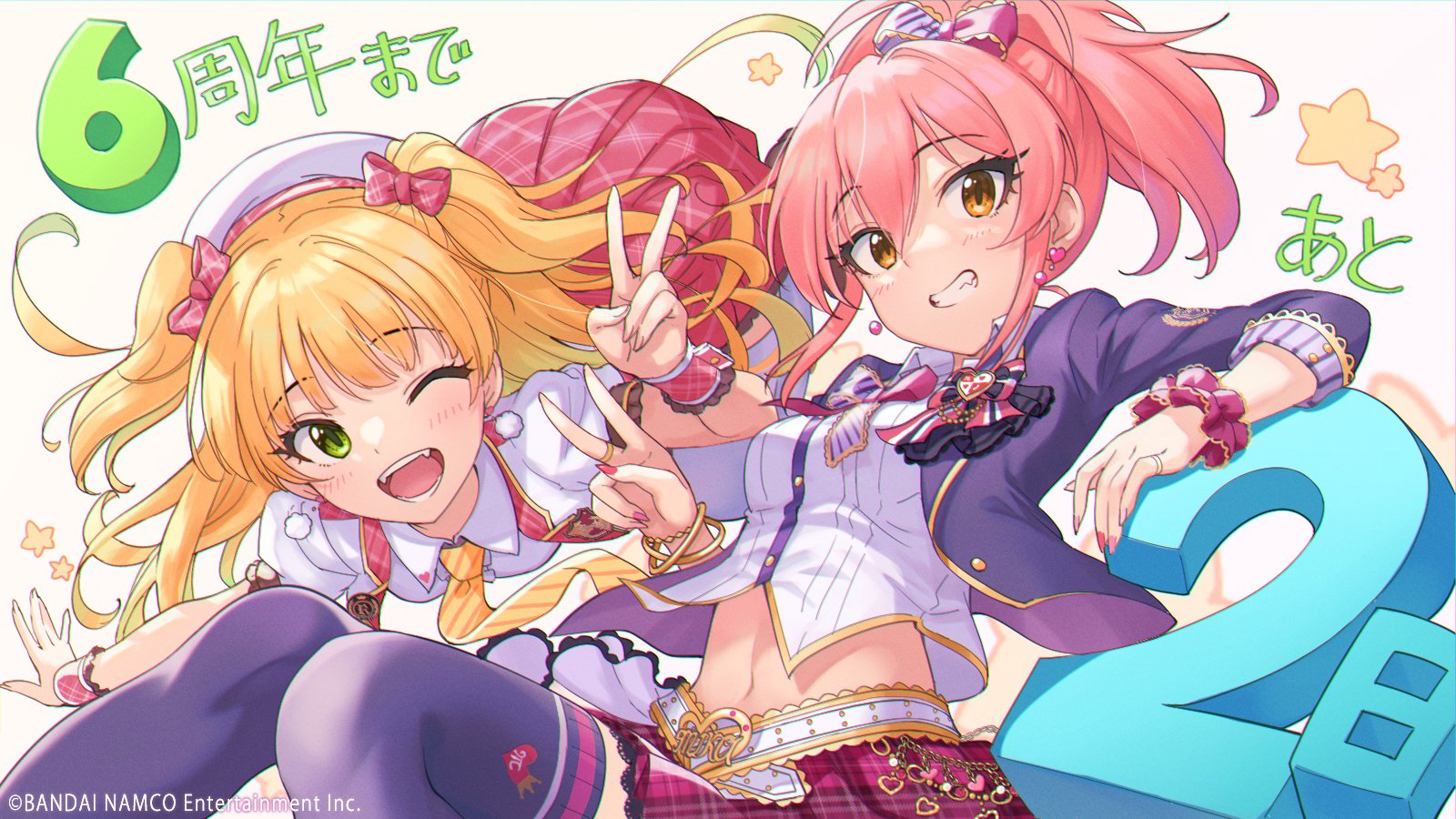
In thinking about the relative success of both archetypes, I began to wonder if there are any examples of such a convergence. Then I remembered that there are indeed a couple of characters who occupy that intersection: sisters Jougasaki Mika and RIka from The iDOLM@STER.

I am by no means an expert or even a dedicated fan of The iDOLM@STER. What I do understand, based on my limited knowledge, is that 1) Mika and Rika were introduced in the Cinderella Girls mobile game in 2011, and 2) I’ve been seeing their fanart for what seems like forever—Mika’s especially. In all instances, they exude “gal” energy. According to the popularity polls, Rika was initially ranked higher, but Mika emerged as more of an enduring mainstay. As if to reflect Mika’s notoriety, the Cinderella Girls anime portrays Mika not as one of the main characters, but an established idol whom others look up to.

One thing I don’t know is whether Mika and Rika have been merely a reflection of the two trends or if they actually contributed to their presence in significant ways. In other words, while I can guess that their popularity has come from being gal idols, how often is it the case that the Jougasakis are the reason people got into one or both sides? Gal subculture has been around for a long time, but I don’t recall them being nearly as prominent as characters in 2011—at least, not in the way they are today, and not in terms of their cultural presence around in the 90s and early 2000s.

While one can hardly attribute the increased visibility of idols to primarily Jougasaki Mika or Rika (they are from games where nearly everyone is an idol, after all), I can’t help but wonder if they’re significantly responsible for shining a greater spotlight on “gal characters” in a way that has persisted over a decade later. If the sisters have played a large role, it would make them influential in a way few other characters can match.

And if there are any other examples of gal idols, I’d like to learn about them.

Yes My Dork: Ogiue Maniax Status Update for December 2022

I’m riding high off of three things: recent elections defied expectations, the VTubers of holoX have just been celebrating their one-year anniversaries, and it’s been 15 years of Ogiue Maniax! It’s hard to believe each one for somewhat different reasons, but I’m hoping I can carry this joyous monentum through this month and into the eventual new year.

Here are my Patreon subscribers for December 2022! Thank you to everyone.

General:

Ko Ransom

Diogo Prado

Alex

Dsy

Naledi Ramphele

Sue Hopkins fans:

Serxeid

Hato Kenjirou fans:

Elizabeth

Yajima Mirei fans:

Machi-Kurada

Blog highlights from November:

Hope and Chaos Take the Subway: Anime NYC 2022

My con report for this year’s Anime NYC. Note that it has a lot of coverage of Hololive.

I Started Reading the Saint Seiya Manga

And what a ride it is.

Non-Subpar Robot: Astroganger

I reviewed a lesser-known 1970s giant robot anime, now available via Discotek.

Kio Shimoku

If there’s anything to take away from this month’s tweets, it’s that Kio Shimoku loves Royal Space Force: The Wings of Honneamise.

Apartment 507

Looking at Akiba Maid War through the lens of 1999 Akihabara.

Closing

As with every year, I’m going to be rating the anime characters I think are the best of 2022. It is unbelievable how tough this year’s field is. I feel like the top candidates would have won in virtual every other year had they been eligible.

The Results Matter: Ogiue Maniax Status Update for November 2022

The new anime season is in full swing, but while I’m enjoying the hell out of so many things (like Gundam: The Witch from Mercury!), my mind is on the upcoming US midterm election. I plan on (sort of) following up with my thoughts on this subject in a few days but for now, I’m using this time to encourage citizens to vote however they can: in person on Election Day, by mail, by early voting, anything.

I’d also like to thank my Patreon subscribers for this month of November 2022.

General:

Ko Ransom

Diogo Prado

Alex

Dsy

Naledi Ramphele

Sue Hopkins fans:

Serxeid

Hato Kenjirou fans:

Elizabeth

Yajima Mirei fans:

Machi-Kurada

Blog highlights from October:

Gattai Girls 12: “Idolmaster Xenoglossia” and Amami Haruka

After like two years, Gattai Girls is back with a new entry!

Evangelion + Beavis & Butt-Head = Chainsaw Man

Call it an epiphany?

Rock-Troll Remake: “Mobile Suit Gundam: Cucuruz Doan’s Island”

My review of the nostalgic Gundam movie.

Kio Shimoku

A sparse month of comments, but his tortoise is feeling better!

Apartment 507

Thinking about VTuber Gawr Gura’s recent animated short relative to other bonus animations.

Closing

Congratulations to Brazil for making the right choice and not re-electing an authoritarian nationalist who cares more about his self-image than the wellbeing of the people (sounds familiar).

How about I make some Saint Seiya posts to celebrate?

Gattai Girls 12: “Idolmaster Xenoglossia” and Amami Haruka

Introduction: “Gattai Girls” is a series of posts dedicated to looking at giant robot anime featuring prominent female characters due to their relative rarity within that genre.

Here, “prominent” is primarily defined by two traits. First, the female character has to be either a main character (as opposed to a sidekick or support character), or she has to be in a role which distinguishes her. Second, the female character has to actually pilot a giant robot, preferrably the main giant robot of the series she’s in.

For example, Aim for the Top! would qualify because of Noriko (main character, pilots the most important mecha of her show), while Vision of Escaflowne would not, because Hitomi does not engage in any combat despite being a main character, nor would Full Metal Panic! because the most prominent robot pilot, Melissa Mao, is not prominent enough.

— 

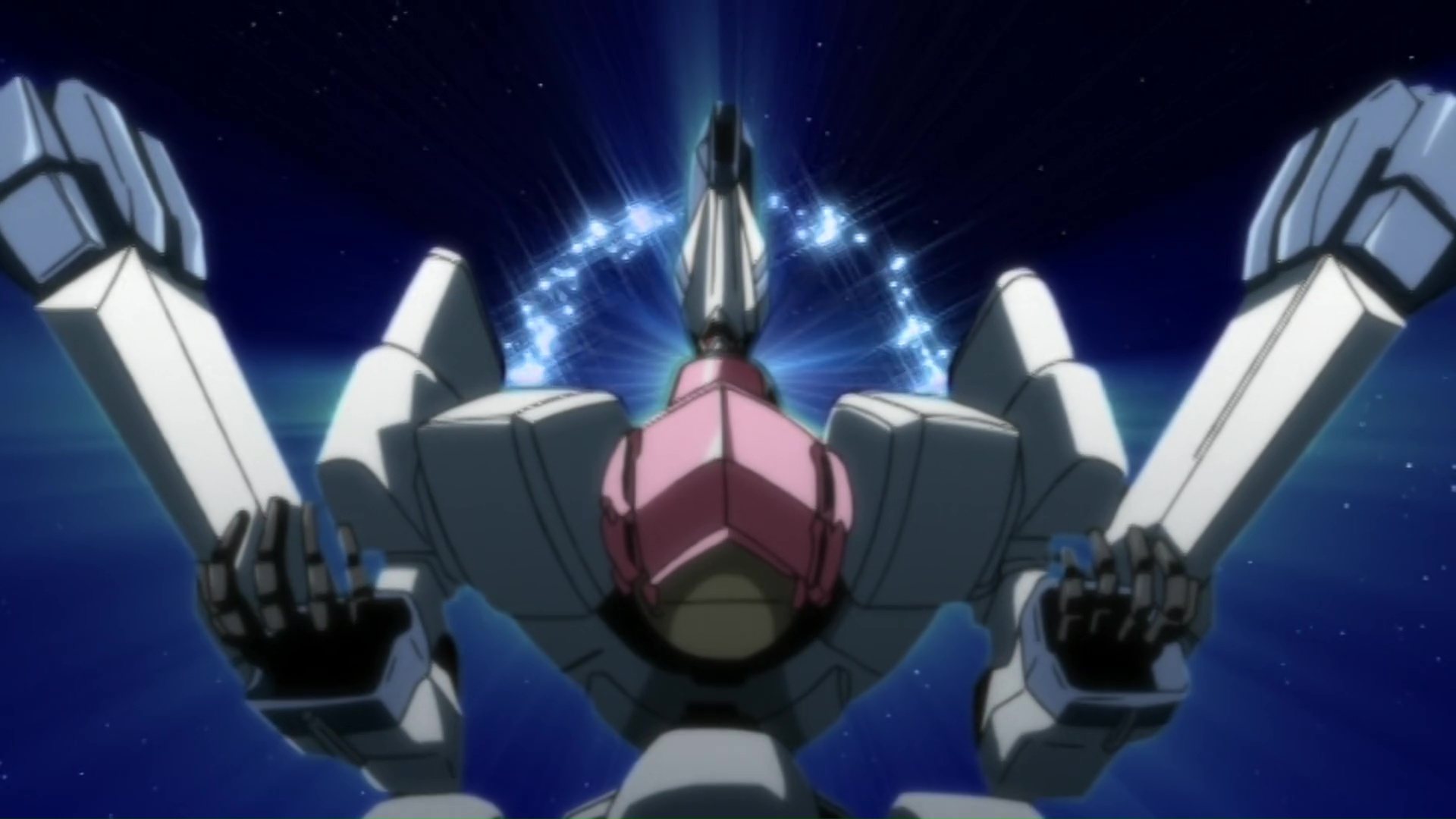
At face value, Idolmaster: Xenoglossia is a perplexing title. Why in the world would the very first anime for The iDOLM@STER, a video game about managing Japanese idols, be a mecha series where the girls strive to save the Earth rather than give successful stage performances? When you get under the surface, though, it results in an even greater cognitive dissonance between the franchise’s origins as an idol sim franchise and this science fiction story ostensibly built on its foundation.

The confusion begins from the very basis of Xenoglossia. The premise is that high schooler Amami Haruka is unexpectedly recruited to potentially become one of the “Idolmasters,” pilots of world-defending robots called iDOLS. Outside of Xenoglossia, the name of the franchise refers to the player as an idol producer. That’s a simple enough change to accept given the story’s setting, but where the show throws the hardest curveballs is the portrayal of its characters.

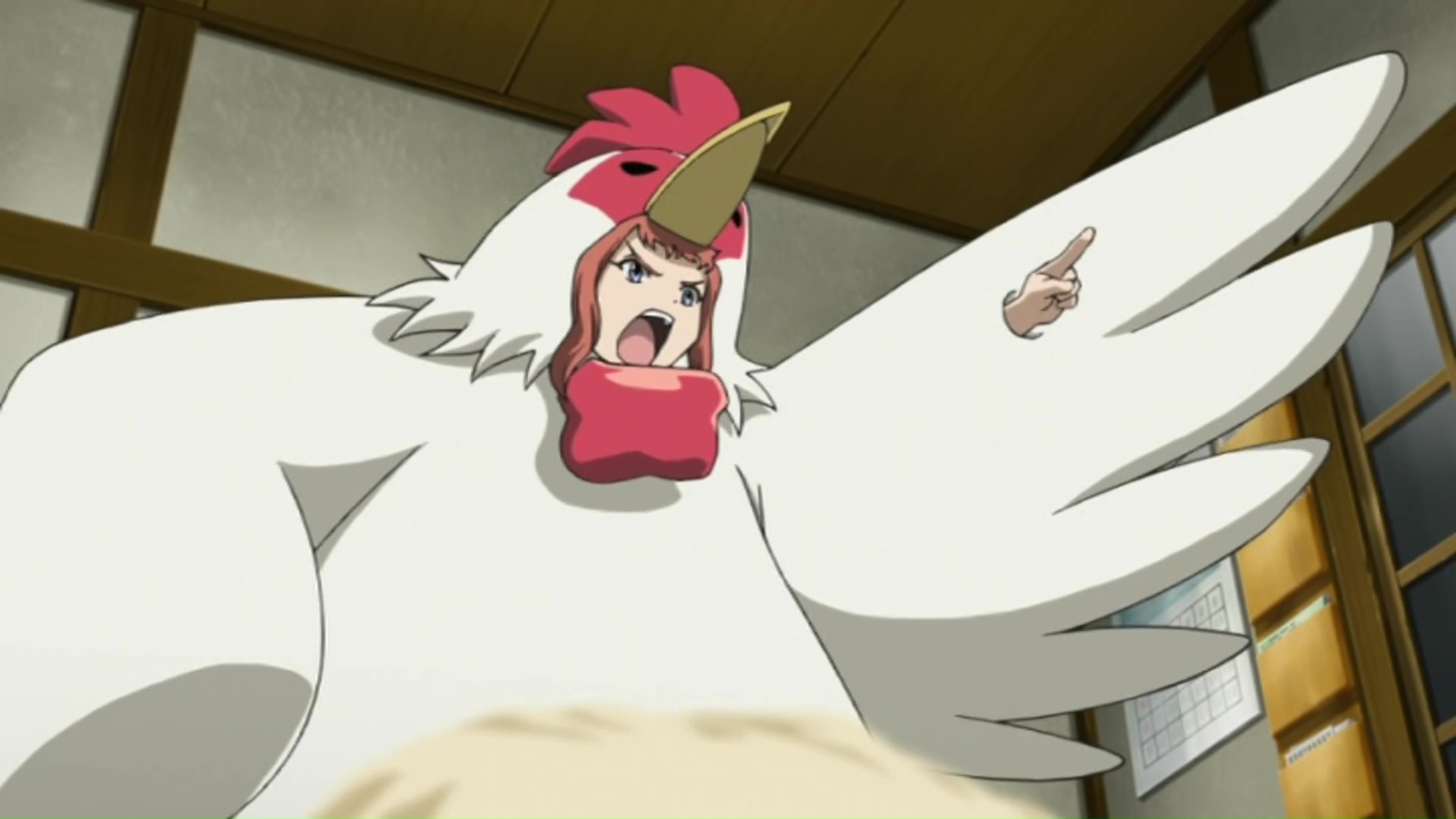
Despite this being a franchise where fans support the actors who play their favorite idols, the entire voice cast was changed for Xenoglossia. It’s an extremely odd decision in hindsight, but what makes it all the more strange is that the changes don’t stop there: age, size, personality, and more are drastically altered to the point that many characters become almost unrecognizable. The best example is the character of Takatsuki Yayoi. In The iDOLM@STER proper, she’s a small and energetic girl in her early teens known for her high-pitched voice and signature squeal of excitement. In Xenoglossia, she’s noticeably taller and bustier, is the only actual conventional idol in the show, loves to wear mascot outfits), and is much more antagonistic towards Minase Iori. 

I’m not a huge The iDOLM@STER fan, but I’ve watched the anime and have a decent idea of the core cast and their personalities. On some level, it’s impossible for me to fully divorce my preconceived notions, but this level of change is beyond rare. The closest example I can think of is the first Comic Party anime, where a high schooler got aged up and a middle schooler got aged down for seemingly no reason. It’s as if the creators of Xenoglossia just looked at some preliminary character sketches and just went their own way without regard for the source material. 

Funnily enough, the only character who’s mostly like her original self is the franchise’s flagship heroine and Xenoglossia protagonist, Amami Haruka. Her personality remains optimistic and hard-working, though tinged here with a bit of self-doubt as to what she’s capable of. But when she’s surrounded by an endless parade of bizarre doppelgangers, something always feels a little off. If one can ignore that to a degree, the show gets more enjoyable.

In terms of Haruka or any other character’s portrayal as giant robot pilots, they’re never upstaged by any male characters swooping in to save the day; in fact, there aren’t any male pilots at all. Different characters struggle with different aspects of being Idolmasters, and much of the plot is built around striving to overcome those challenges. There’s also a great deal more nudity and sexual behavior (including possibly incest?!) than would be expected of something based on The iDOLM@STER—which might be a dealbreaker for those who strongly believe in the whole “idol purity” concept, but still feels kind of odd for even those of us who don’t.

The relationship between the Idolmasters and their iDOLS also arguably runs counter to “idol purity” because the way they talk about the robots makes them seem on some level like giant mechanical boyfriends—especially the main iDOL, Imber. The robots are shown to be sentient on some level, and the way some characters work to become worthy of and accepted by the mecha while others treat them like companions comes across more like romantic fiction at times. The entire setup of Xenoglossia is conducive to this, showing itself to be the kind of anime where the requisite to becoming Idolmasters has angst-filled drama baked in.

Idolmaster Xenoglossia we got could never be made today. It came out at a time when The iDOLM@STER was a much smaller deal, as evidenced by the fact that the girls are all based on their designs from the first game rather than the revised versions from The iDOLM@STER 2 that have since been codified. This early on, Xenoglossia followed in the fine (?) tradition of titles like Lunar Legend Tsukihime, where it was assumed that a fledgling idol manager franchise needed a boost in star power and storytelling from the anime industry. Now, the shoe’s on the other foot, and if they were to attempt this again, it’d be all but inevitable that the characters would adhere much more closely to their original selves. It’s a historical curiosity, indeed.

Aikatsu as Absurd Idol Anime Turning Point?

Every so often, I think about a specific kind of comic absurdity I see in many idol anime. It’s one thing for characters to be having pillow fights, but it’s another for the heroines to be digging miles-long tunnels, shooting lasers, and scaling treacherous cliff sides with the greatest of ease. Of the franchises that fall under this umbrella, I’ve started to wonder if Aikatsu! is actually a significant contributing factor, bridging the silliness of actual idol media appearances with the impossibility of cartoons. I’m much more of an anime fan than I am an idol fan, so my knowledge and experience in regards to the latter is limited, so take what I say with a grain of salt.

I often see clips of idols on variety shows, as well as in their own video specials and the like. There’s a certain lightheartedness portrayed in these instances that creates the opportunity of laughs and gasps. It’s the kind of humor you see more in Love Live! or The iDOLM@STER, which initially tried to be a little more “down to Earth” with their characters and presentation, though are willing to stretch the boundaries of believability. The difference between those examples and what we see out of Aikatsu, Purichan, and Show by Rock! (not exactly idols per se, but a similar vibe) is that these three franchises venture into a very different reality where even everyday interactions are colored by the strangeness of their worlds.

Take for example the go-to mantra of Aikatsu!: “Ai-katsu!” Characters chant it while exercising, practicing, and engaging in pretty much any situation. Sure, it’s just short for “idol activity (aidoru katsudou),” but the way the phrase is treated as this perfectly routine thing everyone understands sets the stage for series after series where the humor is about challenging expectations of what’s normal. Whether it’s the aforementioned climbing, chopping down trees like Paul Bunyan, or visiting an idol school that’s also literally a gigantic cruise ship, the girls of Aikatsu! do what their flesh and blood counterparts cannot—not always because it’s harder for the latter, but sometimes because the laws of real-world physics do not permit them to do the same thing.

So why do I point at Aikatsu! as a possible origin point? It’s because the closest series to it when Aikatsu! first began was Pretty Rhythm, and that franchise was the predecessor for Purichan. Over the course of that transition from Pretty Rhythm to Purichan, the humor changed to something more akin to Aikatsu’s. A little more distantly relevant is the Precure franchise, but even the magical superpowers on display there aren’t quite the same as the at-times Looney Tunes-esque slapstick and accepted norms of Aikatsu!-esque series.

I’m not a deep fan of any of the series mentioned (with the possible exception of Love Live!), so there’s a lot more to potentially deve into. If there’s anything I’m missing or clearly mistaken about, don’t hesitate to let me know.

PS: Today is an idol shared birthday between Hoshimiya Ichigo from Aikatsu! and Sonoda Umi from Love Live! You know what they say: “Beware the idols of March.”

This post is sponsored by Ogiue Maniax patron Johnny Trovato. You can request topics through the Patreon or by tipping $30 via ko-fi.

Dearth vs. Abundance of Information and Fan Engagement

When I was young, I often wondered about the worlds of the video games I played. Given only sparse information and basic “defeat the bad guy” plots, games were semi-open canvases for me to speculate. This desire is what led me to my earliest internet communities—video game fanfiction sites. Over the years, I began to notice a general distinction for anyone looking to explore beyond what’s available in their favorite works, between those where a bit of exploration reveals mountains of supplementary canon information, and those where the details remain sparse.

I once attributed the difference in fan involvement for filling in the blanks to just a natural consequence of the works themselves. Video game plots were simpler in an age before RPGs and cut-scenes were everywhere, right? More recently, however, I’ve been considering how the two avenues—abundance vs. dearth of information—appeal to different types of fans, and how more and more creative works purposely aim for one or the other (and sometimes even both, if they can manage it).

The “abundance” examples are many, as seen in lore-dense properties such as the Type Moon universe, Star Trek, Star Wars, and Tolkien fantasy. My personal favorite example from yesteryear is the Street Fighter Plot Guide on GameFAQS by Tiamat, because it’s for a universe that is otherwise pretty simple (as fighting game narrative tend to be), and it involves a healthy amount of fan extrapolation by Tiamat. On the “dearth side,” there’s Touhou and Overwatch, which invite fans in to elaborate on characters and character relationships. Broadly speaking, the former appeals to “sculptor”-type fans, while the latter appeals to “builder”-type fans. Sculptor I would define as those who like to reshape what’s already there, while builders prefer raw materials to weave their own elaborate ideas. Both types can make fan stories, but their differences lead to the two classic modes of Star Trek fanfic: the “hard SF” technical explorations, and the “softer” character-building and relationship works. Not that I think of those distinctions as rigid and wholly separate, of course.

An entire character profile and running joke was based on the Touhou character Cirno being labeled “baka” in an instruction manual.

While I am admittedly no expert on The iDOLM@STER, I’ve noticed that both researchers and builders exist within that fandom, possibly stemming from a generation divide of sorts. The original iDOLM@STER games were very involved experiences, where players interacted heavily with their idols. Roughly equivalent to a more animated visual novel format with some RPG elements, players could learn extensively about the characters’ histories, likes and dislikes, and generally explore the idols as fleshed-out individuals. At some point, however, The iDOLM@STER also became prominent as a series of mobile games where that active RPG aspect takes a backseat to more simplified story modes. Here, the visual impact of character designs can matter much more. For fans, especially those who have limited access to all The iDOLM@STER media, “headcanon” expression is a somewhat common Twitter activity.

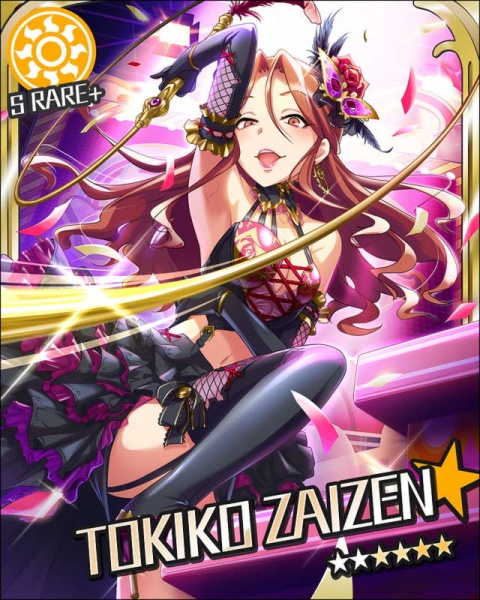
Take for example the character of Tokiko Zaizen. Based on her appearance alone, one gets the idea of Tokiko being a sadist/dominatrix type, but the fans take that a step further.

https://twitter.com/emeraldradiate/status/959646704642547712

https://twitter.com/CodedbyDays/status/943244935133827072

Not all fans fall into either the “dearth” or “abundance”-favoring categories. Some prefer to take the story as-is, and then aim for criticism over speculation. Others might dip their toes into both of those worlds. Whatever the fan approach, the ability for fans to thrive in whatever space is left for them speaks to a kind of flexibility in what it means to be enthusiastic about the creative media we consume.

Aikatsu! and Idol Franchise “Experiences”

As Aikatsu Friends! inches ever closer, I find myself thinking about the longevity of Aikatsu! as a franchise. By this October, it’ll be a whopping six years old—a lifetime when it comes to children’s anime. Where other similar series have tried to compete, few have managed to hang on as Aikatsu! has. One of its closest competitors, Pretty Rhythm, eventually pivoted towards the male-idol-centric King of Prism series. Either by outlasting or outmaneuvering other idol series, Aikatsu! feels as if it’s conquered its own niche—though the exact nature of that niche is what I’m trying to figure out.

There are, of course, key differences between Aikatsu! and other idol character franchises. Series like King of Prism and Idolish 7 utilize male idols in a desire to capture a different market. Love Live! and The iDOLM@STER feel like they skew older. Macross Delta and Symphogear have idols as thematic flourishes as part of a greater science-fiction story. They cover various demographics, as well as various degrees of idol presence. Yet I feel there’s another element of difference that isn’t accounted for, as if Aikatsu! and Love Live! occupy different compartments of mental space, at least personally.

While this is only a tentative thought exercise for the sake of categorization, if I had to describe that difference it would be as the following: With Love Live! or The iDOLM@STER, I’m most interested in how the idols will react, but with Aikatsu! I’m most interested in the actions they’ll take. The way I phrased it makes it seem as if it’s a contrast between more passive characters and more active ones, but that’s not quite right. Instead, it’s more that the girls of Love Live! seem to draw their appeal from the way they behave and influence each other, while the girls in Aikatsu! feel as if they influence the environment around them.

Perhaps the reason I see Aikatsu! different is because of the fans and how they express their love for the series on social media compared to other idol anime lovers. Other series appear to celebrate cuteness and style. Fans of Aikatsu! revel in an aura of power and excitement. At the heart of this fan output remains the indelible images of Ichigo, that very first Aikatsu! heroine, as she climbs those cliffs and wields that axe. It’s as if Ichigo and her successors reshape and navigate the land while other idols move through it.

This post was sponsored by Johnny Trovato. If you’re interested in submitting topics for the blog, or just like my writing and want to support Ogiue Maniax, check out my Patreon.

[Apartment 507] 3 Guest Anime Appearances in Apartment 507

granbluefantasy-lina

Granblue Fantasy is a Japanese mobile game that’s got tons of fans, and it’s so popular that it ends up crossing over with other franchises. Check out this small list of series that make guest appearances. As someone who got into anime in the 90s, I’m especially fond of the Slayers cameos.

Smash Bros., Mahjong, and The iDOLM@STER: Interview with Earth, Smash 4’s Premier Pit Player

earthinterview

In the competitive world of Super Smash Bros. for Wii U, the Japanese player known as Earth is widely considered the best Pit main in the world. Over the past couple of months, he’s placed 13th at Genesis 3, one of the largest Smash tournaments ever, defeated Ranai (the best Japanese player) to take his first championship in Japan at KVO, and has even gotten engaged!

KVO Grand Finals Set: Earth vs. Ranai

It turns out that Earth’s not just a skilled Smash player, he’s also a competitive mahjong player and a fan of The iDOLM@STER! Given that his interests align quite a bit with my own, I decided to ask him a few questions over Twitter, which I’ve translated and transcribed below (with some small edits for flow). Remember to follow him on Twitter at @earth_tyt!

Why did you become a Pit user? What is Pit’s appeal to you?

Earth: I like characters with no glaring weaknesses and an orthodox style of play with plenty of possibilities, so that’s why I became a Pit user.

Pit appeals to me because he’s all about observing your opponent’s actions and exploiting their weaknesses in neutral. In this respect, he has good moves you can throw out such as dash attack and up smash. I also just like his visual style. :)

Do you have any advice for other Pit users?

Earth: I think that Pit is a character that rewards a player’s hard work and effort. That’s why I want more people to use Pit.

Earth vs. SlayerZ at Genesis 3

So you’re not only the best Pit player in the world, you’re also a mahjong player!

Earth: I love mahjong as much as I love Smash Bros.!

Where do you play mahjong online? Or do you prefer to play at mahjong parlors?

Earth: Tenhou! I also go to mahjong parlors! (* ‘-‘) b

What rank are you on Tenhou?

Earth: I haven’t played much as of late, but I’m a 5-dan* on Tenhou. (´△`)

How has your experience with mahjong influenced your play in Smash Bros.?

Earth: I’ve competed in a lot of mahjong tournaments, and it’s taught me to have strong nerves. In a good way, it’s made me into someone who doesn’t get shaken emotionally. That’s something I’ve brought to Smash as well.

You’re also a fan of Yayoi from The iDOLM@STER. What do you like about her?

Earth: I like everything about her! But if I had to choose, it’s because Yayoi always tries her best and is always thinking about her friends and family. (´ー`)

Thank you!

*NOTE: Ranks on the Tenhou ladder go from 9-kyuu to 1-kyuu, then from 1-dan to 10-dan. 5-dan is quite difficult to achieve and typically requires a great deal of skill, practice, and dedication.

If you liked this post, consider becoming a sponsor of Ogiue Maniax through Patreon. You can get rewards for higher pledges, including a chance to request topics for the blog.