I’ve always been a big fan of Hyuuga Hinata from Naruto, as well as a believer in the Naruto-Hinata pairing from day one. After all, she loved him before the glow-up, and could see who he really was inside. Curiously, in spite of my support, I had never watched The Last: Naruto the Movie—the work that is meant to portray the moment where their mutual love becomes fully realized. I decided to change that, and now I can lay out my thoughts on this ninja romance film: Eh.
Naruto has never been about romance. Sure, it has plenty of characters with feelings for one another. And the chunk of the fandom is notoriously extremely dedicated to shipping. But the main stories focus on conflict and relationships of a different variety, and often characters are just kind of implied to get together offscreen. Take Shikamaru and Temari, who have a cool battle, come to each other’s rescue, and just seem to start hanging out more.
What The Last does is try to deliver a grandiose story of emotional epiphanies and world-shattering magical ninja action, but it all feels like too much in too little time. There’s never-before-seen flashbacks to their earliest days. There’s an antagonist who seems custom built to position Hinata as extra special but without giving her too much of a limelight. There’s really overt “red thread of fate” imagery. It’s as if the movie is trying to make up for all the lost time that could have been used to really forefront their relationship, and cram it into approximately two hours.
The result is something that feels like it’s pulling Naruto too off its stable core. Contrast this with Boruto: Naruto the Movie, which I found to be a genuinely moving and thematically resonant film. There, the emphasis on the generation gap between Naruto and his son with Hinata, Boruto, really speaks to the fact that Naruto has to face the challenge of being a dad without having known his own.
In the end, perhaps the reason I didn’t take to The Last: Naruto the Movie even as a big Naruto-Hinata fan is that I feel it to be superfluous. The building blocks for their romance are definitely there, and they make for a solid foundation, but Kishimoto didn’t have to try to build an entire skyscraper with half the necessary supplies.
PS: Hinata’s birthday is December 27. Merry Christmas, and Happy Early Birthday! In spite of the problems, she’s still one of my faves. In fact, I just voted for her in the big 20th Anniversary Naruto character popularity vote.
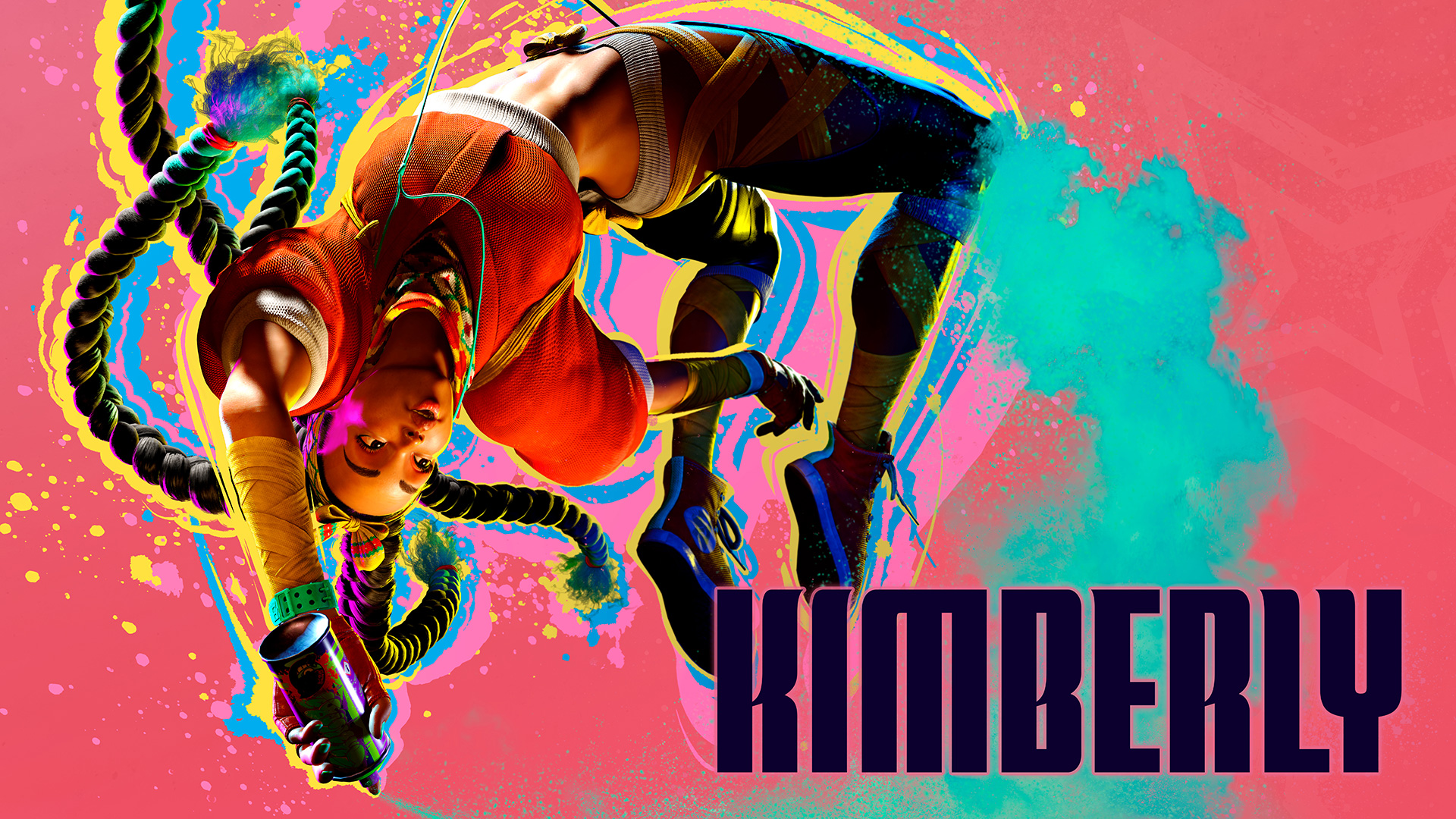
Street Fighter 6 draws ever closer, and standing at the poster child of this new game is the American MMA fighter Luke. He was even originally introduced in Street Fighter V as the bridge to the anticipated sequel. But as prominent as Luke is, I actually think another new character might be the true protagonist of Street Fighter VI: the black female ninja, Kimberly.
The new Street Fighter leans heavily into an urban street aesthetic, most notably in the use of spray paint/graffiti as reflective of hip hop culture. While this motif been around to certain degrees since the very first Street Fighter (like on the title screen), here it’s a defining part of the look and feel of SF6. And if you look at all the new characters, only Kimberly incorporates spray paint in her moveset. She combines it with her ninjutsu training under Guy from Final Fight, taking the old and giving it a fresh coat.
I’m entertaining this possibility because I see it as a way for the Street Fighter franchise to stealthily push a forward-looking diversity that celebrates its international fandom while simultaneously shielding itself from the pitchforks of overly sensitive cultural conservatives who are afraid of having their games not be represented by a conventionally muscular manly man. Luke almost feels like a Trojan horse: “Look over here at this blond American tough guy! Isn’t he what you want?” Meanwhile, Kimberly thoroughly embodies the spirit of SF6.
And that’s on top of having Ryu, Ken, and Chun-li still around. I could be completely wrong in the end, but even if I am, I think Kimberly is already a breakout character among a crowded roster of excellent new designs. She’ll at least wind up being the Chun-Li of Street Fighter 6.
“Char clone” is a fan term to describe a certain character archetype in Gundam. It references Char Aznable from the original Mobile Suit Gundam, and is typically used with a constellation of certain traits: some combination of a rival to the protagonist, who’s masked, morally gray, and mysterious. But while Char clones are practically a given at this point in the franchise, Prospera Mercury from Gundam: The Witch from Mercury might be the most Char of them all.
While Prospera Mercury is indeed a masked character, she’s also unique in that she’s the mother of the heroine, Suletta Mercury. And this isn’t a Darth Vader–esque secret either: Suletta knows she’s her mom, and Prospera even takes off her mask on a regular basis. At this point in the story, they haven’t fought, and there’s nothing saying that they will in the future. Prospera doesn’t have a noteworthy color scheme, she isn’t battling her daughter on a regular basis, which might appear to disqualify her from the ranks of Char clones. But what she does have is body language and a cryptic/veiled way with words that immediately brings to mind the Red Comet himself.
Prospera “Momznable” Mercury is voiced by Noto Mamiko, who’s famous for her gentle voice. Yet, every time she speaks, I can practically hear Char’s actor (the inimitable Ikeda Shuichi) reciting those lines. And every time Prospera is shown interacting with others, it’s like I can picture Yoshikazu Yasuhiko (the original Gundam character designer), drawing her making those exact physical expressions. It’s uncanny, probably intentional, and gives me goosebumps.
Other Char clones have the visual trappings or follow the tropes. Be it Zechs Marquise, Schwarz Bruder, Lancerow Dawell, Mr. Samurai, Harry Ord, Raww Le Kleuze, McGillis Fareed, or others, they look and act the role of the Char. But Prospera Mercury captures the soul of Char, and it makes her the most intriguing figure in all of The Witch from Mercury.
It’s poetic coincidence that the man who sang the Mazinger Z theme would die the same year as the man who composed it. Mizuki Ichiro, aka Aniki, the Emperor of Anime Songs, died at age 74 after a bout with numerous health issues. It’s especially sad that what took him ended up affecting his greatest gift: his voice. But rather than dwell on sorrow, I think it’s important to celebrate what made Mizuki one of the all-time elder statesmen of anime music: the undeniable passion that he imbued in everything he sang.
I’m not going to cover his life and history because that’s already been done elsewhere. Rather, like with Watanabe Chuumei, I want to explore my own history with the songs of Mizuki Ichiro.
I can remember exactly how I first heard Mizuki’s 70s singing: On a VHS fansub there was extra space at the end, and the fansubber had placed some old anime openings. And among them were Mazinger Z, Combattler V, and Steel Jeeg. At the time, my appreciation for retro stuff was a bit mixed, as I found all those songs to be varying degrees of hoaky—though the intensity of Mazinger Z in particular stood out. If anything, I at least preferred the music from the then-modern sequels such as Shin Getter Robo Armageddon and Shin Getter Robo vs. Neo Getter Robo. Of course, Mizuki was also a singer for those OVAs as well, and I think something clicked in me as a result. He was one of my gateways into classic anime.
I gradually transitioned into having a greater love of old school anime songs, and I remember watching videos of live concerts that featured Mizuki alongside greats such as Sasaki Isao, Kageyama Hironobu, Taira Isao, Kushida Akira, Horie Mitsuko, and MIQ. And while Mizuki wasn’t as prolific as in his heyday, he could still deliver. When paired with Horie in particular, the two could make some real magic, such as in Dangaioh and Godannar.
It was also around this time that I learned about one of Mizuki’s greatest creations: JAM Project.
There are two basic strains of anime music: Songs made for anime and songs placed into anime. Neither means a tune is automatically good or bad, but in 2000, the art of making theme songs dedicated to the anime had long been an increasing rarity. After all, using a 90-second opening as a commercial for a new single has its practical uses. But Mizuki is one of the greatest examples of the first style—the kind where you shout the robot’s name and all the attacks and talk about how they defend justice—and he formed JAM Project, a band that still celebrates anime songs meant for anime. Though members have come and gone, including Mizuki himself, the roster over the years is a veritable Justice League of anison: Kageyama “Dragon Ball Z” Hironobu, Matsumoto “Pokemon” Rica, Kitadani “One Piece” Hiroshi, Endoh “Gaogaigar” Masaaki, Yoffy from the band Psychic Lover, Fukuyama “Nekki Basara” Yoshiki, Okui “Utena” Masami, Brazilian singer Ricardo Cruz.
And even among these younger singers whose styles were more modern, Mizuki could hold his own. In fact, whenever I listen to the JAM Project songs featuring him, I’m struck by how his old-fashioned sound added an extra layer of depth. Whether it’s “Soul Taker,” “Hagane no Messiah,” or “Koutetsushin Jeeg,” Mizuki’s voice provided a sense of history like only a handful of people ever could. Additionally, although he wasn’t part of JAM Project by the time Super Robot Wars Alpha 3 came out, the game made him the voice of the ultimate enemy, Keisar Ephes. I think that says so much about the respect given to him for his contribution to anime, tokusatsu, mecha, and so many parts of Japanese pop culture. I eventually got to see JAM Project at Otakon 2008, but by that time, Mizuki had long been out of the group. I regret not being able to see him in concert, but am grateful that I could experience his music at all. Playing Super Robot Wars 30 this past year, I found myself continuing to listen to his iconic themes.
Among my manga tweets and retweets about Mizuki is an abbreviated translation I did for Nagai Go’s message to Aniki. I think I’ll leave off with it, as it sums up everyone’s feelings well.
“We owe Mizuki for guiding the Mazinger Z theme song to becoming such a big hit.
Through 50 longer years of Mazinger Z, its continued popularity was ensured thanks to Mizuki. Every time, he would never let up, singing the theme with love and soul—that was his power.
He was someone who always went all-out, bringing out high spirits. This was the case for his stage performances, of course, but even when we got together normally, he was cheerful and humorous.
He cherished his fans, and he’d always bow his head from how he felt.
Thank you, Mizuki Ichiro. I pray for your passage into the next world.”
I’ve been a fan of the manga artist group CLAMP for almost as long as I’ve loved manga itself, but for whatever reason I had not read their first professional work, RG Veda. I decided to change that recently, motivated both by a desire to delve into older works and a realization that it was, in fact, a “mystery OVA” I had been unable to identify.
When I was quite young, a relative showed me a VHS anime fansub whose visual style stuck with me. There was the effeminate-looking kid with a hidden power, his tall guardian swordsman, the villain with long hair whose eyes were somehow still fully visible through his hair, and a general visual bonanza of beautiful swirls coming from the magic and weapons. Now, I know those are Ashura the “demonic” child, Yasha the leader of the Yasha clan of warriors, Taishakuten the God-King, and the influence of CLAMP’s style—which was, in turn, influenced by the series they themselves were fond of, such as Saint Seiya.
RG Veda is very loosely based on an ancient Indian collection of hymns, here given manga makeover. Ashura is the last child of a people renowned for their battle prowess who were wiped out by the ruthless Taishakuten, who usurped the throne of the heavenly realm (Tenkai) in a violent conflict. In a world where destiny is said to be inevitable, a divine fortune teller speaks of six stars who will gather and overturn Tenkai—which has been interpreted as a threat to Taishakuten’s rule, and becomes the catalyst for gathering individuals seeking to defy the God-King. Though generally a naive child, there is another side to Ashura that emerges in rare moments, one that hints at the terrifying true power lying within.
It’s funny to see how pretty much all of CLAMP’s hallmarks are right in this first series. I understand that they cut their teeth on doujinshi before their professional debut, but with a lot of artists, their earlier works come across as rough previews of later development. CLAMP, however, emerges seemingly fully formed like Athena. The impossibly beautiful men and women with flowing locks, the detailed eyes like voids, the heavy emphasis on inter-character dynamics, the tales of tragic and taboo love (including the problematic kind), the challenging of gender and sexuality norms, the major plot twists that force you to revise how you view the characters—I could just as easily be describing a manga of theirs from the 2010s instead of 1989.
While this might be considered a lack of progress, I think it’s more that the CLAMP style always somehow feels both timeless and of a zeitgeist. Characters of all genders are portrayed with a plethora of personalities and motivations, though they tend towards whatever will provide the greatest amount of drama. Passions in both love and war flair with intensity, as the sheer amount of angst is only matched by the endless parade of ethereally beautiful violence. Even putting historical significance aside, RG Veda is a compelling read overall, though I do think it takes a couple volumes to really kick into gear.
I’ve sometimes seen readers express that they miss the CLAMP of old, and there is indeed a certain degree of relative simplicity present in RG Veda. Sure, the plot can feel overwrought and filled with shocking reveal, but it’s not as egregious as the kinds of rug pulls seen in something like Tsubasa Reservoir Chronicles. And even though RG Veda is fairly long at 10 volumes (or three omnibuses if you read the Dark Horse release), it has a definitive ending that wraps everything up pretty well—not something every CLAMP manga can claim.
A lot of the elements of RG Veda have become fairly commonplace in manga. Despite that, it still holds up and never looks excessively dated. There’s something perennial about making everything and everyone as pretty as possible, and RG Veda backs up that aesthetic glory with unforgettable tears and tragedy.
I didn’t know who Kobayashi Shichiro was until he had already passed away. But when Anime NYC helped sponsor an exhibit dedicated to his work both in and outside Japanese animation, I decided I should visit this gallery. I then read that he had been a part of the industry since its early days, but what I hadn’t realized is that his art extended all the way into the eras that helped foster my own love of anime.
Unfortunately, I only managed to get there on the last day the exhibit was open. I wish I could have written about it sooner.
Right after the entrance was a video message from Kobayashi, where he expressed his love of animation and its potential to connect humans with one another. He seemed to lament recent problems in the world and hoped animation could help overcome them.
From there, the pieces on display were both work from anime productions as well as from his own personal art. Some (but not all) of the anime ones were not allowed to be photographed, like the Revolutionary Girl Utena movie, Nobody’s Boy Remi, and The Adventures of Gamba, but there were many that could be, as shown below.
Urusei Yatsura the Movie 2: Beautiful Dreamers
Venus Wars
Simoun
Kobayashi, in his role as art director, collaborated with many great anime creators, especially Dezaki Osamu and Sugino Akio. Looking at Kobayashi’s entry on Anime News Network, it’s clear that this was only scratching the surface. What really struck me was his ability to create backgrounds and environments for a whole range of settings, from small towns to science fiction landscapes.
His personal art also showcased Kobayashi’s versatility and powerful expressiveness, featuring pieces dating all the way back to the 1960s and going into the 2010s. They ranged from portraits to abstract art to images of nature, with horses being a lifelong subject due to having grown up with them.
Seeing these interspersed along with the anime work, it gave the sense that Kobayashi was truly a complete artist.
In the corner of the gallery was a video playing a “storybook” animation by Kobayashi about one of his favorite children’s stories: The Red Candles and the Mermaid. He had apparently always wanted to make an animated work out of it, and this combination of stills and voiced narration was the fulfillment of that, to an extent. The tale is a tragic one, a lesson about greed and not appreciating others, brought to life here through Kobayashi’s paintings. Unfortunately, I don’t have an image of it.
It was brief, but I’m glad to have experienced the work of Kobayashi Shichiro this way, where his backgrounds command attention instead of receding in the face of the stories. It makes me feel that I should appreciate background artists more.
I’ve watched the recent anniversary streams of holoX, and in light of the announcement of the Hololive 4th Fes, I’ve been thinking about how holding 3D concerts can carry different types of significance depending on the individual member and what their fans are looking for. Hololive seems to celebrate their stars in a manner inclusive to every Hololive member’s diverse fanbase, and I’m all for it.
It’s no secret that Hololive members can vary tremendously in terms of where their talents lie. Some clearly establish themselves as great performers as soon as they have the chance, like Hoshimachi Suisei. Others don’t necessarily have the background but have worked hard and come into their own, such as Oozora Subaru. And then there are those who don’t reach the level of their fellow VTubers in terms of singing and dancing, but they might have engaging personalities that just make for a special experience.
However, when there are 3D concerts or other major events that bring Hololive members together, they potentially become places where all respective fans can come together and appreciate their favorites for their own particular reasons. Take the Hololive 3rd Fes concert, which was the 3D debut of Hololive English’s first generation. Gawr Gura showcased the singing talent that brought so many fans to her, along with a cute dance. Takanashi Kiara brought a more polished idol flair. Ina came with a soothing voice in a subdued performance. Amelia Watson is definitely not a strong singer, but her choice of music (a weird fictitious anime opening from the show Welcome to the NHK!) put her personality on full display. And Calliope Mori put her well-established rap skills (that have since led to a contract with Universal Music Group) to good use. Hololive Indonesia’s first generation also made their 3D concert appearances, with Moona’s diva-like poise, Iofi’s adorableness, and Risu’s ridiculous vocal range all on full display.
With holoX, there is a similar range of strengths and quirks on display in their anniversary concerts. La+ Darknesss (see above) is a ridiculous total package whose impressive vocals and unmatched dance skills both support and defy her “bratty alien demon lord” concept. Takane Lui doesn’t fit the typical image of an idol, but she’s very good at singing while also staying “in-character,” and her choice of songs conveys a sense of maturity. Hakui Koyori is a jack of all trades who also leans into her character the most by adding in puzzles and brain teasers to her concert. Sakamata Chloe is arguably the best singer in the group, with a voice that can seem unreal; she was also the only one to do exclusively solo performances, as if to prove a point. Kazama Iroha’s cuteness shines through in her energetic performances, and it’s clear that she put in a lot of effort to improve her dancing.
It all reminds me of an essay I once read about the differences in presentation between Japanese idols and Korean pop stars: part of the appeal of J-idols is seeing them grow into the role, whereas K-pop stars appear before fans already fully formed. In the context of Hololive, it’s like there’s a purposeful and perhaps even inevitable contrast. While you might have your “J-idol fan” types who want to see their favorites grow and your “K-pop fan” types who love to see perfection in action, a single banner like Hololive allows these groups (and many more) to all thrive in the same general space.
The power that comes from the variety Hololive has to offer is the way it encourages respect for diversity of talent. People can be fans of different members for different reasons. There are certainly talents whose appeal lies in their sheer skill, and the fans want to see their favorites put their abilities and/or progress on full display. However, there are also Hololive members who aren’t necessarily the greatest performers in one way or another, but their presence on stage makes for a kind of “we made it” moment for their fans. No matter the reason, it emphasizes the idea that there’s no one “right” way for a performance to be, and it encourages the different fanbases to coexist.
I’m riding high off of three things: recent elections defied expectations, the VTubers of holoX have just been celebrating their one-year anniversaries, and it’s been 15 years of Ogiue Maniax! It’s hard to believe each one for somewhat different reasons, but I’m hoping I can carry this joyous monentum through this month and into the eventual new year.
Here are my Patreon subscribers for December 2022! Thank you to everyone.
I reviewed a lesser-known 1970s giant robot anime, now available via Discotek.
Kio Shimoku
If there’s anything to take away from this month’s tweets, it’s that Kio Shimoku loves Royal Space Force: The Wings of Honneamise.
Apartment 507
Looking at Akiba Maid War through the lens of 1999 Akihabara.
Closing
As with every year, I’m going to be rating the anime characters I think are the best of 2022. It is unbelievable how tough this year’s field is. I feel like the top candidates would have won in virtual every other year had they been eligible.
In contrast to last month, Kio Shimoku tweeted up a storm in November. The big topics: Royal Space Force: The Wings of Honneamise, drawing characters playing baseball, and…sketching out manuscripts for pornographic manga?!
Kio announcing that Chapter 41 of Spotted Flower is out. He mentions that the way the image is cropped unintentionally makes it look more improper than it actually is.
Kio finally got the chance to see the theatrical version of Royal Space Force: The Wings of Honnêamise (which had recently been playing again on the big screen). He didn’t even know about it back when it first released, though he’s seen the TV-broadcast version tens of times. In fact, he’s seen it on TV so much that seeing the scenes cut from that version added back in felt kind of weird. The full theatrical version adds a lot of nuance to places missing from the TV version, but Kio still has an affinity for that one, and he thinks they did a good job with the edits. He talks about how nowadays, it’s unusual for people to want to watch cut versions, but he still loves it nevertheless. He doesn’t have the TV version, and Wikipedia doesn’t even mention it at all. Kio wonders if anyone actually remembers it.
A follower also talks about the cut TV version of Castle of Cagliostro, which Kio also has a recollection of. Others chime in that they have seen Royal Space Force on TV, including one person who remembers Anno Hideaki providing commentary on it for an airing on the program Friday Roadshow (which airs movies on TV). Someone else chimes in that they can remember Anno explaining a few things. Namely, how good the scene is where Marty says 「誰かが必要としているからここにいられると思っている」[If anyone can provide a translation with proper context, that’d be a big help], and how the TV version uses monoaural sound, so it couldn’t replicate everything, like the way the sound changes as they go up into space.
“I think I’m here only because somebody needs me.”
The saga continues: Watanabe Shigeru, the editor of the TV version of Royal Space Force actually replied to Kio! In a rare instance, we get to see Kio fanboying over someone. Watanabe mentions that while he’s an anime producer now, back then he was a mere tradesman. Kio asks if there’s a betamax version, but Watanabe says there isn’t, and the TV version was basically a “necessary evi.”
Watanabe also recalls that they had Okada Toshio and Yamaga Hiroyuki (also of Gainax fame) for the TV broadcast as well.
Someone else mentions that there’s a scene with the characters drinking milk that was included in the laserdisc release but according to Kio, it wasn’t in the theatrical re-release. Watanabe chimes in again and explains that this extra scene wasn’t shot on 35 millimeter so it didn’t look good when upscaled. However, it’s included with the blu-ray as an extra.
As a follow-up to last month’s trip to the batting center, Kio has been drawing Hashikko Ensemble characters playing baseball. There’s also some discussion about the characters and how
Vai fazer um ano que @kioshimoku1 encerrou Hashikko Ensemble (em 8 volumes) e até agora nem sinal do lançamento do mangá no ocidente. =( pic.twitter.com/ncA7g21p7d
— Diogo Prado – Skull-face (Comic) Book Editor (@didcart) October 31, 2022
As an aside, my friend Diogo Prado (and a Patreon member of Ogiue Maniax) got retweeted by Kio!
A fan apologizes for discovering Hashikko Ensemble too late, and asks if there’ll be a sequel (like Genshiken Nidaime). Kio says not to sweat it, and that everyone discovers works at their own timing.
Kio also went to see a new theatrical run of GOTHICMADE. Much of the story has also been told through the manga, but the last part of the film has still yet to be adapted.
Someone replies to Kio’s preview of Spotted Flower Chapter 41 by saying the meme line, “But he’s a guy” from Stein’s;Gate. Kio replies “They’re both,” to which the replier apologizes. However, while the replier assumed he meant that Not-Kohsaka (depicted there dressed like Not-Hato) was nonbinary, what Kio meant was that both characters are guys.
(I guess this answers the gender identity of Not-Hato).
Kio reacts to the official Twitter account of Kumamoto Castle tweeting a saying popular among idol fans and the like: You’ll stan the ones you stan when you stan (the actual word being oshi). It’s basically saying you’ll know who’s your favorite because it’ll come out from you.
Kio went to see Royal Space Force in theatersagain! This time, he noticed a sound similar to a baby crying that had never registered to him before while watching.
Kio mentions Ueda Masashi as one of the all-time greats of 4-panel manga, and writes about how even these simple characters could be portrayed as having unseen “adult” sides to them. He even used Ueda’s work as a basis for a scene between Not-Ohno and Not-Tanaka in Spotted Flower Volume 5.
Sometimes, Kio sketches out ero manga manuscripts, but finds striking the right balance between elements difficult. Moreover, he feels that the order of priority is different for ero manga: Instead of paneling -> text -> images, it’s the other way around. After all, you can’t tell if something is gonna be hot just from a barebones layout. (Note that Kio had previously praised ero manga artists for their talents—this seems to be a follow-up to the idea that it’s not that easy.)
When asked what he’s drawing, Kio says it’s new and original characters. He’s also entertaining the notion of quietly putting something on the adult website Fanza.
Kio watched the first half of the Japan vs. Germany World Cup 2022 match and went to sleep early assuming it was all over for Japan, only to wake up to headlines about the upset.
He planned to watch the second half once he got home, wondering if player Ito Junya went wild (which Kio later confirmed).
After retweeting a bunch of plastic-model-related tweets, Kio says he really wants to build plastic models, and remarks about the “big wave” of model-building hitting after all this time. Author Ikuhana Niiro encourages him to do so, to which Kio responds by wondering whether he should finally open all the cardboard boxes that hold his model kits.
Anime NYC 2022 is the second year in the pandemic era for New York’s biggest anime convention. Last year, the event broke its own attendance records, likely owing to people eager to do something in-person after months and months of restrictions. In contrast, this year felt more like a return to something vaguely normal.
Badges and Registration
Although I had the benefit of obtaining a press pass, I do know there were issues with supply of general admission this year: both three-day badges and Saturday ones were in short supply. It’s difficult to tell if they’re following in New York Comic Con’s footsteps towards eliminating three-day tickets in general (a move that makes attending the con all weekend significantly more expensive at $65 per day) or if it has to do with COVID-19 precautions.
One thing Anime NYC definitely did seem to take a page from New York Comic Con is a lottery system for seats for major panels in addition to a similar lottery already in place for guest autographs. Attendees could enter online for a chance at these con activities without needing to devote themselves to waiting in lines, and the idea is that it’s also fairer for people coming in from farther away. I understand the overall benefits of this method, though the fact that you have to cancel your reservations in advance should you win (or else risk being ineligible for future lotteries) means that it’s harder to be flexible the day of. I believe being able to make impromptu decisions is part of the fun of conventions, and potentially losing that flexibility can feel like a bit of a burden. Again, though, it might be a net good, and what probably needs to be tweaked is that way fewer panels probably need this system in place.
COVID-19
Speaking of health, Anime NYC did require proof of vaccinations or a negative COVID test, and they enforced that aspect pretty stringently. The same could not be said of masks, however. In panels, staff did a good job of making sure everyone had masks, but everywhere else it was pretty much a coin toss. The city itself has relaxed rules around masking even on the subway, so it’s hard to fight against that kind of momentum, but I wish there was a way to re-emphasize the importance of masks especially in an environment like a convention center filled with tens of thousands of people.
Last year’s con turned out not to be an Omicron super spreader event, despite early reports. I really hope that remained the case for this year, but the relative lack of masking concerns me.
A Note on Attack on Titan
The biggest guest of 2022 had to be Isayama Hajime, author of Attack on Titan. I’m bringing him up first because I actually did not attend any of his events. I follow Attack on Titan through the anime, and I didn’t want to be spoiled. I don’t know if it would have been possible to wait for the anime to conclude before inviting Isayama, but I have to wonder if there were others like me, or perhaps even much bigger fans who were forced to hold back.
Hololive Meet NY
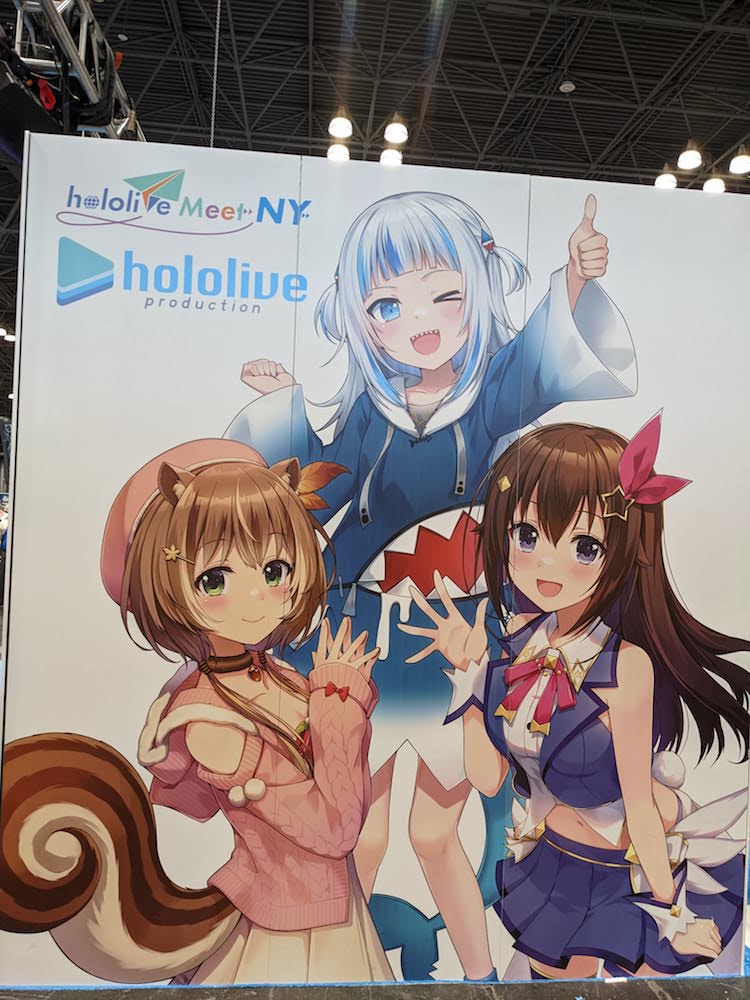
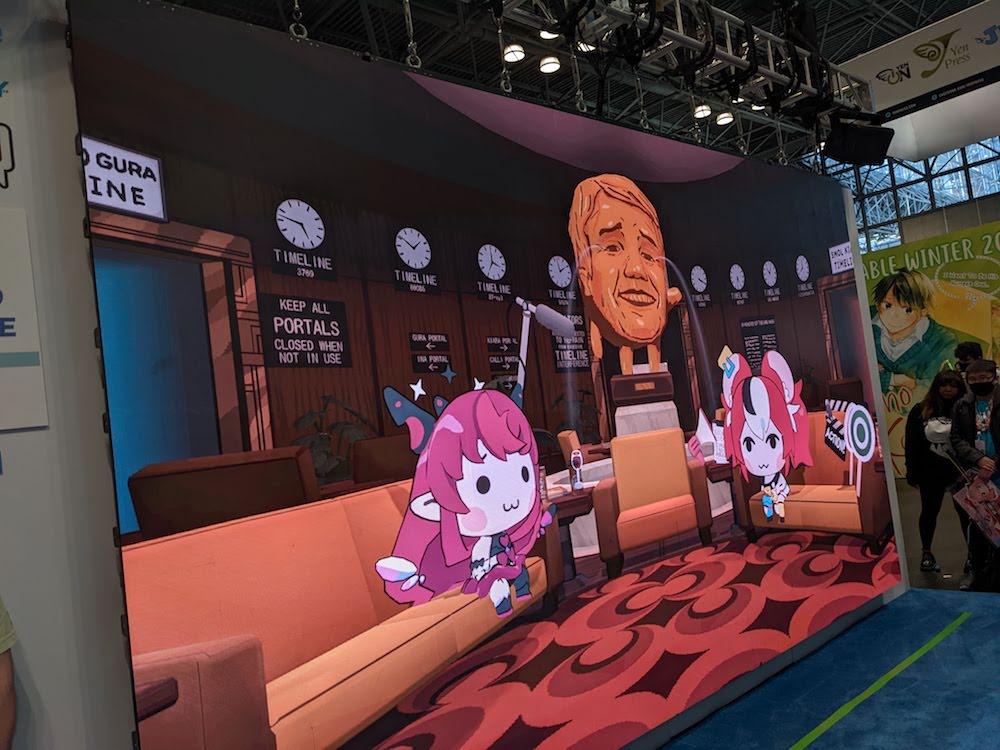
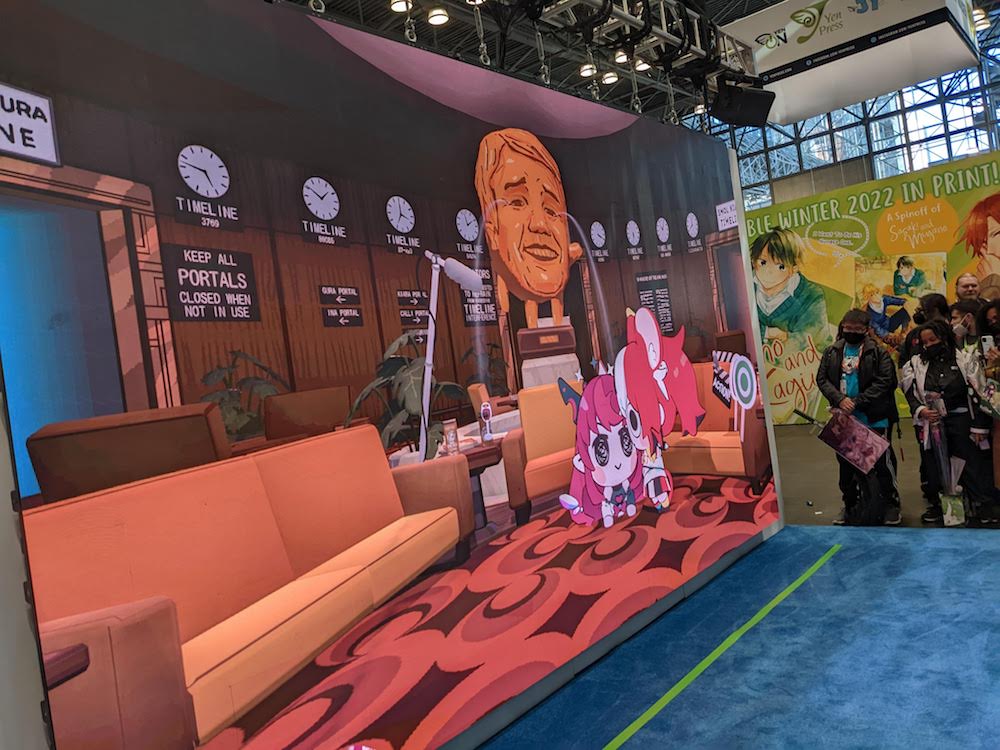
My personal must-see guests were technically not even there: the Virtual Youtubers of Hololive. I prioritized the VTuber stuff because this was my first time at a convention where they had a more significant presence; Anime NYC 2021 had a panel featuring Hololive Council’s five members, and it was a decent enough event that unfortunately had little to no interaction with the fans. For 2022, a more direct VTuber experience was provided through a dedicated booth in the Exhibit Hall in conjunction with VRChat, all as a part of the Hololive Meet series of international con appearances.
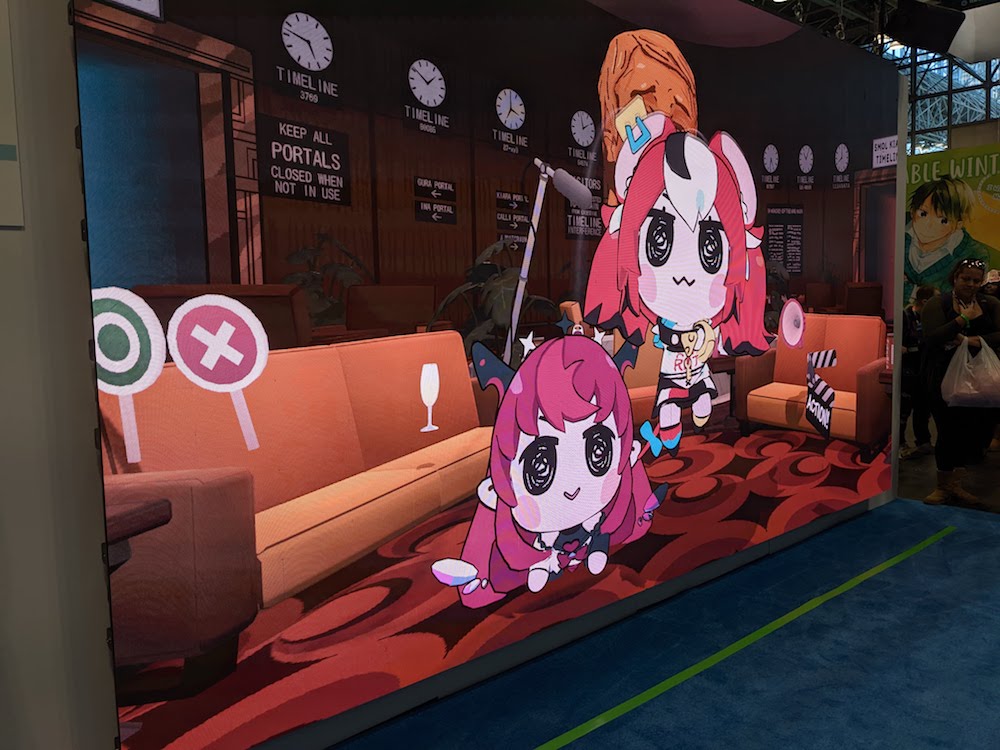
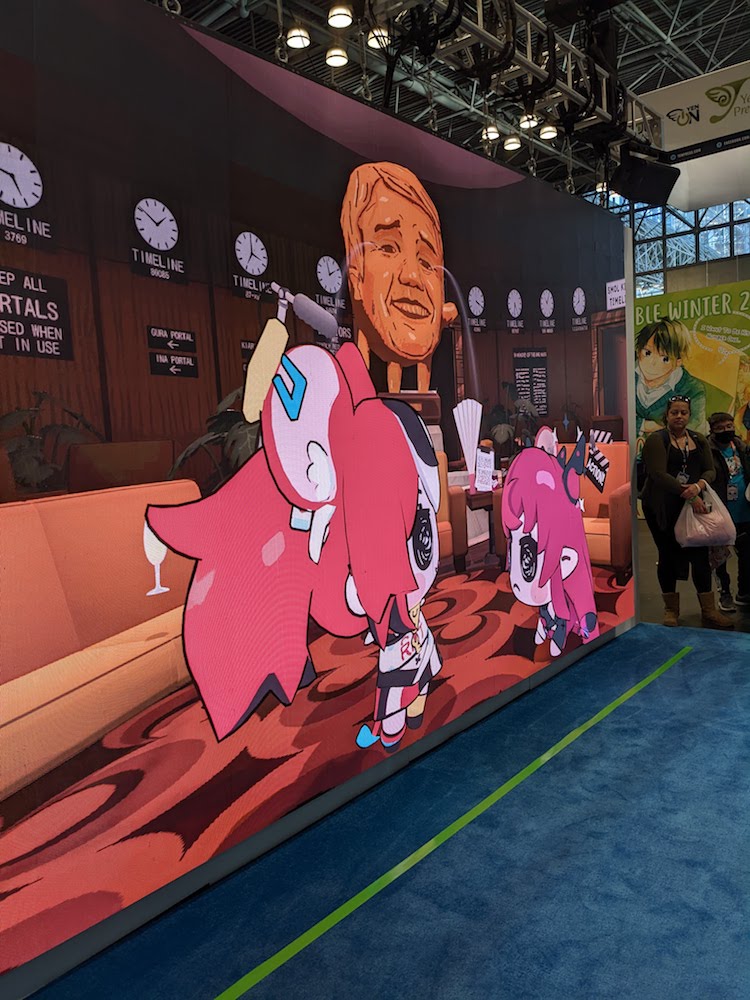
Throughout the weekend, different Hololive members (primarily the English ones) held hour-long live shows while streaming remotely. Due to what I assume are various limitations, they didn’t use any of their standard 3D models, instead opting for less complicated ones already familiar to fans: Smol models, BEEGSmol models, and also the VRDance ones.
For personal reasons (and because I didn’t want to make it an all-Hololive weekend), I was only able to see two shows in full. The first I saw was an enthusiastic morning exercise routine (though not in the radio taisou sense) by Mori Calliope that led to all sorts of 3D wackiness. The second, and one of the highlights of the entire event, was a special Anime NYC edition of the Chadcast that became something even more special due to technical mishaps.
The BaeRys Show
Normally, the Chadcast is a three-person monthly show on Youtube by Calliope along with Hakos Baelz and IRyS. None of them are among my absolute favorites as individuals, but as a trio, they’re practically a must-watch. I was looking forward to a convention-exclusive Chadcast, but as the crowd gathered for it, only Baelz and IRyS appeared. Jokingly announcing that this was actually the first episode of the “BaeRys” podcast, the two informed the crowd that Callie’s internet wasn’t working and so she likely couldn’t join in.
While unfortunate, this also meant getting a full 60 minutes of pure BaeRys, the official name for the pair. I’m not a dedicated shipper, but their interactions are among my favorites because they have such excellent chemistry together. The running joke in the fandom (that is also embraced by the VTubers themselves) is that they‘re constantly getting married and divorced, and so the two played various games meant to reveal “interesting” sides of each other. Questions included “Would you rather vomit on your idol or get vomited on by them?,” “Truth or Dare: Have you ever peed in a pool?,” and (with the help of a fan) “What are three things you like about each other?”
Watching their antics made me aware of what Callie adds to the Chadcast. Baelz and IRyS’s favorite drinks are coffee and soda, respectively, and BaeRys is very much like drinking coffee soda: a surprisingly refreshing combination, but one that can be overwhelming. Callie, then, is a savory (American) biscuit you eat in order to temper the intensity of coffee cola, and so one’s preference at any given time for Chadcast or BaeRys has to do with whether you want a balanced taste or to experience the extremes.
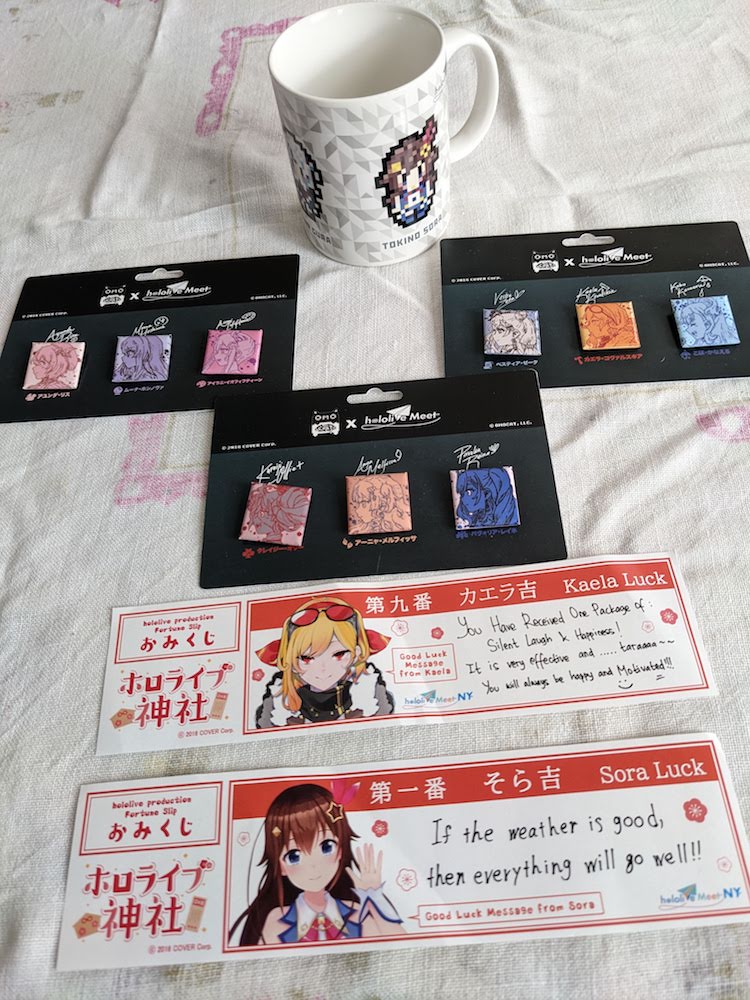
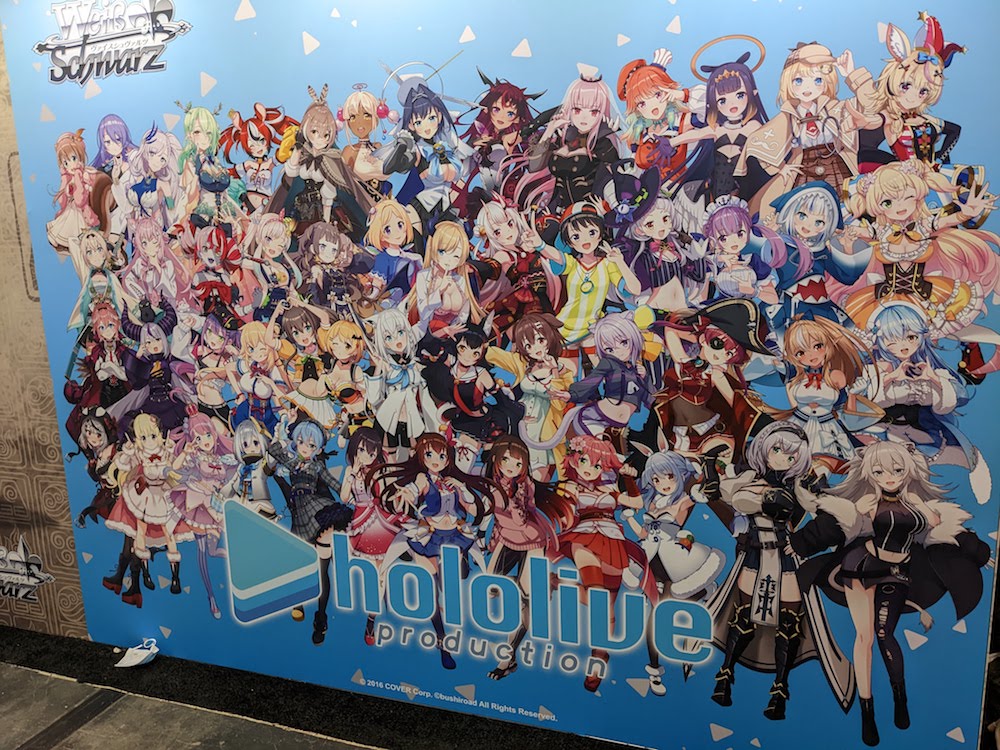
Along with the streams, there were three other booths offering official Hololive merchandise: Bushiroad (for items related to the Weiss Schwarz card game), Omocat (for exclusive crossover art), and Animate USA (for Hololive Meet–themed items). Buying $40 worth would get you a ticket you could exchange for a Hololive fortune, but attendees could also get a fortune for free if they have a VRChat account. I just so happened to create one because of the recent Code Geass x FLOW VR concert, so I managed to snag two fortunes, one for flagship Hololive Tokino Sora and one for Indonesian member Kaela Kovalskia.
I do have a couple complaints about how things were handled with Hololive Meet. First, the space provided meant everyone had to stand because sitting would create a fire hazard, and my feet still haven’t fully forgiven me. Second, you had to buy $40 of Hololive merch at one store in order to get the fortune ticket, so you couldn’t spread it across all three. Other than those issues, I’m glad I finally got to see what a “live” Hololive event is like. Next on the bucket list is getting to see my favorites, Haachama and holoX.
High Card
Among the anime premieres at Anime NYC was the first episode of a series called High Card, written by Kawamoto Homura (writer of Kakegurui) and his younger brother, Munoh Hikaru. It was actually the first screening anywhere, including Japan.
While there is a playing card motif to High Card, it’s not really a gambling anime so much as it is an action-oriented work that revels in absurdity and spectacle, exemplified by its tag line: “Are you ready? It’s showdown!” A special deck of cards has been scattered to the four corners of the Earth, and they have found owners of various types. The cards confer special powers that range from the powerful to the ridiculous (and sometimes both), and at the center of the story is a young thief trying to get money to save his orphanage. Like Kakegurui, the cast of characters is off-the-wall and full of dangerous and sensual individuals, though this time it’s mostly guys instead of girls. The creators said they were inspired by Kingsman, and it shows.
During the Q&A section, Munoh talked about how coming to New York City was amazing because he’d only ever seen it in images and on the screen. He then joked that he’d yet to see Spider-Man or the Ninja Turtles (the latter mention was omitted by the translator for some reason).
Wit Studio
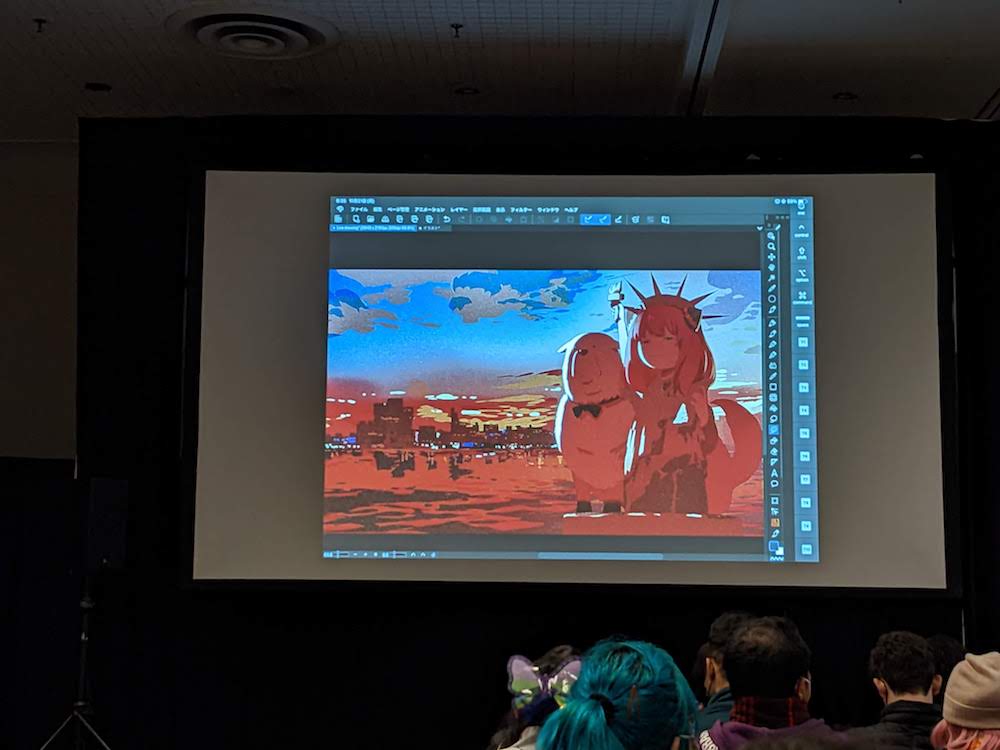
It’s rare to see a current anime studio with a pedigree as strong as Wit Studio: Attack on Titan, Great Pretender, Ranking of Kings, and most recently Spy x Family are among the works they’ve produced. At Anime NYC, multiple staff members for Spy x Family were invited as guests: President and CEO George Wada, as well as artist Syo5 (pronounced “Shogo.”) They held a panel that was a combination of Q&A, insight into the creative process, live-drawing session, and early preview of Spy x Family episode 8.
The live drawing was more a showcase of how Syo5 works on color palettes, taking an adorable line drawing of Anya Forger as the Statue of Liberty (with her dog, Bond) and adding a sunset to it. During the panel, Syo5 discussed how the color palettes in Great Pretender weren’t realistic, but were meant to have a different feel for each part of the world the characters travel to, and coloring the Anya of Liberty was a showcase of a process similar to what went into Great Pretender.
Ranking of Kings also got plenty of love from the Wit staff and audience alike. They mentioned that they’re trying to get the next season done in 2023, and Syo5 showed some of his conceptual drawings that established the general look of the anime.
Eating at the Javits
There were no onsite food trucks this year, so all nearby food options were basically in the Jacob Javits Center itself. Fortunately, between the stalls in the exhibit hall and the Javits dining area, there was actually a decent number of food options. Granted, they were all overpriced to hell and back, but that’s inevitable with con food.
For those eager to relish in Japanese culture, the exhibit hall had Go Go Curry (a perennial favorite of mine), ramen, bento from BentOn, okonomiyaki from Okonomi, and a few others. I’ve tried pretty much all of them before (though not necessarily in the context of Anime NYC), and the quality is quite good, even if it costs too much. For those who didn’t want to pay the “weeb tax” (or wait in line for a long time), options included burgers and chicken, dumplings, empanadas (Nuchas) Korean food (Korilla), and even Indian food (Curry Kitchen). Overall, the variety was welcome, given the circumstances. I remember a time when you could barely get anything resembling good at the Javits, and I’m glad to see that has continued to change.
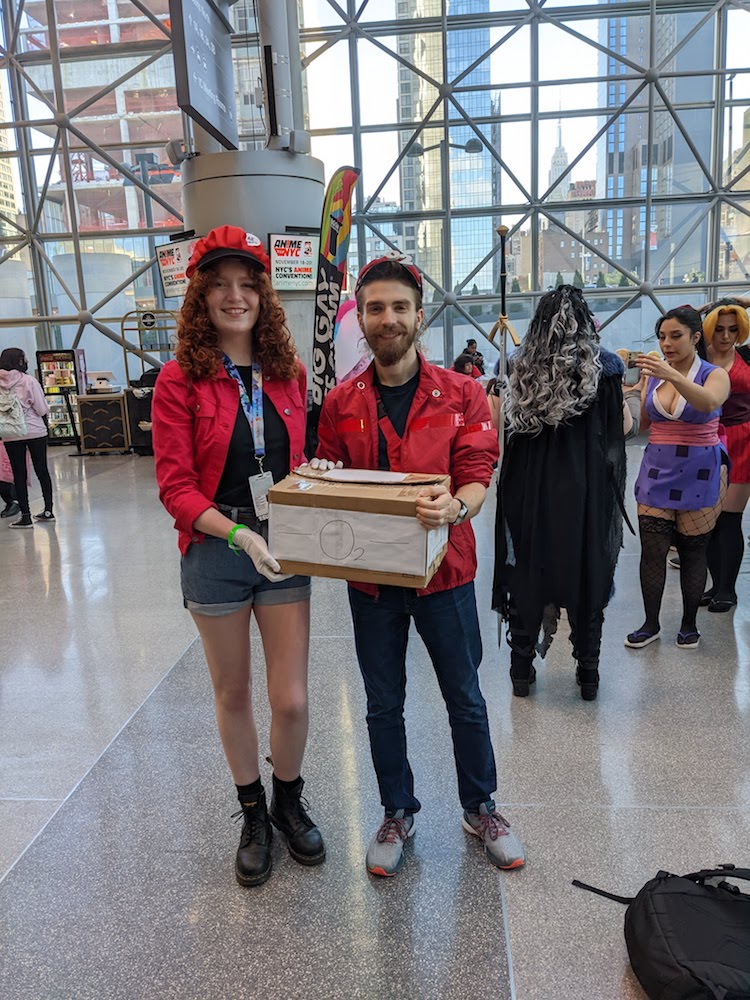
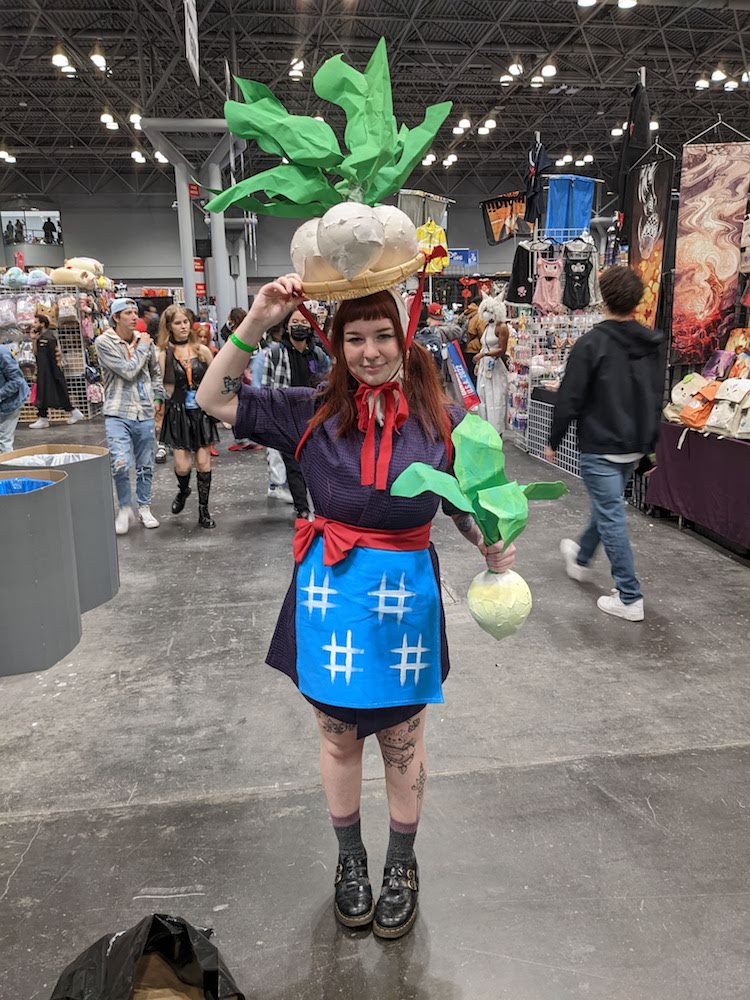
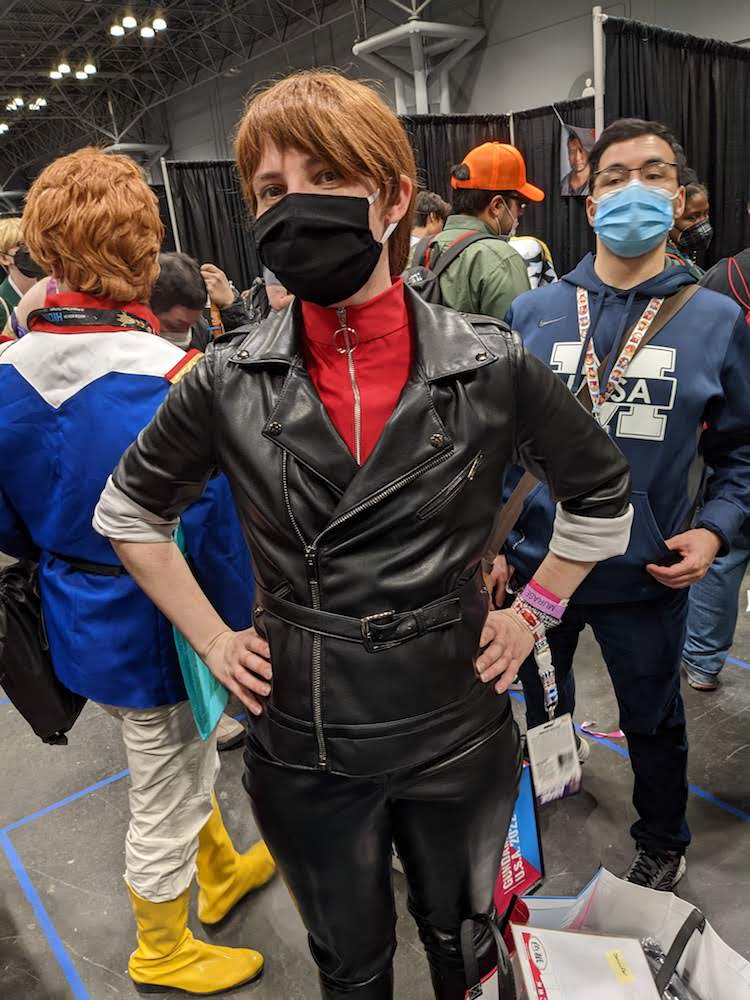
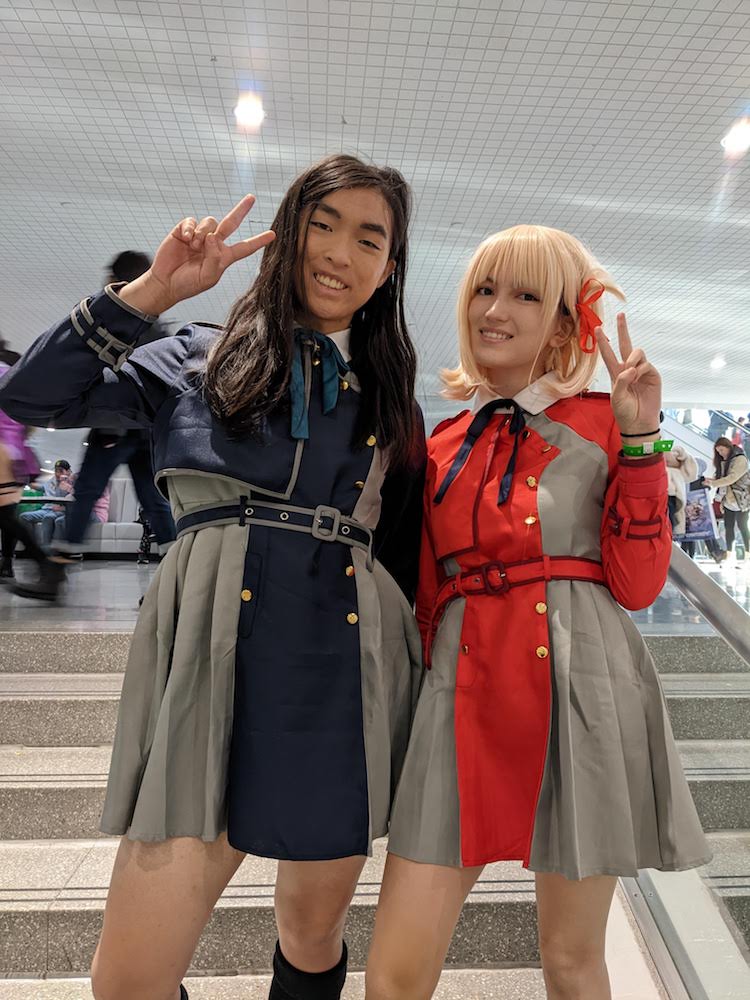
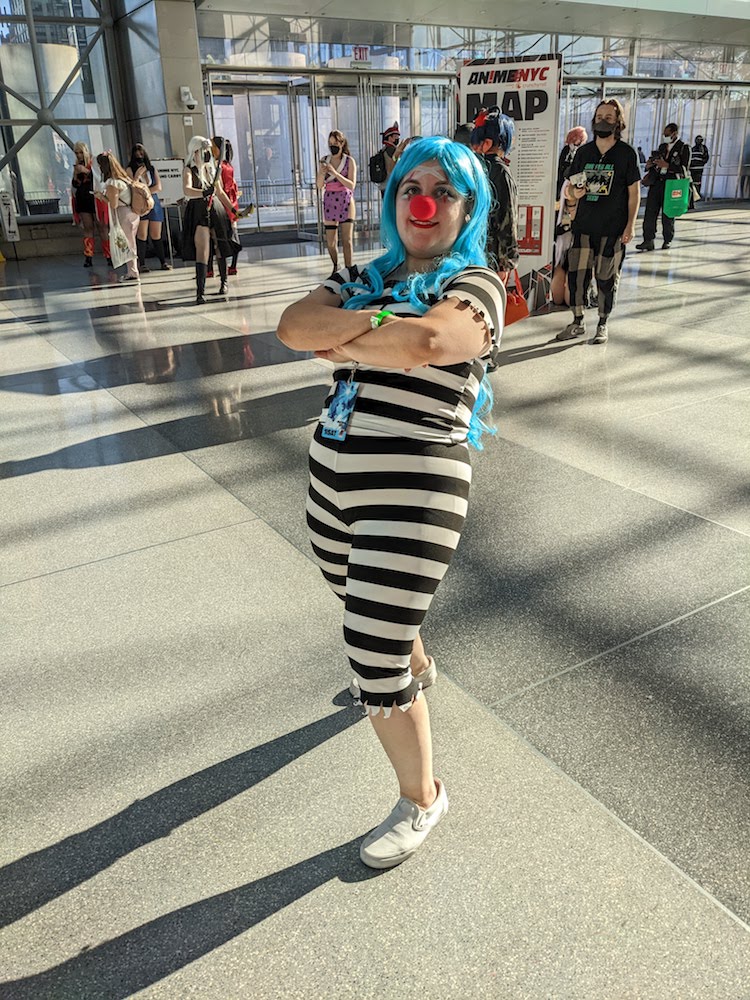
Cosplay, Etc.
Overall
Anime NYC 2022 had a few firsts for me, notably when it came to seeing Hololive Virtual Youtubers in a more direct fashion. In that respect, it was an unforgettable experience. While I prefer cons with a greater amount of fan panel programming, I also understand that this is not what Anime NYC is about. Attendees seemed generally to be in high spirits, but I do have concerns about it getting more expensive to attend, as a lot of anime fans are not rolling in dough. If they can keep bringing the guests people want to see while finding ways to make it affordable, I think things will be looking up for next year.






 OGIUE MANIAX