I’m riding high off of three things: recent elections defied expectations, the VTubers of holoX have just been celebrating their one-year anniversaries, and it’s been 15 years of Ogiue Maniax! It’s hard to believe each one for somewhat different reasons, but I’m hoping I can carry this joyous monentum through this month and into the eventual new year.
Here are my Patreon subscribers for December 2022! Thank you to everyone.
I reviewed a lesser-known 1970s giant robot anime, now available via Discotek.
Kio Shimoku
If there’s anything to take away from this month’s tweets, it’s that Kio Shimoku loves Royal Space Force: The Wings of Honneamise.
Apartment 507
Looking at Akiba Maid War through the lens of 1999 Akihabara.
Closing
As with every year, I’m going to be rating the anime characters I think are the best of 2022. It is unbelievable how tough this year’s field is. I feel like the top candidates would have won in virtual every other year had they been eligible.
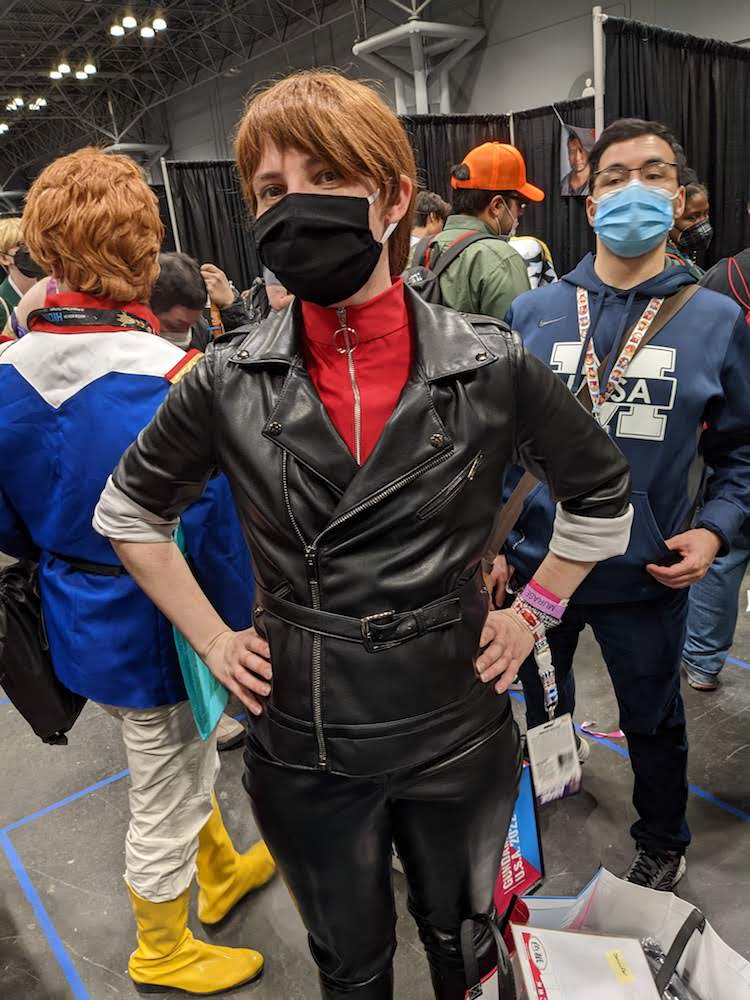
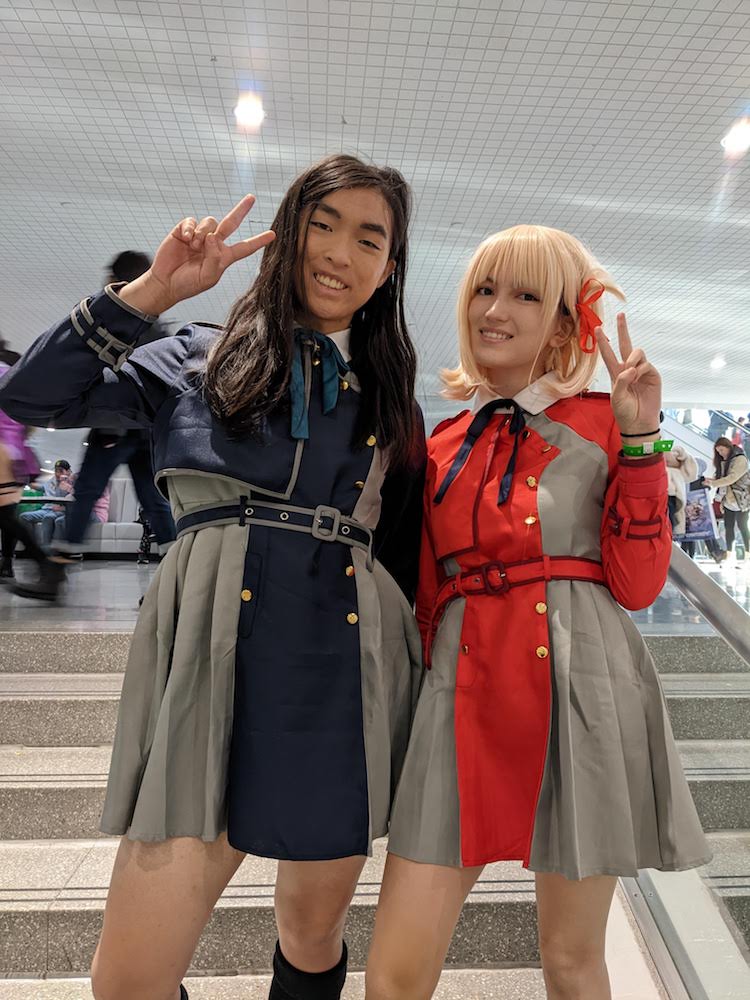
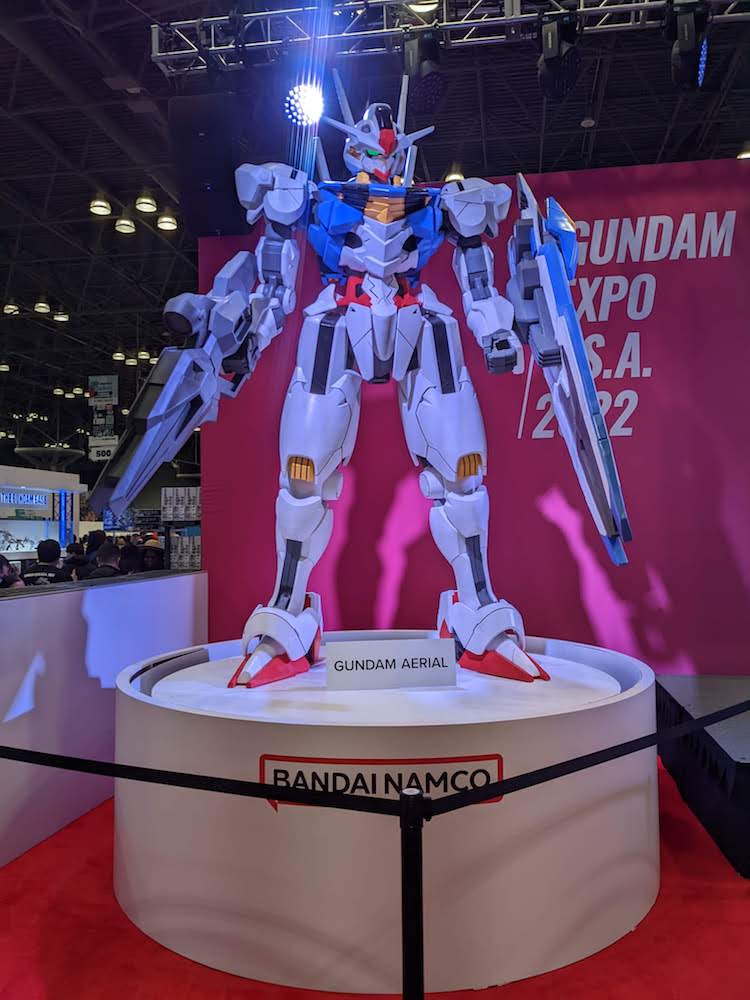
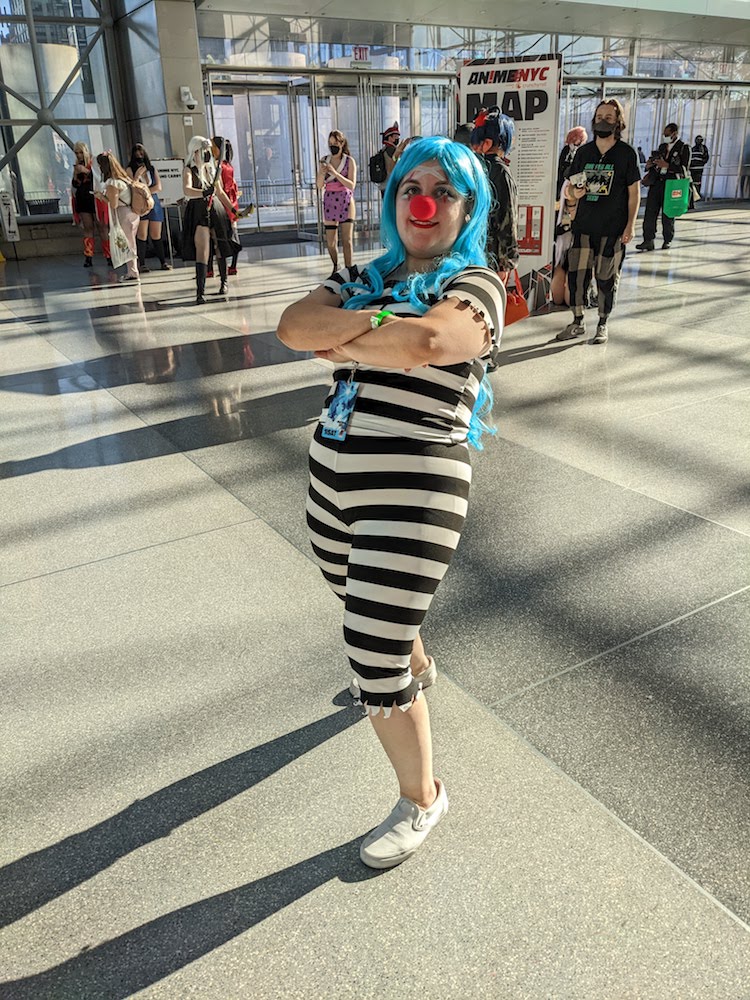
Anime NYC 2022 is the second year in the pandemic era for New York’s biggest anime convention. Last year, the event broke its own attendance records, likely owing to people eager to do something in-person after months and months of restrictions. In contrast, this year felt more like a return to something vaguely normal.
Badges and Registration
Although I had the benefit of obtaining a press pass, I do know there were issues with supply of general admission this year: both three-day badges and Saturday ones were in short supply. It’s difficult to tell if they’re following in New York Comic Con’s footsteps towards eliminating three-day tickets in general (a move that makes attending the con all weekend significantly more expensive at $65 per day) or if it has to do with COVID-19 precautions.
One thing Anime NYC definitely did seem to take a page from New York Comic Con is a lottery system for seats for major panels in addition to a similar lottery already in place for guest autographs. Attendees could enter online for a chance at these con activities without needing to devote themselves to waiting in lines, and the idea is that it’s also fairer for people coming in from farther away. I understand the overall benefits of this method, though the fact that you have to cancel your reservations in advance should you win (or else risk being ineligible for future lotteries) means that it’s harder to be flexible the day of. I believe being able to make impromptu decisions is part of the fun of conventions, and potentially losing that flexibility can feel like a bit of a burden. Again, though, it might be a net good, and what probably needs to be tweaked is that way fewer panels probably need this system in place.
COVID-19
Speaking of health, Anime NYC did require proof of vaccinations or a negative COVID test, and they enforced that aspect pretty stringently. The same could not be said of masks, however. In panels, staff did a good job of making sure everyone had masks, but everywhere else it was pretty much a coin toss. The city itself has relaxed rules around masking even on the subway, so it’s hard to fight against that kind of momentum, but I wish there was a way to re-emphasize the importance of masks especially in an environment like a convention center filled with tens of thousands of people.
Last year’s con turned out not to be an Omicron super spreader event, despite early reports. I really hope that remained the case for this year, but the relative lack of masking concerns me.
A Note on Attack on Titan
The biggest guest of 2022 had to be Isayama Hajime, author of Attack on Titan. I’m bringing him up first because I actually did not attend any of his events. I follow Attack on Titan through the anime, and I didn’t want to be spoiled. I don’t know if it would have been possible to wait for the anime to conclude before inviting Isayama, but I have to wonder if there were others like me, or perhaps even much bigger fans who were forced to hold back.
Hololive Meet NY
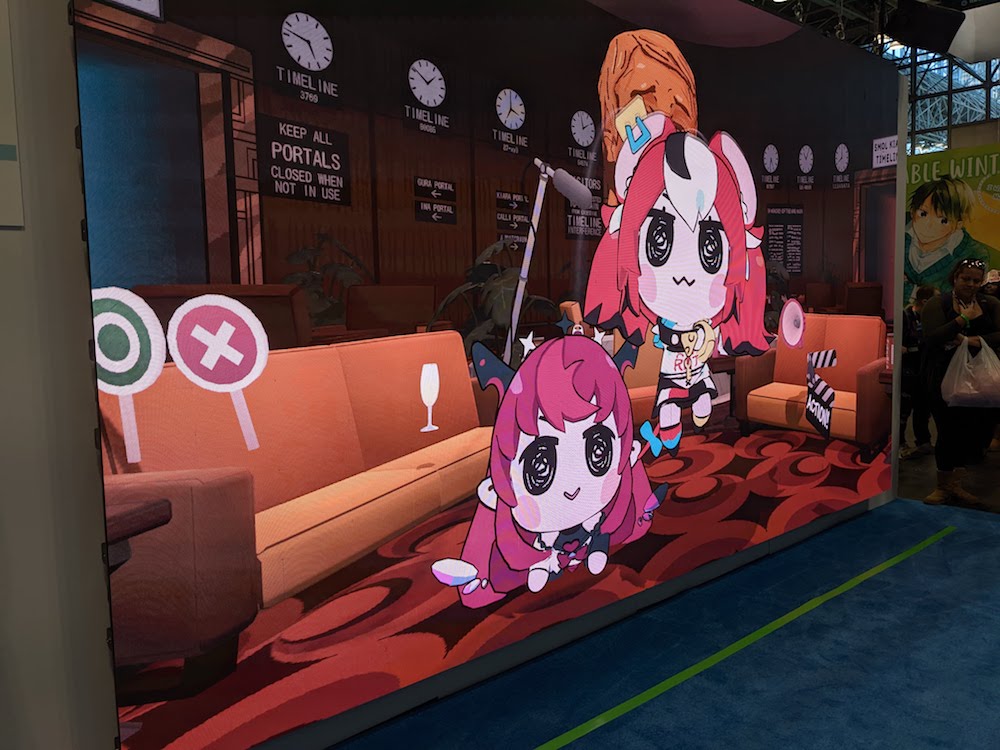
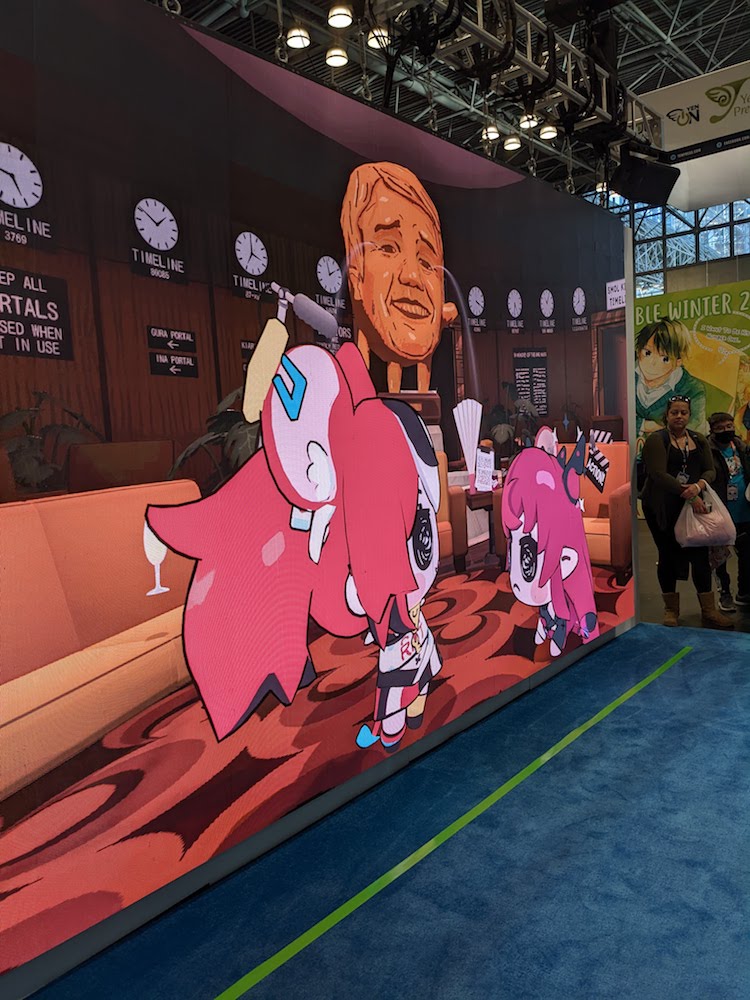
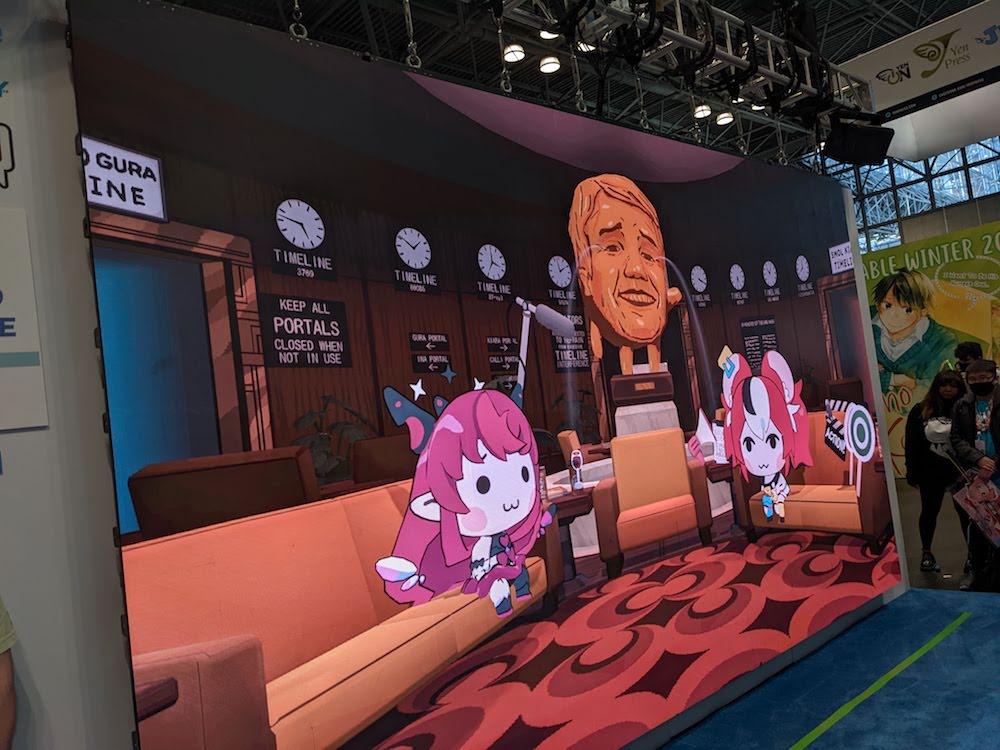
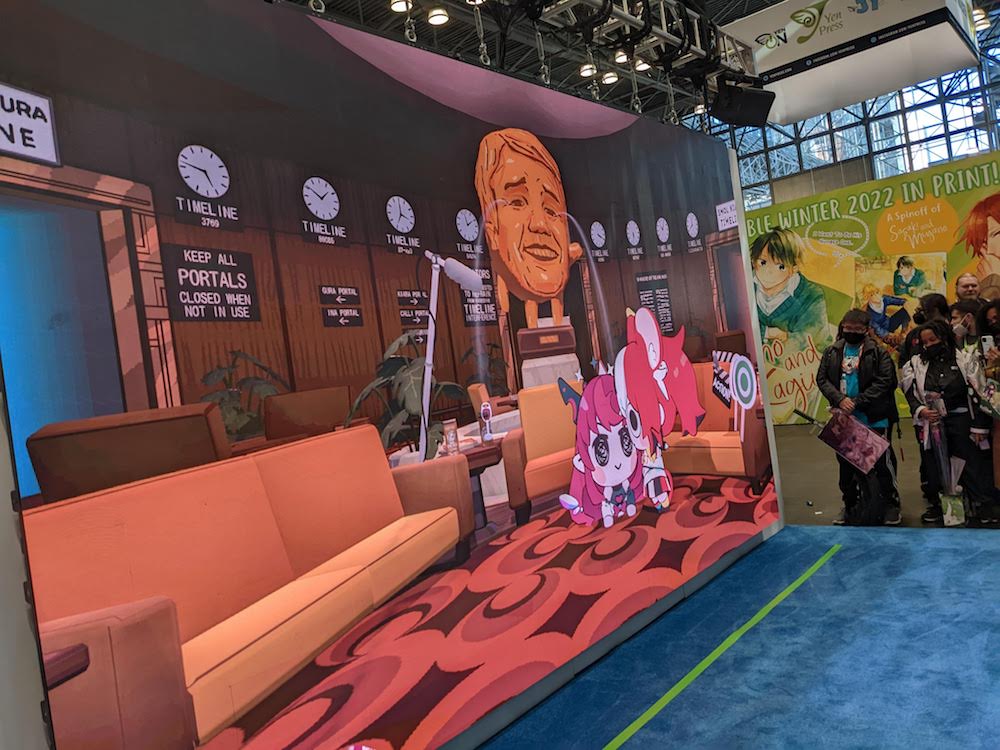
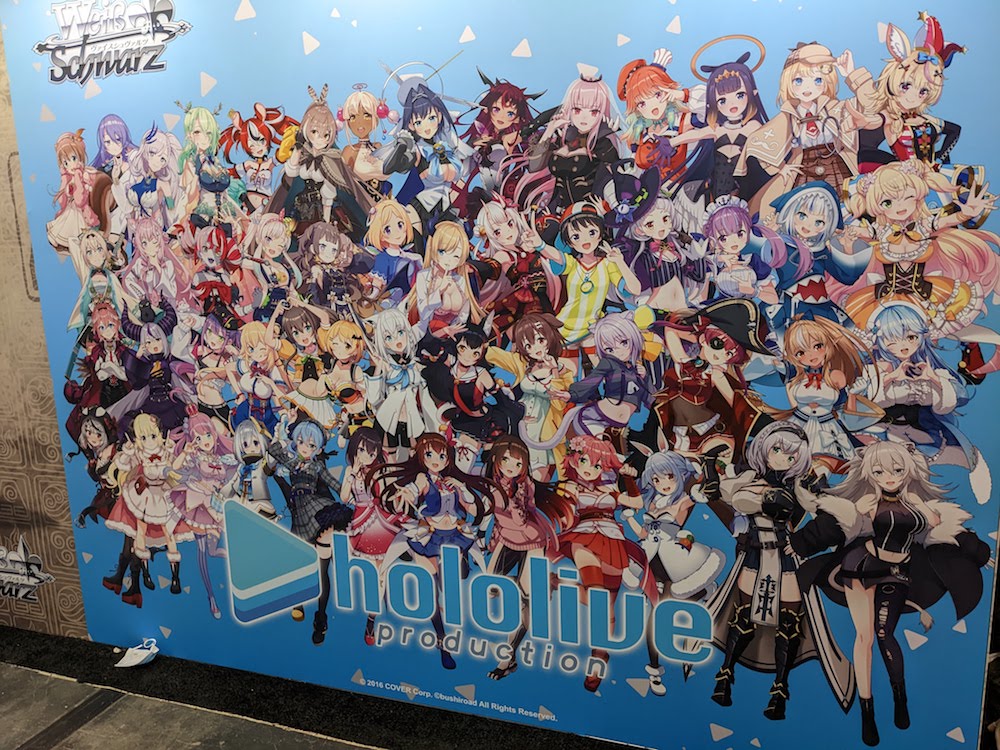
My personal must-see guests were technically not even there: the Virtual Youtubers of Hololive. I prioritized the VTuber stuff because this was my first time at a convention where they had a more significant presence; Anime NYC 2021 had a panel featuring Hololive Council’s five members, and it was a decent enough event that unfortunately had little to no interaction with the fans. For 2022, a more direct VTuber experience was provided through a dedicated booth in the Exhibit Hall in conjunction with VRChat, all as a part of the Hololive Meet series of international con appearances.
Throughout the weekend, different Hololive members (primarily the English ones) held hour-long live shows while streaming remotely. Due to what I assume are various limitations, they didn’t use any of their standard 3D models, instead opting for less complicated ones already familiar to fans: Smol models, BEEGSmol models, and also the VRDance ones.
For personal reasons (and because I didn’t want to make it an all-Hololive weekend), I was only able to see two shows in full. The first I saw was an enthusiastic morning exercise routine (though not in the radio taisou sense) by Mori Calliope that led to all sorts of 3D wackiness. The second, and one of the highlights of the entire event, was a special Anime NYC edition of the Chadcast that became something even more special due to technical mishaps.
The BaeRys Show
Normally, the Chadcast is a three-person monthly show on Youtube by Calliope along with Hakos Baelz and IRyS. None of them are among my absolute favorites as individuals, but as a trio, they’re practically a must-watch. I was looking forward to a convention-exclusive Chadcast, but as the crowd gathered for it, only Baelz and IRyS appeared. Jokingly announcing that this was actually the first episode of the “BaeRys” podcast, the two informed the crowd that Callie’s internet wasn’t working and so she likely couldn’t join in.
While unfortunate, this also meant getting a full 60 minutes of pure BaeRys, the official name for the pair. I’m not a dedicated shipper, but their interactions are among my favorites because they have such excellent chemistry together. The running joke in the fandom (that is also embraced by the VTubers themselves) is that they‘re constantly getting married and divorced, and so the two played various games meant to reveal “interesting” sides of each other. Questions included “Would you rather vomit on your idol or get vomited on by them?,” “Truth or Dare: Have you ever peed in a pool?,” and (with the help of a fan) “What are three things you like about each other?”
Watching their antics made me aware of what Callie adds to the Chadcast. Baelz and IRyS’s favorite drinks are coffee and soda, respectively, and BaeRys is very much like drinking coffee soda: a surprisingly refreshing combination, but one that can be overwhelming. Callie, then, is a savory (American) biscuit you eat in order to temper the intensity of coffee cola, and so one’s preference at any given time for Chadcast or BaeRys has to do with whether you want a balanced taste or to experience the extremes.
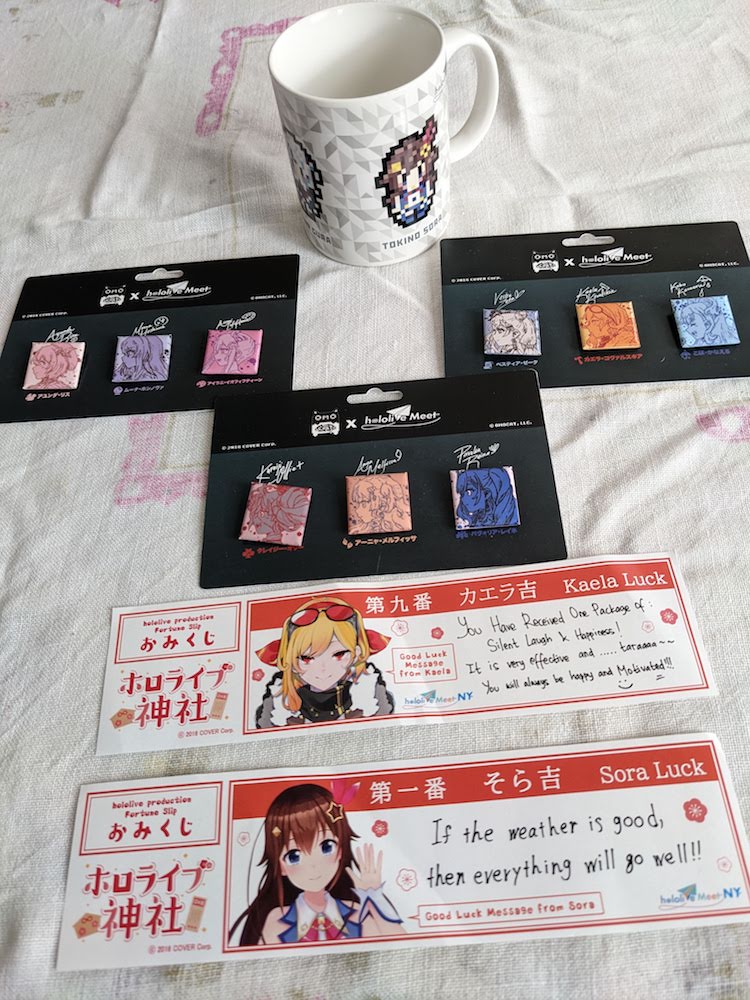
Along with the streams, there were three other booths offering official Hololive merchandise: Bushiroad (for items related to the Weiss Schwarz card game), Omocat (for exclusive crossover art), and Animate USA (for Hololive Meet–themed items). Buying $40 worth would get you a ticket you could exchange for a Hololive fortune, but attendees could also get a fortune for free if they have a VRChat account. I just so happened to create one because of the recent Code Geass x FLOW VR concert, so I managed to snag two fortunes, one for flagship Hololive Tokino Sora and one for Indonesian member Kaela Kovalskia.
I do have a couple complaints about how things were handled with Hololive Meet. First, the space provided meant everyone had to stand because sitting would create a fire hazard, and my feet still haven’t fully forgiven me. Second, you had to buy $40 of Hololive merch at one store in order to get the fortune ticket, so you couldn’t spread it across all three. Other than those issues, I’m glad I finally got to see what a “live” Hololive event is like. Next on the bucket list is getting to see my favorites, Haachama and holoX.
High Card
Among the anime premieres at Anime NYC was the first episode of a series called High Card, written by Kawamoto Homura (writer of Kakegurui) and his younger brother, Munoh Hikaru. It was actually the first screening anywhere, including Japan.
While there is a playing card motif to High Card, it’s not really a gambling anime so much as it is an action-oriented work that revels in absurdity and spectacle, exemplified by its tag line: “Are you ready? It’s showdown!” A special deck of cards has been scattered to the four corners of the Earth, and they have found owners of various types. The cards confer special powers that range from the powerful to the ridiculous (and sometimes both), and at the center of the story is a young thief trying to get money to save his orphanage. Like Kakegurui, the cast of characters is off-the-wall and full of dangerous and sensual individuals, though this time it’s mostly guys instead of girls. The creators said they were inspired by Kingsman, and it shows.
During the Q&A section, Munoh talked about how coming to New York City was amazing because he’d only ever seen it in images and on the screen. He then joked that he’d yet to see Spider-Man or the Ninja Turtles (the latter mention was omitted by the translator for some reason).
Wit Studio
It’s rare to see a current anime studio with a pedigree as strong as Wit Studio: Attack on Titan, Great Pretender, Ranking of Kings, and most recently Spy x Family are among the works they’ve produced. At Anime NYC, multiple staff members for Spy x Family were invited as guests: President and CEO George Wada, as well as artist Syo5 (pronounced “Shogo.”) They held a panel that was a combination of Q&A, insight into the creative process, live-drawing session, and early preview of Spy x Family episode 8.
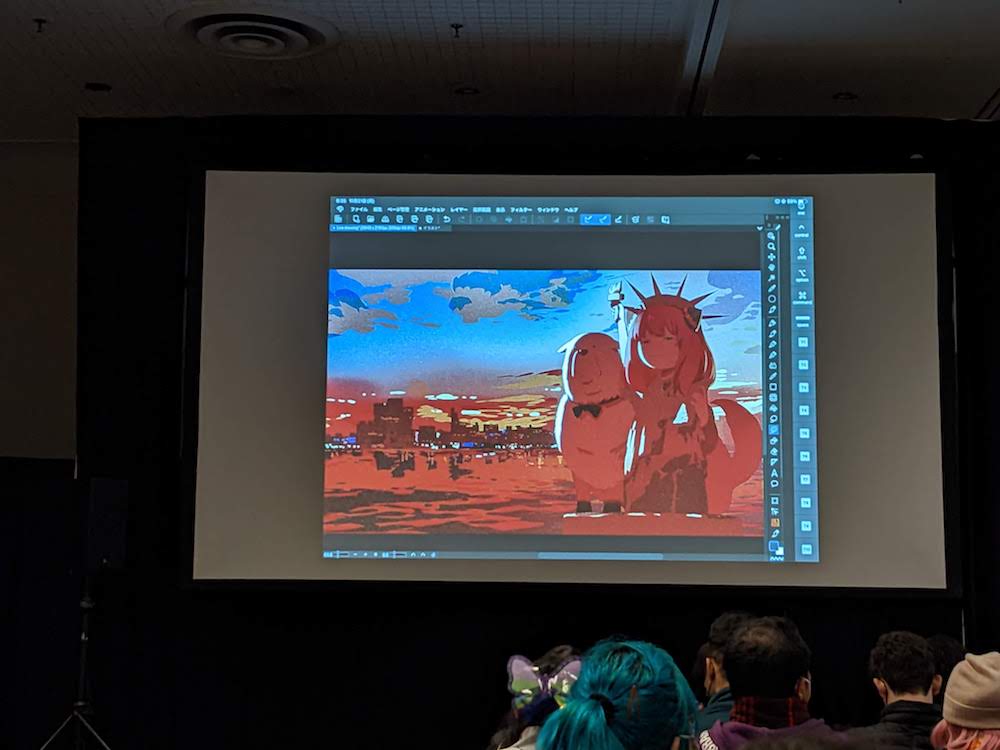
The live drawing was more a showcase of how Syo5 works on color palettes, taking an adorable line drawing of Anya Forger as the Statue of Liberty (with her dog, Bond) and adding a sunset to it. During the panel, Syo5 discussed how the color palettes in Great Pretender weren’t realistic, but were meant to have a different feel for each part of the world the characters travel to, and coloring the Anya of Liberty was a showcase of a process similar to what went into Great Pretender.
Ranking of Kings also got plenty of love from the Wit staff and audience alike. They mentioned that they’re trying to get the next season done in 2023, and Syo5 showed some of his conceptual drawings that established the general look of the anime.
Eating at the Javits
There were no onsite food trucks this year, so all nearby food options were basically in the Jacob Javits Center itself. Fortunately, between the stalls in the exhibit hall and the Javits dining area, there was actually a decent number of food options. Granted, they were all overpriced to hell and back, but that’s inevitable with con food.
For those eager to relish in Japanese culture, the exhibit hall had Go Go Curry (a perennial favorite of mine), ramen, bento from BentOn, okonomiyaki from Okonomi, and a few others. I’ve tried pretty much all of them before (though not necessarily in the context of Anime NYC), and the quality is quite good, even if it costs too much. For those who didn’t want to pay the “weeb tax” (or wait in line for a long time), options included burgers and chicken, dumplings, empanadas (Nuchas) Korean food (Korilla), and even Indian food (Curry Kitchen). Overall, the variety was welcome, given the circumstances. I remember a time when you could barely get anything resembling good at the Javits, and I’m glad to see that has continued to change.
Cosplay, Etc.
Overall
Anime NYC 2022 had a few firsts for me, notably when it came to seeing Hololive Virtual Youtubers in a more direct fashion. In that respect, it was an unforgettable experience. While I prefer cons with a greater amount of fan panel programming, I also understand that this is not what Anime NYC is about. Attendees seemed generally to be in high spirits, but I do have concerns about it getting more expensive to attend, as a lot of anime fans are not rolling in dough. If they can keep bringing the guests people want to see while finding ways to make it affordable, I think things will be looking up for next year.
I first encountered Astroganger while watching a collection of robot anime throughout the decades. There it was, right after the black-and-white 1960s Tetsujin 28 and right before Mazinger Z. But there’s a reason Japan puts those other two on massive pedestals and considers Astroganger a weird relic that’s more meme fodder than anything else: the show comes across as dated even within the context of its time period, especially because it debuted just two months before Mazinger Z. Even watching the openings (both of which are sung by the legendary Mizuki Ichiro), you can see how much more impactful and eye-catching one is over the other.
Is Astroganger really that bad, though? The answer I’ve come to is “no.” While it’s not stellar, the show holds up fairly okay watching it in 2022.
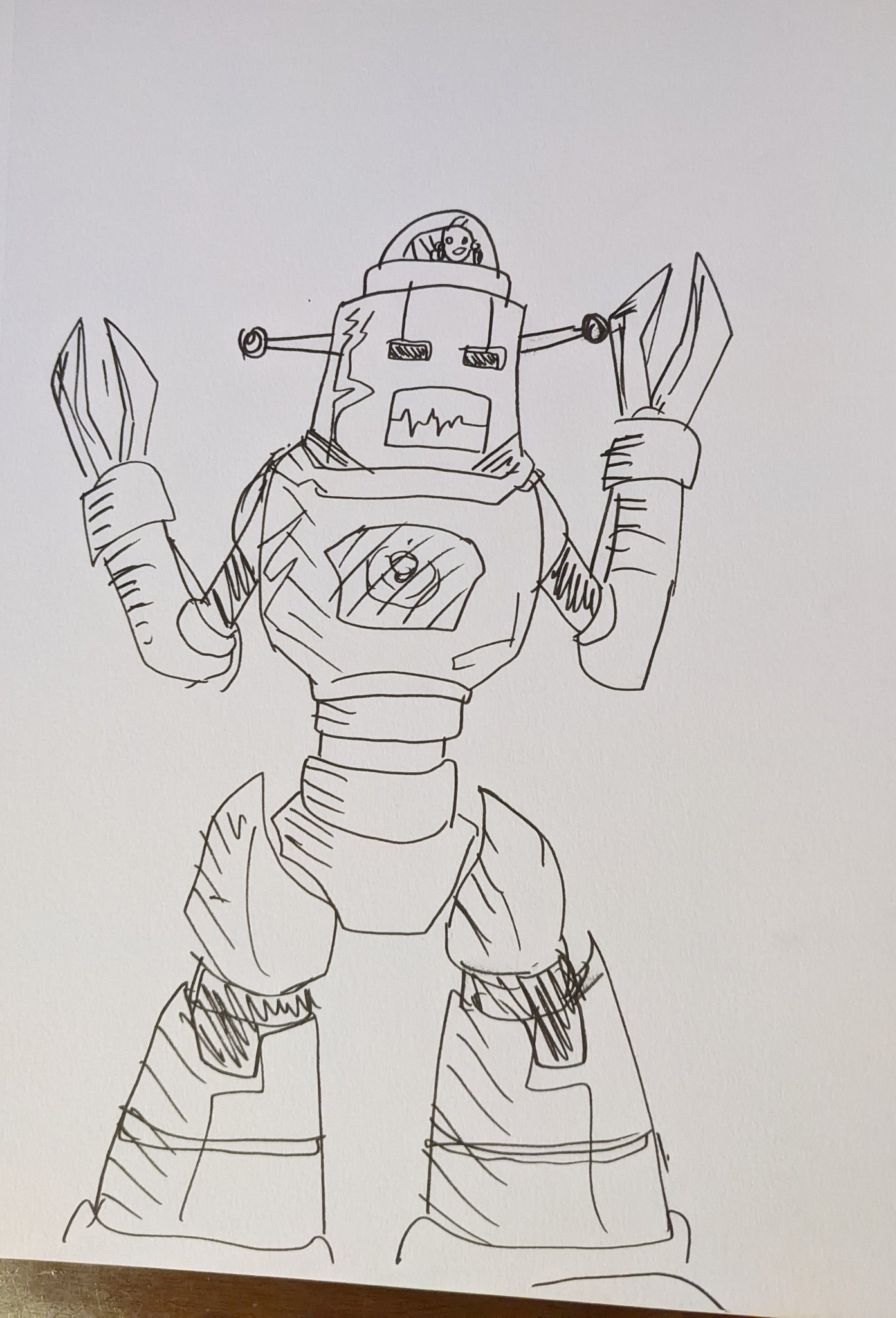
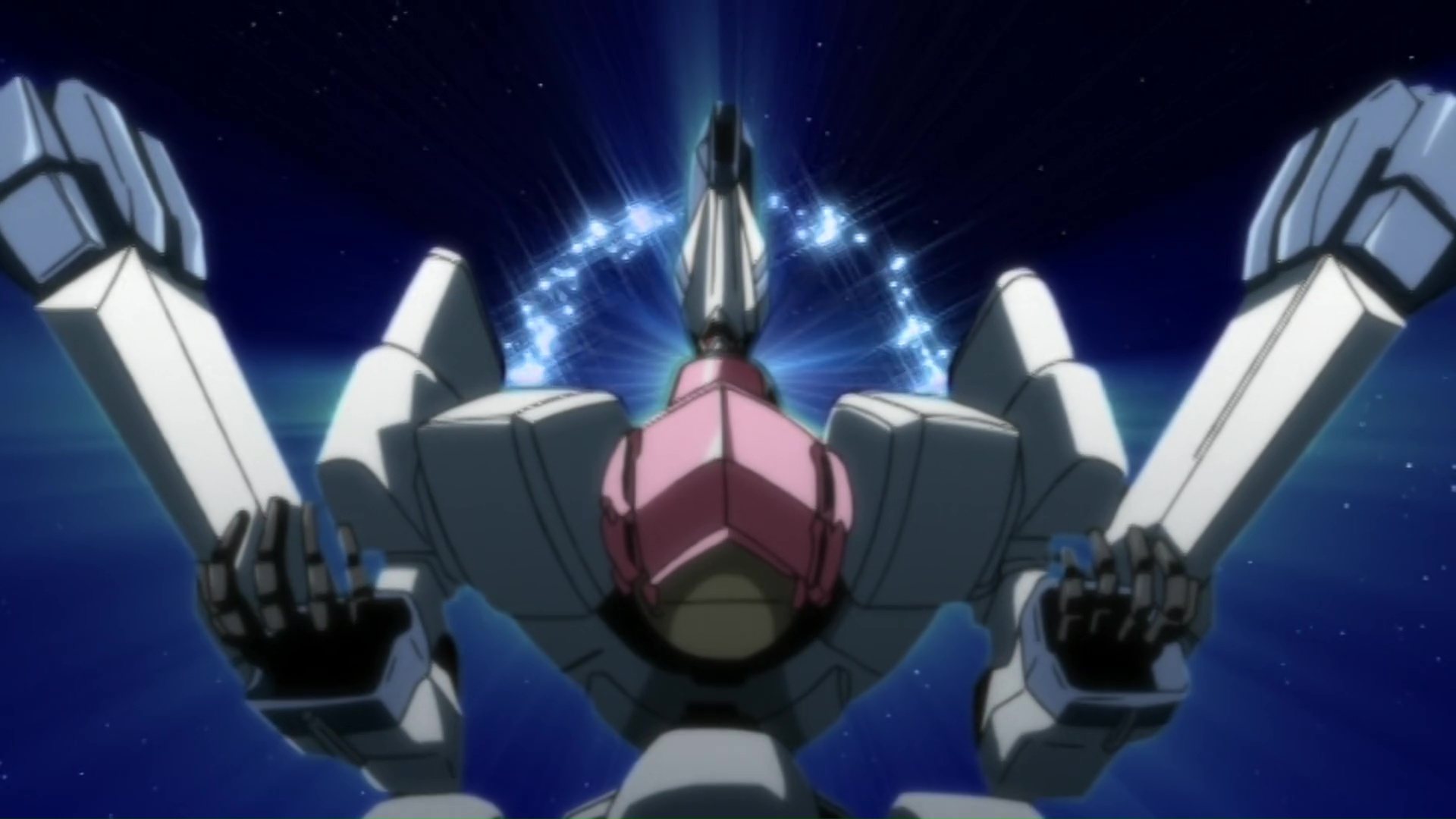
The story of Astroganger is that the Earth is being invaded by aliens called Blasters, who want to take all the oxygen for themselves. The only force powerful enough to stop them turns out to be Ganger, a sentient robot made of “living metal,” who can become even stronger when merged with a young boy named Hoshi Kantaro. Both Ganger and Kantaro have ties back to the far-off planet of Kantaros, which was devastated by the Blasters, and together, the combination fights robot monsters using kicks, punches, slams, and other physical moves.
Astroganger pushes few envelopes and its writing often glosses over things in ways that assume kids won’t notice or care, but it also does present its story with tension and drama in ways that I can imagine young viewers at the time would love. The series has that basic superhero appeal of a secret identity, but on a child rather than an adult. The show is extremely episodic overall, but it generally feels like a gradual escalation of challenges for Kantaro and Gangar, so that threats in later episodes are presented as bigger deals than in earlier ones. That said, the final episode’s adversary feels weirdly anticlimactic, which is then made all the stranger by the fact that the conclusion is extremely climactic.
The fights are where the series feels like it came so close to being something more, but ultimately falls into an “Eh, decent” range. Many of the battles revolve around either Ganger overcoming the opponent through sheer strength and willpower or figuring out some weakness. However, many times, the “trick” is essentially told to Kantaro by his scientist dad, or it seems to come out of nowhere. For example, while fighting a robot in one episode, Ganger goes, “I’ve figured it out. Your weakness is your hands!” He then proceeds to rip them off, and the robot explodes—except nothing about the information presented either by words or action indicates that the hands were the Achilles’s heel. Both the willpower fights and the “strategic” fights remind me of mediocre pro wrestling matches: they can be fun, but they’re also lacking in some ways, and you’re not supposed to think too hard about it.
Knack, the studio behind Astroganger, is also infamous for Chargeman Ken: an anime with five-minute-long episodes that are so bad and bizarre that they’ve become the butt of many jokes online. Astroganger often looks cheap at times, but it’s nowhere near as dire as Chargeman Ken, which it actually predates. In fact, some stories in Chargeman Ken now come across to me as taking episode plots from Astroganger and shoving their contents into a questionably digestible bite-size experience in a manner reminiscent of Homer Simpson.
This includes the notorious episode “Dynamite in the Brain.” The Astroganger version is less pathologically amoral, but it’s still kind of weird, which tracks.
Another aspect Astroganger shares with Chargeman Ken is its decidedly unimpressive antagonists. The Blasters are pretty generic alien beings who are all interchangeable, and the only way you can tell who’s in charge is because their leaders are named and visibly numbered “Blaster 1” and “Blaster 2,” like it’s Bananas in Pajamas. Dr. Hell and Baron Ashura they are decidedly not.
I give all these criticisms, but I do want to note that in terms of excitement and entertainment, Astroganger would probably give most American cartoons throughout the 70s and 80s a run for their money. The fact that it has a fairly decisive finale (albeit odd in many ways) is something I can appreciate. In many respects, the show holds up okay. Not great, but okay.
PS: I’ve recently learned that Astroganger was quite popular in the Middle East, to the extent that an interview with a famous Arabic voice actor lists Astroganger as the main title he’s known for. It’s also a beloved work in Syria, and the final episodes actually moved people to tears. The official upload has all sorts of comments by people from that region talking about how much they loved the show. If we ever get an international Super Robot Wars, I would like to see Astroganger alongside Grendizer, so that such a game could show its appreciation to the Middle Eastern fans who love these anime.
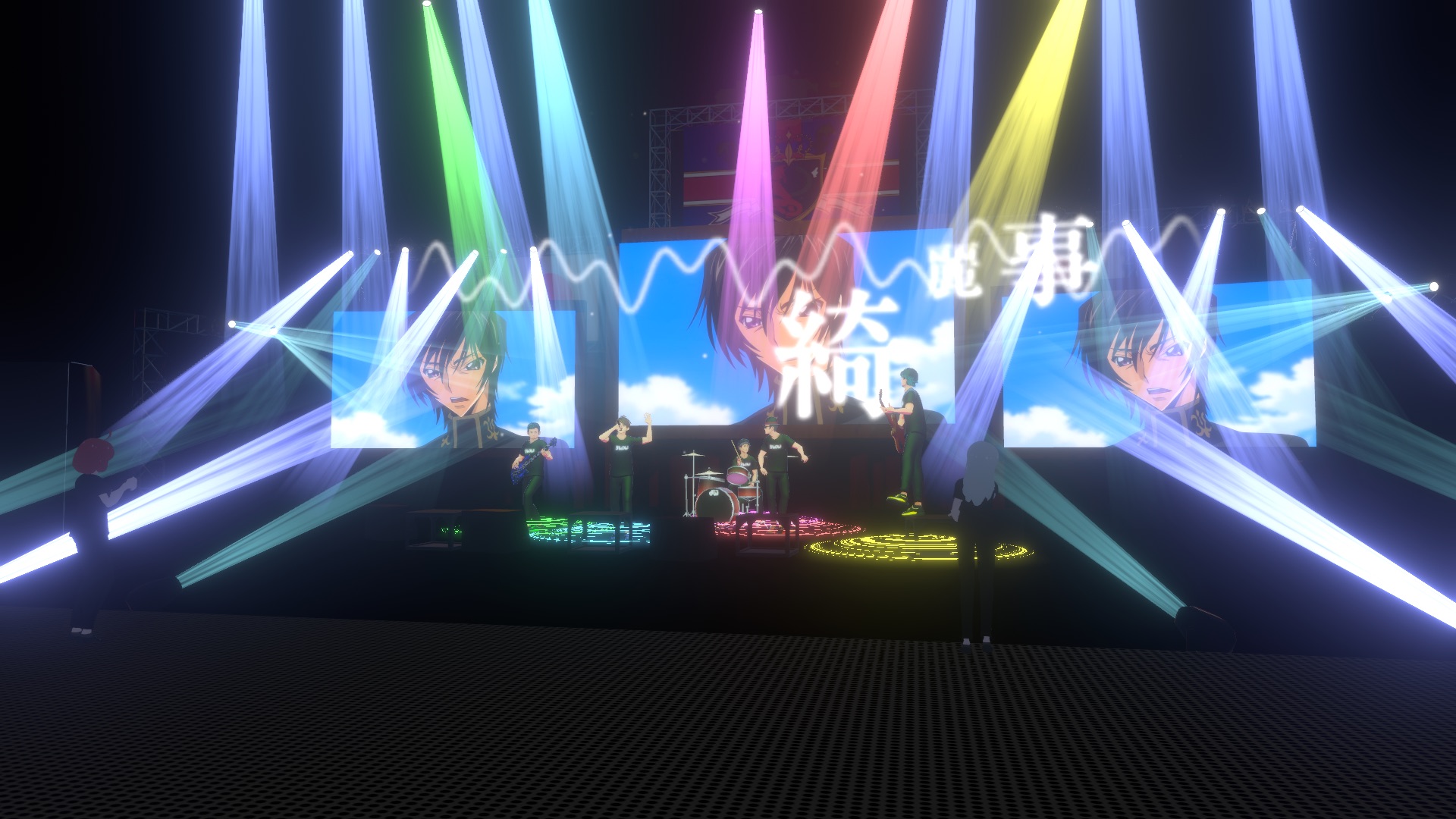
I’m not big into VR. In fact, I can count on one hand the number of times I’ve done anything virtual reality–related. But this past summer, I interviewed the heads of Gugenka, a company dedicated to various forms of entertainment that blur the line between analog and digital. Thanks to that interaction, I recently received an invitation to participate in a Code Geass x FLOW virtual concert. It’s not a bad combo: I have generally fond memories of the Code Geass anime, and FLOW has done some of my favorite anime songs ever. So, even if my VR experience is limited to a demo booth in the 1990s and a Hololive Myth anniversary event, I decided to give it a shot.
Not only was it my first virtual concert, it was also my first time using VRChat—a program I only knew of through watching Virtual Youtubers. Getting things to work took a lot of coordinating, requiring me to link a variety of apps and accounts across various sites together. It might get easier with experience, but I was definitely confused, and I still doubt I fully grasped it all.
Because I don’t own a VR headset, I used VRChat on my desktop PC, and the experience was more like a first-person shooter (or like Incidentally, that’s also a form of entertainment that’s not really my cup of tea, but once I got the hang of it, I started to see the appeal of being able to navigate virtual spaces in a more naturalistic way. (It also let me understand how Gawr Gura navigated the aforementioned HoloMyth event.)
The actual concert consisted of five parts, each time starting with a speech from Lelouch (voiced by Fukuyama Jun), which was then followed by a song performance from FLOW. There were actually two ways to view the concert: VRChat and a Japanese streaming service called Showroom. Because of my own confusion, I actually watched the first song in Showroom, which acts more like Youtube or Twitch, but is aesthetically set up to resemble a simplistic movie theater. At first, I figured this was just the way the concert was, until I saw a bunch of 3D models run right in front of FLOW, clearly showing that Showroom wasn’t the only way to experience the event. That’s when I decided to switch and try VRChat after all, despite some earlier troubles.
One thing that complicated this process was that joining each part of the concert meant having to leave VRChat and click a link that would then send a message to VRChat with a special invite to the next “world.” The need to jump back and forth was a bit unintuitive, and I actually missed the 2nd part of the concert as a result before I figured out how the whole thing works. Once I got back on track, things finally fell into place.
This is when I finally understood exactly what Gugenka meant by having “instances” that allow their virtual events to have some flexibility for viewers. In the case of this Code Geass x FLOW concert, one could join in real time to mimic being part of a public concert, or one could join at a specific moment so that you can either coordinate with a smaller group or to make sure you didn’t miss anything. This isn’t permanent, however, as there were still specific overall time frames where the concert parts were available, and then they would go away. The difference is that if you missed something by, say, 10 minutes, you still had 45 minutes to watch from the beginning.
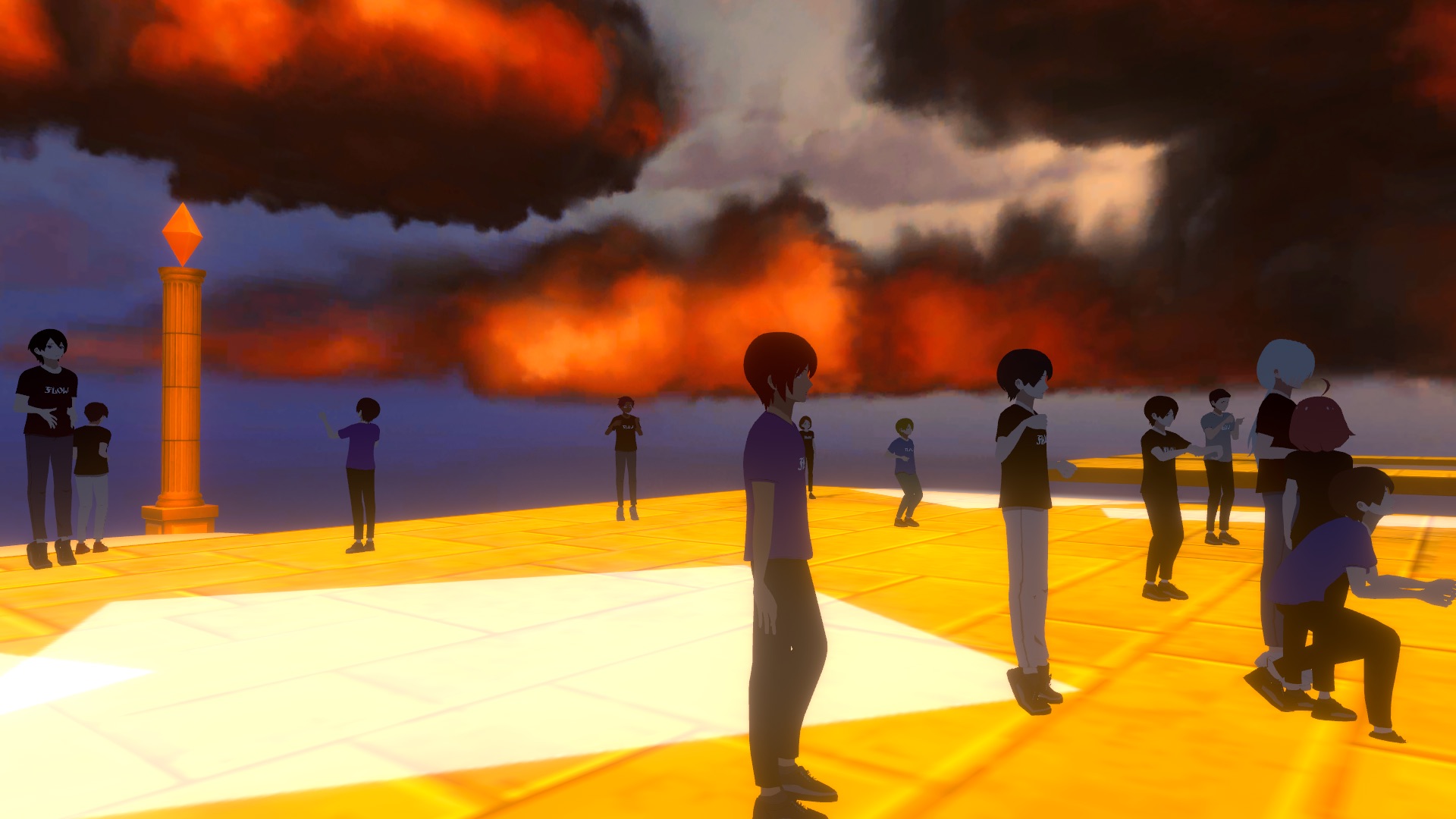
I don’t know if it’s because I started with Showroom and ended with VRChat, but in Part 1 of the concert, FLOW was being shown as video footage of the actual members, whereas after that, they were 3D models. In the VRChat experience, it was amusing to see people running up to the stage to get as close as they can to FLOW, while others would use the squat command to make viewing easier. The music was great (of course), but in some ways, the people-watching was better. I remember seeing one attendee in particular swaying and moving with a clear joy over getting to be there.
Tickets were 6,600 yen minimum, with a deluxe package that costs a great deal more. I don’t regularly attend concerts, virtual or otherwise, so I thought it was kind of steep. That said, understanding the kind of experience it’s supposed to be, and knowing that other virtual events cost similarly, I think I would pay for the right event. It also costs a lot less than actually flying to Japan to see a band in the flesh.
While the virtual experience can’t be a full replacement for a live performance, there’s a bit of joy in knowing you’re experiencing the same thing as people living in Japan. It also creates a great opportunity for those who don’t have the means to travel for concerts to do something more interactive. Especially in a time when COVID-19 is still affecting people around the world, it’s also a solid choice for those who are too afraid to travel to another country.
I want to end by talking about a funny incident that occurred. For one song, I hopped into the VRChat world, only to find myself somehow transported a great distance away from the waiting room. Confused, I tried getting closer and closer to the space, only to start hearing chatter from Japanese attendees who were discussing someone who looked to be stuck. Soon, I realized that the person they were talking about was me, and they were trying to help me get out of whatever weird glitch I was in. After resolving the issue, they asked if I was okay—to which I jumped up and down to show everything was fine. The way these random people looked out for me put a smile on my face, and it actually made the concert more enjoyable overall.
I’m not going to say that this is a universal experience for virtual spaces, but it reinforced the interpersonal connections these sorts of events can provide.
The new anime season is in full swing, but while I’m enjoying the hell out of so many things (like Gundam: The Witch from Mercury!), my mind is on the upcoming US midterm election. I plan on (sort of) following up with my thoughts on this subject in a few days but for now, I’m using this time to encourage citizens to vote however they can: in person on Election Day, by mail, by early voting, anything.
I’d also like to thank my Patreon subscribers for this month of November 2022.
A sparse month of comments, but his tortoise is feeling better!
Apartment 507
Thinking about VTuber Gawr Gura’s recent animated short relative to other bonus animations.
Closing
Congratulations to Brazil for making the right choice and not re-electing an authoritarian nationalist who cares more about his self-image than the wellbeing of the people (sounds familiar).
How about I make some Saint Seiya posts to celebrate?
Introduction: “Gattai Girls” is a series of posts dedicated to looking at giant robot anime featuring prominent female characters due to their relative rarity within that genre.
Here, “prominent” is primarily defined by two traits. First, the female character has to be either a main character (as opposed to a sidekick or support character), or she has to be in a role which distinguishes her. Second, the female character has to actually pilot a giant robot, preferrably the main giant robot of the series she’s in.
For example, Aim for the Top! would qualify because of Noriko (main character, pilots the most important mecha of her show), while Vision of Escaflowne would not, because Hitomi does not engage in any combat despite being a main character, nor would Full Metal Panic! because the most prominent robot pilot, Melissa Mao, is not prominent enough.
—
At face value, Idolmaster: Xenoglossia is a perplexing title. Why in the world would the very first anime for The iDOLM@STER, a video game about managing Japanese idols, be a mecha series where the girls strive to save the Earth rather than give successful stage performances? When you get under the surface, though, it results in an even greater cognitive dissonance between the franchise’s origins as an idol sim franchise and this science fiction story ostensibly built on its foundation.
The confusion begins from the very basis of Xenoglossia. The premise is that high schooler Amami Haruka is unexpectedly recruited to potentially become one of the “Idolmasters,” pilots of world-defending robots called iDOLS. Outside of Xenoglossia, the name of the franchise refers to the player as an idol producer. That’s a simple enough change to accept given the story’s setting, but where the show throws the hardest curveballs is the portrayal of its characters.
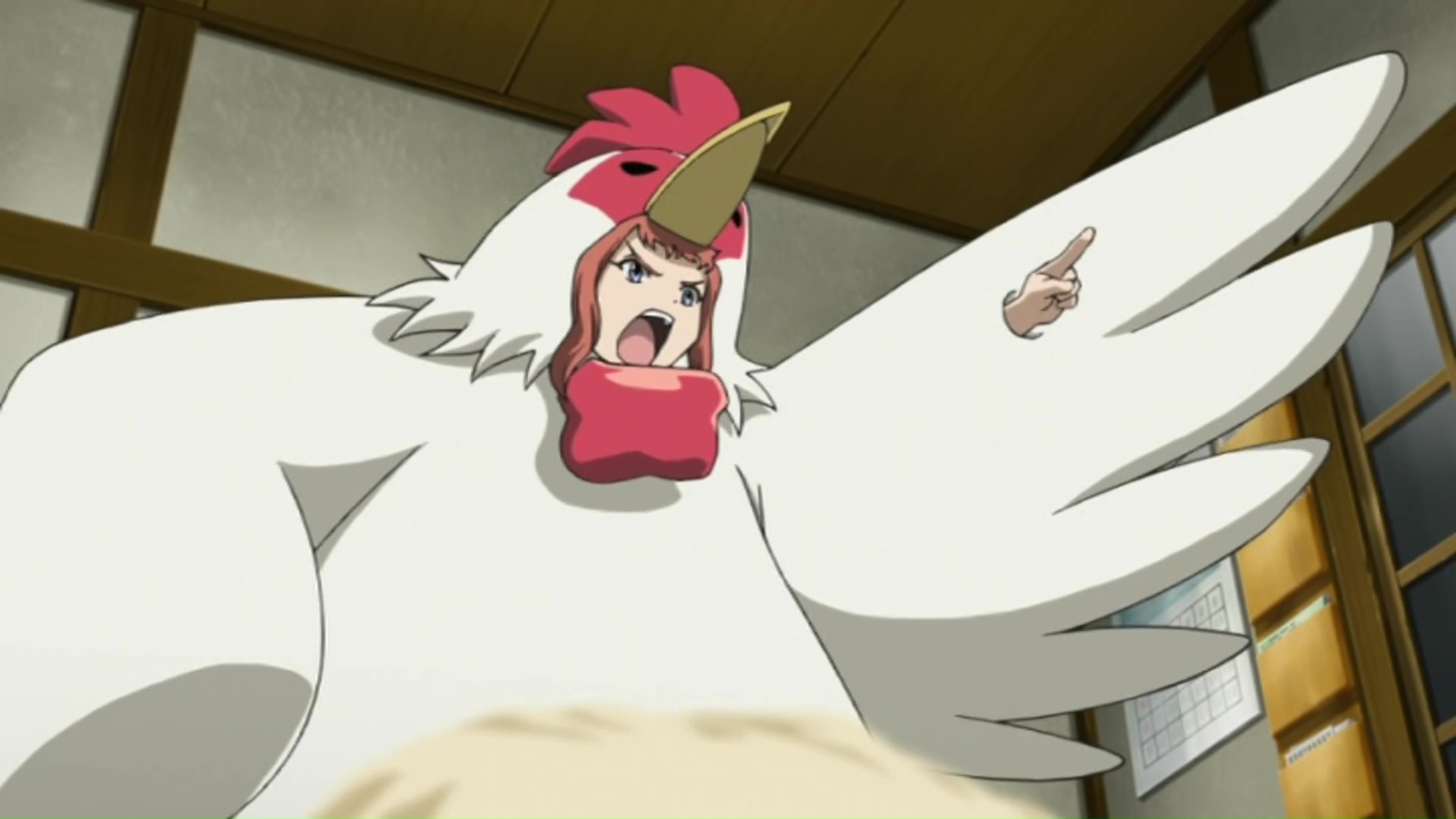
Despite this being a franchise where fans support the actors who play their favorite idols, the entire voice cast was changed for Xenoglossia. It’s an extremely odd decision in hindsight, but what makes it all the more strange is that the changes don’t stop there: age, size, personality, and more are drastically altered to the point that many characters become almost unrecognizable. The best example is the character of Takatsuki Yayoi. In The iDOLM@STER proper, she’s a small and energetic girl in her early teens known for her high-pitched voice and signature squeal of excitement. In Xenoglossia, she’s noticeably taller and bustier, is the only actual conventional idol in the show, loves to wear mascot outfits), and is much more antagonistic towards Minase Iori.
I’m not a huge The iDOLM@STER fan, but I’ve watched the anime and have a decent idea of the core cast and their personalities. On some level, it’s impossible for me to fully divorce my preconceived notions, but this level of change is beyond rare. The closest example I can think of is the first Comic Party anime, where a high schooler got aged up and a middle schooler got aged down for seemingly no reason. It’s as if the creators of Xenoglossia just looked at some preliminary character sketches and just went their own way without regard for the source material.
Funnily enough, the only character who’s mostly like her original self is the franchise’s flagship heroine and Xenoglossia protagonist, Amami Haruka. Her personality remains optimistic and hard-working, though tinged here with a bit of self-doubt as to what she’s capable of. But when she’s surrounded by an endless parade of bizarre doppelgangers, something always feels a little off. If one can ignore that to a degree, the show gets more enjoyable.
In terms of Haruka or any other character’s portrayal as giant robot pilots, they’re never upstaged by any male characters swooping in to save the day; in fact, there aren’t any male pilots at all. Different characters struggle with different aspects of being Idolmasters, and much of the plot is built around striving to overcome those challenges. There’s also a great deal more nudity and sexual behavior (including possibly incest?!) than would be expected of something based on The iDOLM@STER—which might be a dealbreaker for those who strongly believe in the whole “idol purity” concept, but still feels kind of odd for even those of us who don’t.
The relationship between the Idolmasters and their iDOLS also arguably runs counter to “idol purity” because the way they talk about the robots makes them seem on some level like giant mechanical boyfriends—especially the main iDOL, Imber. The robots are shown to be sentient on some level, and the way some characters work to become worthy of and accepted by the mecha while others treat them like companions comes across more like romantic fiction at times. The entire setup of Xenoglossia is conducive to this, showing itself to be the kind of anime where the requisite to becoming Idolmasters has angst-filled drama baked in.
Idolmaster Xenoglossia we got could never be made today. It came out at a time when The iDOLM@STER was a much smaller deal, as evidenced by the fact that the girls are all based on their designs from the first game rather than the revised versions from The iDOLM@STER 2 that have since been codified. This early on, Xenoglossia followed in the fine (?) tradition of titles like Lunar Legend Tsukihime, where it was assumed that a fledgling idol manager franchise needed a boost in star power and storytelling from the anime industry. Now, the shoe’s on the other foot, and if they were to attempt this again, it’d be all but inevitable that the characters would adhere much more closely to their original selves. It’s a historical curiosity, indeed.
When a prodigal son returns from a middling music career in Tokyo to the Japanese confectionery shop he called home, he meets his successor: an elementary school girl whose father left her behind. This is the story of Deiamon: Recipe for Happiness, an anime about human connections that manages to be a quiet and heartful yet pleasantly unpredictable story.
What I really enjoy about Deaimon is the unconventional nature of both its protagonist and his relationships. Irino Nagomu (the aforementioned musician son) is a goofy and scatterbrained sort, but his kindness towards others shines through in everything he does, from his strange folksy songs to the attention he pays to the shop’s customers. While the little girl, Yukihira Itsuka, often sees Nagomu as woefully unreliable, they form a bond that can be described as somewhere between “dad and daughter” and “big brother and little sister,” all without any suspicious elements that mar other similar works (*coughBunnyDropcough*).
Nagomu and Itsuka aren’t the only two characters. Nagomu’s parents provide a connection to the tradition of delicate wagashi-style sweets that make up the aesthetic basis of the show, and this bridge between past and present reminds me a bit of the series Hanasaku Iroha. Later, Nagomu’s ex-girlfriend shows up, and the way Deaimon gives attention and care to its portrayal of their history (as well as the complicated feelings that arise) gives further credence to what I said about seeing relationships uncommon in anime.
Deaimon isn’t filled with astonishing plot developments, but it isn’t an aimless slice-of-life work either. Rather, its low-key-drama vibe makes for a hearty dose of emotions that somehow both soothe the soul and excite the spirit. Deaimon heals, invigorates, and makes the world look like a better place, even through the darkness.
In 2021, the first season of Love Live! Superstar!!made a powerful impression on me. With its tightly written story centered around heroine Shibuya Kanon’s lifelong struggle with performance anxiety and stage fright, it stood out in a positively memorable way. One of the aspects that helped the storytelling was its relatively small cast of characters compared to the Love Live! franchise standard, so when it was announced that Season 2 of Superstar!! would nearly double the main group from five girls to nine, I worried that the series might lose what made it work so well. Fortunately, my fears were unfounded, and Season 2 has turned out to be a solid follow-up that does a good job of playing off its predecessor—and also introduces my favorite member in the process.
Love Live! Superstar!! 2nd Season picks up from where the first left off. The elite Yuigaoka Girls’ High School has accepted the School Idol Club and their group, Liella! Kanon has managed to overcome her issues and can sing loudly and proudly on stage. There’s unfinished business in that Liella! couldn’t make it past the preliminaries of the Love Live! competition. The character arcs are mostly resolved, do the question becomes, what story do they tell given that fact?
The answer is to introduce new girls and place an emphasis on a senpai–kouhai dynamic that isn’t really present in other Love Live! anime. While other series actively celebrate the lack of such hierarchical distinctions, Superstar!! 2nd Season puts it front and center. That’s not to say it’s big on seniority, but the perspectives provided by experience becomes a key factor in the narrative.
The senpai characters do receive episodes of their own (like a hilarious one about gamer addiction), but they seem to get less screen time overall, and even theirs will link back to the new girls in some way. This is likely by design, as it not only does this work to introduce all the first-years, but it provides a clear indicator of progress for the original five as seasoned school idols who must mentor the next generation. After all their hard work, Kanon and the other senpai have gotten so good that they accidentally scare off most of the new student body, who are too worried about not being able to live up to the standards set by Liella! Like the ongoing debates over fighting game design, Superstar!! 2nd Season asks what is the right balance between granting accessibility and rewarding ambition.
Superstar!! 2nd Season idoes a good job of differentiating the new girls from their upperclassmen, though they can at times feel a little less three-dimensional. The big sticking point is that they seem to adhere more to anime character archetypes, but they’re developed well enough that it becomes less of an issue over time. Also, I have to admit that I myself can be a sucker when the tropes fall in my favor, such as in the case of my Liella! favorite, Wakana Shiki. She’s an aloof scientist with a secret soft side, and her similarities to Nunotaba Shinobu from A Certain Scientific Railgun (including liberal peppering of English phrases into her speech) is both noted and highly welcome.
As Superstar!! 2nd Season progresses, it gradually brings the focus back to the original girls of Liella!, reviving and adding new angles to some of the challenges from Season 1. For example, a rival antagonist shows up who reignites criticisms of school idols as being inherently mediocre artistically, adding a bit of Zhong Lanzhu–esque flair along the way. But the lessons Kanon has learned from her own challenges and the results of that mean her answers to the questions posed to her reflect the positive changes she’s made.
Overall, Love Live! Superstar 2nd Season manages to be a great continuation that builds on a solid foundation. While it risks getting bloated, its broader character dynamics help to mitigate that concern. What results is an anime that shows what Love Live! is capable of.
I was originally going to write about how Chainsaw Man reminds me of Neon Genesis Evangelion. It’s the way Chainsaw Man feels like you’re peering into a creator’s psyche, how it both leans into and plays with various tropes, and importance given to feelings of loneliness. The manga (and soon to be anime) stands out from its peers and defies so much of what we consider “proper storytelling,” and I genuinely think it’s going to become an influence on creators on the level of Evangelion.
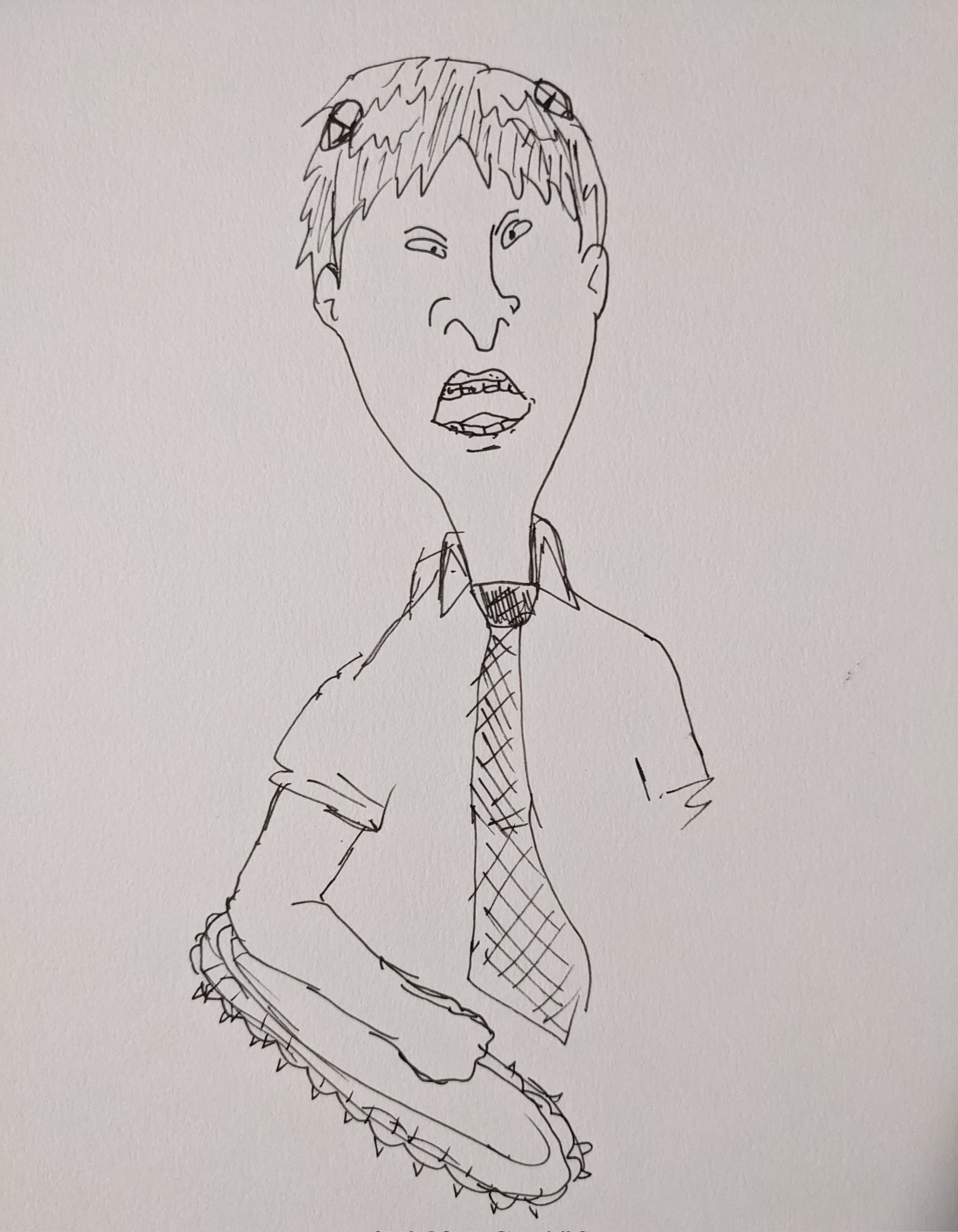
But the two works are also fundamentally different in a lot of ways, and any actual influence from one to the other is indirect at best. The missing piece of the puzzle is that as much as Chainsaw Man has shades of Evangelion, it’s also reminiscent of Beavis & Butt-Head.
Denji (aka Chainsaw Man) isn’t suffering the same type of loneliness that Shinji from Evangelion feels. One could argue that Shinji is a whiny teen too caught up in his own head, but the kind of heavy introspection he (and the other characters) engage in isn’t something Denji does for the most part. Instead, like Beavis and Butt-Head, he rarely thinks things through properly, and is also obsessed with losing his virginity. And similar to Beavis & Butt-Head’s environment, Denji lives in a world that seems off-kilter, as if even that which is considered “normal” is more facade than foundation. Also, Denji is not terribly smart most of the time, but he also has brief glimmers of insight—a kind of Butt-Head-esque quality.
I sometimes describe Denji as being cut from the same cloth as Monkey D. Luffy, but I realize now that this analogy is limited because while they share some things in common, Denji doesn’t have that sense of justice and camaraderie. I realize now that a better comparison is to say that Denji is Shinji combined with Butt-Head. He’s kind of shallow, yet his emotions nevertheless feel real and honest, and ultimately he’s not a bad guy. I think it’s part of what gives Chainsaw Man a strange profundity.
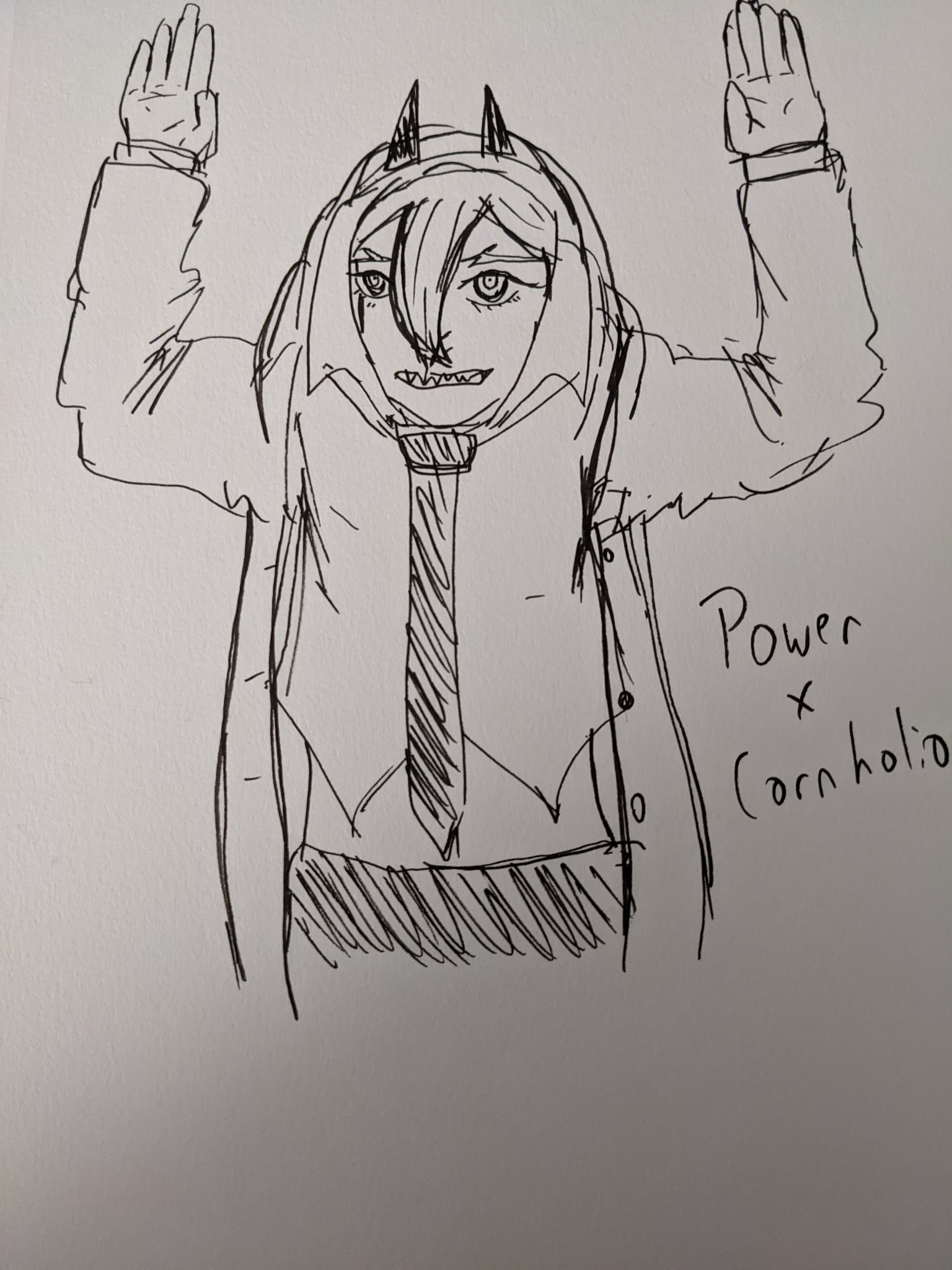
And if Denji is Shinji + Butt-Head, that would mean the character of Power can be viewed as Asuka + Beavis. Asuka is aggressive and trying to constantly prove herself, while Beavis is like a bizarre embodiment of Freudian id who also comes across as naively innocent at times. It totally works, is something I’m currently telling myself.
Could you imagine what it would actually look like if you tried to cross over Evangelion and Beavis & Butt-Head? It would be a spectacle of the absurd, gross yet fascinating—Chainsaw Man to a tee. In a series where characters grapple with emotional problems that run the gamut of silly and vapid to deep and soul-rending, everything feel bizarre and unstable, and when you add a layer of hyperviolence on top of everything else, you get a series that’s incredibly hard to match.




















 OGIUE MANIAX