First and Second Impressions: Hashikko Ensemble, Chapter 16

More time at Nishigafuchi leads to some interesting personal connections in Chapter 16 of Hashikko Ensemble.

Summary

The Hashimoto Chorus Appreciation Society continues their joint-practice session at the prestigious Nishigafuchi High School, and they’re making quite an impression.

Mimi-sensei is getting conducting advice. Shinji learns the personalities of all the Nishigafuchi part leaders (soprano, alto, tenor, bass) from a first-year tenor named Andou who wishes he could sing bass. Jin is enthusiastically giving the other students voice lessons and even tips for pronouncing German. Kousei is scaring everyone away, especially because he refuses to sing anything he doesn’t want, but also surprises everyone when he jumps at the chance to sing some Brahms. Akira talks to Sadamoto, the guy from his old school who recognized him, but it seems that despite Akira’s worries, Sadamoto holds no animosity towards him.

However, Sadamoto makes a rather cryptic statement in reference to their past singing together: “We still won even though you didn’t sing, so that turned out well. But sometimes I think, even if we all sang and couldn’t win, that would’ve been good too.”

German Elocution

Jin’s brief lesson on German is that while things like umlauts and diphthongs matter, ultimately good German pronunciation comes down to position of the tongue and shape of the mouth. I figure that applies to a lot of languages, but it’s interesting to note what Jin would concentrate on first, as well as what he assumes is already common knowledge. The response from the other students is basically “We don’t follow.”

What Happened to Akira’s Voice

We know that Akira’s voice got hit by a lightning bolt of puberty back in middle school, but based on his exchange with Sadamoto, I have some conjecture. To me, it seems like in whatever competition they were a part of, Akira decided to lip sync because his voice had changed so much as to 1) be embarrassing 2) shift him out of whatever range he was supposed to sing. It’s even possible he went from soprano or alto to bass, based on what Himari has said about Akira’s childhood voice.

As for Sadamoto’s words, not only does it seem like he holds no grudge against Akira, but it even looks like he has some regret over Akira feeling the need to pretend to sing. I’m curious as to how this will develop.

The Nishigafuchi Elite Four

Andou basically fanboys over the Nishigafuchi club leaders, and it’s cute to see. He lays out their personalities as follows.

Shindou Yui: Soprano leader, has a gentle smile but a sadistic personality

Hisamura Nozomi: Alto leader, appears harsh but is actually kind and gentle

Honma Tadashi: Bass leader, started off as a regular member but rose to the top through practice and effort

Kouno: The sub-leader of the tenors, who isn’t important (according to Andou) because of…

Saiga: Tenor leader, a fop who’s prone to giving up easily

We were briefly introduced to most of them last chapter, with Saiga being the big exception. Was saving his appearance for this chapter just to make his eccentric personality stand out that much more, or is he going to be a more prominent character compared to the others? Either way, I like that these characters are getting established, though I do think the quick summaries provided by Andou are very different from how Hashikko Ensemble has been introducing its characters thus far. Up to now, they’ve mostly been more “show” than “tell.”

I also find it quite interesting that they’re being treated like idols or manga-style “popular students,” but they actually look quite normal—even Saiga. Compared to making them suddenly larger than life, it keeps the series grounded and humble, even though it can get fairly absurd.

While it’s mostly Andou talking about this, I did feel that the chapter spent more time on Shinji than normal, and his role as the straight-man among a cavalcade of eccentrics is getting more firmly established. I also wonder how Andou, who thinks Akira is a kindred spirit, is actually the naturally strong bass singer that Andou wishes he was.

Songs

The song Nishigafuchi is performing at the beginning of the chapter is “Hitotsu no Asa” (A Single Morning), composed by Hirayoshi Takekuni with lyrics by Kataoka Teru.

The song that Orimura really wants to sing is Johannes Brahms’s “O Heiland, reiß die Himmel auf, Op. 74, No. 2.”

Lastly, the song Shion is playing on piano is “Chopin Nocturne – No 5 in F Sharp Major Op. 15-2.”

Final Thoughts

This has nothing to do with the ongoing story, but I wish fanart of this series existed. I know the characters don’t have the most iconic appearances, but I think they’re worthy of some love

The Healing of Heisei Anime

EvangelionIt’s difficult to succinctly describe or summarize anime and manga in the Heisei era. After all, that’s a lot of time to cover, from 1989 to 2019. But when I think about the works that have come out over the past thirty years, one word keeps coming to mind: therapy.

The Heisei era is defined by many things, but one of the biggest is the bursting of the 80s bubble economy, leading Japan into a recession it’s never fully recovered from. It has affected everyone young and old, flipping norms and assumptions on their heads as the idea of a stable future weakened and crumbled. I find that many of the trends in Heisei anime reflect this uncertainty. Heisei covers the birth of healing anime. It marks the emergence of concepts in Japan like NEETs, hikikomori, and fear of declining birth rates, which then make their way into anime. Deep introspection and escape from reality alike were in full force, asking viewers whether they needed to manually get away or to find solutions.

In that struggle between therapy as problem-solving and therapy as respite, in my opinion there’s no show as emblematic as Neon Genesis Evangelion. While it takes from works past, what Evangelion does so well, and part of why its legacy has endured for so long, is that it pushes the psychological fears and doubts of its characters to the forefront, enveloping viewers in their inner worlds. Their struggle to understand themselves and navigate youth, violence, love, and lust is still powerful today. However, another significant part of Evangelion‘s legacy is the commodification of its characters, their wispy yet mature bodies the subjects of figures, posters, ad campaigns, and more. Their idealized forms themselves provide a form of fantasy that consequently flattens and simplifies their presences.

And yet, that doesn’t necessarily mean the two sides of Evangelion never mingled, and their dual influence is reflected in 21st century anime culture in major ways. Whether it’s Rei as the progenitor of the “emotionless” blue-haired girl trope or Shinji and Kaworu as an evergreen fujoshi pairing (despite, or perhaps because it only lasts one episode), the clash of consumption, creation, reflection, and escape all continue to swirl around today. It’s fitting that the Rebuild of Evangelion movies, which show the characters trying much harder to communicate with one another and overcome the cycle of doubt and despair, is set to conclude in the Reiwa era after a ten-year delay.

The anime of the past three decades hasn’t been all doom and gloom, nor has it solely been a psychological bomb shelter shielding its viewers from the world. Heisei birthed the Yuusha/Brave franchise, with its positive messages (albeit with the occasional sprinkling in of anti-toy-company cynicism). It covered Sailor Moon and Ojamajo Doremi and Precure in terms of magical girl works that give viewers a sense of hope and optimism. Perhaps the function of these shows, however, is that they also provided positive messages to young kids in a society that didn’t necessarily provide it through other means.

While anime as therapy was born out of Japan’s own recent history, I think the global success of anime in the Heisei era shows that there were people all around the world who needed it as well, myself included. As is probably the case for many reading this, my entire otaku history has been in the Heisei era, and in retrospect I have to be amazed at how much it’s shaped my life even from the perspective of “therapy.” I learned to embrace unconventional views of masculinity and femininity through Cardcaptor Sakura. I found peace and comfort (but also artistic inspiration) from Hidamari Sketch. I discovered what means to live with confidence by reading Genshiken. I made introspection a part of my life thanks to Evangelion. This won’t necessarily change just because there’s a new emperor on the throne of Japan, but I hope I can look back again in thirty years with a similar fondness.

This post was made possible thanks to Johnny Trovato. If you’d like to request a topic or support Ogiue Maniax in general, check out the Patreon.

Super Robot Wars T and Gaogaigar’s Unspoken Plot Change?

I’ve been playing the heck out of Super Robot Wars T (available via import in English for the Nintendo Switch and PlayStation 4), and as always, I’m into the loving fanfictional goodness that the franchise always entails. When you have all of these different giant robot heroes in the same universe, the interactions are an endless source of amusement and head-nodding affirmation.

Of the many crossover moments little and big, however, there is what I believe to be an unspoken story element that significantly alters the course of one particular series: King of Braves Gaogaigar. This might be mere fan speculation on my part, but I think it also makes total sense.

In the original 1997 Gaogaigar TV series, the main character Shishioh Guy uses an attack called Hell and Heaven to finish off monsters. A little into the series, however, he discovers that using the attack too much does severe damage to his cyborg body, and that overusing it could lead to death. In response to this, his team (known as GGG) creates a new, alternative finisher called the Goldion Hammer, which becomes his default decisive blow through most of the series. It’s only in desperate times when the Goldion Hammer isn’t available that Guy will resort back to Hell and Heaven.

But in Super Robot Wars T, when you meet Guy, the Goldion Hammer is nowhere in sight, despite the story being well past the point in the anime where he was supposed to get the Goldion Hammer. And yet, Guy shows no signs of excessive use of Hell and Heaven. On one level, this is likely a gameplay pacing decision, to keep Gaogaigar from having its strongest attack early on, but I think there’s also an in-story explanation: he simply didn’t have to use it as much in the SRWT universe.

Whereas Gaogaigar and GGG alone fought against EI-01 and the Zonders in the anime, in the game, they occasionally received help from Watta and Tryder G7 (from Muteki Robo Tryder G7), as well as Maito and Mightgaine (from The Brave Express Mightgaine). In other words, in SRWT, Guy had enough assistance in his many battles that, by the time we meet him in-game, he isn’t anywhere near as overburdened as he is in the anime.

It’s considerations like the above which make Super Robot Wars T (and Super Robot Wars in general) such a treat. I’m looking forward to seeing whatever other crazy moments are in store.

Kotobukiya Wants to Know Your Favorite Yuusha/Brave Robots

Good news for fans of 1990s giant robot fans: plastic model and figure maker Kotobukiya is looking into making plastic models from the Yuusha/Brave series, and they’re holding a survey to get customers’ opinions.

The survey is in Japanese, but for those who can’t read the language but still want to participate, I’ve translated the prompts, which you can see below.

  1. Please select your gender. (Choices are male, female, and no answer)
  2. Please select your year of birth.
  3. Among the options below, please select your favorite work in the Brave series. (Options are in order of release date)
  4. Please select the Brave series products you hope to see. (Pick 3)
  5. Please write any opinions you have pertaining to Brave series plastic model kits
  6. Please tell us your favorite plastic model purchase from the last six months.
  7. Please tell us why the answer in #6 is your favorite.
  8. Please choose any of your favorite plastic model lines from Kotobukiya. (Frame Arms series, Frame Arms Girls series, Hexa Gear series, M.S.G. Weapon Unit series, M.S.G. Heavy Weapon Unit series, M.S.G. Gigantic Arms series, M.S.G. Mecha Supply series, M.S.G. miscellaneous, Other)

So happy survey-filling-out (?)! I for one will be voting for Shadowmaru (J-Decker), King J-Der (Gaogaigar), and Gaogaigo (Gaogaigar vs. Betterman novels). Survey ends May 31.

Growing Step by Step: Run with the Wind

To tell a story about  competitive running is to instantly conjure up images of winners and losers. Even “The Tortoise and the Hare,” with its moral of consistent hard work reaping rewards, is framed as “slow and steady wins the race.” But the anime Run with the Wind emphasizes a lesson different from the old folk tale and even many other sports anime: while there will always be those who are faster and stronger, ultimately the true race is the one you run against yourself.

Titled Kaze ga Tsuyoku Fuiteiru (“The Wind is Blowing Strong”) in Japanese and based on the novel by Miura Shion, Run with the Wind centers around the dream of one Kiyose Haiji. A senior at Kansei University, he wants to win the Hakone Ekiden: a 10-man relay marathon that pushes the limits of its participants. However, the group he’s managed to assemble is about as rag-tag as it gets–from a literal prodigy to a manga otaku who hasn’t experienced a real sweat in his life. Even qualifying for the event seems like a pipe dream, let alone winning.

Because the characters come from such wildly differing circumstances, each has a personal challenge to overcome. Kakeru, the aforementioned savant, is far and away the best of the group, but a troubled past leaves him conflicted about both running and being a team player. The geek, nicknamed “Prince,” is on the far opposite end, and is unable to even imagine running 20 kilometers. There’s practically a 0% chance that Prince could ever catch up to Kakeru even if he trained for a decade, but the series emphasizes an idea: it’s less important to prove superiority over others than to grow as an individual and to help others grow as well. Fujioka Kazuma, a character introduced later as the #1 college athlete, views his running not as an opportunity to triumph over others, but as a way to push himself to greater heights. The use of the Hakone Ekiden in the story itself beautifully reinforces this concept, as individual runners must overcome their own section and the expectations both internal and external set out for them.

Speaking from a personal perspective, I am ostensibly a runner.  I go running once a week with a group, though I’m nowhere near the fastest person, and my times haven’t gotten better in a long time, but I can look back at my old self and say, “I thought I could never run this much, but here I am.” “I used to think I couldn’t keep going, but now I know I can do it.” I never finish first, and I doubt I ever will, but challenging myself to keep at it, and then beating it, always tells me I’m going somewhere.

I believe that Run with the Wind’s lessons are extremely relevant to people today, as I increasingly see people both young and old who are paralyzed by the fear of competition and comparison. In their eyes, there’s no point in building up the stamina to climb a hill when others have successfully scaled Mt. Everest, no point to learning martial arts because they’ll never defeat a world champion, no point in working on personal appearance because they’ll never be as handsome or beautiful as movie stars and celebrities. But what Run with the Wind says is that the race to be #1 is not the only race worth running. Those who have given up before even trying, and those who trivialize their own improvement simply because they’re not better than the rest, should take this to heart and find their confidence, however small.

Small Town, Small Girl, Big Feels: Okko’s Inn

I believe strongly art and entertainment meant for kids that isn’t afraid to challenge them. It shows respect for the emotional complexity and growing intelligence of children, while still understanding that guidance is important. With respect to that sentiment, Okko’s Inn (Wakaokami wa Shougakusei! in Japanese) is an anime film that flits between the light-hearted and the somber, successfully channeling both in ways that resonate with young and old alike.

After a life-changing event, grade schooler Oriko (nickname: Okko) ends up moving in to her grandma’s traditional Japanese inn. There, she discovers that she can communicate with a few local spirits, and winds up becoming a junior innkeeper. Learning and laughing alongside both the ghosts and the humans she meets, Okko matures little by little.

Okko’s Inn is cute and heartwarming both on the surface and deep down to its core, but it doesn’t mean its story is all fluff. While the portrayal of the humble everyday bustle of a Japanese inn provides an almost meditative atmosphere, Okko’s internal and external conflicts are made all the more poignant by the way both joy and sorrow touch her life.

There’s one character who steals every scene she appears in: Okko’s classmate Matsuki, whose family is also in the inn business. Both wealthy and refusing to conform to expectations, she’s a wonderfully gaudy princess-type who is actually anything but shallow. Okko and Matsuki’s rivalry/friendship is a thing of beauty, and one of many relationships that make the film fulfilling.

While Okko’s Inn is an emotional ride, it’s never to the extent that it feels incongruous or conducive to whiplash. Whether you’re 5 or 95, its story, and all the little moments that make that story up, are hard to forget.

Thank You for Your Love: Ogiue Maniax Status Update for May 2019

The new season is well under way, but I’m still trying to catch up on giving my thoughts about the last season! There’s always a price to pay in terms of trying to keep up with the season, but I prefer the slow and steady approach. Many thanks to my supporters on Patreon and ko-fi for letting me take my time as I have.

General:

Johnny Trovato

Ko Ransom

Diogo Prado

Alex

Sue Hopkins fans:

Serxeid

Hato Kenjirou fans:

Elizabeth

Yajima Mirei fans:

Machi-Kurada

I mentioned last month that I was traveling to Asia, and now that I’ve come back, it’s lit a fire under me to improve my fluency in Chinese. Ogiue Maniax will still ultimately be about anime and manga, but my continued learning and renewed exposure to Chinese culture (including comics and music) might bleed into my posts every so often. I might also write a thing or two that more directly addresses some elements of intersection between Japanese and Chinese pop culture, but I have no concrete plans as of yet.

Now then, my favorite posts from April:

Hip Hop Manga: “Change!” and “Wondance”

A visual comparison between two different hip hop-themed titles

Why Emma in “The Promised Neverland” is a Fantastic Character

One of the best Shonen Jump manga currently running features one of the best protagonists.

The Confession: “The World God Only Knows” Five-Year Retrospective

As the saying goes, “Your tears are delicious.”

Hashikko Ensemble

Chapter 15 steps outside the confines of Hashimoto Technical High School. it’s a fun chapter rich with characterization and surprises.

Patreon-Sponsored

Infinite Potential: Aikatsu Friends! Kagayaki no Jewel

Idols in Spaaaaace…!

Closing

May 5 is not only Cinco de Mayo, it’s also the “birthday” of May, the best character in Guilty Gear. All hail our anchor-wielding overlord!

Infinite Potential: Aikatsu Friends! Kagayaki no Jewel

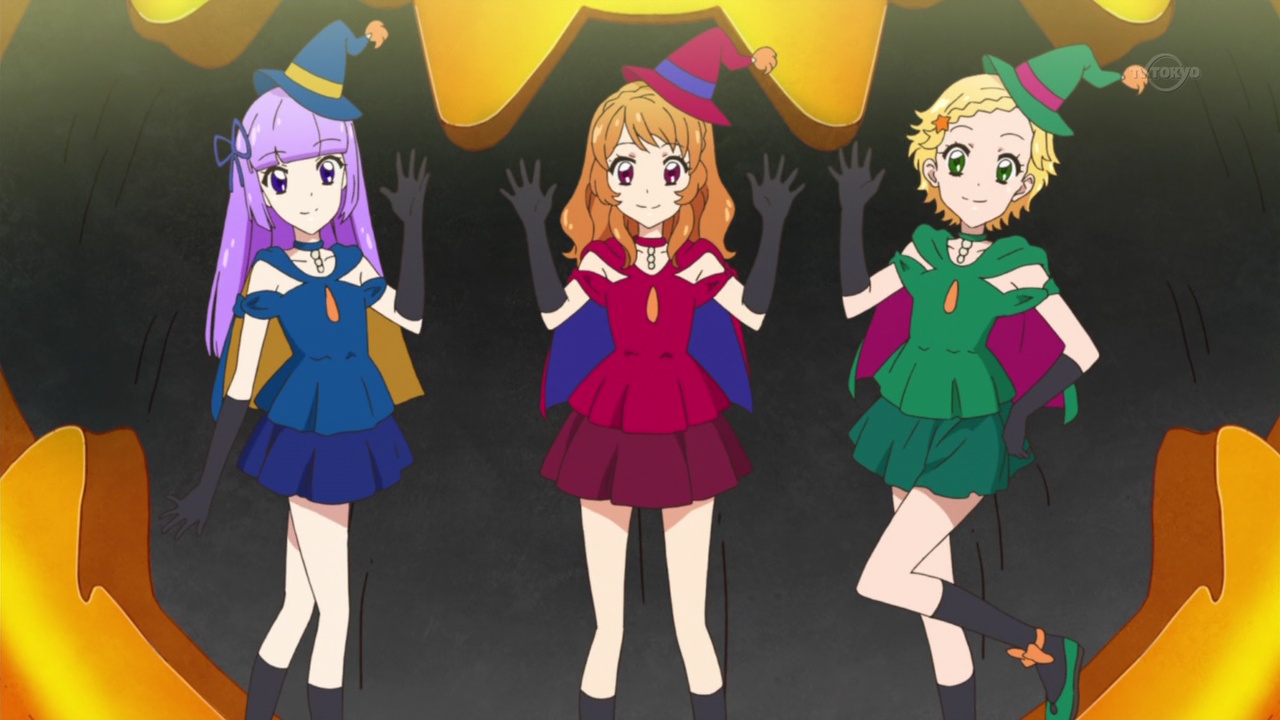
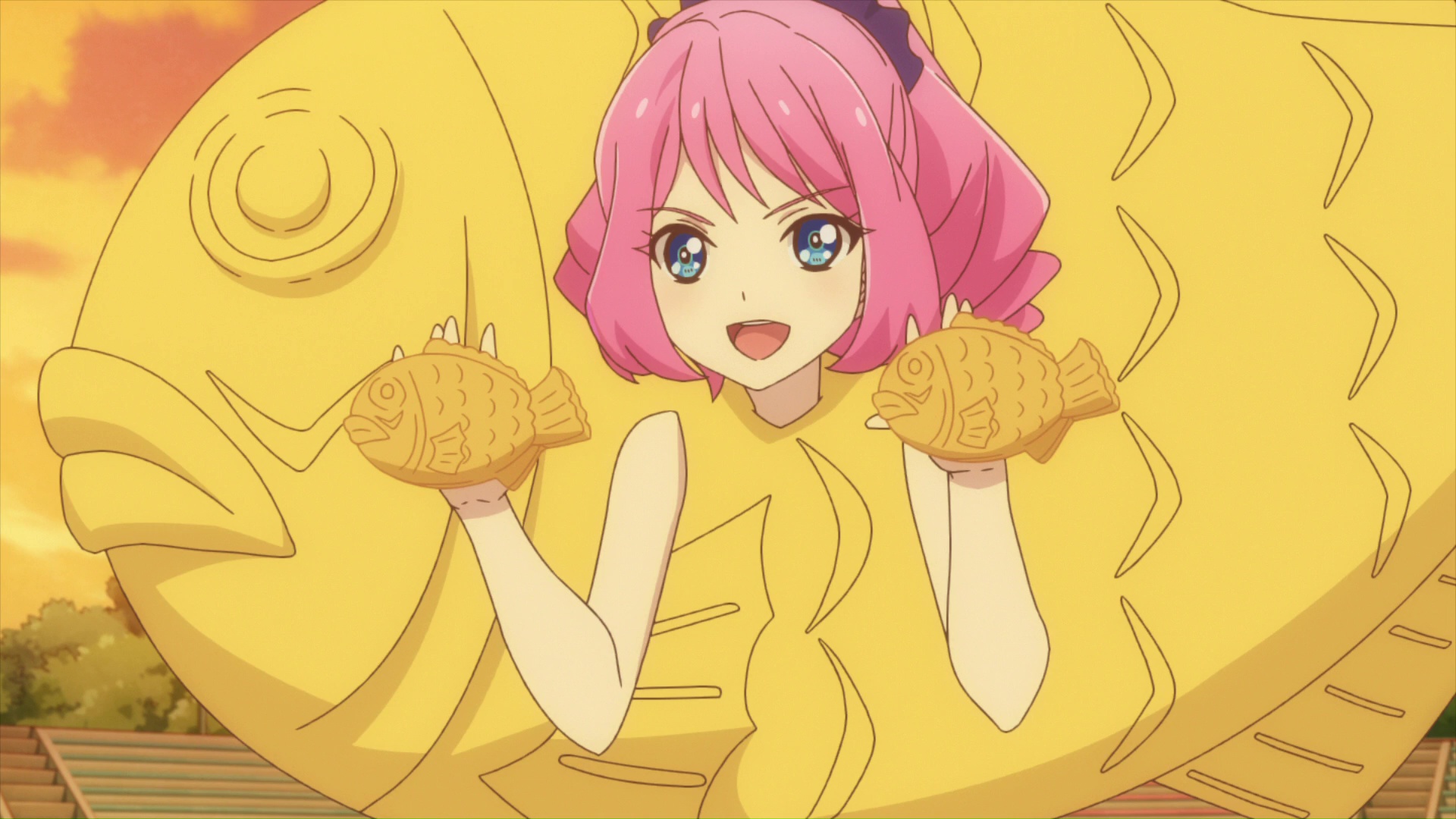
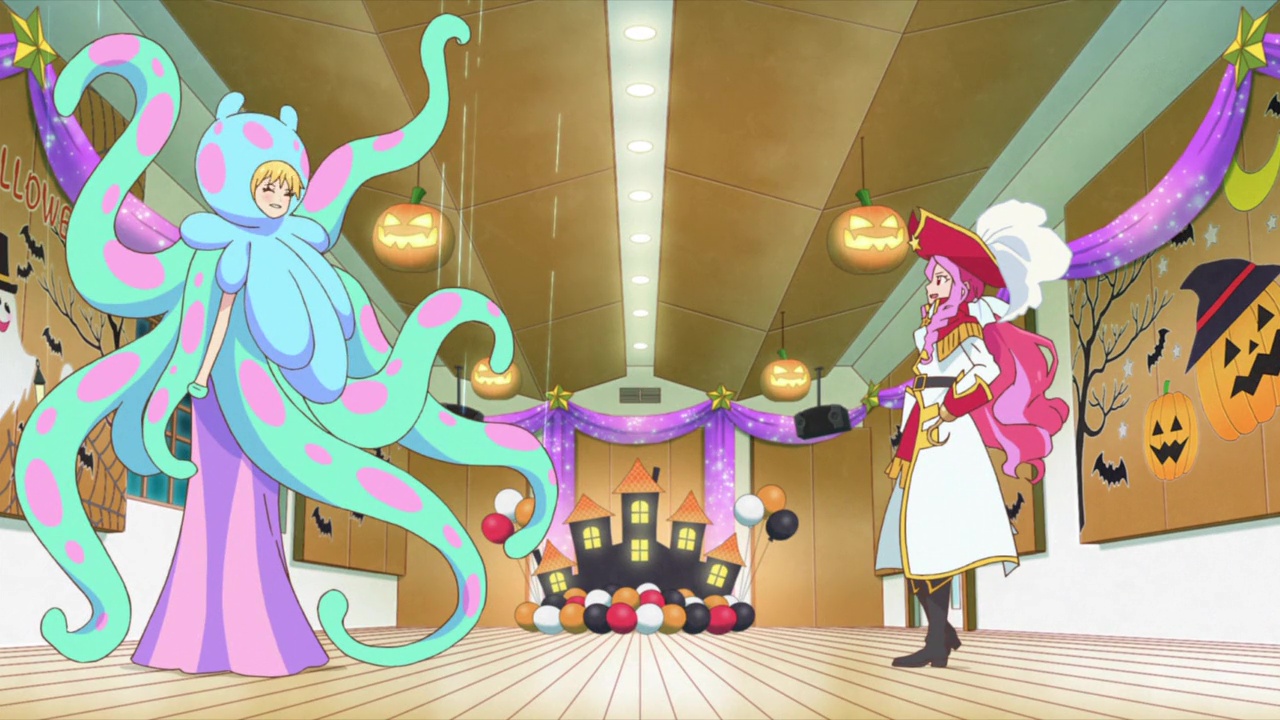
I’m unsure of what kids’ marketing research took place, but I doubt it’s a coincidence that both Precure and Aikatsu!—two major girls’ anime franchises—somehow both ended up on a space theme this year. But while Star Twinkle Precure is kind of expected given how every season has a gimmick or three, it’s much more surprising that Aikatsu Friends! Kagayaki no Jewel would establish the concept of “Space Idol Activities” in its own universe. Fitting, perhaps, but surprising nevertheless.

There’s a certain level of absurdity that permeates Aikatsu! as a whole—more than enough to make “Aikatsu in space” not seem like such a bizarre direction. In fact, I think it’s what has allowed the franchise to stand the test of time as a work of art and media, independent of the arcade game it’s based on. Aikatsu Friends! Kagayaki no Jewel leans into that, whether it’s maintaining old traditions (e.g. scaling cliffs) or trying something new. So when the first episode begins with an astronaut entering the stratosphere, the main reaction from me is “sure.” In a way, it feels more fitting than something like, Yu-Gi-Oh!, which now has a history of highlighting card games in different settings—in ancient Egypt, in school, on motorcycles, in space, and so on.

The new season also takes place in a new semester where the Aine and friends are now in the high school division, and I always enjoy seeing the signs of progress that come with such transitions. In this case, it’s seeing the underclassmen pale in terms of aerobic an anaerobic training alike, as well as…idols in spaaaaace.

My only wish is that they push this concept as far as it can go. Why limit it to space-esque idol performances? Why not have an idol school aboard a shuttle? Why not have zero-g dancing? Please take this to the absolute limit, Aikatsu!

P.S. Did you know the best Aikatsu! characters introduce themselves by parachute? It’s true.

This post was sponsored by Johnny Trovato. If you’d like to request a topic for Ogiue Maniax (or support it in general), check out the Patreon.

Why Emma in “The Promised Neverland” is a Fantastic Character

With the first season of The Promised Neverland anime over, and having personally caught up to the manga as it’s throwing around major revelations, I thought it would be a good time to write about why I think Emma is one of my favorite protagonists in recent memory. I’m going to keep details vague to avoid spoilers for both anime viewers and manga readers, so hopefully everyone can enjoy.

By virtue of being a female protagonist in a Weekly Shounen Jump manga, Emma is an exception in a magazine that is, at least on the page, overwhelmingly male-dominated. In this position, it would be all too easy to make her a passive character who supports others, but what she contributes to The Promised Neverland makes her the heart and soul of the series.

Emma’s character is cut from a more traditional shounen hero cloth: she’s idealistic, compassionate, prefers actions over words, and is unusually good at making friends. But while this attitude is often a surface point for a lot of characters, Emma’s attitude runs directly into the central conceits and challenges of her own series. To believe in “helping everyone” in a harsh world can seem hopelessly naive, yet that conviction is what gives her strength.

The important thing, however, is that as much as she seems to possess a “have your cake and eat it too” puppies and rainbows mentality, she’s not unrealistic or devoid of pragmatism. She understands that her path isn’t the easy one, but at the same time believes that being all too ready to sacrifice others “for the greater good” leads down a much darker path. In maintaining this view, she brings those who would otherwise dwell in the murkier areas of humanity into the light.

Because of her outlook, she somewhat reminds me of Eren from Attack on Titan, albeit with a relatively cooler head on her shoulders and less proclivity for violence. Emma, like Eren, prompts and motivates others to go beyond their comfort zones through her actions. Unlike Eren, however, Emma is motivated less by anger and more by love.

Emma doesn’t do the impossible. Rather, by pushing her own limits and maintaining her compassion, she makes clear to herself and everyone around her that their perceived boundaries (whether internal or external) can be challenged. In a world seemingly made up of constant dichotomies, she strives to find a third, fourth, or even fifth path.

How “Over-Animating” Manga Can Change an Anime

Adapting comics into animation involves taking images which, at most, hint at or represent motion, and filling in more of the gaps that or imagination would have otherwise. While how faithfully an animated work tries to adhere to its comic can vary, I’ve noticed that even those that try to follow the source material can at times “over-animate,” providing what is perhaps too much flair and thus changing the overall fee of a given title.

Over-animating isn’t an established terms by any means, but they’re convenient for my purpose. The way I’m defining it is the degree to which added material not found in the original can make a given scene feel noticeably different. This is often done by taking the source material and then exaggerating what’s there, either through the sense of motion or by adding additional elements. Think of it as the opposite of those times when a show fails to capture the splendor of a good fight scene from a manga—when it comes to over-animating, the spectacle can potentially wind up either being a distraction or changing how we even think of particular characters or moments.

Three examples come to mind in this respect: Mysterious GIrlfriend X, Dagashi Kashi, and Laid-Back Camp.

Mysterious Girlfriend X, about a boyfriend and girlfriend who literally swap spit. Whereas the manga portrays saliva as a simple white, the anime drool glistens and drips like honey, giving it an extra dimension that makes it feel less ethereal compared to the original. When I read the manga, the saliva seems like a means to an end. In contrast, the anime seems hyper-focused on that particular fetish.Dagashi Kashi is similar. While both comic and cartoon feature attractive female characters and a degree of titillation, the first season takes it one step further every time. Suggestive moments like eating tube-shaped snacks called fugashi while blindfolded are exaggerated by the addition of a massive, super-sized version. A flashback featuring kids playing doctor as a way for the character Saya to get closer to the boy she likes has an accidental chest-touching scene thrown in. The manga is fairly racy, but the anime is hyper-horny.

Unlike the other two, my use of Laid-Back Camp (aka Yurucamp) has nothing to do with perversion. Instead, it has to do with how the character Nadeshiko is made to be extra ditzy compared to the manga. At one point, Nadeshiko notices her new friend Rin, only to run into a window like a bird not knowing how glass works. This isn’t especially different from how Nadeshiko is portrayed in the manga, but it’s almost not quite the same either. She’s not especially bright and she’s ruled to a large degree by her instincts, but Nadeshiko is never quite so dumb as to literally run into glass.

While I have my own preferences, it’s not as if I’m saying that sticking faithfully to the manga should be the way to go all the time. The drool of Mysterious Girlfriend X might resonates more with fans if it’s thick and viscuous. The girls of Dagashi Kashi might make a greater impact when the suggestiveness is turned up a couple (dozen) notches. And perhaps Nadeshiko being a little dimmer makes her a more endearing and humorous character. Even so, I want to emphasize how these changes can transform how we view a title and its characters, despite having so many similarities between versions. It’s the little things that can make all the difference.