Have Beer, Will Travel: The Night is Short, Walk on Girl

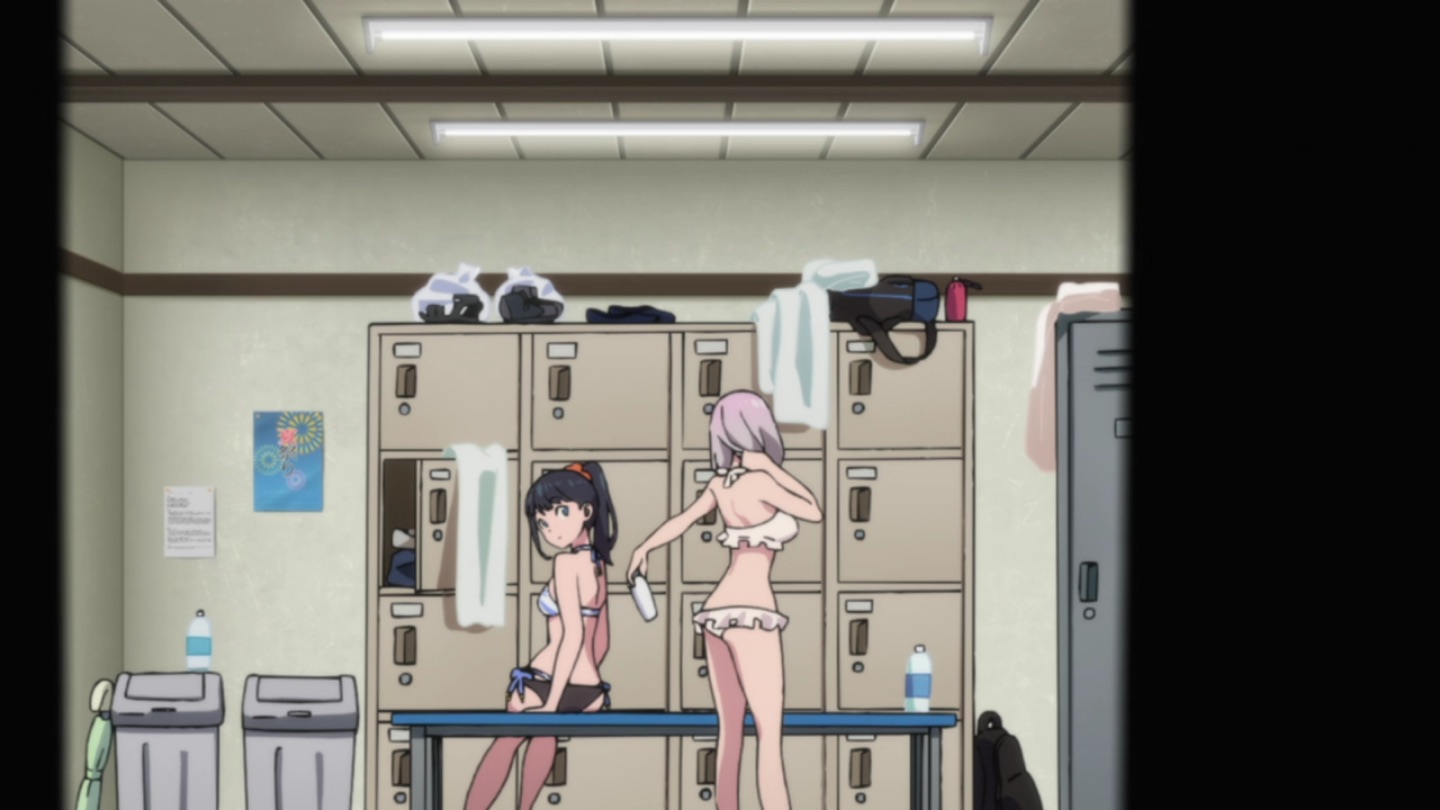
The Night is Short, Walk on Girl adapts Japanese novelist Morimi Tomihiko’s work into an animated film where magic, fantasy, and reality blend together seamlessly into a pleasant yet frenetic experience. Directed by Yuasa Masaaki, whose credits include Devilman Crybaby, Ping Pong and The Tatami Galaxy (also based on a Morimi novel), the work fits Yuasa’s strengths to a tee.

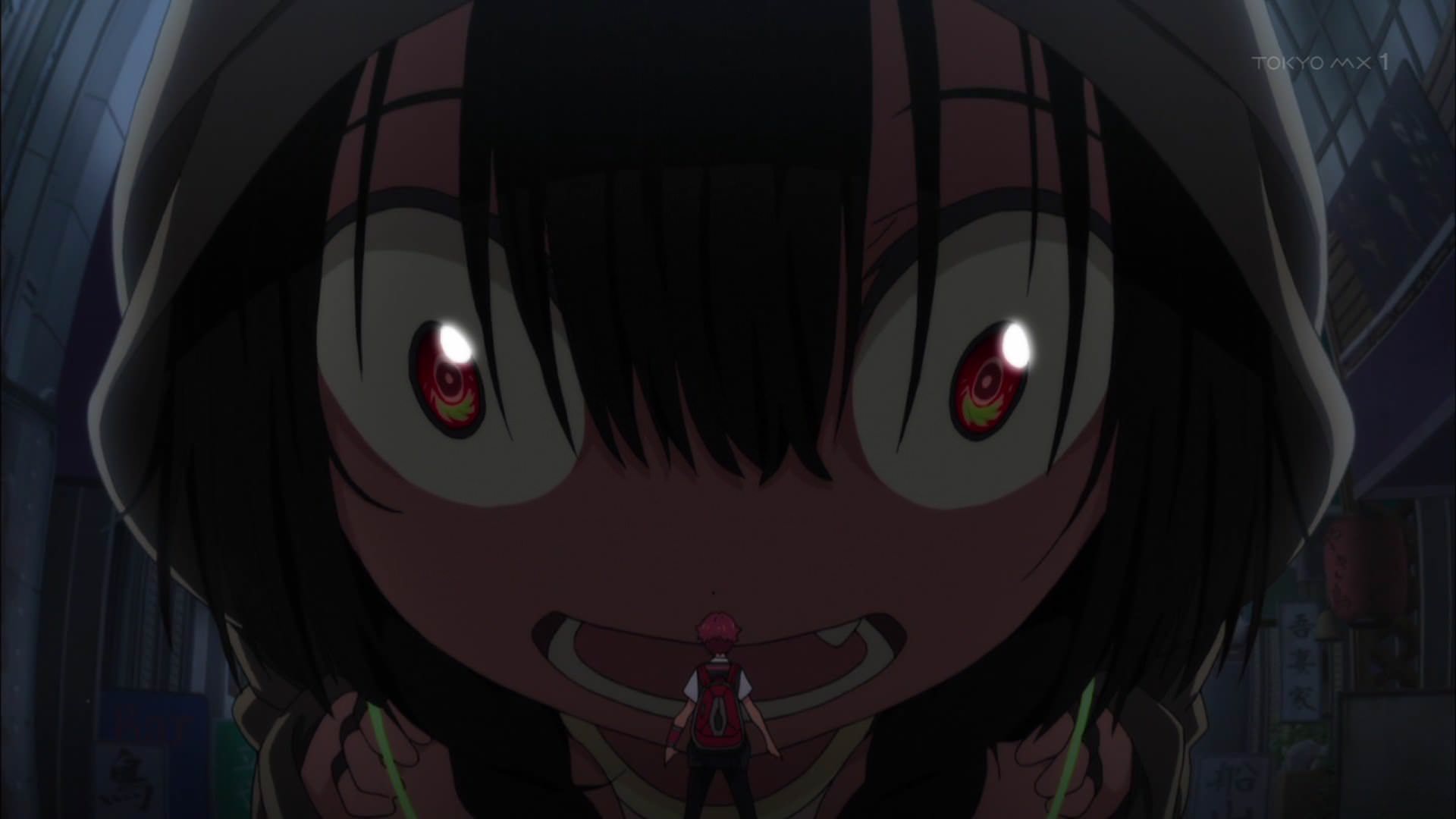
The Night is Short, Walk On Girl follows two unnamed characters: a Japanese college girl referred to as “the black-haired girl” (kurokami no otome) and her upperclassman/senpai. The senpai has nursed a crush on the girl for ages, and has engineered a life where he “coincidentally” keeps running into her in the hopes of sparking something more. Unfortunately for him, it has yet to work. The girl, for her part, is more focused on enjoying life at night, which involves a lot of drinking and looking for the next adventure.

The story progresses in various unpredictable directions, touching on the supernatural in ways that make it difficult to tell who’s more bizarre: the humans or the gods. Following the girl’s exploration of the night, her pursuit of the next interesting drink, and the senpai’s continued attempts to get her to notice him feels like being on a winding path whose seeming meandering is actually welcomed rather than shunned. Yuasa’s signature style allows the nebulous mix of the real and fantastic to shine through.

The film was distributed in the US for two nights by GKIDS, and the showing included a recorded interview with Yuasa, where he discusses the on-again, off-again nature of a heavily delayed production. Another notable thing mentioned is that the film takes what is essentially a story told via vignettes over all four seasons and combines them into a single dramatic evening. Thus, the film and the novel provide substantially different experiences, making it more worthwhile to experience both. Fortunately, the novel itself is coming out in English courtesy of Yen Press.

Gangplank Galleon All Day Every Day: Ogiue Maniax Status Update for September 2018

The summer is coming to an end, but here I am still feeling jitters from the August Super Smash Bros. Ultimate Nintendo Direct. I was stoked when they announced King K. Rool, especially because the official version matches my fan concept version pretty closely!

As for my Patreon and Ko-fi, I’m thankful to all those who continue to support Ogiue Maniax. Thanks to the following!

Thank you to…

General:

Johnny Trovato

Ko Ransom

Alex

Diogo Prado

Sue Hopkins fans:

Serxeid

Hato Kenjirou fans:

Elizabeth

Yajima Mirei fans:

Machi-Kurada

The past month has been quite comfortable overall for Ogiue Maniax; even the strange Patreon non-payment issue didn’t affect me too much. Instead, what I’m struggling with (though “struggle” is a bit over-exaggerating) is trying to strike the right balance between how much I write about anime and manga and how much I actually engage with the stuff. I’ve been spending a lot of time recently watching and reading more than blogging, and it’s helped to refresh my mind and inspire new ideas. However, if I write less than I usually do in a given week, I can feel myself getting a bit lazier, and wanting to put things off more and more. It’s as if there’s a groove that I can ride to putting out lots of good content, but staying with it for too long can wear me down.

That said, here are my favorite posts from August.

Kio Shimoku’s Kagerowic Diary and Its Influence on Genshiken and Spotted Flower

Some of Kio’s old manga is getting new special-edition releases! Here’s a look at an early work of his, and the footprints it has in his more recent titles.

Otakon 2018 Interview: Kawamori Shoji

My one-on-one interview with the creator of Macross, Aquarion, and more!

Tatanga for Super Smash Bros.

After about a two-year hiatus, I’ve gotten back to drawing Smash Bros. character concepts in celebration of Super Smash Bros. Ultimate! So far, I’ve done Tatanga and Turrican.

Hashikko Ensemble

Chapter 7 of Kio’s new manga has some introducing new characters. Among them, one awesome mom. 

Patreon-Sponsored

The Big O and Loving Robots

A look at artificial intelligence, love, and agency.

Closing

I of course am also stoked for Castlevania being in Smash. Let us celebrate with some fine tunes:

Mecca of Mecha: Otakon 2018

2018 marked the second year of Otakon in Washington, DC, as well as a year that posed some unique challenges. Scheduled for the same weekend as a nearby white nationalist ally, the potential danger cast an uneasy cloud over both a multicultural city and an anime con that typically attracts people from a wide variety of ethnic backgrounds. Fortunately, the rally amounted to nothing more than a fart in the wind, totaling around 30 people and far outnumbered by counter-protesters. What was left was an enjoyable Otakon that accomplished what the convention is meant for: celebrating Japanese culture and the people who make, enjoy, and are inspired by it.

Panels

Where there might have been three to five panels on giant robots in a typical Otakon, this year’s programming was rife with robot content thanks to the theme of Otakon 2018 being “mecha and science fiction.” As a huge fan of all things anime and robotic, this was right up my alley. I made it something of a mission to check out as many panels as I could, whether they were by fans, companies, or special guests.

I was even on a panel myself! “Mecha Fight Club” with Patz, Tom Aznable, Doug, and myself was an hour of debate and discussion on various topics concerning giant robots and giant robot fandom. If you came to our panel, thanks for waking up at 9am on a Saturday. I hope we gave you some food for thought.

Fan Panels

Transformers: The Birds and the Bumblebees

This panel, from the group “Manly Battleships,” looked at the early history of the Transformers. Impressively, it started not at the release of the toys in the US or even the Japanese Diaclone toys from which Transformers took many designs, but with the advent of GI Joe in America and is exporting over to Japan. It was quite an informative panel, and while I thought the “nerd humor” fell flat at times, it was a solid presentation overall.

NoS Anime

I attended two panels from a group called NoS Anime: one a Gundam Wing retrospective, and the other a look at mecha in the 1960s and 70s. Both panels were well researched, and made efforts to explain the social and economic climates of their times. I had only a few criticisms, and even those are more about what I’d prioritize, rather than what I think would make the panels absolutely better.

First, for the Gundam Wing panel, I would have preferred a greater look into the Japanese fandom, as it was mostly a nostalgia panel from the US side. Also, the comments about the first opening theme, “Just Communication,” having odd lyrics seemed off to me, as plenty of robot shows and Gundam anime feature similar music.

Second, for the 60s and 70s panel, I think more explicit mention of Nagahama Tadao and Tomino Yoshiyuki being directors on Reideen before working on the Robot Romance Trilogy and Gundam respectively should have been explicitly emphasized.

Overall, NoS Anime showed they were a deft hand in presenting.

Outsourced Anime

I try to attend at least one Anime World Order panel at conventions because they’re usually quite entertaining. This panel focused on American cartoons which actually had as lot of the animation work done in Japan. One of the major points of their talk was the impressive flourish that Japan would give these shows—and that their best efforts became the most memorable parts of these cartoons for young minds.

Gattai! Giant Robots from 198X

Essentially a 1980s robot anime recommendation panel, the hosts Patz, Tom Aznable, and Hazukari went over why their favorite mecha shows of the era deserve a look. While there was some trouble with keeping on time, and I feel like they didn’t sell certain shows as well as they probably intended, what worked for me is that each of the presenters clearly valued different things and you could get a more balanced view as a result.

Industry/Guest Panels

Kawamori Shoji

Out of all the guests at Otakon this year, Kawamori was arguably the most significant. Because there’s so much content from him, I’ve spun it off into two separate posts: a recap of his “History of Macross” panel, and my personal interview with him.

Ebikawa Kanetake

A mecha designer on series such as Full Metal Panic!, Gundam 00, and Gundam Build Fighters, Ebikawa’s panel was fairly restrained, and his answers short. One of the main things I learned is that while fans mostly remember the glamorous parts of being a “mechanical designer,” it also includes more mundane items such as coffee mugs and utensils.

Nagai Tatsuyuki

The director of The Anthem of the Heart, Anohana, Toradora!, Iron-Blooded Orphans, and more went over his history in the anime industry. We learned that he first found an anime production assistant job while unemployed and needing work. It was a position that required driving around to pick up and deliver things, and when he lost his license, it forced him to try his hand at other roles such as storyboarding. This eventually took him on his path to episode director and director.

I had the opportunity to present him a question, so I asked about the reasoning behind the unorthodox romances in Mobile Suit Gundam: Iron-Blooded Orphans, which includes an actual harem. Nagai responded that it was to show that many different forms of love exist in the world, and that he did indeed meet resistance at first from the staff when he told he wanted to put this in. I also told him the true story of my friends and I walking through a blizzard just to see The Anthem of the Heart. By the way, everyone should go see that film.

Another person asked how he feels that Okada Mari (writer on Iron-Blooded OrphansAnohana, and Anthem of the Heart) seems to get all the attention and credit. It felt like a question tinged with bitterness toward Okada, but I might have been mistaken. Nagai answered that he actually liked it because it meant he could sort of hide in secret, perhaps a defense of Okada without getting too aggressive.

One interesting takeaway came when Nagai talked about how he often worked with the same core staff, and that because they’re around the same age, they can talk to each other more candidly when working. Kyoda Tomoki expressed something similar in my interview with him at Otakon 2017, which makes me wonder if studio hierarchy is often a thorn in young creators’ sides in the anime industry.

Discotek Media

During the weekend, friends and acquaintances informed me of one anime company planning a licensing bonanza: whereas most publishers tend to announce maybe five or six new titles, Discotek was going to reveal new shows totaling in the double digits! I had waffled on going to their panel, but now I had to attend. And as it turns out, for fans like me, their announcements pretty much won Otakon.

  • Area 88
  • Message from Space: Galactic Wars
  • Space Wolf Juspion
  • Space Warrior Baldios TV
  • Voltes V
  • God Mars
  • Psycho Armor Govarian
  • Galaxy Express 999 TV
  • Bobobo-bo Bo-bobo
  • Lupin III: Blood Seal of the Eternal Mermaid
  • Kimagure Orange Road
  • Giant Robo: The Day the Earth Stood Still

To say I am overwhelmed is an understatement. Voltes V is one of the greatest mecha anime ever to not get a proper US release, and is one third of the famed Nagahama Robot Romance Trilogy (which means I hope Discotek is looking at Combattler V and Daimos next). Baldios and God Mars are classic 80s robot action, with the latter actually being a fujoshi favorite of its time. Giant Robo is one of director Imagawa Yasuhiro’s finest works. Psycho Armor Govarian is an obscure Nagai Go robot series animated that is said to be Studio Knack’s best work—faint praise, perhaps, for the studio behind Chargeman Ken. Kimagure Orange Road is one of those 80s classics I’ve always wanted to watch but never did. Galaxy Express 999 holds a special place in my heart, and the additional update on the 999 films getting a Blu-ray box set makes me want to pump my fist in the air and high-five the clouds.

Hiccups and Missteps

Not all was smooth sailing. One of the more significant problems I ran into was subpar management of the autograph line on Friday.

To start off, the autographs section was in the Dealers’ Hall, so that anyone who wanted to get anything signed had to wait on the same massive line as those wishing to make purchases. This in itself would not be so bad, except that there were autograph sessions close to the opening time, and having both aforementioned groups plus those waiting for the nearby Artist Alley to open meant that the line size inevitably became a fire hazard. This issue was compounded with the fact that telling people to go away and come back later never works because it punishes those who decide to follow the rules, and rewards those who skirt/defy them. This would become a recurring theme with the autograph area.

Upon getting in line for the actual autographs, I ran into another problem. The way the area was set up, the idea was that a small group at the front of the line would break off and go into a section where all the guests were waiting. From there, attendees would get their autographs, and then the next group would have their turn. In practice, however, only the first group ever got the chance to get autographs and the rest of the line was stuck waiting the entire time, with not even a single person having an opportunity to move from that second line. In other words, even accounting for the fact that not everyone who wants an autograph is going to get one, many people were denied autographs when they shouldn’t have been.

In my eyes, the underlying issue was that the volunteers in charge of the main autograph area did not communicate properly with the volunteers managing the line, and so the former never seemed to realize there were additional attendees waiting in the first place. Those who went first, or had guests with smaller lines, could easily ping pong between all the guests, while those who (again) followed the rules and waited patiently were done a disservice. My hope is that this changes for next year, including finding a better place for autographs. While Otakon in Baltimore had its own issues with signings, this never happened as far as I can remember.

Another non-autograph-related problem was that at one point on Saturday, the tunnel between the Marriott and the convention center was closed off, forcing everyone to go in through the convention center’s main entrance in the sweltering, 90+ degree heat. This was apparently another miscommunication, but the fact that the weather played a role was a concern.

Con Food

Eating out on Otakon weekend is always a potential hassle, given the amount of attendees. Because of the prospect of both protesters and counter-protesters, my friends and I avoided restaurants and decided to (for once) stick to supermarket and convention-center food. The latter was overpriced (as these things usually go), but the quality was surprisingly decent, and many of the food stands had Japanese cuisine to along with the general theme of Japanese culture. At the same time, $15 for not much food can hurt the wallet a bit. My advice is that if you can’t get out anywhere to eat, and you didn’t bring anything, the Caribbean food is only $12 a dish by comparison, and still plenty good. You can avoid the “anime fan” tax and still get a hot, delicious meal.

Events

Concert

Otakon attendees had the rare opportunity to attend a performance of the “Distant Worlds” Final Fantasy orchestral concert series. With legendary Final Fantasy composer Uematsu Nobuo in the audience, it was a pleasant experience that took the audience through songs from throughout the franchise. I definitely enjoyed the concert, though I felt there was a distinct lack of battle music. I was selfishly hoping for some personal favorites, like Zeromus theme from Final Fantasy IV and the Four Fiends theme from Final Fantasy I remakes, but alas.

Hi-Score Girl

Another special event was the US premiere of the Hi-Score Girl anime, which is adapted from a fantastic manga about romance and growing up in 1990s Japan arcade culture. The show is a pretty straightforward adaptation of the manga, albeit with CG that can feel awkward at times. It’s coming out on Netflix in the coming months, so I recommend everyone check it out when they have the time.

One odd thing about the Otakon showing was that it included a panel beforehand that kind of spoiled a lot of what the first episode was about—pointless if we were going to watch it right afterwards. Also, unfortunately, the interpreter didn’t seem well-versed in fighting games, so she ended up missing a few points here and there. One omission that stood out to me was that the producer mentioned the manga’s author, Oshikiri Rensuke, having participated in Vampire Savior tournaments, but the interpreter translated it as having experience with games in general. Because Vampire Savior holds a certain significance for the history of fighting games and the fighting game community, a bit was (as the cliché goes) lost in translation.

Overall

The final number put Otakon 2018 at over 29,000 attendees, but even so, moving around the Walter E. Washington Convention Center was never a burden—especially compared to some of the most sardine-esque years of Baltimore. Between the quality of the guests and the convenience of Washington, DC (aside from the notoriously terrible traffic), I solidly believe now that Otakon moving to DC was the right choice. There’s so much more room to grow! I’m looking forward to seeing how things will change in 2019 and beyond.

The Fujoshi Files 180: Fujimi

Name: Fujimi (ふじ美)
Alias: N/A
Relationship Status: N/A
Origin: Please tell me! Galko-chan

Information:
Fujimi is a high school girl who gets nervous speaking in public, even when ordering at a cafe. At one point she spots Galko, a gyaru from another high school, reading one of her favorite manga. Fujimi enjoys seeing Galko react to a BL development in the middle of the manga, but is otherwise daunted by Galko’s fashionable appearance.

Fujoshi Level:
Outside of being a BL fan and reading a lot of manga, nothing else is known.

The Big O and Loving Robots

Warning: Spoilers for The Big O.

Artificial intelligence is one of those staples of science fiction, a bridge between the mechanical and the biological. For if an AI can achieve true sentience, it entails a whole host of questions about the meaning of life. In anime, one recurring topic is how artificial intelligence intersects with love—whether AIs are capable of love, and whether it is morally right to love an AI.

While something like Chobits is more (in)famous in its approach to the subject of love and AI, my favorite example is actually the mecha anime The Big O. While not the central narrative, protagonist Roger Smith’s relationship with his robot assistant R. Dorothy Wayneright is an ongoing plot thread that grounds an otherwise stylishly obtuse series.

Throughout The Big O, Roger is often verbally dismissive of Dorothy, bringing up her android qualities as evidence of what makes her unable to compare to humans. However, this is portrayed as a kind of denial defense mechanism, as he gradually finds himself attracted to and more in love with Dorothy. The impression is that Roger believes he’s not supposed to love her, and that perhaps he’s only drawn by her created and manufactured traits. Yet Dorothy, despite exhibiting very “robotic” mannerisms, seems to have an all too human side of her. And while her characteristic monotone is a source of comedy, it also seems to be a defense mechanism of her own—a constant reminder for herself and Roger that there are supposedly limits to how close they can be.

In one episode, Roger and Dorothy are Christmas shopping, and Roger steps into an elevator. He beckons Dorothy to get in as well, and she initially hesitates. When she finally does join Roger, the elevator comes to an emergency stop. Dorothy, weighing many times more than any human, put it over the weight limit. A moment of awkwardness ensues between the two, at least visibly on Roger’s side. Whether or not Dorothy is bothered by it is difficult to discern due to her apparent nature. Still, Roger and Dorothy seem to share a special connection. Nothing says more about their relationship than the iconic shot of Dorothy inside the Big O, her hand over Roger’s as he readies for a fight against three enemy Megadeuses at the end of Season 1.

Underlying all of this is the notion that love comes part and parcel with sentience. If Dorothy is nothing more then an android whose artificial intelligence is nothing more than a highly advanced computer, then that love feels “wrong” for Roger. But if it speaks toward a complexity beyond prediction, then Dorothy is an equal to Roger and therefore just as capable of love and being loved. In that situation, she must possess agency, and cannot be an object merely to be used. She must be her own being to the point that she can love or not love, and then make decisions of her own as to whether or not to follow along. In other words, it is morally right to love an AI if they can truly reciprocate, if human and robot stand on even footing.

This post was sponsored by Johnny Trovato. If you’re interested in submitting topics for the blog, or just like my writing and want to support Ogiue Maniax, check out my Patreon.

Otakon 2018 Panel: Kawamori Shoji’s History of Macross

In my estimation, the biggest guest of Otakon 2018 was Kawamori Shoji, creator of Macross, Aquarion, AKB0048, Escaflowne, and even early Transformers designs such as Optimus Prime and Starscream.

Unlike other guests whose panels are generally moderated Q&A sessions, Kawamori actually gave two presentations at Otakon. The first was based on his TEDx Talk on originality and design, though I unfortunately wasn’t able to attend it. The second was a history of the Macross franchise from the perspective of its own father, which I’ll be detailing in this post. For more Kawamori content, check out my interview with him!

From Megaload to Macross

Kawamori spoke of his early days competing with his senpai Miyatake Kazutaka (of Space Battleship Yamato fame) on who could design a non-humanoid hero mecha first, only to get rejected by the toy company because humanoid robots were what sold. He told us the origin of Macross (originally Battle City Megaload in the early design phases) and how it was actually meant to be a joke on the sponsors—a bait-and-switch tactic for Kawamori and his friends to do what they really wanted—only for those same sponsors to get so onboard with the concept that it became a reality. Suddenly, all of the ridiculous things they threw in to mess with the concept of humanoid mecha (being the size of a city, transforming from a carrier, having a literal town inside, facing a giant enemy so that a robot that ridiculously big would be practical) were to be an actual part of the show. Naturally, he and his friends/fellow staff concluded the following: if you have a city, you need a singer. Thus, Lynn Mynmay.

While the combination of pop music and mecha is practically taken for granted today, Kawamori described how back when Super Dimensional Fortress Macross first aired, the fans were divided between those who loved Mynmay’s songs during combat, and those who thought the whole idea was nonsense. However, Kawamori embraced the idea of having music, not weapons, win the war. He mentioned how Director Ishiguro, despite liking the concept, thought it would be too unrealistic, but Kawamori pushed through with it anyway out of a sense of youthful bravado.

The story of Battle City Megaload was already somewhat familiar to me, so it surprised me that there was an even earlier prototype of sorts for Macross: a manga he made in high school along with his friends called Saishuu Senshi (“The Last Warrior”). This amateur manga featured a world where war had become so expensive that opposing sides would each send out one representative warrior in a powered suit to engage in a duel that would determine victory and failure. The enemy side’s scheme was that they started using unmanned weapons, going against the deal. His friends at the time would end up in college with him, and would become part of the staff for Macross, including defining 1980s character designer Mikimoto Haruhiko.

Designing the Valkyrie

Kawamori also elaborated on another major part of Macross: the VF-1 Valkyrie. According to him, that famous design actually came out of a long struggle with trying to make a transforming plane robot that didn’t have issues with maintaining good proportions in both robot and plane forms. The key breakthrough was when Kawamori looked at the F-14 Tomcat, and how the jet engines could become the arms (he previously thought the nose of the plane would have to be the arms).

From there, other aesthetic decisions, like having a simple and functional-looking head (unlike the popular designs of the past) as well as “feet” for the robot that each came in two sections, completed the look. Once he had the inspiration thanks to the F-14, actually designing the Valkyrie took about a week. Kawamori then pulled out not just an original-style Takatoku VF-1 Valkyrie toy to demonstrate its transformation, but also a pre-final prototype for a new 1:48 scale version of the same design due later this year, demonstrating its improved flexibility.

The Success of Macross Leads to New Perspectives

Macross was a hit, which led to Kawamori having his directorial debut at age 24 for the film Macross: Do You Remember Love? Kawamori mentioned how he came up with a lot of ideas for the film, like holograms during concerts, a vacuum-cleaning miniature robot, and clothes that change color. He expressed his surprise over the years seeing these farfetched concepts come to life.

Another result of Macross’s success was that Kawamori got to travel abroad, and the resulting trips actually dramatically changed his views on technology and culture. First, he spent time in the United States, where he more or less experienced the extremes of Macross’s aesthetic themes. He visited military bases and NASA space centers to watch shuttles launch, and he would go to Broadway musicals, sometimes even seeing as many as three plays in one day. He would often be up from 6am to 3am.

However, he started to feel the need to get away from that environment, which led to him traveling to China. With modern technology being sparse in areas such as Inner Mongolia, Kawamori recounted how he would see the children’s eyes light up whenever the television stopped working, and how their expressions while playing outside were like none he had ever seen. He then visited Nepal, where he encountered people who literally saw differently from him. Kawamori prides himself on having 20/10 vision, but even he could not see what his Nepalese guides could. They would wave at each other from enormous distances, holding conversations with each other while recognizing facial expressions that to him looked like mere specks.

While he still loves technology today, these experiences made him rethink his stance on technological progress being inherently good.

Macross 7, Macross Plus

Kawamori emphasized his desire to never do the same thing over and over, which is why 1987’s Macross: Flashback 2012 was an OVA, and not a TV series or a film. He kept getting requests to make another TV Macross, but he would refuse. The person who convinced him was a college underclassman who had got into the industry, the late producer Takanashi Minoru. Takanashi told him, “It’s been 10 years. You can go back to TV,” a reference to the statute of limitations for crimes in Japan.

Kawamori had one week to come up with a concept, and so he first thought of a singing pilot. But in order to add an extra twist, he turned the main character into a singing, non-fighting pilot. Thus, Nekki Basara was born.

Basara is a favorite character of Kawamori’s, but he thought that the old Macross fans would hate him for it, and he still had a love for mecha and planes himself. To appease his fans, he made Macross Plus. (It should be noted that according to Macross expert Renato, Kawamori refused to make Macross Plus if he couldn’t make Macross 7 as well).

As part of his research for Macross Plus, Kawamori and Itano Ichiro (of the famed “Itano circus”) flew real jets (with guidance) and had a dogfight with each other. The instructors sat next to them, but they got to use the controls. Itano is a rebel, so he ended up Itano doing everything the instructor told him not to, and kept blacking out from the g-forces. Itano said that every time he blacked out, he would hear voices from the distance saying his name. Kawamori asked him to recreate his blackout scene for Isamu’s.

Sharon Apple, the virtual idol from Macross Plus, is based on idea that making an anime is to some extent about emotional manipulation. The funniest thing was that, at the time, the staff said no one would go crazy for a virtual idol. Kawamori expressed that he never thought the concept would be embraced this quickly. It was also during this time that he was introduced to Yoko Kanno.

Macross, CG Graphics, and the Future

One of the dramas of real-life planes is when jet fuel runs out, but in the world of Macross, reaction engines means infinite power. That’s why Macross Zero is set in a time before that technology came to be. More generally, Macross Zero was about combining technology with the things he saw in China.

This was the start of his use of 3DCG in animation, which he started to use because he felt that 2D animation was limited in its ability to capture the proper camera angles for flying scenes. Macross Zero had a mix of 2D and 3D for action, and it was in Genesis of Aquarion that he tested out full 3DCG for combat. From there, Macross Frontier was to prove that the workload of a show could be divided between 3D for battles and 2D for characters. The Macross Frontier movies were where Kawamori finally figured out the ideal way to blend 3D and 2D together for scenes. Kawamori overall gave the impression that he sees new shows as opportunities to experiment.

One of the big changes in Macross Frontier was the use of two idols instead of one. Another decision was to make a male hero who’s even more beautiful than the idols. The Macross Frontier two-idol setup was popular and successful, but when the sponsors asked him to repeat the formula, he doubled down and made Walküre a team of idols as a separate division from the Windermere forces and the Delta Platoon.

Toward the end of the panel, Kawamori showed a lego prototype model for a transforming robot. Instead of two jet engines forming the legs, as has been the case with Valkyries, this robot has a single jet engine that turns into two legs. For Kawamori, it was the first new transformation system in quite a while. He then ended the panel by showing a trailer for Pandora, which comes out on Netflix this year.

Otakon 2018 Interview: Kawamori Shoji

This interview was conducted at Otakon 2018 in Washington, DC.

In your anime, you often visit the theme of love as power, or the power of love, even in your mecha and science fiction settings such as Macross, Escaflowne, and Aquarion. What draws you to this subject?

I always wanted to be original, and not like others. In previous science fiction anime, having love in the main theme was unheard of. You’d have love among the sub-characters, but not with the principle ones. So it’s something I always wanted to incorporate.

My next question is about Macross 7. I find the characters of Basara and Sivil have a unique relationship or a special connection. How would you describe their relationship in the story?

If you look at the character of Nekki Basara himself, he is unique in all of the Macross series. I thought it would not be fitting for him to be engaged in just a normal love affair, and he should have something that transcends love—like a resonance or clash of souls. The director of Macross 7, Amino Tetsurou, is someone who values the idea of passion, over any sort of details. It would just be a story of souls clashing.

I noticed in your credits that you worked on Toushou Daimos as a mechanical designer. Did you have an opportunity to work with Director Nagahama directly, and if so, do you have any memories of him?

I didn’t have much opportunity to speak to Director Nagahama on Daimos. Of course, I met him, but most of the interaction was through reading and looking at the storyboards that he draw. I did the designs through that. I really got to talk to him more on Ulysses 31. He was quite the gentleman, and he had a real passion for incorporating and valuing drama in his stories.

You’ve designed many mecha for decades—for toy lines, for kids, for adults, and even for video games. What changes in your design process and thought process according to the type of project?

This is something I value so much that I would take an hour or two to talk about it in detail. I look at the worldview of the work, the setting, and the target audience—for example, if it’s a toy, what would be the age range? Those are all the important considerations: market, target, theme, and the worldview. Those are the principle elements that go into the design, and after I have that down, the rest comes more easily.

To pick a specific example, I really enjoy your designs in Eureka Seven. What particular concerns did you take into account for that project?

When I first received the order for Eureka Seven mecha design, the initial order was to have a transforming mecha from automobile form to humanoid. But since that was something I’ve done so many times, I didn’t think I could do anything new.

I held the world-building meeting with Director Kyoda and the principle writer, Sato Dai, and they told me that in the Eureka Seven world, they’re in a world saturated by trapar particles that allow ships to float, and that’s how travel is done. And I thought, if these particles allow large ships to float, I can easily envision them as waves, so you can have mecha that use the waves to float. Director Kyoda liked the idea, and once the concept of surfing was in, the actual design was easy.

While you’re better known for your accomplishments in science fiction and mecha, you also worked on a show called Anyamaru Tantei Kiruminzoo. It’s quite outside of your usual genres or wheelhouse. How did you come around to being on this project?

For me, since I’m known as a mecha designer, most clients tend to bring me that kind of work. But I always want to try out something new, and communication with animals is something I’ve always been interested in. So, in Anyamaru Tantei Kiruminzoo, we have a girl who would transform and communicate with animals. But in normal magical girl series, when you have a girl transform into a magical girl, she would become invincible. I didn’t want that. I wanted someone who would be more different from a human with human abilities. So I pitched the idea and fortunately, that’s how we got the show.

This is my last question. Traditionally, it hasn’t been common for non-Japanese artists to work on anime aside from the outsourcing done in South Korea, but Satelight has hired artists such as Thomas Romain and Stanislas Brunet. How did Satelight bring them aboard, and what is it like working with foreign artists?

That goes back to me and Macross with the concept of “deculture.” I’m very fond of the differences in cultures, because we all grew up in different backgrounds. We might be fond of the same things, but we might have different ideas and concepts about those same things. That’s great inspiration for myself, and it’s very enjoyable working with foreign artists at Satelight.

Satelight’s parent company is an IT company. As such, it’s always had a corporate culture that’s open to working with foreign employees. So, our current president, Sato Michiaki, never had any issues employing non-Japanese artists.

Thank you!

Gattai Girls 9: Darling in the Franxx and Zero Two

Introduction: “Gattai Girls” is a series of posts dedicated to looking at giant robot anime featuring prominent female characters due to their relative rarity within that genre.

Here, “prominent” is primarily defined by two traits. First, the female character has to be either a main character (as opposed to a sidekick or support character), or she has to be in a role which distinguishes her. Second, the female character has to actually pilot a giant robot, preferrably the main giant robot of the series she’s in.

For example, Aim for the Top! would qualify because of Noriko (main character, pilots the most important mecha of her show), while Vision of Escaflowne would not, because Hitomi does not engage in any combat despite being a main character, nor would Full Metal Panic! because the most prominent robot pilot, Melissa Mao, is not prominent enough.

Darling in the Franxx is a mysteriously divisive anime, ripe for viewers of all stripes to interpret according to their personal values. Given a series whose messages appear to change depending on who you ask, it’s perhaps not so surprising that the main heroine of Darling in the Franxx, Zero Two, is just as much a whirlwind of contradictions.

Darling in the Franxx is a high-key sexually charged anime. If the doggy-style male-female combination cockpits weren’t enough, the series actively draws attention to the fact that the anime’s teen heroes live in a bizarre dystopia where their sexual energies are channeled into piloting giant mecha called Franxx. Covering subjects like love, sex, and marriage through both overt and relatively subtle metaphors, the anime is loved and hated in seemingly equal amounts in ways that contradict each other.

In Darling in the Franxx, Zero Two is the pilot of the robot Strelitzia. Far and away the most powerful weapon in humanity’s fight against the monstrous Klaxosaurs, Strelitzia would be their most reliable advantage if it didn’t come at a price: Any man who pilots with Zero Two inevitably ends up critically injured or dead. The protagonist, Hiro, ends up being the only guy who can survive Zero Two, and their combination becomes the key to turning the tide of battle. However, their connection ends up going back much further than either realize.

Is Zero Two an inspiring firebrand who lives by her own rules, or is she a fetishized sex object whose mere presence fulfills men’s fantasies? Is she an ideal girlfriend or a femme fatale? The answer is “yes.” She’s all these things and more, despite Zero Two being a difficult character to project one’s assumptions onto. She doesn’t have the appearance of an emotionless doll like an Ayanami Rei (Evangelion) or the “dishonest,” tsundere-esque feelings of a Souryuu/Shikinami Asuka Langley (Evangelion). She’s not an Asuna (Sword Art Online) either, whose kindness and strength make her practically “good wife, wise mother” personified.

Zero Two is rebellious towards rules and authority, loyal to those she loves, and willing to do whatever it takes to achieve her goals. She can’t be pegged down or held back, and the only times she’s willing to show weakness are around people whom she truly trusts. She’s more than willing to take matters into her own hands, and even rescues Hiro from being taken over by the enemy. Zero Two herself has never been damseled herself, and the only time Hiro had to reach out to bring her back was more in the metaphorical sense—diving deep into her mind and their shared past to keep Zero Two from going berserk.

Strelitzia itself is a fascinating piece of the puzzle that is Zero Two. The main mecha of Darling in the Franxx are feminine-looking, which goes against the tradition of primarily masculine designs. Those with a more feminine appearance tend to have attacks that draw attention to their “womanly” aesthetic as well, like how Aphrodite A in Mazinger Z shoots “Breast Missiles.” The Franxx are, aside from cute faces and a general feminine silhouette, not as overtly sexual on the outside. That being said, the workings of the cockpit mentioned above make it impossible to ignore sexual connotations, especially because the female pilots “become” their Franxx. Like the others, Zero Two’s facial expressions become Strelitzia’s, and when she talks to Hiro in fights, her display shows that robotic appearance instead of her own. Eventually, this integration of girl and machine gets taken further, driving home the theme of love in a way that both reinforces and defies the conventional cockpit setup.

Zero Two is strong and weak, cruel and compassionate, loving and spiteful. She’s a complete character in a certain sense, and a caricature in another. She is as much of what you want of her as you want, which means that on some level, she reflects the desires and/or anxieties of the viewer and their relationship with the world.

Real vs. Perfect: The Two Opposing Idol Values

1983’s Creamy Mami was the first idol anime, and it made an idol out of Mami’s voice actor as well. Watching her videos from back then, a 15-year-old Ohta Takako comes across as awkward and unaccustomed to the spotlight, even in “Love Sarigenaku” above, her most “grown-up” song. Compared to many of the slickly produced pop hits of later years, Ohta can come across as almost unprofessional, but that’s exactly where her appeal lies. When it comes to Japanese idols, there are two general directions: “unrefined and real” or “polished and perfect.”

When comparing the Japanese idol juggernaut AKB48 to the K-Pop sensation Girls’ Generation (who have been enormously popular in Japan), the latter visually comes across as a much more “professional-looking” group. While calling them idolsTheir dance and choreography are on point, and their music videos make them look like a million bucks. But while the girls of AKB48 have a kind of awkwardness about them, and many aren’t the greatest singers, there’s a sense of them “trying their best,” and this is exactly what the fans want. In other words, perfection isn’t necessarily desired. It can be, but that strain of inexperience and perseverance is just as strong.

These dual forces can be seen in idol anime in spades. In Love Live! School Idol Project, the main characters are the ragtag group μ’s (pronounced “Muse”), and the defending champions are the practically-professional A-RISE, who come from the richest high school in Akihabara. In Aikatsu!, Hoshimiya Ichigo is shown as having some kind of natural spark of genuineness that contrasts her from the seemingly unassailable Kanzaki Mizuki. And in Macross Frontier, the main love triangle features, as seen above, the humble waitress Ranka Lee (right) vs. the sultry Sheryl Nome (left). In every case, what causes the “small fry” to ascend isn’t that they transform into polished and perfect idols, but that even as they improve, that unrefined and authentic quality shines through. Perhaps it says something that the main heroines of these shows tend to lean that way as well.

And yet, as touched on briefly in the beginning, voice actors who play idols in anime actually end up being idols themselves. When the girls of Love Live! hold live concerts their flaws come out, but that’s part of the appeal of seeing them in person. When watching the characters in the anime or in music videos, that imperfection doesn’t come across in the performances so much as in the dialogue and supporting materials. A similar phenomenon exists all the way back with Creamy Mami. She comes across as much more “polished” than Ohta Takako does, yet they share the same voice.

An interesting case of the strange interaction with the 2D vs. 3D and real vs. perfect contrasts are those that toe the line, like Hatsune Miku or virtual youtubers. With Miku, her limitations—the fact that her voice sounds robotic—is considered part of her appeal. With virtual youtubers, the fact that there’s a person performing behind the character is much more obvious, and the idea that they start to break down or break character is what lends a sense of “realness.”

In this regard, California-born Japanese idol Sally Amaki is especially interesting. A member of 22/7, an “anime-style characters” idol group in the vein of Love Live!, she plays the bilingual character Fujima Sakura while bringing along her own fans as Sally. Not only does she perform the virtual youtuber role as Sakura, but her native English fluency brings an interesting dynamic that highlights a sense of “realness,” especially for English-speaking fans. Not only is there often a contrast between Sally’s “cute, practiced idol” voice and her Californian mannerisms when switching between Japanese and English, but she’ll mention something that only someone growing up in the US would know off the cuff. This lets American fans connect with her sense of authenticity in ways that they might not have been able to in the past.

In the end, “real vs. perfect” is not a true dichotomy by any means, and every idol/idol group approaches that divide in different ways. Whether you’re an idol fan or not, which do you prefer?

Kon Kon Otakon Iroha: Ogiue Maniax Status Update for August 2018

It’s August, and another opportunity to express appreciation for my supporters on Patreon and Ko-fi. I try to live up to your contributions!

Thank you to…

General:

Johnny Trovato

Ko Ransom

Alex

Diogo Prado

Sue Hopkins fans:

Serxeid

Hato Kenjirou fans:

Elizabeth

Yajima Mirei fans:

Machi-Kurada

August means one of my favorite times of the year: Otakon season! Hopefully my wait-listed panel will magically get in, but in the meantime I’ll be on Patz’s Mecha Fight Club panel on Saturday at 9am in Panel room 7. Come by to hear me and others nerd it up about giant robots.

There is a more serious matter when it comes to Otakon, however, and that’s the fact that a white nationalist rally is going to be held the same weekend in Washington, DC. My fellow con attendees, please remain safe, and pity these idiots for putting so much energy into anger and hate.

Speaking of dealing with racists, I’ve recently begun revising my informal policy when it comes to blog comments. It’s not like I receive tons of comments these days, but I’ve come to realize that the concept of “let the ideas do the talking” only really works if the goal of everyone talking is to actually learn something. The alt-right/white nationalist agenda tries to feign actual debate but just wants a podium to posture and look strong. So if I see anyone arguing in bad faith, I’m basically deleting their comments. Simple as that.

But if you want to argue in good faith, here are my favorite posts from July.

Darling in the Franxx: Thoughts on a Divisive Anime

A show that people seemed to either love or hate, I give my own thoughts on a show where viewers can’t even agree what it’s about.

The Important Lesson Nadesico Teaches Us About Entertainment

One of my old favorites has an important message in these current times, about the strengths and pitfalls of pop culture entertainment.

Precure: The Crossroads of Voice Acting

A look at how a 15-year-old franchise brings veteran and newbie seiyuu alike.

Hashikko Ensemble

Chapter 6 sheds new light on Akira, and is in certain respects the most interesting chapter yet. If you didn’t know Kio Shimoku has a new manga, now’s the time to read up on it!

Patreon-Sponsored

The Newest Nekomusume is the Obvious Character Evolution

What began in 2007 continues in 2018.

Closing

Otakon! Whoooooo!