Otakon, the east coast’s largest anime convention, has been a mainstay of Baltimore summers since 1999. With the 2017 move to Washington DC, however, 2016 may very well be the last Otakon Baltimore ever sees. The awareness of this turning point among attendees felt almost palpable, and not just because the blazing heat and heavy humidity made everything feel ten pounds heavier. Watching con-goers on Sunday discuss the end of Otakon in Baltimore with an air of finality made it feel like it really was the end, even if it’s more of a new beginning.
Music and the Matsuri
Every year, I try to attend at least one Otakon concert, usually that of an artist I’m interested in from hearing their music in anime. This time, it was MICHI, who sang the opening to one of my favorite shows of the year, Dagashi Kashi. Unfortunately, both of the panels I was involved with ran during her concert time, so I unfortunately could not go. What’s more, her concert was the half-time show at the Masquerade, which is an event I generally avoid. The upside of all this is that I got to meet her in person at the autograph session.
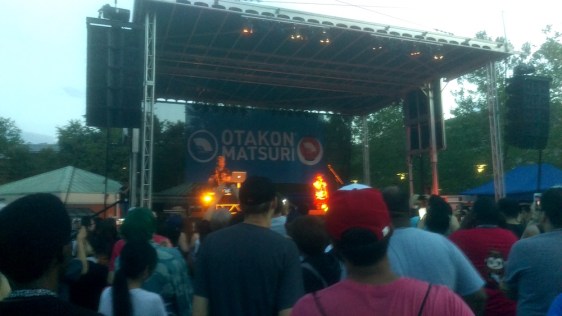
I did check out the Otakon Matsuri, a first for me. Taking place every year on the Thursdays before Otakon weekend, in the past I simply had neither the time nor the energy to go. This time, however, they had as music guests Lotus Juice and Hirata Shihoko from the Persona game series. Because a friend of mine loves Persona and made it a mission to attend their performance, I tagged along and was treated to a lively concert. Despite a number of technical difficulties likely owing to the severe heat not playing nice with Lotus Juice’s Macbook, they really made it a memorable experience. Lotus Juice, who was born in Japan but actually grew up in New Jersey, actually performed not only Persona and anime-related music, but even threw in a Japanese version of a Tupac song. Unfortunately, I don’t know Tupac well enough to recognize it, so if anyone in the comments knows, feel free to chime in!
Guests and Industry Panels
This year’s guest list was sparser compared to previous Otakons, possibly because of next year’s move to DC. Notably, Otakon mainstay Maruyama Masao (founder of anime studios MADHouse and MAPPA) was not able to appear, and it felt like Otakon was missing his insight. The guests that did come, however, were able to provide a great deal of insight into the anime industry and their creative processes.
Akane Kazuki and Escaflowne
Akane Kazuki, director of Escaflowne, Heat Guy J, and Code Geass: Akito the Exiled, was in attendance because of the new Blu-ray release of Escaflowne and the English premiere of Akito the Exiled. Akane is a Studio Sunrise man, so just like Takamatsu Shinji and Park Romi last year, so at a press conference I had to ask him what this experience was like working with Gundam creator Tomino Yoshiyuki. Akane mentioned that he actually went to Sunrise straight out of college because it was where Tomino was working. However, the very first time he arrived at Sunrise for work, he found Tomino was scolding his staff. Akane also described Tomino as someone who thought about anime from morning to night, and that he gave the impression that such a devotion was necessary to succeed in the world of Japanese animation.
He also talked about his work on Escaflowne, how it was his first work where he had full directorial control, and about the changes he made to the heroine, Kanzaki Hitomi. When Akane first came onto the project, Hitomi was going to be a quiet, long-haired girl, but he and character designer Teru Nobuyuki pushed to have her become the strong-willed, short-haired girl we know her as now. Later on in the conference, he described that period as one where a lot of female characters were the same, and he worked on Hitomi with the idea of, is this the kind of character that actual girls themselves can get behind?
Industry Panels
The Japanese industry panels I attended included P.A. Works of Shirobako and Hanasaku Iroha fame’s, as well as Under the Dog producer Morimoto Koji’s. At the P.A. Works panel, they didn’t really take questions from the audience, but they went through why they decided to make their new series, a robot anime called Kuromukuro, because it was uncharted territory for their studio. They also asked the audience themselves about the idea that Americans prefer action-oriented anime with strong heroes, but I found that an audience predisposed to coming to a P.A. Works industry panel likely wouldn’t have the same tastes.
As for Morimoto, I asked him questions related to his involvement with giant robot anime. First, I asked him about whether or not he has any input on how series are represented story-wise in the Super Robot Wars video games, to which he responded that they mostly leave it up to the game studio Banpresto. Second, I asked him about what goes into adapting or reviving old mecha franchises. Here, the answer was that it really depends on the series, and how much they’re trying to draw in the old, nostalgic audience, or create a new one.
As for the American side of things, I attended the Discotek panel and the tail end of the Vertical Inc panel. The main takeaways (at least for me) is that the glorious anime Charge Man Ken is now licensed by Discotek, and that two of Vertical’s best-selling titles are two of my favorites, Nichijou and Mysterious Girlfriend X. As someone who kept putting Mysterious Girlfriend X on their surveys every year, this fills me with pride and joy.
For more guest coverage, check out my interviews with LeSean Thomas and the staff at P.A. Works.
Fan Panels
One of Otakon’s claims to fame is its strong collection of fan panels. Presenting a diverse range of topics, it’s one of my personal highlights every year. This time around, however, I felt that a lot of the panels I attended weren’t quite as strong, though I don’t think this is really the fault of the con itself or even the presenters. There will be some panelists who are stronger than others, and I, as someone who did a couple of panels, have plenty of areas where I need to improve.
It’s also good that Otakon occasionally goes for untested presenters, because if they stick with only the ones they know, it gives less of a chance for newer panelists to show what they’re capable of. In many cases, there appeared to be a lack of preparation and oversight on actually planning and researching the presentations. That doesn’t mean that any presenter who didn’t bring their A-game doesn’t deserve to come back, but I hope that we all look to the next time with the hopes of being even better.
Anime of Green Gables
Featured Panelist Viga’s panel all about the popularity of Anne of Green Gables in Japan was quite informative. As someone who’s watched both the 1970s Anne of Green Gables anime and the 2000s Before Green Gables prequel, I learned a lot, especially in regards to how it got to Japan. I didn’t know, for example, that Japanese fans take pilgrimages to Prince Edward Island fairly regularly. I thought the panel had a generally good structure, but felt a bit disorganized in places. While I at first wondered who the panel was for, I think it turned out to be existing fans of Anne of Green Gables who might not be as familiar with the anime.
Gen Urobuchi: Magical Girls, Riders, and Puppets, Oh My!
Because the title of this panel mentioned puppets, I was hoping to see some Thunderbolt Fantasy action. Unfortunately, it got cut out of the presentation, which I find a bit strange because plenty of episodes had been out by then. On top of that, there was an entire special about the making of the show, which would have given them plenty of material to work with.
The Bravest Robots: Sunrise’s Brave Series
An overview of the Yuusha giant robot franchise of the 1990s, this panel was run by Patz Prime from Space Opera Satellite, with whom I’d previously done a podcast review of Brave Police J-Decker. As someone who’s more familiar with Brave Robots than most, even I learned quite a bit from it. I was particularly fascinated by the transition by the sponsoring company Takara from Transformers to Brave Exkaiser, the first series, and how the panel wove a narrative of the continuous fight between the animators, Sunrise, and Takara. Maybe next time the panel might have time to mention Baan Gaan.
1999: The Otaku Time Machine
George from Land of Obscusion ran this panel, which went over some of the major and minor anime and video games to come out in the year 1999. For me, it was in many ways a review of my adolescence, but I’m also well aware that many anime fans in attendance likely would have been born before 1999. It’s still kind of crazy for me to think about. All I’ll say to this is thumbs up for showing the Japanese Medabots opening, thumbs down for not showing the Japanese Digimon opening.
My Panels
This year, I presented at two panels: “Such Dog. Much Anime. Wow” with Kate from Reverse Thieves, and “Greater Uglier Manga.” The former was a panel about dogs across anime, including popular series such as Naruto, genre legends such as Ginga Nagareboshi Gin, and old historical works such as Norakuro. If you came to the panel, I’d like to thank you for being such a great audience, and I hope to get better at communicating for next year.
Greater Uglier Manga was the sequel to last year’s Great Ugly Manga, with the twist that it was now 18+. The point wasn’t to fill the panel with pornography, but to extend the range of images that could be shown. Unfortunately, the panel began with a serious hiccup due to technical difficulties, and we spent the first 15 minutes troubleshooting. Ultimately, thanks to Daryl Surat from Anime World Order, we figured out that it had to do with the switchers they were using for the panel room and were able to start. Unfortunately, I ended up speeding through the presentation and finishing early, which means I have to work on my pacing better. My co-panelist had a better handle on time, I think. Lesson learned!
By the way, I really do like Kurosaki Rendou‘s work, and I hope that, if you attended the panel, that you might find them fascinating too.
Shopping and Sites
Dealer’s Room
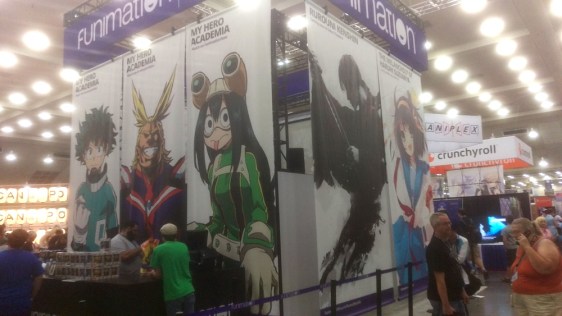
This will be the last time we see this incarnation of the Otakon Dealer’s Room for a long time. That being said, I do want to point out that they once again allowed attendees to travel between the buildings of the Baltimore Convention Center by cutting across Liberty Street. In recent years, this was restricted, and in my opinion it really hurt the accessibility of the Dealer’s Room and Artist’s Alley.
My two biggest purchases of the convention at the Dealer’s Room were finding all of Brigadoon: Marin & Melan (a great series that deserves more love) and getting the Nozomi from Rolling Girls Nendoroid. As shown in the photo below, I posed her the best way I know how: drinking [soda] and driving.
(Don’t try this at home, kids).
If you were wondering, the sidecar can hold another Nendoroid, and I have just the right riding partner in mind.
The real highlight of the Dealer’s Room for me this year, however, had to bee the Good Smile Booth. While I did not obtain the aforementioned Nendoroid there, I was pleasantly surprised to discover that they were selling blank Nendoroid faces for $1 each, along with tables where you could sit down to decorate them. Apparently those faces are a convention exclusive, so I bought a bunch and turned one into a potential Ogiue for the future.
Some day…some day….
Artist’s Alley
One of the strongest titles at Otakon 2016’s Artist’s Alley had to be Pokemon Go and Overwatch. While Pokemon in general tends to be pretty beloved among Otakon artists and attendees, the three factions of Pokemon Go, Team Valor, Team Mystic, and Team Instinct, made for easy ammo for creators. As for Overwatch, I believe its popularity among artists to be a testament to its highly appealing and charismatic character designs. However, overall the artwork was quite diverse, and hardly anything was truly dominant.
Relevant to me personally, I bought an amazing image of Rice Goddess Hanayo from Love Live! wearing glasses. The Demeter outfit or the specs alone would have been enough, but together the combination was unbeatable.
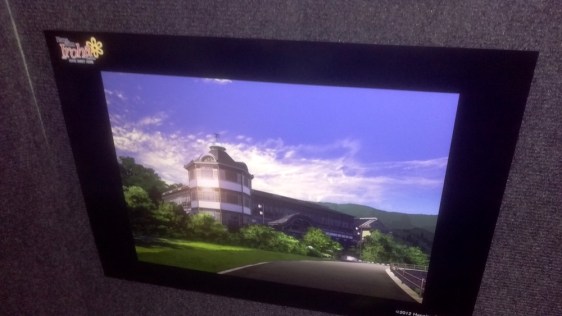
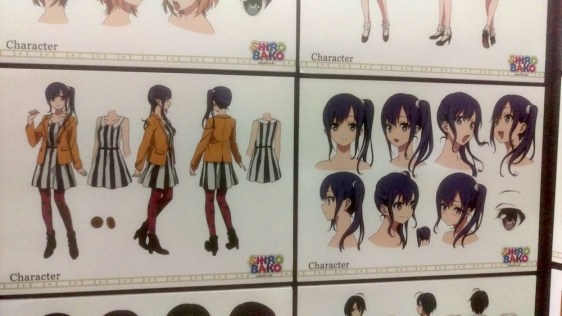
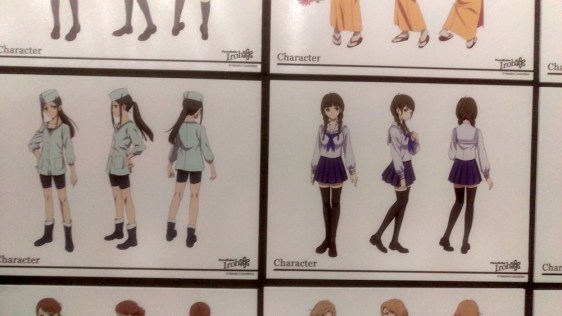
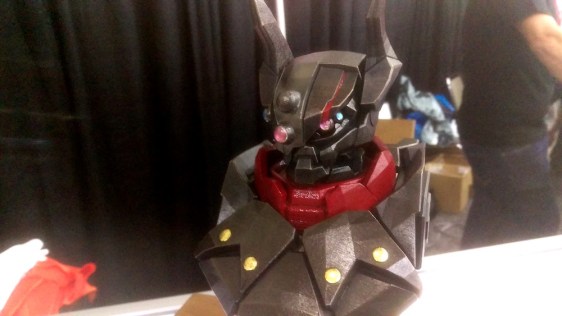

The real highlight of the Artist’s Alley, however, had to be the P.A. Works 15th Anniversary exhibit. Showing detailed character design sheets, background art, and more from P.A. Works shows, it made me even more conscious of the two arms of P.A. Works: the attractive girls who engage in adolescent drama and discovery, and the exploration of beautiful scenery and environments.
Food & Drink
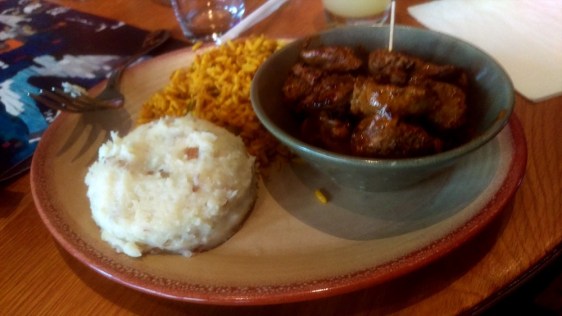
Seeing as this was likely our last time in Baltimore for years to come, my friends and I decided to hit up many of our favorite places and turn Otakon weekend into a feeding frenzy. We went back to Abbey Burger Bistro, where I tried their Australian Red Deer burger. We stopped by Piedigrotta Bakery, the original home of tiramisu. We had to sample the luscious crab cakes from Flash Crab Cake Co. For the return trip home, fried chicken from Royal Farms was a must.
Two places I had never tried were Portuguese chicken chain Nando’s and a local Afghan restaurant Maiwand Grill. Though not exclusive to Baltimore, Nando’s was truly a highlight. Having sample a whole variety of their dishes, including their default chicken, chicken liver, macho peas, Portuguese rice, and natas (egg custards that were the predecessor to Hong Kong’s famous dan tahts), everything was a home run. Maiwand Grill had great portions at really affordable prices, and both their yogurt drink and Afghan ice cream were amazing. The yogurt drink was no-nonsense pure yogurt flavor, and the ice cream had both dates and figs in it (two of my favorite fruits).
Overall
Otakon 2016 was fairly low-key by the standards set by previous conventions, and for that reason it really did feel like a transition into something new and exciting. A part of me wants to come back to Baltimore someday, but another part of me looks forward to seeing what Washington DC has to offer.
Also, I hope no one pulls an Eden of the East near the White House.
As with every year, I leave off with a selection of cosplay photos.
—
If you liked this post, consider becoming a sponsor of Ogiue Maniax through Patreon. You can get rewards for higher pledges, including a chance to request topics for the blog.


 Kio saying thanks and lamenting that he never got to do another beach chapter.




 OGIUE MANIAX