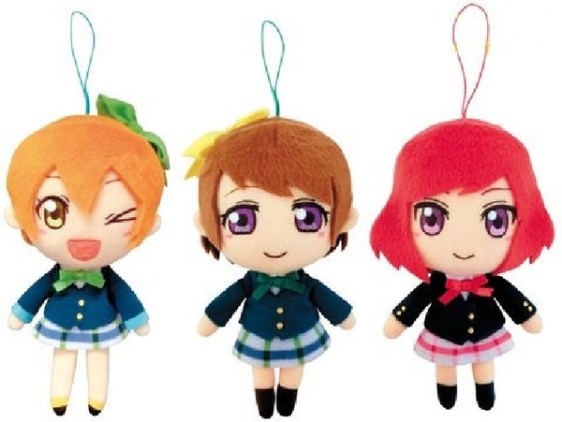
The Popularity of Plushies

41bDBec3-LL_grande

Why are plushies popular with anime fans?

When I got into anime, the internet was a very different place. While I was never part of the old Usenet groups (and in fact I never learned how to use them), I would talk with my fellow fans about whatever was hot at the time. Part of the fan experience was a kind of lighthearted role playing (no, not that kind, and no, not that kind), and one thing I notice was the virtual exchange of “plushies.” These dolls didn’t actually exist, but they were playful gestures to show friendship and support, or to present oneself as cute and fun and lovable. When I think of “anime fans and plushies,” I think of an era of the Anime Web Turnpike and Kisekae (KiSS) dolls, both relics of late 90s, early 2000s internet fandom.

However, that’s not really the case, is it? Plush dolls, whether specifically anime themed or otherwise, still hold the attention of many fans at conventions, online, and (I assume) with each other in other more personal settings. Also, the dolls have become more prominent, whether in artist alleys or through official channels. They might be a chibi Sasuke from Naruto or an alpaca, but they’re out there being sold and traded and loved. There’s something kind of timeless about the idea of owning a cute doll, and it’s not like this is limited to anime fans at all, but anime fans will embrace and hold onto them even after they’re supposed to have outgrown collecting dolls.

shikigamiplush

There can’t be only one reason that anime fans gravitate towards plushies. Even with the common interest of Japanese cartoons, people are too diverse for a singular cause. I could see some enjoying them because they just like dolls in general. Others might just want to collect their favorite characters. That being said, I do think that the trope of the chibi or super deformed character has no small influence on the popularity of dolls with anime fans. They appear in official parody spinoffs, in the middle of scenes, and in fanart since the earliest days. Anime fans embrace what is cute, Japanese culture has made an entire industry off of “kawaii,” and in certain ways it’s almost defiant of macho expectations given to both men and women. Frederik L. Schodt wrote in his seminal book on Japanese comics, Manga! Manga!, that part of the reason manga became so sophisticated is that the fans of manga in Japan grew up and refused to let go of their stories. Perhaps plushies are connected to this sentiment, maybe not directly but in terms of a similar mindset and desire to keep the joys of childhood.

rayearth-chibi

Maybe the association between SD character renditions and plushies are why I consider plushies to be very much anchored in that 90s anime fandom. After all, the 90s were the peak of chibi character content. Though I don’t really see it anymore, super deformed characters were considered such a staple of anime fandom that they were viewed as a defining characteristic that helped to differentiate anime from other forms of animation, right along with big eyes and small mouths. While we’ve since been introduced to a much wider variety of styles, and the trends have changed over time, the anime plush doll still retains the features of a chibi character.

I personally don’t engage with anime or anime fans the way I did 15 to 20 years ago, so I don’t know to what extent the old ways of interaction still remain. Do fans still give each other imaginary plushies, or do they now take the form of digital renderings, emojis, or Line stickers? Does this further emphasize the physical aspect of actually owning plush dolls? For the anime fans who carry them through conventions and meetups and such, do they also display them in their everyday lives, or is there still a fear of being judged for being into dolls? This is a line of inquiry I’d be interested in finding out more about. If you have insights of your own, feel free to share them!

I know that, by mentioning dolls, I’m also bringing up associations with the ball-jointed (and often very expensive) kind. I think that fandom might share some qualities with the enthusiasts of plushies, but they’re quite a different group overall. Perhaps I’ll discuss that one while reminiscing about Rozen Maiden and its very passionate followers another time.

This post was sponsored by Johnny Trovato. If you’re interested in submitting topics for the blog, or just like my writing and want to sponsor Ogiue Maniax, check out my Patreon.


[Apartment 507] Is “Voltron: Legendary Defender” Copying Anime?

I wrote a post looking at Voltron: Legendary Defender and its transformation sequence compared to that of King of Braves Gaogaigar. You can check it out at Apartment 507.

Plain 90s Anime Beauties

I’ve been on an “90s anime theme” kick recently, watching various live concert performances and animated intros/outros on YouTube. When you look through them, there’s a recurring tendency in shows of the time to have ending animations highlight the token female character as she existed in the 90s. What stands out to me in particular is that a lot of these girls are designed to be fairly pretty but not excessively beautiful, talented but not too talented.

Frequently, the 90s girl is the protagonist’s love interest, especially in series with heavily male-dominated casts, and in shounen works also works as either an everyman or expositional character to get the reader up to speed on the rules of the story. She’s the ideal support for him and his passionate pursuit of whatever goal or motivation he possesses, and it’s this sideline cheerleader that has more recently fallen by the wayside in favor of a new breed of heroine, who still might not be in the spotlight but possesses some sort of “other” talent. The example that immediately comes to mind is Akagi Haruko from Slam Dunk, who knows a bit about basketball and is the target of affection for the hero, in contrast to Aida Riko and Momoi Satsuki from Kuroko’s Basketball, who have support “powers” for their teams and whose roles as possible love interests are not as prominent (perhaps influenced by the greater fujoshi influence of Kuroko). None of them are stars of their stories, but I think there’s a clear difference between then and now.

If the main character’s love interest is supposed to be an ideal, I have to wonder why they’re so frequently designed to not be quite so ideal in the first place. This could be chalked up to “good characterization” in some cases, and a “boring” or “plain” female character to a potential viewer outside of Japan might be seen as a “yamato nadeshiko” type perfect woman in Japanese culture (e.g. Shinguji Sakura from Sakura Wars). However, I can’t help thinking that there’s something else, like a desire to promote the plain girl as the one young readers of shounen should be aiming for. Pining for the hottest girl around might somehow have been viewed as impractical or even wrongheaded, and that the childhood friend, the girl next door, would be the far better choice. Was anime and manga trying to teach its audience what kind of love would be the more realistic choice, or is it just that having these girls be fairly plain is simply about pushing the heroes further to the forefront?


Shimoneta, Censorship, and Education

Censorship is a difficult subject to explore because the battle over it is rife with conflicting and contradictory values. On the one hand, it usually derives from good intentions, specifically the desire to avoid exposing people to that which is deemed morally inappropriate. On the other hand, it can be a tool for control, especially when the standard for what is morally right is itself flawed through biases such as racism and misogyny. To create a work of fiction around the idea of censorship is to potentially step into a minefield.

Shimoneta: A Boring World Where the Concept of Dirty Jokes Doesn’t Exist is an anime adapted from a light novel. Its premise is that Japan has outlawed dirty words, dirty thoughts, and of course dirty pictures in order to improve public moral health. High schooler Okuma Tanukichi is the son of an infamous “dirty-joke terrorist” who resents his father and seeks to reunite with his childhood love, Nishikonimya Anna, a symbol of purity and righteousness. However, he ends up getting roped into joining a dirty-joke terrorist organization known as SOX (substitute the O), led by a girl clad in only a cape and a pair of underwear on her head who goes by the name “Blue Snow.”

Though a comedy, I don’t find the series to be that funny. Then again, it would have been foolish of me to expect extremely clever jokes from a series premised around trying to restore people’s ability to shout, “PENIS!” Rather, what ended up interesting me was how it tackles censorship, and how I can’t find myself in total agreement with its ideas on the matter.

The world of Shimoneta, or more specifically the elite school in which most of its story takes place, is an environment where people are so sheltered from profanity, pornography, and obscenity that they cannot even recognize it when it is literally thrown in their face. Aside from a few eccentrics who are either extremely good at hiding their feelings or have their interests tied up in other things (one character’s interest in sex is mostly from a scientific point of view), they are mentally unable to process their own sexual desires. From here, I believe it is easy to see why a series like Shimoneta can be simultaneously uncomfortable yet thought-provoking even if one potentially disagrees with it. The idea that the removal of dirty jokes from a country has rendered its men and women psychologically immature could be utilized as both an argument against “political correctness” and an argument against oppression of people’s rights to be sexually active. After all, women are attacked both for having sex and not having sex.

Where Shimoneta stands on the subject feels somewhat unclear even after finishing the series, and this has a lot to do with the fact that the series is rife with anime and light novel tropes. Anna, for example, turns out to be a stereotypical yandere character whose burning desire for Tanukichi (she can literally smell his scent from hundreds of meters away) swings his view of her from aspiration to monster, while her large rack and hourglass figure clearly make her a sexually attractive character. At the same time, Anna is the very symbol of how a lack of sex education can negatively affect a person. Because she has been taught that righteousness is the polar opposite of profanity, she believes that anything she does in the name of righteousness is by definition pure, even if it involves pinning Tanukichi to the ground and trying to take his virginity against his will in highly sexually charged scenes.

What is Anna? Is her behavior more representative of a warning towards keeping people ignorant about sex, or is she a nymphomaniac designed to thrill the audience? For that matter, what is the ethical standing of a little girl character clearly designed for a lolicon audience, whose hair is shaped like a penis? Is it an innocent joke, or has it gone too far? And in this way, is Shimoneta directly commenting on actual society (assuming Japan but perhaps it can apply elsewhere)?

I feel that the ambiguity of that last question is what makes Shimoneta worth watching, at least for a few episodes. It opens up a potentially interesting conversation about how we view media, and even in disagreement I believe it can be a fruitful discussion.

If you liked this post, consider becoming a sponsor of Ogiue Maniax through Patreon. You can get rewards for higher pledges, including a chance to request topics for the blog.

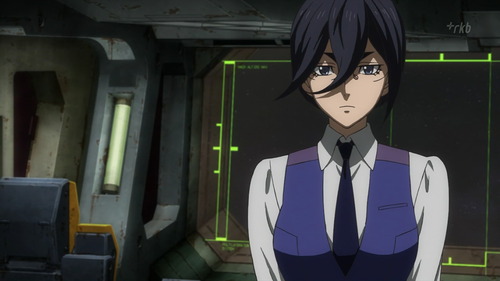
McGillis from Gundam: Iron-Blooded Orphans is More Char than Char

McGillis_Fareed-5_G-Tekketsu-5Ever since Char Aznable became one of anime’s most memorable characters, many Gundam series have included similar rivals for their heroes. In general, they’re enemy pilots of roughly equal power who wear masks or something similar to hide their faces, and who often have their own ulterior, if noble, motives. Most recently joining the likes of Zechs Merquise, Harry Ord, and more is McGillis Fareed from Mobile Suit Gundam: Iron-Blooded Orphans, and his approach to being “a Char” is probably the most well-realized out of all of them.

Gundam: Iron-Blooded Orphans spoilers below.

Throughout the original Gundam, Char Aznable is willing to (and has!) back-stabbed even his closest friends because his true goal, to get vengeance for the death of his father, overrides any sort of sentiment he might possess. McGillis is incredibly similar. He’s willing to sacrificing childhood friends for the sake of accomplishing his motives, but in a way he might also be even more scheming and cut-throat than Char himself. While Char might sabotage some of his own side for personal reasons, he never actively leaked information to the enemy or tried to orchestrate both sides to fall in his favor.

McGillis has gone from being a fairly interesting character to being one of the reasons I’m looking forward to the next season of Gundam: Iron-Blooded Orphans. Given the overall quality of the show, I really, really hope the series doesn’t suffer from Sunrise “half-way point syndrome” like so many of their mecha anime, where in an attempt to become more successful a show loses what made it special in the first place.

If you liked this post, consider becoming a sponsor of Ogiue Maniax through Patreon. You can get rewards for higher pledges, including a chance to request topics for the blog.

[Apartment 507] A Tribute to Digimon Singer Wada Kouji

KojiWada

I’ve written a short, personal post about the late Wada Kouji over at Apartment 507. Wada was the singer of many beloved Digimon songs over the years, and had an unmistakable voice.

[Apartment 507] Unforgettable: Love Live! Minami Kotori Analysis

kotoriphotobomb

I’ve written another Love Live! character analysis over at Apartment 507, this time about Minami Kotori, aka Minalinsky Our Lord and Prophet. Where are my Kotori fans at?

Time for a Change!: Ogiue Maniax Status Update for April 2016

Between showers, fools, and lambs, April is a month of change and transition. It’s only appropriate then that I try to evolve as well! As always, it’s with the help of my friends and Patreon supporters that I continue to try and improve Ogiue Maniax:

General:

Johnny Trovato

Ko Ransom

Alex

Diogo Prado

Sasahara Keiko fans:

Kristopher Hostead

Yoshitake Rika fans:

Elliot Page

Hato Kenjirou fans:

Elizabeth

Yajima Mirei fans:

Machi-Kurada

So, the first change I’m making is a small adjustment to my schedule. Since 2010 I’ve generally structured my weekly posting schedule to be posts on Tuesday and Friday with at least the occasional lighter post on Sunday, most typically a Fujoshi File entry. However, I’ve noticed that most of my readers come in on Sunday, and to give my lowest-impact content at that point feels like a shame, because if you’re coming to Ogiue Maniax I believe it’s to read something interesting. Because of this, I’ve decided to switch Sunday to being a main posting day, with either Tuesday or Friday being less heavy. I’m still on the fence on which one to use, but most likely it’ll be Friday. I hope you enjoy the change, and of course, if you miss the post it’s always there in the archives.

kiminakare_mainvisual

A second possible change is adding another series other than Genshiken for me to review regularly. The title is Kimi xxxru Koto Nakare (“You Can’t Do That”), the new monthly manga by Okachimachi Hato (creator of one of my favorite manga, Fujoshissu!) about a high school romance between a male idol and a female celebrity comedian. The question is, how should I cover it? To help me with this, I’m using a handy dandy poll:

Keep in mind that this is just for feedback and the winning answer won’t necessarily determine what happens. Also, I mistakenly thought it was a weekly manga, so a previous Patreon post of mine mistakenly had weekly options.

As for what’s happened on the blog over the past month, the biggest event for Ogiue Manaix and all current Genshiken readers definitely has to be the latest manga chapter, which concludes the Madarame harem story. I won’t say much more, so go check it out if you’re curious as to what goes down and my thoughts on it. Also, I need to point out that a funky translation of Chapter 122’s contents has been going around, and it provides an inaccurate image of the characters. In response to this, I’ve also translated a couple of small but vital excerpts from the chapter in the hopes of clearing up the confusion.

As mentioned last month, I went to see a whole bunch of animated films. These include The Boy and the Beast, The Case of Hana & Alice, Beyond Beyond, Kizumonogatari Part 1: Tekketsu, Psycho-Pass: The Movie, and Long Way North. This means it was a pretty danged review-heavy month, especially because I also covered Please Tell Me! Galko-chan, the mahjong manga Saki, and the ever-successful Aikatsu! I’m typically more of an analysis and deep thinking kind of writer, but it’s not bad to have months like this either, and most of the time I my reviews are more half-review/half-analysis anyway.

Speaking of reviews, I also finally updated the Reviews section of the blog. I neglected it for about…a year and a half? orz

I also talked last month about my concern over stagnating as a writer. My smart and ever-perceptive friend David Brothers gave me some advice in response to one of my Apartment 507 articles on Yandere characters, which is that I should think about putting more of myself into my writing. I think that ever since I’d gone in a more academic direction it’s improved Ogiue Maniax in a number of ways. At the same time, that sort of more casual and personal feel, while still present I believe, might not be as apparent. Sometimes I have to be more friend than teacher.

Three final comments:

  1. Shout outs to Abadango for winning Pound 2016 using 99% Mewtwo (with a dash of Meta Knight). It’s the first major tournament in Super Smash Bros. for Wii U that has been won by a Mewtwo.
  2. Some cool and mysterious fellow recently published an academic article about the science fiction manga 7 Billion Needles in the journal Japan Forum. If you’ve got access and that’s your sort of thing, maybe check it out?
  3. This past weekend was the final Love Live! concert for the original μ’s girls. Love Live! forever! Hanayo banzai! Also, sorry about the April Fool’s joke (not sorry).

Dumb Girls, Dumb Boys: Please Tell Me! Galko-chan Review

galko-bustyboobyBased on the design of its central character, Please Tell Me! Galko-chan likely draws initial attention for two reasons. While I’m not denying the popularity of Galko herself, I do think the anime has an appeal that goes beyond eye candy or the potential thrill of hearing girls talk candidly about personal topics.

Please Tell Me! Galko-chan typically revolves around the conversations between three characters: Galko (a trendy “gyaru” whose appearance can be deceiving), Otako (an otaku girl who prefers to avoid social interaction but is still Galko’s best friend), and Ojou (a rich girl whose experiences differ greatly from the rest). Each short 7-minute episode, they talk about things like how eating spicy foods makes your butthole hurt or the difficulties of buying bras when your breasts are too large, usually instigated by Otako who loves to tease the easily embarrassed Galko. Even if she doesn’t get embarrassed about something, a whole group of boys fawning over her will easily let their imaginations go wild.

Screen Shot 2016-01-08 at 2.47.28 PM

Screen Shot 2016-01-08 at 2.47.50 PM

It is most definitely a fanservice anime, but I feel that the show is carried as much by its characters’ personalities as it is by their appearances (and even then it’s really only Galko-chan). When people mistakenly suspect a tired Galko of being out with men (she actually just stayed up all night watching anime), or when it turns out she’s into literature, the appeal isn’t simply that there’s a “mismatch” between her inside and outside. Rather, her character feels quite full-formed despite each episode being so short. The same goes for the other characters as well, such as how the overweight Nikuko is shown to not only be extremely athletic, but also brimming with confidence. In this respect, Otako is actually my favorite because of how her desire to tease Galko is shown to bring Otako out from her own shell, creating a beautiful (if weird) friendship. Also, Otako kind of has an Ogiue vibe.

Screen Shot 2016-01-08 at 2.53.31 PM

galko-guys

I think what maybe says it all is that, as I watched the show, I looked forward to seeing how the guys react to Galko’s conversations just as much as I enjoy Galko’s hijinks. They’re at that age where even one hint at something sexual will cause their hearts to race, and their confusing of Galko’s general warmth and friendliness with the idea that she definitely likes each of them feels just as much a part of youth as all of the stuff on the girls’ side. While I don’t know anyone who’s ever kneaded dough to try and replicate the feel of a boob (this really happens in the show), I don’t think it’s that farfetched given how cultures, inside or outside of Japan, mysticize the idea of being with someone to the point that even approximations gain a kind of value all their own.

If you liked this post, consider becoming a sponsor of Ogiue Maniax through Patreon. You can get rewards for higher pledges, including a chance to request topics for the blog.

Love Live! Sunshine!! Anime Preview

love-live-sunshine-members

lovelivesunshine-curelovelivesunshine-knm-small

lovelivesunshine-stone