
As we get closer to the premiere of Love Live! Sunshine!! I’ve been trying to get my analyses of the original μ’s girls out for you to check out. This time, I’ve written about Ayase Eli and the way the series utilizes her “Russian-Ness.”

As we get closer to the premiere of Love Live! Sunshine!! I’ve been trying to get my analyses of the original μ’s girls out for you to check out. This time, I’ve written about Ayase Eli and the way the series utilizes her “Russian-Ness.”
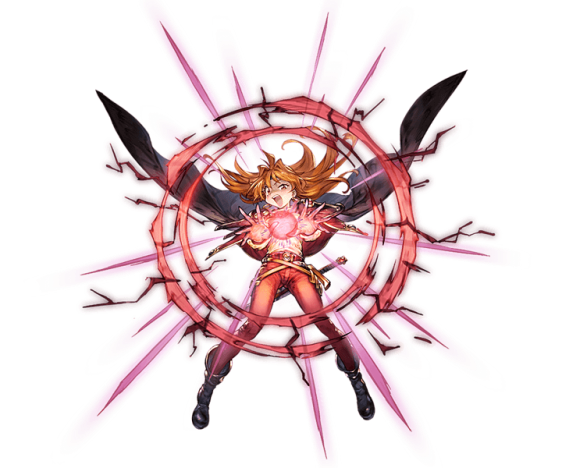
Granblue Fantasy is a Japanese mobile game that’s got tons of fans, and it’s so popular that it ends up crossing over with other franchises. Check out this small list of series that make guest appearances. As someone who got into anime in the 90s, I’m especially fond of the Slayers cameos.

Mito Ikumi, Food Wars! Character
Within the first few minutes of the Food Wars!: Shokugeki no Soma anime, viewers are made well aware of the extent of its fanservice. If the flavor of peanut butter squid being visually likened to being violated by a large squid wasn’t enough, as the episode progresses characters basically have reactions that are downright orgasmic. It’s the kind of reaction that can really turn people away, but I also am aware of how the seeming need to fully animate a manga can lead to a rather different (and more gratuitous) experience, even when faithfulness to the source material is considered important. This is what I believe happened with another series, Mysterious Girlfriend X, and so when I got the chance to read the manga for Food Wars, I went in curious about two things: the depiction of competition in the Yakitate!! Japan “food battle” sense, and how the fanservice compares to the anime.
Food Wars! portrays both the act of master chefs locked in fierce cooking combat and the sexually charged tasting reactions with equal care and attention to detail. The manga is certainly not a cleaner alternative to the anime, but there are a couple of points I noticed about it. First, the manga’s imagery is a noticeably different experience due to the lack of need to fully animate all of the more gratuitous scenes. Second, Food Wars! actually takes a kind of multi-level approach to its fanservice.

Shinkon Gattai Godannar!!
I think it’s fair to judge a series by the most extreme examples of fanservice found in it, and so this isn’t really a defense of Food Wars! as sticking it to the prudes or anything. However, when it comes to anime and manga, they tend to maintain to a fairly consistent level of the kind of fanservice they want to use. Love Hina and Chobits go for mildly risque bath scenes, Aim for the Top! goes for the subdued-by-today’s-standards jiggle and “creative” camera angles, and Godannar!! and Ikkitousen are all about in-your-face shots and revealing clothing (or lack thereof). Food Wars!, in contrast to all of those, encompasses virtually the entire spectrum.
At the far end, you have the scenes described above: images that, in and out of context, look like something you’d find in a naughty magazine. However, there are also plenty of food reaction moments that are more about showing off the girls’ (and in some cases even guys’) bodies in the buff, without that added layer of sexual innuendo. There are images of girls spilling out of their outfits, but there are also relatively more conservative examples. So, while you have a character like Mito Ikumi (pictured at the beginning of this post), who wears bikinis and is based around a rather blatant “meat” theme, you also have characters like Tadakoro Megumi and Mizuhara Fuyumi, who are less voluptuous but are still involved in their own fanservice scenes relative to their designs. In those instances, the manga will decide to show for one panel the way that Megumi’s pants hug against her hips, or that Fuyumi has subtle but noticeable curves.

Tadokoro Megumi
In terms of how men are portrayed (their clothes burst off as they salivate over a five-star meal just as much as the girls do), but I’d actually like an opinion from any readers interested in men as to whether Food Wars! hits any of their buttons in the right way. I get the feeling Takumi Aldini is popular, but I haven’t looked into it extensively.
Given all this talk of gratuitous imagery, I find it all the more interesting that the more I read Food Wars!, the less I think of it as a fanservice series, even though it can be so elaborate and perverted in its character depictions. It certainly is still that sort of manga and anime, but the cooking really takes center stage, and in certain ways the ever-present fanservice is actually subordinate to the food. There’s just something about the intensity and the amount of attention that goes into presenting the culinary masterpieces of the manga’s characters that shines the spotlight on their cooking above all else.
—
If you liked this post, consider becoming a sponsor of Ogiue Maniax through Patreon. You can get rewards for higher pledges, including a chance to request topics for the blog.

Depending on your definition of good science fiction, Legend of the Galactic Heroes is one of the finest SF stories ever. Leaning more towards space opera, LoGH combines political intrigue with a genuine look at how people and societies can change (or even regress) as they expand out into the universe. I mentioned the anime on Ogiue Maniax many years ago but never really got into great detail about the series, but now that it’s being released in English in both anime and original novel form I thought that it’s about as good a time as any to talk about what makes LoGH such a strong series by reviewing the first volume of the novel.
Legend of the Galactic Heroes is the story of a corrupt democracy versus a stagnant empire in a far-flung future where humankind has ventured deep into space. Two figures, the unassuming Yang Wen-Li on the side of the Free Planets Alliance and the righteous Reinhard von Lohengramm on the Galactic Empire, act as both heroes and rogues within their respective systems, and their actions change the fates of their societies in unforeseen ways.
As I have seen the entirety of the Legend of the Galactic Heroes anime most of the story is not new to me. It’s been quite a few year so I may have forgotten some details, but the major notes are still pretty fresh in my memory because of how much impact this series has. The prologue of the first volume is actually a short history of how the Galactic Empire and Free Planets Alliance came to be, and how they each try to erase the presence of the other for political reasons. Something as simple as the fact that the Free Planets Alliance (which came after the Galactic Empire was formed from a Hitler-esque powergrab in its predecessor the Galactic Republic) reverted to an older calendar system instead of the Empire’s standard shows just how complex political philosophies and their manifestations in everyday life can be. A similar example exists in the real world: Taiwan’s official name is still to this day the Republic of China because it denies the idea that the People’s Republic of China is the legitimate government of China (and the PRC does the same to Taiwan). Even in the first volume, it encourages thought about how governments and even people’s everyday actions can maintain hegemony.
For some, such as myself, it’s a fascinating read that provides the perfect context for what happens in the main narrative as Yang goes about questioning the blind fervor by which people toss around the term democracy, and Reinhard similarly tries to chip away at the ossified core of incompetency in the Empire. Their personalities, but also many of the characters around them, are so well-portrayed and so effectively invite readers to pursue connections and thematic similarities among the gigantic cast of LoGH that it makes the book a pretty easy read overall. The character of Paul von Oberstein is especially notable for creating more questions than answers, and to this day you’ll have debates over what his true motives are.
Reading the first volume of the novel, one thing that stood out to me that had actually never occurred as I was watching the anime were the parallels between Reinhard and Rudolph I, the original founder of the Galactic Empire many centuries ago. Both believe that their government is suffering from stagnation and corruption, and that the best way to deal with these issues is to seize power from within. While Reinhard believes that people should be judged by their merits and Rudolph I was a staunch proponent of eugenics, the conviction by which they have sought change are strikingly similar.
Similarly, though this isn’t nearly as strong a connection, Yang is portrayed as being a brilliant but lazy man who despite all of his talents and keen insight wishes to live a quiet life. The current Galactic Emperor is initially shown to be a somewhat lost and even incompetent man, but he seems to display sudden flashes of intelligence that imply he might know more than what people expect. However, just like Yang, he prefers a more idle life.
The translation for Legend of the Galactic Heroes is overall very solid. I have not read the original Japanese, so I can’t make so direct a comparison, but the language flows well, never gets too dense or overwhelming even in the most dry of sections, and characters’ personalities are conveyed in a matter of moments. If I have any criticism of the translation, it’s less of a language issue and more of a copy editing complaint. At various times throughout the story, the spelling of Reinhard’s best friend Siegfried Kircheis changes, from Siegfried to Sigfried and then back into Siegfried. It doesn’t impact the quality of the story by any means, but that’s the kind of mistake that shouldn’t be happening.
I don’t think I can recommend LoGH enough, but then again I know pretty much the whole story. That being said, while both the overarching movements of the narrative, as well as the small details that connect with each other, build into something much greater, the first volume does a tremendously good job of setting it all up.

Just in time for the release of Captain America: Civil War, I decided to write a short article about the similarities between My Hero Academia and Captain America.
I think there might be some additional parallels with the new movie as well, but I’m going to have to wait until I actually see the thing before I make that decision.

This month I will be flying to Japan to do some sightseeing and meet with some old friends! I actually haven’t been to Japan in 11 years, so I’m curious as to how it’s changed. It’s also an opportunity to see how my Japanese has improved (or degraded) in the time since I’ve been gone!
I have posts planned for the weeks that I’m gone, so you’ll still be able to enjoy my posts in the meantime.
As for this month’s special Patreon sponsors:
General:
Johnny Trovato
Ko Ransom
Alex
Diogo Prado
Sasahara Keiko fans:
Kristopher Hostead
Yoshitake Rika fans:
Elliot Page
Hato Kenjirou fans:
Elizabeth
Yajima Mirei fans:
Machi-Kurada
Following up on last month’s poll about reviewing the new manga series Kimi xxxru Koto Nakare (or Kimi nakare for short), I decided to go with the good ol’ fashioned blog format. It’s where my strengths lie, and while I’m open to challenging myself by making YouTube videos and such, I’m just the kind of person who best expresses himself in writing. You can read the first chapter review here, but if you can either read Japanese or at least want to follow along visually the manga is actually free.
That being said, I’ve considered making videos just to help me practice and get better at speaking, which is more of a holistic quality of life change than anything else. I made a couple a while back but I just haven’t kept up. Though, I did just recently appear on the Veef Show podcast to talk about Gundam: Iron-Blooded Orphans.
This month’s Genshiken review is the first after the conclusion of the Madarame Harem story, and it’s basically a prelude to a new school year. I loved this chapter because of all of the fantastic Ogiue presence in there, but I might be a tad biased.
Other articles that I think readers should check out are my look at the volleyball manga Shoujo Fight and its stylistic similarities to what is sometimes call “OEL manga,” as well as a sponsored post discussing the Popularity of Plushies among anime fans. Actually, Shoujo Fight reminds me that I never finished The V Sign, which is a classic volleyball title, and I really should get back to it.
I’ve also begun participating in a site called senpai.co as a reviewer. While Ogiue Maniax is my main focus, and Apartment 507 is my opportunity to try and reach a different audience, senpai.co is a convenient place to give some quick thoughts about recent anime that has a greater sense of permanence than Twitter.
Last topics for this month:

In my continuing quest to write small articles on all of the μ’s girls of Love Live!, I’ve written something on Nishikino Maki. I know she’s a popular one, so I hope I do you Maki fans justice.

In related news, the English version of Love Live! School Idol Festival just added songs from both Aqours (the stars of Love Live! Sunshine!!) and A-RISE. I’ve been eagerly anticipating A-RISE’s arrival (Kira Tsubasa is a favorite character of mine), so I’m hoping to get her for my account.
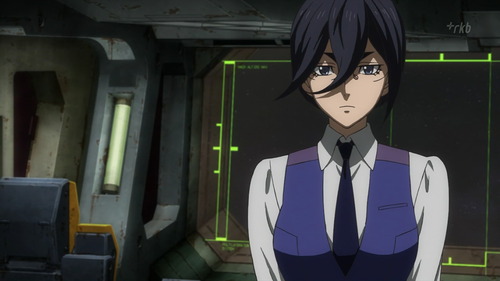
I stopped by the Veef Show to discuss the latest Mobile Suit Gundam series, Iron-Blooded Orphans. Have a listen, as we have fairly different perspectives on the show, and I’d love to know what you think of the series as well.
For reference, the post I mentioned about McGillis can be found here, and the series I mention at the end of the podcast that I have begun chapter reviewing is here.
So in conclusion, Fumitan Admoss is the best.

What was originally supposed to be a review of the second Digimon Adventure tri. movie has now taken on a different context with the passing of Digimon singer Wada Kouji at the age of 42 after a long battle with cancer. While his voice was absent in the English dub of Digimon, many fans around the world came to know his distinct, powerful voice across multiple works, and in many ways his songs have defined and encapsulated the swirl of emotions and memories that Digimon brings. In listening to Wada’s tri. renditions of “Butter-fly” and now “Seven,” the softness in his voice comes across not simply as the melancholy of growing up, but also Wada’s last push to make his voice heard, similar to Freddie Mercury in “These Are the Days of Our Lives” before succumbing to AIDS.
Although Wada’s unfortunate passing does not any direct impact on the story of Digimon Adventure tri. 2: Determination, it does cast an interesting light given the primary focus of the second film. What do we as people do with our lives? What does it mean to be an adult? How do we handle the challenges that life throws at us? How can we continue to be the Biggest Dreamer?

Determination, like Reunion, places great emphasis on character exploration, with greater attention on how difficult it can be to both aim for and avoid conformity as we get older. In particular, the film puts the spotlight on worrywart Kido Joe and Tachikawa Mimi. Just like in the last film, Joe has been actively ignoring the call of the Digimon because he’s more concerned with trying to get into a good college. Mimi has to deal with the fact that her aggressive attitude and individuality (implied to be a product of both her personality and her time spent in the US) rubs her classmates the wrong way.
Though overall decent, I find this second film to be weaker than the first one, mostly because the pacing feels stiff and that not quite enough was done to explore Joe and Mimi’s conflicts. The comedy, including seeing Gomamon cook instant ramen for Joe, and even the bath house hijinks (including a brief steamy moment between Takeru and Hikari) are all wecome and keep the film just light-hearted enough, but the story’s progression still feels quite uneven. However, one potential point against the film, namely that it focuses on boring ol’ Joe, is something I see as a point of contention. I think that Joe’s story is something that can be hard for some to relate to while others will connect more immediately to his plight, and that the extent to which Determination resonates with viewers can therefore vary tremendously.
Given that Joe’s choices are between studying for college entrance exams or helping to save the world the choice should be “obvious,” but it’s clear that Joe is trying his hardest to become a responsible adult. After all, he’s supposed to be the responsible one, and the fact that this pressure seems to come not so much from his parents but from society as a whole and his own expectations for doing what’s best makes his inability to improve his test scores despite all of the work he’s put into it feel that much more devastating. Joe is essentially struggling between doing the right thing and doing the right thing, and the fact that he cares so much about both is what makes it a conflict in the first place.

By comparison, I think Mimi’s troubles are easier to understand, but both her and Joe have to confront what it means to live and exist among others, when one is increasingly expected to fall into line. Mimi also pushes through her problems with greater determination than Joe, but that also comes down to their differences in personality. That’s not to say Mimi doesn’t struggle in this film herself, or that her concerns are any less important or difficult to deal with, but if there’s one thing Mimi doesn’t lack, it’s confidence.
I think what made Digimon and Wada Kouji such powerful presences in many children’s lives is the sense of discovery and (of course) adventure that they conveyed. Determination plays with these feelings, asking whether or not they should be left in the past or should be carried into the future even as we become adults. It’s a simple yet profound fight that many must go through, and I’m confident that the next film will deliver hope to all those who believe their childhoods have long since disappeared beyond memory.
You can watch Digimon Adventure tri. on Crunchyroll.
—
If you liked this post, consider becoming a sponsor of Ogiue Maniax through Patreon. You can get rewards for higher pledges, including a chance to request topics for the blog.

