One Punch Man’s Japanese and American Superhero Lineage

One Punch Man has been a hit, both with the people who have long championed the manga, and with those discovering it through its animated adaptation. The story of Saitama, an invincible superhero who literally finishes most of his fights with “one punch,” the series puts a great deal of emphasis on humanizing its Superman figure. It handily deflects the classic criticism of invulnerable protagonists as “boring” while also drawing from both Japanese and American superhero traditions, and I think it’s worth exploring what it does to make Saitama a sympathetic figure.

To talk about a Superman-type character is to also naturally bring up the Man of Steel himself. Originally conceived with incredible strength and speed and gradually transformed into a being that could move planets and reverse time, much of the past three decades’ stories concerning Superman have been finding ways to make him human. Zack Snyder’s Man of Steel film focused on the psychological and emotional struggle of having to hold back all the time, something shared with select episodes of the Justice League cartoon. Superman has been reduced to the point of being not quite so omnipotent, and also turned into a brooding teenager for Smallville. Numerous “what-if” scenarios have made him Soviet, nearing death, old and out of touch with the youth, and alternative takes on Superman-esque figures have dealt with mental problems, become amoral, and more. Even other superhero-themed series such as Tiger & Bunny and My Hero Academia will build in flaws into their Supermen, though the fact that they’re in the distance means that it’s more about how their image and reality compare.

One Punch Man ties Saitama’s ongoing turmoil to the fact that his astronomical power levels have made him unable to fulfill his heart’s desire, which is to be pushed by a powerful foe and go beyond his upper limits. He wants to feel like Son Goku being brought to the brink by Frieza. He wants to be Ryu from Street Fighter, constantly pursuing the next challenge. He draws from that popular tradition in manga and other Japanese media about the thrill of the journey, and yet while Akagi brushes with death before defying it, even that is denied when it comes to Saitama. Even if we’ll never as powerful as that, I think it’s easy to understand why this would be so painful.

Perhaps the more important element is that Saitama is kind of an idiot. The fact that Saitama doesn’t quite think through his position in the world (or perhaps choose to actively ignore it) brings a certain quality that reminds me of the earliest Superman comics and stories, back when he could only leap tall buildings in a single bound. If you look at the very first Action Comics, Superman spends a lot of it bullying the bullies. There’s a certain satisfaction in the fact that Superman’s personality and character aren’t so elaborate, that there isn’t almost a century of material exploring his psyche. One Punch Man achieves something similar by just having Saitama’s morality have good intentions but generally be kind of vague. He hasn’t thought too much about his role as a superhero other than that it’s “fun” (or at least should be), though at the same time it puts a twist on that basic desire to be so powerful that no one can stand in your way.

If you liked this post, consider becoming a sponsor of Ogiue Maniax through Patreon. You can get rewards for higher pledges, including a chance to request topics for the blog.

Love, Shogi, and World Domination: 81 Diver

greatuglymanga-81diver-020001-small

At long last, after many years and 35 volumes of manga, I have finished the exhilarating, hilarious, ugly, and beautiful shogi manga known as 81 Diver. Its bizarre narrative and even stranger art work captivated me from the very beginning, and now that I have seen this series to its end (one of the three series I followed intently that have concluded recently), I want to write to confirm that 81 Diver not only ends strong but in many ways either matched or exceeded my expectations.

81 Diver is the story of Sugata Kontarou, a failed shogi [Japanese chess] player who has taken up gambling through shogi to make ends meet and to fulfill his love of the board game. One day, he decides to order a maid service to clean up his apartment, and discovers at his doorstep an absolutely voluptuous redhead as if out of a fantasy. However, this maid has another identity as Akihabara’s strongest shougi player and a gambler just like Sugata. Known as “Ukeshi,” what translates loosely to “master of defense,” Nakashizu Soyo (as we later learn her name) has her own mission in life: to avenge her brother and father who were both killed by shogi.

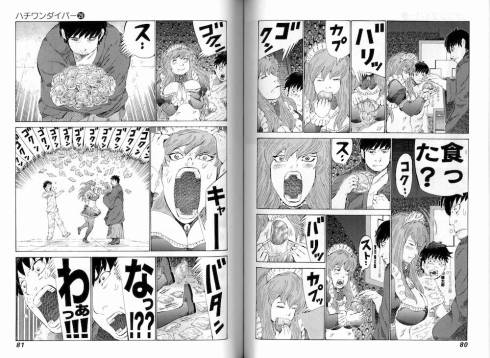
As the series progresses, the characters wind up not only challenging and befriending a variety of powerful shogi players and for some reason martial arts experts (actually it’s because the author Shibata also wrote Air Master), but end up in a tournament to save the world from the Kishoukai, the “Demonic Shogi Organization.” The amounts of ridiculous twists and turns this series goes through are almost too many to count. As crazy and as strangely epic as this sounds, however, what really makes 81 Diver special is that the art looks like this:

When discussing the character Kiryuuin Satsuki in Kill la Kill, I once wrote that she has so much presence and so much inner strength that it is the very first thing you notice even as she’s wearing the most ridiculous and revealing outfit possible. I find 81 Diver‘s portrayal of Soyo to be of a similar vein. Sometimes there will be pages of her character where half of it is occupied by a shogi board and the other half is taken up by her enormous chest. At the climax of the manga, her breasts become one of the central points of conflict. And yet, her raw shogi power level is what stand out most about her.

The difference is that, while Kill la Kill achieves this through incredibly well-rendered, stylized, and intense artwork, I ended up including 81 Diver as one of the many titles at my Otakon 2015 panel, “Great Ugly Manga.” On some level, this is clearly on purpose, but it’s also clear, especially given Shibata’s guest essay manga in Gundam: The Origin, that he’s making the best out of what he has, and what he has is a lot of spirit and not a lot of conventional drawing talent.
greatuglymanga-81diver-02-small

I would not call 81 Diver an intentionally feminist or progressive work, especially given all of the attention given to girls’ bodies, but it is notably diverse in its cast. There’s an admirable homosexual character who isn’t stereotypically flamboyant, who also dresses like a tokusatsu character and shoots rocket punches. There are also numerous romances between unlikely individuals, and what stands out most is the strange romance between Kontarou and Soyo that portrays them as equals above all else.

When you look at many shounen and seinen manga, there is often something of a lopsided relationship where love interests aren’t allowed to be as prominent in the particular subject focus of the manga (be it sports, fighting, or whatever). Not so with 81 Diver. Though Soyo is dressed in maid outfits throughout the series, and though she will sometimes playfully call him “master” as a callback to how they originally met, at the end of the day they are bonded by their mutual skill and passion for shogi. In fact, when the series begins Soyo is clearly Kontarou’s superior, and when they are able to play again much later in the series, it is one of the most satisfying duels I’ve ever seen in manga.

As mentioned by the characters, the characters fight as if they’re communicating their love through the game of shogi itself. When you see the two of them play, you genuinely don’t know who’s going to win because, even if you set aside the idea of skill in favor of narrative progress, both characters have convincing reasons why they need to win. Ultimately, I love the way they resolve all of this, but I won’t say more so that it remains a surprise for readers.

I could probably write a whole series of posts on 81 Diver, and in fact I’m quite tempted to do so. Suffice it to say, 81 Diver comes highly, highly recommended from me. If you can get past or even embrace the terrible (or perhaps terribly endeaering) artwork and style, it becomes one of the funniest, surprising, and involving manga you’ll ever read.

If you liked this post, consider becoming a sponsor of Ogiue Maniax through Patreon. You can get rewards for higher pledges, including a chance to request topics for the blog.


Ogiue Chika + Satan = Oshino Ougi

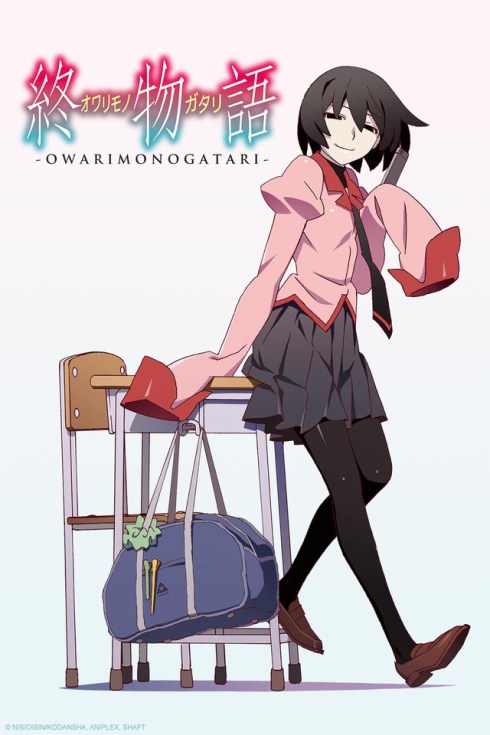
owarimonogatari-crunchyroll

Throughout Nisio Isin’s Monogatari series there has been a mysterious character whose motivations and origins are difficult to grasp. Oshino Ougi, who purports to be the niece (and sometimes nephew) protagonist Araragi Koyomi’s Hawaiian shirt-wearing mentor, seems to come out of nowhere and has a knack for planting thoughts into people’s minds and for getting them to unconsciously open up. Is she just a manipulator or something more? Given the series and its author, the latter is more likely, though either way what Ougi reminds me most of is the biblical devil, whose half-truths are designed to deceive men into making grave errors.

074de9c41821cdc376b0ca5d7da5010c

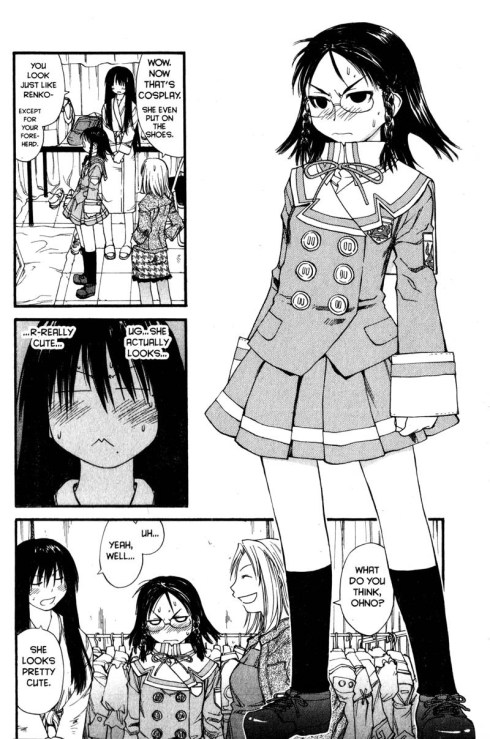
What stands out to me most about Ougi, however, is how much she resembles Ogiue from Genshiken. She has deep, black eyes just like Ogiue’s from the first series. She has a hair style similar to Ogiue’s when she lets it down, especially Ogiue’s look during Nidaime. Ougi also has a similar chest size and overall figure, and the fact that she’s sometimes a boy (in terms of sex, gender, or something else? It’s mysterious.) reminds me of Ogiue’s overall tomboy demeanor.

mizuhashikaori-myanimelist

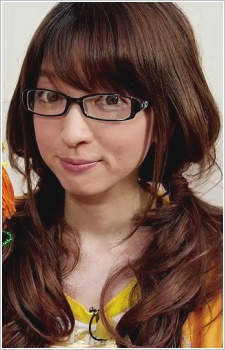
Drawing this comparison even closer is the fact that Ougi and Ogiue share the same voice actor, Mizuhashi Kaori (Mami in Madoka Magica, Laharl in Disgaea).

oshinoougi-dowmansayman

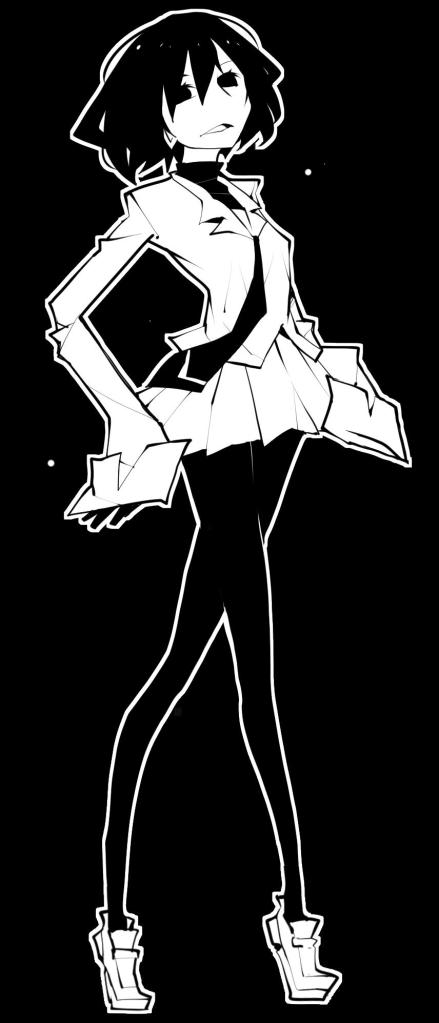
Check out this Ougi fanart by artist Dowman Sayman as well. Given the way they draw Ougi, especially her nose, she looks even more like Genshiken‘s fujoshi president.

Is it mere coincidence? Most likely yes. Even so, whenever I watch the currently-running Owarimonogatari and see Ougi, I can’t help but think of Ogiue Maniax’s namesake. Maybe that’s why Oshino Ougi has become my favorite character in the series.

If you liked this post, consider becoming a sponsor of Ogiue Maniax through Patreon. You can get rewards for higher pledges, including a chance to request topics for the blog.


Drifting Along: Ogiue Maniax Status Update for December 2015

Whenever I think of Christmas and anime, my mind immediately goes to Initial D: Third Stage. Does that count as a Christmas anime? I’m going to say yes, and try to make it official.

Here are this month’s Patreon supporters. As always, I’m happy that they have my back.

General:

Ko Ransom

Alex

Anonymous

Yoshitake Rika fans:

Elliot Page

Hato Kenjirou fans:

Elizabeth

Yajima Mirei fans:

Machi-Kurada

We even have a new Yajima fan aboard! Seeing as how the character’s been developing in Genshiken as of late, I wonder if more will join.

It’s a pretty subtle change, but one thing I’ve been trying to do over the past month is put out content three times a week. I used to do at least two posts a week, with a Fujoshi File every other week, but I felt that it wasn’t quite enough.

Speaking of the Fujoshi Files, at the moment they’re on a brief hiatus as I use that time to indulge in my love of Super Smash Bros. After the recent announcement that Cloud Strife is going to be a playable character (!), I’ve gone back to an old love of mine and have been designing movesets for what-if Smash characters. So far I’ve done Pitfall Harry from Pitfall and Zoma from Dragon Quest III, and there will be at least a couple more on the way.

I have more reviews this month, though as always they toe the line between review and analysis. Of course, there’s the requisite Genshiken chapter, and if you’re a Sue fan this is the one for you. I also wrote something about the use of kanji and words in Aquarion Logos, and then there’s my review of the new Digimon anime. If you haven’t heard about that last one, it’s actually a sequel to the original, with all of your favorite characters in high school. If you like giant robots, I also appeared on the Cockpit podcast to talk about Gaogaigar. I even made a new 1 Minute Review to celebrate the release of Girls und Panzer der Film!

As with every month, if you’re interested in requesting topics for me, it’s a reward for those who pledge $30+ on my Patreon. I of course don’t mind coming up with my own topics (and in many ways it’s actually kind of easier),  but I do miss being “forced” to look at something I might not have otherwise. In the meantime I’ve replaced the Ogiue Maniax Skype group reward at $2.00 with a new feature: I will include a link to whatever you want (within reason) in a special section in my sidebar. Remember, if you’re pledging already, you already have access to this, so send those requests my way!

The last thing I’d like to talk about is the whole social media thing. In the past, I’ve tried to make it so that each site I used had a different specialty. My tumblr, for example, was mainly for video clips. However, I realized that many people only look at their favorite social media platforms and rarely venture outside of them. That’s why I’ve been getting a bit more redundant with posts across different sites, to reach more people. My question is, are you someone who sticks to just one, or someone who sees different value in Twitter, tumblr, Facebook, etc.? I’d like to have a better idea of how to interact with my readers, so that I can foster interesting or even delightfully frivolous discussion.


Kiss Kiss Fall in Love: Genshiken II, Chapter 118

It’s finally time to see Sue and Madarame’s date, which apparently involves ring tosses and ultra obscure references. After Hato comes by and advises Sue to express her feelings not in anime quotes but in her own words, Sue finds an opportunity to say what she really thinks of Madarame.

This chapter is all Sue x Mada all the way, and makes a rather strong argument for why they seem to fit together. Madarame is the only one high-level enough to not only immediately get Sue’s anime and Japanese pop culture callbacks, but also to build on them. What really stands out about their time together, however, is that we finally get to learn the truth behind Sue’s peck on the cheek during the school festival.

You might recall that it was a move to get Madarame to jump out of hiding so that Hato would notice that Madarame’s looking out for him after all, and that Saki saw the whole thing. When next we saw Sue, she would blush profusely whenever looking at Madarame, while denying any feelings towards him. The reason, as Sue explains, is that she herself thought she was just teasing Madarame, but having someone like Saki witness it made her self-conscious of the fact that the only reason she can mess with Madarame is because Sue views him differently. To Sue, Madarame is special. That’s why she can call him Nekoyasha and then ride on his shoulders. That’s why she can be so comfortable around him.  That’s why she can finally confess to him, and be the first of the potential four love interests to do so.

I think it makes sense. Genshiken is full of otaples at this point, and a Sue and Madarame relationship would be at the top of the food chain. Not only that, while “I’m comfortable around you” can seem like the most generic of non-reasons to fall for someone, we see how their interactions play out. To some extent, Sue’s able to behave similarly with Ogiue, and even make jokes about Ogiue being her “wife,” but there’s a certain understanding that it’s all a friendly joke. That’s how Sue was with Madarame, but now Madarame’s open-ness and existence as absolute embodiment of nerdery have transformed into a strange attractiveness. Moments when characters realize their feelings are always highlights of Genshiken, whether that’s Madarame and the Saki nose hair incident or Ogiue seeing Sasahara smile, and this one seems to shout, “kindred spirits.”

Visually, Chapter 118 is unsurprisingly the Sue Show. As a character that doesn’t talk much, her facial expressions carry a great deal of weight. Combined with her sharp yet wistful eyes and exaggerated further by her pale features, light-colored coat, and knee-length blonde hair, it’s like her nervousness and emotional tension either take over the entire page, at least whenever Sue herself isn’t being put side by side with Madarame and his darker features (mainly his hair). Nowhere is this more apparent than at the moment when Sue says, “Madarame, I like/love you.”

I almost didn’t want to include this image, just so it could be a surprise to even those who read this review before the chapter itself. However, I think it makes too striking a statement to leave out, especially when considering the fact that Sue purposely prevents Madarame from responding, as Hato hasn’t had his chance yet.  Also, there is arguably an even better moment at the end of 118, and I think I’ll leave that for you, the reader, to discover.

In the end, what I find interesting about all of the members of Madarame’s “harem” is that they connect to him in different ways. Angela’s attraction is physical, and while that might seem shallow she’s the one who brings to the forefront the idea of Madarame as a sexual being. Keiko is somewhere between physical and psychological, and her strategies reflect this. Hato has the closeness of being a guy, the intrinsic understanding of how Madarame might be thinking of a situation. Sue is as awkward as Madarame in many ways, one of their many similarities.

Next up is Hato, and this, perhaps, is where the show really begins.


If you liked this post, consider becoming a sponsor of Ogiue Maniax through Patreon. You can get rewards for higher pledges, including a chance to request topics for the blog.

Nendoroid Tomoyo, Champion of the Universe

nendoroidtomoyo-sutekidesuwa

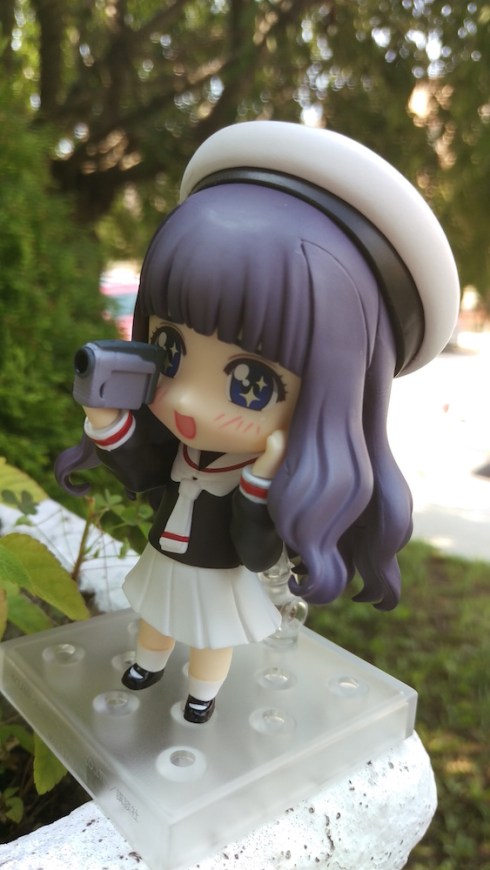
Daidouji Tomoyo from Cardcaptor Sakura is one of my favorite characters ever, from one of my favorite anime ever, and if you’re not a fan of Tomoyo… what’s wrong with you? Whereas normally I would hesitate to buy even some of my most beloved heroines, Nendoroid Tomoyo was a no-brainer. Upon seeing it go up for pre-order, I hit purchase and looked back with zero regrets. Sakura merchandise is common, but Tomoyo much less so, and I couldn’t let this sort of thing pass me by.

nendoroidtomoyo-sakuradistant

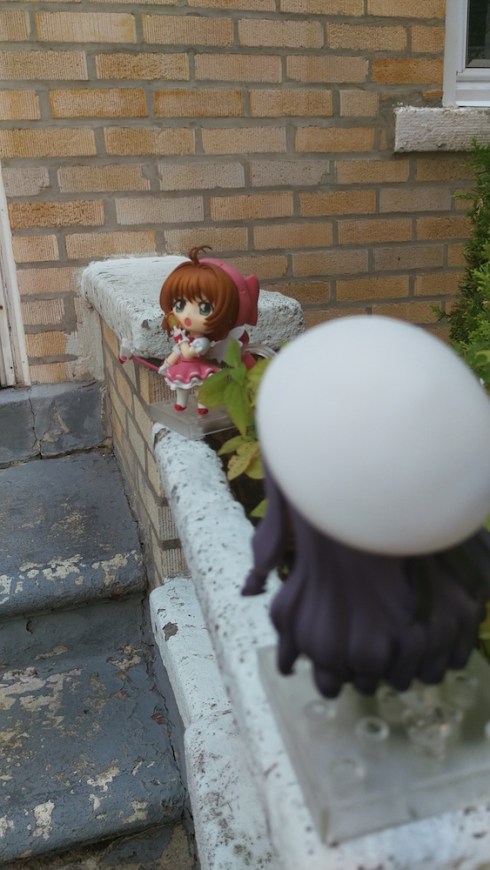
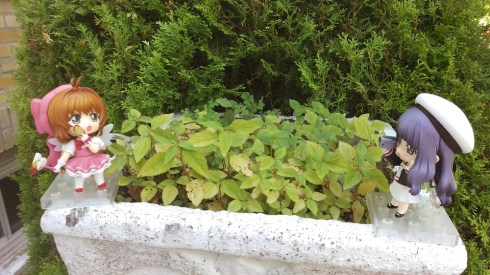
I don’t own a lot of Nendoroids. In fact, my first one was a Kinomoto Sakura (seen above) that I received as a birthday present. Quite smartly, my friend purchased it because he (correctly) expected that I would not hesitate to pick up Tomoyo. Thus, I don’t have a lot to compare to, and I’m extremely biased, so I’ll call this less a review and more of a celebration.

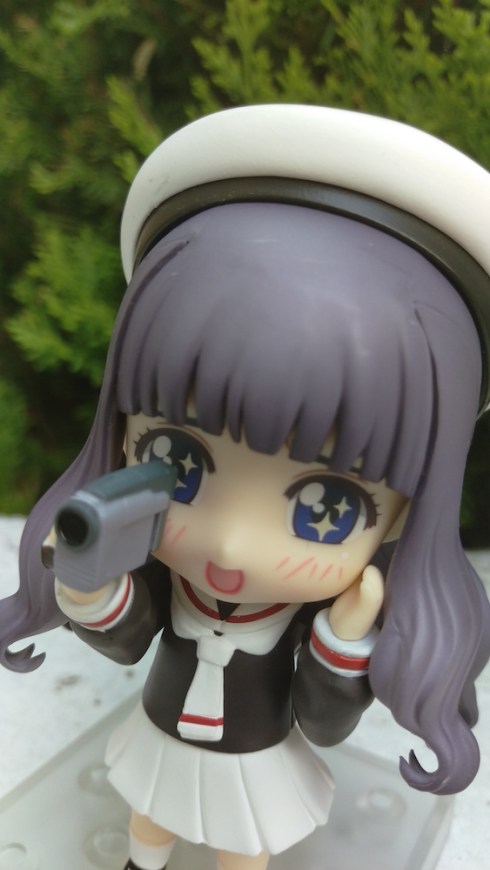
nendoroidtomoyo-closeup

Nendoroid Tomoyo is mostly based on her anime design, as opposed to the softer shoujo look of the Cardcaptor Sakura manga. However, one thing that they did bring from the manga was a hint of Tomoyo’s lavender hair; in the anime it’s more of a gray. When I think about it, rarely do figures try to replicate the look of shoujo manga, likely due to how complicated and not designed for 3-D they are. At least with anime, you can rely on more solid colors.

Tomoyo comes in a standard Tomoeda Elementary school uniform, and has a choice between a hat or a hairband, as well as smiling and ecstatic faces. I’ve gone with the hat + sparkly eyes combo for these photos in order to achieve maximum radness, but what really takes this figure over the top is the inclusion of her signature camcorder.

Remember kids, this anime was made in the early 2000s, before mobile phones could take HD-quality video. Back in her day, Tomoyo would have to walk 20 miles uphill both ways in the snow in order to film her lovely Sakura-chan and add to her massive archive of Cardcaptor Sakura footage in her private viewing room inside of her mansion, under watch by her squad of lady bodyguards.

nendoroidtomoyo-withsakura

It’s supposed to have a swing-out screen, but a small missing part makes it impossible to attach. I’m not sure if it was defective or if I had simply lost it while taking it out, that’s how tiny the connecting piece. The other flaw is that the giant head is rather unwieldy, especially with the hat, and sometimes moving it around can cause Tomoyo’s noggin to fall off.

Overall, it’s a fine addition to the collection, and when I think about it, I am fortunate that the characters I like tend not to get a ton of merchandise. That’s what I would say…if I didn’t get into Love Live. That’s for next time.


The Fujoshi Files 149: Ominaeshi

Name: Ominaeshi (女郎花)
Alias: N/A
Relationship Status: Single
Origin: Moehime

Information:
One of the four Heian-period youkai who comprise the “Kachou Fugetsu,” Ominaeshi is, much like the rest of her group and her human friend Tomoe, a bibliophile. Possessing a more masculine personality compared to the others, Ominaeshi also has the ability to manipulate plants.

Fujoshi Level:
Willing to read anything and everything, while Ominaeshi is not much of a yaoi fan compared to her friends, she is slowly becoming more of a fujoshi due to constant exposure.

Fun New Experiments: Ogiue Maniax Status Update for November 2015

The past month has been quite fun for Ogiue Maniax. First off though, I’d like to thank the following Patreon supporters for believing in me and my writing:

General:

Ko Ransom

Alex

otarsus

Anonymous

Yoshitake Rika fans:

Elliot Page

Hato Kenjirou fans:

Elizabeth

If you haven’t checked out what I’ve written over the past month, I think I’ve put out some pretty good work this time around. As part of New York Comic Con I reviewed Boruto: Naruto the Movie, which is the bookend to the long and popular Naruto franchise. I also finally got around to talking more about my current favorite food manga, Mogusa-san, and I make a pretty convincing argument as to who’s the best moe character of 2015.

My Genshiken chapter review this month felt somewhat heavier than my previous ones, but I think it makes a good partner with my most recent post, which covers my own thoughts on the recent harassment issue in the Steven Universe fandom.

No sponsored posts this time around, but if you’re interested in having me tackle a specific topic of your choice, I take requests from sponsors who have pledged $30+ on my Patreon.I’m trying a few new things with Ogiue Maniax, as while I love the blog I do wonder if it’s grown stagnant and unwieldy in certain respects. First, while many of my articles are fairly long, I’ve started including some shorter posts as well. Back before 2010, when I would write one post per day, my output was more about getting ideas out there and making them short and sweet. Although I think longer posts have their merit in that they allow for more in-depth explorations of ideas and so I would never do away with them, I am wondering if shorter posts can reach people in a different way.

Second, I’m dipping my toe in YouTube. I do not believe I will ever fully get into the YouTube game, but I was thinking of it as a different medium to get my thoughts across. Today I’ve released the first in what could be a series of “1-Minute Reviews,” based on my past reviews on the blog. The idea, as implied, is that I give my take on an anime in 60 seconds or less.

Third, I started up a Facebook page for Ogiue Maniax. I’m currently not entirely sure what its use is, but I’m open to suggestions.Finally, I’ve created an Ogiue Maniax Skype Group for any Patreon supporter who contributes $2 or more. I’m curious to see if anyone would be interested in chatting with me or other readers directly. I’m still unsure if I would do video chat, but voice chat is something I’m open to. Just contact me through Patreon with your Skype name and I will add you to the group.
So tell me what you think!


Hey Dandy: Genshiken II, Chapter 117

As Hato becomes aware of Yajima’s feelings for him, a heartfelt discussion between the two ensues, where they share their doubts and beliefs about what it means to live with oneself. Though ostensibly a prelude to the last “date” of their trip to Nikkou, the moment between Hato and Yajima might well end up being one of the highlights of Genshiken Nidaime.

Over and over, I think one of the questions asked of Nidaime has been, why a harem arc? Why go for the most stereotypical anime trope that potentially damages Genshiken as this realistic depiction of otaku and fujoshi? Given how Genshiken has turned out in its exploration of Madarame’s awkward love life, one answer has been that it’s commenting on the disconnect between the fantasy of the anime harem and the reality of interpersonal relationships. This has been supported by the characters themselves sometimes even saying as such. However, there’s a second possible answer that’s arguably much simpler, and perhaps even extends out from the original series, which is a desire to portray greater diversity in the otaku population, and that includes a greater number of girls and women.

While I cannot attribute any proof of intent to creator Kio Shimoku’s goals with the second Genshiken manga, there are a few factors that have me considering this. First, there’s the higher female to male ratio. Second, there’s Hato himself, who is, suffice it to say, rather complex when it comes to ideas of gender, sex, and sexuality. Third, there is the greater emphasis on the idea of body image in Nidaime. I think this is perhaps where the “harem,” one of the most upfront formulas for having a heavy amount of female characters in a series, becomes integrated into this idea of diverse representation.

In this chapter, the discussion between Hato and Yajima essentially falls on what it means to “look” or “behave” like a woman. Yajima tells Hato that his crossdressing affects her deeply because it reminds her that she is not beautiful, that she’s overweight and lacking in anything that would attract men. Hato responds that he’s jealous of Yajima because he has to constantly put on this ideal act of being a woman in order to keep from getting found out, whereas Yajima naturally exudes femininity even when she does not fit societal standards.

Moreover, Hato remarks that he totally believes a relationship between him and Yajima would be possible, and fondly imagines the idea of being able to share a love of BL with a fujoshi girlfriend, while also specifically mentioning that not just any fujoshi would do (Yoshitake’s personality he considers possibly incompatible). The very things that make Yajima hate the way she looks, the tension of being a woman but not “acting the part,” are what Hato finds appealing about Yajima. And yet, Hato resists starting a relationship because he came to Genshiken to make friends, fujoshi friends, and doesn’t want to taint that desire and pervert it into a pursuit of a relationship.

There’s a lot to unpack there! We have a clear indication that Hato is bisexual, or somewhere deep in that middle area of the Kinsey scale. We have Yajima, who’s not even part of the Madarame harem, sharing these everyday questions that can haunt the mind and subtly cripple one’s self esteem. Basically, there are these two embodiments of so much inner and outer pressure, and they are opening up to each other in a way that, while it technically fails the Bechdel Test in multiple ways (one of them is sexually a man after all, let alone Madarame being a major topic of conversation), it speaks to something deeper about how people view themselves relative to societal standards. For example, why is there sometimes the assumption that an attractive woman can fall in love with an unattractive man for his inner qualities, but that an unattractive woman has no chance with a beautiful man?

On top of all of this, Yajima shows something that I think is truly impressive: she isn’t fully comfortable with homosexuality still, despite being a fujoshi. At one point, Yajima thinks to herself that she should tell Hato, who has said that a relationship with Yajima isn’t out of the question, that he should make the “right” choice and go with a girl. In her mind, she sees that as the proper way things should go. However, and this is key, she holds back because she realizes how much Hato has gone through when it comes to his relationship with Madarame and the soul searching that he’s had to do. Here is a character who is in her own way affected by the standards society puts on women, yet is vulnerable to assumptions of what is normal and what is not as seen in how she opposes Hato’s crossdressing for so long, and over time is learning and changing her mind at a pace that is her own. In the end, Yajima encourages Hato to try his best in his pursuit of Madarame, and it means so much given what Yajima is thinking and what kind of person she is. It’s a real struggle that is rarely talked about.

Diversity and representation are two of the biggest topics when it comes to current American comics and cartoons. Japan’s history in this regard is different, with things such as shoujo, BL, yuri interacting with a traditional and contemporary sexist society. In Genshiken Nidaime there’s something powerful, almost as if there isn’t an overtly political motivation to improve representation of other sexes, genders, and sexualities, but a simpler desire to show more of the world in all of its complexities using the tools of manga. I’ve had a feeling along these lines the entire time I’ve been reading Nidaime, but this is perhaps the chapter where it stands out more than any other up to this point.

(Obligatory Ogiue sighting)

If you liked this post, consider becoming a sponsor of Ogiue Maniax through Patreon. You can get rewards for higher pledges, including a chance to request topics for the blog.

The Fujoshi Files 148: Kazabune

Name: Kazabune (風船)
Alias: N/A
Relationship Status: Single
Origin: Moehime

Information:
A member of the group of Heian-period youkai known as “Kachou Fugetsu,” Kazabune has a far wider knowledge of yaoi due to her ability to time travel. By creating an ark in the shape of a die, she can go into the future, a talent she uses to exploit the modern era’s photocopying technology. Kazabune also has an older brother with whom she used to share her books. Together, they created a secret code to communicate using sexual positions to signify Japanese letters. In terms of genre she prefers anything, as long as it’s hardcore.

Fujoshi Level:
In addition to exceeding the boundaries of time and space in order to maintain her record of yaoi fiction, Kazabune is able to determine whether a book has erotic content just based on the cover; an impressive feat when considering that BL from the Heian period only has written text.