Having reviewed my predictions for the 2010s and looked back on the decade as a whole, it’s time to try and peer into the future of anime and manga in the 2020s!
Tokyo 2020 Olympics
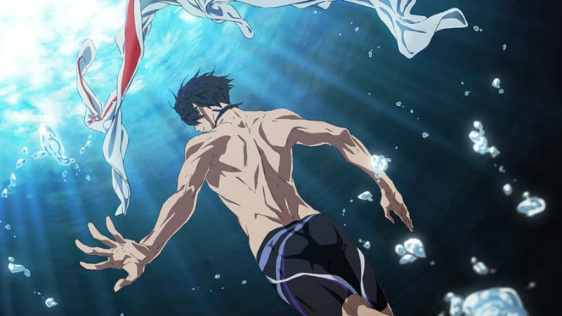
Preparation for the 2020 Tokyo Olympics has already affected Japan in different ways, from the moving of the historic Tsukiji Market to the heavier policing of manga content. Like with any Olympics, there’s a desire to put forward the best possible appearance to the world. In the short term, there is most definitely going to be an effect on anime and manga production, as studios and artists are either hired to hype up the Olympics or do it of their own volition. It’s sad that Kyoto Animation, originally poised to contribute with a new Free! movie to highlight competitive swimming, won’t be making it short of a miracle. I predict there’s going to be some Olympics-mania fatigue, but not enough to make a big dent in the overall attitude at first.
I do have a long-shot prediction, though: Japan is going to do surprisingly well in some unexpected event, and it’s going to kick off a mini-boom in anime and manga. Whenever Japan achieves in a sport, there’s a strong chance that manga and anime are either pushing for the sport or are a response to succeed—volleyball in the 1964 Tokyo Olympics and Japan’s recent success in rugby are two examples. I’m not going to try to guess what event will trigger this trend, but I’m cheering for Greco-Roman wrestling.
Fighting Climate Change as a Core Theme
The Earth is not in a great place. Scientists are warning that if nothing is done in the next few years, climate change will send us toward long-term and lasting changes that will affect everything. While not perfect, Japan is very environmentally conscious in many respects, and is a major player in the Paris Climate Accord. There are even little things like “Cool Biz,” a public awareness campaign for companies to encourage better energy efficiency by reducing air conditioner usage and having its employees dress in more heat-friendly suits.
To that end, I think there are going to be more and more anime and manga centered around environmentalism. Also, they will primarily exist in two areas: super mainstream-popular anime films and kids’ shows. So someone like Shinkai Makoto is going to hit the subject of saving the environment full steam, and I feel pretty confident that there’s going to be an environmentalist Precure at some point in the next ten years. I don’t know what effect this will have, but if anime tourism can merge with saving our planet in some way, then maybe there’s hope.
Hardening of Shounen Protagonists
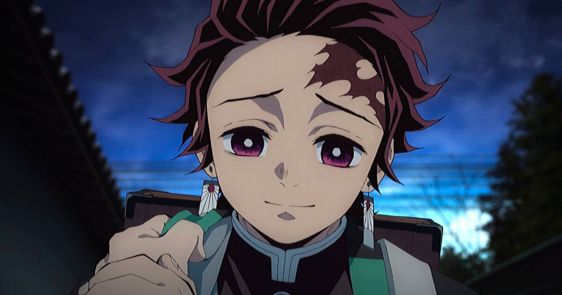
There’s a certain kind of shounen protagonist that’s been popular lately: the “good boy.” These heroes are gentle and kind-hearted, though never lacking in bravery or perseverance—think Sei from Gundam Build Fighters, Tanjiro from Demon Slayer, or Sakamichi from Yowamushi Pedal. But as positive an effect as I think this is having, I feel like there’s going to be a backlash at some point. At some point, hard and angry heroes will come into the limelight (albeit temporarily) as a kind of reaction to the softer heroes we’ve been seeing in the 2010s.
It’s not just that angry rival characters have their own dedicated fanbases (and thus would probably enjoy a story centered around them), or that Eren Yeager from Attack on Titan is a walking rage factory, but that their attitudes and focus on power have a primal appeal that’s hard to deny. While I don’t think we’ll ever quite get back to the ultimate convergence point between compassion and violence—Kenshiro from Fist of the North Star—I predict we’re going to see the soft hero and the hard hero archetypes flip back and forth from one series to the next. In other words, in the future, there will be a time when the “Bakugos” of the world take center stage and the “Dekus” will be the rivals.
More Diverse Body Expression
In the past ten years, I think we’ve seen a greater range of body types, especially with female characters. It’s true that a good deal of it veers hard into fetish territory, but even so, there have been many moves towards broadening notions of beauty. Attack on Titan both showed the world an anime heroine with a six pack in Mikasa Ackerman and pushed a gender nonbinary character in Hange Zoe. Pochamani centered on a bigger girl as a shoujo heroine. Even something as simple as big butts being attractive in Japan is a relatively recent phenomenon.
I think this diversity will only continue to increase because more and more, people will start to assert that their standards for attractiveness and self-identity don’t have to be beholden to what society traditionally says is okay. More and more artists and creators will be inspired to make works of their own, and enough of them will achieve success that it’ll encourage the producers and publishers themselves to go even further. The only caveat is that I think both the normalizing and the fetishizing will ramp up, and this may cause some conflict as a result.
The New Power Fantasy
Power fantasies are practically part and parcel with media as a whole, and anime and manga are most certainly included. However, I think we may be seeing a trend towards power fantasies that are less about escapism and more about fighting the feeling of powerlessness. The new power fantasy won’t just be about getting the girl and living in another world where your knack for video games gives you the edge, but rather about being able to exert lasting change on a world that seems immovable. To this end, I think we’re going to be seeing a heavier mingling of the power fantasy genres that permeate anime and manga today: harem, isekai, American-style superheroes, Japanese-style superheroes, and more. People will want to be inspired and not just placated—especially when it comes to the younger generations.
Greater Acknowledgement of Production Conditions and Gender Inequality
Through projects like the Animator Dormitories and news articles on animator wages, the 2010s end with at least some awareness that the people who make our beloved anime often don’t even have enough to put food on the table. It’s a decades-long problem—Miyazaki blames Tezuka for the current status quo—but I think the next decade might just be a turning point. I don’t know if it’ll ever reach mainstream awareness given that lots of people prefer not to know how their hot dogs are made, but I think that new sources of funding may create greater vocal desire to see wages change, especially if all that profit isn’t going to the workers themselves.
Similarly, we’ve seen more and more women this decade in prominent positions—writer Okada Mari and director Yamamoto Sayo are a couple of prominent examples. There’s still a ways to go before women directors and such will be commonplace, but I think that the women of today will be role models for the next generation. The Kyoto Animation tragedy is an unfortunate setback given their dedication to paying workers fairer wages, but I am somewhat optimistic that things will get better regardless overall.
Let’s See What the Future Holds
In some ways, I feel these predictions (and how they differ from the predictions of ten years ago) reflect not just where the anime and manga industries are in 2019 but also where I personally am at this point in life. If somehow Ogiue Maniax reaches 2029, I’ll be glad to reflect on where everything will be. Hopefully we’ll all be in a better place.
There’s actually one more 2010–2019 post left, so I hope you’re looking forward to Part 4!
Another decade of anime and manga has passed, which means it’s time to reflect on all the things that have happened in and around our favorite Japanese art and entertainment forms. With more anime than any time previous, there’s an overwhelming amount of history to look at, so I’m going to be focusing on what I consider interesting and/or important trends.
I also covered some of 2010–2019 through my review of my old predictions, so for the sake of keeping a long post from getting further out of hand, I’ve kept further discussion of topics there to a relative minimum.
Bookended by Tragedy
This decade more or less began and ended with painful events that have shaped and will continue to shape Japan and its anime and manga industries for years to come. March 11, 2011 was the day that a combined earthquake and tsunami struck the Fukushima Daiichi nuclear power plant, causing nuclear meltdowns. July 18, 2019 was the date of the arson attack on Kyoto Animation, killing over 30 people, injuring even more, and leaving the famed studio’s main building in flames.
The Fukushima triple disaster was brought in part by nature but also human negligence at the highest levels of authority, and it destroyed villages, displaced people from their homes, took lives, and contaminated land and water. The area, one known for its rice crop in a nation where rice is a staple food, had to deal with the all-too-familiar fear that nuclear power conjures up in Japan via Hiroshima and Nagasaki.
Fukushima’s consequences are far, far bigger than any one industry, but that’s precisely why they have had an indelible effect on anime and manga. Suddenly, there was the realization that whatever anti-nuclear messages existed in pop culture weren’t enough. It was almost too poetic a timing that Coppelion, a manga about genetically engineered girls having to rescue human survivors in a post-meltdown Tokyo, began only months prior to Fukushima. Anime such as Madoka Magica that were aired during that period suddenly had their surrounding contexts changed.
But the disaster also brought support from across the anime and manga industries to Fukushima and the surrounding Tohoku region. Creators left messages encouraging and praying for a revival, and as the land has started to improve (though to what extent is up for debate), there’s an active push by the government to encourage tourism and purchase of local goods. Anime and manga also play a role here too as part of the campaign to bring people back.
In contrast, the Kyoto Animation attack was like a direct strike to the heart and soul of the anime industry. Not only was it the worst domestic attack since World War II—even worse than the Tokyo sarin gas attack—but KyoAni has been a pioneer of better wages and better gender equality in anime in addition to their creating popular and critically acclaimed works. It’s unclear how the anime and manga industries will react to this over time (aside from better security), but the biggest question mark will be about what could have been.
There was a lot of talent lost, notably The Disappearance of Suzumiya Haruhiand Kobayashi-san’s Dragon Maid director Takemoto Yasuhiro, and it’s sad that they will have the chance to keep working and creating. There is one bright side, however: KyoAni has started up their animation school again, and their mission to prepare the next generation is more vital than ever.
An aside: One odd bit of humor to come out all this was that the days after the disasters, the only commercial on Japanese TV was apparently ads telling people to greet each other more. These drove Japanese viewers nuts, so some of the more artistic ones started turning the animal mascots in these commercials into transforming robots.
Fujoshi Integration and the Permanence of the Otaku Hero
Back when I originally started Ogiue Maniax in 2007, one thing I was interested in was the portrayal of otaku characters, and by extension the fujoshi characters that began appearing more and more at the time. Going into 2010, this feeling was still quite strong, but as I continued to keep an eye on series with otaku in them, it became harder and harder to keep up. The Fujoshi Files, my on-going archiving of fujoshi characters, is on semi-hiatus right now because I’ve simply been overwhelmed by the fact that you just never know when a fujoshi character will show up for two episodes in an obscure TV series. In other words, otaku characters aren’t just commonplace now—they’re arguably an over-saturated archetype.
This is especially the case with the isekai genre and fantasy light novel series, where having an otaku of some kind (it doesn’t necessarily have to be an anime otaku) is de rigueur for the kinds of power fantasies that are ubiquitous in that realm. But the prevalence of the Otaku hero isn’t even limited to that particular world. Onoda from Yowamushi Pedal and Deku from the wildly popular MyHero Academia, both straightforward shounen leads, have otaku minds. At this point, sometimes it’s easier to ask whether a protagonist isn’t an otaku.
Moe in Moderation
Throughout the 2000s, it was “moe” this, “moe” that. There were haters, there were supporters (me included), and those caught in the middle. In 2019, however, it’s past its prime (at least in the old familiar form) to the extent that the term itself has faded immensely in the otaku lexicon.
In hindsight, I think of moe as like a food with a very intense and peculiar flavor that is probably good in reasonable doses. The problem is that people gorged on it until they got sick, and had to eventually learn when less is more. The occasional smorgasbord happens, not now you see hints or accents of moe in more things—music, horror, and even the most serious and mature titles. It’s part of why I think sports series have started to gain traction in the United States when there was like success in the past: people realized that the core appeal of sports anime and manga was less the athletics themselves and more the human drama that comes with exploring characters’ weaknesses and struggles. Even a softer shounen hero like Tanjiro in Demon Slayer has moe qualities that quite possibly outstrip even his sister’s tremendous qualities.
I one commented to anime podcaster and ex-Crunchyroll guy Evan Minto that Eureka Seven was a moe show. He found it absurd, but I was serious, because moe came from empathizing with its characters vulnerabilities. Just because a character can be moe doesn’t mean they’re useless, and I think that’s a big lesson that has been taken to heart by anime and manga as a whole.
Plus, you can still totally find all-you-can-moe buffets whenever you feel the need to go nuts.
American-Style Superheroes
Perhaps due to the success of the Marvel Cinematic Universe, the American conception of the superhero (in contrast to the Kamen Rider, for example) is now a regular part of anime and manga. Putting aside the Marvel and DC co-productions, this decade has seen Tiger & Bunny, One Punch Man, and My Hero Academiaall reach enormous success (albeit not always for the same reasons). You also have series like Heroman, and the fact that Disney’s Big Hero 6 film has a Japanese protagonist perhaps says something about the desire for international appeal.
It’s interesting that so many specifically embrace an American aesthetic, whether it’s red, white, and blue motifs in its characters or American-style cities as settings, and it really speaks to the fact that they’re aiming for that “capes” aesthetic. However, what’s even more noteworthy is the way these manga and anime have been embraced by superhero comics fans as being better at telling superhero stories than many current American comics.
Superheroes also create an amazing bridge for being American comics fans to come to manga and for manga fans to check out American comics. It’s perhaps easier than ever to transition between the two.
Steps Towards Mainstreaming LGBT
Queer romances have long been a part of manga and anime—Hagio Moto’s Heart of Thomas from the 1970s is generally considered the first one shounen ai manga. The portrayal of BL and yuri can differ significantly from real relationships, with the former often being for the pleasure of non-queer audiences, but this openness has attracted many fans, and there are more and more works that try to support a queer audience as well. But Japan is still in many ways a conservative culture, and positive mainstream depictions of non-heteronormative characters can come with a lot of baggage.
While there is still a ways to go, there is a general trend towards more consideration for LGBT characters these past ten years. Gatchaman Crowds, for example, features three characters each with different types of non-cishet expression, going beyond the original Gatchaman and Berg Katze’s dual genders while keeping them respectful. Genshiken Nidaime (aka Second Season aka Second Generation) has a crossdressing fudanshi with complicated feelings at the center of it’s story who tries to navigate the difference between BL fandom and homosexuality. Yuri!!! On Ice features the gradual development of a clearly gay relationship as its core, but its lack of standard BL flourishes engendered a debate about whether it should be called BL at all. Tagame Gengoroh’s My Brother’s Husband won both Japanese and international acclaim.
One stand-out example of LGBT becoming a little more mainstream in anime and manga, to me, is how it’s been handled in the Precure franchise. While it’s always had its yuri fans, and Kira Kira Precure A La Mode even strongly hinted at something between two of its characters, it’s 2018’s Hugtto! Precure that made an entire subplot out of the burgeoning gay relationship between two minor characters—one of whom is implied to struggle with his self-directed homophobia. While the franchise still doesn’t have the courage to say the word “gay,” it at least has these characters holding hands, giving hearts to each other, and telling presumably very young viewers to not let anyone else define who they are. Sailor Moon had Neptune and Uranus, but this is another layer.
From Sekai-kei to Game-like Isekai, Ironic Isekai, and Beyond
In the previous decade, one of the popular genres of Japanese fiction, especially in the realm of anime and manga but also light novels and games, was sekai-kei. Literally meaning “world-style,” it’s actually almost the opposite of what you probably think. Instead of being focused on world-building, it’s about stories where the outcome of the world rests upon the relationship between two characters. I would call Haruhian example of sekai-kei because their fate rests upon Haruhi and how Kyon interacts with her.
I feel that, since 2010 or maybe even a little sooner, we’ve been seeing fewer and fewer sekai-kei stories. In their place has been a surge in isekai (transported to another world stories) that’s impossible to ignore.
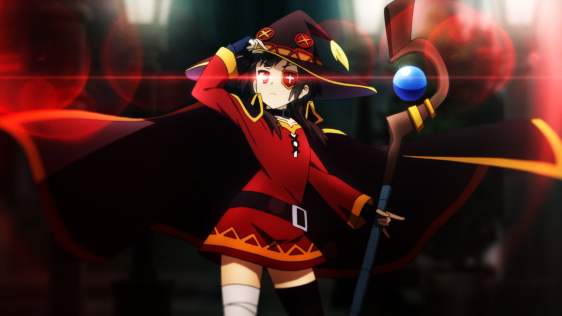
Isekai is nothing new, and there are examples in modern Japanese fiction dating back to the 1970s. Even Gundam director Tomino’s Byston Well series is an isekai. The big difference now, however, has been the game-like approach to isekai. Whether the hero is literally trapped in a video game (Sword Art Online, Log Horizon) or where it’s simply an extremely game-like universe (KonoSuba, Re:ZERO, Overlord), there’s a presumption about RPGs as a common-knowledge experience. Here, the fate of the world usually rests on the hero who’s simultaneously underpowered and overpowered. Rather than necessarily being about exploring the new world, these stories have been mostly either power fantasies or responses to power fantasies.
Japanese scholar Azuma Hiroki wrote about “game-like realism” in the sense of a reality with no beginning, middle, and end, and plenty of alternate realities. While it doesn’t map perfectly, current isekai can be seen as a kind of attempt to wrangle these notions back into a straightforward, albeit open-ended and often meandering format.
Isekai has gotten so prevalent that some online novel contests have even begun to forbidisekai entries. But it also means that it’s ripe for parody. The Devil is a Part-Timer! is a reverse-isekai where a hero and a demon lord end up in modern Japan. The Hero is Overpowered But Overly Cautious plays on an idea that many RPG players are familiar with: making absolutely sure everything is perfect to the point of virtual neurosis. They’re not all winners, but there’s a desire to explore isekai as an archetype, and it’ll be interesting to see how far this goes.
The Ascendance of Mobile Games
Part of the story of the 2010s the world over is the rise of mobile games, and in Japan this translated to character-focused gacha. These digital waifu and husbando slot machines are a powerful thing, and the devotion they engender can veer straight into “gambling addiction” territory, but it also can’t be denied how much of an influence they’ve had on anime, manga, and fandom.
Consider the Fate franchise, which went from being once defined by its original visual novel to being known primarily through the absurdly successful and profitableFate/Grand Order mobile game. Also look at Granblue Fantasy, which helped make the company Cygames into a major player—the Granblue Fantasy anime shows a budget few can even dream of.
Even The iDOLM@STER, which began as console games, has in part taken on new life by having a virtually limitless selection of idols to obtain through its apps. Love Live! found success through various channels, but there are many people who became fans solely through the School Idol Festival game. And Kantai Collection technically started as a browser game, but it’s cut from a similar mold, and it’s notable that it’s become one of the franchises that dominates Comic Market.
There have been tons of light novel anime and manga adaptations, but the amount of works based on mobile games steadily increased over the decade as well. This doesn’t mean they’re inherently bad—Rage of Bahamut Genesis is one that sticks out to me as exceptional—but it’s certainly become a crowded field where “adaptation as advertisement” and “adaptation as mark of prestige” exist in the same space.
Anime as Faithful Reproduction Instead of Creative Interpretation
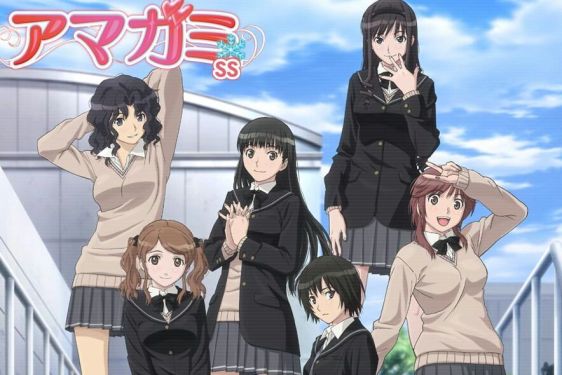
In decades past, whenever there was an anime adaptation of something with multiple paths—a dating sim, for instance—the common approach was to synthesize all of the different routes into a single story with the canon heroine being the winner. But starting in 2010 with Amagami SS (or possibly something even sooner) it started to become more common to adapt every path. Each couple of episodes was basically a different what-if where the protagonist ends up with a different girl. The most extreme version of this might be the movies fully dedicated to the alternate stories of Fate/Stay Night, Unlimited Blade Works and Heaven’s Feel.
In a way, it’s an extension of what we saw with Kyoto Animation’s adaptations of Key games. While those shows still synthesized all the routes, there was a more active adherence to the look and feel of the source material, right down to using the original theme songs. Anime, rather than trying to do its own thing with the material given, is more likely to try and stick to the script. Filler arcs or anime-original material were out, and season delays were in, for better or worse. 2009’s Fullmetal Alchemist: Brotherhood (intentionally made to follow the manga’s story more than the first anime) also set a precedent.
Fantastic Remakes
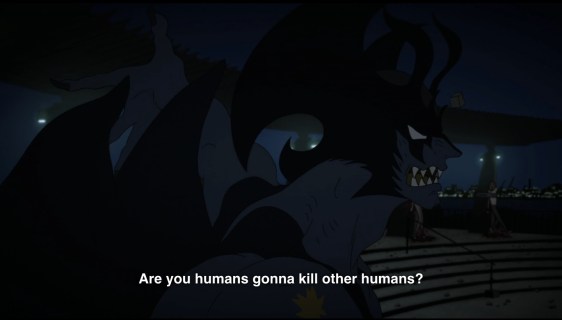
Not everything is about adhering to a source material, however. While nostalgia is a strong force in media and entertainment, it’s still possible for a remake or re-imagining is able to go well beyond and turn into something unique and special. Every decade has its own fair share of excellent revivals, but I found the 2010s to be full of especially smart and creative takes on classic franchises. The aforementioned Gatchaman Crowds took the idea of the superhero team and pushed it into an age of social media and gamification. Devilman Crybaby is essentially the original Devilman manga retold, the signature art style of Yuasa Masaaki gave it new life and also highlighted the fact that a lot of the 1970s manga’s theme resonate just as much, if not more today. The Rebuild of Evangelionmovies have all been impressive and have dared to go in strange directions, though we’re not actually seeing the conclusion until 2020 rolls around. In the most on-brand move possible, director Anno Hideaki became depressed after the third film, and it wasn’t until he directed the excellent Shin Godzilla (another update to a classic franchise) that he found the spark to go back to Shinji and friends.
Official Simultranslations
Once, getting translated anime and manga the day after release in Japan was a foolish dream. Then, with the advent of high-speed internet it became technically possible—but it was the domain of speed subbers and speed scanlators, with the requisite decline in quality. But now we’ve had a decade of not just quick releases but ones that are official, whose success can and will be noticed by Japan. Crunchyroll, HiDive, and Comixology are among the many resources available to fans, and while Netflix is often not technically a simulstream most of the time, its presence in the world of online streaming can’t be denied.
This is partially a tale of the direction of technology. More smartphones and better tablets mean streaming decent-quality images is more likely than ever before. Gone are the specific limitations of the past that made trying to view anime and manga a chore. It’s also the story of Japan being dragged into the current age, as much as its companies (especially manga) have tried to resist the digitizing of these mediums.
The amount of legal digital anime and manga options is ever increasing even in Japan. Comic Walker and Book Walker make following new releases almost trivial. Bandai Channel is more expansive than ever. Many manga publishers have series that start off as free webcomics now. Notably, the second iteration of One Punch Man started on Tonari no Young Jump. The amount of digital users keeps rising around the world, and it’ll likely not stop for a long time.
What Lies Ahead
While it’s mere coincidence, the fact that Japan is heading into the next decade of anime and manga alongside a newly coronated emperor seems poetic. For Part 3 of the 2010–2019 series, I’ll be giving my predictions as to where I think anime and manga will go in 2020 onwards.
Ten years ago, I made a blog post titled 2000-2009 Part 2: Looking Forward, where I tried to foresee where anime would go over the next ten-plus years. Now that we’re in 2019, it’s time to see how it turned out!
The First Digital Generation
In about 20 years or so we are going to see an entire generation of adults in Japan (and around the world) who have grown up primarily on digital animation…. Over time, I think that the peculiarities of digital animation, such as the computer-based shortcuts, will become part of the style itself, but less direct about it than, say, Studio SHAFT’s current output…. But if there are any, they will be making in-jokes and references about the early, nostalgic days of digital animation and not light boxes and such.
For better or worse, as a new range of ideas and techniques emerge, parts of animation technique and philosophy born out of cel-based anime will fade away, perhaps forever. After all, Miyazaki can’t live forever.
Digital animation has been embraced in full, with the last cel-based series, Sazae-san, switching over to digital in 2013. The style of early-2000s anime is understood, but the nostalgia for anime is still somewhere in the 1990s, so we haven’t reached the point where those early digital animation works and their aesthetic are a part of the cultural lexicon.
While digital animation is the industry default now, it’s not as if the more daring uses of digital animation have become standard. At the same time, I would argue that integrating 2D and 3D animation has been much more successful—something that is made easier by the transition to digital. Two works that stand out to me in this regard are Girls und Panzer and Kids on the Slope.
As for Miyazaki, he’s still around, and he’s coming out of retirement for what may be the 500th time. He also used this decade to make one of his most daring films ever, The Wind Rises.
Flash Animation
In light of the anime industry’s history of low budgets, I think that more companies, be they animation studios, broadcasters, or otherwise, will start to look at Flash as a viable method to keep things low-cost and at-home. Now I don’t think it will eliminate today’s more “traditional” animation, especially when it comes to bigger-name, bigger-budget works, but it will be an appealing tool for those middle-of-the-road shows, and shows for kids.
Nothing dates a prediction post quite like hyping up outdated technology and programs, huh! The world, including the anime industry, has moved away from Flash animation, but the simple, flat style can still be seen in the many short anime (as in 13 minutes or less) that have come out since, such as Inferno Cop and Ai-Mai-Mi.
Looking away from Flash specifically, many tools have emerged that facilitate creating anime with limited resources. Most notable among these is the 3D animation program Miku Miku Dance—itself an extension of Vocaloid as an artistic tool for creators both professional and amateur—and the bizarre yet endearing shows that have been made using MMD. Most of the time, that meant oddities like gdgd Fairies and Tesagure Bukatsumono, but also the surprise smash hit that was Kemono Friends.
Changing Views on Hikikomori and NEETs
The chronic shut-in known as the “hikikomori” is a topic that Japan for the past decade has been in debate over….
But the reality of the economy is such that not having a good job (or a job at all), living at home, and having your parents’ support will be an increasingly common sight. Some will become hikikomori and try to close themselves off from the world, but there may be a sizable group that is only partially hikikomori, who will not completely lose their ability to interact with others or to engage in meaningful activity, and they will have a cultural and social “pulling” effect on the full-blown hikikomori….
The result may be that Japan’s view on the hikikomori and the NEET, especially in the face of having these groups increase in size, will be a mixture of greater panic and greater relief as they will fret once again that this is potentially very dangerous for Japan, while the internet will provide this larger hikikomori population with the group setting in line with Japanese ideas of “group….”
In many ways, the image of hikikomori and NEETs hasn’t changed that much, with the same criticisms about them being a drain on society still persisting. I think one thing that is becoming clearer and clearer to the younger generations both in Japan and around the world is that the blame cannot be laid squarely at the feet of the shut-ins. The adults of the world have failed the youth on some level, and the kids are only starting to fight their parents in the street to find out who’s right and who’s wrong.
There’s also been a rise in a kind of “NEET pride” that permeates anime, most notably in the ascendancy of light novel isekai—series that often have hikikomori heroes who possess powers tied to their previously less than stellar lives. In a good work (e.g. My Youth Romantic Comedy Is Wrong, As I Expected), these characters, and their struggles and growth, tell stories about being human.
Perhaps no example is bigger than the transformation seen in No Matter How I Look At It, It’s You Guys’ Fault I’m Unpopular, aka Watamote, started off in the early 2010s as the story of an utterly hopeless otaku girl whose personal vices made her a relatable character to the self-proclaimed losers of 4chan. Despite Tomoko’s seeming fate as a perennial failure of a human being, even she has begun to change in the series.
Thematic Responses to the Economy
In about three to five years, I predict that we will begin to see both anime and manga which address the idea of global recession itself and incorporate it into the themes and settings in these works, to have it become a concept that is to be explored, whether directly or indirectly. Evangelion and other shows were responses to the recession that befell Japan starting in the early 90s, and I don’t think it would be unusual for an international economic downturn to have a similar effect.
With the global recession on everyone’s minds 10 years ago, it’s no wonder that I thought it would become a bigger subject. There have been anime that touch upon money and politics, but it’s not as if there was a huge influx. Back in 2009, Japan was already in the middle of a decades-long recession, so it didn’t affect them quite in the same way it did the United States. Instead, it would be tragedies like the Fukishima Triple Disaster that would highlight the real cost of greed and neglect.
While there were few anime made in response to the global recession, there were series that tried to highlight the challenges of political participation and governance ethics in the second decade of the 21st century, such as Psycho-Pass and Gatchaman Crowds.
The New Escapes
There are two basic forms to “escapism.” The first is a type of introverted escapism, that is, to become increasingly insular. The second is an extroverted escapism, where you want to project outwards, to go beyond yourself….
In that sense, I think that in the near future the escapism for anime and manga will be increasingly introverted, but will soon give way to a more extroverted form as a response to the desires of more and more fans who want to be released into other worlds…. I think we will see a lot of stories about worlds with wide scope focused through the lens of personal characterization, and in a way in which the former affects the latter significantly and vice versa.
One of the big genres of the 2010s has been isekai, i.e. being transported or reborn in a different world, and I think that it is a prime example of mixing both internal and external escapism. There is literally another world to explore, and the protagonist is often simultaneously special and unspecial, allowing readers to indulge in both dominant power fantasy and being the underdog. But there is often a lingering awareness of who the protagonist was in their previous life, and in a sense, their fears and doubts are still akin to the more introspective and flawed heroes of the past.
It’s also this decade that Madoka Magica took fandom by storm, and while that series isn’t exactly lighthearted, it too feels like a work responding to the desire for stories to be both more internal and more external. And when it comes to looking inward but going beyond, My Hero Academia is a series where that’s a central theme. You can even extend this to series such as A Place Further Than the Universe, where instead of going to another world, the characters find themselves through a journey to Antarctica.
Increased International Integration in Collaborative Efforts
…I predict that over the next decade and beyond, we will be seeing collaborations on animation and comics where the staff producing these works will be much more closely integrated. International collaboration isn’t new to manga and especially not to anime, but the work is usually cleanly divided between the countries involved. So it’ll be less Gurihiru drawing for Marvel’s Power Pack and more Oban Star Racers.
This decade saw more and more international artists working in anime and manga. Thomas Romain, who worked on Oban Star Racers, is a staple of Studio Satelight shows. Animators such as Bahi JD from France contribute the world over, whether that’s Toei Animation’s Philippines division, or freelance animators outside of Japan working on key frames/genga on a variety of shows.
But one other big development has been foreign funding for anime, especially through Netflix, which solidified itself as perhaps the go-to streaming services and has been expanding into anime ever since. In some cases, such as with Devilman Crybaby, the production team and creative is still mainly Japanese. In others, such as LeSean’s Cannon Busters, they’re developed cooperatively with artists and creators abroad.
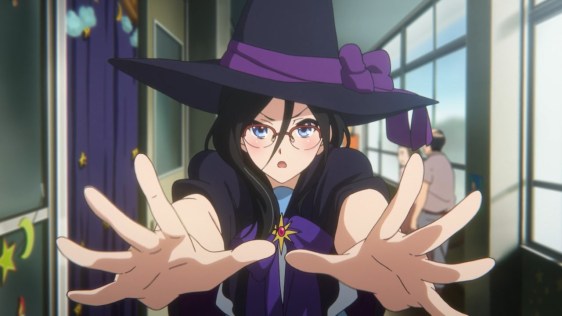
Another important note is the success of Studio Trigger (Little Witch Academia, Kill la Kill, Promare) in their desire to appeal internationally. Many studios attempt this, but I think it’s Trigger that has best understood the international market, especially the Western market.
Age Demographics in Japan vs Age Demographics Abroad
…I believe that in time the manga audience in the US will slowly mature and eventually reach a point where they want something that is more in-line with how they feel about entertainment, their lives, and the world at large.
The key however will be whether or not Japan realizes that age demographics do not map one-to-one between Japan and the US … and they will have to somehow find a way to understand just what this slightly more matured manga-seeking audience is looking for, possibly through the greater international collaboration.
I think the overall maturing of the anime fandom abroad has happened in a big way, and it’s clear from the kinds of series that have found better success over the past ten years, and it’s not just because people got older. While shounen fighting and other popular genres stay evergreen, I believe that stranger-looking series such as Land of the Lustrous and JoJo’s Bizarre Adventure needed the non-Japanese fandom to develop to the point that they could be better appreciated. There’s also the increasing popularity of sports series, which were once a death sentence in the United States.
As for Japan understanding that age demographics don’t line up, I think it’s happening because they themselves are aware of it happening in Japan.
Multimedia Customization
I think that starting in the next few years this is all going to start changing until we reach a point of personal customization in our anime and manga: You will be able to make exactly the purchase you want with exactly the things that you want, on-demand.
This definitely did not happen. In fact, we’ve seen some companies release even more deluxe editions that only hardcore fans willing to shell out $400 or more can ever obtain. At the very least, many of these expensive series are available streaming, thus giving access to those who can’t afford to own them.
New Paths for New Talent to Appear
I think anime is heading in a direction where people won’t have to be skilled at every aspect of animation production to be considered a Big Deal. One possibility I’ve thought of is “anime festivals” for amateur creators, be they industry-sponsored or independent, with competitions and awards for categories such as storyboarding and writing in addition to full-on animations. More importantly however, these anime festivals could take place entirely online.
Manga too will start to have online festivals…. It’s not so much specialization as it is realizing again that not everyone talented is multi-talented.
While there’s nothing quite like an online-only Comic Market, there have been projects to encourage new artists.
On the anime side, three main examples have emerged as opportunities for young animators to show their skills. First is the Young Animators Training Project, which has less experienced Animators animators work with established studios to create anime shorts. Little Witch Academia is probably the most famous work to result from this. Second is the Japan Animator Expo started by Evangelion director Anno Hideaki, which encourages more experimental work. Third is the more practical Animator Dormitory Project, a crowd-funded way of giving young and old artists a place to blunt the cost of living in Tokyo on a meager animator’s salary.
On the manga side, I look less at the competitions which exist and more at the fact that sites like Pixiv have brought about a number of success stories. Among the series that began as amateur webcomics on Pixiv are Skull-face Bookseller Honda-san and Wotakoi. Seeing them go from creator pages to Pixiv Comics to physical releases to full-on anime adaptations has given me joy.
Overall
I’d say I was about 50/50 in terms of predictions. Nothing hit the target dead-on, but I think I was able to see at least in part the various trends and where they were headed. In some cases, I was maybe too ambitious or naive. Let’s see how I do in the next ten years, but before that, next time will be a more thorough look back at 2010–2019.
When looking at current discourse over media, one notion hanging around comics and other related mediums is that diversity is somehow “forced.” The argument, so it goes, is that over-prioritization comes at the expense of storytelling and presentation. There is a disingenuous element to this whole line of reasoning where the true motive is trying to keep racial and sexual minorities out of fandom, but you’ll sometimes find people trying to argue this anti-diversity point in good faith. After all, “I love diversity, but quality should come first” seems like an innocent enough stance at first blush. However, the way they think about it is somewhat backwards. Being able to ignore the state of representation in works and judging them primarily on aesthetics is, to a degree, a luxury born out of already being able to see yourself and your values in them.
The image of the strong white man is practically foundational to the superhero tradition upon which American comics were built. Batman is one clear example, but even Superman—who was somewhat secretly coded as an immigrant—could pass as a typical white American on a visual basis. This is not to say that the intent behind their creation was racism, but rather that these stories had to deal with an assumption of what and who was the default.
It’s certainly not impossible for a reader or viewer to see themselves in a character who doesn’t look like them, come from the same background as them, or think and feel like them. In fact, that’s one of the beautiful things about media and fiction. But there’s a difference between being able to do this whenever you want and having to do this because you have no choice otherwise. Even when a new character is introduced as a way to speak to fans who could not see themselves in comics before, such as Stan Lee with the Falcon or Jack Kirby with Black Panther, their good intentions were also inevitably limited by a lack of firsthand understanding that comes with being born a part of black culture—which is where later creators such as Reginald Hudlin and director Ryan Coogler come in.
Comics and comics culture benefit not just from having a wide range of possible stories, but also giving the opportunity for a greater range of people to experience those stories while still feeling like they are as important and as special as anyone else. The many decades since the golden age of comics have brought the world an ever greater range of heroes of all colors and walks of life, with different authors and artists being able to leave their marks on this history. And even if a particular title is perceived as being too blunt or ham-fisted in its championing of certain groups or just diversity itself, having voices out there saying, “How you live and how you are is perfectly fine. You can dream!” is an important precedent to make, especially because it’s all too easy for an industry or culture to slide back into ignorance.
What I’m about to say might sound like I made up the whole thing, but I swear it’s true.
It was at a screening of the Love Live! Sunshine!! film that I struck up a conversation with a young mother. Although she was there in part to accompany her daughter, she was clearly an anime fan herself. At some point, the series Girls und Panzer came up, and she expressed skepticism over the tank-battling anime. From the tone of her voice, I could sense her concern over glorification of the military, and the potential role of the series as propaganda for something more sinister.
I tried to assuage her fears and present the anime as more of a sports series with a plot close to that of Love Live (save the high school from shutting down by winning a big competition). I don’t know whether or not she ultimately believed me, but I understand her hesitation, especially given today’s political climate. Although I consider myself a fan, in a world where guns are glorified and strongman politicians try to create cults of personality built around violence, I sometimes grapple with my fondness for Girls und Panzer.
I’ve argued before that Girls und Panzer separates a love of tanks and strategy from a love of warfare and nationalist loyalty, and I still believe this to be the case. In the anime’s setting, tanks are considered purely for friendly competition, and all ammunition is designed not to kill. There’s even a team of characters introduced in the first film who are basically a criticism of meaninglessly charging toward defeat out of a sense of “honor.” But it’s not as if the series is impossible to interpret as pro-military, especially if one takes only a surface glance at it. And in this world, sometimes a surface glance is all anyone has time for.
Girls und Panzer is not entirely devoid of concerning elements, as I think it’s hard to actually fully decouple tanks from their origins—especially because all the tanks in the series are from around World War II. As an individual viewer who tries to stay open yet critical, I feel that I’m able to stay open but at least somewhat skeptical. I can see what the series does well and the positive messages about keeping things in the realm of mock combat, and at the same time, my radar goes up for more alarming aspects. However, I’m aware that it’s possible someone more naive or predisposed to enjoying the glorification of military violence might take from Girls und Panzer what they want, and in the process twist the friendliness of the series into a “cute girls tell me war is good” message. It’s the old Gundam problem, where toy sales of cool giant robots obfuscate the anti-war message. As to whether or not Girls und Panzer is anti-war, it at least portrays a world where true war no longer exists.
Having the heroines use the minds and tools available to them to overcome opposition and achieve their goal is simple and effective storytelling. Couching it in historic military hardware makes it a near-endless pool for nerds to deep-dive into. But while I truly think that the series is not made to push people towards a militaristic patriotism, I can’t deny that some of the ingredients are there. It sounds odd to say that supervision is necessary to watch Girls und Panzer, but I think there’s a certain truth to it. If someone can’t provide their own voice of reason and caution, it can be treacherous territory.
When the Hero from Dragon Quest was first revealed as a playable character in Smash Bros. Ultimate, there were hints as to how the character would function, but few were able to predict that the character would be so volatile. Because the Hero has not one but multiple random mechanics that can make him both inconsistent and unpredictable, part of the conversation surrounding the character has revolved around whether the character’s “luck” elements hurt competitive Smash Bros. There’s even talk, however small, about the possibility of banning the character outright.
The Hero has smash attacks that can randomly trigger critical hits (effectively double damage). He has a spell menu the contents of which are random every time you open it. He even has a spell inside the spell menu that gives random results. So the fear is somewhat understandable—especially given the scene’s general dislike toward and removal of spawning items (i.e. a major random element) from tournament play.
While there are many arguments to make for why banning the Hero is a bad idea—the character is simply too new to understand his impact on high-level play, for one—I want to make a different case about his merits. Specifically, I believe that the Hero and his special mechanics provide new and interesting tests of skill that revolve around managing randomness without the major downsides and stigma of items-on play.
Skill and Luck Are Not Opposites
Before this argument can move forward, it is necessary to try and dispel an idea that has plagued competitive Smash since the earliest days: the false dichotomy between skill and luck. On a surface level, randomness interfering with skill makes sense because a coin flip, for example, can’t be modified through talent and effort.
But competitive scenes exist for games with heavy elements of chance, and in these environments, the question of how to navigate, take advantage of, and cope with random chance is ongoing.
Magic: The Gathering
People complain that their opponent topdecked their only out the turn they needed it, but do not realise that often their own poor play either gave their opponent more turns to draw the out or overcommitted turning the eventual out into one in the first place. —“There’s No Such Thing as Luck.”
Japanese mahjong (plus poker)
Poker players think a lot about how to maintain a strong table image…. [I]t’s going to be a lot easier to get lucky if the other players aren’t gunning for you because they’re afraid you’re too strong for them. When I’ve played Mahjong with him, Sarukawa maintains a fierce table image and it definitely makes me think twice about declaring reach even with a strong hand, thus increasing his chances of getting lucky and decreasing mine. —Nagare, Luck, or whatever you want to call that crap
There’s even a very good video from Game Developer’s Conference 2017 by designer Skaff Elias all about the false dichotomy between skill and luck.
Those who think that they have unfairly lost a Smash Bros. match due to a Mr. Game & Watch Judge 9 would likely fall into a coma if confronted by some of the agonizing probability-based losses that Texas Hold ’em players have to go through. But whereas Smash players have historically shunned randomness, other games use randomness as an opportunity to test two things: how well you can take advantage of good luck and how well you can mitigate bad luck. While complete randomness with no opportunity to interact doesn’t provide much room for interaction, good games of chance give players plenty of opportunities to show how they can roll with the punches.
Although it’s early on, I feel that the Hero provides enough avenues for both the user and the opponent to manage the character’s random elements. This, in turn, is what makes him different from turning on items—which, for the record, I am also not against, but I’ve learned long ago that trying to convince Smashers to play with items is a losing battle. Still, I think there’s hope for the Hero.
Random Factor 1: Critical Hits
Let’s first look at the Hero’s smash attacks. They are quite strong in terms of sheer power; forward smash can kill a Pichu at the ledge at around 50%. But there’s also a 1 in 8 chance to land a critical hit, which turns a roughly 20% damage attack into a 40%+ monster capable of KOing opponents close to 0%. There is no way to prevent or induce a critical hit artificially once an attack lands, so neither the Hero or the opponent can control when they happen.
The only way to guarantee not getting blasted by a critical hit is to avoid getting hit at all. But while that sounds ridiculous at first, there are a couple of limiting factors: the Hero has to actively choose to use a smash attack, and the actual moves have numerous flaws that make landing hits easier said than done.
The Hero’s up smash is similar to Marth and Lucina’s—a vertical stab straight up into the air—but unlike theirs, the Hero cannot hit anyone standing next to him. In fact, the horizontal range of the smash attack is so narrow that the opponent has to be virtually right on top for it to connect. Down smash is fairly quick and hits both sides, but is the weakest and unlikely to KO without the power of a critical hit. Forward smash is the best one, but it’s relatively slow and doesn’t reach quite as far as one might expect. Outside of the critical hit factor, all three are lacking.
And much like Mr. Game & Watch’s Judge hammer or Luigi’s Green Missile, the Hero’s smash attacks have to be deliberately chosen. They do not just happen randomly without anyone’s control, as if they were Bob-ombs spawning into a player’s attack. So the critical hits are random and they are extremely powerful, but they’re locked behind slow, somewhat unreliable moves that leave the Hero vulnerable.
Every smash attack is a roll of the dice, except those dice are cumbersome gigantic novelty ones and the table you’re rolling on is a toddler’s high chair. While they don’t have any random negative side effects like Judge, they’re inherently risky. Most importantly, the Hero player has to actively make the decision when and where to take those swings—they don’t just happen automatically.
Random Factor 2: Command Selection
Hero’s down B special is Command Selection, in which the Hero pulls up a menu of spells and special strikes, and it’s the other area of contention in regards to fairness because of how multiple layers of randomness are built into the move. First, only four spells can be displayed at a time, and it will change every time the menu is re-opened. Second, the order in which the spells show up is also inconsistent. Third, two of the spells—Whack and Thwack—have a probability of instantly KOing an opponent; the higher their damage, the more likely they’re toast. Fourth, the spell Hocus Pocus is literally a spell that randomly triggers either a move from the existing list of commands or additional modifiers both beneficial and detrimental. Although highly unlikely, it is actually possible for the Hero to hit down b, blindly pick Hocus Pocus, have Hocus Pocus trigger Thwack, and kill an opponent at 0%.
While there’s no doubt that getting destroyed by such an unusual chain of events could tilt just about anyone, I think focusing on those edge cases would be more a symptom of focusing too much on isolated results in the short term rather than consistency in the long term. Moreover, while the spell list is random, it doesn’t remove skill. Rather, it tests the players’ ability to assess what is worth using every time it opens, and to act accordingly.
Above, I mentioned games like Yu-Gi-Oh! as examples where players must randomness into account when strategizing. When it comes to Command Selection, this comparison is especially apt, because opening up the menu is not unlike drawing cards in a TCG. While there is an element of luck, it’s the responsibility of the player to be able to adjust their approach–to sometimes turn lemons into lemonade. There’s also a common mechanic in trading card games called a “mulligan,” where a hand that’s sufficiently terrible can be discarded and replaced in its entirety. The Hero essentially has the ability to mulligan his hand at any moment, but with the caveat that the opponent can see what the Hero’s options are, and that he can’t keep any of the “cards” he doesn’t use. A good Hero has to be able to build upon the tools available to him in a given moment, and just because it’s uncommon in competitive Smash doesn’t mean it’s not a skill worth testing and valuing. The ability to improvise on the fly and be effective at crisis management in the face of external forces somewhat beyond the players themselves is good.
Conclusion
Luck can bless the Hero, or it can curse him, but there are multiple caveats that make him a worthy character who should be welcomed in tournaments. First, he has to be in a position to test that luck in the first place, and most if not all of his random-outcome moves are telegraphed or announced in some way. Second, just because he gets a lucky or unlucky move doesn’t mean the match ends there—both Hero and opponent have to be able to make the best of a situation. The result is a character who works to find chances and has to adjust on the fly to external forces, and those who master this are the likeliest to find success built not on favorable fortune but the ability to seize opportunity.
The two main heroines of the manga We Never Learn have a dilemma. Each is a natural genius in a specific field, but both of them want to specialize in a subject that is their Achilles’ heel. If they play to their strengths, they will have easier lives, and they might even change the world. But their hearts lie in their weak areas, leading to a conflict potentially familiar to many: what’s “best” for them isn’t necessarily what will make them “happiest.”
I think elements like this are why the series has succeeded in maintaining my interest. It’s an understandable struggle that goes beyond the basic harem fanservice qualities of the manga and anime, and while exaggerated for comedic purposes, is something that plenty of people both inside and outside of Japan have to deal with. Do you pursue the impossible dream, do you aim for stability, or do you try to find a middle point? If you achieve less but enjoy the struggle more, is it worthwhile?
It’s clear that We Never Learn supports is characters long-odds pursuits, even as the culture around the manga often says otherwise. I’m not entirely sure if there’s a deeper message overall, but it’s at least one that resonates with anyone who’s had to deal with the conflict between inner hopes and outer expectations.
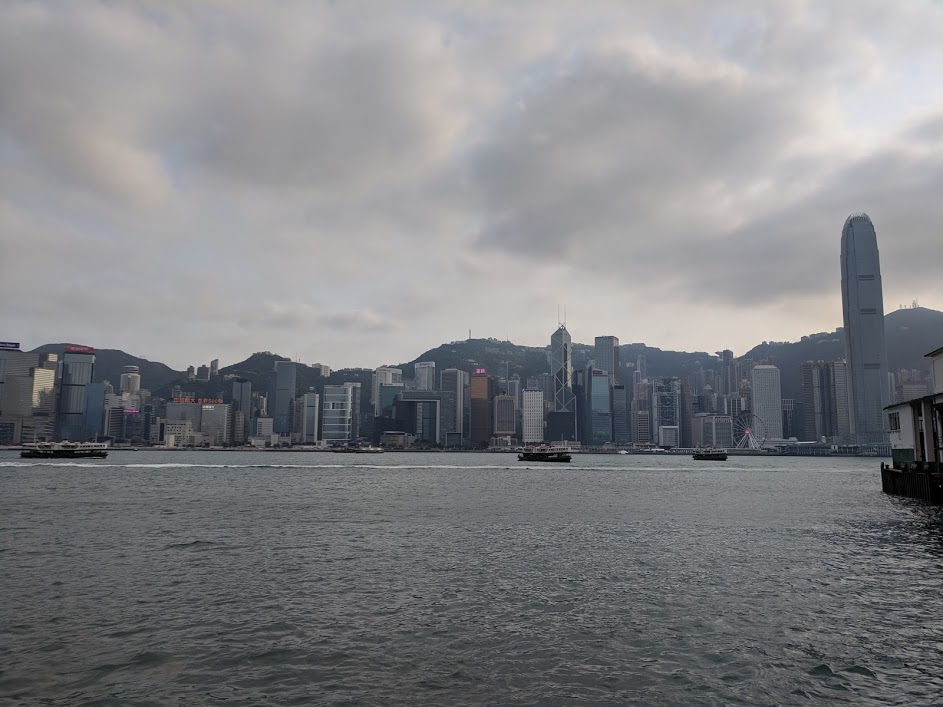
Hong Kong has been on my mind a lot as of late. Earlier in the year, I began re-watching Mobile Fighter G Gundam, an anime in which the latter half of the series takes place primarily in the futuristic “Neo-Hong Kong.” A few months earlier, I actually visited Hong Kong for the second time ever—the first time was three decades ago when I could barely remember a thing. Then, in recent weeks, news of Hong Kong has been dominated by the ongoing protests there in response to the Mainland Chinese government. This confluence of events has me wondering about how Hong Kong was traditionally portrayed in media, and imagining the possible Hong Kongs that could have been.
Giant robot fighting tournament aside, the Hong Kong of G Gundam is close to the classic portrayal of the territory in the 1980s and 1990s: tall buildings and a mix of glitz and grime, much like in Bloodsport or the countless works to come out of the famed Hong Kong film industry. One major difference between fiction and reality is that in G Gundam, the Neo-Hong Kong government is the sovereign ruler of all nations—a consequence of winning the previous “Gundam Fight” tournament. It’s extra ironic because G Gundam was made in 1994; that’s a mere three years before Hong Kong was to be returned to China after two hundred years as a British colony. According to a talk by director Imagawa Yasuhiro, the producers of G Gundam were aware of this and didn’t care.
While Neo-Hong Kong being the world’s foremost power is portrayed as a double-edged sword, especially in how the appearance of prosperity hides the damage and decay of the Earth itself, seeing a Hong Kong so powerful contrasts with its relatively declining influence in the real world since 1997. Hong Kong had been a major player on the world stage due to the economic freedoms allowed by its British colony status, and the relationship between China and Hong Kong is meant to be “one country, two systems” in order to maintain the make-up of both, but there has long been a growing fear by residents of Hong Kong that this was never meant to last.
Two areas that point to Hong Kong receding from center stage are the film industry and the pop music industry. Hong Kong’s notoriety in movies is a shadow of its former self, while China increasingly funds and influences major Hollywood productions. Cantonese pop from Hong Kong, which swept Asia in previous decades, had a long lull that it seems to only be recovering from now. This stands out all the more because the prime minister of Neo Hong-Kong in G Gundam is named Wong Yun-Fat (a reference to famed director Chow Yun-Fat), and the fact that G Gundam itself has a full-on Cantopop soundtrack for the second half of the anime.
Visiting Hong Kong, I noticed how different each area of the territory is. Hong Kong island feels like it’s somewhere between London and New York’s Chinatown. Kowloon reminds me more of the Asian cities I’ve been to, and is also the namesake of Neo-Hong Kong’s Kowloon Gundam. I didn’t go to the New Territories, but I hear it’s where you live if you want to get away from everything else. Lantau Island, in the New Territories, is actually the site of the final battle in G Gundam. On Sundays, you’ll see countless girls, many in hijabs, occupying the street. That’s because it’s the only day out of the week that the domestic workers of Hong Kong—from Indonesia, the Philippines, and other Asian countries—have off. Hong Kong is a place of amalgams and contrasts that reflect an economy of haves and have-nots, not unlike the world of G Gundam.
Hong Kong is still significant in the world, but China’s economic rise is one of the biggest stories of the last two decades. Because of the mainland’s increasing global influence, it makes me doubtful that we’ll ever see more Neo-Hong Kongs in media, Hong Kongs that dominate the Earth. “Hong Kong as powerhouse” is an interesting narrative, but because it’s competing with the tale that the influential are seeking to weave, it might very well remain in the imagination.
When the character of Takamachi Nanoha first appeared, few could have predicted the strange arc she has taken over the past two decades. Originally a typically cute little sister character from the visual novel Triangle Hearts, the most unusual thing about her was that her siblings were secret ninjas. Since then, she’s turned into a world-busting techno-mage in her own Magical Girl Lyrical Nanoha franchise, grown into an adult with an adopted daughter, and become a lasting symbol of otaku-oriented magical girl appeal. But because she’s also clearly a lolicon icon, her legacy is a mixed one.
It’s clear that, on some level, Nanoha’s appeal transcends the age of her character at any given moment. Between her cheerful personally, her ability to make friends out of former enemies, and her massive laser weaponry, she’s basically a cross between Cardcaptor Sakura, Son Goku, and a Gundam. Even as she ages up, eventually into her twenties, this basic core of who she is stands the test of time. She well deserves love and admiration in that respect.
However, to deny her intentional appeal to a lolicon audience is to feign ignorance. You don’t have to be a lolicon to like Nanoha, but you can’t refute that the element is part of her design and presentation.
Years ago, I watched Magical Girl Lyrical Nanoha and Magical Girl Lyrical Nanoha A’s—the first two TV series, when Nanoha was still young. My memories are a bit hazy, but despite moments that made me uncomfortable, I felt I could come away with an overall enjoyable experience. Nanoha as a character shines through, as do so many others. She’s cool, she’s strong, and her magical staff Raising Heart will shoot someone into the stratosphere.
But when the remakes came out years later, I didn’t even want to touch them. It wasn’t the new character designs, which gave Nanoha and the rest the most massive eyes possible. That’s just a stylistic choice I could accept. Instead, where it soured me was in the transformation scenes. Magical girl transformations are a hallmark of the genre, and an opportunity to encapsulate the appeal of a show. The Nanoha movies used that opportunity to linger on their nude bodies for an uncomfortable amount of time, seeming at times more like a gravure video than an opportunity to see Nanoha power up. To be fair, it’s not entirely absent in the older works, but they really doubled down on it for the films for the worse.
Takamachi Nanoha has a strange legacy as a result of everything with which she’s associated. Say you’re a fan of Nanoha, and the reactions are bound to be mixed. Her character is timeless in some ways, but her image is inevitably tied to her young self and all it entails.
This post was made possible thanks to Johnny Trovato. If you’d like to request a topic or support Ogiue Maniax in general, check out the Patreon.
I was asked by my long-time Patreon sponsor Johnny Trovato about my thoughts on “The effect of budget figurines (like Banpresto sells for $20 each [2,000 yen]) on the anime figure scene.” My first reaction to this was simply, “Figures are expensive, man.” That pretty much sets the stage for my opinion on the subject. They fulfill a necessary space in the grand scheme of anime merchandise, but they could always be better–not in terms of quality but rather honesty.
Personally, I prefer to get higher quality figures even if it means I have fewer overall. The Banpresto figures tend not to have the best paint jobs or face sculpts, and pricier figures just have more attention to detail that I appreciate. I don’t typically go for the most costly ones, though, unless I really, really want it.
But the balance between quantity and quality is different from person to person, and figures can end up being an absurdly expensive hobby. I’ve known people like that, and I’ll be upfront when I say that I don’t think I’ll ever make enough in a year to comfortably keep that up. So in that respect, Banpresto figures are a nice compromise. They’re not going to be the best, but they’re not supposed to be. They’re a valid option for people who want figures but simply can’t or won’t pay for more. And unlike trading figures, which is designed to be a bit of a gamble (you never know which one you’re gonna get!), you know what the figure is going to be.
The problems with $20 anime figures come from two things, both related. First, their true purpose is as prizes for crane games in Japan. While there are apparently ways to master crane games and obtain them for reasonable prices, most people will probably end up spending more, perhaps even without success. Second, one of the big differences between more expensive figures and less expensive ones is whether you can look at the actual figure itself. Higher quality merchandise has clear packaging that lets you see what you’re buying, whereas the Banpresto stuff is hidden in opaque boxes covered in promotional photos that try to hide the flaws as much as possible. This is intentional but also disingenuous, as it potentially tricks people into getting a figure they wouldn’t have otherwise. In a sense, seeing them unboxed and on display at an anime con is a better thing, but in those cases they’re often marked up.
Ultimately, I don’t think Banpresto’s $20 figures are inherently a bad thing, and they definitely serve a part of the anime fandom that should be catered to. I just wish there wasn’t a degree of deception baked into the whole thing.