Anime NYC 2023 Miscellaneous

While I spent the majority of Anime NYC checking out the plethora of events related to hololive, I also want to broadcast my thoughts on various other topics.

Getting In

In previous years, Anime NYC would often run into issues with getting attendees into the Jacob Javits Center. This year, I did not hear any major rumblings, though I don’t know to what extent that was the result of improved planning and how much it was because the weekend was blessed by nice weather.

Crowds

As Anime NYC has grown and the COVID-19 pandemic still lingers, foot traffic and crowd size are topics of concern for me. That said, I found the convention center relatively easy to navigate this year. While bottlenecks did happen on occasion, I never really felt like a canned sardine, even in places where it could get very cramped last year, like the Artist Alley. 

In terms of masking, at his point, it’s become increasingly uncommon in New York City as a whole, which is unfortunate. I still hold out a modicum of hope that convention runners here and elsewhere might be willing to get more stringent with a mask policy if things get more dire again, but for now, I can only recommend doing so for your own safety.

The Witch from Mercury Panel 

Surprise—I actually did something that wasn’t hololive-related this year.

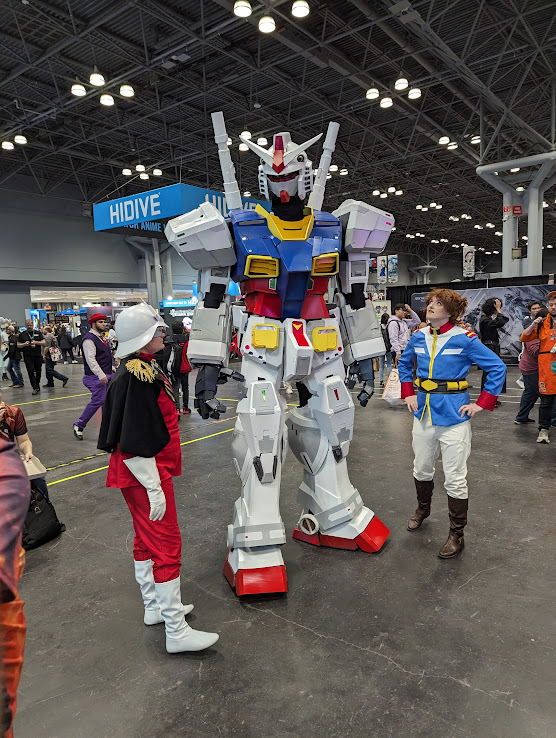
Upon arriving at Anime NYC to attend the Gundam: The Witch from Mercury panel, I was pleased to see how big the turn-out was. The line extended from essentially one end of the convention space to the other, and had people of all ages and genders. It’s only natural, given the pioneering nature of G-Witch both in Gundam and anime as a whole, but it was still a pleasant sight to behold.

WARNING: GUNDAM WITCH FROM MERCURY SPOILERS

The main takeaway from the panel is just how much everyone involved with the series sought to do something different with Gundam and to make it clear that G-Witch would chart its own direction. Production had already begun in 2019, and they had wanted to differentiate it from Iron-Blooded Orphans, even working with the technical director to give the series a different look. A lot of changes happened behind the scenes before the new show even aired.

The producer of G-Witch was there along with the two main actors, Ichinose Kana (Suletta Mercury) and Lynn (Miorine Rembran). I had actually interviewed Ichinose a few months ago at Anime Central, but at the time was not allowed to ask questions pertaining to Gundam. Though I was only an audience member here, I was glad to at least get some of her perspective, as well as the others’.

When asked what they liked about the series, Ichinose and Lynn both expressed a fondness for all the different relationships between characters, and just how even the same types of relationships were unique depending on who was involved. The example they gave was parents and children, and how they all lead to their own interesting conclusions.

Ichinose got the call about passing the audition after waking up, only to fall back asleep after. Because of this, she thought she might have dreamt it. Lynn is a long-time fan of Gundam even before voice acting, and actually found out about landing the role on her birthday.

Evoking Suletta’s sense of difficulty with interacting with people her age was something Ichinose worked hard on. As an introvert who gets anxiety herself, she empathized with Suletta. Lynn was aware Miorine would go through changes, that she would start off bored and prickly but would meet Suletta, get her own company, and so on, and become more of her own person in the process.

Ichinose had a tough time deciding a favorite scene, but chose one from Episode 21, where Suletta takes her mom’s mantra “Run, gain one. Move forward, gain two” and rethinks it to be about doing what you can even in hard circumstances. For Suletta, who always followed her mom and wasn’t her own person, her time with Miorine and the other students allowed her to form her own opinions and have her own life and destiny.

Lynn’s favorite is the climax in Episode 24, when Suletta brings the Gundams together and stops Quiet Zero, due to the sheer Gundam-ness of it all: characters, music, and mecha all on full display. The fact that Suletta truly shows herself as the main character also contributes to why Lynn likes it.

Towards the end, the two actors did a live reading of a scene from the episode “The Witches from Earth,” which was excellent. Following that was a video about how Gundam is sponsoring an F-1 racer, which just made me want to make Gundam F-91 jokes

Anime NYC 2024 in the Summer 

I want to end by talking about what’s maybe the biggest news of the con: Anime NYC 2024 will be in August instead of November. I already gave a few thoughts in a previous post, but would like to elaborate on my opinion here.

It is uncommon for conventions to move dates so drastically from one year to the next. Sure, a week or even a month isn’t out of the question, but three months is a hell of a difference. The fact that they have a lot of advance warning is helpful, but I do feel for the people who plan longer-term and might have arranged things with the assumption that Anime NYC would be in the fall.

I do not have any insider knowledge about why LeftField Media made this decision, but I can imagine a number of reasons. First, Anime NYC has previously been the week before Thanksgiving, a holiday when people tend to travel. Second, the (typically) cold weather can be unpredictable: While this year was pleasant, we’ve also seen snowstorms in the past.

August means avoiding such issues. The summer is the time for vacations that don’t necessarily involve seeing family. It makes Anime NYC part of the packed summer convention circuit, which includes notably Anime Expo and Otakon. Also, Anime NYC has mentioned that the entire Javits will be open for the con in 2024, so I suspect that there is something preventing them from having full access in November.

One problem: While blizzards won’t be a concern, New York summers are very hot and humid, especially in recent years due to climate change. I worry that we’re trading shivering in the cold to passing out in the sun, and if Anime NYC isn’t on the ball, this can become a real issue.

I also have concerns about Anime NYC trying to compete with Otakon, despite the fact that they’re actually quite different from each other as anime cons: Anime NYC is a very slick product, while Otakon is more grassroots. That said, this date change might be mutually beneficial for them, as DC and NYC aren’t far from each other. I really hope this is a net positive overall.

I will likely attend Anime NYC 2024 regardless, and I really won’t know if it ends up being better or worse until it happens. But I will miss having a fall con season in New York City. 

Gattai Girls 13: “Mobile Suit Gundam: The Witch from Mercury” and Suletta Mercury

Introduction: “Gattai Girls” is a series of posts dedicated to looking at giant robot anime featuring prominent female characters due to their relative rarity within that genre.

Here, “prominent” is primarily defined by two traits. First, the female character has to be either a main character (as opposed to a sidekick or support character), or she has to be in a role which distinguishes her. Second, the female character has to actually pilot a giant robot, preferrably the main giant robot of the series she’s in.

For example, Aim for the Top! would qualify because of Noriko (main character, pilots the most important mecha of her show), while Vision of Escaflowne would not, because Hitomi does not engage in any combat despite being a main character, nor would Full Metal Panic! because the most prominent robot pilot, Melissa Mao, is not prominent enough.

— 

I truly believe that Mobile Suit Gundam: The Witch from Mercury will go down as a pivotal work in anime history. There are the surface reasons, of course: It has the honor of being the first mainline Gundam anime to feature a female protagonist with a same-sex primary romantic interest. It’s also the first main Gundam to be only 24 episodes when even the next shortest series still got 39. But the core of why I think Witch from Mercury is a game changer is that it ncludes many elements unfamiliar or in defiance of Gundam that manage to tell a compelling and thought-provoking story that carries both idealism and realism in its narrative.

Witch from Mercury takes place in a world where Gundams are forbidden, even though they were originally based on research to help people with disabilities. Years after the banning of Gundams and the seeming purge of all involved, a shy and awkward girl named Suletta Mercury arrives at Asticassia Academy, a mobile suit school for the elite where student matters are officially resolved through giant-robot duels. Suletta wins a match in her Definitely-Not-a-Gundam, Aerial, ends up engaged to the daughter of the school’s owner, Miorine Rembran, and in doing so inadvertently steps into the complex corporate, social, and political forces at play.

The anime starts off reminiscent of both Revolutionary Girl Utena and G Gundam, but ends its first half throwing the relatively isolated nature of Asticassia into stark relief with the world at large, whether it’s the crushing disparity between Earthians and Spacians, the specter of war and how the parents of all the kids have a hand in perpetuating military conflict, or the realization that Suletta’s naivete isn’t merely an innocent quirk but points to an unusual and possibly even disturbing past.

The second half seems to calm down, only to ramp up even harder and throw the established order into further disarray. Things that other series might have left linger for 10 episodes are brought to bear in a fraction of the time. The anime can actually feel pretty rushed as a result, but in certain ways, I think this actually works out in its favor. Gundam series often meander and plod as they get into the latter 25-ish episodes as they try to incorporate extraneous characters and merch-friendly elements, whereas this one cuts out a lot of the fat, albeit with some of the flesh as well. The outcome of all this is a Gundam where I would get genuinely surprised and shocked, especially in terms of character deaths)—feelings that were often missing from my viewings of Gundam anime that have come out in the past 15 years.

The characters, especially the women, are memorable and one the best parts of Witch from Mercury. Suletta is a unique protagonist, both in comparison to her Gundam predecessors and in general due to the way she has to grapple with her own upbringing and the way she ends up establishing her own identity. She takes the viewers on a rollercoaster of a personal journey that makes her position as first heroine much more than a cynical decision for the sake of diversity. Similarly, Miorine’s aggressiveness makes for a great companion and foil, and the way she navigates her privilege and her desire to do more for humanity is wonderful. And Suletta’s mom Prospera is not only the best Char Aznable in ages, but shows the quiet fury of a woman who will do anything for her child.

As for minor characters, there are plenty of examples regardless of genders. Chuatury “Chuchu” Panlunch is refreshingly no-nonsense in a way rarely seen in anime. Guel Jeturk, a rival/potential love interest of Suletta, goes from annoying dude to endearing guy—something that actually happens more often than not with the cast. A number of characters are on the larger side but are not treated as jokes. And while Secelia Dote only has seven minutes of screen time across the entire series, her snarkiness manages to steal the show every time. I could keep going.

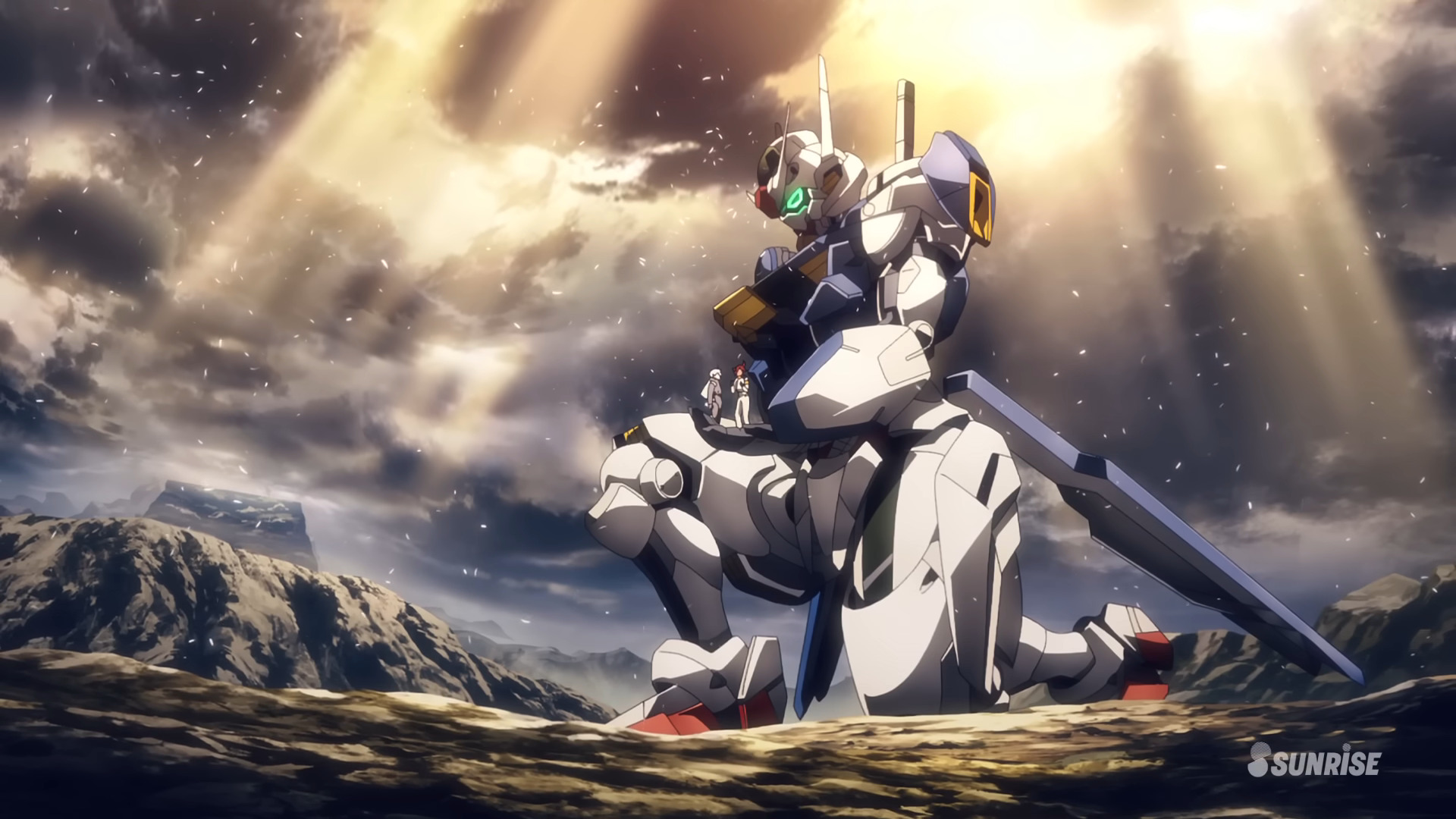
One of the more amazing things about Witch from Mercury is how well it strikes a balance between having ubiquitous mobile suits and incorporating them into the story and setting. They’re also very aesthetically pleasing, particularly the Aerial. It’s identifiably a Gundam, but its proportions and flourishes give a slight feminine feel without going straight into Nobel Gundam territory. I also enjoy the way it contrasts with other mecha, as it makes the Aerial come across more something that will disrupt the status quo. Moreover, Aerial is also a rare instance of a mobile suit basically being a character unto itself—something that has serious consequences as the series progresses.

A common criticism of Gundam as a whole is that while it generally contains anti-war messaging, the cool factor of the mobile suits can end up drowning it out. Although the designs in this particular series are indeed among the best ever, Witch from Mercury is also the first to establish that the technology did not begin as a military endeavor, and this helps throw the use of mobile suits as weapons into stark relief. It’s also part of a greater look at the inequalities and inequities suffered by those who lack the financial and familial might to make the world care—a world where even the children of those in power feel the burden of having to deal with their parents’ bullshit.

On that note, corporations play a major role in the series, and I’ve seen people get extremely confused with all the different alliances and factions. While I won’t say it’s simple to keep track of everything, one way to navigate that web is to understand that many adult decisions are the result of corporate greed, and trying to find positions to have the best profits with the least accountability. This is what makes Miorine’s ultimate decision all the more satisfying, as she throws that structure off kilter using the means available to her. Gundam series often feature politics because of how they take place on grander scales.

These two elements together help Witch from Mercury’s politics feel very contemporary and relevant to our times, instead of coming across as dated or tepid.

Witch from Mercury brings a new sense of what Gundam can be. It possesses many of the franchise’s well-worn tropes without being beholden to them. It breaks boundaries of all kinds, whether through its unique cast of characters, its central same-sex romance, or its perspectives on conflict and humanity. I truly feel that what we have is a turning point in Gundam and anime as a whole, and I’m hopeful it’ll be for the better. Suletta is the first main Gundam heroine, but she won’t be the last.

Larger than Life—Body Diversity in Gundam: The Witch from Mercury

Fatphobia is still prevalent in Japanese culture. While there will be the occasional piece of media that pushes against it (sometimes in flawed, yet well-meaning ways), Japan is still predominantly a place where “thin” is in. That’s what makes the presence of fat characters in Gundam: The Witch from Mercury noteworthy; it features multiple characters who are portrayed not as comic relief or even fetishes, but as just cool and admirable in their own right.

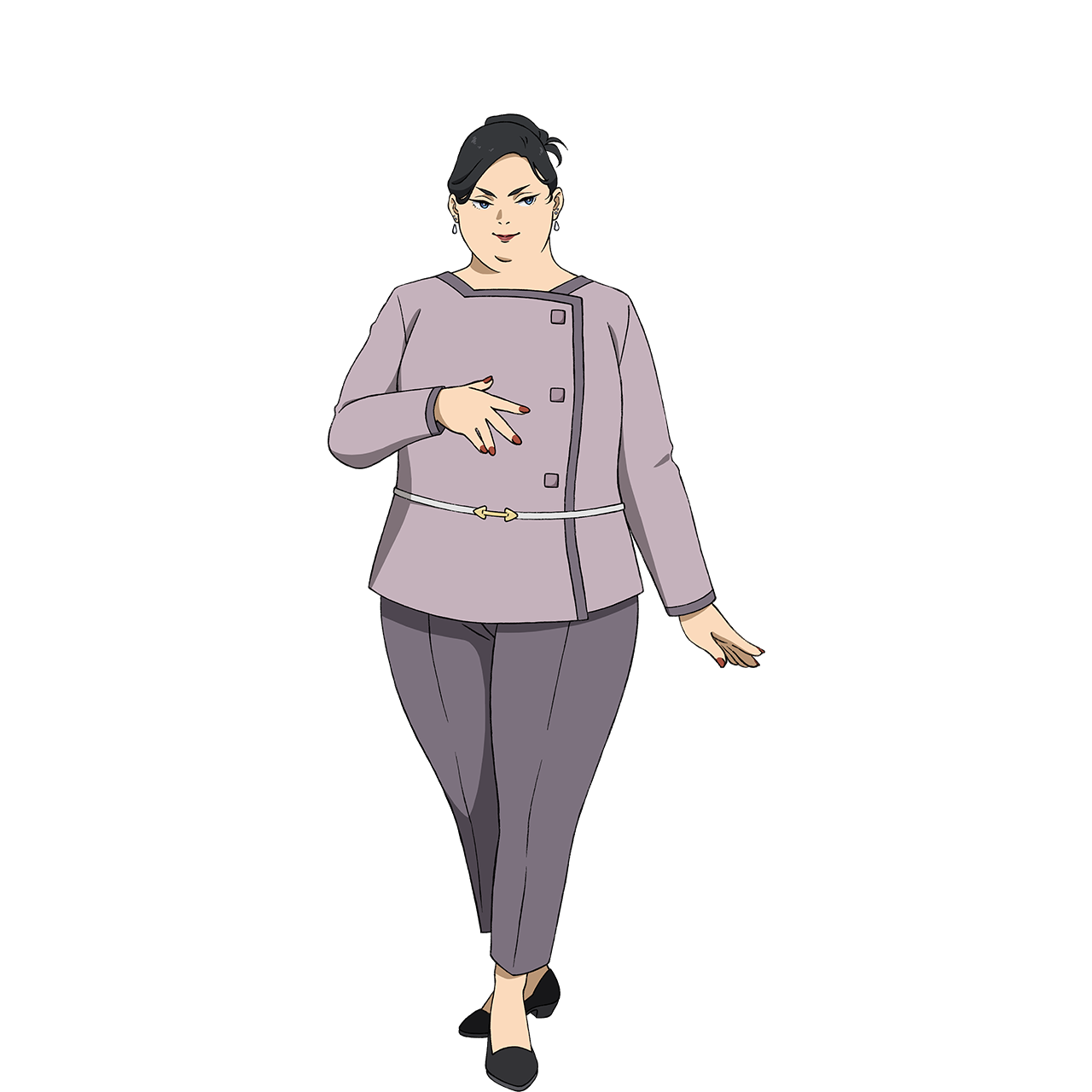
The first is Feng Jun, a woman who on the surface is a smuggler but is in actuality an agent of the Space Assembly League, a governing organization in The Witch from Mercury. She’s cunning, savvy, and capable in a rather matter-of-fact way, and her body is never shown as a hindrance. As the show progresses, it becomes clear that she cannot be pigeonholed based on any expectations.

The second is Kennanji Avery, a veteran mobile suit pilot renowned for his skills in battle. Seen as a thinner fellow in the prologue, by the time of the main story, he’s put on some pounds. But while he doesn’t look the same as he did in his younger days, his subordinates all look up to and trust him, and he’s shown to possess a sharp mind and an athletic body even if it doesn’t appear to be the case. He fights against the notion that “fat” automatically means “physically unfit.”

The third is Lilique Kadoka Lipati, a first-year and fellow classmate of the heroine, Suletta Mercury. Defying conventional thinking about girls her size, Lilique is described in her official profile as being quite popular. One episode even has another girl start trouble with Lilique because her boyfriend tried to ask Lilique out. It is incredibly rare to have even a few characters have a thing for the “fat girl,” let alone giving her a popular reputation for making people fall left and right. 

What’s notable about the way The Witch from Mercury portrays these three is that their size is neither diminished nor put out as some kind of circus display. While there’s certainly nothing wrong with being really into larger people, what this anime does is push their attractiveness beyond the boundaries of fetish territory. They’re all charismatic in different ways, as if they’re all unique people with different personalities and histories, even if they have similar body types. It’s ultimately about respect, and I can truly sense that from how Feng, Kennanji, and Lilique make such powerful impressions.

The Roles of “Characters” in Mecha Anime

Sometimes, you’ll see a wild claim about mecha anime, like “Gurren-Lagann was the first giant robot series to be about characters instead of the robots,” and it inevitably results in a backlash—in this case, the counterargument that all giant robot shows are about characters. Whether the initial statement is made in jest or as a genuinely ignorant take by someone with only surface-level knowledge of mecha, it reflects certain assumptions about what the genre is like.

I got to thinking about the notion that giant robot anime are about characters because it’s both true and an oversimplification. Moreover, the extent to which the giant robots truly “matter,” as in they’re inexorable from the world being portrayed and can’t be substituted with some other form of weaponry, varies tremendously. But regardless of the true “necessity” of either characters or robots, I feel there is more to it than just one side mattering more than the other. Then a thought occurred to me, and I have a kind of nascent “universal theory of giant robot anime”:

Giant robot anime are about characters, but more specifically, the main character reflects some vital or fundamental aspect of the world and story around them. The giant robot, in turn, is reflective of the connection between the hero and that aspect.

If it seems nebulous, that’s because it is. I’m thinking less about trying to justify every mecha anime and more about how the giant robots end up being the avatar through which so many of these protagonists interact with their environment and their histories, and thus reveal more about the anime themselves. There’s also no denying the close ties between giant robots and merchandising, but this also ebbs and flows over the decades.

So let’s start with some of the big ones. 

Tetsujin 28 is about Shoutarou trying to make a difference in a post-WWII environment by being a boy detective who fights crime. Tetsujin 28 the robot was created to fight the Allies, but is now being used for an alternate purpose: as a guardian of peace instead of a weapon of war. 

Mazinger Z draws a direct lineage to this sort of thinking. While the power fantasy and toyetic appeal of the robot itself is undeniable, Kouji is presented with a question about human potential from the very beginning: If you had great power, would you be a god or a devil? The robot Mazinger Z is Kouji’s way of making a difference, and he chooses to use it as a protective guardian.

Mobile Suit Gundam, the first “real robot” anime that emphasized the robots as weapons of war over superhero-like entities, is about its hero Amuro’s repeated exposure to the trauma of war. It’s through the Gundam that he experiences physical and emotional scars alike, and the very fact that his piloting experience molds him into a capable soldier also contributes to the overall “horror of war” message that girders Gundam and its many sequels.

Superdimensional Fortress Macross has three main components: romance, music, and robot battles. Here, the titular robot is literally a flying city traveling through space, and it functions as both an urban cosmopolitan center and a massive superweapon. In other words, it is the very space in which all three pieces of Macross take place.

Neon Genesis Evangelion centers around Shinji and his fear of human connection, be it with his family, his peers, his friends, or anyone else. It is the anime of extreme introspection. Not only is the EVA-01 the means by which he tries (and fails) to find self-worth, but the EVA itself is revealed to house the soul of his dead mother. He is contained in a womb-like structure inside of his giant mom.

Tengen Toppa Gurren-Lagann is about Simon and the limitless potential of humanity to overcome all obstacles slowly but surely—and ultimately whether there should be limits on that power. Gurren-Lagann manifests this through numerous transformations fueled by human spirit that bring on exponential power growth.

The above examples are all heavy hitters, but what I also want to emphasize is that this applies to “lesser” titles as well.

Brave Police J-Decker is maybe the most on-the-nose example of the relationship between a boy and his giant robot, as the story is about how Yuuta’s friendship with the giant police robot Deckard is what teaches the latter to develop true emotions and a proper sense of justice and humanity. 

Shinkon Gattai Godannar is about the relationship between Gou and Anna as husband and wife and how their love affects both their personal and professional lives as co-pilots. Godannar Twin Drive is literally a combination of both robots.

Robotics;Notes focuses on Kaito and his relationship with Akiho’s giant robot club, and the blurring of augmented reality with actual reality. The creation of the Guntsuku-1 is basically an untenable goal that, through the events of the series, becomes effectively “real” through how Kaito and Akiho view and utilize it.

Trider G7 is about Watta, who’s both a little kid and the CEO of his own company, utilizing both the image of Japanese corporate culture of the early 1980s and the classic child desire of wanting to do what the adults do. The Trider G7 robot literally flies out of a playground, and has tons of cool and wacky weapons, but the fact that it’s Watta’s robot and the main way he gets his job done means it’s the conduit through which that “grown-up” fantasy takes place. 

Shinkansen Henkei Robo Shinkalion the Animation is literally a commercial for bullet train toys that are, in turn, advertising for the Shinkansen trains in Japan. Its main character, Hayato, is basically a Shinkansen fanatic who sees them as not only the coolest things ever but as reflecting a philosophy of unwavering service to the people of Japan. The Shinkalion robots, by extension, portray a more action-packed version of this concept.

Giant robot anime embody many values, from crass commercialism to dreams of being brave and strong, from anti-war sentiments to deep looks inward at the psychological scars of society. The mecha themselves are often not “characters” in and of themselves (with a number of notable exceptions), but they are symbolic of how the protagonists of these stories relate to what they experience. The hurdle for those who think that these anime are “more about robots” is that this particular way of communicating the characters’ stories requires an acceptance of giant robots as a storytelling device.

Precure Can Drink in Japan: Ogiue Maniax Status Update for February 2023

February has arrived, and that means new Precure, of course. It’s this odd exception in that February debuts have been typical of the franchise, so I have it on my mind—especially because it’s the 20th anniversary [I’ve been informed that Precure is actually only 19, so oops.]. I still remember seeing the original Futari wa Pretty Cure being mentioned in an English-language anime magazine, and noticing the large combat boots and floppy socks they wore. It’s been a part of my fandom for two decades now, and while I don’t have plans to write a retrospective, I wonder if I should. At the very least, expect a review of Delicious Party Precure.

Moving on from a two-decade-old magical girl juggernaut, I’d like to thank my Patreon subscribers!

General:

Ko Ransom

Diogo Prado

Alex

Naledi Ramphele

Sue Hopkins fans:

Serxeid

Hato Kenjirou fans:

Elizabeth

Yajima Mirei fans:

Machi-Kurada

Blog highlights from January:

“Son Goku” vs. “Sun Wukong”: The Challenge of Translating Chinese Names in Japanese Media into English

If you’ve ever wondered why a Chinese character’s name in an anime sounds so unlike what the subtitles say, this might be hwy.

Mobile Suit Gundam: The Witch from Mercury Season 1—Bold New Steps

My review of Season 1.

The Elegant Design of Suntory’s Virtual Youtuber

Many VTubers have extremely busy designs, but one notable exception comes from a surprising source: a Japanese beverage company.

Kio Shimoku

Kio actually retweeted one of my posts this month!!!

Closing

I learned along with everyone else that Love Live! School Idol Festival is shutting down to make way for the sequel game. Given this information, it’s all too perfect that I finally managed to achieve my goal. Will I play the new game? I really don’t know—it depends on how much time I have and what the gameplay looks like.

Mobile Suit Gundam: The Witch from Mercury Season 1—Bold New Steps

WARNING: SPOILERS FOR SEASON 1 OF GUNDAM: THE WITCH FROM MERCURY

I know I probably shouldn’t do it. Sunrise is notorious for fucking up a good thing by meddling midway, and Mobile Suit Gundam: The Witch from Mercury has been good. Yet, even if I regret in the long run giving this show praise, I want to lay out my thoughts now, especially after an intense and shocking season finale.

Gundam: The Witch from Mercury is the first major Gundam anime to feature a female protagonist. While there have been heroines before like Christina Mackenzie in 0080: War in the Pocket and Hoshino Fumina in Gundam: Build Fighters Try, no one has been as prominent as Suletta Mercury. It’s a milestone that can easily be mismanaged, but the creators have done an amazing job not just with her portrayal, but also constructing a world that is a significant departure from typical Gundam while also feeling true to the spirit of Gundam and addressing modern concerns.

One of The Witch from Mercury’s biggest adjustments to the lore of Gundams-as-mecha is simple but profound: In this universe, Gundam technology was not originally designed for war. Rather, it was meant to help people with disabilities, and was only made into weapons through the greed of others. The world is dominated by corporations operating from space at the expense of those on Earth, touching upon a very relevant concern about the unchecked power of the moneyed. 

It’s within this context that Suletta stands out in contrast to her peers as she enters school for the first time. When we first see her (outside of the traumatic childhood events of Episode 0), she’s a nervous mess of a teen who has never interacted with kids her age, and whose only friend is her Definitely-Not-a-Forbidden-by-Law-Gundam, the Aerial. She seems to have the power to persevere in spite of her anxiety, carrying an innocent-yet-powerful sense of right and wrong. She wants to both make friends and do good, and the wrench she throws into the systems in place at her school is a big one.

The school setting is also something of a first for a main Gundam series, and the way it’s handled is beautiful. While on the surface it makes The Witch from Mercury look like it’s trying to mimic a popular trend, the show successfully does two things to make this work. 

First, it presents the school as an unusual place with unusual rules: a place to train students in the use and management of mobile suits, which also features a formalized mecha-dueling system that participants can use to wager and settle disputes. It seems silly, but it’s also contextualized as a kind of sheltered space to protect/mold the rich kids of the corporations running the world and give them advantages to further leverage their positions. This is precisely what Suletta gums up by becoming the “groom” for the “bride” of the school, Miorine Rembran—the daughter of the CEO who owns the school.

Second, it takes those setting elements of the school and uses them to drive home certain themes and metaphors. The Witch from Mercury has often been compared to Revolutionary Girl Utena, and while the abstract symbolism and allegories aren’t as robust and dominant here, they still carry a lot of weight. Not only are the yuri vibes undoubtable and a more overt step into that territory, but the duels are very revealing about each character and their motivations. The balance is very reminiscent of G Gundam.

So when the other shoe drops in Episodes 11 and 12 as a real battle begins, it really highlights what an isolated environment the school really is. Duels are playtime and ways to establish hierarchy. Combat is where lives are lost. The competition between corporations is only one factor when the tensions between Earthians and Spacians can lead to such death. And when Suletta emerges as being surprisingly okay with murder (for the “right” reasons, like saving people), her lack of hesitation is downright frightening. It’s why Miorine’s reaction at the end is so powerful. She and Suletta worked out their emotional differences and trust issues, but now here’s an unexpected side called “Suletta can literally smash someone into a bloody stain and not bat an eye.” It really is like Utena and Anthy switched spots.

A few weeks ago, I wrote about the similarities between Suletta’s mom and Char Aznable, and how they go beyond the masks. I was mostly thinking about their presentations and mannerisms, but this has made me realize there’s a vital aspect of Char’s character I didn’t look at enough: the unwavering desire for revenge. And so it begs the question—what would Char do of he has a child? The likely answer is “shape them into a bringer of vengeance.”

I hope The Witch from Mercury can live up to the greatness we’ve already seen. Please let this one get through okay. The next time I write about this series, I imagine it’ll be as a Gattai Girls entry.

RABBIT!: Ogiue Maniax Status Update for January 2023

Yesterday, I watched the Hololive COUNTDOWN LIVE 2022▷2023. It involved 3D concert performances by a variety of members including two of my faves, the currently COVID-stricken Haachama and the on-hiatus La+ Darknesss. I highly recommend it, especially the crossover sections between the girls of Hololive and the boys of Holostars. This clearly takes some inspiration from Japan’s long-standing end-of-year musical event, Kohaku Uta Gassen, but I’ve never actually watched it.

Looking back, it didn’t hit me how long the past year felt until I saw Kio Shimoku mention that Hashikko Ensemble concluded back in January of 2022. At times, it’s like the days move by all too quickly, and other times, it’s like they slow to a crawl. I can’t tell at this point how much of it is the prolonged funk of the pandemic and how much is just me getting older.

But here we are at the start of 2023 and the Year of the Rabbit, at least if we’re going by the solar calendar. Whenever I think about it, I find myself remembering a certain old flash video from the 2000s. Thankfully, someone uploaded it to Youtube, so I can inflict it on a new generation.

January’s Patreon subscribers are looking good. Thank you, everyone, and here’s to another fine (?) year.

General:

Ko Ransom

Diogo Prado

Alex

Dsy

Naledi Ramphele

Sue Hopkins fans:

Serxeid

Hato Kenjirou fans:

Elizabeth

Yajima Mirei fans:

Machi-Kurada

Blog highlights from December:

Elegy of Fire and Metal: A Tribute to Mizuki Ichiro

Paying respects to one of the greatest singers in all of anime who passed away.

Hololive 3D Concerts and Bringing Different Fans Together

This is partly an analysis of how different fans have different expectations for their VTuber faves, and partly an excuse to post more videos of La+ Darkness’s amazing dancing skills.

Prospera Mercury, She Is a Char

How the mom in Gundam: The Witch from Mercury nails that Char Aznable feel.

And normally, I only pick three highlights, but I must mention that I’ve selected my anime characters of the year.

Kio Shimoku

Kio’s tweets mostly show his model-building progress and his thoughts on the 2022 World Cup.

Apartment 507

Chainsaw Man Anime vs. Manga.

Closing

At the start of the year, I feel myself wondering if I should be doing more both with Ogiue Maniax and outside of it. One thing I’ve thought about is starting a Substack, but I have no idea how I might divide my writing. In my head, there’s no real differentiation between “regular” posts and “premium” ones, and I’d probably have to figure out some way to make it worthwhile. One possibility is to break off the VTuber stuff into its own dedicated area in case it’s becoming too intrusive, but I don’t think it’s that bad currently.

I could also do premium posts on Patreon, but that sort of runs into the same issue. If anyone wants to see that sort of content (or if you even hate the idea), feel free to leave a comment. I think I care less about the money at this point and wonder more about how to promote Ogiue Maniax in 2023. All the old ways seem to be vanishing (and Twitter is constantly on the verge of collapse because of its moronic new boss), and I still haven’t caught up.

Whichever ways things go, though, I hope you’ll keep reading.

Prospera Mercury, She Is a Char

“Char clone” is a fan term to describe a certain character archetype in Gundam. It references Char Aznable from the original Mobile Suit Gundam, and is typically used with a constellation of certain traits: some combination of a rival to the protagonist, who’s masked, morally gray, and mysterious. But while Char clones are practically a given at this point in the franchise, Prospera Mercury from Gundam: The Witch from Mercury might be the most Char of them all.

While Prospera Mercury is indeed a masked character, she’s also unique in that she’s the mother of the heroine, Suletta Mercury. And this isn’t a Darth Vader–esque secret either: Suletta knows she’s her mom, and Prospera even takes off her mask on a regular basis. At this point in the story, they haven’t fought, and there’s nothing saying that they will in the future. Prospera doesn’t have a noteworthy color scheme, she isn’t battling her daughter on a regular basis, which might appear to disqualify her from the ranks of Char clones. But what she does have is body language and a cryptic/veiled way with words that immediately brings to mind the Red Comet himself.

Prospera “Momznable” Mercury is voiced by Noto Mamiko, who’s famous for her gentle voice. Yet, every time she speaks, I can practically hear Char’s actor (the inimitable Ikeda Shuichi) reciting those lines. And every time Prospera is shown interacting with others, it’s like I can picture Yoshikazu Yasuhiko (the original Gundam character designer), drawing her making those exact physical expressions. It’s uncanny, probably intentional, and gives me goosebumps.

Other Char clones have the visual trappings or follow the tropes. Be it Zechs Marquise, Schwarz Bruder, Lancerow Dawell, Mr. Samurai, Harry Ord, Raww Le Kleuze, McGillis Fareed, or others, they look and act the role of the Char. But Prospera Mercury captures the soul of Char, and it makes her the most intriguing figure in all of The Witch from Mercury.

Yes My Dork: Ogiue Maniax Status Update for December 2022

I’m riding high off of three things: recent elections defied expectations, the VTubers of holoX have just been celebrating their one-year anniversaries, and it’s been 15 years of Ogiue Maniax! It’s hard to believe each one for somewhat different reasons, but I’m hoping I can carry this joyous monentum through this month and into the eventual new year.

Here are my Patreon subscribers for December 2022! Thank you to everyone.

General:

Ko Ransom

Diogo Prado

Alex

Dsy

Naledi Ramphele

Sue Hopkins fans:

Serxeid

Hato Kenjirou fans:

Elizabeth

Yajima Mirei fans:

Machi-Kurada

Blog highlights from November:

Hope and Chaos Take the Subway: Anime NYC 2022

My con report for this year’s Anime NYC. Note that it has a lot of coverage of Hololive.

I Started Reading the Saint Seiya Manga

And what a ride it is.

Non-Subpar Robot: Astroganger

I reviewed a lesser-known 1970s giant robot anime, now available via Discotek.

Kio Shimoku

If there’s anything to take away from this month’s tweets, it’s that Kio Shimoku loves Royal Space Force: The Wings of Honneamise.

Apartment 507

Looking at Akiba Maid War through the lens of 1999 Akihabara.

Closing

As with every year, I’m going to be rating the anime characters I think are the best of 2022. It is unbelievable how tough this year’s field is. I feel like the top candidates would have won in virtual every other year had they been eligible.

Inktober 2022 Archive: My First Time!

After years of hemming and hawing, I decided to actually do Inktober this past October. The results were, well, results.

Especially with the state of Twitter being extremely abunai, I decided it’d be good to just have a gallery here.