The Size Controversy of Soul of Chogokin King Exkizer

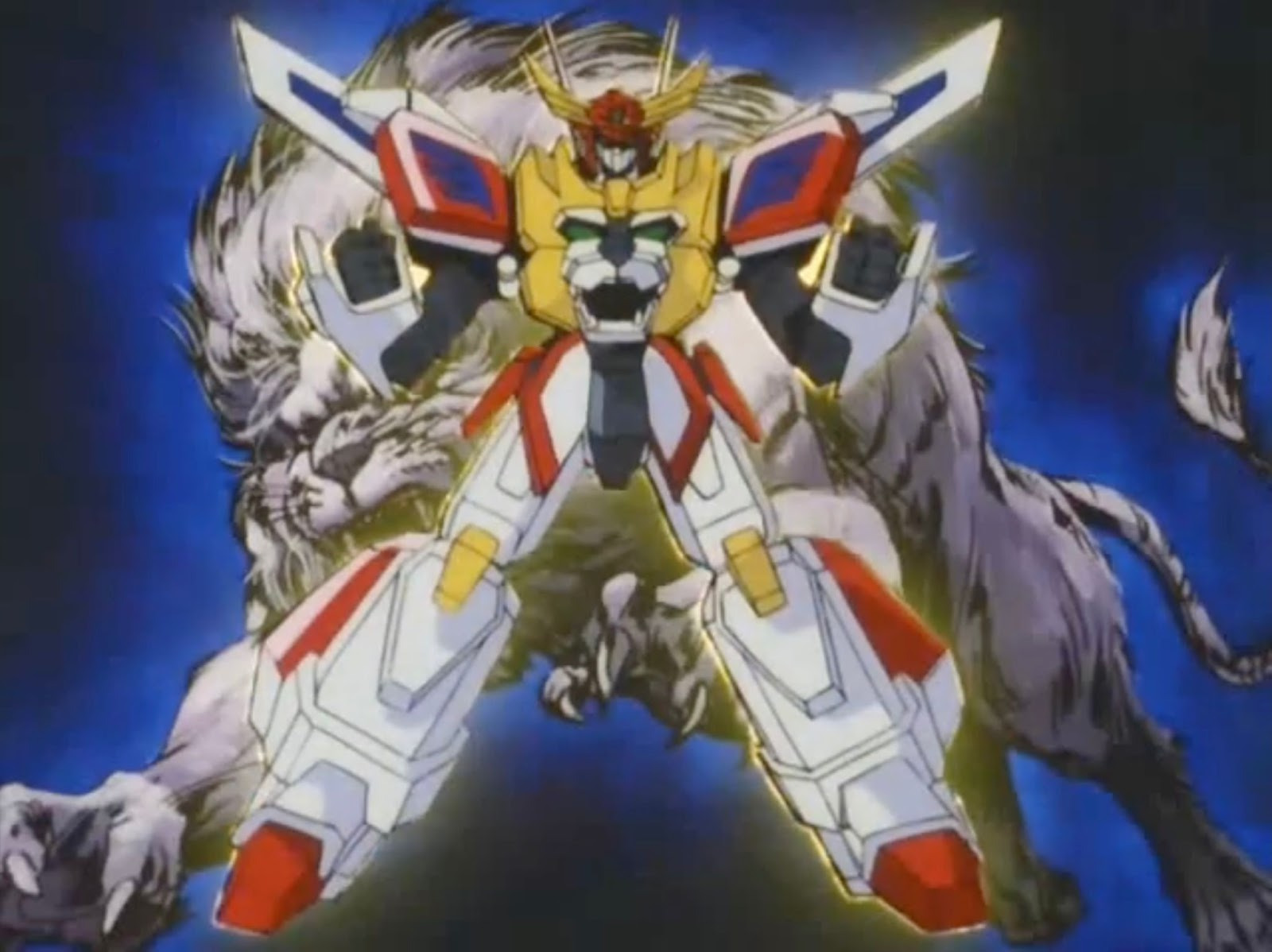
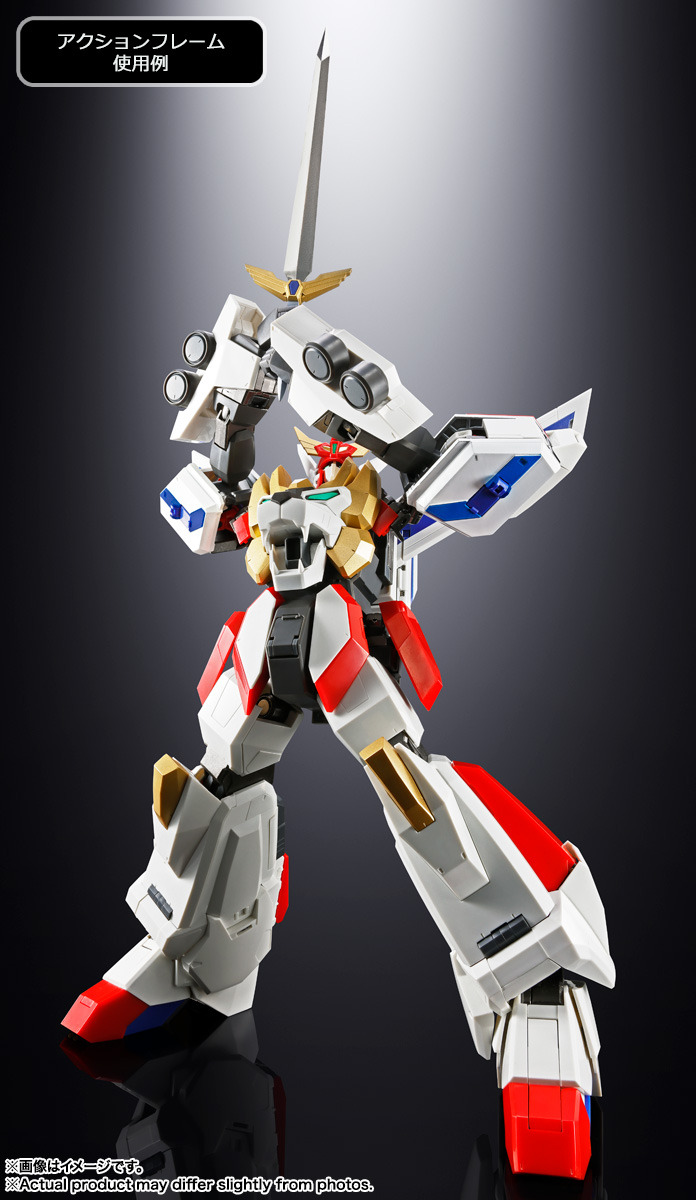
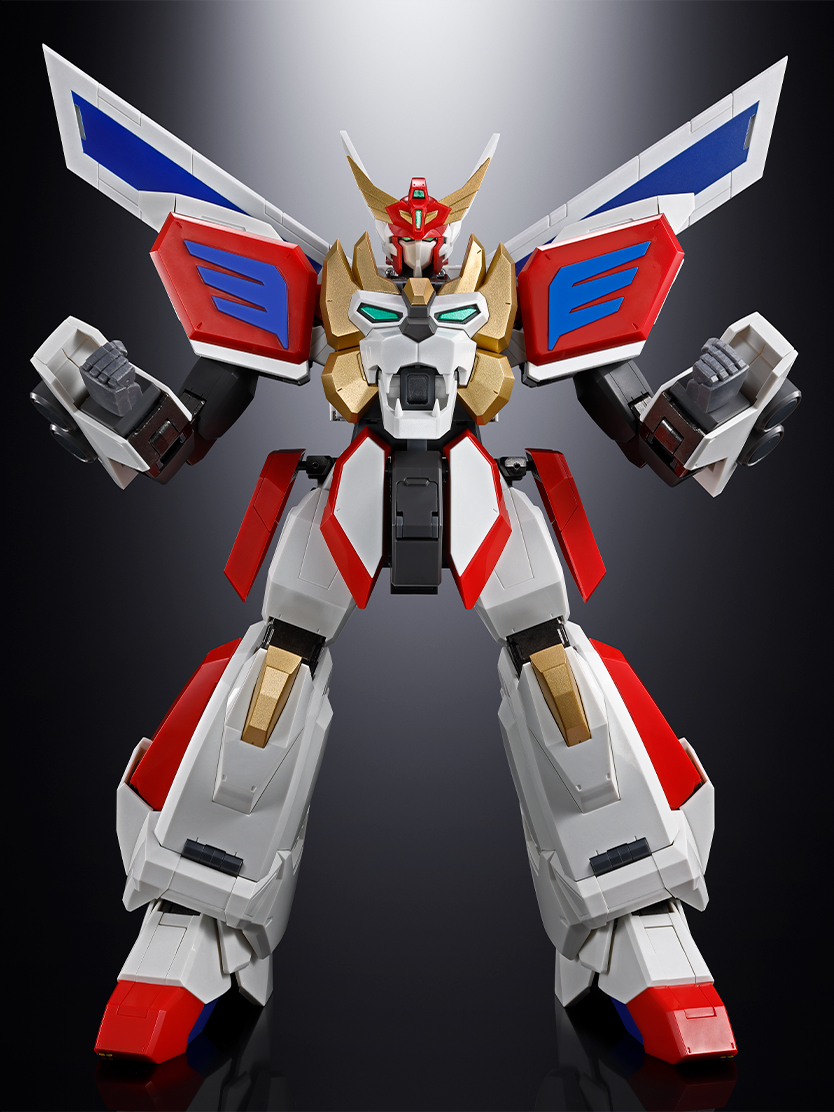
The Soul of Chogokin King Exkizer figure, showing off the giant robot and his white and red color scheme, with blue and gold highlights and a lion's head on his chest.

Earlier this month, the Soul of Chogokin King Exkizer (from the anime Brave Fighter Exkizer, aka Brave Exkaiser) went up for pre-order, over a decade after the line’s release of King of Braves Gaogaigar. Given the clever engineering that always goes into these figures, I assumed there would be some fun discussion about where it falls on the “toy fidelity” vs. “anime faithfulness” spectrum. But what I’ve since learned is that trying to achieve that balance is remarkably difficult, and the question of what to prioritize in an Exkizer figure is actually a point of contention among fans.

As someone who’s never watched Brave Fighter Exkizer outside of a handful of episodes, I don’t have any real personal skin in the game. My interest in this, aside from a general love of mecha, is mostly because the struggles of translating imagination into physical reality is something I can explore forever. With that in mind, I decided to write about this for a couple reasons. First, I want to prevent these conversations from simply being lost to fleeting social media. Second, I want to convey all this to an audience who might not be familiar with Exkizer, and thus wouldn’t easily understand why there’s a bit of a controversy in the first place.

So let’s begin!

The Myriad Inconsistencies of King Exkizer

Generally speaking, shows about giant robots take creative freedoms when adapting designs. Limbs bend in angles impossible for toys, parts pop out of nowhere or disappear, proportions are made to look less silly, and there’s just a bit of “cartoon magic” applied overall. Combattler V the toy has tank treads on its back that are always visible, but Combattler V the anime robot sees its treads pop in and out of view depending on what the show needs. Devastator from Transformers will have a different head design depending on the episode. Deluxe versions that try to thread the needle of toy vs. show will do things like “make the tank treads removable” or “provide both heads and allow the owner to choose.” 

However, King Exkizer presents a number of major challenges. 

In the anime, Exkizer is a large robot who can turn into a car. To fight greater threats, he summons King Roder, a bigger vehicle that transforms into a humanoid frame which Exkizer can enter to become King Exkizer. It’s essentially a matryoshka-esque combination reminiscent of Gordian and Baikanfu.
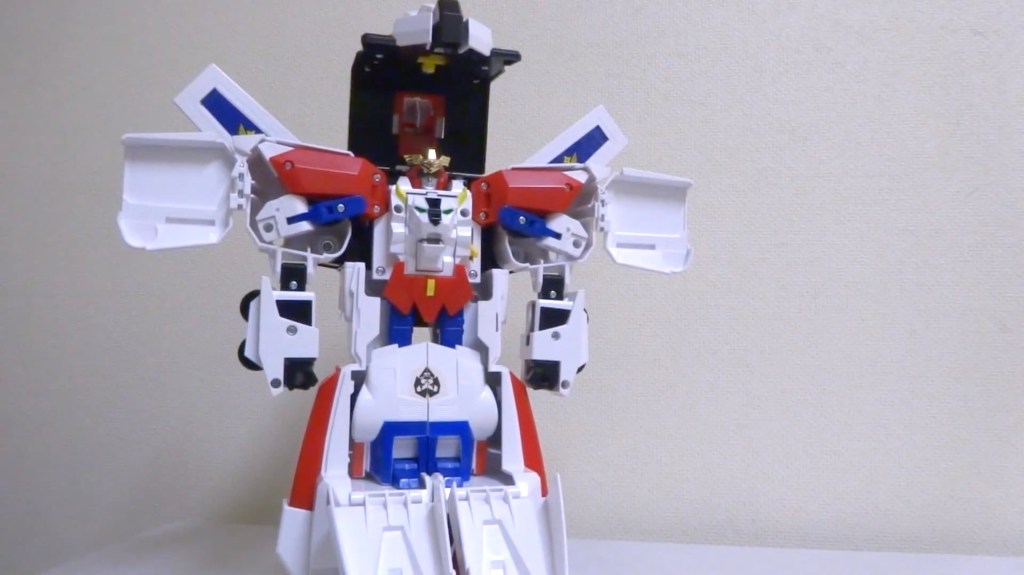
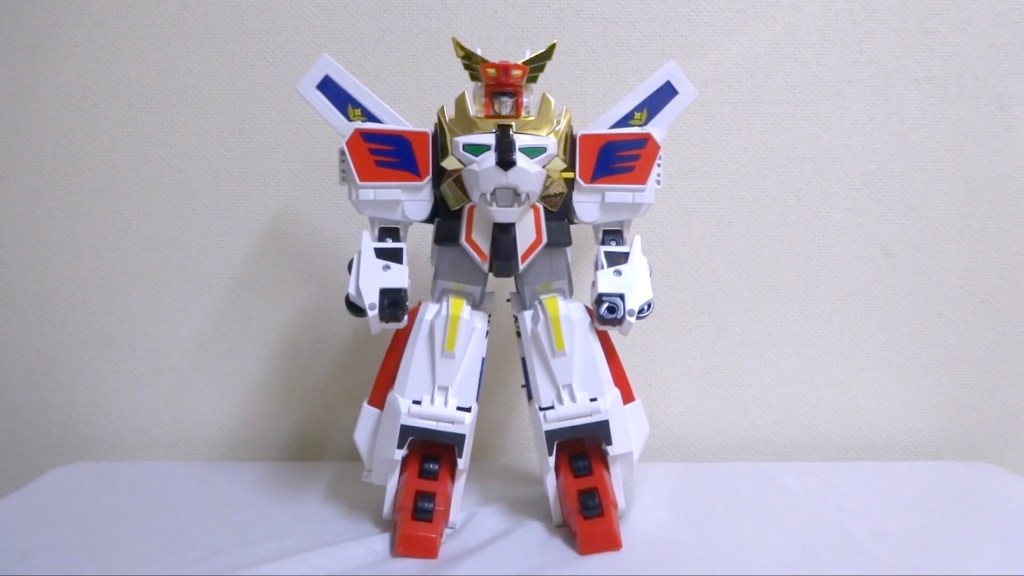
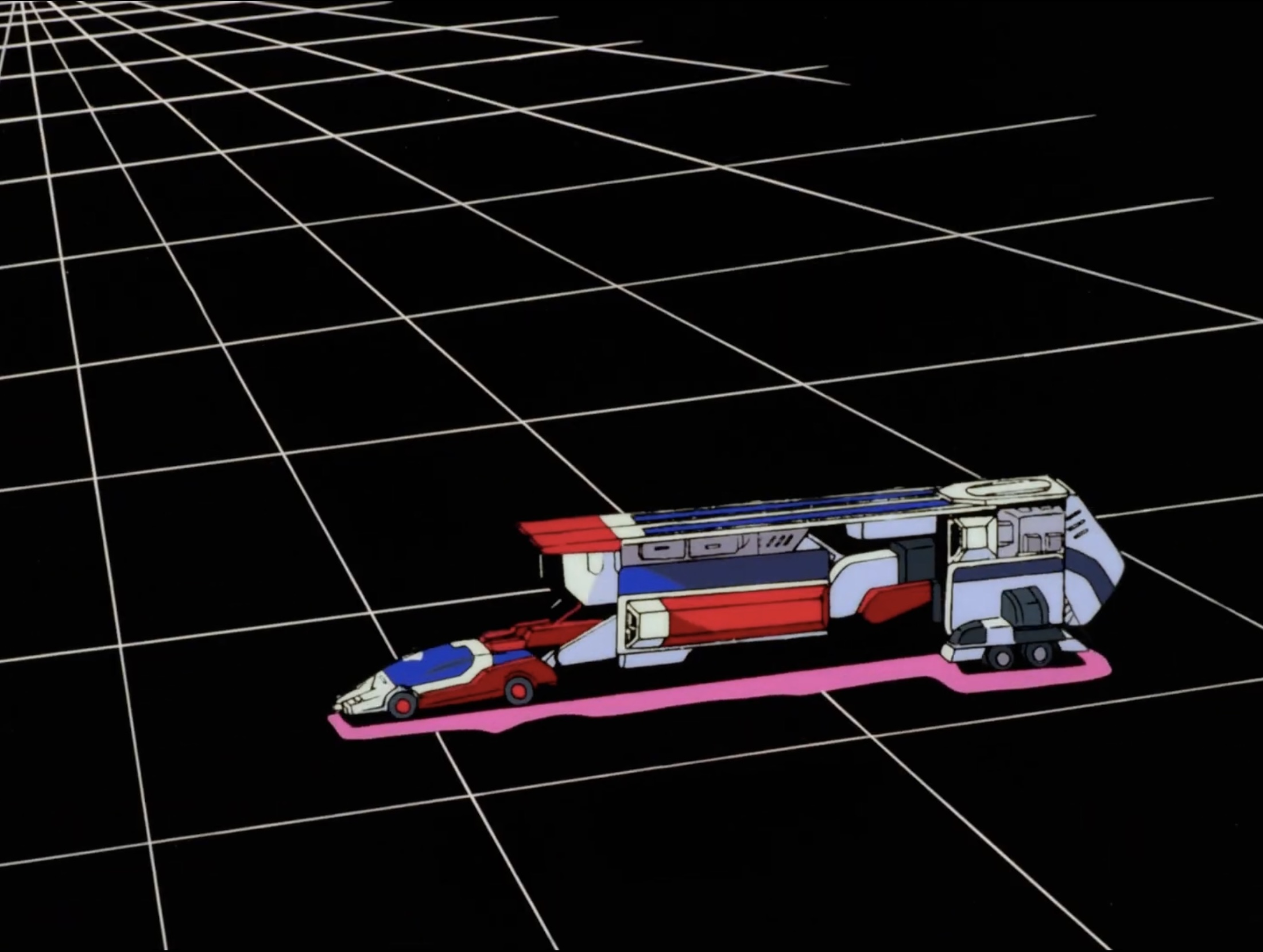
Exkizer combining with King Roder (Original 1990s toy)
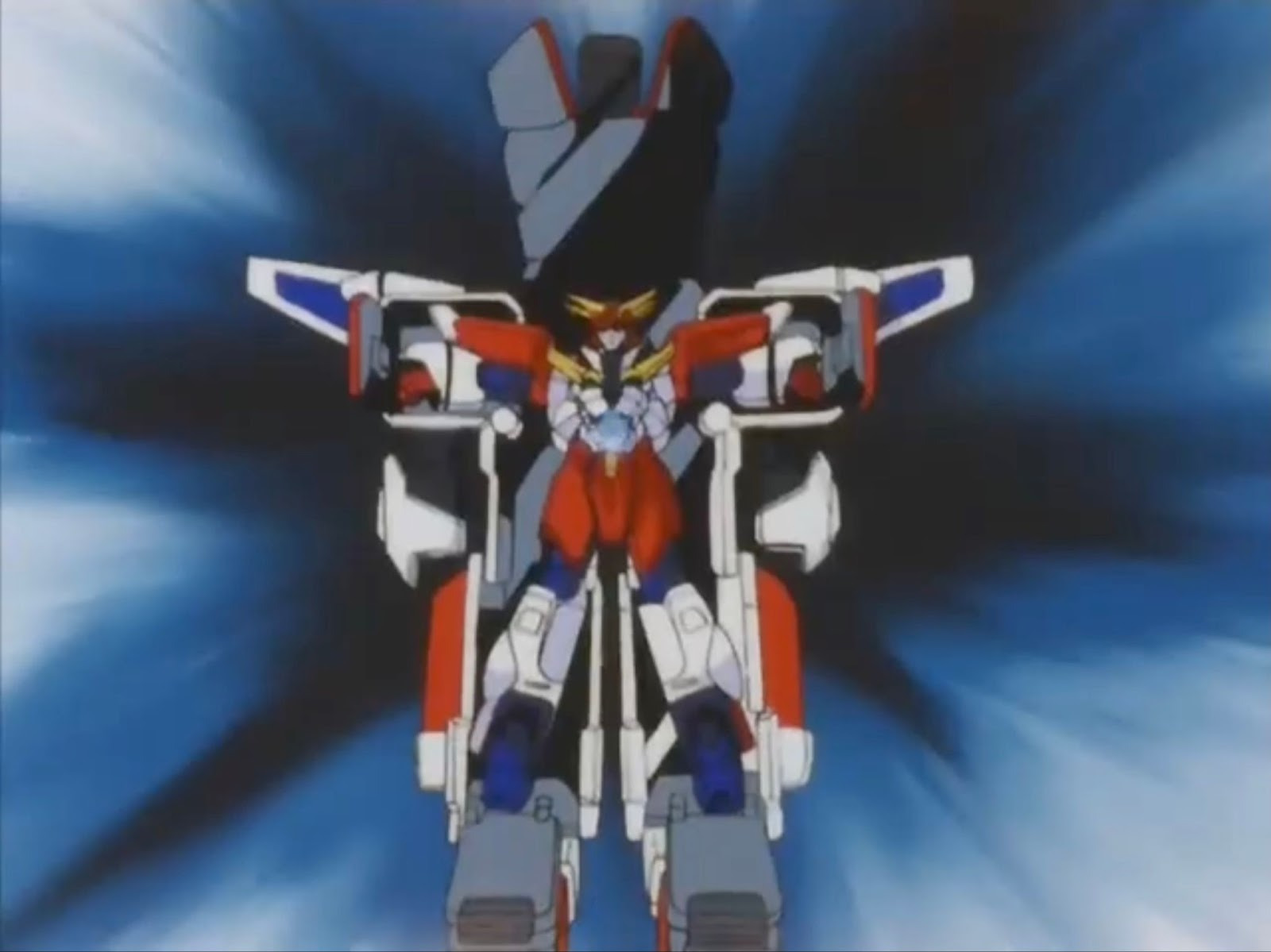
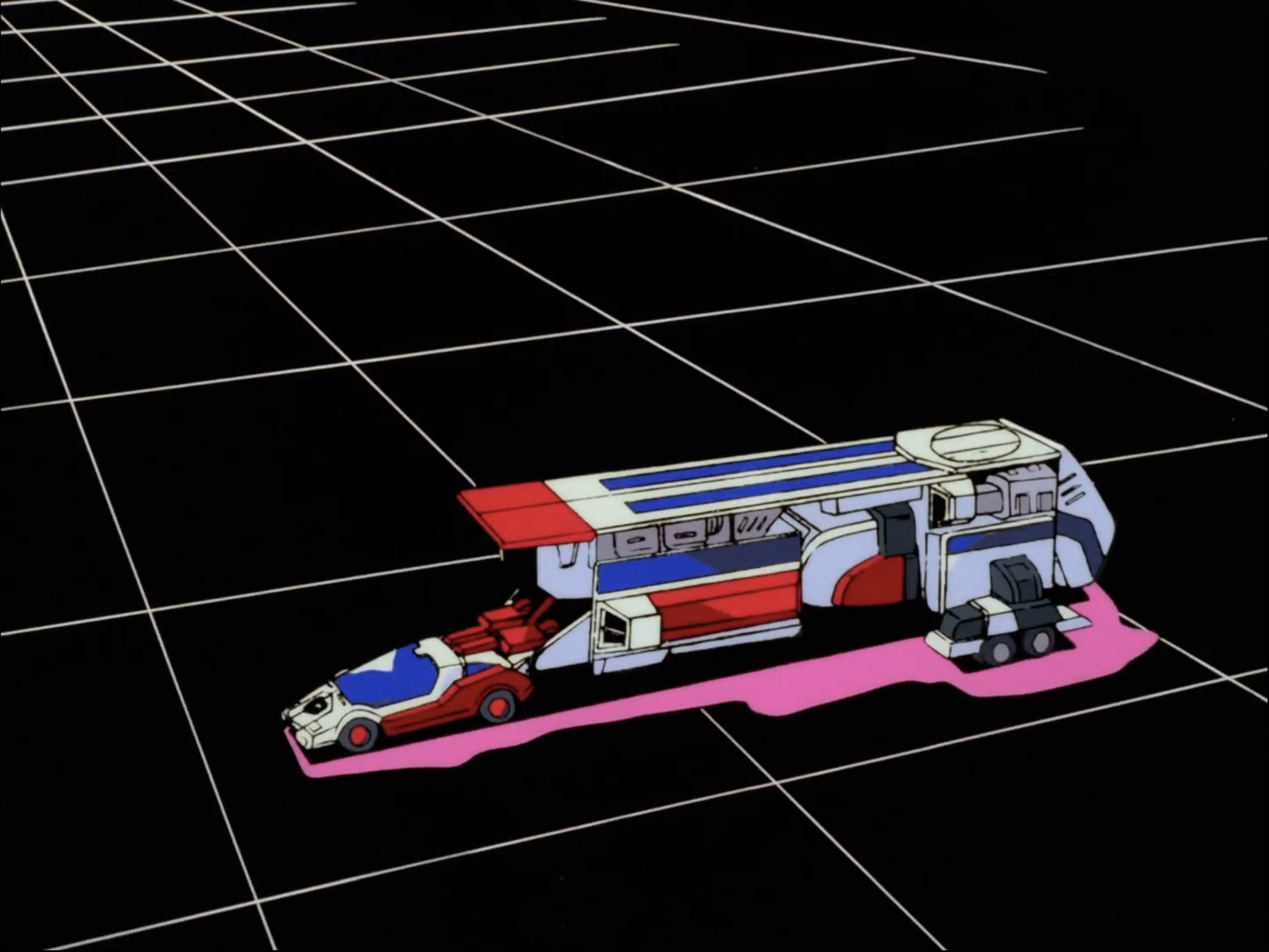
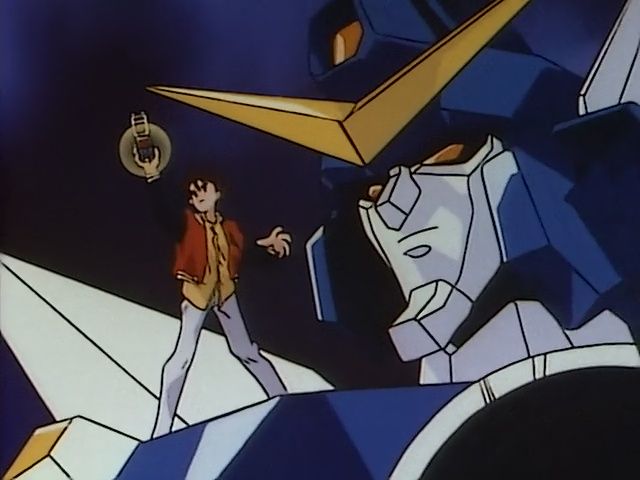
Exkizer combining with King Roder (Anime)

Not surprisingly, there are differences between the original toy and the animated representation of the robot. But within the show Brave Fighter Exkizer itself, the size relationship between Exkizer and King Roder is also wildly inconsistent. 

When Exkizer executes his “Form Up” to become King Exkizer, King Roder is portrayed as a kind of power armor relative to Exkizer’s size. If the shots in this combination sequence are to be trusted, the vehicle form of King Roder should be a little less than 1.5 times as long as Exkizer’s car form, which is the case with the original toy. But the official data says King Roder is over four times longer than Exkizer (22.4 meters vs. 5.5 meters), and no amount of reconfiguration or bending of parts can reconcile this incongruity. To add to the headache, the official lineart shows King Roder to be about 2.5 times the length of Exkizer as automobile, and the anime can’t keep this consistent, even within a single shot in the opening!
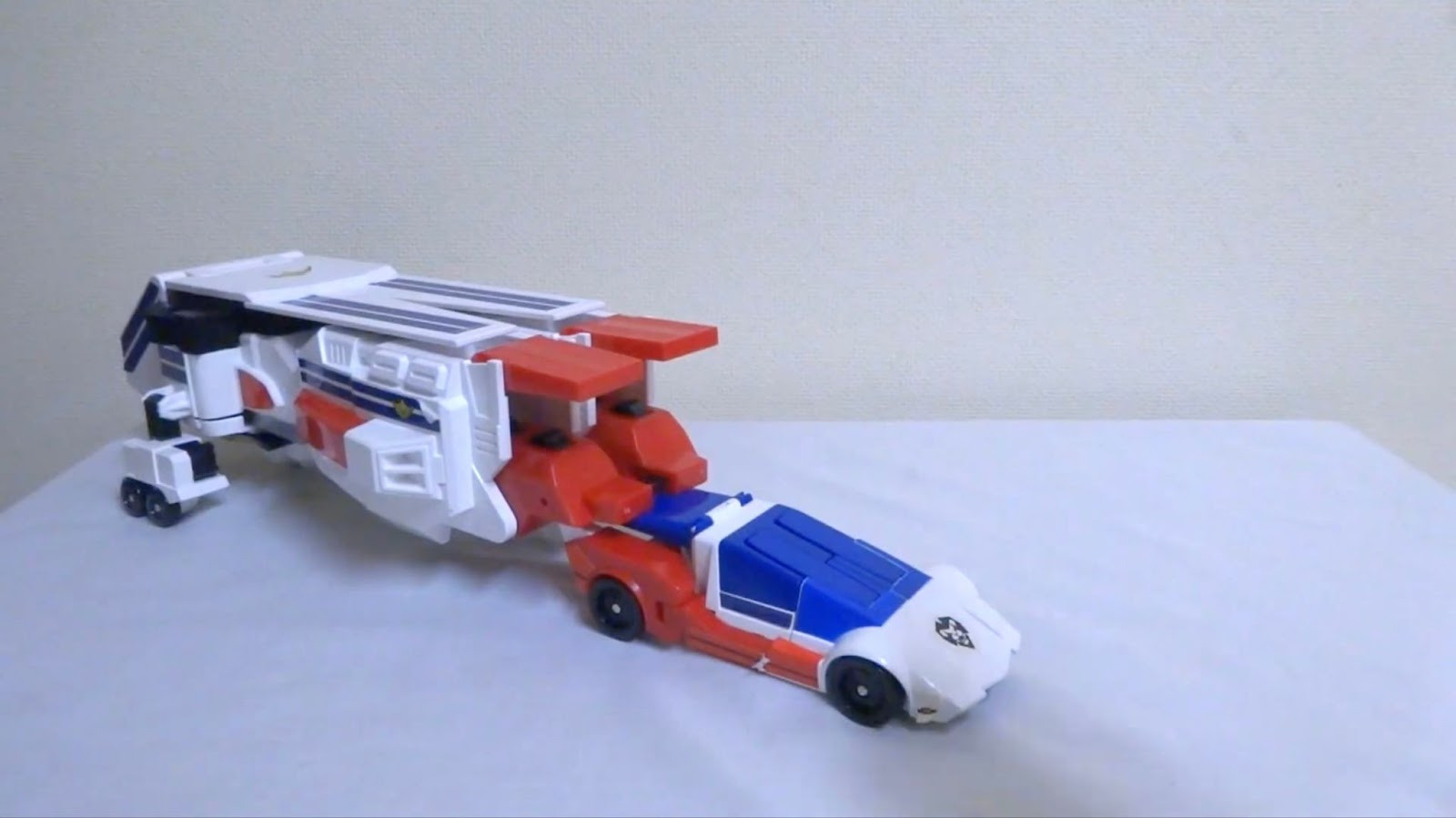
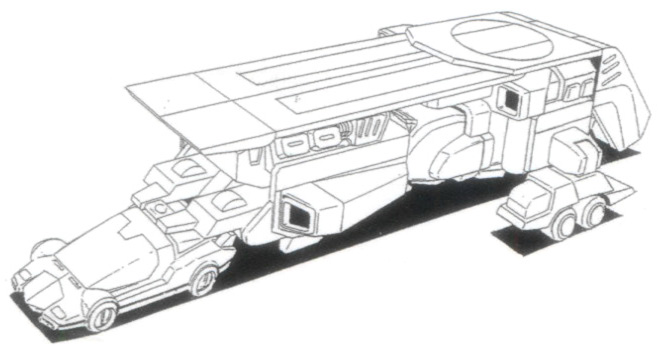
Exkizer in car mode attached to King Roder: Original toy vs. Anime production lineart vs. Anime opening

Now, it’s incredibly common for giant robots to not match their official sizes in all shots. That’s just part of anime. Are they taller than the buildings or are they shorter? Depends on the shot! And there are plenty of instances of robots magically changing size as part of the lore, like when Megatron in Transformers turns into a gun, or how the car in Braiger grows bigger for no reason when becoming the robot. The tricky thing in King Exkizer’s case is the fact that the relative sizes of the two robots affect how they’re supposed to join up. As a result, the conflicting info about size ratio between the component pieces can’t be squared away or easily ignored; it’s basically impossible to make all of them work in one toy. And even if you hand-wave away every one of those problems, even the appearance of King Exkizer changes from one shot to the next during his combination, and then those don’t necessarily match up with how he looks when posing for his special attacks.

These issues are so significant that Bandai Spirits released a 12-minute video recounting some of the struggles the designers went through in creating it. That is unprecedented!

Did you know the project actually started eight years ago, and that multiple people in charge of it tried to figure out a solution but failed? A young designer named Fujiki Yuuya (who was a fan of the Brave series born in 1999, after the franchise had essentially been over) was eventually assigned to make a version of King Exkizer for the Metal Build line, only for him to hit a dead end as well because the toy’s mechanisms became increasingly complex. It took advice from the SoC Gaogaigar lead Terano Akira to keep playability in mind and look at the SoC Tryon 3 for inspiration, as well as suggestions from the Tryon 3 project’s Mizuno Masahiro, to help bring it to the finish line.

So, presented with these design roadblocks, how does the Soul of Chogokin King Exkizer strive to overcome them and reach a solid compromise?

The Answer, According to Bandai Spirits
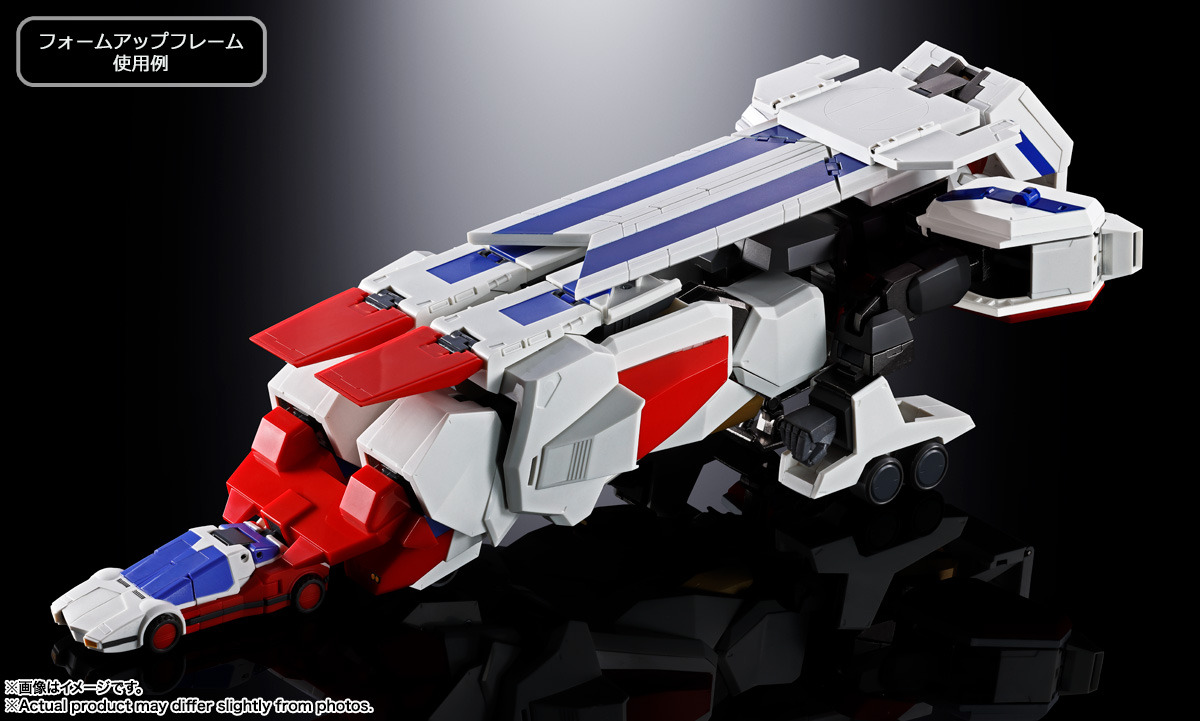
First, rather than try to match the animation depicting the Form Up sequence, they decided to make the scale and proportions relatively accurate to official stats for both the vehicle forms and the combined King Exkizer (Exkizer in car mode might even be a bit too small). However, rather than abandoning the combination concept entirely, Exkizer is still made to nestle into King Roder, albeit in a way that looks different from the anime. The result is something reminiscent of Arc Guren-Lagann inside Super Galaxy Guren-Lagann. 
Exkizer Combining with King Roder (Soul of Chogokin)

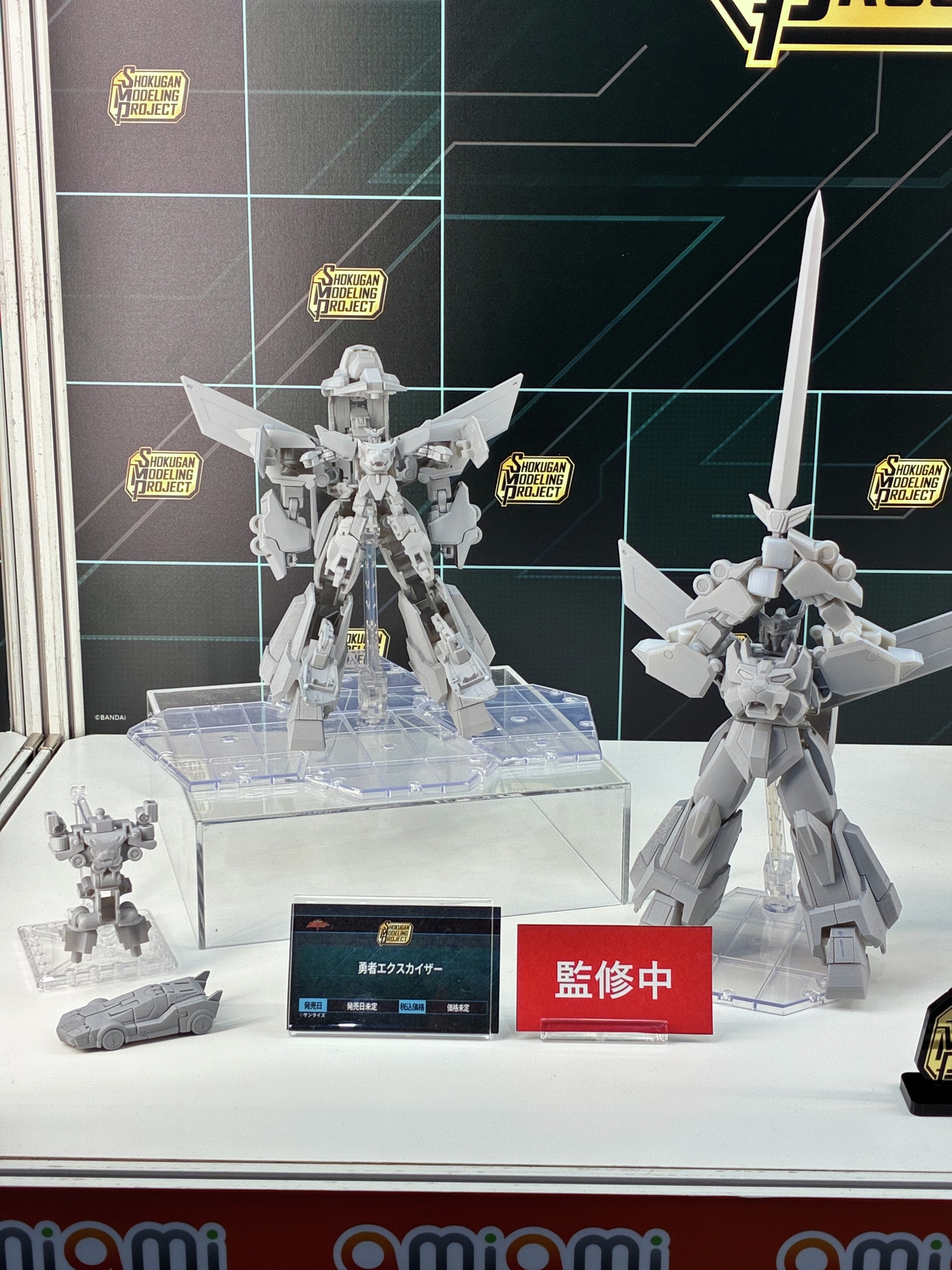
In contrast, a previous King Exkizer figure from the company Toyrise did not even attempt to make this work, instead opting for Exkizer to enter King Roder from the back as a solid block. An even earlier toy, the Masterpiece King Exkizer, somewhat more faithfully captures the combination sequence proportions at the expense of the vehicle size ratios and overall body proportions of King Exkizer, and the Exkizer inside is still noticeably smaller than the anime’s. The same can be said of another upcoming version of King Exkizer, from Shokugan Modeling Project.
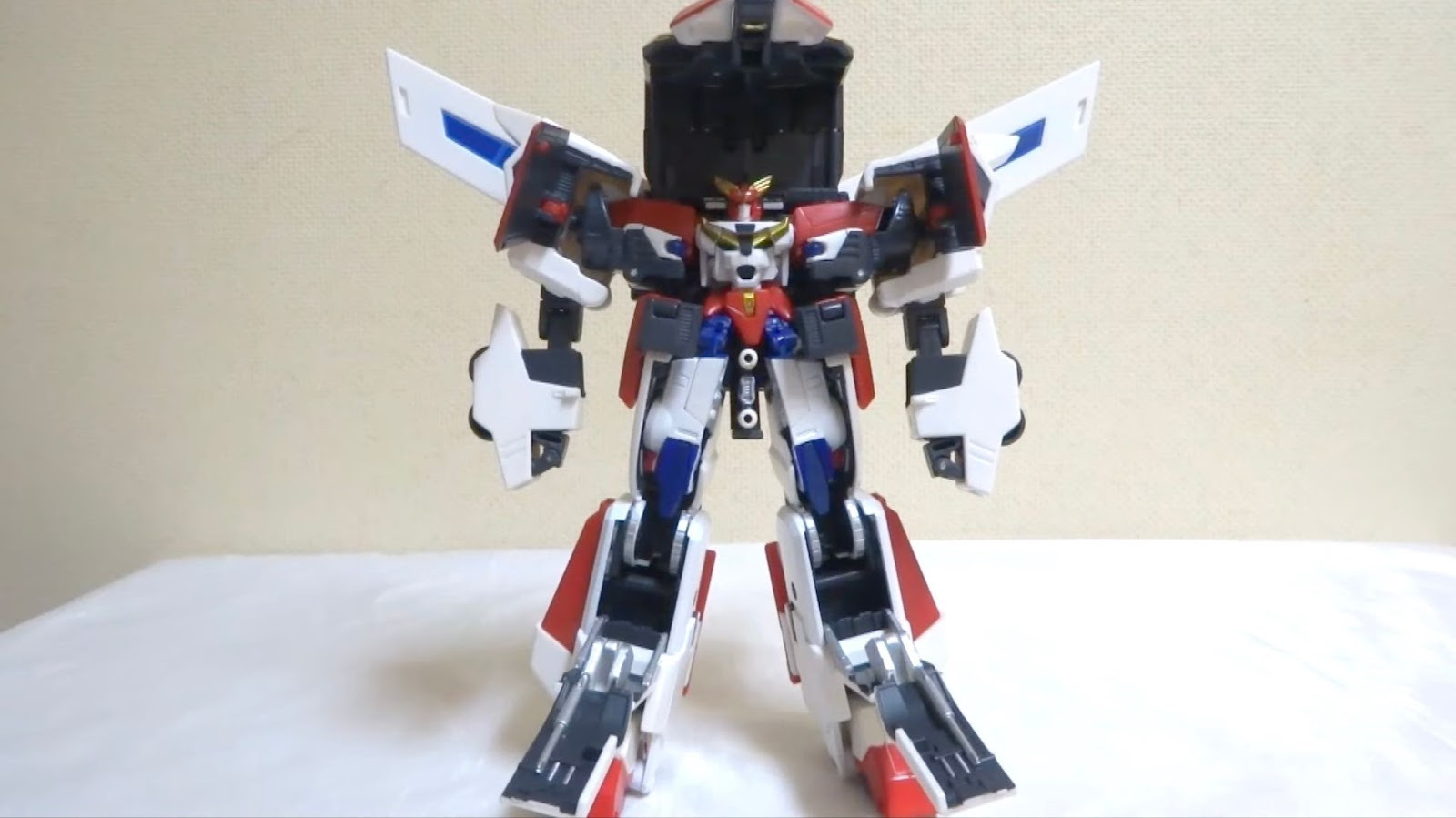
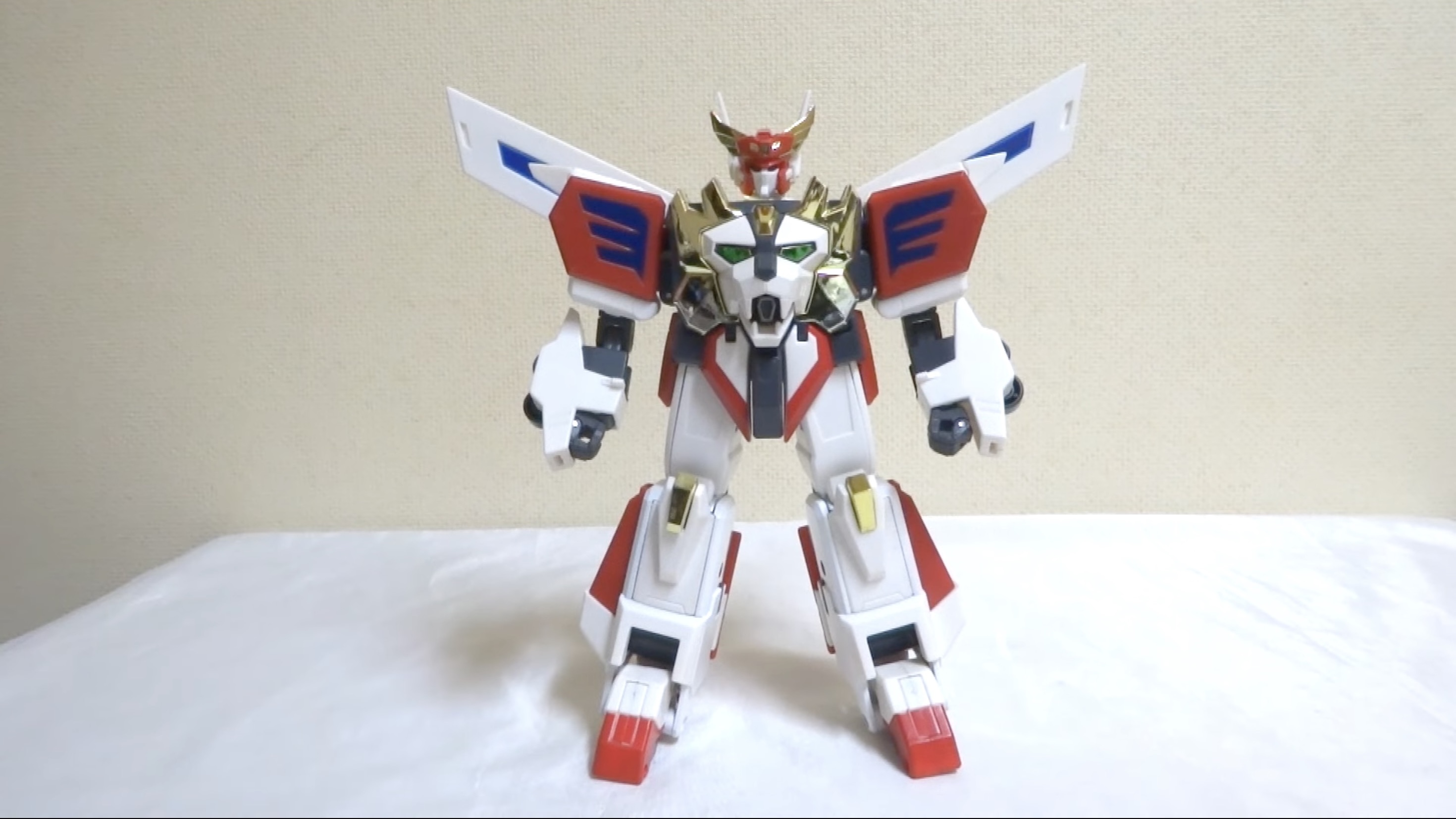
Masterpiece King Exkizer

An early protoype of the Shokugan Modeling Project version of King Exkizer, showing Exkizer's Form Up and the fully formed King Exkizer with sword. Relative to King Roder, Exkizer is smaller than the Masterpiece version but larger than the Soul of Chogokin version.

Shokugan Modeling Project King Exkizer

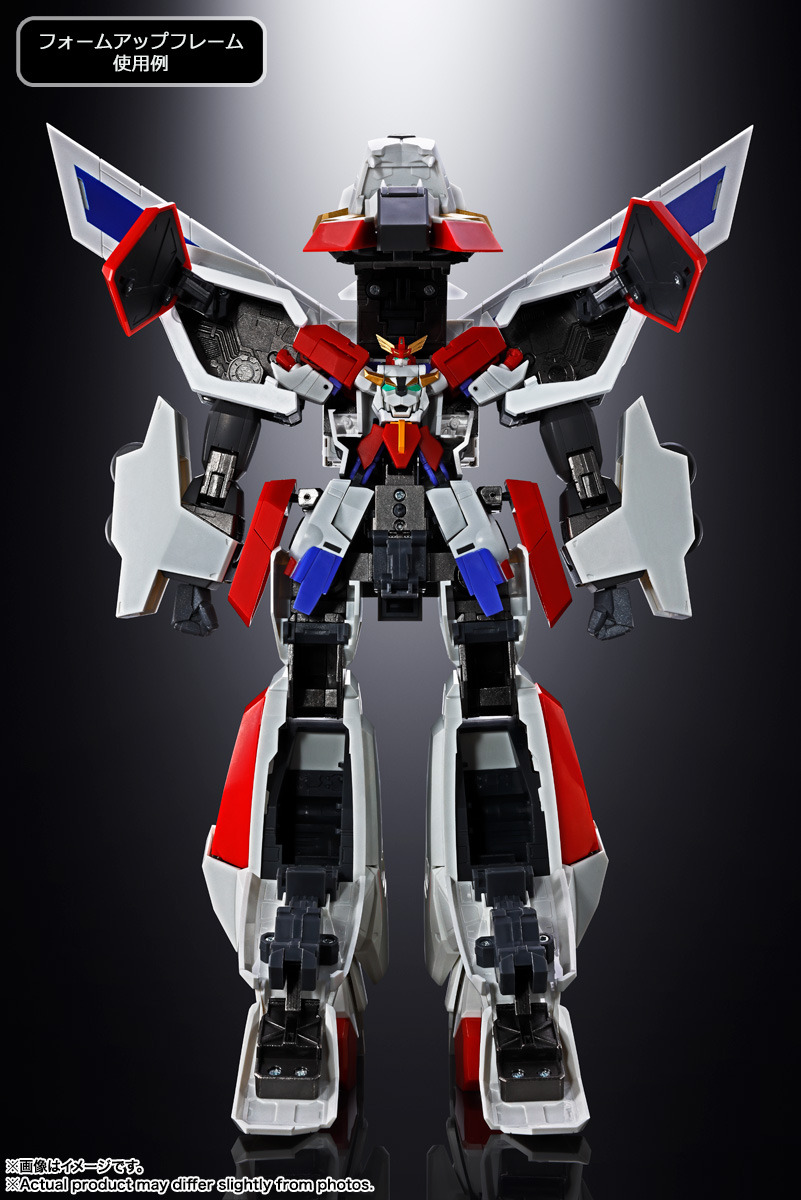
Second, King Exkizer actually has a couple of swappable inner parts: a “form-up” frame that more faithfully lets Exkizer enter King Roder fully intact, and an “action” frame that allows for greater poseability. A lot of previous entries in the SoC line were made to go in one direction or the other, but in the case of Brave Fighter Exkizer, the combination sequence and the Obari Masami–esque poses are such iconic parts of the anime that they both appear to have been deemed necessary. This is accomplished by having the limbs of Exkizer split up and stored in different parts of King Exkizer’s body when using the action frame. 
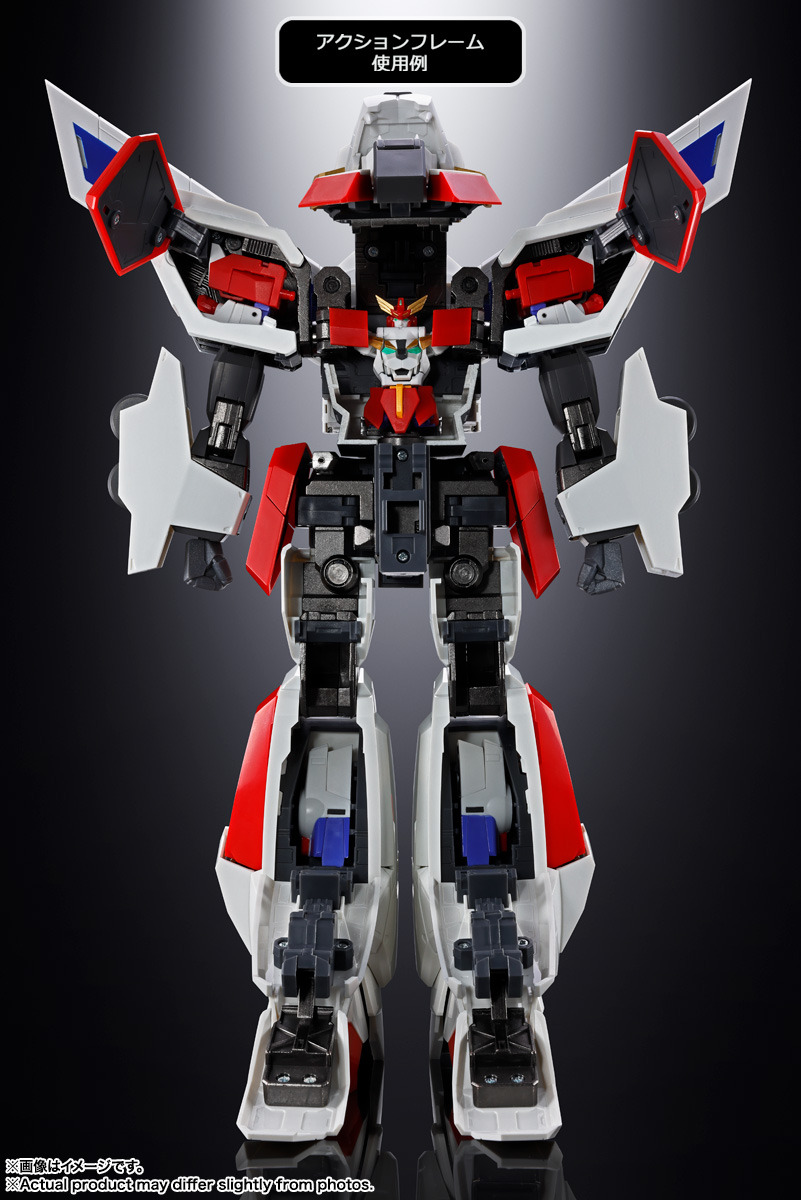
Form Up Frame vs. Action Frame

Fan Reaction 

The actual final form of the figure looks good and seems to generally have the polish and articulation one expects out of the SoC line. Social media shows plenty of positive feedback too. The reason this figure is the subject of debate comes down to the fact that fans disagree about the most important aspects of King Exkizer to preserve.

They might consider the “power armor” aesthetic (and the proportions needed for it) more important than keeping the official sizes of Exkizer and King Roder. Or they might find that the use of different frames to prioritize different types of play over-complicates things. Or they might even deem the Obari-faithful poseability and limbs to not be worth the other sacrifices. Ultimately, it seems impossible to please everyone, and the fact that it feels like a damned if you, damned if you don’t scenario makes me wonder if that was a factor in delaying the project.

It’s tempting to point to fellow Brave Robot Gaogaigar and ask why they couldn’t do something similar to its SoC. Yet one has to remember that not only is the King of Braves just a bulkier design in general with fewer displays of extreme poseability, but the extremely intricate Final Fusion combination is such a defining part of Gaogaigar that it has to be the #1 priority. King Exkizer’s Form Up doesn’t compare.

The Devil in the Details

In thinking about all the hurdles Soul of Chogokin King Exkizer encountered, one thing that comes to mind is that most classic of combiners: the original Getter Robo. In its anime, the vehicles form the main robot in a manner that is literally impossible to replicate with physical materials. Body parts just magically appear out of nowhere, and the overall shape shifts like a blob to accommodate things. The Soul of Chogokin line never even bothered with making combining toys of Getter Robo, and attempts to create one have been awkward at best.

An animated gif from the opening of the anime Getter Robo. It shows 3 flying vehicles mashing together and somehow forming a robot.

While King Exkizer seemingly shows none of those Play-Doh qualities, it’s not that far off. In isolation, each depiction of an exciting mechanical detail trick viewers into thinking that it all makes sense, but when you take the whole of it in, you realize it’s basically tossing aside overall consistency in favor of Rule of Cool. That works just fine in animation, but it’s clearly a conundrum for toy makers. 

In essence, King Exkizer in animation is like having incomplete versions of 10 jigsaw puzzles, all of which are depicting the same general image while also having subtle differences in size, number of pieces, and other finer details. The premium toys and figures are, in turn, attempts to combine them into one cohesive image that can satisfy everyone. It’s an impossible task, and yet the fans and designers alike keep hoping that a real solution is out there. Whether the Soul of Chogokin rendition is the right move really is in the eye of the beholder.
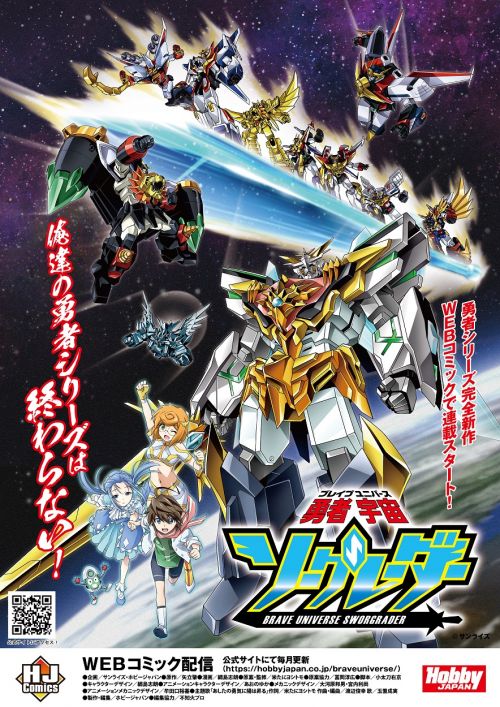
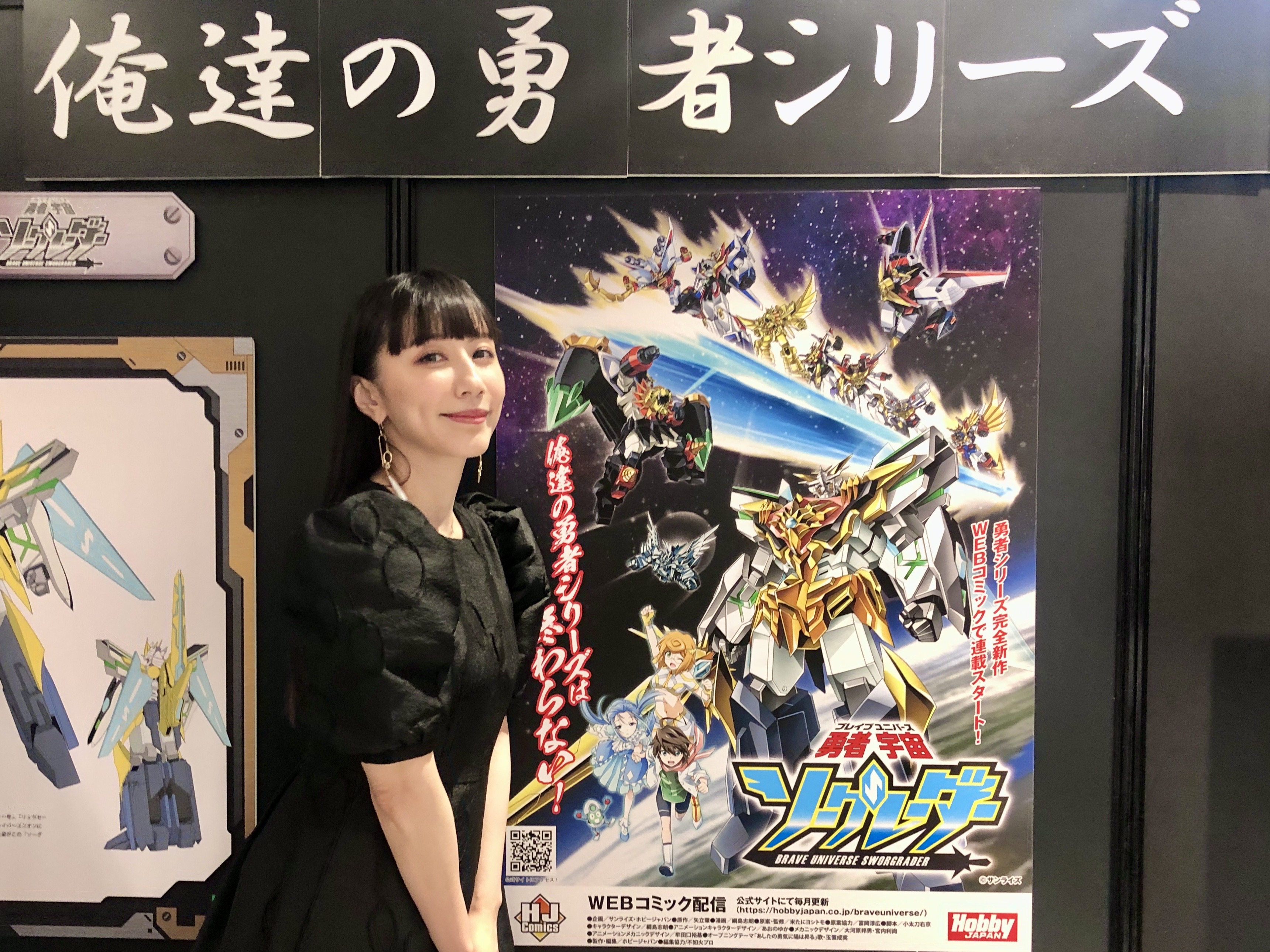
New Yuusha Robot Announced: Brave Universe Sworgrader

This past week, the Gaogaigar 25th Anniversary Exhibition in Japan featured a surprise announcement: A new entry in the Brave Series has been greenlit! Brave Universe Sworgrader is heading our way, albeit with a caveat. Unlike all its anime-based predecessors, it will debut as a web manga.

Sworgrader isn’t totally alone in regards to not coming out the gate as an anime. The sequel to Gaogaigar Final, King of Kings: Gaogaigar vs. Betterman, started off as a web novel series before being adapted into a manga. Other old anime have also received novel-only nostalgic sequels, such as Raijin-oh and even the magical girl title Ojamajo Doremi. One major difference is that Sworgrader is wholly original, though the teaser art and the whole “Brave Universe” thing seems to imply that the previous Brave Robots will somehow be involved—even the shelved sequel that only ever got a spotlight in video games, Baan Gaan.

I do feel a mix of joy and sorrow in all this: It’s great to see Brave franchise make something of a comeback, but also a shame to know how diminished it is compared to its heyday. I suspect that something like a 90s throwback robot toy franchise isn’t going to attract the massive kids market that was tuning into Exkaiser and such thirty years ago (otherwise this would at least be a mobile game). It’ll mostly be banking on the adults who had grown up with the old shows, and merch will probably be premium figures and model kits, as opposed to children’s toys. 

That all said, it’s worth pointing out that despite likely having more “Big Friend” appeal than anything else, the main characters are clearly cut from the traditional Brave cloth: They’re kid heroes through and through. So many retro-style series prefer to have characters who are at least in their late teens in order to be more relatable to that older audience, but I kind of admire the creators of Sworgrader for trying to be faithful to the Brave spirit. Gaogaigar really hit its stride once the shackles of toy advertisement were loosened, and Sworgrader is potentially going to be like that from Day One.

In addition to overseeing the entire project, Gaogaigar director Yonetani Yoshitomo is also the lyricist on the main theme for Sworgrader; something he’s had experience doing thanks to Gaogaigar and Betterman. In fact, similar to Sworgrader, Gaogaigar vs. Betterman has “opening” and “ending” themes despite there being no anime. The theme will be sung by Tamaki Nami, who got her debut in anime singing the fourth and final Gundam SEED opening, “Believe.” All this takes me back to my very first time in Japan in 2005: a year when Gaogaigar: Grand Glorious Gathering was on TV, and I could hear Tamaki’s SEED openings while in the supermarket.

And while I believe a Sworgrader anime will have some trouble coming to fruition, not all hope is lost: One of the credits on the project is Aono Yuka (Shinkalion Z, Brave Beats) as “Animation Character Designer” as distinct from “Character Designer” Tsunashima Shirou, the artist of the Jinki franchise (talk about another throwback). Similarly, there are separate credits for “Mechanical Design” (Ookawara Kunio, Miyauchi Toshinao) and “Animation Mechanical Design” (Mutaguchi Hiroki) Maybe we’ll see some cool shorts, at the very least?

Whatever form Sworgrader takes, I look forward to seeing its arrival. I will neither automatically love it or hate it, but I do hope it brings joy and excitement to all.

The Roles of “Characters” in Mecha Anime

Sometimes, you’ll see a wild claim about mecha anime, like “Gurren-Lagann was the first giant robot series to be about characters instead of the robots,” and it inevitably results in a backlash—in this case, the counterargument that all giant robot shows are about characters. Whether the initial statement is made in jest or as a genuinely ignorant take by someone with only surface-level knowledge of mecha, it reflects certain assumptions about what the genre is like.

I got to thinking about the notion that giant robot anime are about characters because it’s both true and an oversimplification. Moreover, the extent to which the giant robots truly “matter,” as in they’re inexorable from the world being portrayed and can’t be substituted with some other form of weaponry, varies tremendously. But regardless of the true “necessity” of either characters or robots, I feel there is more to it than just one side mattering more than the other. Then a thought occurred to me, and I have a kind of nascent “universal theory of giant robot anime”:

Giant robot anime are about characters, but more specifically, the main character reflects some vital or fundamental aspect of the world and story around them. The giant robot, in turn, is reflective of the connection between the hero and that aspect.

If it seems nebulous, that’s because it is. I’m thinking less about trying to justify every mecha anime and more about how the giant robots end up being the avatar through which so many of these protagonists interact with their environment and their histories, and thus reveal more about the anime themselves. There’s also no denying the close ties between giant robots and merchandising, but this also ebbs and flows over the decades.

So let’s start with some of the big ones. 

Tetsujin 28 is about Shoutarou trying to make a difference in a post-WWII environment by being a boy detective who fights crime. Tetsujin 28 the robot was created to fight the Allies, but is now being used for an alternate purpose: as a guardian of peace instead of a weapon of war. 

Mazinger Z draws a direct lineage to this sort of thinking. While the power fantasy and toyetic appeal of the robot itself is undeniable, Kouji is presented with a question about human potential from the very beginning: If you had great power, would you be a god or a devil? The robot Mazinger Z is Kouji’s way of making a difference, and he chooses to use it as a protective guardian.

Mobile Suit Gundam, the first “real robot” anime that emphasized the robots as weapons of war over superhero-like entities, is about its hero Amuro’s repeated exposure to the trauma of war. It’s through the Gundam that he experiences physical and emotional scars alike, and the very fact that his piloting experience molds him into a capable soldier also contributes to the overall “horror of war” message that girders Gundam and its many sequels.

Superdimensional Fortress Macross has three main components: romance, music, and robot battles. Here, the titular robot is literally a flying city traveling through space, and it functions as both an urban cosmopolitan center and a massive superweapon. In other words, it is the very space in which all three pieces of Macross take place.

Neon Genesis Evangelion centers around Shinji and his fear of human connection, be it with his family, his peers, his friends, or anyone else. It is the anime of extreme introspection. Not only is the EVA-01 the means by which he tries (and fails) to find self-worth, but the EVA itself is revealed to house the soul of his dead mother. He is contained in a womb-like structure inside of his giant mom.

Tengen Toppa Gurren-Lagann is about Simon and the limitless potential of humanity to overcome all obstacles slowly but surely—and ultimately whether there should be limits on that power. Gurren-Lagann manifests this through numerous transformations fueled by human spirit that bring on exponential power growth.

The above examples are all heavy hitters, but what I also want to emphasize is that this applies to “lesser” titles as well.

Brave Police J-Decker is maybe the most on-the-nose example of the relationship between a boy and his giant robot, as the story is about how Yuuta’s friendship with the giant police robot Deckard is what teaches the latter to develop true emotions and a proper sense of justice and humanity. 

Shinkon Gattai Godannar is about the relationship between Gou and Anna as husband and wife and how their love affects both their personal and professional lives as co-pilots. Godannar Twin Drive is literally a combination of both robots.

Robotics;Notes focuses on Kaito and his relationship with Akiho’s giant robot club, and the blurring of augmented reality with actual reality. The creation of the Guntsuku-1 is basically an untenable goal that, through the events of the series, becomes effectively “real” through how Kaito and Akiho view and utilize it.

Trider G7 is about Watta, who’s both a little kid and the CEO of his own company, utilizing both the image of Japanese corporate culture of the early 1980s and the classic child desire of wanting to do what the adults do. The Trider G7 robot literally flies out of a playground, and has tons of cool and wacky weapons, but the fact that it’s Watta’s robot and the main way he gets his job done means it’s the conduit through which that “grown-up” fantasy takes place. 

Shinkansen Henkei Robo Shinkalion the Animation is literally a commercial for bullet train toys that are, in turn, advertising for the Shinkansen trains in Japan. Its main character, Hayato, is basically a Shinkansen fanatic who sees them as not only the coolest things ever but as reflecting a philosophy of unwavering service to the people of Japan. The Shinkalion robots, by extension, portray a more action-packed version of this concept.

Giant robot anime embody many values, from crass commercialism to dreams of being brave and strong, from anti-war sentiments to deep looks inward at the psychological scars of society. The mecha themselves are often not “characters” in and of themselves (with a number of notable exceptions), but they are symbolic of how the protagonists of these stories relate to what they experience. The hurdle for those who think that these anime are “more about robots” is that this particular way of communicating the characters’ stories requires an acceptance of giant robots as a storytelling device.

Kotobukiya Wants to Know Your Favorite Yuusha/Brave Robots

Good news for fans of 1990s giant robot fans: plastic model and figure maker Kotobukiya is looking into making plastic models from the Yuusha/Brave series, and they’re holding a survey to get customers’ opinions.

The survey is in Japanese, but for those who can’t read the language but still want to participate, I’ve translated the prompts, which you can see below.

  1. Please select your gender. (Choices are male, female, and no answer)
  2. Please select your year of birth.
  3. Among the options below, please select your favorite work in the Brave series. (Options are in order of release date)
  4. Please select the Brave series products you hope to see. (Pick 3)
  5. Please write any opinions you have pertaining to Brave series plastic model kits
  6. Please tell us your favorite plastic model purchase from the last six months.
  7. Please tell us why the answer in #6 is your favorite.
  8. Please choose any of your favorite plastic model lines from Kotobukiya. (Frame Arms series, Frame Arms Girls series, Hexa Gear series, M.S.G. Weapon Unit series, M.S.G. Heavy Weapon Unit series, M.S.G. Gigantic Arms series, M.S.G. Mecha Supply series, M.S.G. miscellaneous, Other)

So happy survey-filling-out (?)! I for one will be voting for Shadowmaru (J-Decker), King J-Der (Gaogaigar), and Gaogaigo (Gaogaigar vs. Betterman novels). Survey ends May 31.

The Real Captain Planet: Brave Fighter of Legend Da Garn

The 1990s Brave franchise—most famously known for its swan song, King of Braves Gaogaigar—is a series of children’s anime centered on boy heroes and their heavily merchandisable giant robots. While the overall quality varies, each show indicates a push and pull between being half-hour toy commercials, displaying impressive mecha animation, telling stories that kids enjoy, and imparting important lessons for young viewers. Over the years, I’ve been told multiple times that one of the turning points is 1992’s Brave Fighter of Legend Da Garn: the third entry and first to attempt a more mature and long-form story. Having finally watched it, I can see a more serious yet also a scattershot approach that belies the competing forces dictating the direction of Da Garn.

Takashiro Seiji is a normal ten year old boy whose mother is a news anchor and whose father is a member of Earth’s Global Defense Force. When a mysterious robot attacks the city, he comes across a power lying within the Earth itself that manifests itself as a giant robot guardian known as Da Garn. As the masked commander, Seiji leads Da Garn, and eventually other robot allies who emerge, against ever greater threats—especially the enemy’s ongoing attempt to rob the Earth of its “planet energy.” There’s an ongoing environmentalism and world peace theme underlying everything, exemplified by a line from the opening theme: “This planet is our cherished ship.”

Due to this show’s opening, I once had a very mistaken impression of Seiji. The way he’s drawn and animated in it, there are times when he looks like an adult. It’s almost as if they either hadn’t decided his age, or figured that making him look 6 feet tall and muscular would make for a more exciting intro regardless of how odd it looks. Whatever the case, my expectations had to be modified, though Seiji’s quality voice acting from Matsumoto Rica (best known as Satoshi from Pokemon) helps keep him an endearing if somewhat typical protagonist.

The robots, in typical Brave fashion, are all about combining. Da Garn combines with a plane and a train to become Da Garn X. Later robots combine together and then get additional partners to combine together. However, they’re also kind of a thematic hodgepodge. Da Garn himself is a police car. He gets plane allies and motor vehicle allies. Then they start introducing robots based on animals, even making it seem like one is going take over as the star of the show, as if someone said, “The surveys say kids like lions!!”

There are so many mecha, and they’re given so few opportunities to show their personalities, that only a handful ever get highlighted, leaving many to be less memorable. In contrast, it’s hard to forget any of the robots in Brave Police J-Decker or Gaogaigar. Even compared to a series like Girls und Panzer (which also groups a gigantic cast into “squads” with collective personalities), Da Garn can feel sparse in terms of characterization. The main exception to this glut is an antagonistic robot named Seven Changer, who (of course) has seven different forms, and whose cool arrogance is delivered effectively by Koyasu Takehito (Dio in JoJo’s Bizarre Adventure).

Speaking of villains, I’m not sure if I’d call them particularly strong, but they are definitely memorable, and they’re explored in great detail. Many of their identifies are initially a mystery, and they’re woven into the simultaneous small-town/global atmosphere in interesting ways. As the series progresses, their stories are increasingly a part of the narrative, and it allows Da Garn to touch upon ideas that would make less sense with Seiji or any of his friends. In fact, I’d argue that the anime doesn’t really find its footing until it starts to do more with its villains.

Brave Fighter of Legend Da Garn ends up being the kind of work that is best viewed as taking a step beyond its trappings and its immediate predecessors while still somewhat beholden to them. It’s polished in some areas like visual presentation and general momentum of its narrative, but it sometimes succumbs to the weight of all the different expectations placed upon it. But while it may be outdone by later Brave series, it’s still a joy to experience, quirks and all.

Otakon 2015 Interview: Takamatsu Shinji

This is an interview with director Takamatsu Shinji from Otakon 2015. Takamatsu as worked on many anime including Gundam X, the Brave (Yuusha) series

First question. Most Gundam series had romance but didn’t have it as a strong focus. Gundam X is a series that put the romance at the very forefront, and it was in some ways the main focus. Why was this decision made for this series?

It’ll be a long story!

I wanted to make something that was Gundam but not Gundam. One rule of Gundam X was to get out of Gundam and to be meta about Gundam, to do things that were not like “Gundam.

Before that, about a decade prior, you worked on Z Gundam and Gundam ZZ. What was your director Tomino Yoshiyuki, and how would compare his style to yours?

Well, I did grow up watching Gundam myself, and by the time I started to work at Sunrise Mr. Tomino was in the position of being a great director, so it was a scary prospect working with Tomino.

During Z Gundam I was production management, so I reported directly to him, and I was scolded by him every single day. There were days when I was scared about everything.

Romi Park is also at this event, and she gave a similar description of Tomino that is not inaccurate compared to yours.

However, Ms. Park worked with Mr. Tomino much later than I did, and if you look at Mr. Tomino at the time of Z Gundam, he really was off the wall.

You’re also very well known for your work on the Brave series, and you worked on many of them. What was the main reason you returned to the Brave series for so many years?

The first director of the Brave series, Yatabe [Katsuyoshi], brought me onto production for the show, and I worked on a little bit of Gundam in between. So, there was a hiatus for me, but otherwise I started from beginning to end for the entire series. And I got my debut as a director from the Brave series, so I am very much fond of the Brave series.

Might Gaine was my debut as a director, so I am particularly fond of it.

In that case, I have an interesting question to follow up with.

The Brave series is known for being very toy and merchandise-heavy but also having good storytelling, as well as in some cases the staff resisting the merchandising aspects of the Brave series. Two famous examples I know are a hidden cel in Goldran which sarcastically talks about it’s supposed to be a robot that’s easy to make into toys, and how Might Gaine’s ending is a criticism of the toy industry.

What were your and the staff’s feelings at the time, and how did the toy companies such as Takara react?

That’s a very deep and vexing question!

So when I was getting started with Might Gaine, I was told that there’s just supposed to be good and bad, and all I had to do was to have toys that featured good guys and bad guys who would just battle. The staff really felt we need to show some kind of resistance, and that that wouldn’t just be the end of the show. And by staff, I mean myself.

You did not work extensively on Gaogaigar, but I have to ask this question. Do you have any details you can share as to why Project Z never got off the ground?

That I don’t know about!

That’s okay! Moving on, another similar series you worked on was Chousoku Henkei Gyrozetter, which was based on an arcade game. How would you compare working on Gyrozetter vs. working on the Brave series?

Gyrozetter was based on a video game, so while the look and feel of the show may be similar to a giant robot show, production of the show was otherwise completely different.

Unlike previous shows, the robots came from video games, so it wasn’t really needed as a tangible object, and I thought we could have done more with that.

I did grow up watching toy merchandise-based shows and I did think about what if the robot were a toy, but that wasn’t reflected in the show. That would be my regret. I talked about the resistance to merchandising intent of the toy companies for your earlier question but I actually love toys.

Last question. In regards to Cute High Earth Defense Club Love!, people have talked a lot over the years about the idea of a magical boy series. Whenever anyone brings up magical girls, someone asks, what about magical girls? What was the motivation behind finally putting that into reality?

The producer pitched it to me, and I thought, wouldn’t it be fun to work on something no one’s ever done before? And it turned out to be fun. (laughs)

Thank you!

Thank you.

Robot Cops Are Cool Dudes: Ogiue Maniax on the J-Decker Episode of Podlabor

I was recently on the Podlabor podcast, where host Patz, fellow guest Narutaki from the Reverse Thieves and the Speakeasy, and I discussed the 90s super robot anime, Brave Police J-Decker. For those unfamiliar with the series, it’s from the same franchise as the more well-known Gaogaigar, and features giant robots who are also detectives. If that didn’t scare you off, have a listen, and if it did, you might be surprised to find out how much heart J-Decker has.

We also discuss a bit about Otakon, which is this weekend.

Podlabor Episode 6: Brave Up J-Decker

The Past of Giant Robot Pilots, Today: Saejima of J-Decker

Brave Police J-Decker features Transformers-style giant robots acting as Japanese police officers, so they combine into more powerful forms but also each have their own gigantic office desks. It’s a fun series in the Brave franchise, of which Gaogaigar is probably the most well-known and popular. Created in the 1990s, the show can be surprisingly good at times, and has some entertaining characters. Arguably the most entertaining one is the commissioner (or according to Wikipedia, the “superintendent general”), Saejima Juuzou. If you recognize him at all, it’s likely because of the following screenshot:

Saejima is established pretty early on as being a fan of grand poses and cool-sounding (and looking) robots, and at first I thought he was just a cool, eccentric old dude, but my opinion of him changed for the (even) better halfway through the show. In a recap episode, Saejima talks about every robot member of the Brave Police and their various strengths, as well as lamenting the fact that he just can’t come up with an awesome enough name for the next combined robot form. At the end of the episode, he reminisces about his younger days as a police officer. We then get to see the photos on his wall, and one of them in particulr reveals a lot about the kind of person Saejima was in his youth.

That’s right, Saejima was actually once a robot pilot, hailing from the previous generation (or two), back when the mecha were more primitive and hair was more fabulous. Knowing this, it’s clear to me that Saejima’s passion about robots isn’t just because he’s an old guy with a sense for the dramatic, but that it’s actually based on his own experiences fighting crime in his trusty police robot. I wouldn’t be surprised if, rather than the pleasant and heartful melodies of what were at the time more current opening themes, Saejima’s police career sounded more like this.

Though they never touch on it past this episode, I think it does a lot for J-Decker because it connects it to previous decades of robot anime, and on top of that gives a sense that the world of J-Decker has always been amazing in different yet similar ways. Hell, if they decided to make a prequel all about Young Saejima fighting crime, I would be all over it.

Brave Proles and Brave Pols

PS: The Perfect Codec Pack for This Show

Sometimes It’s Translated as “Hero” Too

As I mentioned previously, Heroman seems to take a lot from Tetsujin 28, particularly with the idea of a kid remote-controlling a robot and using it to fight evil. However, I think there’s another series which draws a number of parallels to Stan Lee and Bones’ collaboration.

The series, or rather franchise I’m talking about is the “Yuusha” or “Brave” series. In  the 1990s, Sunrise and toy company Takara created a series of super robot cartoons emphasizing the combining robot (and in turn, sales of toys based on combining robots). There was a new show every year from 1990-1997, with The King of Braves Gaogaigar being the biggest name. The two I want to concentrate on in particular are the first two, Brave Exkaiser and, particularly, The Brave Fighter of the Sun Fighbird.

In both shows, alien space police possess Earth vehicles in order to fend off evil menaces, which is at this point the most likely origin for Heroman in my opinion, particularly with the way the scientist in the first episode of  Heroman sends his signal out to find extraterrestrial life. Similarly, in Fighbird a kooky scientist makes contact with alien life forms, including the aforementioned ghost alien cops, but also space criminals who escaped from a space prison (in space).

I know the similarities are pretty shallow, especially because Heroman is barely out at this point and hasn’t even established that much of its own story, but it really reminded me of those early Brave shows.