JoJo’s Bizarre Adventure, Gone with the Wind, and Translation

1367560000

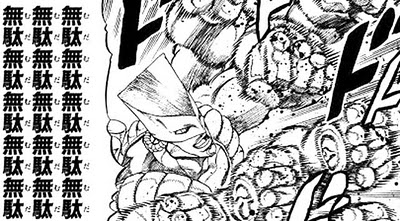
A few months ago on Twitter, a number of manga translators and readers threw their hats into the ring to discuss the persistent issue of “authenticity” vs. “localization.” The central point of argument was whether the fact that the English translation of the JoJo’s Bizarre Adventure manga kept antagonist Dio Brando’s signature catch phrase untranslated (MUDA MUDA MUDA MUDA / USELESS USELESS USELESS USELESS) is a sign of faithfulness, Japanophilia, or something else entirely.

There’s no real right side to all of this. As the Reverse Thieves explained well, there are many facets to consider, and translation is more an art than a science. For example, people who argue that translations should be as localized as possible so as to remove the sense that it comes from another language would assume that the primary audience is a broad, general readership. What if it isn’t, however? Academic translations for instance tend to be filled with footnotes and marks and other things because you’re supposed to be fully explaining the nuance of meaning through translation.

What’s even more fascinating, however, is seeing the problem of translation from the English to Japanese side, and the challenge that is posed to English translators in Japan. For example, let’s look at one of the on-going controversies within this greater Japanese to English translation debate: whether or not to include Japanese honorifics in English translations. After all, while “-san” might be already known to fans of Teenage Mutant Ninja Turtles and other similar works, for the most part it’s the realm of the manga fan, so to speak. When the decision is made to remove them, a translation either has to compensate for the loss of immediate information pertaining to how two characters relate to each other through a more liberal translation, or ignore that aspect entirely.

What about English to Japanese? From that perspective, the problem is completely flipped around. Suddenly you go from a language with no honorifics to one where they’re a part of everyday life. Let’s take a movie like Gone with the Wind. How would you translate Rhett Butler’s speech? The official translation has him use “Ore,” possibly to show that he’s both masculine and skirts standards of politeness and pomp. Is that the right decision?

If you were in charge of translating Gone with the Wind to Japanese, what honorifics would Rhett have to use when talking to other characters, if any? Would they change over the course of the movie? The change or removal of honorific usage to determine the progression of a relationship between two characters is a classic trope of manga and anime, and something English translators have to be constantly wary of (as is switching from last name to first name), but here with Gone with the Wind it’s potentially something that the translator has to build into the story where it once did not exist. The decision could be made to ignore honorifics specifically, but then a lot still has to be done to adapt characteristics and speech patterns to particular personalities. Rather than having to subtract, the English to Japanese translator has to consider additional components if they want to go for a “natural”-sounding language. Or do you just get rid of them all because it takes place in the US, or to show again that Rhett doesn’t have much use for politeness?

Of course, that’s not to say that Japanese to English translators also don’t have to create what ostensibly isn’t there to get the meaning of a line across. In both cases, there are things to be gained and lost in the decision to interpret lines in certain specific ways.

There are even multiple different translations of Gone with the Wind, each of them taking different liberties. Rhett’s famous “Frankly my dear, I don’t give a damn,” has been variously translated as 「俺には関係ない」(Ore ni wa kankei nai, “This has no relation to me”) and 「俺の知った事か」(Ore no shitta koto ka, “I have nothing to do with that”). Notably, both do not bother to preserve the cultural meaning of “damn,” nor the “Frankly my dear” part. The frankness is in the lack of formality and the general implied rudeness of the sentence construction.

Suffice it to say, translation isn’t easy, and the decision to keep or remove cultural elements is a unique challenge that perhaps few other fields have to contend with. Whether you’re a translator or just a reader, it might be helpful to express how you feel about the work that goes into translating.

If you liked this post, consider becoming a sponsor of Ogiue Maniax through Patreon. You can get rewards for higher pledges, including a chance to request topics for the blog.


Aquarion Logos, or “Words Can Hurt”: Ogiue Maniax on the Veef Show Podcast

aquarionlogos-nishikinomaki

Years ago, I appeared on the Veef Show to talk about the anime Aquarion Evol, so it’s only natural that I would make a return for its sequel, Aquarion Logos. We go over just how strange the show is, even compared to its predecessors, as well as the merits of its unorthodox nature.

Though I think we forget to mention it, I think it’s important to note that the show stands on its own: no need to watch the prequels! In fact, they’re pretty much unrelated (aside from that first episode, which is more of a 0 episode).

Hato Kenjirou Fans, This Is for You: Hatozine

tumblr_o0fmz8gw4r1uccop6o1_1280

A few months back, I mentioned the fact that Hatozine, a fanzine dedicated to the Genshiken character Hato Kenjirou, was accepting submissions. Now it’s been released, and I think it’s worth taking a look at to see the myriad expressions of interest for a character as dynamic and intriguing as Hato. Also it’s free!

Hatozine features fanfiction, fanart, comics, and even some essays, including one by yours truly. What I think is especially awesome about Hatozine is that it has work from both fans of Hato/Madarame and Hato/Yajima.

Check it out if you’re a Genshiken fan, a Hato fan, or even just fascinated by an otaku character with a very complex gender and sexuality identity. If you’re not interested in those things, it might just be an interesting window into the minds and feelings of those that are.

UPDATE (July 13, 2024): The link below is defunct, but I managed to find it and upload it to Ogiue Maniax. You can find both the print and web versions below.

Print:

Web:

Gundam: Reconguista in G – Ambition, Eccentricity, and Perspective

g-reco-op

Mobile Suit Gundam: Iron-Blooded Orphans and Gundam Thunderbolt seem to be the Gundam anime a lot of people are looking for. Whether it’s the story of child soldiers of the former or the hard SF feel of the latter, they both capture in different ways the idea of Gundam as that realistic war story with a science fiction twist. While I’ve been enjoying both of these quite a bit, I wanted to step back and look at the previous Gundam anime, 2014’s Gundam: Reconguista in G, because I think it was a legitimately strong series whose merits went underplayed and under-appreciated.

Gundam: Reconguista in G has a reputation for being confusing, convoluted, and nonsensical. Even the writer and director himself, the original Gundam creator Tomino Yoshiyuki, considered G-Reco a disappointment. I disagree. While the series is rife with Tomino-isms that make the narrative and its characters’ decisions hard to follow, one thing rings out loud and clear: G-Reco is the story of people who, for better or worse, have no true connection to war.

G-Reco takes place many years after the end of the original Gundam timeline. In this new era, the Regild Century, voyage into space is restricted, and energy resources are rationed out to prevent the world from falling into the same catastrophes which scarred previous generations. Over the course of the story, characters frivolously and repeatedly switch sides, the ones most eager to fight have the least conception of war’s effects on humanity, and ultimately even as soldiers die left and right, the consequences of their warfare, if you can call them as such, are vague and ambiguous. On the surface, it doesn’t appear to be a story worth following, but I believe that it all emphasizes a central point, which is that the more humankind is distanced from war, the less they understand its repercussions.

Tomino was born during World War II, so it should come as no surprise that the original Mobile Suit Gundam had a strong anti-war message. While the children of that generation weren’t born in an era of conflict, the adults knew full well what post-war reconstruction was like, and many anime and manga creators have strongly believed in the dedication to pacifism stated in Japan’s constitution. However, G-Reco debuted in a different era, in this current time when forces in the Japanese government have clamored and have now even successfully reduced the influence of the Japan’s official stance on pacifism. Similar to Gatchaman Crowds Insight, G-Reco argues that, while there are merits to a world where large-scale global conflict is a distant memory, namely because it means people don’t have to suffer to the same degree, it ironically pushes war and violence even further into the realm of appealing fantasy. It becomes about heroes and villains, about glory and pride, rather than death and destruction.

At the same time, the characters in G-Reco are largely positive and optimistic, and while its ending is rushed and its final scene is undoubtedly the most confusing part of the anime, it also speaks towards a great deal of faith in the youth of today. They make plenty of mistakes, and they’re in some ways just as guilty of treating war as play, but they’re also not beholden to the manipulations of adults and the older generation. In this respect I get a vibe from G-Reco not unlike that of Evangelion 3.33, though the unique tendencies of their respective directors make for different overall presentations.

I think it’s fitting that the last battle in G-Reco concludes with no clear winners and no real fallout, but also has some notably unceremonious deaths. It pushes the idea that war is both meaningless yet full of things that cannot be undone, and it is up to the current generation of humanity to take advantage of our distance from war by keeping it there, while remembering that such distance comes with its own perils.

If you liked this post, consider becoming a sponsor of Ogiue Maniax through Patreon. You can get rewards for higher pledges, including a chance to request topics for the blog.

[Apartment 507] One Punch! JAM Project’s Gateway to Western Success?

I’ve written a blog about the potential influence of One Punch Man‘s popularity on the anime super band, JAM Project. You can find it on Apartment 507.

Apartment 507 also sells point cards for Japanese services such as iTunes, Playstation, and Wii U, so if you’re someone who likes to play Japanese games digitally it might be worth your while to look at the rest of the site.

New Year, New Anime: Ogiue Maniax Status Update for January 2016

Whether you visited family or went to Comic Market or something else entirely, I hope everyone had a delightful end of the year. January means a new season of anime, reflection the last year’s, and a time to see where this crazy train takes us.

As always, I’m here to thank my Patreon supporters. They’re a strong reminder that my way of writing resonates with people, and for that I’m ever grateful.

General:

Ko Ransom

Alex

Diogo Prado

Anonymous

Yoshitake Rika fans:

Elliot Page

Hato Kenjirou fans:

Elizabeth

Yajima Mirei fans:

Machi-Kurada


I’m happy to see that patrons are taking advantage of the Ogiue Maniax sidebar. Don’t forget, if you’re already pledging $2 or more, you can put your website on Ogiue Maniax without any added cost!

Also, due to work I may have to slow down the pace of Ogiue Maniax a bit. As stated in last month’s Patreon status update, I’ve been trying to bump the rate to three posts a week, but I might have to bring it back down to two on average. I hope this doesn’t cause any problems!

Highlights from the past month include my annual picks for best characters of the year, and of course the monthly Genshiken review. In fact, there was (sort of) another Genshiken post this month too, as I compared Oshino Ougi from Owarimonogatari to Ogiue herself. Are they twins separated at birth?

Thanks to the Reverse Thieves, I got plenty of other opportunities as well. I appeared on their S.W.A.T. Review podcast to discuss the interesting and somewhat controversial Smile Precure! dub known as Glitter Force, and even wrote a follow-up post about some of the censorship that has gone on in the series. I also participated in their Anime Secret Santa project (an annual tradition), where I finally tackled the yuri science fiction anime Simoun. You can even check out my thoughts on other bests of 2015 on their blog.

The last post I’d like to draw attention to concerns my thoughts on the idea of the “Mary Sue.” It’s become an increasingly prominent term when discussing media, so I think it’s worth remembering where it all comes from.

While the requirement for me to write about something at your behest is a pledge for the “Decide My Fate” Tier on Patreon, I am curious as to what my readers would like to see more of from Ogiue Maniax. For example, I’ve been doing more video game-related posts, though they’re not super common. Obviously I’d never abandon the anime and manga aspect or reduce its importance on the blog, but would people for example like more general fandom posts like the Mary Sue one?

Fight, Flight, and Fun: Turf Wars and Competitive Splatoon

54489536_p0

Source

The first time I saw Splatoon being announced at E3 2014, I had two reactions. First, “this game looks amazing,” and second, “I could see this game having a ton of competitive potential.” The new and refreshing approach to the shooting genre combined with the inherent concept of space control that comes with having your main weapon, ink, be also your goal and your primary mode of transportation had me envisioning clutch plays and highlight reels that would go down in history.

Since then, Splatoon has actually indeed worked to cater towards the competitive side of its player base, with patches, versus modes, and more, but I was surprised to see that its main format, a “Turf War” where the objective is to cover as much ground with ink as possible, does not have a ranked option, and in fact is considered by many in the competitive community to be an inferior format. I find the Turf War to be closest to the essence of innovation and possibility that Splatoon offers, and I actually feel kind of sad that it’s thought of as being incapable of supporting competition.

Keep in mind that, as I say this, I am not begrudging the competitive players for going with a format they prefer. I am quite far from being a skilled Splatoon player. I also understand that the reasons they might not like the Turf War format are probably valid. The argument is that only the first 30 and last 30 seconds really matter, and that it isn’t relevant to competition if a given way of playing is “against the essence of the game.” After all, Super Smash Bros. is designed for four or more players on a variety of stages with items on, and that competitive community has worked to fight the stigma that its players are playing the game “wrong.” Rather, in a way, what I’m expressing is rather selfish: I like the world of Splatoon where people can both attack and avoid conflict, or in a sense compete and not compete, in the exact same space, even if that doesn’t make much logical sense.

One of the major appeals of Splatoon, I believe, is that it provides a nice aesthetic and environmental alternative to mega testosterone headshot shooter games. Instead of getting bloodied, you get inked. Instead of every weapon being geared towards death and destruction, the question is if they can properly cover the ground in various hues. Theoretically, one can play and even succeed in this “shooter” without even shooting or attacking at all. However, in the ranked modes, Splat Zone, Tower Control, and Rainmaker, the specific mission focuses make direct conflict more of a necessity. You must remove their control, and the only way to really do so is to attack their position or to prevent them from getting close through person-to-person combat. Gone is all potential to compete through pacifism.

I don’t mean to say that Splatoon shouldn’t have guns, or that shooting should be removed from the game. After all, my favorite weapon is the N-ZAP ’89, a replica of the red-colored NES Zapper, because of its versatility in both fighting others and covering the ground in ink. Instead, what I’m aiming for is the possibility that Turf Wars are more likely to provide a space, or a mode, where very different philosophies can come into play without the absolute need to divide them, like Smash Bros. does (“For Fun” vs. “For Glory”). The people who believe shooters are great because you get to go all Rambo on your opponents can get just as much of a kick out of Splatoon as the people who love the strategic space control aspect or those who cherish just being able to run around with a giant roller and not have to point or aim or anything. I know this idea is inherently flawed, and the players themselves don’t necessarily want this, but I still believe that Splatoon can stand as this symbol where wildly different ways of playing can co-exist.

In game studies, there is a distinction made between “games” and “play.” The essential idea is that in games, you have a goal, a motivation or driving force that you aim towards, whereas play is more freeform, ever-changing, unbound by rules. In other words, think of games as football or baseball, and play as Calvinball. While Splatoon is much closer to “game” than it is to “play,” especially in comparison to something like Minecraft, I think my desired image for Splatoon is one that is in the territory of games but leans towards play. Competition is possible, but competing by not competing would also be an available option.

If you liked this post, consider becoming a sponsor of Ogiue Maniax through Patreon. You can get rewards for higher pledges, including a chance to request topics for the blog.
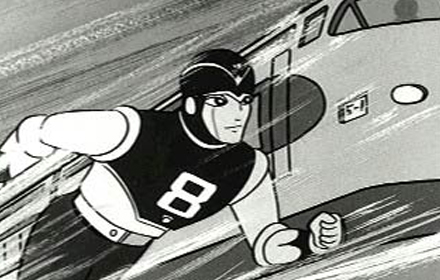
Ogiue Maniax’s 8th Anniversary: Fight! Fight! 8! 8! 8!

8-man

Last year, I forgot about my anniversary for about a month. Always looking to improve Ogiue Maniax, I decided that it wasn’t enough, so this time I’ve over a month and a half late for the annual retrospective.

Whoops!

Eight years sounds kind of crazy for anime blog, doesn’t it? A lot of old friends and comrades have set aside their keyboards while others keep marching on, but of course that doesn’t mean anything about their passion for their hobbies. Blogs are just one way of doing things, and it’s the format I’ve come to prefer the most. It’s just informal enough to feel comfortable, while also providing plenty of space to get serious if need be.

Though I think it a bit obvious, by far the biggest change to Ogiue Maniax this past year was the launch of my Patreon. Thanks to my patrons, but also everyone who reads and shares and even just thinks about what I have to say, I’ve managed to make a decent chunk of change from blogging. It’s not a full-time career by any means, but I think it shows that good written content is appreciated for the ideas contained within, even if the tendency in “content creation” is often towards simpler things like lists. Just the fact that my longer posts garner greater attention gives me a little more faith in the world.

I’ve been looking at the idea of being a “content creator” recently, and one thing that’s crystal clear is that written content, especially given how much time and effort is required of it, is often viewed as a losing battle. Video and podcasts are where it’s at. Of course, it’s more than possible to create quality work on YouTube or wherever, and the convenience is something even I take advantage of as a viewer, so I’m not knocking people who focus their energies in that direction. Rather, in light of this, I actually feel pretty good that there are so many people who think my writing is worth something. While I don’t need a confidence boost to keep writing, it at least is comforting to know that the energy I’ve put into Ogiue Maniax can be felt by so many.

Thanks for 8 years, everybody.

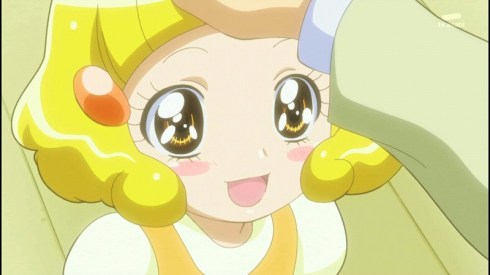
Glitter Force: Afraid of Sadness?

smileprecure-yayoidadWhat is appropriate for an audience of American children? This is a concern that comes up all the time with cartoons, whether it’s My Little Pony: Friendship is Magic‘s first season explicitly giving moral lessons to live up to its E/I (Educational/Informative) Rating, or the decision to change Japanese names to English ones when adapting anime. Though it feels out of place in this current era, the recent Glitter Force goes to great lengths to hide its Japanese origins as Smile Precure!, one of many series in the long-running Precure franchise. While the edits are not surprising, and obviously I’m not in the target demographic of little girls, I do worry about the point at which these edits hinder animation for children in terms of addressing difficult but important subjects.
When Glitter Force was first announced, it was described as having 40 episodes, down from the 48 in Smile Precure! Fans and curious onlookers speculated as to which episodes would be cut. With the first half of Glitter Force available on Netflix, we now know the first three.

curegorilla

Two of the episodes are clearly gone for being “too Japanese.” While we could have a debate as to what that even means, in this case it was because they were just too difficult to edit around. One is an episode about okonomiyaki, and while you can call it Japanese pizza all you want, kids know what pizza looks like. Saban wants their young audience to feel like the show is taking place in a city or town much like their own. Another episode guest stars actual Japanese manzai comedians. Not only are there potential likeness rights issues, but manzai comedy is notoriously difficult to translate. Again, makes sense.

The third episode cut is where my main concerns come up. Titled “Thank You, Papa! Yayoi’s Treasure,” the story involves Yayoi trying to recall memories of her late father. In an otherwise silly series, it naturally stands out as a serious and heartfelt story.

It’s not surprising why they would remove it. They want Glitter Force to be even more of what Smile Precure! is: a cartoon that generally emphasizes fun characters, positive female role models, and vibrant animation, which can then be used to sell toys. Even in Japan, series like Ashita no Nadja failed to be commercial successes possibly because of its moments of gravitas. However, decisions such as removing the story of Yayoi’s dad feel as if they contribute to the long-standing belief that cartoons for children can’t be serious, that they’re incapable of respecting children’s intelligence. Why can’t a fun kids’ show take some time to say something more, and maybe let parent and child feel sad together?

The tide of current children’s animation is actually going against this entrenched view. Shows like Adventure Time, Steven Universe, Avatar: The Last Airbender, and even to an extent shows like Kim Possible and American Dragon: Jake Long have brought weight and substance to kids’ entertainment. Glitter Force could have also contributed to this, and it might very well still be able to, depending on how they handle the second half, but things are looking grim. With five episodes on the chopping block, my worry is that they’ll cut the most character development-heavy episodes.

(Or even worse, the Happy Robo episode.)

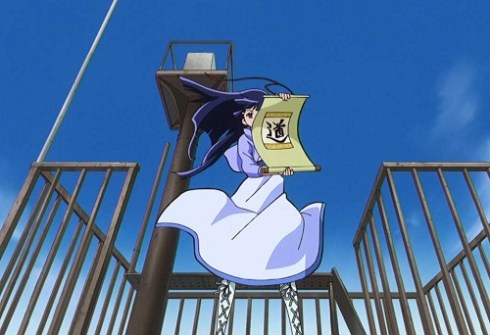
I actually don’t think Glitter Force is that bad of a dub. The acting’s decent, the characters still look hilarious, and the edits they’ve made to bits of the story and such are odd but not deal breakers. I also understand where Saban is coming from, and given that they have all this successful Power Rangers money and all, they probably know more about marketing to American kids than I do with my obtuse-for-a-casual-audience anime blog. I can even see how Smile Precure! was probably the best fit for an American audience. That said, I’m not a fan of how they had to go to great lengths to write around the fact that Reika/Chloe is extremely Japanese, to the extent that they ended up removing her stern dedication to 道, “the path,” the seeking of truth and oneself. In Glitter Force, they replace it with “GF.”

sp705

I also feel as if I really cannot trust them with any other Precure series, especially not the stronger ones like Go! Princess Precure or Heartcatch Precure! If they can’t let a deceased father by, how are they going to handle Cure Moonlight’s path to redemption, Cure Flora’s introspective confrontation at the middle point, or any of the other equally powerful or memorable stories?

If you liked this post, consider becoming a sponsor of Ogiue Maniax through Patreon. You can get rewards for higher pledges, including a chance to request topics for the blog.