More Like “Protoculture Festival”: Hashikko Ensemble, Chapter 31

After months of focusing on the same song, the musical possibilities explode.

Summary

Still at their summer training camp (of sorts), the Chorus Appreciation Society decides that they will do four songs for the school culture festival. The only catch is that they’re having trouble narrowing down a final list, even after listening to a wide variety of options.

Ultimately, the group decides that the songs will be chosen by three of the singers plus Hasegawa choose, with Orihara abstaining. To everyone’s surprise, despite his previous objections, Jin actually chooses a song with piano. What’s even more surprising, then, is that Akira doesn’t. While the gentle and harmonious tunes of Akira’s pick resonate with the whole group, Shion is clearly upset and calls Akira a traitor for the second time, despite having forgotten about the first incident.

Songs They Didn’t Choose

Normally, I leave the song list to the end of the review as a bit of extra fun. However, since there’s so many this time and they’re such a central part of this chapter, I thought it best to list them all from the beginning, to split the list up, and to make it the main focus of this review.

Part of the fun is also in looking up what all of these sound like to get a better understanding of why they were or weren’t picked. There’s also the inevitable hurdle of manga being a non-audio media, and I think Kio still hasn’t figured out a way to make the visualization of each song feel different, so it can make the reading experience feel a bit incomplete.

“Daitokai” by Crystal King, aka the Fist of the North Star singers. I actually wish they picked this one!

“Ame” (“Rain”) composed by Tada Takehiko

“Gekkou to Piero” (“Moonlight and Clown”) composed by Shimizu Osamu

“Composition for Men’s Chorus” composed by Mamiya Michio

“Kareki to Taiyou no Uta” (“Song of the Withered Tree and Sun” Ishii Kan

“Kotoba Asobi Uta 2″ (Song Playing with Words 2” and “Kabe Kieta” (“The Wall Disappeared”) composed by Niimi Tokuhide

“Koi no Nai Hi” (“A Day Without Love”), “Itsu kara Ya ni Tatte”, and “Hakobune” (“Ark”), composed by “Kinoshita Makiko” 

“Mizu no Inochi” composed by Takata Saburou

Gabriel Foure’s “Requiem Op. 48” (This wasn’t a choice, just a song Orihara wants to listen to on top-of-the-line audio equipment.)

The Four Culture Festival Songs

What I find interesting about these is how the reasons behind each pick clearly reflect the characters themselves.

“March 9” by Remioromen 

Shinji purposely picks a song that everyone is familiar with, given that the established goal is to attract new members and become a full-fledged club. It has a soft pop rock feel, and I think it speaks to the fact that Shinji has gotten into singing but is still all about exploring castles. Even though I personally didn’t know this song, it just comes across as the most conventional choice.

“Do You Remember Love?” by Iijima Mari (cv. Lynn Minmei)

Last chapter, I predicted that Hasegawa would go for a Ghibli song, but she hit me with the curviest of curve balls, instead opting for the main theme of the film Macross: Do You Remember Love? Incidentally, it’s the only song besides “Daitokai” that I’ve actually heard before. Hasegawa has already shown her otaku side numerous times, but this really clinches her geek status, especially with her infodump about the historical significance of Macross as the first idol anime and the importance of Iijima Mari. I would love to see this animated, just so I could hear a men’s chorus version of this iconic anime song.

“Etupirka” composed by Hirose Ryouhei

While Jin’s song is not a capella like originally intended, it’s still technically difficult and speaks to his desire to show his mom that she’s wrong about him. Even my amateurish ears can tell this song is tough, given its pace. In addition to how “Etupirka” really seems to carry Jin’s will, one of my favorite moments in this chapter is seeing Shion get serious about figuring out how to play it. 

“Kokoro no Tsubasa” (“Wings of the Heart” composed by Kitagawa Noboru

Akira explains that he picked this song because the melody, lyrics, and harmony are all soft and gentle but also supportive. It makes sense, seeing as he also picked “Miagete Goran Yoru no Hoshi o” for the M-Con. It’s certainly a shock that he would not pick a song that includes a piano given how hard he fought for it and his feelings for Shion, but to me, it feels like the song itself was strong enough to him that it actually overrode his prior convictions. There’s a certain strength to Akira, even if it’s not always obvious. Either that, or he did it because he’s still feeling awkward when it comes to Shion.

Fun fact: For this chapter, the team behind Hashikko Ensemble actually got help from the composer Kitagawa Noboru!

Final Thoughts

First, I really want to see this series become an anime now.

Second, check out Shion with the Ogiue hair.
Success and Failure in the Ongoing Attempt to Bring Kids Back to Giant Robots

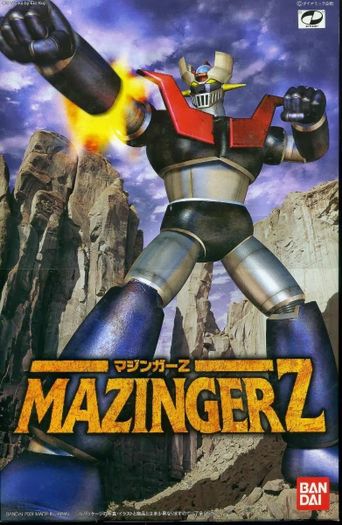
Giant robot anime began very squarely in the domain of children. Loud, boldly colored robots appeared on TV (at least, once color TV became common), and the toys based on them came full of fun gimmicks and gizmos. Over time, there was a maturing of the genre in many ways, both in terms of themes presented and the aging of fans, so by the time we got into the 2000s, things changed. Between Pokemon, card games, and more, giant robots have just not been the ticket to big toy sales among kids. Thus, most giant robot anime of the last fifteen years rely more on adult tastes and nostalgia, or at the very least have been aimed at young adults. However, every so often, you’ll see moves to try to reclaim giant robots for kids, and they communicate a reality that mecha alone tend not to capture kids’ hearts in this day and age.

Gundam AGE

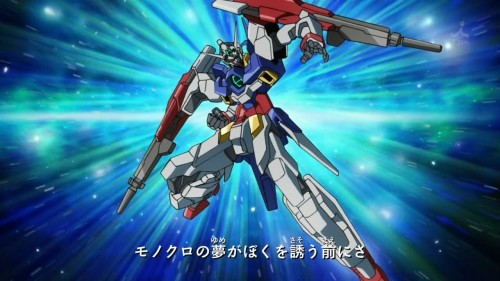
One of the more significant attempts to capture that younger audience was 2011’s Gundam AGE, because of how Gundam is what arguably kicked off the move toward mature audiences all those years ago and because it’s traditionally been such a sales juggernaut. Although keeping the traditional “robots in war” staples, Gundam AGE was a concerted effort to target kids, right down to more toyetic robot and weapon designs. Unfortunately, the series pleased pretty much no one, including me, despite my initially high hopes. The story was a mess, and the model kits failed to attract older and younger customers alike, to the extent that a kitbash of Madoka from Madoka Magica with beefy Gundam arms became more of a sales point than the actual merch. Later Gundam overtures towards kid audiences were more successful via the Gundam Build Fighters and Gundam Build Divers spin-offs, but both treat the mecha as collectible items utilized in virtual environments—closer to the popular style of Japanese kids’ shows.

Chousoku Henkei Gyrozetter

Another instance is 2012’s Chousoku Henkei Gyrozetter, though this one is odd in that what it ultimately tried to promote was not toys or model kits, though some did come out. Rather, like Aikatsu! and Pripara, the bread and butter of Gyrozetter was the card-based arcade game. Ultimately, it was called a major mistake on the part of Square-Enix. Personally, I think the show is very enjoyable, but it’s also arguably better known for its attractive older characters than anything else—so not exactly kid’s stuff. 

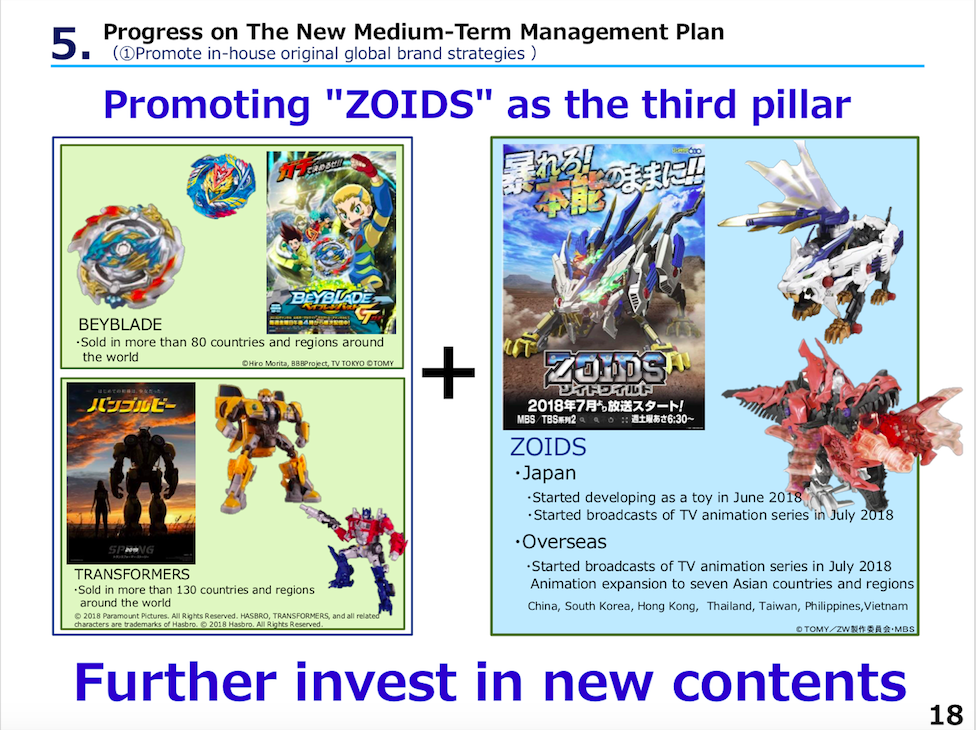
While hitting the mark seems difficult, there is one company that seems intent on making giant robot anime work for kids: toy maker Takara Tomy, the originator of Transformers. In addition to that long-standing international cultural staple (whose success has so many external factors that it’s hard to gauge in terms of success as “anime”), it’s Takara Tomy that keeps taking swings, down to even pushing the ZOIDS franchise as their “third pillar” along with Transformers and Beyblade. 

2018’s ZOIDS Wild anime is a continuation of the ZOIDS franchise, which has been receiving animated adaptations since 1999’s ZOIDS: Chaotic Century. Given its longevity, it would be easy to assume that they’re doing something right with their use and portrayal of giant robots, but I think there’s a key factor that keeps ZOIDS relatively popular: the use of animal-shaped robots as opposed to humanoid ones. The more universal appeal of dinosaurs and cool beasts does a lot of the heavy lifting. 

Tomica Kizuna Gattai Earth Granner

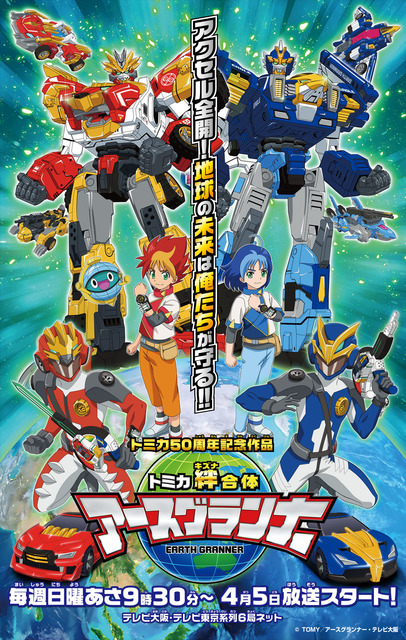
Along this vein, Tomica Hyper Rescue Drive Head (2017) and Tomica Kizuna Gattai Earth Granner (2020) both involve motor vehicles that can transform into robots—and, unlike Gyrozetter, have the many toys to show. The Tomica line is primarily more about cars than mechs, and the toys have enormous success in Asia. Again, the robots are not the main popularity factor, acting instead as an additional flourish to push it over the edge. Transformers, in a sense, combines both ZOIDS and Tomica’s appeals together, while also banking on brand recognition. Moreover, while giant robots are still a staple of tokusatsu, they’re more a secondary component to the color-coded-hero fantasy that defines these live-action series. The previous Tomica tokusatsu series use cars in a similar manner. 

Shinkansen Henkei Robo Shinkalion

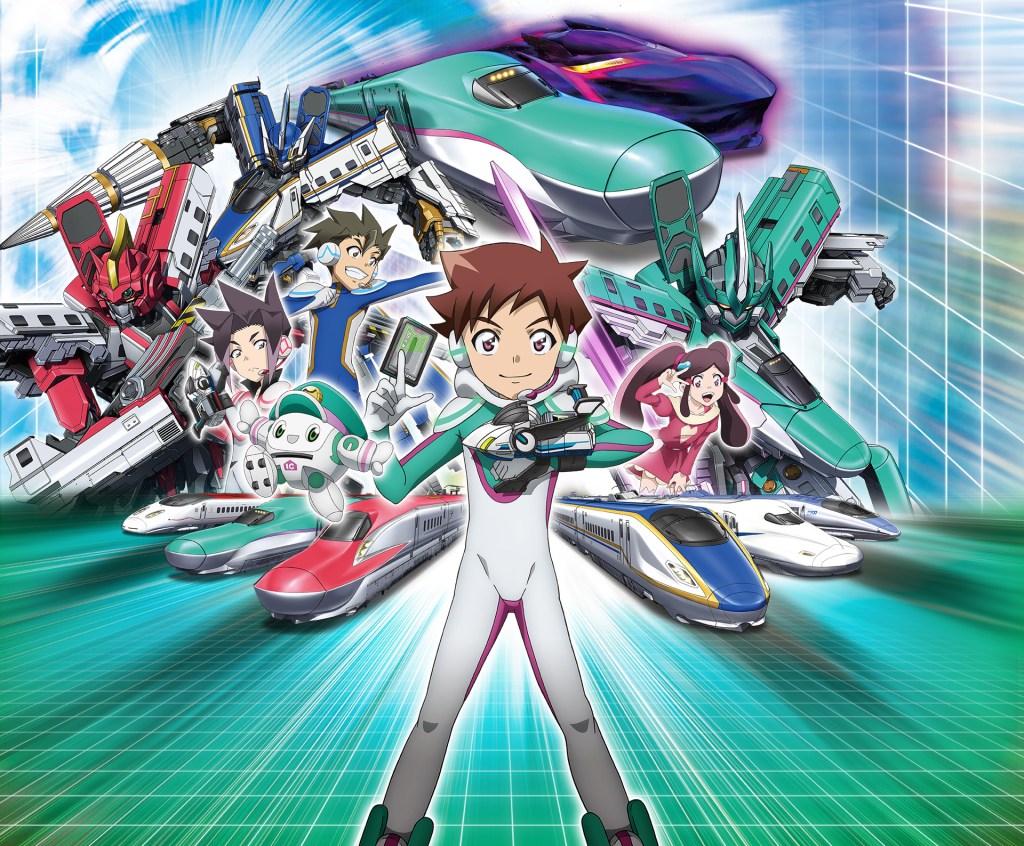
The strangest case might very well be 2018’s Shinkansen Henkei Robo Shinkalion THE ANIMATION is a series about bullet train (“Shinkansen”) robots sponsored by the East Japan Railway Company. Somewhat like Gyrozetter, there’s an unconventional ultimate goal—promoting Japan’s high-speed rail system—but unlike Gyrozetter, the toy and merchandise line is definitely there. In addition, while ZOIDS Wild, Drive Head, and Earth Granner all target boys ages 10-12, I can’t help but notice how aggressively kid-friendly Shinkalion’s aesthetics are, from the character designs to the story. What really makes Shinkalion an oddity, however, is that its success isn’t measured solely in toy sales, but also the degree to which it creates good PR for Japan’s public transportation.

It does sadden me that mecha don’t appear to carry an inherent appeal for kids these days, but I do think that sprinkling in robots can potentially push these franchises into becoming more memorable and enjoyable. Also, I’d like to think that Takara Tomy is laying down a foundation for it to happen in the future, and much like how adults who grew up with super robots in the 1970s grew attached to them, perhaps in a couple of decades we’ll see nostalgia for the Shinkalions and Earth Granners of the world.

Want to “Support the Creators?” Here Are Actual Ways to Do It

Among online anime and manga fandom, there’s been an ongoing narrative about “supporting creators, not companies.” Often presented as a noble justification for piracy, where the companies that own the rights to either creating or translating the works are greedy exploiters of the artists, authors, and other contributors, the idea is that it’s better to buy merchandise instead. This is, in short, a very faulty understanding of how the anime and manga industries work. 

However, if we’re to take at least some of these sentiments as genuine and merely misguided, there are actually outlets to support anime and manga creators more directly.

One cause worth contributing to is the Animator Dormitory Project, which began in 2014 and aims to provide affordable housing to young animators for the first three years of their careers. Animation is grueling work, and a lot of young animators fall out of the industry after three years because the salaries are abysmal—sometimes less than $300 USD a month.

Related to the Animator Dormitory Project is founder Sugawara Jun’s other idea: the New Anime Making System Project. The basic gist is that it’s hard for animators to unionize both because of historical reasons, and that the animation studios themselves often don’t have enough money to sustain unions even if they wanted to do so. Sugawara’s idea is to have animators work on short music video projects for musicians from all around the world, and pay them more—eventually two to four times what they’d make otherwise, if all goes well. Compared to the Dormitory Project, I believe this one could be even more attractive fans who are skeptical of the production committees and companies who oversee anime production. It holds the potential to transform the industry as a whole for the better.

But maybe someone is really in love with the idea of supporting a creator directly. In that case, it’s not wholly out of the question. Some artists, both professional and amateur, have turned to Patreon-esque sites such as Pixiv fanbox and Fantia, which allow fans to directly donate to the authors either in general or for specific projects. You might just be able to find one of your favorite creators on those sites.

For example, I discovered that manga artist Matsui Katsunori (artist on La Sommelière) is currently trying to restart his Mixed Martial Arts-themed fighting manga, Hana Kaku: The Last Girl Standing. I learned a couple years ago that the manga had ended rather abruptly, so I’m glad to see him try to continue this series. I really love what I’ve read of it, and I think sites like fanbox and Fantia give a platform for passion projects that might not have been deemed as mainstream-viable.

Buying manga and anime legally and signing up for legitimate digital services will still, of course help creators out and contribute to their financial success, even as structural issues in these industries still exist. That said, if anyone feels sincerely passionate about “wanting to support the creators,” in a more direct fashion, I hope you’ll take one of the options listed above, or perhaps even try to find other possibilities.

Saint Snow’s Dazzling White Town Is From Another Time

Saint Snow, the rival characters in the Love Live! Sunshine!! anime, just released their much-deserved debut single, Dazzling White Town. While I’ve only been able to hear the online preview, and I’m not a music expert by any means,  I find that it further solidifies my high opinion of the sister duo.

One of the best things to come out of the Love Live! franchise, Saint Snow’s aesthetic and musical style tend to be more aggressive than Aqours, which is something I generally prefer. As the counterparts to the main heroines, Saint Snow are allowed to take their music to places Aqours largely doesn’t go. Kazuno Sarah (voiced by Tano Asami) has an elegant yet powerful voice, and I like the incorporation of rap brought by Kazuno Leah (Satou Hinata), as it introduces something otherwise absent in the Love Live! universe. In my view, their performance of “Believe Again” is the absolute highlight of Love Live! Sunshine!!: The School Idol Movie

Previews of all three songs

Something I find interesting about this single is how all three songs encompass different genres. “Dazzling White Town” is an EDM tune that reminds me of groups like Snap! and M.O.V.E. “Lonely Snow Planet” takes cues from heavy metal like pre-2000 Metallica. “After the Rain” sounds like pop rock akin to Vanessa Carlton and Alanis Morissette. All three songs come across to me as coming out of the 1990s to early 2000s, with “Dazzling White Town” being my favorite of them. I also love the retro game aesthetic and fashion found in the music video.

While it’s unlikely for anything within Love Live! to get extremely experimental, I do think one of the advantages of being associated with a multimedia franchise grounded in fictional characters (as opposed to being solely a musical act) is that there’s greater latitude for them to go into different genres. When a regular band tries something different, they risk alienating their fans. For Saint Snow, their followers care about Sarah and Leah, and I think it potentially allows for the composers, lyricists, and performers to travel stylistically.

I think Dazzling White Town is capable of reaching people well beyond the expected Love Live! fandom, and I would even dare say that it’s capable of standing alone without the association. I hope Saint Snow also eventually gets a full album to call their own, and that the group continues to have a life even as Love Live! Sunshine!! has winded down.

That said, I wouldn’t mind seeing a Saint Snow anime spin-off either, as I think they have the look and feel to be the stars of their own show. At the very least, a Ruby+Leah special would be great.

This post is sponsored by Ogiue Maniax patron Johnny Trovato. You can request topics through the Patreon or by tipping $30 via ko-fi.

My AnimEVO Online Mahjong Soul Experience

Last weekend, I participated in my first Japanese mahjong tournament in about six years through AnimEVO Online’s Mahjong Soul competition. I had spent the weeks leading up to it practicing off and on, knowing that I had a lot to catch up on and plenty of rust to hopefully shake off. 

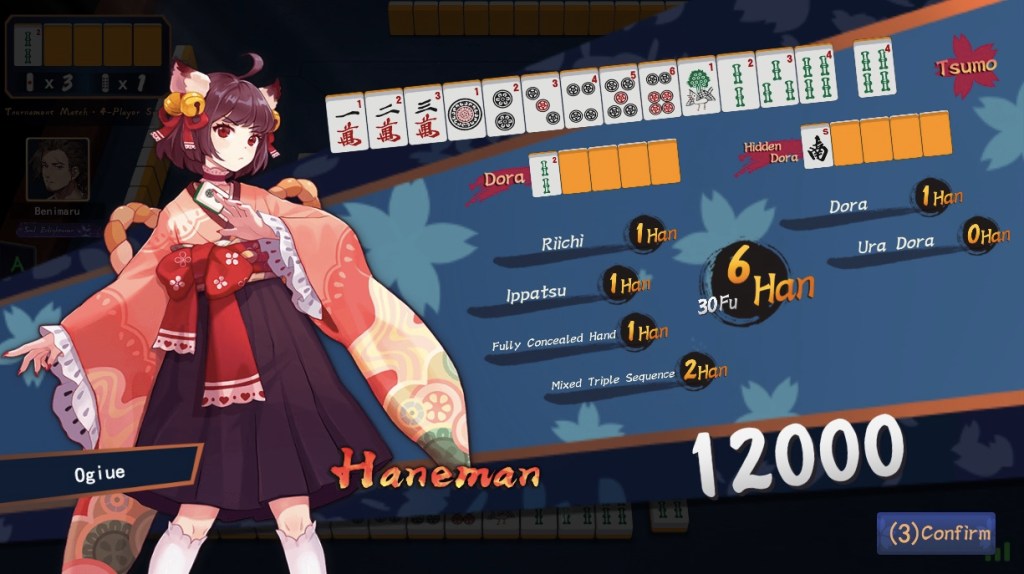
The format was one I was familiar with: a series of six full games (hanchan) against random opponents, where your total score is basically the determining factor in your final placing. After about eight hours of play, I finished at 74th out of 256, well below the top 32 cut-off to make it to the next stage of the tournament (which happened just yesterday), but in what I consider to be a placing I can look at with some satisfaction. I was in the top third, and what kept me from advancing was partly that I couldn’t hold onto the leads I established for myself. 

I can also take pride in the fact that I never actually got 4th place, though one of those matches I might as well have—my 3rd place was merely because someone else had gotten hosed more badly than I did. Even then, I could have easily dealt into a hand at the end out of desperation—I drew someone’s winning tile in that final hand, and had the wherewithal to not let it go. In other words, I had consigned myself to a bad game, but it’s what saved me from a worse fate. More than my good games, I think that says the most about how I performed.

I also realized a little too late into the tournament that I should have shifted my thinking away from the typical online mahjong site like Mahjong Soul or Tenhou, where ranking within a full game matters above all else. Instead, in this environment, the size of your win matters greatly. Finishing first with 70,000 points gives you a bigger edge than finishing with 35,000, as it helps buffer you against the games where things don’t work out in your favor.

One thing that was very clear at AnimEVO Online was that the skill gap between the top and bottom was massive, and that changed the dynamics of the game tremendously. In many games I watched after my own was done, there were often two clearly better players obliterating the less experienced opponents, and the fact that players could go into negative scores and keep playing only made the drubbings worse. The curious thing about Japanese mahjong is there’s a major difference when it’s two good players and two bad players vs. one good player and three bad players. In the latter scenario, the worse players can actually overwhelm the better one by making incredibly bad-on-paper decisions that allow them to win off of each other and circumvent the stronger opponent.

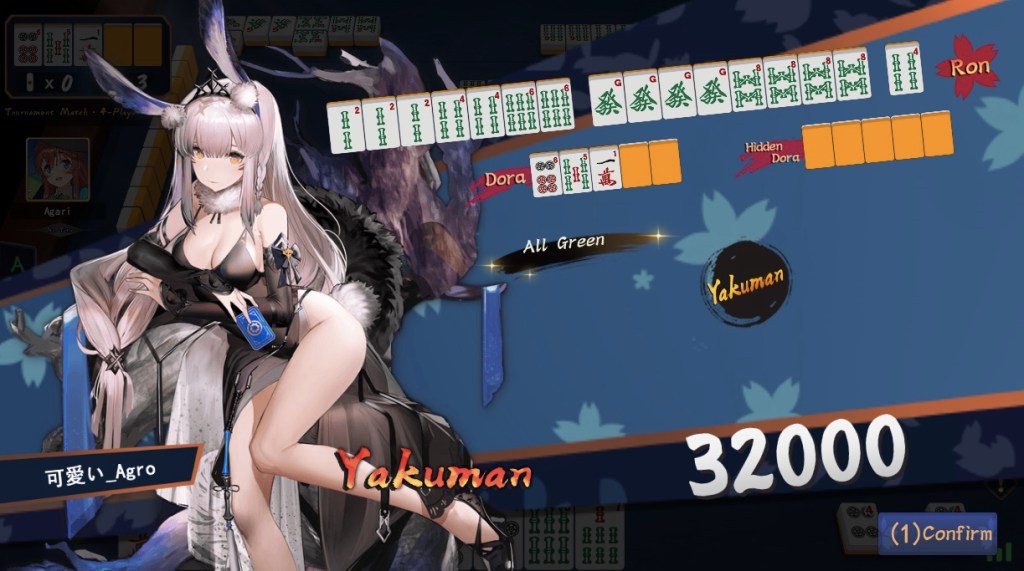
One thing that you have to learn when you get into Japanese mahjong is that blindly chasing points can backfire on you easily. I literally saw a player deal a very visibly dangerous tile into an All Green yakuman, which essentially killed their chances of getting anything higher than last place—all because they wanted to hold onto a tenpai by the end of the round. In an attempt to make 1,000 points, this player ended up losing 32,000 instantly.

If I had one complaint about the tournament, it’s that it was too long. There were no time limits on each full game, and while typical games of Japanese mahjong online end if first place manages to get above a certain point threshold, that was not the case here. Rather, if it’s South 4, and the dealer is in first place, they can actually just keep winning and winning, bringing up their final score. I suspect that this is done out of a sense of fairness (“Why should the other three players be allowed to get dealers’ runs going unimpeded, but the other one can’t?”), but it did drag the games on. Also, the twenty-minute halftime break was maybe not enough time to take a breather and relax, as real-life tournaments I’d attended had allowed for a proper full hour. I understand, however, that it would have been a Catch-22—do you extended the break and thus make the tournament end even later?

Overall, I’m on the fence as to whether I’ll play in another tournament at some point, but it did scratch a competitive itch I was feeling. I may slip back into the shadows when it comes to mahjong, but I know full well that I’ll always be fond of the game.

Yesterday was the Top 32, and Top 8 Finals starts tonight at 2pm PST/5pm EST. May the flow be with them.

A Farewell to Arms, the Studio Behind Genshiken 2

Last week, the Japanese animation studio Arms declared bankruptcy. Their legacy is primarily that of sex and fanservice, with titles like Mezzo Forte, Queen’s Blade, Another Lady Innocent, and Ikkitousen from Dragon Destiny on under their belts. But for me, Arms is first and foremost the studio behind the anime Genshiken 2. 

Ogiue Maniax started right around when Genshiken 2 first began airing in 2007, and its DVDs were the second anime I ever imported from Japan. In the photo above, there’s also a CD of Genchoken, a Genshiken 2-related radio show starring voice actors Mizuhashi Kaori (Ogiue) and Hiyama Nobuyuki (Madarame). 

One unique feature of Genshiken 2 compared to all other adaptations of the manga is that Arms treated it like the other works in their library and brought their, er, considerable talents to fore. Not only was artist Urushihara Satoshi (of Langrisser, Plastic Little, and Another Lady Innocent fame) the animation director on the opening, but there were more than a few scenes depicting extremely vivid nerd fantasies. The most famous might just be Ogiue’s fully animated fujoshi imagination regarding Sasahara and Madarame.

In that sense, Arms’s approach felt like an attempt to give Genshiken a more late-night anime appeal, for better or worse, and the DVDs did indeed uncensor the really racy stuff. However, while Arms certainly went places the manga never did (and thus potentially could have turned away fans of the original), I think that their execution of Genshiken 2 in some ways anticipates the sexually charged alternate Genshiken that is Spotted Flower. In fact, Arms probably would have been the right studio to animate that series if it were possible.

So thanks, Arms. Very rarely do my favorite characters get this much love, and you gave fans of the Genshiken boys and girls something unforgettable.

That all said, bankruptcy isn’t always the end. Who knows? Maybe that Spotted Flower adaptation isn’t completely out of the question.

Otakon in 2020 Was Fun but Strange

Whether it was in Baltimore or DC, part of the Otakon experience for me has always been the trip there and back, for better or worse. It could be smooth sailing, or a train could break down and leave the passengers stuck for hours (this really happened). That’s why this year’s Otakon was such a pleasant surprise. Rather than the three-plus hours it would normally take, the total travel time from bed to convention was approximately 20 seconds. From the start, I could tell there was something very different about this 2020 version of Otakon.

Unlike previous years, Otakon this year was a Saturday-only event on August 1st, which had its ups and downs. For one, while I do like immersing myself in the con environment for an extended weekend, I didn’t have to take time off to attend. And although the food in DC has been great, it usually was a bit of a trek to get anything to eat (even inside the Walter E. Washington convention center). This time, amazing home-cooked meals were just a few steps away. 

Panels and Workshops

Unfortunately, I did not have any panels accepted, so I was purely a spectator. This year, panels were significantly shorter, clocking in at 30 minutes per panel as opposed to the traditional one hour, but I saw it as a way to fit more presenters into the one-day event, making it a net benefit. Notably, the audience for every panel I saw was quite impressive, not only because they often numbered in the hundreds, but also because there was no trouble in getting into the panels despite such large attendance numbers. While there were some audio and video hiccups in some of the panels, they were fairly quick to resolve.

30 Years Ago: Anime in 1990

The first panel of the day I saw Daryl Surat’s “30 Years Ago: Anime in 1990,” which went through some of the highlights of anime from that time. It gave the sense of being a really transitional year, and I appreciated his highlighting of Brave Exkaiser, the first entry in the Brave franchise. He ended the panel with loving praise of the infamous Mad Bull 34, and tied its story of a rule-breaking, trigger-happy cop to current events in a manner humorous yet critical.

Carole and Tuesday

From there, I stepped into the Carole & Tuesday panel. The panel was already in progress, having started with a viewing of the first episode, but because I’d already seen the entire series, I thought it safe to skip. Amazingly, the travel time between Daryl’s presentation and this one was near-instantaneous, so I didn’t miss much. The panel started off with a beautiful musical performance by Celeina Ann (the singing voice of Tuesday Simmons), and led into an interview with her, director Watanabe Shinichirou, and (I believe) producer Makoto Nishibe. One thing I learned was that Alba City, the main setting of the show, is also a city in Cowboy Bebop. They also showed a vide of the recording and animation process, and seeing the amount of effort and collaboration that went into the show gave me a very positive impression.

Chibi Chibi Drawing Time

I normally don’t attend workshops at Otakon, but with things being so convenient this year, I decided to check out Chibi Chibi Drawing Time, which taught people how to draw super-deformed characters. It’s been a while since I scratched my art itch, and I used this opportunity to follow along with the spirit (though not always the letter) of the presenter’s guides. You can see the results below:

Into Another World: A History of Isekai

It’s the big genre that’s been sweeping the anime industry for a while, and thanks to this panel, I got to learn a little more about isekai. My main takeaways are that the introduction of gaming-oriented isekai helped to bring forth non-isekai anime in gaming-heavy settings (think Goblin Slayer and Is It Wrong to Try to Pick Up Girls in a Dungeon?), and that the number of shows seem to multiply exponentially. 2019 looked to have about three times as many isekai anime as in previous years, and I have to wonder when the juggernaut will finally slow down.

Godzilla, Kaiju Eiga and the Amazing Toho Studios

This was perhaps the best panel I saw of the entire convention, as it was meticulously researched and gave a lot of insight into the making of Godzilla as well as the kaiju movies that propelled Toho to additional fame. I was intrigued to learn about all of the different players of this time, including Godzilla director Honda Ichiro and Ultraman creator Tsuburaya Eiji. If you have the chance to see this panel, either in person or via recording, I highly recommend it.

Bootleg Anime from South Korea

I’ve attended this panel by Mike Toole before, but I always welcome an opportunity to see more “creatively appropriated” giant robots. It reminds me that, around the world, you really can’t decouple animation fandom from bootleg products, and it results in interesting products and cultural output nevertheless. I’m still waiting for that Soul of Chogokin Taekwon V.

Overall

I appreciated how different Otakon was for 2020, and the heavy focus on panels appealed to me a lot (I truly think they’ve always been the best part of the con). At the same time, I think I’m still a bigger fan of the regular version. The unusual format meant there were no autograph signings or big live concerts this year, and I didn’t really get to spot any unique or unusual cosplay. I also miss doing interviews.

I wouldn’t another Otakon like this, but I’m hoping 2021 provides a return to the tried and true classic.

Healin’ Good Precure and the Age of Coronavirus

In recent weeks, many of the anime that were on hiatus due to COVID-19 have begun returning, and one question that arises is how these series might be affected by the delay going forward. Many, like Demon Slayer: Mugen Train and The Millionaire Detective, are adaptations, and so wouldn’t be affected content-wise. Similarly, historical fiction like Appare Ranman! can easily ignore current events. But there is one series I’m looking at as potentially being deeply impacted by coronavirus on a story level, and that’s Healin’ Good Precure.

The main motifs of Healin’ Good Precure are healthcare and the environment. The girls essentially act as doctors trying to heal different Earth spirits when they fall ill, their interactions with their fluffy mascots take a veterinary angle, and their magical dresses briefly resemble physician lab coats during transformation. It’s an incredible coincidence that this would be the Precure series we have in the middle of a global pandemic, but here we are.

The Precure franchise as a whole does not have any source material—the anime are the original works. Everything else, from manga to video games, are subordinate to it. What this means is that there’s no source material to reference or adhere to, so it likely has a degree of flexibility in terms of potentially changing its story. The fact that Precure shows are typically around 50 episodes also means there’s plenty of time to pivot and try to take into account current trends and real-world concerns. Also, while the series was on hiatus, the official Precure LINE channel actually had videos featuring Precure stuffed dolls talking (via the voice actors) to kids and playing games with them, so i think there is an awareness that children are feeling the effects of self-quarantine and the like.

While I don’t think Healin’ Good Precure is going to do anything as drastic as explicitly introduce coronavirus into the show, I do wonder if they’re going to try and incorporate some of the good behavior into the girls’ special moves or equipment. For example, what if one of the mid-series upgrades are special magical masks that give the Precures enhanced powers? What if the girls learn a special attack that requires them to stand six feet (or two meters) apart from one another? Of course, it’s also possible that the show will keep ignoring the environment created by COVID-19 in the hopes of giving young kids an image of how things are “supposed to be.”

Regardless of how far Healin’ Good goes to address current events, Precure’s general positivity and supportive messages are very welcome. I’m just waiting to see how far it goes.

Breaking Convention: Ogiue Maniax Status Update for August 2020

Time starts to blend together as I stay at home, but there’s a new summer anime season to help get us energized. So far, the series I’m enjoying most is Deca-Dence, but I have to give a shout-out to Appare Ranman!, which is back from a COVID-19-related delay. I wish the best for everyone working in anime.

Incidentally, it’s been one year since the Kyoto Animation arson attack, and Kyoani has announced that they’ll be getting back into animation. It gives me hope.

Thank you to my Patreon sponsors, who support me even as I deviate from the main topics of this blog at times.

General:

Johnny Trovato

Ko Ransom

Diogo Prado

Alex

Dsy (NEW PATRON!)

Sue Hopkins fans:

Serxeid

Hato Kenjirou fans:

Elizabeth

Yajima Mirei fans:

Machi-Kurada

I like to think that everyone who follows Ogiue Maniax knows my passion for anime and manga is genuine, even if there are times when more important things are at stake.

Blog highlights from July:

Kio Shimoku’s First Audio Interview Is with a Virtual Youtuber!

I took extensive notes from the most in-depth Kio Shimoku interview ever. A must-read for all Genshiken fans.

Our Better Angels: Superman Smashes the Klan

A review of the classic Superman vs. the KKK story told from a modern perspective.

AnimEVO Online and My Return to Mahjong

The AnimEVO Mahjong Soul tournament is this Saturday!

Hashikko Ensemble

Chapter 30 is where Hasegawa shows her true power. An emotionally charged chapter.

Patreon-Sponsored

The Infinite Potential of Japanese Pudding in Anime

Jiggling and wiggling and crossing class boundaries.

Apartment 507

Discover the twiiist ending of MILF manga Ookumo-chan Flashback.

Closing

Yesterday was Otakon Online, which rose out of the ashes of the canceled Otakon 2020. Otakon has been an annual pilgrimage for Ogiue Maniax, and I’m glad I was able to continue the tradition in some capacity.

May there be an Otakon 2021!