“Hi-New York”: Anime NYC 2018

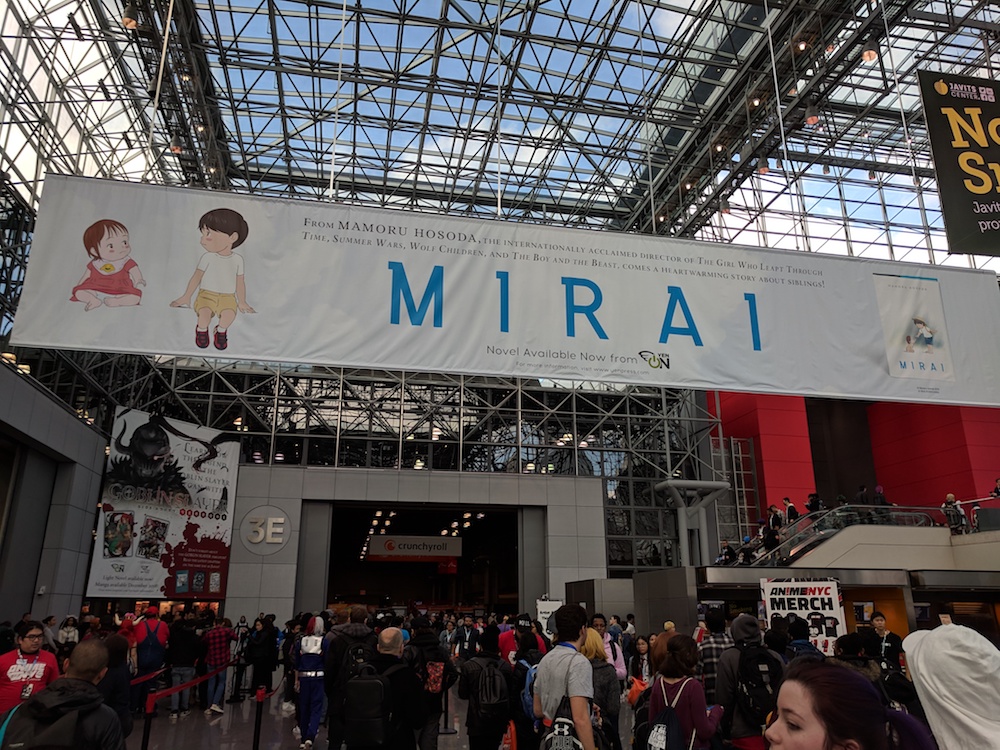
I had nothing but praise for last year’s inaugural Anime NYC, which I felt was the right size, scope, and level of focus for a New York City anime convention. But it can be difficult for a sequel to live up to a hit original, so I was curious to see how the second time around would fair.

Spoilers: It was pretty fantastic.

Exhibitor’s Hall, Artist Alley, and Moving Around

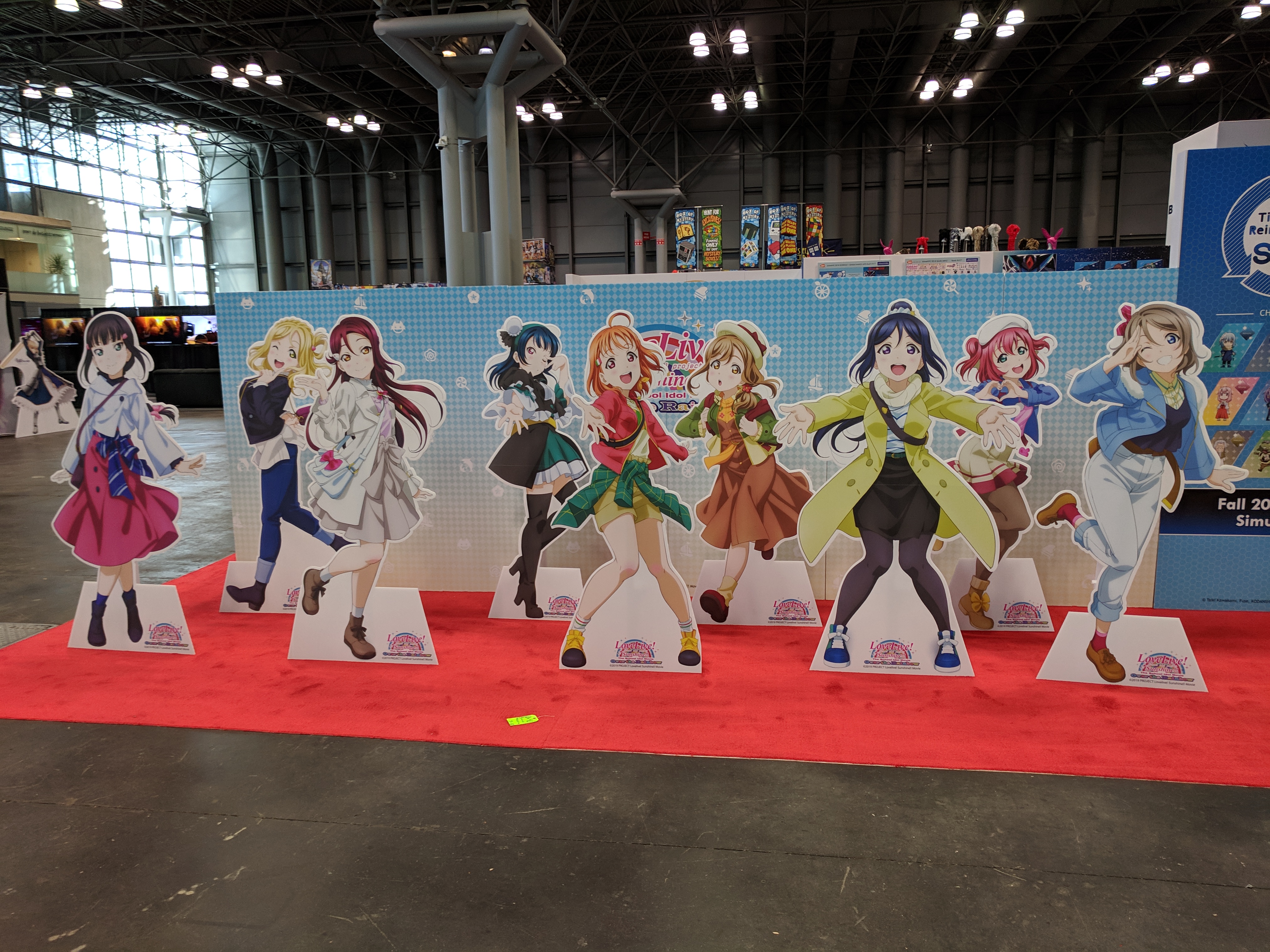
Once again, Anime NYC hit it out of the park in terms of having the right amount of space. It’s a tricky balance to maintain, as too little space means crowding and delays for all attendees but too much space can make a convention feel empty and isolating. Aside from absolute peak hours in the Exhibitor’s Hall and Artist Alley, I never had any trouble moving from place to place. There might come a point where Anime NYC starts to outgrow its space, but the con this year only took up a portion of the Javits—it actually shared convention space with a pet-oriented event called Petcon. In other words, there’s plenty of room to expand.
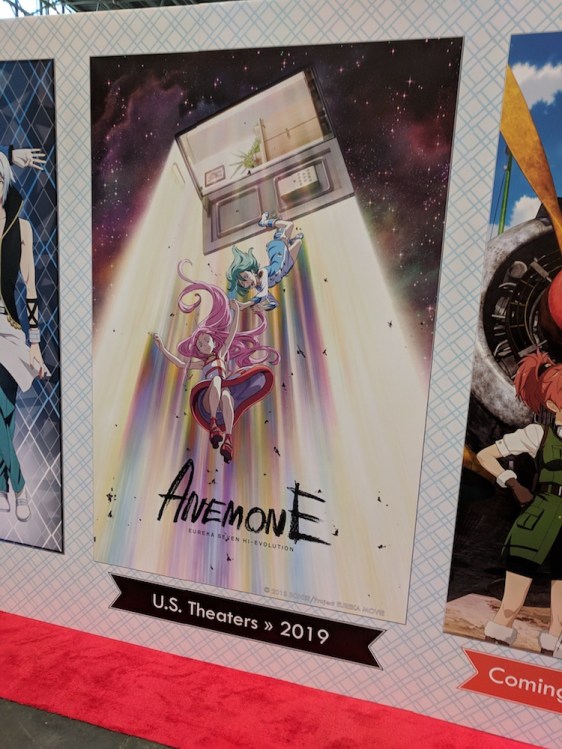
I also want to re-affirm something I mentioned last year, which is how much I like the Artist Alley space for Anime NYC. Located on the top floor of the Javits, the area is surrounded by glass, which allows plenty of light to come in. At the best times of the day, it makes you feel like you’re walking through a gallery boutique, albeit filled with fandom ships of Voltron: Legendary Defender. As an aside, I was happy to see so much Cardcaptor Sakura stuff this year; perhaps a sign that the recent Cardcaptor Sakura: Clear Card made an impression.

The Star of the Con: Furuya Toru

Without a doubt, the biggest guest for me was Furuya Toru, the veteran voice actor behind roles such as Amuro Ray (Mobile Suit Gundam‘s protagonist), Pegasus Seiya (Saint Seiya), Tuxedo Mask (Sailor Moon), and more. He is, without exaggeration, a legend of the industry, and this was my first opportunity ever to see him. I wanted his autograph and to get some insight from his decades of voice work in anime.

The autograph aspect hit a snag from the get-go, though not entirely through Anime NYC’s fault. For signings, the convention went with a mix of paid sessions and free ticketed ones, and Furuya’s was the latter. This required lining up outside the Jacob Javits convention center Friday morning, which also just happened to be the morning after one of the biggest snowstorms in New York City history. People were made to stand in the cold, despite the fact that there was plenty of room indoors. To Anime NYC’s credit, the con issued an apology the next day and allowed people to line up inside the convention center for Saturday and Sunday. That didn’t solve all the issues with autographs—I’ll get to that later—but it at least showed that they were willing to respond to complaints.

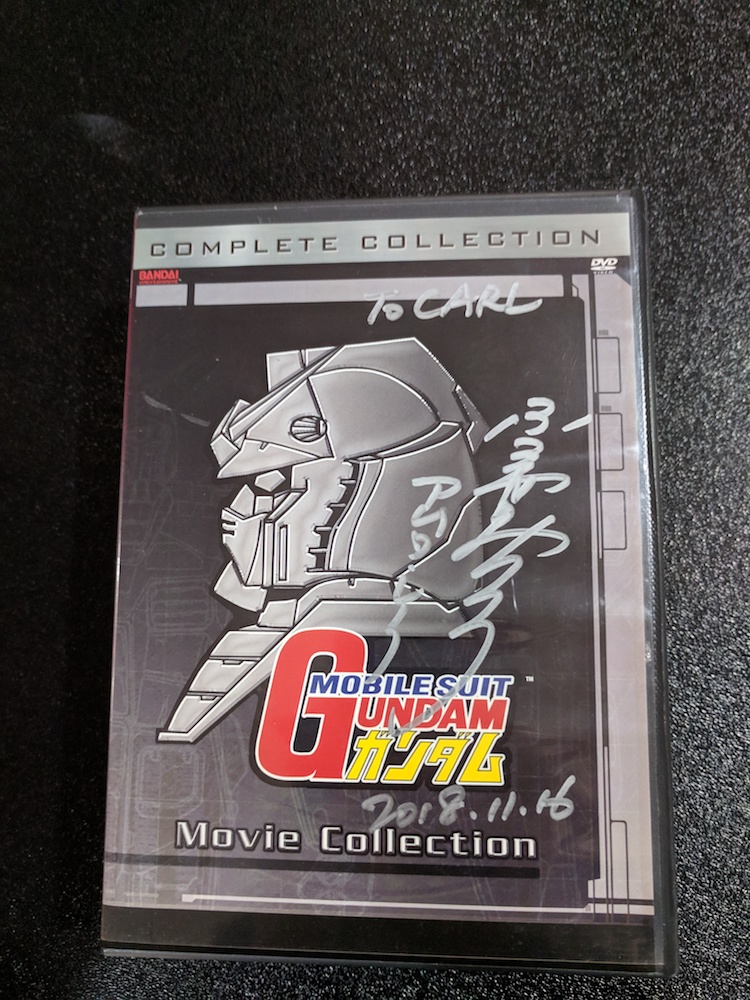
Fortunately, I was able to get an autograph ticket, and I was able to thank Furuya for putting so much passion into his many roles over the years as he signed my Gundam movie DVD box set. It’s a memory I’ll cherish for as long as I live.

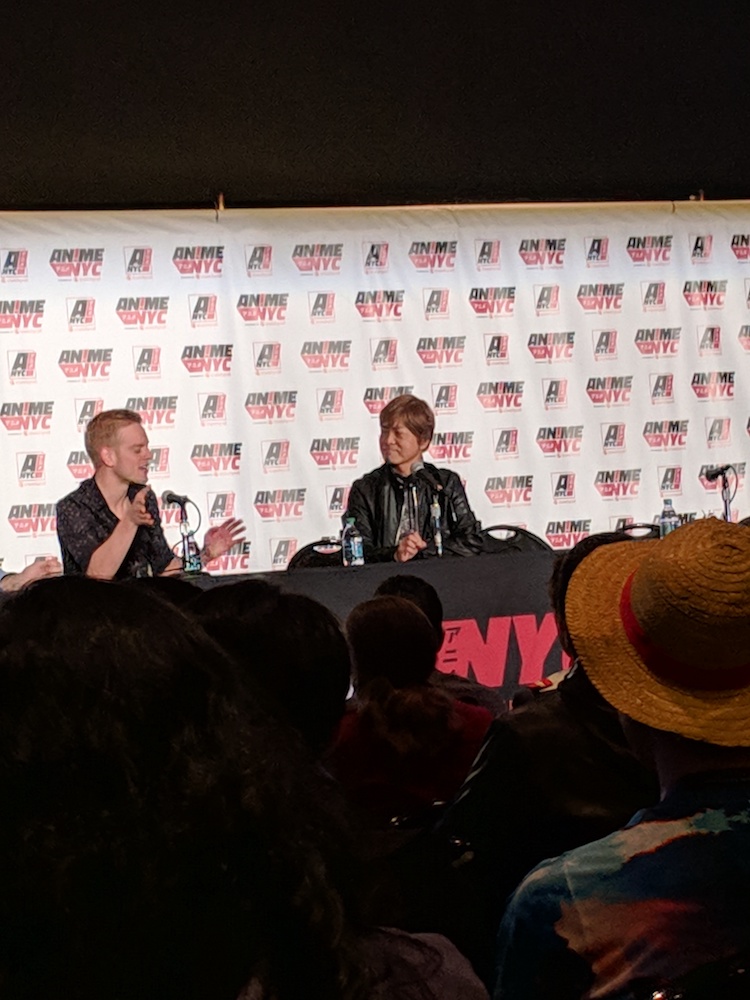
As for Furuya’s panel, it was a mix of both moderated discussion and audience Q&A. Sadly, I was unable to stay for the second part, but the first half provided plenty of highlights. One of my favorite exchanges was when the moderator, Kyle Cardine, asked Furuya about playing the character Ribbons in Gundam 00, who’s thematically an evil version of Amuro. Furuya responded that while he was the narrator in Gundam 00, it was “his kouhai” who played Ribbons. For those unaware of the joke, Ribbons is clearly Furuya (his voice is unique and unmistakable), but the role is credited to “Sougetsu Noboru”—a pseudonym that cheekily means “Moonrise,” a wink to the studio that makes Gundam, Sunrise.

I actually had the chance to provide Kyle a question to ask Furuya as well (thank you Kyle!). Specifically, it was asking about his experience working with director Nagahama Tadao on Furuya’s first big series, the seminal baseball anime Star of the Giants. Furuya gave a look of surprise, and then responded that he didn’t really interact with Nagahama, as the man didn’t attend the recording sessions much. However, he also mentioned that he was only fifteen years old when he played Hoshi Hyuuma, the protagonist of Star of the Giants, and that if the show hadn’t been so wildly successful, he probably wouldn’t have ever become a professional voice actor.

This answer is interesting to me, partly because I asked a similar question back in 2010 to another star actor from a later Nagahama anime: Mitsuya Yuji, the voice behind Aoi Hyouma from Combattler V. In contrast to Furuya’s response, Mitsuya actually said that Nagahama pushed him to improve his performance. This says to me that Nagahama must have changed in the years between Star of the Giants and Combattler V. Or maybe the director felt Furuya needed less guidance, even at a young age? It’s startling how talented Furuya can be, given how well he can modulate his voice between younger and older characters.

One minor mishap from this panel was that the moderator Kyle tried to ask him about Director Tomino Yoshiyuki, but something got lost in translation and Furuya didn’t give a real answer. Here’s hoping he comes to New York again, so we can get a second chance at this.

Shintani Mayumi and Studio Trigger

Another big Japanese guest at the convention was voice actor Shintani Mayumi (Haruka from FLCL, Nonon from Kill la Kill, Rikka’s mom from SSSS.Gridman). She was a speaker at the Studio Trigger Live Drawing/Q&A panel, and it gave me the opportunity to ask her about her experience on the 2000 anime Brigadoon: Marin & Melan. At first replying that the topic was unexpected  Shintani went into details about a memory from that time. Her character in Brigadoon, Lolo, resembles a cat, and so she played the role in a feline manner. However, it’s eventually revealed in the show that the cat-like appearance is a disguise to hide its true form, and seeing a closet full of “cat skins” was a shock to her. She then talked about how Brigadoon still has passionate fans.

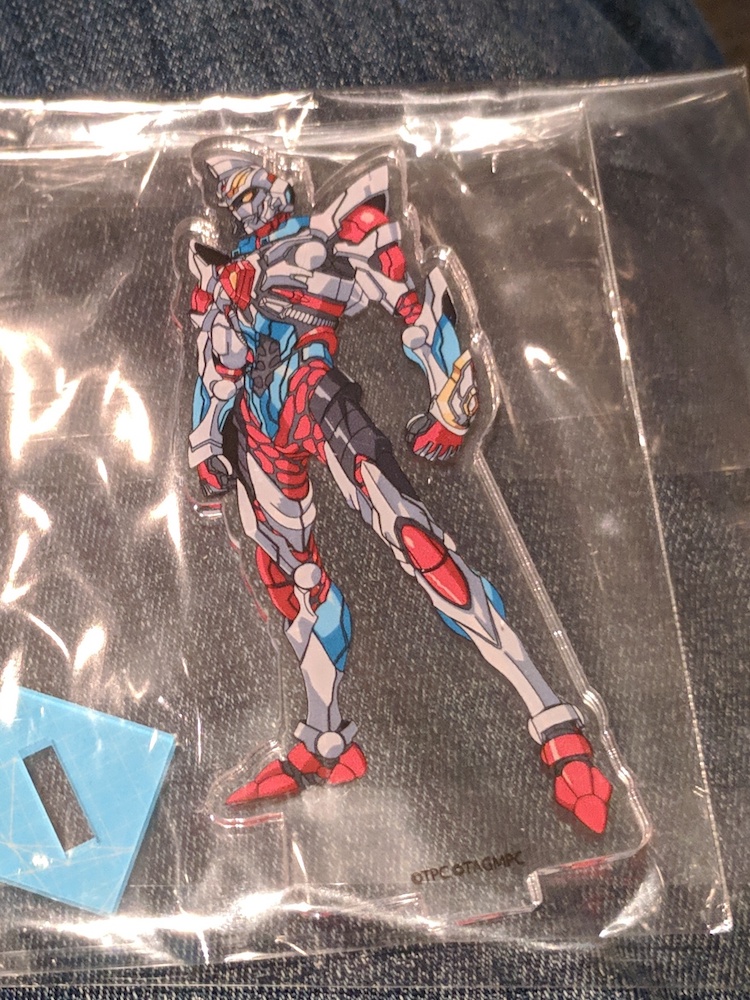
Afterward, I received a nifty Gridman standee as a prize.

I’m truly glad to have asked Shintani about Brigadoon, but I was also a bit torn at first as to who to direct my question at. I really wanted to pick Koyama Shigeto’s brain about his Darling in the Franxx mecha designs or ask producer Wakabayashi Hiromi about whether they watched Superhuman Samurai  Syber-Squad as research for SSSS.Gridman. However, I’ve had the fortune of interviewing Trigger in the past, so I decided to focus my attention on Shintani, who’s a rare guest at US anime cons.

Shintani also got asked about playing Miss Shamour in Go! Princess Precure, and she basically replied that Miss Shamour shouldn’t be a Precure because then she would be too powerful. What’s more, at the start of the panel, Shintani recited Nonon’s signature “Nani sore?!” to audience applause. Totally worth it.

Other highlights of the panel include Wakabayashi’s desire to put Inferno Cop into Smash Bros., the ridiculous video from Anime Expo they showed of them clowning around and expressing how behind they are on their new show Promare. They also had an extended discussion on who to blame for the cockpits in Darling in the Franxx. Koyama and Tattsun (the translator) claimed that it was because doggy-style is Wakabayashi’s favorite position, while Wakabayashi said it was the result of seriously considering what would make sense for the show. The producer also said that there were six members of the design staff, and any one of them could have spoke up.

DENPA and Asada Hiroyuki

Coincidentally, the Studio Trigger panel was followed immediately by a live drawing/Q&A panel for Asada Hiroyuki, author of Tegami Bachi (aka Letter Bee). He was there to promote the manga Pez, which is being translated and sold by the new manga publisher DENPA. The company’s focus seems to be on eclectic prestige titles, as they also brought artist Murata Range over, and are publishing the eerily beautiful An Invitation from a Crab by panpanya (which I highly recommend).

As for the panel itself, it actually had a soothing music track playing the entire time—what I was told was Asada’s drawing music. Unlike with Trigger, which was more of a Q&A with a live art session as a backdrop, this felt like the live drawing was the main star of the show.

Autographs: Ups and Downs

I understand that autographs are never an easy situation for any convention to handle. No matter how an event tries to plan for them, it’s damned if you, damned if you don’t. In that respect, I don’t especially mind the ticket system for signings, which involves lining up to get a voucher to attend an autograph session later, but there are a couple of criticisms I have for Anime NYC’s approach.

First, on Saturday and Sunday, it required lining up at 8am, and given that people will line up early for autographs, it usually means getting there by 7am or earlier. For anyone not staying close to the Javits, it means perhaps having to wake up as early as 5am. Another drawback is that everyone is in the same line for autographs, which is a problem I also have with Anime Expo in Los Angeles. The fact that all of the autographs are funneled into one line means that even if your desired guest isn’t one of the super-popular ones, you still have to deal with all the people who are waiting for the mega-stars.

I hope Anime NYC does some things differently. First, having lines at the start of the day is a good idea, but try to make them at least a little later. Second, ticket lines for autographs should be split in a way that makes it faster for everyone. If those changes can happen, I think it would benefit everyone.

Screenings

Sunrise showed the first twenty minutes of Gundam Narrative at their Gundam panel, and it enticed me enough to want to finish Gundam Unicorn and to see where the film will go from there. I don’t want to spoil too much, but the way it somewhat re-frames the way society looks at Newtypes has me intrigued.

I also caught the Kase-san and Morning Glories film. It’s a gorgeous animated movie about two girls in love, and the way it explores the depths of their feelings is thrilling on a mental and emotional level.

Concert

I attended the Saturday Anisong World Matsuri concert at Hammerstein Ballroom, which featured Kitadani Hiroshi and Kageyama Hironobu of JAM Project, Nakagawa “Shokotan” Shoko, and idol titans Morning Musume. Despite being standing only for non-VIP audience members, it was one of the best anime concerts I’d ever been to. The mix of idol fans and anisong fans actually made for non-stop excitement, as each performance highlighted the best of the old and the new in a roller coaster of bright spots. Shokotan and Kitadani sang “Pegasus Fantasy” from Saint Seiya, followed later by Kageyama and Shokotan doing “Soldier Dream”!). Kageyama and Morning Musume joining forces for both “Love Machine” (a Morning Musume classic, I’m told) and “Chala Head Chala” (the first Dragon Ball Z opening). By the end, everyone came out to perform “THE HERO !!” from One Punch Man together. Hearing members of Morning Musume shout, ‘NOBODY KNOWS WHO HE IS!” will go down as a once-in-a-lifetime moment.

However, my personal absolute highlight of the entire concert was Kageyama performing “Heats,” the opening to the 1999 OVA Shin Getter Robo: Armageddon. It’s one of the first songs that really made me pay attention to Kageyama and one of his greatest, but the age and obscurity factors made me think I’d never hear it performed live. I am incredibly glad to be wrong.

In Closing

From top to bottom, Anime NYC 2018 was a great event. There were some hiccups, especially when it came to managing autograph lines and the cold weather, but I eagerly await 2019. My only regret is that I didn’t get any interviews for Ogiue Maniax this year. If the convention gods find it in their favor, I hope I can ask next year’s guests some solid questions.

Dearth vs. Abundance of Information and Fan Engagement

When I was young, I often wondered about the worlds of the video games I played. Given only sparse information and basic “defeat the bad guy” plots, games were semi-open canvases for me to speculate. This desire is what led me to my earliest internet communities—video game fanfiction sites. Over the years, I began to notice a general distinction for anyone looking to explore beyond what’s available in their favorite works, between those where a bit of exploration reveals mountains of supplementary canon information, and those where the details remain sparse.

I once attributed the difference in fan involvement for filling in the blanks to just a natural consequence of the works themselves. Video game plots were simpler in an age before RPGs and cut-scenes were everywhere, right? More recently, however, I’ve been considering how the two avenues—abundance vs. dearth of information—appeal to different types of fans, and how more and more creative works purposely aim for one or the other (and sometimes even both, if they can manage it).

The “abundance” examples are many, as seen in lore-dense properties such as the Type Moon universe, Star Trek, Star Wars, and Tolkien fantasy. My personal favorite example from yesteryear is the Street Fighter Plot Guide on GameFAQS by Tiamat, because it’s for a universe that is otherwise pretty simple (as fighting game narrative tend to be), and it involves a healthy amount of fan extrapolation by Tiamat. On the “dearth side,” there’s Touhou and Overwatch, which invite fans in to elaborate on characters and character relationships. Broadly speaking, the former appeals to “sculptor”-type fans, while the latter appeals to “builder”-type fans. Sculptor I would define as those who like to reshape what’s already there, while builders prefer raw materials to weave their own elaborate ideas. Both types can make fan stories, but their differences lead to the two classic modes of Star Trek fanfic: the “hard SF” technical explorations, and the “softer” character-building and relationship works. Not that I think of those distinctions as rigid and wholly separate, of course.

An entire character profile and running joke was based on the Touhou character Cirno being labeled “baka” in an instruction manual.

While I am admittedly no expert on The iDOLM@STER, I’ve noticed that both researchers and builders exist within that fandom, possibly stemming from a generation divide of sorts. The original iDOLM@STER games were very involved experiences, where players interacted heavily with their idols. Roughly equivalent to a more animated visual novel format with some RPG elements, players could learn extensively about the characters’ histories, likes and dislikes, and generally explore the idols as fleshed-out individuals. At some point, however, The iDOLM@STER also became prominent as a series of mobile games where that active RPG aspect takes a backseat to more simplified story modes. Here, the visual impact of character designs can matter much more. For fans, especially those who have limited access to all The iDOLM@STER media, “headcanon” expression is a somewhat common Twitter activity.

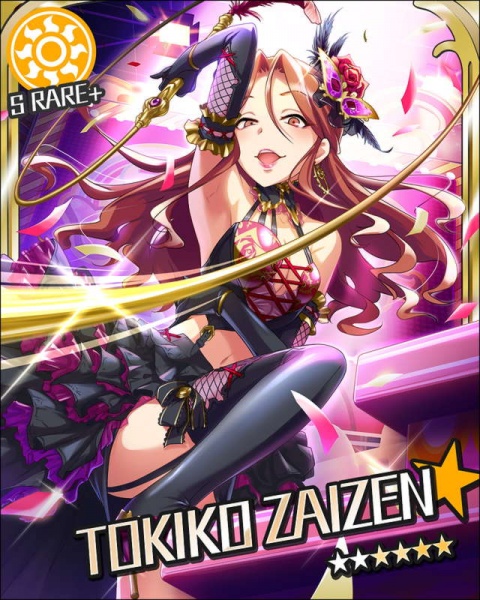
Take for example the character of Tokiko Zaizen. Based on her appearance alone, one gets the idea of Tokiko being a sadist/dominatrix type, but the fans take that a step further.

https://twitter.com/emeraldradiate/status/959646704642547712

https://twitter.com/CodedbyDays/status/943244935133827072

Not all fans fall into either the “dearth” or “abundance”-favoring categories. Some prefer to take the story as-is, and then aim for criticism over speculation. Others might dip their toes into both of those worlds. Whatever the fan approach, the ability for fans to thrive in whatever space is left for them speaks to a kind of flexibility in what it means to be enthusiastic about the creative media we consume.

SSSS.GRIDMAN and Character Design (In)consistency

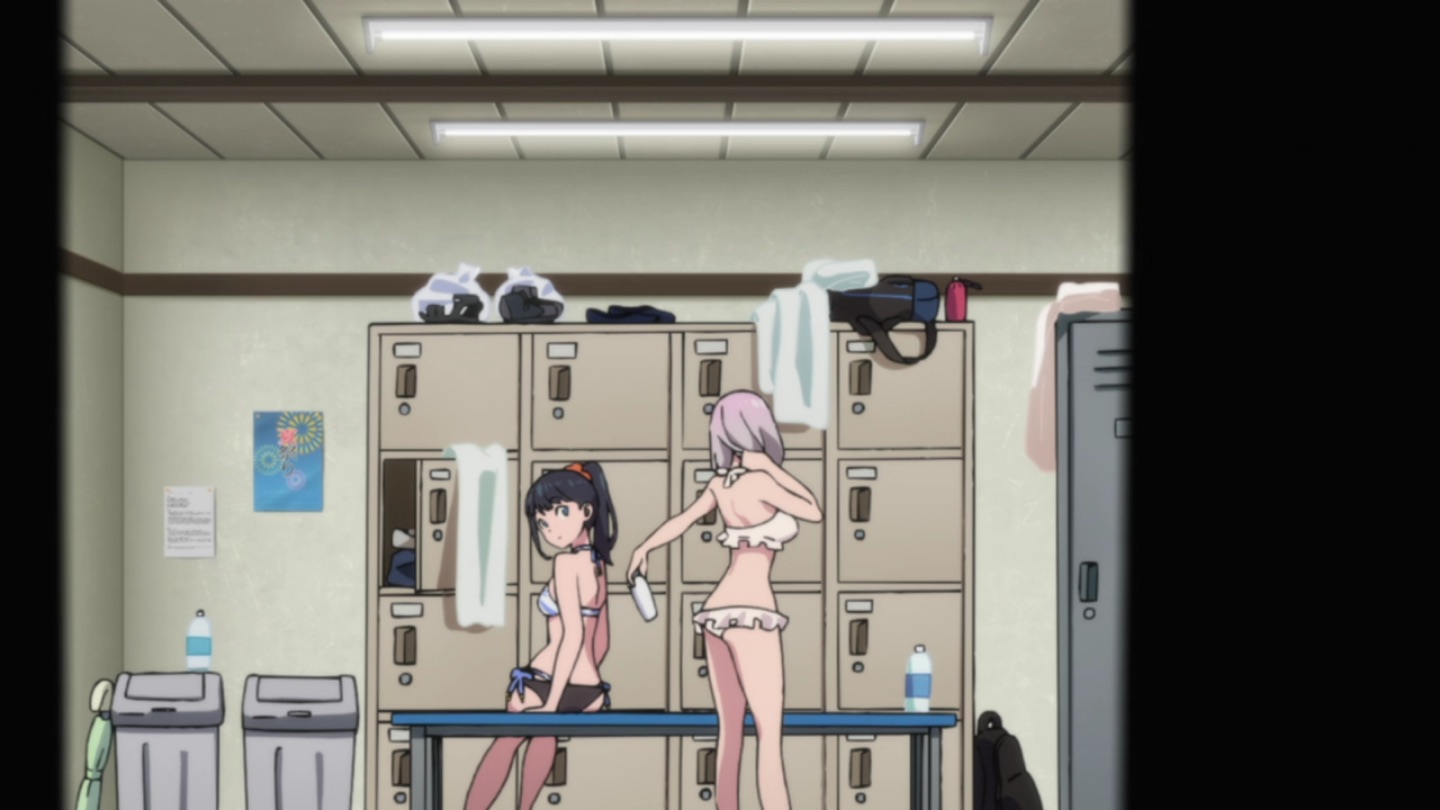
Takarada Rikka and Shinjou Akane are the two female leads of SSSS.Gridman who are grabbing the attention of fans due to their extreme attractiveness. The characters were clearly designed with the other in mind, as their proportions are more or less inverse from each other. Rikka is more bottom-heavy, with bigger thighs and a slim torso. Akane’s design emphasizes her upper body by having a large chest and skinny legs. They’re made for thirsty fans to draw lines in the sand, based on which features they’re truly drawn to.

The decision to create these contrasting designs might be a bit of a double-edged sword for the staff, however. What I’ve noticed is that the anime itself, as well as its merchandise, has trouble keeping track of the visual distinctions between Rikka and Akane. In any given image, Rikka might be portrayed as extra busty, or Akane might be drawn as voluptuous from top to bottom. If this were fanart, it wouldn’t be much of a surprise—it’s not uncommon to see fanartists give characters whatever proportions they want. But these are the show’s own artists and animators flubbing.

Anime, because it involves so many hands and a whole lot of outsourcing, is prone to inconsistencies, so this is not a criticism of the skills of any of the staff. What I am saying, then, is that Rikka’s and Akane’s designs are especially troublesome for animators and artists because they’re not how anime typically creates contrasting female characters. Usually, busty girls are thicker all over, and less chesty girls are more svelte all around. If not that, then designs will feature the same basic body type overall, even as the characters change in specific areas.

Because anime TV production is notoriously crunch-heavy, I could see a lot of artists and animators having to default to their natural instincts when drawing characters. If they’re not accustomed to drawing characters with such clearly defined proportions like Rikka and Akane, then it would be all too easy to draw what “seems right.” And because Rikka and Akane are not wildly different from each other (unless we’re talking fanart), they also can’t exaggerate to the point of caricature either. It’s a tough middle ground to strike.

How Hugtto! Precure Tackles Childbirth and C-Section Controversy in Japan

Episode 35 of Hugtto! Precure was the second time the anime dedicated an episode to childbirth. It makes sense, given that much of the series is about raising a magical baby who might just be the key to saving the future. What makes this particular episode different, however, is that it actually tackles a serious topic in Japan: the stigma against “unnatural births.”

In the episode, Hana and the other Precures help out at a hospital, where they meet a mother who’s there to get a C-section, and is feeling nervous about it. She talks about how she feels like she made a lot of mistakes with her and her husband’s first daughter, and she wants to do everything right this time. Childbirth can be an especially difficult experience (to put it mildly), so it’s only natural that a mother would be anxious about it, but her expressions in the episode seem to indicate something deeper.

As it turns out, Japan has one of the lowest C-section rates in the world (about 10-20%), reflecting a culture that believes that “natural births” are inherently better. Most hospitals in Japan apparently do not even give epidurals to deal with pain, under the belief that the pain felt during labor is supposed to connect a mother to her child.

The mother in Hugtto! Precure wants to correct all the mistakes she made in raising her first child, but C-sections are viewed by many in Japan as an inherent mistake. It’s a challenging position to be in, to say the least. It’s the sort of difficult story that director Satou Junichi is famous for, as seen in his work on Ojamajo Doremi.

At the same time, the anime shows the doctor encouraging the use of C-sections, describing them as safe, and the mother does ultimately go through with it. By portraying the mother’s decision in a positive light, the episode reveals that it’s actually about trying to remove the negative association Japanese people have with C-sections. Moreover, Hugtto! Precure is a show that’s watched by young girls and most likely their parents, so it has the potential to educate two different generations to not look upon medical intervention during childbirth with disdain—a viewpoint that can potentially save lives.

Geek Reference Culture vs. Rap Reference Culture: A Personal and Meandering Comparison

Introduction

Geek culture has a conflicted relationship with making references. It can be the lingua franca of geeks—reciting lines wholesale from Star Trek, Monty Python, The Simpsons, Mystery Science Theater 3000, and other nerd favorites has long been a way to identify like-minded individuals, especially when those interests might not have been considered popular in a schoolyard or office. But that same geek culture, once characterized by references to living in family basements, is now integrated into mainstream culture. It’s to the point that the distinction between hardcore and casual is blurred, inviting never-ending debates about whether that line truly exists, let alone where it might fall. The most successful sitcom ever is The Big Bang Theory, a show about a bunch of brainy dorks who hit every stereotype this side of Steve Urkel.

In this environment, reference humor in geek culture is now being criticized in popular culture as overly insular, perhaps even symptomatic of gate-keeping out women and certain ethnic groups. References are seen as a crutch, a way to siphon off the value and humor of others in absence of one’s own. Unfavorable reviews of the book Ready Player One may be justified in pointing out its misogynistic themes and awkward prose, but it’s also viewed as a prime example of reference subculture gone too far in its arrogance and alienation.

Yet, there’s another example of a once relatively small cultural movement that has established itself in mainstream culture, one that also thrives on references to itself in ways that can seem inaccessible to outsiders: rap and hip hop. In that respect, I find it fascinating that both geek and rap cultures share a lot of similarities. In addition to the heavy focus on references, they’re also grappling with the fact that while they have helped to provide voices to the voiceless, they’re also avenues for misogyny and racism to rear their ugly heads. Despite their stereotypes being virtual opposites of each other—the 98 lb. pasty white nerd living in soul-crushing suburbia vs. the hard-edged gangsta in the life-threatening inner city—there’s a good deal of resonance between the two, and that’s before taking into account the fact that nerd references actually do show up in rap on a regular basis. However, while the use of references in hip hop seems to elevate it in the eyes of the general public, it’s considered something of a strike against geek culture. The question is then, what causes this difference in perception?

Hip Hop’s Reference Culture

The spark for this essay came to me thanks to a book I recently read: Original Gangstas: Tupac Shakur, Dr. Dre, Eazy-E, Ice Cube, and the Birth of West Coast Rap. Among other informative things for someone unknowledgeable about the subject like myself, one aspect it points out about west coast rap and hip hop is that it grew partly out of the rappers’ desire to make songs that spoke to their lived experiences, as opposed to what they were getting from New York City, where rap originated.

The key example the book gives of this desire to express west coast authenticity comes from a line in Eazy-E’s “Boyz-n-the-Hood”: Cruisin’ down the street in my ’64. Westhoff himself describes his youth, listening to this song and dreaming of riding a “Six-four” without knowing what that actually was. But to a certain audience, especially those who grew up in areas like Compton, Eazy-E was quite obviously talking about a 1964 Chevy Impala. Though more a way to speak to those on the streets, there was perhaps another inadvertent takeaway for those who weren’t familiar with this experience: “This is a west coast thing. You probably wouldn’t understand.”

Information like what “six-four” means might be taken for granted by those intimately familiar with rap and hip hop. But speaking personally, my relationship with these genres was, for the longest time, largely limited to memories of what my siblings would listen to. It’s why I found Original Gangstas so potent, as it helped give me perspective on things I only tangentially understood: the significance of Dr. Dre’s “The Chronic” in popularizing the style known as G-Funk, the old differences between east coast and west coast styles, etc. As a relative outsider, I’ve long found that the propensity for rap to throw out references to culture without explanation, couch them in rhythm and lyrics, and use callbacks to other songs (whether in praise or as an insult) made it difficult for me (who grew up not terribly music-inclined in general) to make heads or tails of. I didn’t reject it as music I was supposed to “hate,” nor did I believe that “rap isn’t real music.” Rather, I felt that it was the popular kids’ music, and that it spoke of things I, as an out-of-shape Asian kid who couldn’t win a fight against a hamster, perhaps wasn’t “supposed” to be able to connect to.

That was the past, and I now feel more open and receptive to hip hop, thanks in part to David Brothers, who writes about the connection between geek culture and rap on a regular basis. Yet, I still feel that time away has affected me by stunting not just the potential knowledge of hip hop that’s in my head, but also the potential feeling of it in my heart and soul. With respect to this complicated sensation, one song I keep coming back to is Jay-Z and Alicia Keys’s “Empire State of Mind.” It’s about as famous and popular a rap song as it gets, but as someone who was born and raised in New York City, there are references in it I intrinsically understand and some that I had to look up. I know that going from Harlem to Tribeca is essentially traveling from the top to the bottom of Manhattan. I know that being so “Spike’d out I can trip a referee” is referring to Spike Lee’s propensity for getting front-row tickets to Knicks games while simultaneously talking up Jay-Z’s swagger. I had no clue what “paying Lebron” and “paying Dwyane Wade” meant, having next to no knowledge of drug culture, nor did I know that “BK” being from Texas is about Beyoncé, Jay-Z’s wife. Listening to the song feels somehow both deeply familiar and unusually foreign.

Contemplating “Empire State of Mind” relative to other rap songs, it makes me wonder if this is how many people feel similarly about nerd reference culture. If there’s enough to chew on, it becomes a relatable experience. If there isn’t, it might be downright alienating. “It’s a geek thing. You probably wouldn’t understand.” Whether by accident or by intent, this can transform into “You’re not supposed to understand.” But unlike west coast rap, which was originally tied to a certain region and its surrounding cultural and economic situation, the fuel for geek culture was all over the place. I was surprised to find out (thanks again to Original Gangstas) that a young Snoop Dogg and Warren G were in a group called Voltron Crew. (There’s also a video of Snoop Dogg reminiscing about playing with Voltron toys and pretending they could move.) Moreover, at a panel at New York Comic Con 2018, DMC (of Run-DMC) talked about how he was inspired to express through his rap the entertainment culture he saw: Godzilla, Bela Lugosi and Boris Karloff movies, etc. One gets the impression that geek culture was never truly rooted in those pasty white suburbs, and with each passing generation that image gets reclaimed and transformed.

Rap’s references don’t just end with talking about the streets or various aspects of pop culture, either. There’s also a tradition of calling back to previous rap songs, which rewards those fans and listeners who avidly follow the genre. Original Gangstas describes how “Hit ’em Up,” the infamous diss track that is just five minutes of venom directed at the Notorious B.I.G., Tupac makes numerous references to the enemy camp’s music, twisting them into dark parodies such that anyone who recognizes the originals can feel the vitriol hitting even harder. Notably, the line “Grab your dick if you love hip hop” from “Player’s Anthem” by Notorious B.I.G. and Junior Mafia becomes “Grab your glocks when you see Tupac.” You don’t need to know the specific references to pick up on the sheer anger Tupac has for Biggie, but it helps.

The Desire to Affirm Geek Identity, and the Hurdles Created in Consequence

Geek reference culture still carries a legacy of wanting to legitimize one’s own experiences, and in that respect it mirrors a lot of what rap and hip hop have done. However, where I find the key dissimilarities begin to manifest is in how attached the purveyors and fans of geekdom and rap get to their source materials. While plenty of creators allow their influences to show through in subtle ways—Steven Universe clearly has the DNA of Sailor Moon in it—the most visible parts of geekdom are those whose umbilical cords have never fully detached from the things they reference. Many of these works, while excellent in their own right, fall apart almost completely when divorced from their immediate contexts. The ones most absolutely dependent on showing off their callbacks, i.e. the Ready Player One‘s of the world, are too busy showing themselves as “nerdy” to build towards anything more. There’s a kind of clumsiness that makes people bristle.

In contrast, rap, even when one doesn’t get all of the in-jokes and shout-outs, still tend to convey enough meaning in other ways that those songs don’t live or die by the number of references contained within. But that might just be because referencing and remixing have been a part of hip hop since day one, before rappers even rose to prominence. In the earliest days, it was the DJs who commanded all the attention, and their craft is based in mixing together bits and pieces of various existing soundtracks. When Grandmaster Flash talks about getting rid of the “wack parts” to make a more enjoyable experience, he’s recalling making those old vinyls into his own. Incidentally, in this same video, he talks about the science of DJing being this incredibly geeky thing, but that he couldn’t express it as such back then because it wasn’t cool to be a geek. Hip hop has a legacy of creators not being afraid to take what’s out there and put it directly into a song, but also trying to transform them for their own unique purposes.

One point of convergence and then divergence is how nerd references get into rap and hip hop. Along this vein are two general categories: nerdy rapping and nerdcore rapping, i.e. songs with nerdy callbacks in them vs. songs where geek culture is the primary subject matter. Before I proceed, however, I want to make one thing clear: What I’m discussing is not a matter of talent of performer or quality of song; I have neither the musical expertise nor the familiarity with hip hop to cast that kind of high-and-mighty judgment. It would also be quite unfair to pit a small-time YouTuber against Snoop Dogg literally doing a song for Tekken and expect the former to live up to the latter in terms of raw ability and experience.

However, if we look beyond talent or quality and just at subject matter, nerdcore’s reputation (for better or worse) is that it’s hyper-focused on celebrating nerdiness. In contrast, nerdy rapping is about incorporating those geek references to make a point. MC Frontalot is not considered to be unskilled as a rapper, but “I’ll Form the Head” mainly requires the listener to be in on the joke—that it’s a parody of Voltron. On the other hand, when Soulja Boy raps, “Bitch I look like Goku,” he’s likening himself to the Dragon Ball protagonist to instantly communicate his power and confidence. Even if you don’t know who Goku is, the delivery tells you that it’s someone who’s a big deal. The same song (titled “Goku” of course) also references the 1964 Chevy Impala, as if to equate their cultural symbolism. It’s not a matter of “reality” vs. “fiction,” either. A lot of non-nerdy hip hop is about presenting fictionalized versions of oneself, such as Eminem’s Slim Shady.

A Crucial Difference?

One major disparity might be that while references in hip hop convey a sense of mutual understanding and experience to often self-aggrandize, traditional geek culture places much of its subcultural cache in the accumulation of nerdy knowledge—i.e. nerd cred. It’s one thing for Jay-Z to talk about how he “made the Yankee hat more famous than a Yankee can,” or for Snoop Dogg to explain, “I got the Rolly [Rolex] on my arm and I’m pouring Chandon [an expensive sparkling wine].” It’s another to operate as Ready Player One does, and tie the hero’s success to his mastery of 80s pop culture. This even extends to how hip hop and geek cultures try to suss out “fake” fans. In hip hop, like with other forms of music, a lot of it has to do with taste. If you like Macklemore or Vanilla Ice, you’re supposedly not a “real” fan because you can’t handle the hard stuff. However, it’s not like hip hop fans expect everyone to have encyclopedic knowledge of rap. In contrast, when someone is accused of being a “fake geek” or a “fake geek girl,” it’s more to do with the idea that their kung-fu isn’t strong enough—that they lack the extensive study of trivia and information that’s long been expected of nerds. For hip hop and rap, references are the doorway. For geek culture, it can often feel like the destination, and as long as that reputation persists, there will always be a sense of impermeability between geek and non-geek cultures.

VOTE NOVEMBER 6!: Ogiue Maniax Status Update for November 2018

The blog is doing just swell, and I’m grateful as always for my supporters on Patreon and ko-fi, who are below:

General:

Johnny Trovato

Ko Ransom

Diogo Prado

Sue Hopkins fans:

Serxeid

Hato Kenjirou fans:

Elizabeth

Yajima Mirei fans:

Machi-Kurada

But the more important thing, namely for any United States citizen 18 and up, is to vote. People might think their votes don’t matter, but over and over we see how apathy lets those with more extreme agendas weasel their way. We have literal killers who feel motivated by our current political climate to emerge out of whatever sewers they crawled out of. I will be at the polls, and I hope you’ll decided to go too.

My favorite posts from October:

Can-Do Candy: Dagashi Kashi Full Manga Review

At long last, a full look at everyone’s favorite candy comic.

Beyond Expectations: Planet With

A review of a fantastic anime from the past season.

The Significance of the Classic Anime Devilman in Devilman Crybaby

How does the uniquely insightful, uniquely horny Galko-chan handle one of the classic romance tropes?

Hashikko Ensemble

Chapter 9 finally starts to pull the veil back on the life of Orihara.

Patreon-Sponsored

Aikatsu Friends! Choreography Has Won Me Over

The dancing has improved in Aikatsu! and notably so.

Closing

See you next month. I’m hopeful for a better tomorrow. Remember: November 6.

The Significance of the Classic Anime Devilman in Devilman Crybaby

Devilman Crybaby made quite a splash when it was released earlier this year on Netflix, introducing Nagai Go’s classic series to a new generation of anime and manga fans. While there are stylistic differences stemming from both difference in era and the aesthetic of director Yuasa Masaaki, Devilman Crybaby is largely the same as the original 1972 Devilman manga at its core, showing that the series’s story of a human who uses demonic powers to fight other demons and its themes of human strength and ugliness are still culturally relevant.

While Devilman Crybaby is hardly the first adaptation, spin-off, or sequel, it does do one thing that most other Devilman works try to shy away from: it incorporates elements of the kid-friendly 1972 Devilman anime TV series. In that cartoon, Devilman is closer to a superhero than a brutal demon in appearance and demeanor. Even his theme song calls him a “hero of justice” while listing all of his special ability (Devil Wing, Devil Eye, Devil Beam, etc.).

It’s so different from every other iteration of Devilman, and Devilman Crybaby repeatedly uses it in such specific scenarios, that I believe TV anime Devilman has special significance in Crybaby beyond providing an addictive remix of the classic theme song, which can be found below.

Whenever that song, “Devilman no Uta” is used, there’s an element of innocence or human compassion attached. It’s often paired with an actual image of the TV anime Devilman himself, who shows up on television screens or on YouTube videos and the like. It’s especially prevalent in Ryo’s flashbacks, where a young and orphaned Ryo can be seen staring at the green, heroic Devilman on TV. Ryo appears to be drawn towards it.

There’s a third symbol too: Devilman’s actual design in Crybaby. Devilman adaptations tend to draw more from the manga than that old anime series, and this extends to the aesthetics of Devilman himself. In almost every version, Devilman feels more like a beast than a man, and Crybaby’s is generally no exception. However, there are times in Devilman Crybaby when Devilman himself feels more reminiscent of the “hero of justice.”

Devilman the character can be thought of as having two original strains—the Nagai manga original and the classic TV version—with different iterations veering towards one or the other. If a work wants to hint at a more hyper-violent Devilman, they portray him along the lines of the manga. If, however, it wants a cleaner and friendlier Devilman, then the TV version is the way to go. Crybaby Devilman strikes a very interesting middle ground. While he has the fur, the facial features, and the overall demonic appearance, he takes aesthetic elements from the TV version. Namely, he has those distinct stripes on his shoulders, and he’s often portrayed with a blue/greenish tint to his skin. It’s unclear if his skin is actually supposed to be green, or if the creative lighting of the series just makes it look that way, but there’s a clear commonality between Crybaby Devilman and TV Devilman, at least in part. What’s also noticeable is that the green skin seems to be most noticeable in scenes where Akira is trying to defend the innocent, like when he protects a group of innocent people from being stoned to death out of fear that those poor souls “might” be demons.

In other words, the incorporation of elements of the TV anime Devilman into Devilman Crybaby isn’t merely for referential purposes, or a clever wink and nod—It’s actually important to the themes and symbolism of the series. While Crybaby largely follows the plot of the original manga and not the TV anime, the presence of the superheroic Devilman is ongoing, and it hints at Akira’s inherent goodness. He struggles with himself and the devil inside, but Akira ultimately wants to fight for what’s right and just, whether his foes are human or demon. The old anime Devilman is who he aspires to be, even if he ultimately cannot live up to that ideal.

A Look Back at an Aikatsu! Halloween

In the spirit of the month, I was asked by Patreon sponsor Johnny Trovato to look at one of the Halloween episodes of Aikatsu! I chose episode 106 of the original series, which takes place after Akari has become the new main character. It’s a fun episode characteristic of all that is good and enjoyable in Aikatsu!, though a few elements stood out in particular.

Whenever the characters say, “Trick or treat!” they immediately follow by explaining in Japanese what exactly that means: “If you don’t give me candy, I’m going to play a trick on you!” It’s a redundancy that not only has to make up for the language barrier—a little kid might not know the English words—but also speaks to the fact that Halloween as a concept is still relatively new in Japan. If you look online, you’ll find articles talking about how it didn’t get any traction until the 21st century, and now it’s featured in multiple anime.

I wouldn’t read too deeply Aikatsu!‘s interpretation of Halloween—I reckon it’s as much tinged with the Idol Activities spirit as anything else. If the episode didn’t feature some wacky game that highlights all of the characters lovable quirks, then I would’ve been shocked. That’s where Aikatsu! consistently shines, though. You just know that if they’re doing a Halloween episode, vampire-style Idol Toudou Yurika is going to have a moment. They even make the expected (and desired) joke that Yurika wearing a cape and fangs while exclaiming that she’ll suck your blood isn’t that different from how she normally behaves.

“The day Yurika visited your Halloween party was the most important day of your life. But to me, it was Tuesday.”

I watched this episode semi-isolated from the rest of the series, so I don’t know exactly what has transpired beforehand. However, it reinforces something I’ve felt about Aikatsu! in general, which is that the first season’s characters seem to have the most clear-cut personalities, which makes it easier to do these silly one-off episodes. I still don’t always quite get what Akari and her friends are supposed to be like. They seem a tad more subdued, which can work better over the long term but maybe isn’t as attention-grabbing at first sight. https://www.youtube.com/watch?v=sOnqjkJTMaA#t=9m5s

It would be remiss of me to end this post without mentioning the teacher, Johnny Bepp, and his unnamed homage to Michael Jackson. With a vaguely “Thriller”-esque piece playing in the background, Johnny-sensei encourages the students to do the famous zombie dance (or whatever it’s called), which exhausts every student around—except Akari. I would think that a dance sequence from one of the finest performers ever would be absolutely grueling for even the girls at an idol academy, though in hindsight I guess this is actually a bit of characterization for Akari as a girl with immense stamina. In this case, I don’t know if it’s the “obvious” gag per se, but the payoff is again reliably satisfying. Kudos, Aikatsu!

Given that this episode is quite a few years old at this point, I am curious to see how the Aikatsu! Halloween episodes have evolved as the holiday itself has become more popular in Japan. Maybe that’ll be something for next year!


Gaogaigar vs. Betterman Manga Chapter 1: Go Read It!

Us Gaogaigar fans had long waited for a new sequel, a call that was answered this past year through the Hakai-Oh: Gaogaigar vs. Betterman novel series. In more recent news, Sunrise announced a manga adaptation, and the first chapter has been available online for the past month or so.

Having read through the first novel, this manga seems to be adapting the contents pretty faithfully. This might go without saying, but the key advantage of the manga version is that it’s more visual—a welcome thing given that Gaogaigar as a whole thrives on visual spectacle.  It’s also a lot easier to follow if your Japanese language proficiency isn’t especially strong.

I’m not sure what the schedule is for this manga, but I’m hoping that having it so easily accessible means that Gaogaigar fans will be able to rally around it, and really give it the attention it deserves.

Harsh Lessons in Teamwork: Eyeshield 21‘s Kongo Agon

One of my favorite characters to think about is Kongo Agon from the football manga Eyeshield 21. He’s not a favorite in the sense that I would put him on a top 10 or even top 100 best characters list, but what he does provide is an entertaining and exciting role as an antagonist whose presence allows a more complicated story about what it means to be a successful teammate.

In Eyeshield 21, Kongo Agon is the undisputed best high school American-football player in Japan. His reaction time is unmatched. While others might be stronger or faster, no one has the optimized combination of both like him. Anything you can do, he can probably do better. Agon isn’t even one of those characters who is strong individually but is especially bad at teamwork. He knows how to work within a group, at least to a certain extent. The fact that he’s so superior to everyone else, however, lands him into a classic trap for someone of such extraordinary talent: he finds less worth in those who can’t keep up with him.

When mentioning what his ideal team would be, Agon describes a hypothetical team that’s 21 of himself + one teammate who has a few unique skills. And in a way, he’s right. An All-Star All-Agon team would probably beat every other team around. However, that team fundamentally cannot exist (Eyeshield 21 is not a science fiction series), and this is where Agon begins to falter. He may be perfect, but no one else is, and his inability to truly accept that is what opens up the cracks in his armor and leads him on the road to defeat.

One of the most famous athletes in history, Michael Jordan, ran into a similar problem. Jordan in his rookie days was a once-in-a-generation talent, but felt he couldn’t trust his teammates. What turned it around was his coach, Phil Jackson, who pushed Jordan to assume the role of a true leader, and to motivate his teammates into believing that Jordan trusted them. No small part of this was Scottie Pippen, who could mediate between Jordan and the rest of the bulls and lead by example in the process.

A lot of what made Jordan able to overcome his over-reliance on himself are the very things that Agon ends up failing to learn for a long time. Agon, despite being the best player around, is not an effective leader for a team; he’s closer to a tyrant than a captain. Moreover, the man who could be his Pippen, his brother Kongo Unsui, is shown little if any respect by Agon. Because he views everyone else as so beneath him in talent, he can’t even fathom the relatively minuscule accomplishments of opposing teams as matter at all—only for such an “insignificant” change to hand him a devastating, skin-of-his-teeth loss. Agon is decent at teamwork, but if only he respected his teammates and his opponents more, he could have been invincible.

Perhaps the biggest character development moment for Agon in Eyeshield 21 is the day that he finally bothers to train. Much like Frieza in Dragon Ball: Resurrection F, Agon is begrudgingly pushed to the point that he has to actually try, only Agon’s storyline predates Frieza’s in this particular sense. That realization by Agon, that he has to work at maintaining his dominance, is the ultimate blow to his being. He’s forever transformed, unable to ever go back to thinking that he, by simple virtue of being himself, is enough to defeat everyone.