Back from the Future: Ogiue Maniax Status Update for June 2018

I’m back after an exciting honeymoon in Tokyo. It was a grand ol’ time full of food and nerdery, and also spending way too much money on otaku goods. For example, I actually bought all of Heartcatch Precure! on DVD—albeit at a huge discount. (I promise I didn’t just do Precure-related things, honest.)

I’m happy to answer (most) questions about staying in Japan to the best of my ability, so send ’em in!

But before that, I’d like to thank my sponsors on Patreon and Ko-fi.

A big thank you too…

General:

Johnny Trovato

Ko Ransom

Alex

Diogo Prado

Sue Hopkins fans:

Serxeid

Hato Kenjirou fans:

Elizabeth

Yajima Mirei fans:

Machi-Kurada

I still had some posts go up even while I was away, so here are my favorite posts from May:

Darling in the Franxx and Choice in a Sexual Dystopia

Some people think the show is greatness itself, while others think it’s hyper trash. Here are some of my thoughts.

Project Z Revived! “Hakai-oh – Gaogaigar vs. Betterman Part 1” Novel Review

My review of the latest Gaogaigar light novel, which is actually the long-awaited sequel to Gaogaigar Final!

“Flukes”: Competitive Rigor vs. Sustainability in Esports

How important is grabbing an audience vs. absolute competitive integrity in esports?

Hashikko Ensemble

Chapter 4 continues the kooky sense of almost-camaraderie.

Patreon-Sponsored

Gamblers’ Paradise: “Uma Musume: Pretty Derby”

My feelings on the new horse girl-themed anime and the expected franchise surrounding it.

Closing

As you might expect, I plan to have a ton of blog posts concerning my trip to Japan. It won’t be a full on travelogue, but I plan to have reviews of doujin events, reviews of series I picked up, and more. Who knows? Maybe it’ll even bleed into July!

The Respectful Pervert: The New Ogler Archetype in Anime and Manga

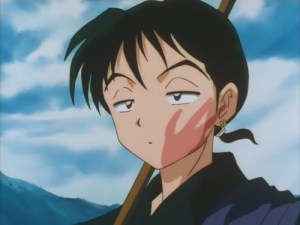
Miroku, pervert monk from Inuyasha

In today’s environment, the “pervert with a heart of gold” anime and manga archetype has not aged well. While characters such as Great Teacher Onizuka, Miroku from Inuyasha, and Saeba Ryo (City Hunter) are ultimately presented as those who will fight for what’s right, their willingness to cop a feel or lift a skirt becomes less and less charming in consider the current age. They’re ultimately fictional characters, so they can afford to be flawed, but one person’s “acceptable quirk” is another’s deal breaker. They’re not automatically villains or abusers, but they can be increasing difficult to rally behind—and I say this knowing that Ryo, for instance, is classically quite popular with female readers. But I don’t think the solution is to pretend perverts don’t exist, or to portray them negatively, and in fact, I find that anime and manga are slowly moving towards a new type of ogler for the current age.

Before continuing, I understand that my discussion of the “well-meaning pervert” is rather heteronormative, owing to the fact that these characters are derived from a tradition of hyper-straight male protagonists. When you change the dynamics of gender and gender representation, the topic enters a whole new dimension. I’m open to thinking more in that direction, but it goes beyond the scope of this post.

The “respectful pervert” actively acknowledges his love of women’s bodies, but doesn’t step over crucial boundaries—a devoted believer in the mantra “look but don’t touch.” From this cloth, two recent and prominent examples are Space Dandy from Space Dandy and Sword from GARO: Vanishing Line.

Space Dandy with Boobies waitresses

Sword from GARO: Vanishing Line, paying respects to large breasts

Both will regularly express their love of breasts, but will remain more or less cordial. Dandy mostly indulges in his fascinations at “Boobies,” a restaurant whose purpose is to allow and encourage ogling, without physical contact. Sword’s tendency to offer a prayer of appreciation for nice breasts might potentially draw unwanted attention, but his overall actions do not encroach on women’s personal space.

This new-type pervert might not be to everyone’s tastes, but I find that his significance stands out more when comparing him to another attempt to dial down the pervert archetype: the passive harem protagonist. That archetype is perpetually in a position of convenience to have things happen to him as a way to resolve the character of responsibility. A lack of direct intent, e.g. “Oh no, I tripped fell into her breeeaaasts!!!” means self-control as an issue is ignored. In contrast, the respectful pervert is active in his expressions of sexual desire, but ultimately shows restraint. Power remains in the women’s control, without pushing the onus of responsibility onto them.

What do you think of the respectful pervert? Is it one step forward, two steps back? Is it a character you can get behind? I’m curious to hear opinions from anyone and everyone.

Gamblers’ Paradise: “Uma Musume: Pretty Derby”

My Little Pony: Friendship is Magic may be the most prominent cartoon about horse girls, but Uma Musume: Pretty Derby is bringing a different angle. Instead of wide-eyed ponies, it’s human-horse hybrids in the vein of anime catgirls. Instead of a children’s show reminiscent of magical girl shows, it’s a strange hybrid sports/idol anime focused on racing and dancing. As a result, Uma Musume: Pretty Derby veers closer to Girls und Panzer than Twilight Sparkle and friends.

Having watched the first two episodes, Uma Musume: Pretty Derby succeeds in being a sports show. It’s got an underdog main heroine with untapped potential, plenty of characters (perhaps too many) with a variety of personalities and competitive styles, and a sense of forward progress while keeping intrigue strong. For example, just what is up with protagonist Special Week’s adopted mother? She gives me a “mom from Aikatsu!” vibe; maybe that’s not a coincidence given the idol aspect of Uma Musume.

Taken on its own, the anime seems like a reliably strong show. However, much like Girls und Panzer, the point of potential concern is what happens when one looks beyond the cartoon itself and into what it’s supposed to advertise and accomplish. For Girls und Panzer, it’s possible glorification of the military. For Uma Musume, it’s gambling.

Uma Musume is a moefied version of horseracing, a popular betting sport. But it’s also part of a multimedia franchise from mobile games juggernaut Cygames, makers of Granblue Fantasy. When it comes to lootbox/gacha systems that drive players to empty their pockets, Granblue Fantasy is one of the grandmasters, and the chase for those slim 1% chances for ultra-rares is especially enticing for those vulnerable to gambling addiction. And yes, there’s an Uma Musume: Pretty Derby mobile game on the way.

So essentially, there’s a dangerous final form of Uma Musume that could become a reality someday. This monstrous version would involve going to the racetrack to watch and bet on the ponies while also playing Uma Musume and trying to get the right gacha gifts for your favorite horse girls. To use an ancient internet joke, they put a slot machine into your betting, so you can gamble while you gamble. It’s not gotten to this stage as of yet, but I have my eye out to see where Uma Musume will go.

This post was sponsored by Johnny Trovato. If you’re interested in submitting topics for the blog, or just like my writing and want to support Ogiue Maniax, check out my Patreon.

Darling in the Franxx and Choice in a Sexual Dystopia

Amidst shipping wars and attention given to its fanservice, hearing about the anime Darling in the Franxx secondhand gives the impression that it’s light on substance at best and alarmingly conservative in its sexual values at worst. Yet the more I watch it, the more I’m convinced that these descriptions do not accurately convey what the show has to offer. Instead, what I see is an anime that explores political discourse on what it means to be in a relationship, focusing on questions of equality, agency, and defiance.

WARNING: Spoilers for Darling in the Franx

Darling in the Franxx takes place in a science fictional world where kids are artificially created and trained to use giant robots called “Franxx” in order to fight massive monsters known as Klaxosaurs. They live in a world that separates adults from children, has those same adults revered like virtual gods, and directs sexual energy towards combat. Those teens are put into not-so-subtle male-female pairings called “stamens and pistils,” who then enter a cockpit that has them basically pantomiming doggy-style sex without even knowing what it means to kiss. While these arrangements can seem like an excuse for some highly suggestive imagery, it’s implied throughout the series (if not stated outright) that this is an intentionally exploitative design within the context of their world.

The fact that their society is partly based on adults exploiting children, stunting and controlling their hormones, and making it seem like a favor is already a kind of political message. However, plenty of anime both deep and shallow have done the same. “Kids vs. adults” is a classic trope, and even the biggest names in mecha (e.g. Evangelion and Gundam) feature them to some extent.

This might appear to be an admonishment of “frivolous” romance. However, it’s quite the opposite. I find that the romances are of central importance to the complexity of Darling in the Franxx. The relationships, how they’re presented and what they represent, are a direct window into the shows’ political themes and messages. Those themes and messages, in turn, are actually supportive of more liberal views on gender and sexuality than assumed at first glance.

Futoshi and Kokoro: Relationship Betrayal or Relationship Freedom?

One of the more controversial episodes sees the character Futoshi pledge his devotion to Kokoro. After weakly promising to go along with Futoshi’s pledge to be his “partner [i.e. co-pilot] forever,” Kokoro later decides to try and switch partners to Mitsuru when the option becomes available—an implicit rejection of Futoshi. This was the cause of a great deal of consternation, with speculation that the show was trying to cheaply indulge in the NTR [cuckolding] fetish found in Japanese otaku culture.

However, what I think frames the importance of Kokoro’s actions is the fact that the stamen-pistil pairings are assigned. Yes, Futoshi was absolutely infatuated and Kokoro agreed to his pledge, but it was also established that Kokoro’s natural tendency is to oblige others and not speak her mind. This is what attracts her to the surly Mitsuru in the first place. He’s got a huge chip on his shoulder and isn’t afraid to let it be known—something Kokoro finds incredibly difficult. Rather than this being some “betrayal” of Futoshi, I find it better viewed as Kokoro finally taking initiative in her life and finding someone in Mitsuru who complements her flaws and benefits from her strengths. Kokoro breaks down the walls Mitsuru has established to hide his vulnerability, while Mitsuru’s attitude inspires Kokoro to prioritize her own feelings.

Certain elements of the series, such as the male-dominant sexual imagery of the cockpits, and the fact that other Franxx pilots outside of the core group tend to be emotionless, imply a world that thrives on power imbalances and sex without joy. While this could be considered the message of the show, romantic developments based on the need to find a true equal says otherwise.

Hiro and Zero Two: Equal Partners Against the World

Nowhere is the emphasis on equality more evident than in the main love triangle between protagonist Hiro, his childhood friend Ichigo, and the part-Klaxosaur pilot Zero Two. At first, it comes across as harem-esque wish fulfillment starring a guy who seems like he stepped out of every generic light novel ever. There’s a vague sense that the girls are in love with him because he’s ambiguously “nice,” in the most boring way possible. So why is Hiro so much more attracted to Zero Two?

It can seem like mere exoticism, or the series deciding that one girl has to win, but there are moments throughout the series that suggest a vital difference between how the two girls relate to Hiro. Ichigo worships Hiro, and places him on a pedestal. Zero Two, however, inspires Hiro to push forward and to try and overcome his limits. When we find out their lost history in Episode 14—that the two actually met when they were children and had their memories altered by the adults as a result—it’s not just about Zero Two being “another childhood friend.” Instead, Hiro’s attempt to rescue her and escape together is the ultimate act of a child who constantly questions the status quo of a rigid society. Similarly, Hiro is the catalyst that allows Zero Two to experience the outside world, and to see herself as more than a monster. There is a sense of equality and a constant desire to push one another forward that is present when Hiro and Zero Two are together—one that doesn’t exist with Hiro and Ichigo.

Surprisingly, Hiro himself becomes an increasingly fascinating character as the series continues, being revealed as not really the goody two-shoes his initial impression conveys. That childhood flashback to meeting Zero Two highlights the fact that he was actually a problem child for a society that encourages kids to stay ignorant and obedient. A young Hiro refuses to take “you’re not supposed to know” as an answer, and is punished for it by having his memories erased and being forced into a more complacent personality. When he meets Zero Two again for the first time years later (in Episode 1), that puts him on the path towards his naturally inquisitive self that dares to challenge society’s assumptions.

Gender Conformity or Gender Rebellion?

Accepting that the romances are more than skin-deep, the question then becomes: what exactly is the message conveyed through these relationships? A recent episode has garnered some backlash because it’s being seen as reinforcing gender conformity and a heteronormative worldview. However, based on other information about the world in Darling in the Franxx, I feel that it’s not so simple.

In Episode 17, Papa’s personal elite squadron, the Nines, move in with the main characters. Once there, they discover that Kokoro has discovered information on pregnancy and childbirth, which is forbidden in their world. The leader of the Nines, named Nine Alpha, talks about how traditional pregnancy and childbirth are unnecessary because humans have evolved past it, and that to go back to the old ways would be to restore rigid gender roles and identities.

An antagonistic character is making that point, which potentially makes it look like it’s being presented as the “wrong choice.” But if anything, Darling in the Franxx features a world where all sexuality regardless of gender, sex, or sexual orientation is taboo, so it’s not simply a matter of “proper gender roles” being enforced in the narrative.

Consider the fact that only one of the characters, Kokoro, is expressing any desire for a traditional pregnancy. Consider also that the characters literally have no idea how they came into the world, believing that the “Big Brother”-esque Papa “made them” in some mysterious fashion. It’s one thing if they knew how they were birthed, but they’re not even allowed to know in the first place. Moreover, a previous episode features one of the other pilots, Zorome, meeting an adult who is heavily implied to be his biological mother—which means the talk about having evolved past the need for traditional childbirth might very well be a lie. To me, it looks like the issue isn’t that Papa is cruel for preventing humans from being able to have sex and reproduce and fulfill established gender roles, but that he’s suppressed all education about the topic.

Adults have their organs removed and their puberty somehow controlled or skipped over. Franxx pilots are allowed to keep their reproductive organs solely because they’re the key to piloting their robots, and they die early as a result. Sex and sexual desire are made a tool of the government regardless of the people and who they’re attracted to.

Franxx piloting becomes the closest thing people have to being able to engage in physical relationships, and even that is not so cut and dry. One of the other pilots, Ikuno, is clearly a lesbian or at the very least bisexual, but the world doesn’t even acknowledge her state as a possibility. When she suggests an attempt at a pistil-pistil combination for piloting, it doesn’t work—as if the state-ordained sex substitute known as the Franxx cannot allow it. Even then, she comes to Kokoro’s aid, slapping Nine Alpha for verbally attacking Kokoro’s newfound values. Prior to this, Ikuno can be seen bristling at the idea that gender distinctions could become more dominant if society reverted back to ancient times, but she still comes to Kokoro’s defense. I believe this is derived from the commonality between Kokoro’s wish for heterosexual procreation and Ikuno’s own emotional defiance of heteronormativity, which is that both wish to be free of a world that denies their feelings.

Even the main couple itself, Hiro and Zero Two, is a subtle rebellion against rigid gender roles. If the ability to have children is what defines women according to the story, then that would invalidate Zero Two, who mentions in Episode 17 that it is physically impossible for her. Yet her romance is the paramount love story of Darling in the Franxx. While she expresses envy at the fact that the humans can potentially have children, it’s more to do with them having a choice in the first place.

More Questions

One curiosity the series has yet to address is why the Nines seem to be capable of piloting in formations counter to the stamen-pistil pairing. Nine Alpha, for example, reads as male, but takes the bent-over position in the cockpit normally reserved for girls. Are the Nines, in part or in whole, actually outside of the male-female dichotomy in terms of sex and/or gender? Are their Franxx units somehow different from the rest? These unanswered questions further deepen the story and its potential avenues.

Conclusion: Emotional Depth and Political Rebellion

Darling in the Franxx starts off with many signs that it’s a shallow endeavor centered around boring wish fulfillment, shock value, and an excuse for sex and violence. But the show carries a lot of themes I would dare say are important to where we currently are in society. Its characters are extremely emotional teenagers, the classic archetype of anime, but their actions within the context of their world and the restrictions that world places on their bodies and minds gives renewed importance to everything they do. The romance of Darling in the Franxx is both a window into the politics of society and the importance of equality in emotional and loving relationships that transcend the strict hierarchies and roles given to them by a world of adults that seeks to mercilessly exploit its children. Rather than fighting for sexual conformity, the characters in Darling in the Franxx fight for sexual freedom and the freedom to choose their bodies’ futures, whether they know it or not.

Given that the series is yet to conclude, there’s a definite chance my interpretation is off the mark. If that time comes, I will be happy to reassess my analysis, and to see what I got right and what I got wrong.

Project Z Revived! “Hakai-oh – Gaogaigar vs. Betterman Part 1” Novel Review

Being a fan of Gaogaigar is to know joy and suffering. Its increasingly grandiose-yet-ever-personal story makes for one magnificent crescendo after another. But then, at the climax, fans were left with a bittersweet cliffhanger. The heroes we had cheered for were stuck in another galaxy, the only escapees the two alien boys who found loving home on Earth. For years, fans and characters alike were left in limbo, the one glimmer of hope—a proposed sequel called “Project Z”—dashed by sponsor and studio conflicts.

Then, out the blue, came a new light. Sunrise, the studio behind Gaogaigar, announced their own light novel imprint. From it has sprung The King of Braves Gaogaigar Novel 03: Hakai-oh – Gaogaigar vs. Betterman Part 1, a true novel sequel written by Takeda Yuuichirou, a former staff member on the Gaogaigar anime, and guided by Yonetani Yoshitomo, the original director. The book was created using Project Z as its foundation, so those who kept the fire alive for the Gutsy Galaxy Guard can finally be rewarded.

Note: There is also a two-part novelization of Gaogaigar Final, hence why this one is “Novel 03.” I’ve not read those prequel novels, so I don’t know what may have changed, or what new information might be available in them.

Plot

While there are many parts to Gaogaigar vs. Betterman, the main story focuses on Amami Mamoru and Kaidou Ikumi, the two extraterrestrial boys at the heart of the original anime. Where once they supported the brave robots, however, now they themselves are the pilots. Older and wiser but still full of passion, they pilot Gaogaigo, a combining mecha modeled after the original Gaogaigar with some added new powers. As the heroes of the new “Gutsy Global Guard, ” Mamoru and Ikumi must defend the Earth from old threats (namely the terrorist organization Bionet) and deal with a world where communications are crippled, all while trying to find a way to bring their old friends and comrades home. Looming over everything is a mysterious entity known as “Hakai-oh” (the “King of World-Conquerors”), whose visage appeared in the sky after a fateful event, and who bears an eerie resemblance Genesic Gaogaigar.

A Labor of Love

Thanks to the author and Yonetani’s efforts, the story is just jam-packed full of details from all facets of the Gaogaigar universe. That car above, shown for about five seconds at the start of Gaogaigar FINAL episode 2? That’s Polcott, a transforming robot that becomes a key member of the new GGG. Other new members of the Super Robot Corps reflect the use of Even the Gaogaigo is a “Neuro Mechanoid,” combining the Super Mechanoid technology featured in Gaogaigar with the Neuronoids of Betterman—a robot/occult horror series in the same universe. It makes sense, because without Galeon or Gaofar, they need something that can handle the burden of being the core machine.

Those are just a couple of details that show the unbelievable amount of love and care put into the novel. Whether it’s how characters have grown over a span of nine years, or connecting the mythos of Gaogaigar and Betterman together, or even drawing from all manner of obscure material without feeling forced, it made me happy to step back into its world. Of course, I wanted to know more than anything the fate of Guy and the rest of the old heroes (more on that later), but just seeing how the world has changed is a tremendous delight.

The Betterman side of the story is less prominent, but many of its elements permeate the story. An ongoing plot thread focuses on Lamia warning Mamoru and Ikumi of the threat of Hakai-oh, while also trying to convince his fellow Somniums if they should have a hand in the upcoming fight or leave humanity to their own devices. Many of the Betterman characters are also major players in the story. Chief Akamatsu, the designer of the Neuronoids, is the head of GGG (and apparently, Shishioh Liger’s son!). Sai Hinoki, the heroine, is a science and research officer at GGG as well. Seeing Keita and especially Hinoki at age 28 is wonderful in its own way.

Favorite Moments

Here are two of my favorite details from the novel. First, is that Mamoru still carries around his old GGG beeper. Second, is Gaogaigo’s use of Hell and Heaven. Much like in the real world, Earth in Gaogaigar is now filled with smartphones and the like, but 19-year-old Mamoru still holds onto that memento out of hope, and to keep his conviction to rescue everyone. That one item just says spades about where Mamoru is mentally and emotionally.

As for Hell and Heaven, fans of Gaogaigar might recall that the way this finishing technique worked was by combining the protective powers of Gaogaigar’s left side with the destructive properties of its right, allowing Gaogaigar to remove Zonder cores without harming them in the process. Gaogaigo’s works differently. Instead, it takes advantage of the fact that its copilots are Ikumi and Mamoru, bringing together the former’s J-Jewel energy with the latter’s G-Stone energy—a combination shown in Gaogaigar Final to create a power far more than the sum of its parts. Working with the technology, resources, and heroes they have, the Gutsy Global Guard have figured out different ways to protect the Earth.

Other Details

The novel comes with a number of extras. There’s a side story all about what happens with Ikumi when he landed in Australia unconscious (as briefly shown in Gaogaigar Final, above). Afterwords written by Yonetani and Takeda are very revealing and informative, chronicling the struggles of the original toyetic Gaogaigar production, the feeling that there wasn’t enough space to do everything desired in Gaogaigar Final, and the long path to making Gaogaigar vs. Betterman happen. The novel also includes an entire Gaogaigar glossary for every obscure term you might need to know, in addition to a timeline stating where every event—yes even the “Silverion Hammer” side story as well as random side stories from drama CDs—occurs within the Gaogaigar/Betterman universe.

Like other novels/light novels, illustrations are included throughout. Character drawings are by the original character designer, Kimura Takahiro (one of my favorites!), with mecha designs by Nakatani Seiichi, who was an animation director on the original Gaogaigar. The mecha drawings seem kind of weak overall, but I think that’s just because they seem a bit rushed or lacking in polish. Nakatani can clearly do good things with robot designs; they just lack dynamism on still pages.

The Big Questions

Now, I know a good chunk of you want to know what actually happens in the novel. You’ve been waiting years and years to find out the fate of Guy and the rest. So let’s get into…

SPOILERS SPOILERS SPOILERS (Highlight to view)
The very start of Gaogaigar vs. Betterman has the old GGG crew (plus Soldat J and friends) trying to get back to Earth through special wormhole technology from Galeon. After that first chapter, no trace of them is seen…until the climax at the end of the book. Mamoru and Ikumi, along with the other new GGG members, travel to Jupiter to confront Hakai-oh, who’s been compressing Jupiter into a black hole (or something like it). During the fight, which also includes an ally in an awesome combined Betterman (built from the monstrous forms of the Somniums), Guy suddenly emerges from a rift in space! Apparently, the rest of the old crew had went ahead previously, but their whereabouts are unknown. Guy, meanwhile, confirms that Hakai-oh is indeed Genesic Gaogaigar, but somehow controlled by a primal force that is the original source of THE POWER.
Guy is without a robot of his own to fight, but thanks to the Limpid Channel through which the Somniums communicate (featured in Betterman), Chief Akamatsu is able to talk to his uncle, Shishioh Leo, and bring along the prototype Phantom Gao. This allows Guy to form Gaofighgar and inform Mamoru and Ikumi of his main goal: get to Hakai-oh and rescue Galeon. However, during a grueling battle where they almost extract Galeon, the robot lion actually repels them and sends them away from Hakai-oh, sacrificing itself in the process. Guy is back (albeit the same age as ten years ago due to time dilation), Hakai-oh is still at large, and J and the old GGG are somewhere in the universe.
I have to admit that I jumped in my seat when Guy popped out. What’s even better is Guy hearing Mamoru’s deepened voice and not entirely recognizing him for a second. To Guy, Mamoru’s supposed to be this elementary school kid, and now he’s about the same age as when Guy first started piloting Gaogaigar. I may or may not have shed a tear.

Next Mission

Suffice it to say, I can’t wait for the next one. It truly feels good to have Gaogaigar back in my life.

19:00 News: Ogiue Maniax Status Update for May 2018

I’ll be heading to Tokyo this month to enjoy myself, nerd it out, and eat everything in sight. My last trip was in 2016, so let’s see how things have changed!

Thanks once again to my sponsors on Patreon and Ko-fi. Thanks to the following!

General:

Johnny Trovato

Ko Ransom

Alex

Diogo Prado

Sue Hopkins fans:

Serxeid

Hato Kenjirou fans:

Elizabeth

Yajima Mirei fans:

Machi-Kurada

Because I’ll be spending a couple weeks in Japan, my post schedule is going to be slightly sparser than usual. Ideally, I’ll be coming back with plenty of material to write about, so hopefully it’ll all even out.

Here are my favorite posts from April:

Approaching “Isle of Dogs” as an Asian-American Anime Fan

My thoughts surrounding the controversy over Wes Anderson’s film.

Love Live! and the Four Tendencies

A fun thought exercise as to how the “four tendencies” concept by Gretchen Rubin map onto the girls of μ’s.

Sakuga is to Anime as Workrate is to Pro Wrestling

A comparison between two hardcore topics fun two hardcore fanbases.

Return to Genshiken

Volume 8, the climax! Only one volume left…

Hashikko Ensemble

Chapter 3 isn’t super big on the music, but it’s fun.

Patreon-Sponsored

More Like “We-Katsu!”: Aikatsu Friends!

Initial thoughts on the newest Aikatsu! anime.

Closing

I’ll be visiting Tsukiji, the famous fish market in Tokyo, which happens to be shutting down this year in October for the 2020 Tokyo Olympics. I’m genuinely glad I get to see it once before it’s moved to a new location.

I plan to eat all the sea urchIn…

More Like “We-katsu!”: Aikatsu Friends!

Aikatsu Friends! is the second reboot in the popular Aikatsu! franchise, and based on early impressions, it’s trying to change the formula in a number of ways. While the basic premise is largely the same as in previous iterations—girl goes to a special idol school and aims to become a great idol through the power of friendship, effort, and merchandisable cards—I feel a strong desire from Aikatsu Friends! to differentiate itself from its predecessors.

Aikatsu Friends stars Yuuki Aine—though, perhaps more accurately, it could be said to star “Yuuki Aine’s friendship.” That’s because, as one might expect, the new series is all about bonds on a much greater level than Aikatsu! and Aikatsu Stars! Where those anime would display friendship, ultimately the idols have very strong auras of individuality even as they form idol units. With Aikatsu Friends!, the very premise of being an idol is tied to duos because the default groups are performer pairings called “Friends.” Moreover, even the Aikatsu! tradition of the main heroine standing in front of a show title card and introducing the series has changed slightly, as seen above. Now, both Aine and her idol partner Minato Mio are shown speaking together.

Aine herself reflects the “us” mentality of Aikatsu Friends! in interesting ways. What stands out to me most about her is that her goal isn’t directly idol-related. Every previous protagonist has had “being an idol” as their driving force, whether it’s just wanting to try it out or looking up to another and aspiring to be like them. Aine’s dream, however, is to make a million friends, and becoming an idol is presented as a means to that end. Provided we view fans in a non-cynical light, being an idol can be a rather efficient way to reach that high a number. And while there’s always a chance that Aine’s goal will shift as she learns to love being an idol more and more, the fact that she’s presented this way initially again puts emphasis on idols in pairs over idols as individuals.

Is it friendship, teamwork, or that much more? Ultimately, Aikatsu! is a children’s franchise, but I suspect this series is going to be very popular with yuri fans even compared to older Aikatsu! anime. It’s potentially a little too on the nose, but the explicit focus on pairings—especially girl-girl pairings—seems like it’d be catnip to that fanbase. When Kamishiro Karen and Mirai Asuka, the top “Friends” group known as “Love Me Tear,” are shown being 100% in sync with each other in terms of movement and even seemingly finishing each other’s sentences, I have to give a second look.

One last thing I noticed is that Aikatsu Friends! has done a really good job of showing the difference between a fledgling pair like Aine and Mio and Love Me Tear. From their idol fashion to just the behavior described in the previous paragraph, there’s just a stark contrast between beginners and veterans. It presents a clear point for Aine and Mio to aim for, and it has me interested in where they and their friendship will go.

This post was sponsored by Johnny Trovato. If you’re interested in submitting topics for the blog, or just like my writing and want to support Ogiue Maniax, check out my Patreon.

Girls Going Somewhere: A Place Further Than the Universe

2018 isn’t even half over, but I think A Place Further Than the Universe might just be the best anime of the year.

The series centers on Japanese high school girl Kobuchizawa Shirase and her quest to travel to Antarctica to fulfill a life-long wish. Mocked at school for her absurd dream, she’s more than willing to say, “screw the haters,” but a few other girls are drawn to Shirase’s ambitious spirit, and join her to see if they can accomplish the seemingly impossible.

One of the more enduring anime and manga recipes is “girls doing X.” Girls in a band. Girls going camping. Girls in art school. Girls driving tanks for sport in an alternate-history Earth. The activities can be mundane or out-of-this-world, but the combination of cute female characters and some kind of fun or quirky activity is a reliable formula. Where the genre (if you can call it that) begins to differ is the degree to which there is any forward momentum. Those that are more slice-of-life tend to revel in a kind of cathartic stasis of the everyday, such as Aria. In contrast, many sports or competition series, such as Sound! Euphonium make forward progression toward a goal. A Place Further Than the Universe takes the best of both worlds, while grounding itself in a refreshingly realistic depiction of friendship, human interaction, and emotional complexity.

The fact that the goal is Antarctica makes it seem as if the series might just remain about wistfully hoping that they can get there “someday.” But thenm Shirase and the other girls are shown working towards it, step by step, enjoying themselves along the way. As they accomplish each task ahead of them, no matter how big or small, the impossible gradually feels more and more within arm’s reach. Yet A Place Further than the Universe isn’t just about heading towards a goal, and it’s not even just about “the journey being more important than the destination,” as the cliche goes. The genuine sense of friendship and camaraderie that’s built up between them feels like it could sustain an entire series by itself. It’s as if zooming in on an individual episode feels like a small, self-sustaining universe of daily life. But when you zoom out, the full picture comes into focus and it’s just so immensely satisfying.

A Place Further than the Universe charges ahead but also takes time to enjoy the view. A simple and direct story full of complex characters and other moving parts, the detours and the “main quest” are all filled with life. It’s fun, moving, inspiring, and relaxing all at the same time—as complete an experience as one can hope.

Interested in supporting Ogiue Maniax? Check out my Patreon and Ko-fi!

Sakuga is to Anime as Workrate is to Pro Wrestling

Listen to anime fans discuss the quality of a given title, and there’s a chance the term “sakuga” will pop up. Used to roughly describe the quality and difficulty of artistically creating the illusion of motion in animation, sakuga has gradually gained prominence among hardcore anime fans around the world, in no small part due to resources like Sakugabooru and just increasingly convenient access to anime. It can also be a contentious subject among anime fans, namely because its idolization can come sometimes across as either excessively niche or obnoxiously elitist. As many elements of art tend to be, sakuga is prone to passionate discussions about a very subjective thing.

I find it useful to frame surrounding fan discourses by comparing them to other areas of art and entertainment. With sakuga, the question of its “true” value is actually quite reminiscent of an ongoing debate in another area of entertainment: pro wrestling. There, the buzzword is “workrate”–defined roughly as “the quality and difficulty of creating the illusion of a wrestling match.” Sound familiar?

While there are many styles and schools of wrestling, the origin of the workrate debate stems from the difference in style between the larger and historically more widely viewed promotions, most notably WWE, and the smaller indie promotions. Because many of the indies are filled younger wrestlers inspired by veterans touted for their often spectacle-heavy styles, indie wrestling has a reputation for being filled with athletes who want to showcase their skill as many difficult-to-execute or dangerous/dangerous-looking actions as possible, e.g. a Shooting Star Press off of a ladder, to entertain a hardcore wrestling audience. In contrast, the more traditional wrestling organizations tend to value storytelling over technical execution, in part due to the desire to avoid or mitigate injuries, but also because simpler moves surrounded by a narrative can be understood by a wider audience.

Whether in anime or in pro wrestling, an attack can have more significance when it carries meaning through context. The anime Digimon Tamers features a scene where a demonic Digimon named Beelzemon performs a move called “Fist of the Beast King.” On its own, it just looks like a cool but generic technique. However, it’s also a move used by a Digimon named Leomon Beelzemon had previously cruelly slain, and Beelzemon’s own usage of it is a product of his remorse over the pain he created in Leomon’s partner.

Similarly, when wrestler Kenny Omega performed a Golden Star Powerbomb, a Bloody Sunday, a Styles Clash, and a One-Winged Angel on his opponent to win the G-1 Climax tournament, he’s recalling his history as a wrestler the history of the Bullet Club faction he led at the time. Both it and the Beelzemon scene are examples of visual storytelling. However, when the topic becomes “what’s more important, the technical performance or the story being told,” and one ends up choosing a side, the tension between the two becomes more evident.

The anime Neon Genesis Evangelion is somewhat infamous for using severe animation shortcuts in certain scenes, notably long elevator sequences that involve a single frame of animation left onscreen with some ambient noise. In a way, it almost can’t be called animation, but it’s surprisingly effective for conveying a sense of interpersonal tension or awkwardness among the characters involved. For storytelling purposes it works, but to a sakuga fan, this is simply what they’re not looking for. They take pleasure in the difficulty involved in visual storytelling. They’ll often watch an anime they weren’t invested in, simply because of the quality of the animation.

In wrestling, Hulk Hogan is one of the biggest names in history. For most of his career, he’s utilized a very simple style consisting of basic striking moves and holds, but his ability to capture the audience through those simple gestures is arguably second to none. To workrate fans, however, they’d choose a technical masterpiece with little buildup or context over a Hogan match, because wrestling to them is about seeing what is possible.

There’s a certain purity to wanting to see art or performance for the sake of it, without needing an underlying narrative, and often involves a much deeper dive into a subject—the domain of the dedicated fan. There’s also a sort of “insider” appeal derived from using industry terms like sakuga and workrate. The ability to appreciate these technical and creative aspects of their respective fields is something to be valued. And yet, the fact that this appreciation is ultimately about valuing the human skill involved is precisely what makes prioritizing such things over storytelling a potential issue. The people working meticulously animating and doing the craziest wrestling moves are often doing so at the risk of their health, and finding an ideal balance between the two is better for longevity. That balance is not necessarily the fault of the people involved, as workplace conditions and salary go a long way, but the question of whether it’s better to be a sprinter or marathon runner in life arises nevertheless.

One Step Off: Ogiue Maniax Status Update for April 2018

It’s time once again to look back on a month of blogging, and to give my gratitude to my supporters on Patreon and from Ko-fi. Thanks to the following!

General:

Johnny Trovato

Ko Ransom

Alex

Diogo Prado

Sue Hopkins fans:

Serxeid

Hato Kenjirou fans:

Elizabeth

Yajima Mirei fans:

Machi-Kurada

I have to apologize this month, as I was supposed to have written and posted my re-read review of Genshiken volume 8 in March. Unfortunately, I came down with a bad cold towards the second half of the month, and rather than try to force it out I decided to delay it to this month. It’s actually mostly finished and requires largely final touches. Because of this, the final re-read for Volume 9 will be delayed to June.

You might have noticed that I avoided posting this past Sunday. As some might surmise, it was to avoid the chaos that is April Fool’s. I didn’t have any sort of chicanery at the ready, so I didn’t want anything I published to seem disingenuous. I do kind of miss making April Fool’s gags, though, so maybe next year.

On another related note, I’m currently trying to figure out if I should switch to a lighter posting schedule, given my real-life work schedule and my relative dissatisfaction with the quality of my writing as of late. I’ve always valued my consistency and my willingness to (more often than not) just let pieces go rather than sit on them forever. However, recently, I’ve felt that many of my blog posts don’t have the amount of spark, inspiration, and insight that I prefer. Fewer posts per week (i.e. one or two instead of two or three) makes sense on the surface, but I’m worried that having so much wiggle room could make me slack off.

The other concern is my Patreon. I want to make sure there’s enough content to keep justifying it, and I have to wonder if one to two weekly posts is actually enough. If you have any thoughts on either of these matters, feel free to leave a comment. I’d love to hear it.

It’s not really doom or gloom; it’s a desire to not stagnate. In any case, here are my favorite posts from March:


Kio Shimoku and Genshiken Trivia Courtesy of “Mou, Shimasen Kara”

Following Chapter 1 of Hashikko Ensemble was a special interview with the man Kio himself. There’s a lot to learn from it!

A Look at Precure Popularity

Thoughts and musings on the varying popularity of Precure and its characters throughout the years. Spoilers: Cure Marine is amazing, Heartcatch Precure! is the best. No, really.

Defying Assumptions. Fujoshi-style: Kiss Him, Not Me

My final review of a really good fujoshi-themed manga.

Hashikko Ensemble

Chapter 2 of Kio Shimoku’s new music manga. It’s filled with potential.

Patreon-Sponsored

Aikatsu! and Idol Franchise “Experiences”

Aikatsu! feels rather unique to me, and I try to explore why.

Also, while I didn’t quite consider them my favorite posts for the month, I did review quite a bit from the New York International Children’s Film Festival. Check the NYICFF tag out! I might get around to more of them this month!

Closing

Can Ogiue Maniax make the impact I desire? What shows of the Spring 2018 anime season will get reviewed on the blog? Find out…some time!