My Favorite Light Novel Anime

Light novel anime adaptations get something of a bad rap, but there are plenty of gems in that sea. If I were to list all of the light novel anime I thought were good, I’d have a pretty hefty list—big enough that even I’m surprised by looking at it. Instead, I’ve narrowed it down to a few, with reasons why I enjoy them so much.

1. My Youth Romantic Comedy is Wrong, As I Expected (aka My Teen Romantic Comedy SNAFU)

I’ve written at length on more than one occasion about why I think so highly about Youth Romantic Comedy, but every time I think about it I come back with even more reasons. This time around, an aspect that sticks out to me is how the series positions its central love triangle with a kind of thoughtfulness one might not expect.

Even though they all have significantly different perspectives on life, the characters’ contrasting viewpoints allow them to accomplish tasks that each of them alone could not. This extends to their love triangle. Where usually girls in these series are interested in the same guy for the same reason, Yui and Yukino are drawn to different qualities in Hachiman. Yui sees him as a good person deep down inside (whether he realizes it or not), and Yukino sees Hachiman as someone on a similar, socialization-shunning wavelength.

It’s good stuff.

2. The Disappearance of Suzumiya Haruhi

In general, I’m pretty fond of the Suzumiya Haruhi anime, even if it’s not viewed with as much reverence as it once was. The story of a girl who might very well be god of the universe without realizing it hits a lot of interesting notes. However, I put the film The Disappearance of Suzumiya Haruhi on a whole other level. The powerful emotions swirling around the characters—especially Nagato—as well as the tough decisions they have to make, just sticks with me in a way that not even the series’ other high points can. The only significant flaw of the movie, in my opinion, is that it requires viewers to have all the background context of the series prior to watching, but I think it can still probably do fine stand-alone.

For more of my thoughts, check out my review.

3. Humanity Has Declined

I sometimes forget that this series is based on a light novel because of how witty its satire can be. Taking place in a world where humankind is no longer the dominant race on Earth—instead supplanted by a race of fairies—it often showcases the folly of humanity by having their mistakes repeated in fast-forward by the fairies, who are somehow brilliant and imbecilic at the same time. The fairies can easily fashion new and highly advanced forms of science and technology, but are extremely prone to group-think, bandwagoning, and lack of foresight. It’s all too fitting that we as a species would get outdone by more extreme versions of us.

This is another series I’ve written a review for, which you can find here.

4. Kino’s Journey

If there’s one thing more recent light novel anime tend to lack, it’s a strong sense of atmosphere. Sure, they’ll have complex environments and elaborate magic systems, but they don’t capture the sense of a world in flux the way that Kino’s Journey does. Kino is a “traveler,” an unusual profession where she travels from one land to the next, learning about what each distinct culture is like. It’s a quiet and contemplative series, but at times can swell with tension and action. I’ve written a little about Kino’s Journey before, but only one of the short films.

I’m really looking forward to the upcoming new anime.

5. Slayers

While light novel anime are sometimes thought of as a more recent phenomenon due to the increased influx over the past 10-15 years, in my opinion the true grandmaster of the light novel adaptation is Slayers. Black magician Lina Inverse fancies herself a hero, but she’s more an agent of destruction, feared for her lack of concern for collateral damage. As she continues to make allies, she finds herself having to fight for the fate of her world, but not without keeping her characteristic wit, fury, and hungers both literal and metaphorical.

It was one of my gateway anime, and one of the first series that I was proud to own. Its mixture of humor, adventure, and dramatic development at the right moments makes it forever a classic in my mind. It’s one of the defining series of the 90s, and while its age often shows, I think it still has potential for wide appeal to a current audience.

This post was sponsored by Johnny Trovato. If you’re interested in submitting topics for the blog, or just like my writing and want to support Ogiue Maniax, check out my Patreon.


Save

Save

Save

Save

Save

Save

Save

[APT507] School Idols vs. Pro Idols: The Hints of Sobering Reality in Love Live!

Something that’s stuck with me for a long time is the distinction that Love Live! makes between idols and school idols. I find that it hints at the harshness of the idol industry, though in a very, very indirect way. I wrote a short article on it over at Apartment 507, if you’re curious.

Save

Tomino Yoshiyuki’s “Big Picture”: Why the Gundam Creator Can Be So Hit or Miss

Director Tomino Yoshiyuki is a perplexing figure in the anime industry. He’s the creator of Gundam, which makes him a legend to a certain type and generation of anime fan. He’s been described as passionate and even frightening by those who’ve worked with the man. Also, because his anime range from legendary to seemingly non-sequitur nonsense, Tomino has a George Lucas-esque reputation, where people can’t tell if he’s a genius, a fool, or a one-hit wonder. While this might mark Tomino as an inconsistent director, I’ve recently come to the conclusion that a major factor in the effectiveness of his anime is length. Tomino is a creator who’s better with longer-format series than shorter works.

I think one of the roots of all this is the way he approaches setting up an anime. In a recent episode of the Anime World Order podcast on the Tomino-helmed mid-2000s animation Wings of Rean, the hosts referenced an interview included with the DVD release. When asked  about his approach to film by using a classic ramen analogy (do you start with the ramen itself or with the steam that suggests its presence?), Tomino says that he prefers to start right at the point the noodles reach the lips—and if the lips are sexy, all the better. This seems like a very roundabout answer that might not make sense at first glance, but it’s actually a very good description of how Tomino constructs narratives.

Take Reideen the Brave, Tomino’s first ever directorial work on a giant robot anime. Instead of calmly introducing the main characters, the villains, the stakes, and finally the wondrous robot (as was typical of even the best robot shows of the time), Reideen the Brave‘s first episode comes a mile a minute. The main character, Hibiki Akira, is playing soccer with his friends! Suddenly, DEATH AND DESTRUCTION AROUND THE WORLD AS LANDMARKS CRUMBLE. A voice calls for a hero to awaken. It speaks directly to Akira and tells him the AGE OF DEMONS has come about, and that he needs something called “Reideen!” A LIGHTNING BOLT HITS AKIRA.

Keep in mind that, including the opening, less than five minutes have passed.

I love this first episode because it really puts the viewers into the thick of things and leaves us to try and piece together everything going on. As I’ve watched more and more of Tomino’s works, this is clearly a trend, evident in shows from all across his history with anime, such as Space Runaway Ideon, Overman King Gainer, and Gundam: Reconguista in G. It’s the directorial equivalent of shoving someone into the deep end of the pool and asking them to make it to the surface, and when there’s enough intrigue laid out, it can become a fine motivator to stick with a series. However, this can be a double-edged sword, and the other side of that blade produces his more maligned works, like Garzey’s Wing and Wings of Rean. If that rush of information isn’t compelling enough, or doesn’t leave enough meat to sink one’s teeth into, it becomes a poor framework to build on.

My belief is that Tomino is a “big picture, big philosophy” creator who tries to show fragments of a world to give it a sense of scope and significance. By doing this, he tries to actively challenge viewers to think about the real world. The issue is that the “little picture” often escapes him. This is perhaps why creating convincing romances is one of his weaknesses—the development of relationships is a very intimate and local thing. He does fine with established romances, and he’s great at placing a romance within the greater context of a world in motion, but the actual motions of love burgeoning between two people seems to escape him. Instead, he goes for instant love: newtype psychic explosions and the like.

When Tomino has enough room to really lay something out, like in Ideon or Mobile Suit Gundam (even though those two series originally had their runs cut short), the blanks he establishes in the beginning can be slowly fleshed out and given dimension by him or whatever staff he has. Turn A Gundam is probably the best example. It was allowed to run its full length without being cut down at the knees like those other earlier anime, and the result is just a sprawling story where emotions and human actions ripple through outer space.

However, it always seems as if Tomino tries to make “big picture” anime even when time is much more limited, and this is why the shorter works end up feeling so inscrutable. Longer works can breathe, but there’s literally not enough time to fully expand on the forces that Tomino is trying to convey in his works. I don’t think it’s a coincidence that the five-minute Ring of Gundam is so incredibly obtuse, even compared to the infamy of Garzey’s Wing. Something like Reconguista in G falls in the middle. There’s a lot of rushing from one moment to the next, but also plenty of indicators of how the world has changed since the era of the old Gundam anime, and the unceremonious death of one of the series’ main antagonists works satisfyingly well given the groundwork laid out by those episodes. It’s just that individual character actions often go unexplained.

Tomino Yoshiyuki will continue to be a divisive creator because certain elements considered to be fundamental to good storytelling are things he either can’t do or doesn’t care for. However, his desire to convey big ideas,  challenge viewers politically, and make them put in work while watching his anime is something to admire. This approach is poorly served in shorter works, because Tomino doesn’t try to compromise, but if given enough room he produces some of anime’s greatest.

Save

Save

Anno, Evangelion, and the Fleeting Intersection of Creators and Trends

The story of Neon Genesis Evangelion is partly one of a creator who tapped into the zeitgeist of his viewers, who then began to travel along a path divergent from the very people that called themselves his fans. Anno Hideaki is not an isolated incident. Any time a creator makes a sequel and it’s considered to do more harm to the series than good by some (J.K. Rowling and Harry Potter, Tomino Yoshiyuki and Gundam), there’s a sense that ideas and sensibilities did not align as well as they could have.

Of course, fans are individuals too. What one might call the general fan reaction to something is akin to an aggregate or a median of all of the different values that exist, and one might even argue that there’s no such thing as a singular “audience” or “fandom.” However, I think that’s a significant contributing factor to why it’s so hard for so many characters to achieve great success more than once, why there are so many flashes in the pan. Even when they’re attempting to chase their audience and please them, it doesn’t necessarily work out as they might hope. How likely is it for one person to tap into the collective feelings of a group, and do so consistently over a period of years?

Love ’em or hate ’em, this I think this situation is why production by committee/audience testing exists. If you want lightning to strike twice, why not try to find out as much information as possible? Why not try to approach the group mindset with a smaller group of your own? It’s safer and arguably more reliable.

The issue with this approach is that it’s more likely to discourage risk and experimentation. This doesn’t mean it can’t ever result in strong works, but the Mr. Plinkett review of the current state of the Star Wars franchise explains it well. Disney knows exactly what the fans love about their beloved far, far away galaxy, and will keep tapping that well for as long as they find if feasible. These can be favorite characters, changing trends in how people perceive media (gender and racial diversity), or something else, but rarely would a work like this try to challenge or anger its audience.

This, I believe, is the danger zone that Anno saw all those years ago as fan response to Evangelion became one that encouraged an objectification and consumption of its characters. That conversation is more complex than this post is going to get into (and keep in mind that I’m not necessarily against either side), but it keeps me thinking about the divergence of creators and fans.

Fighting Evil By Moonlight – Heartcatch Precure!: The Novel

Heartcatch Precure! is, to date, the strongest entry in the Precure magical girl franchise. It’s a series that works incredibly well in an episode-by-episode basis but also in terms of long-term narrative. This success comes from successfully building upon itself, and one of the anime’s high points in this regard is the story of Tsukikage Yuri, aka Cure Moonlight, a veteran Precure whose defeat triggers the start of Heartcatch Precure! A recurring character, Yuri’s arc of forgiveness and redemption is one of the most satisfying and inspiring moments of the series.

Yuri is more of a strong supporting character than a main protagonist in the anime, which leaves a lot of questions to be answered. For example, how did she become a Precure? Fortunately, Yuri is actually the star of the Heartcatch Precure! novel spinoff, which retells the story of the TV series from her perspective. Simply titled Heartcatch Precure!: The Novel, this book adaptation takes a somewhat more mature alternative view of the story already familiar to fans.

The novel is divided into four large chapters: how Yuri first became Cure Moonlight and how she lost her powers, the arrival of Tsubomi and Erika (the heroines of the anime), Yuri’s return, and the finale. By far the most “new” content is in the first. Here, we get to see a younger Yuri in junior high, her friendship with Erika’s sister Momoka, how she meets her fairy Cologne, and her interactions with Tsubomi’s grandmother Kaoruko, the former Cure Flower who ends up training Yuri. One of the main focuses of Yuri’s path to becoming a Precure is the way in which Kaoruko tries to drill into Yuri that she needs to be at the top of her game. There’s also a great amount of attention spent on Dark Precure and her thoughts and feelings. As Yuri’s “shadow,” it’s only appropriate that the novel delve into her story as well.

The other three chapters don’t hold up quite as well. While they still do a fine job of telling the story of Heartcatch Precure!, they have this problem of rushing to the Yuri-centric scenes so as to refocus the narrative back on her. The consequence of this pace is that huge swathes of the novel feel like recaps, such as quickly introducing Cure Sunshine without much fanfare. At other points, however, because the core narrative is still about Tsubomi, the retelling of the anime’s events still draw much more attention to her than Yuri. The actual material is still quite satisfying, and the major moments resonate emotionally, but at many points it starts to feel less like a true Cure Moonlight novel. The points at which the novel does emphasize Yuri usually come from her conversations with Kaoruko, as well as any moment where she’s trying to use her experiences to teach or warn the new Precures.

It’s unclear if this novel is meant to be read by people who have already seen the anime, but there is a recurring trend where it quickly and nonchalantly drops information that was gradually revealed in the TV series, such as the true identities of certain characters. This isn’t even about “retelling” parts of the anime; one of the late spoilers in the series (the identity of a Tuxedo Mask-esque figure) is revealed in the first chapter, before Tsubomi ever shows up.

The story also occasionally deviates from the anime’s events in small ways, making it uncertain whether or not the novel is canon. For example, in the final battle against the main villain, Dune, he explains his origins and why he carries such hatred in his heart. This didn’t happen in the anime at all, and the lack of development for Dune is one of the anime’s few weak points. The climactic punch is replaced by an embrace because the running gag throughout the series, where Tsubomi uses a hip attack and calls it a “butt punch,” never occurs in the novel. It also expands on the epilogue of the anime, refocusing back on Yuri at the very end.

Given its length (over 300 pages in Japanese), the lack of furigana to help younger readers, and the complete absence of images aside from the cover, Heartcatch Precure!: The Novel skews older than the target young elementary school audience of the anime. While it’s an open secret that teenagers and adults watch Precure too, this book appears to be a specific targeting of that more mature audience. While the novel might feel a bit much like supplementary material, it’s still an enjoyable read that carries all of the strengths of Heartcatch Precure!, particularly its thoughtfulness in characterization and character development.

[APT507] The Best Shounen Superhero: Why It’s Easy to Love Deku from My Hero Academia

Main characters in shounen fighting series tend to get written off as generic and boring, but I find Midoriya from My Hero Academia to be a strong exception. I’ve written a post on Apartment 507 exploring why I think he’s so effective.

Ogiue’s Hot ‘n’ Juicy: Ogiue Maniax Status Update for September 2017

https://twitter.com/rakuda0330/status/871610095242682368

As summer comes to a close, I hope that the autumn weather might spark some interesting ideas for posts. I’d like to give some food for thought to my readers, and for my own satisfaction. Speaking of food, there’s going to be an extended restaurant analogy for this update. I hope you don’t run away!

Before I start, though, I want to extend a thank you to my Patreon sponsors for the month of September.

General:

Johnny Trovato

Ko Ransom

Alex

Diogo Prado

Viga

Yoshitake Rika fans:

Elliot Page

Hato Kenjirou fans:

Elizabeth

Yajima Mirei fans:

Machi-Kurada

I recently ate at Wendy’s, a trip that had me reading about some of the fast food chain’s recent changes. Apparently, Wendy’s in recent years has suffered from being seen as behind-the-times in spite of the relatively high quality of their food—ironic, given their slogan of “Old-Fashioned Hamburgers.” Customers still thought the food was great, but Wendy’s has had to play catch up, which is why they changed their signature burger a few years ago, re-introducing it as “Dave’s Hot ‘n’ Juicy Single/Double/Triple” before changing it to just “Dave’s.”

I feel like Ogiue Maniax is in a similarly precarious position. I know my readers still enjoy my posts, and I feel like I’m still serving what made people come to my blog in the first place, but it feels a bit stuck in another era. This is perhaps because of the blog format itself; this sort of anime/manga criticism exists much more readily on YouTube these days, and even that format looks like it might be in trouble given all of YouTube’s recent monkey wrenches that mess with people’s abilities to make a livelihood through the streaming video service.

I wish I had a new burger to provide something fresh, but I don’t. At least, not yet. I don’t rely on Ogiue Maniax as a career, so maybe I’ve gotten complacent, but the last thing I want to happen is for this blog to lose its core identity of thoughtful analysis.

At least, I hope they’re still thoughtful. Here are my personal highlights from the past month of Ogiue Maniax:

Capitalizing on a New Home: Otakon 2017

My Otakon 2017 con report! It also includes links to interviews, film reviews, and such.

Hell Hath no Fury: Benten in The Eccentric Family 2

Benten is one of anime’s most intriguing characters, but the second season of The Eccentric Family takes her portrayal to another level.

A New Way to Look at Precure Character Archetypes


This one’s kind of unusual: a look at how some recent Precure merchandise categorizes its extensive character list.

Patreon-Sponsored

The Star that Shines Brightest: Thoughts on the Aikatsu! Five-Year Anniversary Crossover
Five years of Aikatsu! Really?!


Closing

This doesn’t have to do with anything, but I should really write about Voltron: Legendary Defender one of these days. I have a lot of thoughts I want to get out there.

Save

Save

Save

Capitalizing on a New Home: Otakon 2017

“Howatto?! Washington ni?!”

-Jack King, Shin Getter Robo vs. Neo Getter Robo

Introduction: To DC

Otakon has always been my favorite anime convention. With its fan-oriented approach and variety of content, it always feels surprisingly intimate despite its sheer size (it’s generally the largest anime con on the east coast). This year marked a big change, as Otakon moved from its long-time home of Baltimore to Washington DC. It might not seem like that much of a difference—it’s only one extra stop on Amtrak—but for those of us who had grown fond of the previous venue, warts and all, Otakon was synonymous with Baltimore.

However, I will likely not be the only one to tell you that the new location is one of the best things to happen to Otakon. Subjectively, I still have an attachment to Baltimore. Objectively, outside of increased cost, pretty much everything is superior. The Walter E. Washington Convention Center is roughly double the size of the old Baltimore Convention Center, meaning less congestion. The adjacent hotel, the Marriott Marquis Washington DC, is bigger and more accommodating. The food choices are greater both inside and outside the convention center, and still fairly reasonably priced. For those who are especially cost-conscious, a Giant Foods supermarket within walking distance is an improvement over Baltimore’s 7-Elevens.

Thus, without even taking into account what happened at the con itself, this new setting certainly provided a more comfortable space for Otakon to put on a show. It was off to a good start right from the beginning.

Dealer’s Hall and Artist’s Alley

One of the best things about having such a large space for Otakon is that the Dealer’s Hall and the Artist’s Alley were easily navigable. Instead of having to wade through a sea of people in order to get anything done, actually going where I wanted to provided little challenge, aside from unfamiliarity with the new convention center. In terms of content, it’s pretty much what you can expect out of a large-sized con. In the Dealer’s Hall, large, official company booths acted as centerpieces with smaller booths on the sides selling figures, posters, manga, anime, and more. The Artist’s Alley had a wide variety of styles, with series such as Voltron, Yuri!!! on Ice, and Persona 5 being especially popular.

One of the hiccups in both areas was a lack of clear marking as to where you were. Booths had individual numbers, but sometimes they didn’t follow a consistent logic, and a lack of visible markings to tell you what row and column you were standing in made things worse. Fortunately, this was brought up at the Con Feedback panel at the end of Otakon, and it’s something they had intended but couldn’t get around to.

There are a couple of other challenges they’ll have to tackle for next year as well. First, the line to the Dealer’s Hall would occasionally get capped. This in itself isn’t unusual, but at one point a friend of mind mentioned that he couldn’t get in while I was already there. But when I looked around, the Dealer’s Hall was the opposite of congested. There was literally room to run around if I so choose. I later realized that it wasn’t the Dealer’s Hall itself that was the issue, it was the space leading to the Dealer’s Hall that was becoming a fire hazard. That’s something that should be addressed by 2018.

The Artist’s Alley also ran into an unfortunate bit of flooding due to a water main break on Saturday evening. A major factor in this was an enormous storm that hit DC. From what I saw, Otakon handled the situation fairly well, and there were no major injuries. This might just be a fluke accident for the first year, so I’ll give them the benefit of the doubt.

Concert: JAM Project/TM Revolution

This year, Otakon teamed up with the Anisong World Matsuri to bring a number of musical acts to DC. Because tickets cost money (unlike most anime cons), I could only see the Friday concert featuring JAM Project and TM Revolution. As a long-time fan of the former and someone who definitely enjoys the music of the latter, I can say with the utmost confidence that they did not disappoint. Both acts are known for creating not only songs that are good in and of themselves, but for embracing the anime they create music for and elevating them through their compositions. I first saw JAM Project at their US debut back at Otakon 2008, and it was a welcome return.

Both TM Revolution and JAM Project are really adept at making live performances special. Their voices ring out clearly, they get the audience involved, and by the time they’re done you end up feeling like you were part of something greater. Even a few technical hiccups during TM Revolution’s performance couldn’t dent the audience’s fervor.

Before the concert, I had bet on JAM Project and TM Revolution doing an encore together. Most likely, it would be JAM Project’s signature song, “SKILL.” They came through, and the collaboration was everything I hoped for.

For further thoughts on the concert, check out my post on Apartment 507.

The official set list for Otakon 2017 is as follows:

JAM PROJECT

1. Crest of “Z’s”
2. Hagane no Resistance
3. Garo ~Savior in the Dark~
4. The Brave
5. THE EXCEEDER
6. Hero
7. THE HERO!! ~Ikareru Kobushini Hiwo Tsukero~
8. Victory〜Gong
9. Rocks
10. Rescue Fire

T.M.Revolution
1. Inherit the Force
2. Invoke
3. ignited
4. Meteor
5. resonance
6. High Pressure
7. White Breath
8. Hot Limit
9. Flags
10. Sword Summit
11. Heart of Sword

ENCORE
1. SKILL (JAM Project x T.M.Revolution)

Panels

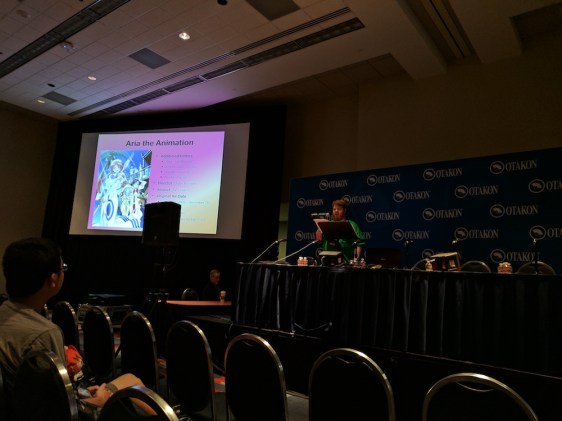
Due to a busy schedule this year and some mishaps on my part, I was unable to attend as many panels as I would have liked. However, this means I can talk about ones I did see in greater detail!

(I also didn’t have any panels this year. Better luck next time?)

The first was “Romance and Abuse in Shoujo Manga,” which looked at many of the bad boys of shoujo and how their behavior can reflect an often implicit hand-waving of abusive relationships. It looked at both works that ignore its characters’ abusive behavior towards their partners, as well as those that call the characters out on it. The presenter also took time to point out the difference between enjoying something as fiction vs. understanding how it would play out in reality, so it’s not as if it was an automatic admonishment of the audience’s tastes. I thought it was a strong panel overall, but it could be taken to the next level. Perhaps it could even go into understanding why the trope of the abusive boyfriend as lovable partner is so popular and occurs in so many well-received anime and manga.

I would also like to compliment the presenter on giving her stamp of approval to how the series Kiss Him, Not Me approaches the subject of abuse, because while the series is thoughtful in a lot of ways, its initially flippant handling of weight and beauty can really turn people away—even I was put off by it. The fact that the presenter used it as an example showed that she wasn’t trying to automatically write off certain series but was actively trying to figure out what messages these shoujo series send.

Another panel I attended was “Iyashikei: Animated Healing.” It focused on the so-called healing genre of anime and manga, explaining the emotionally therapeutic aspect of such works and why they garner such loyal fans. It was a very thorough panel that showed a wide variety of series that can be considered iyashikei, including both classics and genre-bending examples. One thing the panel didn’t get into but I would have liked to see was the tendency towards an assumed male viewership for healing anime. Still, it was well-presented and informative, and I’d look forward to checking it out again.

Screenings

I had the opportunity to see two films, one of which was a world premiere. I’ve written more extensive reviews for both.

In This Corner of the World

Eureka Seven Hi-Evolution 1

Interviews

I also interviewed a few of the illustrious guests at Otakon! This year, it was the dynamic seiyuu duo of Furukawa Toshio and Kakinuma Shino, as well as an interview with the director of Eureka Seven, Kyouda Tomoki.

Final Thoughts

The move to Washington DC is the best decision Otakon has made in years. There are very few drawbacks I can think of, outside of a sentimental attachment to Baltimore (and its delicious crab cake truck), but I know that my experience is not necessarily shared with everyone else.

Second, you want to hear other random thoughts about the con, I also appeared on a post-Otakon podcast over at Ani-Gamers. We recorded it right after the con closed on Sunday!

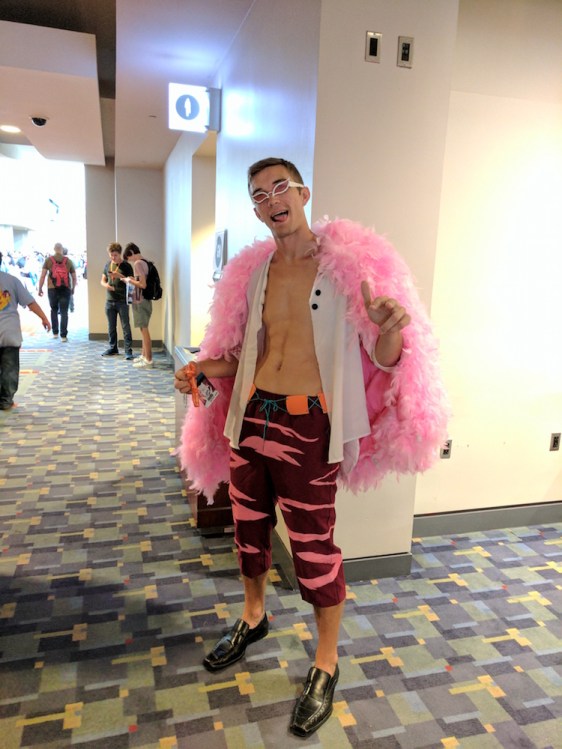
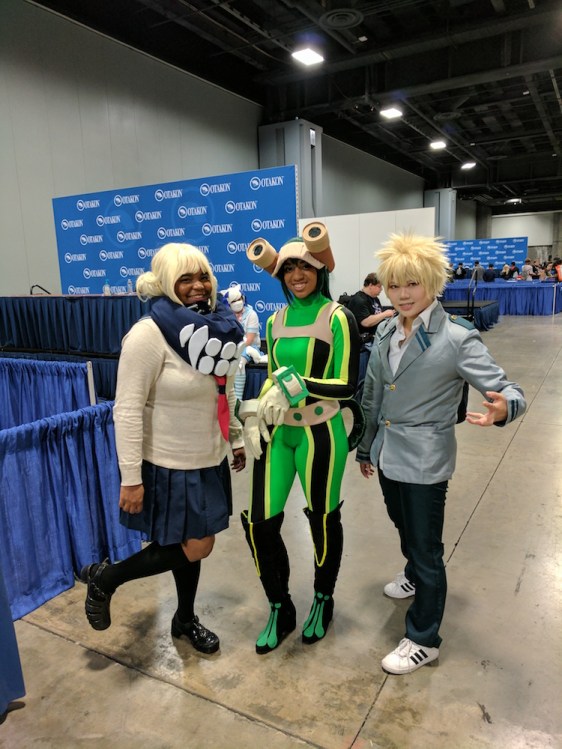
To end this report, here are some cosplay highlights, as is Ogiue Maniax tradition.

Save

Save

Save

Save

Save

The Star that Shines Brightest: Thoughts on the Aikatsu! Five-Year Anniversary Crossover

“Five years of Aikatsu! sounds strange. Sometimes, the series seems like it’s been around forever. Other times, I remember it as one of the many young upstarts nipping at Precure‘s “anime for young girls” throne. However my feelings sway, the reality is that the show is long enough now to have a mega crossover event.

In episodes 69 and 70 of Aikatsu Stars!, the characters if the latest series encounter their predecessors from seasons past. While there are plenty of interactions across the cast, the main focal point is how heroine Nijino Yume meets her protagonist senpai, Oozora Akari and Hoshimiya Ichigo.

One thing is crystal clear after these episodes: out if all three main characters, Ichigo is by far the most memorable and the most meme-able.

That’s not to say that Akari and Yume are bad characters or uninteresting. However, everything about Ichigo leaves an impression. Like in so many other franchises or enduring works, being the original confers a kind of aura of greatness. Whether it’s Amuro Ray from Gundam, Superman, or Cure Black and Cure White from Precure, there’s a sense of reverence for being the first.

But it’s not just being the inaugural protagonist that elevates Ichigo; it’s that she comes across as amusingly superhuman compared to the other two. Like Cure Black and Cure White in their own crossover specials, Ichigo is portrayed as the strongest. She scales cliffs with ease. Her skill with an axe is so notable that the crossover puts special emphasis on it. I’m fact, nowhere is the animation as lovingly handled as the tree-chopping scene, as the anime plays with dynamic angles, fluid animation, and perspective. Yume and Akari recede into the background in the face of Ichigo’s might.

If you look at the S.H. Figuarts figure for Ichigo, she actually comes with an axe. It’s an identifying element for fans. What would Akari and Yume come with? It’s less obvious. One might argue that they’re more subtle as characters, and that this is a strength, but even Cure Black and Cure White don’t overshadow their Precure successors this much.

It might sound like I’m being critical of the franchise for not developing its later heroines more, or of the crossover episodes for not doing a good enough job, but I’m not. I found the crossover episodes to be a fun celebration of all things Aikatsu! I especially enjoyed seeing the previous S4 (Yume’s senpai group before she got to the top of her school) and Soleil (Ichigo’s group) perform. It was also great to see my favorite, Ichinose Kaede. My thoughts on Ichigo are more of an observation.

On a final note, I thought the character designs for Aikatsu! and Aikatsu Stars! would clash more, but they really don’t. I think they made the original Aikatsu! girls’ faces a bit rounder to make the different casts more visually cohesive. This is generally the sign that a crossover knows what it’s doing.

This post was sponsored by Johnny Trovato. If you’re interested in submitting topics for the blog, or just like my writing and want to support Ogiue Maniax, check out my Patreon.

Otakon 2017 Interview: Furukawa Toshio & Kakinuma Shino

At Otakon 2017, I sat down with a husband-wife duo who are also two veteran voice actors of the anime industry. Furukawa Toshio is probably best known for playing Piccolo in Dragon Ball Z, while Kakinuma Shino was Naru in Sailor Moon (Molly to dub fans!).

I did not have enough time to ask any Piccolo questions, but if you love giant robots it’ll be worth your while.

Mr. Furukawa, Ms. Kakinuma, thank you for this interview.

My first question is to Mr. Furukawa. You played the role of Kenta in Mirai Robo Daltanias, so you had experiencing working with Nagahama Tadao. What was it like working with him? 

Furukawa: I actually worked with Mr. Nagahama before Daltanias, on The Rose of Versailles. But the time of Daltanias was during the super robot era, with the iconic huge robots in Japanese culture. He brought me in saying, “You know, we have a role for a prince for you. He’s a really good-looking character. Why don’t you come in?” So that’s how I came on the boat.

He was a very gentle person, and as a director he never stopped smiling. He was a very kind figure.

I’d also like to ask you about a different, maybe very different, director: Tomino Yoshiyuki. What was it like working with him as Kai Shiden in Mobile Suit Gundam?

Furukawa: Mr. Tomino is on the opposite spectrum, I’d like to say. He is relatively the stricter type. He’d give long lectures when we were young and starting off with First Gundam. He was known as the scary kind of director.

My next question is directed to Ms. Kakinuma. When it comes to anime based on manga, oftentimes anime-original stories are considered to be not as important or significant. But the romance between Naru and Nephrite is considered a fan favorite. What was it like voicing Naru for that story?

Kakinuma: When we were voicing for Sailor Moon, unlike some of the works now where there’s a manga established, we were doing it at the same time that the manga was going on. Some of the people who worked on the anime didn’t even know that romance doesn’t happen in the manga. So when we voiced it, we were doing it as if it were canon.

You’ve both been in the voice acting industry in Japan for a long time. How do you feel it’s changed over the course of your careers?

Furukawa: When I began, “voice actors” not really a thing. We were a subgenre of the bigger category of actors, where there were actors, stage actors, etc., and voice actors were part of the mix. During that time, we were not well recognized. If you look now, though, you have voice actors appearing on TV. I’ve even appeared on TV myself. I’d like to say that we’ve gained a kind of citizenship. We’re now more recognized.

Kakinuma: Recording has changed from when I began until now. For example, when I first started, we were voicing things that were on film, projected. When a part was over, we would have to reel in the film to record again if we needed to. Now, you don’t have that “reeling in the film” time; you can just click and go back to your previous scene. It saves a lot of time.

It’s normal now to see a kind of timeline on the bottom of the screen showing where you are in that span. By going to that, you don’t need a sense of timing anymore. But back then, since there were no timelines whatsoever, we needed a kind of specialized skillset.

Furukawa: TV equipment also changed. For example, nowadays we have multidirectional digital surround sound, which gives you the ability to hear all around you from all sorts of different channels. But back then, we didn’t have any of that, so we expected everyone to hear from the two speakers. Everyone speaking at the same time would be the same as mixing everything together. Now, if you did that, you might not get the same experience, so you need to split the channels in recording. So technology has advanced, but this has gotten us to take additional time in the recording process.

My last question is about Muteki Robo Daiohja, another giant robot series. What was it like working on it compared to Daltanias?

The biggest difference is that, while they’re both in the era of prolific super robots and space and everything, Daiohja is kind of a parody. Although they’re both similar—I got to play a prince in both anime—the biggest difference is that Prince Mito’s name derives from Mito Koumon, the very famous Japanese period drama about a prince taking out all the evils in his era. Daiohja had a lot of these elements. The characters Skad and Karcus came from Suke-san and Kaku-san from Mito Koumon. Everything about it was pretty much a parody of Mito Komon, so that’s the biggest difference I felt.

Thank you again for the interview. I look forward to your continued successes in your careers.