OGIUE MANIAX

Anime & Manga Blog | 50% Anime Analysis, 50% Ogi

Best Anime Characters of 2016

BEST MALE CHARACTER

bestanimecharacter2016-yurakuteiyakumo

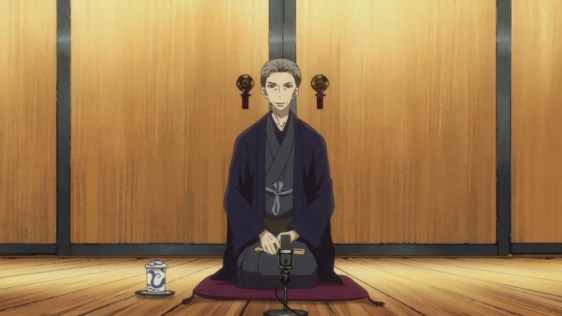
Yurakutei Yakumo, aka Yurakutei Yotarou (Showa Genroku Rakugo Shinjuu)

I’m fascinated by the idea that people change when they’re onstage, that they can almost see their “performer” self as a wholly different persona. There are plenty of real-world examples of this, from Freddy Mercury to Magic Johnson to Umehara Daigo, and within anime this past year we saw a couple as well. The best most recent example is probably Katsuki Yuri from Yuri!!! on Ice, but I think an even more amazing case of this is the eighth Yurakutei Yakumo.

Whether it’s as a young, frail boy, an overly serious adult, or a sneering wizened old man, Yakumo lives a compelling life full of equal parts friendship and struggle with his own identity. But when he’s performing his rakugo, it’s clear that there are elements buried deep within himself that come to the surface. His performances, the subtle changes he makes to play different characters within the same story, feel especially real. The fact that he’s so reserved in his actual life but excels in telling dirty stories when in front of a crowd encapsulates all that he is.

BEST FEMALE CHARACTER
bestanimecharacter2016-shidarehotaru

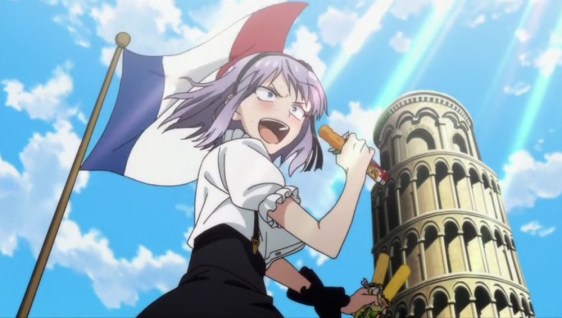
Shidare Hotaru (Dagashi Kashi)

Appearing in the very first anime season of 2016, Shidare Hotaru made an immediate impression on me. Her striking appearance and intense expressions struck me like lightning. More importantly, her endless fervor for inexpensive Japanese snacks is something I relate to on an equally deep level. All too often, when people are interested in food, it comes more from a desire is to chase only the best eats, to become one of the elite, instead of appreciating everything the world has to offer. Hotaru isn’t like that. She truly loves all dagashi from the bottom of her heart.

Ironically, she’s a rich girl, which plays on one of the classic tropes of Japanese fiction.

What’s more, thanks to Dagashi Kashi, my recent trip to Japan this year involved searching for all sorts of Japanese munchies. Let it be known that Corn Potage Umaibou are one of mankind’s greatest inventions, and that we have Shidare Hotaru to thank for helping to spread the gospel of dagashi.

Final Thoughts

2016 was actually full of excellent characters who went the full gamut from realistically subtle to hyper-real dynamos. It’s what made deciding best characters especially difficult, and something I mulled over until the very last second. Even after solidifying the picks in my head, I could still sense my own hesitation. However, what I think ultimately brought me to pick Yakumo and Hotaru is that, even though they’re very different people, the flames within their souls burn brightly for their chosen passions. Incidentally, those passions are quite similar themselves. Rakugo and dagashi are traditional enjoyments of the common man in Japan that have both become dying arts in a certain sense with the movement of the times. How does one adapt and change while preserving the spirit of these cultural artifacts? That’s the fight both Yakumo and Hotaru are in, and they’ll go down swinging if they have to.

Save

Save

Save

Save

Save

Save

Save

Save

Christmas Feast!

Save

[Anime Secret Santa] Queen Millennia, Ah-Ahhh, Savior of the Universe

queenmillennia-millennia

NOTE: This review is part of the 2016 Reverse Thieves’ Anime Secret Santa Project

While I don’t religiously embrace the works of Matsumoto Leiji, I consider myself a loving fan. The Rintaro-directed Galaxy Express 999 film is far and away my favorite work of Japanese animation ever, and the gravitas-laden feel of Matsumoto’s manga never ceases to draw me in. When approaching the film adaptation of Queen Millennia, however, I came to it with a vague inkling that I should expect something different. Years ago, the film was discussed by the podcast Anime World Order, and the main thing I remembered from that review is the fact that its director, Akehi Masayuki, is not exactly known for subtlety. With films of bombastic super robots and handsome shounen heroes to his name, my expectations could be summed up as “Matsumoto through the lens of wild action and spectacle.”

Queen Millennia certainly lives up to that expectation, but what I find more prominent is just how discombobulated the entire film feels.

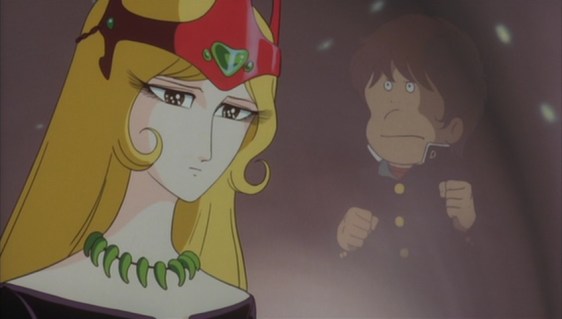
The story of Queen Millennia is set in the far-flung year of 1999, and centers around a woman named Yukino Yayoi, who, unbeknownst to her co-workers, is actually the secret alien queen of the Earth. Having overseen the Earth for the past 1000 years as one of many millennial queens dating back to time immemorial, Yayoi (real name Promethium II) is set to abdicate her position for the next successor and return to her home planet of La Metal. However, La Metal has its own plans and now seeks to destroy the Earth. Queen Millennia must now defend her adopted homeland from her own people with the help of a young boy named Hajime.

queenmillennia-meteorites

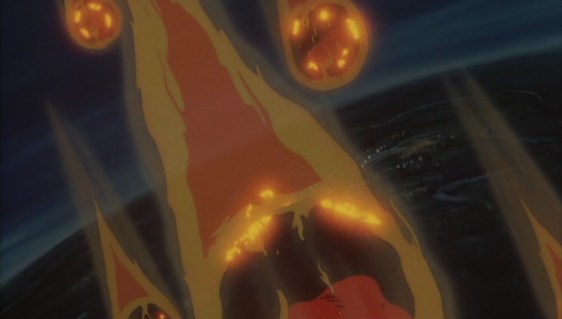
There is a generally haunting quality to Matsumoto Leiji works that appear even in adaptations, and Queen Millennia is no exception. Scenes of destruction, pans over wide swathes of land and outer space give the impression of an expansive universe with a great deal of history. However, at numerous times during the film, the atmosphere feels as is if it all but takes over the film, sacrificing the coherency of the narrative along the way. There are numerous plot points in the film come too abruptly and then fade away, as if the viewer is only given the Cliff Notes version of events.

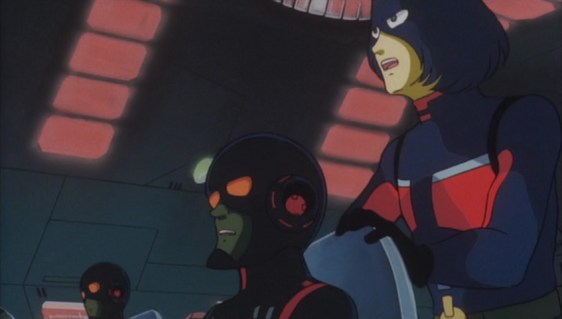
We learn almost immediately that Yayoi is Queen Millennia, a role whose purpose is woefully under-explained. When the soldiers of La Metal attack the Earth with their futuristic spaceships, they’re held back by the weapons of Earth, including fairly outmoded ones such as harpoons and catapults. For some reason, despite ruling over the Earth secretly for thousands upon thousands of years, and even bringing up the fact that humankind is violent and prone to war, the La Metallians mention that they did not expect the people of Earth to have spears and rocks. The film picks up towards the end, especially when the spirits of the former Queen Millennias are summoned, and they each have secret space battleships buried in the Earth with their faces emblazoned on the bows, but that sort of energy and bizarre presentation feels like it should have come much earlier.

queenmillennia-matsumoto

queenmillennia-ship

I suspected that Queen Millennia was suffering from being a film adaptation of a longer series, and I was right. There was both a five-volume manga series by Matsumoto, as well as a 42-episode anime. If you go to Wikipedia and read the plot summary, it makes a lot more sense and gives the impression that many important plot points are set up and executed over a long period. The Queen Millennia film, in condensing all of that into two hours, leaves a good deal of story by the wayside.

However, this issue cannot fall squarely on the shoulders of being a “summary movie,” because other even longer Matsumoto works have been successfully adapted to film. The aforementioned Galaxy Express 999 film takes a massively long-running manga and anime and transforms it into a feature-length work, but the compromises made for time help connect the narrative rather than scramble it. They visit far fewer planets, but the ones they do are directly relevant to the events at the climax of the film. Notably, when they reach the last stop, the name of the planet is changed from “La Metal” in the original to something that effectively drives home the major plot twist while also transforming what took minutes in the anime TV series into mere seconds. While I haven’t actually taken a look at the TV series or the manga of Queen Millennia, very little gives me the impression that it has these sorts of considerations built in.

Ultimately, I think the positive qualities of Queen Millennia are its excellent atmosphere, its strong emotions, and its visual spectacle. The issue with it is that these qualities come at the expense of a coherent story, and much of the time devoted to showing fights or the world could have been used to provide a better sense of the stakes at hand and the significance of Queen Millennia herself much earlier in the film. By the time the film starts to pick up, it’s already about two-thirds over, and it leaves a feeling of what could have been.

Last note: What is going on with this guy’s hair helmet? He’s taking the Jotaro hat-hair thing to a whole other level.

queenmillennia-hairmask

Save

Save

The End of Sabagebu!: A Shoujo Manga of Girls, Guns, and Greed

sabagebu-smile

Sabagebu!: Survival Game Club ended this month, and it’s one of my favorite shoujo manga of the past few years. Check out my thoughts on this bizarre series at Apartment 507, and why I think it has a place in manga history.

Ichigo x Rukia: The Victim of Soap Opera Tactics?

Warning: Bleach Ending Spoilers

I’ll be upfront: I shipped Ichigo x Rukia.

From the very start of Bleach I loved their dynamic. The continuously growing friendship, the humorous arguments, and both the establishment and reinforcement that their bond was something special made me feel that, if anything was true about Bleach, it was that they would end up loving each other and being closer than anyone could possibly imagine.

While romantic love is not the only kind out there, it’s clear from the ending of Bleach that creator Kubo Tite had a different idea in mind. As seen in the final chapter, Ichigo ends up with childhood friend Orihime, and Rukia ends up with a childhood friend of her own, Renji. While those two relationship paths were certainly developed throughout the series, it still seemed jarring to me because I still found the connection between Ichigo and Rukia to be so much stronger and more profound. Because I wasn’t deeply invested in Bleach by the end, these canon pairings didn’t jar me into any sort of indignant fervor, but they nevertheless left me a bit puzzled.

In a conversation with Kate from the Reverse Thieves anime blog about when fans and creators disagree in terms of romance in particular fictional titles, she pointed towards the soap opera community. As love triangles and changing relationships are hallmarks of soap operas, they inevitably create strong groups of shippers for any and all combinations. However, when there is a particularly fervent fanbase that the creators disagree with greatly, one common tactic is to separate the two characters so that they are not allowed any on-screen time together. The hope (though often a futile one) is that it will quash the support base for that particular pairing and promote the ones that are being shown.

Upon first hearing about this, I laughed at it as an amusing quirk of soap operas, but the more I thought about it the more it started to sound like exactly what happened with Bleach. If you look at early chapters of the manga, Ichigo and Rukia are around each other often, and their interaction is the core of what what makes the series endearing. When Rukia gets taken to Soul Society and Ichigo follows to rescue her, there’s a sense that something has been kindled between them, even if it might not necessarily be romantic feelings. It’s no wonder so many fans (including myself) latched onto this idea.

However, when looking at later developments in Bleach, Ichigo and Rukia are rarely seen together. I might be mistaken, but I think the last time that they spent any significant time together is after Soul Society when Rukia is supposedly gone but shows up at Ichigo’s high school once more, new and improved. While seeing Ichigo’s reaction to Rukia’s return is another “evidence” moment, what’s more important here is that, in just about every arc after this, Ichigo and Rukia are usually fighting separately. More often than not, Ichigo is with Orihime, and Rukia is with Renji. While Rukia had her own arc of being taken away to another world, Orihime gets the same treatment in Hueco Mundo. Even in the final battle against the ultimate villain of the series, Yhwach, these combinations are perpetuated.

Of course, I don’t actually know what went into Kubo’s thinking, but it just plain stands out to me that Ichigo and Rukia have so little page time together after a certain point in Bleach. Although ultimately how a relationship develops in fiction is the product of how creators write the characters, it’s as if Kubo had ended up smothering any additional opportunities for fans to enjoy and revel in the Ichigo/Rukia dynamic which made the series so strong initially. It feels like the only time we see them together again is in that final chapter when the two are already happily married to others and with kids of their own. The other remnant of their bond is when their respective children meet, but that is only a fragment of a new potential beginning between two similar-yet-different characters.

If you liked this post, consider becoming a sponsor of Ogiue Maniax through Patreon. You can get rewards for higher pledges, including a chance to request topics for the blog.

Idol Activities are Serious Business: Aikatsu Stars!

aikatsustars-op

In contrasting the different eras of the popular idol anime series Aikatsu!, I once used a JoJo’s Bizarre Adventure analogy. If the original heroine Ichigo is equivalent to Jotaro, then her successor Akari is the Josuke of Aikatsu! If this comparison holds water at all, then the latest series, Aikatsu Stars!, must be the Steel Ball Run of the franchise, and therefore its main character, Nijino Yume, must be its Johnny Joestar. In other words, it’s a new world, a new setting, and all ties to past series have been more or less severed.

It’s unclear to me whether this “reset” was necessary, but then again it’s how the Precure franchise has rolled for the past 14 years. Whatever the case may be, to the discerning eye Aikatsu Stars! reveals itself to be a different beast. While it shares plenty of similarities to the Aikatsu! of years past, there are enough changes to make it feel like a new and almost separate entity.

Aikatsu Stars! follows Nijino Yume as she enters the prestigious idol school, Four Stars Academy, in order to chase after her idols, the mega-popular group known as S4. What she lacks in experience she makes up for in enthusiasm, as well as a strange potential that seems to only manifest itself when she’s directly onstage.

aikatsustars-hmph

The summary above mirrors both Ichigo and Akari’s own stories, but where it begins to diverge is that Aikatsu Stars! feels like a more serious story with higher stakes. This isn’t to say that the show is dark or cynical; they’re not poisoning each other and putting thumbtacks in each others’ lockers. However, whereas Ichigo is confronted in the early episodes by her classmate Ran’s fairly cutthroat attitude and quickly overturns it, I sense a much greater emphasis on rivalry in Aikatsu Stars! Adding to this feeling is the impact of S4 themselves. As the premier female idols, they give off the impression of being nigh-untouchable, their minds occupying a world almost beyond the reach of regular mortals. Not even #1 idol Tachibana Mizuki in the original Aikatsu! quite has that aura.

The most noticeable change with Aikatsu Stars!, however, is the new character design aesthetic. The girls and guys of Aikatsu Stars! have smaller frames and rounder features, giving them a look that feels to me be to more “gender-neutral.” What I mean is, the original Aikatsu! had designs that I see as closer to shoujo manga. Their large eyes weren’t just expressive, they were almost like miniature planets. With Yume and the rest of the Aiaktsu Stars! cast, the designs more resemble a balance between girls’ anime and bishoujo anime for guys. It’s effectively The iDOLM@STER meets Peach-Pit, the artist duo responsible for works ranging from Shugo Chara (shoujo) to Rozen Maiden (seinen featuring cute doll girls).

aikatsustars-s4

While the characters are all different and look different, there’s one semi-subtle link to the franchise’s lineage, which is that the girls of SF4 match the main four in original Aikatsu in terms of hair color. Blond, blue, red, and brown are all present, and although their personalities don’t really line up at all, it can’t possibly be a coincidence.

There are a couple of other differences which I think make Aikatsu Stars! rather interesting. The first is the greater prominence of male idols. Yume meets a boy who turns out to be a member of M4, the top group from the academy’s male division. The previous Aikatsu! as far as I know only barely bothered in male characters. Is this the influence of successful male idol spin-offs, such as Pretty Rhythm: King of Prism?

aikatsustars-sensei

The second is that the series implies a greater and more diverse range of possible idols. Sure, Aikatsu! has things like an American idol, and one who likes to dress as a vampire. But Aikatsu Stars! has a teacher who has a rock background, and the first ending theme is an S4 dubstep song. What other possibilities exist? I want to find out.

Aikatsu Stars! feels more tightly focused and more dramatic, but I do wonder if this comes at the cost of the more lighthearted fun of the original series. That being said, there’s nothing so far that tells me it’s going to plummet or lose its footing. I look forward to seeing Aikatsu Stars! build on itself, and even if the episodic hijinks don’t feel as strong, it looks on-track to being a more polished work overall.

This post was sponsored by Johnny Trovato. If you’re interested in submitting topics for the blog, or just like my writing and want to support Ogiue Maniax, check out my Patreon.

Save

Pokemon Sun & Moon: Why Ash Ketchum’s Design Was Updated…Again

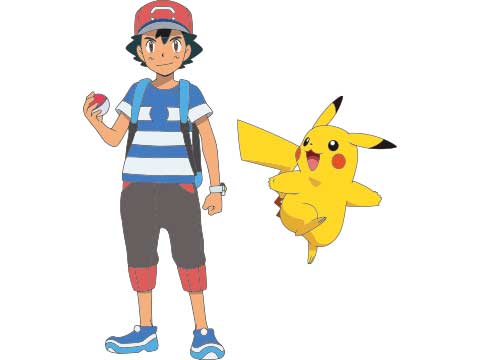
In 2010, the Pokemon anime decided to spice things up a bit by modifying its character designs. More than a simple change of wardrobe, the denizens of the Pokemon TV world had changes to their faces and hair, and the result was an Ash with green eyes. With the release of Pokemon Sun & Moon, the characters have transformed once more, and this time it’s even more drastic than before. While it’s not like Ash is seven feet tall with a goatee now, it looks noticeably different compared to his adventures in the Kalos region. With such a major change, the inevitable question is “why?”

ash-sunmoon

Fortunately, I just so happen to have answered this question the last time around, and it turns out that the answer applies just as well, if not better.

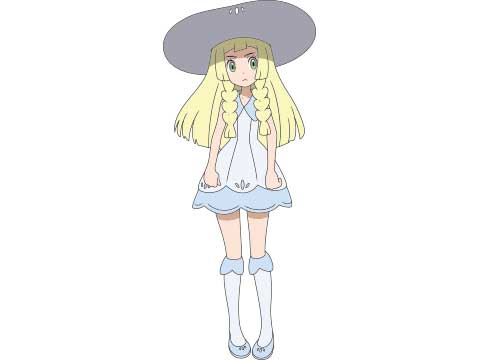
At the time when green-eyed Ash was revealed, I wrote a post explaining how this was a clear attempt at making the characters in the Pokemon anime match more closely with the character designs of the games. The main artist for Pokemon has always been Ken Sugimori, and while the designs of the anime characters were based on his work back in the mid to late 90s, he’s continued to refine his art style over the years. If you look at Ash and other characters in Sun & Moon, they veer even closer to Sugimori’s current aesthetic. Characters appear rounder and softer, and the way their eyes are drawn have that distinct Sugimori look. This is probably most evident in the new Alola region characters, such as Lillie.

lillie-sunmoon

Anime Character Design

264px-sun_moon_lillie

Game Character Design

That explains a good chunk of why Ash’s adventures in Not-Hawaii look so far-removed from past generations of the anime, but another significant one is that a simpler art style means being easier to animate. That’s not to say that the old Pokemon anime styles were especially complex, but being softer and more simplified in this way means the animators can put more effort into making things move well instead of making sure each character has all of their necessary details.

If you liked this post, consider becoming a sponsor of Ogiue Maniax through Patreon. You can get rewards for higher pledges, including a chance to request topics for the blog.

Save

‘Tis the Seasoning: Ogiue Maniax Status Update for December 2016

Is it December already?! It actually feels like I just got done writing the update for November, and now we’re at the end of the year. Much love to all of my sponsors on Patreon for being with me for the entire year!

General:

Johnny Trovato

Ko Ransom

Alex

Diogo Prado

Viga

Yoshitake Rika fans:

Elliot Page

Hato Kenjirou fans:

Elizabeth

Yajima Mirei fans:

Machi-Kurada

November was the 9th anniversary of Ogiue Maniax, so I wrote my thoughts on how the blog’s been going and where I think it’ll head next. I’ve since reflected a bit further on what I said there. While I primarily look at Ogiue Maniax as a place to share thoughts and ideas, I think I’ve been a little sparse in terms of denser, heavier content as of late. I’m looking to write better and with greater insight as I move forward, but also balancing it out with shorter, lighter posts, much like a three-course meal.

It was a long time coming, but I finally posted my feelings on the dismissal of Precure as insignificant because it’s not Sailor Moon. As a fan of both I feel like this is a recurring issue, and I hope that magical girl enthusiasts and just anime watchers in general can come to appreciate Precure better.

I also began my pseudo-series of posts about characters I love, with Inukami Kyouko from the volleyball manga Shoujo Fight. As Ogiue Maniax was built on a foundation of character appreciation, I felt that it was kind of a nice return to my roots, so to speak.

This month’s Patreon-sponsored post sees me tackle the third season of Aikatsu!, which passes the baton from heroine Hoshimiya Ichigo to young upstart Oozora Akari. I mostly talk about the idea of switching protagonists and how the series handles it.

Finally, I want to give attention to something I wrote the day before the US presidential election. Even after all the chaos that has ensued, I want people to read it and perhaps take it to heart. I think it is all too easy to want to silence others if one believes others to simply be hateful and ignorant, but that merely creates greater animosity in my opinion. It’s ostensibly an anime-related post because I talk about Legend of the Galactic Heroes!

Look forward to the rest of December’s posts! I’ve got a new Anime Secret Santa review on the way, my annual “best characters of the year” post, and more!

Friendship Never Dies: Ojamajo Doremi 16

doremi16

A sequel is a curious thing, beholden to the expectations created by the original. If you stay too close to what came before, then the work runs the risk of being a pointless retread. Stray too far, and the spirit that made the work special can fade away. Across multiple year-long seasons, the magical girl anime Ojamajo Doremi, managed to never grow stale. Between its lived-in world, genuine respect for its young audience, characters both central and supporting who truly grow as human beings, and a sharp sense of both drama and humor, it’s an example worth holding up.

But what happens when the next sequel is not only removed from the elementary school days of the anime, but also in another medium entirely? That question is what brings me to the main topic of this review: Ojamajo Doremi 16, the first in a series of light novels that shine the spotlight on Harukaze Doremi and her friends in the exciting new world of high school.

At the end of Ojamajo Doremi Dokkaan!, Doremi and her classmates graduate from elementary school. However, rather than continuing on into middle school together, Doremi and her closest friends all go their separate ways in pursuit of their dreams or in support of their loved ones. At the same time, while they had spent the last four years as witch apprentices, they ultimately decide to forego their abilities as they stood on the cusp of becoming full-fledged witches, preferring to live as humans. Three years have passed, and now high school is on the horizon. Doremi discovers that her old friend Senoo Aiko is in town, having moved back from Osaka, and together with Fujiwara Hazuki have reformed their original trio. Not surprisingly, their reunion also becomes a new encounter with the Witch World they had left as kids.

One of the challenges of the light novel comes in how to convey that these are the same characters as the ones from the anime, only older. To this end, the vocabulary of the first-person narrative of the light novel, Doremi’s that is, effectively conveys the idea that she’s matured quite a bit. At the same time, it is clearly Doremi speaking, as her voice sounds very close to the same girl from back then, whose clumsiness belied a special talent for inspiring others. The other characters share similar changes. It can be hard to imagine them as their current selves and not just picture their smaller selves from the anime, though the updated character designs from Umakoshi Yoshihiko (who worked on the Doremi anime originally) certainly help.

Another sign of this change comes in the form of romance. Love for the main cast was never much of a focus for the Doremi anime, and even in this light novel it doesn’t play the most major role, but it underlies many of the other stories that take place. Hazuki’s close friendship with misunderstood delinquent and (bad) trumpet player Yada from their elementary school days has blossomed into a full-on relationship. Aiko is mentioned as having had some boyfriends, but is currently single. Kotake, the boy who began the series picking on Doremi but clearly fell for her by the final TV series, has grown tall and handsome, as well as becoming the star of the high school soccer team, and their being 16 potentially allows them to communicate in ways that they could not as immature kids.

While there are plenty of differences, the actual feel of Doremi 16 in terms of how its stories are told feels right at home. Rather than try to tell one grandiose plot in the span of its 300-odd pages, the light novel tells many smaller stories that both stand alone well and build off of each other to varying degrees, creating the sense of connection between characters that Doremi as a series is so good at. One of Doremi‘s greatest strengths was its excellent side cast, and in Doremi 16 you get to find out how they’ve also grown, whether because they’re the focus of these new stories, or because they simply exist as part of the world.

Fiction-loving Yokokawa Nobuko became a successful manga creator in middle school alongside artist and friend Maruyama Miho. Segawa Onpu, idol and former magical girl antagonist, has struggled with the transition from child star to full-blown actress. Doremi 16 brings you right back into their stories, and it feels immensely satisfying catching up with them, and it never gives the impression that the light novel is simply asking its readers to wax nostalgic purely for its own sake.

At the same time, however, I have some doubts as to whether someone could approach Doremi 16 without any prior experience with the series. I do think it’s excellently written in general, but it relies heavily on a cast of characters that have been previously established through years of anime. While I believe that the light novel quickly sums up its characters well so that you can get an immediate sense of who they are, I’m not sure how much it would matter to a complete newbie to the Doremi universe that Nagato Kayoko, who once suffered from a crippling fear of going to school, has now actually won awards for academic excellence. New characters are established, but the return to the town of Misora where Doremi and the others live is a significant factor in this book’s appeal.

That might appear to contradict the notion that Ojamajo Doremi 16 isn’t just for nostalgia, but it would only truly be a nostalgia-focused work if its story simply dwelled on the good times of the past. Instead, Doremi 16 actively builds on the paths that the girls of Ojamajo Doremi take towards the future, and it encourages readers to similarly reflect on their own lives. Although the three years from elementary school to high school isn’t nearly as long of a wait as the seven-year lull prior to the light novel, I can imagine that the high school world of Doremi 16 is a reminder that time brings about change, and that friendship and discovery are on-going processes whose magics are well worth exploring.

If you liked this post, consider becoming a sponsor of Ogiue Maniax through Patreon. You can get rewards for higher pledges, including a chance to request topics for the blog.

Save

Save

Save

Sound! Euphonium, Tesagure! Bukatsumono, and Intimate Conversations

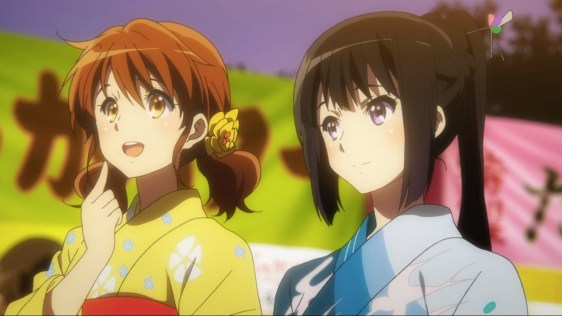
soundeuphonium-kumikoreina

Ever since the end of Sound! Euphonium Season 1, I’ve found the conversations between protagonist euphonium player Kumiko and trumpeter Reina remarkable in their intimacy. While the acting is overall solid as each member of the Kitauji High School music club brings personality and history, there’s something noticeably different when it comes to those two.

Often when voice actors in anime are playing their roles, there is a sense of performance. This is not a bad thing, at least not inherently. They are, for all intents and purposes, actors on a stage bringing their characters to life. When Taki-sensei speaks with this slightly hoarse yet alluring voice, for example, one gets the sense of a teacher who’s dedicated, clever, and expects the best of his students, but seems to carry an internal emotional pain at all times. When Kumiko and Reina are talking to other characters, one senses the way in which Kumiko is constantly trying to find herself while Reina’s dedication and drive are ever-present. Together, howver, it’s as if their outer-facing selves begin to crumble, and we’re witness to the hush tones of a more naturalistic conversation between close friends (or something more).

I do not know how Sound! Euphonium accomplishes this. Perhaps they do something different in terms of the recording environment or the voice direction. What I can say is that this style of dialogue reminds me of a certain type of Japanese animation: the off-the-cuff humor shows that began with gdgd Fairies and include series such as Straight Title Robot Anime and Tesagure! Bukatsumono.

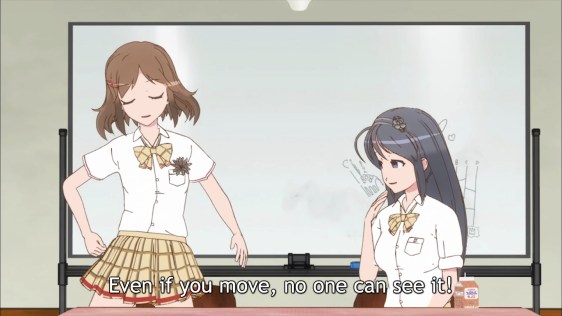
tesagure-cantsee

Made “on the cheap” using the 3D modeling and animation program “Miku Miku Dance,” these shows tend to feature offbeat comedy culminating in a special “improv” section. For example, in Tesagure! Bukatsumono (currently the best show of its kind in my opinion), the show is about a club where characters try to imagine what other school clubs would be like. In the middle of every episode, there is always a scene where the girls are supposed to come up with never-before-seen version of familiar clubs (like a baseball club where everyone has to dress fashionably), an in these moments the audio noticeably changes. To start, here’s a lot more mumbling. And where anime normally has characters speak and even interrupt each other so perfectly that you can’t call it anything but “staged” (because of course it is), these improv scenes have characters talking over each other like it’s a radio show. The fact that the actors often end up breaking character because of the success (or failure) of their own jokes makes it feel that much more like a private conversation that we the viewer are happening to eavesdrop on.

That’s more or less the feeling I get when I listen to Kumiko and Reina talk to each other. Whenever they’re together, it’s as if the rest of their world vanishes, and we’re privy to a space where only they reside. In it, even their outer selves fall away, and what we’re left is with is openness and comfort.

If you liked this post, consider becoming a sponsor of Ogiue Maniax through Patreon. You can get rewards for higher pledges, including a chance to request topics for the blog.

Save

Save

Save