[Contest] Win a Love Live! School Idol Festival Swag Bag!

llsif2016-swagbag

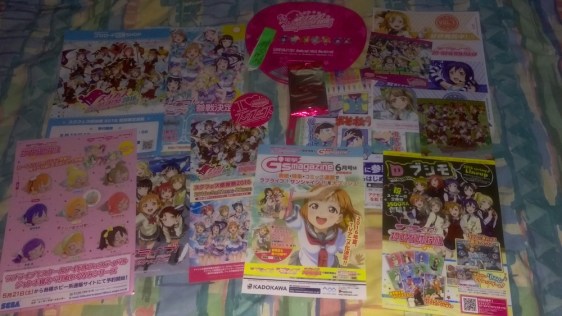
I recently attended “Love Live! Sukufesu Kanshasai 2016″ in Japan, and I managed to get an extra bag of freebies. Now, I want to give it away to my readers.

All you have to do is show why your favorite Love Live! character and why they’re your favorite. Write an essay, take a photo, draw fanart, make videos, I’m leaving it up to you to express your love! They don’t even have to be a main character; moms and alpacas are valid too! And no, picking Hanayo won’t give you a higher chance either. I want to see and feel your passion, not just agree with my tastes.

Submissions can be emailed to ogimaniax at gmail dot com, and are due by July 9, 2016 11:59pm EST.

However, as thanks for being my patrons (and many of you have been with me since the beginning), I am prioritizing my Patreon supporters. If you’re one of my patrons, you will have a much higher chance of winning the prize; however, it’s not impossible to get it otherwise.

I want to emphasize that this is not an attempt to get more Patreon supporters. I merely want to thank my patrons for supporting me. If you’ve been thinking about joining the Ogiue Maniax Patreon for other reasons (perhaps you enjoy my writing), then by all means go ahead. Also, pledging more does not give you a higher chance of winning. You can be pledging at 1 cent or 1 million dollars and you would have the same chance as every other patron.

By the way, one of the items in the swag bag is an unopened card from the Love Live! Card Game. I’ve already opened mine, and it’s a Maki card. I know a lot of people are Maki fans, so if you want that one instead just tell me and I can switch them no problem.

Good luck, and may the Loveliest, Liveliest fan win!

Fan vs. Official: Bokura no Love Live 12 + Love Live! School Idol Festival Thanksgiving 2016

madmaki-small

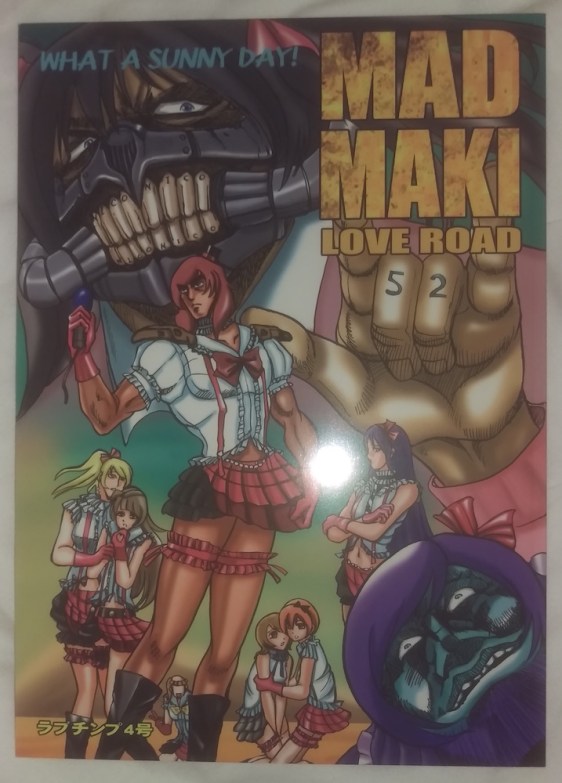
In my most recent trip to Japan, I attended two different Love Live! events in one day. The first was “Bokura no Love Live! 12,” a doujin event. The second was Love Live! Sukufesu Kanshasai 2016″ (School Idol Festival Thanksgiving 2016) in Ikebukuro, an official event held in celebration of the School Idol Festival game. The contrast between an event that revels in fan expression and one that presents everything in an official capacity is interesting to me, because I think it shows both the strengths and weaknesses of each approach to fandom.

CjB8gwqUoAEdMsY.jpg_large

Though I had the opportunity to take a look at both, a question occurred to me as I was traveling from one to the other: if I could only go to one, which one would I choose? I took this from the perspective of a Koizumi Hanayo fan. At the doujin event, I could buy Hanayo-dedicated fan comics from people I knew were fans of Hanayo as much as I am (if not more!). I found a bunch of amazing comics and parody works, and I even got a couple of amazing tote bags that might be my favorite purchases of my entire Japan trip. There’s sort of an interesting magic to buying things in person that get lose with just ordering online, and it’s enhanced when you know the person behind the table put their heart and soul into it. Overall, it was one of the best highlights of my trip to Japan.

bokuranolovelive-arisebag

However, doujinshi are, of course, not official portrayals of the characters. This is in many ways the advantage of fanart, fanfiction, etc., but what’s also clear is that the fan material feeds off of the official presentation. Much for the art at “Bokura no Love Live! 12” was clearly inspired by the images found in magazines, the mobile game, and everywhere else. There is a kind of power to official merchandise because it presents the characters at their best, but it’s also limiting because they can’t stray too far off from what is deemed “okay.”

bokuranolovelive12-doujinshi-small

For example, the shirts being sold at “Thanksgiving 2016” were all prints of existing art that could be found in lots of places, while the merchandise sold at “Bokura no Love Live! 12” felt a little more unique because they weren’t officially sanctioned images slapped onto clothing. That’s not to say official Love Live! merchandise has to look blunt and straightforward (I actually also got a swank Love Live! polo shirt just the day before these events), but they seem to lean in that direction.

Another instance of the difference between events has to do with yuri and pairings. Love Live! encourages yuri to a certain degree, but has to keep it implicit because it’s supposed to appeal to all sorts of people (and indeed I saw everything from little girls to businessmen at Thanksgiving 2016). A doujin event, on the other hand, can go as explicit as possible in more ways than one, and can even merge the innocent with the racy and have them all exist in one place. Characters can be drawn to fit the whims of the artists to a greater degree with the doujinshi, but they necessarily must feed off the source material at least to a certain extent. Nico/Maki doujinshi can go the distance, but the dynamic between them is rendered through the anime, the game, and other canon resources.

Official events also have resources on their side. One of the highlights of “Sukufesu Kanshasai 2016” was a live School Idol Festival game where nine different people played simultaneously, each one commanding one of the buttons by stepping on them. The cards being used where all nine of the μ’s girls, but with special outfits for the event, and they were surrounded in a mall by throngs of fans dancing and singing along. A doujin event really couldn’t pull that off to the same capacity, nor could they be the place to get official Love Live! Final μ’s Concert shirts, which were a popular item at both events that granted legitimacy to the wearer’s fandom.

The division between official and unofficial events can be rather gray because of how the two feed into each other. The output of fans, albeit more often in the form of monetary purchases, informs the official companies responsible for Love Live! just what the fans are into. The fans, as mentioned, take inspiration from the official material, and convert it, thus spreading the joy of Love Live! further.

It’s hard to choose between the two when both have so much merit, but ultimately I think I would have gone for the doujin event just so I could have that experience of walking around and buying fan-made works. It’s sort of the difference between attending fan panels and official panels at conventions. The official panels are where you can meet the creators, but many times they’re curated and micromanaged heavily, whereas doujinshi and fan panels can stray from the “company line” so to speak. This makes them, in my opinion, overall more interesting, but I’m well aware that all of the Hanayo rice memes required the source material to emphasize it in the most amusing ways.

llsif2016-swagbag

The last thing I’d like to talk about is actually a little card found in the bag of freebies from Thanksgiving 2016 which is a drawing of some of the School Idol Festival-original girls. Unlike The iDOLM@STER, there is a clear stratification between the main girls (be they μ’s or their successors, the new group Aqours), who are considered “Rare Cards,” as opposed to the “Normal Card” girls that are basically fodder for the former. Here, even at this official event was a small token of appreciation for the lesser idols, and a part of me wishes that someone, be they official creators or doujinshi creators, would take the next step and flesh them out. The result would be different on either side, but both would provide value in their own ways.

llsifgirls-small

PS: I mentioned a freebie bag for “Love Live! Sukufesu Kanshasai 2016,” and I happen to have an extra one. I’ll be holding a contest soon to determine the winner, so stay tuned!

If you liked this post, consider becoming a sponsor of Ogiue Maniax through Patreon. You can get rewards for higher pledges, including a chance to request topics for the blog.

Space Battleship Yamato 2199 and More in Super Robot Wars V

To celebrate its 25th anniversary, a new Super Robot Wars game is coming out in 2017. As is tradition, a number of new series are debuting, including Brave Express Might Gaine, Cross Ange, and what looks to be more Full Metal Panic! now based on either the new upcoming anime or its light novel source material. However, the biggest surprise of all has to be the debut of Space Battleship Yamato into the storied giant robot crossover video game series.

The main surprise, of course, is that Space Battleship Yamato 2199 isn’t a giant robot series. While other entries have in the past stretched the definition of giant robots, from Heroman to Juushin Liger, and others have source material in games other other media (notably the Hatsune Miku Fei-Yen), Yamato is the first to just flat out not be a robot series.

While this is the sort of exception that can get fans in a tizzy (“Is nothing sacred?!”), I think Yamato more or less gets a free pass as one of the most influential science fiction anime of all time. Its original staff was comprised of some of the luminaries of mecha anime (Yasuhiko Yoshikazu, Ishiguro Noboru, and more), and the idea of the “space opera” has had a long reach throughout Japanese pop culture history.

With this news, a new hashtag has appeared on Japanese Twitter:

It’s resulted in some iinteresting entries.

https://twitter.com/penguin897/status/739077171944165376

https://twitter.com/Nazo_no_Otaku/status/739049936243687424

The other big surprise is that Super Robot Wars V will come with subtitles in Chinese, Korean, and English. However, due to licensing, the chance of a true English release is kind of slim.

What do you think should be in Super Robot Wars? How far can the definition of mecha be stretched?

If you liked this post, consider becoming a sponsor of Ogiue Maniax through Patreon. You can get rewards for higher pledges, including a chance to request topics for the blog.

Mascot Analysis: Card Loan Girls, Moe Credit Card Loans

NOTE: This is the second of my paid posts, where I have been asked to discuss the use of anime character mascots to promote a certain service, company, or idea. As stated in my previous entry, I have not used the products in question, and can neither endorse or turn people away from them. Rather, I am writing to go in depth on the use of anime mascots, and to help spotlight the idea of their usage in general.

11 years ago, I made my first trip to Japan to study abroad. As I walked through the downtown area of my city for the first time, I noticed a branch of Mizuho Bank, the oldest bank in Japan. However, it wasn’t anything lofty like history that made Mizuho Bank stand out to me. Rather, it was the simple fact that it shared a name with Kazami Mizuho, the teacher from Onegai Teacher.

Because I was merely an exchange student, I didn’t open up a Japanese bank account, but I know I would have entertained the notion of going with Mizuho Bank just because of that tenuous anime connection. As an aside, it’s that sort of thinking that made me realize that I was most certainly an “otaku” by even the strictest of definitions.

cardloangirls

Are enough people of a similar mind? Would they base their financial choices on a love of anime and its characters beyond simply spending money on merchandise? The creation of Card Loan Girls, a site dedicated to introducing different types of credit card loans in the form of anime girls, contends that this is more than a mere possibility.

While Hikkoshi More goes with a simpler and less flashy design for its mascots, Card Loan Girls is straight up “anime as hell.” The girls emphasize cute elements with character designs that wouldn’t be out of place in a light novel or visual novel, and are knee-deep in their emphasis on kyara: a focus on character design that tries to convey a sense of liveliness purely through visual presentation.

orix

Orix Bank’s Orihara Komugi

What’s notable about the Card Loan Girls is that they all represent real banks. From Orix (sponsor of the Orix Buffaloes baseball team) to Mobit, actual companies are behind this. Sure enough, Mizuho Bank is there too. Despite my expectations, its mascot is not an attractive teacher but instead a petite student named Kingami Eira who looks something like a cat girl or fox spirit.

mizuho-bank

Mizuho Bank’s Kingami Eira

I believe that Eira’s design is supposed to invoke some kind of old spirit to go in line with the fact that Mizuho Bank is Japan’s oldest bank, and in that respect it certainly got my attention. I mean, I didn’t even know that factoid about Mizuho until I clicked on Eira’s profile page. There are many other bits of trivia throughout the site, and it potentially inspires people to learn about these banks in a manner similar to how Hetalia fans really delve deep into history. In many cases, these sorts of cute girls-as-things media franchises/campaigns try to incorporate and interpret as much actual detail into the characters’ designs (like larger guns equaling larger chests in Kantai Collection), but I simply don’t know enough about Japanese banks to actually figure that out.

mobit

Mobit’s Hino Saori

As for the credit card loan information itself, Card Loan Girls doesn’t appear to be pushing any one bank over the others. Each girl is accompanied with a long list of important information, such as who can borrow and what the interest rates are. While Mobit’s Hino Saori is the most popular according to the site, I can’t say for sure why that’s the case. Are people voting for her because they think Mobit offers the best loans, or are they attracted to her tomboy design? Given the strength of anime mascot marketing in Japan, I think it’s probably more the latter, but the fact that Saori represents an online-only loan company that seems perfect for today’s modern otaku might mean it’s actually a mix of the two worlds.

I’d like to end with a couple of questions. For those living in Japan, would you pick your credit card loan based on Card Loan Girls? For those living elsewhere, what do you think of the idea of having something as far from entertainment as possible as a loan being anthropomorphized into cute young girls? Is it the kind of marketing you can get behind, or is it perhaps a step too far?


[Apartment 507] The Charisma of Love Live! and Kousaka Honoka

S2Ep03_00354

For my seventh Love Live! Character Spotlight series I’ve written about its central heroine, Kousaka Honoka.

That means there are only two more left: Toujou Nozomi, and of course Koizumi Hanayo.

wwe_profiles_hero_cena_3

In this one, I compare Honoka to John Cena, which I think is pretty appropriate.

Potential Changes for the Future: Ogiue Maniax Status Update for June 2016

I’m back from Japan, and I had a blast! Look forward to a number of posts this coming month about my trip.

If you’re part of my Patreon (or even not!), feel free to message me or leave comments below. You can ask me anything about my Japan experience this time around. By the way, if you’re wondering what the biggest trend in Japan is right now, it’s Osomatsu-san.

Speaking of, here are this month’s Patreon sponsors:

General:

Johnny Trovato

Ko Ransom

Alex

Diogo Prado

Sasahara Keiko fans:

Kristopher Hostead

Yoshitake Rika fans:

Elliot Page

Hato Kenjirou fans:

Elizabeth

Yajima Mirei fans:

Machi-Kurada

There is something important I need to discuss, which is that some changes in my life (nothing tragic) are happening that might require me to reduce the amount of posting that I do to Ogiue Maniax. I know that sounds kind of strange after declaring that I would up my post rate not so long ago, but that’s just kind of how it is.

The result is that, while I’m definitely going to try, I might not be able to keep up my twice/thrice-weekly posting schedule. I know that part of the appeal of Ogiue Maniax is its consistency and its fairly high output rate, so if any of my patrons want to adjust their pledges accordingly, I totally understand.

I’m hopeful that I can keep up my current rate or something similar, though. I mean, I’ve done it before!

As for this past month’s post highlights:

As always, there’s the requisite Genshiken chapter review. This one got longer than I initially expected, but that’s just because it turns out that there’s a lot to talk about. One notable aspect of this chapter is how it meta-references the anime version. Strangely, there’s no new chapter of Kimi Nakare out yet.

A couple of posts this month were ones I’ve been ruminating on for a while. The first is a look at the fanservice from Food Wars!: Shokugeki no Soma, and the second is a post about how vital Twitch chat is to the Twitch streaming experience. There’s just a lot to unpack in both, and I hope I’ve done a decent job explaining my points.

There’s also this month’s Patreon-sponsored post, where I look at the BlazBlue anime. While I was passingly familiar with BlazBlue as an anime-style fighting game, one thing I didn’t realize was how many imouto characters are in it. This in some ways sets it apart from similar games, which often deal with only or two little sisters.

The last major post is the first of many inspired by my Japan trip. Check out my report and review of Kansai Comitia 48, a doujin event dedicated to original (as in not based on existing works) doujinshi,

Outside of the blog:

Over at Apartment 507 where I’m currently writing, I’ve started a new series of reviews for Japanese-language manga apps. The first is Shogakukan’s MangaOne. Remember, these are only available on the Japanese app stores. I’ve also started a Vine account because making dumb jokes using anime is what I do, and I recently appeared on a mini-episode of the Reverse Thieves’ Speakeasy Podcast to discuss the Hulu Apocalypse.

So anyway, fire away with the Japan questions! I was only there briefly, so I can’t divulge to you its darkest secrets, but I sure can try.


Discussing Hulu’s Anime Eradication on the Speakeasy Podcast

showbyrock-plasmagica

Hulu is removing hundreds of anime from its catalogue on June 1st, and I hopped onto the Speakeasy Podcast with Alain to talk about it and to speculate about what it might mean for anime streaming in the future.

If your favorite show is on Hulu, there’s a good chance it’s also on other legitimate streaming services, but it’s still notable because of how big Hulu is.

Sadly, this means Hulu viewers might no longer be able to experience the excellent Show by Rock!!


For Their Sake: Genshiken II, Chapter 124

This chapter of Genshiken calls back to one of the earliest moments in Nidaime. Is the story getting back on track, or was it never derailed in the first place?

Synopsis

Under the pretense of celebrating both Risa’s acceptance to Shiiou University and surviving an eventful year, Yoshitake gets together with Yajima and Hato for a night of drinking and laughter. In actuality, now that Madarame’s harem has been resolved, Yoshitake aims to bring Yajima and Hato closer together.

However, Yoshitake’s plan to position Yajima as a hero of sorts backfires. While Yoshitake recalls the time Yajima prevented her from lifting up Hato’s skirt, Yajima (under the influence of alcohol) confesses that she was on the verge of doing the same, and that she saw Hato’s goods.

Wanting to prevent any more awkwardness, Yajima tells the others to go home, especially because Hato’s short skirt is a recipe for disaster. Hato offers a suggestion, but it turns out to be arguably worse: Earlier in the day, Risa had given Hato a pair of short pants to wear in order to feed her fantasies, which causes elder sister Rika to worry about Risa’s future.

Meta-Genshiken

There are a number of things I’d like to elaborate on in regards to this chapter, but the first is a nod and wink by author Kio Shimoku to the animated Genshiken Nidaime, aka Genshiken Second Season aka Genshiken Second Generation.

In Chapter 124, Yoshitake, Yajima, and Hato bring up how minors aren’t allowed to drink in anime adaptations even when it happens in the original manga. Yoshitake then remarks that they will keep drinking because nothing’s stopping them from doing so. This is actually a reference to episode 2 of the anime, where scenes of Yajima and Hato drinking from Chapter 58 were cut.

This isn’t the first time that the Genshiken manga has referenced the anime. The idea that Angela wants to sleep with Madarame comes from the second series, Genshiken 2. Moreover, in a particular 4-panel extra, the manga alludes to the fact that the final episode of the Nidaime anime has a bath scene that didn’t exist in the comic.

Tracks Laid Out

Chapter 124 calls back to one of the original tensions of the new Genshiken, which is the awkwardness between Hato, the club’s very first fudanshi and very first otoko no ko, and Yajima, who for a long time disliked Hato because his very presence made her feel inadequate. Things have changed significantly since then, namely because of Yajima’s gradual acceptance of Hato and the realization of her own feelings for him, but there’s this sense that perhaps this is where the narrative of Nidaime was supposed to go all along. In this sense, it reminds me of the manga Coppelion, where it ended up taking years to reach Shibuya despite the fact that it was mentioned as an early goal.

The Madarame Harem story took up a huge portion of Genshiken Nidaime, and this means it can be seen as both a major narrative of the manga thus far, and as an excessively long detour. In a way, however, both are true. The story of Nidaime is in many ways the story of Hato, and I have to wonder if Hato and Yajima could have developed to the extent it has without all of those tribulations, and without Hato’s affections for Madarame prompting realization in Yajima herself?

The answer is likely neither a full yes or no, mainly because Kio tends to write stories without planning how they’ll turn out. He’s more of a “let the characters move the story forward” kind of author. If you’re more of a beliver that the “author is dead” this doesn’t matter too much, but it can’t be ignored that where the story seems to be heading now is built partly upon the foundation of the Madarame Harem arc, and I think it’ll continue to exert an influence even as the manga goes back to being a little more like how it started.

Death to Misunderstandings

Yajima’s confessions, and the way they finally bring to an end some of the unspoken tensions between the characters, kind of reminds me of the beginning of Kimi ni Todoke. In that series, many potential misunderstandings between characters common to shoujo romance series are squashed before they can fester and it made that particular work refreshing. While Genshiken is nowhere close to this, given that this particular resolution took a few years, it has a similar feeling of release.

Actually, when it comes to Genshiken, I find the resolution of romance tends to be very cathartic. Sasahara and Ogiue consummate their relationship after an intense sharing of secrets. Saki’s rejection of Madarame features a wave of emotion hitting the both of them. Hato’s comment that Madarame will be the first and last man he ever loves comes with a tinge of melancholy that still somehow feels like a huge weight has been lifted.

Yajima’s Secret to Success

While Yajima is discussing why a relationship with Hato isn’t popular at the moment (his feelings lie elsewhere), she mentions that she knows the way to instantly get Hato’s attention. The hint is that she saw it in an instant upon arriving at Hato’s place, which leads me to believe that it has to do with not just comics, but 4-panel gag manga.

If you look at the rough comics pages Hato has left around, they’re all arranged in two sets of 4-panel vertical columns, similar to works like Azumanga Daioh and Hidamari Sketch. Yajima, who turns out to possess a hidden talent for comedic manga, and who basically won the “duel” last time they both drew their own works, could leverage that to her advantage. The reason why she refuses to act on it is likely because of the swirl of emotions and relationships that have entangled the Society for the Study of Modern Visual Culture. Yajima prefers to make things simpler, not more complicated.

Hato and Risa and Clothing

Hato at one point remarks that having his penis seen while dressed as a girl is somehow more embarrassing than being seen stark naked as a boy (which also happened). While a “cute Hato” moment if ever there was one, this particular reveal speaks to a side of Hato’s psychology that has been somewhat unexplored even if it makes total sense.

Hato-as-girl is still very much a performance even if that performance is ingrained in his being. He has taken great efforts to look like a girl without drawing too much attention, has practiced raising the pitch of his voice to sound more feminine, and is just overall very convincing as a woman. This means that perhaps the penis has different meanings when he’s presenting as a man vs. a woman. As a guy, he was embarrassed because he was showing his privates, but as a girl it’s like his secret was revealed.

This is where Risa’s minor obsession with Hato becomes interesting. While most of the fascination with Hato has come from his appearance as a woman, Risa is different because her interest in Hato comes from him being a man, or rather a man with a boyish appearance. Madarame and Kuchiki see Hato’s female appearance in relation to the crossdressing eroge and doujinshi they’ve experienced, and Risa perhaps draws a similar connection between her own interests and super smooth Hato in short shorts. Like Yoshitake, I too am concerned with the potentially dangerous path Risa might be heading down, but I also am intrigued by a new love triangle of Yajima, Hato, and Risa. The question remaining is, can Risa’s view of Hato be considered romantic in the first place?

If you liked this post, consider becoming a sponsor of Ogiue Maniax through Patreon. You can get rewards for higher pledges, including a chance to request topics for the blog.


Thoughts on Steven Universe and Anime Influence

Though not always at the forefront of mainstream entertainment around the world, anime and manga have had a significant influence on a lot of artists’ and creators’ work. Some aim to create “anime” or “manga,” while others are show the impact of Japanese popular media in subtler ways, Prominent series such as Avatar: The Last Airbender and the more recent Steven Universe tend to be at the center of these discussions, and all of this leads to questions such as how one defines anime, or whether or not something “counts” as manga.

When thinking about whether or not Steven Universe or Megatokyo can be defined as anime or manga, what I find important isn’t the semantics of definition or how close to a certain truth we need to get, nor is it necessary to have to strictly categorize anime or manga. Instead, it reminds me of something that a classic anime dirctor, the late Ishiguro Noboru (Macross, Legend of the Galactic Heroes, Space Battleship Yamato) had to say about what influenced his own work in Japanese animation. At Otakon 2011, Ishiguro cited as some of his influences Czech puppet shows and animator Norm McLaren, both of which are visually extremely different from Japanese animation both old and new.

While Ishiguro did not state that he was creating Japanese Czech Puppet Theater (OJP Animation instead of OEL Manga?), what I think is more important is understanding that how art influences art does not always result in something visually familiar. How it’s processed from its presentation to the creator who sees it, who then incorporates it in their own work, is unpredictable, and it might end up looking new and different. So, while Avatar: The Last Airbender looks closer to what people think of when they hear the term “anime” and Steven Universe looks a lot closer to an “American cartoon,” both are examples of series that draw influence from Japanese animation, and on some level it should be expected that there would be a transformative process when anime crosses, time, space, cultures, and different artists.

If you liked this post, consider becoming a sponsor of Ogiue Maniax through Patreon. You can get rewards for higher pledges, including a chance to request topics for the blog.

Attack of the Imoutos – BlazBlue: Alter Memory

blazblue-altermemory

Fighting game anime do not have the best reputation. While we’re not at the absolute depths of the 90s and such wonderful stinkers as Tekken and Battle Arena Toshinden, most of the time the individual stories you experience by playing each character one at a time in fighting games are all mashed together into a paste. The result is that characters do not even have enough screen time to properly showcase their already flimsy narratives, and what carries a fighting game anime to any kind of success is enough flair for the characters’ personalities to shine through in their limited actions.

BlazBlue: Alter Memory is not the worst anime in this respect. Based on the popular BlazBlue fighting game series, the fighters themselves are designed to be as bombastic as possible, and while the story is convoluted to no end it seems very intentional. The narrative and presentation of BlazBlue: Alter Memory revels in its anime aesthetic to the point that it ironically suffers from not being as beautiful in the animation department as its source material because they can’t be as meticulous compared with the intricate sprite animations used in the games. I have to admit that I’ve barely played the games, but from what I can read the anime successfully captures the fact that the story involves alternate timelines, powers that are ridiculously vague in their function, and a seemingly endless stream of little sisters.

blazblue-imoutos

Ragna the Bloodedge is our white-haired, Sugita Tomokazu-voiced protagonist with a beefy sword. His little sister Saya was killed in the past, and he swears revenge against the man who did it. However, he keeps coming across girls that appear similar or even identical to Saya. There’s military police officer Noel Vermillion, who is arguably the series’ secondary heroine. There are robots that come possibly from the future (or something?) who have her face. Even one of the main villains turns out to have connections to Ragna’s little sister. I had a passing idea of the narrative of BlazBlue before watching, that time travel was involved, and that it is basically the Guilty Gear series with the anime dial cranked up to 13, but I didn’t realize that the story is basically Super Kyon (from Suzumiya Haruhi) and his deluge of imoutos.

When people use the term “anime fighter,” they’re referring to games like BlazBlue, and while it’s often associated with certain game mechanics such as air dashing and elaborate combos, the aesthetic is also important. BlazBlue, and by extension Alter Memory, takes all of the popular little trends in hardcore anime of the past seven years or so and throws them together to make something gloriously confusing. You have Catgirls and actual cats. There’s a 12-year-old looking vampire girl who’s a fan favorite. Yandere are seemingly everywhere. Angst and ninjas and flourishes of power are presented in such obtuse yet highly cinematic ways that Bleach creator Kubo Tite would blush. The sheer importance of little sisters in BlazBlue is not surprising, then, given just how increasingly prominent they have been in anime, manga, and light novels.

I think if there’s any major flaw of BlazBlue: Alter Memory, it’s from the fact that it’s an anime in the first place. This doesn’t seem like the kind of story you’re meant to experience by just watching. Rather, I think it’s supposed to kind of wash over you as you back in the aesthetic environment of the world and its dynamic characters. Maybe I should play the games more.

You can watch BlazBlue: Alter Memory on Hulu.

This post was sponsored by Johnny Trovato. If you’re interested in submitting topics for the blog, or just like my writing and want to sponsor Ogiue Maniax, check out my Patreon.