Amid these uncertain times, a strange success story involving one of my current favorite manga artists has emerged over the past few weeks.
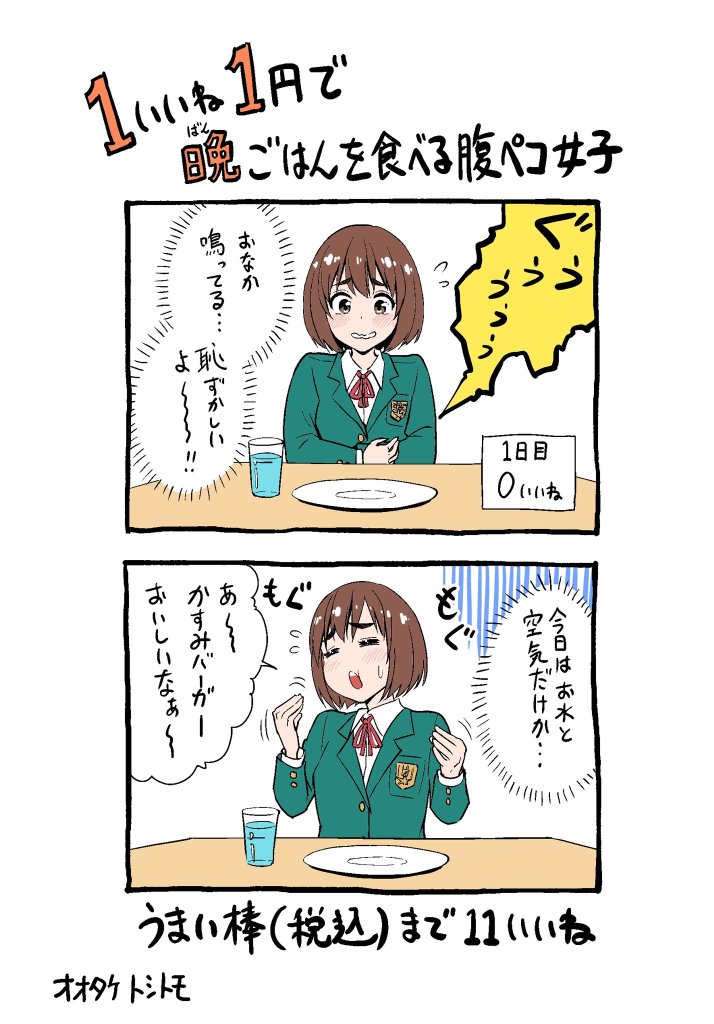
Ootake Toshimoto, author of Mogusa-san and Teasobi, has been drawing a comic series titled 1Iine 1 Yen de Bangohan o Taberu Harapeko Joshi, or in English, Hungry Girl Eats Dinner Where 1 Like Equals 1 Yen. The premise: Minori Mogusa, the perpetually hungry heroine of Mogusa-san, is in a situation where she gets 1 yen for every Twitter like. Then, she’s supposed to use the amount earned in each comic on her next dinner. In the first strip above, she has 0 yen, so she’s “air-eating.”
But while the expectation was that she’d get maybe a few hundred likes, and could build a meal based off of that, reality panned out very differently.
The first comic received 70,155 likes. 1 yen is about 1 cent USD, so that’s about $700. Mogusa freaks out.
The second comic received 115,117 likes, or about $1,150. Below is Mogusa gorging herself on 200 pieces of expensive fatty tuna (as well as some salmon roe) in one sitting.
By the next comic, a rule was implemented so that the ratio would be 10 likes = 1 yen in certain situations to keep things reasonable.
Not only have these manga strips been cute and hilarious, but it’s giving Ootake and the character of Minori Mogusa a lot more exposure. It’s even to the point that other artists have started their own version of the 1 Like = 1 Yen dinner format. It’s fantastic. I love the hell out of the Mogusa-san manga, and I’m genuinely happy to see Ootake getting the notoriety I know he deserves. I hope this gives Ootake a lot more opportunities, and that the world will come to appreciate Mogusa as just an amazing character.
In Chapter 172 of The Promised Neverland, there’s a collage that’s rather conspicuous, given the actual pandemic hitting the world at this moment. As the heroine Emma is confronting an enemy leader about how differences in positions are the root of conflict, one of the images has a wall with the word “coronavirus” graffitied on it.
Up to this point, it’s been established that the main characterslive in an alternate dimension from the regular human world, but there haven’t been direct calls to the reality in which we, the readers, live. I think this “coronavirus” page is a direct message from the creators of The Promised Neverland, Shirai Kaiu and Demizu Ponsuka, and what that message says is: “The ideas conveyed in this manga are not meant to be taken as mere vague abstractions about generally making the world a better place, but as very real criticisms of society.”
When The Promised Neverland first began, it was an interesting manga about a cat-and-mouse game and a battle of wits in a dystopian setting. Originally, the focus was on escaping an orphanage designed to turn children into food. Then, it was about surviving against the demons on the outside. Over time, however, the series has revealed a greater world where the real evil of the series is not scary human-eating monsters but how the corrosive desire to hold onto power at the expense of the greater good.
In order to survive, some children strive to become mothers—essentially overseers of the human farms, but also chattel themselves due to being the literal suppliers of the chain through giving birth. Mothers are told that the best among them can become a “grandmother,” supervising all the mothers, making them compete desperately too. It’s even revealed that the demons themselves have an oppressive class hierarchy. Eating human meat is what has allowed them to gain a high level of intelligence, but a steady diet is necessary because otherwise they’ll revert back to beasts. The rulers of their world get access to the best meat, and can thus maintain their already massive advantage. Moreover, there turns out to have been a way to permanently prevent the demons from losing their intellect, but the ruling class purposely and violently obscured that information to keep the masses dependent on those in charge. In other words, everything about society in The Promised Neverland is premised around pitting the lower classes against one another to distract from the intentional systemic issues imposed by those in power.
How does that apply to our own world? “The top 1% hold 99% of the wealth” is about how massive inequality concentrates all the power in a select few who inevitably enrich themselves at the expense of others. In regards to keeping the lower classes at one another’s throats, US president Lyndon B. Johnson famously said, “If you can convince the lowest white man he’s better than the best colored man, he won’t notice you’re picking his pocket. Hell, give him somebody to look down on, and he’ll empty his pockets for you.” Writer and lecturer Douglas Rushkoff even wrote an article in 2018 about how some of the ultra-rich are preparing for the apocalypse by figuring out how to save themselves while still wondering if it would be necessary to lock down their guards’ food supplies to force loyalty. And now, with the COVID-19 pandemic, we’re seeing how the very same types are retreating further into their massive safety nets, leaving those with less to struggle. It’s crystal clear to me that there’s a similar sentiment at work fueling the overt criticism of the disparity in power and resources in The Promised Neverland.
The fact that Weekly Shounen Jump comes out with brand new chapters of manga on a regular and consistent basis can be a blessing and a curse, but one advantage of the accelerated pace of a weekly manga magazine is how quickly it can potentially seize upon the relevant events of the day. What that “coronavirus” graffiti communicates is simple: the crises your heroes are facingin The Promised Neverland are not that far from the problems that plague the very reality in which you live. Emma, as the heart of this series, staunchly opposes false dichotomies that lead to zero-sum situations where one group can only “win” by sacrificing another. Perhaps The Promised Neverland wants us all to be allies in this struggle, and to be aware of the real problems that gave way to our current global crisis: racism, social inequality, intentionally massive disparities in wealth and resources, and an economic environment where those in power are encouraged to let the whole world burn if it means keeping their positions.
Well, what a month it’s been. Back in March, the threat of COVID-19 was real, but I did not expect things to escalate so quickly. The number of sick and dead ever increases. We’re seeing the Tokyo Olympics get postponed to 2021 and Comic Market 98 get canceled. New York City and the United States have become epicenters of the virus. I’m among the many currently sheltering in place and doing my social distance thing, and I’m fortunate to be in a position where my life isn’t thrown into total disarray as a result.
Part of that has to do with the ongoing support of my Patreon supporters, especially the following.
General:
Johnny Trovato
Ko Ransom
Diogo Prado
Alex
Sue Hopkins fans:
Serxeid
Hato Kenjirou fans:
Elizabeth
Yajima Mirei fans:
Machi-Kurada
Not only is it a bit of extra cash, but having this blog and the responsibility of making sure the Patreon is worthwhile helps me maintain a schedule and keeps my mind active. Sometimes I need to remind myself that there’s always something to talk about on an anime blog, even if we’re seemingly entering a new period in the story of humankind.
That being said, if anyone can’t afford to keep up their Patreon subscription for Ogiue Maniax, don’t feel bad about putting it on pause for however long it’s necessary.
What remains to be seen is how many COVID-19-related puns can I make for these monthly updated posts.
It’s the talk of the town…! I’m curious as to how the current pandemic might shape the storytelling and themes we find in anime and manga going forward.
Jin reveals an important part of himself while Akira shows his kind heart in Chapter 26 of Hashikko Ensemble.
Summary
It’s the Hashimoto Chorus Appreciation Society’s turn at the M-Con competition, but before they go up, Jin has a question for Akira: how does Akira interpret the lyrics to “Miagete Goran Yoru no Hoshi o” (Behold the Nighttime Stars)?
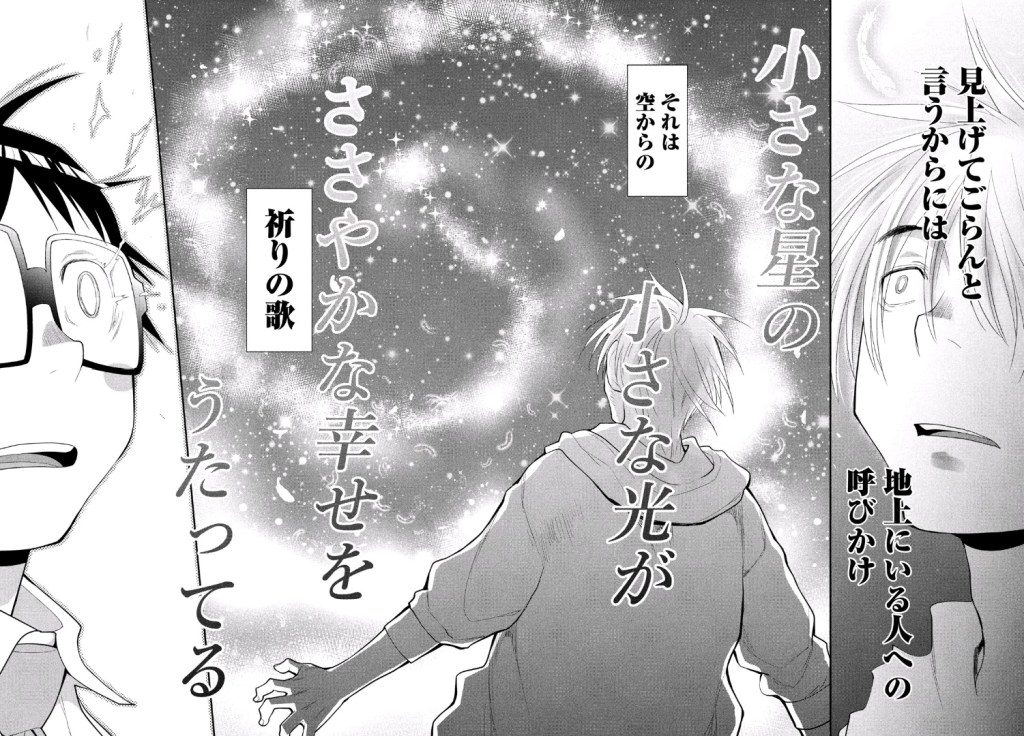
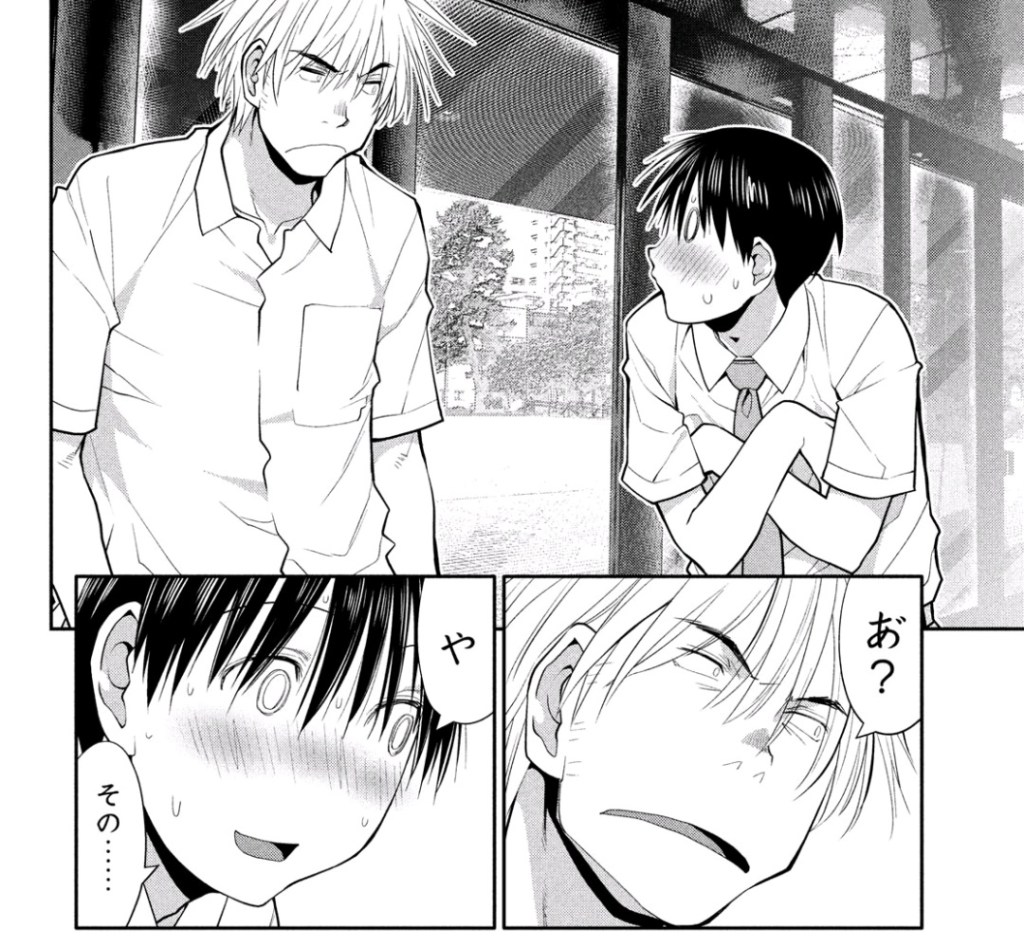
It turns out that while Jin can read up on the history of a song to understand what went into it, he can only ever understand lyrics at face value. After some hesitation, Akira explains in private to Jin that he picked the song while thinking about Kousei, who lost his little brother when they were young. To Akira, it sounds like a song of prayer—an explanation that seems to awaken something inside of Jin. Right after, Jin blabs to Kousei, causing some embarrassed tension, threats of violence, and teasing accusations of Kousei being a tsundere.
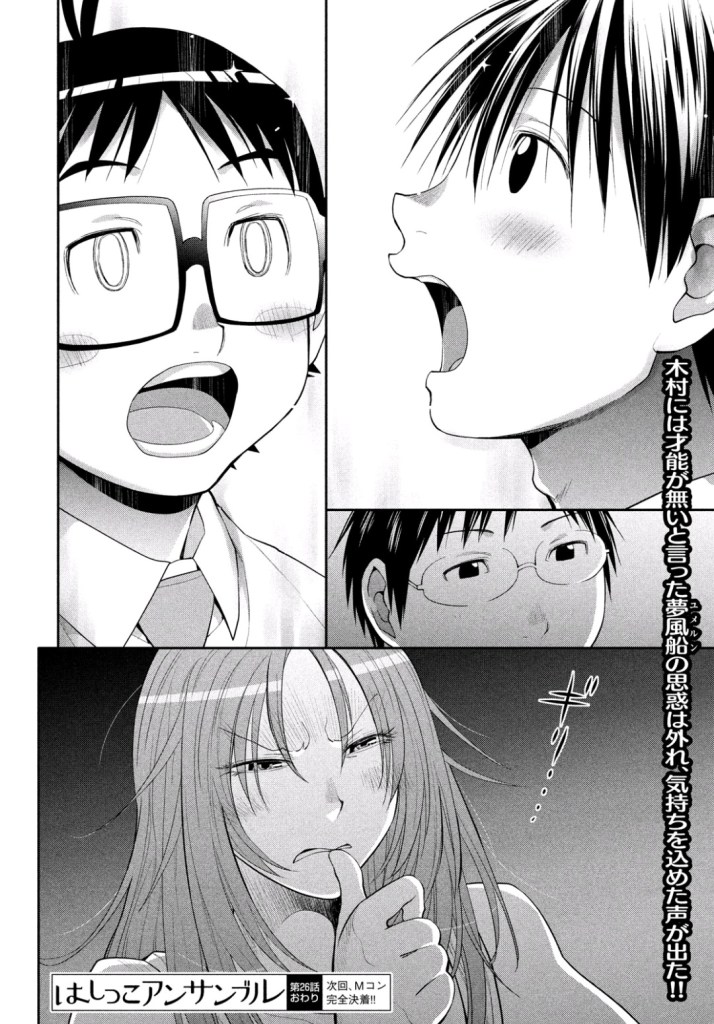
That little moment resolved, the guys start their performance, with Kousei drawing the most attention with his delinquent attitude in this more formal concert hall space. As they sing, they impress one of the judges in particular, but in the stands, Yumerun (Jin’s childhood friend) looka extremely annoyed for some reason.
Is Jin Neuroatypical?
Jin has always come across as a huge nerd who’s really into music as a kind of scientific phenomenon. However, based on what we’ve learned over the past two chapters, I’m genuinely starting to wonder if Jin might be somewhere on the autism spectrum, or is perhaps neuroatypical in some other way.
Not only have we learned that he has trouble with making his singing feel more expressive, but now he’s explained that he’s basically incapable of interpreting lyrics on his own. I’m not very familiar myself, but I’ve known people who have Asperger’s, and from what I understand, people on the autism spectrum often have difficulty grasping the emotional meaning behind how things are said, or even sarcasm and the like. Hashikko Ensemble itself hasn’t said anything explicit, but I think it would explain a lot about the character, including how he approaches social interaction.
Akira and Kousei
The fact that Akira showed such concern for Kousei further fleshes out his character. There’s something about his trying to help Kousei out, as well as his interpretation of the lyrics, that reminds me of his childhood friendship with Himari and his love of children’s picture books. Akira is a kind soul, and I increasingly like him as the central protagonist of this manga.
Yumerun’s Anger
Part of the imagery of Yumerun grinding her teeth is that it “rhymes” with the panel of Shion doing the same out of frustration over not being able to play the accompanying piano. But beyond that, I really can’t seem to figure out why Yumerun is expressing some dismay over seeing Jin sing there. Their mutual past might be even more complicated than I first thought, and I wonder if maybe Yumerun is actually there on behalf of Jin’s mother. If not, maybe Yumerun sees chorus singing as somehow painfully common. I’m sure there’ll be more information in the coming months, but for now, this has me fascinated.
Songs
It’s just “Miagete Goran Yoru no Hoshi o” by Kyu Sakamoto again this time, but given that it’s front and center in this chapter, I think it’s worth it to go into greater detail about it.
As Jin explains, the song in question was written after the Great Kanto Earthquake of 1923 when the lack of light pollution made the starry sky visible. The stars are a metaphor for people’s souls, and the song itself functions as a song for repose of the soul. Akira’s interpretation as a song of prayer approaches it from a different angle. To him, the lyrics seem like they’re calling out to the souls of those who have been lost, but the second half makes the name of the song sound like a comforting call to those left on Earth.
Final Thoughts
If Kio Shimoku is indeed writing Jin as having some sort of neurotypical mind, it would be new ground for him. Genshiken has a lot of eccentric characters, but that series always came across as just a bunch of fanatical dorks who really like anime and manga. Jin’s obsession with music seems driven by something different.
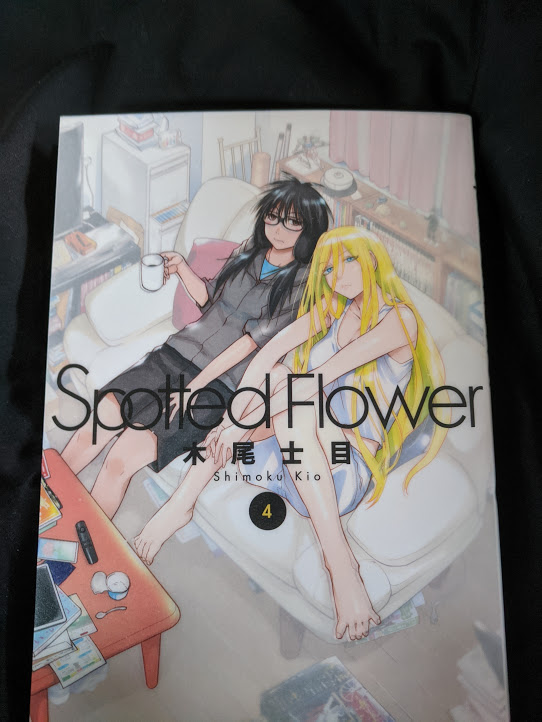
Spotted Flower has always been a difficult series to suss out what the story is trying to say, if anything at all. What once began as a thinly veiled what-if pairing of two Genshiken characters has morphed into a crazy tale of adultery, inadequacy, and a cast of characters where monogamy is rare and polyamory is chaotic and unpredictable. Volume 4 continues this trend, spotlighting all the unusual relationships that have arisen. And while I haven’t consistently reviewed Spotted Flower over the years, this one has a lot of Ogiue—er, Ogino-sensei—so I have an extra reason to write about it.
Last year, I presented a panel at Otakon about Kio Shimoku’s works, and during my research, I came to realize that Genshiken is actually somewhat of an outlier in terms of his catalogue. Most manga Kio makes, including his debut professional manga, involves extremely messy relationships and a whole lot of emotional betrayal—and not in a fetishy way, either. So Spotted Flower is actually a kind of return to the older Kio, and the fact that it hits so hard is because the characters are Genshiken analogues.
Volume 4 has the husband (Not-Madarame) and wife (Not-Kasukabe) returning home with their newborn daughter, Saki. It’s not long after the husband had a one-night stand with Asaka-sensei (Not-Hato), so he’s on-edge the whole time, and literally still feeling it in the ass. The wife doesn’t suspect anything at first, especially because Asaka was very thorough in cleaning up, but the slightest hint of perfume on just one of the husband’s sweaters—as well as some pointed questions later—have her suspecting foul play. The rest of the volume involves the husband and wife reaching out to different friends to express their worries while those friends, in turn, grapple with their own complicated situations. Also, Endou (Asaka’s editor) discovers that Hato has a penis, learns about Asaka sleeping with their beloved senpai, and inadvertently spills the beans to Ogino and Not-Sue.
I think it’s important to lay down just how convoluted the web of relations is in this series. The husband is married to the wife, who just recently had their kid, but the husband slept with Asaka out of a sense of inferiority over the wife’s ex, Not-Kousaka. Asaka is in a relationship with Not-Yajima, who knew well in advance what Asaka was planning and was generally okay with it. Not-Kousaka always really wants to have a threesome, but can’t get any, and it’s probably why he’s no longer with the wife. Ogino is living with Not-Sue and is in a physical relationship with her, but also has a real thing going on with Not-Sasahara, whom she adores. Not-Sue is extremely jealous of Not-Sasahara, and balks at the idea of them in a threesome. Not-Ohno and assumed Not-Tanaka seem to be the only ones exclusive to each other. Whew! What a situation.
One of the biggest gut punches of Volume 4 is when Not-Sasahara explains in clear detail that Madarame’s worries over not matching up to Not-Kousaka are totally unfounded. Specifically, it turns out that the wife’s ex just straight-up left after seeing the baby—which means that he basically gave up, and confirms that the husband fucked up 10,000%. What’s amazing to me is that it’s easy to see where the husband is coming from, but just as easy to acknowledge that he’s garbage.
This also makes me wonder if something like this could’ve happened to the real Madarame and Kasukabe in Genshiken. Fans loved the idea of opposites attracting, but it wouldn’t have been out of the question for Madarame to feel like he could never match up to Kousaka. Madarame and Sue are on similar wavelengths, after all. However, there’s also a lot that’s different about Spotted Flower, and it feels as if this is maybe a symptom of how their world is, instead of the cause. Another notable change is that Endou (who is jokingly implied to be the Yoshitake of this series) never went to the same college as the rest of the cast.
During this volume, Ogino initially tries to suss the truth out of her editor boyfriend, and when he refuses to budge, she lays one hell of a deal out: in exchange for telling her what the husband spoke to him about, she will agree to a threesome with her and her blond girlfriend. The look on his face is one of deep, soul- and libido-igniting conflict, and the fact that he apparently doesn’t give in is testament to this character. Ironically, it probably makes Ogino like him even more.
It can be difficult to figure out Kio’s intent, but there’s perhaps a clue in the extra story provided in this volume. The wife is talking about how she read Ogino’s new manga, which is more out and out BL. The husband responds, “Isn’t it good that she’s doing what she wants?” The wife follows up and says, “But I think her previous work was better.” Maybe Spotted Flower is just unchecked Kio Shimoku, for better or worse.
Given that Spotted Flower chapters come out at a snail’s pace, it’s wild how far the story has come. It’s really impossible to tell how things will resolve, but the way it portrays the differences between willing unorthodox relationships and those built on deception means things are probably going to get worse before they get better. The fact that a child is involved makes the sting that much more severe.
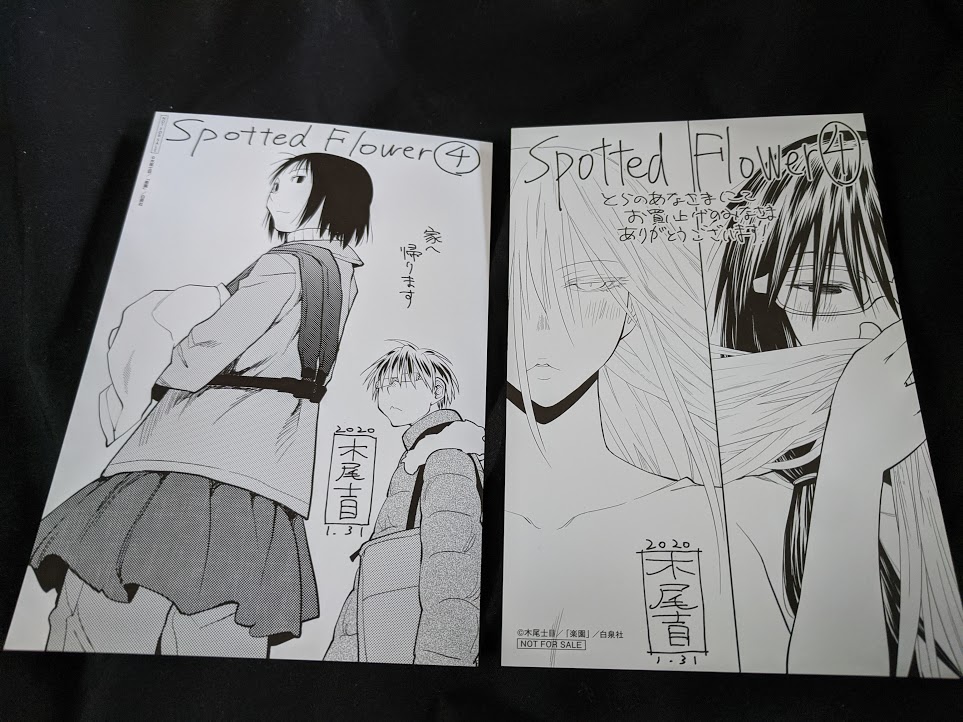
PS: I managed to get both a general purchase bonus, as well as a Toranoana store-exclusive one featuring Ogino and her blonde, Sue-esque roommate. Does it count as Ogiue merchandise when it’s technically not Ogiue?
At the end of last year, I hoped that 2020 would turn out better. I’m starting to doubt whether that’ll happen. But before I get too somber, I’d like to thank the following Patreon supporters.
General:
Johnny Trovato
Ko Ransom
Diogo Prado
Alex
Sue Hopkins fans:
Serxeid
Hato Kenjirou fans:
Elizabeth
Yajima Mirei fans:
Machi-Kurada
The big news of the day is COVID-19, the new and highly contagious coronavirus. Even within the specific realm of Japanese culture (let alone the rest of the world), it’s causing schools to be closed, anime and music events to be canceled, and even the Tokyo Olympics might not be safe. Asia is in a panic, cases of the infection are cropping up all over the world, and here in the US, an utterly incompetent executive branch is more concerned with the stock market than people’s well-being.
I don’t intend to panic nor cause others to panic, but I hope that everyone, no matter who they are, take care of themselves. Don’t try to power through sick days. Get the help you need. Get a flu shot to reduce the chances of your flu-like symptoms actually being the flu.
Now, back to your regular scheduled Ogiue Maniax update.
A request to write about anime-themed games turned into a discovery of some quite creative traditional games.
Apartment 507
I wrote a little bit about Jimbocho, the book town of Tokyo.
Closing
Economic impact is inevitable, but I’m curious as to whether COVID-19 will have any creative impact in terms of the anime and manga that will be made. How appropriate it is that the current season of Precure, Healin’ Good Precure, has a medicine and environmental theme.
Another new character brings further insight into Jin’s history in Hashikko Ensemble Chapter 25.
Summary
The Hashimoto Tech Chorus Appreciation Society has arrived at M-Con, nervous about competing. Day One is just for observation, though, and they see Nishigafuchi (the school they visited previously) succeed. They’re also worried about Shuusuke not showing up after he tore down Jin so thoroughly, but luckily, he arrives. However, another figure appears as well: a girl named Shouji Yumerun, a classmate of Jin’s when they were kids, and when she looked very different.
Yumerun mentions becoming a pupil of Jin’s mom, and that this means Jin doesn’t have to worry about being talentless anymore—words meant to comfort, it seems, but which have the opposite effect. Jin begins to think about why it is he’s so unable to be naturally expressive, and how he gathers people who make up for this weakness. The chapter ends with him getting ready to ask Akira a question.
Jin’s Intuition
I’m actually surprised to discover that Jin sees himself as talentless, and that all of his singing ability comes from hard work and study, if only because he has come across as such a natural in previous chapters. In Naruto terms, he’s the Rock Lee everyone thinks is a Sasuke, and it makes him more relatable in some ways.
Another character Jin reminds me of is Mike from Monsters, Inc. Like Mike, Jin has the theory down but can only take it so far due to a lack of natural ability. The fact that Jin has such an eye for talent further reinforces this image while also adding an extra wrinkle to his character. He finds people with the raw potential he himself lacks, almost to an intuitive degree.
Yumerun
We get another new character in Yumerun, who drops some hints about Jin’s past and his relationship with his mom. Apparently, Jin and Yumerun were classmates, and he helped bring her into music. Now, she’s studying under Jin’s mom, and she thinks this means Jin doesn’t have to worry about being talentless anymore—implying perhaps that Jin felt pressure to succeed his mom, and that maybe Yumerun has a thing for him?
I’m struck by Yumerun’s words, particularly when she says to Jin, “You won’t be told anymore to stop escaping into the chorus just because you lack talent.” What I interpret this to mean is that Jin likes singing in a group because it better hides his deficiencies. Rather than just being a passion, it’s also a defense mechanism.
In the Mind But Not in the Heart
Every chapter review, I record all the music terms that crop up, partially because they’re in Japanese and not necessarily common knowledge even for fluent speakers. But it’s also because I have little to no musical knowledge or ability, so I feel the need to try and understand. The fact that Jin has a somewhat similar struggle makes these sections take on a new meaning of sorts. As someone not musically inclined, it’s hard for me to tell if these flaws of his are really that basic or if it’s the difference between being decent and being elite, though the fact that no one at Nishigafuchi said anything makes me think the latter.
In this instance, Yumerun brings up all the things Jin has trouble with: enunciating s, k, and z sounds; the nuances of syncopation; and techniques for emotional expression. Apparently, he can understand it on paper, but has trouble doing it himself. Syncopation is “a shifting of the normal accent, usually by stressing the normally unaccented beats.”
Songs
No songs this month, but the fact that the previous storyline is officially known as the “Spitz arc” amuses me.
Final Thoughts
The Chorus as a place where people who lack in certain areas can support one another feels like the story of a team sports manga, as opposed to ones about individual competitors. Hashikko Ensemble might not have the attractive characters or the pizzazz to attract regular sports manga readers, but I wonder if this possible theme of “the sum being greater than the parts” might resonate still.
A couple years ago, I noticed a trend in characters that I called “busty failures”—a translation of the Japanese terms ponkotsu plus kyonyuu. Their primary qualities are, as the term implies, big chests combined with a tendency to be unreliable wrecks. In hindsight, maybe “busty disasters” would’ve been a better choice.
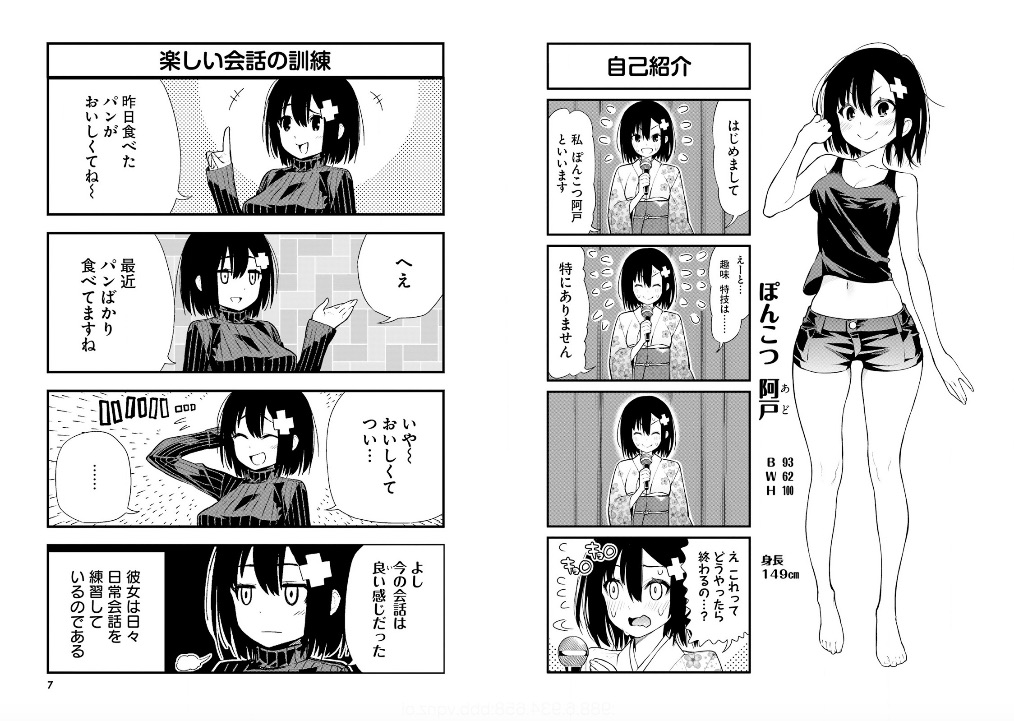
Often times, characters breed unspoken archetypes, which lead to categorization. At some point, these archetypes might become explicitly acknowledged by the very medium they’ve come from. I think the busty failure has reached that point with the recent four-panel gag manga Ponkotsu Musume no Nichijou (“Failure Girl’s Everyday Life”) by Kawakami Masaki.
The series is as expected: an attractive girl (name: Ponkotsu Ato) tries to get through life but mucks things up in the process. It’s fanservicey as all heck (as implied by the cover), and lacks any sort of topical veneer like Dagashi Kashi does with the “cheap snack foods” gimmick. It’s very much a what-you-see-is-what-you-get title.
In other words, Ponkotsu Musume no Nichijou is geared towards a very specific audience, i.e. the kind of person who revels in busty failures. Personally speaking, I think I’d prefer just a little more substance. A series so unabashedly horny isn’t inherently bad, and the character does feel more relatable than other instances of the archetype, but it could aspire to more. Who knows? Maybe it’ll go places over time.
January 6, 2020 marked the end of an era as beloved Japanese wrestler Jyushin Thunder Liger retired. His achievements are many, from innovating the Shooting Star Press (now seen in wrestling matches all over the world) to being perhaps the greatest junior heavyweight ever. One thing that stands out to me in his long career is how insane it is that he managed to embrace his ridiculous gimmick, his outward identity as a wrestler, and elevate it to the point of world-wide recognition.
Jyushin Thunder Liger’s name and look is taken from a manga and anime by Nagai Go, creator of Mazinger Z, Devilman, and Cutie Honey. This by itself isn’t unusual. After all, the wrestling manga character Tiger Mask became a real-life wrestler as well. But Jyushin Liger the fictional work isn’t about wrestling or even athletics—it’s about a boy who can summon and fuse with a “bio-armor” to fight evil. The anime isn’t even considered a memorable classic, and yet, Jyushin Thunder Liger somehow made it not just work, but took it over. Now, when you say the words “Jyushin Liger,” you’re probably more likely to get someone who knows the wrestler than the source material. His entrance theme is just the theme song to the Jyushin Liger anime (and makes zero sense in the context of pro wrestling), but rather than being considered hokey, it brings out raucous cheers.
Imagine if a 90s American wrestler was saddled with a Street Sharks gimmick—not even a big property like Teenage Mutant Ninja Turtles—and still wrestled as a Street Shark thirty years later until his retirement brought literal tears to people’s faces. Picture this guy coming out to “They fight, they bite, chewin’ up evil with all their might!” to a standing ovation. That’s basically what Jyushin Thunder Liger accomplished. The closest real equivalent I can think of is the Undertaker, who has played some form of undead wrestling zombe lord (and briefly a American motorcycle rider in the early 2000s) for the majority of his career. Or maybe if RoboCop’s cameo in WCW saw him transition into a regular wrestler who consistently put on great matches.
So here’s to Jyushin Thunder Liger and his global legend. Now let’s see if any new wrestlers come out as Bang Dream! characters.
Hot on the heels of Teasobi and Change!, another one of my current manga of choice has ended. In this case, it’s the quirky romance manga Oogami-san, Dada More Desu, or in English, Oogami-san is Letting More and More Out.
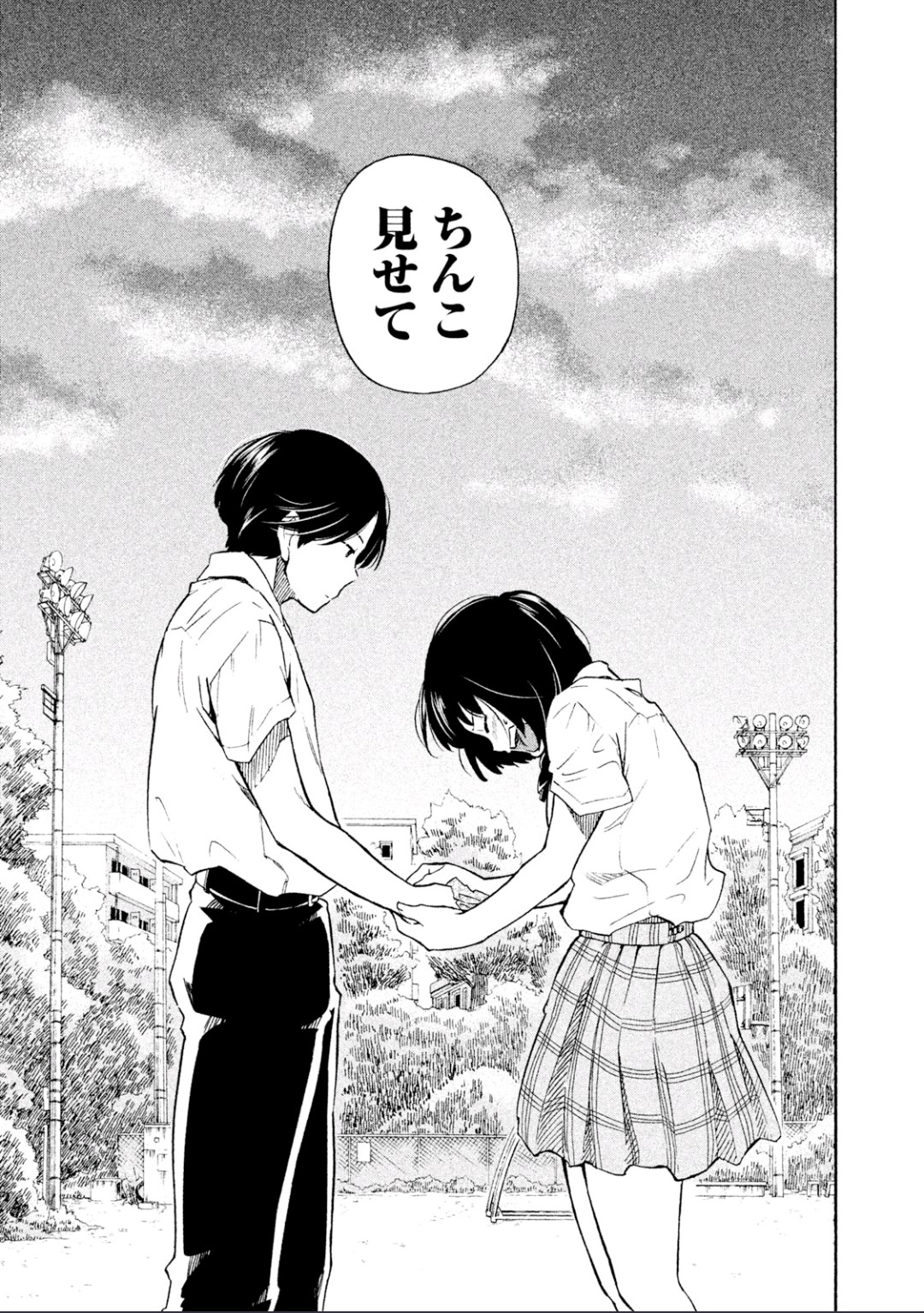
The story of Oogami-san follows Oogami Meiko, a teenage girl with an overactive and dirty imagination. She writes erotic fiction, constantly fantasizes, and spends significant portions of her day thinking about guy parts, all while keeping this side of her secret. She becomes curious about one of her classmates, Shinichirou Yaginuma, a quiet and distant guy, but she soon discovers that he has a secret: anyone who touches him blurts out whatever they’re thinking deep down. For Oogami, her true feelings come out as “Show me your dick.” That’s the start of their relationship.
It’s a pretty gimmicky romance manga at the start, but the early chapters are really carried by how fun and expressive Oogami is as the main character. Her and Yaginuma both have things they don’t want to share with others, and they sort of become mutual confidants. But as the two grow closer and even make other friends, the series goes into not judging books by their covers, bullying, overprotective parents (who have a genuine reason to be that way), jealousy, and other topics that give Oogami-san more weight—all without abandoning the ridiculousness of its base premise. It’s a ribald comedy with a touch of seriousness, where characters love and learn and one of them likes to talk about penises. A lot.
Oogami-san, Dada More Desu concluded in December, and the 7th and final collected volume came out in Japan on January 23. It’s the kind of bizarre love story that is right up my alley, and I think it’s definitely worth a read.







 OGIUE MANIAX