The Best Nonsense: “Himote House: A share house of super psychic girls”

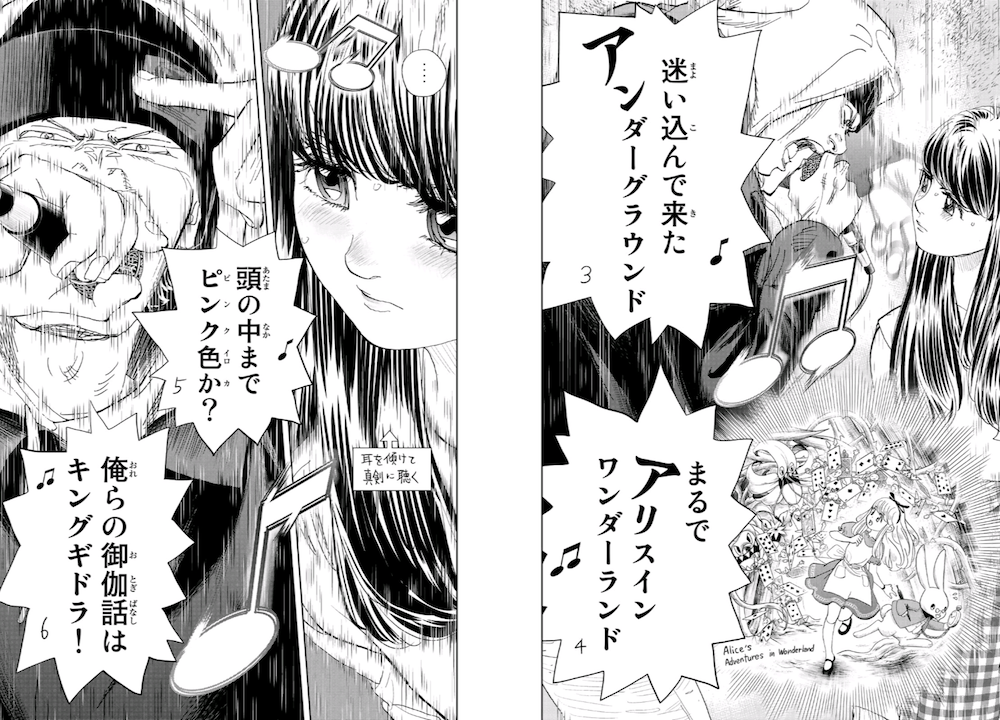
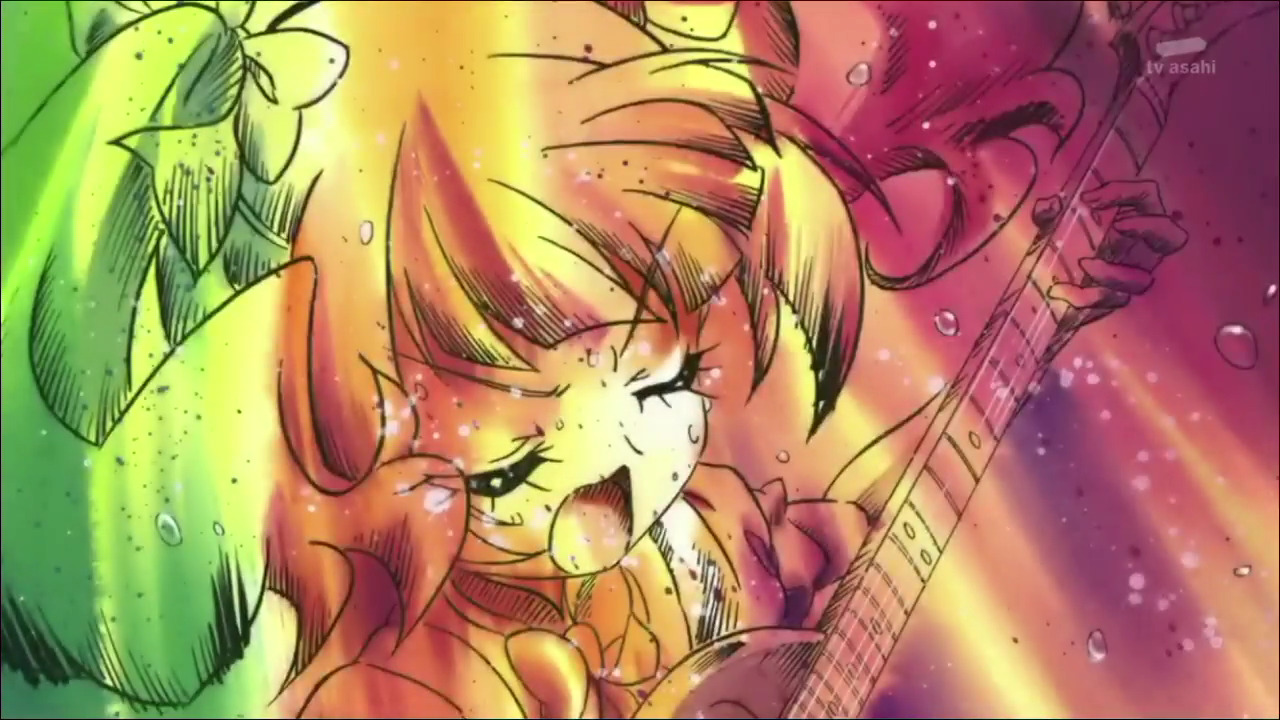
The “semi-improv” anime genre began in 2009 with gdgd Fairies, and since then it’s been a source of both laugher and confusion. 2018’s Himote House: A share house of super psychic girls is the latest take on this formula, and it feels in certain ways a culmination of all the previous works. If gdgd Fairies is the pioneer, Tesagure! Bukatsumono the most consistently funny, and Naria Girls the strangest failure, then Himote House is simultaneously the most indicative of experience and the most successfully experimental.

Ostensibly, the series is about a group of girls with super powers who all have trouble getting boyfriends, but the premise (as always) is mostly a pretense to set up joke after joke. Like most of its predecessors, the show is built around varying degrees of scripted comedy and impromptu improv moments. More than any other show of its kind, however, Himote House is willing to break with its own established patterns. Trying to find ways to be attractive to guys gets plenty of laughs, but only because they highlight the absurdity of the characters themselves. An episode at a bathhouse has to be seen to be believed—at once spoofing the exploitative power of fanservice and leaning hard into an awkwardness like no other.

These types of shows live and die by their actors, and Himote House fortunately brings back multiple veterans from past series such as Straight Title Robot Anime and Tesagure! Bukatsumono. Himote House will even occasionally call back to previous series as a nod to the returning fans. The biggest thing of all, however, is that the three of the gdgd Fairies are here too, and that includes seiyuu mega-star and Okada Kazuchika girlfriend Mimori Suzuko. I’m particularly impressed by Mizuhara Kaoru, who plays a very different but equally amusing character compared to her role as shrshr in gdgd Fairies.

As with its predecessors, Himote House hits home if you’re into a kind of disorganized humor that thrives just as much on when jokes fall flat as when they succeed—it’s all about the actors sticking the landing. Existing somewhere in the range between Aqua Teen Hunger Force and Inferno Cop, Himote House is, if anything, memorable.

The World Wide Web of Human Pain: SSSS.Gridman

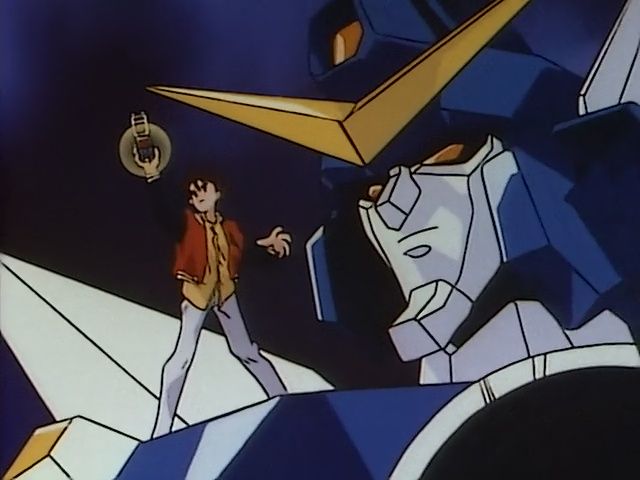
If you were to ask me what my favorite Power Rangers-type show was as a child, it would undoubtedly be Superhuman Samurai Syber-Squad. I distinctly recall running around the house yelling “SUPERHUMAN SAMURAI!!!!” mimicking both the theme song and the TV commercial jingle. So while I’ve never seen the original Gridman the Hyper Agent in Japanese that provided the source material, SSSS.Gridman was an instant must-watch—especially because it was being made by Studio Trigger (Little Witch AcademiaKill la Kill).

SSSS.Gridman is ostensibly about a boy named Yuuta who can merge with a computer entity called Gridman the Hyper Agent and use his abilities to fight off giant monsters attacking their city. However, it quickly feels more like a bizarre paranormal mystery that seems eager to deal out the truth piecemeal. Often times the show is seemingly less concerned with personal character development and more about pulling back the curtain. One of the biggest questions is how the monsters and even Gridman himself, who were previously confined to the computer realm, are manifesting in the real world.

The result of SSSS.Gridman‘s peculiar mixture of ingredients is that it can feel like a never-ending ocean of information to explore in both profound and frivolous ways. Somehow, it simultaneously presents itself as both a shallow case of “geek-info/reference overcharge” and an introspective look at the pain and suffering of human interaction.

The series is full of odd details that aren’t exactly vital but add to a certain meta-ness that can enhance enjoyment of SSSS.Gridman. Two side characters in the series actually come from a yuri short story by the series director. Most if not all of the characters in the anime are based on a Botcon convention-exclusive mirror-universe series called Transformers: Shattered Glass. it’s a strangely elaborate reference to make, almost purely for enjoyment’s sake (and to get the Transformers fans jumping out of their seats), or perhaps as a wink and nod to the fact that the company Takara had a hand in both Transformers and Dengeki Choujin Gridman. Even the title, SSSS.Gridman seems to be willing to play into its own American adaptation. After all, how else would a fan of Superhuman Samurai Syber-Squad interpret the series?

But then the anime also makes references so as to hint at the true natures of its characters, or to foreshadow what’s to come. It’s really deep-cut stuff that generally involves using monsters and motifs of past tokusatsu works (especially from Tsubaraya Productions, the studio behind Ultraman and Gridman), and far beyond my knowledge or experience to have picked up without outside reference (thanks to Mike Dent!) However, it’s not as if one needs to get every in-joke or obscure callback to understand SSSS.Gridman and where it’s going. The series is another showcase of one of Studio Trigger’s great strengths: the ability to put in all of that under-the-surface content for hardcore fans without alienating newcomers. The references aren’t a barrier to entry so much as a reward for the faithful, and it’s as much a sign of love as the very movements of the monsters themselves, who despite being animated in 3DCG are made to behave like people in rubber suits as a way of replicating the live-action feel of the original Gridman.

Right to the end, SSSS.Gridman seems to change and shift, and it can be difficult (though not impossible) to predict where it’s truly headed. Watching the series unfold is a quiet yet boisterous joy that captures simultaneously the anxieties and wonders of both childhood and adulthood.

Dreams Before Harems: Why I Like “We Never Learn”

We Never Learn is a popular harem manga currently running in Weekly Shonen Jump, and one I actually like a good deal. With the anime debuting next season, I’ve been thinking about why I’m fond of this particular series over other similar works, and I realized something. While We Never Learn is indeed a harem series, and thus shipping is ostensibly an important factor for enjoying the series, I find that I don’t actually care about pairings at all, and this makes the series better for me.

Because the anime is coming out this season, I’m going to make this post as spoiler-free as possible. Actually, I don’t even think I need spoilers to explain my point, so it works out.

The basic plot of We Never Learn has high school boy Yuiga Nariyuki tasked with tutoring two of the smartest girls in school. However, while Furuhashi Fumino is a genius of literature and the arts, and Ogata Rizu is a math and science wizard, their respective dreams are to go to college in their worst subjects instead. Along the way, other girls join the cast, and the close calls with Nariyuki never stop, in typical harem fashion.

One thing clear from the start is that each character has their own goals they want to reach. Sparks fly and fanservice abounds, but their attractiveness doesn’t define who they are as people. Moreover, they’re all supportive of one another, and this makes it a refreshing experience.

Nariyuki could end up with anyone, or no one. Any of the girls could end up with each other. Perhaps they might all marry random, unrelated characters. To me, none of it truly matters, because I want all of them to succeed in ways beyond relationship success. While the girls and their cuteness is a major part of We Never Learn, you want to see these girls achieve their dreams as they try to overcome genius with hard work in a Rock Lee-esque way. The fact that the geniuses they’re to beat are themselves makes it all the greater.

Tree Skills vs. Skill Trees: Hashikko Ensemble, Chapter 11

The path to a full Chorus Club is revealed, and the super-intense Kurata Shion gets center stage in this month’s chapter of Hashikko Ensemble.

Summary

Orihara is now a part of the Chorus Club, and Jin needs just one more member and a faculty advisor to get formal “Appreciation Society” status. If he can, he wants someone who plays piano.

Meanwhile, Kurata is getting advice from Oumi-sensei (the gray-haired one), who suggests that she join the woodworking club to improve her skills and to relax a little. However, the over-serious Kurata (who’s also revealed to be quite the spaz) refuses, seeing it as frivolous fun that gets in the way of Hashimoto Technical’s purpose as a vocational school. Both shy towards her fellow female classmates and frustrated at her lack of talent, she runs away, only to accidentally bump into Akira and the Chorus Club. Curiously, instead of making a typical startled noise, she lets out an F♯2 note.

In judo class (apparently a staple of Hashimoto Technical), Kurata is participating along with Hasegawa and her friend. Hasegawa, it turns out, is actually the daughter of a prominent judo family, and tosses around both one of the school’s judo club members and Orihara effortlessly (while also simultaneously ogling the latter). Kurata and Hasegawa’s friend are practicing against each other, but when a sudden pain in Kurata’s hand causes her to fall over, she reveals that her tendonitis is flaring up—as a result of her piano-playing!

Kurata’s Situation

Kurata doesn’t know how to crack eggs, and can’t seem to even run on a school racetrack without going off-course. If there’s any character she reminds me of, it’s Mio from Nichijou, who can’t seem to follow rules of any kind when it comes to sports or competition. I also love the way they reveal her music background, with her unusually melodic yelp.

I might be sounding like a broken record, but Kurata’s the latest in a long line of interesting characters in Hashikko Ensemble. First, there’s the fact that her antagonism towards the Chorus Club is kept mostly to herself—in fact, Jin and Akira don’t even really recognize her. Second, is that her dislike of the Chorus Club had seemed personal on some level, but the hints we get as to why this is the case make her and her story all the more intriguing.

It’s clear that Kurata has a musical background of some kind and that it’s limited by her tendonitis. Was a potential piano career derailed by health issues, leading her to lose faith in putting her future in something as fragile as musical performance? Is it perhaps pressure from parents? How much does she actually believe what she’s saying when she declares her preference for the pragmatic, and how much is she forcing herself to think this way? I’m really looking forward to finding out more.

As for what she’ll do as a potential Chorus Club member, one would think piano, but the fact that she has trouble playing might mean she’ll be another singer instead.

Hasegawa’s Unusual Friendship

Hasegawa and the other girl who’s always with her (whose name might not even have been mentioned yet) are so different from each other that you wouldn’t necessarily expect them to be close, but they say outright that it’s just a natural product of there being so few girls at the school. From what I can tell, while it likely began out of convenience, it transformed into a genuine friendship at some point. Now, they’re trying to get closer to Kurata too, but she’s as nervous and unsocial as they come.

I really enjoy how it doesn’t take much to portray Hasegawa and her friend as fleshed-out characters with an authentic-feeling history. This feeling of realism is one of Kio Shimoku’s greatest strengths.

As for Hasegawa’s judo background, I got a good chuckle out of how she actively eggs on the judo club. Also, i wonder if her love of beefy dudes is because of her family or not.

Songs

No music this chapter, aside from some basic voice lessons.

Final Thoughts

In a flashback, Kurata asks why the Japanese shorthand for “smartphone” is sumaho and not sumafo, as if it doesn’t make sense. I AGREE. IT’S ALWAYS BOTHERED ME.

Gattai Girls 10: “Mobile Police Patlabor” OVA 1 and Izumi Noa [Anime Secret Santa]

Introduction: For the second year in a row, I’m combining my Reverse Thieves’ Anime Secret Santa entry with my Gattai Girls review series—posts dedicated to looking at giant robot anime featuring prominent female characters due to their relative rarity within that genre.

Here, “prominent” is primarily defined by two traits. First, the female character has to be either a main character (as opposed to a sidekick or support character), or she has to be in a role which distinguishes her. Second, the female character has to actually pilot a giant robot, preferably the main giant robot of the series she’s in.

The year is 1988, and the long-standing image of giant robots in anime fluctuates between either fantastic heroes and gritty, expansive science fiction. In this environment, one multimedia franchise decides to ask a simple yet potential-laden question: how does a society police its citizens in a world where mecha are commonplace?

In the near future of Patlabor, humanoid robots are commonly used in various industries, the police have also decided to incorporate mecha known as Patrol Labors into their forces. Patlabor follows Special Vehicles Unit 2, a ragtag bunch of eccentrics who solve Labor-related crimes. While there are multiple iterations of Patlabor, including anime, TV series, OVAs, and films (all of which apparently have branching continuities), this review will be focused on the first OVA series, titled simply Mobile Police Patlabor, but also known as Patlabor: The Early Days.

At first, Patlabor presents itself as a fairly low-stakes works, with its eclectic cast of officers and mechanics trying to deal as much with each other as the crimes they’re supposed to prevent. However, it gradually reveals concerns that are deeper and broader than first expected—provided you peel back the curtain a little bit. Over the course of the seven episodes of the first OVA series, those “Labor crimes” (not sure if pun intended) often speak to underlying social issues in Japan such as the struggle between pacifism and militarism that has affected the nation since World War II.

Such themes are the wheelhouse of the OVA’s director, Oshii Mamoru, and he gets even more philosophical about the intersection between technology and society in his Patlabor films. Here in the first OVA, though, Oshii doesn’t go nearly as hard on his pet topics, and the result is a comparatively much more straightforward story. The OVA is much more willing to be a police drama with some underlying political messages, and thus more approachable for those who might feel the films to be too overbearing.

But it’s also impossible to shake the idea that Patlabor cares relatively little about what it presents on the surface, especially when it comes to the treatment of the ostensible protagonist, Izumi Noa. If one were to guess what Patlabor is about from just the opening alone, one would assume that Noa is the star of the show, as she relaxes with, takes care of, and fights in her beloved Patlabor, Alphonse. In fact, she’s the only character who appears in it at all! Yet, somehow, the clear poster child for Patlabor as a whole only ever has a semi-major part at best in any of the episodes.

It’s not as if Noa is portrayed as useless or incompetent or in need of big, strong man to rescue her, but her general character—tomboyish robot lover with a knack for piloting—seems to have the least connection to the series’s underlying focus on the intersection between politics and technology. In contrast, Shinohara Azuma is the son of the president of a Labor-manufacturing company, while Goto is the deceptively intelligent and wily chief whose past has him confront the militaristic elements of Japan. Even the other prominent female characters, Kanuka Clancy and Nagumo Shinobu, seem to get more screen time than Noa because they’re tied much more deeply with the police system. Ironically, the woman who was to be the heroine by virtue of her neutral and apolitical passion for mecha ends up feeling more like a side character.

Overall, Mobile Police Patlabor seems to embody much of the OVA spirit that permeated anime in the 80s and 90s by providing an opportunity for projects to go in unique and interesting directions. The result is a fascinating series, but also one that seems in conflict with itself at times.

Ahh Real Babies: Hosoda Mamoru’s Mirai

Director Hosoda Mamoru is nearly synonymous with family themes in anime films, but his newest work, Mirai (in Japanese: Mirai no Mirai) takes it to a whole new level. Whereas his past films such as Summer Wars, Wolf Children, and The Boy and the Beast explore the value and meaning of family, Mirai is more focused on the authentic feel of raising (and being) real flesh and blood children, and the challenges that come with having a family.

The story of Mirai centers around Kun, a bullet train-loving toddler who’s meeting his newborn little sister, Mirai, for the first time. As is typical of only children who suddenly have a sibling in their lives, he quickly grows jealous over all the attention given to the new baby. However, his tantrums lead him to discover that his backyard is the gateway to something magical, and that it lets Kun discover places and times he never could have otherwise. Through these voyages, which bring him to see his family members past and present in a new light, Kun is witness to the many small steps that lead him to being who he is.

At least, that’s the way the film presents Kun’s adventures. Mirai has almost a Calvin and Hobbes feel in that they never explain outright whether it’s all his imagination or if there really is time travel, and I think that ambiguity is a strength. While Mirai leans more toward the notion that Kun is actually accessing his family’s history given the amount of details he picks up, it doesn’t discount the possibility that Kun, like so many young children, is paying more attention than anyone realizes.

What makes the film truly memorable is the way it so realistically portrays the behavior and learning process of small children in Kun and Mirai. Speaking from my own experiences, I have plenty of friends and family at this point who have raised kids of their own, and many of the obstacles the parents face in dealing with Kun and Mirai actually perfectly mirror the experiences I’ve seen in those close to me. In particular, there’s a scene where Kun refuses to change out of his favorite pants—a stubbornness I’ve seen firsthand. It can feel almost too real, as if Mirai is trying to tell parents that it understands what they’re going through. Moreover, Kun’s mother and father also have to deal with delegating responsibility in their “working mother + work-from-home father” situation that’s quite unusual in Japanese society, which leads to even more examination of the “roles” of family in the modern age. To little surprise, in an interview shown at the screening, Director Hosoda discusses how having children of his own influenced the making of this film.

But it’s not just the parents that the film successfully empathizes with; the portrayal of the experience of being a young child is just as vivid and authentic. There’s one scene in particular toward the end of the film that successfully captures a child’s fear of being in a strange and unfamiliar place. While I’ve not been a baby in a long, long time, Kun’s reaction to his surroundings reminds me of the nightmares I had as a kid, as well as the times where I got lost in a mall or similarly large and eerie spaces.

Mirai feels more like a series of small episodes tied together into a single movie, but perhaps that’s the way childhood is. There’s no grand scheme or single obstacle to be overcome. It’s a learning process for the entire family.

For Hymn: Hashikko Ensemble, Chapter 10

In this chapter, the secrets of Orihara—his hearing and his traumatic past—are revealed in full.

Summary

Waking up inside the nurse’s office, Orihara explains that he suffers from a chronic high-pitched ringing in his ears. Jin figures out that Orihara suffers from a slight degree of hearing loss due to overexposure, specifically in the 3khz range—the same frequency as a baby crying or a woman screaming. Jin, however, believes Orihara’s brain is likely still picking up sounds at 3khz even if his ears aren’t, which is why Orihara can somehow “hear” things that he “can’t hear.”

During this talk, Orihara reveals two things about his past to the others. First, his little brother died. Second, the one time he was able to get rid of the ringing in his ears was in third grade, at a recital by a choir of old men, and a specific religious foreign song—hence, why he keeps listening to similar music. For this reason, Jin uses his connections to bring Orihara back to that choir from his childhood and have him repeat the same song. Hearing it again, Orihara is moved, but while Jin’s scientific explanation seems right, Akira has a simpler one: Orihara was healed by this music. Envisioning (?) a young voice from heaven speaking directly to him, Orihara smiles.

Later, at school, Jin comes barging in to get Shinji and Orihara (given name Kousei) for chorus club practice. Orihara is now an official member of the Chorus Club. The days pass, and coming up now is the MHK Concours—aka M-Con—an amateur chorus competition!

Music: When Science and Magic Collide

Orihara’s story, in my eyes, adds an interesting wrinkle to the ongoing theme of music as something that straddles the line between the known and the mysterious. Jin’s explanations make sense, yet I can’t help but wonder if Orihara’s deceased little brother might actually be trying to communicate with him. The manga itself never really says one way or the other, but regardless of the actual (meta-) physics, it’s notable that Orihara feels the song in his head and in his heart. There’s an important lesson here about how even as we might “understand” music on a theoretical level, there’s still an almost magical or spiritual quality to song that captivates the soul. As dominant as Jin is in this manga, his perspective isn’t the only one.

That being said, I doubt the manga is trying to push any sort of religious angle. It seems more an acknowledgement of the significance of the church in Western music.

Bouncing Back from Tragedy

Orihara’s story is the heaviest I’ve seen a Kio manga get, and that’s including Ogiue trying to commit suicide as a kid. Child abuse, and the degree to which Orihara’s anger is a product of his trauma, are incredibly tragic. Although not said outright, it’s extremely likely that the guy suffers from PTSD. The story basically implies that Orihara can’t hear the 30khz frequency because he was constantly being subjected to the anguished screams of his mom and his brother. And somehow, the series manages to swing around into silliness not long after.

It’s really not easy for a narrative to get so serious and then switch back into lighthearted humor, but I think Hashikko Ensemble does it well by actually making the awkwardness in that transition more prominent. In particular, when Orihara mentions his deceased brother, Jin seems to obliviously bring the topic back to music and science. But is Jin as ditzy as he acts? His ambiguously strained relationship with his dad, or indeed something else, might hint at this being a willful act of feigned ignorance.

Songs

The featured song this chapter is “Viderunt Omnes,” a Gregorian chant composed in the 11th century by Protein. Gregorian chants were traditionally used in Roman-Catholic churches.

Final Thoughts

Next chapter promises to focus on Kurata, whose intensity and dislike of the frivolous has me intrigued about her. However, given how quickly the manga jumped from “Orihara’s on board” to “Competition!”, I’m worried that Hashikko Ensemble is suffering from a lack of popularity and his rushing things forward. I genuinely think this is a very strong manga from Kio Shimoku, so I hope it has a long life ahead of it.

The Significance of the Classic Anime Devilman in Devilman Crybaby

Devilman Crybaby made quite a splash when it was released earlier this year on Netflix, introducing Nagai Go’s classic series to a new generation of anime and manga fans. While there are stylistic differences stemming from both difference in era and the aesthetic of director Yuasa Masaaki, Devilman Crybaby is largely the same as the original 1972 Devilman manga at its core, showing that the series’s story of a human who uses demonic powers to fight other demons and its themes of human strength and ugliness are still culturally relevant.

While Devilman Crybaby is hardly the first adaptation, spin-off, or sequel, it does do one thing that most other Devilman works try to shy away from: it incorporates elements of the kid-friendly 1972 Devilman anime TV series. In that cartoon, Devilman is closer to a superhero than a brutal demon in appearance and demeanor. Even his theme song calls him a “hero of justice” while listing all of his special ability (Devil Wing, Devil Eye, Devil Beam, etc.).

It’s so different from every other iteration of Devilman, and Devilman Crybaby repeatedly uses it in such specific scenarios, that I believe TV anime Devilman has special significance in Crybaby beyond providing an addictive remix of the classic theme song, which can be found below.

Whenever that song, “Devilman no Uta” is used, there’s an element of innocence or human compassion attached. It’s often paired with an actual image of the TV anime Devilman himself, who shows up on television screens or on YouTube videos and the like. It’s especially prevalent in Ryo’s flashbacks, where a young and orphaned Ryo can be seen staring at the green, heroic Devilman on TV. Ryo appears to be drawn towards it.

There’s a third symbol too: Devilman’s actual design in Crybaby. Devilman adaptations tend to draw more from the manga than that old anime series, and this extends to the aesthetics of Devilman himself. In almost every version, Devilman feels more like a beast than a man, and Crybaby’s is generally no exception. However, there are times in Devilman Crybaby when Devilman himself feels more reminiscent of the “hero of justice.”

Devilman the character can be thought of as having two original strains—the Nagai manga original and the classic TV version—with different iterations veering towards one or the other. If a work wants to hint at a more hyper-violent Devilman, they portray him along the lines of the manga. If, however, it wants a cleaner and friendlier Devilman, then the TV version is the way to go. Crybaby Devilman strikes a very interesting middle ground. While he has the fur, the facial features, and the overall demonic appearance, he takes aesthetic elements from the TV version. Namely, he has those distinct stripes on his shoulders, and he’s often portrayed with a blue/greenish tint to his skin. It’s unclear if his skin is actually supposed to be green, or if the creative lighting of the series just makes it look that way, but there’s a clear commonality between Crybaby Devilman and TV Devilman, at least in part. What’s also noticeable is that the green skin seems to be most noticeable in scenes where Akira is trying to defend the innocent, like when he protects a group of innocent people from being stoned to death out of fear that those poor souls “might” be demons.

In other words, the incorporation of elements of the TV anime Devilman into Devilman Crybaby isn’t merely for referential purposes, or a clever wink and nod—It’s actually important to the themes and symbolism of the series. While Crybaby largely follows the plot of the original manga and not the TV anime, the presence of the superheroic Devilman is ongoing, and it hints at Akira’s inherent goodness. He struggles with himself and the devil inside, but Akira ultimately wants to fight for what’s right and just, whether his foes are human or demon. The old anime Devilman is who he aspires to be, even if he ultimately cannot live up to that ideal.

Life on Repeat: Hashikko Ensemble, Chapter 9

Orihara’s hard to understand, but it might not be for the reasons anyone assumed.

Summary

It’s the Sports Festival at Hashimoto Technical High School, but the biggest spectacle isn’t any event—it’s Orihara on a rampage. Another classmate has played a prank on him by messing with his music player, so Orihara responds by going berserk and tossing him around like a ragdoll. Jin and the others suspect that the only thing that can calm him down is his music and his noise-canceling earphones, but (as revealed in a flashback), they’ve been having trouble fixing the earphones, even with Himari’s help. However, Himari reveals that she’s spent extra time to repair them. In a mad dash, the Chorus Club and the Rugby Club work together to successfully subdue Orihara.

As Orihara listens to his music player and falls unconscious, he remembers the parental abuse he and his little brother suffered as children. He remembers hearing screaming, but can’t remember if it was his or his brother’s voice. But as the police came to take away his mom and her boyfriend, he remembers thinking it was his brother’s. In fact, Orihara can still hear his brother’s voice today.

They Laughed, They Cried

This chapter kind of reminds me of the infamous soccer episode of the anime Eureka Seven, which contained, in the same episode, both athletic filler hijinks and a plot-crucial coup d’etat. The situation in Hashikko Ensemble isn’t quite the same, as what happens at the Sports Festival contributes directly to the main story, but the contrast is potent. The general wackiness of this chapter makes the dramatic reveal of Orihara’s situation much more impactful.

As comedic as Hashikko Ensemble can be, I really don’t think this reveal is an absolute tonal shift for the manga. There’s a recurring theme of among the characters of trying to deal with the emotional and physical setbacks of their pasts, and it even creeps through in Jin’s vague descriptions about his relationship with his dad. Orihara’s story seems to be the most serious by far, and I have faith that it’ll be executed well. I mean, this is the guy who wrote Ogiue from Genshiken‘s story, after all.

Orihara’s Abuse

The exact circumstances of Orihara and his little brother’s abuse is kept vague. The manga mentions that his little brother was unable to move, and the arrival of the cops clearly implies that this was not the result of illness or accidental injury. It’s unclear if the abuse was primarily physical, emotional, sexual, or any combination, and I don’t have any hypotheses at this moment. More information will likely be revealed to us over time, but the degree to which Kio holds back will be interesting to see. Whatever the case might be, the chapter is a crucial piece of the puzzle that is Orihara. He’s not just a loner, and he’s not just temperamental—his past is complicated, and having him open up to others (let alone join a club) is going to be about understanding his issues.

Himari’s Personality

Himari works hard to restore Orihara’s earphones, but I don’t get the sense that she’s doing this out of either sympathy for the guy, or out of a desire to uphold her end of the deal with Akira and Jin. She seems to me like someone who either values the technical skills needed or who has a sense of pride in her own abilities—like it’s a challenge she wants to overcome. Nothing says this more than her pantomiming the hand motions necessary to make the complicated earphone repairs. In that respect, she might make a good team with Jin, whose audio expertise potentially supplements her own strengths. His explanation of the complexities of noise-canceling earphones (like how you need to get through the urethane coating that’s meant to prevent short-circuits before you can even begin to fix them) is a perfect example in this regard.

Songs

What Orihara’s been listening to this whole time is Gabriel Fauré’s “Requiem Op.48: In Paradisum.” It’s used in Catholic church funerals, which probably means that Orihara’s little brother didn’t make it.

Final Thoughts

There’s a brief mention at the beginning that Hashimoto Technical High School switch to holding their Sports Festivals on weekdays because in the old days, delinquents from rival schools would come over to pick fights on the weekends. While the culture has changed since then, they keep the scheduling. Just having this little hint at the yesteryear of the high school (as well as the fact that the one older female teacher still remembers those days) gives this funny sense of history to the school setting of Hashikko Ensemble.

Also, Hasegawa is excellent as always. I can’t help but laugh every time I see her now.

A Look Back at an Aikatsu! Halloween

In the spirit of the month, I was asked by Patreon sponsor Johnny Trovato to look at one of the Halloween episodes of Aikatsu! I chose episode 106 of the original series, which takes place after Akari has become the new main character. It’s a fun episode characteristic of all that is good and enjoyable in Aikatsu!, though a few elements stood out in particular.

Whenever the characters say, “Trick or treat!” they immediately follow by explaining in Japanese what exactly that means: “If you don’t give me candy, I’m going to play a trick on you!” It’s a redundancy that not only has to make up for the language barrier—a little kid might not know the English words—but also speaks to the fact that Halloween as a concept is still relatively new in Japan. If you look online, you’ll find articles talking about how it didn’t get any traction until the 21st century, and now it’s featured in multiple anime.

I wouldn’t read too deeply Aikatsu!‘s interpretation of Halloween—I reckon it’s as much tinged with the Idol Activities spirit as anything else. If the episode didn’t feature some wacky game that highlights all of the characters lovable quirks, then I would’ve been shocked. That’s where Aikatsu! consistently shines, though. You just know that if they’re doing a Halloween episode, vampire-style Idol Toudou Yurika is going to have a moment. They even make the expected (and desired) joke that Yurika wearing a cape and fangs while exclaiming that she’ll suck your blood isn’t that different from how she normally behaves.

“The day Yurika visited your Halloween party was the most important day of your life. But to me, it was Tuesday.”

I watched this episode semi-isolated from the rest of the series, so I don’t know exactly what has transpired beforehand. However, it reinforces something I’ve felt about Aikatsu! in general, which is that the first season’s characters seem to have the most clear-cut personalities, which makes it easier to do these silly one-off episodes. I still don’t always quite get what Akari and her friends are supposed to be like. They seem a tad more subdued, which can work better over the long term but maybe isn’t as attention-grabbing at first sight. https://www.youtube.com/watch?v=sOnqjkJTMaA#t=9m5s

It would be remiss of me to end this post without mentioning the teacher, Johnny Bepp, and his unnamed homage to Michael Jackson. With a vaguely “Thriller”-esque piece playing in the background, Johnny-sensei encourages the students to do the famous zombie dance (or whatever it’s called), which exhausts every student around—except Akari. I would think that a dance sequence from one of the finest performers ever would be absolutely grueling for even the girls at an idol academy, though in hindsight I guess this is actually a bit of characterization for Akari as a girl with immense stamina. In this case, I don’t know if it’s the “obvious” gag per se, but the payoff is again reliably satisfying. Kudos, Aikatsu!

Given that this episode is quite a few years old at this point, I am curious to see how the Aikatsu! Halloween episodes have evolved as the holiday itself has become more popular in Japan. Maybe that’ll be something for next year!