The Russian Roulette of Comedy: Mahou Shoujo? Naria Girls

nariagirls

I love the dumb, yet incredibly clever humor of gdgd Fairiesstyle humor. Typically combining incredibly cheap animation with a cleverly absurd dialogue, a splash of improv comedy, and willful ignorance over their own premises, these anime always bring a smile to my face. The team behind gdgd Fairies has since gone on to do a variety of shows in that vein, including one about robot girls trying to discover humor, a Transformers series, one about personified Sega consoles, and now we have come to their most daring (and perhaps low-budget) work: Mahou Shoujo? Naria Girls.

Though technically a background story exists, it really doesn’t matter. Three young girls get magic powers to rescue a far-off magic kingdom, but it just so happens that every monster of the week’s scheme “coincidentally” resembles an improv skit like what you’d find on Whose Line Is It Anyway? It’s the kind of show where the girls transform from their school uniforms… to their school uniforms, with no discernible difference.

Unlike the other series mentioned, which are very simply animated using programs such as Miku Miku Dance and Flash, Naria Girls actually uses motion-capture, directly translating its actresses’ motions onto 3D anime-style models. Motion capture can be a finicky thing, and it can take a lot of careful work to not make character movement appear unnatural or to avoid tiny mistakes that come from trying to automate such a process. Naria Girls does not care. Its use of mocap is very rudimentary and constantly exposes its flaws, but then I think that blatant disregard for what is supposed to be a “professional quality work” is what makes the show kind of charming in the first place.

The other appealing quality of the series, though I must warn that it is paradoxically what makes it difficult to watch as well, is that it takes the improv element of the gdgd Fairies-style show to the extreme. If Seha Girls is one end of the spectrum, where all the jokes are scripted and planned out, then Naria Girls is the opposite. From start to finish through each 8-minute episode, all of the jokes are clearly made up on the spot. If that wasn’t enough, the show was revealed in June for a July broadcast, and they were still auditioning for cast members.

The result is that the show can be funny, but often times isn’t, namely because the actresses themselves are not particularly good at improvising. Even eight minutes is hard to maintain if the comedians themselves aren’t experts at it. However, the Russian Roulette element of watching Naria Girls, where you truly cannot tell if the show will be amusing from one moment to the next, is why I enjoy it. When a joke works, it’s a cause for celebration. When a joke falls so utterly flat that it’s like humor itself has been sucked into a black hole, it somehow comes out the other side still being an interesting artifact.

Naria Girls isn’t as good as its predecessors, but it is its own exciting experiment and adventure. That’s why I’m on board.

If you liked this post, consider becoming a sponsor of Ogiue Maniax through Patreon. You can get rewards for higher pledges, including a chance to request topics for the blog.

Baltimore’s Last Stand: Otakon 2016

Otakon, the east coast’s largest anime convention, has been a mainstay of Baltimore summers since 1999. With the 2017 move to Washington DC, however, 2016 may very well be the last Otakon Baltimore ever sees. The awareness of this turning point among attendees felt almost palpable, and not just because the blazing heat and heavy humidity made everything feel ten pounds heavier. Watching con-goers on Sunday discuss the end of Otakon in Baltimore with an air of finality made it feel like it really was the end, even if it’s more of a new beginning.

Music and the Matsuri
otakon2016-matsuri

Every year, I try to attend at least one Otakon concert, usually that of an artist I’m interested in from hearing their music in anime. This time, it was MICHI, who sang the opening to one of my favorite shows of the year, Dagashi Kashi. Unfortunately, both of the panels I was involved with ran during her concert time, so I unfortunately could not go. What’s more, her concert was the half-time show at the Masquerade, which is an event I generally avoid. The upside of all this is that I got to meet her in person at the autograph session.

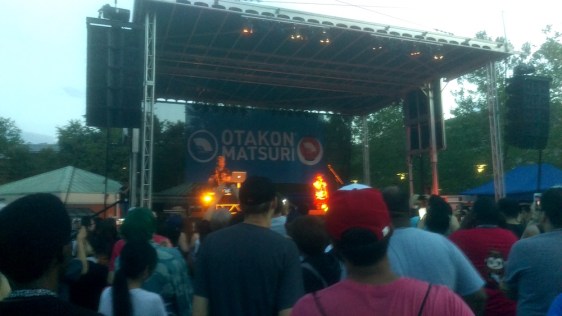
I did check out the Otakon Matsuri, a first for me. Taking place every year on the Thursdays before Otakon weekend, in the past I simply had neither the time nor the energy to go. This time, however, they had as music guests Lotus Juice and Hirata Shihoko from the Persona game series. Because a friend of mine loves Persona and made it a mission to attend their performance, I tagged along and was treated to a lively concert. Despite a number of technical difficulties likely owing to the severe heat not playing nice with Lotus Juice’s Macbook, they really made it a memorable experience. Lotus Juice, who was born in Japan but actually grew up in New Jersey, actually performed not only Persona and anime-related music, but even threw in a Japanese version of a Tupac song. Unfortunately, I don’t know Tupac well enough to recognize it, so if anyone in the comments knows, feel free to chime in!

Guests and Industry Panels

This year’s guest list was sparser compared to previous Otakons, possibly because of next year’s move to DC. Notably, Otakon mainstay Maruyama Masao (founder of anime studios MADHouse and MAPPA) was not able to appear, and it felt like Otakon was missing his insight. The guests that did come, however, were able to provide a great deal of insight into the anime industry and their creative processes.

Akane Kazuki and Escaflowne

Akane Kazuki, director of Escaflowne, Heat Guy J, and Code Geass: Akito the Exiled, was in attendance because of the new Blu-ray release of Escaflowne and the English premiere of Akito the Exiled. Akane is a Studio Sunrise man, so just like Takamatsu Shinji and Park Romi last year, so at a press conference I had to ask him what this experience was like working with Gundam creator Tomino Yoshiyuki. Akane mentioned that he actually went to Sunrise straight out of college because it was where Tomino was working. However, the very first time he arrived at Sunrise for work, he found Tomino was scolding his staff. Akane also described Tomino as someone who thought about anime from morning to night, and that he gave the impression that such a devotion was necessary to succeed in the world of Japanese animation.

He also talked about his work on Escaflowne, how it was his first work where he had full directorial control, and about the changes he made to the heroine, Kanzaki Hitomi. When Akane first came onto the project, Hitomi was going to be a quiet, long-haired girl, but he and character designer Teru Nobuyuki pushed to have her become the strong-willed, short-haired girl we know her as now. Later on in the conference, he described that period as one where a lot of female characters were the same, and he worked on Hitomi with the idea of, is this the kind of character that actual girls themselves can get behind?

Industry Panels

The Japanese industry panels I attended included P.A. Works of Shirobako and Hanasaku Iroha fame’s, as well as Under the Dog producer Morimoto Koji’s. At the P.A. Works panel, they didn’t really take questions from the audience, but they went through why they decided to make their new series, a robot anime called Kuromukuro, because it was uncharted territory for their studio. They also asked the audience themselves about the idea that Americans prefer action-oriented anime with strong heroes, but I found that an audience predisposed to coming to a P.A. Works industry panel likely wouldn’t have the same tastes.

As for Morimoto, I asked him questions related to his involvement with giant robot anime. First, I asked him about whether or not he has any input on how series are represented story-wise in the Super Robot Wars video games, to which he responded that they mostly leave it up to the game studio Banpresto. Second, I asked him about what goes into adapting or reviving old mecha franchises. Here, the answer was that it really depends on the series, and how much they’re trying to draw in the old, nostalgic audience, or create a new one.

As for the American side of things, I attended the Discotek panel and the tail end of the Vertical Inc panel. The main takeaways (at least for me) is that the glorious anime Charge Man Ken is now licensed by Discotek, and that two of Vertical’s best-selling titles are two of my favorites, Nichijou and Mysterious Girlfriend X. As someone who kept putting Mysterious Girlfriend X on their surveys every year, this fills me with pride and joy.

For more guest coverage, check out my interviews with  LeSean Thomas and the staff at P.A. Works.

Fan Panels

One of Otakon’s claims to fame is its strong collection of fan panels. Presenting a diverse range of topics, it’s one of my personal highlights every year. This time around, however, I felt that a lot of the panels I attended weren’t quite as strong, though I don’t think this is really the fault of the con itself or even the presenters. There will be some panelists who are stronger than others, and I, as someone who did a couple of panels, have plenty of areas where I need to improve.

It’s also good that Otakon occasionally goes for untested presenters, because if they stick with only the ones they know, it gives less of a chance for newer panelists to show what they’re capable of. In many cases, there appeared to be a lack of preparation and oversight on actually planning and researching the presentations. That doesn’t mean that any presenter who didn’t bring their A-game doesn’t deserve to come back, but I hope that we all look to the next time with the hopes of being even better.

Anime of Green Gables

Featured Panelist Viga’s panel all about the popularity of Anne of Green Gables in Japan was quite informative. As someone who’s watched both the 1970s Anne of Green Gables anime and the 2000s Before Green Gables prequel, I learned a lot, especially in regards to how it got to Japan. I didn’t know, for example, that Japanese fans take pilgrimages to Prince Edward Island fairly regularly. I thought the panel had a generally good structure, but felt a bit disorganized in places. While I at first wondered who the panel was for, I think it turned out to be existing fans of Anne of Green Gables who might not be as familiar with the anime.

Gen Urobuchi: Magical Girls, Riders, and Puppets, Oh My!

Because the title of this panel mentioned puppets, I was hoping to see some Thunderbolt Fantasy action. Unfortunately, it got cut out of the presentation, which I find a bit strange because plenty of episodes had been out by then. On top of that, there was an entire special about the making of the show, which would have given them plenty of material to work with.

The Bravest Robots: Sunrise’s Brave Series

An overview of the Yuusha giant robot franchise of the 1990s, this panel was run by Patz Prime from Space Opera Satellite, with whom I’d previously done a podcast review of Brave Police J-Decker. As someone who’s more familiar with Brave Robots than most, even I learned quite a bit from it. I was particularly fascinated by the transition by the sponsoring company Takara from Transformers to Brave Exkaiser, the first series, and how the panel wove a narrative of the continuous fight between the animators, Sunrise, and Takara. Maybe next time the panel might have time to mention Baan Gaan.

1999: The Otaku Time Machine

George from Land of Obscusion ran this panel, which went over some of the major and minor anime and video games to come out in the year 1999. For me, it was in many ways a review of my adolescence, but I’m also well aware that many anime fans in attendance likely would have been born before 1999. It’s still kind of crazy for me to think about. All I’ll say to this is thumbs up for showing the Japanese Medabots opening, thumbs down for not showing the Japanese Digimon opening.

My Panels

This year, I presented at two panels: “Such Dog. Much Anime. Wow” with Kate from Reverse Thieves, and “Greater Uglier Manga.” The former was a panel about dogs across anime, including popular series such as Naruto, genre legends such as Ginga Nagareboshi Gin, and old historical works such as Norakuro. If you came to the panel, I’d like to thank you for being such a great audience, and I hope to get better at communicating for next year.

Greater Uglier Manga was the sequel to last year’s Great Ugly Manga, with the twist that it was now 18+. The point wasn’t to fill the panel with pornography, but to extend the range of images that could be shown. Unfortunately, the panel began with a serious hiccup due to technical difficulties, and we spent the first 15 minutes troubleshooting. Ultimately, thanks to Daryl Surat from Anime World Order, we figured out that it had to do with the switchers they were using for the panel room and were able to start. Unfortunately, I ended up speeding through the presentation and finishing early, which means I have to work on my pacing better. My co-panelist had a better handle on time, I think. Lesson learned!

By the way, I really do like Kurosaki Rendou‘s work, and I hope that, if you attended the panel, that you might find them fascinating too.

Shopping and Sites

Dealer’s Room
otakon2016-dealersroom

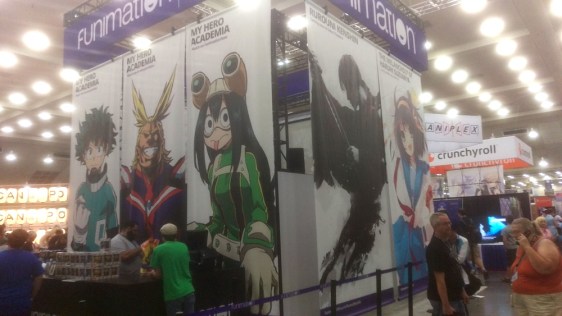
This will be the last time we see this incarnation of the Otakon Dealer’s Room for a long time. That being said, I do want to point out that they once again allowed attendees to travel between the buildings of the Baltimore Convention Center by cutting across Liberty Street. In recent years, this was restricted, and in my opinion it really hurt the accessibility of the Dealer’s Room and Artist’s Alley.

My two biggest purchases of the convention at the Dealer’s Room were finding all of Brigadoon: Marin & Melan (a great series that deserves more love) and getting the Nozomi from Rolling Girls Nendoroid. As shown in the photo below, I posed her the best way I know how: drinking [soda] and driving.

(Don’t try this at home, kids).

If you were wondering, the sidecar can hold another Nendoroid, and I have just the right riding partner in mind.

The real highlight of the Dealer’s Room for me this year, however, had to bee the Good Smile Booth. While I did not obtain the aforementioned Nendoroid there, I was pleasantly surprised to discover that they were selling blank Nendoroid faces for $1 each, along with tables where you could sit down to decorate them. Apparently those faces are a convention exclusive, so I bought a bunch and turned one into a potential Ogiue for the future.

Some day…some day….

Artist’s Alley

One of the strongest titles at Otakon 2016’s Artist’s Alley had to be Pokemon Go and Overwatch. While Pokemon in general tends to be pretty beloved among Otakon artists and attendees, the three factions of Pokemon Go, Team Valor, Team Mystic, and Team Instinct, made for easy ammo for creators. As for Overwatch, I believe its popularity among artists to be a testament to its highly appealing and charismatic character designs. However, overall the artwork was quite diverse, and hardly anything was truly dominant.

Relevant to me personally, I bought an amazing image of Rice Goddess Hanayo from Love Live! wearing glasses. The Demeter outfit or the specs alone would have been enough, but together the combination was unbeatable.

otakon2016-paworks-kissuisou

otakon2016-paworks-diesel

otakon2016-paworks-minko

otakon2016-paworks-kuromukuro

otakon2016-paworks2

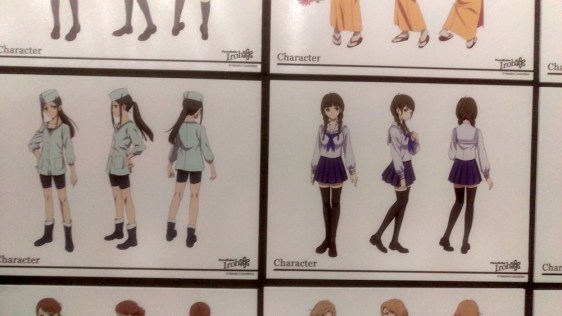
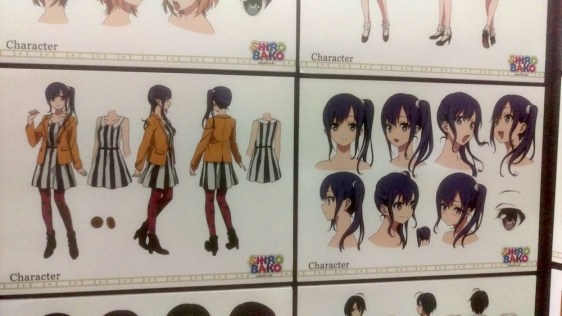
The real highlight of the Artist’s Alley, however, had to be the P.A. Works 15th Anniversary exhibit. Showing detailed character design sheets, background art, and more from P.A. Works shows, it made me even more conscious of the two arms of P.A. Works: the attractive girls who engage in adolescent drama and discovery, and the exploration of beautiful scenery and environments.

Food & Drink

otakon2016-nandos

Seeing as this was likely our last time in Baltimore for years to come, my friends and I decided to hit up many of our favorite places and turn Otakon weekend into a feeding frenzy. We went back to Abbey Burger Bistro, where I tried their Australian Red Deer burger. We stopped by Piedigrotta Bakery, the original home of tiramisu. We had to sample the luscious crab cakes from Flash Crab Cake Co. For the return trip home, fried chicken from Royal Farms was a must.

Two places I had never tried were Portuguese chicken chain Nando’s and a local Afghan restaurant Maiwand Grill. Though not exclusive to Baltimore, Nando’s was truly a highlight. Having sample a whole variety of their dishes, including their default chicken, chicken liver, macho peas, Portuguese rice, and natas (egg custards that were the predecessor to Hong Kong’s famous dan tahts), everything was a home run. Maiwand Grill had great portions at really affordable prices, and both their yogurt drink and Afghan ice cream were amazing. The yogurt drink was no-nonsense pure yogurt flavor, and the ice cream had both dates and figs in it (two of my favorite fruits).

Overall

Otakon 2016 was fairly low-key by the standards set by previous conventions, and for that reason it really did feel like a transition into something new and exciting. A part of me wants to come back to Baltimore someday, but another part of me looks forward to seeing what Washington DC has to offer.

Also, I hope no one pulls an Eden of the East near the White House.

As with every year, I leave off with a selection of cosplay photos.

If you liked this post, consider becoming a sponsor of Ogiue Maniax through Patreon. You can get rewards for higher pledges, including a chance to request topics for the blog.

Big Ogiue, Final Stage: Genshiken II, Chapter 127

Commencing the 14,567th “This Month’s Genshiken Was Great” Discussion.

Chapter Summary

It’s time for Kuchiki’s graduation, and the members of Genshiken have gathered to celebrate . They haven’t really put much effort into wishing Kuchiki well, but their half-hearted gifts (flowers and a signboard with messages from everyone) move him to tears. Kuchiki, meanwhile, reminisces about his time in Genshiken, and how one of his greatest memories is seeing the Madarame Harem crumble in person, only to find out the news that Madarame and Sue are dating, which ruins his schadenfreude.

With graduation comes time for a new president, and Ogiue chooses Yajima. In spite of her misgivings, Yajima is eventually convinced to do it, especially thanks to support from Hato. The chapter transitions to a new spring, and Hato visits the club room, eager to spend time with his friends.

And So It Goes…

If anything stands out in this chapter, it’s the artwork. While I’ve felt the quality of Kio’s drawings have been fantastic these past few chapters, I can really feel that this finale wasn’t rushed at least in terms of the TLC put into it. Ogiue is beautiful. Hato is beautiful. Everyone is beautiful

The conclusion to Nidaime pretty much came about Chapter 126, so this one feels much more like an epilogue. In many ways, it mirrors the original ending of Genshiken: a graduation, a transition in power in the club, some delightful nerd moments, and then a positive look into the future for the club. In fact, both series all but conclude after the establishment of a romantic relationship, with a lot of “falling action” following.

The big difference in feeling is that one involves the graduation of Sasahara and Kasukabe, two very vital characters central to the Genshiken narrative, while the other involves… Kuchiki. While he’s been with the club for a very long time, even the characters themselves treat him as an afterthought. They’ll treat him with just as much respect as they think he deserves. As Kuchiki points out, they didn’t even bother dressing up for his graduation (and if you recall, their graduation trip was more of a “Kuchiki is going away” celebration excursion).

Kuchiki is Human Too

The big exception here is Hato, who in general tries to look good when he crossdresses, but I wonder if he has a soft spot for Kuchiki. It wouldn’t be anything remotely resembling romance, and might lean more towards pity than anything else, but he seems to treat Kuchiki with noticeably more restraint and tact than the others. This might just be in virtue of the fact that he’s also a guy, so even if Kuchiki pictures Hato as part of his potential “harem,” it doesn’t faze him as much. Kuchiki also inadvertently instigated a number of Madarame/Hato moments.

It might also be that Hato can kick his ass.

In a way, it feels weird that the series would end on Kuchiki’s big day. I think that many readers of the series wouldn’t even mind if he fell off a cliff. At the same time, he hardly ever got any real attention, and had nary a sense of character growth. Now, at the finish line, we see a rare moment of Kuchiki being genuinely happy. I’d like to think that, somewhere deep down, he realizes what a terrible person he can be, and the fact that the other members put up with him is something he can appreciate. Granted, that’s only one heartfelt moment in an otherwise incredibly awkward display of how not to behave as a human being. It doesn’t help him that he loudly declares in the middle of campus that he spent the prior day masturbating furiously to his favorite doujinshi.

I do find it kind of interesting that, when Kuchiki mentions that his desire is to create his own harem, he doesn’t exactly include Yajima and Yoshitake in it. It makes me wonder if there’s something to the two of them that puts him off.

Passing of the Torch

With graduation comes a new president, and this transition always provides plenty of delightful reflection and insight in terms of the characters. Seeing prior presidents fidget and their newly chosen successors doubt themselves is the kind of tradition I can support. After all, it once provided one of the best moments in Genshiken: Sasahara and Ogiue’s racy near-kiss. No such thing happens this time, but there’s still plenty to chew on.

In the past, new presidents were chosen because they either seemed likely to carry on the spirit of the club or because the alternative (Kuchiki) would have been far worse. Ogiue picking Yajima makes sense in this regard, because she always appears to be the most stable and grounded member out of all the new generation. What’s more, Yajima’s careful personality and the way she doubts herself often is indeed quite Genshiken-like, and the way that she feels caught in the transition between generations of otaku makes her able to understand a range of potential newbies. I also do love the fact that Yoshitake agrees that she would probably abuse any power given to her, and the role of advisor/confidant is about as perfect as it gets for a lover of history.

I also only just realized after reading this final chapter that Ogiue likely abolished the doujinshi honeypot trap tradition, where current members spy on new recruits from outside and then bust in on them while they’re in the middle of revealing their tastes. Being a victim of it herself and also not being a fan of embarrassment, I could see why the secrets behind this would not be passed on to the next generation, especially one with Yoshitake in it.

Speaking of movements between generations, it’s notable that Madarame does not show up in spite of his prominence in Nidaime. Granted, none of the former members show up at all, so I imagine that the goal was to focus on the current iteration of Genshiken for the final chapter.

Thanks from other Manga Artists

Accompanying this final chapter in Monthly Afternoon are a series of congratulatory images from 30 other Afternoon manga artists, including Yoshikazu Yasuhiko (Gundam: The Origin), Samura Hiroaki (Blade of the Immortal), and Suenobu Keiko (Limit). Fun for all, and I really hope it’s included with the packaged volume release. Samura clearly drew Madarame with the wife from Spotted Flower, so I think we know where his ship sails.

Final Thoughts (This is actually as long as a regular Chapter Review!)

I discovered Genshiken many years ago, back in my college days. I can’t quite remember if I discovered the manga or the anime first anymore, but I remembered how real it all felt: these characters reflected to a scary degree the thoughts, behaviors, and mannerisms of me and my fellow nerds. It was an enjoyable series to be sure, but then a study abroad semester to Japan would elevate the series to the apex of my love for anime and manga, for it was there that I discovered Ogiue. With her came a number of realizations, such as my extreme(ly strange) fondness for “dead eyes” characters, but also an overwhelmingly powerful emotional connection with her fear that her passion would hurt others. By the time I came back to the United States, Genshiken was actually gearing up for its first ending, but it and Ogiue would remain with me.

Ogiue Maniax originally began well after the Genshiken manga had ended. At the time, I felt I had so much more to say about Genshiken and Ogiue, so I kept writing about it. I followed the second TV series. I gave testimony as to how I became such a fan of the series. I started the Fujoshi Files. Gradually, this site became much more than a Genshiken blog, though it wasn’t quite ever entirely one in the first place. I was content with the overall direction of Ogiue Maniax, and my own fandom.

Then Chapter 56 happened.

One of my long held desires was to see how Genshiken would be like under the leadership of President Ogiue, and this one-shot (at the time, no one knew it would become the precursor to a new series) provided just that. Two things stick out in my memory about Chapter 56. First would be the art style. Back then, Kio had been coming off of doing Jigopuri: The Princess of the Hell, and it showed in how much softer and cuter the character designs were. Second would be the mostly female cast. If you look at the original end of the first Genshiken, it clearly shows a very different kind of club with male members, a natural extension of what Genshiken was like back then. This was a retcon of sorts, but it set the stage for a more thorough exploration of the changing landscape of otakudom. Where once the female fan was seen as this rare gem in terms of characters, Chapter 56 went above and beyond to show that things were different, and the presence of female characters as otaku and fujoshi would not only be normalized but dominant.

When the announcement that Genshiken would be getting a full-on sequel hit, I was ecstatic. It provided me with a feeling of renewal, but also an opportunity. Chapter reviewing Genshiken on Ogiue Maniax hadn’t been possible, and I thought it wouldn’t ever be. But now, if ever there was a series for me to analyze every month, it had to be this one.

At the time, I could look back and go, “Wow, it’s been seven years since I discovered Genshiken, isn’t that wild?” Seven has now become 12. I began as a college student who saw himself in Genshiken, and now I’m in a dramatically different place, with a well-respected (if obscure) anime blog, a degree from studying manga that required me to move to another continent, and many good friends whom I met not only through my love of anime and manga, but also because the fact that Ogiue confronted and conquered her own fears encouraged me to do the same. Both I and the world around me have changed, and the fact that Genshiken has also shifted to reflect this made it a constant source of fascination for me.

It was truly unusual for this series to spend so much time exploring the Madarame harem, but I think that it became the focus inadvertently because it overlapped so much with Hato’s own development. You had these two tracks of characterization, one from the old guard and one from the new, and the result was that it pushed the classic otaku question of 2-D vs. 3-D into new and unfamiliar territory. In the end, any of the pairings would have worked for me, and while relationship drama was probably the last thing people expected out Genshiken, the series defied even those newly created expectations at every turn.

While it would have been all right for Genshiken Nidaime to have been more of the same as its predecessor, I’m happy to see how different it became. It confronted a new world of and around otaku, it tied up one of the vital loose ends with Madarame’s unrequited love, and explored topics concerning gender, sexuality, and self-image that went even beyond Ogiue’s plight in the first series.

What’s Next?

Now that Genshiken is over, that means the end of Ogiue Maniax’s monthly chapter reviews. That doesn’t mean it’s quite the end, though, as the supplements included in the collected volumes usually provide more insight and a true epilogue. And who knows? Maybe there’ll be more someday. I wonder where I’ll be in life at that point.

I’ve also been considering going back and reviewing the first series.

And please create that series I want where Angela is the main character.

So with that, I bid you adieu. OG(iue) 4 life.

Kio saying thanks and lamenting that he never got to do another beach chapter.

YES! Kaede Sushi: Aikatsu! Season 1 Follow-Up Review

aikatsu-allgirls

Though I was originally asked to write about Aikatsu! through my Patreon, I quickly found myself hooked on the show. Despite the sheer length of the series, I finished the first 50-episode season in less time than I usually take to watch shows half that size. Thus, I want to give an update to my previous post to talk about some of the later developments that I enjoyed.

Summary

Aikatsu! follows Hoshimiya Ichigo on her quest to become an idol. She enrolls in Starlight Academy (a school specializing in idols) with her best friend and idol fan, Kiriya Aoi, and over the course of the series they climb the ranks and make many friends. While girls’ shows such as these tend to not work in dramatic narratives, the lack of a very concrete goal leaves the series without any continuing driving force other than the sheer personalities of its characters.

However, with respect to those characters Aikatsu! is immensely entertaining. Though none of them are particularly complex, the way they bounce off of each other and the way that even the most gimmicky characters exhibit a great deal of heart and vibrancy in their personalities helps the show along immensely. When the show is being episodic, it’s still entertaining. When it allows its characters to grow, Aikatsu! is home to a number of memorable moments.

Great New Characters aikatsu-kaedesushi

There are three major changes since my previous post that make the show better overall. The first is the growing of the cast into something rather enormous, and yet Aikatsu! is able to keep it from being unwieldy. Of the later additions, I think Ichinose Kaede and Kitaouji Sakura are fantastic. Kaede is a scene stealer with her constant Engrish (she comes from America after all), ability to make sushi appear out of thin air, and just the way she represents the idea that, at least in the Aikatsu! universe, being an idol in the US is rough business that requires you to be on your A game at all times. For Sakura, I love how her running gag, the fact that she will just break into Kabuki-style talk when discussing important topics, is weaved into moments and then quickly transitioned out of back into normal conversation.

If there’s one thing that I think was a lost opportunity with Sakura, it has to do with the fact that she originally appears as Ichigo’s fresh-faced freshman (whereby Ichigo is supposed to guide her), but Sakura is already way more talented than Ichigo in a variety of ways. What Ichigo is meant to teach Sakura is the sense of exuberance that Ichigo is known for, and I think they could have directly developed that more.

Improved CG

aikatsu-bettercg

The second upgrade is the improved 3DCG dance sequences. CG at the start of Aikatsu! was pretty bland, something it shares with rival series such as Pretty Rhythm. But it gets better as the show progresses, and with both more natural-looking movements and better camera work the dance numbers go from tedious to pretty entertaining. The only strike I hold against them is the fact that they’re often meant to be competitions but no differences are really shown in regards to how each character is dancing (they do the same moves at the same time all the time), with the exception of the “Special Appeals,” which are essentially fanciful cut scenes that act as special moves (this is based on a game, after all).

As someone who is neither a dancer nor rhythmically inclined in general maybe I’m not getting it, and I also don’t expect a show for little girls to cater to my adult sense of continuity, but I think this is exactly the sort of thing anime and manga tend to be good at. It’s hard for an ignoramus like me to enjoy ballet, but when it’s ballet + shocked expressions + exposition, even I can enjoy Swan Lake.

Hoshimiya Ringo, an Awesome Mom

aikatsu-masquerade

The third improvement is the way that they build up Ichigo’s mom. When the series begins, Ringo is shown owning a simple bento shop and having no connections to the idol world. Over the course of the series, it blatantly hints that she’s not what she seems, and while it’s quickly made obvious to the audience that Ringo was a member of the most famous idol group in history, Masquerade (along with Starlight’s headmaster Orihime), seeing Ringo hint at her past in conversations with Ichigo by dispensing advice only when necessary, or exchanging knowing glances with Orihime kept me wanting more. In the end, the payoff for this little plot thread is well worth it.

The show actually hints at this right from the opening, as Ringo is shown pretending that her rice scoop is a microphone and posing for her son Raichi’s camera. What is supposed to be a mom playing at being an idol is actually Ringo very briefly delving back into her past.

Final Thoughts

It’ll probably be a while before I watch the second season, but I can easily see now why Aikatsu! garners such a loyal fanbase. It’s a genuinely entertaining series that never really has any low points, and stays consistent throughout even if it doesn’t have any kind of massive involving story arc. Let’s look back in a year or two and see if I’ve come back to the world of Idol Activities. Alhough, I feel like I’ll miss the first opening and ending themes; they really were the best.

aikatsucards

By the way, I spent a bit of time in Japan recently and got to play the actual Aikatsu! arcade game. What stood out to me most about the game is that the awkward idol poses in the anime are just there to directly reflect the game elements. Without the visibility of success and failure in those sequences, however, some of the impact is lost on TV.

I also got a couple of sweet cards for my trouble, and I rocked Kaede as my character. While I was indeed playing a game for 5 year olds, the only other person playing was a salaryman in a suit and tie. Perhaps Idol Activities truly are for everyone.

If you liked this post, consider becoming a sponsor of Ogiue Maniax through Patreon. You can get rewards for higher pledges, including a chance to request topics for the blog.

Minus World: Kimi xxxru Koto Nakare, Chapter 5

kiminakare5-jirou

It’s the aftermath of a love scandal in Kimi Nakare Chapter 5. How will Hayato and the rest of his band mates deal with it?

Summary

Jirou, one of Hayato’s fellow members in the idol group WARP, was discovered with a girl. In this chapter, we learn that it isn’t just any girl, but the love of Jirou’s life. Resolving to choose love over his career, Jirou decides to quit WARP and marry his longtime girlfriend.

Hayato in the meantime finds that his school has now become a target for paparazzi, specifically so that they can catch him in the act. Ironically, Nobuko’s “ugly but passionate admirer” gimmick works out in their favor, as she’s able to chase off a gossip mongerer.

However, despite Hayato’s protests and even his own threat of quitting the band to chase love himself, it turns out not to be necessary. WARP is disbanding.

Young vs. Old Idols

The topic that I found most fascinating in this chapter is the distinction between younger and older idols. At one point, Hayato points out that there are idols that have gotten married without any backlash, and their manager responds that only established idols can do that. As a group, you have to reach a point where you basically become a fan’s first love, so even as those fans grow and perhaps get married themselves, the idol will always have a special place in a woman’s heart (and the woman in the idol’s). In other words, a relatively new group like WARP hasn’t built up the cache.

Most of the time, the thought over idols is that love is forbidden because they must forever be locked away as long as they indeed hold the status of “idol.” However, this implies that idols are a kind of evolving phenomenon that can choose to either stay as they are or grow with their audience. At the same time, the path to the “married idol” is fraught with danger, and appears to be only the domain of the true veteran.

It’s still kind of weird that Japan’s most famous idol manager ended up marrying one of his idols, but I digress. I’m also perhaps being unfair; if Celine Dion could find happiness with her manager, why not?

Not Enough Hayato and Nobuko?

kiminakare5-clingynobuko

While I previously mentioned being curious over the side characters, and Hayato’s scene with Nobuko protecting him from a prying photographer is rather charming, I do feel like I didn’t get enough of the two of them this chapter. I think that speaks a lot to how appealing they are as main characters, but perhaps I’m not giving the rest of the cast a fair shake. Jirou being a sweet guy is a welcome surprise, as is his decision to choose his girlfriend over his job. Not to say that it would be the right decision in every case, but I was convinced that it was what he personally should have done.

It also made me aware that there are two different love conundrums at work in this series: the career-based one, and the psychological one. Even this brief interaction lets the two sides play out beautifully.

Last Thoughts

I wonder if the loss of WARP might spur Hayato to begin a full-fledged career as a comedian, so that he can stand by Nobuko’s side. Wouldn’t that be nice?

If you liked this post, consider becoming a sponsor of Ogiue Maniax through Patreon. You can get rewards for higher pledges, including a chance to request topics for the blog.

Quotable: Ogiue Maniax Status Update for August 2016

August is full of fun and surprises. For one thing, I have two panels at Otakon 2016: “Greater Uglier Manga” and “Such Dog, Much Anime, Wow.” The schedule isn’t available yet, but when it is I’ll be making a post.

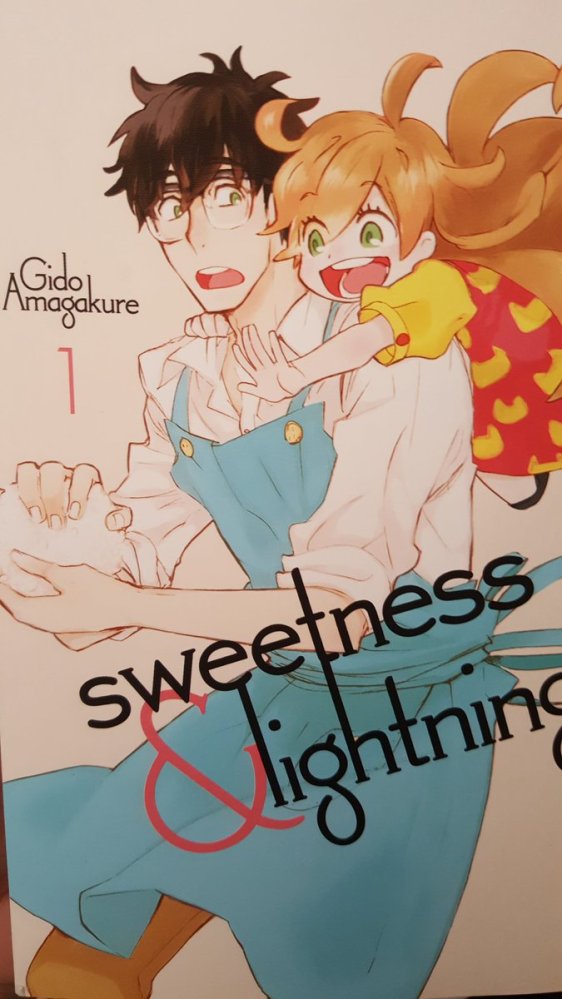
Another bit of news is that Ogiue Maniax has, for the first time ever, been quoted on the back of a manga! The title in question is Sweetness & Lightning:

sweetnesslightningquote2

sweetnesslightningquote

I consider this quite the milestone, and I’d like to thank my readers, but especially my Patreon sponsors in particular for supporting me:

General:

Johnny Trovato

Ko Ransom

Alex

Diogo Prado

Sasahara Keiko fans:

Kristopher Hostead

Yoshitake Rika fans:

Elliot Page

Hato Kenjirou fans:

Elizabeth

Yajima Mirei fans:

Machi-Kurada

I’d also like to congratulate Johnny for winning my Love Live! contest.

Perhaps the biggest news of all for the blog is that Genshiken is ending! I’ve written my review for the penultimate chapter, and I already have emotions welling up inside of me in anticipation for the final conclusion. You’ll be certain that I’ll have a lot to say at the end.

If nothing crazy happens (like a third Genshiken being announced soon after), I’m considering doing a series of nine posts to review the original series volume by volume. What do you think?

Other notable posts this month include my Patreon-sponsored article on Purity in Anime, my reviews of the Kyoto subway tourism light novel, Kyo Girls Days, and Girls und Panzer der Film, as well as a report on my visit to the university on which Genshiken is based.

It’s kind of a hectic month looking ahead, so I haven’t had time to think of any new projects for the blog. For now, I’m still watching and reading through quite a back catalog, with the intention of clearing up some time to finally review Super Dimensional Cavalry Southern Cross for Gattai Girls. Luckily, it’s now on Amazon, free for Prime users and 99 cents per episode for non-Primes. So, I have no excuses left!

Once again, I’ll be at Otakon, so if anyone wants to come up and say hi at a panel, feel free to do so! I’m actually a tad shy in real life, and it can come across as surliness, but don’t let that scare you.

HEY YOU! RIDE THE SUBWAY: Kyo Girls Days Light Novel Review

In my recent visit to Kyoto, I discovered two interesting manifestations of Japan’s interest in anime and manga. The first I first came upon while taking public transit: posters featuring anime-style high school girls who act as mascots for the Kyoto Subway system’s “Ride the Subway” campaign. After being redesigned in 2015 to match a more contemporary anime aesthetic they’ve really caught on, and have even been featured in TV ads:

The second I had already planned to visit, which was the Kyoto International Manga Museum, an archive of countless manga from all decades that is open to the public. Like the girls of the Kyoto subway, the Manga Museum has its own mascot, Karasuma Miyu, to whom I was immediately drawn. I think it’s clear why, given her design:

miyu-and-mamyuu

Now aware of this Ogiue-esque character (though also clearly much more cheerful in comparison), I felt compelled to buy some kind, any kind, of Karasuma Miyu merchandise. This led me to the light novel known as Kyo Girls Days, written by Motoki and illustrated by Kamogawa. Featuring both the Kyoto Subway Girls and Karasuma Miyu, it not only celebrates the subway and the Manga Museum, but also Kyoto tourism in general.

kyogirlsdays

Kyo Girls Days follows best friends Uzumasa Moe, Matsuga Saki, and Ono Misa as they decide what to do for Golden Week. With an initial plan to visit “power spots” all across Kyoto, they end up running into Karasuma Miyu, who works at the manga museum. Not only a manga enthusiast but also a Shinto miko, Miyu imbues the girls with supernatural sight, allowing them to see the various kami and other spirits that populate the old capital that is Kyoto, and transforming their vacation adventure in unforeseen ways.

Light novels can often follow certain trends. They’re frequently designed to be adapted into anime and manga as part of a media mix. They’ll feature young protagonists to whom an otaku audience can relate, with narratives that emphasize wish fulfillment fantasies or twists on well-worn tropes. Others get more creative, and fight against the reputation of light novels as trashy and lacking in substance. However, a promotional light novel, especially one that is an offshoot of a city government effort to encourage more frequent use of its public transportation, is a unique beast all its own. While this means that there’s a certain inevitable sheen of safeness in Kyo Girls Days, the result is actually kind of pleasant given that there’s less concern over whether the narrative is trying to go for cheap titillation, or objective exploitation of the girls beyond their roles as mascots.

If anything, the exploitation takes the form of the girls being a little too upstanding as people. Moe’s primary qualities are her love of helping others and her encyclopedic knowledge of the Kyoto Subway. Saki is sporty and tomboyish, and Misa is the otaku of the group, who even bought a guitar because of K-On! Another important character, Tokyo transplant, photographer, and Moe’s classmate Shirakawa Sumi, is shy and nervous about befriending Moe. None of them have any particular flaws, the closest being that Saki is somewhat impatient, while Misa is kind of lazy and can often be late to gatherings. In fact, there’s actually a scene where Misa arrives late and blames it on the trains, and Moe’s response is basically, “That’s silly, the trains in Kyoto are never late!” as a reminder that, yes, this is promoting public transit.

Nowhere is Kyo Girls Days do-it-all character roster more apparent than in Miyu. She’s a manga fan who has the entire museum memorized. She’s lived abroad, and is not only fluent in both French and English but has extensive knowledge of French and American comics. On top of that, she can communicate with spirits on a regular basis. Miyu is all-powerful and carries within her the view point that manga is indeed international just as it says in the name of the Manga Museum. One other interesting wrinkle to her character being that she’s actually a college student, possibly as a reference nearby Kyoto Seika University’s famous manga program, which supports the Manga Museum.

And yet, I can’t really begrudge Kyo Girls Days. I knew what I was getting into as soon as I picked it up. After all, it’s like going to an aquarium and getting a picture book about the aquarium; no one should be shocked when it talks about how great things are and how everyone should visit. Conscious of that promotional aspect, the story and narrative are actually very fun and engaging. Even though Moe and the rest of the cast’s personalities and characters are a little too perfect, the portrayal of their lifelong friendship feels solid and convincing. Even the introductions of various Kyoto landmarks are interesting because they taught me a lot about the city, and a clever insertion of a quiz towards the end of the manga is a clever wink and nod to see if the reader has been really paying attention.

Another quality I enjoyed about the light novel is that all three of the subway girls speak in Kyoto dialect. It can be hard to follow, but it positions them as true Kyoto natives, and gives their portrayal a more authentic feel.

It’s unlikely that Kyo Girls Days will ever be translated officially, just because its main focus is getting native Japanese people to pay more attention to Kyoto and its subway system. It’s not really something that translates too well to an audience that enjoys light novels (or light novel adaptations) in other countries. At the same time, I wonder if it could be released by a Japanese tourism agency for use in the US and around the world. While it wouldn’t be serving the exact same purpose, it could still motivate people to travel to Japan and check out the Kyoto area.

Pokemon Go: Catching is a Dream, Evolution is a Bore

Pokemon Go is by far the most clear indicator of Pokemon‘s cultural impact in the United States. While there are plenty of other examples, from perpetually high sales numbers to the unprecedented Twitch Plays Pokemon, the way that Pokemon Go literally became an overnight sensation and has people of all ages running around their towns and cities trying to catch Pokemon takes the presence of the franchise to another level.

While I personally am not as obsessed with Pokemon as I was 14 years ago, I still find myself drawn to this new take on an old idea. What I’ve found is that the catching element has made me fall in love with Pokemon all over again, but the way that evolution works still leaves something to be desired.

Over the years, catching Pokemon in the main games has felt fun but also kind of like a chore, especially after playing them for so many years. However, I still remember what it was like to first venture into Viridian Forest in Pokemon Red, the first time I encountered Articuno in the Seafoam Islands, and just that overall sense of wonder when one unexpectedly comes across Pokemon. Even though all of the current species in Pokemon Go come from the classic 151, and so I’m more than familiar with all of them, I find myself getting excited over spotting a Jynx or running into a Squirtle. Even though the ARG elements of Pokemon Go don’t feel like a perfect immersion, they’re good enough.

Where I think the game falters is its current approach to evolving. Instead of leveling up or using stones or trading as one could in the first games, all evolution and strengthening of one’s Pokemon is done through collecting candies and stardust. All candies and stardust, in turn, are obtained by catching more of the same species. This makes it so that, while the catching mechanics are fun, I feel no sense of personal connection to the Pokemon I am catching because I cannot use them in anything other than gym battles. When I get a Pokemon to evolve, they do not feel like comrades with whom I have developed a bond over the course of an adventure, but rather just something I feed sweets without their participation.

Pokemon Go has only just come out, and in spite of its numerous bugs it’s still quite fun to play. This speaks well for the basic appeal of the game, and I think it won’t go away even as it eventually adds newer Pokemon. I just hope that the game will let me feel like the Pokemon I catch matter more than they do, and that I can share my victories, defeats, and growths as a trainer with them.

If you liked this post, consider becoming a sponsor of Ogiue Maniax through Patreon. You can get rewards for higher pledges, including a chance to request topics for the blog.