In many ways, 1984’s Giant Gorgfeels like an “anti–giant robot” anime. Sure, it has Yasuhiko “Yaz” Yoshikazu (one of the chief visionaries of Mobile Suit Gundam) as both director and character. And it’s indeed about a boy and his mecha guardian in the middle of a conflict that stands to change the entire world. But where most giant robot series before and after would aim for some combination of bombast, gritty science fictional realism, and/or gripping human melodrama, Giant Gorg often comes across as more concerned with atmosphere and conveying a sense of place in the world.
Giant Gorg follows 13-year-old Tagami Yuu, a Japanese boy who travels to New York City following clues about the death of his father. This takes him on a whirlwind adventure, all the way to the mysterious New Austral Island, where he learns about a mysterious organization named GAIL that seeks to discover the island’s secrets. There, he encounters a massive robot—Gorg—that seems to obey his every command. With a group of allies by his side, as well as the might of Gorg, Yuu works with the natives to push back GAIL, but he may have an even closer connection to the truths of New Austral Island than he realizes.
I enjoyed Giant Gorg for its moody feel, its excellent artwork and animation, and the fact that it feels more like you’re jumping into a specific time and place in world events. On the other hand, I would not call it “riveting.” While I had the ability to watch many episodes in one sitting, I rarely would watch more than two or three because the anime doesn’t really set itself up to compel viewers to keep going. Events that finish a given episode in Giant Gorg feel like the half-way point for an episode of Mobile Suit Gundam. Whereas the latter might leave you off with tears and shouting, the former more often hits the ending credits with the reveal of a hidden cave or something.
Because of this, Giant Gorg feels unabashedly Yaz. Whether it’s a manga set in the dawn before the Russo-Japanese War or his retelling of the Gundam story in Gundam: The Origin, Yaz tends to focus on giving his stories the same feel as a fascinating but dense historical text. This makes it all the easier to see what he and Gundam director Tomino Yoshiyuki each brought to that franchise—Yaz’s attention to detail and physical realism contrasts with Tomino’s chaotic energy and far-reaching visions. It’s like Yaz is a master baker who can produce incredibly well-made cakes, but never quite got the hang of how to do amazing icing. Giant Gorg, in turn, can feel both like a distillation of one man’s style and half an anime.
As a final note, I want to end off by recounting a sort of “personal history of Giant Gorg”:
I was studying abroad in Japan in 2005 when I saw a commercial for the upcoming DVD release of Giant Gorg. I had heard of the series before, but was mostly struck by how fantastic the robot itself looked. It’s an aesthetic that stayed with me for a long time.
Ten years later, I found myself sitting near the front of the Sunrise anime studio panel at New York Comic Con 2015, alongside my friend Patz. The presenter was going through a list of Sunrise series available in the US, when Giant Gorg came on-screen. The series had been licensed for US release just months before, and as mecha nerds, both Patz and I began shouting with excitement. We were sitting close enough to the presenter that she noticed and, with a surprised look on her face, asked, “Really?” The two of us responded by shouting, “GOOORG!” in unison. We were just excited for the opportunity to own such an obscure and gorgeous piece of anime and mecha history. While Giant Gorg won’t go down as one of my all-time favorites, its flavor is unmistakable and appreciated.
PS: There’s an antagonistic group in the show called the Cougar Connection led by Lady Lynx. The jokes are silly and obvious, but I can’t help chuckling every time it comes up.
Gundam Reconguista in G compilation films Part I and Part II are currently available on the official Gundam Youtube channel. Having previously seen the first film at Anime NYC 2019, I wondered if the smart changes that made Part I significantly better than the TV series would also carry into the sequel. I’m happy to say this is indeed the case.
Gundam Reconguista in G Part II: Bellri’s Fierce Charge continues where Part I: Go! Core Fighter left off. In this era of the classic Gundam‘s Universal Century timeline, the massive space wars of the past are ancient history and the nations of the Earth are managed by a central mediating body known as the Capital Tower, home to a space elevator that receives energy batteries from space and distributes them across the world. Bellri Zenam is the son of Capital Tower’s leader, but after the Tower’s defense force, the Capital Guard, starts to be supplanted by the more militaristic Capital Army, Bellri gets caught up in the middle of a new conflict. As the pilot of the mysterious G-Self, he ends up traveling with what is ostensibly a pirate crew as he tries to figure out his place in the world.
This film continues the trend of being far more understandable compared with its source material, though that’s not to say it’s easy to follow—merely easier. Director Tomino Yoshiyuki’s style can be famously obtuse and bombastic, and that’s the case here as well. However, Bellri’s Fierce Charge establishes the characters more solidly and allows them to act as a focal point for the story. So while the complex and sparsely explained politics of the G-Reco setting can still be a recipe for confusion, viewers can anchor themselves to the emotions of those characters who are often equally confused. If there’s anything viewers might get mixed up on that the characters take for granted, it’s the distinction between the Capital Guard and the Capital Army, which reflects an ongoing debate over the role of the Japan Self Defense Force and Japan’s constitutional anti-war stance.
This is especially the case with Bellri himself, who in the TV series could sometimes unintentionally come across as carefree at best and a sociopath at worst. Here, what should have been a major turning point in his life in the original version gets a proper amount of attention, and you can see the degree to which there is a clash between Bellri’s ideals, his frustration at adults for making the world a worse place, and the decisions he feels forced to make.
Other characters shine as well. Whether it’s Captain Mask, Aida Surugan, or even Bellri’s mom, the strong portrayals of their personalities—facilitated by great animation—give Part II an extra oomph that keeps it memorable and shows the complexity of their world. Yoshida Ken’ichi’s character designs are always excellent, with side character Barara Peor (above) being an especially strong design.
I think the Gundam Reconguista in G movies are well on their way to becoming the definitive version. The new edits and footage take what were excellent but obtuse ideas and criticisms about humanity’s current relationship with war, and convey these ideas much more solidly and emotionally. I would have watched the entirety of the tetralogy already, but now I’m really looking forward to seeing the end again.
One final note: The main theme of Bellri’s Fierce Charge is by the famous Japanese group Dreams Come True, arguably better known internationally as the composers of the first two Sonic the Hedgehog games. The theme, shown above, can be found on their official channel.
In my earliest days of online Gundam fandom back in the late 1990s, the vast amount of information available was like a treasure trove of juicy morsels about what was out there. Among them was mention of a certain novel—“Did you know there’s a sequel to Char’s Counterattack? It’s called Hathaway’s Flash, and it stars Hathaway Noah [sic], who pilots something called the Xi Gundam!”
Though I don’t recall ever asking questions out loud, chief among them were: “Would I ever get to experience this story myself?” and “Why the hell would they make a sequel about Hathaway?”
Now, in 2021, we have Gundam Hathaway, a film (presumably the first of a series) that adapts the novel into animation. Story-wise, it follows Hathaway Noa, now in his 20s and a decade-and-change removed from the events of Char’s Counterattack. Leaders of the Earth Federation have been under attack by a mysterious terrorist named Mafty Navue Erin, and Hathaway’s own history leads to him being in the epicenter of this situation.
The action is impressive and the character animation is gorgeous, though the lack of 2D animation for the robot fights is kind of disappointing even if the 3DCG looks good overall. When the Xi Gundam shows up, you get a real sense of the sheer size of the thing. Compared to even the oversized Nu Gundam and Sazabi from Char’s Counterattack, the long distance from cockpit door to seat sells how much things have scaled up.
But the story of Hathaway, and his internal struggle, is where this first film shines most.
I don’t know how the young me back in 1998 would have reacted to the characters and narrative of Gundam Hathaway, but I think it would have been quite different. A couple years ago, I watched a theatrical screening of Char’s Counterattack, and coming at it as an adult instead of a teen gave me a whole new perspective. The young side characters, Hathaway and the Newtype prodigy Quess Paraya, weren’t irritating fools but simply kids who are failed by adults at every turn.
In this light, an adult Hathaway makes for a compelling protagonist. While he’s portrayed as being far more skilled in combat both in and out of mobile suits compared to his child self, he never comes across as inherently exceptional the way previous main characters like Amuro Ray and Kamille Bidan were. What you have in Hathaway is a child traumatized by war, and who’s trying to prevent his past mistakes from reoccurring as an adult, but who doesn’t necessarily know what the right answer is. Within him are the dueling philosophies of Amuro and Char, clashing and contradicting. He wants to be the everyman and the charismatic leader, the hero who saves the people from both corruption at the top and themselves.
Nowhere is this clearer than his interactions with the female lead, Gigi Andalusia. She’s an eccentric empath who’s probably a Newtype or something similar, Hathaway sees the late Quess in her, and while she can be a thorn in his side, Gigi’s exactly the kind of person Hathaway fights for. If he can prevent more tragic deaths like Quess’s from happening, he’ll do whatever it takes.
I’m looking forward to seeing where Hathaway’s decisions take him, though I know this is Gundam and the chances of tragedy are markedly high—especially because the original novels were written by the original series director Tomino Yoshiyuki during one of his more fiery periods. Whatever the result, Hathaway Noa is a worthy Gundam protagonist.
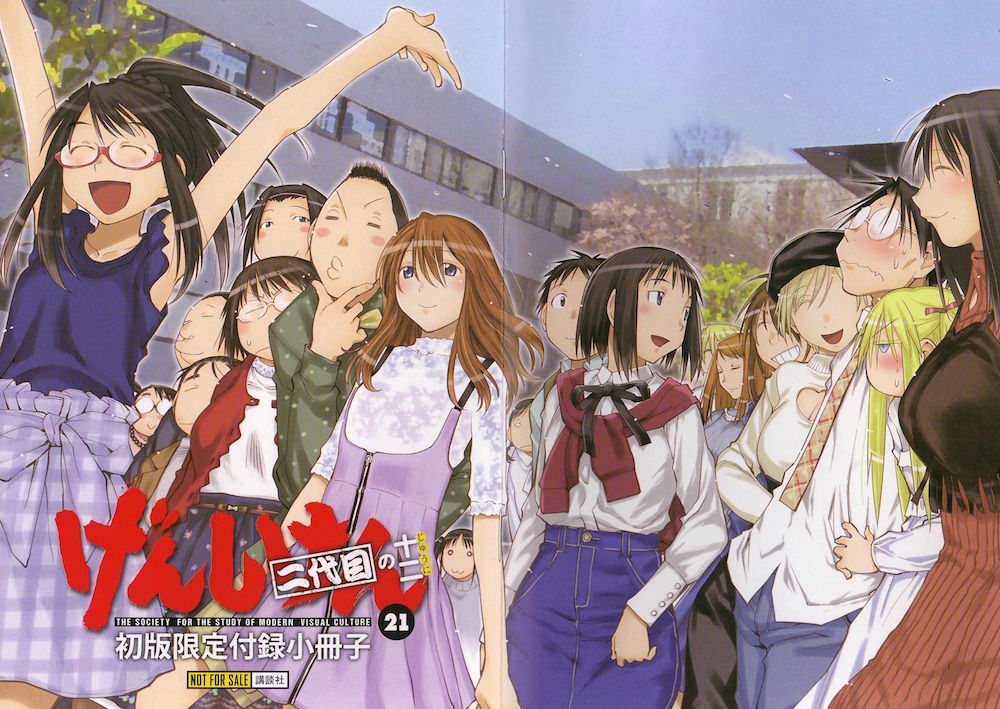
These are tweets from mangaauthor Kio Shimoku from June 2021 that I found notable and informative. They include a number of early sketches from Genshiken, and his dreams of having a vacation home just for building model kits.
Early Madarame. Kio thinks he captured the spirit of the character well. Character descriptions on the drawing include: close-cropped hair, thin, lolicon, high-energy, glasses, and likes fighting games. Originally, he was supposed to be the best at fighting games among the group, and his preferred main was Nakoruru from Samurai Shodown. The notes also describe him as being essentially the leader of the club despite being a second-year, and also that he likes to tease others.
(What I find interesting is that the fighting game skills went to Kohsaka, and that the character gained a lot more vulnerabilities in the actual manga. Those flaws are part of why people like Madarame, and here we see sort of what could have been.)
A 20-year-old photo Kio took of a model kit he built. The robot is the L.E.D. Mirage from Five Star Stories, and the photo was taken with a non-digital camera. Airbrushing was probably involved.
Kio saw Mobile Suit Gundam: Hathaway’s Flash. Even though the Universal Century timeline has been around for a long time, the film is full of imagery he’s never seen before: what first class looks like for civilian space travel, a military mess hall that’s like a food court, the terror of having to move around the legs of mobile suits in combat. He was glued to his seat while watching..
A 1/144 model kit of the Waff from Gundam: The Origin. It’s the only airbrushed Gundam model Kio has, and he likes how it’s small but still looks chubby.
Kio’s first tank model kit: the Panzer IV Ausf.D from Girls und Panzer. Kio mentions not really knowing how to do weathering, and that he used the darkest paint from the Waff on this kit as well. He also likes how sharp the details are.
The first thing that Kio thinks of when he sees the term “plastic model training camp” is Plamo Kyoushirou, the proto–Gundam Build Fighters manga. He recalls wanting to be like the characters taking the kit boxes out and saying, “I’m gonna make the Dougram!” and “I’ve got the Real-Type Zaku!”
After he became an adult, he started collecting them to his heart’s content. It’s why he wants an extra vacation home, so he can have room for all the kits—though actually, he has so many he can’t add any more. But model kits keep on evolving, and he wants to keep up.
Kio continues to describe his dream of a lodging just for model kits that would have all the equipment and features needed to build kits, and stacks of manga to read. Then, he and the others there would go out at night for drinks.
After someone mentions that the possibility is closer than he might think, the conversation mentions a Wonder Festival dealer named “Backyennew.” Kio responds that he knows this garage kit maker.
Kio recalls this crossover drawing between different Shounen Sunday characters. After trying to remember what happens on the next page, a follower answers that it was a kind of fourth-wall breaking moment where they mention that the other manga authors said to do this.
Kio watched the anime film Pompo: The Cinéphile, and thinks it’s a really interesting movie. He talks about how important the editing process is, and recalls that back when he worked on Gonensei [The Fifth-Year], he tried to cram every idea in. For that reason, the progress the character Gene makes as a first-time director is impressive.
By the time of Genshiken, Kio knew how to edit down better, though he actually just took the cut material and turned them into extras in the collected volumes.
The director of Pompo, Hirao Takayuki, is happy that Kio “of Genshiken fame” tweeted about the film. Hirao says he read Gonensei, and that the pain from that manga is still with him today. Kio gives him a big thank-you, mentions how young and inexperienced he was at the time of Gonensei, and compliments Hirao for the highly technical edits. Kio also says the movie being shorter is a good thing, and that he still want so get the second half of the limited-edition extra booklets.
In order to get all the limited-edition goods, Kio went to see Shin Evangelion four times. The fourth time around, he felt he could just sit back and enjoy the movie.
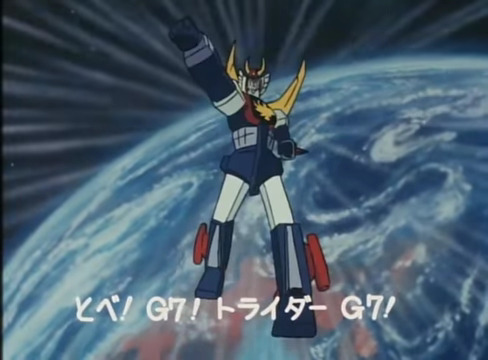
1979’s Mobile Suit Gundam is a milestone in anime history, a show whose evergreen influence as the ancestor of the “real robot” genre has continued across four decades. But like so many innovative and revolutionary works, it’s not as if Gundam changed everything overnight. Nowhere is this clearer than with Gundam’s immediate Sunrise robot anime successor—1980’s The Unchallengeable Trider G7, a series so straightforwardly kid-oriented that it feels like the anime’s goal was to try to turn back the hands of time.
Trider G7 (sometimes written as Tryder G7) is the story of Takeo Watta, an elementary school boy who also happens to be the president of his own business, Takeo General Company. Having inherited it and a powerful giant robot called Trider G7 from his deceased father, Watta has to juggle being a kid who attends school just like everyone else, keeping his company in the green, and defending the Earth from the Robot Empire of Planet Gabarl.
Titled in Japanese as Muteki Robo Trider G7, the anime is considered a part of the Muteki trilogy along with Muteki Choujin Zambot 3 and Muteki Koujin Daitarn 3. But while Daitarn 3 could get extremely serious at times, and Zambot 3 was consistently brutal, Trider G7 steers clear of that mood, instead presenting itself as a lighthearted fantasy for a young boy audience. Nothing sums this up better than Trider G7’s launch sequence, which involves having the robot emerge from the local playground (of which its head is a centerpiece) while a loudspeaker announcement kindly requests everyone clear the area. Unlike its fellow Muteki anime, Trider G7 is not directed by Tomino Yoshiyuki, instead being under Sasaki Katsutoshi. This likely helps the “not-traumatizing” aspect.
Unlike many series I write final reviews for, I did not watch all 50 episodes of Trider G7. Instead, I used the 10 episodes temporarily uploaded by the Bandai Spirits channel on Youtube as a kind of “essential episodes” list, supplementing it with some reading. (Side note: that project in the link provided never got off the ground). While this does compromise my ability to gauge the complete series from beginning to end, I still think it gave me a good idea overall. My verdict: Trider G7 is a pretty mediocre anime, and it feels intentionally so.
I’m not someone who disparages children’s shows or episodic ones, as I believe both have important places in anime. Some of my favorite works are “incident-of-the-week” and aimed primarily at kids, but what I love to see is when they try to really bring something to challenge their audience while still being fairly conventional. Trider G7 only ever seems to hint at greater potential without ever reaching it.
The series acknowledges that Watta is still a kid, and that the burden of being a company president is not easy for someone so young, but it’s mostly played for laughs. The Gabarl Empire is run by a super-AI called Mother Computer Sigma, and one of the recurring flaws of the enemy Mega-Robots is their reliance on pre-programmed data in battle, unlike Watta’s human intuition and experience. This is touched upon somewhat often, notably in an episode where we learn that Trider G7 itself was built by the Robot Empire’s top scientist who had defected due to the soulless nature of his designs, but it doesn’t go beyond “rah, rah, human spirit.” It also doesn’t have a whole lot of style points, given that the robot itself is nowhere near as cool as Zambot, Daitarn, or the Gundam; the animation isn’t even off-the-wall enough to make up for a bland design like with Gold Lightan. Trider G7 does have a female character whose popularity is fairly enduring, an attractive OL named Sunabara Ikue (who also provides the aforementioned loudspeaker warning), but that seems to speak more to her status as an early crush for young boys rather than anything related to the anime’s quality.
I do want to give some praise to the opening and ending themes because of how silly and creative they are. The opening has the amazing line, “Do we fight to protect our company funds? NO! We fight to protect peace on Earth!” The ending, in turn, has lyrics that basically sound like a speech delivered to all employees working at a company, with lines like “The future fate of our company is about 1) guts and 2) effort.” Amazing. The legacy of The Unchallengeable Trider G7 is mainly in nostalgia through things like Soul of Chogokin toys and appearance in Super Robot Wars, where the aesthetic can be updated just enough that it can give adults some sense of what it’d be like to enjoy the series as a child. This is probably for the best, as it’s where Trider G7 shows its strongest self: as a kind of cool, kind of cheesy return to a more innocent era of kids’ giant robot anime.
Mobile Suit Z Gundam is a classic anime series, a successful sequel and a template for other 80s robot anime. One aspect of it that really sticks in my mind but is less talked about is the sound design. In particular, the sound of beam rifles in Z Gundam is rather iconic, as it’s noticeably different compared to every Gundam anime before and after.
I basically never hear that distinct Z Gundam beam rifle sound anywhere else (that’s not just featuring the Z Gundam itself), with one big exception: the fighting magical girl franchise Precure.
I can’t recall exactly when I first heard the use of the Z Gundam beam rifle sound in Precure—I think it might have been in Kira Kira Precure a la Mode—but ever since then, I can’t help noticing it. In Episode 32 of Healin’ Good Precure, the monster of the week makes pretty much that exact sound when firing a blast of energy (see 17:43 in the link).
It’s so strange to me. Of all the places for the beam rifle to show up, why Precure? There’s no studio connection (as Gundam is from Sunrise and Precure is from Toei Animation), so they’re not necessarily working from the same stock library. You won’t even find the sound in other mecha series—though maybe hearing it in a giant robot anime would bring up too many comparisons? I wonder if the sheer genre distance between the two allows Precure to use the SFX? Or could there be some Gundam fans in charge of sound production at Toei who like to incorporate the beam rifle into episodes. For that matter, I think I’ve even heard the classic Newtype flash on occasion while watching Precure.
More broadly, this all makes me want to know why the Z Gundam beam rifle sound just never really went anywhere beyond that one series. Personally, I think it has a great tone that sounds like a powerful yet precise weapon. Perhaps it was too iconic for its own good, but I guess for now, it’ll live on in the battles of modern anime’s most prominent transforming heroines.
Giant robot anime began very squarely in the domain of children. Loud, boldly colored robots appeared on TV (at least, once color TV became common), and the toys based on them came full of fun gimmicks and gizmos. Over time, there was a maturing of the genre in many ways, both in terms of themes presented and the aging of fans, so by the time we got into the 2000s, things changed. Between Pokemon, card games, and more, giant robots have just not been the ticket to big toy sales among kids. Thus, most giant robot anime of the last fifteen years rely more on adult tastes and nostalgia, or at the very least have been aimed at young adults. However, every so often, you’ll see moves to try to reclaim giant robots for kids, and they communicate a reality that mecha alone tend not to capture kids’ hearts in this day and age.
Gundam AGE
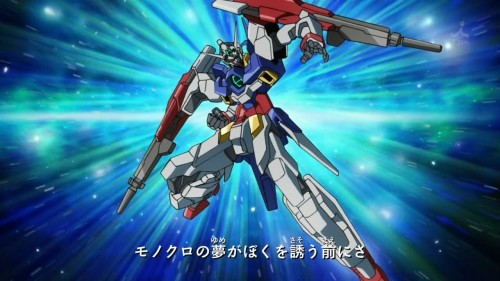
One of the more significant attempts to capture that younger audience was 2011’s Gundam AGE, because of how Gundam is what arguably kicked off the move toward mature audiences all those years ago and because it’s traditionally been such a sales juggernaut. Although keeping the traditional “robots in war” staples, Gundam AGE was a concerted effort to target kids, right down to more toyetic robot and weapon designs. Unfortunately, the series pleased pretty much no one, including me, despite my initially high hopes. The story was a mess, and the model kits failed to attract older and younger customers alike, to the extent that a kitbash of Madoka from Madoka Magica with beefy Gundam arms became more of a sales point than the actual merch. Later Gundam overtures towards kid audiences were more successful via the Gundam Build Fightersand Gundam Build Diversspin-offs, but both treat the mecha as collectible items utilized in virtual environments—closer to the popular style of Japanese kids’ shows.
Chousoku Henkei Gyrozetter
Another instance is 2012’s Chousoku Henkei Gyrozetter, though this one is odd in that what it ultimately tried to promote was not toys or model kits, though some did come out. Rather, like Aikatsu! and Pripara, the bread and butter of Gyrozetter was the card-based arcade game. Ultimately, it was called a major mistake on the part of Square-Enix. Personally, I think the show is very enjoyable, but it’s also arguably better known for its attractive older characters than anything else—so not exactly kid’s stuff.
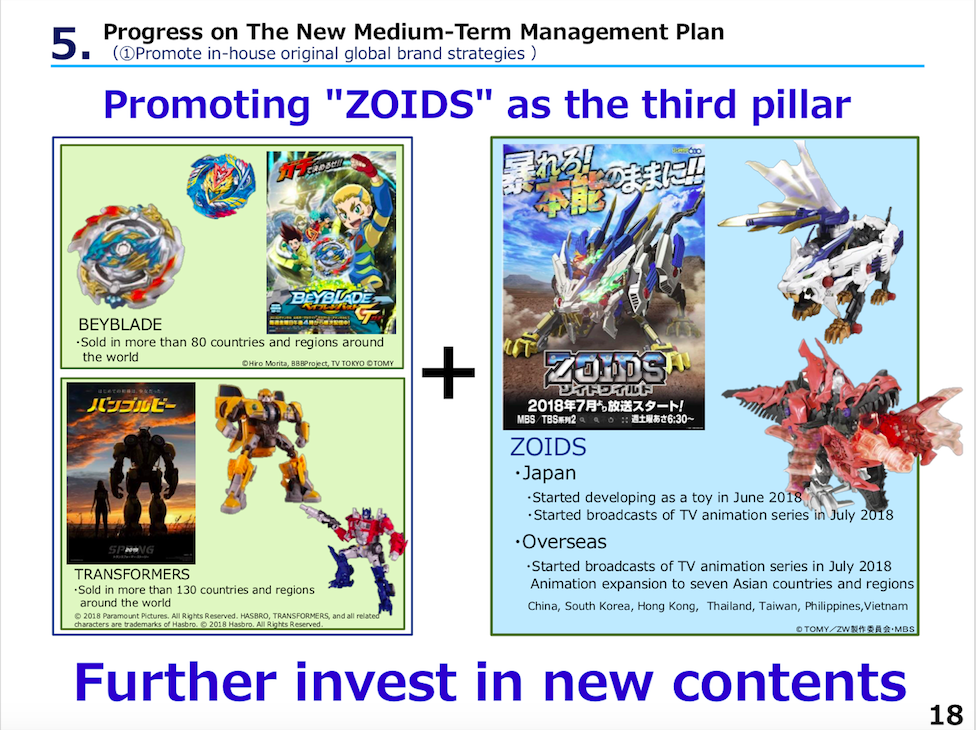
While hitting the mark seems difficult, there is one company that seems intent on making giant robot anime work for kids: toy maker Takara Tomy, the originator of Transformers. In addition to that long-standing international cultural staple (whose success has so many external factors that it’s hard to gauge in terms of success as “anime”), it’s Takara Tomy that keeps taking swings, down to even pushing the ZOIDS franchise as their “third pillar” along with Transformers and Beyblade.
2018’s ZOIDS Wild anime is a continuation of the ZOIDS franchise, which has been receiving animated adaptations since 1999’s ZOIDS: Chaotic Century. Given its longevity, it would be easy to assume that they’re doing something right with their use and portrayal of giant robots, but I think there’s a key factor that keeps ZOIDS relatively popular: the use of animal-shaped robots as opposed to humanoid ones. The more universal appeal of dinosaurs and cool beasts does a lot of the heavy lifting.
Tomica Kizuna Gattai Earth Granner
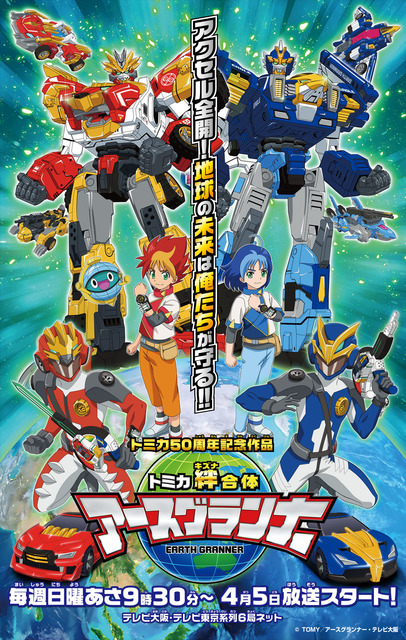
Along this vein, Tomica Hyper Rescue Drive Head (2017) and Tomica Kizuna Gattai Earth Granner (2020) both involve motor vehicles that can transform into robots—and, unlike Gyrozetter, have the many toys to show. The Tomica line is primarily more about cars than mechs, and the toys have enormous success in Asia. Again, the robots are not the main popularity factor, acting instead as an additional flourish to push it over the edge. Transformers, in a sense, combines both ZOIDS and Tomica’s appeals together, while also banking on brand recognition. Moreover, while giant robots are still a staple of tokusatsu, they’re more a secondary component to the color-coded-hero fantasy that defines these live-action series. The previous Tomica tokusatsu series use cars in a similar manner.
Shinkansen Henkei Robo Shinkalion
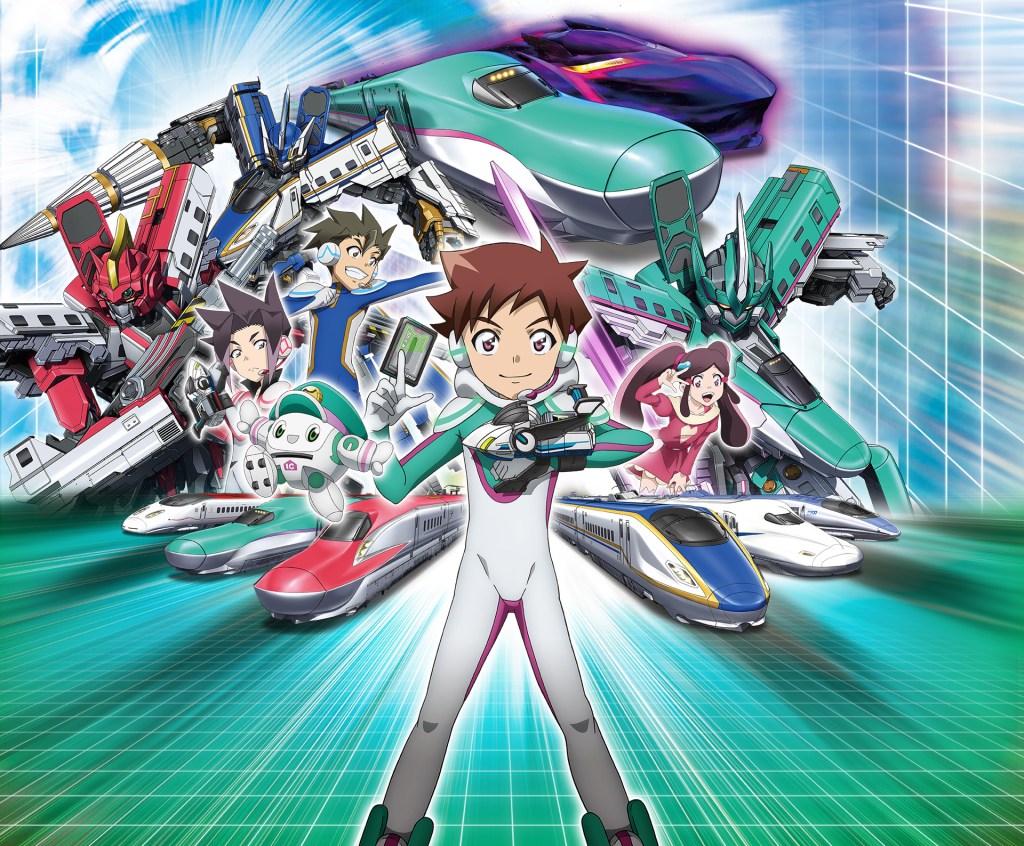
The strangest case might very well be 2018’s Shinkansen Henkei Robo Shinkalion THE ANIMATION is a series about bullet train (“Shinkansen”) robots sponsored by the East Japan Railway Company. Somewhat like Gyrozetter, there’s an unconventional ultimate goal—promoting Japan’s high-speed rail system—but unlike Gyrozetter, the toy and merchandise line is definitely there. In addition, while ZOIDS Wild, Drive Head, and Earth Granner all target boys ages 10-12, I can’t help but notice how aggressively kid-friendly Shinkalion’s aesthetics are, from the character designs to the story. What really makes Shinkalion an oddity, however, is that its success isn’t measured solely in toy sales, but also the degree to which it creates good PR for Japan’s public transportation.
It does sadden me that mecha don’t appear to carry an inherent appeal for kids these days, but I do think that sprinkling in robots can potentially push these franchises into becoming more memorable and enjoyable. Also, I’d like to think that Takara Tomy is laying down a foundation for it to happen in the future, and much like how adults who grew up with super robots in the 1970s grew attached to them, perhaps in a couple of decades we’ll see nostalgia for the Shinkalions and Earth Granners of the world.
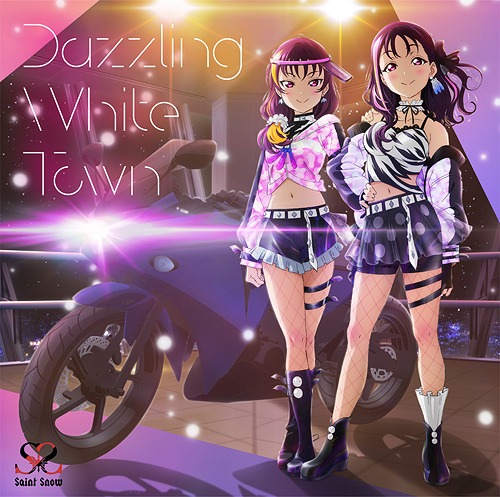
Saint Snow, the rival characters in the Love Live! Sunshine!! anime, just released their much-deserved debut single, Dazzling White Town. While I’ve only been able to hear the online preview, and I’m not a music expert by any means, I find that it further solidifies my high opinion of the sister duo.
One of the best things to come out of the Love Live! franchise, Saint Snow’s aesthetic and musical style tend to be more aggressive than Aqours, which is something I generally prefer. As the counterparts to the main heroines, Saint Snow are allowed to take their music to places Aqours largely doesn’t go. Kazuno Sarah (voiced by Tano Asami) has an elegant yet powerful voice, and I like the incorporation of rap brought by Kazuno Leah (Satou Hinata), as it introduces something otherwise absent in the Love Live! universe. In my view, their performance of “Believe Again” is the absolute highlight of Love Live! Sunshine!!: The School Idol Movie.
Previews of all three songs
Something I find interesting about this single is how all three songs encompass different genres. “Dazzling White Town” is an EDM tune that reminds me of groups like Snap! and M.O.V.E. “Lonely Snow Planet” takes cues from heavy metal like pre-2000 Metallica. “After the Rain” sounds like pop rock akin to Vanessa Carlton and Alanis Morissette. All three songs come across to me as coming out of the 1990s to early 2000s, with “Dazzling White Town” being my favorite of them. I also love the retro game aesthetic and fashion found in the music video.
While it’s unlikely for anything within Love Live! to get extremely experimental, I do think one of the advantages of being associated with a multimedia franchise grounded in fictional characters (as opposed to being solely a musical act) is that there’s greater latitude for them to go into different genres. When a regular band tries something different, they risk alienating their fans. For Saint Snow, their followers care about Sarah and Leah, and I think it potentially allows for the composers, lyricists, and performers to travel stylistically.
I think Dazzling White Town is capable of reaching people well beyond the expected Love Live! fandom, and I would even dare say that it’s capable of standing alone without the association. I hope Saint Snow also eventually gets a full album to call their own, and that the group continues to have a life even as Love Live! Sunshine!! has winded down.
That said, I wouldn’t mind seeing a Saint Snow anime spin-off either, as I think they have the look and feel to be the stars of their own show. At the very least, a Ruby+Leah special would be great.
This post is sponsored by Ogiue Maniax patron Johnny Trovato. You can request topics through the Patreon or by tipping $30 via ko-fi.
January 6, 2020 marked the end of an era as beloved Japanese wrestler Jyushin Thunder Liger retired. His achievements are many, from innovating the Shooting Star Press (now seen in wrestling matches all over the world) to being perhaps the greatest junior heavyweight ever. One thing that stands out to me in his long career is how insane it is that he managed to embrace his ridiculous gimmick, his outward identity as a wrestler, and elevate it to the point of world-wide recognition.
Jyushin Thunder Liger’s name and look is taken from a manga and anime by Nagai Go, creator of Mazinger Z, Devilman, and Cutie Honey. This by itself isn’t unusual. After all, the wrestling manga character Tiger Mask became a real-life wrestler as well. But Jyushin Liger the fictional work isn’t about wrestling or even athletics—it’s about a boy who can summon and fuse with a “bio-armor” to fight evil. The anime isn’t even considered a memorable classic, and yet, Jyushin Thunder Liger somehow made it not just work, but took it over. Now, when you say the words “Jyushin Liger,” you’re probably more likely to get someone who knows the wrestler than the source material. His entrance theme is just the theme song to the Jyushin Liger anime (and makes zero sense in the context of pro wrestling), but rather than being considered hokey, it brings out raucous cheers.
Imagine if a 90s American wrestler was saddled with a Street Sharks gimmick—not even a big property like Teenage Mutant Ninja Turtles—and still wrestled as a Street Shark thirty years later until his retirement brought literal tears to people’s faces. Picture this guy coming out to “They fight, they bite, chewin’ up evil with all their might!” to a standing ovation. That’s basically what Jyushin Thunder Liger accomplished. The closest real equivalent I can think of is the Undertaker, who has played some form of undead wrestling zombe lord (and briefly a American motorcycle rider in the early 2000s) for the majority of his career. Or maybe if RoboCop’s cameo in WCW saw him transition into a regular wrestler who consistently put on great matches.
So here’s to Jyushin Thunder Liger and his global legend. Now let’s see if any new wrestlers come out as Bang Dream! characters.
Another decade of anime and manga has passed, which means it’s time to reflect on all the things that have happened in and around our favorite Japanese art and entertainment forms. With more anime than any time previous, there’s an overwhelming amount of history to look at, so I’m going to be focusing on what I consider interesting and/or important trends.
I also covered some of 2010–2019 through my review of my old predictions, so for the sake of keeping a long post from getting further out of hand, I’ve kept further discussion of topics there to a relative minimum.
Bookended by Tragedy
This decade more or less began and ended with painful events that have shaped and will continue to shape Japan and its anime and manga industries for years to come. March 11, 2011 was the day that a combined earthquake and tsunami struck the Fukushima Daiichi nuclear power plant, causing nuclear meltdowns. July 18, 2019 was the date of the arson attack on Kyoto Animation, killing over 30 people, injuring even more, and leaving the famed studio’s main building in flames.
The Fukushima triple disaster was brought in part by nature but also human negligence at the highest levels of authority, and it destroyed villages, displaced people from their homes, took lives, and contaminated land and water. The area, one known for its rice crop in a nation where rice is a staple food, had to deal with the all-too-familiar fear that nuclear power conjures up in Japan via Hiroshima and Nagasaki.
Fukushima’s consequences are far, far bigger than any one industry, but that’s precisely why they have had an indelible effect on anime and manga. Suddenly, there was the realization that whatever anti-nuclear messages existed in pop culture weren’t enough. It was almost too poetic a timing that Coppelion, a manga about genetically engineered girls having to rescue human survivors in a post-meltdown Tokyo, began only months prior to Fukushima. Anime such as Madoka Magica that were aired during that period suddenly had their surrounding contexts changed.
But the disaster also brought support from across the anime and manga industries to Fukushima and the surrounding Tohoku region. Creators left messages encouraging and praying for a revival, and as the land has started to improve (though to what extent is up for debate), there’s an active push by the government to encourage tourism and purchase of local goods. Anime and manga also play a role here too as part of the campaign to bring people back.
In contrast, the Kyoto Animation attack was like a direct strike to the heart and soul of the anime industry. Not only was it the worst domestic attack since World War II—even worse than the Tokyo sarin gas attack—but KyoAni has been a pioneer of better wages and better gender equality in anime in addition to their creating popular and critically acclaimed works. It’s unclear how the anime and manga industries will react to this over time (aside from better security), but the biggest question mark will be about what could have been.
There was a lot of talent lost, notably The Disappearance of Suzumiya Haruhiand Kobayashi-san’s Dragon Maid director Takemoto Yasuhiro, and it’s sad that they will have the chance to keep working and creating. There is one bright side, however: KyoAni has started up their animation school again, and their mission to prepare the next generation is more vital than ever.
An aside: One odd bit of humor to come out all this was that the days after the disasters, the only commercial on Japanese TV was apparently ads telling people to greet each other more. These drove Japanese viewers nuts, so some of the more artistic ones started turning the animal mascots in these commercials into transforming robots.
Fujoshi Integration and the Permanence of the Otaku Hero
Back when I originally started Ogiue Maniax in 2007, one thing I was interested in was the portrayal of otaku characters, and by extension the fujoshi characters that began appearing more and more at the time. Going into 2010, this feeling was still quite strong, but as I continued to keep an eye on series with otaku in them, it became harder and harder to keep up. The Fujoshi Files, my on-going archiving of fujoshi characters, is on semi-hiatus right now because I’ve simply been overwhelmed by the fact that you just never know when a fujoshi character will show up for two episodes in an obscure TV series. In other words, otaku characters aren’t just commonplace now—they’re arguably an over-saturated archetype.
This is especially the case with the isekai genre and fantasy light novel series, where having an otaku of some kind (it doesn’t necessarily have to be an anime otaku) is de rigueur for the kinds of power fantasies that are ubiquitous in that realm. But the prevalence of the Otaku hero isn’t even limited to that particular world. Onoda from Yowamushi Pedal and Deku from the wildly popular MyHero Academia, both straightforward shounen leads, have otaku minds. At this point, sometimes it’s easier to ask whether a protagonist isn’t an otaku.
Moe in Moderation
Throughout the 2000s, it was “moe” this, “moe” that. There were haters, there were supporters (me included), and those caught in the middle. In 2019, however, it’s past its prime (at least in the old familiar form) to the extent that the term itself has faded immensely in the otaku lexicon.
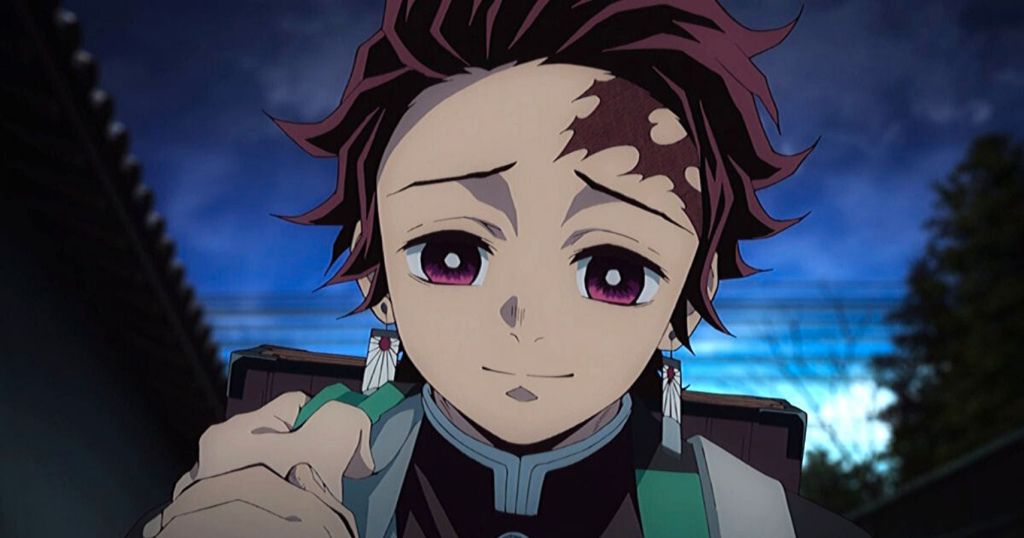
In hindsight, I think of moe as like a food with a very intense and peculiar flavor that is probably good in reasonable doses. The problem is that people gorged on it until they got sick, and had to eventually learn when less is more. The occasional smorgasbord happens, not now you see hints or accents of moe in more things—music, horror, and even the most serious and mature titles. It’s part of why I think sports series have started to gain traction in the United States when there was like success in the past: people realized that the core appeal of sports anime and manga was less the athletics themselves and more the human drama that comes with exploring characters’ weaknesses and struggles. Even a softer shounen hero like Tanjiro in Demon Slayer has moe qualities that quite possibly outstrip even his sister’s tremendous qualities.
I one commented to anime podcaster and ex-Crunchyroll guy Evan Minto that Eureka Seven was a moe show. He found it absurd, but I was serious, because moe came from empathizing with its characters vulnerabilities. Just because a character can be moe doesn’t mean they’re useless, and I think that’s a big lesson that has been taken to heart by anime and manga as a whole.
Plus, you can still totally find all-you-can-moe buffets whenever you feel the need to go nuts.
American-Style Superheroes
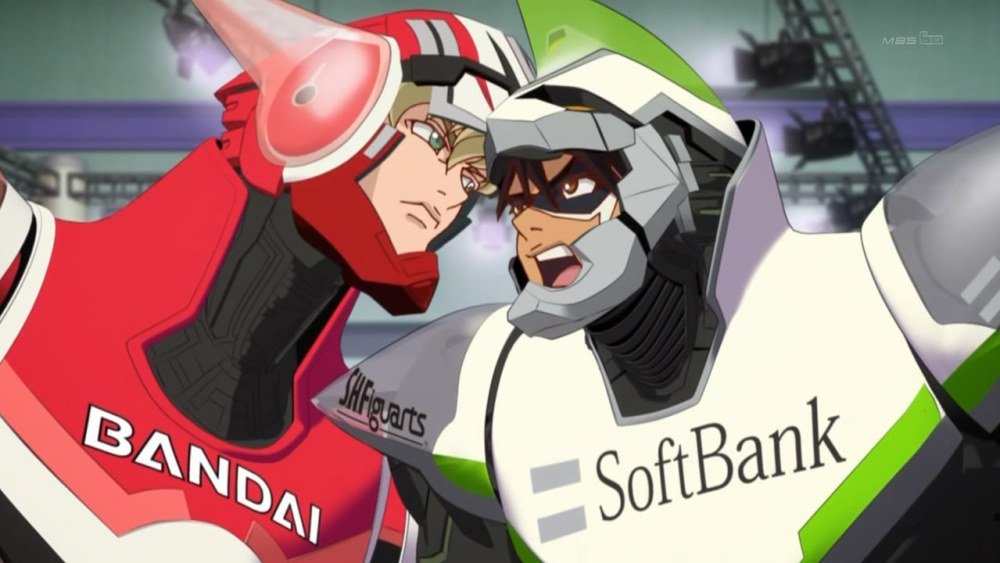
Perhaps due to the success of the Marvel Cinematic Universe, the American conception of the superhero (in contrast to the Kamen Rider, for example) is now a regular part of anime and manga. Putting aside the Marvel and DC co-productions, this decade has seen Tiger & Bunny, One Punch Man, and My Hero Academiaall reach enormous success (albeit not always for the same reasons). You also have series like Heroman, and the fact that Disney’s Big Hero 6 film has a Japanese protagonist perhaps says something about the desire for international appeal.
It’s interesting that so many specifically embrace an American aesthetic, whether it’s red, white, and blue motifs in its characters or American-style cities as settings, and it really speaks to the fact that they’re aiming for that “capes” aesthetic. However, what’s even more noteworthy is the way these manga and anime have been embraced by superhero comics fans as being better at telling superhero stories than many current American comics.
Superheroes also create an amazing bridge for being American comics fans to come to manga and for manga fans to check out American comics. It’s perhaps easier than ever to transition between the two.
Steps Towards Mainstreaming LGBT
Queer romances have long been a part of manga and anime—Hagio Moto’s Heart of Thomas from the 1970s is generally considered the first one shounen ai manga. The portrayal of BL and yuri can differ significantly from real relationships, with the former often being for the pleasure of non-queer audiences, but this openness has attracted many fans, and there are more and more works that try to support a queer audience as well. But Japan is still in many ways a conservative culture, and positive mainstream depictions of non-heteronormative characters can come with a lot of baggage.
While there is still a ways to go, there is a general trend towards more consideration for LGBT characters these past ten years. Gatchaman Crowds, for example, features three characters each with different types of non-cishet expression, going beyond the original Gatchaman and Berg Katze’s dual genders while keeping them respectful. Genshiken Nidaime (aka Second Season aka Second Generation) has a crossdressing fudanshi with complicated feelings at the center of it’s story who tries to navigate the difference between BL fandom and homosexuality. Yuri!!! On Ice features the gradual development of a clearly gay relationship as its core, but its lack of standard BL flourishes engendered a debate about whether it should be called BL at all. Tagame Gengoroh’s My Brother’s Husband won both Japanese and international acclaim.
One stand-out example of LGBT becoming a little more mainstream in anime and manga, to me, is how it’s been handled in the Precure franchise. While it’s always had its yuri fans, and Kira Kira Precure A La Mode even strongly hinted at something between two of its characters, it’s 2018’s Hugtto! Precure that made an entire subplot out of the burgeoning gay relationship between two minor characters—one of whom is implied to struggle with his self-directed homophobia. While the franchise still doesn’t have the courage to say the word “gay,” it at least has these characters holding hands, giving hearts to each other, and telling presumably very young viewers to not let anyone else define who they are. Sailor Moon had Neptune and Uranus, but this is another layer.
From Sekai-kei to Game-like Isekai, Ironic Isekai, and Beyond
In the previous decade, one of the popular genres of Japanese fiction, especially in the realm of anime and manga but also light novels and games, was sekai-kei. Literally meaning “world-style,” it’s actually almost the opposite of what you probably think. Instead of being focused on world-building, it’s about stories where the outcome of the world rests upon the relationship between two characters. I would call Haruhian example of sekai-kei because their fate rests upon Haruhi and how Kyon interacts with her.
I feel that, since 2010 or maybe even a little sooner, we’ve been seeing fewer and fewer sekai-kei stories. In their place has been a surge in isekai (transported to another world stories) that’s impossible to ignore.
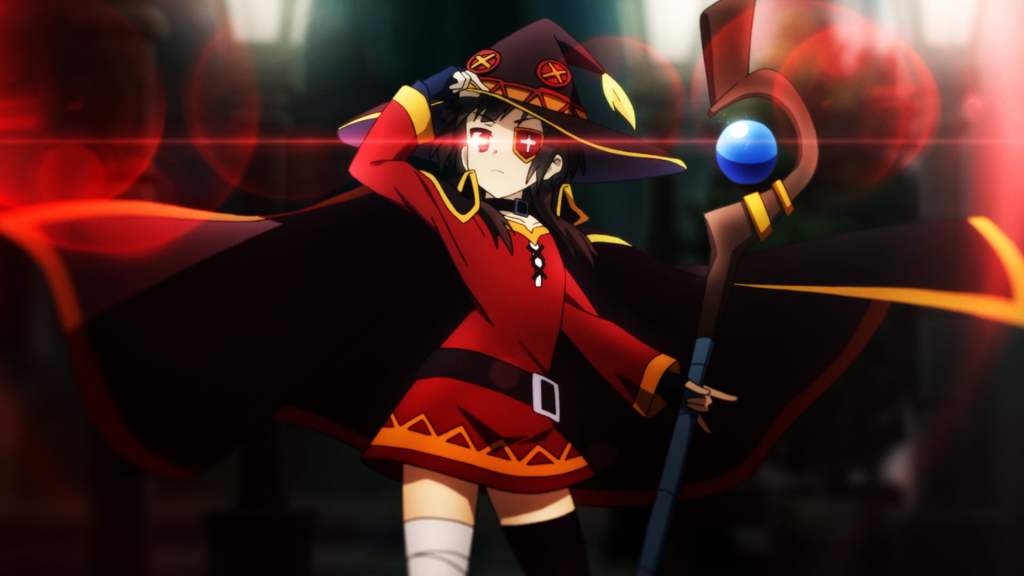
Isekai is nothing new, and there are examples in modern Japanese fiction dating back to the 1970s. Even Gundam director Tomino’s Byston Well series is an isekai. The big difference now, however, has been the game-like approach to isekai. Whether the hero is literally trapped in a video game (Sword Art Online, Log Horizon) or where it’s simply an extremely game-like universe (KonoSuba, Re:ZERO, Overlord), there’s a presumption about RPGs as a common-knowledge experience. Here, the fate of the world usually rests on the hero who’s simultaneously underpowered and overpowered. Rather than necessarily being about exploring the new world, these stories have been mostly either power fantasies or responses to power fantasies.
Japanese scholar Azuma Hiroki wrote about “game-like realism” in the sense of a reality with no beginning, middle, and end, and plenty of alternate realities. While it doesn’t map perfectly, current isekai can be seen as a kind of attempt to wrangle these notions back into a straightforward, albeit open-ended and often meandering format.
Isekai has gotten so prevalent that some online novel contests have even begun to forbidisekai entries. But it also means that it’s ripe for parody. The Devil is a Part-Timer! is a reverse-isekai where a hero and a demon lord end up in modern Japan. The Hero is Overpowered But Overly Cautious plays on an idea that many RPG players are familiar with: making absolutely sure everything is perfect to the point of virtual neurosis. They’re not all winners, but there’s a desire to explore isekai as an archetype, and it’ll be interesting to see how far this goes.
The Ascendance of Mobile Games
Part of the story of the 2010s the world over is the rise of mobile games, and in Japan this translated to character-focused gacha. These digital waifu and husbando slot machines are a powerful thing, and the devotion they engender can veer straight into “gambling addiction” territory, but it also can’t be denied how much of an influence they’ve had on anime, manga, and fandom.
Consider the Fate franchise, which went from being once defined by its original visual novel to being known primarily through the absurdly successful and profitableFate/Grand Order mobile game. Also look at Granblue Fantasy, which helped make the company Cygames into a major player—the Granblue Fantasy anime shows a budget few can even dream of.
Even The iDOLM@STER, which began as console games, has in part taken on new life by having a virtually limitless selection of idols to obtain through its apps. Love Live! found success through various channels, but there are many people who became fans solely through the School Idol Festival game. And Kantai Collection technically started as a browser game, but it’s cut from a similar mold, and it’s notable that it’s become one of the franchises that dominates Comic Market.
There have been tons of light novel anime and manga adaptations, but the amount of works based on mobile games steadily increased over the decade as well. This doesn’t mean they’re inherently bad—Rage of Bahamut Genesis is one that sticks out to me as exceptional—but it’s certainly become a crowded field where “adaptation as advertisement” and “adaptation as mark of prestige” exist in the same space.
Anime as Faithful Reproduction Instead of Creative Interpretation
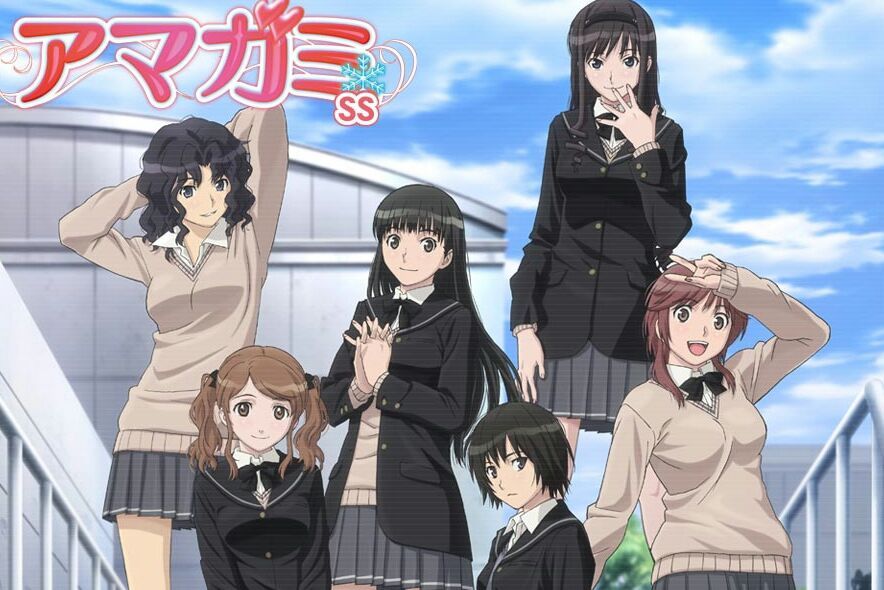
In decades past, whenever there was an anime adaptation of something with multiple paths—a dating sim, for instance—the common approach was to synthesize all of the different routes into a single story with the canon heroine being the winner. But starting in 2010 with Amagami SS (or possibly something even sooner) it started to become more common to adapt every path. Each couple of episodes was basically a different what-if where the protagonist ends up with a different girl. The most extreme version of this might be the movies fully dedicated to the alternate stories of Fate/Stay Night, Unlimited Blade Works and Heaven’s Feel.
In a way, it’s an extension of what we saw with Kyoto Animation’s adaptations of Key games. While those shows still synthesized all the routes, there was a more active adherence to the look and feel of the source material, right down to using the original theme songs. Anime, rather than trying to do its own thing with the material given, is more likely to try and stick to the script. Filler arcs or anime-original material were out, and season delays were in, for better or worse. 2009’s Fullmetal Alchemist: Brotherhood (intentionally made to follow the manga’s story more than the first anime) also set a precedent.
Fantastic Remakes
Not everything is about adhering to a source material, however. While nostalgia is a strong force in media and entertainment, it’s still possible for a remake or re-imagining is able to go well beyond and turn into something unique and special. Every decade has its own fair share of excellent revivals, but I found the 2010s to be full of especially smart and creative takes on classic franchises. The aforementioned Gatchaman Crowds took the idea of the superhero team and pushed it into an age of social media and gamification. Devilman Crybaby is essentially the original Devilman manga retold, the signature art style of Yuasa Masaaki gave it new life and also highlighted the fact that a lot of the 1970s manga’s theme resonate just as much, if not more today. The Rebuild of Evangelionmovies have all been impressive and have dared to go in strange directions, though we’re not actually seeing the conclusion until 2020 rolls around. In the most on-brand move possible, director Anno Hideaki became depressed after the third film, and it wasn’t until he directed the excellent Shin Godzilla (another update to a classic franchise) that he found the spark to go back to Shinji and friends.
Official Simultranslations
Once, getting translated anime and manga the day after release in Japan was a foolish dream. Then, with the advent of high-speed internet it became technically possible—but it was the domain of speed subbers and speed scanlators, with the requisite decline in quality. But now we’ve had a decade of not just quick releases but ones that are official, whose success can and will be noticed by Japan. Crunchyroll, HiDive, and Comixology are among the many resources available to fans, and while Netflix is often not technically a simulstream most of the time, its presence in the world of online streaming can’t be denied.
This is partially a tale of the direction of technology. More smartphones and better tablets mean streaming decent-quality images is more likely than ever before. Gone are the specific limitations of the past that made trying to view anime and manga a chore. It’s also the story of Japan being dragged into the current age, as much as its companies (especially manga) have tried to resist the digitizing of these mediums.
The amount of legal digital anime and manga options is ever increasing even in Japan. Comic Walker and Book Walker make following new releases almost trivial. Bandai Channel is more expansive than ever. Many manga publishers have series that start off as free webcomics now. Notably, the second iteration of One Punch Man started on Tonari no Young Jump. The amount of digital users keeps rising around the world, and it’ll likely not stop for a long time.
What Lies Ahead
While it’s mere coincidence, the fact that Japan is heading into the next decade of anime and manga alongside a newly coronated emperor seems poetic. For Part 3 of the 2010–2019 series, I’ll be giving my predictions as to where I think anime and manga will go in 2020 onwards.





 OGIUE MANIAX