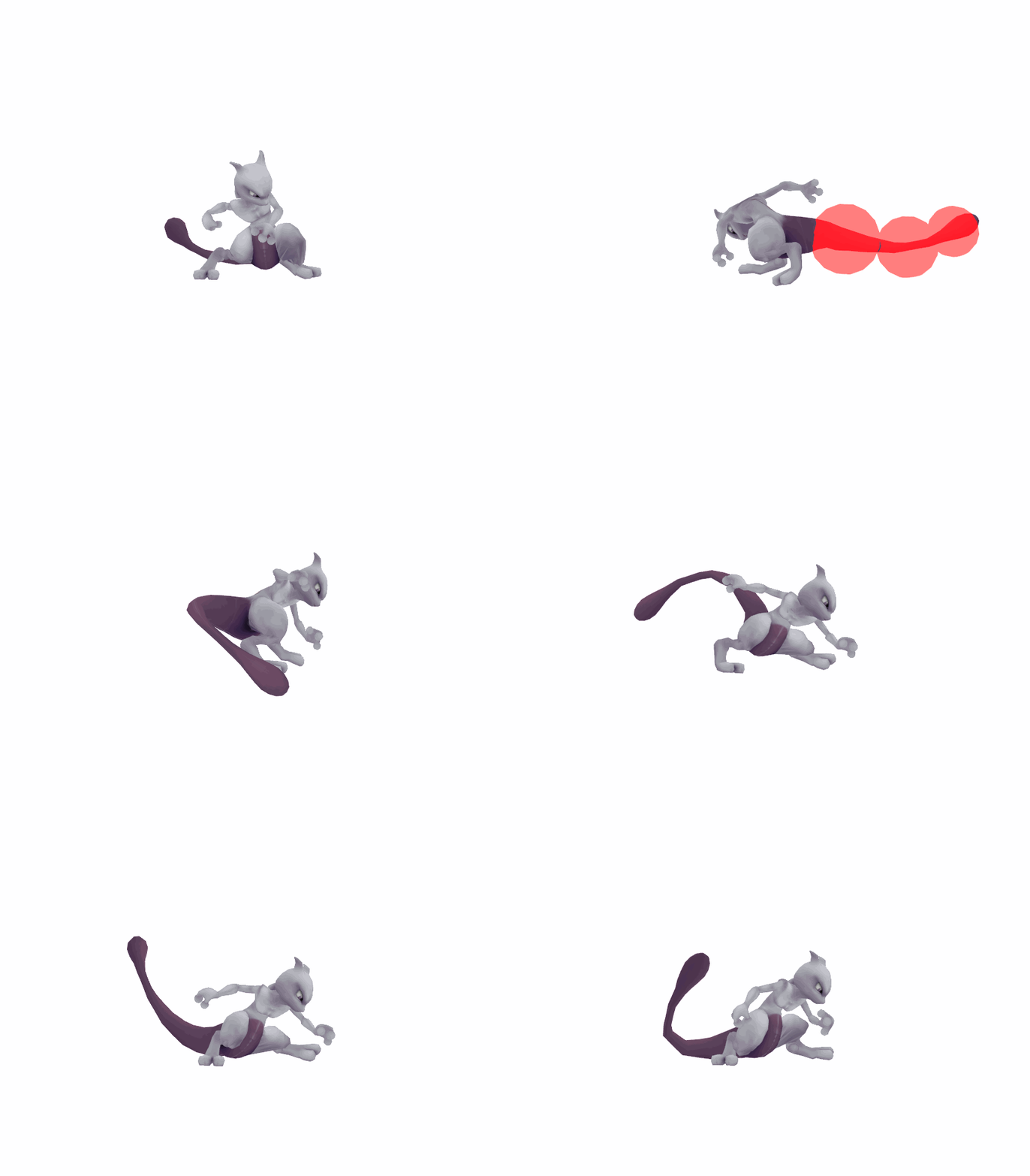
This past weekend was the international Super Smash Bros. tournament known as Pound 2016. There, in the stacked, 500-man bracket for Smash Bros. for Nintendo 3DS & Wii U, a Mewtwo took home the gold for the first time ever at a major event. To a Mewtwo player such as myself, this is undoubtedly the most significant result thus far in the history of the game.
The player behind Mewtwo was Abadango, who at this point is a well-known name in the Smash 4 competitive community. He’s used a great number of characters throughout the life of Smash 4, and whether it’s been his creative Pac-Man, his dangerous Wario, his punishing Meta Knight, or now his Mewtwo, Abadango’s play turns heads. As someone who values deadly powerful combos and setups, the recent litany of improvements to Mewtwo have made the character an enticing choice for Abadango, though he has also expressed concern on his stream over its unforgiving nature. Nevertheless, Mewtwo’s worked out for him. Cutting through a sea of difficult opponents including VoiD’s Sheik and Ally’s Mario, Abadango made Mewtwo look deceptively simple, but anyone who knows the character is well aware that Mewtwo is anything but.
Mewtwo’s history in Smash 4 is a wild one. Designed from Day 1 to be a “glass cannon,” a character that is strong offensively but light and easy to KO, Mewtwo has benefited both from dedicated players pushing the character forward (such as LoF Blue, Mew^2, Killer Jawz, Rich Brown, and The Reflex Wonder) and from the “hand of God,” as the Genetic Pokemon might be the most buffed character in Smash 4. Mewtwo is now faster, hits more reliably, combos better, and more. The number of improvements that have been bestowed upon Mewtwo are nothing small, though it’s worth pointing out that among many fans of Smash for the past three months (since the buffs started happening) that people still doubted Mewtwo’s prowess. How could Mewtwo possibly be truly good, when the character is still very large, extremely light, and easy to juggle? The answer is, with an amazing versatile kit that allows Mewtwo to exert pressure at almost every point during the game.
Don’t underestimate Mewtwo’s Down Tilt
Even in its darkest days, I never believed Mewtwo was truly a terrible character. Due to the unforgiving nature of its design (second lightest character in the game), Mewtwo makes you feel terrible for your mistakes. One wrong move and you can end up questioning your own existence. A Mewtwo played to perfection would still have been a force to be reckoned with even before the patches, but reaching that point and maintaining it was easier said than done. Now, I believe that a sub-optimal Mewtwo is still going to feel the sting of their mistakes (only Mewtwo now has more tools to avoid those mistakes in the first place), while a refined Mewtwo is easily high or even top tier. The fact that the top Mewtwo players present such a range of play styles—aggressive, defensive, technical, slippery, mind game-oriented—shows just how much potential the current Mewtwo holds.
That said, I think that the biggest change to Mewtwo that has come with the improvements both in the players and in the character is that Mewtwo now has access to a powerful ingredient that it lacked previously: fear. At first, Mewtwo could not instill fear in opponents, and that meant Mewtwo was always on the back foot because of how easy the character is to KO. Now, things are different.
It’s not just any fear, however, but more of a fear that’s mixed with the sweet scent of opportunity. When you fight Mewtwo, and you’re on your last stock while Mewtwo has a 60% lead, you’re aware of how good Mewtwo is at dealing damage and sealing stocks.
Then you remember, Mewtwo’s light and easy to kill. Opportunity knocks. “All you need to do is capitalize on one or two mistakes and the game isn’t just even, it’s arguably in your favor due to the weight disparity!”
The temptation is there, but so is the terror. Case in point, in an interview after winning the weekly tournament Wii Bear B-airs, LoF Blue mentioned that he switched from Sonic the Hedgehog to Mewtwo because the threat of Mewtwo’s myriad kill options forces the opponent to play differently at key moments.
A similar pressure is also placed onto the Mewtwo players, who are aware of how fragile their character is. If you’re down as Mewtwo it’s possible to make it back, and all you need to do is to not get hit, ever. A good Mewtwo draws strength from this tension, from teasing that glimmer of hope while still emanating a threatening aura.
If you’ve decided to pick up Mewtwo after Abadango’s win, I have one piece of advice for you: Be prepared to cry into your oatmeal as you die at 65% off of one critical mistake. Half the battle is a mental one. You have to maintain your composure as you’re getting bodied, or else the psychological damage you take just gets worse and worse. If you still stick with the character even after all that abuse (or maybe you’re kind of a masochist), then you’ll find a strong ally.
Also, if you’re interested in learning more, check out Dabuz (the best Rosalina in the world) and his analysis of Abadango’s Mewtwo:
—
If you liked this post, consider becoming a sponsor of Ogiue Maniax through Patreon. You can get rewards for higher pledges, including a chance to request topics for the blog.
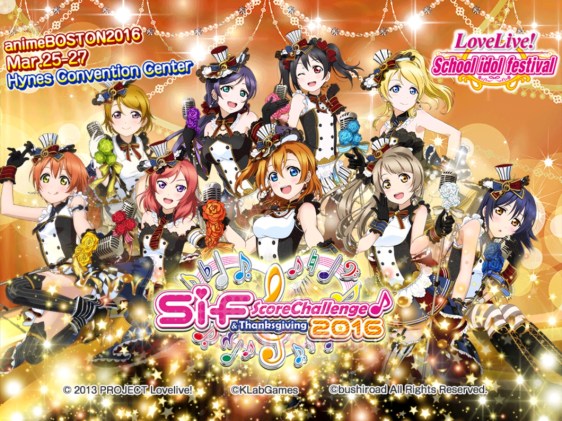
Coinciding with Anime Boston, this weekend, March 25-27, 2016, coincides with the first ever Love Live! School Idol Festival tournament, titled “School Idol Festival Score Challenge & Thanksgiving 2016. Given this occasion, a few questions come to mind. First, how sound is LLSIF as a competitive game (are we indeed “esports”)? Second, how many people will show up? Third, are people actually viewing this more as a tournament, or more of a gathering of like-minded fans?
Rhythm game tournaments have over the years been a staple of arcades and anime cons alike. Right beside the fighting games of Chinatown Fair were the sounds of stomping and eurobeat from Dance Dance Revolution, Beatmania, and other games of their genre. One big difference between LLSIF is that luck is a heavy component of the game, and this potentially hampers its competitive depth.
Not to say that luck automatically precludes or is counter to skill (because it doesn’t), but between being a free-to-play mobile game that encourages you to funnel money into what is essentially a gashapon machine (or a blind booster pack, to take a term from trading cards), and the fact that given cards have effects that trigger at random, a lot is left up to probability.
Compounding the issues of luck, actually, are things that involve no element of chance whatsoever. There is an upper limit to how skilled one can be in School Idol Festival, in the sense that perfect play is simply hitting all of the notes, well, perfectly, and this can be accomplished even with a randomized note distribution. If there are theoretically perfect teams (different for each tournament song, I’d imagine), then it actually all comes down to how often those card effects will trigger for individual players.
Does all of that matter, though? While I have not asked those who are personally attending Score Challenge & Thanksgiving 2016, I have to wonder how many are actually motivated by the desire to win. Perhaps in the backs of their mind they realize that the perfect game is at the same time all but obtainable yet shackled at the feet by that specter of probability. In that case, it becomes more about displaying one’s skills, to show that one has the fingers or thumbs to impress and astound.
In the world of competitive games, “waifu devotion,” that is to say an inclination towards beautiful female characters is very real. Whether the ladies are the best characters in the game or the bottom rung, players will stand by their girls. Love Live!, with its all-female cast of charmingly unique characters, is waifu central, and many who play LLSIF are empowered by this mentality. This does not even fall along heteronormative lines, either. Female Love Livers have their waifus just as male fans do, and the range of their affection goes anywhere from empathic to platonic to lecherous. On some level, I don’t think that hunger for victory is the sole motivating factor behind even LLSIF’s most competitive players.
That last question I asked, about whether this will be more of an actual tournament or more of a gathering in the eyes of attendees, is something of a trick question. Aside from a few exceptions, pretty much all game tournaments, big or small, esports or otherwise, inevitably carry with them some degree of a festival-like atmosphere. The larger the total attendance, the more likely this is to happen, because people know that they are in the company of comrades, at least on some level.
In other words, I hope all of you attending have the times of your lives.
Out of all of the new characters introduced in Super Smash Bros. for Nintendo 3DS & Wii U (aka Smash 4), the Mii Fighters are among the most contentious in its competitive scene. Based off of Nintendo’s official user avatars, Mii Fighters can look like anyone, wear unique costumes, be any size (within certain limits), and have access to a full range of special attacks, more than any other characters by default. Ever since they were introduced, there has been an on-going debate as to what extent Miis should have access to their full range of customization (size, visual design, attacks). Recently, EVO 2016 announced its Smash 4 ruleset to include only 1111 guest-sized Miis, locking them into a specific size and a specific set of special moves that many Mii players deem unfair.
However, I’ve noticed a tendency on both sides to try and pass off some often small, minor detail as a deciding point that completely negates the opposing side’s concerns, when in fact many of these points have holes to them.
In my opinion, trying to build some watertight argument about Mii Fighters is ultimately futile because they’re mostly arbitrary. In showing this arbitrariness below, however, my goal is to actually direct the whole discussion towards the subject of the characters’ emotional resonance. The decision to #FreeMiis or not is ultimately about a base of players who want to play the character they want, and the discussion should go towards an emotional compromise.
Keep in mind that I am neither for nor against full Mii Fighters, so I have no hat in this race. Also, I’m coming from the perspective that, as far as we know, Mii Fighters do not have any extremely unfair advantage against the rest of the cast.
1) The “Menu” Argument
Aside from DLC, all characters in Smash 4 can get custom moves just like the Miis. Previous tournaments have tried custom moves for the entir ecast, but the general trend has been away from that direction. This is the reason why many tournaments that allow Miis require a single moveset and default to 1111.
Mii players point out that, even in a Customs Off environment, you can select Miis with non-1111 special moves. Thus, the argument goes that, if the UI deems it correct, then so it should be. The fact that customized Miis are also available in non-Customs online tournaments supports this idea.
The problem with this particular argument is that the Smash Community has never based its decisions on what the menu or standards tell them is correct. For Glory is played with 2 stocks/5 minutes, and Online Tournaments impose a 3-minute time limit on matches with “amount of damage done” being the criteria for a tiebreaker. Actual tournaments on the other hand go either 2 stocks/6 minutes or 3 stocks/8 minutes (that’s a debate I won’t go into), and handle tiebreakers differently.
Along these lines, the menu argument can be turned against the Mii Fighters just as much, because they by default do not appear on the character select screen, and must specifically be created in order to show up. Moreover, when you create a Mii Fighter, their attacks also default to 1111 and you have to specifically choose different ones.
The ability to twist the menu argument in either side’s favor is why I think it’s a point of disagreement that should just be dropped. It’s unproductive and kind of silly to begin with, especially because of how it’s used as “scientific” proof.
As an aside, Super Street Fighter II Turbo had hidden characters called “Old Characters,” alternate versions of the existing cast with different properties that could only be selected by navigating the character select screen in very specific ways to input a code. Ultimately, only one character out of these was controversial, and for the most part they are an accepted part of the game.
2) The “Adapt” Argument
There are three Mii Fighter archetypes: the Brawler, the Swordfighter, and the Gunner. Each of them has access to 81 possible combinations of special moves, though some are clearly superior to others lessening the number somewhat. One point of compromise is forcing Mii Fighter players to use only default size pre-made Miis that come with Smash 4 to avoid having to upload Miis to the system and create delays at large tournaments, but if size differences are allowed the amount of combinations goes into the thousands. There are small differences in frame data, endurance, reach, and power when adjusting size parameters that can make a difference in competitive play, where even shaving one frame off of a move can be the difference between it being useful or useless.
One argument against full custom Miis is that the ability to pick whatever moves you want is an unfair advantage when other characters cannot do the same. Why should a player have to prepare for all of these combinations of Mii Fighters, and why should the Mii player be able to cherry-pick their moves? Instead of that, it is argued that Mii Fighters need to learn to deal with having one moveset.
Full Mii supporters argue that players are already dealing with 55 other characters, and that having a lack of knowledge as to how Mii Fighters work is ultimately the fault of the opposing player. According to this point of view, Mii Fighters changing special moves is not nearly as drastic as someone who goes from Mega Man to Bowser, two characters that are different in nearly every aspect), so it’s arguably easier to adapt to that than a full character change between sets.
On either side of this fence is the implication that the opposition needs to learn how to “adapt.” In an age of balance patches for competitive games in general, where players will frequently complain that they need an official update in order to use their character competitively, it has become increasingly common to admonish newer players for their inability to roll with the punches and take the advancement of their characters into their own hands.
Just like with the “Menu Argument,” both sides can twist a this philosophy to their advantage. Why shouldn’t players adapt to new patches just as much they should adapt to a lack of patches? Similarly, the Limited/1111 Mii side argues that Mii Fighters need to learn to fight effectively with a locked moveset, while the #FreeMiis side argues that those against Full Miis should be able to handle the variations. Adapting has to happen at some point. I feel that if only there could actually be some compromise between both sides, it would go a long way towards settling this issue.
3) The “Mii Gimmick” Argument
This argument is derived from the idea that each character for the most part has some unique feature that defines them and their gameplay. Little Mac has KO Punch, Cloud has Limit, Ryu has Special Inputs, and so on. A lot of these features are not part of the standard Smash character, and so it’s argued that the variable movesets of Mii Fighters fall into the same category. In past games, you could even choose to transform into different characters, so why is that allowed but not full Mii moveset options?
What I find odd about this stance, however, is that it works ever so conveniently in the #FreeMiis contingent’s favor. When it’s pointed out that Palutena is built around a similar principle, it goes all the way back to the “Menu” Argument, that the simple press of the “Customs On/Off” icon is the dividing line that prevents Palutena from reaching her full potential but allows Miis more or less free reign. There are also some players who don’t just want to have custom moves but want to be able to switch their moves in between tournament rounds or even within individual matches, all under the umbrella that it is the “Mii gimmick.”
The idea that the spirit of the Miis is lost when you’re unable to play them exactly as you want them might be to some extent true, but competition isn’t necessarily looking at how the characters align with their players on a personal level. The use of Guest Miis already puts a damper on everyone who wants to be Proto Man or James Bond or any other custom Mii design, so at the end of the day it really is about the moves.
This does not mean that Miis should be restricted to 1111, but the idea that they should be allowed their full range of moves at nearly all times is as arbitrary a line as 1111, or, say, making it so that all characters have to use 1231 regardless of which Mii Fighter they’ve chosen. The question I want to ask here is, do Miis lose all purpose if you can’t customize their moves, and if so, is that a problem?
4) The “Moveset Synergy” Argument
It is objective fact that fully customized Miis have greater potential to succeed competitively than 1111 Miis, by virtue of the fact that, not only are many of the non-1111 moves significantly better, but the ability to pick just the right moveset for the character you’re facing allows you to maximize the effectiveness of your special moves. If you are a Mii Gunner and you are fighting a character without a projectile, you have less of a reason to use your Echo Reflector special move. If you’re a Mii Brawler, who normally is good at racking up damage but has trouble killing, getting access to Helicopter Kick gives the character a potent kill option, thus making them more rounded in general.
I think anyone who looks at Mii Brawler’s 1111 moveset will notice that it’s pretty bad. Why do they have both Soaring Axe Kick and Head-on Assault, when those attacks are pretty redundant? This potentially points to the idea that the Mii Fighters are not designed for 1111 at all, or even if they were the game is ultimately not hurt by them having their best special moves.
The problem with this position is that not all characters have perfect synergy in their movesets either. It is not necessarily an oversight, or something that is supposed to be ripe for the changing. Characters are generally designed to have pros and cons, and while they can’t totally erase many of the physical properties of a Mii Fighter, having special moves synergize better can be used to shore up their weaknesses. However, to go back to the “Adapt” Argument, the idea that it’s not right for Miis to have flawed existences can apply just as much to other characters. Maybe Mii Brawler is supposed to have trouble killing. Maybe Gunner is supposed to have holes in the projectile and range game. Who’s to say they’re not meant to be like Ganondorf, with very clear and extreme upsides and downsides?
Final Thoughts
I think the core of the Mii Fighter problem isn’t that Miis are too good, or they’re too bad, or anything actually having to do with competitive viability or fairness. The issue at stake is that Mii players do not feel much gratification playing 1111 versions of their characters. Without the right moves, they become emotionally empty vessels, perhaps all the more appropriate that they’re supposed to be combat-oriented versions of personal online avatars. That being said, I have to wonder if Mii Fighters could potentially provide “just enough satisfaction.” Mii Fighter users all seemingly want their preferred movesets no matter what, but perhaps it could be enough to have 50% or 75% a the preferred combination. For example, if everyone who cares about Miis were able to vote on a common moveset that had just enough appeal to all of the various Mii contingents, then maybe that sort of compromise is worth looking into.
—
If you liked this post, consider becoming a sponsor of Ogiue Maniax through Patreon. You can get rewards for higher pledges, including a chance to request topics for the blog.
Today marks the 20th anniversary of the Pokemon franchise, and I for one am happy to see one of my favorite video game franchises thrive and improve to this day. With each generation of games, Pokemon has expanded its world view by drawing inspiration from cultures around the globe, taken advantage of newer technologies that help to connect players, and have refined themselves to be fun, accessible, and even a bit challenging once the human element comes into play. Although I think the games have evolved for the better, however, there is a certain experience I miss from the earliest days of Pokemon.
To celebrate, Nintendo is releasing the original Pokemon Red, Blue, and Yellow on Virtual Console (Japan gets Green as well). Yet, having it on virtual console means that new (and old) players won’t have that feeling of being able to instantly recognize a fellow Pokemon player.
I started with Pokemon Red myself. I would play everywhere while keeping an eye out for comrades. If I saw a bright red or blue cartridge sticking out the back of a Game Boy (often at this time the Game Boy Pocket), I would go up to them and ask if they wanted to trade or battle. The cartridges were beacons that drew Pokemon Trainers together, and sadly with the way that Nintendo’s portable devices have been designed over the past 15 years or so it’s not really possible anymore.
It’s not all Nintendo’s doing: I got older and I learned more and more about competitive Pokemon. I used to participate regularly on sites such as Smogon and its old school predecessor, Azure Heights. From there, I eventually became too aware of what it took to make a strong team. As time passed I found myself with less of a desire to create my perfect ideal team, leveled up to 100 with lots of synergy and strategy but also full of the Pokemon I like, and I stopped being eager to challenge people. Either that, or Stealth Rock is total BS and I wish it were removed from the game or was not so danged powerful (seriously!).
Maybe that’s the day this all changes. Maybe I can dive back into the intricacies of Pokemon. I mean, I do own a Pokemon XY 3DS so maybe I can use that as a calling card like the days of old. In the meantime, here’s a list of some of my favorite Pokemon blog posts throughout the years:
PS: Fun fact, I tried to find my original Pokemon Red…then remembered it got stolen out of my locker during gym class. Ah memories.
—
If you liked this post, consider becoming a sponsor of Ogiue Maniax through Patreon. You can get rewards for higher pledges, including a chance to request topics for the blog.
With Go Princess! Precure finally over, I feel like this is when the winter anime season truly begins. I hope that you’ll enjoy coming along the ride with me.
I’d like to thank the following Patreon supporters this month.
General:
Johnny Trovato
Ko Ransom
Alex
Diogo Prado
Yoshitake Rika fans:
Elliot Page
Hato Kenjirou fans:
Elizabeth
Yajima Mirei fans:
Machi-Kurada
In particular, I’d like to welcome back Johnny Trovato. He was the source for many past topics through Patreon, including posts on the Tokyo Olympics and Censorship, Touhou vs. Kantai Collection, and the rise and fall of Saimoe. If you’d like me to write about a specific topic on Ogiue Maniax, it’s a perk you can get for the highest reward tier on Patreon.
This past month has brought a lot of interesting changes for me. Outside of Ogiue Maniax, I recently started contributing articles to a site called Apartment 507. They were looking for someone who communicate with the hardcore Japanese pop culture fans that comprise their audience, and I’ve been happy to oblige. The main reason I got this gig was because of my efforts on Ogiue Maniax, so I am grateful to my readers here for reminding me of the value of writing and that, simply put, anime and manga are awesome.
I decided not to include those posts on the Patreon page itself because they’re not technically being supported by my patrons, but I have been linking to them on the blog itself. Just look for the [Apartment 507] tag in the title if you’re wonder which posts are which.
As for the blog proper, I think I’ve written some of my best work this past month. I wrote a response to another blogger where I talk about some of the problems that come with evangelizing sakuga, a review of the powerful new film The Anthem of the Heart, and of course the latest Genshiken chapter review. If you haven’t been keeping up with Genshiken, or even if you have, this chapter is a big deal, so I recommend you check it out! By the way, I’ve noticed that my Genshiken reviews are some of my most popular posts. I guess that shouldn’t come as a surprise but I’m actually really happy that I’ve established myself as a source for interesting insight into Genshiken.
January also marked the return of the Fujoshi Files with a historic Fujoshi #150. I have to confess that these might get more sporadic as I don’t have as much time to research fujoshi-themed anime and manga as much as I used to, but I do strongly believe that we’ll hit #200.
In addition, I decided to do something a little different and interview a Super Smash Bros. for Wii U competitive player. Earth, the world’s best Pit, is actually also a mahjong and The iDOLM@STER fan, so I had to ask him a few questions.
The last thing I want to say is that I’ll be traveling to Japan in May! I’ll be releasing posts the whole way through, and when I get back I’ll have plenty more to talk about. And yes, I will be getting all of the dagashi (have you been watching Dagashi Kashi? I highly recommend it).
In the competitive world of Super Smash Bros. for Wii U, the Japanese player known as Earth is widely considered the best Pit main in the world. Over the past couple of months, he’s placed 13th at Genesis 3, one of the largest Smash tournaments ever, defeated Ranai (the best Japanese player) to take his first championship in Japan at KVO, and has even gotten engaged!
KVO Grand Finals Set: Earth vs. Ranai
It turns out that Earth’s not just a skilled Smash player, he’s also a competitive mahjong player and a fan of The iDOLM@STER! Given that his interests align quite a bit with my own, I decided to ask him a few questions over Twitter, which I’ve translated and transcribed below (with some small edits for flow). Remember to follow him on Twitter at @earth_tyt!
Why did you become a Pit user? What is Pit’s appeal to you?
Earth: I like characters with no glaring weaknesses and an orthodox style of play with plenty of possibilities, so that’s why I became a Pit user.
Pit appeals to me because he’s all about observing your opponent’s actions and exploiting their weaknesses in neutral. In this respect, he has good moves you can throw out such as dash attack and up smash. I also just like his visual style. :)
Do you have any advice for other Pit users?
Earth: I think that Pit is a character that rewards a player’s hard work and effort. That’s why I want more people to use Pit.
Earth vs. SlayerZ at Genesis 3
So you’re not only the best Pit player in the world, you’re also a mahjong player!
Earth: I love mahjong as much as I love Smash Bros.!
Where do you play mahjong online? Or do you prefer to play at mahjong parlors?
Earth: Tenhou! I also go to mahjong parlors! (* ‘-‘) b
What rank are you on Tenhou?
Earth: I haven’t played much as of late, but I’m a 5-dan* on Tenhou. (´△`)
How has your experience with mahjong influenced your play in Smash Bros.?
Earth: I’ve competed in a lot of mahjong tournaments, and it’s taught me to have strong nerves. In a good way, it’s made me into someone who doesn’t get shaken emotionally. That’s something I’ve brought to Smash as well.
You’re also a fan of Yayoi from The iDOLM@STER. What do you like about her?
Earth: I like everything about her! But if I had to choose, it’s because Yayoi always tries her best and is always thinking about her friends and family. (´ー`)
Thank you!
*NOTE: Ranks on the Tenhou ladder go from 9-kyuu to 1-kyuu, then from 1-dan to 10-dan. 5-dan is quite difficult to achieve and typically requires a great deal of skill, practice, and dedication.
—
If you liked this post, consider becoming a sponsor of Ogiue Maniax through Patreon. You can get rewards for higher pledges, including a chance to request topics for the blog.