Darling in the NYCCs: Ogiue Maniax Status Update for October 2018

New York Comic Con is this week. I’m hoping to see Nozawa Masako (the legendary voice of Goku) at the Dragon Ball Super: Broly film showing. I wish she had a signing—she plays Tetsurou in my favorite anime ever, Galaxy Express 999—but alas.

Thank you as always to my supporters on Patreon and Ko-fi, especially the following!

General:

Johnny Trovato

Ko Ransom

Diogo Prado

Sue Hopkins fans:

Serxeid

Hato Kenjirou fans:

Elizabeth

Yajima Mirei fans:

Machi-Kurada

My favorite posts from September:

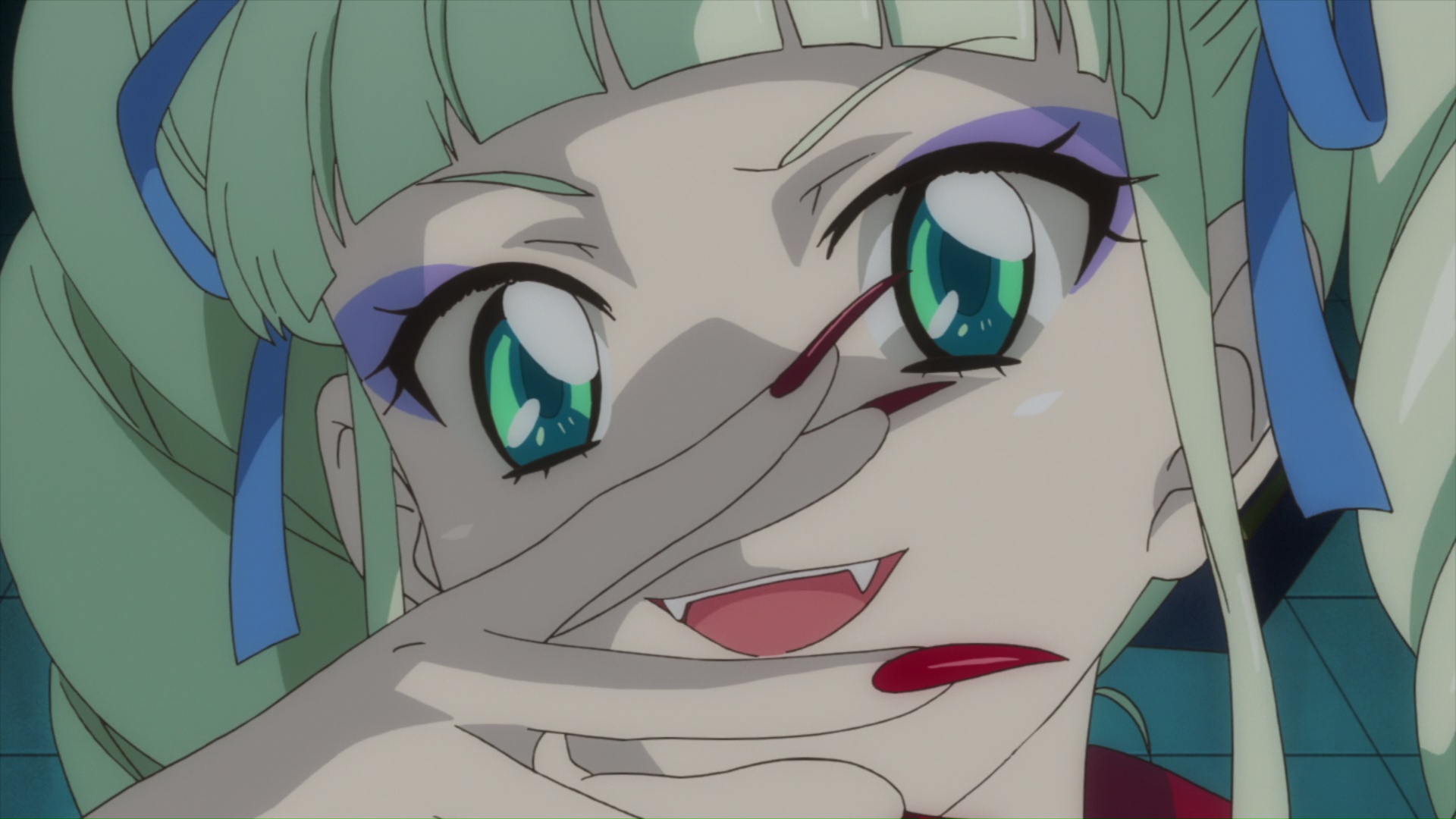
On Loli Vampires, Fiction, and Morality

A complicated topic I’d been wanting to write about for a while: the complexities of morality when it comes to large age gaps in fiction.

Akira Yuki (Virtua Fighter) for Super Smash Bros.

My interpretation of how Akira would work in Smash!

Please Tell Me! Galko-chan and Portrayals of the Nerd/Bombshell Romance

How does the uniquely insightful, uniquely horny Galko-chan handle one of the classic romance tropes?

Hashikko Ensemble

Chapter 8 puts the spotlight on Koizumi Himari, a childhood friend who’s more than meets the eye.

Patreon-Sponsored

Aikatsu Friends! Choreography Has Won Me Over

The dancing has improved in Aikatsu! and notably so.

Closing

This month is actually my first ever wedding anniversary! It’s crazy to think that I’ll have been married for one whole year. Here’s to love.

Aikatsu Friends! Choreography Has Won Me Over

I generally enjoy the AIkatsu! idol anime, but one aspect of it that never really hits me the way I think it’s supposed to is the idol performances at the end of each episode. As I watch Aikatsu Friends!, however, I feel like that’s finally changed for me.

I’m no expert in song and dance choreography, but the impression I get is that Aikatsu Friends is better at integrating those performances into the show itself. To some extent, I think this has to do with the improvements to the 3DCG that have happened to the franchise over time, but I don’t think it’s just about technical progress. Instead, I find that the performances themselves give a far better sense of who each character is, and what makes them tick.

Yuuki Aine

Protagonist Yuuki Aine is new to being an idol, and it shows. She’s not the best singer, and her dance moves are pretty simple, but they highlight her natural authenticity, and the friendliness that is her most outstanding quality.

Minato Mio

Minato Mio, her partner, is known for a kind of perfectionism that isn’t overly obsessive, which is reflected in the subdued music that accompanies her performances, as well as her simple yet graceful movements.

Asuka Mirai

Where it stands out to me most is the fact that Asuka Mirai, one of the top idols in the series, performs differently alone compared to when she’s a part of the duo Love Me Tear. As one half of a whole, she and her partner Kamishiro Karen exude elegance and maturity. When she’s by herself, however, Mirai is all about a kind of wry playfulness—the quality she exhibits when she’s trying to help Aine get comfortable acting for television.

The song and dance routines in Aikatsu Friends! encapsulate what we’ve learned about the character, or what the characters themselves have learned during the episode. Somewhat similar to how a different kind of show might take all the lessons presented during the episode and boil them down to a conclusion by the end, these performances leave a lasting impression about who these individuals are and why they strive to be idols.

This post was sponsored by Johnny Trovato. If you’re interested in submitting topics for the blog, or just like my writing and want to support Ogiue Maniax, check out my Patreon.


Gangplank Galleon All Day Every Day: Ogiue Maniax Status Update for September 2018

The summer is coming to an end, but here I am still feeling jitters from the August Super Smash Bros. Ultimate Nintendo Direct. I was stoked when they announced King K. Rool, especially because the official version matches my fan concept version pretty closely!

As for my Patreon and Ko-fi, I’m thankful to all those who continue to support Ogiue Maniax. Thanks to the following!

Thank you to…

General:

Johnny Trovato

Ko Ransom

Alex

Diogo Prado

Sue Hopkins fans:

Serxeid

Hato Kenjirou fans:

Elizabeth

Yajima Mirei fans:

Machi-Kurada

The past month has been quite comfortable overall for Ogiue Maniax; even the strange Patreon non-payment issue didn’t affect me too much. Instead, what I’m struggling with (though “struggle” is a bit over-exaggerating) is trying to strike the right balance between how much I write about anime and manga and how much I actually engage with the stuff. I’ve been spending a lot of time recently watching and reading more than blogging, and it’s helped to refresh my mind and inspire new ideas. However, if I write less than I usually do in a given week, I can feel myself getting a bit lazier, and wanting to put things off more and more. It’s as if there’s a groove that I can ride to putting out lots of good content, but staying with it for too long can wear me down.

That said, here are my favorite posts from August.

Kio Shimoku’s Kagerowic Diary and Its Influence on Genshiken and Spotted Flower

Some of Kio’s old manga is getting new special-edition releases! Here’s a look at an early work of his, and the footprints it has in his more recent titles.

Otakon 2018 Interview: Kawamori Shoji

My one-on-one interview with the creator of Macross, Aquarion, and more!

Tatanga for Super Smash Bros.

After about a two-year hiatus, I’ve gotten back to drawing Smash Bros. character concepts in celebration of Super Smash Bros. Ultimate! So far, I’ve done Tatanga and Turrican.

Hashikko Ensemble

Chapter 7 of Kio’s new manga has some introducing new characters. Among them, one awesome mom. 

Patreon-Sponsored

The Big O and Loving Robots

A look at artificial intelligence, love, and agency.

Closing

I of course am also stoked for Castlevania being in Smash. Let us celebrate with some fine tunes:

The Big O and Loving Robots

Warning: Spoilers for The Big O.

Artificial intelligence is one of those staples of science fiction, a bridge between the mechanical and the biological. For if an AI can achieve true sentience, it entails a whole host of questions about the meaning of life. In anime, one recurring topic is how artificial intelligence intersects with love—whether AIs are capable of love, and whether it is morally right to love an AI.

While something like Chobits is more (in)famous in its approach to the subject of love and AI, my favorite example is actually the mecha anime The Big O. While not the central narrative, protagonist Roger Smith’s relationship with his robot assistant R. Dorothy Wayneright is an ongoing plot thread that grounds an otherwise stylishly obtuse series.

Throughout The Big O, Roger is often verbally dismissive of Dorothy, bringing up her android qualities as evidence of what makes her unable to compare to humans. However, this is portrayed as a kind of denial defense mechanism, as he gradually finds himself attracted to and more in love with Dorothy. The impression is that Roger believes he’s not supposed to love her, and that perhaps he’s only drawn by her created and manufactured traits. Yet Dorothy, despite exhibiting very “robotic” mannerisms, seems to have an all too human side of her. And while her characteristic monotone is a source of comedy, it also seems to be a defense mechanism of her own—a constant reminder for herself and Roger that there are supposedly limits to how close they can be.

In one episode, Roger and Dorothy are Christmas shopping, and Roger steps into an elevator. He beckons Dorothy to get in as well, and she initially hesitates. When she finally does join Roger, the elevator comes to an emergency stop. Dorothy, weighing many times more than any human, put it over the weight limit. A moment of awkwardness ensues between the two, at least visibly on Roger’s side. Whether or not Dorothy is bothered by it is difficult to discern due to her apparent nature. Still, Roger and Dorothy seem to share a special connection. Nothing says more about their relationship than the iconic shot of Dorothy inside the Big O, her hand over Roger’s as he readies for a fight against three enemy Megadeuses at the end of Season 1.

Underlying all of this is the notion that love comes part and parcel with sentience. If Dorothy is nothing more then an android whose artificial intelligence is nothing more than a highly advanced computer, then that love feels “wrong” for Roger. But if it speaks toward a complexity beyond prediction, then Dorothy is an equal to Roger and therefore just as capable of love and being loved. In that situation, she must possess agency, and cannot be an object merely to be used. She must be her own being to the point that she can love or not love, and then make decisions of her own as to whether or not to follow along. In other words, it is morally right to love an AI if they can truly reciprocate, if human and robot stand on even footing.

This post was sponsored by Johnny Trovato. If you’re interested in submitting topics for the blog, or just like my writing and want to support Ogiue Maniax, check out my Patreon.

Kon Kon Otakon Iroha: Ogiue Maniax Status Update for August 2018

It’s August, and another opportunity to express appreciation for my supporters on Patreon and Ko-fi. I try to live up to your contributions!

Thank you to…

General:

Johnny Trovato

Ko Ransom

Alex

Diogo Prado

Sue Hopkins fans:

Serxeid

Hato Kenjirou fans:

Elizabeth

Yajima Mirei fans:

Machi-Kurada

August means one of my favorite times of the year: Otakon season! Hopefully my wait-listed panel will magically get in, but in the meantime I’ll be on Patz’s Mecha Fight Club panel on Saturday at 9am in Panel room 7. Come by to hear me and others nerd it up about giant robots.

There is a more serious matter when it comes to Otakon, however, and that’s the fact that a white nationalist rally is going to be held the same weekend in Washington, DC. My fellow con attendees, please remain safe, and pity these idiots for putting so much energy into anger and hate.

Speaking of dealing with racists, I’ve recently begun revising my informal policy when it comes to blog comments. It’s not like I receive tons of comments these days, but I’ve come to realize that the concept of “let the ideas do the talking” only really works if the goal of everyone talking is to actually learn something. The alt-right/white nationalist agenda tries to feign actual debate but just wants a podium to posture and look strong. So if I see anyone arguing in bad faith, I’m basically deleting their comments. Simple as that.

But if you want to argue in good faith, here are my favorite posts from July.

Darling in the Franxx: Thoughts on a Divisive Anime

A show that people seemed to either love or hate, I give my own thoughts on a show where viewers can’t even agree what it’s about.

The Important Lesson Nadesico Teaches Us About Entertainment

One of my old favorites has an important message in these current times, about the strengths and pitfalls of pop culture entertainment.

Precure: The Crossroads of Voice Acting

A look at how a 15-year-old franchise brings veteran and newbie seiyuu alike.

Hashikko Ensemble

Chapter 6 sheds new light on Akira, and is in certain respects the most interesting chapter yet. If you didn’t know Kio Shimoku has a new manga, now’s the time to read up on it!

Patreon-Sponsored

The Newest Nekomusume is the Obvious Character Evolution

What began in 2007 continues in 2018.

Closing

Otakon! Whoooooo!

The Newest Nekomusume is the Obvious Character Evolution

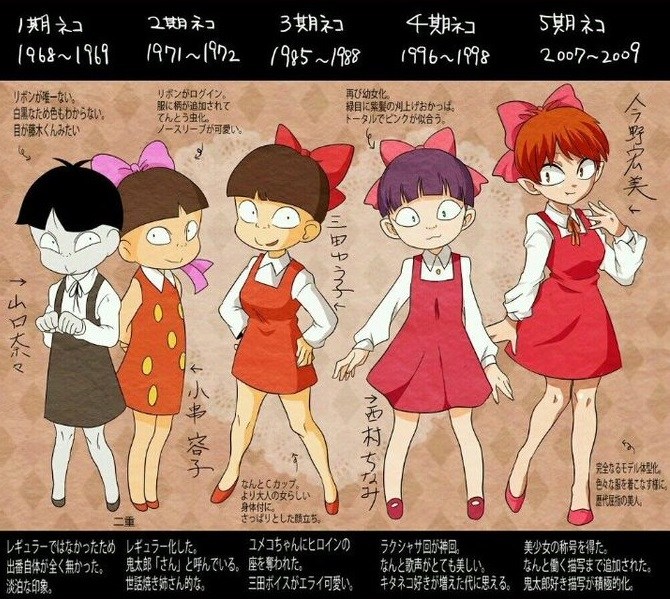
The 2018 anime Gegege no Kitaro, the latest in a long line of adaptations of the classic occult manga by the same name, features a certain character who stands out from the rest. Tall, leggy, and full of attitude, Nekomusume (“Catchick” in the Crunchyroll translation) is the biggest departure from Mizuki Shigeru’s original designs out of everyone in this new series. While this might have once been considered uncharacteristic of Gegege no Kitaro, it’s an unsurprising development based on what started 11 years ago.

In 2007, the image of Gegege no Kitaro was changed forever—by moe. Nekomusume, once as strange and bizarre as every other creature in the series, was suddenly…cute. And not just prettied up a little, either. Nekomusume went from being ostensibly a catgirl (the literal meaning of her name) to being practically exemplar for the character archetype.

The fanartists noticed. Oh, did they ever. Seemingly overnight, she was one of the most popular subjects around. Some artists, previously known for their sheer variety of subject matter, suddenly had a noticeable Nekomusume bias. And as was inevitable, a good amount of it was varying degrees of lewd. This was the general direction of Nekomusume in the online fandom, right through to 2018.

While going back to the designs of iterations past would’ve been a respectable decision, the current Nekomusume takes the opposite route, pushing the sex appeal up by five notches. Whereas the 2007 version could be considered cuteness made hot by the fans, this current character is built to be hot from the ground up, and in a more contemporary way as well. She’s a combination of snobbery, ferocity, and tsundere attitude—just one of many elements in an anime that asks, “How does the Showa-era franchise stay relevant in modern times?”

Nekomusume, despite towering over Kitaro and being clearly designed to appeal to a contemporary audience, actually doesn’t feel too blatantly pandering or forced. It’s an overall strength of the series, actually, that an updated series doesn’t come across like an old man in a cane asking, “What’s the haps, fellow kids?” The show also lets her face turn grossly demonic when she fights, so she’s not perfectly beautiful all the time. And if people are gonna look at Nekomusume though perv glasses, at least this one is designed with more adult proportions.

That does make me wonder if any of the diehard fans of the 2007 Nekomusume rejected this version. Which will ultimately be the most enduring design? I look forward to seeing the results in another 11 years.

Hopefully Celebrating Independence: Ogiue Maniax Status Update for July 2018

The United States is another year older, and it’s starting to feel its age. I normally don’t try to talk politics too much in these monthly updates, but the times compel me to.

Before I jump into the nitty-gritty messiness, however, I want to thank my sponsors on Patreon and Ko-fi. You help make writing and blogging even more worthwhile than it already is.

Thank you to…

General:

Johnny Trovato

Ko Ransom

Alex

Diogo Prado

Sue Hopkins fans:

Serxeid

Hato Kenjirou fans:

Elizabeth

Yajima Mirei fans:

Machi-Kurada

When it comes to the state of the US in 2018, I feel a great deal of anxiety. Politics are tricky, but I constantly feel as if those in charge, especially on the right, are playing with napalm and are willfully ignoring the danger they pose to the people and the very foundations of American democracy. I’ve been watching Legend of the Galactic Heroes: Die Neue These, and every instance of the democratic Free Planets Alliance trying to use jingoistic loyalty or play with human lives to gain favor for an election season his way too close to home at the moment.

If I had to describe my political beliefs, I’d say I’m broadly left/liberal. It’s not as if I walk lock-step with everything the left says, but if I have to choose between a side that can get a little over-enthusiastic about their desire to create a world free of racism, sexism, and discrimination of all kinds, and one that holds onto power by any oppressive means necessary, then I’m willing to take some disagreements from the former. Seeing the endless mental hoops that defenders of our current political climate try to jump through, all in order to keep power in the hands of those who willingly exploit the marginalized, saddens me.

I know that some others on the left don’t share my interpretation of Darling in the Franxx. And in the past, I’ve actually argued that Anita Sarkeesian was unfair in her early analyses of women in video games. But it’s better for a Sarkeesian or anyone else to try and call out issues of representation where she sees them than to pretend they don’t exist at all—or worse yet, drum up controversy for the thinly veiled sake of minimizing input from other groups.

On a lighter note, here are my favorite posts from June.

How Super Smash Bros. Ultimate’s Gameplay Decisions Support Both Casual and Competitive Players

The new Smash Bros. was revealed, and I am beyond excited. One thing I did notice is that a lot of the new changes try to embrace both casual and competitive players, and I’m optimistic about it.

“Mogusa-san Fights Against Appetite” Concludes on a Body-Positive Note

The sequel to Mogusa-san, the story of a charmingly gluttonous girl, comes to an end.

Thoughts on Shinkalion, the Robot Anime Designed to Promote Bullet Trains

Subliminal, liminal, and superliminal approaches to selling the Shinkansen.

Return to Genshiken

It’s the final post on my series 1 re-read! See my closing thoughts on my favorite manga ever.

Hashikko Ensemble

Chapter 5 of Kio’s new manga is the best one yet.

Patreon-Sponsored

The Relevance of Older Anime to Newer Anime Fans

It’ll always benefit a newer fan to look back, at least a little.

Closing

Here’s to hoping for a better world.

The Relevance of Older anime to Newer Anime Fans

This month, I was asked to write about “the relevance of older anime to newer anime fans.” The short answer is that older anime is always relevant, even if newer fans don’t think it is. I’ll leave the criteria for “older” up for interpretation, but no matter whether it’s one year or 30 years, looking back on the anime that came before is a way to gain perspective on this form of art and entertainment that enthralls us so.

When a fan only watches what is newer, there’s a risk of developing a very skewed sense of what anime was, is, and can be. It’s easy to assume certain ideas are entirely new and have never been explored before, when in fact there’s a whole back catalog of shows that take on those topics. For example, the surface reputation of Gundam as vaguely “giant robots do fighty army things” can often color people’s views of what the franchise is actually like, and actually taking the time to look into those older series can broaden one’s perception.

In other cases, it’s easy to think that it’s “always been this way,” when certain stylistic or narrative tendencies are in fact the product of continued development reflecting the changing times. I recall being a young anime fan in the 90s, when most of what we got were short OVAs meant to be proof-of-concept adaptations for manga that doubled as advertisements. Often, they didn’t make any sort of effort to acclimate new viewers, so many fans were under the assumption that most anime were visually beautiful but unfollowable nonsense story-wise. We often failed to understand that it was simply what we received.

The above examples aren’t necessarily about looking backwards, but the point isn’t to position “older anime” as “better.” Not only is that highly subjective, but there are strengths and faults to anime made in any era, as well as cultural assumptions that might be controversial in hindsight. Rather, the important thing is to look beyond one’s current purview.

I understand that it’s easier said than done to get into older anime and not have it feel like a “chore.” It shouldn’t be “watch this show from 20 years ago because it’ll make you appreciate newer things—to hell with your own enjoyment!” Moreover, there are so many forces at work that directly and indirectly discourage newer anime fans from looking backwards. The newer shows take up all of the mental space through advertisements and social media discussion and who knows what else. If watching anime is a social experience for someone, it can become difficult to convince friends to abandon the opportunity to keep up with current trends. And while good aesthetics are in the eye of the beholder, older shows can at first look dated and thus lack relevance to a young, modern person. But for those who can overcome those hurdles, the reward is a more expansive library to potentially love and learn from.

This is actually why I’ve begun to think that remakes aren’t such a bad thing. Notably, Devilman Crybaby has re-introduced a classic manga to the wider world, and people have embraced it. The visuals might not be standard anime by any definition, but they’re fresher and more contemporary than what came beforehand, and they help fans to understand that the stories told in the past can still be relevant and powerful even if they look like they’re from a bygone era. If done well, it can encourage fans to break out of their shells and see.

See more, see wider, see further.

This post was sponsored by Ogiue Maniax patron Johnny Trovato. If you’d like to request topics for the blog, or support Ogiue Maniax in general, check out the Patreon.

Back from the Future: Ogiue Maniax Status Update for June 2018

I’m back after an exciting honeymoon in Tokyo. It was a grand ol’ time full of food and nerdery, and also spending way too much money on otaku goods. For example, I actually bought all of Heartcatch Precure! on DVD—albeit at a huge discount. (I promise I didn’t just do Precure-related things, honest.)

I’m happy to answer (most) questions about staying in Japan to the best of my ability, so send ’em in!

But before that, I’d like to thank my sponsors on Patreon and Ko-fi.

A big thank you too…

General:

Johnny Trovato

Ko Ransom

Alex

Diogo Prado

Sue Hopkins fans:

Serxeid

Hato Kenjirou fans:

Elizabeth

Yajima Mirei fans:

Machi-Kurada

I still had some posts go up even while I was away, so here are my favorite posts from May:

Darling in the Franxx and Choice in a Sexual Dystopia

Some people think the show is greatness itself, while others think it’s hyper trash. Here are some of my thoughts.

Project Z Revived! “Hakai-oh – Gaogaigar vs. Betterman Part 1” Novel Review

My review of the latest Gaogaigar light novel, which is actually the long-awaited sequel to Gaogaigar Final!

“Flukes”: Competitive Rigor vs. Sustainability in Esports

How important is grabbing an audience vs. absolute competitive integrity in esports?

Hashikko Ensemble

Chapter 4 continues the kooky sense of almost-camaraderie.

Patreon-Sponsored

Gamblers’ Paradise: “Uma Musume: Pretty Derby”

My feelings on the new horse girl-themed anime and the expected franchise surrounding it.

Closing

As you might expect, I plan to have a ton of blog posts concerning my trip to Japan. It won’t be a full on travelogue, but I plan to have reviews of doujin events, reviews of series I picked up, and more. Who knows? Maybe it’ll even bleed into July!

Gamblers’ Paradise: “Uma Musume: Pretty Derby”

My Little Pony: Friendship is Magic may be the most prominent cartoon about horse girls, but Uma Musume: Pretty Derby is bringing a different angle. Instead of wide-eyed ponies, it’s human-horse hybrids in the vein of anime catgirls. Instead of a children’s show reminiscent of magical girl shows, it’s a strange hybrid sports/idol anime focused on racing and dancing. As a result, Uma Musume: Pretty Derby veers closer to Girls und Panzer than Twilight Sparkle and friends.

Having watched the first two episodes, Uma Musume: Pretty Derby succeeds in being a sports show. It’s got an underdog main heroine with untapped potential, plenty of characters (perhaps too many) with a variety of personalities and competitive styles, and a sense of forward progress while keeping intrigue strong. For example, just what is up with protagonist Special Week’s adopted mother? She gives me a “mom from Aikatsu!” vibe; maybe that’s not a coincidence given the idol aspect of Uma Musume.

Taken on its own, the anime seems like a reliably strong show. However, much like Girls und Panzer, the point of potential concern is what happens when one looks beyond the cartoon itself and into what it’s supposed to advertise and accomplish. For Girls und Panzer, it’s possible glorification of the military. For Uma Musume, it’s gambling.

Uma Musume is a moefied version of horseracing, a popular betting sport. But it’s also part of a multimedia franchise from mobile games juggernaut Cygames, makers of Granblue Fantasy. When it comes to lootbox/gacha systems that drive players to empty their pockets, Granblue Fantasy is one of the grandmasters, and the chase for those slim 1% chances for ultra-rares is especially enticing for those vulnerable to gambling addiction. And yes, there’s an Uma Musume: Pretty Derby mobile game on the way.

So essentially, there’s a dangerous final form of Uma Musume that could become a reality someday. This monstrous version would involve going to the racetrack to watch and bet on the ponies while also playing Uma Musume and trying to get the right gacha gifts for your favorite horse girls. To use an ancient internet joke, they put a slot machine into your betting, so you can gamble while you gamble. It’s not gotten to this stage as of yet, but I have my eye out to see where Uma Musume will go.

This post was sponsored by Johnny Trovato. If you’re interested in submitting topics for the blog, or just like my writing and want to support Ogiue Maniax, check out my Patreon.