I recently finished the anime O Maidens in Your Savage Season, a charming but emotionally raw look at the girls of a high school literature club struggling with discovering their own romantic and sexual desires. It’s based on a manga by the same name, but the adaptation process has a bit of an unusual wrinkle to it. The manga is written by Okada Mari—an anime scriptwriter (The Woman Called Mine Fujiko, AnoHana: The Flower We Saw That Day)—and the anime’s scriptwriter is, well, Okada Mari.
Rarely does something like this happen, and the closest example I can think of is Yasuhiko “Yaz” Yoshikazu, who went from being the character designer on Mobile Suit Gundam to adapting the anime to the Gundam: The Origin manga to seeing the The Origin adapted into an anime. What this means is that O Maidens in Your Savage Season is built from the ground up by Okada, and that it is essentially a distillation of the very narrative structure she’s built her career on.
Without going into any major spoilers, nowhere is this more evident than the final episode, when after grappling with their messy emotions episode after episode, all of the major characters gather in one place and let all their true thoughts out loudly and passionately. This sort of climax is the very essence of Okada’s work in anime across genres and themes. AnoHana: The Flower We Saw That Day (heart-wrenching teen drama), The Woman Called Mine Fujiko (surreal feminist character re-imaginging) M3: The Dark Metal(brooding psychological mecha), Anthem of the Heart (a story of processing childhood trauma), Aquarion EVOL(over-the-top mecha series as sex allegory), and Mayoiga: The Lost Village (uhhh…still not sure?) can be very different from one another, but they all head in a similar direction by the end.
There’s a certain beat-you-over-the-head obviousness with this approach, but at the very least, Okada’s stronger works incorporate that blunt firehose spray of pent-up feelings in more creative and satisfying ways. O Maidens in Your Savage Season builds up to that point successfully, and reminds me a bit of Anthem of the Heart, which I love and hold up as peak Okada.
Because so many of these works wind up with all the central players in one place shouting how they feel at one another, it can sometimes come across as contrived, unrealistic, or perhaps even condescending. However, like in O Maidens in Your Savage Season, these series often feature characters who spend the vast majority of their stories avoiding uncomfortable confrontation, whether to spare their own feelings or the feelings of others. Having these forces all clash together can be very cathartic beyond simply that emotional release, as you get to see a bunch of anime teenagers be direct for once.
O Maidens in Your Savage Season is far less fantastical than many of Okada’s other series, but it makes those small-stakes anxieties both entertaining and suffocatingly real. It’s both light and heavy at the same time, and this contrast makes for a memorable and creative work.
I seriously am having trouble believing that we’re almost to the Fall season. Nothing says to me the effect that COVID-19 time dilation has had on my mind that the month of August feels like it went by in a flash.
In terms of anime news, what sticks out most to me is that the last big anime con of the year, Anime NYC, has finally declared its cancellation for 2020 due to the ongoing pandemic. While New York City has managed to go from the highest infection rate in the nation to the lowest, an event with 30,000+ people is inevitably going to be the worst kind of Petri dish. They made the right choice.
However, even before anime and anime cons, the ever-approaching US election is occupying my thoughts, fears, and even hopes. If you’ve read this blog at all lately, you know where I stand politically, and I strongly feel that continuing down this same dark path created by systemic racism, income inequality, and Trump’s unbounded corruption is going to lead to a United States that is weaker, sicker, and more concerned with hierarchy than equality at the expense of its people and its economy. If you’re a US citizen and you haven’t registered to vote yet, there’s still time. And while I can’t force anyone to vote one way or another, I do hope we can all recognize the threat of authoritarianism we have seen explode in recent months.
Anyway, back to your regularly scheduled Ogiue Maniax update with this month’s Patreon sponsors.
With the announcement of the North American version of Magia Record closing, this article feels even more relevant.
Closing
The United States is not the only country facing the threat and sad reality of authoritarianism. Stopping this hateful and foul ideology is paramount for the safety of the entire world, and I hope we can make our way out of this to a better place.
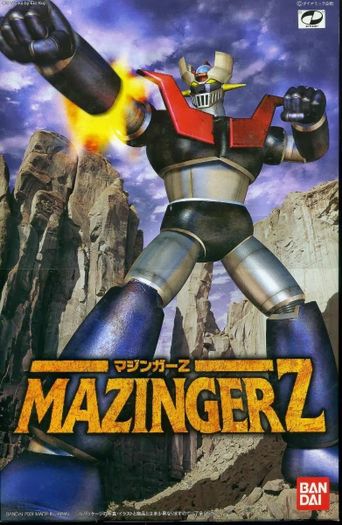
Giant robot anime began very squarely in the domain of children. Loud, boldly colored robots appeared on TV (at least, once color TV became common), and the toys based on them came full of fun gimmicks and gizmos. Over time, there was a maturing of the genre in many ways, both in terms of themes presented and the aging of fans, so by the time we got into the 2000s, things changed. Between Pokemon, card games, and more, giant robots have just not been the ticket to big toy sales among kids. Thus, most giant robot anime of the last fifteen years rely more on adult tastes and nostalgia, or at the very least have been aimed at young adults. However, every so often, you’ll see moves to try to reclaim giant robots for kids, and they communicate a reality that mecha alone tend not to capture kids’ hearts in this day and age.
Gundam AGE
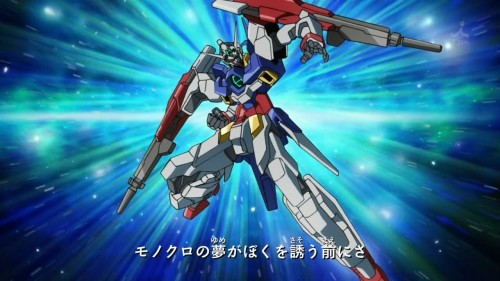
One of the more significant attempts to capture that younger audience was 2011’s Gundam AGE, because of how Gundam is what arguably kicked off the move toward mature audiences all those years ago and because it’s traditionally been such a sales juggernaut. Although keeping the traditional “robots in war” staples, Gundam AGE was a concerted effort to target kids, right down to more toyetic robot and weapon designs. Unfortunately, the series pleased pretty much no one, including me, despite my initially high hopes. The story was a mess, and the model kits failed to attract older and younger customers alike, to the extent that a kitbash of Madoka from Madoka Magica with beefy Gundam arms became more of a sales point than the actual merch. Later Gundam overtures towards kid audiences were more successful via the Gundam Build Fightersand Gundam Build Diversspin-offs, but both treat the mecha as collectible items utilized in virtual environments—closer to the popular style of Japanese kids’ shows.
Chousoku Henkei Gyrozetter
Another instance is 2012’s Chousoku Henkei Gyrozetter, though this one is odd in that what it ultimately tried to promote was not toys or model kits, though some did come out. Rather, like Aikatsu! and Pripara, the bread and butter of Gyrozetter was the card-based arcade game. Ultimately, it was called a major mistake on the part of Square-Enix. Personally, I think the show is very enjoyable, but it’s also arguably better known for its attractive older characters than anything else—so not exactly kid’s stuff.
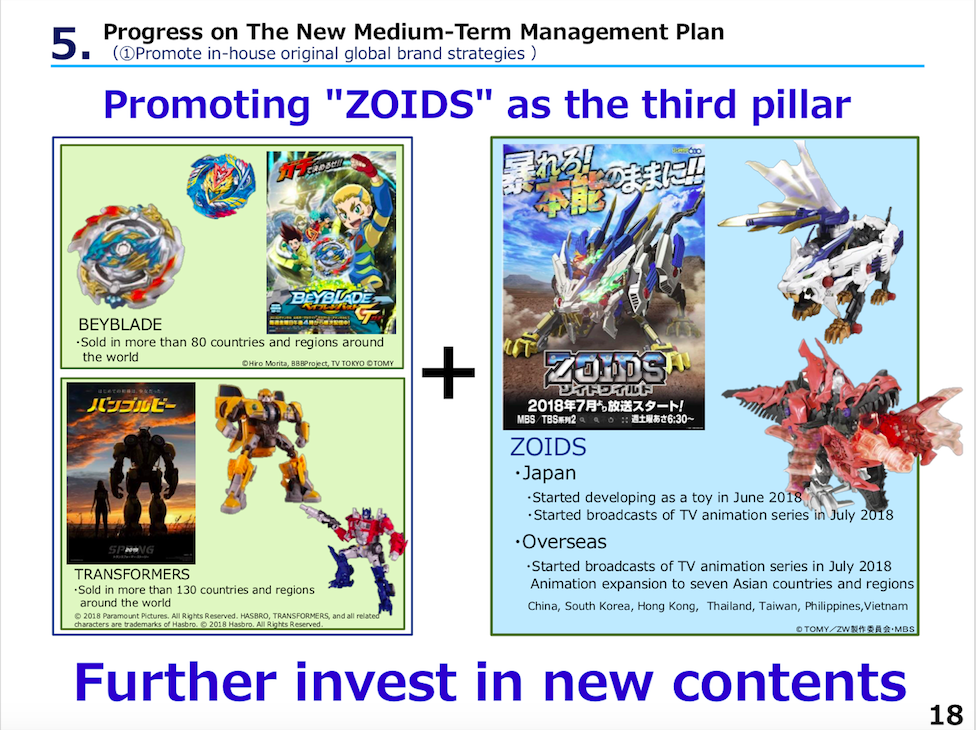
While hitting the mark seems difficult, there is one company that seems intent on making giant robot anime work for kids: toy maker Takara Tomy, the originator of Transformers. In addition to that long-standing international cultural staple (whose success has so many external factors that it’s hard to gauge in terms of success as “anime”), it’s Takara Tomy that keeps taking swings, down to even pushing the ZOIDS franchise as their “third pillar” along with Transformers and Beyblade.
2018’s ZOIDS Wild anime is a continuation of the ZOIDS franchise, which has been receiving animated adaptations since 1999’s ZOIDS: Chaotic Century. Given its longevity, it would be easy to assume that they’re doing something right with their use and portrayal of giant robots, but I think there’s a key factor that keeps ZOIDS relatively popular: the use of animal-shaped robots as opposed to humanoid ones. The more universal appeal of dinosaurs and cool beasts does a lot of the heavy lifting.
Tomica Kizuna Gattai Earth Granner
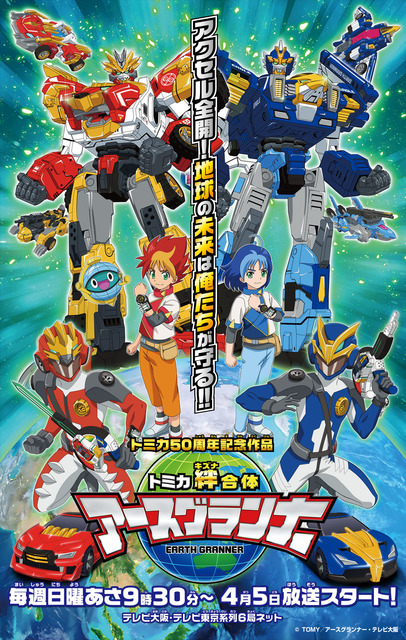
Along this vein, Tomica Hyper Rescue Drive Head (2017) and Tomica Kizuna Gattai Earth Granner (2020) both involve motor vehicles that can transform into robots—and, unlike Gyrozetter, have the many toys to show. The Tomica line is primarily more about cars than mechs, and the toys have enormous success in Asia. Again, the robots are not the main popularity factor, acting instead as an additional flourish to push it over the edge. Transformers, in a sense, combines both ZOIDS and Tomica’s appeals together, while also banking on brand recognition. Moreover, while giant robots are still a staple of tokusatsu, they’re more a secondary component to the color-coded-hero fantasy that defines these live-action series. The previous Tomica tokusatsu series use cars in a similar manner.
Shinkansen Henkei Robo Shinkalion
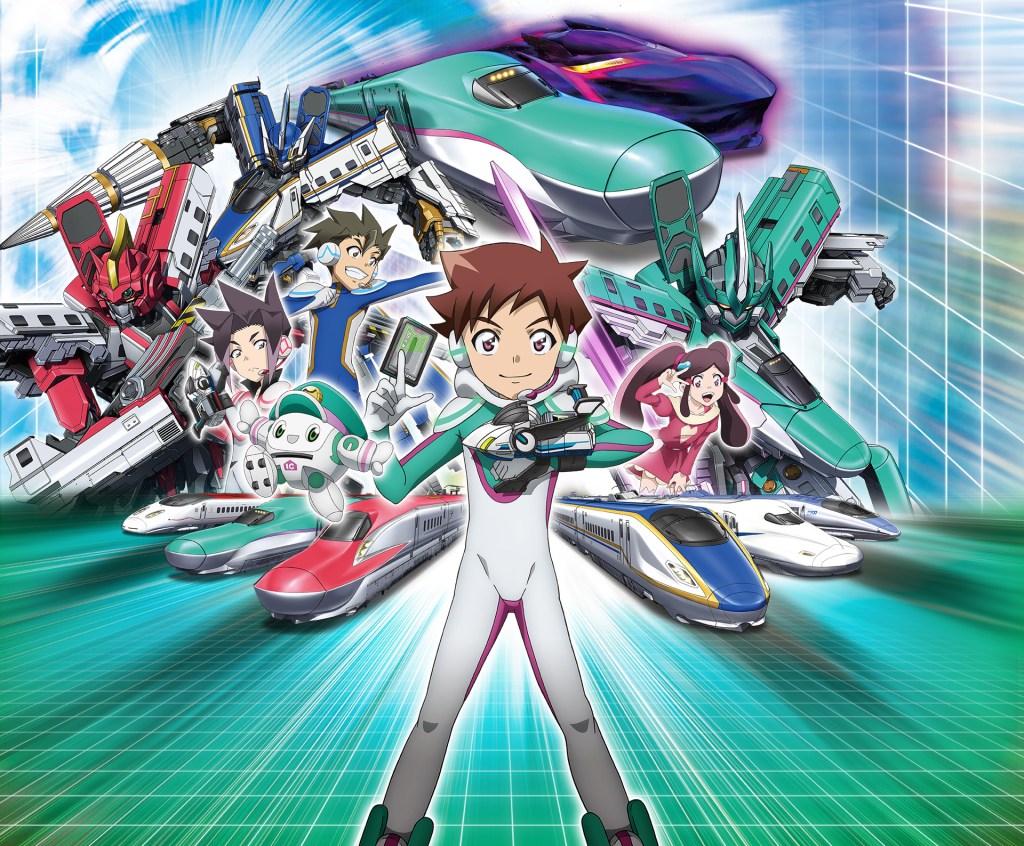
The strangest case might very well be 2018’s Shinkansen Henkei Robo Shinkalion THE ANIMATION is a series about bullet train (“Shinkansen”) robots sponsored by the East Japan Railway Company. Somewhat like Gyrozetter, there’s an unconventional ultimate goal—promoting Japan’s high-speed rail system—but unlike Gyrozetter, the toy and merchandise line is definitely there. In addition, while ZOIDS Wild, Drive Head, and Earth Granner all target boys ages 10-12, I can’t help but notice how aggressively kid-friendly Shinkalion’s aesthetics are, from the character designs to the story. What really makes Shinkalion an oddity, however, is that its success isn’t measured solely in toy sales, but also the degree to which it creates good PR for Japan’s public transportation.
It does sadden me that mecha don’t appear to carry an inherent appeal for kids these days, but I do think that sprinkling in robots can potentially push these franchises into becoming more memorable and enjoyable. Also, I’d like to think that Takara Tomy is laying down a foundation for it to happen in the future, and much like how adults who grew up with super robots in the 1970s grew attached to them, perhaps in a couple of decades we’ll see nostalgia for the Shinkalions and Earth Granners of the world.
Among online anime and manga fandom, there’s been an ongoing narrative about “supporting creators, not companies.” Often presented as a noble justification for piracy, where the companies that own the rights to either creating or translating the works are greedy exploiters of the artists, authors, and other contributors, the idea is that it’s better to buy merchandise instead. This is, in short, a very faulty understanding of how the anime and manga industries work.
However, if we’re to take at least some of these sentiments as genuine and merely misguided, there are actually outlets to support anime and manga creators more directly.
One cause worth contributing to is the Animator Dormitory Project, which began in 2014 and aims to provide affordable housing to young animators for the first three years of their careers. Animation is grueling work, and a lot of young animators fall out of the industry after three years because the salaries are abysmal—sometimes less than $300 USD a month.
Related to the Animator Dormitory Project is founder Sugawara Jun’s other idea: the New Anime Making System Project. The basic gist is that it’s hard for animators to unionize both because of historical reasons, and that the animation studios themselves often don’t have enough money to sustain unions even if they wanted to do so. Sugawara’s idea is to have animators work on short music video projects for musicians from all around the world, and pay them more—eventually two to four times what they’d make otherwise, if all goes well. Compared to the Dormitory Project, I believe this one could be even more attractive fans who are skeptical of the production committees and companies who oversee anime production. It holds the potential to transform the industry as a whole for the better.
But maybe someone is really in love with the idea of supporting a creator directly. In that case, it’s not wholly out of the question. Some artists, both professional and amateur, have turned to Patreon-esque sites such as Pixiv fanbox and Fantia, which allow fans to directly donate to the authors either in general or for specific projects. You might just be able to find one of your favorite creators on those sites.
For example, I discovered that manga artist Matsui Katsunori (artist on La Sommelière) is currently trying to restart his Mixed Martial Arts-themed fighting manga, Hana Kaku: The Last Girl Standing. I learned a couple years ago that the manga had ended rather abruptly, so I’m glad to see him try to continue this series. I really love what I’ve read of it, and I think sites like fanbox and Fantia give a platform for passion projects that might not have been deemed as mainstream-viable.
Buying manga and anime legally and signing up for legitimate digital services will still, of course help creators out and contribute to their financial success, even as structural issues in these industries still exist. That said, if anyone feels sincerely passionate about “wanting to support the creators,” in a more direct fashion, I hope you’ll take one of the options listed above, or perhaps even try to find other possibilities.
Saint Snow, the rival characters in the Love Live! Sunshine!! anime, just released their much-deserved debut single, Dazzling White Town. While I’ve only been able to hear the online preview, and I’m not a music expert by any means, I find that it further solidifies my high opinion of the sister duo.
One of the best things to come out of the Love Live! franchise, Saint Snow’s aesthetic and musical style tend to be more aggressive than Aqours, which is something I generally prefer. As the counterparts to the main heroines, Saint Snow are allowed to take their music to places Aqours largely doesn’t go. Kazuno Sarah (voiced by Tano Asami) has an elegant yet powerful voice, and I like the incorporation of rap brought by Kazuno Leah (Satou Hinata), as it introduces something otherwise absent in the Love Live! universe. In my view, their performance of “Believe Again” is the absolute highlight of Love Live! Sunshine!!: The School Idol Movie.
Previews of all three songs
Something I find interesting about this single is how all three songs encompass different genres. “Dazzling White Town” is an EDM tune that reminds me of groups like Snap! and M.O.V.E. “Lonely Snow Planet” takes cues from heavy metal like pre-2000 Metallica. “After the Rain” sounds like pop rock akin to Vanessa Carlton and Alanis Morissette. All three songs come across to me as coming out of the 1990s to early 2000s, with “Dazzling White Town” being my favorite of them. I also love the retro game aesthetic and fashion found in the music video.
While it’s unlikely for anything within Love Live! to get extremely experimental, I do think one of the advantages of being associated with a multimedia franchise grounded in fictional characters (as opposed to being solely a musical act) is that there’s greater latitude for them to go into different genres. When a regular band tries something different, they risk alienating their fans. For Saint Snow, their followers care about Sarah and Leah, and I think it potentially allows for the composers, lyricists, and performers to travel stylistically.
I think Dazzling White Town is capable of reaching people well beyond the expected Love Live! fandom, and I would even dare say that it’s capable of standing alone without the association. I hope Saint Snow also eventually gets a full album to call their own, and that the group continues to have a life even as Love Live! Sunshine!! has winded down.
That said, I wouldn’t mind seeing a Saint Snow anime spin-off either, as I think they have the look and feel to be the stars of their own show. At the very least, a Ruby+Leah special would be great.
This post is sponsored by Ogiue Maniax patron Johnny Trovato. You can request topics through the Patreon or by tipping $30 via ko-fi.
Last week, the Japanese animation studio Arms declared bankruptcy. Their legacy is primarily that of sex and fanservice, with titles like Mezzo Forte, Queen’s Blade, Another Lady Innocent, and Ikkitousen from Dragon Destiny on under their belts. But for me, Arms is first and foremost the studio behind the anime Genshiken 2.
Ogiue Maniax started right around when Genshiken 2 first began airing in 2007, and its DVDs were the second anime I ever imported from Japan. In the photo above, there’s also a CD of Genchoken, a Genshiken 2-related radio show starring voice actors Mizuhashi Kaori (Ogiue) and Hiyama Nobuyuki (Madarame).
One unique feature of Genshiken 2 compared to all other adaptations of the manga is that Arms treated it like the other works in their library and brought their, er, considerable talents to fore. Not only was artist Urushihara Satoshi (of Langrisser, Plastic Little, and Another Lady Innocent fame) the animation director on the opening, but there were more than a few scenes depicting extremely vivid nerd fantasies. The most famous might just be Ogiue’s fully animated fujoshi imagination regarding Sasahara and Madarame.
In that sense, Arms’s approach felt like an attempt to give Genshiken a more late-night anime appeal, for better or worse, and the DVDs did indeed uncensor the really racy stuff. However, while Arms certainly went places the manga never did (and thus potentially could have turned away fans of the original), I think that their execution of Genshiken 2 in some ways anticipates the sexually charged alternate Genshiken that is Spotted Flower. In fact, Arms probably would have been the right studio to animate that series if it were possible.
So thanks, Arms. Very rarely do my favorite characters get this much love, and you gave fans of the Genshiken boys and girls something unforgettable.
That all said, bankruptcy isn’t always the end. Who knows? Maybe that Spotted Flower adaptation isn’t completely out of the question.
In recent weeks, many of the anime that were on hiatus due to COVID-19 have begun returning, and one question that arises is how these series might be affected by the delay going forward. Many, like Demon Slayer: Mugen Train and The Millionaire Detective, are adaptations, and so wouldn’t be affected content-wise. Similarly, historical fiction like Appare Ranman! can easily ignore current events. But there is one series I’m looking at as potentially being deeply impacted by coronavirus on a story level, and that’s Healin’ Good Precure.
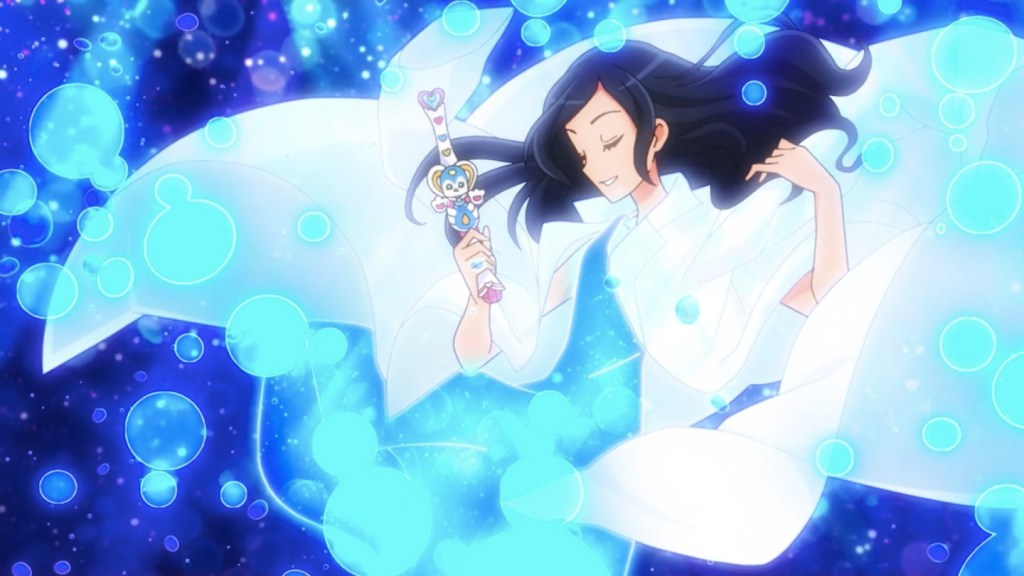
The main motifs of Healin’ Good Precure are healthcare and the environment. The girls essentially act as doctors trying to heal different Earth spirits when they fall ill, their interactions with their fluffy mascots take a veterinary angle, and their magical dresses briefly resemble physician lab coats during transformation. It’s an incredible coincidence that this would be the Precure series we have in the middle of a global pandemic, but here we are.
The Precure franchise as a whole does not have any source material—the anime are the original works. Everything else, from manga to video games, are subordinate to it. What this means is that there’s no source material to reference or adhere to, so it likely has a degree of flexibility in terms of potentially changing its story. The fact that Precure shows are typically around 50 episodes also means there’s plenty of time to pivot and try to take into account current trends and real-world concerns. Also, while the series was on hiatus, the official Precure LINE channel actually had videos featuring Precure stuffed dolls talking (via the voice actors) to kids and playing games with them, so i think there is an awareness that children are feeling the effects of self-quarantine and the like.
While I don’t think Healin’ Good Precure is going to do anything as drastic as explicitly introduce coronavirus into the show, I do wonder if they’re going to try and incorporate some of the good behavior into the girls’ special moves or equipment. For example, what if one of the mid-series upgrades are special magical masks that give the Precures enhanced powers? What if the girls learn a special attack that requires them to stand six feet (or two meters) apart from one another? Of course, it’s also possible that the show will keep ignoring the environment created by COVID-19 in the hopes of giving young kids an image of how things are “supposed to be.”
Regardless of how far Healin’ Good goes to address current events, Precure’s general positivity and supportive messages are very welcome. I’m just waiting to see how far it goes.
I have watched a lot of anime, but I’m far less experienced with tokusatsu stuff. When Toei launched their official worldwide tokusatsu channel on Youtube a few months ago (despite a major hiccup where they accidentally banned themselves), I originally saw it as a way to legitimately watch more obscure giant robot anime such as Lightspeed Electroid Albegas and Space Emperor God Sigma. However, thanks to the sheer range of shows available—stuff leading back to even the black & white era of television—I thought it was high time I made a more concerted effort to watch tokusatsu and form my own opinions.
What I’ve come to notice is that I enjoy these series a lot more than the adapted tokusatsu works I’ve seen over the years in the US—Power Rangers, VR Troopers, Super-human Samurai Syber Squad, etc.—and I think I know why. When it comes to Japanese tokusatsu, there is a greater degree of earnestness that makes these shows more enjoyable overall. They might not have much of a budget, as shown by their threadbare special effects, but everything feels somehow more sincere.
Sure, the localized shows have their own merits, and there have been memorable storylines over the years that lend at least an air of seriousness and compelling storytelling to their worlds. In Power Rangers alone, there’s the original Green Ranger storyline from Mighty Morphin’ and the bond between Astronema and Ecliptor in Power Rangers in Space that revealed the two as more than just evil villains. However, they feel more like exceptions to the rule—-chances for otherwise very non-serious stories to reveal an edge.
With Japanese tokusatsu on the other hand, even the very first episodes feel like they’re working hard to get viewers emotionally invested. They’re also still ultimately kids’ shows as well, but their presentation is such that they expect the young viewers at home to enjoy drama and tension in their entertainment. When you hear the ending theme to Janperson, even if you don’t know Japanese, there’s a strange yet heartfelt sense of passion. It’s definitely cheesy, but it’s a convincing kind of cheesy. The difference is akin to the kind of pro wrestling that easily makes you suspend your disbelief versus the kind that takes you out of the magic.
Anyway, if anyone has recommendations, I’m all ears. A part of me wants to check out Space Ironmen Kyodainand Akumaizer 3 just because of Konata’s fiery karaoke from Lucky Star, but I’m down to keep exploring.
Kio Shimoku has historically been a very private person, not even revealing his face until 2018. Shockingly, the Genshiken author had his very first audio interview, and it was by a Virtual Youtuber to boot! Luis Cammy is apparently a big fan of Kio’s work, and talked with him for a whopping 80+ minutes.
Translating the whole thing would be a whole endeavor in itself, but you’ll find all the notes I’ve taken from the interview. There’s a lot of it that’s all-new information and insight into Kio’s creative history.
Note that Kio has a remarkably deep voice. Personally, he reminds me a bit of Kugayama from Genshiken.
Also, as a final disclaimer, it’s possible I misunderstood some of the things spoken about. If anyone has corrections, feel free to leave comments!
Introduction and Miscellaneous
Luis has been a fan of his work since Gonensei (“The Fifth Year”), an early Kio manga and dark sequel to his prior work, Yonensei (“The Fourth Year”).
As part of their collaboration, Luis sang a cover of the Kujibiki Unbalance opening, and Kio provided drawings of Luis cosplaying as Ritsuko Kübel Kettenkrad for a music video. The video
It’s meant to resemble late 1990s to early 2000s galge/dating sim intros. Luis looks like Saki from Genshiken/Ritsuko already, so it was a challenge to differentiate her.
Kio learned about VTubers from manga author gatherings. He doesn’t watch YouTubers much, let alone VTubers.
When asked if he knew how popular his work was at the time, Kio said he didn’t really look at comments online, but felt he rode the wave of the era.
The very beginning of Genshiken was Kio wanting to draw otaku as normal people. He want to madk what he himself wanted to read.
Luis mentions that otaku and their status have changed drastically since the days of Genshiken (when otaku were picked on and persecuted), like how there are light otaku now. Kio says his daughter is in middle school right now, and to her, she doesn’t get the whole otaku-as-negative thing. A group of popular kids in her class have Demon Slayer: Kimetsu no Yaiba merch. Kio responds, “Times have changed, huh?”
Luis talks about how even regular folks say they like her, and it’s like the wall between normies and otaku isn’t there. Madarame has become a popular representative of otaku (to the extent that he’s Kio’s visual stand-in for this interview).
Kio talks about how, in the very earliest planning stages, the first idea he sent to editorial was about the relationship between Madarame, Kousaka, and Saki. The love triangle was inspired by Ping-Pong Club, the nose-hair chapter in particular. That scene was thought up very early on, back when Genshiken was a mere chick. In a sense, Madarame and his romantic relationships were a part of Genshiken from the start.
Luis talks about her mahjong teacher, Saito Go (a professional player and mahjong VTuber), likes Genshiken. He especially remembers that scene with Madarame and Saki eating sushi together, and then not talking afterward on the train ride home.
Luis points out that Kio likes to use silent panels, which Kio agrees with. However, he thinks overdoing it with those types of panels isn’t good either. The nose-hair chapter ends in silence too. Luis says a lot of information can be conveyed in such panels. Kio says it can convey a sense of realism.
Luis points out that the recording was the day of Saki’s birthday!
When creating character profiles for the compiled manga volumes, Kio had to come up with birthdays. He actually used Gundam Horoscopes to think them up. [This has been mentioned in other sources before, like the Japan-only Genshiken Official Data Book.] Actually, it was sort of like a backwards horoscope, in that he picked a mobile suit that would fit Saki well, and decided the birthday based on that. Sasahara is a Ball.
Personal Questions and Family Life
Kio is into Gunpla. He got into it when he was a 6 thanks to his bigger brother. Plamo-Kyoshiro (the 1980s precursor to Gundam Build Fighters) was his “bible.” He would categorize himself as a plastic model otaku above all else. He still wants to continue it as a hobby, but he’s busy. In Plamo-Kyoshiro, the way they used cardboard boxes in the manga really sparked his imagination as a kid.
Luis asks if Kio’s daughter ever says, “Why is our home filling up with more [otaku] stuff?” Kio says that his workplace is different from his home, so it’s his workplace that gets filled up instead. Doesn’t think his daughter is an otaku, but can’t say for sure. Luis jokes about Kio’s daughter showing up on the live recording and telling him not to say so much. Kio mentions that she doesn’t know about this, so Luis responds that she could come in saying, “It sounds like you’re doing a broadcast with someone from Nijisanji.” Kio comments that she might actually know what VTubers are.
Kio’s daughter has always walked in while he’s drawing manga, so she’s been reading manga for a long time. Kio still reads current manga. Luis says that manga has become like a “communication tool” these days, like, “What? Do you know this title?” as a conversation starter.
Genshiken More In-Depth
Luis describes the first Genshiken as being about ancient otaku. She asks Kio, if there was a Genshiken Third Generation, would it have VTubers and stuff in it? What kinds of characters and what sort of content would it include?
Kio concurs that they’re ancient otaku. His thinking was, “If I try to draw something totally new, it’ll quickly date itself. But if I make them feel older, than it’ll age better.” He doesn’t consider himself to be on the cutting edge. Genshiken came from whatt he personally wanted to draw. As it continued, it progressed into fujoshi stuff.
As for VTubers, once they become old, maybe then they’d show up in Genshiken. Kio says that plenty of current manga have VTubers in them already.
Luis asks if Kio is happy to have ended Second Generation when he did, and Kio says yes. “It felt like, ‘That’s about where it should stop.’” He explains how the sequel started out as a one-shot, but he’s not good at doing extra stories and the like, so he kept on working on it. Kodansha editorial (the publisher of Genshiken) said he should do enough to fill one volume. It was originally supposed to be a short serialization.
Kio began with the thought of “How would Ogiue and the others continue the club?” and of course, it would end up with a bunch of fujoshi. But would it be all girls? What about guys? Hence, Hato.
Kio really went back and forth about whether or not to include a character like Hato. When he was drawing the manuscript, he kept having the feeling of “Is this really okay?” Coming up with the idea of Hato purposely using a more feminine voice is when he finally thought he could make it work. Fujoshi and otoko no ko (boys who dress convincingly as girls) are the main aspects of Second Generation. Kio didn’t want to put Hato through so much hardship, but as the story progressed, he felt that’s what should happen—though he did worry over it.
The original Genshiken was supposed to be in real time, and things moved quickly. But it stopped being that way during the Ogiue story at Karuizawa. At the time, Ogiue was a “problem child” when it came to drawing the manga, as he didn’t know if he could resolve her backstory. It’d be difficult to do that and still maintain the “real-time” thing, and he would’ve selfishly wanted to end the series in the Spring if it had stuck to being in real time. But it took multiple months to get through the Ogiue story.
The series was supposed to end at Volume 8, but then there were plans for the second special official doujinshi [the first one was included with Volume 6]. Because of that, they decided to continue the series up to Volume 9. The original Genshiken features Ogiue’s turmoil, and Second Generation features Hato’s turmoil.
Luis comments how there are the Ogiue fans, and then there are Hato fans. Kio responds, “The Ogiue fans really are somethingl…” and then trails off. [Ogiue Maniax note: I feel attacked.]
Spotted Flower
There are things that were hard to put into Genshiken, like sexual stuff. That’s where Spotted Flowercomes from. From here, the two jokingly pussyfoot around Spotted Flower’s similarities to Genshiken.
Luis talks about how Spotted Flower is a different world (tongue-in-cheek), but it has kind of a crossover feel. Kio responds that they’re ostensibly different characters. Luis replies that the series is like a “what-if” universe (if-sekai in Japanese).
Kio says it’s not supposed to be them, but through it, he can do what he couldn’t in Genshiken.
Luis says, “What-If Madarame has a ‘Why youuuu!’ feeling.” Kio laments the husband as well.
Spotted Flower was supposed to be just a few short pages for Rakuen: Le Paradis magazine. The resemblance to other characters was originally not planned, but is actually something he noticed after the fact. He didn’t explain the meaning of the title to them when he submitted it [madara means “spot” and saki means “bloom”], so they probably didn’t realize at first. So he figured, “Why not keep going?” and it developed along the way.
“And now there are four volumes,” says Luis..
Kio’s feelings: “It’s not a book that comes out often, but if it interests you, I’m grateful.”
It was one thing when it was just the husband and wife, but then he added the Hato-like character, and the Kousaka-like character, and so on. He still can’t really say for sure that it’s them.
Hashikko Ensemble and Kio’s Overall Career
Luis finds the Hashikko Ensemblemain character Akira cute. Kio says that he began with the idea that Akira would have that gap between his very deep voice and his shy personality.
Volume 5 of Hashikko Ensemble should be coming in September.
Kio says he’s been in the manga business for 25 years. Luis thinks all his works are great, in terms of information provided, emotion, and atmosphere all being wrapped up in them. “It’s no small stuff.” To Kio, he sees all the things she mentioned as his shortcomings Luis comments that she enjoys seeing Kio reflect on his work.
Kio is the type to regret not saying this or doing that. Luis remarks that this is a live broadcast—is Kio okay?
Kio doesn’t recognize his own voice when recording. Luis said she never thought of her voice as anything special but the fans would say it’s cute. Luis compares Akira’s voice to Kio’s. Kio never had any experience with singing or choruses, but figured, why not give Akira a deep voice like himself?
He thinks people who can come up with characters purely from imagination are amazing.
Hashikko Ensemble a story of the passion of youth, but Kio didn’t originally plan it that way. Like Genshiken, he wanted the story to be something ridiculous and fun, and landed on “chorus club high schoolers.”
Luis loves stories about the passion of youth (seishun), like Yowamushi Pedal and Big Windup. Kio replies that he’s never drawn manga in that vein—like Chihayafuru—but thought, “If I put all I had into it, could I draw one?” The characters in Genshiken are all pretty mellow. He wasn’t that good at drawing the kind of youthfulness that appears in Hashikko Ensemble, at first.
Luis makes the argument that the original Genshiken is a “passion of youth” story, because it’about figuring out what club to join and what to do? Like, Kugayama’s waffling on whether or not to draw, or Ogiue’s decision to go, “I guess I’m gonna draw.”
The kinds of “passion of youth” stories Kio enjoys are a little strange—not so much “hot-blooded stuff.” Luis describes Madarame as a hot-blooded otaku. As for being a passion of youth story, what about that story with Saki mentioning Madarame looks good in his new glasses?
Originally, Genshiken was supposed to be a club that doesn’t put anything out. One of the things that made Ogiue tricky is that she wanted to draw herself, so Kio had no choice but to make a story about her trying to get into Comic Festival [the Genshiken in-universe equivalent of Comic Market].
Doujinshi???
Luis says Genshiken is what made her want to attend Comic Market as part of a circle. She asks Kio if he ever participated as an artist. Kio says yes!
Kio released a doujinshi at Comic Market in 2003 (Luis points out that 2004 was the year of the first Genshiken anime, which Kio totally forgot about).
Kio did not use the name “Kio Shimoku” for Comic Market. He sold 200 books, which impresses Luis. For reference, Luis says that 100 is considered a lot, and she herself sold 50 copies of her own doujinshi at a Comitia [a major doujin event primarily dedicated to original, non-fan works].
The doujinshi was indeed pornographic, and an original work. It bears resemblance to Kujibiki Unbalance and Genshiken.
Luis talks about how big sister loves Kujibiki Unbalance, to the extent that she put out a pornographic doujinshi starring Ritsuko. Luis helped her a lot with it, including stapling it together.
“Putting out a Kujibiki Unbalance-esque doujinshi yourself is like actually being in Genshiken,” says Luis.
Kio also participated at Comic Market a second time—in 2010. It was a doujinshi based on a “certain space opera that uses Episodes,” flipping around the genders of the character roles involved. The inspiration was that with some wordplay, the title resembled the phrase “Sister Wars.” He drew what was supposed to just be a manuscript based on Episode 1, but it ended up being 350 pages. Kio wanted to draw up to six.
“Please complete it!” Luis says.
“But I wouldn’t be able to sell it!” Kio replies.
[Ogiue Maniax note: One of Ogiue’s characteristics is prolific output, just like Kio here.]
Luis asks if there’s anything he’s watched lately, old anime or new anime. Kio doesn’t have anything, and Luis says his free time to just sit down and watch without moving must have decreased. Kio agrees.
Kio wants to absorb more shows, but just doesn’t have the time.
Questions from Kio for Nijisanji
As future reference for manga, Kio asks if VTubers wear sensors to track movement. Luis responds that it uses 3D tracking. She quickly “corrects” that the animated figure you see is the real her.
Luis says that Kio’s participation in Comic Market makes his manga feel more real.
The two talk more about the Kujibiki Unbalance music video they collaborated on. Kio says it’s like a doujin-style fan work. Luis talks about how she has Genshiken and Kujibiki Unbalance merch. Luis has the Kujibiki Unbalance Ritsuko school swimsuit clear file drawn by the light novel artist, Yagumo Kengou. Kio mentions that the image was a request from him [Ogiue Maniax note: Not 100% sure about this last sentence].
Kio mentions that he gets some harsh comments, but others will say “That’s the kind of author he was all along!” But he doesn’t want to remember himself from the Gonensei era.
What an Interview!
There’s a lot to unpack in this interview. I hope to follow up with an analysis.
Also, I can’t believe there’s a Virtual Youtuber who’s into Genshiken, Kio Shimoku, and mahjong! It’s like someone designed a VTuber especially for me.
I guess the Ogiue Maniax VTuber pantheon is now Sugomori Tenkomori and Luis Cammy.
f you’ve watched even a small amount of anime, Japanese pudding is incredibly hard to miss, specifically in the form of a caramel custard flan generally known locally as purin. If I had to say why purin is so popular in anime, my guess would be that there are two reasons. First, its ubiquity in Japan means the food is familiar and comes in many forms, which allows it to traverse class and social status, allowing it to fit into a variety of narratives. Second, its jiggly consistency and unique appearance are ideal for both elaborately detailed animation as well as simpler and more limited animation.
Purin Across Strata
According to the website for Kakeien, a Japanese purin maker, the dessert came to Japan in the late Edo to early Meiji period. Since then, it’s become a staple of Japanese sweets, and depending on how it’s made, it can be a humble treat to decadent, high-class dessert, or somewhere in between. This also means that purin can show up in multiple situations and be a source of conflict, whether it be in the context of drama or (especially) humor.
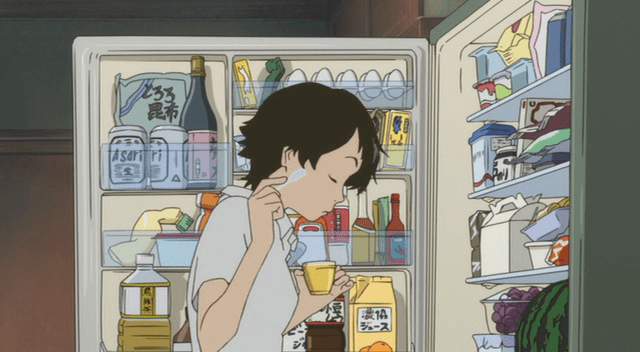
Pre-packaged versions can be found in the thousands of convenience stores all across Japan, making it a quick and easy snack. This is the purin seen above in The Girl Who Leapt Through Time, which becomes a prime target for time travel shenanigans so that its heroine, Makoto, can savor it over and over.
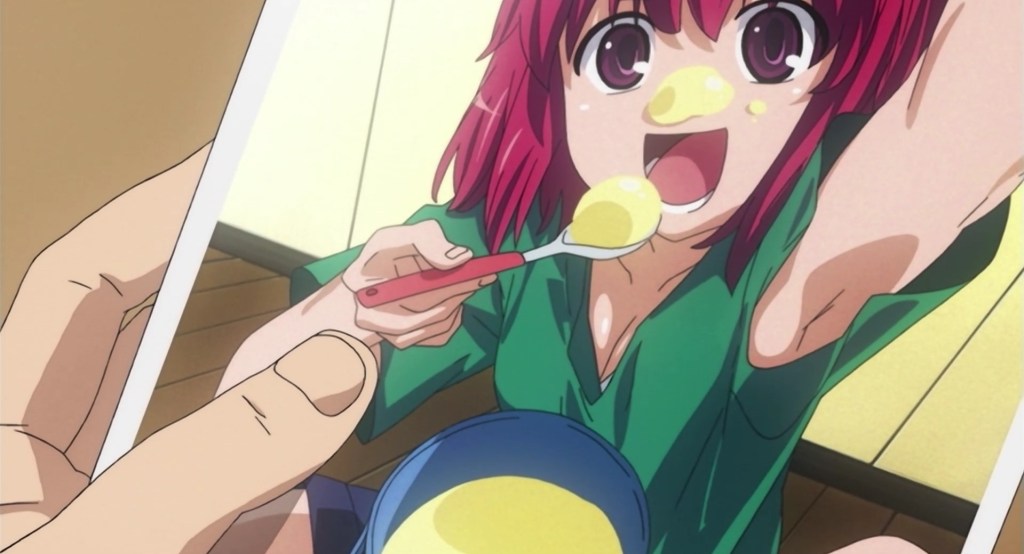
Purin can also be made at home for cheap, and this can lead to either mishaps or mildly absurd developments. Minori in Toradora! takes this to an extreme by making a gigantic and self-explanatory “bucket purin,” scaling the small and simple snack into an example of hilarious excess.
High-quality versions of purin can also exist, with expensive patisseries making them in limited quantities. In anime, this “premium” quality can create tension between characters, either by highlighting a class difference or by positioning the purin is an exceedingly rare treat. In Magia Record, Rena buys expensive purin as a reconciliation gift, but all the girls get stomach aches because Rena took too long to make up with her friend before giving it to her. Different “levels” of purin can signify a lot about characters and their places in their worlds.
Purin as the Animation Ideal
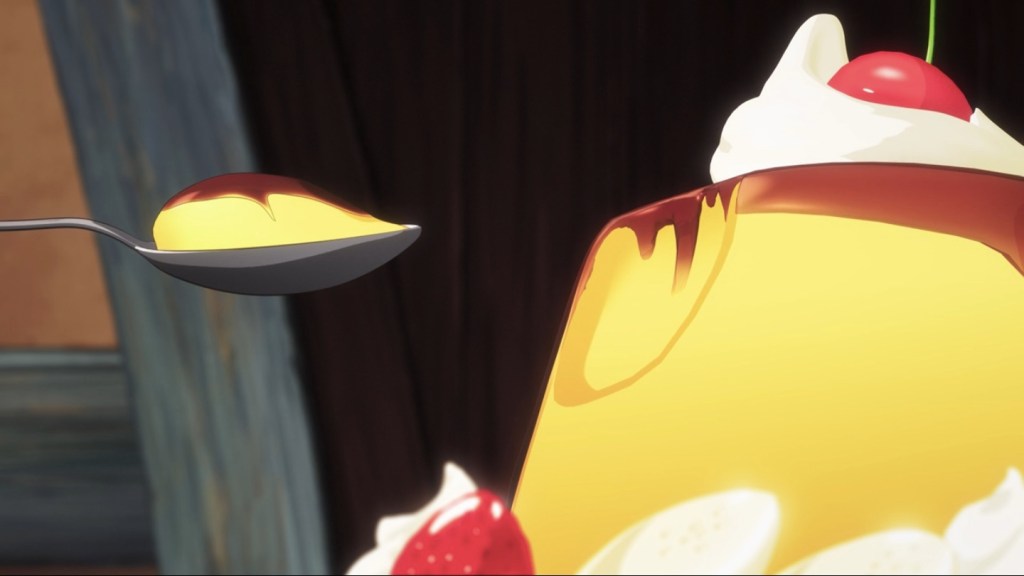
In addition to the cultural aspect, the very physical qualities of purin lend themselves to animators and visual artists. It usually has a very distinct contrast in color between the custard and the caramel topping. It wriggles to and fro under the slightest bit of force, and when you scoop a little up, the spoon slices through its pale yellow body, leaving its mark. There’s a three-dimensionality to purin that makes its distinct features all the more appealing.
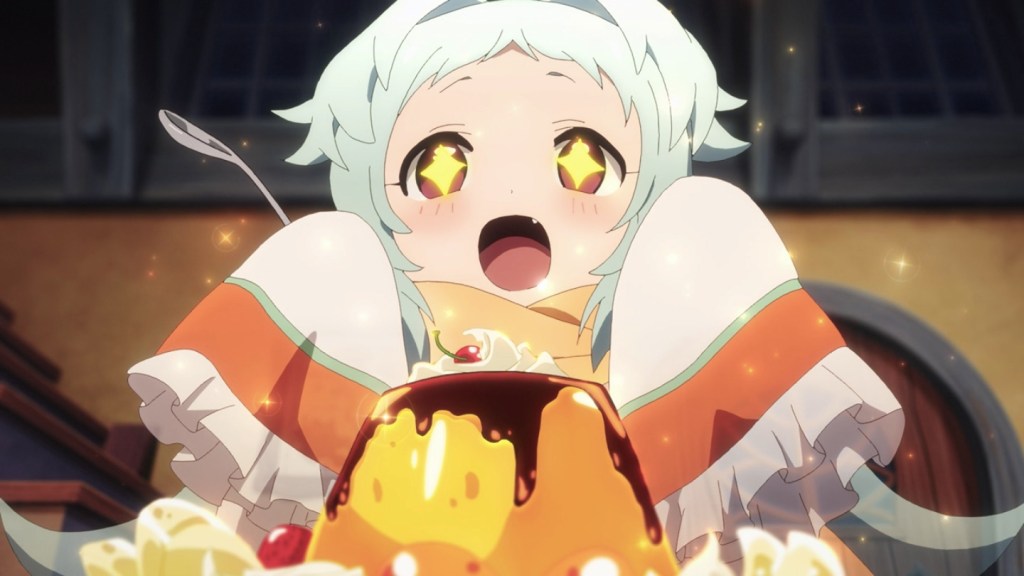
The recent series Princess Connect: Re-Dive demonstrates the strength of purin as an object in animation. It has an entire episode dedicated to purin, entitled “Flowers in Eternal Darkness ~Cursed Pudding~.” Numerous renditions of purin show up this episode to comedic effect, and are mostly portrayed in very simple 2D animation where the two-tone contrast is a clear identifier of the snack. However, at the end of the episode, one of the characters makes a large deluxe pudding, its gelatinous makeup conveyed through the use of 3DCG. Whether you’re dedicated to the craft of animation or merely need it as a visual device, purin has a role to play.
In Short
This is mostly my conjecture, but to me, purin is everywhere in anime because it is everywhere in Japan—both literally and metaphorically. It can be found in stores of all kinds, and it can play the role of the humble snack or the rare treasure. Its physical appearance means that it can be rendered simply and easily, while its wiggly nature means the potential to creatively portray its qualities through motion is tremendous. In other words, writers and artists of all kinds can utilize purin to their own advantage, and they’ll know the viewers will instantly recognize the delicious treat.
This post is sponsored by Ogiue Maniax patron Johnny Trovato. You can request topics through the Patreon or by tipping $30 via ko-fi.







 OGIUE MANIAX