On Loli Vampires, Morality, and Fiction

Anime and manga are full of relationships with large age disparities, ones that would assuredly get people arrested in real life. While fiction isn’t reality, and therefore doesn’t necessarily reflect what people desire or are willing to do in their actual lives, the fear of harm is founded in a simple and important value: adults having physical and romantic relationships with kids is wrong and impossible to justify in reality.

“But why is it wrong?” Generally, when presented with this question, people react that it is just morally repugnant, that it should cause disgust in all people. But what often isn’t taken into account is that there are two components to this answer that are conflated into a single response: the physical disgust and the moral disgust.

The Power of Fiction for Breaking Down Ideas

Before getting into the subject at hand, I want to emphasize some of the strengths of fiction: it can introduce ideas not easily found in reality, working alongside imagination to help people envision a world different from their own. It can also dissect and decouple concepts we believe to be either inextricably tied together, even those multifaceted ideas thought to be a single entity. This aspect of fiction enables people to reflect on its assumptions, and to further clarify how we think as human beings.

Take the example of being transgender, that one can potentially appear as one sex on the outside, but feel they are truly another gender on the inside. Thousands of years of social reinforcement emphasizes that the outer appearance dictates the inner mind, so for many someone being transgender is still a difficult concept to grasp. They cannot divorce sex from gender.

Yet fiction helps make this comprehensible. For instance, the old manga and anime Ranma 1/2 stars a boy who, due to a curse, changes physically into a girl every time he’s hit by cold water (hot water reverses the transformation). The more recent and wildly successful anime film, your name., features a boy and a girl who switch minds and have to live in each other’s bodies. In both works, the idea of “a girl on the outside but a boy on the inside” becomes more easily relatable. One need only watch these works, then think, “If I was in their shoes, how would I think? How would I feel?”

Physical vs. Logical Morality

Adults having relationships with minors is morally wrong, but in order to illustrate the complexities of this idea, I’m going to reference two characters from the company Arc System Works’, which specializes in fighting games. First is Dizzy from the Guilty Gear series. Second is Rachel Alucard from the BlazBlue series.
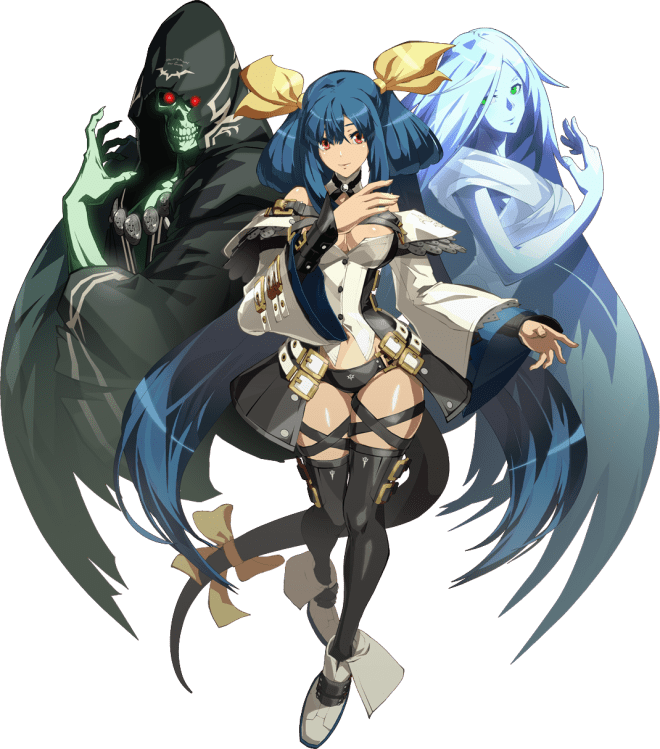
Visually, Dizzy appears as a fully-grown adult. Tall and voluptuous, she holds zero physical appeal for anyone who would be into much younger characters. However, in her first appearance in Guilty Gear X, she’s stated as being a mere three years old. While it’s more the case that she emerged fully grown like the goddess Athena, the conceptual contrast is still there: young in age, but old in appearance.

Rachel Alucard is the opposite. Having the appearance of a child, Rachel is actually an ageless vampire with the maturity and wisdom to go along with it. She’s very intentionally designed to follow that old lolicon trope of “she looks 10 but she’s 1,000 years old!” that often comes across as the flimsiest of excuses.

If you were to apply real-world laws to Dizzy and Rachel, you’d get two different results. If an adult had a sexual relationship with Dizzy, they’d be breaking the law 100%, but at first glance no one would find anything amiss. If an adult had something with Rachel, it would be legally justified but they would get pulled over by the cops every day for the rest of their lives.

Being bothered by Rachel’s design reflects a physical, visceral disgust—that one should not perceive her appearance as sexually attractive. On the other hand, being disturbed by Dizzy’s situation has more to do with the logic of morality. Even if someone appears fully mature, that does not mean they are mentally or emotionally ready. Age of consent laws are designed to protect minors from the inherent power imbalances that exist in adult-child interactions, even if she “looks like an adult.” The two sides of this argument can and do join together, but they’re fundamentally separate ideas.

So What About Those Stories?

While there is a clear immorality to having an underage relationship in reality, I do not believe that fiction is beholden to the same rules. Putting aside the fact that fiction, in and of itself, causes no harm, what ultimately makes those large age gaps morally problematic is the power dynamic. Adults inherently hold authority over children, even if those kids could pass for adults themselves, and the excuse that “she looked 18” doesn’t take into account the psychological harm that can occur. In stories, however, “power” comes in many different forms, and a story can be all about seeing how two individual characters can join together as equals. This doesn’t mean that people should never feel disgust at what’s depicted in fiction, especially because what goes on can potentially be used as an excuse or justification for bad behavior in real life. But it still, in the end, highlights how we perceive equality (or lack thereof) in fictional portrayals of romance.

Gangplank Galleon All Day Every Day: Ogiue Maniax Status Update for September 2018

The summer is coming to an end, but here I am still feeling jitters from the August Super Smash Bros. Ultimate Nintendo Direct. I was stoked when they announced King K. Rool, especially because the official version matches my fan concept version pretty closely!

As for my Patreon and Ko-fi, I’m thankful to all those who continue to support Ogiue Maniax. Thanks to the following!

Thank you to…

General:

Johnny Trovato

Ko Ransom

Alex

Diogo Prado

Sue Hopkins fans:

Serxeid

Hato Kenjirou fans:

Elizabeth

Yajima Mirei fans:

Machi-Kurada

The past month has been quite comfortable overall for Ogiue Maniax; even the strange Patreon non-payment issue didn’t affect me too much. Instead, what I’m struggling with (though “struggle” is a bit over-exaggerating) is trying to strike the right balance between how much I write about anime and manga and how much I actually engage with the stuff. I’ve been spending a lot of time recently watching and reading more than blogging, and it’s helped to refresh my mind and inspire new ideas. However, if I write less than I usually do in a given week, I can feel myself getting a bit lazier, and wanting to put things off more and more. It’s as if there’s a groove that I can ride to putting out lots of good content, but staying with it for too long can wear me down.

That said, here are my favorite posts from August.

Kio Shimoku’s Kagerowic Diary and Its Influence on Genshiken and Spotted Flower

Some of Kio’s old manga is getting new special-edition releases! Here’s a look at an early work of his, and the footprints it has in his more recent titles.

Otakon 2018 Interview: Kawamori Shoji

My one-on-one interview with the creator of Macross, Aquarion, and more!

Tatanga for Super Smash Bros.

After about a two-year hiatus, I’ve gotten back to drawing Smash Bros. character concepts in celebration of Super Smash Bros. Ultimate! So far, I’ve done Tatanga and Turrican.

Hashikko Ensemble

Chapter 7 of Kio’s new manga has some introducing new characters. Among them, one awesome mom. 

Patreon-Sponsored

The Big O and Loving Robots

A look at artificial intelligence, love, and agency.

Closing

I of course am also stoked for Castlevania being in Smash. Let us celebrate with some fine tunes:

The Big O and Loving Robots

Warning: Spoilers for The Big O.

Artificial intelligence is one of those staples of science fiction, a bridge between the mechanical and the biological. For if an AI can achieve true sentience, it entails a whole host of questions about the meaning of life. In anime, one recurring topic is how artificial intelligence intersects with love—whether AIs are capable of love, and whether it is morally right to love an AI.

While something like Chobits is more (in)famous in its approach to the subject of love and AI, my favorite example is actually the mecha anime The Big O. While not the central narrative, protagonist Roger Smith’s relationship with his robot assistant R. Dorothy Wayneright is an ongoing plot thread that grounds an otherwise stylishly obtuse series.

Throughout The Big O, Roger is often verbally dismissive of Dorothy, bringing up her android qualities as evidence of what makes her unable to compare to humans. However, this is portrayed as a kind of denial defense mechanism, as he gradually finds himself attracted to and more in love with Dorothy. The impression is that Roger believes he’s not supposed to love her, and that perhaps he’s only drawn by her created and manufactured traits. Yet Dorothy, despite exhibiting very “robotic” mannerisms, seems to have an all too human side of her. And while her characteristic monotone is a source of comedy, it also seems to be a defense mechanism of her own—a constant reminder for herself and Roger that there are supposedly limits to how close they can be.

In one episode, Roger and Dorothy are Christmas shopping, and Roger steps into an elevator. He beckons Dorothy to get in as well, and she initially hesitates. When she finally does join Roger, the elevator comes to an emergency stop. Dorothy, weighing many times more than any human, put it over the weight limit. A moment of awkwardness ensues between the two, at least visibly on Roger’s side. Whether or not Dorothy is bothered by it is difficult to discern due to her apparent nature. Still, Roger and Dorothy seem to share a special connection. Nothing says more about their relationship than the iconic shot of Dorothy inside the Big O, her hand over Roger’s as he readies for a fight against three enemy Megadeuses at the end of Season 1.

Underlying all of this is the notion that love comes part and parcel with sentience. If Dorothy is nothing more then an android whose artificial intelligence is nothing more than a highly advanced computer, then that love feels “wrong” for Roger. But if it speaks toward a complexity beyond prediction, then Dorothy is an equal to Roger and therefore just as capable of love and being loved. In that situation, she must possess agency, and cannot be an object merely to be used. She must be her own being to the point that she can love or not love, and then make decisions of her own as to whether or not to follow along. In other words, it is morally right to love an AI if they can truly reciprocate, if human and robot stand on even footing.

This post was sponsored by Johnny Trovato. If you’re interested in submitting topics for the blog, or just like my writing and want to support Ogiue Maniax, check out my Patreon.

Real vs. Perfect: The Two Opposing Idol Values

1983’s Creamy Mami was the first idol anime, and it made an idol out of Mami’s voice actor as well. Watching her videos from back then, a 15-year-old Ohta Takako comes across as awkward and unaccustomed to the spotlight, even in “Love Sarigenaku” above, her most “grown-up” song. Compared to many of the slickly produced pop hits of later years, Ohta can come across as almost unprofessional, but that’s exactly where her appeal lies. When it comes to Japanese idols, there are two general directions: “unrefined and real” or “polished and perfect.”

When comparing the Japanese idol juggernaut AKB48 to the K-Pop sensation Girls’ Generation (who have been enormously popular in Japan), the latter visually comes across as a much more “professional-looking” group. While calling them idolsTheir dance and choreography are on point, and their music videos make them look like a million bucks. But while the girls of AKB48 have a kind of awkwardness about them, and many aren’t the greatest singers, there’s a sense of them “trying their best,” and this is exactly what the fans want. In other words, perfection isn’t necessarily desired. It can be, but that strain of inexperience and perseverance is just as strong.

These dual forces can be seen in idol anime in spades. In Love Live! School Idol Project, the main characters are the ragtag group μ’s (pronounced “Muse”), and the defending champions are the practically-professional A-RISE, who come from the richest high school in Akihabara. In Aikatsu!, Hoshimiya Ichigo is shown as having some kind of natural spark of genuineness that contrasts her from the seemingly unassailable Kanzaki Mizuki. And in Macross Frontier, the main love triangle features, as seen above, the humble waitress Ranka Lee (right) vs. the sultry Sheryl Nome (left). In every case, what causes the “small fry” to ascend isn’t that they transform into polished and perfect idols, but that even as they improve, that unrefined and authentic quality shines through. Perhaps it says something that the main heroines of these shows tend to lean that way as well.

And yet, as touched on briefly in the beginning, voice actors who play idols in anime actually end up being idols themselves. When the girls of Love Live! hold live concerts their flaws come out, but that’s part of the appeal of seeing them in person. When watching the characters in the anime or in music videos, that imperfection doesn’t come across in the performances so much as in the dialogue and supporting materials. A similar phenomenon exists all the way back with Creamy Mami. She comes across as much more “polished” than Ohta Takako does, yet they share the same voice.

An interesting case of the strange interaction with the 2D vs. 3D and real vs. perfect contrasts are those that toe the line, like Hatsune Miku or virtual youtubers. With Miku, her limitations—the fact that her voice sounds robotic—is considered part of her appeal. With virtual youtubers, the fact that there’s a person performing behind the character is much more obvious, and the idea that they start to break down or break character is what lends a sense of “realness.”

In this regard, California-born Japanese idol Sally Amaki is especially interesting. A member of 22/7, an “anime-style characters” idol group in the vein of Love Live!, she plays the bilingual character Fujima Sakura while bringing along her own fans as Sally. Not only does she perform the virtual youtuber role as Sakura, but her native English fluency brings an interesting dynamic that highlights a sense of “realness,” especially for English-speaking fans. Not only is there often a contrast between Sally’s “cute, practiced idol” voice and her Californian mannerisms when switching between Japanese and English, but she’ll mention something that only someone growing up in the US would know off the cuff. This lets American fans connect with her sense of authenticity in ways that they might not have been able to in the past.

In the end, “real vs. perfect” is not a true dichotomy by any means, and every idol/idol group approaches that divide in different ways. Whether you’re an idol fan or not, which do you prefer?

Kon Kon Otakon Iroha: Ogiue Maniax Status Update for August 2018

It’s August, and another opportunity to express appreciation for my supporters on Patreon and Ko-fi. I try to live up to your contributions!

Thank you to…

General:

Johnny Trovato

Ko Ransom

Alex

Diogo Prado

Sue Hopkins fans:

Serxeid

Hato Kenjirou fans:

Elizabeth

Yajima Mirei fans:

Machi-Kurada

August means one of my favorite times of the year: Otakon season! Hopefully my wait-listed panel will magically get in, but in the meantime I’ll be on Patz’s Mecha Fight Club panel on Saturday at 9am in Panel room 7. Come by to hear me and others nerd it up about giant robots.

There is a more serious matter when it comes to Otakon, however, and that’s the fact that a white nationalist rally is going to be held the same weekend in Washington, DC. My fellow con attendees, please remain safe, and pity these idiots for putting so much energy into anger and hate.

Speaking of dealing with racists, I’ve recently begun revising my informal policy when it comes to blog comments. It’s not like I receive tons of comments these days, but I’ve come to realize that the concept of “let the ideas do the talking” only really works if the goal of everyone talking is to actually learn something. The alt-right/white nationalist agenda tries to feign actual debate but just wants a podium to posture and look strong. So if I see anyone arguing in bad faith, I’m basically deleting their comments. Simple as that.

But if you want to argue in good faith, here are my favorite posts from July.

Darling in the Franxx: Thoughts on a Divisive Anime

A show that people seemed to either love or hate, I give my own thoughts on a show where viewers can’t even agree what it’s about.

The Important Lesson Nadesico Teaches Us About Entertainment

One of my old favorites has an important message in these current times, about the strengths and pitfalls of pop culture entertainment.

Precure: The Crossroads of Voice Acting

A look at how a 15-year-old franchise brings veteran and newbie seiyuu alike.

Hashikko Ensemble

Chapter 6 sheds new light on Akira, and is in certain respects the most interesting chapter yet. If you didn’t know Kio Shimoku has a new manga, now’s the time to read up on it!

Patreon-Sponsored

The Newest Nekomusume is the Obvious Character Evolution

What began in 2007 continues in 2018.

Closing

Otakon! Whoooooo!

Lolita vs. Gothic Lolita Characters

Lolita fashion (and in fact fashion in general) is one aspect of Japanese pop culture that I never really looked into. However, I’ve come to learn a lot about the culture, its fans, its philosophy, and the sheer range of styles available that fall under the umbrella of “Lolita fashion.” What once looked to be “large bows and frilly dresses” turns out to have a good deal of subtlety and expression.

One of my discoveries in this period has been about how there are many different types of Lolita fashion. Prince Lolita involves a more masculine appearance. Sweet Lolita aims for a more child-like look. There are other variations as well, but what I’ve come to wonder is why Gothic Lolita in particular captures the imagination of anime and other related industries. If there’s a Lolita character in anime, more often than not she’s Gothic.

Some readers might be asking, “What’s the difference?” In fact, before I started reading up on the subject I didn’t know that there was a distinction myself. “Aren’t all Lolitas also Gothic Lolitas as well?” If others fell under similar misconceptions, then it’s perhaps no wonder that the Gothic variety would be so much more prominent.

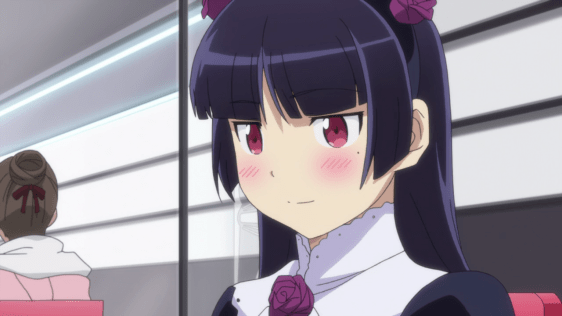
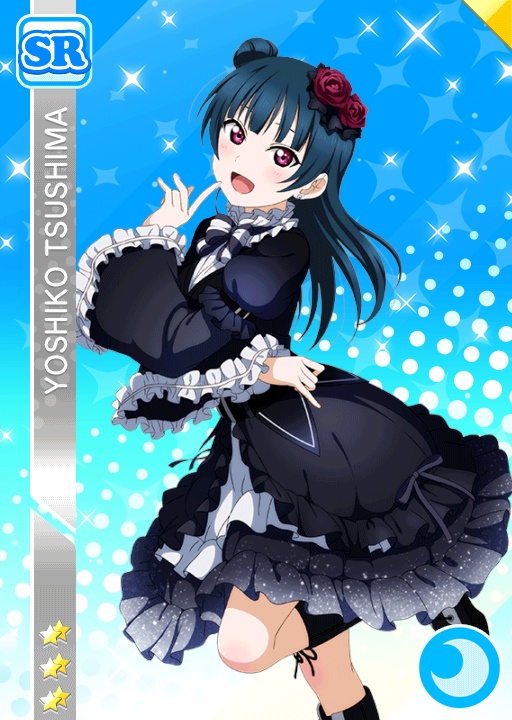
However, I think there’s another component to consider, which is the popularization of the chuunibyou personality trait. Consider many of the Gothic Lolita characters that appear in anime and manga, such as Kuroneko in My Little Sister Can’t Be This Cute, Kanzaki Ranko in The iDOLM@STER: Cinderella Girls, or Yohane in Love Live! Sunshine!! More often than not, their dark, Victorian clothing is supposed to be an expression of the desire to come from some kind of otherworldly, magical place. Lolita fashion enthusiasts often love it as a way of presenting themselves to the world in a way that goes against expected norms, but this resistance can be easily understood. When paired with the idea of the chuunibyou character and their wish to be the reincarnation of Demon Lord Wingding III, it enters more the realm of comprehensible fantasy and not so much feminist criticism, which is a factor in Lolita fashion in part or in whole.

When people see Lolita, they’re often probably not viewing it from the same perspective as the wearers of Lolita Fashion themselves, bringing their own values (for better or for worse) to the meaning of Lolita fashion. Perhaps in a world full of chuunibyou stories, the Gothic Lolita, more than any other Lolita type, is the visual and personality type that can resonate with the greatest number of people unfamiliar with Lolita fashion, and the result is that Gothic Lolita reigns as an archetype over others.

If you liked this post, consider becoming a sponsor of Ogiue Maniax through Patreon. You can get rewards for higher pledges, including a chance to request topics for the blog.

Deep in the Tiger’s Den is a Het Pairing: Sasuke × Sakura’s Doujinshi Popularity

When I traveled to Japan this past May, one of my activities was to visit various doujin shops such as Toranoana. I like to see what’s popular, to get a general image of trends among hardcore fans. Which titles are popular? Which characters? Which pairings? And unlike doujin events, where many artists release their own works more for passion than profit, Toranoana is about what sells.

In Akihabara, this means going to multiple Toranoana stores, each of which specialize in a certain demographic. One in particular is devoted to girls (though nothing prevents guys from entering and shopping there), and as expected it’s primarily filled with BL.

However, one major exception was actually Naruto. In a relatively small yet dedicated section, surrounded by guy-guy pairings in most every other title, heterosexual romance took to the majority of the Naruto shelf. Of those couples, Sakura × Sasuke was by far the most popular.

I’m not against Sasuke × Sakura by any means, but I have to wonder why does it hold such a special place among hardcore female anime and manga fans. Why is it to the point that other het pairings are outshone, and the normally dominant BL pairings fade into the distance in this one ninja-themed microcosm?

One thing I discovered while searching for reasons is that Sasuke × Sakura is perhaps the most popular straight romantic pairing in English-speaking Naruto fandom, and visibly popular among Japanese fans. Given that context, it might just be the case that its sheer prominence is able to overcome even the fujoshi hegemony of the girls’ doujin scene.

Perhaps one factor is that Sakura is an easy target for female readers to project themselves onto. She’s also closer to the two most important characters in the manga than anyone else. However, given that fujoshi popularity is usually based on the strength of the pairing itself than the individual characters, it makes me skeptical about Sasuke × Sakura being an exception, even if it is a heterosexual ship.

From what I’ve read, a common reason fans support Sakura is her sense of loyalty towards Sasuke. She’s willing to support him through thick and thin, and even oppose him when she feels he needs it. The scene where Sakura tries to stop Sasuke from leaving to join Orochimaru appears to have been a flashpoint for supporters and haters of Sasuke × Sakura, because the former saw Sasuke’s “thank you” and knocking Saa away as him reluctantly pushing away those he cares about, while the latter saw it as an example of Sasuke showing flat, platonic fondness at best. Given the actual outcome of the series—Sakura and Sasuke married and had a child—the fans clearly won out, with Sasuke’s behavior best described as “reliably angsty.” Even as husband and wife, Sasuke’s #1 gesture to show affection is to tap Sakura on the forehead, and then disappear for months or years on end, undergoing secret missions to protect his family Andy his village.

Sasuke × Sakura reigns strong as a premiere het pairing, and I’m not bothered one bit. If any fans would like to help me understand the SasuSaku mind further, feel free to comment!

The Important Lesson Nadesico Teaches Us About Entertainment

Current discussion of entertainment media is filled with questions as to what messages, intentional or otherwise, are conveyed to audiences. Does a work promote racism or sexism through its characters actions? Does a series portray as heroic characters whose values are misanthropic? In this time, one work to look back on is the science fiction anime Martian Successor Nadesico, which highlights the idea that creative works are ultimately subject to personal interpretation, but that those subjective outlooks can have real consequences.

In Nadesico, many of the characters are fans of an old giant robot anime called Gekigangar 3. Cut from the same mold as 70s-era anime such as Getter Robo and Voltes V, it’s a simple story about heroes of Earth defending against alien invaders through the power of friendship and passion. At first, this series within a series acts mainly as a fun retro contrast to the setting and aesthetics of Nadesico itself. This all changes, however, when it’s revealed that the enemy forces are also fans of Gekigangar 3. In fact, they’re not just fans—they’ve based their entire civilization on Gekigangar.

Jovian men dress like the male heroes of Gekigangar 3. The women pattern themselves after the sole female character, Nanako. Even the robots they use to fight the Earth forces are made to look like the titular Gekiganger III. This mutual love of the same series between the space battleship Nadesico’s crew and the Jovians opens up the opportunity for peace. After all, Gekigangar 3 is all about friendship and passion, right?

One character, Jovian Vice-Admiral Kusakabe Haruki, does not see it that way, and he acts as the main antagonist at the finale of the TV series. When asked how he could defy the principles of Gekigangar, Kusakabe argues that his actions are completely in accordance with the show that forms the basis of Jovian society because Gekigangar 3 is about victory for the righteous against evil.

The same action scenes that the main crew of the Nadesico viewed as the bridge to peace also acts as the pretense for war and violence. While it’s possible to argue that Kusakabe’s interpretation was misguided and a too-narrow reading of Gekigangar 3, the reality is that it fuels his actions, and that even if the work had the best of intentions, the work does not exist in a vacuum and is subject to both social and personal perspectives.

The final joke about Gekigangar 3 is that the ending is pretty bad and hokey. Negating the noble sacrifice of one of the characters, Joe (whose design and narrative purpose is a mix of Hayato and Musashi from Getter Robo) conveniently comes back from the dead for a last-second save reminiscent of the finale of Mazinger Z when Great Mazinger shows up. The main hero of Nadesico, Tenkawa Akito, talks about how he held off on watching the last episode of Gekigangar 3 for a long time, only to find out that it’s nothing special. In a way, everyone who worshipped Gekigangar 3 put it on a pedestal that far exceeded its actual content, but at the same time the way it inspired people to strive for their best and to live with passion in their hearts is seen as a net-positive. “Remember this anime at its best” is the takeaway for the crew, but it requires an already-held belief of wanting to take a positive and humanity-affirming spin on any media consumed, which won’t always be the case for everyone.

Even works with the best of intentions, like Fight Club, are infamous for being misread. Entertainment meant to portray something in a negative light might accidentally be seen in pop culture as supporting those ideas. So for those shows and films like Gekigangar 3 that aren’t necessarily meant to be deep or extremely thoughtful, the opportunity for both loving and hateful interpretations is even greater. Ultimately, it’s the responsibility of those watching to give their takes on a work, even if it’s not 100% intended by the original creators, so that a work’s interactions with the cultural and social symbols that live and grow among us can be discussed and debated upon.

Hopefully Celebrating Independence: Ogiue Maniax Status Update for July 2018

The United States is another year older, and it’s starting to feel its age. I normally don’t try to talk politics too much in these monthly updates, but the times compel me to.

Before I jump into the nitty-gritty messiness, however, I want to thank my sponsors on Patreon and Ko-fi. You help make writing and blogging even more worthwhile than it already is.

Thank you to…

General:

Johnny Trovato

Ko Ransom

Alex

Diogo Prado

Sue Hopkins fans:

Serxeid

Hato Kenjirou fans:

Elizabeth

Yajima Mirei fans:

Machi-Kurada

When it comes to the state of the US in 2018, I feel a great deal of anxiety. Politics are tricky, but I constantly feel as if those in charge, especially on the right, are playing with napalm and are willfully ignoring the danger they pose to the people and the very foundations of American democracy. I’ve been watching Legend of the Galactic Heroes: Die Neue These, and every instance of the democratic Free Planets Alliance trying to use jingoistic loyalty or play with human lives to gain favor for an election season his way too close to home at the moment.

If I had to describe my political beliefs, I’d say I’m broadly left/liberal. It’s not as if I walk lock-step with everything the left says, but if I have to choose between a side that can get a little over-enthusiastic about their desire to create a world free of racism, sexism, and discrimination of all kinds, and one that holds onto power by any oppressive means necessary, then I’m willing to take some disagreements from the former. Seeing the endless mental hoops that defenders of our current political climate try to jump through, all in order to keep power in the hands of those who willingly exploit the marginalized, saddens me.

I know that some others on the left don’t share my interpretation of Darling in the Franxx. And in the past, I’ve actually argued that Anita Sarkeesian was unfair in her early analyses of women in video games. But it’s better for a Sarkeesian or anyone else to try and call out issues of representation where she sees them than to pretend they don’t exist at all—or worse yet, drum up controversy for the thinly veiled sake of minimizing input from other groups.

On a lighter note, here are my favorite posts from June.

How Super Smash Bros. Ultimate’s Gameplay Decisions Support Both Casual and Competitive Players

The new Smash Bros. was revealed, and I am beyond excited. One thing I did notice is that a lot of the new changes try to embrace both casual and competitive players, and I’m optimistic about it.

“Mogusa-san Fights Against Appetite” Concludes on a Body-Positive Note

The sequel to Mogusa-san, the story of a charmingly gluttonous girl, comes to an end.

Thoughts on Shinkalion, the Robot Anime Designed to Promote Bullet Trains

Subliminal, liminal, and superliminal approaches to selling the Shinkansen.

Return to Genshiken

It’s the final post on my series 1 re-read! See my closing thoughts on my favorite manga ever.

Hashikko Ensemble

Chapter 5 of Kio’s new manga is the best one yet.

Patreon-Sponsored

The Relevance of Older Anime to Newer Anime Fans

It’ll always benefit a newer fan to look back, at least a little.

Closing

Here’s to hoping for a better world.

Precure: The Crossroads of Voice Acting

Fifteen years is a long time for an anime to continue running strong, and Precure still stands at the apex of the magical girl genre in terms of prominence and notoriety. In that decade and a half, numerous voice actors have lent their performances to Precure, and it’s made this franchise into one in which seiyuu of all stripes, from anime veterans to relative newbies, intersect. To be involved with Precure can become a defining role, or an affirmation of an illustrious career.

In the original Futari wa Pretty Cure, Cure Black was played by Honna Youko, who at the time had more experience playing small roles in live-action series. While the few voice performances under her belt at the time were big deals—starring roles in Studio Ghibli films Omohide Poroporo and Whisper of the Heart—she wasn’t an anime industry juggernaut. Opposite Honna in the role of Cure White was Yukana, who was coming into her own as a fan-favorite due to roles such as Li Meiling in Cardcaptor Sakura and Teletha Testarossa in Full Metal Panic! Since then, Honna has earned some major roles in anime, notably Sumeragi Li Noriega in Gundam 00, but the bulk of her career is in voice-overs and narrations for television. Yukana, meanwhile, has become an anime industry veteran.

Mizusawa Fumie, voice of Cure Marine

Another voice actress who had a career-defining performance in Precure is Mizusawa Fumie, voice of Cure Marine. Prior to Precure, she was relatively unknown, playing roles mostly in small and relatively obscure anime. Now, she’s beloved by both children and adults for her energetic performance in Precure, and is considered a highlight of every crossover movie she appears in. In contrast, Mizusawa’s counterparts—Nana Mizuki (Cure Blossom), Kuwashima Houko (Cure Sunshine), and Hisakawa Aya (Cure Moonlight—were in 2009 already known for numerous characters in extremely popular series. These include Naruto (Nana as Hyuuga Hinata), Azumanga Daioh (Kuwashima as Kagura), and Sailor Moon (Hisakawa as Sailor Mercury).

The list of veterans goes on. Sawashiro Miyuki (Mine Fujiko in the more recent Lupin III works) became Cure Scarlet. Kugimiya Rie, the tsundere queen, came to Precure as Cure Ace. Tamura Yukari (the Magical Girl Lyrical Nanoha to Nana Mizuki’s Fate Testarossa) is Cure Amour. Koshimizu Ami, who originally began her career as Nadja Applefield from the 2003 Toei anime Ashita no Nadja, became Cure Melody. In each case, there’s a sense that they’ve “arrived in Precure” at long last.

One unique case is Miyamoto Kanako, who began her Precure career as a theme song vocalist across multiple series. In time, she landed the role of Cure Sword before going back to performing more themes. Other Precure singers have made cameo appearances, but only Miyamoto has made it as a Cure.

Various levels of acting experience existing in a production is hardly unusual, anime or otherwise. However, what Precure has is sheer longevity and the constant reboots to bring in new blood. It’s been around for so long that girls who grew up with Precure are now old enough to audition for it. To that point, according to the original producer of the franchise, Washio Takashi, 2017’s Kira Kira Precure a la Mode was the first time that girls who grew up watching the series became the voices behind the Precures themselves. Precure is in a unique position to push younger talent while also celebrating the efforts of voice acting’s Titans, and it should continue to do so for as long as it’s around.