The Mandalorian Season 2 Doesn’t Contradict The Last Jedi

WARNING: SPOILERS for Season 2 of The Mandalorian

The Mandalorian has managed to bring Star Wars fans together in ways I never expected. No matter which movie or trilogy is your favorite (or least favorite), or even if Star Wars has never been your cup of tea, The Mandalorian feels faithful to the heart and spirit of the franchise without being too overly bogged and down and reverential to the films. But I’ve seen a strange reaction online, mostly from people irrationally angry at Episode VIII: The Last Jedi, who attempt to use The Mandalorian to draw lines in the sand where there are none. Their goal: to push a narrative that, somehow, The Mandalorian helped fix the “wokeness” that “ruined” The Last Jedi.

The climax of Season 2 of The Mandalorian has the protagonist and his allies trapped in a situation from which there appears to be no escape from a small army of murderous droids, when suddenly a lone X-Wing docks into the Star Destroyer they’ve stormed. Out pops a mysterious hooded figure wielding a green lightsaber, who single handedly wipes out every robot soldier with awe-inspiring ease. When he reaches the Mandalorian, he reveals his face, and it’s the original hero of Star Wars, Luke Skywalker, post-Return of the Jedi and more powerful than we’ve ever seen him in combat.

After this episode, Star Wars fans came out with cries of joy, but among the praises were voices that tried to twist this into some kind of admonishment of The Last Jedi’s director, Rian Johnson. According to this narrative, The Mandalorian succeeded in its portrayal of Luke where The Last Jedi failed, the latter acting more as character assassination than character development. “This is how Luke should have always been.”

The Last Jedi is my favorite of the sequel trilogy, especially because I see Episode VII: The Force Awakens as decent but overly safe and Episode IX: The Rise of Skywalker as the product of abject cowardice. I also do think the stance that The Last Jedi betrayed the franchise is often disingenuous, and partly a way to push a strange right-wing agenda that is bitter at the generally liberal-leaning environment of Hollywood and entertainment media. Even so, I want to address it for one reason: It incorrectly assumes that, for whatever reason, those who enjoyed The Last Jedi would be somehow upset at Luke Skywalker being a badass.

The Last Jedi’s portrayal of Luke as a man scared to repeat his greatest mistake—training someone in the ways of the Jedi who then becomes corrupted—is indeed a stark contrast from the never-give-up attitude of his younger self, and so it’s easy to see why that older Luke can be so jarring. However, I think what Episode VIII smartly does is set up parallels between the reality of the the viewers and the story of that galaxy far, far away: the better days promised to us in decades past have not panned out, and the older generation who were supposed to lead us to prosperity and understanding could not reach that lofty goal because they were ultimately limited by the circumstances of both the world at large and their way of thinking. The idea is that Luke Skywalker is powerful, but he couldn’t do everything, and he had a breaking point.

This personal flaw in no way conflicts with his portrayal in The Mandalorian unless belief in Luke Skywalker requires him to be beyond reproach. He can still be the guy who cut through a squad of Dark Troopers and also the guy who felt such immense guilt that he banished himself to the farthest reaches of space. It reminds me of the anger people feel over criticisms of the US’s founding fathers as marred by their own racism, and it comes from what I think is the way we place our heroes, both fictional and real, onto pedestals that somehow require them to be as perfect as possible. I think it’s no coincidence that similar anger exists over actual Confederate monuments (statues that were cheaply mass-produced to take advantage of ingrained racist beliefs decades after the Civil War), or how treating Donald Trump like a messiah requires an ever increasing—and now deadly—amount of suspension of disbelief.

The Mandalorian itself encourages the idea that one’s deep-seated beliefs may not always align with the truth. When the Mandalorian himself meets others of his kind, he finds out that the sacred vow he took is not one universal to those of Mandalore, but the product of a particular extremist sect. In this respect, while Luke Skywalker does get his moment at the season finale, the greater show also discourages unwavering loyalty purely based on tradition and dogma. Ultimately, the argument that his appearance as symbolic of a push against Rian Johnson is little more than posturing, and is yet another attempt to create outrage at perceived enemies of an archaic and dangerous form of traditionalism.
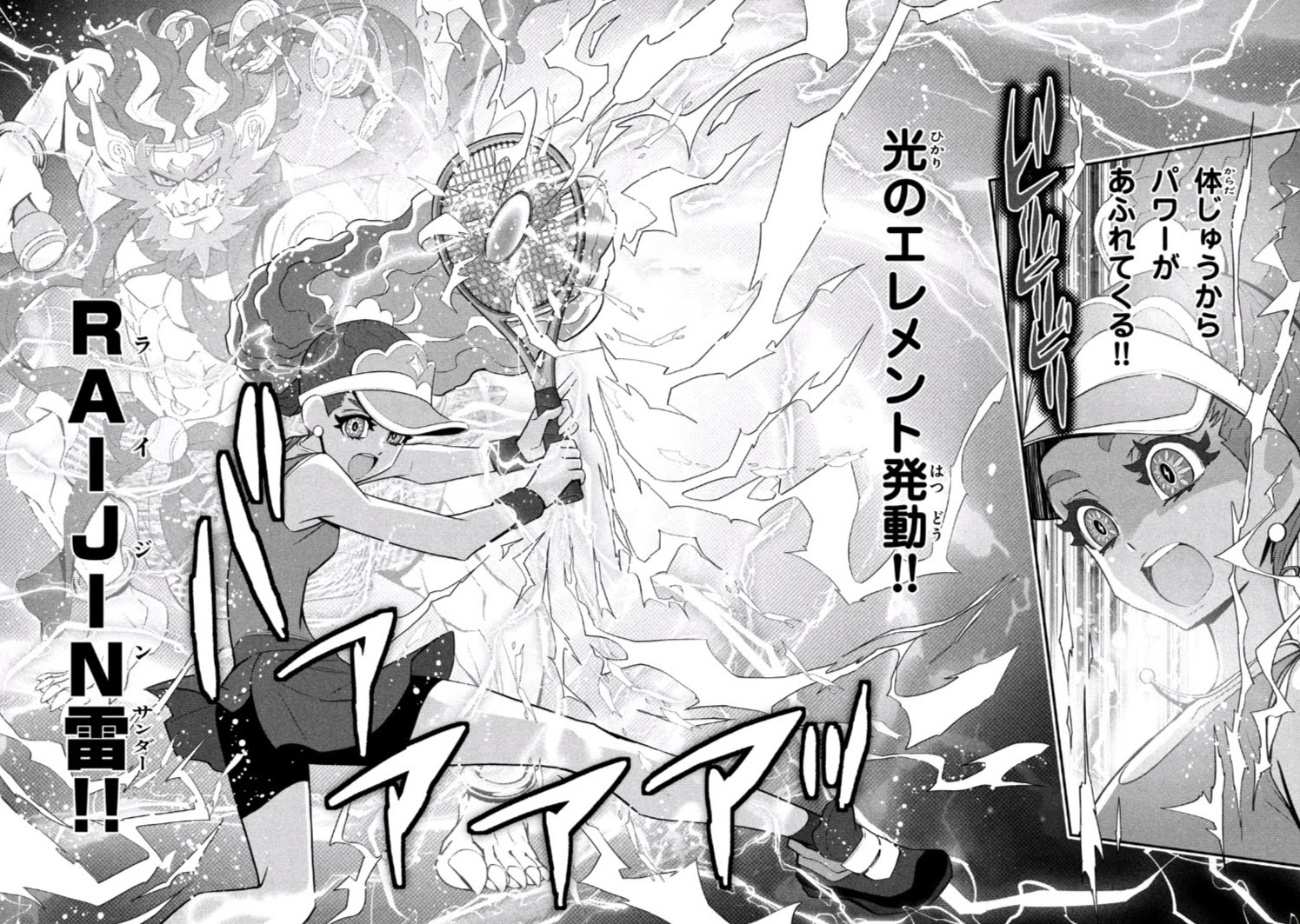
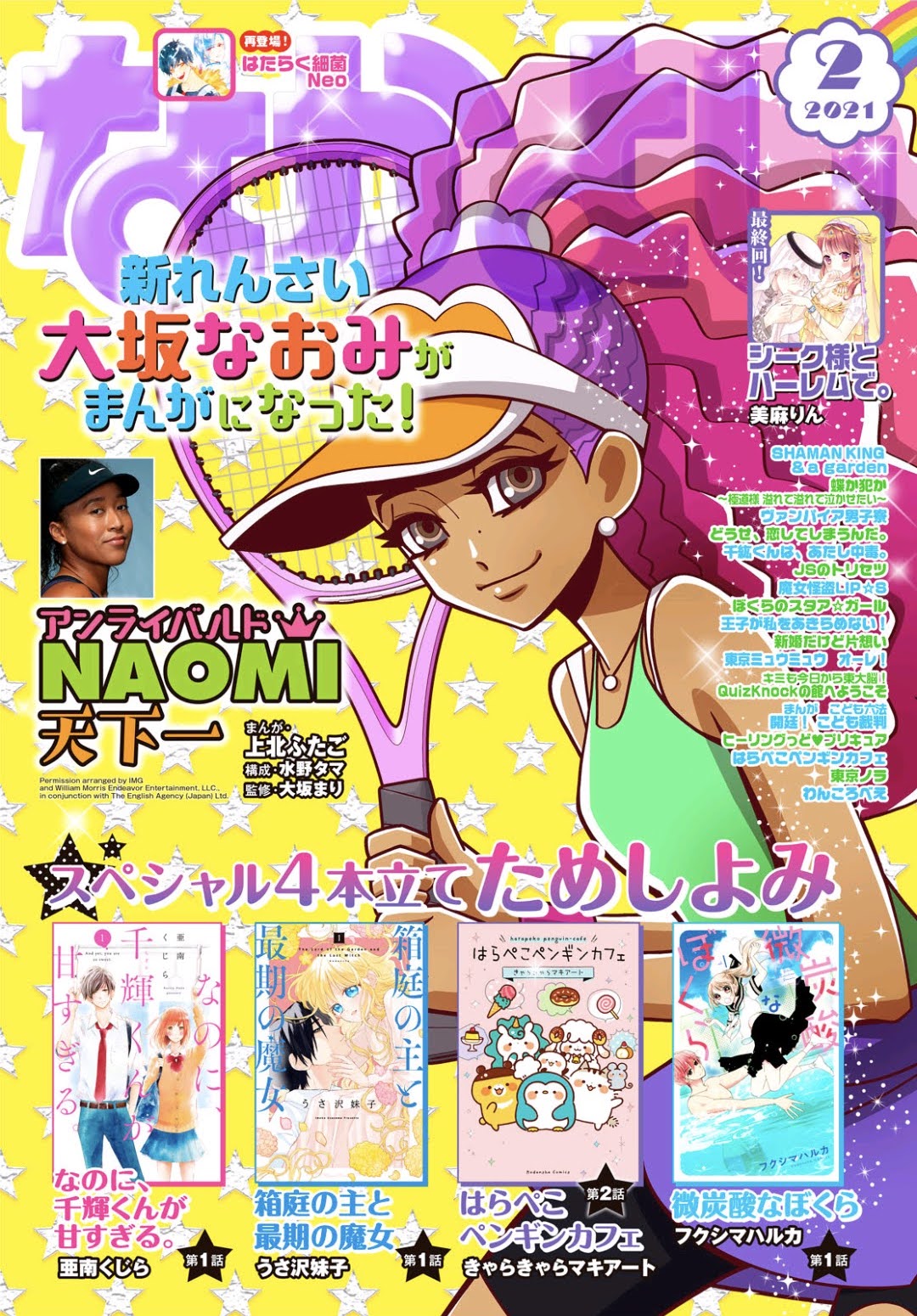
Naomi Osaka with Lightning Powers: Unrivaled Naomi Tenka-ichi

I knew that Naomi Osaka was supposed to get her own manga. What I didn’t know is that it would be drawn by the artists responsible for the Precure manga, nor that it would be about futuristic space tennis. Having read the first chapter, I think Unrivaled Naomi Tenka-ichi is going to turn out amazing.

In the year NKY2770, five elemental planets (light, wind, water, earth, fire) compete in space to determine the next king after the previous King of Light suddenly died and left the planets vulnerable to the forces of darkness. A 15-year-old girl named Naomi travels with her family to the wind planet to support her dad’s dream of becoming a space tennis coach, but an old man Naomi rescues reveals to Naomi her immense potential, and puts her down the thrilling path of a player.

One thing I did not expect from Unrivaled Naomi Tenka-ichi is that it’s much more action-packed than I expected. While the Precure anime is known for its fight scenes, Kamikita Futago’s manga renditions usually eschew superpowered combat in favor of friendly conversations and non-battle storylines. Not so here, as part of what puts the “space” in space tennis is elemental-powered strokes and tense matches that would feel at home even in a shounen magazine.

In terms of racial sensitivity, while I can’t say much, the Kamikita twins have prior experience drawing a darker-skinned heroine thanks to their work on the Star Twinkle Precure manga, which features the half-Mexican Amamiya Elena. From what I can tell there, the artists drew Elena very respectfully, and I see a similar approach being used here.

The credits also for the series also include supervision from Naomi’s older sister Mari, who’s also a tennis player. I’m curious as to what exactly her involvement is. Does she provide tennis expertise? Is she a fan of shoujo manga? These are probably questions I’ll never know the answer to.

Even if the series ends up being pretty by-the-numbers, I’m looking forward to it. Sure, it looks fun so far, but more importantly, I think it has real potential to make some social impact. For its first chapter, Unrivaled Naomi Tenka-ichi graces the cover of its magazine, Nakayoshi. While I don’t know how many dark-skinned heroines have been cover girls for Nakayoshi, I suspect that it’s been more the exception than the rule. I can imagine a young Japanese girl who’s self-conscious about her own skin color seeing the fictional and real versions of Naomi proudly displayed on the cover, and drawing confidence and inspiration from it. Maybe it’ll help them see themselves in a prouder light. And if this manga reaches a worldwide audience, then it’s all the better.

A European Tour: Izneo Comics App Review

In recent years, I’ve turned more and more to digital comics as a resource. While there is something lost in not being able to hold a physical book, the sheer amount of manga, webcomics, and the like that I try to keep up with means that I would soon run out of living space. I purchase ebooks on a regular basis (in English and Japanese), and have subscriptions to multiple comics and manga services.

I was recently contacted by a digital comics platform called Izneo, who asked me if I’d like to review their service. They offer a variety of American comics, manga, and webtoons, but what really caught my eyes was their robust European comics selection. While Ogiue Maniax is ultimately more focused on anime and manga, I spent a few years living in Europe, and I tried to use that opportunity to learn more about the storied history of Franco-Belgian comics (bande dessinee), Dutch comics (stripboeken), and just about anything I could get my hands on. Still, it’s an area of comics where my knowledge of comics is relatively weak, and knowing that Izneo seems dedicated to promoting European comics digitally encouraged me to write something.

Izneo was actually started by several large comics publishers in France, and so while they might not be as big as the elephant in the room, Comixology, they have a particular edge when it comes to European comics. From what I could tell, they tend to get new European releases sooner, and their premium service (which is first month free before switching to $7.99/month) has a lot more European titles readily available than Comixology Unlimited. For example, I compared the classic Belgian adventure comic Blake & Mortimer. As of December 2020, a Comixology subscription has nine volumes available to read at all times, whereas Izneo’s offers fourteen.  I think that alone can justify the subscription, but it doesn’t hurt that the selection of non-European comics is still quite decent. You can also buy the comics as individual purchases on there without a subscription, so there’s some flexibility in terms of cost.

I tried out Izneo’s apps on multiple platforms—a tablet, a smartphone, and even the Nintendo Switch—and what quickly became clear to me is that the tablet offered the best reading experience because of the traditional format of European comics. Unlike manga, which come collected into fairly small books usually somewhere between 144 to 208 pages mostly in black and white, European comics are around 48 to 64 pages, come in much larger dimensions (even bigger than the typical Marvel or DC hardcover collection), and are lovingly detailed in both linework and color. Although each European comic album is relatively short, it can often take a single artist months or even years to complete a single book, and they’re ideally read with the entire page visible to appreciate the overall visual composition. Because of this, it’s a challenge to read on a smaller screen, especially when you hit a word balloon that’s just stuffed with exposition. The best solution might be to just have an extremely large monitor, so you can even read the comics as full double-page spreads all the way, but that’s not a solution available to everyone.

Izneo is well aware of this limitation and offers a couple of workarounds for those using smaller devices. First is their “eazy comics” view, which breaks the page down so you read it one panel at a time. Second is that you can display each page zoomed in so you see about a third of it at a time. Of the two, I much prefer the latter, especially when it comes to older titles that stick more closely to the “three ‘strips’ per page” format. I also want to reiterate that I’m focusing on this issue not because it’s some fatal flaw of Izneo specifically, but because it’s an inherent compromise that comes with digital releases of European comics across all comics services.. The offerings for manga, American comics, and of course webtoons (which are generally created to be read on smaller screens) don’t run into these issues nearly as much. 

In order to do this review, I received the one-month premium subscription from Izneo, but I actually plan on continuing to use Izneo. I haven’t decided if I’ll keep the premium service or go into a la carte purchases, but their digital service just gives me such an opportunity to really explore European comics, and it means supporting the publishers and artists more directly. My only real wish is that they get more titles in the future. I would love to see Yoko Tsuno on there, and for the release to go beyond the few volumes released (out of order) in English previously. If possible, I also hope that they could eventually get non-Franco-Belgian European comics on there, like the Dutch series Agent 327. Overall, when it comes to Izneo, I like what I see, and I want more.

Oxen, Free: Ogiue Maniax Status Update for January 2021

A part of me understands that years are really just arbitrary designations of time, but I still feel a sense of relief that 2020 is officially behind us. I’ve never experienced anything like it, and I desperately hope that current and future generations learn the lessons we need about the important of healthcare, of helping those who are marginalized, and understanding that while competition is a part of humanity, it should not define us to the point of mutual destruction. Leave the power fantasies of invincibility to isekai anime, and let’s help one another out.

I also want to draw special attention to the Georgia runoff elections that will determine control of the US Senate. If you’re registered to vote there, you have the power to shape the future in your hands. If we want to establish even the chance for a future that benefits those in need rather than those addicted to power, this is our best opportunity for the next two years.

Anyway, thanks to the following Patreon sponsors at the start of 2021:

General:

Ko Ransom

Diogo Prado

Alex

Dsy

Sue Hopkins fans:

Serxeid

Hato Kenjirou fans:

Elizabeth

Yajima Mirei fans:

Machi-Kurada

Blog highlights from December:

Best Anime Characters of 2020

See my picks for the top two!

The Prince of All Rating Systems: The Vegeta Level

A simple question: How Vegeta is your favorite anime?

Christmas, Nostalgia, and Shinkalion

A look at how the anime Shinkalion utilizes nostalgia, and what makes it difficult to license in English.

Hashikko Ensemble

Chapter 35 brings the pain!

Patreon-Sponsored

Thoughts on HoloModels

My initial impressions on the augmented-reality anime figure line.

Closing

On a less somber note, it’s the year of the ox, and we’re seeing a lot of cow cosplay anime fanart. I’d say something about being careful about NSFW pieces, but I get the feeling most people are currently at home.

Best Anime Characters of 2020

BEST MALE CHARACTER

Sorano Appare (Appare-Ranman!)

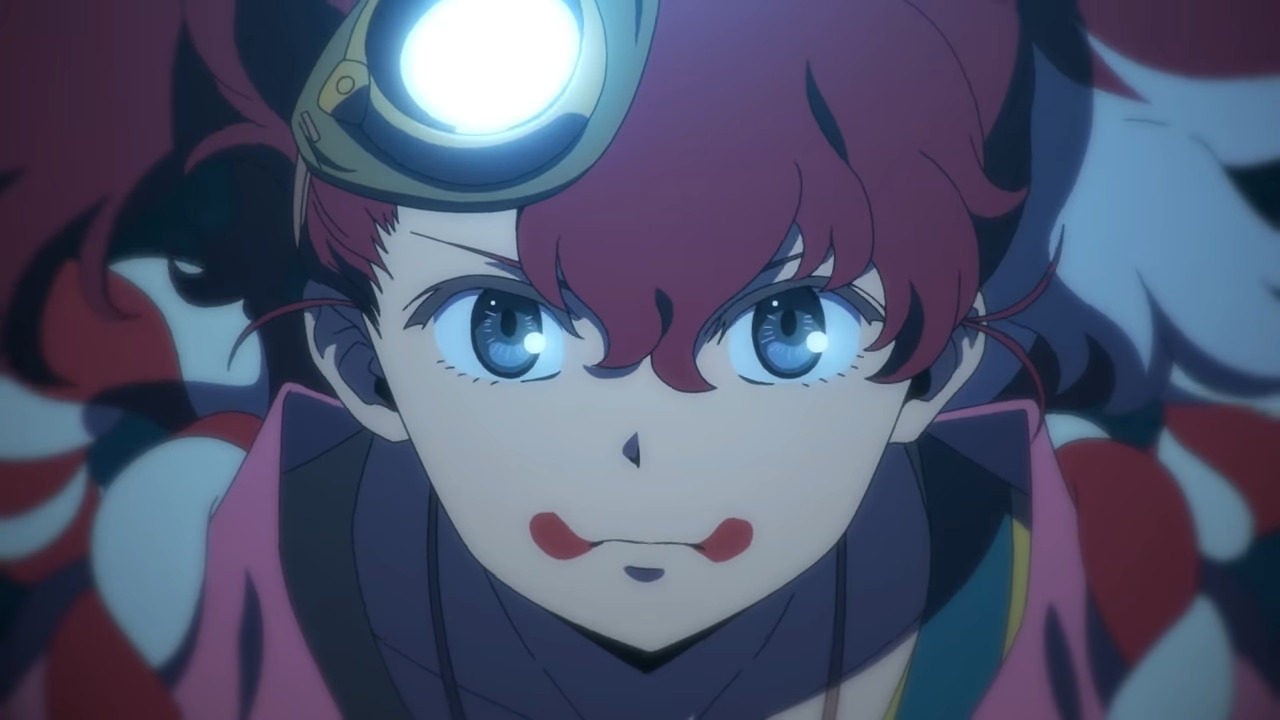
Having the protagonist of a racing anime be a serendipitous inventor makes for an interesting dynamic. Appare chafes against the cultural norms and restrictions expected of him in his home life in Japan, and an impromptu trip to the US (along with an entry into a transnational motorcar race) allows his eccentric genius to flourish. Above all, there are two main things that make Appare great. The first is that his interactions with others both big and small make for a very convincing portrayal of a protagonist whose way of thinking, priorities, and philosophy run along a different path from everyone around him. The second is that he grows tremendously on his journey—in part due to his initially reluctant racing partner Kosame—and ultimately ends up with both a passion for technology and compassion for his fellow human beings in equal strength.

BEST FEMALE CHARACTER

Kanamori Sayaka (Keep Your Hands Off Eizouken!)

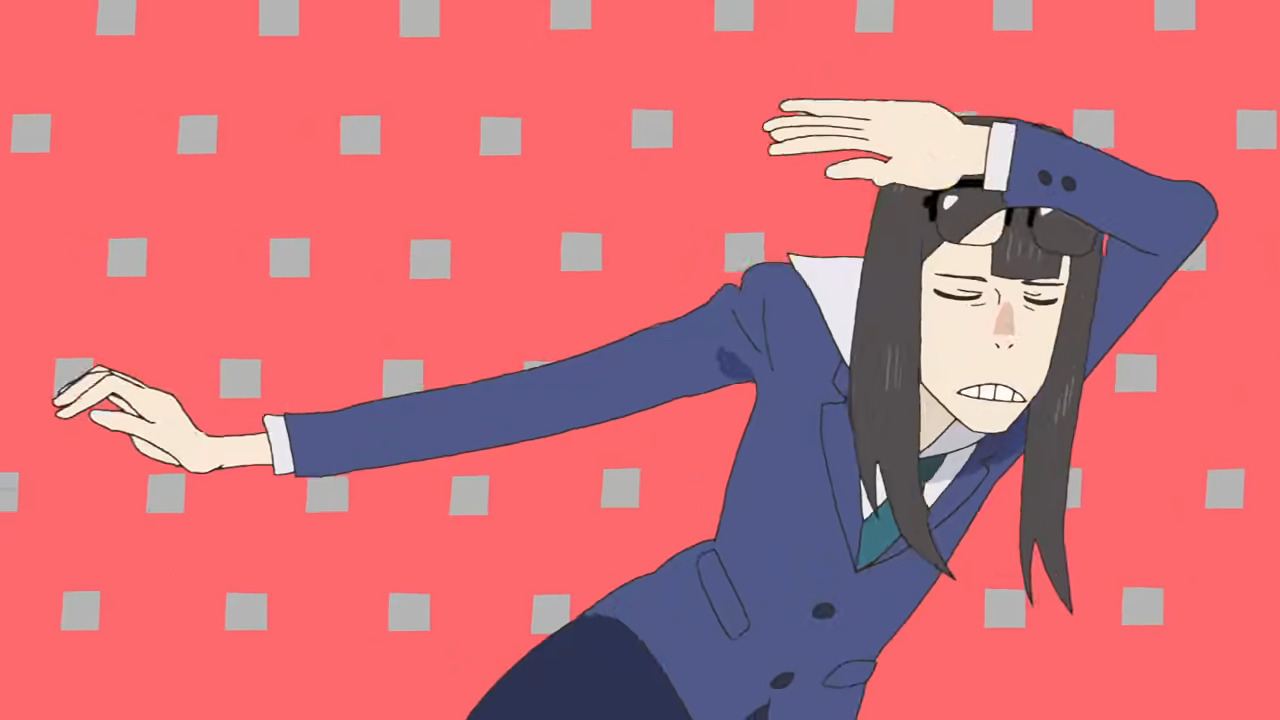
In one of the greatest celebrations of the creative process ever made, the most impressive character is Kanamori Sayaka, the practical-minded “producer” of the main trio. The very fact that she embodies that producer mindset (as opposed to director, artist, or animator) is a rare treat, and while she’s basically the fun police in terms of the narrative, the story portrays her as integral. There’s something downright refreshing about how grounded and logical Kanamori is in contrast to the rampant imaginations of her friends Asakusa and Mizusaki, and it makes a character who would otherwise recede into the background stand out all the more. In certain ways, she reminds me of Kasukabe Saki from Genshiken—always a fine character to be compared to.

Final Thoughts

When I look at my choices for best characters of 2020, the thing I see in common is that both are unorthodox characters who provide windows into the act of creation, be it artistic or mechanical. Funnily enough, Appare and Kanamori play opposite roles in their respective stories, with Kanamori being the straight man to her friends’ disregard for pragmatism and Appare being the unimpeded tinkerer who Kosame has to manage. It would probably make more sense if I had picked two similar characters on each side, but in both cases, the way they upend expectations makes me believe in them.

I’d also like to make an honoroable mention for Kaburagi from Deca-Dence, who was extremely close to being my pick for male character of the year. Kaburagi is an aged combat veteran, but as we learn more about his life and perspective, we can see the inner struggle in him extends beyond merely his loss of zest for life and into what it means for a society to survive versus what it means to prosper.

A turbulent year full of worries and delays has nevertheless seen many wonderful anime come out that both challenge norms and provide hope and inspiration.

Dark Waters: Hashikko Ensemble, Chapter 35

Heartache and bracket upsets abound in Hashikko Ensemble, Chapter 35.

Summary

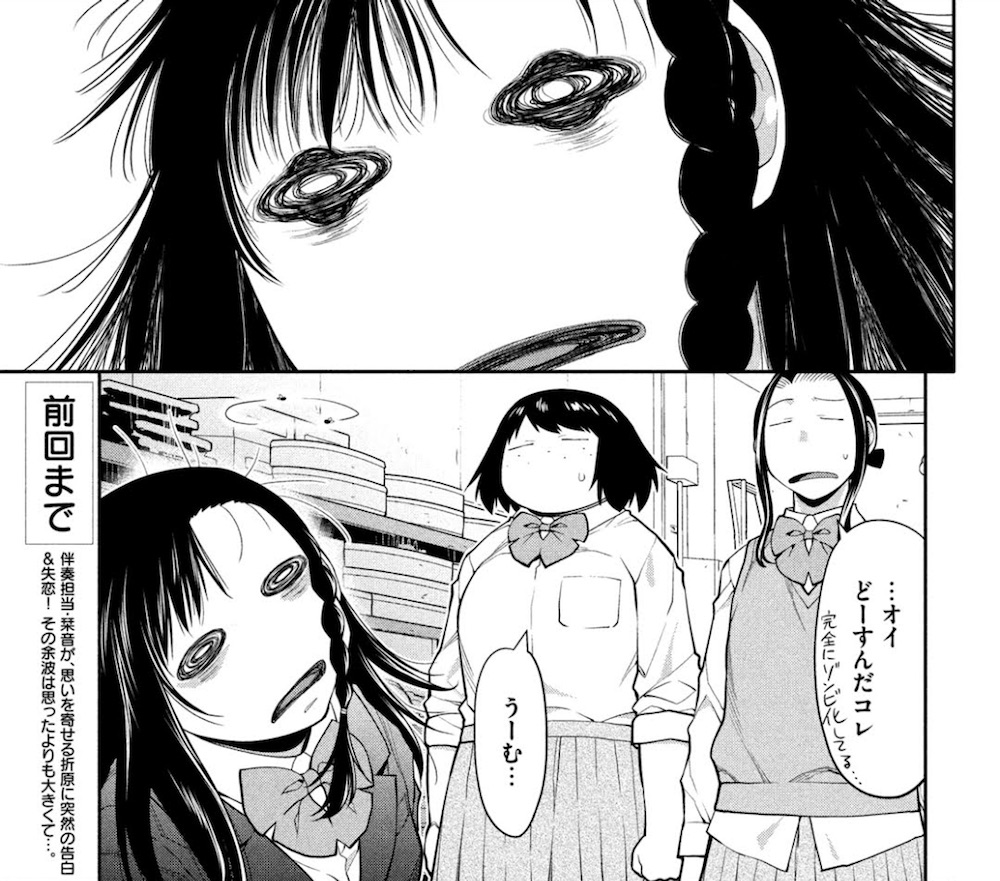
After being rejected by Kousei, Shion is emotionally devastated. Yukina asks why Kousei would word his rejection so harshly, while Jin correctly (and inappropriately) brings up Kousei’s mom as the reason he doesn’t like to deal with girls.  At the same time, seeing Shion confess to Kousei has put Akira into a funk, which impacts his singing as a part of Tsuyama’s group in the school music competition (once again, Akira got roped into participating with them as well). Combined with a lack of practice and a focus on girls over music, the “Tsuyama All Stars” are defeated by a group of otaku singing an iDOLM@STER song. 

Dropping out in Round 1, all of their girlfriends instantly reject them as losers, and Tsuyama is on the verge of kicking Akira’s ass. However, Kurotaki Mai steps in to defend Akira by pointing out that Tsuyama and company’s song choice betrayed them, as they clearly lacked the conviction they showed when singing a Spitz cover at the previous competition against the Chorus Appreciation Society. The Tsuyama crew then realize the “error” of their ways and go back to worshipping Mimi-sensei. But Mai also criticizes Akira, and relays something that Jin taught her: the low notes are the foundation of harmonizing, and as possessors of deep voices, they’re vital to the success of their respective groups’ performances.

But right when everyone expects the Light Music Club to win their round, they’re actually beaten by a mysterious masked group calling themselves “Basso Masters.” Who are they, and why are there 52 of them?!

Oh, Mai

With all the romantic drama coming out over the past few chapters, it’s no surprise that a look into Mai’s inner thoughts would reveal that she has feelings for Akira as well. Sure, all the blushing and gratefulness since her introduction into Hashikko Ensemble was a pretty strong hint, but after giving Akira advice, she thinks to herself, “Liking someone who likes someone else…It happens all the time.” In a different context, it might come across as more ambiguous, but then it’s followed up by Himari seeing everything and reacting with a thought of her own: “…Ugh. Looks like she’s gonna be a real pain.” Himari is clearly seeing something there, though I’m still not sure how Himari herself feels. Being Akira’s childhood friend, is there something more? The love web somehow gets more defined and more convoluted as the story continues.

Meanwhile, Akira’s mom is there in person and seeing this tangled web of emotions in action, thrilled at her darling son experiencing the ups and downs of youth. As with the last chapter, I love how supportive she is, and when I think about something like Genshiken, the sheer parental presence in Hashikko Ensemble sticks out all the more.

Shallow Love

It’s ironic that Tsuyama’s crew, the ones who made it look like music was the key to dating success and the most visible symbol that the school had changed, were mercilessly tossed aside by their girlfriends and are now back to square one. It’s a humorously tragic moment, simple in its brutality, but also speaking to the dangers of romance through prestige. Both the guys and the girls involved likely got into it for shallow reasons, though in what ways they were shallow changed. I could see Tsuyama and the others jumping at the very first opportunity to have some cute girlfriends, while the girls merely liked the cool cache brought to them by dating these guys. When Mai is telling them off, she mentions that their song choice was clearly made in order to please their girlfriends, who know nothing about music and shouldn’t have been such a significant factor. 

It’s implied that their devotion to Mimi-sensei was on a whole other level, and that whatever they were feeling for their girls just wasn’t quite the same. I feel sorry for Mimi-sensei for having to deal with them again, and it’s not exactly a happy ending, but i am amused by how confused she is in the aftermath. 

Jin Is Never Smooth

Some chapters ago, I wrote about how I think he’s supposed to be a non-neurotypical person, which came through in his inability to understand the more emotional and subjective aspects of music. Now, he seems incapable of reading the room, and loudly blurts out something that hits at Kousei’s greatest sore spot: his neglectful and abusive mother. I can’t quite recall if Jin has all the details about Kousei’s life, but just about anyone else would have known to keep quiet about it. Although nowhere near as terrible, Jin doesn’t have the best relationship with his own mom, and I wonder how much his social awkwardness (whether or not it’s due to a psychological or physiological condition) contributes to that tension.

Songs

Tsuyama All Stars: “Pretender” by Official Hige Dandism

Team “Promise” (a bunch of otaku): “Yakusoku” (Promise) from The iDOLM@STER

Half Monks: “Guts Daze!!” by Ulfuls

Electrical First-Years Acapella Group: “Cruel Angel’s Thesis” by Yoko Takahashi (electronic version using Vocaloid software)

Wind Instrument Club: “The Galaxy Express 999” by Godiego

Light Music Club: “Ai Uta” (Love Ballad) by GReeeeN

Basso Masters: “Daichi Kinshou” (Hymn of the Earth) from the cantata “Tsuchi no Uta” (Song of the Land)

I appreciate that the competition has a nice mix of genres and sources—including pop, rock, anime, and classical—from across the decades. The performances themselves also showcase different ways to make music, and I would love to see the electronic version of “Cruel Angel’s Thesis” if this ever got made into an anime.

You can find the above songs, along with previous references, in my Hashikko Ensemble Youtube playlist.

Final Thoughts

A group of 52 singers showing up incognito is sure to cause a stir, but it also makes me wonder if they’re actually another school in disguise—maybe Nishigafuchi. The combination of their song choice and their sheer numbers makes me think they’re not from around these parts.

Christmas, Nostalgia, and Shinkalion

It’s not uncommon for children’s cartoons to offer something to the parents watching with their kids, yet when it came to Shinkansen Henkei Robo Shinkalion: THE ANIMATION, I had believed that there wasn’t much in it for adults beyond those who already have an appreciation for a more classic type of kids’ anime. Recently, however, I’ve come to realize that what Shinkalion offers its older viewers is a dip into nostalgia—not only because of its relatively old-fashioned narrative beats, but also literal callbacks to pop culture moments of yesteryear.

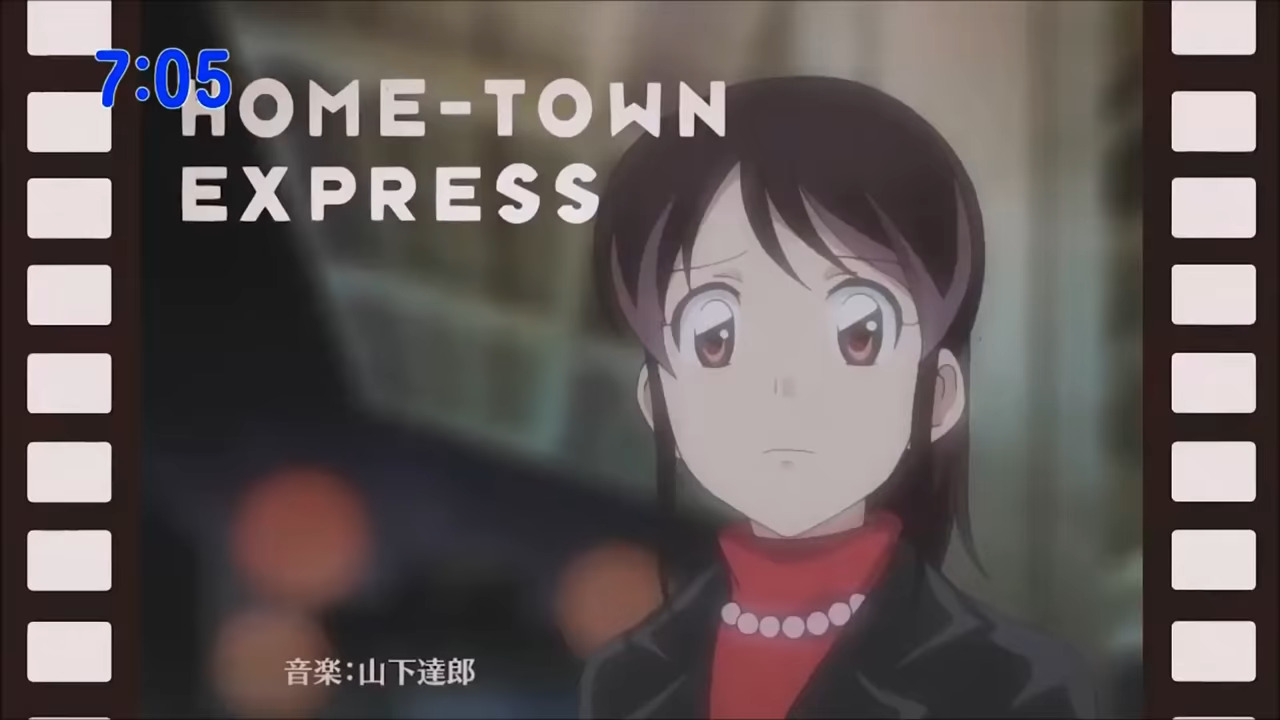
In a recent tweet, fellow mecha enthusiast Tom Aznable points out how Shinkalion actually features near shot-for-shot re-creations of late 1980s Christmas-themed commercials for Japan Railways, complete with 4:3 aspect ratio, a faux-CRT filter, and actual recordings of “Christmas Eve” by the renowned Yamashita Tatsuro. You can see side by side comparisons in the link above, as well as the full commercials below:

I was unfamiliar with that particular song, but it’s apparently considered a Christmas classic in Japan. And, like so many things Japanese, it just oozes nostalgia, and now it’s forever on my playlist. 

In the context of the anime itself, the protagonist Hayasugi Hayato is a supreme train otaku, and so he thinks of everything—including other characters’ romantic recollections—in relation to trains. But the show is clearly using these moments to trigger powerful memories in its older viewers. Shinkalion doesn’t even limit it to Christmas commercials, either. Given all this, it becomes clearer that the Evangelion episode of Shinkalion, where Hayato visits Tokyo-3 and Shinji pilots a Shinkalion version of EVA-01, is also meant to play into this nostalgia.

The way that Shinkalion taps into a past zeitgeist makes me further aware of the improbability of the series ever getting licensed in English. The series is already focused primarily on viewers in Japan by virtue of its purpose and subject material. The show wants you to buy bullet train toys from Takara Tomy and encourages you to ride the train more (not exactly unwelcome in the grand scheme of things), and without the merch and the accessibility to the shinkansen—or, for that matter, the familiarity of Japanese high-speed rail—it would remain a weird and foreign thing to most kids in the US and other English-primary countries. When you throw the 80s and 90s Japanese media references on there as well, it becomes an even more difficult sell. Yamashita Tatsuro might be gaining more of an international reputation than ever thanks to his role as the king of city pop, but it’s those commercials just aren’t going to hit nearly as hard as they did with Japanese viewers.

There will always be something lost in cultural translation, but there need to be a lot of moving parts for this to work out, including likely a licensing process involving Japan Railways. And while Shinkalion has managed to reach beyond Japan and to places like Hong Kong, Asia’s relationship with anime is very different from the rest of the world’s due to proximity. 

Still, I wouldn’t mind a Christmas miracle whereby Shinkalion gets licensed in some form—even a streaming-only release. There would likely be some music rights limitations that would alter the experience, as even the Japanese official Youtube versions of Shinkalion episodes had to replace “Christmas Eve” and “Cruel Angel’s Thesis,” but it would be a relatively small price to pay. As the line from the Japan Railways Christmas commercials puts it, “Getting to see you is the ultimate present.”

Sephiroth in Smash Is Uncharted Competitive Territory

Sephiroth has officially been released for Super Smash Bros. Ultimate, though many people had already gotten their hands on him thanks to the Sephiroth Challenge: a special boss fight with the new DLC character where the reward was early access. Having tried out the One-Winged Angel for a few days myself, I’d like to give my initial impressions of the character, and how I think he’ll pan out in more competitive play.

During this preview period, I’ve seen assessments of Sephiroth go anywhere from disappointingly mediocre to potential top tier. Based on personal experience, I can see why. Sephiroth seems to have qualities that are often death sentences for viability (large body easily prone to getting hit, slow and laggy attacks) but also ones that make for powerful characters (extremely large sword, high mobility, versatility, a built-in comeback factor). In other words, while Sephiroth is nowhere near as unorthodox as Steve from Minecraft, he still possesses a combination of qualities that have never really existed in Smash Bros. before. As #1 player in the world MKLeo puts it, he’s like Byleth (a similarly range-focused character), except Sephiroth trades attack speed for better movement. And in Smash, movement is generally king. 

The sheer size of Sephiroth’s Masamune changes everything. It goes without saying, but the sword is loooong. Cases where an opponent would otherwise be safe rolling away can still get them caught by the end of a sword swipe, and not even because of a particularly impressive read. Spacing both as and against Sephiroth is just different, especially if you factor in his other special moves, which are designed to scare opponents into making bad decisions. The ability to fake out with a Flare charge cancel, to get people to panic with Shadow Flare, or even catch someone slipping with a deadly Octoslash means that it’s easy for Sephiroth to fight on his terms.

That’s not to say Sephiroth’s aforementioned weaknesses are trivial. Like Mewtwo, he’s both tall and light, meaning it’s easy for him to take damage and die early. Sephiroth has issues with being smothered by quick and agile characters who can bait out his attacks and punish their endlag. His frame data is objectively lackluster, and his closest reliable option out of shield is a dismal neutral air with a frame-9 startup (though its utility on offense is much greater). His faster attacks also require a lot more precision, as they tend to be long but thin stabbing motions that don’t cover much space to the sides of the sword. However, Sephiroth in neutral generally looks to have an answer for everything, and it’s a matter of finding what works. I was playing online and losing games to a Fox—exactly the kind of character who can get in your face and stay there—but I managed to eventually win just by using my attacks differently. Down smash’s heavy shield damage can make defensive play unreliable, Scintilla’s ability to push back aggression, and up tilt’s generous scooping hitbox made charging in less free once I realized what to do.

On top of all this is Sephiroth’s One-Winged mode, which improves his stats across the board, as well as giving him super armor on smash attacks and a third jump. Activated when Sephiroth takes a certain amount of damage, it makes him scary in a manner akin to Limit Cloud, because the enhanced mobility makes possible things that would have been out of the question otherwise. Luckily for anyone facing him, he’s still light to the point that it won’t take much to KO him and remove his enhancements temporarily, but it can be like fighting (and using) a different character.

Speaking of Cloud, in comparison to his fated rival, Sephiroth is definitely not meant to be a beginner’s character. Whereas Cloud has extremely good mobility and hitboxes that are both safe and generous, Sephiroth can’t just throw things out willy nilly and hope for the best. Cloud can be played intelligently, but Sephiroth needs brains to function well if your opponent knows what to expect. He just has so many attacks with so many particular uses, it’s going to take a long while before even the best players know how to fully utilize everything he can do.

As for where I think Sephiroth will end up in terms of viability, I’m bullish on his future performance, and can see him at least in high tier. Slow attack speed is never a good thing, but imagine if you took Ganondorf and just gave him a sword as big as Sephiroth’s. It wouldn’t necessarily make Ganondorf a top tier, but it would open up possibilities on offense and defense in a big way. Thus, while Sephiroth has his fair share of pronounced flaws, he also possesses a unique combination of laggy yet powerful ranged attacks along with tricky movement and specials such that the drawbacks of the former can be mitigated by the latter with smart spacing. The very fact that MKLeo is interested in using Sephiroth might also very well give him a huge boost in visibility early on. 

Thoughts on HoloModels

Augmented reality is a funny thing to me because its appeal feels somehow both obvious and yet elusive. Whether it was participating in Pokémon Go at the height of the craze or seeing people on Twitter post videos of their iDOLM@STER characters occupying “real” spaces, I end up thinking “that’s really cool” and “but do I really want to blur that line?” simultaneously. 

I was asked this month, by Patreon request, to discuss HoloModels, which is an AR figures app by the company Gugenka. Essentially, rather than having physical PVC or resin kit models, you collect virtual ones that you can pose and “place” wherever you want. I had actually seen images of it without realizing what exactly I was looking at, thanks to retweets of the Lina Inverse HoloModel that have been filling my Twitter timeline. “Was it some video game? Maybe a fan project?” I thought.

Before trying out the app itself, my understanding of HoloModels led me to think that the advantage was basically like that of ebooks: the ability to keep a bunch of models without any of them taking up physical space. They can be placed and posed any way you want, so there’s also a certain degree of freedom for creativity. However, when I saw that HoloModels can be resized to pretty much any scale, I realized that the potential I had pictured was too limited.

The versatility of HoloModels means you can have life-size models, as if they’re less figures and more characters who have entered our world. Perhaps you can even pretend that they’re a friend or a lover. And even if you’re not into that sort of thing, you can still use them in a variety of different ways. You can use them in virtual dioramas or even as action figures after a fashion. What’s more, you can’t really “damage” them by accident. And of course, even this view is still probably a drop in the ocean of possibilities.

Because of the proximity of HoloModels to Virtual Youtubers—they’re essentially two ways of blurring fiction and reality together through anime aesthetics—I also had to see if there was any stronger connection between the two. It turns out that the default model you get when you first install HoloModels, Shinonome Megu, has since become a Virtual Youtuber with 40,000+ subscribers as of December 2020. I believe the HoloModels figure came first, based on comparing news articles announcing HoloModels with the oldest video on her channel, but if anyone has more information, feel free to share.

Am I interested in sticking with them? Not really. HoloModel figures are awfully pricey in my view, as less expensive characters run around 3,500 yen, and the Lina Inverse mentioned above is 5,000 yen. I might just be the wrong person to understand the true value of these AR characters—I’d still rather have a physical one, even if I can’t make it Godzilla-sized. That all said, if we compare HoloModels to another form of “virtual character collection,” i.e. mobile game gacha, the luck element is completely removed. That does make me wonder if that gambling high is part of why mobile game character lotteries work in the first place, but that’s another conversation for another day.

This post is sponsored by Ogiue Maniax patron Johnny Trovato. You can personally request topics through the Patreon or by tipping $30 via ko-fi.

Getter Robo Arc and the True Ishikawa Style?

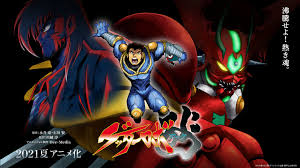
When I was first really getting into anime, it seemed as if the classic 1970s giant robot franchise Getter Robo was in the middle of some sustained renaissance. Whether it was 1999’s Change! Shin Getter Robo: Armageddon, 2000’s Shin Getter Robo vs. Neo Getter Robo, or 2005’s New Getter Robo, it felt as if another anime was always just around the corner. But then the well dried up (albeit not necessarily for other popular classic robots), and it’s been 16 years since. But finally, in 2021, we’ll be seeing a new entry: Getter Robo Arc, based on the manga by Nagai Go and Ishikawa Ken. Notably, this might also end up being the first fairly straightforward adaptation of a Getter Robo manga, and the first to try and really get close to Ishikawa’s art style.

The funny thing about the various Getter Robo anime is that there has never been a straight adaptation of any of the manga. You might be thinking of a long shounen fighting series ending up with a filler arc or three, but I’m not even talking about that. Rather, since the original inception of Getter Robo, the relationship between the many manga and anime have been an odd one. The first Getter Robo manga and the first Getter Robo anime debuted around the same time in 1974, but whereas the former depicted its heroes as virtual psychopaths, the latter portrayed them as relatively kid-friendly good guys. 1991’s Getter Robo Go took similar diverging paths with Ishikawa’s drawings being relatively unchanged and the anime adapting its character designs to a late 80s/early 90s look. 

The later works were not much different. Change! Shin Getter Robo: Armageddon and Shin Getter Robo vs. Neo Getter Robo both take elements from throughout the franchise’s history and try to show a more action-packed style reminiscent of Ishikawa’s art, but neither quite goes all the way, balancing 21st-century anime designs with a throwback feel. What’s more, the two aren’t even meant to be connected to each other. New Getter Robo is in a similar boat, being a reboot of sorts that brings some of the insane personalities from that original 1974 manga, but changing just about everything else. This trend is par for the course with Dynamic Pro properties, be it Devilman, Mazinger, Cutie Honey, or anything else. “Canon” and “faithfulness” are distant concepts in this arena.

However, that’s also what makes the initial images for the Getter Robo Arc anime stand out all the more. Both the promo image and the trailer seem to exude a roughness that immediately calls to mind Ishikawa’s aesthetic, where trying to create eye-pleasing shots comes second to pushing a kind of gritty intensity. It’s understandable that anime want to try to grab audiences with more appealing character designs, but here we have Gou, the guy on the promo image, feeling like he almost fell straight out of the manga and onto a poster. If the animators at Studio Bee can really pull off making the anime adaptation look Ishikawa as hell, I will give them all the props in the world.

PS: Kageyama Hironobu was a guest at Anime NYC 2018, and during the Lantis Matsuri concert he actually sang “HEATS,” the opening to Change! Shin Getter Robo: Armageddon. Now, the Getter Robo Arc anime is bringing the song back as “HEATS 2021,” and I have to wonder if Kageyama knew back then that he would be called upon to revive that old banger.