Ogiue’s Hot ‘n’ Juicy: Ogiue Maniax Status Update for September 2017

https://twitter.com/rakuda0330/status/871610095242682368

As summer comes to a close, I hope that the autumn weather might spark some interesting ideas for posts. I’d like to give some food for thought to my readers, and for my own satisfaction. Speaking of food, there’s going to be an extended restaurant analogy for this update. I hope you don’t run away!

Before I start, though, I want to extend a thank you to my Patreon sponsors for the month of September.

General:

Johnny Trovato

Ko Ransom

Alex

Diogo Prado

Viga

Yoshitake Rika fans:

Elliot Page

Hato Kenjirou fans:

Elizabeth

Yajima Mirei fans:

Machi-Kurada

I recently ate at Wendy’s, a trip that had me reading about some of the fast food chain’s recent changes. Apparently, Wendy’s in recent years has suffered from being seen as behind-the-times in spite of the relatively high quality of their food—ironic, given their slogan of “Old-Fashioned Hamburgers.” Customers still thought the food was great, but Wendy’s has had to play catch up, which is why they changed their signature burger a few years ago, re-introducing it as “Dave’s Hot ‘n’ Juicy Single/Double/Triple” before changing it to just “Dave’s.”

I feel like Ogiue Maniax is in a similarly precarious position. I know my readers still enjoy my posts, and I feel like I’m still serving what made people come to my blog in the first place, but it feels a bit stuck in another era. This is perhaps because of the blog format itself; this sort of anime/manga criticism exists much more readily on YouTube these days, and even that format looks like it might be in trouble given all of YouTube’s recent monkey wrenches that mess with people’s abilities to make a livelihood through the streaming video service.

I wish I had a new burger to provide something fresh, but I don’t. At least, not yet. I don’t rely on Ogiue Maniax as a career, so maybe I’ve gotten complacent, but the last thing I want to happen is for this blog to lose its core identity of thoughtful analysis.

At least, I hope they’re still thoughtful. Here are my personal highlights from the past month of Ogiue Maniax:

Capitalizing on a New Home: Otakon 2017

My Otakon 2017 con report! It also includes links to interviews, film reviews, and such.

Hell Hath no Fury: Benten in The Eccentric Family 2

Benten is one of anime’s most intriguing characters, but the second season of The Eccentric Family takes her portrayal to another level.

A New Way to Look at Precure Character Archetypes


This one’s kind of unusual: a look at how some recent Precure merchandise categorizes its extensive character list.

Patreon-Sponsored

The Star that Shines Brightest: Thoughts on the Aikatsu! Five-Year Anniversary Crossover
Five years of Aikatsu! Really?!


Closing

This doesn’t have to do with anything, but I should really write about Voltron: Legendary Defender one of these days. I have a lot of thoughts I want to get out there.

Save

Save

Save

Capitalizing on a New Home: Otakon 2017

“Howatto?! Washington ni?!”

-Jack King, Shin Getter Robo vs. Neo Getter Robo

Introduction: To DC

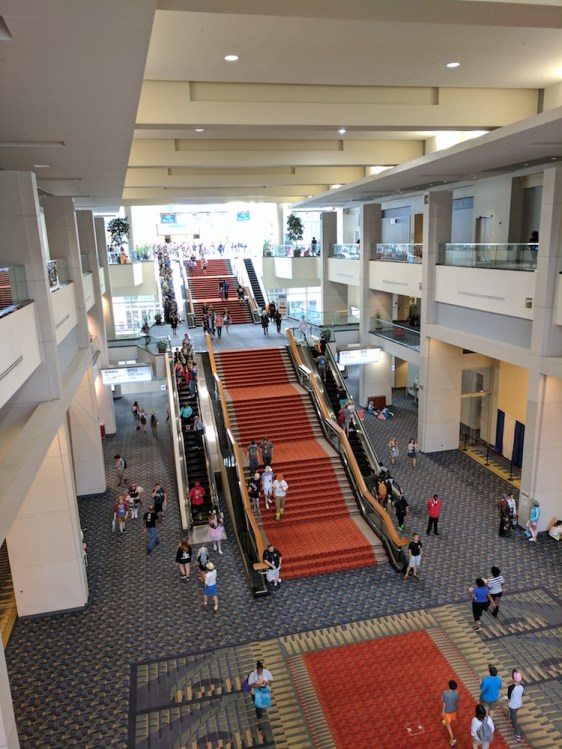
Otakon has always been my favorite anime convention. With its fan-oriented approach and variety of content, it always feels surprisingly intimate despite its sheer size (it’s generally the largest anime con on the east coast). This year marked a big change, as Otakon moved from its long-time home of Baltimore to Washington DC. It might not seem like that much of a difference—it’s only one extra stop on Amtrak—but for those of us who had grown fond of the previous venue, warts and all, Otakon was synonymous with Baltimore.

However, I will likely not be the only one to tell you that the new location is one of the best things to happen to Otakon. Subjectively, I still have an attachment to Baltimore. Objectively, outside of increased cost, pretty much everything is superior. The Walter E. Washington Convention Center is roughly double the size of the old Baltimore Convention Center, meaning less congestion. The adjacent hotel, the Marriott Marquis Washington DC, is bigger and more accommodating. The food choices are greater both inside and outside the convention center, and still fairly reasonably priced. For those who are especially cost-conscious, a Giant Foods supermarket within walking distance is an improvement over Baltimore’s 7-Elevens.

Thus, without even taking into account what happened at the con itself, this new setting certainly provided a more comfortable space for Otakon to put on a show. It was off to a good start right from the beginning.

Dealer’s Hall and Artist’s Alley

One of the best things about having such a large space for Otakon is that the Dealer’s Hall and the Artist’s Alley were easily navigable. Instead of having to wade through a sea of people in order to get anything done, actually going where I wanted to provided little challenge, aside from unfamiliarity with the new convention center. In terms of content, it’s pretty much what you can expect out of a large-sized con. In the Dealer’s Hall, large, official company booths acted as centerpieces with smaller booths on the sides selling figures, posters, manga, anime, and more. The Artist’s Alley had a wide variety of styles, with series such as Voltron, Yuri!!! on Ice, and Persona 5 being especially popular.

One of the hiccups in both areas was a lack of clear marking as to where you were. Booths had individual numbers, but sometimes they didn’t follow a consistent logic, and a lack of visible markings to tell you what row and column you were standing in made things worse. Fortunately, this was brought up at the Con Feedback panel at the end of Otakon, and it’s something they had intended but couldn’t get around to.

There are a couple of other challenges they’ll have to tackle for next year as well. First, the line to the Dealer’s Hall would occasionally get capped. This in itself isn’t unusual, but at one point a friend of mind mentioned that he couldn’t get in while I was already there. But when I looked around, the Dealer’s Hall was the opposite of congested. There was literally room to run around if I so choose. I later realized that it wasn’t the Dealer’s Hall itself that was the issue, it was the space leading to the Dealer’s Hall that was becoming a fire hazard. That’s something that should be addressed by 2018.

The Artist’s Alley also ran into an unfortunate bit of flooding due to a water main break on Saturday evening. A major factor in this was an enormous storm that hit DC. From what I saw, Otakon handled the situation fairly well, and there were no major injuries. This might just be a fluke accident for the first year, so I’ll give them the benefit of the doubt.

Concert: JAM Project/TM Revolution

This year, Otakon teamed up with the Anisong World Matsuri to bring a number of musical acts to DC. Because tickets cost money (unlike most anime cons), I could only see the Friday concert featuring JAM Project and TM Revolution. As a long-time fan of the former and someone who definitely enjoys the music of the latter, I can say with the utmost confidence that they did not disappoint. Both acts are known for creating not only songs that are good in and of themselves, but for embracing the anime they create music for and elevating them through their compositions. I first saw JAM Project at their US debut back at Otakon 2008, and it was a welcome return.

Both TM Revolution and JAM Project are really adept at making live performances special. Their voices ring out clearly, they get the audience involved, and by the time they’re done you end up feeling like you were part of something greater. Even a few technical hiccups during TM Revolution’s performance couldn’t dent the audience’s fervor.

Before the concert, I had bet on JAM Project and TM Revolution doing an encore together. Most likely, it would be JAM Project’s signature song, “SKILL.” They came through, and the collaboration was everything I hoped for.

For further thoughts on the concert, check out my post on Apartment 507.

The official set list for Otakon 2017 is as follows:

JAM PROJECT

1. Crest of “Z’s”
2. Hagane no Resistance
3. Garo ~Savior in the Dark~
4. The Brave
5. THE EXCEEDER
6. Hero
7. THE HERO!! ~Ikareru Kobushini Hiwo Tsukero~
8. Victory〜Gong
9. Rocks
10. Rescue Fire

T.M.Revolution
1. Inherit the Force
2. Invoke
3. ignited
4. Meteor
5. resonance
6. High Pressure
7. White Breath
8. Hot Limit
9. Flags
10. Sword Summit
11. Heart of Sword

ENCORE
1. SKILL (JAM Project x T.M.Revolution)

Panels

Due to a busy schedule this year and some mishaps on my part, I was unable to attend as many panels as I would have liked. However, this means I can talk about ones I did see in greater detail!

(I also didn’t have any panels this year. Better luck next time?)

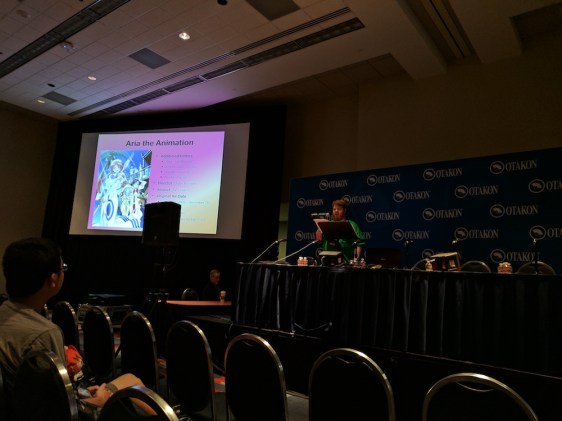
The first was “Romance and Abuse in Shoujo Manga,” which looked at many of the bad boys of shoujo and how their behavior can reflect an often implicit hand-waving of abusive relationships. It looked at both works that ignore its characters’ abusive behavior towards their partners, as well as those that call the characters out on it. The presenter also took time to point out the difference between enjoying something as fiction vs. understanding how it would play out in reality, so it’s not as if it was an automatic admonishment of the audience’s tastes. I thought it was a strong panel overall, but it could be taken to the next level. Perhaps it could even go into understanding why the trope of the abusive boyfriend as lovable partner is so popular and occurs in so many well-received anime and manga.

I would also like to compliment the presenter on giving her stamp of approval to how the series Kiss Him, Not Me approaches the subject of abuse, because while the series is thoughtful in a lot of ways, its initially flippant handling of weight and beauty can really turn people away—even I was put off by it. The fact that the presenter used it as an example showed that she wasn’t trying to automatically write off certain series but was actively trying to figure out what messages these shoujo series send.

Another panel I attended was “Iyashikei: Animated Healing.” It focused on the so-called healing genre of anime and manga, explaining the emotionally therapeutic aspect of such works and why they garner such loyal fans. It was a very thorough panel that showed a wide variety of series that can be considered iyashikei, including both classics and genre-bending examples. One thing the panel didn’t get into but I would have liked to see was the tendency towards an assumed male viewership for healing anime. Still, it was well-presented and informative, and I’d look forward to checking it out again.

Screenings

I had the opportunity to see two films, one of which was a world premiere. I’ve written more extensive reviews for both.

In This Corner of the World

Eureka Seven Hi-Evolution 1

Interviews

I also interviewed a few of the illustrious guests at Otakon! This year, it was the dynamic seiyuu duo of Furukawa Toshio and Kakinuma Shino, as well as an interview with the director of Eureka Seven, Kyouda Tomoki.

Final Thoughts

The move to Washington DC is the best decision Otakon has made in years. There are very few drawbacks I can think of, outside of a sentimental attachment to Baltimore (and its delicious crab cake truck), but I know that my experience is not necessarily shared with everyone else.

Second, you want to hear other random thoughts about the con, I also appeared on a post-Otakon podcast over at Ani-Gamers. We recorded it right after the con closed on Sunday!

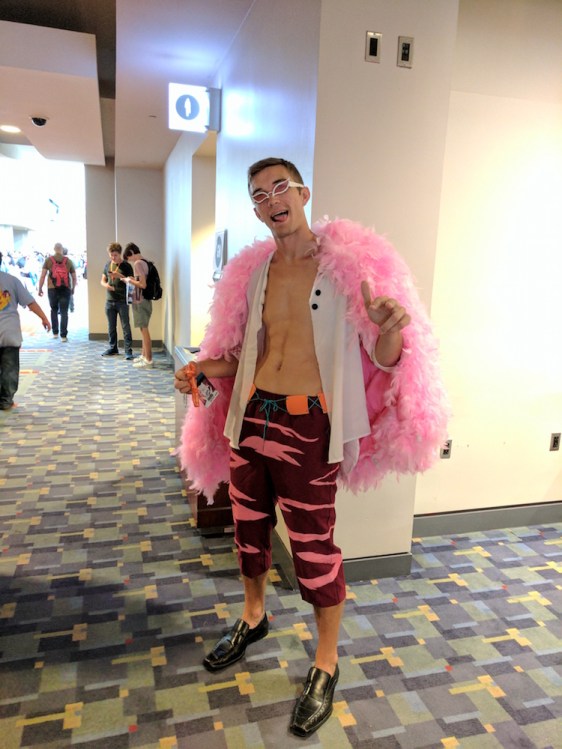
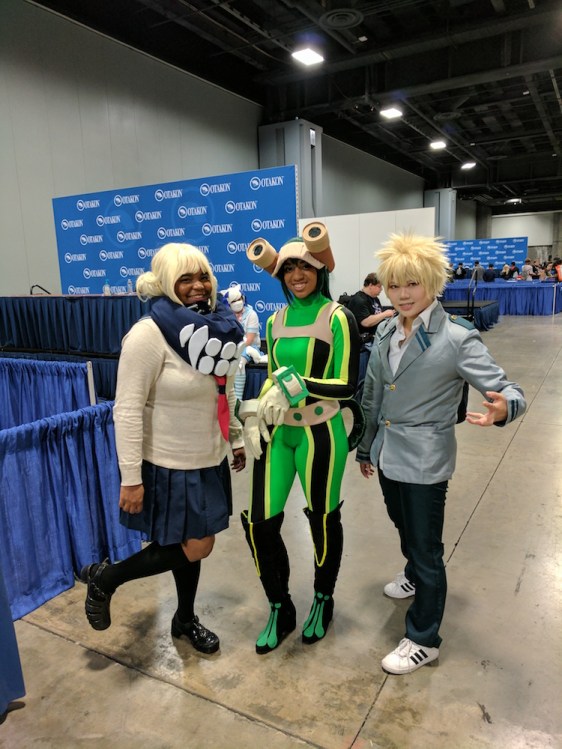
To end this report, here are some cosplay highlights, as is Ogiue Maniax tradition.

Save

Save

Save

Save

Save

The Star that Shines Brightest: Thoughts on the Aikatsu! Five-Year Anniversary Crossover

“Five years of Aikatsu! sounds strange. Sometimes, the series seems like it’s been around forever. Other times, I remember it as one of the many young upstarts nipping at Precure‘s “anime for young girls” throne. However my feelings sway, the reality is that the show is long enough now to have a mega crossover event.

In episodes 69 and 70 of Aikatsu Stars!, the characters if the latest series encounter their predecessors from seasons past. While there are plenty of interactions across the cast, the main focal point is how heroine Nijino Yume meets her protagonist senpai, Oozora Akari and Hoshimiya Ichigo.

One thing is crystal clear after these episodes: out if all three main characters, Ichigo is by far the most memorable and the most meme-able.

That’s not to say that Akari and Yume are bad characters or uninteresting. However, everything about Ichigo leaves an impression. Like in so many other franchises or enduring works, being the original confers a kind of aura of greatness. Whether it’s Amuro Ray from Gundam, Superman, or Cure Black and Cure White from Precure, there’s a sense of reverence for being the first.

But it’s not just being the inaugural protagonist that elevates Ichigo; it’s that she comes across as amusingly superhuman compared to the other two. Like Cure Black and Cure White in their own crossover specials, Ichigo is portrayed as the strongest. She scales cliffs with ease. Her skill with an axe is so notable that the crossover puts special emphasis on it. I’m fact, nowhere is the animation as lovingly handled as the tree-chopping scene, as the anime plays with dynamic angles, fluid animation, and perspective. Yume and Akari recede into the background in the face of Ichigo’s might.

If you look at the S.H. Figuarts figure for Ichigo, she actually comes with an axe. It’s an identifying element for fans. What would Akari and Yume come with? It’s less obvious. One might argue that they’re more subtle as characters, and that this is a strength, but even Cure Black and Cure White don’t overshadow their Precure successors this much.

It might sound like I’m being critical of the franchise for not developing its later heroines more, or of the crossover episodes for not doing a good enough job, but I’m not. I found the crossover episodes to be a fun celebration of all things Aikatsu! I especially enjoyed seeing the previous S4 (Yume’s senpai group before she got to the top of her school) and Soleil (Ichigo’s group) perform. It was also great to see my favorite, Ichinose Kaede. My thoughts on Ichigo are more of an observation.

On a final note, I thought the character designs for Aikatsu! and Aikatsu Stars! would clash more, but they really don’t. I think they made the original Aikatsu! girls’ faces a bit rounder to make the different casts more visually cohesive. This is generally the sign that a crossover knows what it’s doing.

This post was sponsored by Johnny Trovato. If you’re interested in submitting topics for the blog, or just like my writing and want to support Ogiue Maniax, check out my Patreon.

Otakon 2017 Interview: Furukawa Toshio & Kakinuma Shino

At Otakon 2017, I sat down with a husband-wife duo who are also two veteran voice actors of the anime industry. Furukawa Toshio is probably best known for playing Piccolo in Dragon Ball Z, while Kakinuma Shino was Naru in Sailor Moon (Molly to dub fans!).

I did not have enough time to ask any Piccolo questions, but if you love giant robots it’ll be worth your while.

Mr. Furukawa, Ms. Kakinuma, thank you for this interview.

My first question is to Mr. Furukawa. You played the role of Kenta in Mirai Robo Daltanias, so you had experiencing working with Nagahama Tadao. What was it like working with him? 

Furukawa: I actually worked with Mr. Nagahama before Daltanias, on The Rose of Versailles. But the time of Daltanias was during the super robot era, with the iconic huge robots in Japanese culture. He brought me in saying, “You know, we have a role for a prince for you. He’s a really good-looking character. Why don’t you come in?” So that’s how I came on the boat.

He was a very gentle person, and as a director he never stopped smiling. He was a very kind figure.

I’d also like to ask you about a different, maybe very different, director: Tomino Yoshiyuki. What was it like working with him as Kai Shiden in Mobile Suit Gundam?

Furukawa: Mr. Tomino is on the opposite spectrum, I’d like to say. He is relatively the stricter type. He’d give long lectures when we were young and starting off with First Gundam. He was known as the scary kind of director.

My next question is directed to Ms. Kakinuma. When it comes to anime based on manga, oftentimes anime-original stories are considered to be not as important or significant. But the romance between Naru and Nephrite is considered a fan favorite. What was it like voicing Naru for that story?

Kakinuma: When we were voicing for Sailor Moon, unlike some of the works now where there’s a manga established, we were doing it at the same time that the manga was going on. Some of the people who worked on the anime didn’t even know that romance doesn’t happen in the manga. So when we voiced it, we were doing it as if it were canon.

You’ve both been in the voice acting industry in Japan for a long time. How do you feel it’s changed over the course of your careers?

Furukawa: When I began, “voice actors” not really a thing. We were a subgenre of the bigger category of actors, where there were actors, stage actors, etc., and voice actors were part of the mix. During that time, we were not well recognized. If you look now, though, you have voice actors appearing on TV. I’ve even appeared on TV myself. I’d like to say that we’ve gained a kind of citizenship. We’re now more recognized.

Kakinuma: Recording has changed from when I began until now. For example, when I first started, we were voicing things that were on film, projected. When a part was over, we would have to reel in the film to record again if we needed to. Now, you don’t have that “reeling in the film” time; you can just click and go back to your previous scene. It saves a lot of time.

It’s normal now to see a kind of timeline on the bottom of the screen showing where you are in that span. By going to that, you don’t need a sense of timing anymore. But back then, since there were no timelines whatsoever, we needed a kind of specialized skillset.

Furukawa: TV equipment also changed. For example, nowadays we have multidirectional digital surround sound, which gives you the ability to hear all around you from all sorts of different channels. But back then, we didn’t have any of that, so we expected everyone to hear from the two speakers. Everyone speaking at the same time would be the same as mixing everything together. Now, if you did that, you might not get the same experience, so you need to split the channels in recording. So technology has advanced, but this has gotten us to take additional time in the recording process.

My last question is about Muteki Robo Daiohja, another giant robot series. What was it like working on it compared to Daltanias?

The biggest difference is that, while they’re both in the era of prolific super robots and space and everything, Daiohja is kind of a parody. Although they’re both similar—I got to play a prince in both anime—the biggest difference is that Prince Mito’s name derives from Mito Koumon, the very famous Japanese period drama about a prince taking out all the evils in his era. Daiohja had a lot of these elements. The characters Skad and Karcus came from Suke-san and Kaku-san from Mito Koumon. Everything about it was pretty much a parody of Mito Komon, so that’s the biggest difference I felt.

Thank you again for the interview. I look forward to your continued successes in your careers.

[APT507] One Punch! Part 2: JAM Project’s Rising Fame at Otakon 2017

My very first post as a writer on Apartment 507 was speculation that JAM Project would soar in popularity thanks to One Punch Man. Now, I’ve written a follow-up due to the group’s recent performance at Otakon 2017. Check it out!

A Tale of Daily Loss: In This Corner of the World

This review is part of Ogiue Maniax’s coverage for Otakon 2017

Of the many Japanese creators who tackle the subject of Japan in World War II, manga artist Kouno Fumiyo has stood out perhaps more than any other over the past decade. Avoiding overt criticism of the war, she tells stories from intimate civilian perspectives instead of focusing directly on the horrors of war or the battles themselves. Her first notable work, Town of Evening Calm, Country of Cherry Blossoms, is about how Hiroshima coped with the aftermath of the atomic bomb from the ground-level. Her second major title, In This Corner of the World, has now been made into a feature film, and the transition from page to screen captures the pain, nostalgia, and conflicted emotions of the wartime period in subtle yet profound ways.

Directed by Katabuchi Sunao (Mai Mai Miracle), ITCotW follows a young girl named Suzu, an airhead with a talent for art who grows up in 1930s-1940s Hiroshima City. As she reaches adulthood and moves to nearby Kure, her everyday life slowly changes, chipped away by the surrounding reality and the ever-encroaching war. She and her family make the best of their situation, able to smile and laugh even in the most dire situations, but the war takes its toll and truly tests Suzu’s ability to go on living.

Avoiding clear-cut criticism of Japan’s actions during WWII carries an enormous risk. Suzu, who lacks of education and tends to just go along with whatever happens to her, can be seen as a lack of critical examination of the war, as well as an overly idyllic portrayal of Japan at the time. However, the film uses both the surrounding environment and Suzu’s portrayal to show how, underneath the facade of imperial prosperity, lies the gradual degradation of what it means for the world to be “normal.” A trip to a school includes young girls singing propaganda, unaware of how it is indoctrinating them. When Suzu witnesses an aerial battle, she is shown imagining it as splashes of paint, the aesthetic beauty of it peering out before the harsh image of destruction returns her to reality.

ITCotW risks being interpreted as celebrating Japan’s glorious past, or at the very least portraying Japan and its citizens as mere victims of war instead of being a major player. The film does not address the atrocities Japan committed, nor does it ever show anything but the fight on Japanese soil. Yet I do not find the decision to avoid confronting such topics head-on to be a crime by omission. I think that, within Suzu and the other characters’ lack of extensive examination is an exploration of how even those who tried to live ignoring or being unaware of Japan’s position are ultimately thrust into it, whether they liked it or not. Not everyone has the strength to risk themselves challenging the establishment, but even those who try to go with the flow can find themselves challenging the tides in small ways.

Another aspect of the film is that it does not utilize the typical images of World War II. When the atomic bomb hits Hiroshima, it does not show the infamous mushroom cloud we all know. Moments later, they look towards Hiroshima, and at the cloud that has begun to lose its shape. The fact that most of the movie takes place outside of Hiroshima is also a clear intent to examine life in wartime outside of the expected locales.

As the film progresses, it moves from beautiful to hauntingly so, a reflection of how the characters, their world, and their sense of normality wear away. A major tragedy in the middle of the film brings about in Suzu a struggle to hold onto the things that have allowed her to take everything in relative stride. How she emerges from that challenge becomes itself indicative of a nuanced message about the perils of patriotism.

Save

Save

[AnimeNEXT 2017] TMS/Re:Life Interview

At AnimeNext 2017 back in June, I got to speak to the staff of the anime Re:Life. It was a short but informative interview that also went into other shows they’ve worked on, including an anime from the same studio as Kemono Friends.

Re:Life is about a man who gets the chance to relive his high school days. When creating and animating the show, is there anything you had to consider in terms of body language, such as how an older man would act or move that a younger man would not?

Yamanaka Junko: So in terms of body language, by the time you’re 17 you’re pretty much grown as a male. So in terms of the body itself, nothing really changes between 17 and 27. If anything, it’s more the voice actors and actresses who have to portray the 10 years of change, of mental instability.

My next question is for Ueda-san. You worked on a very humorous anime called Tesagure! Bukatsumono. What was it like? It seems like a very unique and interesting experience.

Ueda Reina: Pertaining to this particular series, what we would do is record three minutes of airtime for one hour. There was no dialogue written out. The beginning and ending were set but everything in the middle was all ad-lib. So for the next fifteen minutes, we would do three-minute segments of ad-libbing the entire time, and then we would take multiple episodes in one day. During the set, the actual recording process, there was so much laughing because everyone was laughing at each other’s ad-libbing. It was really fun to work on.

Yamanaka-san, you’ve worked on Detective Conan for many years, on multiple movies and the TV series. When working on the series, are there any golden rules that you must adhere to, like things you must do to make it feel like Conan?

Yamanaka: Someone has to die (ha ha).

The dart hitting Kogoro is an iconic moment.

Because it’s a story about detectives, the actual solving part is where we spend the most energy.

Because Re:Life is about NEETS and redoing your past, do you think this is a more universal or timeless theme, or is it specifically relevant to modern times?

Yamanaka: This is a very difficult question because it’s hard to assume things, but the perspective of the NEET has been around for a while, and the creation of the word is further back. Maybe it’ll still be timeless, but it’d be better for Japan if this is not timeless, and no one remembers what a NEET is anymore.

Thank you for the interview!

Ash Ketchum and the Case of Filler Arc Character Growth

Ash Ketchum (Satoshi in Japan) is an ageless character. Whether it’s 1998 or 2017, Ash will always be 10 years old, will always be traveling with Pikachu, and will always be just not quite good enough to win a major championship. When he’s fighting through Kanto or Kalos, he won’t dominate the competition with his massively powerful Pikachu, and he’s perpetually more of a learner than a master in spite of his experience. It makes sense, because that’s how his character’s supposed to be. When he points his Pokedex at the same Pokemon for the 10th time in 10 years, it’s not because he’s supposed to be dumb but rather for the sake of a young audience who might be watching Pokemon for the first time.

Ash doesn’t always act as the impetuous rookie, and at times he’s allowed to shine as the battle-hardened veteran. Curiously, however, these mainly come when the Pokemon anime is not trying to go through its main narrative. During the filler arc that was the Orange Islands (taking place between the first and second generations of games), Ash was allowed to have a 6 on 6 battle and even defeat the Orange Islands champion. When Ash was participating in the Battle Frontier, post-game content within the context of the games, he would call upon his entire previous roster. The opening video during that arc reflected the full range of Ash’s experience by showing every Pokemon at his disposal (and even cameos by ones since released such as Butterfree). Ash eventually won the Battle Frontier, again showing how strong he was, but only within the between-games storylines.

Perhaps the biggest exception to this rule was when Ash finally got to face Gary in a full on 6-on-6 battle in the Johto League finals. The context behind this was that Gary’s Japanese actor was taking on less of a role in the series so they wanted him to go out with a bang and they succeeded. Just like his eventual Battle Frontier victory, Ash was allowed to show just how much he had learned over the years, at least for one climactic confrontation. It reminds me of how the Archie Sonic the Hedgehog comics kept running even during the years-long lull of no new Sonic games, and it was during those times that they dared to go as far as killing Dr. Robotnik. To a lesser extent, it makes me think of how during the infamous Naruto year-long filler arc, characters such as Hinata were allowed to get new techniques and grow more powerful.

I find Ash’s situation this interesting because it reflects both the realities of making an anime based on an wildly popular game and a desire to provide continuity or growth when the opportunity arises. Ash has to be eternally youthful, yet his viewers grow up and remember all of his adventures. The anime’s creators likely also have to mindful of the source material, especially as the series has grown to such international success (the earliest seasons played rather fast and loose with the rules).

What do you think of this balance? Do you wish Ash could be 20 years old by now, training atop a mountain like Red in Pokemon Gold, Silver, & Crystal?

A New Way to Look at Precure Character Archetypes

The Precure Pretty Store in Tokyo has a new batch of idol-style merchandise around the theme of “summer festival.” For it, each of the girls are wearing special outfits and have been separated into different groups around a common theme.

While that’s not unusual in itself, what I find fascinating is that the groups for the most part are not along traditional lines, like “show origin” or “color.” In fact, there doesn’t seem to be any real consistency from one theme to the next. Even so, I think it provides a new perspective on shared values between individual characters, so I’ve decided to lay out the categories below.

Pro Celebrities: Kasugano Urara, Amanogawa Kirara

Love: Momozono Love, Aino Megumi, Aida Mana

Otherworld Singers: Kenzaki Makoto, Kurokawa Eren

Fantastic Dreamers: Haruno Haruka, Yumehara Nozomi, Asahina Mirai

Athletes: Misumi Nagisa, Hyuuga Saki, Natsuki Rin, Hino Akane, Midorikawa Nao

Wildly Expressive: Kurumi Erika, Shirayuki Hime

Bookish Glasses Girls: Yukishiro Honoka, Hanasaki Tsubomi, Tsukikage Yuri, Shirabe Ako

Fairies-turned-Precure: Hanami Kotoha, Mimino Kurumi

Creators: Mishou Mai, Akimoto Komachi, Hoshizora Miyuki, Kise Yayoi

Martial Artists: Myoudouin Itsuki, Aoki Reika, Yotsuba Alice, Hikawa Iona

Musicians: Minazuki Karen, Houjou Hibiki

Secret Hard Workers: Aono Miki, Izayoi Liko

Chefs: Kujou Hikari, Minamimo Kaede, Madoka Aguri, Oomori Yuko, Usami Ichika

Aspiring Doctors: Yamabuki Inori, Hishikawa Rikka, Kaidou Minami

White-Haired (Former) Villains: Eas (Higashi Setsuna), Twilight (Akagi Towa)

Princes: Coco, Natts, Masame Oji, Kanata

Villains Disguised as Schoolboys: Kiriya, Luntaro (Wolflun), Kurosu (Close), Rio (Julio)

Young Mascot Fairy Boys: Syrup, Pop, Rakeru, Rance, Aroma

(The One Exception) Kira Kira Precure a la Mode: Kenjou Akira, Tategami Aoi, Kirahoshi Ciel, Usami Ichika, Arisugawa Himari, Kotozume Yukari

So what do you think of these categories? Do you like thinking of Precures along these lines? The one category that still perplexes me a bit is “Secret Hard Workers,” because Liko and Miki have very little in common. Is there something else they have in common that I’m missing?

And where would the a la Mode girls fit if they had to be divided into them? Would they all go into “chefs,” or would that only work for some of them? For example, would Aoi fit better in “Musicians?”

Save

Save

Save

[APT 507] How the Precure Age Experiment Set the Stage for Yuri in Kira Kira Precure a la Mode

Yuri fans have long been into Precure, but a recent episode of the newest series placed yuri front and center into a world that normally shies away from such a direct presentation. See my thoughts on how character age has paved the way for yuri in Precure at Apartment 507.